PATIENT RETENTION AT KEY MILESTONES AFTER HIV DIAGNOSIS AT A PRIMARY HEALTHCARE CLINIC OFFERING EARLY ANTIRETROVIRAL THERAPY INITIATION
IN JOHANNESBURG, SOUTH AFRICA
Kate Clouse, M.P.H.
A dissertation submitted to the faculty of the University of North Carolina at Chapel Hill in partial fulfillment of the requirements for the degree of Doctor of Philosophy in the
Department of Epidemiology.
Chapel Hill 2012
Approved by:
Audrey Pettifor, Ph.D., M.P.H.
Frieda Behets, Ph.D., M.P.H.
Matthew P. Fox, D.Sc., M.P.H.
Cynthia Gay, M.D., M.P.H.
ii ©2012
iii
ABSTRACT
KATE CLOUSE: Patient retention at key milestones after HIV diagnosis at a primary healthcare clinic offering early antiretroviral therapy initiation in Johannesburg, South Africa
(Under the direction of Audrey Pettifor)
A significant challenge to the impact of South Africa’s national ART program is poor
patient retention. We report retention in early HIV care among patients at Witkoppen Health
and Welfare Centre in Johannesburg, South Africa, using data obtained via file review and
electronically. We look first at multiple stages of early HIV care among newly-diagnosed,
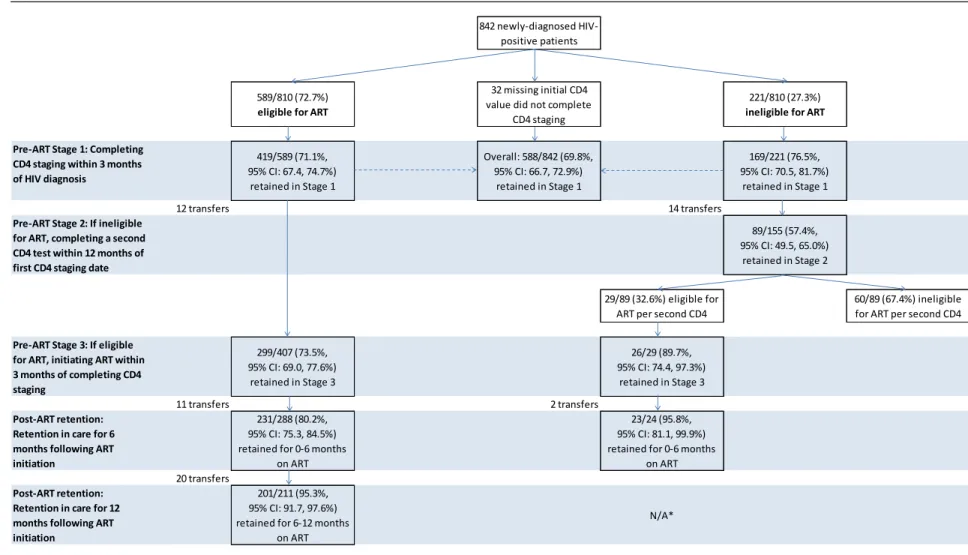
non-pregnant adults (N=842). Retention from HIV testing to CD4 staging was 69.8% (95%CI
66.7-72.9%). For patients initially ART-ineligible (n=221), 57.4% (95%CI 49.5-65.0%)
returned for a repeat CD4 within 12 months. Among those ART-eligible (n=589), 73.5%
(95%CI 69.0-77.6%) were retained between CD4 staging and ART initiation. Retention
increased with time on ART, from 80.2% (95%CI 75.3-84.5%) at 6 months to 95.3% (95%CI
91.7-97.6%) between 6-12 months. Cumulative retention from HIV diagnosis to 12 months
on ART was 36.9% (95%CI 33.0-41.1%) for those ART-eligible and 43.0% (95%CI
36.4-49.8%) from diagnosis to repeat CD4 testing within one year among those ART-ineligible.
We examined loss to follow-up (LTFU) before and after delivery among pregnant
women newly-diagnosed with HIV (N=273). Of 139 (51.3%) ART-eligible patients, 66.9%
(95%CI 58.8-74.3%) initiated ART prior to delivery and overall, 40.5% (32.3-49.0%) were
cumulative retained through six months on ART. Of those ART-ineligible at HIV diagnosis,
iv
LTFU (≥1 month late) before delivery was 20.5% (95%CI 16.0-25.6%) and, among those still
in care, 47.9% (95%CI 41.2-54.6%) within six months after delivery.
The study clinic has offered ART initiation at CD4 ≤350 cells/µl since 2010. We
compared 12-month patient outcomes for those who presented and initiated ART at
baseline CD4 values ≤200 versus 201-350 cells/µl (N=1430). Among men and non-pregnant
women, initiating at 201-350 cells/µl was associated with 26-42% reduced LTFU (≥3 months
late) compared to those initiating at ≤200. We found no CD4 effect among pregnant women.
As countries expand HIV testing and ART programs, success will depend on linkage
to and retention in care, especially during the period prior to ART initiation. Our findings
highlight the additional challenge of continuity of care among HIV-positive pregnant women
v
ACKNOWLEDGEMENTS
I am deeply indebted to my dissertation committee for sharing their time, guidance
and support throughout this process. Audrey Pettifor deserves special recognition for
guiding me through the past four years with unwavering dedication. Her assistance,
honesty, and inspiration have been invaluable to me personally and professionally. I would
like to thank my friends and fellow students in the Department of Epidemiology, particularly
Nora Rosenberg, Christine Tucker, Jen Deese and Christina Mack, for always being
forthcoming with advice, ideas and encouragement. Nancy Colvin has been so wise and
helpful throughout my four years in the department. This research would not have been
possible without the generous cooperation of Dr. Jean Bassett and her staff, who offer an
amazing public service at Witkoppen Health and Welfare Centre. Also at Witkoppen, I’d like
to recognize Dr. Heather Dansey for expanding my clinical knowledge in the most fun way
possible. I would like to thank Annelies Van Rie for introducing me to Witkoppen, as well as
to TB research. My colleagues at HE2RO in Johannesburg have helped me to reach this
step, and I am grateful for their support, particularly Matt Fox for his patience and
commitment, as well as his guidance and leadership. Mhairi Maskew has been an unfailing
advocate for me, as well as an amazing teacher; I appreciate her support tremendously.
None of this would be possible without the love of my family, who have supported me at
vi
TABLE OF CONTENTS
LIST OF TABLES...viii
LIST OF FIGURES ...ix
LIST OF ABBREVIATIONS...x
Chapter 1. INTRODUCTION AND REVIEW OF THE LITERATURE... ...1
2. STATEMENT OF SPECIFIC AIMS... 11
3. RESEARCH METHODS……... ... 14
Study setting and population... 14
Ethical considerations... ... 16
Data collection………... ... 17
Eligibility and exclusion criteria... 18
Pre- and post-initiation clinic visit schedule... 19
Statistical analysis……... ... 21
Study limitations……... ... 30
4. PATIENT RETENTION FROM HIV DIAGNOSIS THROUGH ONE YEAR ON ANTIRETROVIRAL THERAPY AT A PRIMARY HEALTHCARE CLINIC IN JOHANNESBURG, SOUTH AFRICA……… ... …….32
Introduction…... ... ...32
Methods….…... ... ...33
Results..….…... .. 37
Discussion.…... .44
vii
Introduction…... .. ....48
Methods….…... .... .49
Results..….…... 52
Discussion.…... .. 60
6. INITIATING ART WHEN PRESENTING WITH HIGHER CD4 COUNTS RESULTS IN REDUCED LOSS TO FOLLOW-UP UNDER SOUTH AFRICA’S 2010 REVISED ANTIRETROVIRAL THERAPY GUIDELINES... ... ...64
Introduction…... .. ..64
Methods….…... .... ..65
Results..….…... ...66
Discussion.…... .. .71
7. CONCLUSIONS.………... ... ...74
Summary of findings... ..74
Public health significance……….….…... . ..76
Future research directions... . ..77
Conclusion.…... ... ...78
APPENDIX ... ... ....80
viii
LIST OF TABLES
Table
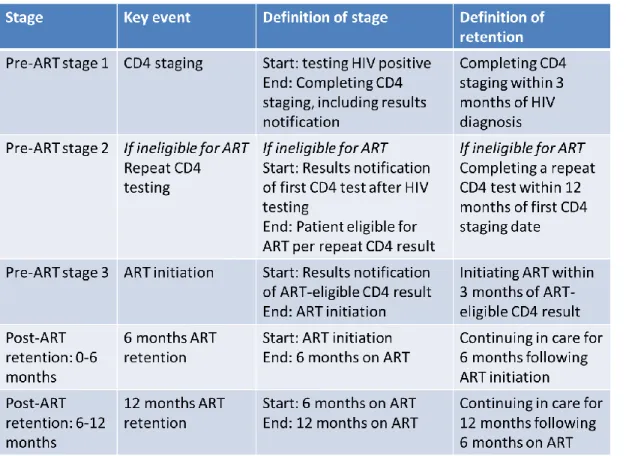
1. Definitions of stages of early HIV care. ... 36
2. Characteristics of the study participants (N=842). ... 38
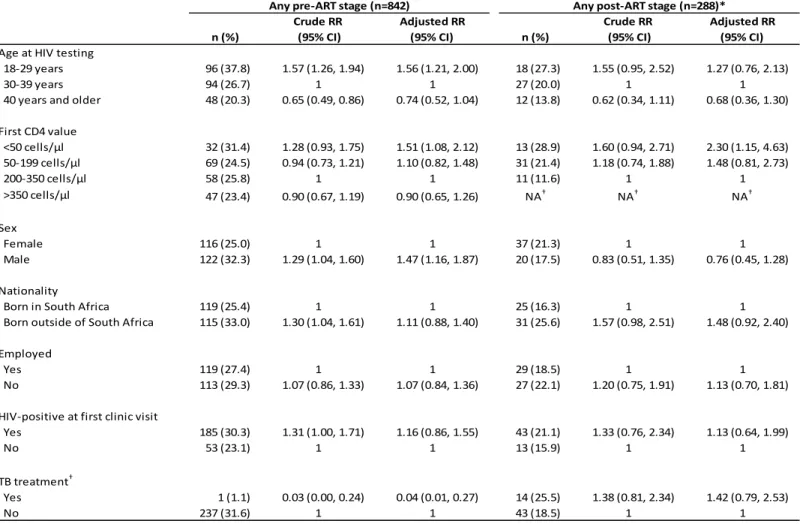
3. Multivariate analysis of factors associated with patient attrition prior to ART and within the first 12 months after ART initiation among newly-diagnosed HIV-positive patients at an HIV treatment program in South Africa. ... 43
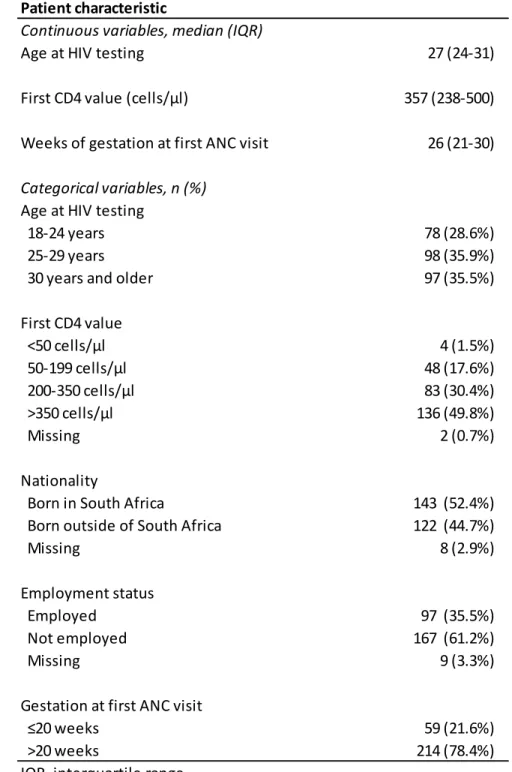
4. Characteristics of the study participants (N=273). ... 53
5. Multivariate analysis of factors associated with loss to follow-up before and after delivery among 273 newly-diagnosed HIV-positive antenatal patients. ... 59
6. Characteristics of the study participants by baseline CD4 group (N=1430). .. 67
7. Multivariate analysis of factors associated with patient loss to follow-up one year after ART initiation at an HIV treatment program in South Africa (N=1430). ... 70
A.1. Summary table of pre-ART retention in HIV care literature… . ………80
A.2. Summary table of post-ART retention in HIV care literature………...84
ix
LIST OF FIGURES
Figure
1. HIV-positive patient loss to care over time ... 4
2. Map of Witkoppen Health and Welfare Centre and surrounding public clinics. ...15
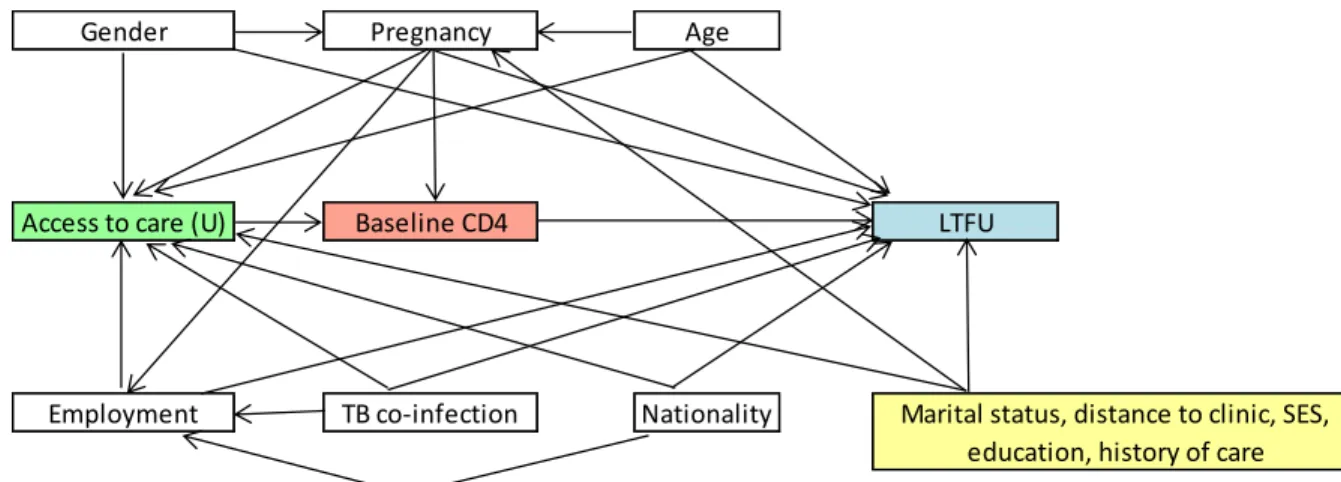
3. Directed acyclic graph (DAG) for potential confounders of the association
between baseline CD4 value and loss to follow-up. ...25
4. Study profile of completion of key stages of early HIV care among 842 newly diagnosed HIV-positive patients at an HIV treatment program in South
Africa. ...40
5. Cumulative patient retention from HIV diagnosis through one year on ART for 544 HIV-positive patients eligible for ART, and one year after initial
CD4 staging for 207 HIV-positive patients ineligible for ART. ...41
6. Patient retention before and after delivery among 271 recently-diagnosed
HIV-positive ANC patients. ...55
7. Cumulative patient retention from HIV diagnosis through six months on ART for 131 HIV-positive ANC patients eligible for ART, and through repeat CD4 testing after delivery for 123 HIV-positive ANC patients
ineligible for ART. ...57
8. Kaplan-Meier estimates of time to loss to follow-up by baseline CD4 value (top) and by baseline CD4 by gender/pregnancy at ART initiation status
x
LIST OF ABBREVIATIONS
AIDS Acquired immune deficiency syndrome
ANC Antenatal care
ART Antiretroviral therapy
AZT Zidovudine
CD4 Cluster of differentiation 4
CI Confidence interval
HIV Human immunodeficiency virus
HR Hazard ratio
IQR Intra-quartile range
LTFU Loss to follow-up or lost to follow-up
PHC Primary healthcare clinic
PMTCT Prevention of mother-to-child transmission of HIV
RR Risk ratio
CHAPTER 1
INTRODUCTION AND REVIEW OF THE LITERATURE
Sub-Saharan Africa is the region of the world hardest hit by the HIV/AIDS pandemic.
Of the 33.3 million people living with HIV/AIDS in 2009, 22.5 million (68%) are in
sub-Saharan Africa, and the region is home to 72% of the world’s HIV/AIDS deaths.1 South
Africa’s epidemic remains the world’s largest with 5.6 million people living with HIV in 2009,
adult HIV prevalence estimated at 16.9%, and 410,000 estimated new infections in 2010.1-3
South Africa also has the largest antiretroviral therapy (ART) program in the world.1
The national ART program started in 2004 and has quickly grown in size with over 1.7
million adults and children enrolled over the first seven years.4 This advancement has
dramatically altered the health and quality of life of people living with HIV/AIDS. UNAIDS
estimates that over 700,000 adult life-years were gained as a result of ART in South Africa
through 2009.1 At the same time, the rapid scale-up of the national ART program has put
tremendous pressure on the limited resources of a public health sector that is struggling to
meet the immense need. It is estimated that only 52% of patients eligible for ART are
currently on treatment.4 Despite the fact that 300,000 patients enroll in the South African
ART program each year,5 an estimated 280,000 people died of AIDS in 2010, representing
43% of the country’s total deaths.3 Moving forward, South Africa will need to expand its
national ART program to meet the needs of more patients within a context of limited
2
An enormous challenge to the existing South African ART program and current
attempts to expand its impact is the large number of patients who either do not access care,
or who leave care. Numerous barriers to initiating and remaining in care exist for
HIV-positive individuals, including psychological and social factors such as denial of disease
status and severity,6 distrust of the healthcare system in terms of quality care and
confidentiality,7-9 and disease stigma.2,6,7,9,10
The “necessity-concerns” conceptual framework, which has been utilized in
medication adherence research across a span of diseases,11,12 may accurately describe the
considerations an individual faces when seeking HIV care and adhering to ART.13 This
framework describes how patients’ perceived need for ART may be at odds with the clinical
necessity, and explains how pre-existing beliefs about ART, such as fear of side effects,
may dissuade eligible patients from accessing treatment. Similarly, low perceived need for
ART among patients eligible for ART may predict both failure to initiate and adherence to
ART. 13 While this framework, to our knowledge, has not been used among southern African
populations, other researchers in the region have noted that patients who did not feel sick
were less likely to access care or continue treatment.6,9 Others may prefer traditional
medicine and healers to ART and clinics.6,8,9,14
In addition to numerous psychological and social obstacles to accessing and
remaining in care, structural barriers also may prevent patients from initiating or continuing
care. At the healthcare facilities, these may include complex, disjointed systems of
healthcare,10 lengthy queues,6,8 and limited operating hours that conflict with employment
commitments.8 Furthermore, poverty and an inability to pay for transit fares and clinic fees
limits individuals’ ability to access care.7-10,14 Lacking food to eat while taking ART also has
been mentioned as a barrier in Southern Africa.9 Frequent migration and housing instability
among low-income, highly-mobile populations in South Africa also may lead to interruptions
3
involvement, faith-based initiatives, and active tracing and home visits have been noted as
facilitators of retention in care.16,17
As a result of these barriers, HIV-positive patients in South Africa and other
resource-limited countries are more likely to have advanced immunosuppression (i.e. lower
CD4 counts) when starting ART, thus, are more likely to be at increased risk of mortality,
underscoring the urgency of initiating and retaining patients in care.18,19 Continuous
engagement in care is particularly important for HIV patients since HIV requires lifelong
treatment with high adherence as patients who stop and restart treatment increase their risk
of drug resistance, treatment failure and ultimately, death.20,21 Two South Africa-based
studies linked to the national death registry have estimated mortality among patients lost to
care at 31% after one year and 36-44% after two years.22,23 Even patients who remain in
care but missed multiple ART appointments within the first six months of initiation are at
increased risk of poor CD4 responses and failure to achieve viral suppression.24
Patient attrition refers to loss to care, which includes both patients who die and
patients who are lost to follow-up (LTFU) (i.e. those who do not return to the clinic after a
defined period of time). Patients can leave care at any point in their care, so dividing care up
into meaningful periods over which to assess retention is necessary. Focusing specifically
on the first year of HIV care (a time of high attrition), it is helpful to characterize retention in
relation to key events in care. For those who test HIV-positive, blood must be collected and
(in most cases) sent to an outside lab for CD4 testing, then the patient must return for
results at a later visit, typically the visit following HIV diagnosis. For ART-eligible patients,
adherence counseling is often required prior to treatment initiation. Patients who are
ineligible for ART are to be enrolled in a wellness program with follow-up visits every six
months for CD4 monitoring. Since there are multiple points in the process where patients
4
1. This loss of patients through consecutive time points is sometimes referred to as the “HIV
treatment cascade.”25
Figure 1. HIV-positive patient loss to care over time
In recent years, quantifying the problem of patient attrition in care among
HIV-positive patients worldwide as well as within the public-sector in South Africa has begun to
receive attention. Following the introduction of ART in the public-sector in South Africa in
2004, research primarily focused on patient retention in care after treatment initiation. These
studies now provide many years of data about patient retention in care following initiation
(see Table A.1). A large (N=44,177) collaborative analysis of eight cohorts initiating ART
across South Africa found that patient attrition increased with duration on treatment, and by
36 months, 29% were LTFU.26 A review of 33 publications of cohorts in sub-Saharan African
countries (N=226,307) found that ART programs lose about 25% of their patients within two
years.27 In both analyses, younger patients and those who initiated with very low CD4
counts were significantly more likely to be LTFU.
Results of this research on program retention suggest that rates of LTFU and
mortality are highest in the first year of HIV care.27-29 Thus, loss of patients during the
earliest phases of HIV care – immediately after diagnosis and prior to ART initiation – is
gaining research attention (see Table A.2) and several studies have described pre-ART loss
5
about half (45-63%) of newly-diagnosed patients complete CD4 staging (including results
notification) within eight weeks to six months after testing HIV-positive.30-32 One study noted
that CD4 testing was lowest (15%) among patients with a CD4 count >200 cells/µl.33
Patients who are ineligible for ART based on CD4 testing must return for regular
CD4 monitoring and eligibility assessment for ART. This is a particularly difficult period in
which to retain patients, for patients with higher CD4 values may feel well and may not seek
care, and facilities may prioritize sicker patients over the routine care of patients with higher
CD4 counts. It is also difficult to measure retention among patients ineligible for ART
because the defined end point – becoming eligible for ART based on CD4 testing – is
unique to each individual patient and there is no time period for eligibility that is appropriate
for all patients. Thus, studies on retention among ART-ineligible patients are few but indicate
poor rates of repeat testing. In a Cape Town study, 46.3% of patients with CD4 >200 cells/µl
returned for repeat CD4 testing during the four-year study period,32 and in Johannesburg,
only 26% of patients with CD4 ≥350 cells/µl returned for a pre-ART wellness visit within one
year.34
Once a patient has been identified as eligible for initiating ART, it is essential that
treatment is started promptly. However, only 39% of ART-eligible patients in a Durban
cohort initiated treatment and another 20% died within 12 months of eligibility
determination.35 A Cape Town-based study found that only two-thirds (67%) of eligible
patients accessed ART within six months of testing,32 and a large study from the Free State
found that 26% died prior to initiating ART.36
A 2011 systematic review of patient attrition after HIV diagnosis and prior to ART
initiation in sub-Saharan African cohorts found high overall attrition. The median proportion
retained at each time period was 59% from HIV diagnosis to CD4 staging, 46% from
pre-ART care to pre-ART eligibility (for those ineligible based on CD4 count), and 68% from eligibility
6
the stages of pre-ART care, the product of the median proportions of patients retained at
each time point suggested only 18% of patients were continuously retained in care through
all three stages.37
As the above summary describes, the recent awareness of the importance of
pre-ART retention has encouraged research quantifying patient attrition at specific time points in
early HIV care – CD4 staging, pre-ART care for ART-ineligible patients, ART initiation – but
very few studies have followed patient outcomes from the time of testing HIV-positive
beyond ART initiation to report patient attrition. One previous study in rural Uganda from the
early days of ART availability (2005-2007) reported retention from initial CD4 testing through
ART initiation, but does not report on retention following ART initiation. The authors found
rather high rates of return for early visits: 88% of patients eligible for ART returned for their
CD4 staging visit, and 74% of eligible patients attended a third visit and started ART.38
Another study from rural Malawi investigated attrition among patients with WHO stage 1 and
2 disease through the first six months of HIV care (starting after CD4 testing), but without
providing clear results for attrition by stage.39 They report that 89.7% of those who initiated
ART were in care six months later, compared to 23.5% who did not initiate, but do not
clearly differentiate attrition by ART eligibility status or account for the impact of differing visit
schedules. The authors note that 95% of LTFU occurred between CD4 collection and results
notification. This study also focused on a rural community, with markedly different facilities
and services for patients on ART (dedicated clinics) and those not yet initiated (general
outpatient services).
A recent review of 28 pre-ART studies in sub-Saharan Africa concluded, “Offering a
definitive answer to our core question—what proportion of patients who test positive for HIV
are staged, enroll and remain in pre-ART care until ART eligibility, and initiate ART—is not
possible…no study provides all the information needed to answer this question, even for a
7
retention at multiple time points from the time of testing HIV-positive beyond ART initiation.
A study in Mozambique looked at five periods in early ART care: HIV testing, CD4 staging,
enrollment at a separate ART facility, ART initiation and ART adherence at six months.25
The study’s data were from the first year of the country’s ART program (2004-2005), when
ART initiation sites were limited and separate from HIV testing sites. They found that among
7,005 HIV-positive patients, 56.5% enrolled at the ART facility within 30 days of testing,
77.1% of whom completed CD4 staging within 30 days of enrollment. Half (49.4%) of these
patients were ART-eligible of whom 31.3% initiated ART within 90 days of CD4 testing.
Using pharmacy data, the authors found that 83.0% of these patients were adherent to ART
six months post-initiation. Attrition was highest between testing HIV positive and enrolling for
ART care (43.5%) and between CD4 testing and ART initiation (within 90 days) for those
ART-eligible (68.7%). However, this study does not report a cumulative measure of patient
attrition from the time of testing HIV positive through ART retention, nor does it discuss
attrition among patients ineligible for ART.
In addition to incomplete and disjointed analyses of patient attrition, the definitions of
patient attrition and LTFU vary widely among studies. As shown in the appendix, LTFU
definitions vary, usually indicating an absence of from one to six months from a health
facility, some requiring follow-up by clinic staff. Similarly, the time periods permissible for
completion of key stages of early HIV care, such as CD4 staging and ART initiation differ
significantly by study. The lack of a standardized definition for patient LTFU and time
periods of care is a serious impediment to aggregating or generalizing results. In an attempt
to overcome this heterogeneity of definitions, recommendations for standardized definitions
for retention in pre-ART care have recently been proposed, allowing for estimates that can
be compared across programs and countries.33 The recommendations are as follows:
Pre-ART stage 1: The proportion of patients who complete CD4 staging (including
8
Pre-ART stage 2: For patients ineligible for ART, the proportion completing a repeat
CD4 test within 12 months of first CD4 staging date.
Pre-ART stage 3: The proportion initiating ART within three months of determining
ART eligibility.
In addition to measuring the scope of the problem, investigations of patient attrition
from early HIV care can identify groups who may be most at risk of dropping out of care.
While the data above demonstrate that patient retention in HIV care is known to be an
important challenge in the public sector throughout southern Africa, a few studies have
suggested that pregnant women may have LTFU rates that exceed that of men and
non-pregnant women.40,41 A study from a community clinic in the North West Province of South
Africa found that among 925 patients initiating ART, pregnant women had the highest
cumulative probability of LTFU after six months, and pregnant women with a baseline CD4
value ≤200 cells/µl were at six times the risk of LTFU than any other group (RR 6.06, 95%CI
2.30, 16.71).41 Another study from outside Cape Town found higher LTFU in both the
pre-ART and post-pre-ART periods among pregnant women, compared to non-pregnant women.40
The largest study to date to explore LTFU among pregnant women, an analysis of nearly
30,000 women initiating ART within five cohorts in South Africa, found that LTFU was 54%
higher in pregnant women than in non-pregnant (aHR 1.54; 95%CI 1.38-1.72), despite less
immunosuppression and decreased mortality.42
Another sub-population that may be at increased risk of LTFU is that of patients
initiating ART at less advanced immunosuppression indicated by higher CD4 values. In late
2009, the WHO revised their HIV treatment guidelines to expand eligibility criteria for ART to
anyone with a CD4 count ≤350 cells/µl in order to treat patients before they develop
advanced immunosuppression.43,44 Struggling to enroll and retain patients within their
previous guidelines (eligibility at CD4 counts <200 cells/µl), South Africa revised its national
9
counts ≤350 cells/µl, but did not immediately adopt WHO’s recommendations for early
initiation for all.45 In August 2011, South Africa announced a revised policy of ART initiation
for all adults with CD4 counts <350 cells/µl in response to recent developments in HIV
research and international recommendations46 based on consensus that patients who
initiate ART with a CD4 >200 cells/µl are at reduced risk of death and serious opportunistic
infections, such as tuberculosis.47-50 There is already strong evidence that initiating at higher
CD4 values also contributes to HIV prevention. The results of a large clinical trial
demonstrated early treatment (CD4 counts 350-550 versus 250 cells/µl) reduced HIV
transmission by 96%.51 Others advocate for a “test-and-treat” approach where all
HIV-positive patients start ART at the time of diagnosis regardless of CD4 count.52
Given the recent policy change in South Africa, there are few studies that have
explored LTFU among those initiating ART at CD4 counts 200-350 cells/µl versus <200
cells/µl in southern Africa, and none in routine settings (see Table A.3). While initiating ART
at higher CD4 values is known to be associated with improved clinical outcomes,48,50 it
remains to be seen whether these gains will be overshadowed by increased LTFU. As part
of a randomized controlled trial, a study in Johannesburg (N=812) found slightly higher
LTFU among those initiating with a baseline CD4 >200 cells/µl (14%) than ≤200 (10%),
suggesting that patients with higher CD4 counts may be more slightly likely to be lost from
care.48 By comparison, Lesotho, a rural nation completely surrounded by South Africa,
adopted an early initiation (<350 cells/µl) policy in 2007, and a study (N=1177) of patient
outcomes under routine clinic settings showed that patients initiating ART with CD4 counts
above 200 cells/µl were 39% less likely to be LTFU after nearly two years on treatment.47
Given that South Africa’s national ART program recently raised its initiation threshold, it is
essential that we evaluate the impact of early initiation on LTFU and other patient outcomes
10
To summarize, the body of research investigating patient attrition has increased
substantially in the past decade, particularly in South Africa. However, notable areas for
improvement and contribution remain. No study has followed a cohort from the time of HIV
diagnosis through ART care to report on cumulative loss through consecutive stages of
care. Additionally, no study has followed patients ineligible for ART long-term to understand
retention in HIV care prior to ART initiation. Study generalizability is hampered by differing
and often conflicting definitions of time periods of care and attrition and/or LTFU. Lastly,
exploring the nuances of attrition among different sub-populations is an emerging topic, with
early research suggesting that pregnant women have higher rates of LTFU than men or
non-pregnant women after a period of follow-up, and no study reporting on the influence of
higher CD4 values at ART initiation on LTFU within the setting of routine care in South
Africa. In the context of this research environment, the present research study has been
CHAPTER 2
STATEMENT OF SPECIFIC AIMS
Specific Aim 1: Compare retention among recently-diagnosed HIV-positive patients over multiple stages in the early HIV care process within a single clinic.
In Chapter 4, Patient retention from HIV diagnosis through one year on antiretroviral
therapy at a primary healthcare clinic in Johannesburg, South Africa, we compare the proportion of recently-diagnosed HIV-positive non-pregnant adult patients (N=842) retained
in care through three stages of pre-ART and two stages of post-ART retention. We also
report cumulative retention from the time of testing HIV-positive to 12 months on ART for
those ART-eligible at testing, and from HIV testing to a repeat CD4 count for those ineligible
for ART.
Hypothesis
Aim 1 is an descriptive analysis, so we are primarily concerned with investigating the
proportions lost at each stage and cumulative retention. The research questions that
motivate this aim are, “What is patient retention at each stage? At which stage is attrition
highest?” We hypothesize that attrition will be highest prior to the initiation of ART.
Rationale
Patients who initiate ART have already successfully been retained for multiple visits
and, thus, may be more inclined to continue in care. Studies that investigate patient
retention starting at the time of ART initiation are missing pre-ART loss, which may be the
12
In Chapter 5 Loss to follow-up before and after delivery among women testing
HIV-positive during pregnancy in Johannesburg, South Africa, we investigate retention before and after delivery among women testing HIV-positive during pregnancy (N=273).
Hypothesis
Aim 1 is an descriptive analysis, so we are primarily concerned with investigating the
proportions lost at each stage and cumulative retention. The research question that
motivates this aim is, “Are pregnant women who test positive for HIV more likely to drop-out
of care after delivery than before?” We hypothesize that patient loss will be higher after
delivery than before delivery.
Rationale
In South Africa, most deliveries occur at hospitals, while antenatal and postnatal
visits occur at the primary healthcare level. This disjointed system of healthcare is a barrier
to continuous retention in care. In addition, travel around the time of birth may contribute to
patient attrition in the postpartum period.
Specific Aim 2: Measure the impact of initiating patients who present with CD4 counts 200-350 cells/µl on patient loss to follow-up in a routine clinic setting.
In Chapter 6, Initiating ART when presenting with higher CD4 counts results in
reduced loss to follow-up under South Africa’s 2010 revised antiretroviral therapy guidelines, we evaluate the 12-month hazard of LTFU among patients initiating ART (N=1430) by
baseline CD4 count to explore if LTFU is greater among patients with higher CD4 counts
(200-350 cells/µl) than patients presenting with more advanced immunosuppression (CD4
<200 cells/µl).
Hypothesis
We hypothesize that patients initiating ART with higher CD4 counts may be more
13
Rationale
Patients with less immunosuppression often feel healthier than patients who are
CHAPTER 3
RESEARCH METHODS
Study setting and population
Witkoppen Health and Welfare Centre (Witkoppen) is a high-volume primary
health clinic in Johannesburg, South Africa. Witkoppen sees about 8,500 patients a
month, of whom about 40% are HIV-positive and a substantial proportion are recent
immigrants from neighboring countries, predominately Zimbabwe. This high patient
volume makes Witkoppen a well-suited setting for studies of HIV care and treatment.
The clinic provides HIV/AIDS services (including the initiation and follow-up of ART),
integrated HIV/TB services, family planning, pre-/post-natal care, pediatric services,
chronic care, mental health services and social welfare assistance. Patient visits cost
R40 (approximately US$5), but most patients’ visits are fully subsidized by the clinic due
to patients’ inability to pay. Witkoppen is operated by a non-governmental organization
and receives financial support from the Gauteng Department of Health, the President’s
Emergency Plan for AIDS Relief (PEPFAR) through a South African NGO called Right to
Care, and other public and private support. At Witkoppen, physicians and nurses with a
primary healthcare nurse (PHCN) designation (similar in training and education to the
nurse practitioner level in the US) may initiate patients onto ART as is called for under
South Africa’s current ART recommendations. In general, patients at Witkoppen are
treated according to the South African National Treatment Guidelines,45 with an
15
with a CD4 count ≤350 cells/µl, over one year before South Africa adopted this policy
nationwide.53
Witkoppen primarily serves a vast community of formal and informal settlements
in Northern Johannesburg, such as Diepsloot, Cosmo City and Zandspruit, communities
burdened with high unemployment, poverty and crime. The area is under-resourced in
terms of public healthcare facilities and staff. Figure 2 shows Witkoppen as the red
push-pin; blue markers indicate all public clinics within the same municipal district (City of
Johannesburg Region A), as well as two additional clinics (Zandspruit Clinic and
Windsor Clinic) from areas in which Witkoppen patients reside. Of the clinics shown,
Witkoppen is one of the largest, both in terms of patient loads and personnel.
Figure 2. Map of Witkoppen Health and Welfare Centre and surrounding public clinics.
16
The setting of the proposed study provides a unique opportunity to examine LTFU at
higher CD4 values under routine clinical care. Since Witkoppen is one of the few clinics in
South Africa that has operated under a policy of initiation ≤350 cells/µl since 2010, we can
examine the effects of implementing the WHO guidelines in a routine clinical setting using
available data. LTFU here can be measured in the context of a highly integrated clinic: all
relevant services – HIV counseling and testing, phlebotomy, ART initiation, antenatal care,
as well as other clinic services – are available within the same facility, reducing the impact of
having to access and wait at multiple facilities. Also, while slow time to initiation is often cited
as a barrier to care and a factor contributing to LTFU, Witkoppen has a demonstrated ability
to initiate patients onto ART promptly. Previous linkage to care studies in South Africa
performed at government facilities found a median time from HIV diagnosis to ART initiation
(among eligible patients) ranging from 95 days to 6.6 months.35,36 In contrast, a 2011 study
of TB suspects at Witkoppen indicated that the median time from HIV diagnosis to ART
initiation was 26.5 days with 70% of patients eligible for ART initiated.54 Before ART
initiation, patients must receive necessary ART counseling, but appointments are scheduled
with an understanding of the need for prompt initiation, particularly for patients presenting
with advanced immunosuppression. This means that we can measure LTFU within the
setting of a clinic that has already worked to reduce some of the known barriers to retention,
including multiple facilities and deferred care. We would expect that other clinics that have
not implemented such integration measures may experience higher patient attrition.
Ethical considerations
Ethical approval for this analysis was granted from the Public Health-Nursing IRB at
the Office of Human Research Ethics at the University of North Carolina at Chapel Hill and
17
was conducted using routine data collected in patient files as standard clinical procedure
and did not require individual patient consent.
Data collection
For Aim 1, we conducted a retrospective observational cohort (N=1144) study
through patient files review. To determine patient outcomes, records were reviewed a
minimum of 12 months (median 16.5 months, IQR: 14.8-18.1) from the time of testing
HIV-positive. For patients whose CD4 count at the time of HIV testing made them
eligible for ART who went on to begin ART, files were reviewed a minimum of one year
post-ART initiation. Data were single-entered into a Microsoft Excel 2010 (Microsoft
Corp., Redmond, WA) spreadsheet by KC and analyzed using SAS, version 9.2 (SAS
Institute, Cary, NC). The files of 18 patients (1.6%) could not be retrieved after multiple
attempts, so data were obtained from the clinic’s electronic medical records system. Of
these patients, six were pregnant and contributed to Chapter 5. Because the policy of
using a higher ART initiation threshold was new at Witkoppen in 2010, individual
eligibility for ART was assessed for each patient during the file review, which led clinician
decision to deem 23 patients with CD4 values 200-350 being ineligible for ART and
three patients with CD4 >350 cells/µl eligible.
For Aim 2, we also used a retrospective cohort (N=1430), but used data
electronically captured at Witkoppen using TherapyEdge-HIV™ Patient Management
System (Associated Biological Systems, South Africa). Data are captured at the clinic by
data capturers and clinicians, and are regularly quality-checked by a data manager. Data
18
Eligibility and exclusion criteria
For Aim 1, our inclusion criteria were adult patients (18 years and older) who tested
HIV-positive for the first time at Witkoppen from 1 January – 30 June 2010. We started with
a roster from the clinic data manager of all 1612 patients who likely met the inclusion criteria,
listing only clinic file number and date of testing. Of these, 23 (1.4%) patients less than 18
years old and 320 (19.9%) patients who tested HIV-positive elsewhere and already knew
their HIV status were removed for failure to meet inclusion criteria. This left 1270 patients on
the roster, from which we excluded the following groups:
Invalid clinic file numbers (seven digits instead of six) (n=3, 0.2%)
Patients who could not be identified using the file number provided: a paper file
could not be located after at least three separate attempts and the file number was
not found in TherapyEdge-HIV™ (n=122, 9.6%). While it is possible for paper files to
go missing, it is unlikely for a patient who tests HIV-positive to be missing a paper
file and also not be found in TherapyEdge-HIV™. For this reason, we believe that
the file numbers provided to us by the data manager for these 122 patients were
erroneous.
This left 1144 individuals for analysis for Aim 1. Of these, 844 were not pregnant and were
analyzed in Chapter 4. The remaining 300 were pregnant at the time of testing HIV-positive
and were analyzed in Chapter 5.
For Aim 2, our inclusion criteria were adult patients who initiated ART for the first
time at Witkoppen between April and December 2010. We exported TherapyEdge-HIV™
data on 1699 patients from Witkoppen’s server on May 6, 2012 who were likely eligible.
After removing 67 (3.9%) patients less than 18 years old and 118 (6.9%) patients who were
not ART-naïve, we were left with 1514 patients. From this total, we excluded the following:
19
Patients with a baseline CD4 value >350 cells/µl (n=55, 3.6%)
This left 1430 individuals in our analysis dataset for Aim 2.
Pre- and post-initiation clinic visit schedule
Patients with CD4 values ≤350 cells/µlor those with WHO clinical stage 3 or 4
disease are eligible to start ART at Witkoppen. For ART-eligible patients, South African
treatment guidelines stipulate initiation of ART at the third patient visit, following clinical
assessments and adherence counseling. However, patients with CD4 counts <100 cells/µl,
those with MDR/XDR-TB, stage IV disease, or pregnant patients eligible for ART are
designated to be fast-tracked to begin ART within two weeks of diagnosis. Patients ineligible
for ART are to be enrolled in a “wellness program,” which are poorly defined in national
guidelines, apart from providing routine HIV care with CD4 monitoring every six months. At
Witkoppen, wellness services also include TB screening at every visit, ongoing HIV
counseling, family planning and Pap smears.45
While actual visit schedules vary based on patient and clinic availability, the general
schedule of visits at Witkoppen is as follows.
Visit 1: Diagnosis visit. HIV testing begins with pre-test counseling, typically administered in
small groups. Patients then go individually to a separate room for HIV testing via finger
pricking. Witkoppen utilizes two simultaneous dried blood spot rapid tests (First Response,
Premier Medical Corp., Ltd., Kachigam, India), packaged individually, with HIV testing
results available within 5-20 minutes. All patients receive immediate individual post-test
counseling. If the patient tests positive, after examination by a nurse, he or she is sent for
blood collection for CD4 count testing, still on the same date as diagnosis. Patients are
given a scheduled date to return for CD4 results, usually one to four weeks after Visit 1.
Visit 2 (1-4 weeks after Visit 1): CD4 staging visit. At the second visit, the patient receives
20
Witkoppen, counselors provide CD4 results, along with a through explanation of the
meaning of the result. If the patient is eligible to initiate ART, a first adherence counseling
session is provided concurrently. Counseling messages regarding adherence are not known
to have been revised or improved during the study period. If the patient is not eligible for
ART, he or she will be scheduled to return six months later for repeat CD4 testing and
clinical follow-up.
Visit 3 (1-4 weeks after Visit 2): ART initiation visit. If the patient is eligible to initiate ART, a
second adherence counseling session is commenced at this visit. Following successful
completion of two adherence sessions, the clinician initiates ART. If the patient has been
designated for fast-track initiation based on CD4 value, the first three visits are
recommended to occur within two weeks.
Visit 4 (1 month after Visit 3): First ART visit. Following ART initiation, the first
post-initiation follow-up clinical visit is scheduled for approximately one month after post-initiation.
Visits 5+. Subsequent medical visits and counseling are scheduled for one- or two-month
intervals, depending on the patient’s clinical condition. Typically, patients on ART return on a
monthly basis until they are considered stable and adherent (usually 5-6 months after
initiation), at which time they may be given multi-month ART prescriptions, or may be
transferred out to other clinics for care. For patients who remain at the clinic, CD4 and viral
load testing is repeated six and 12 months after initiation and annually thereafter.
Antenatal visits: For pregnant women, South Africa’s maternal health guidelines recommend
antenatal clinic (ANC) visits start as early as possible in pregnancy, and the basic antenatal
schedule for women includes five visits prior to delivery, regardless of HIV status, scheduled
at 14, 20, 26, 32 and 38 weeks gestation.55 The national guidelines stipulate a maternal
prevention of mother to child transmission (PMTCT) regimen for all HIV-infected women with
twice-daily zidovudine (AZT) beginning at 14 weeks gestation; intrapartum single-dose
21
Additionally, for pregnant women with a CD4 value ≤350 cells/µl, lifelong ART should be
initiated as soon as possible.45 For HIV-positive women, there are no guidelines for
combining ANC and HIV visits, so clinics are expected to dovetail HIV activities (CD4 results
notification, ART initiation, etc.) with ANC visits.
Statistical analysis
Outcome: Chapter 4
The primary outcome for the first manuscript is the proportion of adult, non-pregnant,
recently-diagnosed HIV-positive patients retained in care at Witkoppen during each of the
following stages of early HIV care:
Pre-ART stage 1: HIV diagnosis to CD4 results notification
Pre-ART stage 2: For those not eligible for ART at staging (CD4 >350 cells/µl) from
CD4 results notification to eligible for ART
Pre-ART stage 3: ART eligibility at staging to ART initiation
Post-ART 0-6 months: ART initiation to six months after ART initiation
Post-ART 6-12 months: Six months to 12 months after ART initiation
Completing each stage is defined as the proportion of patients who achieve each of
the following milestones of early HIV care within each time period described above:
Pre-ART stage 1: CD4 staging (including results notification) completed within three
months of HIV diagnosis
Pre-ART stage 2: For patients ineligible for ART, repeat CD4 test completed within
12 months of first CD4 staging date
Pre-ART stage 3: ART initiated within three months of ART eligibility determination
Post-ART 0-6 months: Retained in care for up to six months after ART initiation
Post-ART 6-12 months: Retained in care for up to 12 months following six months on
ART
We define patient retention as being alive and in care and not transferred and patient
attrition as either patient drop-out or death. For participants for whom South African ID
numbers are available, mortality outcomes were identified and confirmed by using the
22
Affairs in October 2011, at the end of follow-up.22 Patients who requested a transfer to
another clinic are noted and removed from the analysis at the start of the stage in which
they transferred.
Cumulative retention among ART-eligible patients is defined as completing pre-ART
stages 1 and 3, and remaining on ART for at least 12 months. For those who were
ART-ineligible at the time of testing HIV-positive, cumulative retention is defined as completing
pre-ART stages 1 and 2.
Exposure: Chapter 4
As aim 1 is a descriptive analysis, we are primarily concerned with investigating the
proportion retained at each stage. However, we also investigate the effect of baseline
characteristics as independent predictors of attrition in the any pre-ART and post-ART (0-12
months) time period.
Covariates: Chapter 4
We explore the following patient characteristics as independent predictors of attrition
at any pre-ART stage and post-ART (0-12 months): sex, age, CD4 count at the time of HIV
testing, nationality, employment status, HIV positive at first visit to the clinic, and TB
treatment at time of HIV diagnosis.
Analytic methods: Chapter 4
Baseline patient characteristics are summarized using counts and proportions for
categorical variables and interquartile ranges (IQRs) for continuous variables. We report
retention at the three stages of pre-ART care and two post-ART time points as counts and
proportions with 95% confidence intervals (95%CI). Cumulative retention is reported using
proportions and 95%CI and excludes patients who transfer at any point during the analysis.
We identified predictors of any pre-ART or post-ART attrition by estimating adjusted risk
23 Outcome: Chapter 5
The primary outcome for the second manuscript is the proportion of
recently-diagnosed HIV-positive pregnant patients retained in care at Witkoppen during the antenatal
and postnatal periods. These periods are described in greater detail in the “analytic
methods” section below.
Exposure: Chapter 5
As above, Aim 1 is a descriptive analysis, so we are primarily concerned with
measuring the proportions lost at each stage. However, we also investigate the effect of
baseline characteristics as independent predictors of LTFU before and after delivery.
Covariates: Chapter 5
We explore the following patient characteristics as independent predictors of attrition
before and after delivery: age, CD4 count at the time of HIV testing, nationality and timing of
first ANC visit.
Analytic methods: Chapter 5
Patient characteristics are described using proportions and 95%CI for categorical
variables, and medians and IQR for continuous variables. We examine retention among
pregnant women in two ways. Firstly, we report retention through several stages of pre- and
post-ART care within the antenatal and postnatal periods using counts and proportions with
95%CI. The activities of early HIV in the stages used in Chapter 5 are similar to those in
Chapter 4 (i.e., CD4 staging, ART initiation, etc.) but the timing of the events relates to
before and after delivery. The first stage for all patients is completing CD4 staging, including
results notification, prior to delivery. For those ART-eligible, subsequent stages include ART
initiation prior to or after delivery, completing a clinic visit after delivery, and six months
retention on ART. ART initiation prior to delivery is a key component of South Africa’s
PMTCT program56 and maximal effectiveness of ART for PMTCT has been shown to be
24
stages are returning for a clinic visit after delivery and receiving a repeat CD4 test after
delivery. A diagram of these stages is presented in Figure 6 in Chapter 5. Retention is
defined as completing each stage and is determined using clinic visit data. Patients who
transfer are noted and removed from the analysis at the start of the stage in which they
transferred.
Cumulative retention among ART-eligible women is defined as receiving CD4 results
and initiating ART before delivery and remaining on ART for at least six months. Among
those ART-ineligible, cumulative retention is defined as receiving CD4 results before
delivery and returning for a repeat CD4 test after delivery. Cumulative retention analyses
exclude patients who transferred during the antenatal (n=6) and postnatal (n=11) periods.
Secondly, we use time-to-event analysis to assess LTFU before and after delivery by
estimating person-time in the antenatal and postnatal periods. LTFU, the outcome for this
part of the analysis, is defined as not returning to the clinic within one month after the last
scheduled visit. A one-month definition of LTFU is shorter than used in many studies, but
pregnant women in antenatal care have more repeat visits within a short time period leading
up to birth, thus one month after the last scheduled visit indicates that the patient is likely
well off the clinic schedule. The one-month definition also allowed us to determined loss to
follow-up in the antenatal period despite late presentation for the first ANC visit. For the
antenatal period, person-time began accruing at testing HIV-positive and ended at the first
of the following three events: 1) delivery, 2) loss to follow-up or 3) transfer to another facility
prior to delivery. For women remaining in care during the postnatal period, person-time
began accruing at delivery and ended at the first of 1) six months after delivery, 2) loss to
follow-up or 3) transfer after delivery. No deaths were reported during the antenatal and
postnatal time periods studied, so these represent all possible outcomes. After confirming
the assumption of proportional hazards using the martingale residuals method (ASSESS
25
periods using Cox proportional hazard regression and report adjusted hazard ratios and
95%CI. In the visual display of these results (Table 5), we also include LTFU rates
(proportion LTFU/person-time) for each category presented.
Outcome: Chapter 6
In Chapter 6, the primary outcome is LTFU, defined as not returning to the clinic
within three months after the last scheduled visit. Secondary outcomes are mortality, which
is obtained from the clinic file and from data linkage with the National Population Registry
(South African Department of Home Affairs) and incident tuberculosis, defined using ICD-10
codes for any diagnosis of pulmonary M. tuberculosis infection after ART initiation date.
Exposure: Chapter 6
As shown in pink in Figure 3, baseline CD4 value at the time of initiating ART is the
primary exposure in Chapter 6. Baseline CD4 is defined as the CD4 value closest to ART
initiation, during a window six months prior to ART initiation to seven days post-initiation,
and is categorized into ≤200 cells/µl and 201-350 cells/µl.
Figure 3. Directed acyclic graph (DAG) for potential confounders of the association between baseline CD4 value and loss to follow-up.
Covariates: Chapter 6
Covariates considered in Chapter 6 are shown in white in Figure 3 and are described
in detail below.
Gender Pregnancy Age
Access to care (U) Baseline CD4 LTFU
26
Age is categorized 18-29, 30-39, ≥40 years and will be examined as a potential
confounder. Two dummy variables were created for age 18-29 and ≥40 years, with
30-39 years as the referent group. Age may affect CD4 and LTFU if health-seeking
behaviors differ by age. We hypothesize that patients in the younger age groups are
more likely to be LTFU.
Pregnant at ART initiation and gender. Prevalent pregnancy was first explored as a
potential effect measure modifier. Pregnant HIV-positive women at Witkoppen often
have higher baseline CD4 values than the general clinic population due to routine ANC
testing. In terms of LTFU, pregnant women receive more frequent care from different
clinicians at a separate clinic within Witkoppen and also may be traced more
aggressively by the clinic upon missing a visit. We assessed for relative effect measure
modification by including an interaction (pregnancy*CD4) variable in the model, and
found that when including the interaction term our estimate of CD4 on LTFU was
substantially affected. Thus, we concluded that the estimate of baseline CD4 on LTFU
was modified by pregnancy and we present results stratified by a three-level gender
variable (non-pregnant female, male, pregnant female) at each of the two CD4
categories. This allows us to compare the effect of presenting for care and initiating at
higher and lower CD4 groups by both gender and pregnancy status. Prior research
suggests that pregnant women have equal or higher rates of LTFU than other
adults;40,59,60 thus we hypothesize that they may be more likely to be LTFU.
Nationality is a binary variable representing South Africa-born or foreign-born and was
examined as a potential confounder. Witkoppen serves many recent immigrants to
South Africa, and migration may influence retention in care. CD4 count also may be
affected if nationality or migration affects access to care. Country of birth is used as a
proxy for migration. Most foreign-born patients at Witkoppen are from Zimbabwe, with
foreign-27
born patients into one category. We hypothesize that patients born outside of South
Africa are more likely to be LTFU due to instability and frequent migration.
Employment status may influence a patient’s ability to access to care, thus CD4 values
and LTFU. Witkoppen offers free services to patients who cannot pay, but transport
costs to the clinic are frequently reported by patients as a financial barrier. Alternatively,
patients with regular employment may be unable to take time off work to attend clinic
visits. We will investigate employment status as a potential confounder and hypothesize
that employed patients are less likely to be LTFU. We do not have data on type of work,
so we cannot investigate the effect of different types of jobs or potential heterogeneity
among the employed by type of work.
Prevalent TB at ART initiation is coded as a binary variable and was investigated as a
potential confounder. Prevalent TB is defined as any diagnosis of pulmonary M.
tuberculosis infection with a TherapyEdge-HIV™ start date prior to ART initiation and end date after initiation. TB start date is defined in TherapyEdge-HIV™ as diagnosis
start date and end date is defined as the date treatment ends. Patients with TB may be
sicker than patients without TB, since TB is an opportunistic infection that affects those
with advanced immunosuppression, and TB itself lowers CD4 count. Also, those on TB
treatment may see a CD4 increase even prior to initiating ART. Since TB affects both
CD4 count and LTFU, we will investigate it as a potential confounder and hypothesize
that patients co-infected with TB may be more likely to be LTFU.
Covariates that may affect the association between baseline CD4 value and LTFU,
but not included in the analysis, are shown in yellow in Figure 3. We did not include marital
status because this is not captured in TherapyEdge-HIV™. Also, the high prevalence of
common law/traditional marriages, as well as polygamous marriages in South Africa makes
the variable difficult to interpret. We also did not evaluate distance to Witkoppen because
28
of Diepsloot and Cosmo City, which is 10-15 minutes from the clinic by public transport.
Socio-economic status (SES) markers, such as household income or inventory, are not
available in TherapyEdge-HIV™. As mentioned earlier, Diepsloot is a very poor informal
settlement. Education is poorly captured in TherapyEdge-HIV™ and history of care is not
available. A previous study at Witkoppen found that 29% of patients suspected of TB did not
attend high school.54
Analytic methods: Chapter 6
Continuous variables are described using medians and IQR; categorical variables by
counts and proportions. For patients who did not die within 12 months of ART initiation,
person-time for the LTFU analysis began accumulating at ART initiation ended at the
earliest of: 1) 12 months of follow-up, 2) loss to follow-up or 3) transfer. Patients who died
within 12-months of ART initiation were followed from ART initiation to their date of death,
even if previously considered lost. For the outcome of incident TB, person-time ended at the
first diagnosis of TB within 12 months ART initiation or at death, or if neither of those
outcomes, at the earliest of 1, 2 or 3 above.
After confirming the assumption of proportional hazards using the martingale
residuals method (ASSESS statement in SAS), we used Cox proportional hazard methods
to estimate 12-month loss to follow-up, mortality and incident TB, as well as predictors of
these outcomes, and reported these using adjusted hazard ratios and 95%CI. Covariates
were included in the model as confounders if they resulted in a meaningful change in
estimate (≥10%) and/or based on prior knowledge and direct acyclic modeling. We produced
crude Kaplan-Meier curves depicting time to loss, mortality and incident TB by CD4 group
and compared them using the log-rank test for equality of survivor functions using Stata 12
(StataCorp LP, College Station, TX). To assess for misclassification of death as LTFU
among patients without a South African national ID, we conducted a sensitivity analysis
29
not change the size of our effect or our conclusions. We also accounted for death as a
competing risk on our estimate of loss to follow-up by utilizing the Fine and Grey model for
competing risks analysis in Stata 12 and reported the subdistribution hazard ratio and
95%CI. This analysis considers our event of interest (LTFU) in the presence of other events
(death) that may preclude the primary event from occurring. That is, under standard
methods, if a patient dies before meeting our definition of LTFU, then the patient is censored
and can no longer develop the outcome of interest. Competing risks analyses are
recommended to correct for potential overestimation of the proportion obtaining the event of
interest when calculating cause-specific hazard ratios.36,61,62
It is important to note that the available data do not allow us to answer the ideal
research question, which is, “What is the effect on loss to follow-up among patients with a
CD4 count between 350 of initiating ART immediately (at a CD4 count between
200-350) versus deferring treatment until the CD4 count falls below 200?” In order to answer
that question, we would need pre-ART data to measure LTFU and deaths prior to ART
initiation for those in the deferred arm, but pre-ART data are incomplete and unreliable on
TherapyEdge-HIV™. If such data were available, we could use marginal structural modeling
techniques, which would allow for time-dependent confounding affected by prior
exposure.63,64 Given the limitations of our data, the appropriate question to ask is, “Among
those who are eligible for ART at the time of testing, what is the effect of baseline CD4 at
the time of ART initiation on LTFU?” In this scenario, there is no time-varying confounding
because our exposure (baseline CD4) is at one time point only (ART initiation). We are
estimating LTFU among patients who survived until ART initiation and as such our results
30
Study limitations
The primary limitation of this study is that we cannot know if patients continue care at
another facility, except among those patients who request an official transfer. This is a
limitation that is shared by many studies investigating LTFU due to unlinked patient records.
Transfers are classified as a separate outcome from LTFU, but it is possible that patients
seek care elsewhere without requesting a formal transfer. It is also possible that patients
test for HIV at Witkoppen but seek a second opinion at a different facility, and continue care
there. In this study, LTFU must be understood to mean lost from Witkoppen only. The study
setting, Witkoppen, is only one clinic, and one that is particularly well-integrated and
comparatively well resourced. Thus, the results may not be generalizable to other clinics
throughout South Africa with more limited resources and less integration, where LTFU may
be greater than what we found at Witkoppen.
These study data are limited, as other retrospective studies, to those which are
routinely collected in the patient file or in TherapyEdge-HIV™. File reviews may be
inexact and incomplete if certain information is not recorded by the clinician at the time
of the visit. Data on TherapyEdge-HIV™ are more likely to be missing than those from
the file review, and data most likely to be missing include co-infection diagnosis (such as
TB) and visit dates, particularly for patients prior to ART initiation. Since
TherapyEdge-HIV™ data is especially poor for pre-ART patients, pre-ART data is only obtained via the
file review. Unlike prospective studies, we are limited to the information at hand and
cannot request specific information from clinicians about each patient from past visits.
Furthermore, we cannot know the reason why LTFU patients might have dropped out of
care with the information provided in the files. However, reviewing patient files
retrospectively allows us to evaluate patient retention under real-world conditions and
following the clinic’s protocol, not a specific research protocol which might limit
31
Another limitation is the short follow-up period. Given that Witkoppen began its early
initiation policy in early 2010, we only have data through one year after ART initiation. If we
extended the study period, we could examine post-initiation retention, as well as pre-ART
retention for those ART-ineligible, for a longer period. However, previous studies have
shown that the first year of care is a period of high rates of pre-ART and post-initiation
LTFU, so this study period provides the opportunity to look closely at the time periods when
patients are lost within the first year of care and when interventions to address patient loss
might be most useful. Some of the patients categorized as LTFU could turn out to be
temporary care interruptions if they eventually return to care. Temporary interruptions and
missed visits will not be addressed by this study. Given a longer study period, we could
possibly see an increase in patients once considered LTFU returning to care.
Lastly, Witkoppen cares for a large proportion of patients from outside of South
Africa, but deaths can only be confirmed using the South African national death registry
using a valid South African ID number. This limits our ability to confirm death and raises the
possibility that some patients classified as LTFU may in fact have died, which would
CHAPTER 4
PATIENT RETENTION FROM HIV DIAGNOSIS THROUGH ONE YEAR ON ANTIRETROVIRAL THERAPY AT A PRIMARY HEALTHCARE CLINIC IN
JOHANNESBURG, SOUTH AFRICA
Introduction
South Africa’s national antiretroviral therapy (ART) program is currently the largest in
the world, with over 1.7 million adults and children enrolled in the first seven years.1,4 Rapid
scale-up has put tremendous pressure on the limited resources of the public health sector.
Despite the fact that 300,000 patients enroll in the South African ART program each year,5
an estimated 250,000 people died of AIDS in 20103 and only 52% of those currently
ART-eligible are receiving treatment.4
An enormous challenge to South Africa’s attempts to expand the impact of its
program is attrition from HIV care. Uninterrupted retention for HIV patients is critical as
patients who stop treatment are at increased risk of drug resistance, morbidity and
mortality.20,21 Several studies have documented rates of retention on ART in resource-limited
settings,15,26,27,60,65 and have demonstrated that during the first year on HIV treatment
patients are at high risk for attrition (i.e., programmatic loss and mortality).27-29 More recent
work has documented high rates of attrition among patients not yet on ART from the time of
testing positive to completion of CD4 staging,30,31 from completing staging to repeat CD4
testing for ART eligibility,32,34 and from ART eligibility to ART initiation.32,35,36
While these studies highlight a problem with attrition from HIV care, three major
limitations impede conclusions about the extent of the problem. First, progression through
33
typically studied in isolation among distinct cohorts which prevents a measure of overall
program attrition from the time of testing positive through long-term ART. To our knowledge,
only one study has examined retention through pre-ART and post-ART stages among
patients in Southern Africa. Using data from the first year of the public ART program
(2004-2005) in Mozambique, Micek et al. reported data from separate HIV testing and treatment
facilities and found retention was lowest at the period of enrollment at the ART sites (56.5%)
and for timely ART initiation among ART-eligible (31.3%), but did not report cumulative
retention through all stages or describe retention among patients ineligible for ART.25
Second, operational definitions of patient retention differ greatly between studies, limiting
comparability. Recommendations for standardized definitions for pre-ART care have
recently been proposed,33 allowing for estimates that can be compared across programs
and countries. Third, most national HIV programs do not report retention indicators during
pre-ART care, so we currently have no way of quantifying the magnitude of loss to initiation
at the country level.
To address the limited longitudinal measures of attrition from HIV care across
multiple stages of care, we set out to measure attrition through five stages of early HIV care
at a single site in a cohort of patients testing positive using the newly recommended
definitions.
Methods
Study setting
Witkoppen Health and Welfare Centre (“Witkoppen”) is a high-volume (8,500 patient
visits per month) primary healthcare clinic in Johannesburg, South Africa, operated by a
non-governmental organization receiving public and private financial support. Witkoppen
provides HIV/AIDS services, integrated TB/HIV care, pre/post-natal care, chronic care,