EPIDEMIOLOGY OF CERVICAL MUSCLE STRAINS IN HIGH SCHOOL AND COLLEGIATE MALE COLLISION ATHLETES
Katherine Margaret Lee
A thesis defense submitted to the faculty of the University of North Carolina at Chapel Hill in partial fulfillment of the requirements for the degree of Master of Arts in the Department of Exercise and Sport Science (Athletic Training) in the College of Arts & Sciences.
Chapel Hill 2018
Approved by:
Zachary Y. Kerr
Melissa Kay
Kristen L. Kucera
ii © 2018
iii ABSTRACT
Katherine Margaret Lee: Epidemiology of cervical muscle strains in high school and collegiate male collision athletes
(Under the direction of Zachary Y. Kerr)
Cervical muscle strains are an often-overlooked injury, with neck-/spine-related
research typically focusing on spinal cord and vertebral injuries. Using data from two high
school and one collegiate sports injury surveillances systems, this thesis describes the
epidemiology of cervical muscle strains in four male sports in which contact is legal
(football, ice hockey, lacrosse, and wrestling). Injury counts, injury rates, injury rate ratios,
and distributions of participation restriction time, injury mechanism, and injury activity were
examined by sport and level of play. At both the high school and collegiate levels, football
had the highest cervical muscle strain injury rate. Most injuries occurred in competitions,
were non-time loss (<24 hours of participation restriction time), and were due to player
contact. Despite the low incidence, it is important to consider the development and
evaluation of prevention strategies that may help reduce the negative effects sustained by
iv
TABLE OF CONTENTS
TABLE OF CONTENTS ... iv
LIST OF TABLES ... vi
LIST OF ABBREVIATIONS ... viii
CHAPTER 1 ... 1
Clinical Significance ... 3
Research Questions and Hypotheses ... 4
CHAPTER 2 ... 7
Introduction ... 7
Cervical muscle strains... 7
Epidemiology of neck strains in high school and college athletes ... 9
Injury surveillance systems with adolescent and young adult populations ... 12
Using sports injury surveillance to examine neck strains in high school and college athletes ... 16
CHAPTER 3 ... 18
NCAA-ISP ... 19
NATION... 20
Data Collection Process ... 21
v
Statistical Analyses ... 23
Power ... 25
CHAPTER 4 ... 27
Frequencies... 27
Rates ... 29
Injury rate comparisons, by sport ... 32
Injury rate comparisons, by level of play ... 32
Participation restriction time ... 32
Injury Mechanism ... 33
Injury Activity ... 34
CHAPTER 5 ... 36
Rates ... 37
Participation Restriction Time ... 40
Injury Mechanism and Activity... 41
Strengths and Limitations... 42
Clinical Implications ... 43
Conclusion ... 45
TABLES ... 48
vi
LIST OF TABLES
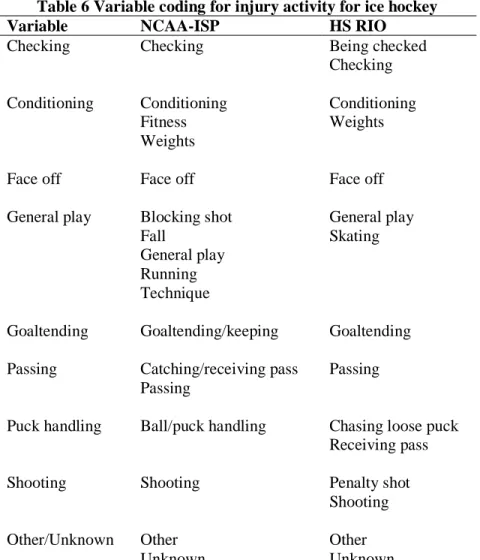
Table 1 Definitions and variables ... 48
Table 2 Validity of sports injury surveillance... 50
Table 3 Variable coding for participation restriction time... 51
Table 4 Variable coding for basic mechanism ... 52
Table 5 Variable coding for injury activity for football ... 53
Table 6 Variable coding for injury activity for ice hockey ... 54
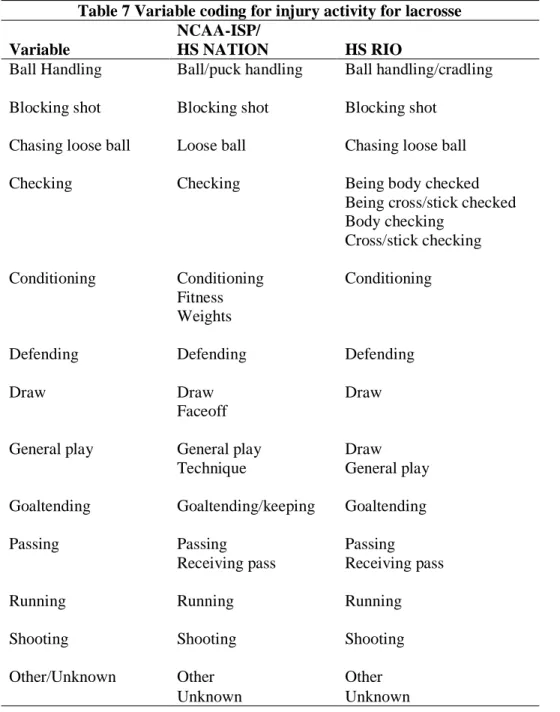
Table 7 Variable coding for injury activity for lacrosse ... 55
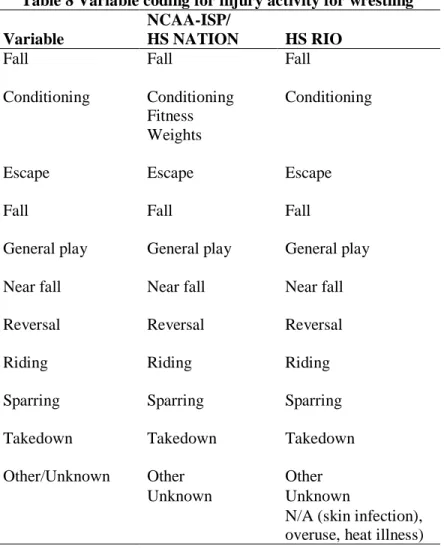
Table 8 Variable coding for injury activity for wrestling ... 56
Table 9 Injury counts and athlete-exposures in NCAA men’s and high school boys’ football for cervical muscle strains ... 57
Table 10 Injury counts, athlete exposures in NCAA men’s and high school boys’ ice hockey for cervical muscle strains ... 58
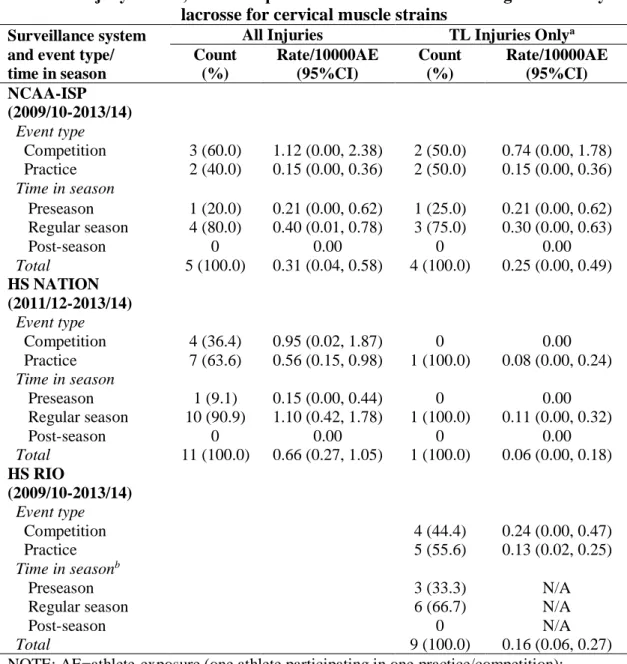
Table 11 Injury counts, athlete exposures in NCAA men’s and high school boys’ lacrosse for cervical muscle strains ... 59
Table 12 Injury counts, athlete exposures in NCAA men’s and high school boys’ wrestling for cervical muscle strains ... 60
Table 13 Injury Rate Ratios (IRR) comparing cervical muscle strain rates within NCAA men’s and high school boys’ sports, by event type and time in season ... 61
Table 14 Injury Rate Ratios (IRR) comparing cervical muscle strain rates within level of play, by sport ... 62
Table 15 Injury Rate Ratios (IRR) comparing cervical muscle strain rates within sport, by level of play ... 63
Table 16 Cervical muscle strain frequencies in NCAA men’s and high school boys’ sports, by participation restriction time ... 64
vii
Table 18 Cervical muscle strain frequencies in NCAA men’s and high
viii
LIST OF ABBREVIATIONS
AE Athlete-Exposures
CI Confidence Interval
CPSC Consumer Product Safety Commission
EMR Electronic Medical Record
HS High School
HS RIO High School Reporting Information Online
HS NATION National Athletic Treatment, Injury, and Outcomes Network
IP Injury Proportion
IPR Injury Proportion Ratio
IR Injury Rate
IRR Injury Rate Ratio
NCAA National Collegiate Athletic Association
NCAA-ISP National Collegiate Athletic Association Injury Surveillance Program
NCAA-ISS National Collegiate Athletic Association Injury Surveillance System
NEISS National Electronic Injury Surveillance System
NTL Non-Time Loss
PII Personal Identifier Information
1 CHAPTER 1
Cervical spine injuries in athletics are a highly discussed topic. However, the
discussion mainly focuses on catastrophic cervical spine injuries such as vertebral fractures
and traumatic spinal cord injuries as opposed to more benign muscle strains.1–3 Unfortunately, the literature surrounding cervical muscle strains is extremely limited,
especially in athletes. Cervical muscle strains are significantly more common than the
well-publicized catastrophic injuries, resulting in substantial pain or disability, but are often
dismissed due to their lack of obvious severity.
Most studies examining the presence of neck pain and disorders are studied within the
general population, while the majority of studies in the athletic population are focused on
more significant injuries associated with acute trauma. A wide variety of treatments are
available for neck disorders, but the evidence supporting their effectiveness is limited.4–6 Further, treatments for neck disorders are typically used on chronic neck pain patients instead
of the acute neck pain experienced by athletes with cervical muscle strains. The focus of this
project was to gain an in-depth understanding of the risk factors, common mechanisms, and
at-risk populations for cervical muscle strains in high school and collegiate male football, ice
hockey, lacrosse and wrestling.
Due to the limited research on cervical muscle strains in athletics, there are many
gaps in the literature. The incidence of cervical muscle strains has been examined using data
collected via the NCAA Injury Surveillance Program. Previous injury surveillance studies
2
studies were influential because they separated the data into both body part injured and type
of injury, thereby presenting specific rates of cervical muscle strains. These studies did not
focus their investigation to a specific injury type; instead, they generally examined the
distribution of injuries seen in various NCAA sports. In the discussion of the injury
distribution only injuries representing greater than 1.0% of total injuries were reported, and
as a result, cervical muscle strains were not reported in all four studies.7–10 It is important to understand the incidence of these injuries in athletic populations to understand the risks these
athletes experience. Typically, only general mechanisms of injury such as player contact,
ground contact, and non-contact, have been given as the cause of cervical muscle strains.
Player-to-player contact is the most common general injury mechanism7–10, but it is
important to understand sport-specific mechanisms (ex. tackling, take down, checking, etc.)
as well as the biomechanical causes (ex. overstretch, whiplash, etc.) of these injuries to
increase understanding of these injuries.
The four sports examined in this thesis – football, ice hockey, lacrosse and wrestling. – all allow some form of legal player-to-player contact during play, which may be associated
with the high overall injury rates found in these sports.11–13 Male athletes also tend to experience more player-to-player contact due to the rules of each individual sport, which
often allow more contact, and these episodes of contact typically occur at higher speeds or
with more associated force. Researchers must also address other variables surrounding
cervical muscle strains such as specific sport-type, setting, time in season, etc. It has yet to be
determined which sports may be most at risk for these cervical injuries. It can be
hypothesized that football may be the most at risk due to the mechanism of tackling, but
3
Neck disorders and pain can have a significant impact on the daily lives of individuals
suffering from them, including having negative impacts on their quality of life, as well as
high costs to treat.14,15 Due to this, it is important to increase the understanding of the effect that cervical muscle strains have on athletes’ ability to participate in their sport and how it may change the players’ effectiveness or level of competitiveness. The purpose of this thesis
was to examine the surveillance data surrounding cervical muscle strains in four male
collision sports – football, ice hockey, lacrosse, and wrestling – from three injury
surveillance programs – (1) NCAA Injury Surveillance Program (NCAA-ISP); (2) the
National Athletic Treatment, Injuries, and Outcomes Network (HS NATION); and (3) High
School Reporting Information Online (HS RIO) – to determine the characteristics, incidence,
and severity of cervical muscle strains overall and compare the data between high school and
collegiate athletes. Comparison between high school and collegiate athletes was completed to
examine how injury rates and characteristics may change with changing levels of competition
and increased access to resources such as athletic trainers, strength and conditioning staff,
and team physicians.
Clinical Significance
There has been little research on cervical muscle strains, especially those sustained in
athletes. In studies that have examined the incidence of these injuries within athletics, there
has been no direct comparison between injuries sustained in high school and collegiate
athletes. The goal of this project was to advance the knowledge base surrounding cervical
muscle strains to help coaches, parents, athletes, and medical providers better understand the
4
to reduce the incidence and severity of such injuries. For example, increased understanding
of the common mechanisms associated with cervical muscle strains may allow coaches and
strength and conditioning staff to teach proper techniques and design strengthening programs
to help athletes avoid primary mechanisms of potential injury.
Previous examinations of injury using sports injury surveillance systems were
restricted by their inclusion of time loss (TL) injuries only, defined as resulting in
participation restriction of at least 24 hours beyond the injury. However, more recently,
sports injury surveillance programs also collect non-time loss (NTL) injuries, which are
defined as those injuries requiring medical care (AT, etc.) and result in participation
restriction time of less than 24 hours. Participation restriction time refers to the amount of
time lost from sport participation due to injury. By examining data that include both TL and
NTL cervical muscle strains, one can better determine the breadth of injuries seen and
managed by team medical staff.
Research Questions and Hypotheses
Outcome: Injury rate per 10,000 AE
Exposure: Collision sports in college
RQ1: Is there a difference in the cervical muscle strain injury rates among male college
collision sports (football, ice hockey, lacrosse and wrestling)?
H1: At the college level, football has a higher cervical muscle strain injury rate compared to
5 Outcome: Injury rate per 10,000 AE
Exposure: Collision sports in high school
RQ2: Is there a difference in the cervical muscle strain injury rates among male high school
collision sports (football, ice hockey, lacrosse and wrestling)?
H2: At the high school level, football has a higher cervical muscle strain injury rate
compared to ice hockey, lacrosse, and wrestling, combined.
Outcome: Injury rate per 10,000 AE
Exposure: High school vs. college
RQ3: Is there a difference in the cervical muscle strain injury rates between high school and
college male collision sports?
H3: Collegiate male athletes in collision sports have a higher cervical muscle strain injury
rate than high school male collision sports.
Outcome: Distribution of participation restriction time
Exposure: High school vs. college
RQ4: What is the distribution of cervical muscle strain injuries by participation restriction
time in high school and college male collision sports?
Outcome: Distribution of injury mechanisms
Exposure: High school vs. college
RQ5: What is the distribution of cervical muscle strain injuries by injury mechanism in high
6 Outcome: Distribution of activity at time of injury
Exposure: High school vs. college
RQ6: What is the distribution of cervical muscle strain injuries by activity in high school and
7 CHAPTER 2 Introduction
The primary focus of this study was to examine cervical muscle strains and the
factors that may play a role in an athlete’s risk for sustaining them. Not much is known or
well-studied about cervical muscle strains in athletic populations. They are most often
studied in working populations and others who may experience high gravitational forces such
as pilots16 and members of the armed forces who jump out of airplanes17. There is a major gap in the knowledge surrounding cervical muscle strains in the athletic population.
Cervical muscle strains
Cervical muscle strains occur in many patient populations, including athletes. In the
realm of cervical spine injuries, muscle strains are often thought of as insignificant when
compared to injuries involving vertebral fractures and traumatic spinal cord injuries. It is
important to acknowledge that cervical muscle strains do pose a significant impact on the
quality of life of patients such as interfering with their ability to perform activities of daily
living and other psychosocial impacts.14,15,18
Jarvinen et al.19 examined muscle strain injuries throughout the body. The most common injuries observed in sports are injuries to muscle, although the proportion can vary
8
“(1) Mild (first degree) strain: a tear of a few muscle fibers; minor swelling and discomfort with no or only minimal loss of strength and restriction of the movements; (2) Moderate (second degree) strain: a greater damage of muscle with a clear loss of strength; (3) Severe (third degree) strain: a tear extending across the whole muscle belly, resulting in a total loss of muscle function.”
Muscle strains also often result in formation of a hematoma at the injured site. These
hematomas can be intramuscular, in which case fascia surrounding the muscle limits the size
of the hematoma, but also causes an increase in intramuscular pressure due to the buildup of
blood. Clinically, these patients present with pain and loss of function. Hematomas can also
be intermuscular, in which case the fascia surrounding muscle ruptures, allowing the blood to
spread into the intermuscular space and does not cause an increase in pressure. These patients
may present with little to no pain.19
While understanding of the mechanisms behind cervical muscle strains is limited,
there have been many studies examining the physiological causes and effects of muscle
strains throughout the body. Muscle strains are often caused by a shearing mechanism that
may tear not only the muscle fibers themselves, but also the endomysial sheaths surrounding
the muscles.19,22 Repair of muscle strains occurs in three phases, as explained by Kalimo et al.22:
“(1) the destruction phase, which is characterized by hematoma formation, myofiber necrosis, and inflammatory cell reaction: (2) the repair phase, consisting of
phagocytosis of the necrotized tissue, regeneration of the myofibers, production of connective tissue scar, and capillary ingrowth; (3) the remodeling phase, which consists of maturation of the regenerated myofibers, contraction and reorganization of the scar tissue, and restoration of the functional capacity of the repaired muscle. Repair and remodeling often occur simultaneously.”
Initial treatment for muscle strains throughout the body is often the RICE principle –
rest, ice, compression and elevation. Some of these are unable to be applied to the cervical
9
and move the head. While relative rest may be achieved via limitation of aggravating
activities, complete rest is difficult to accomplish. Because of the vital structures present in
the cervical region, compression is also not a viable treatment option for cervical muscle
strains. Positionally, the neck is usually elevated above the heart. Ice can be used to treat
pain if necessary, but due to the number of superficially located neurovascular structures in
the neck region, caution is advised. Although there are precautions when using RICE in
cervical muscle strains, research has shown that treatments such as focused patient
education23, range of motion exercises24,25, and manipulations/mobilizations23,25,26 can be both easy and effective treatments for neck pain. When injuries are sustained to the cervical
region for these athletes, it is important to first establish that there is no risk of a life altering,
or even life-threatening, result.
Epidemiology of neck strains in high school and college athletes
Many studies have examined the epidemiology of athletic injuries and conditions in
high school and collegiate athletics.12,27–29 However, little if any have specifically examined neck strains. Studies typically focus on catastrophic conditions such as TSCI1–3 and cervical spine fractures;2,30 however, such injuries are rare.31 In other studies, neck strains are grouped with other neck injuries, which are then grouped with head/face injuries.32–34 Specific findings related to neck strains are important to understand because such injuries,
despite being less severe than catastrophic injuries, are more common and may have a greater
cumulative impact on the entire athlete population in terms of participation restriction time
10
The information available specifically surrounding cervical muscle strains is limited
and mostly found in surveillance studies. Several studies have found neck muscle-tendon
strain injuries constitute approximately 1-2% of all injuries within collegiate football, ice
hockey, lacrosse and wrestling., with rates in competition being greater than practice.7–10 For example, these injuries accounted for 0.46/1000 AE in football games,8 0.60/1000 AE in wrestling matches,7 and 0.12/1000 AE in lacrosse games.9 Data on neck muscle-tendon strains was not reported for men’s ice hockey as they constituted less than 1.0% of all
injuries.10 Rechel et al.34 found the injury rate of high school athletes participating in football, boys’/girls’ soccer, boys’/girls’ basketball, wrestling, baseball and softball to be greater in
competitions (4.63/1000 AE) than in practices (1.69/1000 AE). Rechel et al.34 broke injuries down into lower extremity, upper extremity, trunk, and head/neck/face. The proportions of
head/neck/face injuries may be skewed due to high numbers of concussions and other head or
face injuries sustained in athletics. Head/neck/face injuries accounted for 14.0% of football
practice and 17.1% of football competition injuries.34 19.4% of wrestling injuries sustained during practice and 17.9% of wrestling injuries sustained during competition can be
accounted for as head/neck/face injuries.34 These studies provided a better understanding of neck strain rates when compared to the data available for high school athletics, but when
injury counts are low, such as in ice hockey, specific numbers were not given making it
difficult to have a true understanding of the rates in these sports.
The limited research specific to neck strains during high school and college sports is
focused mostly on football and ice hockey. Since many injuries have been attributed to
11
and wrestling. have high rates of player-to-player contact. Due to the expectation that these
sports would experience the highest rates of player-to-player contact, their injury rates can be
expected to be higher than their counterparts who participate in non-contact or non-collision
sports.
Data surrounding the common specific mechanisms associated with cervical muscle
strains is limited. It is assumed that the general mechanisms responsible for other injuries in
these sports are also responsible for cervical muscle strains. In all four sports,
player-to-player contact is the most prevalent injury mechanism. In depth analysis of the specific
mechanisms for cervical muscle strains is lacking. It is understood that these injuries can be
either contact (e.g. an individual’s head being forcefully pushed in one direction during
tackling) or noncontact (e.g., overexerting oneself in the weight room), but a large amount of
variation may exist in the specific causes of these injuries.
As shown above, research on cervical muscle strains is very limited in both the
collegiate and high school populations. More importantly, the information that is available is
either very general or collapses this type of injury with many others making it difficult to
draw conclusions. The purpose of this thesis was to examine the incidence of cervical muscle
strains at both the high school and collegiate level, while examining the common
mechanisms, at-risk populations, specific activity at time of injury, and participation
restriction time. Three surveillance data sources were used to examine these factors: (1) the
12
Injury surveillance systems with adolescent and young adult populations
National Electronic Injury Surveillance System (NEISS)
NEISS collects injury data from hospital emergency departments throughout the
country. NEISS was developed in 1970 by the Bureau of Product Safety for the United States
Food and Drug Administration and collected injuries sustained as the result of commercial
products.36 The Consumer Product Safety Commission (CPSC) began collecting data in 1973. In 2000, they expanded data collection to begin including all injuries seen in
emergency departments, including those unrelated to commercial products.36 Beginning in January 2000, a sample of 100 hospitals pulled from five strata have been used.37 These five strata consist of four which are based on size of hospital (number of emergency room visits) and a fifth consisting of children’s hospitals. A variety of variables about the injured
individual, injury, and cause are all collected and compiled into a database including date,
product, sex, age, diagnosis, disposition, locale and body part.38 The use of NEISS data is limited due to the fact that data are collected from emergency departments and use only a
small sample. The data is reliant upon cases presenting to emergency departments, which can
often miss a significant proportion of injuries that do not result in the need to present to the
emergency department. These data also lack the specific details seen in other injury
surveillance programs surrounding variables such as injury mechanism and participation
restriction time.
Studies have been conducted using NEISS data to examine sport-related injuries
reporting to emergency departments. Deits et al.39 examined ice hockey injuries reporting to emergency departments from 1990-2006. During this time period, 98% of ice hockey injuries
13
for 18.2% of injuries in the 15-18 year old population and 15.3% of injuries in the 19-29 year
old population reporting to the emergency department.39 Cervical muscle strains were not specifically discussed, although neck injuries in the 15-18-year-old population accounted for
2.7% of injuries, and 1.0% in the 19-29 year old population.39 The most common mechanism of neck injuries in ice hockey reporting to the emergency department was contact with the
boards (31.5%).39 Delaney et al.40 examined football and ice hockey injuries reporting to the emergency department from 1990-1999. 98.5% of ice hockey neck injuries and 91.1% of
football neck injuries reporting to the emergency department were identified as
contusions/strains/sprains.40 Myers et al.41 examined school-aged wrestling neck injuries reporting to emergency departments from 2000-2006. The most commonly diagnosed
condition was a sprain/strain and 97% of these injuries seen were treated and released.41 Head and neck injuries accounted for 14.5% of all injuries reporting to emergency
departments in the 12-17 year old age group.41
National Collegiate Athletic Association Injury Surveillance Program (NCAA-ISP)
The NCAA-ISP is an injury surveillance system tracking data points about injuries
sustained in the participating schools’ respective collegiate athletic programs. The previous
iteration of the NCAA-ISP, the NCAA Injury Surveillance System (ISS), began as a hard
copy system in 1982, in which athletic trainers completed a two-page form about each injury
and then mailed or faxed it directly to the NCAA.42 Due to the large amount of time and resources required by this system, when the internet became widely available, the NCAA
transitioned to a web-based system in 2004. This web-based ISS incorporated many of the
aspects of an electronic medical record (EMR), which allowed many schools to utilize the
14
incorporating a common data element that allowed the system to collect data from a range of
EMR systems thereby lessening the burden on athletic trainers. The National Institute of Health defines a common data element as “information that describes a piece of data to be
collected... that is common to multiple data sets across different studies.”43 The use of a common data element allows the collection of data across a variety of EMR systems and by a
variety of individuals. At this time, the NCAA ISS was renamed the NCAA-ISP. This new
update to the system allowed athletic trainers to document their injury data only once in their
EMR as they would do as part of their daily clinical practice. This system incorporates all
injuries that are documented in the electronic medical records regardless of type or severity.
This allows this system to gather data on a wide range of injuries, including catastrophic
injuries, TL injuries, and NTL.
National Athletic Treatment, Injury and Outcomes Network (HS NATION)
HS NATION is an injury surveillance program used to examine data surrounding
injuries seen in a sample of high school athletic populations with access to athletic trainers.
During the 2011/12-2013/14 academic years, HS NATION collected data from 147 high
schools across 26 states.13 The goal of HS NATION is to “provide a comprehensive
examination of all [TL and NTL] injuries and the associated [athletic training] services in the high school setting.”29 HS NATION utilizes a convenience sample and uses methods similar
to the NCAA-ISP. The software is embedded into the EMR systems commercially available
to athletic trainers.44 The data imported by the athletic trainers include variables about both condition (severity of injury, specific diagnosis, site of injury) and circumstances
(mechanism of injury, activity, game vs. practice). The same limitations experienced by the
15
procedures. However, HS NATION also encompasses a wide range of injuries such as with
the NCAA-ISP, from NTL to catastrophic injuries. HS NATION and the NCAA-ISP allow
for the most inclusive data sets available by including similar variables at both levels, about a
wide range of injury severities.
High School Reporting Information Online (HS RIO)
HS RIO is an injury surveillance system covering a convenience sample of high
schools with athletic trainers throughout the United States.45 The internet-based system was established during the 2005-06 academic year. HS RIO is used as part of a large study titled
the National High School Sports-Related Injury Surveillance Study. Data are captured
surrounding athlete exposures, injuries (location, severity, diagnosis, etc.), and the injury
events (mechanism of injury, activity, position, etc.).45 Certified athletic trainers collect data through an online platform on a weekly basis. Throughout the academic year, athletic trainers
are able to review and update information as needed. The data are then analyzed to determine
patterns, rates, and trends within the injuries sustained by high school athletes.
The sample of schools used by HS RIO has been created to encompass schools
dispersed across 8 geographical strata.46 These are determined by school population (either less than or greater than 1000 students) and the geographic region of the US census. A
convenience sample of high schools divided across the 8 strata was gathered through
voluntary participation of the athletic trainers. The 100-school random sample is pulled from
this convenience sample. Researchers can utilize data from either the 100-school random
sample, or the entire convenience sample of schools. The goal of HS RIO is to use the data to
16
The data collected by HS RIO encompasses only TL injuries, including those that are
catastrophic or fatal. These limited data increase the difficulty of gathering an understanding
of all injuries sustained by the high school athletic population. However, the dataset is
beneficial as its larger sample of schools, national coverage, and longer study period provide
more cases of TL cervical muscle strain injuries than HS NATION.
Using sports injury surveillance to examine neck strains in high school and college athletes
The need to examine cervical muscle strains in high school and college athletes is
imperative. There are close to 8 million high school athletes as of the 2014/15 academic
year.47 There are over 480,000 student athletes within the NCAA.47 Examination of injuries occurring within both high school and collegiate athletes is important as populations continue
to grow as interest in sports increase.
Unfortunately, data on neck strains specifically in athletics are limited in a number of
ways. First, most published research on cervical spine injuries in athletes focus on the more
significant, and potentially disabling, injuries such as cervical vertebrae fractures or TSCIs.
However, other studies have shown that muscle-tendon strains in the cervical region of the
spine constitute a small, but important, portion of athletic injuries, especially involving
collision sports.7–10 Cervical muscle strains can have a significant impact on an individual’s ability to effectively participate in their sport, as well as impact their daily lives. Second,
sports injury surveillance systems utilized to describe the epidemiology of sport-related
injuries among athletes, do not focus specifically on cervical muscle strains, rather placing
17
Although cervical muscle strains may be less prevalent than other more common
injuries, it is important to understand their incidence, severity, and associated risk factors due
to the long-term implications on health-related quality of life. Long term implications
include psychosocial factors such as depression, anxiety disorders, and alcohol
abuse/dependence.18 The prevalence of mental health issues such as depression have been identified in samples of young athletes, and may be more prevalent than their non-athlete
counterparts.48 Depression was often seen following motor vehicle crashes in which the victims suffered a cervical muscle strain.49 Although research is lacking on this topic, it is possible that injuries that are not well-treated at the high school level may carry over to the
collegiate level, and may be exacerbated when considering the increased commitment,
intensity and overall training load that athletes face. Thus, these medical concerns, if not
detected and managed properly, may lead to long-term adverse effects later in life.18 Gore et al.50 found only 43% of their patients suffering from neck pain had complete resolution of their symptoms between initial and final evaluation (approximately 10 years).
Frequency and characteristics of cervical muscle strains in four collision sports (football, wrestling, boys’/men’s ice hockey, boys’/men’s lacrosse) were examined at both
the high school and collegiate level through the NCAA-ISP, HS NATION and HS RIO.
NEISS data was not utilized in this study due to its collection of data only from injuries
reporting to emergency departments. Because these three sports injury surveillance systems
utilize large samples of athletes across multiple years, there is better potential to examine
cervical muscle strains to identify injury rates and patterns. Examining cervical muscle
strains in sports injury surveillance data will also provide the opportunity to identify manners
18 CHAPTER 3
We utilized a descriptive epidemiologic design to estimate the incidence of cervical
muscle strain injuries in high school and collegiate male collision sports – football, ice
hockey, lacrosse and wrestling. Data for the high school and collegiate levels originated from
the NCAA-ISP,42 HS NATION,13 and HS RIO.46 HS NATION and the NCAA-ISP are managed by the Datalys Center for Sports Injury Research and Prevention. Dr. R. Dawn
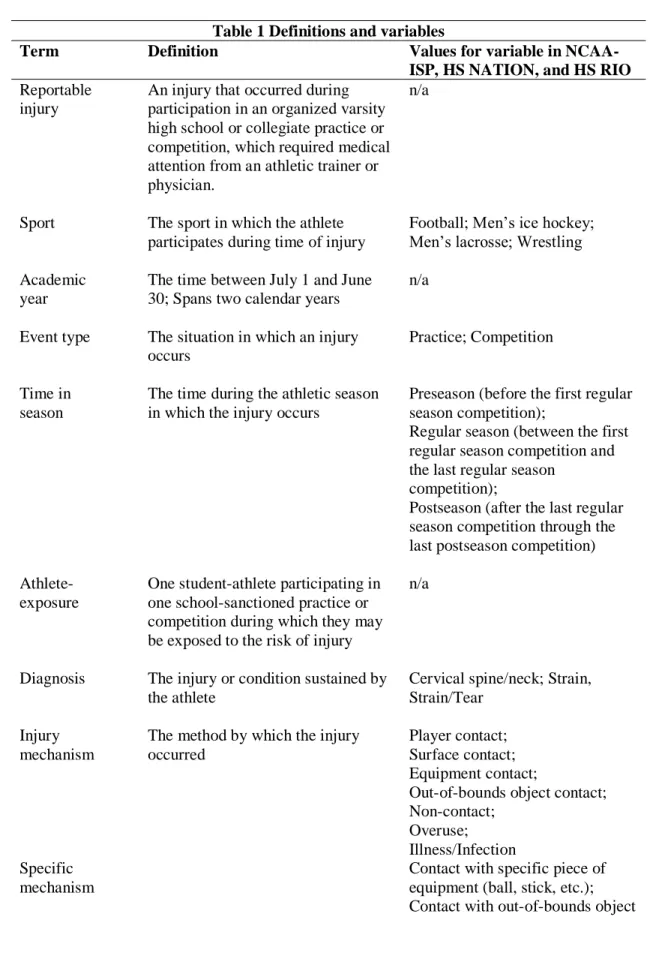
Comstock of the Colorado School of Public Health manages HS RIO. Table 1 defines the
variables of interest in this thesis.
The NCAA-ISP, HS NATION, and HS RIO have recruited participants across the
United States to ensure a variety of high schools and NCAA schools were included. Both the
NCAA-ISP and HS NATION utilize a convenience sample for data collection. The
representativeness of these samples has not been established. HS RIO utilizes a convenience
sample and then draws a national stratified sample for a total of two data collection panels.
This thesis utilized the full convenience sample for the data analysis. Although the
NCAA-ISP and HS NATION use convenience sampling, they aim to purposefully recruit schools
from across the United States (and across all three NCAA divisions for the NCAA-ISP) to
represent diversity. The methodologies of the NCAA-ISP, HS NATION, and HS RIO have
19
surveillance systems. Previous studies have utilized the NCAA-ISS with either HS
NATION52,53 or HS RIO for injury comparisons.54
NCAA-ISP
Since the 1980s, the NCAA-ISP has collected data from 25 varsity sports across all
three divisions. Data from the 2009/2010 through 2013-/2014 academic years were used in
this study. The NCAA-ISP began as a pen-and-paper system, but transitioned into a
web-based system in the 2004/05 academic year. A limitation of both of these previous iterations
is that data collection for the purposes of surveillance was separate from data collection for
in-house record keeping. Some ATs used the ISS as their primary EMR, but ATs who did
not were required to do double-data entry, causing them to have to enter data into their
medical records, as well as complete a separate record to submit to the surveillance system.
To minimize AT reporting burnout, as well as establish clearly-defined outcomes, only TL
injuries (i.e., those injuries resulting in at least 24 hours of participation restriction time) were
captured.55
At the beginning of the 2009/10 academic year, a new iteration of system was
launched; data collection for surveillance purposes was integrated in the record keeping of
pre-existing electronic medical record (EMR) systems in order to streamline the process of
delivery of data to the NCAA. Because of this integration, ATs were able to collect
surveillance data by simply using the EMRs that they were already generating as part of their
daily clinical practice, thus eliminating double-data entry. This iteration of the NCAA-ISP
introduced data collection of NTL injuries (i.e., those injuries resulting in under 24 hours of
20
NCAA-ISP was collected from an average of qualified schools for 25 football programs, 18
ice hockey programs, 11 lacrosse programs, and 7 wrestling programs.
NATION
HS NATION was based on the current methodology of the NCAA-ISP.13 All high schools with contact information available for the athletic trainer, athletic director, etc.
throughout the United States were invited to participate in HS NATION . The schools who
volunteered to participate have been included in the dataset. The athletic trainers from these
high schools completed an online training module with a member of the Datalys staff before
incorporating the use of NATION into their daily practice. Like the NCAA-ISP, HS
NATION is a web-based system that integrates data collection within existing EMR systems.
HS NATION collected data from 27 sports at 147 secondary schools from 26 during the
2011/2012 to 2013/2014 academic years.13 These school years were used for the proposed study. HS NATION does not collect data on high school ice hockey injuries; therefore, a
comparison cannot be performed with the NCAA-ISP data.
High School RIO
Athletic trainers with valid email addresses registered through the National Athletic Trainers’ Association were contacted and invited to participate in HS RIO. HS RIO utilizes
two different panels for data collection. A convenience sample of voluntary participation is
collected. From this convenience sample a random sample of 100 schools used for reporting
21
reporting data on additional sports (such as ice hockey, lacrosse, and field hockey) are
created. The second data panel is difficult to establish a random geographic sample for due to
regional differences in sport sponsorship. During the 2014/15 school year, 186 high schools
collected data on football, 161 on wrestling, 30 on boys’ ice hockey, and 69 on boys’
lacrosse.46
Data Collection Process NATION and NCAA-ISP
For both HS NATION and the NCAA-ISP, athletic trainers provided coverage for
school-sanctioned practices and competitions and collected injury and exposure data. Table
1 summarizes the variables and input values that were used in our analyses, including
diagnosis, sport, event type (i.e., practice, competition), position, injury mechanism, and
participation restriction time. Athletic trainers also recorded how many student-athletes
participated in each event (e.g. athlete exposures).
During the export process from participating ATs’ EMRs to the central data managed
by Datalys, the data were de-identified and checked for quality. Personal identifier
information (PII) such as name, birthdate, social security number, etc. were removed and
replaced with computer-generated numeric identifiers for each injured athlete per injury.
Datalys and any external researchers do not have access to these PII.
All data passed through an automated verification process that detected outliers and
out-of-range values. After passing through the automated verification engine, the data were
reviewed manually by quality control staff, with invalid values flagged. The athletic trainer
then worked with Datalys staff to resolve any data-related issues. For example, if an injury
22
January 2016, Datalys staff would confirm with the athletic trainer that the actual return date
was January 2017. Exposure data were considered invalid if their values were either zero or
missing. Any exposure data that could not be corrected were replaced with the mean
imputation value based on all other valid AE data from the same sport, year, division, and
exposure.42 HS RIO
National Athletic Trainers’ Association-affiliated athletic trainers responsible for
coverage of high school sporting events collect daily exposure and injury data. This data is
reported weekly throughout the academic year using a secure website. Data collection for the original 9 sports (football, boys’/girls’ soccer, boys’/girls’ basketball, wrestling, baseball,
girls’ volleyball, and softball) began with the 2005/06 school year. In 2008/09, additional
sports of interest (boys’ ice hockey, girls’ field hockey, boys’/girls’ lacrosse) began data
collection. Athletic trainers complete injury reports that include demographic information
about the athlete (e.g. age, weight, academic year, etc.), the circumstances surrounding the
injury (e.g. position, mechanism, etc.), and the injury characteristics (e.g. diagnosis, body
site, etc.). High School RIO runs annual summary reports that include checks of the internal
validity of the data.45 These summary reports compare the HS RIO data to that of clinical records maintained by athletic trainers at participating schools.
Validity of HS NATION, NCAA-ISP, and HS RIO
Multiple studies have reviewed the validity of injury surveillance program data,
23
providing a better understanding of the incidence and etiology of injuries and conditions.28 Table 2 summarizes the validity of injury surveillance data sources by system.
The outcome of interest in this study was neck strains examined in male high school
and collegiate collision athletes (football, ice hockey, lacrosse and wrestling). The
NCAA-ISP, HS NATION, and HS RIO used the same defined reporting variables that can be found
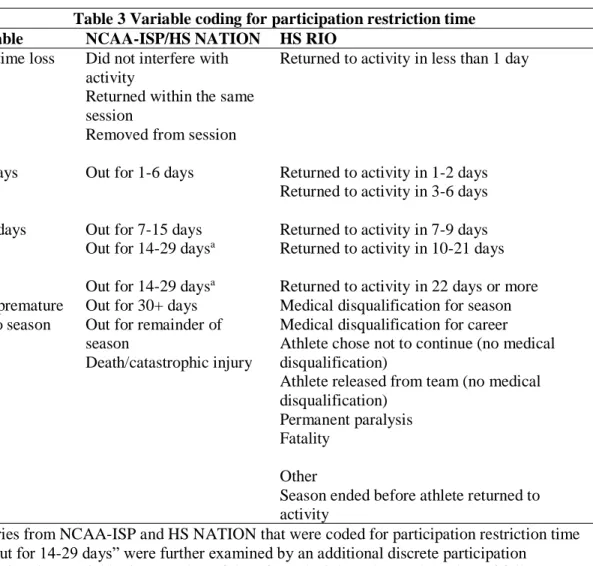
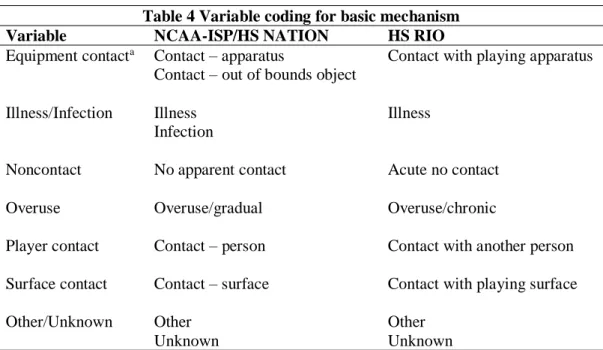
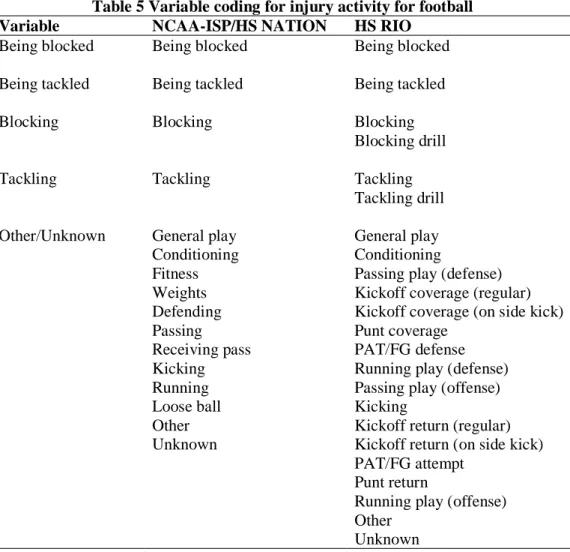
in Table 3-Table 8 below.
Statistical Analyses
Data were analyzed to assess the rates and patterns of cervical muscle strains in male
high school and collegiate collision-sport athletes. The four sports analyzed were football, ice
hockey, lacrosse and wrestling. Data were analyzed using SPSS version 26.0.
Injury rates (IR) were calculated as the number of injuries per the number of athlete
exposures (AEs).
𝐼𝑅 = # 𝑖𝑛𝑗𝑢𝑟𝑖𝑒𝑠 # 𝐴𝐸𝑠
Injury rates were calculated per 10,000 AEs.
Injury rate ratios (IRR) were used to compare injury rates within sports by event type
(competition vs. practice), across sports, and by level of competition. Due to low injury
counts in ice hockey, lacrosse, and wrestling compared to high injury counts in football,
football IR were compared against the IR of the other three sports combined.
𝐼𝑅𝑅 = 𝑟𝑎𝑡𝑒 𝐴 𝑟𝑎𝑡𝑒 𝐵
Although a common measure of injury incidence is risk, or the number of individuals
that are injured within the study time frame, the NCAA-ISP and HS NATION do not collect
24
As an alternative, injury proportions have been used due to their ability to include the number
of injuries with a certain characteristic.
𝐼𝑃 = # 𝑖𝑛𝑗𝑢𝑟𝑖𝑒𝑠 𝑤𝑖𝑡ℎ 𝑐ℎ𝑎𝑟𝑎𝑐𝑡𝑒𝑟𝑖𝑠𝑡𝑖𝑐 # 𝑡𝑜𝑡𝑎𝑙 𝑖𝑛𝑗𝑢𝑟𝑖𝑒𝑠
Whereas the unit of analysis is person at risk, the unit of analysis in injury proportion is
injury.
All IRR with 95% confidence intervals (CI) not containing 1.00 were considered
statistically significant. The following section details the analyses computed specifically for
each research question:
RQ1: Injury rate ratios were calculated to compare cervical muscle strain injury rates
in collegiate football versus collegiate men’s ice hockey, and men’s lacrosse, and
wrestling, combined.
RQ2: Injury rate ratios were calculated to compare cervical muscle strain injury rates in high school football versus high school men’s ice hockey, men’s lacrosse, and
wrestling, combined.
RQ3: Injury rate ratios were calculated comparing cervical muscle strain injury rates
in each of the four examined sports across the two levels of competition.
RQ4: Injury proportions were calculated for participation restriction time resulting
from cervical muscle strain per sport across the two levels of competition.
RQ5: Injury proportions were calculated for injury mechanism of cervical muscle
strains per sport across the two levels of competition.
RQ6: Injury proportions were calculated for injury activity of cervical muscle strains
25 Power
For IRRs and IPRs, effect estimates are based on two primary factors: (1) the
estimated counts in the comparative and reference groups; and (2) the projected magnitude of
the effect estimate. The farther the effect estimate is from the null value of 1.00, the lower
the estimated counts necessary to achieve high statistical power. For example, to obtain
approximately 80% statistical power in a sample in which 50% of events were in each group,
an IRR of 1.5 requires a total N of approximately 200, whereas an IRR of 4.0 requires a total
N of approximately 18.59
Cervical muscle strains are a relatively rare injury outcome, which makes the
attainment of high statistical power difficult. However, previous research that provided
injury data from collegiate football and wrestling during the 1988/89-2003/04 academic
years noted a larger competition-to-practice IRR (~6.0-7.7).7,8 Due to the large IRR, we project that a lower reported incidence is necessary during our study period.
To estimate the specific counts in the comparative and reference groups of interest –
in this case, competitions and practices – we made assumptions based on the
previously-published NCAA-ISP data,7,8 which we then compared to the dataset that we received from Datalys. First, previous literature found that approximately 40% of cervical muscle strains
occurred in competitions.7,8 These previous findings were across a 15-year period and only considered TL injuries. Our NCAA-ISP data used a 5-year period and included NTL injuries,
which are estimated to comprise approximately 50% of all injuries.53 In addition, school participation during the 2009/10-2013/14 academic years was approximately 80% lower than
26
strain injuries reported in Dick et al.8 * (1/3 for 5- vs. 15-year period) * (2 for inclusion of NTL injuries) * (1/5 for lower participation rate)]. With this, we projected over 95%
statistical power for a number of comparisons in football.59 Data for wrestling were
available,7 providing us with projections of over 95% power as well. Unfortunately, data for lacrosse and ice hockey are unavailable, although previous literature posited that cervical
muscle strains comprised <1% of all injuries in competitions and practices.9,10 Despite this limitation, we opted to calculate the IRRs for these sports to maintain consistency across
sport-specific analyses.
Regarding injury proportions, the estimated counts are likely to be drastically lower
as cervical muscle strains with specific characteristics are examined (e.g. a specific
mechanism, activity, participation restriction time). Given these concerns, we opted to keep
analyses related to the distributions of characteristics in cervical muscle strains as descriptive
and exploratory. As a result, injury proportion ratios, which statistically compare an injury
27 CHAPTER 4
Frequencies Football
The NCAA-ISP reported a total of 84 cervical muscle strains in college football
during the 2009/10 to 2013/14 school years (Table 9). The majority of these injuries
occurred during practice (52.4%) and in the regular season (67.9%). Overall, 50.0% (n=42)
of these injuries were TL injuries.
HS NATION reported a total of 184 cervical muscle strains in HS football during the
2011/12 to 2013/14 school years (Table 9). The majority of these injuries occurred during
practice (74.5%) and the regular season (51.1%). Overall, 17.9% (n=33) were TL injuries.
HS RIO reported a total of 181 TL cervical muscle strains in HS football during the
2009/10 to 2013/14 school years (Table 9). The majority of these injuries occurred during
practice (58.0%) and the regular season (64.1%).
Ice Hockey
The NCAA-ISP reported a total of 26 cervical muscle strains in college ice hockey
during the 2009/10 to 2013/14 school years (Table 10). The majority of these injuries
occurred during competition (80.8%) and in the regular season (88.5%). Overall, 46.2%
28
HS RIO reported a total of 5 TL cervical muscle strains in HS ice hockey during the
2009/10 to 2013/14 school years (Table 10). Of these 5 injuries, 100% of them were suffered
during regular season competitions.
Lacrosse
The NCAA-ISP reported a total of 5 cervical muscle strains in college lacrosse during
the 2009/10 to 2013/14 school years (Table 11). The majority of these injuries occurred
during competition (60.0%) and in the regular season (80.0%). Overall, 80.0% (n=4) of these
injuries were TL injuries.
HS NATION reported a total of 11 cervical muscle strains in HS lacrosse during the
2011/12 to 2013/14 school years (Table 11). The majority of these injuries occurred during
practice (63.6%) and the regular season (90.9%). Overall, 9.1% (n=1) were TL injuries.
HS RIO reported a total of 9 TL cervical muscle strains in HS lacrosse during the
2009/10 to 2013/14 school years (Table 11). The majority of these injuries occurred during
practice (55.6%) and the regular season (66.7%).
Wrestling
The NCAA-ISP reported a total of 5 cervical muscle strains in college wrestling
during the 2009/10 to 2013/14 school years (Table 12). The majority of these injuries
occurred during competition (60.0%) and in the regular season (80.0%). Overall, 40.0%
(n=2) of these injuries were TL injuries.
HS NATION reported a total of 7 total cervical muscle strains in HS wrestling during
the 2011/12 to 2013/14 school years (Table 12). The majority of these injuries occurred
during practice (71.4%) and the regular season (57.1%). Overall, 57.1% (n=4) were TL
29
HS RIO reported a total of 66 TL cervical muscle strains in HS wrestling during the
2009/10 to 2013/14 school years (Table 12). The majority of these injuries occurred during
practice (59.1%) and the regular season (75.8%).
Rates Football
The NCAA-ISP reported an overall cervical muscle strain IR in college football of
0.93/10,000 AE (95% CI: 0.73, 1.13) during the 2009/10 to 2013/14 school years (Table 9).
The IR was higher in competition versus practice (IRR=8.47; 95% CI: 5.52, 13.00) (Table
13). However, IRs in the preseason and regular/postseason did not differ (IRR=0.91; 95% CI:
0.57, 1.46). Findings were retained when restricted to TL injuries for event type (IRR=8.47;
95% CI: 4.62, 15.52), as well as time in season (IRR=1.02; 95% CI: 0.53, 1.96).
HS NATION reported an overall cervical muscle strain IR in HS football of
1.66/10,000 AE (95% CI: 1.42, 1.90) during the 2011/12 to 2013/14 school years (Table 9).
The IR was higher in competition versus practice (IRR=1.50; 95% CI: 1.08, 2.09) and in
preseason versus regular/postseason (IRR=1.77; 95% CI: 1.33, 2.37) (Table 13). Findings
were retained when restricted to TL injuries for event type (IRR=4.65; 95% CI: 2.35, 9.20).
When restricted to TL injuries only, the IR for preseason versus regular/postseason did not
differ statistically (IRR=0.53; 95% CI: 0.23, 1.23).
HS RIO reported an overall TL cervical muscle strain IR in HS football of
0.77/10,000 AE (95% CI: 0.66, 0.88) during the 2009/10 to 2013/14 school years (Table 9).
The IR was higher in competition versus practice (IRR=3.50; 95% CI: 2.61, 4.70) (Table 13).
30 Ice Hockey
The NCAA-ISP reported an overall cervical muscle strain IR in college ice hockey of
0.92/10,000 AE (95% CI: 0.57, 1.27) during the 2009/10 to 2013/14 school years (Table 10).
The IR was higher in competition versus practice (IRR=13.21; 95% CI: 4.98, 35.03) (Table
13). However, IRs in the preseason and regular/postseason did not differ statistically
(IRR=0.72; 95% CI: 0.17, 3.03). Findings were retained when restricted to TL injuries for
event type (IRR=6.29; 95% CI: 1.89, 20.89), as well as time in season (IRR=1.72; 95% CI:
0.38, 7.84).
HS RIO reported an overall TL cervical muscle strain IR in HS ice hockey of
0.17/10,000 AE (95% CI: 0.02, 0.32) during the 2009/10 to 2013/14 school years (Table 10).
Event type and time in season IRR could not be calculated for HS RIO ice hockey.
Lacrosse
The NCAA-ISP reported an overall cervical muscle strain IR in college lacrosse of
0.31/10,000 AE (95% CI: 0.04, 0.58) during the 2009/10 to 2013/14 school years (Table 11).
The IR was higher in competition versus practice (IRR=7.46; 95% CI: 1.25, 44.64) (Table
13). However, IRs in the preseason and regular/postseason did not differ (IRR=0.58; 95% CI:
0.07, 5.22). Findings were retained when restricted to TL injuries for time in season
(IRR=0.78; 95% CI: 0.08, 7.48). When restricted to TL injuries only, the IR for competition
versus practice did not differ (IRR=4.97; 95% CI: 0.70, 35.31).
HS NATION reported an overall cervical muscle strain IR in HS lacrosse of
0.66/10,000 AE (95% CI: 0.27, 1.05) during the 2011/12 to 2013/14 school years (Table 11).
31
preseason versus regular/postseason did not differ (IRR=0.15; 95% CI: 0.02, 1.18). IRR
could not be calculated for event type or time in season when restricted to TL injuries only.
HS RIO reported an overall TL cervical muscle strain IR in HS lacrosse of
0.16/10,000 AE (95% CI: 0.06, 0.27) during the 2009/10 to 2013/14 school years (Table 11).
The IR was higher in competition versus practice, but was not statistically significant
(IRR=1.80; 95% CI: 0.48, 6.69) (Table 13). Time in season rates cannot be calculated for HS
RIO.
Wrestling
The NCAA-ISP reported an overall cervical muscle strain IR in college wrestling of
0.64/10,000 AE (95% CI: 0.08, 1.19) during the 2009/10 to 2013/14 school years (Table 12).
The IR was higher in competition versus practice (IRR=12.74; 95% CI: 2.13, 76.22) (Table
13). However, IRs in the preseason and regular/postseason did not differ (IRR=0.61; 95% CI:
0.07, 5.44). IRR could not be calculated when injuries were restricted to TL only.
HS NATION reported an overall cervical muscle strain IR in HS wrestling of
0.29/10,000 AE (95% CI:0.08, 0.51) during the 2011/12 to 2013/14 school years (Table 12).
The IRs of competition versus practice (IRR=1.75; 95% CI: 0.34, 9.00; Table 13) and
preseason versus regular/postseason did not differ (IRR=0.99; 95% CI: 0.19, 5.09). Findings
were retained when restricted to TL injuries for event type (IRR=4.37; 95% CI: 0.62, 31.00)
and time in season (IRR=0.82; 95% CI: 0.09, 7.92).
HS RIO reported an overall TL cervical muscle strain IR in HS wrestling of
0.89/10,000 AE (95% CI: 0.67, 1.10) during the 2009/10 to 2013/14 school years (Table 12).
The IR was higher in competition versus practice (IRR=1.94; 95% CI: 1.19, 3.17) (Table 13).
32 Injury rate comparisons, by sport
Few differences were found for IR between football and the other three sports (ice
hockey, lacrosse, and wrestling) combined. Overall the HS NATION football IR was higher
than the IR of all other sports combined in HS NATION (IRR=3.73; 95% CI: 2.30, 6.05)
(Table 14). The TL IR of HS RIO football was higher than the IR of all other sports
combined in HS RIO (IRR=1.52; 95% CI: 1.17, 1.98). Although IR were higher in football
than all other sports in the NCAA-ISP, the IRR was not significant.
Injury rate comparisons, by level of play
When comparing level of play (i.e., comparing IR in NCAA-ISP vs. HS NATION
and NCAA-ISP vs. HS RIO), few significant differences were found (Table 15). The sole
difference was between cervical muscle strain rates in football in the NCAA-ISP vs. HS
NATION; the IR was lower in NCAA football than HS football (IRR=0.56; 95% CI: 0.43,
0.73).
Participation restriction time
Data for participation restriction time are presented below. Ice hockey data for HS
NATION were not available as data for the sport were not collected.
Football
The majority of all cervical muscle strains sustained in football reported by the
NCAA-ISP (48.8%) and HS NATION (82.1%) were NTL (Table 16). HS RIO reported only
TL injuries; the majority of which resulted in 1-6 days of participation restriction time
33 Ice Hockey
The NCAA-ISP reported a majority of ice hockey cervical muscle strains were NTL
(53.8%) (Table 16). Injuries were almost evenly distributed in HS RIO (1-6 days: 40.0%;
7-21 days: 60.0%).
Lacrosse
The majority of cervical muscle strains in lacrosse resulted in 1-6 days of
participation restriction time in the NCAA-ISP (60.0%) and HS RIO (66.7%) (Table 16). HS
NATION reported the majority of injuries were NTL (90.9%).
Wrestling
The NCAA-ISP reported wrestling cervical muscle strains in which participation
restriction time was evenly distributed between NTL and 1-6 days TL (40.0% each) (Table
16). HS NATION reported the largest proportion of injuries were NTL (42.9%). The
majority of injuries reported by HS RIO resulted in 1-6 days of participation restriction time
(53.0%).
Injury Mechanism
Data for injury mechanism are presented below. Ice hockey data for HS NATION
were not available as data for the sport were not collected. In addition, in HS NATION,
injury mechanism data were available for TL injuries only; as a result, NTL injuries were not
considered in the HS NATION results.
Football
The majority of cervical muscle strains in football were due to player contact in the
34 Ice Hockey
The majority of cervical muscle strains in ice hockey were due to player contact in
the NCAA-ISP (65.4%) (Table 17). Player contact and surface contact were both responsible
for 40.0% (n=2) of injuries in HS RIO.
Lacrosse
All cervical muscle strains in lacrosse were due to player contact in the NCAA-ISP
and HS NATION (Table 17). HS RIO reported 88.9% of injuries with a mechanism of player
contact.
Wrestling
The majority of cervical muscle strains in NCAA wrestling were due to player
contact (60.0%) (Table 17). HS NATION reported a majority of injuries were due to surface
contact (75.0%). HS RIO reported a majority of injuries were due to player contact (43.9%),
followed by surface contact (36.4%).
Injury Activity
Data for injury activity are presented below. Ice hockey data for HS NATION were
not available as data for the sport were not collected. In addition, in HS NATION, injury
activity data were available for TL injuries only; as a result, NTL injuries were not
considered in the HS NATION results.
Football
The majority of cervical muscle strains in football were due to tackling in the
NCAA-ISP (34.5%), HS NATION (30.3%), and HS RIO (38.1%) (Table 18). Being tackled also
35
HS NATION (27.3%), and HS RIO (26.0%) (Table 18). Other injury activities included
blocking and being blocked.
Ice Hockey
The majority of cervical muscle strains in ice hockey were due to general play in the
NCAA-ISP (34.6%) (Table 18). Injuries in HS RIO were evenly distributed between
checking and general play (40.0%). Other injury activities included puck handling, passing,
and skating.
Lacrosse
Cervical muscle strains in lacrosse reported in the NCAA-ISP were evenly distributed
between general play, ball handling, defending, checking, and draw (n=1, 20.0%) (Table 18).
The single injury reported by HS NATION was due to chasing a loose ball. HS RIO reported
a majority of injuries were due to checking (33.3%), followed by general play and chasing
the loose ball (22.2% each). Other injury activities included passing and shooting.
Wrestling
The NCAA-ISP reported the majority of cervical muscle strains in wrestling were due
to sparring (40.0%) (Table 18). HS NATION (50.0%) and HS RIO (37.9%) reported the
majority of injuries were due to takedowns. Other injury activities included escape, reversal,
36 CHAPTER 5
Using data collected from the NCAA-ISP, HS NATION, and HS RIO surveillance
systems, this thesis examined the epidemiology of cervical muscle strains from four male
collision sports – football, ice hockey, lacrosse, and wrestling - at the high school and
collegiate levels. Overall, the incidence of cervical muscle strains was low. It is important to
note that many of the analyses that we explored were not statistically significant. It may be
that there was no association or it may have been due to low injury counts in numerous
sports. However, given the lack of research on this topic, exploratory analyses were
warranted. In this analysis, we found some differences by sport (football versus ice
hockey/lacrosse/wrestling combined) and level of play (college versus high school). In
addition, a majority of cervical muscle strains were NTL and due to player contact. Despite
the low incidence, it is important to consider the development and evaluation of prevention
strategies that may help to decrease the negative effects experienced by athletes who suffer
cervical muscle strains. Patients suffering from neck pain may experience a lower quality of
life and suffer from impacts to their psychosocial wellbeing.14,15,18 It is important to develop effective prevention strategies for cervical muscle strains in spite of the low incidence to aid
37 Rates
Cervical muscle strain injury rates were compared across the four sports examined at
both levels of play. It was hypothesized that football would have the greatest IR compared to
the other three sports (ice hockey, lacrosse, and wrestling) combined at both the high school
and collegiate level. This hypothesis was based on the large amount of player contact
sustained by football athletes, as well as the tendency to have a high IR compared to many
other sports at both levels of play.28,34 At both the high school and collegiate levels, football had the highest injury rate when compared to the other three sports combined, although this
difference was only found to be significant at the high school level. This concurs with
findings examining overall injury rates that were found in previous research using injury
surveillance systems. At the high school level, football was found to have the highest injury
rates.34,60 However, at the collegiate level, wrestling had the highest overall injury rate.12 Although literature surrounding cervical muscle strains is limited, we can estimate that
football would have higher injury rates compared to other sports due to the high frequencies
of player-to-player contact,11 which was the leading injury mechanism for cervical muscle strains. Although contact is an inherent part of football, tackling, when completed
incorrectly, can cause not only an increased risk of cervical muscle strain injuries, but of
catastrophic cervical injuries including TSCIs and vertebral fractures.61 Because football has a high injury rate, coupled with having higher raw injury counts, given their large squad
sizes, one could argue for prevention efforts to focus primarily on football. On the other
hand, it is important to acknowledge that the other three sports examined in this thesis had
reported cervical muscle strain injuries as well. Prevention efforts should be considered
38
Cervical muscle strain injury rates of the four sports examined were compared
between the two levels of play – college and high school. It was hypothesized that collegiate
athletes would experience greater injury rates than high school athletes, due to the intensity
of athletics at the collegiate level compared to the high school level. The results found few
differences between the injury rates of high school and collegiate athletes, which as
previously noted, may have been related to a lack of association or the result of low injury
counts. The sole difference found that the overall injury rate for football in HS NATION was
greater than that of the NCAA-ISP. Research comparing injury rates between high school
and collegiate athletes has found mixed results. A study conducted by Kerr et al.53 found that the injury rate of NTL injuries in high school was greater than college. This greater
proportion of NTL injuries at the high school level may explain our findings. Further, this
difference was not found when restricted to TL injuries only. Two studies examined
concussion injury rates between high school and collegiate athletes and found that generally
high school presented with higher injury rates, except in games where collegiate athletes
experienced a higher injury rate.62,63 Our hypothesis was based on the high level of competition in collegiate sports compared to high school, both between teams during
competitions and within teams for establishing playing time. High school athletes are often
considered to be less skilled, as well as less physically fit for the demands of their sports,
such as protecting themselves when tackling or being tackled. Besides the additional years of
playing time many college athletes have compared to high school athletes to develop their
skills, they have also been exposed to intense strength and conditioning programs focused
specifically on their sport by highly trained staff. This increased focus on strengthening can
39
structures during a tackle due to increased muscle activation and strength. Although ensuring
proper gameplay techniques are provided to all athletes, focusing on those athletes at the high
school level may help to decrease the incidence of cervical muscle strains where the burden
is the greatest.
Cervical muscle strain injury rates for all NCAA sports reported higher injury rates in competitions, as well as for the three sports with data available in HS RIO (football, boys’
lacrosse, boys’ wrestling) and HS NATION football. This finding is consistent with previous
research in which a multitude of studies have found competition injury rates to be
consistently greater than practice injury rates overall.8,28,34,64 Competitions are completed in a faster-paced and more competitive manner than most practices, posing an increased
likelihood of injury for participants. In practices, athletes are competing against their
teammates, which may lead to self-restraint during drills requiring player-to-player contact,
thereby lessening the risk of sustaining an injury during these episodes. It is also important to
acknowledge that across a season, there are a greater number of practice sessions, and
therefore exposures, than competitions. This often leads to a higher injury count in practices
compared to competitions, but an overall lower injury rate. Ensuring proper medical
coverage for both practices and competitions is important so that athletes can receive proper
care when and if an injury is sustained. Medical staff should closely monitor competitions for
athletes sustaining injuries due to the high injury rate in competitions. It is also critical to
have appropriate medical coverage for practices, where a larger number of injuries are