Technology (IJRASET)
©IJRASET 2015: All Rights are Reserved
17
Hierarchical Data Classification and Automatic
Retrieval for Location Based Publish and Subscribe
System
Dr. K. Velmurugan1, Miss. N. Meenatchi2 1
Assistant Professor Department of Computer Science, Govt.Arts and Science College, Uthiramerur
2
Research Scholar, Department of Computer Science, SNR Sons College, Coimbatore - 641028
Abstract- Geospatial data is becoming massive which leads to effective data management by compressing, updating and querying the data fields of the multidimensional spatial and temporal data. The explosion of both the data volumes and dimensionality of these geospatial field data makes the storage, management, query and processing a daunting challenge to existing solutions. In this work, hierarchical tensor decomposition based on the split-and-merge paradigm is developed for continuously compression and appending of multidimensional geospatial field data. the goal is to propose a hierarchical data structure to reformulate and store the large volume of geospatial field data and to develop methods for data storage, query and computation support using this data structure. The Proposed work is achieved through a prototype implementation. The prototype has five components: 1) the design of a buffered hierarchical data structure and data decomposition strategies; 2) a proposal for a blocked data separation mechanism for splitting the huge tensors into small blocks according to the spatial-temporal reference; 3) a proposed algorithm that allows for data appending which is free of arithmetical operations and also computationally adaptive with continuous compression; 4) the development of a hierarchical structure-preserving and dimensional-independent data query which needs only to reform the row of the matrix in the leaf node; 5) the provision of computational operators such as tensor addition and linear operations, as well as a hierarchical structure-preserving computational framework.
Index Terms: Location based Service, Publish and Subscribe System, Data Classification, Hierarchical data structure I. INTRODUCTION
Location based Service (LBS) exploring and exploiting in the internet market. Currently, LBS have been widely accepted because
©IJRASET 2015: All Rights are Reserved
18
the background knowledge regarding the related work. Section 3 explains and formulates the proposed System. The experimental results are discussed in section 4; To conclude the work with future work of the paper at section 5.
II. RELATED WORK
A. Spatial Keyword Querying
With the proliferation of geo-positioning and geo-tagging, spatial web objects that possess both a geographical location and a textual description are gaining in prevalence, and spatial keyword queries that exploit both location and textual description are gaining in prominence. However, the queries studied so far generally focus on finding individual objects that each satisfy a query rather than finding groups of objects where the objects in a group collectively satisfy a query.
B. Efficient Retrieval of the Top-K Most Relevant Spatial Web Objects
Web documents are being geo-tagged, and geo-referenced objects such as points of interest are being associated with descriptive text documents. The resulting fusion of geo-location and documents enables a new kind of top-k query that takes into account both location proximity and text relevancy. To this knowledge, only naive techniques exist that are capable of computing a general web information retrieval query while also taking location into account. The framework leverages the inverted file for text retrieval and the R-tree for spatial proximity querying[9]. Several indexing approaches are explored within the framework. The framework encompasses algorithms that utilize the proposed indexes for computing the top-k query, thus taking into account both text relevancy and location proximity to prune the search space.
C. Location-Aware Instant Search
Location-Based Services (LBS) have been widely accepted by mobile users recently. Existing LBS-based systems require users to type in complete keywords. However for mobile users it is rather difficult to type in complete keywords on mobile devices. Index structure named as prefix region tree (called PR-Tree) which is used to efficiently support location aware instant search. PR-Tree [10] is a tree-based index structure which seamlessly integrates the textual description and spatial information to index the spatial data. Using the PR Tree is efficient algorithms can be modelled to support single prefix queries and multi-keyword queries for classifying the geospatial data.
III. PROPOSED SYSTEM
A. Geo Spatial Data Classification
The Classification technique is developed using the feature extraction methods based on the termination Criteria and data size. The
data classifies into block tensor in terms of Computation balance aspects. To reduce the complexity, to initialized a list for storing
the balanced tree data structure of each block during the decomposition.
B. Random Selection
A naive method is to randomly select a representative token for each subscription. This method does not utilize the token distribution and can be optimized.
C. The df-Based Method
The numbers of candidate’s node are reduced to improve the filtering performance based on time complicity. Intuitively the smaller sizes of representative-token sets, the larger pruning power, and the smaller number of candidates[11]. To achieve high performance, it is important to reduce the sizes of the representative-token sets [12]. However find the problem of minimizing the representative-token set is an NP-hard problem which can be proved by a reduction from the minimum hitting set problem or the set cover problem
D. Hierarchical Tree Construction For Data Compression And Data Representation
Technology (IJRASET)
[image:4.612.180.422.91.244.2]©IJRASET 2015: All Rights are Reserved
19
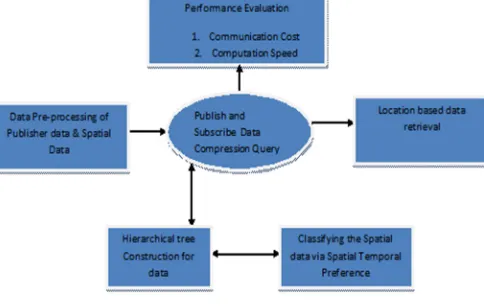
Figure 1 : Architecture Diagram of the Hierarchical publish and scribe System using push Method
In typical situations, the STR of multidimensional attribution fields is the same and is hidden in the data organization [13]. That is, the multiple attribution data are usually a separate data cube, which can be directly represented by a tensor. Two critical termination criteria, accuracy and the data size, are considered in the blocked hierarchical tensor representation. In the blocked hierarchical tensor representation, both the accuracy and the data size are first controlled by the block size and rank.
Algorithm 1-Filter formation
Input: Geospatial dataset
Process: Tensor Formation Using Classification
*Applying data pre-processing for geospatial data
* Apply data Classification for Tensor formation
*Apply Hierarchy based on the Data redundancy in Tensor
CompRank ()
* SVD modelling to Split and Compress the data based on the feature formation
Output: Block formation
Algorithm 2: Merging
Input: Tensors
Process:
*Calculate the Data Similarity between tensor
If (Value > Threshold)
Merge block
©IJRASET 2015: All Rights are Reserved
20
Input: Tensor Block
Process: Query Strategy
*Query Analysis is calculated for feature evolution determination between the data
Feature evolution = absence of no. of the outlier data in the block
Apply CompRank()
If (data === existing)
Compress ()
Else
*Establish a Unique Cluster
*Rank the data based on the uniqueness
Output: Data querying in Short span
Tree based index for Textual descriptions: As the standard R-tree has no textual pruning power, A token-based R-tree, called
Rt-tree, by integrating tokens of subscriptions into R-tree nodes is proposed. Rt-tree is a balanced search tree. Each leaf node contains between b and B data entries, where each entry is a subscription. Each internal node has between b and B node entries. Each entry is a triple hChild, MBR, TokenSeti, where Child is a pointer to its child node,[14][15] MBR is the minimum bounding rectangle of all entries within this child, and Token Set is a set of tokens selected from subscriptions (or a pointer to the token set). A leaf node’s token set is the union of tokens of all subscriptions within this node and an internal node’s token set is the union of token sets of all entries within this node. As an entry corresponds to a node [16], for simplicity a node is mentioned interchangeably with its corresponding entry if the context is clear
IV. EXPERIENTIAL RESULTS
In this section, The detailed analysis about the proposed using yelp dataset.Yelp dataset contains the user reviews of the restaurants,
shopping, entertainment and nightlife services. It write reviews on their own locations, accusations of Yelp manipulating reviews to
extort ad spending, concerns about the authenticity of reviews as well as the privacy and freedom of speech of reviewers.
Table.1 The performance of the technique in data classification
Technique Throughput Elapsed
time Long point Messa ge Short Point Message
R++ tree 100 9ms 600 250 Event
based matching Algorithm
90 10ms 700 300
Technology (IJRASET)
[image:6.612.177.439.80.283.2]©IJRASET 2015: All Rights are Reserved
21
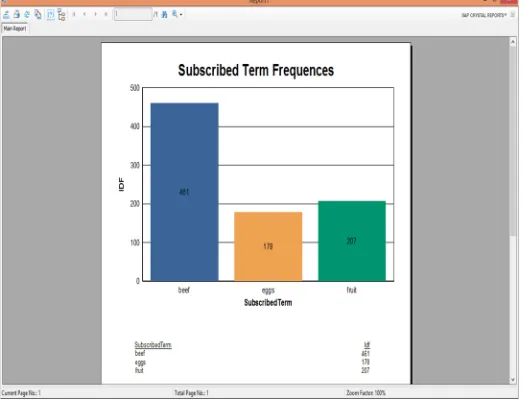
Figure 2. Evaluation of the Frequency of availability against the Subscriber interest terms
The Rt-tree is evaluated with different token sets, i.e., Rt-tree with token sets, Rt-tree with representative tokens, Rt-tree with multiple representative tokens. Data representation can be used not only for data compression, updating and query, but also to support the computation with linear tensor operators will result in less memory utilization and less computation time. Three key indices, relative error, peak memory occupation and computation time, are used to benchmark the performances. The running time is also reduced from dozens of minutes to less than one minute with the blocking mechanism. The peak memory occupations and running times are affected by both the block size and the rank.
Figure.3 Message rank Improvement against the Different blog id
[image:6.612.200.414.405.649.2]©IJRASET 2015: All Rights are Reserved
22
they only enlarge hash table and efficiency of getting token frequency is not affected.
V. CONCLUSION
The proposed system designed and implemented an effective index structure, R-tree by integrating textual description into R-tree nodes Develop. A filter-and-verification framework and device efficient filtering algorithms is developed. The number of tokens in each node is reduced which not only reduces index sizes but also improves performance. An efficient algorithm is devised to directly find answers without the verification step. The algorithms are extending to support both conjunctive queries and ranking queries. The experimental results on real datasets show the proposed method achieved high performance and good scalability.
REFERENCES
[1] M. K. Aguilera, R. E. Strom, D. C. Sturman, M. Astley, and T. D. Chandra, “Matching events in a content-based subscription system,” in Proc. 18th Annu. ACM Symp. Principles Distrib. Comput., 1999, pp. 53–61.
[2] M. Altinel and M. J. Franklin, “Efficient filtering of XML documents for selective dissemination of information,” in Proc. 26th Int. Conf. Very Large Data Bases, 2000, pp. 53–64.
[3] B. Babcock, S. Babu, M. Datar, R. Motwani, and J. Widom, “Models and issues in data stream systems,” in Proc. 21st ACM SIGMOD-SIGACT-SIGART Symp. Principles Database Syst., 2002, pp. 1–16.
[4] X. Cao, G. Cong, and C. S. Jensen, “Retrieving top-k prestigebased relevant spatial web objects,” Proc. VLDB Endowment, vol. 3, no. 1, pp. 373–384, 2010. [5] X. Cao, G. Cong, C. S. Jensen, and B. C. Ooi, “Collective spatial keyword querying,” in Proc. ACM SIGMOD Int. Conf. Manage. Data, 2011, pp. 373–384. [6] X. Chen, Y. Chen, and F. Rao, “An efficient spatial publish/ subscribe system for intelligent location-based services,” in Proc. 2nd Int. Workshop Distrib.
Event-Based Syst., 2003, pp. 1–6.
[7] Y.-Y. Chen, T. Suel, and A. Markowetz, “Efficient query processing in geographic web search engines,” in Proc. ACM SIGMOD Int. Conf. Manage. Data, 2006, pp. 277–288.
[8] G. Cong, C. S. Jensen, and D. Wu, “Efficient retrieval of the top-k most relevant spatial web objects,” Proc. VLDB, vol. 2, no. 1, pp. 337–348, 2009. [9] P. Costa and G. P. Picco, “Semi-probabilistic content-based publish-subscribe,” in Proc. 25th IEEE Int. Conf. Distrib. Comput. Syst., 2005, pp. 575–585. [10] G. Cugola and J. E. M. de Cote, “On introducing location awareness in publish-subscribe middleware,” in Proc. IEEE Int. Conf. Distrib. Comput. Syst.
Workshops, 2005, pp. 377–382.
[11] Y. Diao and M. J. Franklin, “Query processing for high-volume XML message brokering,” in Proc. 29th Int. Conf. Very Large Data Base, 2003, pp. 261–272. [12] P. T. Eugster, B. Garbinato, and A. Holzer, “Location-based publish/subscribe,” in Proc. 4th IEEE Int. Symp. Netw. Comput. Appl., 2005, pp. 279–282. [13] P. T. Eugster, B. Garbinato, and A. Holzer, “Pervaho: A specialized middleware for mobile context-aware applications,” Electron. Commerce Res., vol. 9, no.
4, pp. 245–268, 2009.
[14] F. Fabret, H.-A. Jacobsen, F. Llirbat, J. Pereira, K. A. Ross, and D. Shasha, “Filtering algorithms and implementation for very fast publish/subscribe,” in Proc. ACM SIGMOD Int. Conf. Manage. Data, 2001, pp. 115–126.
[15] J. Fan, G. Li, L. Zhou, S. Chen, and J. Hu, “Seal: Spatio-textual similarity search,” Proc. VLDB Endowment, vol. 5, no. 9, pp. 824–835, 2012. [16] I. D. Felipe, V. Hristidis, and N. Rishe, “Keyword search on spatial databases,” in Proc. Int. Conf. Data Eng., 2008, pp. 656–665.