© 2017, IRJET | Impact Factor value: 5.181 | ISO 9001:2008 Certified Journal | Page 2920
Seismic performance study on RC chimney
Rashmi M P
1*, D S Sandeep Kumar
21
P.G Student, Dept. Of civil Engineering, PES college of engineering, Mandya, Karnataka, India
2Asst.Prof, Dept. Of civil Engineering, PES college of engineering, Mandya, Karnataka, India
---***---Abstract –
Rapid growth of industrialization and increasing need for air pollution control has made long RC chimney a common structure in the modern construction. Chimneys are long and slender structures which are mainly use to discharge toxic gases or smoke from the boiler, stove, furnace, etc to a large elevation such that the gases shouldn’t contaminate the surrounding environment. This paper mainly deals with the linear static analysis of RC chimney with the height of 180m using SAP 2000 software. The main purpose is to study the effect various parameters like grade of concrete, openings, different seismic zones, various thickness, various soil conditions and for various top diameter of the chimney on the seismic performance of the structure. A parametric study is carried out to know the effect of various parameters on the base shear and fundamental time period. Also comparison of base shear and fundamental time period from SAP 2000 with that obtain from IS codal provision.Key Words: Tall industrial chimney, RC chimney, linear
static analysis, SAP 2000, base shear and natural time period..
1. INTRODUCTION
Achimney is a structure that provides ventilation for hot flue gases or smoke from boiler, stove or fireplace the outside atmosphere. Chimneys are typically vertical or possible to vertical, to ensure that the gases flow smoothly, drawing air into the combustion. So chimneys are constructed as much as taller.
The height of a chimney influences its ability to transfer flue gases to the external environment. Industrial chimneys are commonly referred to as flue gas stacks and are generally external structures. They are generally located adjacent to a steam generating boiler or industrial furnace and the gases are carried to them with ductwork.
The use of reinforced concrete has almost replaced brick as structural component in the construction of industrial chimneys. These are self-supporting structure to withstand the different loads like wind load and seismic load acting on chimney. They have different structural problems and they must be treated.
Collapse of the chimney causes the sever problem to the industry, which may lead to shut down of whole industry. It is important to prevent the collapse of the tall and slender chimney structures. So it is necessary to determine the accurate seismic demands of the structure.
Fig 1
: Chimney
With the large scale industrialization, number of chimneys being constructed is increasing year by year. Stringent rules on air pollution control have urged the need for the construction of very tall chimneys for which reinforced concrete is the most preferred choice of construction . Wind loads and seismic forces are the governing loads for the design of tall RC chimneys.
2. IS CODAL PROVISION
The following procedure is adopted for the computation of shear force and bending moment of a chimney using IS 1893:2002. Load which are influencing on the RC tall Chimneys are Self-weight, Imposed loads, Earthquake load, Wind load, Temperature effects and Circumferential pressure effects. The design load depends on the building period and period cannot be calculated until a design has been prepared. The fundamental period of vibration is estimated by using following expression,
T = CT. √ (Wt*H/Es*A*G)
Here,
CT = A coefficient depending on the slenderness ratio (K)
K=H/R
Wt = Total weight of Structure
H = Total height of chimney
Es = Modulus of Elasticity of material of chimney
A = Area of Cross section at the base of chimney K = Slenderness ratio = h / r
r = Radius of gyration at the base of the chimney.
© 2017, IRJET | Impact Factor value: 5.181 | ISO 9001:2008 Certified Journal | Page 2921
Ah =
Where,
Ah= Horizontal seismic coefficient
Z = Zone factor I= Importance factor
R =Response reduction factor
Sa/ g = Spectral acceleration co-efficient.
Based on the calculated time period, bending moment and shear force values are calculated using the formulae proposed in IS 1893:2000 from the Sa/g values of response spectrum curve.
The total design lateral force or design seismic base shear (Vb) along any principal direction shall be determined by the
following expression:
V = AhW
Where,
Ah =Design horizontal acceleration spectrum value using
the fundamental natural period T in the considered direction of vibration, and
W=Seismic weight of the chimney.
3. MODELLING
For the purpose of modeling and analysis SAP 2000, a Finite Element Analysis Software is used. A finite element model comprises a system of points, called nodes, which forms the shape of the design. Connected to these nodes are the finite elements themselves which form the finite element mesh and contain the material and structural properties of the model, defining how it will react to certain conditions. Chimneys are modeled using layered shell elements
.
Fig 2: SAP 2000 model
3.1 Geometric Details of the chimney
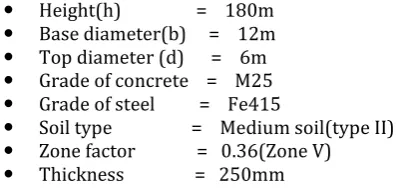
The grade of concrete mix adopted in this paper is M25.The modulus of elasticity value, corresponding to the grade of concrete mix is taken from the IS code. The Poisson’s ratio of concrete is in the range of 0.15 – 0.2. The thickness is constant for the whole height. Firstly I have considered the Reinforced concrete chimney with height of 180m ant it is predetermined and having external diameter at the top of the chimney be the 6m and external diameter at the base of chimney is 12m and the concrete shell thickness at top level and bottom level be the 0.25m. For the understanding of results the whole chimney is divided into 6 equal parts i.e, into 30m part and for the chimney of 0, 30, 60, 90, 120, 150 and 180m the external diameter of the chimney is 12, 11, 10, 9, 8, 7 and 6m respectively. The chimney 180m height with fixed at support and remaining elements of the chimney is to be ensuring the cantilever action. Here soil structure interaction is not considered. The different model is to be analysed and expected output be extracted from the analysis results. Details of the basic chimney model considered for the analysis is giving below:
Height(h) = 180m
Base diameter(b) = 12m
Top diameter (d) = 6m
Grade of concrete = M25
Grade of steel = Fe415
Soil type = Medium soil(type II)
Zone factor = 0.36(Zone V)
Thickness = 250mm
4. ANALYSIS
[image:2.595.325.525.366.464.2]Earthquake response spectrum is the most popular tool in the seismic analysis of structure. There are computational advantages in using the response spectrum method of seismic analysis for prediction of displacements and member forces in structural system. The method involves the calculation of only the maximum values of displacements and member forces in each mode of vibration using smooth design spectra that are the average of several earthquake motions.
© 2017, IRJET | Impact Factor value: 5.181 | ISO 9001:2008 Certified Journal | Page 2922
5. RESULTS
A parametric study is carried to study the effect of various parameters on the fundamental time periods and base shear of chimney and to calculate the variation in the values of the fundamental time period and base shear calculated as per IS codal provision and those obtained by SAP 2000. The parameters considered include grade of concrete, variation in thickness, different zones, different soil types, different top diameter and presence of opening.
5.1. Grade of concrete
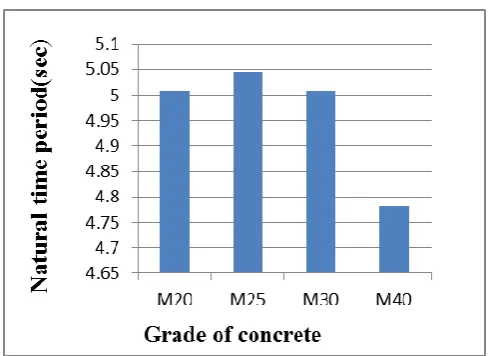
[image:3.595.306.559.69.265.2]Grade of concrete consider in the present study are M20, M25, M30 and M40.
[image:3.595.40.283.292.458.2]Fig 4: Variation in Base shear for different grade of concrete.
Fig 5: Variation in Natural time period for different grade of concrete.
5.2. Thickness
[image:3.595.309.560.304.471.2]Chimneys with the thickness of 250mm, 275mm and 300mm are analyzed.
Fig 6: Variation in Base shear for different thickness of the chimney wall.
Fig 7: Variation in Natural time period for different thickness of the chimney wall.
5.3. Variation in top diameter of the chimney.
For the various top diameters i.e. 4m, 5m, 6m and 7m chimney is analysed and bottom diameter is 12m for all the cases.
[image:3.595.39.285.494.672.2] [image:3.595.311.561.574.725.2]© 2017, IRJET | Impact Factor value: 5.181 | ISO 9001:2008 Certified Journal | Page 2923
Fig 9: Variation in Natural time period for different top diameter of the chimney.
5.4. Different zones
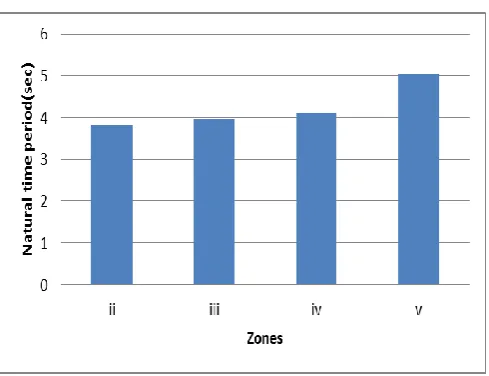
[image:4.595.308.561.154.334.2]Chimney is analysed for the 4 different zones i.e., zone ii to zone V.
Fig 10: Variation in Base shear for different seismic zones.
Fig 11: Variation in Natural time period for different seismic zones.
5.5. Effect of opening
[image:4.595.41.283.361.522.2]Opening is provided at the height of 120m for the purpose of ventilation.
Fig 12: Variation in Base shear obtained for chimney with and without opening.
Fig 13: Variation in Natural time period obtained for chimney with and without opening.
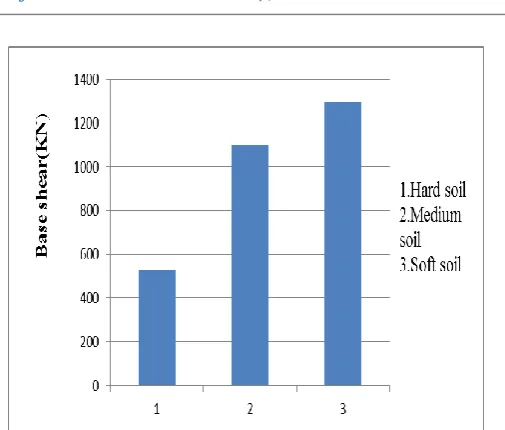
5.6. Different types of soil
[image:4.595.309.559.380.565.2] [image:4.595.40.285.541.729.2]© 2017, IRJET | Impact Factor value: 5.181 | ISO 9001:2008 Certified Journal | Page 2924
[image:5.595.285.564.56.276.2]Fig 14: Variation in Base shear for different soil condition.
Fig 15: Variation in Natural time period for different soil condition.
5.7 Comparison of time period and base shear of
chimney from SAP 2000 with IS codal provision.
A parametric study is carried to study the effect of various parameters on the fundamental time periods of chimneys and to calculate the variation in the values of the fundamental time period calculated as per IS codal provision and those obtained by SAP 2000. The parameters considered include grade of concrete, top diameter of the chimney, thickness of the chimney wall.
Fig 16 shows the variation of base shear with thickness used for the chimney. Base shear of chimney increases with the increase in the thickness of the chimney wall and IS code slightly over estimates the base shear only in the case of chimney with the wall thickness of 300mm compared to the one obtained by FE analysis using SAP 2000.
The variation is found to be within 17%.
Fig 16
: Variation of base shear of chimney with different
[image:5.595.38.291.76.291.2]thickness.
Fig 17 shows the variation of base shear with the different seismic zone. Base shear of chimney is more for the zone v compare to zone ii and IS code slightly over estimates the base shear compared to the one obtained by FE analysis using SAP 2000.The variation is found to be within 20%.
Fig 17: Variation of base shear of chimney with different zones.
6. CONCLUSION
The following conclusions were drawn from the study
Seismic analysis is carried out using SAP 2000 software. Chimneys are modeled using layered shell elements.
In the present study seismic performance study on chimneys is carried out considering a 180m tall chimney.
The fundamental time periods computed from IS codal provisions are generally lower than those obtained using SAP 2000.
1. Hard soil
2. Medium soil
3. Soft
[image:5.595.41.284.318.490.2] [image:5.595.311.547.384.569.2]© 2017, IRJET | Impact Factor value: 5.181 | ISO 9001:2008 Certified Journal | Page 2925
The base shear obtained using IS codal provision is in good agreement with that obtained using SAP 2000 in case of different zones where the difference is up to 20%.
The presence of openings significantly reduces the base shear capacity up to about 42%.
The base shear obtained using IS codal provision is in good agreement with that obtained using SAP 2000 in case of different thickness where the difference is up to 17%.
In the case of different soil conditions, variation in natural time period is up to 20% and variation in base shear is up to 28%.
Variation in the base shear obtained for different seismic zone is up to 50% and variation in natural time period is up to 30%.
In case of different grade of concrete variation in natural time period is up to 60%and base shear variation is up to 70%.
Variation in the base shear obtained for different top diameter of chimney is up to 38% and variation in natural time period is up to 10%.
REFERENCES
1. Amitha Baiju, Geethu, “Analysis of Tall RC Chimney as per Indian Standard Code”, International Journal of Science and Research (IJSR) ISSN, Volume 5 Issue 9, September 2016. 2. Aneet Khombe, Anand Bagali, Md Imran G, Irayya R, Prof Sachin R Kulkarni,
“Dynamic Analysis of RCC Chimney- A Review”, IJSRD-International Journal for Scientific Research & Development, Vol. 4, Issue 02, 2016.
3. Francisco J. Pallares, Antonio Aguero, Manuel Martin, “Seismic behaviour of industrial masonry chimney”, International journal of solids and structures, 2005. 4. IS: 1893-2002 (part 1), “Indian Standard Criteria for Earthquake Resistant Design of Structures”, fifth revision, Bureau of Indian Standards, New Delhi.
5. IS- 456: 2000, “Indian Standard Code of practice for Plain and Reinforced Concrete”, Bureau of Indian Standards, New Delhi.
6. M.G Shaikh, H.A.M.I. Khan, “Governing loads for design of a tall RCC chimney”, IOSR Journal of mechanical and civil engineering, ISSN: 2278-1684.