Carbon-carbon Bond Forming Reactions from
Bis(carbene)-platinum(II) Complexes
-and-
Olefin Polymerization and Oligomerization Using Group 4
Post-metallocene Complexes
Thesis by Rachel Christine Klet
In Partial Fulfillment for the Requirements for the Degree of Doctor of Philosophy
California Institute of Technology Pasadena, California
2014
© 2014
With gratitude to all the teachers, mentors, family, and friends who helped me get to where I am today.
I found Sherlock Holmes alone, however, half asleep, with his long, thin form curled up in the recesses of his armchair. A formidable array of bottles and test-tubes, with the pungent cleanly smell of hydrochloric acid, told me that he had spent his day in the chemical work which was so dear to him.
"Well, have you solved it?" I asked as I entered. "Yes. It was the bisulphate of baryta."
"No, no, the mystery!" I cried.
Acknowledgements
Looking back at my time at Caltech, I can sincerely say Iʼve had a wonderful experience here and Iʼm humbled and extremely thankful to the people who helped me on this path; itʼs not an easy one!
Iʼm very lucky to count myself among Johnʼs PhD students. Iʼll never forget when I was deciding where to go for grad school and my undergrad advisor (W. Dean Harman) told me of John: “Iʼve heard a lot of things said about a lot of people, but Iʼve never heard anyone say anything bad about John Bercaw.” After six years in his group, I understand why. John is extremely patient – particularly with his students – and brilliant, but he is also humble, despite how successful heʼs been. Heʼs been a wonderful mentor and teacher to me and Iʼve learned an incredible amount from him. I think he does science the “right way,” but he also lives his life the right way – by the way he treats people; he is a great role model and someone I deeply admire and respect. He doesnʼt like me saying “[he] knows everything,” but Iʼll continue to think itʼs true. John, thank you for letting me join your group and being my PhD advisor.
Jay is a great teacher and much like John, Jay has played a very large role in shaping me into the scientist I am today. Thank you Jay.
My committee as a whole has been wonderful. Theo has been a good friend and extremely supportive of me at times when grad school has been really tough; but, Theo has also been tough on me when Iʼve needed someone to push me. Harry is without a doubt the most generous person Iʼve ever met and has made me realize that I always can and should do more for other people. He also has the most incredible stories and is the reason I came to Caltech; Iʼm lucky to know him (Go Dodgers!). Sarah has encouraged me and supported me since I started here, and I really look to her as a role model for myself as a woman in chemistry. Iʼve asked her a lot of questions about her experiences and sheʼs always been very honest and insightful. My committee has made all of the Ph.D. hurdles valuable experiences – particularly my prop exam – the pKa of water is 15.7, by the way. Thank you for your support, encouragement, and helping me to become a better scientist.
Abstract
A long-standing challenge in transition metal catalysis is selective C–C bond coupling of simple feedstocks, such as carbon monoxide, ethylene or propylene, to yield value-added products. This work describes efforts toward selective C–C bond formation using early- and late-transition metals, which may have important implications for the production of fuels and plastics, as well as many other commodity chemicals.
A second avenue of research focused on the design and synthesis of post-metallocene catalysts for olefin polymerization. The polymerization chemistry of a new class of group 4 complexes supported by asymmetric anilide(pyridine)phenolate (NNO) pincer ligands was explored. Unlike typical early transition metal polymerization catalysts, NNO-ligated catalysts produce nearly regiorandom polypropylene, with as many as 30–40 mol % of insertions being 2,1-inserted (versus 1,2-inserted), compared to <1 mol % in most metallocene systems. A survey of model Ti polymerization catalysts suggests that catalyst modification pathways that could affect regioselectivity, such as C–H activation of the anilide ring, cleavage of the amine R-group, or monomer insertion into metal–ligand bonds are unlikely. A parallel investigation of a Ti– amido(pyridine)phenolate polymerization catalyst, which features a five- rather than a six-membered Ti–N chelate ring, but maintained a dianionic NNO motif, revealed that simply maintaining this motif was not enough to produce regioirregular polypropylene; in fact, these experiments seem to indicate that only an intact anilide(pyridine)phenolate ligated-complex will lead to regioirregular polypropylene. As yet, the underlying causes for the unique regioselectivity of anilide(pyridine)phenolate polymerization catalysts remains unknown. Further exploration of NNO-ligated polymerization catalysts could lead to the controlled synthesis of new types of polymer architectures.
Table of Contents
Acknowledgements iv
Abstract vii
Table of Contents x
List of Schemes xii
List of Figures xiv
List of Tables xvi
Chapter 1
General Introduction 1
Chapter 2
Investigations into Pd- and Pt-promoted C–C Bond Formation
Using Fischer Carbene Complexes as Stoichiometric Reagents 8
Introduction 9
Results and Discussion
Attempted Mechanistic Investigations into the
Palladium-catalyzed Dimerization Reaction 11 Investigations into C–C Bond Formation from
Bis(carbene)platinum(II) Complexes: Implications for
the Pd-catalyzed Carbene Dimerization Reaction 24
Conclusions 35
Experimental Section 36
References 54
Chapter 3
Synthesis and Polymerization Behavior of Asymmetric Group
4 Post-Metallocene Catalysts 56
Introduction 57
Results and Discussion
NNO Ligand and Complexes 59
RNNO Ligands and Complexes 76
CNO Ligand and Complex 84
ArNO Ligand and Complexes 87
amidoNNO Ligand and Complexes 90
Chapter 3 (cont’d)
Conclusions and Future Work 101
Acknowledgements 104
Experimental Section 104
References 139
Chapter 4
Improved Synthesis of Fujita’s Ti Phenoxy–Imine Catalyst and
Initial Studies of 1-Hexene Trimerization 144
Introduction 145
Results and Discussion
Improved Synthesis of Fujita Catalyst 148
Trimerization of 1-Hexene 150
Investigation of MAO Equivalents 152
Conclusions and Future Work 153
Experimental Section 153
References 157
Appendix A
Compound Numbers by Chapter: A Handy Guide 159
Chapter 2 Compounds 160
Chapter 3 Compounds 161
Chapter 4 Compounds 162
Appendix B
Comparison of 13C NMR Data of Polypropylene from (NNO)TiCl2 (8) and Reported 13
C NMR Data for Regioirregular
List of Schemes
Chapter 2:
Scheme 2.1 Pd-catalyzed carbene dimerization reaction.
Scheme 2.2 Proposed mechanism for Pd-catalyzed carbene dimerization reaction.
Scheme 2.3 Synthetic route to Cr carbene complexes 1-3.
Scheme 2.4 Conversion of Cr carbenes 1-3 to E/Z-olefins via Pd-catalyzed carbene dimerization.
Scheme 2.5 Ratio of E/Z-olefinic experiments in crossover experiment between 1 and 2. Ratio of products is shown after approximately 6 h. The reaction took approximately 22 h to reach completion.
Scheme 2.6 Pd black-promoted carbene dimerization from Cr carbene complex 2 to form 4.
Scheme 2.7 Synthesis of Cp(CO)(NO)Cr{carbene} complexes 4 and 5. Scheme 2.8 Synthesis of (triphos)(PPh3)Pd 7.
Scheme 2.9 Pt-catalyzed carbene dimerization of Cr complex 2 to 4 and Pt black.
Scheme 2.10 Proposed mechanism for carbene formation on Pt complexes from alkynes and alcohols.
Scheme 2.11 Synthesis of bis(carbene)platinum complexes 9 and 10. Scheme 2.12 Synthesis of bis(carbene)platinum complex 11 from 9.
Scheme 2.13 Reduction of carbene complexes 9 and 10 with cobaltocene to yield E/Z-olefinic products 12.
Scheme 2.14 Reduction of carbene complexe 11 with cobaltocene to yield E/Z-olefinic products 13.
Scheme 2.15 Addition of PPh3 to 9 to form 14 and 15.
Scheme 2.16 Addition of PPh3 to 10 in CD2Cl2 led to the formation of cis- and trans-Br(PPh3)Pt(COMe){C(OMe)(Me)}, MeBr, and unidentified decomposition.
Scheme 2.17 Addition of PPh3 to 10 in THF to form 15 and 16. Scheme 2.18 Addition of PPh3 to 11 to form E/Z-13, 14, and 17.
Scheme 2.19 Addition of pyridine to 9 and 10 to yield acetyl methoxycarbene complexes 18 and 19.
Scheme 2.20 Addition of pyridine to 11 to yield acetyl methoxycarbene complex 20.
Scheme 2.21 Proposed mechanism for C–C bond formation from bis(carbene)platinum(II) complexes upon addition of PPh3.
Scheme 2.22 Proposed mechanism for phosphonium ylide migration to a carbene ligand on a Pt(II) complex.
Scheme 2.23 Proposed mechanistic pathway for reaction of pyridine with 9–11.
Chapter 3:
Scheme 3.1 Propylene polymerization with post-metallocene complexes of triaryl dianionic ligands.
Scheme 3.2 Retrosynthetic scheme for anilide(pyridine)phenoxide ligands.
Scheme 3.3 Literature precedent for monoarylation of 2,6-dibromopyridine using a Suzuki coupling.
Scheme 3.4 Synthesis of boronic ester 1.
Scheme 3.5 Suzuki coupling 1 and 2,6-dibromopyridine led to inconsistent product formation with complete conversion of 1 to the protodeboronated product without any formation of 2 occurring in many instances.
Scheme 3.6 Buchwald-Hartwig coupling to yield 2-bromo-N-(1-phenylethyl)aniline 4.
Scheme 3.7 Synthesis of ligand 5 from coupling 4 and 2.
Scheme 3.8 Synthesis of anilide(pyridine)phenoxide Zr, Hf, and Ti complexes.
Scheme 3.9 Synthesis of (NNO)TiBn2 complex 9 from (NNO)TiCl2 complex 8.
Scheme 3.10 Polymerization of propylene with complex 6 or 8.
Scheme 3.11 Propylene insertion modes: 1,2-insertion (top), 2,1-insertion (middle), 3,1-insertion (bottom).
Scheme 3.12 Synthesis of N-benzyl-2-bromoaniline.
Scheme 3.13 Synthesis of ligand 10 from N-benzyl-2-bromoaniline.
Scheme 3.14 Synthesis of N-adamant-1-yl-2-bromoaniline via a Buchwald-Hartwig reaction.
Scheme 3.15 Synthesis of ligand 11 from N-adamant-1-yl-bromoaniline. Scheme 3.16. Synthesis of 2-bromo-N-methoxyethylaniline via a Goldberg-modified Ullman reaction.
Scheme 3.17 Synthesis of ligand 13 from 12. Scheme 3.18 Synthesis of metal complexes 14-17.
Scheme 3.19 Potential pathways for NNO catalyst modification upon activation with MAO.
Scheme 3.20 Synthesis of ligand 18 from synthon 2. Scheme 3.21 Synthesis of Ti complex 19.
Scheme 3.22 Synthesis of ligand 20 via Kumada and Suzuki coupling reactions.
Scheme 3.23 Synthesis of amido(pyridine)phenoxide ligand 21.
Scheme 3.24 Synthesis of amido(pyridine)phenoxide complexes 23-24. Chapter 4:
Scheme 4.1 Proposed mechanism for formation of Ti(II) from starting Ti(IV) complex upon activation with MAO. (Adapted from ref. 7).
Scheme 4.2 Proposed mechanism for selective trimerization of ethylene to 1-hexene by (FI)Ti complexes. (Adapted from ref. 7).
Scheme 4.3 Improved synthesis of phenoxy–imine ligand 3. Scheme 4.4 Synthesis of (FI)Ti complex 4.
List of Figures
Chapter 2:
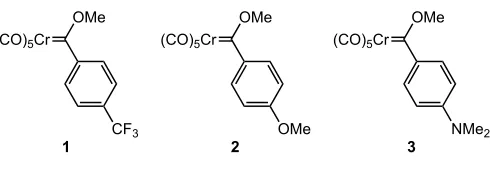
Figure 2.1 Synthesized Cr Fischer carbene complexes with para-substituted aryl groups.
Figure 2.2 Average vCO against σp.
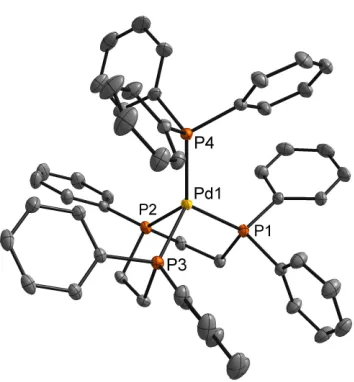
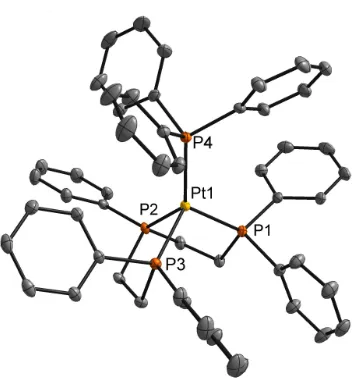
Figure 2.3 Probability ellipsoid diagram (50%) of the X-ray structure of 7. Figure 2.4 Probability ellipsoid diagram (50%) of the X-ray structure of 8. Figure 2.5 1H NMR and 1D NOESY spectra for 18 (a), 19 (b), and 20 (c). Chapter 3:
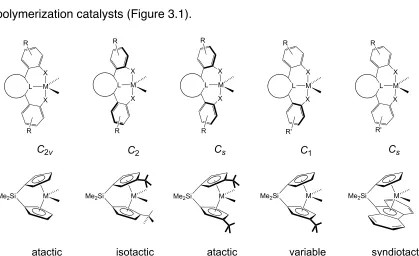
Figure 3.1 Comparison of potential geometries of metal complexes with triaryl dianionic ligands and metallocene catalysts and polymer tacticity. Figure 3.2 1H NMR spectra of 6 at 25 °C (top) and –30 °C (bottom) in toluene-d8.
Figure 3.3 Close-up of Zr–benzyl proton resonances of 6 in 1H NMR spectra from –80 °C to 90 °C in toluene-d8 (temperature increases up y-axis).
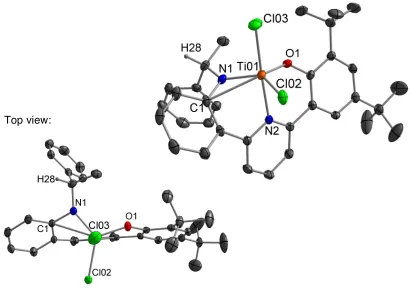
Figure 3.4 Probability ellipsoid diagram (50%) of the X-ray structure 8. Selected bond lengths (Å) and angles (°): Ti(1)–O(1) = 1.8040(17), Ti(1)– N(1) = 1.879(2), Ti(1)–N(2) = 2.153(2), Ti(1)–Cl(2) = 2.3161(8), Ti(1)–Cl(3) = 2.3285(8), Ti(1)–C(1) = 2.609(2); O(1)–Ti(1)–N(1) = 110.87(8), O(1)–Ti(1)– Cl(2) = 118.49(6), N(1)–Ti(1)–Cl(2) = 127.68(7), C(1)–N(1)–Ti(1) = 104.05(15).
Figure 3.5 13C NMR spectra of PP from 6 (top) and 8 (bottom) at 120 °C in TCE-d2. Regions indicating 2,1-insertions are highlighted.
Figure 3.6 1H NMR and 2D 1H-13C HSQC NMR spectra for PP from 6 (a) and 8 (b).
Figure 3.7 Room temperature 1H NMR spectrum of Zr complex 14 in toluene-d8.
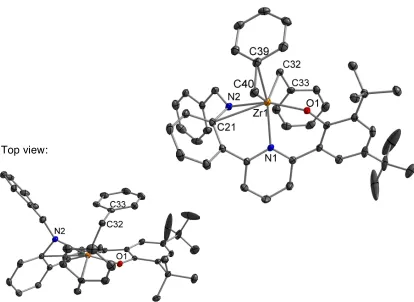
Figure 3.8 Probability ellipsoid diagram (50%) of the X-ray structure 14. Selected bond lengths (Å) and angles (°): Zr(1)–O(1) = 1.9917(7), Zr(1)– N(1) = 2.2911(2), Zr(1)–N(2) = 2.1482(8), Zr(1)–C(21) = 2.8470(9), Zr(1)– C(40) = 2.2913(10), Zr(1)–C(39) = 2.5765(9), Zr(1)–C(32) = 2.2851(9); O(1)– Zr(1)–N(2) = 157.17(3), N(1)–Zr(1)–C(40) = 96.19(3), C(40)–Zr(1)–C(32) = 126.48(3), C(32)–Zr(1)–N(1) = 120.71(3), Zr(1)–C(40)–C(39) = 83.53(5), C(21)–N(2)–Zr(1) = 104.95(6).
Figure 3.9 Different binding modes of NNO ligands in trigonal bipyramidal metal complexes depending on the identity of the X-type ligands.
Figure 3.10 Probability ellipsoid diagram (50%) of the X-ray structure 16. Selected bond lengths (Å) and angles (°): Ti(1)–O(1) = 1.8170(10), Ti(1)– N(1) = 2.1879(13), Ti(1)–N(2) = 1.8570(12), Ti(1)–Cl(2) = 2.3531(6)), Ti(1)– Cl(1) = 2.2966(6), Ti(1)–C(1) = 2.5354(15); O(1)–Ti(1)–N(2) = 112.36(5), O(1)–Ti(1)–Cl(1) = 119.28(4), N(2)–Ti(1)–Cl(1) = 125.62(4), Cl(2)–Ti(1)–N(1) = 177.32(3), C(1)–N(2)–Ti(1) = 100.15(8).
Chapter 3 (cont’d):
Figure 3.12 Probability ellipsoid diagram (50%) of the X-ray structure 17. Selected bond lengths (Å) and angles (°): Ti(1)–O(1) = 1.8649(4), Ti(1)–N(1) = 2.2132(4), Ti(1)–C(5) = 2.1352(5), Ti(1)–C(22) = 2.1037(6), Ti(1)–C(6) = 2.6385(6), Ti(1)–C(25) = 2.1135(6); O(1)–Ti(1)–C(5) = 153.81(2), C(25)–Ti(1)– C(22) = 97.60(3), C(22)–Ti(1)–N(1) = 126.85(2), C(25)–Ti(1)–N(1) = 134.79(2), Ti(1)–C(22)–C(6) = 93.46(4).
Figure 3.13 13C NMR spectrum of stereoirregular regioregular PP from complex 19 at 120 °C in TCE-d2.
Figure 3.14 13C NMR spectrum of stereoirregular regioirregular poly-1-hexene from complex 8.
Figure 3.15 1H NMR spectrum of crude reaction between TiBn4 and 20 in C6D6 after 10 min (top) and after sitting in a J. Young NMR tube at rt overnight (bottom). Toluene formed in the reaction is indicated by an asterisk.
Figure 3.17 Sticky non-solid PP produced at KFUPM (rt, 8–9 atm propylene) with precatalyst 8 (left) and nonsticky solid PP produced at Caltech (0 °C, 5 atm propylene) also with precatalyst 8 (right).
Figure 3.18 13C NMR spectra of PP from complex 8/MAO/TIBA run at rt at KFUPM (top), PP from 8/MMAO run at 0 °C at Caltech (middle), and PP from 8/dry MAO run at 0 °C at Caltech (bottom). Spectra were taken at 120 °C in TCE-‐‑d2.
Figure 3.19 13C NMR spectrum of PP from 8/PMAO-IP at 115 °C in TCE-d2. Resonances for iPP are indicated with asterisks.
Figure 3.20 13C NMR spectrum of PP from 8/MAO at 115 °C in TCE-d2. Resonances for iPP are indicated with asterisks.
Figure 3.21 13C NMR spectra of PP from complex 8/PMAO-IP (top), 8/MAO (middle), and 8/dry MAO/0 °C (bottom) at 115 or 120 °C in TCE-d2.
Chapter 4:
Figure 4.1 PNP/CrCl3(THF)3 system for selective ethylene trimerization. See ref. 5.
Figure 4.2 Trimerization of ethylene with a (FI)Ti complex at different ethylene pressures. See ref. 7.
List of Tables
Chapter 2:
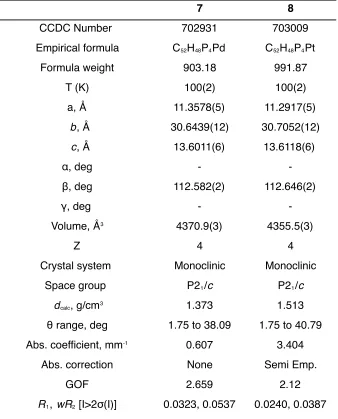
Table 2.1 Average vCO for (CO)5Cr{C(OMe)(p-X-C6H4)}. Table 2.2 Crystal data and structure refinement for 7 and 8. Chapter 3:
Table 3.1 Conditions screened for Suzuki coupling to achieve monoarylation of 2,6-dibromopyridine.
Table 3.2 Propylene polymerization data for complexes 6, 8, 14-16. Table 3.3 Propylene polymerization data for 8/PMAO-IP and 8/MAO. Table 3.4 Crystal data and structure refinement for 8, 14, and 16.
Table 3.5 Crystal data and structure refinement for 7 and 24(THF). Chapter 4:
Chapter 1
General Introduction
C h a p t e r 1
The topics covered in this dissertation focus centrally on upgrading simple
carbon feedstocks into value-added products via Fischer–Tropsch type
chemistry, or olefin polymerization and oligomerization. The research presented
here is fundamental in nature, but intended to work toward the goal of
discovering or improving homogeneous catalysts for the processes investigated,
which are of central importance for our energy supply and economy: Fischer–
Tropsch is an attractive alternative route to fuel,1 while polyolefins are the highest
volume commercial class of synthetic polymers with annual worldwide capacity
greater than 70 billion kg.2
The first chapter focuses on investigating and developing facile methods
for C–C bond formation for synthesis gas (syngas; CO + H2) conversion. Syngas
is readily available from coal, natural gas, oil shale, and biomass and represents
a potential alternative feedstock for fuel and chemicals if methods for its selective
transformation into higher carbon products can be discovered; syngas is currently
utilized on an industrial scale in the heterogeneously-catalyzed Fischer–Tropsch
process, but this process is non-selective and generates a Schultz–Flory
distribution of hydrocarbons, which can be difficult and costly to separate. We are
interested in developing homogeneous catalysts for syngas conversion, which
may offer better opportunities for product selectivity. A fundamental step of any
this process by investigating likely intermediates of Fischer–Tropsch. Chapter 2
describes our work with bis(carbene)platinum(II) complexes that may be models
for carbene intermediates in Fischer–Tropsch. We report two methods to induce
C–C bond formation from these complexes under very mild conditions, as well as
mechanistic studies on a Pd-catalyzed carbene dimerization reaction. Ultimately,
this work is promising for a multicomponent catalytic system for syngas
conversion, in which a late metal catalyst such as Pd or Pt mediates C–C bond
formation.
The second part of this dissertation explores polymerization and
oligomerization with group 4 post-metallocene complexes. Polymerization and
oligomerization both involve conversion of simple and often inexpensive
feedstocks (e.g., ethylene or propylene) into more valuable products (e.g.,
polyethylene, polypropylene, or 1-hexene). The development of post-metallocene
olefin polymerization catalysts has led to significant advances in one of the most
successful and well-studied organometallic-mediated reactions; 3 olefin
polymerization has been extensively investigated in both industrial and academic
labs since the discovery of Ziegler-Natta catalysts in the 1950s.4 Linear α-olefins,
which are an important comonomer for many commercial polymers, including
linear low density polyethylene (LLDPE), are generated industrially primarily via
non-selective oligomerization of ethylene; however, non-metallocene catalysts
can mediate selective olefin oligomerization and research in this area remains an
Chapter 3 describes our continued efforts to develop post-metallocene
olefin polymerization catalysts based on a triaryl dianionic (XLX) ligand
framework developed in our group for supporting early metals.6 The ligand design
takes advantage of the thermal stability of aryl–aryl bonds as well as versatile
access to a wide variety of ligand scaffolds using cross-coupling chemistry.
Additionally, the ligand scaffold can support various metal geometries, including
C2 and C2v, which suggests the possibility of stereoselective polymerization;
however, we have primarily seen stereoirregular polypropylene (PP).6 Our
contribution to this project was to develop and study an asymmetric variant of our
triaryl dianionic ligand. A modular anilide(pyridine)phenoxide (NNO) ligand was
designed and synthesized that supports group 4 metals, and upon activation with
methylaluminoxane (MAO), yields PP with good activity. Interestingly, these
asymmetric catalysts produce a new type of stereoirregular and regioirregular
PP, and we have synthesized several catalyst variants through ligand
modification in an attempt to understand the origin of the unique regioselectivity
of these catalysts.
The final chapter in this dissertation (Chapter 4) covers the beginning of
our efforts to study selective olefin oligomerization with a Ti phenoxy-imine
catalyst reported by Fujita and co-workers, which trimerizes ethylene to 1-hexene
with excellent selectivity and activity.7 Here we report an improved synthesis of
the ligand and test reactions to explore the ability of this catalyst to trimerize
oligomerize 1-hexene to yield C18 products demonstrating the ability of this
catalyst to operate with higher α-olefins.
The studies described in this dissertation together represent small steps
toward increasing our knowledge of fundamental processes, namely, C–C bond
formation and olefin polymerization and oligomerization. Continued research
efforts in these areas by both academic and industrial labs will undoubtedly lead
to improved homogeneous catalysts for a broad range of applications through
References
1. West, N. M.; Miller, A. J.; Labinger, J. A.; Bercaw, J. E. Coord. Chem. Rev.2011, 255, 881-898.
2. (a) Arriola, D. J.; Carnahan, E. M.; Hustad, P. D.; Kuhlman, R. L.; Wenzel, T. T. Science 2006, 312, 714-719. (b) Hustad, P. D. Science 2009, 325, 704-707.
3. Natta, G.; Pino, P.; Corradini, P.; Danusso, F.; Mantica, E.; Mazzanti, G.; Moraglio, G. J. Am. Chem. Soc.1955, 77, 1708-1710.
4. Agapie, T. Coord. Chem. Rev.2011, 255, 861-880.
5. (a) Agapie, T.; Henling, L. M.; DiPasquale, A. G.; Rheingold, A. L.; Bercaw, J. E. Organometallics 2008, 27, 6245-6256. (b) Golisz, S. R.; Bercaw, J. E. Macromolecules 2009, 42, 8751-8762. (c) Tonks, I. A.; Tofan, D.; Weintrob, E. C.; Agapie, T.; Bercaw, J. E. Organometallics 2012, 31, 1965-1974.
Chapter 2
Investigations into Pd- and Pt-promoted C–C Bond Formation Using
Fischer Carbene Complexes as Stoichiometric Reagents
Adapted in part from:
Klet, R. C.; Labinger, J. A.; Bercaw, J. E. Organometallics2012, 31, 6652–6657. http://dx.doi.org/10.1021/om300733h
C h a p t e r 2
Introduction
Effective utilization of alternative fuel sources promises to become
increasingly important, as demand continues to rise while petroleum reserves
diminish.1 Synthesis gas (syngas; CO + H2, readily available from coal, natural
gas, oil shale, or biomass) and methane are attractive possibilities for alternative
feedstocks, but currently selective transformations are known only for the C1
product methanol. The heterogeneously catalyzed Fischer-Tropsch process
converts syngas into a complex mixture of higher molecular weight hydrocarbons
and oxygenates, which can be difficult and costly to separate. The discovery of
homogeneous catalysts for this process may offer opportunities for better
selectivity. For both approaches, C–C bond formation can be expected to be a
critical step for the production of C2+ products. Hence, research aimed at
selective and facile methods for this transformation is of considerable interest.
One attractive strategy for forming C–C bonds is carbene coupling, a
process that has been observed in a number of cases, including the original
Fischer carbene complexes, which exhibit thermal dimerization of carbene
ligands.2 Carbenes are plausible intermediates in syngas or methane conversion
schemes.3 For example, we have previously shown that carbene complexes (or
closely related species) of Mn and Re can be readily generated from CO and H2
coupling mechanism was not unequivocally demonstrated.4 Sierra et al. have
reported that a variety of Pd catalysts (including Pd(OAc)2/Et3N, Pd(PPh3)4,
Pd2dba3·CHCl3 (dba = dibenzylideneacetone), PdCl2(MeCN)2/Et3N,
PdCl2(PPh3)2/Et3N, and Pd/carbon) promote room-temperature carbene coupling
in group 6 metal carbonyl (M = Cr, W) complexes, affording olefinic products in
good to excellent yields (Scheme 2.1);5 Ni and Cu catalysts have also shown
analogous activity.6 These findings, coupled with our work, suggest that a
multicomponent catalytic system, wherein CO is reduced at a group 6 or 7 metal
carbonyl complex and then transferred to a late-transition metal complex for C–C
coupling, could be a viable approach. Further exploration of the catalyzed
coupling reaction thus appears warranted.
The mechanism of Pd-catalyzed carbene coupling has not been fully
elucidated. Sierra proposed sequential transmetalation from two equivalents of
the group 6 carbene to the Pd(0) catalyst, giving a bis(carbene)palladium(0)
intermediate, which undergoes C–C bond formation to eliminate the observed
olefinic product and regenerate the Pd(0) catalyst (Scheme 2.2).5,7 However, no
Pd–carbene intermediates were observable. Here we report attempted
mechanistic investigations into the Pd(0)-catalyzed carbene dimerization
(CO)5M OR
X
OR RO
X X
Pd catalyst RT, 53-94%
M = Cr, W R = Me, Et X = H, Br 2
reaction; Pt(0) complexes that catalyze the same carbene coupling reaction,
albeit more slowly than Pd; and, finally, stoichiometric C–C bond forming
reactions from stable bis(alkoxycarbene)platinum(II) complexes, which may be
relevant to the mechanism of catalytic carbene coupling.
Results and Discussion
Section 2.1: Attempted Mechanistic Investigations into the Palladium-catalyzed
Dimerization Reaction
R1
OR2
Pd0
"(CO)5Cr"
[Pd] R1
OR2
(CO)5Cr
R1
OR2
[Pd] R1
OR2
R1 OR2
R1
OR2
R2O
R1 transmetalation
transmetalation "(CO)5Cr"
R1 = Ar, vinyl, Me
(CO)5Cr
C–C bond formation
Modification of the Fischer Carbene Ligand on Chromium
Transmetalation of the carbene ligand from the group 6 complex to Pd is
proposed to involve nucleophilic attack by the Pd catalyst on the carbene ligand;6
accordingly, we hypothesized that dimerization may be inhibited for more
electron-rich carbene ligands. As a first step to investigate the mechanism of the
Pd-catalyzed carbene dimerization, we probed the electronic requirements of the
Fischer carbene ligand originating on the group 6 metal complex. A series of Cr
para-substituted aryl carbene complexes (CO)5Cr{C(OMe)(p-X-C6H4)} with both
electron-withdrawing and electron-donating groups were synthesized according
to literature procedures (Figure 2.1).8
Treatment of chromium(0) hexacarbonyl with the desired substituted aryl
lithium reagent, followed by addition of Meerweinʼs salt yielded complexes 1-3
(Scheme 2.3).
(CO)5Cr OMe
CF3
(CO)5Cr OMe
OMe
(CO)5Cr OMe
NMe2
1 2 3
Figure 2.1 Synthesized Cr Fischer carbene complexes with para-substituted aryl groups.
Cr(CO)6
R–Li
(CO)5Cr
O
R
(CO)5Cr
O
R
Li Li
(CO)5Cr
OR'
R [R'3O][BF4]
R = Aryl R' = Me
[image:29.612.203.448.362.458.2]To evaluate the electronic character of the carbene complexes 1–3, we
used carbonyl stretching frequencies (vCO) reported by Fischer et al. (Table 2.1).8
As shown in Figure 2.2, the average vCO is directly related to the Hammett
constant (σPara) or the electron-withdrawing power of the para-substituent.9
Pd-catalyzed carbene ligand dimerization was investigated by 1H NMR
spectroscopy for carbene complexes 1–3. Reaction of 1–3 with 5 mol % Pd2dba3
in d8-THF at room temperature yielded the expected E/Z olefinic products within
24 hours in all cases (Scheme 2.4).
A kinetic study was envisioned to quantitatively evaluate the relative rates
of dimerization for the different carbene complexes 1–3. We expected that Cr X Average vCO (cm-1)
CF3 1995 Br 1992 H 1991 OMe 1984 NMe2 1977 1976 1980 1984 1988 1992 1996
-0.75 -0.5 -0.25 0 0.25 0.5 0.75
A v e ra g e C O Str e tc h in g Frequency ( vco ) !
Hammett constant (σp)!
Figure 2.2 Average vCO against σp.
Table 2.1 Average vCO for (CO)5Cr{C(OMe)(p-X-C6H4)}.
(CO)5Cr OMe
X
5 mol % Pd2(dba)3 d8-THF, RT, overnight
OMe MeO
X X
1, X = CF3 2, X = OMe 3, X = NMe2
complexes 2 and 3 with electron-donating groups in the para-position of the
carbene aryl group would dimerize more slowly than complex 1 with an
electron-withdrawing group due to the less electrophilic nature of the carbene ligand.
Unfortunately, the dimerization reactions for the complexes we investigated were
not clean enough to allow for accurate kinetic measurements. For example,
monitoring the Pd-catalyzed dimerization reaction of 2 by 1H NMR spectroscopy
revealed the yield of E/Z-olefinic products was 65-75% (by comparison to
hexamethylbenzene as an internal standard); however, no other products were
observed to form in the reaction, and we are unable to account for the loss of
mass in the reaction. For comparison, Sierra has reported isolated yields of 80%
for the dimerization reaction of (CO)5Cr{C(OMe)(C6H5)} with 5 mol %
Pd2dba3•CHCl3 in THF, but does not describe the formation of any side
products.5 Further complicating the reaction, precipitation of Pd black was
observed in all reactions and a heterogeneously catalyzed pathway for carbene
ligand dimerization cannot be excluded (vide infra).
Since kinetic studies were precluded for the dimerization reaction, a
crossover experiment was envisioned to probe the relative rates of reaction for
different carbene complexes. In a crossover experiment, the complex with the
more electron-poor carbene ligand should be consumed more rapidly than the
complex with the more electron-rich carbene. Additionally, a crossover
experiment would elucidate whether mixed carbene dimers form (mixed carbene
crossover experiment between the electron-poor p-CF3-C6H4 carbene complex 1
and relatively electron-rich p-MeO-C6H4 complex 2 using 6 mol % Pd2dba3 in d8
-THF indeed indicated that the rate of disappearance of 1 is faster than the rate of
disappearance of 2 as expected. Unsurprisingly, the experiment also revealed
the formation of the mixed olefin product resulting from one carbene ligand with a
CF3 group and one with a MeO group (Scheme 2.5). Although this experiment
does not provide quantitative data, it suggests that nucleophilic Pd attack is a
reasonable mechanism for transmetalation since complex 1 with the more
electrophilic carbene ligand was consumed more quickly than complex 2 with a
less electrophilic carbene ligand.
Since Pd black was observed to form in all dimerization reactions, the
possibility of a heterogeneously catalyzed pathway was investigated.
Distinguishing between an initial homogeneous reaction and a completely
heterogeneous reaction, catalyzed by bulk or finely divided metal produced by
decomposition of the originally homogeneous organometallic species, however,
is challenging. A control reaction was performed with carbene complex 2 and
commercially available Pd black (surface area 40-60 m2/g) as a catalyst. The
expected dimerized olefin product (E/Z
)-1,2-dimethoxy-1,2-bis(4-methoxyphenyl)-Scheme 2.5 Ratio of E/Z-olefinic experiments in crossover experiment between 1 and 2. Ratio of products is shown after approximately 6 h. The reaction took approximately 22 h to reach completion.
(CO)5Cr
OMe
OMe
OMe MeO
CF3
F3C
(CO)5Cr
OMe
CF3
OMe MeO
OMe F3C
OMe MeO
OMe MeO
1 1.2 0.2
6 mol % Pd2(dba)3
d8-THF, RT
+ + + (+ S.M.)
ethane (4) was observed to form, but the reaction proceeded at a much slower
rate than the reaction employing the same catalyst loading of Pd2dba3 (Scheme
2.6). As the surface area of any colloidal Pd produced by decomposition of
Pd2dba3 may be different than that of commercial Pd black, the slower reaction
rate does not rule out a heterogeneously catalyzed pathway. This data at least
suggests that a heterogeneously catalyzed pathway is possible for carbene
dimerization, but we do not have any evidence to exclude a complementary or
entirely homogeneous pathway at this time.
Taken together, our results provide evidence that nucleophilic Pd attack
on the group 6 carbene ligand is a reasonable mechanistic hypothesis for
transmetalation of the carbene ligand to Pd. Additionally, this data suggests that
both homogeneous and heterogeneous pathways involving Pd may operate to
effect dimerization.
Modifications of the non-Carbene Ligands on Chromium
A useful late metal catalyst for inducing C–C bond formation in a syngas
conversion cycle should be able to couple formyl or hydroxy carbene ligands,
which are probable intermediates in Fischer-Tropsch processes. We were OMe
OMe
OMe MeO
OMe MeO
Pd black THF-d8, RT
(CO)5Cr
2 4
therefore interested in investigating the scope of the Pd-catalyzed dimerization
reaction; and in particular, testing carbene dimerization from group 6 complexes
with ligands other than CO, since different ligand sets may be required to
stabilize formyl or hydroxy carbene ligands. We thought that Cr carbene
complexes with cyclopentadienyl (Cp) ligands would be useful substrates to
investigate the scope of the Pd-catalyzed dimerization reaction because these
complexes allow access to substituted aryl methoxy carbene ligands, which
would facilitate comparison to group 6 pentacarbonyl carbene complexes, and
group 6 Cp formyl complexes are known.10 We targeted Cp(CO)(NO)Cr{carbene}
complexes with NO ligands in order to modulate the added electron-richness
from the Cp ligand (compared to pentacarbonyl complexes), in light of our results
that more electron-poor carbene complexes react more quickly than electron-rich
carbene complexes. The complex Cp(CO)(NO)Cr{C(OMe)(C6H5)} 5 was
synthesized following a literature procedure. 11 Treatment of
tris(acetonitrile)tricarbonylchromium(0) with CpLi followed by addition of
N-methyl-N-nitroso-p-toluene sulfonamide (Diazald) following the procedure of
Stryker et al., led to the intermediate complex CpCr(NO)(CO)2.12 Treatment of
CpCr(NO)(CO)2 with PhLi followed by addition of Meerweinʼs salt yielded
complex 5. The related previously unknown complex Cp(CO)(NO)Cr{C(OMe)(p
The carbonyl stretching frequency data for complexes 5 and 6 suggest
that the amount of backbonding to the carbonyl ligand from Cr is similar to the
(average) amount of backbonding in the pentacarbonyl Cr carbene complexes
(511 vCO = 1978 cm-1, 6vCO = 1983 cm-1; see Table 2.1 for pentacarbonyl values);
however, whether the electrophilicity of the carbene ligand tracks with vCO for
these Cr carbene complexes with different ancillary ligands is not known.
Treatment of carbene complexes 5 and 6 with 5 mol % Pd2dba3 in d8-THF
did not lead to any product formation, even upon increasing the temperature of
the reaction (ca. 100-150 °C). Although carbonyl stretching frequency data for 5
and 6 suggests that these complexes may be electronically similar to the
pentacarbonyl carbene complexes, these results indicate that vCO may be too
simple of a predictor for reactivity. Sierra has reported that the aminocarbene
complexes (CO)5Cr{C(NMe2)(C6H5)} and (CO)5Cr{C(NMe2)(p-Br-C6H4)}, which
are electronically similar to the carbene complexes 1–3 and 5–6 based on vCO
data (vCO = 1977 and 1973 cm-1, respectively), also do not dimerize.5 The lack of
Cr CO
CO MeCNMeCN
CO MeCN
CpLi
-3 MeCN OC COCO Li
Cr Diazald
-CO ONCrCOCO
ON COCO
Cr p-X-C6H4Li
CO ON
Cr O Li [Me3O][BF4]
X
CO ON
Cr OMe
X
5, X = H
6, X = CF3
Scheme 2.7 Synthesis of Cp(CO)(NO)Cr{carbene} complexes 5
reactivity of 5 and 6 toward Pd-catalyzed carbene dimerization may also point to
a steric requirement: complexes 5 and 6 are more sterically hindered than the
pentacarbonyl Cr carbene complexes 1–3, suggesting that perhaps both an
electrophilic carbene ligand and a sterically accessible metal center are
prerequisites for facile carbene dimerization reactions.
Synthesis of New Palladium Catalysts
Since kinetic studies on the Pd-catalyzed carbene dimerization reaction
were precluded by the instability of the Pd(0) catalyst (as well as the
unaccounted loss of mass), we sought to synthesize a more stable Pd catalyst. It
was anticipated that the tridentate polyphosphine ligand
bis(2-diphenylphosphinoethyl)phenylphosphine (triphos) would stabilize a Pd complex
through the chelate effect, and would allow for both tetrahedral and square planar
geometries, thereby supporting both Pd(0) and Pd(II) complexes (although the
proposed catalytic cycle for carbene dimerization does not involve an oxidation
state change from Pd(0)).We also hypothesized that the triphos ligand may allow
for isolation of a palladium(0) intermediate because the bulky chelating triphos
ligand could potentially inhibit transmetalation of a second carbene ligand to Pd,
thereby preventing carbene dimerization and possibly allowing for isolation of
Pd–carbene intermediates (see Scheme 2.2). Although the syntheses of several
palladium(II) carbene complexes have been reported, generally via transfer of a
palladium(0) carbene complexes (synthesized through either carbene transfer or
other methods) are not known, which may reflect the highly reactive nature of
Pd(0) carbene complexes. Isolating a Pd(0) carbene intermediate would
therefore not only be an interesting synthetic target, but may also provide further
evidence for the proposed mechanism of carbene dimerization shown in Scheme
2.2.
The complex (triphos)(PPh3)Pd(0) 7 was synthesized by reacting triphos
with Pd(PPh3)4 in a THF solution (Scheme 2.8). A crystal suitable for X-Ray
diffraction was grown by slow vapor diffusion of petroleum ether into a
concentrated THF solution of 7 (Figure 2.3). As expected, the coordination
around the Pd(0) center is distorted tetrahedral due to the chelating ligand. The
bond angles and bond distances observed for 7 are similar to those observed for
other P4Pd(0) complexes with chelating phosphine ligands.14
PPh2 PPh2 PPh3 Ph2P
Ph P
PPh2
THF, RT, 30 min
Pd(PPh3)4 + 3 PPh3
PhP Pd
7
Reaction of carbene complex 2 with 5 mol % 7 in THF-d8 led to the
formation of the expected E/Z-olefinic products 4, without any observable
intermediates. Unfortunately, the chelating phosphine ligand did not appear to
increase the stability of the Pd(0) catalysts as decomposition of the catalyst to Pd
black was still observed over the course of the reaction, suggesting that the
triphos ligand (or at least phosphine arms of the ligand) may be labile under the
reaction conditions.
Carbene Dimerization Reactions with Platinum(0) Catalysts
Platinum complexes often promote similar reactivities as their palladium
congeners, while being more robust with respect to decomposition; switching
from Pd(0) to Pt(0) might afford more stable intermediates and thus facilitate
[image:38.612.234.411.84.275.2]mechanistic study. We were therefore interested in investigating the potential for
platinum-catalyzed carbene dimerization. Addition of 6 mol % Pt(PPh3)4 to a
solution of 2 in THF-d8 resulted in very slow conversion to the expected
dimerization products 4 as an E/Z-isomeric mixture (Scheme 2.9). The reaction
was only 13% complete after 9 days at room temperature, with catalyst
decomposition evidenced by the formation of a Pt mirror on the NMR tube.
Heating the reaction mixture to 50 °C resulted in significant decomposition
without further product formation. As with dimerization reactions catalyzed by
Pd(0), no observable intermediates were generated.
We again employed the chelating phosphine ligand triphos in an attempt
to synthesize a more robust Pt(0) catalyst. (Triphos)(PPh3)Pt(0) 8 was
synthesized by reacting triphos and Pt(PPh3)4 in a THF solution. A crystal
suitable for X-Ray diffraction was grown by slow vapor diffusion of petroleum
ether and diethyl ether into a concentrated THF solution of 8 (Figure 2.4). The
crystal structure of 8 reveals nearly the identical geometry (distorted tetrahedral)
and bond angles as the Pd analog 7. Select bond length and bond angle data are
shown in Figure 2.4. OMe
OMe
OMe MeO
OMe MeO
6 mol % Pt(PPh3)4
THF-d8, RT, 9 d, 13%
(CO)5Cr + Pt black
2 4
Scheme 2.9 Pt-catalyzed carbene dimerization of Cr complex 2 to 4
Addition of 5 mol % 8 to a solution of 2 in THF-d8 resulted in very slow
conversion to the expected carbene dimerization products 4. Complex 8 appears
to be slightly more stable than Pt(PPh3)4, as evidenced by slower formation of a
platinum mirror on the NMR tube, but 8, like Pt(PPh3)4, ultimately decomposes
before complex 2 is completely consumed at room temperature.
These results demonstrate that although platinum(0) complexes are able
promote room-temperature carbene coupling in Cr metal carbonyl complexes,
platinum(0) catalysts, like Pd(0) catalysts, decompose under the reaction
conditions. Furthermore, platinum(0) catalysts did not allow for observable
intermediates in the dimerization reaction and, in fact, the slower reaction rate
and instability of the Pt(0) catalysts investigated prevented carbene dimerization
[image:40.612.234.412.91.280.2]reactions from running to completion. These experiments, together with Sierraʼs
work, demonstrate that all group 10 metals are able to catalyze the carbene
dimerization reaction to form C–C bonds;5 however, Pd(0) complexes appear to
be the most efficient catalysts of the triad with the largest substrate scope.
Importantly, these results suggest that there are many potential late metal
candidates to induce C–C bond formation in a syngas conversion cycle by
carbene dimerization.
Section 2.2: Investigations into C–C Bond Formation from
Bis(carbene)platinum(II) Complexes: Implications for the Pd-catalyzed Carbene
Dimerization Reaction
Synthesis of Platinum(II) Bis(alkoxycarbene) Complexes
Platinum(II) bis(alkoxycarbene) complexes were first reported by
Struchkov et al., in 1979 and were followed up in 2006 by Steinborn and
co-workers.15,16 Since we have demonstrated that Pt(0) complexes react with Cr
carbene complexes to effect carbene coupling, presumably through a platinum(0)
bis(carbene) intermediate, platinum(II) bis(carbene) complexes seemed like
excellent model substrates to use for probing the proposed mechanism for the
dimerization reaction.
Platinum(II) bis(alkoxycarbene) complexes are synthesized from
The reaction is proposed to involve intermediate formation of a metal–vinylidene
complex, followed by nucleophilic attack by the alcohol (Scheme 2.10).17
Bis(methoxycarbene)platinum complexes 9 and 10 were obtained by the
published procedure, treating bis(trimethyl)silylacetylene with hexachloroplatinic
acid and hexabromoplatinic acid, respectively, in dry methanol (Scheme 2.11).16
(Platina-β-diketones are obtained instead if the alcohol is not dry.18) We were
unable to reproduce the reported analogous synthesis of the
bis(isopropoxycarbene)platinum complex 11;15 however, we were able to obtain
11 via an alternate route: addition of HBF4 in diethyl ether to 9 in dry isopropanol
(Scheme 2.12).16
[Pt] H
R
[Pt] C C H
R
[Pt] OR'
CH2R R'OH
Scheme 2.10 Proposed mechanism for carbene formation on Pt complexes from alkynes and alcohols.
H2[PtX6]•nH2O
SiMe3 Me3Si
MeOH, 40 °C
Pt X
X Me
OMe
Me OMe
9: X = Cl 10: X = Br
Reduction of Platinum(II) Bis(alkoxycarbene) Complexes
As the proposed active species for the carbene dimerization reaction is
Pd(0), and therefore by analogy Pt(0), reducing the isolated platinum(II)
bis(carbene) complexes seemed like a logical first step. Notably, Sierra and
co-workers have reported a Pd(II) bis(carbene) complex that was stable to thermal
decomposition, oxidation, iodine, bases, and addition of PMe3; attempted
reduction of this species to Pd(0) was not reported and apparently not
investigated.13d Gratifyingly, we found that reduction of chloro methoxycarbene
complex 9 with two equivalents of cobaltocene in dichloromethane resulted in
immediate conversion of 9 into (E/Z)-2,3-dimethoxybut-2-ene (12) in 64% yield
(by 1H NMR), along with Pt black and cobaltocenium chloride. The bromo analog
10 behaved similarly, giving 12 in 49% yield (Scheme 2.13). 12 was isolated by
vacuum transfer, and its identity confirmed by comparison of the 1H NMR and
GC-MS data to literature data.19 The E/Z ratio was determined by 1H NMR
spectroscopy to be 2.5:1. Addition of only one equivalent of cobaltocene led to
only 50% conversion of 9 to 12. Pt
Cl
Cl Me
OMe
Me
OMe Pt
Cl
Cl Me
OiPr
Me OiPr iPrOH, RT, 24 h, 74%
13 mol % HBF4•OEt2
9 11
The reaction of chloro isopropoxycarbene complex 11 with two equivalents
of cobaltocene was noticeably less clean than the reduction of 9 and 10;
unfortunately, the minor side products in this reaction could not be characterized.
The major product of the reduction of 11 was the carbene coupling product (E/Z)
-2,3-diisopropoxybut-2-ene (13) in 42% yield (Scheme 2.14). 13 decomposed into
multiple species on attempted vacuum transfer, and was therefore characterized
by 1H and 13C NMR spectroscopy of the crude reaction mixture; the E/Z ratio was
determined to be 2.8:1.
These results are consistent with the proposed mechanism for carbene
dimerization via a bis(carbene)palladium(0) intermediate shown in Scheme 2.2:
reduction of complexes 9–11 with cobaltocene leads to (unobservable)
bis(carbene)platinum(0) intermediates that instantaneously eliminate but-2-ene
products via carbene coupling. 2 Cp2Co
CD2Cl2, RT
MeO OMe
Me Me
+ Pt black
X X Me OMe Me OMe MeO Me Me OMe
+ 2 [Cp2Co]X +
E/Z: 2.5 : 1
12 9: X = Cl
10: X = Br + Pt
Scheme 2.13 Reduction of carbene complexes 9 and 10 with cobaltocene to yield E/Z-olefinic products 12.
2 Cp2Co
CD2Cl2, RT
iPrO OiPr
Me Me
+ Pt black
Me
OiPr
Me OiPr
iPrO Me
Me OiPr
+ 2 [Cp2Co]Cl +
E/Z: 2.8 : 1
13 11 + Pt Cl Cl
Reaction of Platinum(II) Bis(alkoxycarbene) Complexes with L-type Ligands
Although reduction of bis(carbene)platinum(II) complexes 9–11 led to the
desired carbene dimerization reaction, we were interested in exploring other
approaches to induce C–C bond formation from complexes 9–11. One strategy
we found particularly attractive was to add L-type ligands to isolated
bis(carbene)platinum(II) complexes in order to displace carbene ligands and
potentially induce carbene coupling.
Indeed, treatment of 9 with two equivalents of PPh3 in dichloromethane at
room temperature resulted in rapid and nearly quantitative conversion to cis
-dichlorobis(triphenylphosphine)platinum(II) (14) and a new organic product
resulting from C–C bond formation, identified by 1H NMR, 13C NMR, and HRMS
as 2,3-dimethoxybut-1-ene (15; Scheme 2.15). Notably, 15 is a constitutional
isomer of 12, the product from reduction of 9 or 10 with cobaltocene. Addition of
only one equivalent of PPh3 to 9 led to conversion of only half of the starting
material to products.
Unexpectedly, addition of two equivalents of PPh3 to the analogous
bromide carbene complex 10 in dichloromethane did not give 15; instead, 1H and
31P NMR spectroscopy revealed the formation of two new acetyl platinum
complexes, tentatively assigned as cis- and trans
-Cl Cl Me OMe Me OMe 2
CD2Cl2 PPh3 MeO Me Pt Cl Cl PPh3 PPh3 + H
9 15 14
Pt
H H MeO
Br(PPh3)Pt(COMe){C(OMe)(Me)}, along with bromomethane and some
unidentified byproducts (Scheme 2.16). However, reaction of 10 with two
equivalents of PPh3 in THF (in which it is only sparingly soluble) at 50 °C did give
15 and cis-dibromobis(triphenylphosphine)platinum(II) (16) (Scheme 2.17).
Reaction of chloro isopropoxycarbene complex 11 with two equivalents of
PPh3 in dichloromethane yielded a mixture of 2,3-diisopropoxybut-1-ene (17),
characterized by 1H NMR, 13C NMR, and HRMS, along with 13 and 14 (Scheme
2.18). The E/Z ratio of 13 was 9:1, substantially different from that observed in
the reduction of 11 with cobaltocene; the ratio of E-13 to 17 was 1:1.7.
Br Br PPh3 PPh3 Br Br Me OMe Me OMe 2 THF PPh3 MeO MeO Me + H
10 15 16
Pt Pt
H H
Scheme 2.17 Addition of PPh3 to 10 in THF to form 15
and 16.
Scheme 2.16 Addition of PPh3 to 10 in CD2Cl2 led to the formation of cis- and trans-Br(PPh3)Pt(COMe){C(OMe)(Me)}, MeBr, and unidentified decomposition.
Br Br
Me OMe
Me
OMe CD2Cl2
PPh3 Br
Ph3P Me
OMe
Me
O + MeBr
Br Ph3P
O Me
Me
OMe+ + decomposition
10
Pt Pt Pt
Cl Cl PPh3 PPh3 Me Me Cl Cl Me OiPr
Me OiPr
Me OiPr + 2
CD2Cl2
PPh3
iPrO
+ H
+
11 17 E-13 14
Pt Pt
OiPr iPrO Me iPrO
H H Me iPrO
Z-13
In addition to the L-type ligand PPh3, we explored the reactivity of 9–11
with pyridine. Interestingly, reaction of 9 with one equivalent of pyridine in THF at
55 °C resulted, after about 2 h, in nearly quantitative conversion to the acetyl
methoxycarbene complex 18,20 accompanied by liberation of chloromethane,
which was identified by 1H NMR (Scheme 2.19). No organic products resulting
from C–C bond formation were observed to form. The assignment of 18 is based
on the 13C NMR spectrum, which exhibits downfield singlets at δ 283.0 (1JPtC =
1428 Hz) and δ 212.8 (1JPtC = 1126 Hz), characteristic of carbene and acyl
resonances, respectively, along with IR spectroscopy (acyl νC=O = 1639 cm–1)
and 1H NMR. Reaction of 10 with pyridine similarly gave 19 and bromomethane.
The chloro isopropoxycarbene complex 11 also reacted with pyridine, but the
reaction was significantly slower under the same conditions, requiring about 21 h
to give 20, which exhibited spectroscopic features similar to those of 18 and 19,
along with isopropyl chloride and isopropanol (Scheme 2.20).
18: X = Cl
19: X = Br THF, 55 °C, 2 h
N
MeX + X
N Me
OMe
Me O X
X Me
OMe
Me OMe
9: X = Cl
10: X = Br
Pt Pt
The stereochemistry of 18–20 was assigned on the basis of 1D NOESY
experiments, which show interaction between the methyl group on the acetyl
ligand and the ortho protons on the pyridine ring, indicating those two ligands are
cis to one another. Only a single isomer was observed in each case. NOESY and
1
H NMR spectra for complexes 18–20 are shown in Figure 2.5.
Cl Cl
Me OiPr
Me OiPr
THF, 55 °C, 21 h N iPrCl + Pt Cl N Me OiPr
Me
O + iPrOH
11 20
Pt
[image:48.612.131.522.369.646.2]Scheme 2.20 Addition of pyridine to 11 to yield acetyl methoxycarbene complex 20.
Figure 2.5 1H NMR and1D NOESY spectra for 18 (a), 19 (b), and 20 (c). Blue: 1H NMR; green: NOESY, irradiation of CCH3; red: NOESY, irradiation of COCH3. Positive peaks indicate interactions.
a) b)
These experiments demonstrate an interesting dichotomy between
different L-type ligands: while addition of PPh3 (and other phosphine ligands) can
lead to C–C bond formation from bis(carbene)platinum(II) complexes without
reducing the Pt(II) complexes, pyridine – in contrast – leads to new pyridine acyl
Pt(II) metal complexes and no coupled organic products. Remarkably, different
olefinic products are obtained from the addition of PPh3 than from reduction:
phosphine leads to the alkoxy-substituted but-1-enes 15 and 17, while reduction
leads to the but-2-enes 12 and 13. This product switch, along with the failure of
pyridine to induce similar coupling, suggests a mechanism involving phosphine
attack at one carbene ligand to give an alkyl complex, perhaps better described
as a stabilized ylide, which undergoes migratory insertion with the other carbene
ligand to form the C–C bond (Scheme 2.21). Both steps have precedents:
formation of phosphonium ylide complexes by phosphine attack at Fischer
carbene ligands is well-known,2b, 21 and a closely related example of
phosphonium ylide migration to a carbene ligand has been reported for a
platinum(II) complex (Scheme 2.22).22 The precise mechanism by which the
but-2-yl species 21 would eliminate 15 is not clear, but a sequence in which β
-hydride elimination is followed by -hydride transfer to carbon along with (or after)
Addition of pyridine to bis(carbene) complexes 9–11, on the other hand,
does not bring about coupling,23 but instead generates pyridine acyl platinum(II)
complexes with concomitant elimination of alkyl halide. Although some
metal-bound pyridinium ylides are known,24 they are not common and we have not
found any reports of such derivatives for heteroatom-substituted carbenes,
suggesting that reaction of pyridine according to Scheme 2.21 might be expected
to be unfavorable. Instead, displacement of halide by pyridine, followed by SN2
attack of the free halide on the alkoxy substituent of the carbene ligand,
presumably leads to formation of alkyl halide and an acyl ligand (Scheme 2.23).
In support of the SN2 mechanism, the methoxycarbene complexes 9 and 10
undergo this transformation considerably more rapidly than does
isopropoxycarbene complex 11; these involve halide attack at 1° and 2°
Cl Cl Me OMe Me OMe PPh3 migratory insertion Pt Cl Cl Me OMe Me OMe PPh3 ylide formation Cl Cl Me OMe Me OMe PPh3 Pt MeO Me Pt Cl Cl PPh3 PPh3 + H H MeO H Pt 21
9 14 15
Scheme 2.21 Proposed mechanism for C–C bond formation from bis(carbene)platinum(II) complexes upon addition of PPh3.
Ph3P PPh 3
PPh3 O Pt
2 BF4–
Ph3P PPh 3 Ph3P
2 BF4–
O Pt +
Ph3P PPh 3
PPh3 O Pt
2 BF4–
PPh3 O
+ Pt(0)
+ PPh3 + CH3PPh3+BF4–
positions, respectively. (Attempts to synthesize a tert-butoxycarbene complex,
which would not be expected to exhibit such reactivity at all, were unsuccessful.)
To further probe the SN2 mechanism, we investigated the addition of
chloride salts to complex 9. Treatment of 9 with one equivalent of either
bis(triphenylphosphine)iminium (PPN) chloride or tetra-n-butylammonium
chloride in dichloromethane resulted in immediate formation of the anionic
(acetyl)(methoxycarbene)platinum complex 22 and chloromethane, consistent
with the proposed mechanism (Scheme 2.24). 22 was identified by the
characteristic 13C carbene and acyl resonances at δ 277.4 (1JPtC = 1575 Hz) and
δ 213.2, respectively, along with the νC=O stretch at 1637 cm–1. Attempts to
convert 22 back to 9 by addition of one equivalent of methyl triflate led to
decomposition. Me OR Me OR N RX + X N Me OR Me O
X = Cl, Br R = Me, iPr
X
XPt Pt
X N Me OR Me O R +
+ X -Pt
Scheme 2.23 Proposed mechanistic pathway for reaction of pyridine with 9–11.
Cl Cl Me OMe Me OMe CD
2Cl2, RT, <15 min
MeCl
n-Bu4NCl or PPNCl
9 22 Pt + Cl Cl O Me Me OMe Pt
Conclusions
Our experiments with Cr and Pt complexes provide strong support for the
mechanism proposed by Sierra and co-workers for transition metal-catalyzed
carbene dimerization shown in Scheme 2.2. Experiments with para-substituted
aryl Cr carbene complexes 1–3 provide evidence that nucleophilic Pd attack
leads to carbene transmetalation, since complexes with more electrophilic
carbene ligands reacted more quickly than those with more electron-rich carbene
ligands. We have also demonstrated that Pt(0) complexes are able to catalyze
the carbene dimerization reaction; however, Pt(0) catalysts are less stable and
less efficient compared to their Pd(0) congeners leading to incomplete reactions.
Importantly, reduction of isolated bis(carbene)platinum(II) complexes 9–11 led to
the expected E/Z-olefinic products, which we believe provides strong evidence
for a bis(carbene)palladium(0) intermediate as proposed by Sierra.5
Additionally, we have demonstrated that steric factors may be important
for carbene dimerization, as Cp-substituted Cr carbene complexes 5–6 did not
dimerize, despite having seemingly similar electronics to related pentacarbonyl
Cr carbene complexes 1–3, which undergo dimerization under very mild
conditions. We have also shown that heterogeneously-catalyzed pathways
appear to be accessible for the carbene dimerization reaction; however, whether
the primary pathway for dimerization is homogeneous or heterogeneous has not
been determined. Finally, we have also discovered a new pathway to form C–C
simple addition of phosphine ligands. Taken together, these results represent
encouraging steps of progress toward our goal of developing of a
multicomponent homogeneous catalytic system, that incorporates a late
transition metal catalysts for C–C bond formation, to ultimately generate
value-added higher hydrocarbons from simple feedstocks such as syngas.
Experimental Section
General Considerations
All air- and moisture-sensitive compounds were manipulated using
standard vacuum line or Schlenk techniques or in a glovebox under a nitrogen
atmosphere. The solvents for air- and moisture-sensitive reactions were dried by
the method of Grubbs et al. or by distillation from sodium.25 All NMR solvents
were purchased from Cambridge Isotopes Laboratories, Inc. Dichloromethane-d2
was dried by passage through activated alumina. Tetrahydrofuran-d8 was
purchased in a sealed ampule and dried by passage through activated alumina.
Unless otherwise noted, materials were used as received. Dihydrogen
hexachloroplatinate(IV) hexahydrate and dihydrogen hexabromoplatinate(IV)
nonahydrate were purchased from Alfa Aesar. We found that the source of the
platinum salt greatly affected the yields of bis(carbene)platinum(II) complexes;
we achieved the best and most consistent yields with materials from Alfa Aesar.
N-Butyllithium (2.2M in hexane) and tert-butyllithium (nominally 1.5M in n