Available online on www.ijpsr.com 691 IJPSR (2011), Vol. 2, Issue 3 (Research Article)
Received on 11 November, 2010; received in revised form 22 January, 2011; accepted 15 February, 2011 FORMULATION AND EVALUATION OF SOLID DISPERSION OF OLANZEPINE
N. S. Sheth
Sigma Institute of Pharmacy, Baroda, Gujarat, India
ABSTRACT
The poor dissolution rate of water-insoluble drugs is still a major problem conforming the pharmaceutical industry. The most common method for improving the solubility is by increasing the surface area of the drug through micronization. But, in practice the effect of micronization is often disappointing, especially when the drugs are encapsulated or tablet. It is generally recognized that low solubility or dissolution rate often becomes a rate-limiting step in absorption of poorly water soluble drugs. Therefore, the enhancement of the dissolution rate of poorly water-soluble drugs after oral administration is one of the most challenging aspects of modern pharmaceutics. Olanzepine (2- methyl- 4- (4- methyl- 1- piperazinyl) - 10H- thieno [2, b] [1, 5]benzodiazepine possess antipsychotic activity and exhibits very slight solubility in water and as a consequence it exhibit low bioavailability after oral administration Therefore, the improvement of olanzepine dissolution from its oral solid dosage forms is an important issue for enhancing its bioavailability and therapeutic efficacy. The purpose of present work is to improve the solubility of Olanzepine by preparing its dispersion with polymer PEG (Poly Ethylene Glycol) using solvent evaporation technique.
Keywords:
Olanzepine,
Solid Dispersion,
Ploy ethylene glycol (PEG),
Micronization,
Solubility, Dissolution
Correspondence to Author:
Nirav S Sheth
692 INTRODUCTION: The enhancement of oral
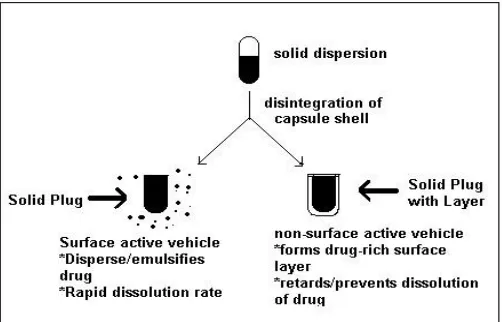
[image:2.612.48.299.346.507.2]bioavailability of poorly water soluble drugs remains one of the most challenging aspects of drug development. The rate and extent of dissolution of the active ingredient from any solid dosage form determines rate and extent of absorption of the drug. In the case of poorly water soluble drugs dissolution is the rate limiting step in the process of drug absorption. Potential bioavailability problems are arising with extremely hydrophobic drugs due to incomplete absorption from the GIT. The solid dispersion approach has been widely and successfully applied to improve the solubility, dissolution rate and consequently the bioavailability of poorly water soluble drugs. In solid dispersion method drug is dispersed in inert water soluble carrier at solid state. Solid dispersion technique is show in figure 1.
FIG. 1: SOLID DISPERSION TECHNIQUE
Definition 2: Solid dispersion is defined as “a dispersion of one or more active ingredients in an inert carrier or matrix of solid state prepared by melting (fusion), solvent or melting solvent method.”
Solid dispersion also termed as co-precipitates and melts.
Dispersions obtained through the fusion process are often called melts.
Dispersions obtained through the solvent method are referred as co-precipitates or co-evaporates, e.g. Cisapride- PVP solid dispersion, Piroxicam- PVP solid dispersion
Methods of preparation: There are four methods for preparation of solid dispersion.
1. Melting or Fusion method 2. Solvent method
3. Melting- Solvent method 4. Melt adsorption method.
Melting or Fusion method 3: A physical mixture of an active agent and a water soluble carrier is heated until it is melted. The melt is solidified rapidly in an ice bath under continuous stirring. The obtained mass is pulverized and then sieved. Spray congealing from a modified spray drier on to a cold metal surface has also been used to obtain the product in form of pellets. This avoids grinding step that may alter crystalline modification.
Advantages: Simplicity.
Economical method.
Disadvantages:
Method may not be suitable, if the drug or the carrier is unstable at the fusion temperature or evaporates at high temperature.
The resulting mass may be tacky and intractable in nature.
693 Advantages: Thermal decomposition of drugs and
carriers associated with fusion method can be avoided.
Disadvantages:
High cost of evaporation.
Use of large quantity of solvent and difficulty in complete removal.
The main problems associated with this method are-
Residual solvent
Selection of common solvent
Difficulty to reproduce crystal form of drug
Difficulty to attain super saturation of the solute in the solid system
Melting-Solvent Method 2: It has been found that 5-10% of liquid compounds can be incorporated in Poly Ethylene Glycols without significant loss of its solid property. Hence, it is possible to prepare solid dispersion first by dissolving the drug in a suitable liquid solvent and then incorporating the solution directly in to the melt of PEG without removing the liquid solvent.
Melt adsorption method: In melt adsorption method, materials which are having particles which have the structures of assembled petal like flakes are used as carrier for preparation of solid dispersion. Such particles contain lot of pores on surface. Because of this particles are capable of adsorbing a very large amount of material on their surface and gives solid dispersion, e.g. Porous calcium silicate (Florite® RE) is useful for the preparation of solid dispersion of poorly water soluble drugs by melt adsorption method. This improves solubility and oral bioavailability of drug.
Types of solid dispersions 5, 6: On the basis of major fast release mechanisms, solid dispersion in following six types.
1. Simple eutectic mixture 2. Solid solution
3. Glass solution and Glass suspension
4. Amorphous precipitation in a crystalline carrier
5. Compound or Complex formation 6. Combination of previous five methods
Mechanism of increased Dissolution rate 7: The enhancement in dissolution rate of solid dispersion as compare to pure drug can be attributed to a number of factors.
Particle size reduction: In the case of glass, solid solutions and amorphous dispersions particle size is reduced to a minimum level. This can result in an enhanced dissolution rate due to both increase in the surface area and solubilization.
The carrier material as it dissolves may have a solubilization effect on the drug.
Formation of metastable dispersion that has a greater solubility would result in faster dissolution rates.
Complex formation between drug and inert soluble carrier.
Advantages of solid dispersion 8: Provides a promising way to increase the dissolution rate of poorly water soluble drugs.
Reduces pre-systemic metabolism, due to saturation of enzymes responsible for biotransformation of drugs.
Provides easy transformation of the liquid form of the drug into a solid form, avoiding
polymorphic changes and thereby
bioavailability problems.
Protects certain drugs against
decomposition by saliva to allow buccal absorption. E.g. Cardiac glycosides by PEG.
694 The following figure gives schematic representation
of the bioavailability enhancement of a poorly water soluble drug by solid dispersion compared with conventional tablet or capsule.
Disadvantages of solid dispersion 8: Major disadvantage is instability. Several systems have shown changes in crystalline and a decrease in dissolution rate on aging.
Moisture and temperature have most deteriorating effect on solid dispersion than physical mixture.
Sometimes difficult to handle because of tackiness.
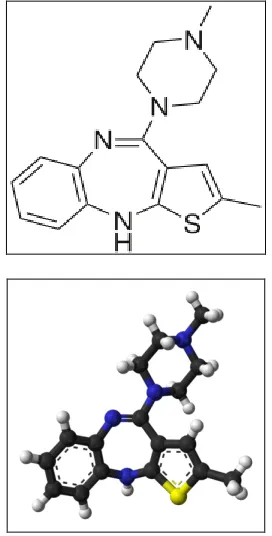
Olanzepine 9:
IUPAC Name: (2-methyl-4-(4-methyl-1-piperazinyl)-10H-thieno [2, 3-b][1,5] benzodiaze
Structure:
FIGURE: 2: STRUCTURE OF OLANZEPINE
[image:4.612.103.239.374.642.2]The drug details are provided in table 1 which summarizes its details:
TABLE 1: DRUG DETAILS Drug Parameters
Olanzepine Category Antipsychotic and neuroleptic Indications Used to treat psychotic disorders
Contraindication Hypersensitivity to this drug prohibits its use.
Pharmacologic class
Thienobenzodiazepine
Therapeutic class Antipsychotic
Pharmacological Action
Thought to antagonize dopamine and serotonin type 2 in CNS. Also antagonizes muscarinic receptors in respiratory tract, causing cholinergic activation
Contraindications Hypersensitivity to drug
Adverse reactions
Neuroleptic malignant syndrome, coma, leucopenia, severe hyperglycemia, headache, chest
pain, tachycardia,
photosensitivity Solubility Less water solubility Permeability High permeability
Brands Zyprexa, Zyprexa intramuscular, Zyprexa Zydis.
Route Onset Peak Duration
P.O. Unknown 6 hr Unknown
I.M. Rapid 15-45 min Unknown
Olanzepine is used in preparation of solid dispersion because it is having less water solubility.
MATERIALS AND METHODS: Olanzepine was obtained as the gift sample from Alembic Pharmaceutical limited, (Baroda, and Gujarat, India.) PEG (Poly Ethylene Glycol), Methanol, Phosphate Buffer pH 6.8, Distilled Water. All other chemicals were used of analytical grade.
Instruments used: Electronic Balance, Water bath, UV/visible Spectrophotometer, Dissolution Apparatus
Methods of estimation of olanzepine:
695 one liter of distilled water to produce phosphate
buffer pH 6.8.
Preparation of Stock solution: 20mg of Olanzepine was dissolved in sufficient quantity of methanol and dilute with phosphate buffer pH 6.8 to mark in 100ml volumetric flask to obtain a stock solution.
Determination of UV absorption maxima: 2µg/ml solution of olanzepine was prepared by addition of 2ml of stock solution in 100ml volumetric flask in phosphate buffer pH 6.8 and was scanned for for absorbance between 200-400nm using Shimadzu UV/Visible spectrophotometer. Olanzepine exhibit UV absorption of maxima 254nm.
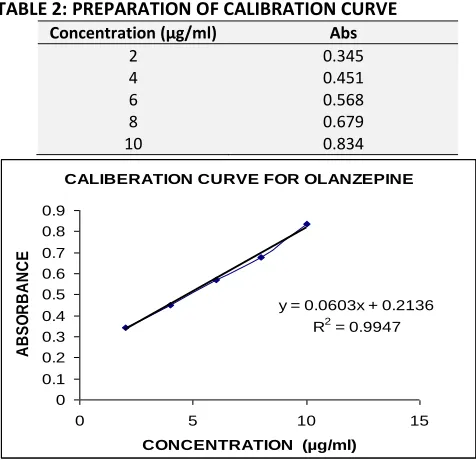
[image:5.612.346.538.273.379.2]Preparation of Calibration curve: Aliquots of 2, 4, 6, 8 and 10ml were transferred to 100 ml volumetric flasks and were serially diluted with phosphate buffer pH 6.8, to the mark to obtain olanzepine conc. 2, 4, 6, 8, 10µg/ml respectively. Absorbance of each solution was measured at 254 nm using Shimadzu UV/visible spectrophotometer against phosphate buffer pH 6.8 as a blank. The absorption of olanzepine is shown in Table 2 & slope as well as R2 is shown in figure 3.
TABLE 2: PREPARATION OF CALIBRATION CURVE
Concentration (µg/ml) Abs
2 0.345
4 0.451
6 0.568
8 0.679
10 0.834
CALIBERATION CURVE FOR OLANZEPINE
y = 0.0603x + 0.2136 R2 = 0.9947
0 0.1 0.2 0.3 0.4 0.5 0.6 0.7 0.8 0.9
0 5 10 15
CONCENTRATION (µg/ml)
A
B
S
O
R
B
A
N
C
E
FIG. 3: CALIBRATION CURVE OF OLANZEPINE
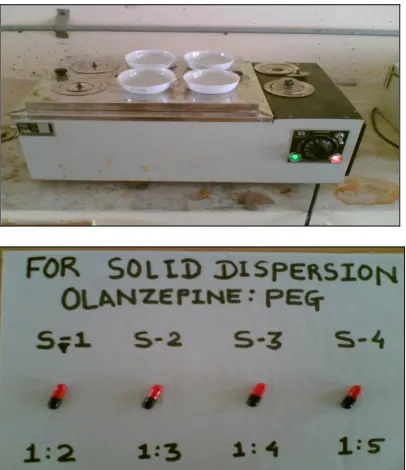
Preparation of physical mixture: Olanzepine and PEG were weighed according to requirements for the preparation of capsules of different ratio [Olanzepine: PEG, P-1 (100mg: 200mg), P-2 (100mg: 300mg), P-3 (100mg: 400mg), P-4 (100mg: 500mg)]. And then capsules were filled with physical mixture and dissolution study was performed using Dissolution Apparatus for three hours and then 5ml sample of each ratio was withdrawn at the interval of 30 min and its absorbance was measured and then finally percentage cumulative release was calculated. It shows in figure 4.
[image:5.612.47.285.451.681.2]696 FIG. 4: PREPARATION OF CAPSULES FOR PHYSICAL MIXTURE
TABLE 3: FORMULATION TABLE FOR PHYSICAL MIXTURE AND SOLID DISPERSION
Materials Physical mixture Solid dispersion
P-1 1:2
P-2 1:3
P-3 1:4
P-4 1:5
S-1 1:2
S-2 1:3
S-3 1:4
S-4 1:5
Olanzepine
(mg) 100 100 100 100 100 100 100 100
PEG (mg) 200 300 400 500 200 300 400 500
Methanol - - - - Sufficient Quantity
In vitro dissolution study: In vitro dissolution study
of Olanzepine capsules were carried out in 900ml 6.8N buffer using USP basket apparatus. The temperature was maintained 37±0.5°C and agitation rate of basket was set to 100rpm. Sample (5ml) was withdrawn at predetermined time intervals, and dilute, if necessary with 6.8 pH buffer. The same volume of fresh dissolution medium was replenished immediately after the sample was withdrawn. The absorbance was
measured at 254nm using UV/visible
spectrophotometer to determine cumulative % drug released. The amount of drug released was calculated using equation generated from standard
calibration curve data. Results are show in table 4 & table 5.
RESULT:
[image:6.612.71.274.70.305.2]For Physical Mixture:
TABLE 4: DISSOLUTION PROFILE OF PHYSICAL MIXTURE:
Time (min) % Cumulative Release
P-1 P-2 P-3 P-4
10 0.19 1.50 3.14 8.05
30 2.95 5.94 9.55 25.46
60 6.13 8.04 15.16 40.11
90 7.89 10.64 21.16 43.10
120 11.8 13.40 29.14 58.01
150 19.79 29.29 44.20 66.11
180 27.8 45.92 65.32 69.08
FIG. 6: DISSOLUTION PROFILE OF PHYSICAL MIXTURE DISPERSION
[image:6.612.46.578.126.476.2]For Solid Dispersion:
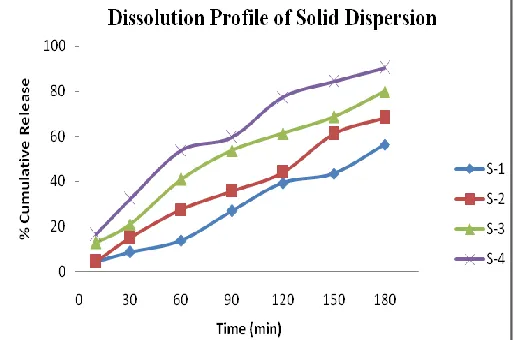
TABLE 5: DISSOLUTION PROFILE OF SOLID DISPERSION
Time (min) %Cumulative Release
S-1 S-2 S-3 S-4
10 4.46 4.49 12.76 16.32
30 8.58 15.08 20.91 32.23
60 13.79 27.47 40.85 53.62
90 26.83 35.64 53.58 59.59
120 39.19 43.86 61.2 77.22
150 43.37 61.11 68.67 84.25
[image:6.612.312.571.172.472.2] [image:6.612.313.574.536.642.2]697 FIG. 7: DISSOLUTION PROFILE OF SOLID DISPERSION
CONCLUSION Olanzepine is practically insoluble in water. However, its very low aqueous solubility and poor dissolution can cause formulation problems and limit its therapeutic application by delaying the rate of absorption and the onset of action. By comparing the formulation and evaluation of solid dispersion of olanzepine with physical mixture of olanzepine, the obtained data showed that there was linearly increased in dissolution profile of solid dispersion and physical mixture compared to plain drug. So, it can be concluded that solid dispersion
of olanzepine with ploy ethylene glycolin (PEG) increased the solubility of drug.
REFERENCES:
1. Sekiguchi K, Obi N, “Studies on absorption of eutectic mixtures. I. A comparison of the behavior of eutectic mixtures of sulphathiazole and that of ordinary sulphathiazole in man”, Chem. Pharm. Bull 1961; 9:866-872.
2. Chiou WL, Riegelman S. “Pharmaceutical applications of solid dispersion system”. J Pharma Sci 1971; 60:1281-1302. 3. Goldberg A, Gibaldi M, Kanig J L, “Increasing dissolution rates and gastrointestinal absorption of drugs via solid solutions and eutectic mixtures III - experimental evaluation of griseofulvin- succinic acid solid solution”, J. Pharm. Sci. 1966; 55:487-492.
4. Serajuddin A., “solid dispersion technique”, J. Pharm. Sci. 1999; 88(10): 891-900.
5. Simonelli AP, Mehta SC and Higuchi WI, Dissolution rates of high energy polyvinylpyrrolidone (PVP)-sulfathiazole co precipitates. J. Pharm. Sci., 1969; 58(5):538-549
6. Mullins JD and Macek TJ. Some pharmaceutical properties of novobiocin. J. Am. Pharm. Assoc. Sci.Ed., 1960; 49:245-248.
7. Abu TMS. ”Solid dispersion of poorly water soluble drugs: Early promises, subsequent problems and recent breakthroughs.” J. Pharm. Sci 1999; 88:1058-1066. 8. N rama rao, international journal of pharmaceutical
excipients 2001; 2 (1): 186-189
9. http://encyclopedia.thefreedictionary.com/Olanzepine (21 Oct, 2010)