Evaluation of the Implementation of
the Pupil Development Grant for
Looked After Children
Final Report
Mae’r ddogfen yma hefyd ar gael yn Gymraeg. This document is also available in Welsh.
SOCIAL RESEARCH NUMBER: 1/2019
Evaluation of the Implementation of the Pupil Development
Grant for Looked After Children. Final report
A report for the Welsh Government
Author(s): ICF Consulting Services Limited in association with Arad Research and Cardiff University (Dr Dawn Mannay, School of Social Sciences and Dr Jen Lyttleton-Smith, CASCADE: Children's Social Care Research and Development Centre)
Full Research Report: Beadle, S., Bennett, A., Hannah, A. (2018). Evaluation of the Implementation of the Pupil Development Grant for Looked After Children, Cardiff: Welsh Government, GSR report number 1/2019.
Available at: https://gov.wales/statistics-and-research/evaluation-implementation-pupil-development-grant-looked-after-children/?lang=en
Views expressed in this report are those of the researcher and not
necessarily those of the Welsh Government
For further information please contact:
David Roberts
Social Research and Information Division
Welsh Government
Sarn Mynach
Llandudno Junction
LL31 9RZ
Tel: 0300 062 5485
Table of contents
List of tables ... 2
List of figures... 3
Abbreviations ... 4
Executive Summary ... 5
1. Introduction ... 22
2. Overview of the PDG LAC ... 32
3. Literature review findings ... 49
4. Governance ... 61
5. Policy Setting ... 79
6. Allocation ... 87
7. Monitoring and evaluation ... 119
8. Conclusions ... 140
9. Recommendations ... 148
Annexes ... 152
List of tables
Table 1.1: Documentary material provided for each REC by financial year ... 28
Table 2.1: Attainment levels for each Key Stage in RECs ... 35
Table 2.2: PDG LAC funding allocations in financial years 2015/16 and 2016/17 ... 40
Table 2.3: Support plan criteria, by year ... 42
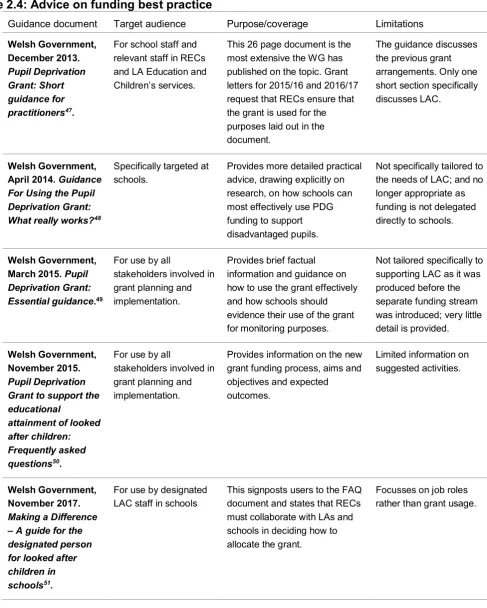
Table 2.4: Advice on funding best practice ... 44
Table 4.1: Roles of designated persons ... 61
Table 4.2: REC-level resourcing... 62
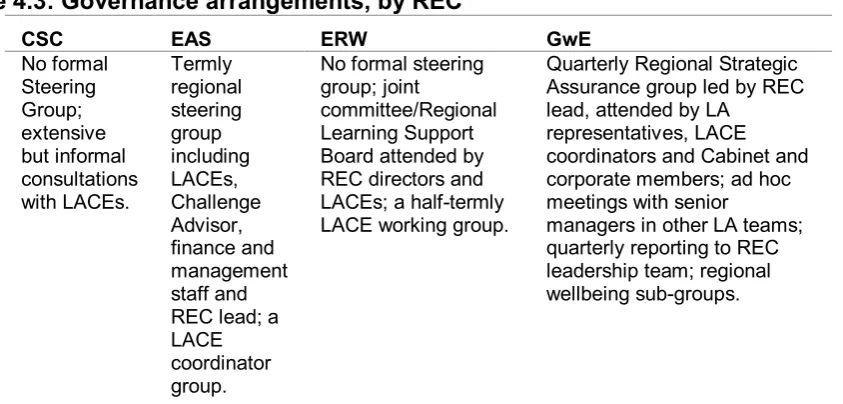
Table 4.3: Governance arrangements, by REC... 68
Table 6.1: Funding processes by REC ... 89
Table 6.2: Estimated funding allocations ... 91
Table 6.3: REC level spend by activity type ... 93
Table 6.4: Activities funded in EAS 2015/16, by LA ... 96
Table 6.5: Activities funded in ERW in 2015/16 and 2016/17, by LA ... 98
Table 6.6: Activities funded in GwE in 2015/16 and 2016/17, by LA ... 101
Table 6.7: Activities funded in CSC in 2015/16, by LA ... 104
Table 6.8: Evidence of alignment of activities with best practice ... 113
Table 6.9: Clarity of REC-level information against evaluation criteria ... 114
Table 6.10: Spending information provided by LAs ... 115
Table 7.1: Summary of monitoring and evaluation systems per REC ... 121
List of figures
Overview of research ... 7
Figure 1.1: Overview of evaluation methodology ... 25
Figure 1.2: Overview of research ... 26
Figure 1.3: Evaluation framework ... 30
Figure 2.1: Trends in looked after children achieving the core subject indicators at Key Stages 2 and 3 and achieving Level 2 Threshold at Key Stage 4* (2010-17) ... 33
Figure 2.2: The gap at Foundation Phase and Key Stages between the educational outcomes of looked after children, and all learners at 31 March 2017 ... 34
Figure 2.3: Progress compared against action plan for theme no.5 – ‘strengthening funding arrangements’ ... 38
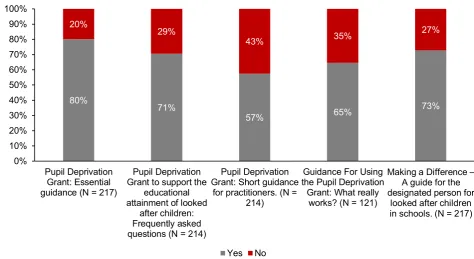
Figure 4.1: Reported awareness of Welsh Government guidance documents ... 65
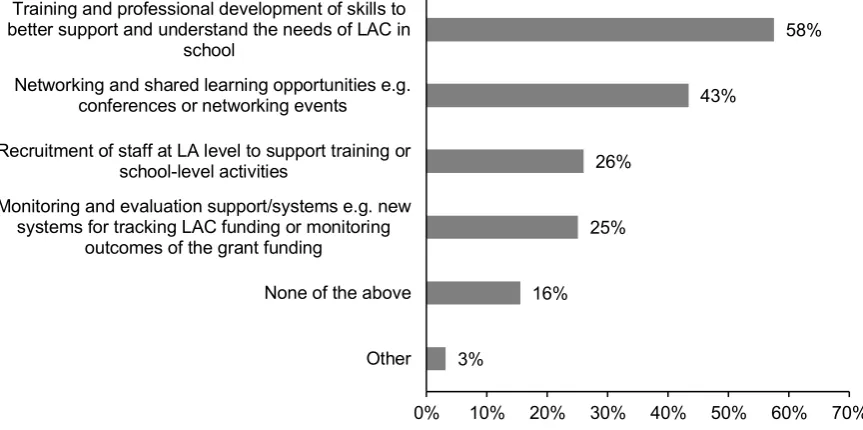
Figure 4.2: Views on whether consultation and engagement were sufficient ... 72
Figure 4.3: How were school-level funding decisions made? ... 73
Figure 4.4: How were you made aware of the regional plan or strategy? ... 74
Figure 4.5: How were you made aware of the local plan or strategy? ... 74
Figure 4.6: Awareness of regional or LA-funded activities ... 76
Figure 5.1: Awareness of regional strategy/plan ... 83
Figure 5.2: Awareness of local strategy/plan ... 84
Figure 6.1: Proportion of respondents receiving grant funding by year ... 105
Figure 6.2: Overall use of PDG LAC funding ... 106
Figure 6.3: Perceptions on current process for obtaining grant funding ... 107
Figure 6.4: Evidence used to make school-level spending decisions ... 111
Figure 7.1: How does your school account for spend? ... 124
Figure 7.2: Outcomes of school activities funded by the PDG-LAC ... 124
Figure 7.3: Proportion of respondents attending different REC or LA activities ... 128
Figure 7.4: School outcomes of the REC or LA training activities ... 130
Figure 7.5: School outcomes of the REC or LA networking/shared learning opportunities ... 133
Figure 7.6: Outcomes of school activities funded by the PDG-LAC ... 134
Figure 7.7: Most successful type of activity (tick up to three activities) ... 136
Abbreviations
Acronym Definition
CSC Central South Consortium Joint Education Service (Regional Education Consortium comprising of Bridgend County Borough Council, Cardiff Council, Merthyr Tydfil County Borough Council, Rhondda Cynon Taf County Borough Council and Vale of
Glamorgan County Borough Council)
EAS Education Achievement Service for South East Wales (Regional Education Consortium comprising of Blaenau Gwent County Borough Council, Caerphilly County Borough Council,
Monmouthshire County Borough Council, Newport City Council, Torfaen County Borough Council)
EFSM Eligible for free school meals
ERW Ein Rhanbarth ar Waith/ Education through Regional Working (Regional Education Consortium comprising of Carmarthenshire County Council, Ceredigion County Council, Neath and Port Talbot County Borough Council, Pembrokeshire County Council, Powys County Council, City and County of Swansea
GwE School Effectiveness and Improvement Service for North Wales (Regional Education Consortium comprising of Conwy County Borough Council, Denbighshire County Council, Flintshire County Council, Gwynedd Council, Isle of Anglesey County Council, Wrexham County Borough Council)
LA Local Authority
LACE Coordinator Looked after Children in Education Coordinator REC Regional Education Consortium
PDG LAC Pupil Development Grant for Looked After Children
RCT Randomised Control Trial
TA Teaching Assistant
VfM Value for Money
Executive Summary
ICF Consulting, Arad Research and Cardiff University were commissioned by the Welsh Government in 2017 to undertake an evaluation of the implementation of the Pupil Development Grant (PDG) for Looked After Children (LAC) over the years 2015/16 and 2016/17.
Background
The Pupil Development Grant1 was introduced in 2012 to provide additional funding to schools to help mitigate disadvantages for pupils on free school meals and LAC. In 2015, it was decided to separate the funding provided for children eligible for free school meals (eFSM) and LAC through two separate grants. Allocations for the PDG for LAC were made to the four regional education consortia (RECs)2, rather than directly to schools3, with the aim of facilitating a more strategic approach to using the funding across regions. The allocation amounts to a little under £4 million a year. The grant is expected to support school improvement to reduce inequities facing LAC:
There are around 6,000 LAC with considerable variation in the numbers between LAs and schools. LAC’s prior experiences and their experience of being in care can have profound effects on their educational progress and attainment which impact on their vocational training and employment prospects.
While the trend over time shows LAC’s attendance and attainment (up to 2016) has generally improved, there is a large gap in attainment between LAC and other pupils at all stages of education, critically at Key Stage 4 which has a great effect on progression. This is found to varying degrees in all REC areas.
Aims
The study evaluates the implementation and management of the PDG for LAC after the April 2015 changes to its allocation and management, including how:
Policies were developed on allocating and using funding effectively; Decisions were, and are, made on funding allocations;
1 Previously called the Pupil Deprivation Grant and renamed in March 2017
2These are: CSC for Central South Wales, EAS for South East Wales, ERW for South West/Mid- Wales, and GWE for North Wales.
Funding is used by RECs;
Partners are involved in these processes;
Funding allocated is monitored against expected outcomes; and Funding is affecting the attainment/wellbeing of LAC.
This report also provides recommendations on ways to improve the management and administration of the PDG: policy recommendations (to inform Welsh Government guidance and advice to RECs and stakeholders) and practice recommendations (on the administration and allocation of the grant by RECs, LAs and schools) to maximise the effectiveness of the grant, as well as the identification of approaches that achieve positive outcomes for LAC.
Method
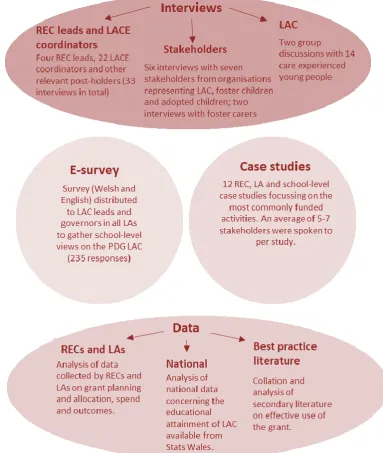
Between December 2017 and March 2018, five main research activities were carried out: interviews, an e-survey, case studies, a literature review and secondary data collection, as outlined in the diagram below.
This had some limitations to address the aims and objectives of the evaluation. To consider how the grant was used, on what activities and with what results, RECs and LAs were expected to provide monitoring and evaluation data as well as
documentary information on what allocations were made and what expenditure was incurred on grant-funded activities. This information was not generally provided, and where it was provided, it was often of poor quality. As a result, it was not possible to systematically relate RECs’ grant allocations to their spend on specific activities and the outputs and outcomes expected of them. In the absence of data, in many
instances evidence of budgetary allocations was used instead of actual expenditure, and from qualitative interviews and case study participants describing activities and their perceived outcomes. Figures reported in the report should therefore be viewed as estimations and interpreted with caution.
In addition:
While a total of 235 responses was received from the school survey (covering approximately 15 per cent of schools) this was not sufficient for making detailed comparisons between RECs.
Overview of research
To assess the evidence, an evaluation framework structured the research objectives around the components of administering the PDG: governance, policy setting,
Research evidence on activities to help LAC’s education
Despite a relatively small body of robust evidence of effect, the review identified the following activities as potentially having a positive impact on LAC:
Interventions that are co-produced with children and young people and consider the broader context and needs of LAC.
Strategic tools: Establishing robust monitoring systems and tools and clear
evaluation procedures that LA and school staff are trained to use. Systems should include clear outcomes measures that focus on capturing wider holistic needs. Training activities: Providing training to school staff on the social and emotional
needs of LAC and how to meet them; and providing training to foster carers to help them better support children’s educational needs at home.
Capacity building: Building capacity through the wider system through training and providing support to designated teachers, social workers and foster carers. Specific support: The strongest evidence base of evaluations with rigorous
designs suggests that individual and small group tutoring interventions can be effective in improving the academic skills of LAC. Material resources can be effective but only when combined with the provision of trained support to foster parents or tutors to ensure that young people use resources constructively. The review also suggests the following ways to effectively manage and deliver grant funding:
Recruiting a Virtual School Head (VSH) or having a similarly designated member of staff at LA level who is a senior, experienced educational professional and whose sole remit is to support LAC through strategic planning, clear monitoring and evaluation and networking with wider stakeholders.
Ensuring a small but well focused and strategic team at LA level that facilitates capacity-building across schools, social work teams and wider stakeholder groups.
Findings from the study
Governance
The Welsh Government requires every REC, LA and school to have a designated person responsible for LAC who is in charge of coordinating, delivering and
monitoring grant spending and supporting networking and best practice sharing. In practice, large variations in the quantity and continuity of REC, LA and school level resourcing were identified. These variations may have affected the quality,
consistency and content of work at each level.
At national level, Welsh Government communications on changes to the grant, grant allocations, priorities and expected use of the grant were often provided after the beginning of the financial year which affected grant planning and spending. However, most stakeholders were aware of Welsh Government guidance on the use of the PDG LAC or wider PDG, particularly the more recent guidance documents, and the majority found them useful.
Wider stakeholder organisations representing LAC and other vulnerable young people reported a general awareness of the grant changes, however some had not been consulted on changes and none had a clear idea of how the money was spent. Some also called for more systematic involvement of LAC in planning and
governance processes.
Welsh Government guidance requires RECs, LAs and schools to communicate regularly with wider stakeholders and develop collaborative working arrangements. However, regional governance arrangements varied considerably between RECs: some RECs had formal steering groups while others relied on more ad-hoc, informal consultations with stakeholders. There were mixed levels of engagement of Looked after Children Education (LACE) coordinators in regional planning processes and mixed awareness of regional activities/plans within LAs and schools. No formal communication mechanisms were identified for the sharing of information between RECs and LAs however regular information sharing was identified between LACE coordinators in most regions (for example, through LACE coordinator steering groups or more informally).
level decisions were made through cluster level collaboration or with LA or REC level stakeholders than in 2015/16. Schools reported varied levels of awareness of grant changes and of regional and local plans. Various dissemination methods were identified, although most schools were informed via local rather than regional channels. School respondents reported relatively good awareness of training opportunities but limited awareness of other REC and LA level PDG LAC spend. Awareness of how to access grant funding improved between 2015/16 and 2016/17. Examples of effective best practice sharing structures/mechanisms were identified, but these were often at LA to LA level (for example through LACE coordinator
steering groups) rather than facilitated by RECs. Most best practice sharing appeared to be largely informal or ad-hoc.
Policy setting
REC and LA staff and national stakeholder groups generally understood the national aims and objectives of the grant set out by the Welsh Government and agreed with national level priorities, identifying grant changes and objectives as necessary and timely. Given overall agreement of priorities, REC leads would like to move to a national model for priority and target setting. However, LA staff and national
stakeholder groups often suggested that the Welsh Government could better clarify that the introduction of the PDG LAC and the requirement for funding to be held at regional level was a national policy decision; provide clearer guidance on the types of activity that can be funded and which young people are covered by the funding; clarify whether wider wellbeing outcomes should be considered alongside
educational attainment; and provide greater clarity on how children who move in or out of Wales should be supported by the grant.
Regional and local level priorities and plans were generally aligned, however, some differences were identified in the types of planned activities, particularly at LA level. Where slight variations existed, LAs felt that they were necessary to address the specific needs of their population. Alignment of REC level priorities and cluster priorities were less clear; most interviewees commenting on cluster arrangements reported large variations in the content and quality of cluster bids.
All four RECs reported updating plans after assessing spend, reviewing and
However, there was limited evidence of any systematic revision processes. At LA level, three LAs reported updating plans on the basis of monitoring and evaluation of spend. Survey respondents in schools felt that regional plans generally took into account the Welsh Government’s guidance and current research and/or best practice, however this was less the case for local plans.
Allocation
In relation to funding delegations:
The levels (REC, LA, school) to which RECs delegated grant funding for decisions about allocations varied across RECs and between years. All RECs retained some funding for LAs (in 2015/16), and two retained some funding for LAs in 2016/17 (not EAS or CSC). All RECs provided funding to schools (or clusters); some directly (GwE in both years, CSC and EAS in 2016/17), and some through LA funding (CSC and EAS 2015/16, GwE and ERW), although funding proportions varied by REC.
Variations in approach to determining funding allocations were identified: instead of using social services data to determine allocation totals for LAs or school clusters, three RECs used PLASC data. While all RECs used a formula approach to funding allocations to LAs; bidding was more commonly used for school
allocations at REC or LA level.
Between 2 and 12 per cent of total regional funding was held at REC level; RECs generally held a greater percentage of funding at regional level in 2016/17
compared to 2015/16. All RECs held some money to fund REC leadership and management and regional level training on attachment issues and behaviour change. A very small proportion of funding was also used for networking and best practice sharing activities in CSC, ERW and GwE and for supporting improved monitoring and evaluation.
Less information was available on the activities funded through cluster or school bids but there is evidence of funding for school/cluster training, staff recruitment, individual support for LAC/specific interventions for LAC and whole school
strategies that disproportionally support LAC. Little funding appears to have been allocated to monitoring and evaluation projects and networking and best practice sharing.
And for funding processes:
Late disbursement of funding affected REC, LA and school staff’s ability to plan, deliver and evaluate activities. School survey respondents also highlighted limited support with bid applications and increased administrative burden resulting from cluster bidding processes.
The majority of allocations appear to be in line with grant requirements. At REC level, LA and school-level, these are largely in line with general REC-level guidance and priorities. It is more difficult to assess the alignment of school bursary funding and cluster bids with REC level priorities given the lack of clear spending and monitoring information available.
There is some evidence that REC and LA staff drew on evidence of need to inform funding allocations and that for cluster bids RECs or LAs generally required schools to submit funding requests that provided some information on identified needs. Tuition, attachment training and support staff were funded by the grant which aligns with best practice. However, there was limited evidence of funding for other best practice activities.
There is some evidence that funding decisions at REC and LA level were based on evidence of what works and were funded in line with best practice but no systematic approach to identifying what works and feeding it into decision-making processes was identified.
Allocations often lacked costings and budgets. While total allocations by RECs and LA have been reported, not all provide clear breakdowns of planned spend by activity type.
In general, there was largely qualitative reporting in REC support plans with no standardised approach to reporting planned spend across LAs and limited/unclear reporting of actual spend at REC and LA level which made comparisons of
planned and actual allocations difficult.
Where planned and actual spend could be compared some LAs had large under or over-spends in one or both funding years.
The content and quality of REC level plans were mixed. While some reported expected outputs, outcomes and targets, sometimes broken down by activity, in general the quality and clarity of target setting and the specificity/measurability of selected outcomes was poor.
Monitoring and evaluation
All RECs have systems in place to track spending allocations to some extent. However, systems are of varying form and quality which means there are no standardised reporting formats and metrics. Similar variations in monitoring and evaluation methods were identified at LA level, with some LAs reporting little to no monitoring of spend or outcomes. At school level, schools were not consistently monitoring outcomes resulting from spend.
Not all LA and school staff responsible for spending grant allocations were clear about their role in monitoring the expenditure and the outcomes achieved. This is partly because of the differing funding allocation/disbursement processes,
governance structures and levels of resourcing across LAs and RECs and partly because of the lack of clear guidance on the accountability for delegated funds. REC and LA level interviewees felt that schools were more accountable for their spending compared to pre-2015 when money was allocated directly to schools. However, they and national stakeholders were all aware that monitoring and evaluation systems were still generally poor and required improvements.
The new funding arrangements have increased the profile of LAC’s educational support and meant that funding is better targeting LAC;
The strategic funding has facilitated the sustainable upskilling of staff,
strengthened capacity across schools, and improved links between stakeholders including schools, LAs, social services and foster carers;
REC and LA level training has improved stakeholders’ awareness of the needs of LAC and, in many cases, improved their ability to support LAC in the classroom. Internal evaluation findings in ERW also linked attachment training to
improvements in GCSE results and improved attendance and exclusion rates. Additional support staff had supported capacity-building within schools and
improved educational and wellbeing outcomes for individual LAC, such as reduced exclusions, increased attainment and improved wellbeing.
At regional level, training was identified as a particularly effective use of funding; at LA level staff recruitment, training and flexible bursary support were viewed as most effective; and at school level, survey respondents identified specific interventions for LAC, schools training and recruitment of school support staff as having the greatest impact.
Conclusions
How well is the system introduced in 2015 functioning?
The aims of the new funding system introduced in 2015 were to improve the strategic approach to funding decisions; reduce bureaucracy and administration; and expand the range of grant beneficiaries. In order to achieve these objectives, the Welsh Government expected RECs to work collaboratively with LAs, schools and other partners to develop effective interventions for improving the educational outcomes of LAC. Any delegation of funding to LAs or schools was expected to be exceptional and only where plans would be consistent with a regional approach.
This study has identified that not all the Government’s expectations have been met. It has found that RECs have set strategic objectives and implemented a revised
However, it has also found that the strategic approaches have delegated large
amounts of the grant to either or both LAs and schools, that collaborative working has not been well-established in all areas, and that the use of the grant on effective
interventions could be better evidenced. While there are similarities in REC’s
strategies and priorities which reflect the needs of LAC, there is no effective system being implemented in any of the RECs to plan, allocate and ensure accountability for the grant where it is delegated. This is particularly so where funding has been
delegated to school clusters. Large variations in grant governance and resourcing arrangements can be found, as well as variations in the funding allocation processes used in each REC, across LAs within the same REC and across funding years. Variations at REC, LA and school level in the way grant spending and outcomes are accounted for and gaps in the data on actual spending have made it difficult to assess how the grant was spent in 2015/16 and 2016/17 and what activities have contributed to any benefits for LAC.
What are the reasons for this situation?
The following factors can be identified from the research as possible reasons for the shortcomings outlined above:
Availability of staff to lead and coordinate: differences in the quality and continuity of leadership at REC and LA level have affected the strength of governance arrangements, financial systems and communication systems and therefore the extent to which priorities and activities are well developed,
understood and aligned at each level. Resourcing variations and discontinuities in posts being filled are also likely to have affected the ability to monitor and
evaluate spending and outcomes from the grant.
The quality of working relations and collaboration between budget holders and grantees (WG and RECs, RECs and LAs and RECs/LAs and schools):
governance and communications by RECs and LAs have not always
systematically engaged all key stakeholders, such as LACE coordinators and other representatives of LAC. This has affected the level of awareness and understanding of the grant; the alignment of priorities and the types of funded activities in some cases; the establishment of outputs and outcomes for
Limited understanding of what works: while there is some evidence of RECs and LAs basing funding decisions on what they understand to work to help to increase the educational attainment for LAC, this is more often based on other practitioners’ views of best practice than research evidence and learning networks. This may be affected by evidence of best practice to support the educational attainment of LAC being in various guidance documents, the
research evidence not generally being strong, and ad-hoc processes in place to identify and share best practice across RECs and LAs.
Inconsistent systems for grant disbursement: varied funding disbursement structures have affected: the consistency and alignment of funded activities across RECs and LAs; the level of engagement of different stakeholders in planning, grant allocation and review of spend and impact; the ability to adequately assess need and select effective interventions; and the quality of monitoring and evaluation of spend and outcomes. These have also led to different levels of grant administration/bureaucracy at REC, LA and school level and differing levels of grant coverage (for example, not all school clusters bid for funding).
Poor systems for monitoring and reviewing grant allocations: inadequate and absent systems for monitoringand evaluating grant spending has affected the extent to which the use and impact of the grant can be assessed. It has also affected the extent to which spending plans and priorities can be updated on the basis of what works and monitored to prevent over or under-spends from
occurring.
What would improve the grant process and the effective use of the grant?
The following could address most of the shortcomings identified above:
Availability of staff to lead and coordinate: each REC should ensure a full-time REC lead is in place to undertake governance, communication and
monitoring activities needed. At LA level, a full-time LACE coordinator should be in place as expected in all LAs and supported by other staff (dependent on the number of LAC in each LA and their support needs) in line with Welsh
of support4. At school level, a designated LAC lead should be present in all schools.
Better working arrangements betweenbudget holders and grantees (WG and RECs, RECs and LAs/representatives of LAC and RECs/LAs and schools): clearer and more timely guidance on grant priorities, allocations and use is required from the Welsh Government although RECs have authority to make preparations each year ahead of exact allocations given the Government’s stated commitment to the PDG LAC. All RECs should have formal and consistent arrangements for engaging LACE coordinators, representatives of schools and other practitioners working with LAC and wider stakeholder groups (including LAC and foster carers) in planning and monitoring processes and communications about the grant and throughout the financial year.
Increasing understanding of what works and the needs of LAC: at national level, the existing evidence of the most effective activities to improve the
educational attainment of LAC needs to be in one place and updated on a regular basis and they key findings/best practice for LA and school staff communicated in a simplified form. There is also a need for stronger monitoring and evaluation processes particularly for RECs and LAs and a more systematic approach to engaging key school staff in learning about good practice.
Systems for managing grant allocations (decisions, implementation): given the general alignment of grant priorities across regions, a national model for priority and target setting could be introduced with all RECs expected to follow a similar disbursement and accounting process with grants allocated on condition of a resources delivery plan and agreed outputs and outcomes. This system should be supported by a standard system for monitoring and reviewing grant
allocations. This should clarify roles and responsibilities, outcome measures (including LAC’s wellbeing and attendance at school), and standard reporting with a simple focus on spending allocations, actual expenditure and outputs/outcomes reported against pre-defined activity categories to provide high level information for accountability, monitoring and review.
Systems of accountability: RECs and LAs need to be more clearly accountable for how the grant and the exercise of corporate parenting roles is having a
positive effect on the education of LAC. The Government could consider regional targets and annual reports on progress setting out the contribution of the grant towards the improvements achieved.
Recommendations
Welsh Government (policy and practice)
The Welsh Government should:
Release communications regarding grant changes, yearly priorities and funding totals to RECs before the start of the financial year.
Develop a single, easy to read guidance document specifically for the PDG LAC to replace the Frequently Asked Questions guidance currently in existence. The guidance should be aimed at REC, LA and school level stakeholders and should include:
o resourcing requirements for administering the grant at REC, LA and school level;
o guidance on expected governance, collaboration and consultation,
disbursement and accountability which reflects the agreed national model; o clarification on how LAs should support individuals who move away from
the LA and on which pupils are covered by the funding (i.e. clearer definitions of beneficiary groups);
o clarification of the expected outcomes of the grant in relation to the education of LAC: while educational outcomes are a key focus, the
guidance should make clear that wider wellbeing outcomes and attendance are also in scope; and
o a clear statement on what the grant can be spent on and the most
appropriate level for delivery which will be understood by RECs, LAs and schools.
Implement a national model for grant planning, implementation and evaluation to be reflected in the Guidance and in the grant terms and conditions as appropriate, to include:
o Priority and target setting which should be undertaken at national level through the development of strong governance arrangements to involve REC and LA level stakeholders;
o A proportion of the funding that should be retained at REC level for the REC lead post and activities that support regional leadership, learning and
collaboration - ongoing training for teachers and foster carers, monitoring and evaluation, networking and best practice sharing activities;
o Monitoring and evaluation guidance with clear information regarding who is responsible for monitoring and evaluation of spend and outcomes at each level (REC, LA and school) and on how monitoring and evaluation should be undertaken by different stakeholders (i.e. the types of evaluation
methodologies to use for different activities). It should also include a set of standardised output and outcome measures that must be used by all RECs and LAs for reporting impact;
o A standardised spreadsheet/report structure for RECs to provide accountability for the grant spent and information which can be easily collated to show what activities and to what ends (outputs and outcomes) the grant has been spent. RECs in turn will be able to use it to regularly track actual spend against planned spend, and capture outcomes measured for each activity type against standard indicators.
Require RECs to report annually on their area’s progress towards regional targets on improving the educational attainment of LAC with evidence of the contribution which the grant has made to this.
REC-level practitioners (practice)
RECs should:
best practice sharing with LACE coordinators and representatives of schools throughout the financial year. These arrangements should include consultation with foster carers and LAC.
Ensure systematic communication strategies are in place to inform LACE coordinators, school staff and wider stakeholders of regional plans, REC level provision, and processes for accessing funding which is delegated or open for bids.
Provide support to schools for cluster bids if these are given allocations, ensure cluster agreement to delivery and improve the efficiency of bid processes. Adopt the proposed national model and meet reporting arrangements to account
for the added value of the grant in future years.
LAs and schools (practice)
LAs should:
Ensure they have a designated LACE coordinator whose role reflects the responsibilities set out in Welsh Government guidance.
Ensure alignment of LACE coordinator staff/teams with other relevant teams within the LA to ensure close working arrangements.
Participate in Welsh Government and REC level governance arrangements for the grant and support the REC lead to develop and deliver regional activities funded by the grant.
Ensure any LA level activities funded by the grant are sustainable and can be delivered to meet agreed outputs and outcomes.
Regularly assess need within the LA through close work with LAC and previously LAC, and regular collaboration with school staff, foster carers and social workers. Comply with reporting arrangements to account for the use of the grant and its
added value where funding is delegated. Schools/school clusters should:
Improve their networking and engagement with foster carers to ensure awareness and engagement in grant funding e.g. encouraging teachers to discuss PDG LAC spending with carers during parents’ evenings and ensuring LAC leads in schools are monitoring and encouraging foster carer engagement.
Comply with reporting arrangements to account for the use of the grant and its added value where funding is delegated.
Ensure any school level activities funded by the grant are sustainable and can be delivered to meet agreed outputs and outcomes.
1.
Introduction
1.1 ICF Consulting, Arad Research and Cardiff University were commissioned by the Welsh Government in 2017 to undertake an evaluation of the implementation of the Pupil Development Grant (PDG) for Looked After Children (LAC) over the years 2015/16 and 2016/175. This report summarises the full programme of work undertaken and presents the findings of the evaluation.
Background
1.2 Local authorities are required to promote educational achievement as an integral part of their duty to safeguard and promote the wellbeing of the children they look after6. According to the Children Act 1989, a child is defined as looked-after by a local authority (LA) if a court has granted a care order to place a child in care, or a LA’s children’s services department has cared for a child for more than 24 hours. By 2018, the Welsh Government expects 75 per cent of care leavers to be in education,
employment or training by 2018, when they reach the age of 197. However, there remains a gap in the educational outcomes of children that are looked after at every key stage in Wales, and they continue to have low rates of progression to post-16 education, training and meaningful employment8. A range of barriers can prevent them reaching their academic potential, such as unstable foster placements, school moves and inconsistent relationships with family, carers and professionals9.
1.3 The Pupil Development Grant10 was introduced in 2012 to provide additional funding to schools to help mitigate disadvantages for pupils on free school meals and LAC. The first evaluation of the PDG reported that where money for LAC was allocated directly to schools this sometimes resulted in resources being poorly targeted and not delivering effective outcomes11. A second year evaluation report found that only a few schools reported that LA advisors played a role in challenging or endorsing spending
5 Where illustrative, the report also comments on 2017-18 plans and activities and makes comparisons between years where relevant.
6 Under the Code of Practice for Part 5 of the Social Services and Well-being (Wales) Act 2014.
7 Welsh Government, 2016. Raising the ambitions and educational attainment of children who are looked after in Wales: Strategy.
8 Mannay, D., Staples, E., Hallett, S., et al., 2015. Understanding the educational experiences and opinions, attainment, achievement and aspirations of looked after children in Wales.
9 Ibid.
10 Previously called the Pupil Deprivation Grant and renamed in March 2017
and targeting. It recommended a more systematic approach to collaboration and sharing best practice, with greater involvement from Regional Education Consortia (RECs) to ensure the aims of the PDG are met in schools’ use of the grant12. In 2015, it was decided to separate the funding provided for children eligible for free school meals (eFSM) and LAC through two separate grants. Furthermore, allocations for the PDG for LAC would be made to the four RECs13, rather than directly to schools, with the aim of facilitating a more strategic approach to using the funding across regions. The allocation amounts to a little under £4 million a year.
1.4 To improve outcomes for LAC, the Welsh Government also set out a three year action plan in 2015/16. This included actions to support changes to the grant allocation process. With the three year plan coming to an end, the Welsh
Government reported that implementation of the PDG for LAC has not developed in a consistent fashion and the pace of change varies between RECs and across REC areas14; while Estyn identified that RECs should improve planning and prioritising the use of the grant taking account of the complex needs of LAC15.
Aims and objectives of the study
1.5 The aim of the study is to evaluate the implementation and management of the PDG for LAC since the April 2015 changes to its allocation and management, including how:
Policies were developed on allocating and using funding effectively; Decisions were, and are, made on funding allocations;
Funding is used by RECs;
Partners are involved in these processes;
Funding allocated is monitored against expected outcomes; and Funding is affecting the attainment/wellbeing of LAC.
12 Ibid
13 These are: CSC for Central South Wales, EAS for South East Wales, ERW for South West/Mid- Wales, and GWE for North Wales.
14Letter written by Steve Davies, Director of the Education Directorate.
1.6 The following research questions were identified by the Welsh Government as key to addressing the requirements of this evaluation:
What are the administrative processes in place in each of the REC areas and what roles are played by REC, LA and school staff in all stages of the process? What criteria are applied to deciding what to spend the grant on?
What sources of evidence are used to determine how the grant is spent? Have resources, such as the community of practice16, been used?
What is the grant spent on? Do stakeholders agree these should have positive benefits and are critical for the education of LAC?
What monitoring data is collected on the use of the grant and how is it used? Does this reflect the purposes for which it is allocated? Is this in line with the Welsh Government’s guidance?
What are the outcomes of the activities funded by the grant? Have they improved classroom practice? Have they affected LAC’s academic performance?
What monitoring data is collected on the education of LAC? Can any effect of the grant on their education be discerned?
What are school staff’s views on the activities funded and their value to LAC? How far are they aware of the funding?
How could the grant process and the uses of the grant be improved?
1.7 The study was commissioned to provide, on the basis of evaluation findings, a set of recommendations on ways to improve the management and administration of the PDG. This includes policy recommendations (to inform Welsh Government guidance and advice to RECs and stakeholders) and practice recommendations (on the
administration and allocation of the grant by RECs, LAs and schools) to maximise the effectiveness of the grant, as well as the identification of approaches that achieve positive outcomes for LAC.
1.8 This report may also assist the National Assembly for Wales Public Accounts Committee inquiry on Care Experienced Children and Young People which is
considering the arrangements for and value for money of the PDG for LAC as part of its remit over the period 2017-21.
Method overview
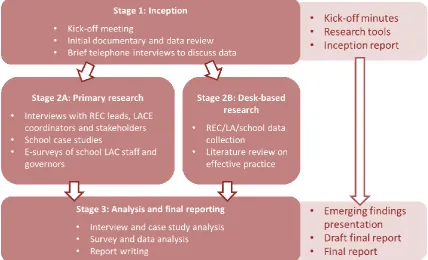
[image:27.595.84.513.282.542.2]1.9 The evaluation consisted of three main stages, as outlined below. It took a mixed-methods approach, drawing on both qualitative and quantitative evidence gathered from a variety of sources.
Figure 1.1: Overview of evaluation methodology
Figure 1.2: Overview of research
1.11 Further details of these activities are as follows:
E-survey: the survey, was piloted for one week in early February 2018, with one LA. A few small changes were made to question length and phrasing on the basis of response rates and written feedback from 13 respondents. The final survey, consisting of 36 questions (34 closed response and two open text), was then translated into Welsh, and both links were distributed to participants. The survey was open for three and a half weeks, between 21 February and 18 March. Survey links were distributed by LACE coordinators and/or directly to school staff where contact details were provided.
Case studies: focused on a sample of grant-funded activities across all four RECs. These activities included the recruitment of support staff, training for school staff, developing monitoring and evaluation systems and projects to share learning and best practice. Case study interviews or focus groups followed a semi-structured topic guide and between two and 17 interviews were carried out per case study (79 interviewees in total). Interviewees included staff involved in design and/or implementation, delivery staff and project beneficiaries including LAC where relevant and possible.
Literature review: the literature review built on the study by Mannay et al. (2015)17 to identify the most effective approaches to improving the educational outcomes of LAC. A long-list of 60 peer-reviewed and grey literature publications were identified by members of the research team from Cardiff University. After an initial review, 34 papers and reports were selected to be reviewed in detail.
Following this more detailed examination, additional relevant studies was identified and reviewed to address gaps identified. As a result, a total of 40 studies have been considered in the final review18. A full list of references can be found in Annex A.
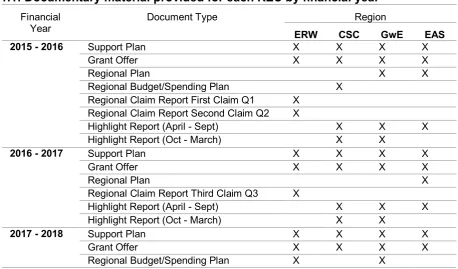
Secondary data: the documentary evidence listed in Table 1.1: was provided by RECs. In addition, other miscellaneous documents were provided by two RECs including: 12 individual evaluation reports for schools in CSC; a regional strategy to reduce the impact of poverty on educational achievement; a report from a school relating to their use of PDG LAC funding; and a spreadsheet providing a breakdown of funding provided to schools in EAS in 2016/17. At LA level, 15 LAs
17 Mannay, D., et al op.cit.
provided evidence of planned spend (4), actual spend (5) or planned versus actual spend (6) for 2015/16 and 15 provided evidence for 2016/17 (3 planned spend, 6 actual spend and 6 planned versus actual spend). Other documentary evidence at LA level included: LA level plans (one LA), evaluations of LA training interventions (two LAs); audit forms (two LAs), bursary application forms (one LA), anonymised case studies or evaluations of supportive interventions for individual pupils or schools (three LAs); claims/update reports for ERW LAs; and end of year evaluation reports (three LAs). To clarify data on actual spend, RECs and LAs were also asked to complete spending breakdown templates including standardised categories of spend. Three RECs (CSC, ERW and EAS) and nine LAs19 returned completed spreadsheets.
Table 1.1: Documentary material provided for each REC by financial year Financial
Year Document Type ERW CSC Region GwE EAS
2015 - 2016 Support Plan X X X X
Grant Offer X X X X
Regional Plan X X
Regional Budget/Spending Plan X
Regional Claim Report First Claim Q1 X Regional Claim Report Second Claim Q2 X
Highlight Report (April - Sept) X X X
Highlight Report (Oct - March) X X
2016 - 2017 Support Plan X X X X
Grant Offer X X X X
Regional Plan X
Regional Claim Report Third Claim Q3 X
Highlight Report (April - Sept) X X X
Highlight Report (Oct - March) X X
2017 - 2018 Support Plan X X X X
Grant Offer X X X X
Regional Budget/Spending Plan X X
Study coverage and limitations
1.12 To address some of the key questions for the evaluation about how the grant was used, on what activities and with what results, RECs and LAs were expected to provide monitoring and evaluation data as well as documentary information on what allocations were made and what expenditure was incurred on grant-funded activities.
This information was not generally provided, and where it was provided, it was often of poor quality. More specifically:
There is particularly limited evidence of actual grant expenditure for funded activities, and evidence of grant outcomes;
Where spend data (planned or actual) was provided, the style and quality of reporting varied greatly. Data inconsistencies/errors (for example breakdown data not adding to total spend, missing figures or information recorded in the wrong cells) were identified and in many cases activity breakdowns were not available. Information on bursary spending was particularly problematic. It was often unclear whether bursary funding for schools/individual pupils was held and spent at LA level or delivered to schools, either via a bidding process or via direct allocations; Very little information was provided regarding actual spend by clusters or
individual schools receiving money directly from RECs or LAs (data was only available for EAS in 2016/17). Furthermore, the format and content of REC-level funding applications in CSC and GwE was unclear and thus the level of
information collected and recorded is unknown.
1.13 As a result, it has not been possible to systematically relate RECs’ grant allocations to their spend on specific activities and the outputs and outcomes expected of them. In the absence of data, the evaluation has in many instances used evidence of budgetary allocations instead of actual expenditure and drawn on qualitative interviews of REC leads, Looked After Children in Education (LACE) coordinators and case study participants which describe activities and their perceived outcomes. Figures reported in the report should therefore be viewed as estimations and
interpreted with caution.
1.14 There are a few other less significant matters affecting the analysis:
Interview findings were limited by the knowledge of post-holders. In several RECs and LAs, changes in post-holder over the evaluation period led to gaps in stakeholder knowledge and/or the reporting of contradictory information by different stakeholders. In part this was overcome where previous post-holders could be interviewed;
were partial (i.e. respondents dropped out of the survey before completion), the geographical spread of respondents between LAs was uneven (seven LAs had five or fewer responses, while four had more than 20), and only 46 per cent identified themselves as the LAC lead20.
Evaluation framework
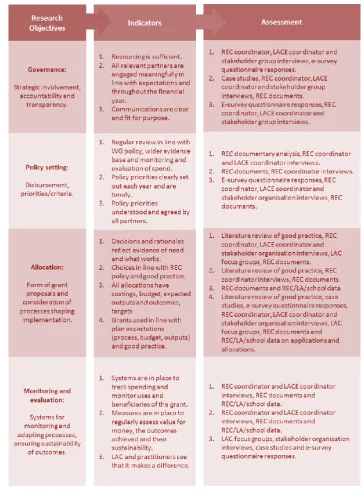
[image:32.595.77.442.215.718.2]1.15 The evaluation framework presented below provides a structured approach for assessing each stage of the grant process and answering the research questions.
Figure 1.3: Evaluation framework
Structure of this report
1.16 The evaluation framework is used to structure the main findings from the primary research around the themes of: governance, policy setting, allocation, and monitoring and evaluation.
1.17 The report is structured as follows:
Chapter 2 presents an overview of the PDG LAC, including its aims and objectives at national level.
Chapter 3 presents findings from the literature review on best practice for supporting the education of LAC.
Chapters 4-7 present findings from the research to provide evidence to assess performance against each of the indicators in the evaluation framework. Chapter 8 provides conclusions drawing on all the information collected.
Chapter 9 provides recommendations for the Welsh Government, RECs, LAs and schools.
2.
Overview of the PDG LAC
2.1 This section of the report outlines the background and context of the grant, its aims and objectives, and the Welsh Government’s arrangements for funding and guiding each REC in their administration of the grant.
The need for the grant
Educational attainment of LAC
2.2 According to the latest Wales Children Receiving Care and Support Census (which replaced the Wales Children in Need Census in 2017), there are around 5,780 LAC21 as at 31 March 2017. LAC numbers vary greatly by LA, with Cardiff and Rhondda Cynon Taf supporting 690 LAC each (equivalent to 1.27 per cent and 1.73 per cent of the total pupil population, respectively), compared to 80 in Ceredigion and 110 in Pembrokeshire (0.84 per cent and 0.63 per cent of the total pupil population respectively)22.
2.3 Research shows that LAC have often experienced trauma in their lives including abuse, neglect or loss, which can have a debilitating long-term impact.23 Care-experienced young people overcoming traumatic early life experiences and those who continue to have turbulent home lives often struggle with attachment difficulties and lack of confidence. They may also be affected by poor concentration and
behaviour at school which can have a negative impact on their ability to learn and achieve their academic potential.
2.4 At a systemic level, factors influencing the attainment of LAC include:
Placement stability – Significant reductions in educational attainment are observed among LAC in line with the number of care placements;
Placement length - Children who stay in one care placement for longer achieve better educational outcomes than those who have a higher number of shorter placements; and
21 The definition of looked-after children (children in care) is found in the Children Act 1989. A child is looked after by a local authority if a court has granted a care order to place a child in care, or a council’s children’s services department has cared for the child for more than 24 hours. In the context of this guide the term ‘Looked after children’ refers to both children and young people in care.
22 Percentages have been calculated using January 2017 data from Stats Wales on the total number of school students (all schools), by LA.
Quality of education - LAC are more likely to be in lower performing schools and in lower streams which can have a negative impact on their educational
attainment24.
2.5 Research shows that other factors limiting LAC attainment include changes of school, too much time out of school, a lack of sufficient help with learning/catching up; carers who are not equipped or expected to support their learning and development; a lack of help with addressing their wider emotional, mental and/or physical health needs; a pessimistic view of the education potential and aspirations of LAC held by key
professionals; and limited communication between social services and education providers25.
Trends over time
2.6 There has been some encouraging progress in improving the educational outcomes of LAC over recent years, as shown in Figure 2.1:. However, Key Stage 4,
comparisons between 2017 and earlier years should be made with caution because of changes in the definition of this indicator (changes in which qualification elements count towards the literacy and numeracy parts of the Level 2 threshold) although the gap with all children at Key Stage 4 has widened.
Figure 2.1: Trends in looked after children achieving the core subject indicators at Key Stages 2 and 3 and achieving Level 2 Threshold at Key Stage 4* (2010-17)
Source: Wales Children in Need Census, 2016 and Wales Children Receiving Care and Support Census, 2017.
* Level 2 threshold including a GCSE grade A*-C in English or Welsh first language and mathematics.
24 Mannay, D., Staples, E., Hallett, S., et al., 2015. Understanding the educational experiences and opinions, attainment, achievement and aspirations of looked after children in Wales.
25 Ibid.
0% 10% 20% 30% 40% 50% 60% 70% 80%
2010 2011 2012 2013 2014 2015 2016 2017
2.7 In line with attainment, school attendance among LAC has increased slightly but consistently in recent years, rising from 93 per cent in 2010 to 96 per cent in 2015, 2016 and 201726. In 2016/17, LAC had an absence rate of 4.5 per cent; this
compares favourably to a national absence rate of 5.9 per cent for all pupils in secondary schools and 5.1 per cent for all pupils in primary schools27.
The current attainment gap
2.8 Despite this progress, at every key stage, there remains a large attainment gap between LAC and the wider school population, as shown in Figure 2.2:. The
disadvantage gap is already starkly present at the Foundation Phase and remains in place across each Key Stage. Because of the small numbers of LAC in some LAs at Key Stage 4, the aggregated figures for Key Stage 4 attainment may not be wholly representative.
Figure 2.2: The gap at Foundation Phase and Key Stages between the educational outcomes of looked after children, and all learners at 31 March 2017
Source: Wales Children Receiving Care and Support Census, 2017
* Level 2 threshold including a GCSE grade A*-C in English or Welsh first language and mathematics.
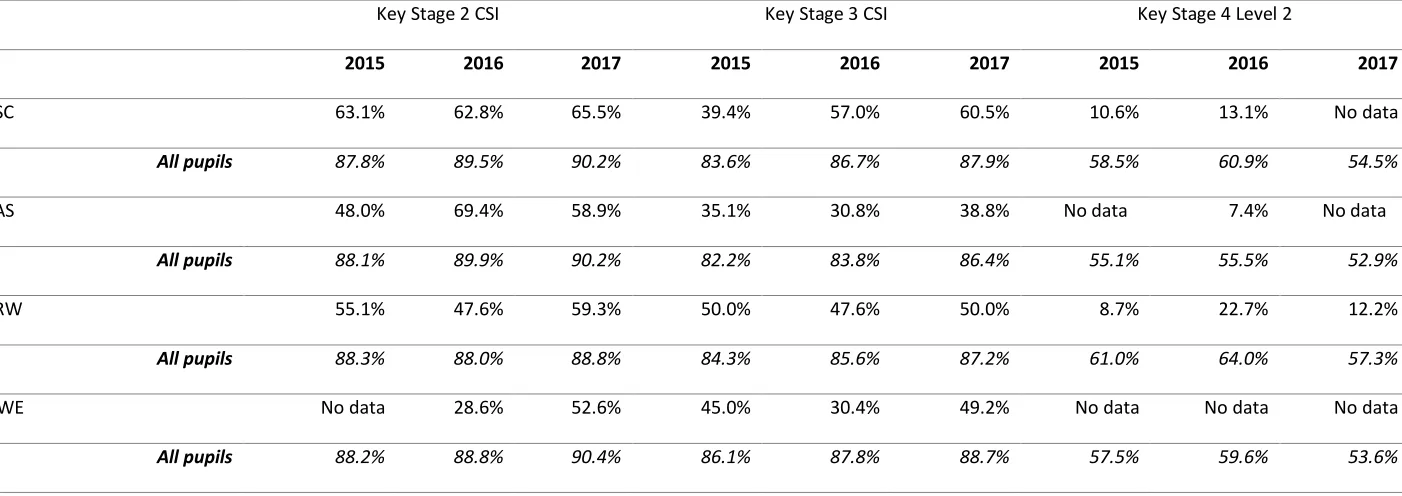
2.9 Table 2.1: below provides a breakdown of attainment by REC28. Again, it shows a gap in attainment between LAC and all learners in all years and across every Key Stage. It also shows that there are large differences in attainment between REC areas for LAC (the average percentages for Key Stage 2 range from 41 per cent in GWE to 64 per cent in CSC and for Key Stage 3 from 35 per cent in EAS to 52 per cent in CSC) while there are little differences between them for all pupils; there are large fluctuations between years; and only one discernible trend (an increase in the attainment of LAC at Key Stage 3 in CSC).
26 Welsh Government Children in Need Census and Children Receiving Care and Support Census.
27 Stats Wales, Absenteeism.
28 There is no data for some RECs because the data is based on small numbers which cannot be reported.
87% 90% 87%
55% 61%
69%
60%
12%
Foundation Phase Key Stage 2 CSI Key Stage 3 CSI Key Stage 4* All learners in Wales
Table 2.1: Attainment levels for each Key Stage in RECs
Key Stage 2 CSI Key Stage 3 CSI Key Stage 4 Level 2
2015 2016 2017 2015 2016 2017 2015 2016 2017
CSC 63.1% 62.8% 65.5% 39.4% 57.0% 60.5% 10.6% 13.1% No data
All pupils 87.8% 89.5% 90.2% 83.6% 86.7% 87.9% 58.5% 60.9% 54.5%
EAS 48.0% 69.4% 58.9% 35.1% 30.8% 38.8% No data 7.4% No data
All pupils 88.1% 89.9% 90.2% 82.2% 83.8% 86.4% 55.1% 55.5% 52.9%
ERW 55.1% 47.6% 59.3% 50.0% 47.6% 50.0% 8.7% 22.7% 12.2%
All pupils 88.3% 88.0% 88.8% 84.3% 85.6% 87.2% 61.0% 64.0% 57.3%
GWE No data 28.6% 52.6% 45.0% 30.4% 49.2% No data No data No data
All pupils 88.2% 88.8% 90.4% 86.1% 87.8% 88.7% 57.5% 59.6% 53.6%
Post-16 progression
2.10 LAC have poorer future prospects upon leaving compulsory education. Just 57% of care leavers were in education, training or employment on their 19th birthday in 2015/1629, although this rate has been improving over the last few years. Far fewer progress to A levels or higher education and relatively more require support to gain employability skills and progress into employment than their peers.
Policy context of the grant
2.11 In January 2016, the Welsh Government published a joint strategy between the Department for Education and Public Services and the Department for Health and Social Services for raising the ambitions and educational attainment of LAC30. This strategy had two national objectives:
Raising the educational attainment of 15-year-old children who are looked after at Key Stage 4 of the Level 2 inclusive threshold from 17 per cent in 2014 to 25 per cent in 2016; and
Ensuring that 75 per cent of care leavers on their 19th birthday are in education, employment or training by 2018.
2.12 The strategy is supported by an action plan focusing on six main themes31, as shown in 0.
29 Welsh Government, October 2016. Adoptions, outcomes and placements for children looked after by local authorities in Wales, 2015-16 – Revised.
30Raising the ambitions and educational attainment of children who are looked after
Box 2.1 Action plan themes for looked after children in education, 2016-19
1. Effective leadership – roles and responsibilities: ensuring professionals across a range of disciplines execute their function and responsibility for LAC to deliver the right outcomes.
2. Building effective partnerships and collaboration: engendering partnerships and collaboration to ensure professionals work more effectively together to support LAC in education.
3. Effective teaching and learning: ensuring schools and further education institutions recognise the key role they can play in improving the quality of life of LAC through education, and understand these children’s circumstances and needs to deliver outstanding and sustainable practice.
4. Making better use of data: ensuring that high quality and reliable data collected on LAC after is used robustly so that interventions to support these children are evidence-based, timely and effective.
5. Strengthening funding arrangements: developing a close working partnership between the Welsh Government and RECs to ensure that the PDG is utilised as intended and the funding makes a real impact in improving the educational performance of LAC.
6. Participation of children who are looked after and adopted:
ensuring LAs work effectively with appropriate partners to ensure a range of opportunities are provided to support the participation of LAC in decisions that might affect them, informing strategic approaches and operational decision making.
Source: Welsh Government Action Plan.
2.13 Across these themes, a total of 37 key actions were outlined to be taken forward by the Welsh Government, LAs, RECs, schools and further education institutions over a three-year period from 2016 to 2019. These actions were to be supported by a range of third sector partners.
2.14 The PDG for LAC relates most directly to theme one in 0 on effective leadership and theme five on strengthening funding arrangements, but the grant funding can clearly serve as a source of support for implementing other aspects of the strategy (such as effective teaching and learning and making better use of data), since the strategy and the PDG both ultimately aim to raise the attainment of LAC.
2.15 One of the key actions for theme five was conducting a performance review each year to check progress and ensure support is working effectively. The first of these progress reports was published in May 201732. Progress in strengthening funding arrangements is presented alongside the action plan in Figure 2.3:.
Figure 2.3: Progress33 compared against action plan34 for theme no.5 – ‘strengthening
funding arrangements’
The Pupil Deprivation Grant
2.16 The PDG was introduced by the Welsh Government in 2012 to provide additional funding to schools to help improve educational outcomes for disadvantaged learners aged 5-15 who were eFSM or LAC aged 4-15. The grant was later extended to disadvantaged children in early years settings. The overall aim of the grant was to support schools to meet the objectives laid out in the Welsh Government’s Tackling Poverty Action Plan (2012-2016)35, namely to mitigate the effect of poverty, assist those in poverty to improve their chances of employment and prevent future poverty
33 Welsh Government, 2017. Raising the ambitions and educational attainment of children who are looked after in Wales: One year on.
34 Welsh Government, 2016. Raising the ambitions Action plan 2015–16 op.cit. 35 Welsh Government (2012) Tackling Poverty: Action Plan 2012 – 2016.
Action Plan Action Plan
• Actions to be delivered between
Summer term 2016 and summer term 2017:
• Reinforce the RECs accountability for delivering results, a new reporting process will be introduced to better track and monitor expenditure (summer term 2017).
• A rapid review process will be introduced to evaluate the effectiveness of the first year of a new approach to the PDGfunding for LAC (summer term 2016).
• Capture information on effective interventions which are proven to have the greatest impact on the educational outcomes of LAC and adopted children (spring term 2017).
• The Welsh Government and Adoption UK (Wales) will develop guidance to help schools support adopted children in education (spring term 2017).
Progress Report Progress Report
• Progress made between January
2016 and February 2017:
•Commissioned the Wales Audit Office to review the use of the LAC element of the PDG in the financial year 2015/16.
• Supported RECs and encouraged cross-consortia working to ensure that spending plans are robust and that the grant is being used effectively to supported LAC in education.
• Sought to ensure that the
governance arrangements for the administration of the PDG are robust and that spending plans for 2016/17 were scrutinised and approved by the Welsh
and, in particular, narrow the gap in achievement between children who are eFSM and those who are not36.
2.17 However, given that it was a shared grant for eFSM pupils and LAC and was
allocated directly to schools, stakeholders suggested that this sometimes resulted in resources being poorly targeted for LAC37. In addition, owing to the time lag between compiling the statistical data and making allocations to schools, the comparatively high number of school moves made by LAC compared to other pupils, and funding of around £1,000 per LAC, funding was not believed to be necessarily available to LAC in the schools they were attending nor supporting more effective practice or
delivering improved outcomes for these pupils.
2.18 In line with these concerns, independent evaluation of the PDG found that, while the PDG was relatively successful in focusing efforts on raising the attainment of eFSM pupils, much less attention was given to LAC38. The evaluation also found that only a few schools reported that LACE coordinators played a role in challenging or
endorsing spending or targeting. It recommended a more systematic approach to collaboration and sharing best practice, with greater involvement from RECs to ensure the aims of the PDG are met by schools39.
2.19 Final evaluation results published in December 201740 paint a similar picture.
Reporting survey results from 2014 (prior to the change in funding arrangements), 93 per cent of primary and 98 per cent of secondary school respondents thought the PDG was intended to benefit eFSM pupils, while only 15 per cent of primary and 23 per cent of secondary school respondents said LAC.
Aims and objectives of the PDG LAC
2.20 In response to these concerns, in April 2015 the PDG was separated into two funding streams: one for LAC and one for eFSM pupils. The grant was also re-named the Pupil Development Grant in 2017. Each funding stream has different arrangements
36 Wales Centre for Equity in Education (2014) Making Effective Use of the Pupil Deprivation Grant: a resource for education leaders and practitioners. Wales Centre for Equity in Education. Available online at:
http://www.uwtsd.ac.uk/media/uwtsd-website/content-assets/documents/equity-in-education/making_effective_use_of_PDG.pdf
37 Cited in publicly available letter written by Steve Davies, op.cit.
38 There are relatively few references to the use of the grant for LAC in Pye, J., Taylor, C. and Huxley, K. (2015) Evaluation of the Pupil Deprivation Grant: 2nd Interim report
39 Ibid