Rochester Institute of Technology
RIT Scholar Works
Theses
Thesis/Dissertation Collections
6-1-1997
Design and evaluation of multimedia extensions for
the DLX architecture
Brian Hughes
Follow this and additional works at:
http://scholarworks.rit.edu/theses
This Thesis is brought to you for free and open access by the Thesis/Dissertation Collections at RIT Scholar Works. It has been accepted for inclusion
in Theses by an authorized administrator of RIT Scholar Works. For more information, please contact
.
Recommended Citation
DESIGN AND EVALUATION OF MULTIMEDIA EXTENSIONS
FOR THE DLX ARCHITECTURE
by
Brian W. Hughes
A thesis submitted in partial fulfillment of the requirements for the degree of
Master of Science in Computer Engineering
Department of Computer Engineering
College of Engineering
Rochester Institute of Technology
Rochester, New York
June, 1997
Approved by:
Dr. Roy Czernikowski, Professor and Department Head
Dr. Tony Chang, Professor
THESIS RELEASE PERMISSION FORM
ROCHESTER INSTITUTE OF TECHNOLOGY
COLLEGE OF ENGINEERING
Title: Design and Evaluation of Multimedia Extensions for the DLX Architecture
I, Brian W. Hughes, hereby grant permission to the Wallace
Memorial Library to reproduce my thesis in whole or in part
for non-commercial and non-profit use only.
Signature
Abstract
Multimedia
computer
architecture
extensions
for
Hennessy
and
Patterson's
DLX
architecture are
developed
following
the study
of multimedia
applicationsand
existing
multimedia architecture
extensions.Support
for
the
extensionsis
addedto
a
VHDL
superscalar
DLX
CPU
model as well as a
DLX
assembler.
Key
functions
used
in
digital
video
encoding
and
decoding
aremodified
to
use
the
extensions,
and simulationsare
undertaken
using
the
VHDL
model
to
determine
the
speedup
offeredby
the
extensionsfor
these
functions. The
results of
the
simulations are used
to
calculate
the
applicationspeedup based
on
the
function speedup
and
the
fraction
ofthe
time
that
eachapplication
spends
executing
eachfunction. It is
shownthat the
superscalarCPU
design limits
the
performance
gain offered
by
the extensions,
andconcluded
that the
effectivenessof
the
extensions
is
further limited
by
the
fraction
of
the
application code
that
can make use
Trademarks
MDMX
and
MIPS V
are
trademarks
of
MIPS
Technologies,
Inc.
MMX is
a
trademark
of
Intel
Corporation
PA
RISC
and
MAX-2
are
trademarks
of
Hewlett-Packard
Company
4
Multimedia
Application Performance
55
4.1
Benchmarked
Applications
56
4.2
Results
58
4.3
Target
Functions for Performance Evaluation
62
4.4
Performance
Gain
Due
to
Parallelism
for
Multimedia Applications
62
5
DLX Extension Design
66
5.1
Existing
DLX Architecture
66
5.2
Multimedia
Extensions
to
DLX
69
6
DLX Extension Implementation
78
6.1
CPU
Pipeline Structure
and
Operation
78
6.2
Extension
Implementation
81
7
System Modifications
82
7.1
DLX Assembler Modification
82
7.2
DLX
CPU
Model Modification
83
7.3
Software Modification
85
8
Extension
Performance
and
Discussion
87
8.1
Effects
of
Superscalar
Design
on
Results
87
8.2
Application
Speedup
89
8.3
Multimedia Extension
Limitations
90
9
Summary
and
Conclusion
92
References
94
A.l
Chen
IDCT
C
source
code
96
A.2
SAD
motion estimation
C
source code
(HPFastBME)
102
A.3
Unenhanced
Chen
IDCT DLX assembly
code
108
A.4
Enhanced
Chen
IDCT DLX assembly
code
123
A. 5
Unenhanced
SDS
motion estimation
DLX assembly
code
(HPFastBME)
. .141
A.6
Enhanced
SDS
motion estimation
DLX assembly
code
(HPFastBME)
. . .185
Appendix B:
Application Simulation Output
224
B.l
MPEG layer
3
audio
decode
224
B.2
MPEG-2
video
decode
226
B.3
MPEG-2
video encode
228
B.4
Px64
video
decode
230
List
of
Figures
2.1
Magnitude
response of
digital
filter
5
2.2
Example
of
frame
ordering in
an
MPEG
video stream
16
2.3
MPEG
encoder
block diagram
17
2.4
MPEG decoder block diagram
19
2.5
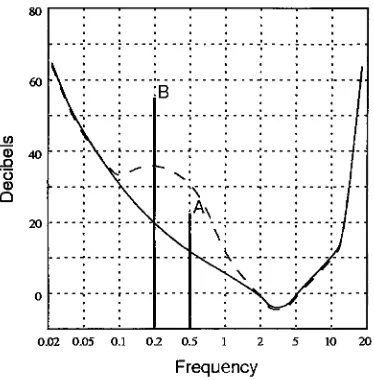
Masking
of
frequencies due
to
movement of
threshold
of
hearing
22
2.6
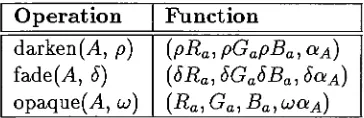
Rendering
pipeline
for Gouraud
or
Phong
shading
25
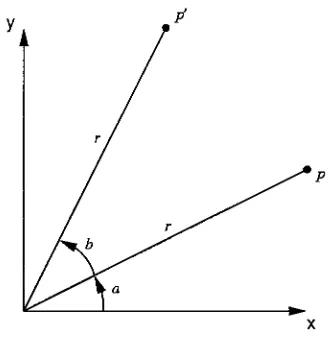
2.7
Rotation
of point
p
counter-clockwise
by
angle a
.28
2.8
View
volume
for
perspective
projection
31
3.1
Packed Data Types
38
3.2
Operation
of
the
MAX
2
mix
instruction
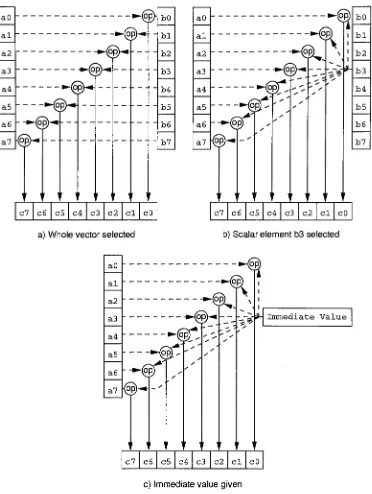
40
3.3
Operation
of
the
VIS
f
pmerge
instruction
43
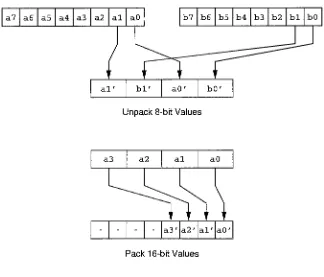
3.4
Operation
of
MMX
packss and punpck
instructions
47
3.5
Operation
of each mode of
the
MDMX
vt-select
field
52
5.1
DLX instruction encoding formats
67
5.2
Operation
of
the
multiplication
instruction in 16-bit
elements
72
5.3
Shuffle
operation on
16-bit
elements
73
5.4
DLX instruction encoding
formats
with added
"M-type"encoding
75
6.1
Pipeline
structure of superscalar
DLX
CPU
78
List
of
Tables
2.1
MPEG
standard
video
formats
15
2.2
H.261
supported
video
formats
20
2.3
Digital image
manipulation
operations
24
2.4
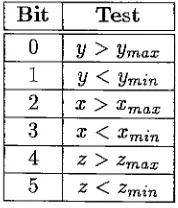
Outcode bits
for
6-sided
view
volume
31
2.5
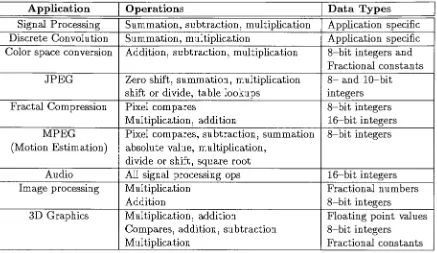
Summary
of application operation and
data
type
requirements
36
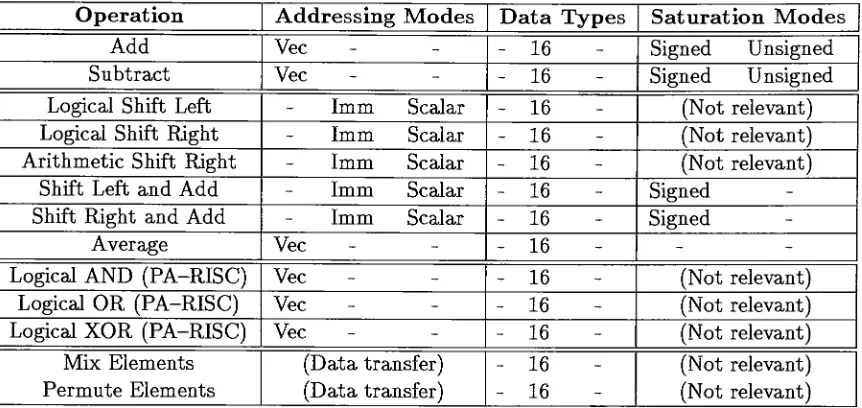
3.1
MAX-2 instructions
and supported
data
types
40
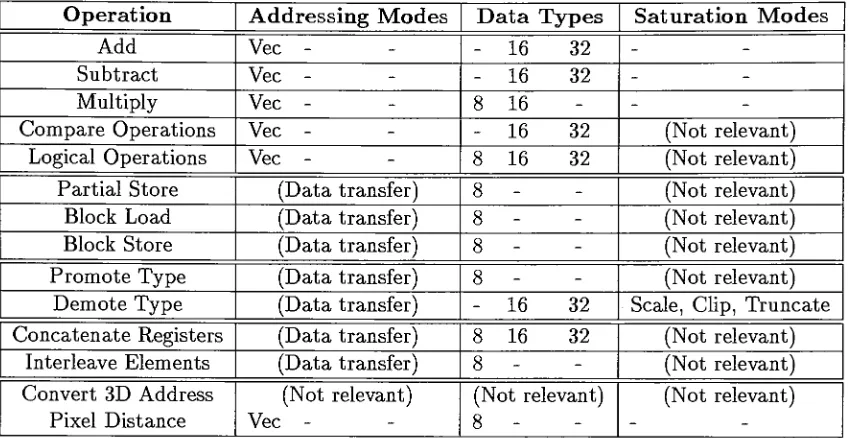
3.2
VIS
instructions
and supported
data
types
42
3.3
MMX instructions
and
data
types
supported
46
3.4
MDMX/MIPS V instructions
that
do
not use
accumulator
48
3.5
MDMX instructions
that
use additional accumulator
49
3.6
Brief
comparison
of multimedia extensions
implementations
53
4.1
Specifications
of
decoded
MPEG
video
file
56
4.2
Specifications
of
decoded Px64/H.261
video
file
57
4.3
Specifications
of
decoded
MPEG
layer 3
audio
file
57
4.4
Five
most
costly
functions
in
MPEG
video
decoding
simulation
58
4.5
Five
most
costly
functions
in
MPEG
video
encoding
simulation
59
4.6
Five
most
costly
functions
in
Px64/H.261
video
decoding
simulation
....60
4.7
Five
most
costly
functions in Px64/H.261
video
encoding
simulation
....60
4.8
Five
most
costly
functions
in
MPEG
layer 3
audio
decoding
simulation
...61
4.9
Code
coverage provided
by
functions
selected
for
performance evaluation
. .62
4.10 Application
speedup
due
to
speedup
of
Chen
DCT
and
Chen
IDCT
code
.64
4.11 Application
speedup
due
to
speedup
of motion
estimation
code
64
4.12 Total
estimated
speedup
for
target
applications
65
5.2
Supported ALU
operations
in DLX
... .68
5.3
DLX
multimedia extension
instructions
71
5.4
DLX
main opcodes
74
5.5
DLX
SPECIAL
functions
(main
opcode
S00)
74
5.6
DLX
FPARITH
functions
(main
opcode
$01)
74
5.7
DLX
main opcodes with multimedia extensions
76
5.8
DLX
MULTIMEDIA
functions
76
5.9
DLX
M-TYPE
functions
76
7.1
Original DLX internal
floating
point
function
codes
(6-bit)
84
7.2
DLX internal
floating
point
function
codes with extensions
(7-bit)
85
8.1
Simulation
results
for
target
functions
87
Glossary
CCF
CCIR
601
CIF
DCC
DCT
Differential PCM
EDTV
JPEG
H.261
HDTV
Cross Correlation Function
used
for
MPEG
motion estimation
One
of
4
video
formats
supported
by
the
MPEG-2
video
com
pression
standard;
calls
for
a resolution of
720
X
486
at
30 Hz
and
requires
5-10 Mbps
of
signal
bandwidth
One
of
2
video
formats
supported
by
the
H.261
video compression
standard;
calls
for
a resolution of
352
X
288
Digital Compact Cassette
Discrete
Cosine Transform
used
by
the
JPEG
still
image
com
pression standard and
MPEG
video compression
for
coding
Digital coding
technique
in
which
the
differences between
succes
sive samples are encoded
using PCM
One
of
4
video
formats
supported
by
the
MPEG-2
video
com
pression
standard;
calls
for
a resolution of
960
X
486
at
30
Hz
and
requires
715 Mbps
of signal
bandwidth
Lossy
still
image
compression standard
Video
compression
standard
intended
for
video
conferencing;
sup
ports
CIF
and
QCIF
video
formats
One
of
4
video
formats
supported
by
the
MPEG-2
video
com
pression
standard;
calls
for
a resolution of
1920
X
1080
at
30 Hz
IDCT
ISDN
MAD
MAX-1
MAX-2
MCU
MDMX
MMX
MPEG-1
MPEG-2
MPEG^t
MSD
PCM
Px64
QCIF
The Inverse Discrete
Cosine
Transform
used
by
the
JPEG
still
image
compression
standard
and
MPEG
video
compression
for
decoding
Integrated
Services
Digital Network
Mean
Absolute
Difference
function
used
in
MPEG
motion
estimation
First-generation
of multimedia
extensions
for
Hewlett-Packard's
PA-RISC
architecture
Second-generation
of
multimedia
extensions
for
Hewlett-Packard's
PA-RISC
architecture;
a superset of
MAX-1
Minimal
Coded
Unit
MIPS Digital Media Extensions
for
the
MIPS RISC
architecture
Intel's
multimedia extensions
for
the
Intel
architecture
Video
compression
standard
supporting
only
the
SIF
video
format
Video
compression standard
supporting
higher-bandwidth
video
formats
including
HDTV
Video
compression standard
targeting
applications
allowing
low-resolution
images
and slow
frame
rates
Mean
Squared
Difference
function
used
for MPEG
motion
estimation
Pulse
Code
Modulation;
a
digital
coding
technique.
Colloquial
name
for H.261
Quarter CIF:
one
of
2
video
formats
supported
by
the
H.261
RGB
SIF
SAD
SDS
VIS
YCbCr
YUV
The
Red/Green/Blue
color
space
used
by
graphics
display
hardware
Lowest-resolution
video
format
supported
by
MPEG-2
and
the
only
video
format
supported
by
MPEG
1;
calls
for
a resolution
of
352
X
240
at
30 Hz
and requires a
bandwidth
of
1.2-3 Mbps
Sum
of
Absolute Differences
cost
function
used
for MPEG
motion
estimation
Sum
of
Differences Squared
cost
function
used
for MPEG
motion
estimation
Visual Instruction Set: Sun
Microsystems'multimedia extensions
for
the
SPARC
architecture
An
alternate
color
space
used
for digital image
representation.
Based
on
the
YUV
color
space,
with with
U
and
V
components
scaled and shifted so
they
are
always
between 0
and
1.
An
alternate
color
space
used
for digital
image
representation
comprised of a
luminance
channel
(Y)
and
two
chrominance chan
1
Introduction
Multimedia
applications
have
placed new
demands
on
both
personal computers and work
stations,
requiring
them to
process
large
amounts of
data
in
a
variety
of
formats.
Typ
ical
multimedia
areas
include
voice, audio,
still
and
animated
graphics,
and
full
motion
video
[LS96]. Some
issues
when
dealing
with
these types
of
data
are media
synchronization,
storage requirements
for
multimedia
data,
and
the transmission
of multimedia
data between
machines on a network.
Typically,
the
amount of multimedia
data
that
needs
to
be
available
to
provide
any
amount of meaningful content with good
quality
is
large. An
example
is
given
in
[FSZ95]
for
a multimedia
encyclopedia comprised of
500,000
pages of
text,
3,000
color
pictures,
500
maps,
60
minutes of stereo
sound,
30
animations,
and
50 digitized
movies
(1
minute
each);
this
particular encyclopedia
would require
111.1
GB
of storage
capacity if
each element
was
stored
in its
native
format.
In
addition
to
storage
capacity,
video and audio
streams
require
a
specific
bandwidth
between
the
source and
the
viewer
to
be
played at real-time rates.
As
a
result,
much effort
has been
put
into
the
development
of compression and
decompression
technologies
and
standards such
as
JPEG
and
MPEG
to
provide a
means
to
reduce
the
amount of
storage required
for
multimedia
data.
Also
characteristic
to
multimedia systems
is
the
need
to
process
this
data. For example,
algorithms
may
be
applied
to
an
image
or series of
images in
a video
to
enhance
their
quality
or scale
them to
fit
in
a window.
The
manipulation
of audio
data
may
require
the
mixing
of
two
or more
audio
streams.
The
Intel Media Benchmark
[Int96],
designed
to
evaluate
performance
of
multimedia personal
computers, includes
sections
which
brighten
an
image
and
blend
two
stereo audio streams
together.
To
speed
the
execution
of multimedia
data
compression
and
decompression
algorithms
their
CPU
architectures
to
better
support
multimedia applications
[LS96]. All
extensions
focus
on
SIMD
parallelism
on small
data
types,
and support
this
parallelism
by
"packing"
a number
of small
data
elements
into
a
single,
wide
register
and
performing
operations
in
them
in
parallel.
The
goal
of
this thesis
will
be
to
add such support
to
Hennessy
and
Patterson's DLX
architecture
[HP96]
and
evaluate
the
performance
gain
offered
by
such
extensions
through
the
simulation of real multimedia applications on a
VHDL
model of a
DLX
CPU,
described in
[Fer96].
An
outline of
this
report
follows.
First,
sections
2
and
3
will
discuss
typical
multimedia applications
and
existing
architec
ture
extensions
designed
to
increase
their performance,
respectively.
Section 5
will propose
a set
of extensions
to the
DLX
architecture
based
on
the
examination of multimedia
appli
cations
in
section
3
and executions profiles
of multimedia applications
discussed in
section
4.
The implementation
of
the
DLX
multimedia extensions
in
a
DLX
CPU
will
be
considered
in
section
6,
with
the
required
VHDL
model
and
assembler
modifications
discussed
in 7.
Finally,
the
changes
in
performance
due
to
the
extensions and an analysis of
the
results will
2
Multimedia Applications
and
Algorithms
This
section will
discuss
compression,
decompression,
and
processing
algorithms
for
images,
video,
and audio
data
followed
by
a
discussion
of
the
computations required
for
3D
graphics
rendering.
Of interest
to this
work are
the
computational requirements required
to
support
these
applications.
The
material presented
in
this
section
is
not meant
to
be
complete and
all
issues involved in
the
design
and
implementation
of
applications
described
in
this
section
will not
be dealt
with,
but
some
background
theory
will
be
given
to
support claims made
about computational
and
storage requirements.
2.1
Digital Signal Transforms
and
Filtering
Digital
signal
transformation
and
filtering
are used
in
many
multimedia
applications,
serv
ing
to
process
digital images
[FvDFH96]
and
divide
an
audio
signal
into
subbands
for
compression
[Poh91].
Digital
signal
processing is
discussed
in
[Poh91].
The
process
of
filtering,
whether
in
the
digital
or
analog
domain,
aims
to
eliminate
certain
frequency
components
from
a signal while
retaining
others.
A
number
of
different
types
of general
filters
exist,
including
Low-pass
filters
which pass
low
frequencies
while
removing
high
frequencies,
High-pass
filters
which
pass
high frequencies
while
removing
low frequencies
Band-pass
filters
which
allow
a
range
of
frequencies
to
pass
while
eliminating
all
others,
and
Notch
filters
which suppress a range of
frequencies
and allow all
others
to
pass.
The
concept
of signals
in
the
frequency
domain
as
well
as
sampling
theory
are
both
important
to the
understanding
of
digital filters. The
reader
is
directed
to
[Poh91]
for
more
The
z-transform
is
central
to the
design
and
analysis
of
digital
filters,
as
digital
filter
transfer
functions
are
described
in
terms
of
the
digital
variable
z.
The
z-transform
is
described
mathematically
as
[Poh91]
+00
(2.1)
X(z)=
J2
*()*_B7l= OO
and,
as
shown,
converts
a
discrete
time
signal
into
the
digital
frequency
domain. In
engi
neering,
a
one-sided 2-transform
is
typically
used
which
involves
the
summation
from
0
to
00,
rather
than
00to
00 as shown above
[Poh91].
A
transfer
function,
as
a
function
of
z,
describes
a
digital filter.
In its
most
general
form,
the transfer
function
of a
digital filter is
[Poh91]
(2-2)
E[z)
=,
^^
1
+
EiLiM"The
numerator of
the transfer
function
has M
roots,
called
zeros,
while
the
denominator
has
N
roots,
called poles.
The
locations
of
the
roots and poles
in
the
digital
frequency
plane
describe
the
frequency
response of
the
digital
filter,
which can
be determined
graphically
by
tracing
a path
along
a unit circle
in
the
z-plane and
noting
the
distance
of
the
point
from
poles and
zeros
to
determine
the
magnitude of
the response,
while
the
angle
from horizontal
made with each pole and zero
determines
the
phase response.
Specifically,
the
magnitude
response at point
A
in
the
unit circle
is
given
as
(2-3)
\H{z)\
="fl
l^-g
1
lj=i
I--
~~-HI
where
Z{
is
the
ithzero and
Pj
is
the
jthfor
point
A
is
(2.4)
M
N
8=0
j=0
where
^i
is
the
angle
from
the
ithzero and
$;
is
the
angle
from
the
jihpole.
An
example
for
the
filter
(2.5)
H(z)
=ill
2z
with a zero at
-1and a pole at
0 is
shown
in
figure
2.1
[Poh91].
|Y(z)|
Re(z)
Figure 2.1:
Magnitude
response
of
digital filter
Given
a
digital filter
transfer
function,
an
inverse
z-transform
can
be
applied
to
it
to
yield a
difference
equation of
the
form
M
N
(2.6)
y(n)
=X)a^(n
~*)
-J2bty(n
-{)
Equations
of
this
form
must
be
processed
by
a
computer
system
to
implement
a
digital
filter.
Note
that
as
the
number of poles and zeros
increases,
the
computational
complexity
increases
but is
still
limited
to
multiplication and addition operations.
Alternately,
[FvDFH96]
approaches
digital
filtering
through
convolution.
The Discrete
Fourier
Transform
(DFT)
can
be
used
to
convert a
digital
signal
into
the
frequency domain,
and multiplication can
be
used
to
remove unwanted
frequencies,
and a subsequent conversion
back
to the
spatial or
temporal
domain
produces
the
desired
result.
For
example, to
remove
all
frequencies
above
frequency k,
convert
to the
frequency
domain
and
multiply
by
the
pulse
function:
1,
when
k
<
u
<
k,
(2.7)
S(u)
0
elsewhere
As
discussed in
[FvDFH96],
multiplication
in
the
frequency
domain
is identical
to
con
volution
in
the time
domain,
so
the
process
described
above can
be
replaced
by
a single
convolution.
A
convolution
is
defined
as
[FvDFH96]
/oo
f(r)g(x
-r)dr
-oo
A discrete
convolution
is
defined
as
[Poh91]
CO
(2.9)
h(n)=
Y,
x(k)h{n-k)
k=oo
Convolution
using
a pulse
function
as
defined
in
equation
2.7 is
known
as
box filtering. As
with
the
processing
of
difference equations,
a
number
of
multiplications
and
additions
are
required
to
evaluate
the
output of a
digital filter
using
a
convolution.
In
either
case,
the
2.2
Color Spaces
and
Color Space Conversion
Of
importance
to
image/video
compression and
processing
algorithms
is
the
color space of
an
image.
Each
pixel
in
an
image is
defined
by
one of more color elements.
A
pixel
in
a
24-bit
color
image,
for
example,
will
have
an
8-bit
element
for
each of
its
red,
green,
and
blue
component.
This is
known
as
the
RGB
color
space.
As discussed in
[FSZ95],
it is
more natural
for
compression algorithms
and,
as
discussed
in
[Int96]
some
image processing
algorithms, to
operate
in
the
YUV
color space
in
which
the
Y,
or
luminance,
component
specifies
the
brightness
of
the
pixel and alone can
produce
a
greyscale
image.
The
U
and
V,
or
chrominance,
components are used
to
add color
to the
image.
RGB
to
YUV
conversion
is
defined
by
the
CCIR
601
standard as
[FSZ95]
(2.10)
Y
=0.299i? + 0.587G-r-0.114fi
(2.11)
U
=0.564(5
-Y)
(2.12)
V
=0.713(J?-Y)
Note
that
equation
2.10 is
a weighted
average of
the
R,
G,
and
B
components
of
the
image
and will result
in
a value
requiring
the
same number of
bits
as
the
inputs
components.
Equations 2.11
and
2.12
will require
the
signed
computation
(pixel
components
are
typically
unsigned)
and
may
require additional
bits
for intermediate
and
final
values.
The
conversion
of a pixel with
B
=0
and
Y
=255
will result
in
V
=-181.82,
for
example,
which cannot
be
represented
in 8 bits.
R
G
B
Y
=:+
TT
+
4
2
2
B
-YU
=2
R-Y
(2.13)
(2.14)
(2.15)
V
2
The
inaccuracy
introduced
by
this
formulation is
apparent
by
comparing it
to the
CCIR
standard
definition in
equations
2.10, 2.11,
and
2.12.
Fast
multiply
of
multiply-accumulate
operations,
such
as
are supported
by
the
PA-RISC
2.0
architecture
[Lee96],
Intel's MMX
[P
WW97],
and
MIPS
MDMX
[MIP96b]
can enable
the
use
of more accurate
RGB
to
YUV
color space conversions.
Also
used
in image
compression
and
processing
algorithms
is
the
YCbCr
color space
[FSZ95]
,It is
similar
to the
YUV
color
space,
but
scales
and zero-shifts
the
U
and
V
components
so
that
they
are always
between
0
and
1.
To
convert
the
U
and
V
components of
the
YUV
color space
to the
Cb
and
Cr
components of
the
YCbCr
color
space, the
following
equations
are used
[FSZ95].
(2.16)
Cb=j
+ 0.5
(2.17)
Cr
=Ye
+ -5
2.3
Still Image Compression
Still
image
compression
techniques
aim
to
compress
still
images and,
addition
to
this,
are
used
to
compress video at
the
intra-frame
level.
Compression
techniques
can
be
classified
into
two
categories:
lossless
and
lossy
[FSZ95]
will
provide
an exact
duplicate
of
the
original
image
after
decompression,
while
lossy
or
noisy
techniques
will
not.
A
lossy
compression
algorithm
allows
the tradeoff
of signal
quality
for
compression
ratio,
and
can
produce
compressed
images
which
are
discernible
from
the
original when
operating
with a
high
quality
setting.
2.3.1
The
JPEG
Image Compression Algorithm
JPEG
is
a still
image
compression algorithm
designed
to
work on
full-color
images,
and
is
discussed
thoroughly
in
Chapter 5
of
[FSZ95].
The
JPEG
standard
defines four
modes of
operation,
1. Sequential DCT-based
encoding
in
which
each
image
component
(each
component
in
the
color
space)
is
encoded
in
a single
left-to-right,
top-to-bottom
scan
and
the
discrete
cosine
transform
(DCT)
is
used
to
convert
the
image
from
the
spatial
(image)
domain
to the
frequency domain,
2.
Progressive
DCT-based
encoding,
another method
using
the
discrete
cosine
transform
but in
which
the
image is
encoded
in
multiple
scans,
each scan
increasing
the
image
resolution and
therefore the
image
quality,
3.
Lossless
encoding
which uses no
lossy
transformations
and
guarantees
an exact repro
duction
of
the
original
image
upon
decompression,
and
4. Hierarchical encoding in
which
the
image is
encoded at
multiple resolutions.
For
multimedia
applications,
lossy
encoding is usually
acceptable and
sometimes
neces
sary
as
it
provides
the
highest
compression ratios.
The
following
sequence
of
steps
is
used
to
encode
an
ra-bit-per-pixel
greyscale
image
using
the
sequential
DCT-based
encoding
technique.
1.
the
input
values
are
shifted
from
the
range
0
to
2"-1
to
the
range
to
2n~12.
the
resulting
values are
grouped
into 8x8
blocks,
3.
the
discrete
cosine
transform
is
used
to
convert each
block
of
the
input
data
from
the
image
domain
to the
frequency domain,
4.
the
resulting DCT
coefficients are quantized
using
a quantization
table,
reducing
the
amplitude
of
the
DCT
coefficients
and
producing
more
zero-valued
coefficients
to
increase
the
effectiveness of
the entropy encoding,
5.
the
quantized
coefficients are reordered such
that the
lowest-frequency
coefficients are
first,
6.
the
ordered coefficients are encoded
using
entropy
encoding.
In
[FSZ95],
the
DCT
for
an
8
x
8
block
is
defined
as
follows.
,,. ,_,.
,
C(u) C(v)
J^ J^
,. .(2x
+ 1)utt
(2y+lW
(2.18)
F(u,v)
=^ULJ2Ylf(x>y)cos-
T6CS16
2;=0 j/=0
where
C(u)
= <75
ifw
=>
1
if
u>0
and
f(x,
y) is
the
an
8
x
8
block from
the
input
image. The
DCT
outputs
an
8
x
8
block
of
DCT
coefficients
in
which
F(0, 0)
is
called
the
"DC
coefficient"and
the
remaining
63
values
are called
"AC
coefficients"
.
The
number
of
bits
required
to
store
a
single coefficient
can
be
more
than those
required
to
store
the
input
pixel values.
In
[FSZ95],
it is
pointed out
that
for
a greyscale
image
with
input
pixels
in
the
range
[-128,
127]
(8
bits
per
pixel),
the
pixel
of storage.
This
is
significant
to the
design
of
multimedia
hardware because
simple
8-bit
data
types
cannot support a
DCT
on
8-bit
values
to
full
accuracy.
Quantization,
described
in
both
[FSZ95]
and
[Poh91],
is
given
as
(2.19)
Fq(u,v)
=Round
F(u,
v)
Q(u,v)
where
Q(u,v)
is
an
entry in
the
quantization
table
and
is
between
1
and
255,
an
8-bit
unsigned
value.
Quantization
is
the
simplest
form
of
lossy
compression
[Poh91].
Due
the the similarity
of
DC
coefficients
between
different
blocks,
predicative
coding
can
be
used
to
encode
the
DC
coefficients.
That
is,
the
first
DC
coefficient
is
coded
directly,
and
subsequent
DC
coefficients are each subtracted
from
the
previous
and
the
result
is encoded,
usually
requiring fewer
bits
for
representation
than
direct
coding.
Many
encoding
schemes can
be
used
to
perform
the
entropy encoding
of
the
quantized
DCT
coefficients
in
the
last step
of
the
JPEG
algorithm.
In
[FSZ95],
Huffman coding is
used and
it is
noted
that
arithmetic
coding may
also
be
used.
Both Huffman coding
and
arithmetic
coding
are presented
in
Chapter
8
of
[Poh91].
To
perform
Huffman coding, input
sequences
are
first divided
into intermediate
se
quences
consisting
of
any
number of zeros
followed
by
a non-zero value.
The
zero
portion
of
the
sequence
and
the
number
of
bits
used
to
represent
the
non-zero
portion
of
the
se
quence are encoded
in
a
(RUNLENGTH, SIZE)
pair where
RUNLENGTH
is
the
number
of
zeros
and
SIZE
is
the
number of
bits
used
to
represent
the
non-zero value.
Next,
the
non-zero
value
is
encoded
in
a single
(AMPLITUDE)
symbol which
is
SIZE bits
in
length.
The
number of
bits
allocated
for RUNLENGTH
and
SIZE
is
fixed
at
four,
and
the
pair
(15,
0)
is
used
to
represent
a
RUNLENGTH
of
16.
To
encode
RUNLENGTHs
greater
than
16,
a
number of
(15, 0)
pairs can
be
used,
each
representing
an additional
16 zeros,
followed
by
The
(RUNLENGTH, SIZE)
pairs
formed
above
are
then
encoded
in
binary
using
a
variable
length
code
from
a
Huffman
table,
and
the
(AMPLITUDE)
symbols are encoded
using
a variable
length
integer.
JPEG
decoding
performs
the
inverse
of
the above,
performing
entropy
decoding
followed
by dequantizing,
the
inverse
discrete
cosine
transform
or
IDCT,
and zero-shifting.
Dequan-tizing
involves simply multiplying
the
quantized
value
by
its corresponding
entry
in
the
quantization
table.
The IDCT
for
an
8
x
8 image block
is
defined
as
(2.20)
f{x,y)
=-J2Y,C(u)C(v)F(u>v)cos-I^^cos
i6
where
C(u)
is
defined
as
above,
and
F(u,
v)
is
the
DCT
coefficient at
(m,
v).
JPEG
coding
of color
images is
similar
to
JPEG
for
greyscale
images
but
will
typically
employ
color space conversion and must account
for
all color segments of
the
image.
Non-interleaved
data ordering involves encoding
each component
separately in
a
left-to-right,
top
to-bottom
pass.
Interleaved ordering
requires
the
formation
of minimal
coded
units
(MCUs)
which are comprised of a number of elements
from
each color segment.
When
all
segments are of
the
same
resolution,
an
MCU
consists of one element
from
each segment.
If different
resolutions
are
used,
those
elements
containing
more
data
will contribute more
elements
to the
MCU
such
that the
final
interleaved
data
stream will
have
whole number
of
MCUs,
all
with
the
same
length.
In
either
case,
the
computational
requirements
for
color
JPEG
coding
and
decoding
increases
by
a
factor dependent
on
the
number
of
color
components
present
in
the
image
and
their
resolution.
Typically,
each
image
component
is
2.3.2
Fractal
compression of still
images
While
not supported
by
a
standard,
fractal
compression
is
relevant
to
multimedia
due
to
its
ability
to
overcome
the
resolution
dependence
of
JPEG
and
its fast decompression
times.
Fractal
compression
is
discussed
in
[FSZ95].
Fractal
compression uses affine
transformations,
which are combinations of
scale, rotate,
skew,
and
translate operations, to map
parts of an
image
to
other parts of
that
same
image.
Affine
transformations
are
discussed
in
both
[FSZ95]
and
[FvDFH96],
and can
be
expressed
in
the
form
(2.21)
xnew
=ax
+
by
+
c
(2.22)
ynew
=dx + ey +
f
where
(x,y)
is
an
input
coordinate,
and
a,b,c,d,e
and
/
are
the
coefficients
of
the
affine
transformation.
A
simple
scale
and
translate
can
be
realized
with coefficients
a
=Sx,
b
=0,
c
=Tx,
d
=0,
e
=Sy,
f
=Ty
where
Sx
and
Sy
are
the
amount
to
scale x and
y
by,
respectively,
and
Tx
and
Ty
are
amounts
to translate
x and
y
by,
respectively.
More
complex
affine
transformation
are required
for
computer
graphics
applications and will
be discussed
in
section
2.7.1.
Note
that the
data
types
and
sizes
required
for
affine
transformations
are
dependent
on
the
size of
the
image,
and
that
signed
numbers
are
not
required
if
the
origin
is
placed
at
the
corner of
the
image.
Given
this,
8-bits
can
accommodate
256
X
256
pixel
images,
and
16-bits
can
accommodate
images 64A;
pixels square.
Fractal
compression
methods work
to
identify
self-similar regions of an
input image. To
perform
the compression, the
image is
first divided
into
domain
regions and
range
regions,
which can
be
of
arbitrary
shape,
cannot
overlap,
and must
cover
the
entire
image.
Next,
a
set of affine
transformations
are
defined
to
be
used
during
the
compression
process.
The list
is
applied
and
the
result
compared with each range region
in
the
image. For
each
domain
block,
a range
block
that
matches
the
domain block
as
closely
as possible
is
found
and
the
coefficients
for
the
affine
transformation
are saved
in
the
output
file.
To
reconstruct
the
image,
each
domain
block is
replaced with
the transformed
data from
the
matching
range
block.
Because
the
fractal-compressed
image
file
is,
in
essence,
an equation
defining
the
image,
the
image
can
be
reconstructed at
any
resolution without
loss
of quality.
2.4
Digital Video Compression
A digital
video
is
a series
of
images intended
to
be
played
back
at a
given
frame
rate.
Dig
ital
video compounds
the
storage space requirement created
by
still
images
on multimedia
systems,
and
additionally imposes bandwidth
requirements on
the
digital
video playback
system.
The
bandwidth
required
to play
back
a
digital
video
increases
with
the
frame
resolution,
image quality,
and playback rate.
To
date,
software-only
solutions
for
real-time
video
decompression
exist
[Lee96],
but
require multimedia enhanced
CPUs
such as
the
one we are
designing.
Software-only
video
compression
systems
exist,
but
because
of
the
computational
complexity involved
they
require
hand-coded
assembly
language
tailored to the
architecture of
the
CPU
they
run
on
[Kas96].
2.4.1
MPEG Compression
of
Digital Video
The
MPEG
standard,
discussed in
[FSZ95],
covers
digital
video,
digital
audio,
and synchro
nization
of
the two.
This
section will
focus
on
the
digital
video portion
of
the
standard.
The
MPEG
standard
specifies
a
number
of
different
video
resolutions,
as
shown
in
table
2.1;
support
for
these
formats
varies
with
the
phase of
the
standard.
MPEG-1,
for
MPEG-4,
unlike
MPEG-1
and
MPEG-2,
targets
video
telephony
and other applications
in
which small
frames
and
low
refresh rates are
acceptable, this
allowing it
to specify
bandwidth
requirements of
only 9
to
40 kbps.
Specification
Resolution
Frame Rate
Required BPS
SIF
352
x
240
30 Hz
1.2-3 Mbps
CCIR
601
720
x
486
30 Hz
5-10 Mbps
EDTV
960
x
486
30 Hz
7-15 Mbps
HDTV
1920
x
1080
30 Hz
20-40 Mbps
Table 2.1:
MPEG
standard video
formats
The MPEG
standard
frame
types
and
definitions
are given
in
both
[CK96]
and
[FSZ95].
In MPEG
compression, three
frame
types
are used
1.
I
frames
are
full images
compressed with a
DCT-based
technique
such as
JPEG,
2.
P
frames,
or
predicted
frames,
are
based
on
the
most
recent
I
of
P
frame
and
are
encoded
using
forward
prediction
in
which
differences from
the
reference
frame
are
encoded,
not
the
whole
frame,
3.
B
frames,
or
bidirectional
frames,
can
be
encoded
using
forward
prediction
as
in P
frames,
backward
prediction
from
the
next
I
or
P
frame,
or
bidirectional
interpolation
from
an
I
or
P
frame before
it
and
an
I
or
P
frame
after
it.
There is
a
trade-off
in
the
frame
types
used
between frame
accuracy
and
compression
ratio.
I
frames
support
the
greatest amount
of
accuracy,
but
offer
the
lowest
compression
ratios,
while
P
frames
decrease
the
accuracy
and
increase
the
compression
ratio,
and
B
frames
offer
little
accuracy
and
very
high
compression ratios.
Due
to the
nature of
B
frames,
the
storage or
transmission
order of
MPEG frames
cannot
transmission
order and
viewing
order.
Note
that the
P
frame
transmitted
second
is
viewed
fourth,
as
it is
required
to
produce
the
B
frames
viewed
as
frames
2
and
3.
The
pattern
repeats
for
the
rest of
the
MPEG
video stream.
Transmit
Order
I
P
B
B
P
B
B
P
B
B
P
B
B
I
B
B
Frame Number
1
4
2
3
7
5
6
10
8
9
13
11
12
16
14
15
View
Order
I
B
B
P
B
B
P
B
B
P
B
B
P
B
B
I
Frame Number
1
2
3
4
5
6
7
8
9
10
11
12
13
14
15
16
Figure 2.2: Example
of
frame ordering in
an
MPEG
video stream
The MPEG
compression
algorithm works
to
compress single
I
frames
and perform motion
estimation
between I
frames,
P
frames,
and
B
frames
for
inter
frame
compression.
JPEG
compression
is
typically
used
for
the
compression
of single
frames
and
was
discussed
in
section
2.3.1.
Here
we will
focus
on
the
computations
required
to
perform motion
estimation
for
inter-frame
compression.
A
block diagram
of an
MPEG
encoder,
from
[FSZ95],
is
shown
in
figure
2.3.
The figure
shows
the
compression of
I
frames
being
identical
to
color
image
compression with
JPEG.
The
production
of
B
and
P
frames
involves calculating
the
pixel
difference between
the
current
frame
and
a reference
frame
and
performing
motion
estimation
between
the two
frames.
The
goal
of motion
estimation
is
to
produce
a
vector
representing
the
motion
of a pixel
block from
one
frame
to the
next.
To
accomplish
this,
the
contents
of a
source
block
are
compared
with other
blocks
within
a
specific search region
by
evaluating
a
function
whose
output
is indicative
of
the
similarity
between
the two
blocks.
As
discussed
in
[FSZ95],
the
MPEG
standard
does
not
specify
a
block
size or a
search
region,
but
typically
16
X
16
blocks
Input
Image
RGB
to
YUV
Conversion
*-T
DCT
J*\
Quantization}
Encoder
Entropy
Input
Image
RGB
to
YUV
Conversion
Tiror
Terms
Reference
Frame
-Cdct>
Motion
Estimation
y
I Rame
1
Entropy
Encoder
>
P/B Frame
Figure 2.3:
MPEG
encoder
block
diagram
defines
several
functions
for
use
in block
comparison.
The Mean Absolute Difference function is defined
as
follows
(2.23)
MAD{dx,dy)
=J2 E
\F{i,j)-G(i
+
dx,j
+
dy)\
mn
n-m
'= J=
where
F(i,j)
is
a
(m
X
n) block in
the
current
frame,
G(i,j)
is
the
block
being
compared
against
in
another
frame,
and
[dx,
dy)
is
the
search
location. To
search a
28
X
28
pixel
block,
dx
and
dy
must
vary
by
6 in both
the
positive and negative
direction.
The
magnitude of
the
maximum
number
of pixels
that the
search
location is
moved
from
the
source
block
location is
p,
and
in
most
cases, p
6
[FSZ95].
Removing
the
division
by
the
constant
in
the
Mean
Absolute
Difference
equation
result
in
the
Sum
of
Absolute Differences
function
implemented
by
Sun
Microsystems'VIS
pdist
instruction,
discussed in both
[TONH96]
and
[MIP96b].
The Mean Squared Difference function is
a more
accurate
measure of pixel
distance
[FSZ95,
MIP96b]
but involves
a squared
term
to
remove
the
sign
of
the
difference,
rather
than
the
ab
Difference function is defined
as
Tl T71
2 2
(2.24)
MSB(dx,
dy)
= -L(i?(j,
j)
-G(i +
dx,j
+
dy)2" ._"> "
2 2
As
above,
the
division
by
the
constant
can
be
removed
from
the
MSD function
and
results
in
the
Sum
of
Differences
Squared,
discussed
in
[MIP96b]
and
implemented
in
the
MIPS
MDMX instruction
set.
Lastly,
the
crosscorrelation
function
is
defined
as
E; E,
F(i,
j)G(i
+
dx,j
+
dy)
(2.25)
CCF(/z,
dy)
=^l
^3
\
J>
V
y)
r
(E,EJi?2(i,j))^(EIE,G2(i-r-dx,j
+
dy))2
The
cross-correlation
function
as
defined
above
is very
expensive
to
implement,
and
is
not
commonly
used
because
of
this.
Also
of
importance
to
MPEG
compression
implementations is
the
search pattern used
to
find
the
destination
block
of
the
motion vector.
[FSZ95]
presents several approaches
to
this problem,
including
Exhaustive search,
which
simply
compares
the
source
block
against all
blocks
in
the
search
area;
Three-step
search which
computes
the
distance
of
the
center
and
at
the
eight
sur
rounding
search
locations
in
the
search
area, using
the
closest match as
the
center of
the
search
area
for
the
next
stage,
and so on.
Other
search
patterns
include
the
Conjugate Direction Search
and
the
2D
Logarithmic
Search.
As
search
patterns
do
not
have
an
affect
on
architecture
at
the
instruction
level
(although
they
may
have
an
effect on
the
cache),
so
they
will
not
be
considered
further
Input
Image
Bit
Stream
Decoder
Dequantizer
Previous
Picture
Future
Picture
IDCT
Motion
Compensation
r\.
Output
Image
Figure
2.4:
MPEG decoder block diagram
A block diagram
of
an
MPEG
decoder,
from
[FSZ95],
is
shown
in figure 2.4. For I
frames,
the
decoder
simply
dequantizes
the
data
and performs an
inverse
discrete
cosine
transform
on
the
result
to
produce
the
output
frame.
If
the
frame
will
be
used
for future
motion
compensation
functions,
it is
stored
in
either
the
"previous
picture"or
"future
picture"
buffer
(depending
on
the
frame
number).
P
and
B
frames
are constructed
using
data
in
the two
picture
buffers
just
described;
the
motion
compensation
unit
is
responsible
for
performing
a
translation
of a source
block along
the
motion vector
to
its
destination
when
decoding
unidirectional
predictive coded
data
(P
or
B
frames)
,or
interpolating
between
the
previous and
future
pictures
with
the
motion
data
(B frame only)
.2.4.2
Px64/H.261 Video
Compression
The H.261
standard
for
video
compression
targets
video
teleconferencing
applications
and
is designed
to
work
over
ISDN
networks.
It is
discussed
in
[FSZ95],
and supports
the
CIF
and
QCIF
(quarter
CIF)
video
formats
with
resolutions
shown
in
table
2.2.
Specification
Y Resolution
U
and
V
resolution
CIF
352
x
288
176
x
144
QCIF
176
x
144
88x72
Table 2.2: H.261
supported video
formats
data.
H.261
does
not,
however,
use
bidirectionally
interpolated
frames,
relying
only
on
forward
prediction
(like
MPEG P
frames)
and
basing
each new
frame
off
the
most
recently
received
frame.
Furthermore,
the
interframe coding
scheme
of
H.261,
while
still
using
motion estimation similar
to
MPEG,
is
based
on
differential
PCM,
described
in
[Poh91].
The H.261 decoder
performs
functions
similar
to
the
MPEG decoder
shown
in
figure
2.4,
but
adds a
filter
to
remove
high-frequency
noise
for
the
incoming
video stream.
2.5
Digital Audio Compression
Digital
audio compression
in
general
is
discussed
in
[Poh91],
while
[FSZ95]
briefly
describes
the
MPEG
audio compression algorithm.
The
more complex audio compression
algorithms,
including
that
of
MPEG,
involve
subband
coding
and
bit
allocation
based
on
a
psychoa-coustic model
which,
similar
to
how
JPEG
compression removes
detail
not
likely
to
be
seen,