Co-operation between
The European Union
and
The Republic of Malawi
Joint Annual Report
2002
C
ONCLUSIONSJoint Annual Report 2002
Co-operation between the European Union and the Republic of Malawi
The Fight Against Poverty in Malawi
The paucity of reliable and up-to-date statistics makes it difficult at this time to ascertain quantitatively the progress – or lack thereof – with the achievement of poverty reduction objectives in Malawi. However, whatever evidence there is suggests that, despite many efforts by Government, NGOs and civil society to fight it, little progress has been made to reduce poverty in Malawi. Economic growth since the mid-1990s has been very modest and volatile. In addition, in 2000-2002 per capita economic growth was negative, agriculture stagnated, manufacturing output declined and the incidence of HIV/AIDS increased. Investment rates – already low at 14% of GDP – fell. They only remained positive because of public investment. Private sector investment is nearly absent. Government savings have virtually disappeared. These negative developments impeded progress towards achieving the Millennium Development Goals.
The Malawi Poverty Reduction and Economic Growth Strategies to be strengthened
To reverse these trends, Government launched the Malawi Poverty Reduction Strategy (MPRS) in April 2002, which aims at (i) sustainable pro-poor growth; (ii) promoting human capital development; (iii) improving the quality of life for the most vulnerable; and (iv) strengthening governance. A more vigorous implementation by Government of the growth scenario and policy reform is needed. The mobilisation of internal savings is seen as key to reduce the currently very high dependency on uncertain donor financing (15% of GDP) and to stimulate economic growth through lowering the prevailing high real interest rates which are currently impeding private investment. The poor growth also limits government’s ability to generate its own revenues. This is exacerbated by a rapid increase of the domestic debt and the subsequent interest burden on the government
Implementation of Poverty Reduction and Growth Strategies to be strengthened
The MPRSP stresses the importance of restoring macroeconomic stability to reverse economic decline. Yet, progress in this area has been uneven. In mid-2000 Government reached agreement with the IMF on the Policy Reduction and Growth Facility (PRGF), which included a policy reform programme that aimed at bringing down inflation and interest rates. Towards the end-of 2000, the
IMF and World Bank also approved Malawi’s eligibility for debt relief under the Highly Indebted
2
that from the EC – remained suspended and only little debt relief was made available1. This
aggravated Government’s fiscal difficulties and made higher spending on health and education problematic. It also left the EU with large un-disbursed balances in budget support that could have been spent to finance pro-poor programmes.
However, a combination of (i) revenue measures agreed upon, (ii) the application of more stringent control of public expenditure, as well as (iii) several structural reform measures that have been taken enabled IMF staff to positively review the implementation of the PRGF. Thus,
on 20th October 2003, the IMF Board approved in principle the completion of the First Review
of the PRGF and also approved in principle a first tranche disbursement of US $9.2 million. This decision, once confirmed by a similar decision of the World Bank’s Board of Directors on
23rd October, 2003 following the Board’s review of progress with the Poverty Reduction
Strategy Paper, opens the way for the resumption of bilateral and multilateral budget support
and debt relief.
Table 1.1 illustrates the positive macro-economic perspectives that could come from a vigorous implementation of the poverty reduction and growth programme:
Table 1.1
2000 2001 2002 2003 PRSP Targ.
2004 PRSP
Targ.
2005 PRSP
Targ.
Population (million) 11.6 11.8 12.1 12.3 12.6
Population below the Poverty Line (%) 65 -- -- -- -- 59
GDP Growth (% per annum) 1.4 -1.5 1.8 3.4 4.3 6.7
Per Capita GDP (US $) 166 162 164 167 172
Per Capita GDP Growth (%) -0.5 -3.5 -0.3 1.3 2.2 4.5
Under this accelerated and more self-financed economic growth scenario, prospects for achievement of Millennium Development Goals are improved. To halve poverty by 2015 – and to reduce it in the interim to 59% by 2005 - the economy will need to grow at over 5 percent a year, more than eight times the 0.6 percent annual growth rate of the 2000-2002 period. Agriculture plays a key role in this scenario, confirming that agriculture should remain a focal sector for EU involvement.
Further Progress in Governance – and External Support for it - is Needed
Malawi has made remarkable progress in developing institutions to consolidate democracy, strengthen governance and accountability. Institutions as the Human Rights Commission, the Law Commission and the Ombudsman are largely able to operate freely and should be recommended for their work. This applies to the Anti Corruption Bureau as well. The core problem remains weak management capacity in these institutions.
The political situation in the country was dominated in 2002 by the question of the amendment to the
Constitution (Art.83) to enable any State President in Malawi to stand for more than two terms as
currently stipulated in the Constitution. On the 4th of July 2002, a private members bill, proposing
unlimited terms in office possible for the President, was defeated in Parliament. The sensitivity of this question and subsequent increased internal political tension, as well as other governance questions, occasionally led to a strained relationship with donors, including the European Commission.
Looking Ahead
It is important that in the year prior to the General and Presidential Elections the consensus for needed policy reform can be strengthened and maintained, so that the Poverty Reduction and Growth Programme can be implemented with greater vigour and determination, so as to make a dent in Malawi’s poverty and to initiate progress towards reaching the Millennium Development Goals. Under these circumstances – and with adherence to agreed policy reform - the EC programme can make a substantial contribution to that goal by providing budget support and financing for programmes in the other two focal sectors, namely agriculture and transport, as well as for several non-focal sector projects, as follows:
Agriculture and Food Security Projects are Showing Results
Even though the implementation of the 9th EDF has not yet started in Malawi, serious efforts have
already been embarked upon to implement the strategies spelled out in the CSP. However, as 2002 was marred by the severe food security crisis, most activities were focused as short-term responses to this crisis, while keeping medium and long-term activities running
The implementation of two main projects continued satisfactorily in 2002, namely, the Soil
Conservation and Agricultural Production Project (PROSCARP), and the Social Forestry Training and Extension Project.
The Public works Programme (PWP) has successfully completed its second-year work programme, and EUR 6 million from the Food Security Budget Line has used to enlarge its financial support. The food security programme was reoriented in July 2002, so that it can focus more on the accessibility dimension of food security. It now aims to support demand by creating employment opportunities and addressing food security on a larger scale. More than 10 000 people were directly involved in the road rehabilitation component alone, and were able to generate income at a crucial time. A new PWP is already being planned for and should benefit from enlarged financial support in 2004. (See Annexes A and B attached to these Conclusions).
During 2003 Financing Proposals will be drafted for interventions in the areas of Land Reform and
Rural LivelihoodsProgrammes, which focus on land resources and forestry conservation. These proposals are scheduled to be submitted to the EDF Committee by early 2004.
Objectives for Transport Sector are not Being Achieved
Good and sustainable management of roads was the main policy objective for the transport sector in
the NIP of the 8th EDF. Unfortunately, this policy objective has so far not been achieved. From its
4 matters. First, the contribution of fuel levies to the Road Fund has not kept pace with maintenance expenditure needs, which is at variance with policy commitments agreed upon between Government and road sector stakeholders, including the EU. Of key importance is that an agreement of July 1997 - namely that fuel levies would finance all normal maintenance by 2002 - was not implemented. In fact, by the end of 2002 Road Fund receipts were only one-half of the agreed targets. Furthermore, from time to time Government has required the NRA to finance activities outside the agreed programme, thereby dramatically reducing NRA’s output on essential maintenance works.
On the positive side, 2002 has seen the advancement of several initiatives, particularly those under
the 8th EDF, including (i) commencement of reconstruction of the Dwambazi Bridge, as well as of
(ii) a Technical Assistance programme for NRA; (iii) commencement of services for the Design and Supervision of Four Bridges under the Lakeshore Road Infrastructure Support programme; (iv) and the award of a contract for the construction/rehabilitation of the M1-Golomoti-Monkey Bay road;
In summary, the assessment of achievement of the policy objective of good and sustainable management of roads is largely negative, indicating that a thorough review is needed. The question of Government interference in NRA programming and procurement must be addressed at the same time, failing which there must be doubt about the justification of future EU support for the sector.
It has been agreed to jointly take stock in November 2003 of the main issues standing in the way of the sound and rapid development of the roads sector and to jointly identify at that time concrete solutions which would be submitted to the Government.
Macro-Economic Objectives were not achieved in 2002, Budget Support could however resume following the completion, in principle, of the first review of Malawi’s PRGF on 20 October 2003.
The major constraint to disbursement of budget support has been the inability of successive IMF missions during 2002 to conclude their review of the PRGF. As a result, they were unable to present a positive judgement on implementation of the macro-economic reform programme to the IMF Executive Board. This, together with non-repayment of EUR 7.43 million to the European
Commission, led to the continued suspension of budget support. The Government of Malawi paid
this total amount of EUR 7.43 million back to the European Commission in 2003.
In early 2002 the Commission officially became member of the Common Approach to Budgetary Support Group (CABS). CABS intend to link budget support disbursements to progress, which Government makes in implementing the next phases of the PRGF and the PRSP. In the absence of such progress, however, this may have to lead to the re-allocation of macro-economic support to other programmes directly benefiting the poor, e.g. towards the Micro-Projects and the Public Works Programme.
Programmes outside the Focal Sectors are Showing Positive Effects
EDF funding in the health sector has supported the reform and decentralisation of the health sector,
the maintenance of health facilities, and the development of a national blood transfusion service.
While project implementation is not as good as expected, it should improve in the future. The Health
but also in contributing to the design phase of the Health Sector Wide Approach (SWAp).
As regards governance, the NICE Programme, after two years of implementation, is now ahead of
its scheduled project objectives, having achieved a widespread improvement in both the number and the networking of Para Civic Educators nationwide and volunteers who in some districts are already covering just about every second village. However, in the face of these achievements, NICE has at times been categorized as an NGO, though it is a government programme implemented by the NAO. Therefore there is a continued need for further informal discussions with stakeholders in the coming year with the main aim of clearly explaining the key objectives of NICE.
The Rule of Law Programme is also pointing in the right direction. There was a change of focus in 2002, to a more results oriented approach. This change has taken more time than anticipated and consequently, some additional time and resources, for which preparations are already underway, should be made available to the project. Achievements include the completion of an inventory of the legal sector. The evaluation of the current programme should take place in the first half of 2003.
The 3rd Micro Projects Programme (MPP) continues supporting the poverty alleviation
programme very effectively by providing basic infrastructure, mainly in the education, health and water/sanitation sectors. It implements an impressive 500 projects per year, which explains why people view the MPP as a very efficient tool for addressing the basic needs of the rural communities. Most of 2003 will be spent on reforming and strengthening the financial control procedures of the project. Also, during 2003 important steps will be undertaken to adapt the implementation of procedures to the new needs of programme, which relate to intensified decentralisation and increased stakeholder commitment.
As regards the utilisation of resources for Non-State-Actors (NSA) no direct support has been
provided under the EDF in 2002. The preparation of a decentralised cooperation programme was halted due to a shortage of human resources. However, the Food Security Programme continued to implement a part of its programme through NSAs. With a new programme to support the NSAs under preparation in 2003, this dialogue should henceforth be more intense. The purpose of the programme is to enhance the capacity of the NSAs both administratively as well as their implementation capacity. After sufficient training they should become a more integral part of the
implementation strategy of the 9th EDF.
The Capacity Building Project for Economic Management and Policy Co-ordination focuses on
strengthening the Government’s core economic institutions. Of special importance for the implementation of the MPRP is that the project supports the National Authorising Office (NAO), so that it can function with optimal effectiveness in managing the sizeable EU programme in Malawi. Regular dialogue is taking place between the NAO and the Delegation. So far shortages in the NAO office have limited the number of technical meetings that have taken place. This will be different in
the future, as the NAO Support Unit is staffed sufficiently to cater for the needs under the 9th EDF.
6 The implementation record of Malawi’s programme indicates that the co-operation between the Delegation and the NAO Office performed well. Timely commitments and disbursements can
equally be ensured in the immediate future for the substantial allocations under the 9th EDF,
certainly for the 2003-2004 period. Success in these co-operative efforts will also depend on political and economic developments in Malawi that may make it difficult to implement budget support programmes and to provide financing for the focal transport sector. It also depends on the speed by which the performance of the NAO Office, and of several line Ministries, can be enhanced further. In view of the uncertainties that affect programme delivery, it may be necessary to prepare for re-allocating EU aid between sectors. If the situation so requires, specific proposals could be prepared for consideration at the forthcoming Mid Term Review.
Factors within the control of the Commission include the timely replacement of officials in the Delegation, filling of staff gaps, retention of some positions, deployment of national experts as well as appropriate guidance during the de-concentration phase to ensure an effective Delegation focus on project implementation.
Initially, two programme scenarios have been developed for the 2003-2004 period. Scenario A is consistent with a “normal and healthy” evolution in Malawi and within the Delegation. Scenario B reflects the assumption that the political and economic situation in Malawi may deteriorate. While mitigation measures can help (i.e. shifting of aid to other sectors), the lack of project implementation capacity within Government could still have a substantial knockdown effect on the delivery of the Programme. The consequences will obviously also be felt after 2004. Clearly, Scenario B is an undesirable one and all preventive measures should be considered to minimise the risk that it could materialise.
Scenarios have been developed for EDF 9. Should Scenario B develop for EDF 9, mitigation measures would need to be taken. But for budget support to be replaced by project operations, Government would have to take special measures to increase the absorptive capacities of several Line ministries, while at the same time, making solid progress with strengthening the NAO Office.
Under Scenario C Overall Funding for Malawi Could be Raised
It is possible to envisage a more favourable programme implementation record than the one which underlies the “normal and healthy” evolution in Malawi and which would support Scenario A. Such outcome would include (i) strict adherence by the Government of Malawi to the programmes and benchmarks agreed upon with the IMF and CABS; (ii) a significant reversal of the negative performance within the transport sector and the NRA; and (iii) a demonstrated strengthening of Government capacity to accelerate the implementation of the EDF programme in Malawi, including a vigorous strengthening of the NAO Office. Should these favourable outcomes materialise – and be sustained within an overall positive assessment on progress in institutional reforms in poverty reduction, on results in focal sectors and in implementation performance – Malawi could well qualify for a transfer from the B to the A envelope. This would be a more ambitious Scenario C – as yet undefined - under which additional EDF financing allocations could be made to Malawi. (See Annexes A and B attached to these Conclusions). This scenario would then become subject to the Mid-Term Review discussions scheduled for in mid 2004.
It was agreed that the MTR exercise should start without delay and that it should focus inter alia on the continued appropriateness of the EDF Strategy for Malawi, including the size and composition of the EDF Programme for Malawi. Issues such as continued programme relevance in the light of priority adaptations that could derive from the Public Sector Investment Programme now being finalised - as well as from the Economic Growth Strategy – needed to be considered. At the same time, the speed of programme delivery would need to be reviewed as it could have a decisive impact on decisions regarding the transition from an A Scenario to a possible C Scenario. Finally, progress achieved with an agreed-upon strengthening of the roads maintenance programme and its financing would also have a strong impact. Meanwhile there would be merit in monitoring closely the
eventuality that by November 2004 the 9th EDF envelopes might be exhausted (see Annex B
attached to these Conclusions).
Speeding Up the Use of Old EDF Resources – Government Can Do Much
All has been done by the Delegation to speed up the use of old EDF resources committed in support of projects. Government can help by (i) strengthening with great urgency the EDF Unit in the NAO Office, and (ii) by remedying the issues that are negatively affecting progress in the transport sector.
In the meantime (since March 2003) the RAC/RAL2 situation has improved considerably. The
RAC/RAL situation of October 2003 can be found in Annex 3C of the report.
As regards the strengthening of the NAO Office, major progress has been made in 2003. In fact, in April of this year Government and the Commission agreed to establish a fully-fledged NAO Support Unit. This has been done since then. The Unit is already operational and has secured first-class offices. In the initial phase the Support Unit will be staffed with civil servants and external contract staff, involving 24 posts in total. For the first year Government is providing eight civil servants: the Head of Unit, 3 desk officers – one for each of the EDF focal sectors – and 4 administrative staff.
The Work Programme has been signed and the first release of funds was received in September 2003. Applications for vacant positions are being evaluated, tenders for computers and furniture have been published and training activities in EDF procedures are being organised, with the first one scheduled for December 2003. Key staff will also attend these courses from Line Ministries’ Planning Departments, reflecting the initiation of the Unit’s institution-building role.
More generally, Government could ensure the vigorous implementation of its reform programme, by staying on track with the implementation of the IMF-supported Poverty Reduction and Growth Programme, which would assist in the release of the suspended budget support.
Alternatively, steps could be taken towards the re-allocation of projected budget support as well as towards fast-absorbing pro-poor programmes, including the Micro-Projects’ and Public Works Programmes.
2
8 European Investment Bank (EIB)
EIB activities in Malawi in 2003 have been slower than expected. Only one comparatively small EIB loan of € 0.3 million was signed to help finance a bankable feasibility study for the development of a strontianite mine at Kangankunde. However, as the mining rights were assigned to another company, this loan could not be disbursed. An official EIB communication to the relevant authorities has drawn attention to this unexpected development.,. As a result, and until a satisfactory resolution has been found for all parties concerned, the EIB has taken the position that it is unlikely that the Bank will consider further assistance in Malawi’s mining sector.
The Ministry of Natural Resources and Environmental Affairs has only very recently articulated the Government’s reasons for not renewing the Exclusive Prospecting License for the Kangankunde Deposit, and for granting a mining license to another applicant, by pointing to a number of tasks which the original licensee had not completed within the stipulated period, which made it unlikely in the view of the Commissioner of Mines and Minerals that the original licensee would be in a position to develop and finance the Kangankunde deposit in a timely manner. On these grounds the Government decided not to renew the Exclusive Exploration License and to grant upon its expiration a mining license to another
It was hoped that the EIB (together with CDC, DEG and FMO) would exit from their direct shareholding in INDEbank, following the successful bid by Century International Limited (CIL), a Botswana registered company. The decision to exit from INDEbank was taken in order to assist INDEbank in its transition from a Development Bank into a commercial bank, and the perceived need for a strong technical partner. CIL was formed in order to realise Century Holdings Limited (Zimbabwe) regional expansion plans into the commercial banking sector. Unfortunately Reserve Bank of Malawi approval for this transaction has not yet been granted. This has had the effect of holding up a EUR 10m EIB line of credit for the tea industry, as it was hoped to structure this through INDEbank. Another impact of the uncertainty of the INDEbank takeover has been to delay the appraisal of extending another EIB Global Loan facility for the purposes of assisting SME project financing and also financial assistance to individuals or groups wishing to invest in companies being privatised through the Privatisation Commission.
It is hoped that as soon as the INDEbank takeover has received the relevant approvals, the EIB will be in a position to move forward with providing financial assistance to Malawi’s private sector.
Indicators and Targets for Measuring Results in Focal Sectors
The progress that has recently been made in this key area of Government and donors’ concern was stimulated to an important extent by the JAR 2002. Overall, the exercise has benefited from support provided by the EU-financed Capacity Building Project. Two Tables have been included in the Annex 1F, which provide the main elements of the Government’s near-final proposals for the M & E exercise, including a List and Description of 51 Indicators as well as one giving Operational Descriptions and Data Collection Strategy.
progress of the PRSP, as well as a Data Collection Strategy.
Agriculture and Natural Resources:
In total 16 Indicators have been selected. It has proven difficult to generate adequate data for this sector, in part due to the multiplicity of interventions in the Agriculture and Natural Resources Sector. The difficulties encountered in the data collection exercise has signalled very strongly the need for joint EC and Government efforts to construct a more adequate sector data base. It also illustrated the usefulness of including the collection of key Indicators as an important activity in the Management Information System (MIS) Support Activities Project slated for 2004. This will allow the setting of baseline data on a regular and scientific basis, while also permitting extrapolating project-generated data to the national level. It is expected that in the next JAR (2003) we may see
the first reflection of this and other exercises. As regards Impact Indicators, a serious problem is
that several key indicators that are proposed include those that are only measured every five years or so. This refers in particular to Indicators that measure impact, such as rural household income and the share of income from agriculture in that household income, as well as energy consumption. However, this issue will be addressed as part of the Government’s overall M & E exercise.
The inclusion of two output indicators is proposed: first, the annual intake of extension trainees
that are targeted at 900 per annum by 2005. None were recorded in 2001/2002 as a consequence of the privatisation of the Natural Resources College. Secondly, it is proposed to begin measuring the number of farmers groups and cooperatives formed, as a measure of evolving institutional
strengthening in the rural areas. For input indicators it is proposed to measure the share in
government expenditure for agriculture, as well as for natural resources development, in overall Government expenditures. The very small share of agriculture in Government expenditure (3-4%), and that of Natural Resources as well (1-2 %) is of significance. This is in sharp contrast to the key role, which these sectors are to play in the development of Malawi’s economy.
Some data are available for 2000-2002. As in the absence of reliable and timely data, projections are at this stage not meaningful, several key Indicators will be included in the MIS Support Activities Project slated for 2004, allowing the setting of baseline data on a regular and scientific basis, while also permitting the extrapolation of project-generated data to the national level.
There are serious questions about data availability, accessibility and reliability that will be addressed in the coming year. Driven by FAO, the Government and donors are considering the establishment of an agriculture data collection centre for Malawi and the Southern African region.
Transport: The list of 17 Indicators that has been established include such sector activity indicators
10 such as (13) revenue collections for the Road Fund, and (14) data on the size of the fuel levy. We plan to cover environmental issues by recording (15) the number of environmental assessments carried out in the transport sector. We will attempt to measure (16) HIV/AIDS prevention activity in the transport sector. Finally, we propose to collect data on (17) employment in the transport sector, disaggregated by male and female employment.
It must be pointed out that for the transport sector there are serious questions about data availability, accessibility and reliability. A key concern is the strengthening of institutions involved in the process of data collection, analysis and presentation for public consumption, which will be addressed in the coming year. A system will be elaborated for the timely collection of reliable data in an affordable manner, including for the JAR 2003 exercise already. This system will reflect full consultation with other donors in the transport sector, and will be built up with the help of local consultants. It must be made clear from the outset that the experiences gained in the process of data collection may also lead to significant adaptations to the list of Indicators for the transport sector.
Macro-Economic Reform: Twelve indicators have been selected, broken down in three groups,
namely (i) Economic, (ii) Health and (iii) Education Indicators. They will be gender-disaggregated.
The Economic Indicators include GDP Growth, Poverty Headcount; Percentage of Budget Spent
on or Allocated to health and education and, as a measure of developments in fiscal management, the Debt/GDP Ratio broken down into Domestic Debt/GDP and Foreign Debt/GDP. There are historical
data and projections. The Health Indicators include the under-five mortality rate; the maternal
mortality rate; trends in overall attendance at primary health centres; HIV Prevalence in population at the national level; and percentage of births attended by skilled health personnel. Data for the
health sector will benefit from the Health Sector Management Information System (HMIS). The
Education Sector Indicators include (1) the primary school completion rate; and (2) the primary
school net enrolment rate. Economic Indicators reflect inputs, outputs and impact. Health and education Indicators are outcome based.
22nd October 2003
Signatures
For the Government of Malawi For the Commission
Patrick E. Chilambe Wiepke van der Goot
National Authorising Officer Head of Delegation
Allocations: envelope A: € 272.0 mio + EDFs Prior estimated transfers to envelope A: € 0.0 mio envelope B: € 63.0 mio
ECHO: € 4.8 mio TOTAL ALLOCATION: € 345 mio APC: € 5.2 mio
9th EDF
(Including prior EDFs transfers) 2003 2004 2005 2006 2007 Total
Name project/programme
jan feb march april may june july aug sept oct nov dec jan feb march april may june july aug sept oct nov dec
Envelope A
MABAM (Malawi Backlog Maintanance) */● ●● 60 60,0
Bangula-Nsanje-Marka Road */** ● ●● 35 35,0
Rural feeder roads * ** 22,5 22,5
Cpacity Building/Support to NAO * ● ●● 7 7,0
Support to Forestry Livelihoods * ● ●● 15 15,0
Support to Ministry of Lands ** * ● ●● 1,9 * ** 3,5 5,4
Agriculture sector support programme
(Horticulture, land resources, extension) ** * ● ●● 35 35,0
Support to Ministry of Agriculture and Irrigation ** * ● ●● 8 8,0
Support Private Sector & Commodity Market * ** 10 10,0
Rule of Law programme ** * ● ●● 20 20,0
National Iniciative for Civic Education ** * ● ●● 8 8,0
Budget Support * ● ●● 50 25 75,0
Microprojects (APPROVED BY EDF) 35 35,0
Technical Cooperation Facility * ** 7,5 7,5
Elections 2004 * ●● 2 2,0
Non State Actors ** * ● 5 5,0
1) Total envelope A (cumulated): 35,0 35,0 35,0 35,0 35,0 35,0 35,0 35,0 35,0 35,0 42,5 44,5 44,5 44,5 46,4 46,4 176,4 191,4 191,4 191,4 206,4 206,4 289,4 289,4 325,4 350,4 350,4 350,4
Envelope B
Public Works Programme II ** * ● ●● 25 25,0
2) Total envelope B (cumulated): 0 0 0 0 0 0 0 0 0 0 0 0 0 0 0 0 0 0 0 0 25 0 0 0 0 0 0 25
Total envelope A+B (cumulated) 35,0 35,0 35,0 35,0 35,0 35,0 35,0 35,0 35,0 35,0 42,5 44,5 44,5 44,5 46,4 46,4 176,4 191,4 191,4 191,4 231,4 206,4 289,4 289,4 325,4 350,4 350,4 375,4
To indicate in the columns (month and year) Identification sheet established: * Studies launched: **
Financing proposals sent to HQ: ●
To the EDF Committee: ●●
Allocations: envelope A: € 272.0 mio + EDFs Prior estimated transfers to envelope A: € 0.0 mio envelope B: € 63.0 mio
ECHO: € 4.8 mio TOTAL ALLOCATION: € 345 mio APC: € 5.2 mio
9th EDF
(Including prior EDFs transfers) 2003 2004 2005 2006 2007 Total
Name project/programme
jan feb march april may june july aug sept oct nov dec jan feb march april may june july aug sept oct nov dec
Envelope A
MABAM (Malawi Backlog Maintanance) */● ●● 60 60,0
Bangula-Nsanje-Marka Road */** ● ●● 35 35,0
Rural feeder roads * ** 22,5 22,5
Cpacity Building/Support to NAO * ● ●● 7 7,0
Support to Forestry Livelihoods * ● ●● 15 15,0
Support to Ministry of Lands ** * ● ●● 1,9 * ** 3,5 5,4
Agriculture sector support programme
(Horticulture, land resources, extension) ** * ● ●● 35 35,0
Support to Ministry of Agriculture and Irrigation ** * ● ●● 8 8,0
Support Private Sector & Commodity Market * ** 10 10,0
Rule of Law programme ** * ● ●● 30 30,0
National Iniciative for Civic Education ** * ● ●● 8 8,0
Budget Support * ● ●● 50 25 75,0
Microprojects (APPROVED BY EDF) 35 35,0
Technical Cooperation Facility * ** 7,5 7,5
Elections 2004 * ●● 2 2,0
Non State Actors ** * ● 5 5,0
1) Total envelope A (cumulated): 35,0 35,0 35,0 35,0 35,0 35,0 35,0 35,0 35,0 35,0 42,5 44,5 44,5 44,5 46,4 46,4 176,4 191,4 191,4 191,4 206,4 206,4 299,4 299,4 335,4 360,4 360,4 360,4
Envelope B
Public Works Programme II ** * ● ●● 25 25,0
Bangula_Nsanje-Marka */** ● ●● 10 10,0
Mangochi-Cape Mclear ** * ● 10 10,0
Nacala ** * 10 10,0
(Trade)
2) Total envelope B (cumulated): 0 0 0 0 0 0 0 0 0 0 0 0 0 0 0 0 10 0 0 0 25 0 0 0 10 10 0 55
Total envelope A+B (cumulated) 35,0 35,0 35,0 35,0 35,0 35,0 35,0 35,0 35,0 35,0 42,5 44,5 44,5 44,5 46,4 46,4 186,4 191,4 191,4 191,4 231,4 206,4 299,4 299,4 345,4 370,4 360,4 415,4
To indicate in the columns (month and year) Identification sheet established: * Studies launched: **
Financing proposals sent to HQ: ●
To the EDF Committee: ●●
Financing Decision: indicate amount
1. Executive
Summary
The Fight Against Poverty in Malawi
The paucity of reliable and up-to-date statistics makes it difficult to ascertain quantitatively the progress – or lack thereof – with the achievement of poverty reduction objectives in Malawi. However, whatever evidence there is suggests that, despite many efforts by Government, NGOs and civil society to fight it, little progress has been made to reduce poverty in Malawi. Economic growth since the mid-1990s has been very modest and volatile. In addition, in 2000-2002 per capita economic growth was negative, agriculture stagnated, manufacturing output declined and the incidence of HIV/AIDS increased. Investment rates – already low at 14% of GDP – fell. They only remained positive because of public investment. Private sector investment is nearly absent. Government savings have virtually disappeared. These negative developments impeded progress towards achieving the Millennium Development Goals.
Implementation of Poverty Reduction and Growth Strategies to be Strengthened
To reverse these trends, Government launched the Malawi Poverty Reduction Strategy (MPRS) in April 2002. Currently, a complementary economic growth strategy is being defined. It argues for more vigorous implementation by Government of its reform programme. A disappointment was that the mid-2002 IMF review had to conclude “the implementation of the economic reform programme
is not satisfactory”. As a result, critically-needed budget support remained in suspense. This made
higher spending on health and education problematic. It also left the EU with a large balance of un-disbursed budget support that could have been used to finance pro-poor programmes.
Table 1.1 illustrates the macro-economic perspectives that could come from a vigorous implementation of the poverty reduction and growth programme:
Table 1.1
. 2000 2001 2002 2003
PRSP Targ.
2004 PRSP
Targ.
2005 PRSP
Targ.
Population (million) (1) 11.6 11.8 12.1 12.3 12.6
Population below the Poverty Line (%) 65 -- -- -- -- 59
GDP Growth (% per annum) 1.4 -1.5 1.8 3.4 4.3 6.7
Per Capita GDP (US $) (2) 166 162 164 167 172
Per Capita GDP Growth (%) (3) -0.5 -3.5 -0.3 1.3 2.2 4.5
Further Progress in Governance – and External Support for it - is needed
The political situation in the country was dominated in 2002 by the question of the amendment to the Constitution (Art.83) to enable any State President in Malawi to stand for more than two terms as currently stipulated in the Constitution. On the 4th of July, a private members bill, proposing unlimited terms in office possible for the President, was defeated in Parliament. The sensitivity of this question and subsequent increased internal political tension, as well as other governance
1. Reflects an estimated 2.1 percent annual growth rate for the 2002-2005 period
2 questions, occasionally led to a strained relationship with donors, including the European Commission.
Agriculture and Food Security Projects are Showing Results
The implementation of two main projects continued satisfactorily in 2002, namely the Soil
Conservation and Agricultural Production Project (PROSCARP), and the Social Forestry Training
and Extension Project. Both projects are concentrating on community-based strategies, using active
sensitisation and participatory planning approaches. The Public Works Programme (PWP) has successfully completed its second-year work programme, and its financial support has been enlarged by EUR 6 million from the Food Security Budget Line, which has as the specific objective the alleviation of poverty in the most food-insecure districts. The success of the project very much justifies the ongoing preparation of a follow-on larger PWP.
On 26th February 2002, Government declared a state of emergency, realising that the shortage of food, and the lack of access to food by the poorest segments of the population, had to be addressed as a matter of urgency. The effects of the 2002 severe food crisis overshadowed virtually all medium-term concerns, and many activities were re-focused on short-term responses to the crisis, mainly financed from the Food Security Budget Line. These included the provision of 95 000 metric tonnes of food aid and the re-focusing in July 2002 of the food security programme on the accessibility dimension of food security, by supporting the creation of additional employment (and, thus, income) opportunities and, thus, by addressing food security issues in a broader context. As a result of the numerous interventions of Government and donors, malnutrition rates declined substantially.
Objectives for Transport Sector so far not Achieved
Good and sustainable management of roads was the main policy objective for the transport sector in the NIP of the 8th EDF. Unfortunately, this policy objective is not being achieved as a result of insufficient maintenance funding and of interference in operational matters. An agreement of July 1997 - namely that fuel levies would finance all normal maintenance by 2002 - was not implemented. By the end of 2002 Road Fund receipts were only one-half of the agreed target. Furthermore, Government has from time to time required the National Roads Authority (NRA) to finance activities outside the agreed programme, thereby dramatically reducing NRA’s output on essential maintenance works. On the positive side, 2002 has seen the advancement of several projects.
The questions of insufficient funding and Government interference in NRA programming and procurement must be addressed, failing which there must be doubt about the justification of future EC support for the sector.
Macro-Economic Objectives were not Achieved and Budget Support was Suspended
re-allocation of macro-economic support to other programmes directly benefiting the poor
In early 2002 the Commission officially became member of the Common Approach to Budgetary Support Group (CABS). CABS intend to link budget support disbursements to progress, which Government makes in implementing the PRSP.
Programmes outside the Focal Sectors are Showing Positive Effects
EDF funding in the health sector has supported the reform and decentralisation of the health sector, the maintenance of health facilities, and the development of a national blood transfusion service. The
Health Sector Reform & Decentralisation Project has successfully contributed to the design phase of
the Health Sector Wide Approach. In governance, the NICE Programme is ahead of its initially intended objectives. The Rule of Law Programme is also moving in the right direction. For the 4th
Micro Projects Programme (MPP) an amount of EUR 35 million was approved in December 2002,
permitting the Project to continue supporting the poverty reduction programme effectively. The
Institutional Support to the Private Sector Project, successfully concluded in December 2002, aimed
at promoting economic growth and employment through improving the enabling environment for the private sector in Malawi. The Capacity Building Project for Economic Management and Policy
Coordination focuses on strengthening the Government’s core economic institutions. It also builds
capacity in the National Authorising Office (NAO). Finally, while most Stabex funds were used for improving coffee and tea production, in line with Government’s policy to diversify exports, they are now also provided for the development of non-traditional export crops and agro-industry.
Looking Ahead – EU Programme is Important for Success of MPRSP
It is important that in the year preceding the General and Presidential Elections the consensus for needed policy reform is further strengthened and maintained, so that the Poverty Reduction and Growth Programme can be implemented with great vigour. Under these circumstances – and with adherence to agreed policy reform - the EU programme can make a substantial contribution to that goal by providing budget support and by financing programmes in the other two focal sectors.
Programming Perspective for the Following Five Years to be Reviewed
Malawi’s allocation is the fourth-largest amongst all ACP countries, and the positive implementation record indicates that the co-operation between the Delegation and NAO Office has performed well. Timely commitments and disbursements can equally be ensured in the future under the 9th EDF, certainly for the 2003-2004 period. Success in these co-operative efforts will also depend on political and economic developments in Malawi that could make it difficult to implement budget support programmes and to provide financing for the focal transport sector. It also depends on the speed by which the performance of the NAO Office, and of several line Ministries, can be enhanced further.
In view of the uncertainties that affect programme delivery, it may be necessary to prepare for re-allocating EU aid between sectors. If the situation so requires, specific proposals could be prepared for consideration at the Mid-Term Review in 2004.
4 macroeconomic performance and delays in setting up the EDF unit within the NAO office) will come to a successful resolution within the next two years. Another assumption concerns the confirmation that staffing in the Delegation will be increased as planned.
A more cautious scenario has been developed for EDF 9. Under this scenario, mitigation measures would need to be taken if developments do not turn out as foreseen. For these mitigating measures to be successful – i.e. for budget support to be replaced by project operations directly benefiting the poor - Government would have to take special measures to increase absorptive capacities of several Line ministries, and also make solid progress with the strengthening of the NAO Office.
Speeding Up the Use of Old EDF Resources
All has been done by the Delegation to speed up the use of old EDF resources already committed to projects. Government can help by (1) strengthening with great urgency the EDF Unit in the NAO Office and (ii) resolving the issues that are negatively affecting progress in the transport sector. More generally, if Government could come back and stay on track with the IMF-supported Poverty Reduction and Growth Program that would permit the release of the suspended budget support.
Indicators and Targets for Measuring Results in Focal Sectors
The selection of the indicators should be considered tentative as the Monitoring and Evaluation (M&E) Department of the Ministry of Economic Planning and Development (EP&D) is close to finalising a Master Plan for Monitoring and Evaluating progress of the PRSP, as well as a Data Collection Strategy. The progress that has recently been made in this key area of Government and donors’ concern was stimulated to an important extent by the JAR 2002. Overall, the exercise has benefited from support provided by the EU-financed Capacity Building Project. Two Tables have been included in the Annex 1F, which provide the main elements of the Government’s near-final proposals for the M & E exercise, including a List and Description of 51 Indicators as well as one giving Operational Descriptions and Data Collection Strategy.
Agriculture and Natural Resources:
The inclusion of two output indicators is proposed: first, the annual intake of extension trainees that are targeted at 900 per annum by 2005. None were recorded in 2001/2002 as a consequence of the privatisation of the Natural Resources College. Secondly, it is proposed to begin measuring the number of farmers groups and cooperatives formed, as a measure of evolving institutional strengthening in the rural areas. For input indicators it is proposed to measure the share in government expenditure for agriculture, as well as for natural resources development, in overall Government expenditures. The very small share of agriculture in Government expenditure (3-4%), and that of Natural Resources as well (1-2 %) is of significance. This is in sharp contrast to the key role, which these sectors are to play in the development of Malawi’s economy.
Some data are available for 2000-2002. As in the absence of reliable and timely data, projections are at this stage not meaningful, several key Indicators will be included in the MIS Support Activities Project slated for 2004, allowing the setting of baseline data on a regular and scientific basis, while also permitting the extrapolation of project-generated data to the national level.
There are serious questions about data availability, accessibility and reliability that will be addressed in the coming year. Driven by FAO, the Government and donors are actively discussing the establishment of a data collection centre for the agriculture sector for Malawi and the Southern African region.
Transport: The list of 17 Indicators that has been established include such sector activity indicators
as (1) value of export and import trade flows and import and export traffic volume data, (2) average daily traffic on strategic road network, (3 and 4) freight traffic volume data for both domestic and international traffic on road and rail. It also includes data on (5) the time spent travelling, (6) the number of accidents, fatalities and injuries, as well as (7 and 8) data on selected freight tariffs and road passenger fares. There is also a set of Indicators that describe (9) vehicle operating costs, (10) maintenance and rehabilitation expenditures on the roads system relative to Maintainable Network Needs (11) kilometres of roads by class in good, fair, and poor condition, for paved an unpaved roads, and (12) kilometres of roads maintained by class. The List also includes financial Indicators, such as (13) revenue collections for the Road Fund, and (14) data on the size of the fuel levy. We plan to cover environmental issues by recording (15) the number of environmental assessments carried out in the transport sector. We will attempt to measure (16) HIV/AIDS prevention activity in the transport sector. Finally, we propose to collect data on (17) employment in the transport sector, disaggregated by male and female employment.
It must be pointed out that for the transport sector there are serious questions about data availability, accessibility and reliability. A key concern is the strengthening of institutions involved in the process of data collection, analysis and presentation for public consumption, which will be addressed in the coming year. A system will be elaborated for the timely collection of reliable data in an affordable manner, including for the JAR 2003 exercise already.
Macro-Economic Reform: Twelve indicators have been selected, broken down in three groups,
namely (i) Economic, (ii) Health and (iii) Education Indicators. They will be gender-disaggregated.
6 on or Allocated to health and education and, as a measure of developments in fiscal management, the Debt/GDP Ratio. There are historical data and projections. The Health Indicators include the under-five mortality rate; the maternal mortality rate; trends in overall attendance at primary health centres; HIV Prevalence in population at the national level; and percentage of births attended by skilled health personnel. Data for the health sector will benefit from the Health Sector Management Information System (HMIS). The Education Sector Indicators include (1) the primary school completion rate; and (2) the primary school net enrolment rate. Economic Indicators reflect inputs, outputs and impact. Health and education Indicators are outcome based.
2.
The Policy Agenda of the Partner Country
Poverty remains widespread in Malawi, in spite of the many efforts by Government, NGO’s and the civil society to fight it. In Malawi poverty is caused by a myriad of factors. Many of these are constraints on the economic productivity of land, labour, capital and technology. Constraints on the productivity of land include rapid environmental degradation and limited access to land. Constraints on labour include low levels of education, poor health status of the population, including HIV/AIDS, lack of or limited off-farm employment, rapid population growth and gender inequalities. The key constraint on capital is lack of access to credit, as well as very high real interest rates. All these factors causing poverty are exacerbated by weak institutional capacity within the country.
The overall goal of the Malawi Poverty Reduction Strategy (MPRS) that was launched by President Dr. Bakili Muluzi on 24th April 2002 is to achieve “sustainable poverty reduction through the
empowerment of the poor”. The MPRS sees the poor as active partners in economic development
rather than being helpless victims of poverty, always in need of handouts and passive recipients of trickle-down growth. It, therefore, identifies four main pillars as the main strategic components grouping the various activities and policies into a coherent framework for poverty reduction in Malawi. These are:
1. Sustainable pro-poor growth - economically empowering the poor by ensuring macroeconomic stability, access to credit and markets, skills development and employment generation.
2. Human capital development - ensuring the poor have the health status and education to lift themselves out of poverty.
3 Improving the quality of life for the most vulnerable - providing sustainable safety nets for those who are unable to benefit from the first two pillars.
4. Good governance - ensuring that public and civil society institutions and systems protect and benefit the poor.
3.
Update on the Political, Economic and Social Status
3.1 Indicators
8
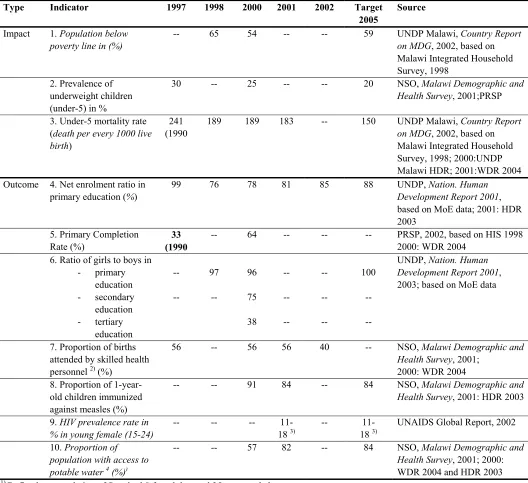
Table 3.1 – Status of the Millennium Development Goals in Malawi
Type Indicator 1997 1998 2000 2001 2002 Target
2005
Source
Impact 1. Population below poverty line in (%)
-- 65 54 -- -- 59 UNDP Malawi, Country Report
on MDG, 2002, based on Malawi Integrated Household Survey, 1998
2. Prevalence of underweight children (under-5) in %
30 -- 25 -- -- 20 NSO, Malawi Demographic and
Health Survey, 2001;PRSP
3. Under-5 mortality rate (death per every 1000 live birth)
241 (1990
189 189 183 -- 150 UNDP Malawi, Country Report
on MDG, 2002, based on Malawi Integrated Household Survey, 1998; 2000:UNDP Malawi HDR; 2001:WDR 2004 Outcome 4. Net enrolment ratio in
primary education (%)
99 76 78 81
85 88 UNDP, Nation. Human
Development Report 2001, based on MoE data; 2001: HDR 2003
5. Primary Completion
Rate (%)
33 (1990
-- 64 -- -- -- PRSP, 2002, based on HIS 1998
2000: WDR 2004 6. Ratio of girls to boys in
- primary education - secondary education - tertiary education -- -- 97 -- 96 75 38 -- -- -- -- -- -- 100 -- --
UNDP, Nation. Human Development Report 2001, 2003; based on MoE data
7. Proportion of births attended by skilled health personnel 2) (%)
56 -- 56 56 40 -- NSO, Malawi Demographic and
Health Survey, 2001; 2000: WDR 2004 8. Proportion of
1-year-old children immunized against measles (%)
-- -- 91 84 -- 84 NSO, Malawi Demographic and
Health Survey, 2001: HDR 2003
9. HIV prevalence rate in % in young female (15-24)
-- -- -- 11-
18 3)
-- 11- 18 3)
UNAIDS Global Report, 2002
10. Proportion of
population with access to potable water 4 (%))
-- -- 57 82 -- 84 NSO, Malawi Demographic and
Health Survey, 2001; 2000: WDR 2004 and HDR 2003
1) Defined as completion of Standard 8 for adults aged 25 years and above.
2) “Skilled Health Personnel” is defined as: doctors/ trained nurse/ midwife/ ward attendant; excluding traditional birth
attendants (additional 22.7%).
3) 11% representing the “low estimate”; 18% representing the “high estimate”.
In a medium to long-term perspective, change might occur in the context of the PRSP. But while the first review was supposed to be undertaken in February 2003, the Master-plan for the Monitoring and Evaluation of the PRSP has still not been finalised, let alone approved by the government. Development partners are trying to pro-actively support the process of development of this Master-plan since July 2002, but progress remains limited.
Some more progress has been made on the SWAp indicators in the context of the ongoing discussions on the implementation of the Health SWAp. The Health Management Information System has been revitalised and a second quarterly report was issued in December 2002.
Against this background, Table 3.1 reflects an attempt to provide some of the data that are either linked directly to the Millennium Development Goals (MDG) or reflect "similar" indicators from various sources of data collection. Since data are not being collected regularly, Table 3.1 was extended to allow for available data to be reflected. Reliable projections for the years 2002 to 2004 are not available at this stage.
The gaps, more than the data themselves, reflected in Table 3.1 illustrate the difficulties of analysing impact and outcome indicators in Malawi. Data collection is sporadic, especially now that resources are scarce. Thus, reliable, year-to-year data on impact and outcome indicators will not be available in the short-term future.
3.2 Political Update
There has been remarkable progress during the last eight years in developing institutions to consolidate democracy, strengthen governance and accountability and keep in check violations of the constitution. Government established forums and institutions to promote broad participation of the citizenry in the country’s political processes during the transition from single to multiparty system of governance. Setting an enabling environment for fair and equitable political participation is essential for raising awareness of citizens about their democratic roles, rights and obligations. This contributes to nation building and unity of purpose in tackling poverty and socio-economic development.
Despite the political tensions and the increased violence accompanying these tensions, the main democratic framework of the Malawi Constitution remained in tact. The institutions created by the Constitution or other acts, like the Human Rights Commission, Law Commission and the Ombudsman are able, to a large extent, to operate freely and should be recommended for their work. The same should be said of the Anti Corruption Bureau, where the appointment of a High Court judge as Director should yield a higher success rate in the future since the Director of Public Prosecution returned many cases on legal grounds. Public debate is slowly becoming more informed. With the written media broadly free from political interference. The position of the Malawi Broadcasting Corporation remains ambivalent.
10 unlimited terms in office possible for the President, was defeated in Parliament. The sensitivity of this question and subsequent increased internal political tension, as well as other governance questions, occasionally led to a strained relationship with donors, including the European Commission.
The European Commission together with the Member States in the country, have had an extensive dialogue with the Government, political parties and the civil society on these adverse political developments. In general, these discussions have been taking place in an open and frank manner and therefore, should be considered as a hopeful sign. It has also emerged that most of the issues are being fuelled by misperceptions and that a continuous dialogue remains necessary. Obviously the regular dialogue with the NAO is part of these discussions. Indeed we have to conclude that the relations between the NAO and the Delegation are such that issues of this nature do form part of our regular dialogue, without jeopardising the good relationship. This should be viewed as a positive sign.
The focus, in MPRSP, on improving development-oriented governance is recognition of the importance of good governance in development management. The MPRS stipulates good governance as consisting of three elements: political will and mindset, security and justice, and responsive and effective public institutions. The achievement of these three elements is key in setting the enabling environment for the efficient and effective implementation of strategies for pro-poor growth, human capital development and safety nets, which constitute the other three pillars of the MPRS.
Checks and balances exist for holding public servants accountable for their actions. But due to institutional capacity constraints, institutions such as the Judiciary, the Legislature, the Ombudsman, the Anti-Corruption Bureau and other civil society watchdog organizations can only, at best, operate imperfectly. At present, the public is unable to effectively monitor capacities at all levels of society to enforce accountability and transparency.
In Malawi, the history of indigenous Civil Society Organizations (CSOs) dates back to the early nineties. They are, therefore, an emerging sector with limited capacity to engage government on behalf of civil society. The sector lacks both institutional and financial capacity and has a weak legal basis. The work plans of CSOs tend to be event driven, resulting in duplication of efforts with different organizations ending up implementing similar activities in the same geographical locations, while other areas are completely left out. These problems are made worse by the lack of networking, operational cooperation and a common forum for dialogue.
3.3 Economic Update
programmes, higher and sustained economic growth rates are required. The poor growth also limits government’s ability to generate its own revenues. This is exacerbated by a rapid increase of the domestic debt and the subsequent interest burden on the government. The share of social sectors expenditures in the 2001/2002 budget (health and education) was almost 27%, but actual expenditures, however, fell below the budgeted figure in 2002 to about 22%.
The overall objective of the Government of Malawi’s macroeconomic policy is to act on the three main aggregate variables, that is, output levels, the inflation rate and the balance of payments. The macro-economic policy reform programme included in the MPRSP aims at reducing inflation through prudent fiscal and monetary policies, thereby also achieving a downward trend in interest rates that is of key importance for stimulating private sector development. The Reserve Bank of Malawi has successfully implemented a tight monetary policy programme, which has seen headline inflation falling from 35% in December 2000 to 11.5% in December 2002.
The economic situation has given cause for serious discussion between the government and the Commission, as the lack of fiscal discipline resulted in negative assessments by the IMF and CABS. This contributed to the suspension of donor budget support throughout 2002, which has further aggravated the problems caused by the high level of the fiscal deficit. Government partly closed the gap by reducing certain activities, but partly also by increasing borrowings in the local market, which created very adverse effects on interest rates and, thus, on private investment. The continuous large spread between the inflation rate and the interest rates remain a concern, as high real interest rates continue to stifle private sector investment, overall economic growth and therefore, prospects for poverty reduction.
The main driver of interest rates, and indeed the root of the economic problems, has been lax fiscal policy. While there is solid evidence to show that domestic revenues have increased markedly, fiscal indiscipline on expenditures remains the chronic problem. Furthermore, the quality of public expenditure is a primary concern. Government was also unable in 2002 to curtail expenditure on certain non-pro-poor budget items at the expense of the agreed pro-poor budget lines. The education sector and the National Roads Authority (NRA) allocations were under-spent while large proportional overspending in some non pro-poor expenditures i.e. State residences, special activities, the NIB and the Ministry of Foreign Affairs (travel allowances in particular) was observed. This forms only an indication of the large improvements that needs to be taken by government in budget execution and expenditure control mechanisms. For that reason, the finalisation by the Government of several new bills and acts in the field of financial management needs to be encouraged, and their approval by Parliament at the earliest opportunity is necessary. Implementation of the new control mechanisms provided for in these legal texts should be applied immediately thereafter.
12
3.4 Social Update
The shortage of the main staple food early 2002 took most people by surprise and provoked an accessibility crisis for a large part of Malawi’s population. If anything, the crisis revealed the weakness in data collection in Malawi, referring particularly to over-projections of the food gap for the lean season. The crisis in 2001/02 had as a positive result that most donors have been closely cooperating with the government to avoid a similar situation this year. Preliminary indications are that, indeed, this joint effort has been successful. But the over-estimation of the food gap has led government to procure a surplus of maize at high costs, which at some point needs to be carried by the budget. Overall, the combination of the food insecurity in the country and the high HIV/AIDS prevalence rate in the country are reinforcing each other into a humanitarian disaster.
AIDS has reached epidemic proportions in Malawi: close to one million out of Malawi’s 11 million people are infected, and 500,000 Malawians have died from AIDS. 70,000 die every year from HIV/AIDS. Some 70,000 children orphans join annually the pool of 400,000 orphans, while child-headed households are increasing fast. Young women especially are at very high risk of infection.
The overall goal of the National Strategic Framework is to reduce the incidence of HIV/AIDS and other sexually transmitted infections, and to improve the quality of life of those infected and affected by HIV/AIDS. Malawi's Integrated National Response to HIV/AIDS that was approved by the Global Fund Board in August 2002 is directed at preventing a catastrophe at the individual, family, community and national level.
The Commission has contributed to the effort of government to implement a Health Sector SWAp. The design phase was completed in October 2002, and an Action Plan for a six-month Inception Phase was adopted to provide guidelines for the implementation of a SWAp in the period January-June 2003. The most important issue on the agenda for the Inception Phase is the drafting and approval of a Joint Programme of Work, which is to include all government’s health service delivery programmes, most of which are part and parcel of the Essential Health Package (EHP). However, while in the first half of 2002 there was much activity around the EHP, the final costing of the EHP is still outstanding.
So far, the Commission has not been directly involved in the education sector, especially at the policy level, but recently identified the need for a stronger link between macro-economic support and results in the social sectors. Other donors, however, are supporting the sector in various projects and programmes with the aim of supporting such objectives as decentralisation, making primary education a responsibility for the districts and ensuring that resources flow down to district level.
Since the introduction of “free” primary education in Malawi in 1994, the education sector has adopted a strategic plan, the Policy Investment Framework (PIF), whose implementation strategy is yet to be finalised. An annual review of the education sector also took place in November 2002 through which a rough implementation plan and a code of conduct for co-operating partners were elaborated. The capacity of the Ministry of Education remains weak with shortages of trained staff, which enhances the problem of data collection.
suggested within the sector dialogue could be used as the basis for future discussions.
4.
Overview of Past and Ongoing Co-operation
4.1 Focal Sectors
As the implementation of the CSP and NIP of the 9th EDF has not yet commenced, the results described below are measured against identified targets, indicators and sector policy commitments from previous EDFs. Inasmuch as new indicators have not yet been fully developed, proposed measures are qualitative rather than quantitative.
4.1.1 Focal Sector: Agriculture, Food Security and Natural Resources
a) Results
While Government has worked hard to identify policies and policy commitments for the sector, they still need to develop clear indicators for measuring results and progress of activities. During 2002, several important Acts and Policy Statements were prepared.
Efforts to formulate a Policy for the Agricultural Food Security Sector have been made in the discussions and workshops in the context of the Malawi Agricultural Sector Investment Process (MASIP). A “Working Paper on Vision and Strategy for the Agricultural Sector in Malawi” was published in early 2002 which sets 13 prioritised issues, of which the most important are (i) access to inputs; (ii) research and extension; (iii) services, markets and trade; (iv) institutional and policy framework; (v) insecurity in the rural areas and (vi) land shortage and degradation. The intention was that these issues would be taken further during 2002 in the PRSP, but during the second half of the year most attention went towards the Food Security Crisis.
The Forestry Department of the Ministry of Natural Resources intended to concentrate its efforts on the implementation of the Forestry Act (agreed in 2000/2001) and of the National Forestry Plan. However, Government and donor attention was largely diverted to more urgent issues, so that policy discussions and progress stalled during 2002.
The Malawi National Land Policy that was approved by Cabinet in January 2002 stresses the need for Government to put into effect land reform. For that purpose the Ministry of Land, Physical Planning and Surveys took the initiative to draft a Land Policy Reform Programme Implementation Strategy. It is foreseen that the implementation of this strategy will start in the first half of 2003.
The Commission is actively taking part in the these policy discussions, and in 2003 specific technical assistance will be provided to the concerned Ministries and Departments to facilitate their policy setting processes.