developing a shared decision-making app for
mental health
Chloe L Edridge
1, Julian Edbrooke-Childs
1, Kate Martin
2, Louise Delane
1, Phoebe
Averill
1, Amy Feltham
2, Jessica Rees
1, Grace Jeremy
2, Louise Chapman
1, Michael P
Craven
3, Miranda Wolpert
11. Evidence Based Practice Unit, UCL and the Anna Freud Centre, London, United Kingdom 2. Common Room Consulting Ltd., London, United Kingdom
3. NIHR MindTech MedTech Co-operative, Institute of Mental Health, University of Nottingham Innovation Park, Nottingham, United Kingdom
RESEARCH
To Cite: Edridge C L, Edbrooke-Childs J, Martin K, Delane L, Averill P, Feltham A, Rees J, Jeremy G, Chapman L, Craven M P, Wolpert M. Power Up: Patient and public involvement in developing a shared decision-making app for mental health. JHD. 2018;3(1):63–74. https://doi.org/10.21853/JHD.2018.40
Corresponding Author: Chloe L Edridge
Evidence Based Practice Unit UCL and the Anna Freud Centre London, United Kingdom [email protected]
SUMMARY
Young people as active partners in the design of interventions is increasingly considered an integral part of research. In this project, young people were co-designers in a digital intervention for shared decision-making in mental health services. They were involved in three ways: governance of the project; needs and environment analysis; and detailed input into the development of the intervention. From the outset, the project model was intended to be cyclical, allowing for it to be built into the project plan and to identify and implement seven key themes of change.
Key Words
PPI; app; MHealth, shared decision-making; co-design
ABSTRACT Background
The importance of patient and public involvement (PPI) in designing interventions to support young people’s mental health is becoming a central tenet of the research process. Existing research has indicated that co-design with service users may help to engender multiple improvements in research projects, from design through to applications of study findings.
Aims
The aim of this study is to examine our experience of making the involvement of young people an ongoing part of the research process. We report on PPI in relation to a feasibility trial of the development of an app called Power Up, which is designed to support shared decision-making in mental health.
Method
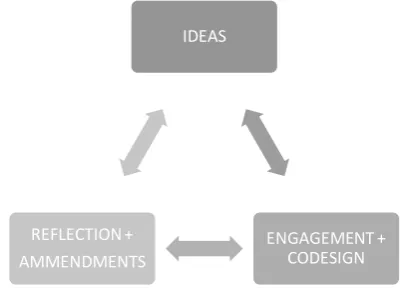
Young people, carers, and clinicians were involved in each aspect of the project from governance, needs and environment analysis, to development and revisions of the Power Up smartphone app intended for use within child and adolescent mental health services. Involvement was achieved through ongoing contributions to steering groups, co-design workshops, and interviews. The project model was approached as a cyclical multidirectional process of ideas, PPI input, reflection, and alterations.
Conclusion
PPI was embedded into the project model from the outset, to be iterative and cyclical informing the development and direction of the digital tool at each stage. Involving service users resulted in the identification and implementation of multiple changes to the app, both conceptual and tangible. Several challenges associated with PPI were also encountered, warranting future research and discussion.
BACKGROUND
Mental health problems are one of the main causes of overall disease burden worldwide.1 Statistics show that
lifetime DSM–IV disorder prevalence estimates are 18.1– 36.1 per cent.2 Furthermore, it has been shown that half
of all lifetime cases of mental illness begin by age 14,3
Patient and public involvement (PPI) is increasingly considered an integral part of research.3 PPI can involve
a spectrum of activity with the service user, from involvement in project governance to engagement and dissemination. There is emerging evidence to suggest that involving patients and the public in designing research may be associated with more appropriate study designs, better recruitment rates, and increased public confidence in research findings.1,2,4 However, researchers may be
unclear about how best to involve patients and the public in designing research in a meaningful way.5
The aim of this study is to examine our experience of making the involvement of young people an ongoing part of the research process. We report on PPI in relation to a feasibility trial of the development of an app called Power Up, which is designed to support shared decision-making in mental health. The background and detail of the feasibility trial can be found in the protocol already published.6 In this case study, we report how young
people were involved in developing the idea for Power Up.
Power Up was developed in direct response to views, concerns, and recommendations expressed by young people who have experienced mental health difficulties, and whom the researchers have engaged with over several years. Young people frequently cite the need for resources and tools to empower them to be active partners in decisions about their health care, and this was strongly identified in a project exploring shared decision-making in child mental health services from the perspectives of young people and clinicians.7 Young people and
clinicians remarked on the need for tools to facilitate shared making to: 1) ensure shared decision-making is explicitly communicated with young people; 2) empower young people to make shared decisions in therapy: and 3) provide a structured approach, which is necessary as shared decision-making can otherwise feel awkward or “clunky”. Co-design of digital interventions with young people is a particular focus of research and in one example, co-design with young people resulted in a number of different digital tools for self-management in relation to strategies, medications, and other aspects of mental health care.8
The findings from two central studies led by the researchers on shared decision-making were discussed
with young people in an initial PPI focus group before commencement of the Power Up feasibility trial. These studies included an analysis of routinely collected data from child mental health services showing that child- and parent-reported experiences of shared decision-making were associated with higher levels of child- and parent-reported improvement in psychosocial difficulties,9 and a
scoping review of approaches to support shared decision-making in child mental health.10 Informed by these
findings, the focus group was conducted to explore young people’s views of the importance of shared decision-making, their experience of using mobile apps, and most importantly, how mobile healthcare apps could be used to support shared decision-making. The young people strongly supported the proposal for the study and felt Power Up could facilitate shared decision-making by, for example, aiding their understanding, being accessible when they need it to support them at key stages of the decision-making process, and providing crucial support and reassurance. In the rest of the article, we report on PPI in the research process in the development of Power Up.1
METHOD
Governance of the project
A PPI lead and two project workers (with lived experience and who were advocates for young people) were recruited into the steering group as the PPI team, which oversaw all aspects of the project, including study design, materials, analysis, reporting, and dissemination. The PPI team also had oversight for the conduct of PPI co-design workshops with young people, carers, and clinicians. The project workers on the steering group were paid employees of Common Room Consulting.
Design
Figure 1: Cyclical multidirectional process of ideas, PPI input, reflection/alterations
Participants
Overall, six PPI co-design workshops were conducted over 18 months with young people who had lived experience of service use from three sources: the National Children’s Bureau, Common Room Consulting (a service user advocacy organisation led by KM), and a local Child and Adolescent Mental Health Services (CAMHS) participation group (not involved in the study). Groups comprised 2–10 young people.
Participants taking part in the one-to-one interviews were recruited from local child mental health services and were either young people who were service users, a carer of a service user, or a clinician. Since the aim of the interviews was to understand service user views, a sample of 14 young people and carers was recruited, along with four clinicians. Young people were eligible if they were aged 11–19, currently attending sessions in a mental health service, and presenting with emotional difficulties. A clinician confirmed that the young person did not have any vulnerability that would make taking part in the interviews inappropriate. Parents were required to be over 18 years of age and caring for a child currently attending sessions in a mental health service. All participants understood English sufficiently to provide informed consent and take part in the interviews.
Procedure
The format of PPI co-design workshops varied depending on the stage of the project, however, they typically involved: 1) an ice-breaker exercise; 2) a structured discussion around a particular topic; and 3) a summary of the workshop and close. Sessions were facilitated by a member of the research team in addition to a local PPI
lead from within the organisation, who were generally staff members with a role to coordinate and support local PPI. Participants were reimbursed for their time in line with the local arrangements with the organisation.
Interview participants were recruited through services involved in the study, by advertisements or discussions with clinicians, after expressing interest in taking part to the service or research team. A researcher attended meetings at the services where clinicians were invited to participate in a focus group or interview and given information sheets. The researcher then met with recruited clinicians individually at the service on a separate occasion to carry out the interview. Young people and carers were recruited through clinicians identifying young people on their current patient lists who met the inclusion criteria. To avoid selection bias, the researcher informed clinicians that it was important not to exclude young people based on the intensity of their therapy and engagement with therapy. Young people and their carer were then given information about the study through a postal letter, telephone, or face-to-face conversation. Researchers arranged to meet with the young person and/or his/her carer at the service. All participants gave written informed consent, and for young people aged under 16 years, assent and parental consent were obtained.
In the interviews, researchers shared the first version of Power Up smartphone app with participants. Participants were given some time to use Power Up, and then asked questions based on a semi-structured topic guide, including questions about name, content, usability, usefulness, design, and overall thoughts.
A debrief was included at the end of all PPI sessions, offering participants a copy of results, access to the app, and an opportunity to ask further questions. Steps were taken to minimise the risk of young people taking part only giving favourable opinions they may have felt were in line with the project aims. Questions were designed to elicit both negative and positive feedback, along with prompting questions to encourage more detail of reasoning behind opinions. The researchers also reiterated to participants how valuable all feedback was, even if it was not in line with what they felt was expected or what other were stating. The PPI groups were also facilitated by Common Room Consulting, an
IDEAS
ENGAGEMENT + CODESIGN REFLECTION +
organisation comprising people with lived experience. These project workers from Common Room Consulting are experienced at co-design, facilitating input and how, for example, to ensure young people do not feel pressured into just agreeing or saying they like designs and feel able to disagree.
Support
Project advisors were supported by PPI leads in line with the standard operating procedures of local organisations. During both phases of participation described above, the researchers ensured information was gathered to understand access requirements and individual needs.
Acknowledgment of contribution
To ensure they received parity with the team, Common Room Consulting employed the project workers involved in the governance and co-design. The project workers had lived experience and were advocates for young people. The project workers’ involvement helps to develop their skills/experience as part of their wider, ongoing personal and professional development. These project workers are also co-authors on this paper and have been involved/recognised via media releases.
The researchers and group facilitators emphasised to the research participants involved in the PPI groups and interviews how appreciated and vital their input was to the project, and how being part of an app development project could add to their skills and experience. Research participants received the normal reimbursements such as travel and were also given the opportunity to use the app for themselves once developed.
Analytic strategy
Field notes were made during co-design workshops, which were then written up. Interviews were transcribed verbatim. To examine our experience of involving young people in the development of an intervention to support shared decision-making, we combined field notes and transcripts. These data were then analysed using the framework approach to identify themes pertaining to the usefulness, functionality, and design of Power Up to inform subsequent iterations of the app. The analysis compared and contrasted responses from different groups to identify similarities and differences between young people, carers, and clinicians. The designers (our
technical partner, Create Marketing Ltd.) linked directly with the PPI representatives in the steering group, so that any decisions on design were made between young people, designers, and researchers.
RESULTS
Several themes, outlined here, emerged from the interviews and process.
What is Power Up?
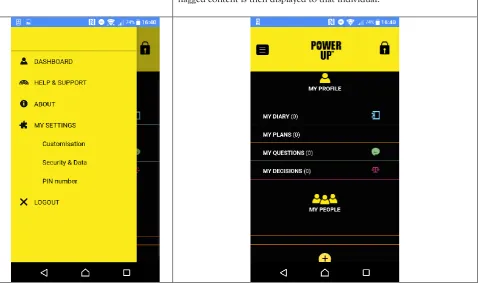
Here we describe how patients were active in co-designing Power Up, an intervention to increase shared decision-making, which was developed with our technical partner, Create Marketing Ltd. (Figure 3).
“My People”, at the centre of Power Up, is where young people can add people in their support network. Users can flag information entered in other sections of the app to specific people in their support network, and all content flagged for sharing with a specific person from other areas of the app is displayed. If an entry is not flagged to “My People”, it’s stored chronologically; otherwise, a young person can prioritise which entries should appear first.
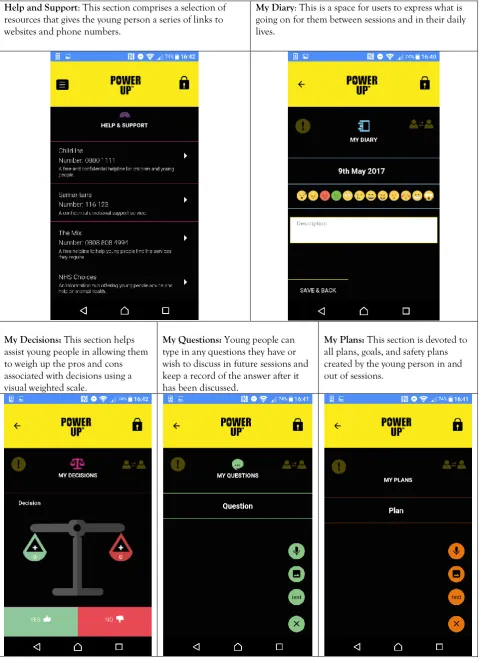
“My Diary” is a space for users to express what is going on for them between sessions and in their daily lives.
“My Plans” is a section devoted to all plans, goals, and safety plans created by the young person in and out of sessions.
In “My Questions”, young people can type in any questions they have or wish to discuss in future sessions and keep a record of the answer after it has been discussed.
“My decisions” helps assist young people in allowing them to weigh the pros and cons associated with decisions using a visual weighted scale.
his/her own. These can be called or visited directly from the app.
Active co-designers
The process of engagement4 theory informed the design
of Power Up. Here, experiential factors determine the likelihood of successful engagement with technology along four stages: 1) the point at which an individual engages with a piece of technology; 2) sustained engagement; 3) disengagement; and 4) reengagement. Themes from the PPI workshops helped to improve engagement at each of these stages:
Point of engagement/reengagement: privacy, security, and accessibility
Sustained engagement: concept; colour and design; and navigation
Reducing disengagement: terminology and increasing user-friendliness
Point of engagement/reengagement:
Privacy, security
The main need that arose from the initial co-design workshops and subsequent interviews was that Power Up should be a private, secure place for the young person. The app should be recommended by clinicians to ensure it is used when clinically appropriate and can be integrated within therapy. Young people, carers, and clinicians emphasised a need for the app to be trustworthy and for data to be secure. Young people also advised they felt it was important for the data they put in the app to be retrievable when they changed or lost their device. The data for the app are therefore backed up onto a secure encrypted server. In terms of security on the device, a security question and pin code were set up to be entered every time a young person logs in. However, young people felt this process was too long each time they logged in. The app was therefore adapted to always ask for a pin code, but the security question is asked intermittently.
“… say your friend takes your phone and goes on it, and then she finds something that's personal, it should have something like a passcode.” (Young person, female)
Accessibility
Young people emphasised that the app needed to be free and require limited Internet access to increase the app’s
appeal, because Internet access via mobile phone without a wi-fi connection could incur charges. To address this, the Internet is only needed for initial download and login, and a user can then use and save information within the app without Internet access. Another important consideration for accessibility that arose from discussions with young people was that the app needed to be available on both Android and iOS platforms. The iOS version is optimised for iPhones, iPads, and iPod Touches running iOS 9 or higher. The Android version is available for a huge range of devices. Currently, 12,753 devices are supported by the app out of a total of 15,026. The unsupported devices are mostly obscure and old devices that are no longer maintained. The app has not been created for use on smart watches.
As Power Up is a hybrid app, we anticipated there to be considerable issues in developing for both platforms with one code base. While we did encounter some cross-platform issues, most were fairly easy to rectify.
Sustained engagement: concept; colour and design; and navigation
Concept
In the initial stages of the project, young people advised that they felt the app needed to guide rather than instruct young people to use it in a certain way, so that they could use it flexibly based on their needs. The initial prototype built was centred on “My Sessions”, and the user could input entries by session with their therapist and assign entries to a session. However, young people advised that they felt this was confusing and limiting. Rather than the app being focussed primarily around their clinical sessions, young people wanted it to be focussed around people in their support network instead.
“…I might not use the 'sessions' tool much...Because although I know about sessions in general I'm not sure what it is entirely...” (Young person, female)
“So maybe a different thing, maybe just two people talking to each other or…prompting that idea that you don’t have to do this on your own….could be a way of putting on people who are helpful to talk to when you’re feeling…” (Clinician, female)
Colour and design
direction from young people was to ensure it was modern, friendly, and appealing. However, once the initial prototype was built, a strong consensus emerged amongst young people and clinicians for changes. The main change we implemented from their feedback was the option to customise the design. In addition to background and style options, young people can select two types of interfaces, where images and styles are targeted for older adolescents or younger adolescents with a cartoon design.
“….say to your favourite colours because then you’re more likely to go on it and use it more because it’s a colour...” (Young person, female)
“…the colours are okay but it’d be cool if you could be able to change the colours as well” (Young person, male)
“….a really nice idea, to be able to personalise it once it’s up and running…change the background colours and things like that, so it can be a more ownable…” (Clinician, female)
Navigation
Young people provided insight into the general navigation of the app.
“There’s that initial ““What do I click on now?”” (Carer, female)
“There could be like a thing saying welcome to power up and then showing how it happens.” (Young person, female)
Power Up was updated to include a welcome feature and instructions on how to use the app when it is first opened, which can also be revisited through the main menu.
Reducing disengagement: terminology and increasing user friendliness
Terminology
The language and terminology used throughout the app for guidance, descriptions, emoticons, and section names was largely influenced by young people’s input to make it clearer and more concise. For example, “Help and Support” was originally titled “My Library”.
'…..my support' is better. Because it's about that supporting…..gives you support and that websites and that.” (Carer, female)
Increasing user-friendliness
Having young people as co-designers for the app greatly increased the intuitiveness and user-friendliness of the intervention. For example, initially a “flag” icon was used to assign entries to specific people in the young person’s support network. However, young people felt this was confusing and unclear, and therefore, the icon was changed to two talking people. As another example, the home screen was found to be overwhelming and overcrowded with information, and so was made much clearer with direct links to the various sections. The 12 emojis used was also user informed.
“…Because the scrolling thing is nice, but you should be able to hold it and then drag it up?” (Young person, female)
“The thing is it is all really good but some of it is … even on the dashboard, if there was just something there – a click so you could add something quickly.” (Carer, female)
“…maybe under the About if they had different add-ons for some of these as well, you know that you could just press on it and briefly it has a little…” (Clinician, female)
“…maybe some sort of icon that's not a flag. Like a little person's head or something like that…..or some sort or other emoji, rather than a flag” (Clinician, male)
“…Yeah, so I think maybe a worried face would be good….. Yeah. And also maybe confused face. (Young person, male)
There were also some other aspects of the app that were altered by the design team from general learning using the prototype.
Orientation of the app is fixed as portrait, enabling all content to be shown without scrolling.
On Android, the keyboard is forced to float over the content, allowing the user to still see all of the content on the page while they type.
The app locks after a period of time, with pin entry needed to access. This adds an extra layer of security if the user leaves their phone unattended.
DISCUSSION
The study aimed to examine our experience of making the involvement of young people an integral part of the research process in developing an app to support shared decision-making in mental health. Young people were active participants in taking the concept of a shared decision-making tool through design, prototype, and testing through three different types of involvement: governance of the project; needs and environment analysis; and detailed input for the development of the intervention. Ongoing input from young people ensured continuity throughout the project, meaning young people could co-design the initial concept and designs, then see and comment on the prototype to ensure this reflected their input. Young people’s input was built on throughout, creating a cyclical process of ideas, input, reflection, and alterations. The project model was intended from the outset to be iterative and cyclical, allowing for us to build it in to the project plan.
PPI input within the project enabled us to consider and address non-functional requirements for the intervention. The term “non-functional requirements” is used to describe the constraints in co-design that are not related to the content specification of the digital tool, but are important to its success and are best considered early on in the design process.9,10 These requirements were
addressed to ensure the app was available on both iOS and Android, data were backed up, and that PPI was incorporated into the timelines for the project plan.
Substantial changes were also made to the interventions content such as incorporating user customisation, changing the centre of the app from being around sessions with a therapist to “people” (anyone in the young person’s support network), and overall wording and usability.
We also decided it was important to involve parents and clinicians in the development of Power Up. We wanted to encompass anyone whom the research impacts or who can contribute valuable knowledge about how best to achieve impact. An example where this is demonstrated is the saving of data. We met young people’s need for
backing up data, but ensured the data were backed up on an approved encrypted server, only accessed for the purpose of the young person retrieving the data (parents’ and clinicians’ concerns).
We encountered several challenges when carrying out our PPI work. These are common ongoing challenges with PPI and should be explored in future research. Below each challenge is highlighted and then how we addressed and overcame the issue is detailed. Challenges were discussed within steering group meetings, where the assigned project workers who were advocates for young people were present, ensuring that young people were also active at this level of the research.
Balancing what is realistic, plausible, and within the scope of the original aim and resources available, with what is being relayed from the sessions.
A broad range of ideas were proposed from young people, with some completely deviating from the original aim of the study and others not feasible due to resources and practicality. Suggestions were considered as to whether it was in line with the aim of increasing shared decision-making and empowerment along with feasibility, practicality and data protection, or ethical guidelines.
Conflicting views within one session or different views expressed across multiple sessions.
We felt it was important to run a range of focus groups in the initial phases and interviews. However, in doing so, we came across differing views regarding the app. To address this issue, while considering what was plausible (as discussed above), we tended to take the most common views expressed and analysed any trends in views.
Young people could feel under pressure to say they liked the app
When the ideas or prototype were shown, there would have been the possibility that young people may have been less likely to give negative feedback. In order to minimise this risk, we emphasised how valuable both negative and positive feedback was to the development of the app, with questions we asked reflecting this.
CONCLUSION
PPI can often be something bolted on to research in a way that fits with the existing research plan. This makes research much easier to press ahead with, as the conflicting and changing opinions of the public do not need to change the planned course of progression. Unusual then, that PPI was considered to be an integral part of Power Up, and awarded time, resources, and influence. The young people who were involved have made great use of this newfound power. The Power Up app is fantastically tailored to the target audience because the target audience made it. The novel approach to PPI used in the project was important in hearing and using the young people’s views.
As a project worker, I was not asked to be the voice of young people based on my understanding of the young people I have met and worked with. Instead, I was asked to find ways to reach the targeted young people, and ask them themselves. This refreshing approach meant that young people were heard no matter how loud their voice, as the PPI team was able to hear and report their thoughts. The receptive research team used challenges from young people as chances to improve the research, rather than annoyances on the planned path. These factors came together to create real involvement in research, rather than a superficial or tokenistic replica. I would urge future researchers to consider PPI as a vital part of research proceedings, as it has been in Power Up. Giving the metaphorical microphone to the target audience could surprise you, and improve your research
projects.
REFERENCES
1. Vos T, Barber RM, Bell B, et al. Global, regional, and national incidence, prevalence, and years lived with disability for 301 acute and chronic diseases and injuries in 188 countries, 1990-2013: a systematic analysis for the Global Burden of Disease Study 2013. The Lancet. 2015;386(9995):743-800.
2. Kessler RC, Aguilar-Gaxiola S, Alonso J, et al. The global burden of mental disorders: an update from the WHO World Mental Health (WMH) surveys. Epidemiology and Psychiatric Sciences. 2009;18(1):23–33.
3. Kessler RC, Chiu WT, Demler O, et al. Prevalence, severity, and comorbidity of 12-month DSM-IV disorders in the National Comorbidity Survey Replication. Arch Gen Psychiatry. 2005 Jun;62(6):617–27.
4. O'Brien HL, Toms EG. What is user engagement? A conceptual framework for defining user engagement with technology. Journal of the Association for
Information Science and Technology. 2008;59(6):938–55.
5. Buck D, Gamble C, Dudley L, et al. From plans to actions in patient and public involvement: qualitative study of documented plans and the accounts of researchers and patients sampled from a cohort of clinical trials. BMJ Open. 2014;4(12).
6. Chapman L, Edbrooke-Childs J, Martin K, et al. A Mobile Phone App to Support Young People in Making Shared Decisions in Therapy (Power Up): Study Protocol. JMIR Res Protoc. 2017;6(10):e206. 7. Abrines-Jaume N, Midgley N, Hopkins K, et al. A
qualitative analysis of implementing shared decision making in Child and Adolescent Mental Health Services in the United Kingdom: Stages and facilitators. Clinical Child Psychology and Psychiatry. 2014 2016/01/01;21(1):19–31.
8. Lang AR, Craven MP, Atkinson S, et al. Human
factors multi-technique approach to teenage engagement in digital technologies health research. In Perspectives on HCI Research with Teenagers 2016 (pp. 61-101). Springer, Cham.
9. Craven MP, Lang AR, Martin JL. Developing
mHealth Apps with researchers: multi-stakeholder design considerations. In International Conference of Design, User Experience, and Usability 2014 Jun 22 (pp. 15-24). Springer, Cham.
10. Craven MP, Selvarajah K, Miles R, et al. User
requirements for the development of smartphone self-reporting applications in healthcare. In International Conference on Human-Computer Interaction 2013 Jul 21 (pp. 36-45). Springer, Berlin, Heidelberg.
ACKNOWLEDGEMENTS
The authors would like to extend sincere thanks to Create Marketing as our technical partner in the development of Power Up. We would also like to thank Steven Towndrow for his helpful comments on a draft of this paper, and young people, carers, clinicians who gave their views throughout the project.
PEER REVIEW
Not commissioned. Externally peer reviewed.
CONFLICTS OF INTEREST
The authors declare that they have no competing interests.
FUNDING
The study was funded by the NIHR Invention for Innovation Programme (i4i)
project number:
II-LA-0814-20005.
MC acknowledges the financial support of the NIHR MindTech MedTech Co-operative. The views expressed are those of the author(s) and not necessarily those of the NHS, the NIHR or the Department of Health.ETHICS COMMITTEE APPROVAL
Ethical approval has been obtained from Queen Square National Research Ethics Service and the Health Research Authority along with relevant local research governance and site-specific approvals, IRAS 192592. The trial has been registered with the ISRCTN registry [ISRCTN77194423] and ClinicalTrials.gov [NCT02987608].
ABBREVIATIONS
Figure 2: Power Up topic guide for young person interviews and focus groups
Introduction + Aims
Power Up project – Phase 1 + 2 – timelines
Description of app
o Support YP to get their voice heard in CAMHS
o Space for them to record what’s going on for them, and their experience of therapy in their own words (what they enter into the app cannot be digitally shared)
o Video, audio, text, photo
o Step by step plans, diary entries, questions, decision tool o Record sessions and flag things to talk about in session
o My library
o In sessions and between sessions
Aims of today
o Some feedback from you on the design and usability of the app
o Some feedback on how the app could support the therapeutic work you do.
o Some thoughts on how best to integrate the app into therapy.
Tools (Blind Test first)
Open up the Power Up app and have a look. Read some of the descriptions of the tools as you open them and
start having a play. Add some entries as if you were a user of this app. Talk me through your thoughts as you are looking at [Insert Tool name]
o What do you like/ not like about what Power Up does and how it looks?
o Is it clear what the tool is for? o Is the tool easy to use?
Use of Power Up
How could Power Up have an impact on young people’s experience of CAMHS?
Which tools on the app do you think you would use the most/ least useful to you?
How might Power Up be useful/ not useful to you?
Can you give me an example of a time you might want to use Power Up?
If someone had given you ‘Power up’ when you started attending [Insert name of service], would you have found it useful? Why?
Who/ what would you need to help you to use Power Up?
Does anything worry you about using Power Up?
How could Power Up be made better/ more useful for you?
Shared Decision Making
What does ‘Shared Decision Making’ mean to you?
When decisions about being made about your care in CAMHS, who do you think should be involved?
Can you give me an example of a time when shared decision making has happened in your CAMHS sessions?
o How did you find this experience?
o What did was good/ bad about this experience?
Can you give me an example of a time when shared decision making has not happened in your CAMHS
sessions?
o How did you find this experience?
Figure 3: Power Up screenshots
Customisation: the user is given the option to customise the app in terms of colour, icon style, and backgrounds.
To navigate around the app, the user can slide the dashboard out from the side of the screen.
My People: This section is at the centre of Power Up. It’s where users can
Figure 3: Power Up screenshots (cont’d)
Help and Support: This section comprises a selection of
resources that gives the young person a series of links to websites and phone numbers.
My Diary: This is a space for users to express what is
going on for them between sessions and in their daily lives.
My Decisions: This section helps
assist young people in allowing them to weigh up the pros and cons associated with decisions using a visual weighted scale.
My Questions: Young people can
type in any questions they have or wish to discuss in future sessions and keep a record of the answer after it has been discussed.
My Plans: This section is devoted to