University of Southern Queensland
PERCEIVED EFFECTIVENESS OF THE INTERNAL AUDIT
FUNCTION IN LIBYA:
A QUALITATIVE STUDY USING INSTITUTIONAL
AND MARXIST THEORIES
A dissertation submitted by
Wahid Abu-Azza
BSc, MSc (Accounting)
For the award of
Doctor of Philosophy
School of Accounting, Economics and Finance Faculty of Business & Law
University of Southern Queensland Australia
DEDICATION
To my parents
For their life-long support, belief and love
To my wife
For your steadfastness, belief and absolute dedication to this journey
To my children
Sajeda, Rana, and Muez
ABSTRACT
Internal audit (IA) has become an important and integral function of organizations in achieving their objectives and protecting their assets. Nonetheless, IA effectiveness has received scant attention in the literature, especially in the context of developing countries such as Libya. Such settings offer the potential to enhance the understanding of IA practices where standards for such practices are not formally adopted and the rationale for establishment of IA tends to remain more coercive than normative. This study seeks to examine the perceived effectiveness of the IA function in Libyan public enterprises (state-owned) by employing institutional theory and Marx‘s (1978) theory of the circuit of industrial capital. It addresses the issue of IA effectiveness by identifying seven qualitative factors considered to be important for effective IA, namely, independence, competence, scope of internal auditing work, performance of internal auditing work, coordination and co-operation between the internal and external auditor, management support, and awareness of the benefits of effective internal auditing within organizations. In order to attain the research objectives, this study followed a qualitative research design. Data was gathered through semi-structured interviews with chief executive officers, IA directors, managers of administrative affairs, managers of financial affairs and the general auditors, and was supplemented with analysis of relevant archival evidence.
results also suggest that coercive establishment of IA does not necessarily lead to effective IA departments if normative processes of professionalism are absent. The results of this study indicate that there are weaknesses in specific elements relating to co-operation between the internal and external auditor. Libyan IA directors do not believe external auditors assist them in achieving or improving their activities. In additon, external audit working papers are unavailable to internal auditors. The findings of this study also indicate a general consensus among Libyan participants that there is dissatisfaction regarding top management support to internal audit departments and the extent of top management support to internal audit is considered inadequate in Libyan public enterprises. The interview results also reveal inadequate awareness of the benefits of effective internal auditing within Libyan public enterprises.
Overall, based on the results of this study, it can be argued that internal auditing operates in ways that are decoupled in some important areas from those envisaged by the Institute of Internal Auditors (IIA) and other organizations in the field. Therefore, from the perspective of institutional isomorphism, IA in Libyan public enterprises is not perceived as value-adding or having the capacity to improve an organization‘s operations. Furthermore, IA may not play an important role in assisting organizations to minimize wastage, maximize employment levels and increase wage rates and production levels, and minimize capital devaluation as much as possible under the circumstances. Based on the perspective of Institutional theory and Marx‘s theory, and the results of qualitative data analysis overall, IA in Libyan public enterprises is not perceived as being effective.
CERTIFICATE OF DISSERTATION
I declare that the ideas contained in this dissertation are entirely my own, except where otherwise acknowledged. I also certify that the work is original and has not been submitted for any other award.
________________________ _____________________
Signature of Candidate Date
ENDORSEMENT
________________________ _____________________ Signature of Supervisor Date
________________________ _____________________
ACKNOWLEDGEMENTS
First of all, praise be to God.
Not simply to adhere to a long-standing academic tradition, but also with heartfelt thanks, I wish to express my appreciation to the many people who have in many and various ways helped me along this journey.
I am deeply indebted to my principal supervisor, Associate Professor Kieran James, and my associate supervisor Professor Peter Best, both of whom have continued to provide wisdom and insight, as well as encouragement and support, throughout my journey as an emerging academic. Their constructive critiques, comments, and suggestions have been instrumental in accomplishing the objectives of the project. I am grateful to those who provided me with data or assisted me in data collection, including all participants and their organizations. They provided me the data I needed; and they were extremely supportive. I also thank top officials of the organizations for permitting their employees to participate in the study. I am indebted to Ahmed Ben Abdalla, Mahmud Othman, and Dr. Ali Nasef. This dissertation could not have been completed without the assistance of all these people. Thank you for your support and help in data collection.
I express my gratitude to all those people who helped me and provided me with their constructive feedback, ideas and support: Dr. Melissa Johnson Morgan, for her guidance and assistance related to research methodology and her consistent open-door approach during the formulation of my thesis; Professor Julie Cotter, faculty research advisor, for her support, constructive feedback and suggestions, and on-going encouragement during the duration of this thesis; and Professor Ronel Erwee and Associate Professor Joseph Mula, who were the faculty panel members for my research proposal, for their contribution to my research-in particular the comments and feedback provided on my research proposal—I find your advice to be extremely helpful in finalising and improving my proposal. Special thanks to Mrs Chris O‘Reilly for her continuous help and editing of my thesis writing.
Table of Contents
ABSTRACT ... iii
CERTIFICATE OF DISSERTATION ... vi
ACKNOWLEDGEMENTS ... vii
LIST OF FIGURES ... xi
LIST OF TABLES ... xii
LIST OF ACRONYMS AND ABBREVIATIONS ... xiii
CHAPTER 1 INTRODUCTION ... 1
1.1 Introduction ... 1
1.2 Background to the research problem... 2
1.3 Research question... 5
1.4 Objectives of the study ... 7
1.5 Study motivations ... 7
1.6 Theoretical perspectives and research methodology... 9
1.7 Study scope and delimitation ... 10
1.8 Expected contributions ... 10
1.9 Organization of chapters ... 12
1.10 Conclusion ... 14
CHAPTER 2 AN OVERVIEW OF THE LIBYAN ENVIRONMENT ... 16
2.1 Introduction ... 16
2.2 The social and political environment of the context ... 16
2.2.1 Geographical Location and Population ... 16
2.2.2 Language and religion ... 17
2.3 A brief history of Libya... 17
2.4 Economic development ... 20
2.5 The professional status of the accounting and auditing in Libya ... 24
2.5.1 The accounting and auditing environment in Libya ... 24
2.5.2 Legal Requirements ... 26
2.5.2.1 The Libyan Commercial Code ... 26
2.5.2.2 Law Rules in Respect of Trades and Commercial Companies and Supervision Thereon ... 27
2.6 Development of the Libyan banking sector ... 29
2.7 Chapter summary ... 34
CHAPTER 3 LITERATURE REVIEW ... 36
3.1 Introduction ... 36
3.2 Theoretical perspectives ... 37
3.2.1 Institutional theory ... 38
3.2.2 Marx‘s theory of the circuit of industrial capital ... 41
3.3 The role and effectiveness of internal audit ... 45
3.3.1 The role of internal audit ... 45
3.3.2 Internal audit effectiveness ... 49
3.4.1 The Institute of Internal Auditors ... 57
3.4.2 The independence of internal audit departments ... 58
3.4.3 Competence of internal auditors ... 62
3.4.4 The scope of internal audit work ... 65
3.4.5 Internal audit performance ... 68
3.5 Co-operation between the internal and external auditor ... 71
3.6 Management support ... 75
3.7 Awareness of the benefits of effective internal auditing ... 78
3.8 Chapter summary ... 80
CHAPTER 4 RESEARCH METHODOLOGY ... 83
4.1 Introduction ... 83
4.2 Research approaches ... 83
4.3 Justifying selection of qualitative approach for the present study ... 84
4.4 The target population of the study ... 86
4.5 Qualitative data collection... 87
4.5.1 Personal interviews as a data collection method ... 88
4.5.2 Documentary evidence ... 97
4.6 Validity and reliability ... 98
4.7 Qualitative data analysis ... 99
4.7.1 Conducting qualitative data analysis ... 102
4.8 Chapter summary ... 105
CHAPTER 5: DATA ANALYSIS AND DISCUSSION-FACTORS RELATED TO ISPPIA ... 106
5.1 Introduction ... 106
5.2 Participants‘ responses regarding independence of internal audit (RQ1) ... 107
5.4 Participants‘ responses regarding competence of internal auditors (RQ2) ... 119
5.3 Participants‘ responses regarding scope of internal audit work (RQ3)... 130
5.5 Participants‘ responses regarding performance of internal audit work (RQ4) .. 140
5.6 Chapter summary and conclusion ... 151
CHAPTER 6: DATA ANALYSIS AND DISCUSSION- EXTERNAL FACTORS INFLUENCING IA EFFECTIVENESS ... 154
6.1 Introduction ... 154
6.2 Participants‘ responses regarding co-operation between the internal and external auditor (RQ5) ... 154
6.3 Participants‘ responses regarding management support (RQ6) ... 165
6.3 Participants‘ responses regarding awareness of the benefits of effective internal auditing (RQ7) ... 175
6.4 Chapter summary and conclusion ... 183
CHAPTER 7: CONCLUSION ... 185
7.1 Introduction ... 185
7.2 Overview of the study ... 185
7.3 Summary of main results ... 188
7.4 Implications to practice ... 195
7.5 Contributions of the study ... 197
7.5.1 Contributions to the literature ... 197
7.5.2 Contributions to practice ... 201
7.7 Suggestions for future research ... 204
7.8 Concluding remarks ... 206
REFERENCES ... 208
APPENDICES ... 229
Appendix 1: Consent form to identify potential interview participants ... 229
Appendix 2: Instrument Set A: Interview guide for internal audit director ... 231
Appendix 3: Instrument Set B: Interview guide for managers of financial affairs ... 234
Appendix 4: Instrument Set C: Interview guide for managers of administrative affairs ... 236
Appendix 5: Instrument Set D: Interview guide for chief executive officers ... 238
Appendix 6: Instrument Set E: Interview guide for general auditors ... 240
Appendix 7: Document review guide ... 242
Appendix 8: Arabic translation of the consent form to identify potential interview participants ... 243
Appendix 9: Arabic translation of the Instrument Set A: Interview guide for internal audit director ... 245
Appendix 10: Arabic translation of the Instrument Set B: Interview guide for managers of financial affairs ... 248
Appendix 11: Arabic translation of the Instrument Set C: Interview guide for managers of administrative affairs ... 249
Appendix 12: Arabic translation of the Instrument Set D: Interview guide for chief executive officers ... 251
LIST OF FIGURES
Figure 1.1 Structure of thesis ... 13
Figure 2.1 the structure of the Libyan Commercial Banks ... 34
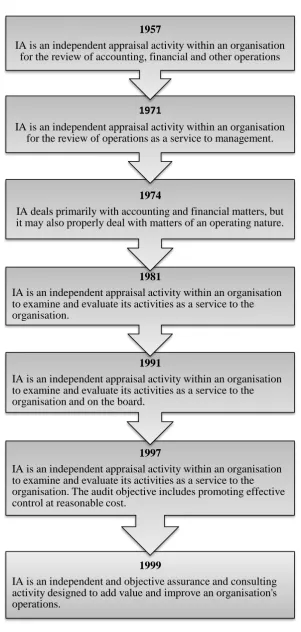
Figure 3.1 the development stages of the IA definition ... 48
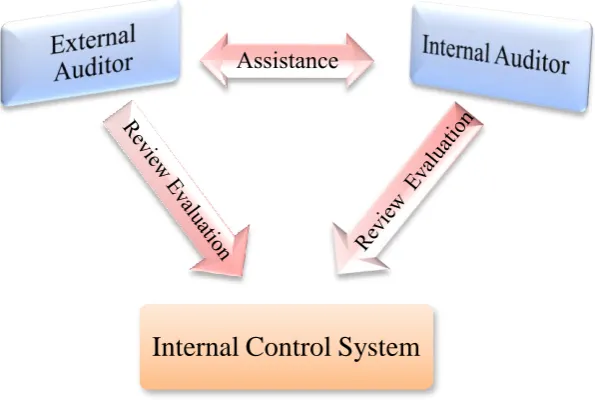
Figure 3.2 Co-operation between internal and external auditor ... 73
Figure 3.3 Conceptual Mode ... 82
Figure 5.1 the organizational structure for one organization under study ... 108
Figure 5.2 Characteristics of internal audit independence ... 109
Figure 5.3 Characteristics of competence of internal auditors ... 119
Figure 5.4 Main elements for the scope of internal audit work ... 130
Figure 5.5 Main elements for performance of audit work ... 140
Figure 6.1 Characteristics of co-operation between the internal and external auditor ... 155
Figure 6-2 Characteristics of management support to IA ... 165
LIST OF TABLES
TABLE 2.1 Registered accountants in the Libyan Association of Accountants
and Auditors ... 26
TABLE 2.2 Commercial banks and number of its branches ... 33
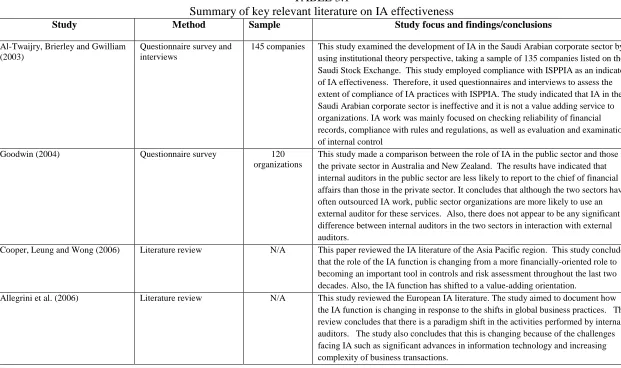
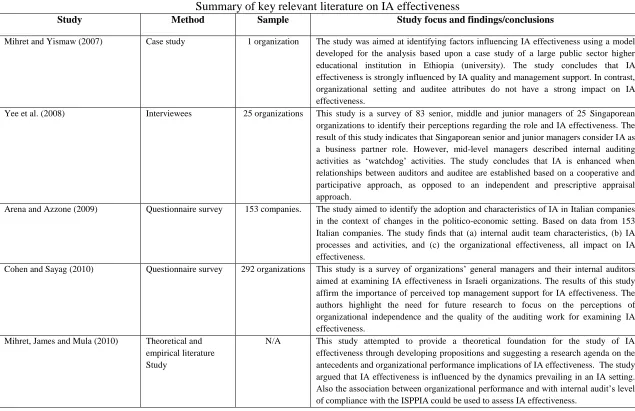
TABLE 3.1 Summary of key relevant literature on IA effectiveness ... 54
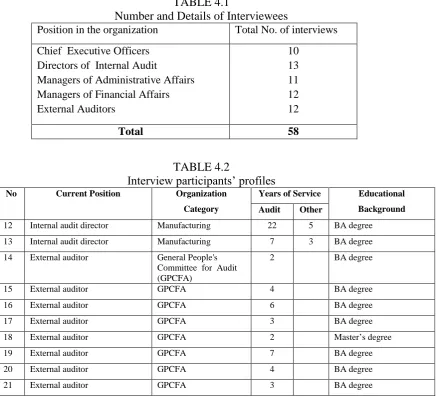
TABLE 4.1 Number and Details of Interviewees ... 90
TABLE 4.2 Interview participants‘ profiles ... 90
TABLE 5.1 Summary of participants‘ response ratios regarding the independence of internal auditors ... 118
TABLE 5.2 Distribution of IA directors according to their qualification... 120
TABLE 5.3 Distribution of internal audit staff according to their qualification ... 120
TABLE 5.4 Distribution of IA directors according to their experience ... 122
TABLE 5.5 Distribution of IA according to their experience ... 123
TABLE 5.6 Summary of results regarding the competence of internal auditors ... 129
TABLE 5.7 Summary of results regarding the scope of internal audit work ... 138
TABLE 5.8 Summary of results regarding the performance of internal auditors .. 150
TABLE 6.1 Summary of results regarding co-operation between the internal and external auditor ... 164
TABLE 6.2 Summary of results regarding management support to IA ... 174
LIST OF ACRONYMS AND ABBREVIATIONS
ACPA Arab Certified Public Accountant
AICPA American Institute of Certified Public Accountants ASCA Arab Society for Certified Accountants
ASX Australian Stock Exchange CIA Certified Internal Auditor IMF International Monetary Fund GPC General People's Congress
GPCC General People's Committee for Control
GPCFA General People's Committee for Financial Audit IA Internal Audit
ICC International Criminal Court IIA Institute of Internal Auditors ISA International Standards on Auditing
ISPPIA International Standards for Professional Practice of Internal Auditing LINTC Libyan Interim National Transitional Council
LCC Libyan Commercial Code
LAAA Libyan Association of Accountants and Auditors SAS Statement of Auditing Standards
SOX Sarbanes-Oxley Act
ECOSOC Economic and Social Council
OPEC Organization of Petroleum Exporting Countries RCC Revolutionary Command Council
CHAPTER 1 INTRODUCTION
1.1 Introduction
The latest definition of internal auditing (Institute of Internal Auditors 2011c) states:
‗Internal auditing is an independent, objective assurance and consulting activity designed to add value and improve an organization‘s operations. It helps an organization accomplish its objectives by bringing a systematic, disciplined approach to evaluate and improve the effectiveness of risk management, control, and governance processes‘
The Libyan Commercial Code (LCC) 1953 requires Libyan public enterprises to have internal audit departments headed by directors. This particular code also compels public enterprises to appoint external auditors. Moreover, since the issuance of the Law No. 11 of the year 1996 by The General People‘s Congress (GPC), Libyan public enterprises are required to undergo audit by auditors general. However, unlike in the West, in Libya there are no professional standards or international professional bodies for IA such as the IIA, which results in organizations establishing their own guidelines on the practice of IA (Al-Kilani 2002; Almagory 1998). Therefore, this study is concerned with IA effectiveness within Libyan public enterprises. The research issues addressed by the present study are outlined within this introductory chapter. In addition, the basic elements of the research plan are presented. This chapter outlines background to the research problem; research questions; research objectives; study motivations; theoretical perspectives and research methodology; study scope; and, finally, the structure of the ensuing thesis chapters.
1.2 Background to the research problem
Gwilliam 2003; Crockett & Albin 1995; Mihret, James & Mula 2010; Mihret & Yismaw 2007; Montondon 1995; Financial Reporting Council 2011).
Despite scholars‘ attempts to investigate IA effectiveness, there is no generally acknowledged guide or tool for this purpose (Arena & Azzone 2009). The literature also indicates that no generally accepted approaches to assess IA effectiveness exist as yet (Mihret, James & Mula 2010). For this reason, the limited previous research which addresses the issue of IA effectiveness has used different approaches in investigating IA effectiveness. For instance, Haniffa and Cooke (2002) studied the influence of environmental factors on IA practice. Al-Twaijry, Brierley and Gwilliam (2003) and Yee et al (2008) used ISPPIA— established by the IIA—as a guideline to investigate and determine IA effectiveness, while Arena and Azzone (2009), Elliott, Dawson and Edwards (2007) and Mihret and Yismaw (2007) developed their own models to determine IA effectiveness.
The evidence from the limited literature, nevertheless, suggests that IA effectiveness is probably influenced by the context in which IA operates. According to Mihret, James and Mula (2010, p. 235):
‗Conclusions on the dominant or ideal focus of IA cannot be drawn from the existing limited literature. This is because the scope of prior studies is restricted to private sector companies. Also, the studies were not aimed at explaining variations in IA‘s dominant orientation—and possibly implications of IA effectiveness‘.
Gwilliam (2003) state that ISPPIA are an effective indication to determine IA effectiveness.
Co-operation between the internal and external auditor is also considered an important factor that impacts on IA effectiveness. Arena and Jeppesen (2010) indicate that the coordination and co-operation between the internal and external auditor is becoming one of ‗intellectual jurisdiction‘, where external auditing, as the superior profession, controls the knowledge base of internal auditing but allows internal auditors to practise IA as they please. This also impacts on the value IA can add to the organization through reduced external audit fees (Al-Twaijry, Brierley & Gwilliam 2004; Eliot & Korpi 1978; Felix et al. 2001; Haron et al. 2004; Ho & Hutchinson 2010; Krishnamoorthy 2002; Prawitt et al. 2012; Zain, Subramaniam & Stewart 2006). While internal auditors are increasingly contributing to the work performed by external auditors (Burnaby & Klein 2000), external auditors also assist in the development of internal auditors primarily by serving as a market for recruitment of internal auditors (Al-Twaijry, Brierley & Gwilliam 2004; Albercht et al. 1988; Arena, Arnaboldi & Azzone 2006; Mihret, James & Mula 2010; Ziegenfuss 2000).
Management support is also considered an important factor that impacts on IA effectiveness (Albercht et al. 1988). Mihret and Yismaw (2007) and Mihret and Woldeyohannis (2008) also contend that management support to IA is considered as a determinant of IA effectiveness and it is identified as one of the factors that bode well for a good IA department profile (Mihret 2009). Albercht et al. (1988) find that the visible support of top management to IA is the most important factor that enhances IA effectiveness. In addition, the IIA‘s Standards for Professional Practice of Internal Auditing (1100–Independence) state that internal auditors should have the support of senior management and of the board so that they can gain the cooperation of auditees and perform their work free from interference (Institute of Internal Auditors 2011d).
Coram, Ferguson & Moroney 2008; Enyue 1997; Goodwin 2004; Mihret, James & Mula 2010; Yee et al. 2008), employees and management in developing countries tend to not recognize the value of the concepts and practices of IA as applied in Western societies (Al-Twaijry, Brierley & Gwilliam 2003; Mihret 2009).
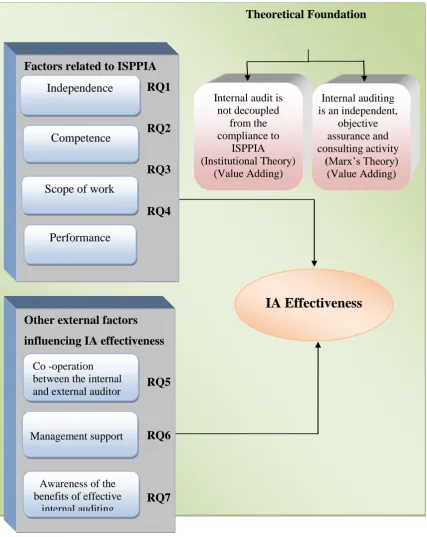
Following the approach of previous research (e.g., Al-Twaijry, Brierley & Gwilliam 2003; Albercht et al. 1988; Arena & Azzone 2009; Cohen & Sayag 2010; Mihret, James & Mula 2010; Mihret & Yismaw 2007), institutional theory and Marx‘s (1978) theory of the circuit of industrial capital are employed in the present study to address the issue ofIA effectiveness by identifying two groups of factors considered to be important for effective IA. These relate to ISPPIA and other external factors influencing IA effectiveness. Specifically, the main objective of this study is to examine current perceptions of IA directors, administrative affairs managers, financial affairs managers, chief executive officers and external auditors about the effectiveness of IA by identifying seven factors that impact on IA effectiveness. The first four factors relate to ISPPIA established by the IIA, namely, independence; competence; scope of internal auditing work; and performance of internal auditing work. The fifth factor relates to co-operation between the internal and external auditor. The sixth factor relates to management support and, finally, the seventh to an awareness of the benefits of internal auditing (see Figure 1). This approach, which is adopted for the present study, possibly offers a more comprehensive set of IA effectiveness indicators.
1.3 Research question
Gwilliam (2003), Mihret, James and Mula (2010), Mihret and Yismaw (2007) and Yee et al. (2008) suggest the need to focus on IA in developing countries. Therefore, this research arises out of the need to study IA effectiveness. Because IA has become an integral part of modern business, the internal auditor‘s role is becoming increasingly important to organizations in achieving their objectives. With the rapid growth of the public sector and resultant serious problems concerning organizational control and supervision, management needs to continually evaluate the activities of every section of their organization that impact on achieving efficiency and protecting assets (Yee et al. 2008). This is important particularly in developing countries where capital is wasted or devalued because of inefficiencies, fraud, corruption or the protection of favoured relationships.
As indicated earlier, internal audit departments have been established in Libyan public enterprises to evaluate the activities of organizations as a service to management. Despite the importance of shedding light on IA effectiveness in various economic activities in Libya, no formal guidelines have been provided to manage internal audit departments. Furthermore, most previous studies have focused on external audit (Daruish 2004; Elmasallati 1995). Therefore, it is apparent that there is a need for research on the IA function generally, and IA effectiveness specifically, within the Libyan context where there are no international professional bodies for IA such as the IIA. Thus, due to the limited research conducted concerning IA effectiveness, the growing importance of IA in organizations, and the possible influence of some factors on IA practices (Al-Twaijry, Brierley & Gwilliam 2003; Arena, Arnaboldi & Azzone 2006; Arena & Azzone 2009; Christopher, Sarens & Leung 2009; Conor & Jenny 2007; Coram, Ferguson & Moroney 2008; Gendron & Bedard 2006; Goodwin 2004; Mihret, James & Mula 2010; Mihret & Yismaw 2007; Yee et al. 2008), this study aims to fill the gap in the literature regarding IA effectiveness. Therefore, the overarching research question of this study is:
Research Question (RQ): To what extent is the internal audit function in Libyan
1.4 Objectives of the study
The present study aims to obtain the opinions of participants regarding the role and effectiveness of internal audit in Libyan public enterprises. It introduces a new perspective for the evaluation of internal audit effectiveness by identifying two groups of factors that impact on audit effectiveness. In other words, it interprets the perceptions of participants regarding IA effectiveness by identifying seven factors that impact on IA effectiveness. The first four factors relate to the ISPPIA established by the IIA, namely, independence, competence, scope of internal auditing work, and performance of internal auditing work. The fifth factor relates to co-operation between the internal and external auditor. The sixth factor relates to management support and, finally, the seventh to an awareness of the benefits of internal auditing. In addition, it provides recommendations and suggestions on how IA effectiveness could be improved in the future.
1.5 Study motivations
Gwilliam 2003; Mihret, James & Mula 2010; Mihret & Woldeyohannis 2008; Yee et al. 2008), this study addresses the issue of IA effectiveness by identifying two groups of factors—those related to ISPPIA; and other external factors influencing IA effectiveness.
To date, there has been scant research regarding IA in Libya (Al-Kilani 2002; Alhsadi 2007; Daruish 2004), and this is the first known study to research issues concerning the role and effectiveness of IA in enterprises operating in the manufacturing, banking and insurance sectors in Libya where there are no national corporate governance guidelines informing organizations how to manage their internal audit departments. As mentioned earlier, contrary to the West, there are no international IA professional bodies such as the IIA in Libya, resulting in organizations establishing their own guidelines on the practice of IA (Alhsadi 2007; Almagory 1998). The Libyan Association of Accountants and Auditors (LAAA), which was established by the Law No. 116 of 1973, requires an external auditor to be registered as a chartered accountant with the LAAA and he/she must hold a bachelor‘s degree in accounting from a university. In addition, they must have at least five years‘ experience in practical training at an accounting office (Libyan Government 1973a). However, internal auditors have no defined or formal code of professional ethics and standards for professional qualifications. Moreover, there are no professional examination requirements or professional training programmes for internal auditors. They base their practices mainly on their accounting education (Daruish 1990). Another study conducted by Al-Kilani (1988) finds that the IA role is limited to the detection of fraud, with theemphasis on examining accounts before payment, collecting income, and checking petty cash claims. Therefore, in developing countries such as Libya, a study of IA practice, as embedded in its broader context and with identification of factors that enhances or inhibits its effectiveness, could enable an understanding of IA‘s potential to support organizational performance and thereby assist national economic development.
a need to investigate the role of the accounting and auditing profession in the Libyan environment (Alhsadi 2007). Typically, those who follow the reality of financial accounting in the Libyan environment tend to emphasize the weakness of Libyan experience, especially in the professional field (Al-Kilani 2002; Daruish 2004). It should be noted that in October 2009 The Libyan Stock Market recognized the Arab Certified Public Accountant (ACPA) certificate offered by the Arab Society for Certified Accountants (ASCA) and the University of Cambridge International Examinations, and accredited ACPA to be equivalent to international professional certificates, namely CPA and CA, for audit practice licensing purposes1 (The Arab Society of Certified Accountants 2011).
1.6 Theoretical perspectives and research methodology
Institutional theory and Marx‘s (1978) theory of the circuit of industrial capital are employed in this study. Following recent IA studies (Al-Twaijry, Brierley & Gwilliam 2003; Arena, Arnaboldi & Azzone 2006; Arena & Azzone 2007; Mihret, James & Mula 2010), institutional theory is employed to explain the influence of these concepts on IA effectiveness. Following recent IA studies (Mihret, James & Mula 2010; Yee et al. 2008), Marx‘s (1978) theory of the circuit of industrial capital will serve to illuminate the concept of an added assurance and production process for Libyan public enterprises and provide a perspective on the extent to which the IA function fits into the wealth creation processes of enterprises and society. These theories descend from political economy and, therefore, share similar foundations. Institutional theory and Marx‘s theory enable understanding of IA practices as a part of organizational systems and can explain the role and effectiveness of IA as a value adding service in organizations (Al-Twaijry, Brierley & Gwilliam 2003; Mihret, James & Mula 2010; Yee et al. 2008).
1 ACPA certificate is accredited by the University of Cambridge International Examinations and it
This study addresses the research questions by conducting research based on a qualitative research approach to support the theoretical development called for in the literature, as well as the need to validate empirically the claims of academic commentators and consultants. Semi-structured interviews were conducted with IA directors, managers of administrative affairs, managers of financial affairs, chief executive officers, and general auditors. The study covers Libyan public enterprises operating in the manufacturing, commercial banking, and insurance sectors. The findings are based on the results of interviews with participants, as well as reviews of relevant documentary evidence.
1.7 Study scope and delimitation
This study does not measure IA effectiveness, but aims to interpret the perceptions of participants regarding IA effectiveness. The answers to questions 1-7 introduce the perceptions of the participants regarding IA effectiveness. Furthermore, the thesis does not study external auditors‘ reliance on IA work. Rather, it explores the external auditors‘ opinions about IA effectiveness. In addition, it is restricted to the manufacturing, commercial banking and insurance public enterprises, and focuses on internal audit effectiveness. In other words, it is a study about the profession of internal auditing. However, organization type characteristics were not used for the basis of analysis in this study as they were outside the scope of the research question. It is not a study of specific organisations. The selection of the three types of enterprises merely ensured the presence of internal audit practice. The study also does not include private enterprises. Therefore, the findings of the study are not necessarily generalizable to private enterprises.
1.8 Expected contributions
effectiveness by identifying factors that augment or inhibit IA effectiveness. Specifically, this study incorporates a factor not identified by prior research that may influence IA effectiveness, namely, awareness of the benefits of having internal auditing. This possibly fills part of the gap in the IA literature and provides a useful outcome by indicating priority areas that internal audit departments need to focus on to achieve high levels of effectiveness. Mihret and Yismaw (2007) indicate that future research would be welcome to fully understand the level of IA effectiveness in the public sector by defining other factors affecting IA effectiveness.
Secondly, due to the lack of IA research and the fact that the limited previous IA research has focused mainly on developed countries, this study provides empirical evidence from a developing country that may contribute additional insight to the literature and enhance understanding of the global configuration of the IA profession, particularly in Libya where there has been relatively little research conducted regarding IA (Al-Kilani 2002; Alhsadi 2007; Daruish 2004). As mentioned, the absence of professional standards and guidelines for internal auditors in Libya means organizations have their own internal guidelines on the practice of IA (Alhsadi 2007; Almagory 1998). Thus, by conducting research on IA in Libya, this study will enhance the understanding of IA effectiveness in this country where the environment differs from that of industrialized Western economies which are predominantly market-driven. In other words, during the last 40 years, the Libyan economy has not been considered a market economy because the users of accounting and auditing information have been predominantly the state and state agencies. After the Libyan revolution on 17 February 2011 there is no doubt that this picture will change to become similar to Western market economies where private investors and creditors are among the major users of accounting information. Furthermore, the results of this study could have policy implications for the IIA and the new Libyan government.
this study is the third to extend Bryer‘s (1994; 1995; 1999; 2006) works by studying IA within the framework of Marx‘s (1978) theory of the circuit of industrial capital. A Marxist ‗classical economics‘ perspective allows the researcher to consider the broader social benefits of IA, including raised living standards, a reduction in fraud and corruption; increased employment, and alleviation of poverty, particularly in developing countries where the capital is wasted or devalued because of inefficiencies, fraud, corruption or the protection of favoured relationships. Yee et al. (2008) argue that this theory can explain the role and IA effectiveness as an added assurance in relation to the production process in organizations. Therefore, this study contributes to the literature by establishing a theory-based link between IA effectiveness and an added assurance in relation to the production process.
Finally, the majority of previous research which addresses the issue of IA effectiveness has used quantitative research and has used questionnaires for data collection. This study contributes to knowledge regarding IA effectiveness by using qualitative data because in qualitative studies researchers do indeed dig deep to acquire a complete understanding of the phenomenon (Leedy & Ormrod 2005). Therefore, using qualitative research (interview data collection) for this study facilitates an in-depth examination and investigation of the factors affecting IA effectiveness.
1.9 Organization of chapters
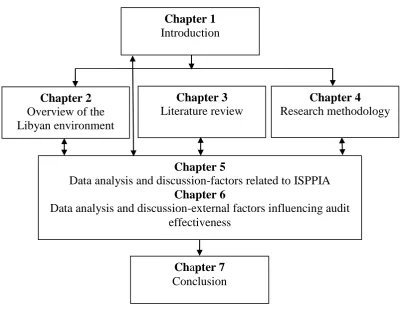
Figure 1.1 Structure of thesis
Following this introductory chapter, Chapter 2 provides a brief overview of the Libyan environment, which is fully updated to take into account the Libyan social and political revolution of 2011. Chapter 3 sets the scene for the thesis by providing a review of the IA literature and of the theories employed in the study. The chapter discusses the theories adopted and then reviews the IA literature within the framework of these theories. Specifically, institutional theory and Marx‘s (1978) theory of the circuit of industrial capital are reviewed first. The literature on IA effectiveness and related methodological issues are then reviewed in light of the theoretical perspectives adopted. This chapter also presents a review of prior research that investigates the factors that augment or inhibit IA effectiveness.
Chapter 4 provides details of the research methodology employed in the thesis. It discusses methods and approaches chosen, data collection procedures, and the data analysis techniques employed. Chapter 5 presents the results of a detailed analysis of the interviews regarding the first group of factors which relate to
Chapter 7 Conclusion
Chapter 4 Research methodology Chapter 2
Overview of the Libyan environment
Chapter 3 Literature review
Chapter 1 Introduction
Chapter 5
Data analysis and discussion-factors related to ISPPIA Chapter 6
ISPPIA. The purpose of this analysis is to answer the first four subsidiary questions posed in this study.
Chapters 6 presents the results of a detailed analysis of interviews regarding the other three external factors influencing IA effectiveness, namely, co-operation between the internal and external auditor, management support, and awareness of the benefit of having effective internal auditing. The purpose of this analysis is to answer the last three subsidiary questions RQ5, RQ6 and RQ7 formulated in this research study. Chapter 7then summarizes the thesis; provides major conclusions drawn; offers a number of recommendations; outlines implications of the results to the literature and practice; highlights potential limitations of the study; and suggests future research directions. Finally, overall concluding remarks are presented.
1.10 Conclusion
CHAPTER 2 AN OVERVIEW OF THE LIBYAN
ENVIRONMENT
2.1 Introduction
The main purpose of this chapter is to provide an overview of environmental characteristics within Libya in order to provide an insight into the country‘s social, political and economic context. However, overall, there are very few sources which provide information about the Libyan environment and most of these references are in Arabic languages. Over the past few decades, Libya has witnessed many changes in the state administration which have affected all sectors, including the public sector. Therefore, it is important to provide the reader with background information about Libya and to describe the environment within which Libyan public enterprises operate. This background information may be helpful in explaining perceptions of the role and effectiveness of internal audit held by the participants of this study in the Libyan context.
The chapter is divided into six main sections. The first section deals with Libya‘s social and political environment; and the second section outlines a brief history of Libya. The third section provides an overview of the development of the Libyan economy, followed by Section Four which outlines the professional status of accounting and auditing in Libya. The fifth section presents the development of the Libyan banking sector and, finally, the chapter concludes with a brief summary of the chapter.
2.2 The social and political environment of the context
2.2.1 Geographical Location and Population
east and south east by Egypt and Sudan, on the south and southwest by Chad and Niger, on the west by Algeria and on the northwest by Tunisia. Therefore, it has a Mediterranean coastline nearly 1,800 kilometres long (1,118 miles), from Tunisia in the west to Egypt in the east (for more detail see Otman & Karlberg 2007). However, approximately, 90 per cent of Libya‘s land area is unoccupied with 94.73 per cent being desert or semi-desert, consisting of sandy areas and two areas of hills and mountains rising to a maximum of 3,000 feet above sea level, 3.94 per cent agricultural and 0.29 per cent forests (Infoplease 2005; Terterov & Wallace 2002). These geographical characteristics create an unbalanced demographic situation where most of the population of the country is centred in the main coastal cities such as Tripoli (the capital of Libya), Benghazi, Misratah, AL-Zawia and Darnah (Ahmad & Gao 2004). The last official census, which was conducted in July 2010, recorded that the population of Libya was 6,294,944 as at that date (Countries of the World 2011).
2.2.2 Language and religion
In Libya, Arabic is the official language and legislation requires that all signs and legal documents be Arabized, although, many Libyans understand English and/or Italian languages. Islam is the chief religion, which provides spiritual guidance for the individual and a base for government policy. Despite this, other groups do have the freedom to practise their own religion (Ahmad & Gao 2004).
2.3 A brief history of Libya
In 1551 the Ottoman Turks occupied the country, and the Libyan provinces remained part of their empire. Following the Italo-Turkish War in 1911, Italy invaded Libya and, despite the subsequent period of many years of fierce resistance, the country became an Italian colony. In 1934, Italy adopted the name ‗Libya‘ (used by the Greeks for all of North Africa, except Egypt) as the official name of the colony, which consisted of the provinces of Cyrenaica, Tripolitania and Fezzan (Terterov & Wallace 2002).
As a result of the Second World War the British and French shared control and a separate British military government was established in Cyrenaica and Tripoli. During the same period the French military administered the Fezzan region, performing functions similar to those of the British elsewhere in the country (Abouzied 2005). However, on 21 November 1949, the General Assembly of the United Nations passed a resolution stating that Libya should become independent before 1 January 1952. When Libya declared its independence on 24 December 1951, it was the first country to achieve independence through the United Nations and one of the first former European possessions in Africa to gain independence (Infoplease 2005; Otman 2007; Terterov & Wallace 2002). From Benghazi, Idris Senussi led the team negotiating independence with the United Kingdom and the United Nations. On 24 December 1951 a National Congress elected Idris as King of Libya, after which Idris King proclaimed the independence of Libya from the United Kingdom as a sovereign state (Anderson 1982).
On 1 September 1969, while Idris King was in Turkey for medical treatment, he was deposed in a coup by a group of Libyan army officers under the leadership of Muammar al-Gaddafi. Thus, a new era in the history of Libya began in September 1969 when Muammar al-Gaddafi established a republic under the name Libyan Arab Republic (BBC NEWS 2011a). The history of Libya under the Gaddafi regime extended for a period of forty-two years, from 1969 to 2011. In 1976, Muammar al-Gaddafi renamed the Libyan state the Great Socialist People‘s Libyan Arab Jamahiriya, where Jamahiriya is a term coined by Gaddafi, usually translated as ‗state of the masses‘ (Terterov & Wallace 2002).
demonstrations against the regime of Gaddafi regarded generally as a repressive regime. The protests reportedly began after the arrest of Fathi Terbil, a lawyer representing victims of the Abu Salim massacre in which more than 1,200 political prisoners were gunned down by security forces after protesting against prison conditions (BBC NEWS 2011c). Victims‘ families challenged the regime‘s intention to arrest him and during the following week these protests gained significant momentum when Gaddafi responded by dispatching military and plainclothes paramilitary to the streets to attack demonstrators. Subsequently, demonstrations began in Albida city, east of Benghazi, demanding the overthrow of the Gaddafi regime. These demonstrations also spread to many cities to the west of Libya such as Misrata, Zawiya and Zentan.
On 5 March, the Libyan Interim National Transitional Council (LINTC) was established, which became the revolutionary government. The LINTC succeeded early on in controlling many of the coastal cities in the east and southeast areas, as well as three cities in the west of the country which raised the flag of Libya‘s independence in 1951 (The Libyan Interim National Council 2011). This flag was abolished by Gaddafi in 1969. The situation worsened with Gaddafi‘s violent response when he imported foreign mercenaries to defend his government and used aircraft to bomb rebels. As a result, the United Nations (UN) declared Security Council Resolution 1973 regarding a no fly zone over Libya to protect the civilian population of Libya. Dicker (2011) said:
‗The Security Council has risen to the occasion and given notice to Gaddafi and his commanders that if they give, tolerate, or follow orders to fire on peaceful protesters, they may find themselves on trial in The Hague. On 27 June 2011 the International Criminal Court (ICC) issued arrest warrants for Gaddafi, his son Saif al-Islam, and his brother-in-law Abdullah al-Senussi, head of state security for charges, concerning crimes against humanity‘.
LINTC in Libya as a transitional government and eligible for a seat in the international organization (United Nations 2011).
As the war entered its momentous final days with clear and evident decline in the number of locations occupied by loyalists, the last remaining stronghold of Gaddafi regime loyalists was the city of Sirt. On 20 October 2011 Gaddafi was captured by members of the Libyan National Liberation Army after his convoy was attacked by NATO warplanes as he attempted to flee. He was seriously wounded during his arrest, and died in custody less than an hour later (BBC NEWS 2011b). Sirt fell on the same day and, subsequently, on 24 October 2011 the official announcement of the liberation of Libya was made by the LINTC in Benghazi.
2.4 Economic development
Prior to the discovery of oil in 1959 Libya was one of the poorest countries in the world with a per capita income of about $35 per year (UNESCO 1952). Similar to other Arab states, the Libyan economy was based on agriculture (Ahmad & Gao 2004) which was the backbone of the Libyan economy. It provided food and work for the majority of the population with 70% of the labour force being engaged in agriculture and animal husbandry (Nyrop 1973). In the industrial sector, production was limited to food industries such as canning fish and traditional industries carried out by families. These industries included carpets, simple home appliances, and other industries that depended mostly on agricultural production or animals, for example, canning tomatoes or spinning wool.
to depending largely on foreign agencies and consultants, including experts from Britain in establishing their different systems (Ghanem 1982). For example, there were many foreign agencies (mainly from Britain and the United States) such as the Libyan Public Development and Stabilisation Agency; the Libyan American Reconstruction Commission; the Libyan American Joint Service; and the Libyan American Technical Assistance Service. However, with the discovery of oil in 1961, the country no longer needed to rely on foreign assistance.
The Libyan economy changed rapidly after the discovery and export of oil in October 1961. The discovery of significant oil reserves in 1959 and the subsequent income from petroleum sales enabled what had been one of the world‘s poorest countries to become extremely wealthy, as measured by per capita Gross Domestic Product (Otman 2007). To describe how oil revenues developed the Libyan society and enhanced its economic development, Sanger (1975, pp. 413-4) points out that:
‗The cities had become construction camps with noisy bulldozers levelling buildings and cement trucks pushing through the traffic jams with loads for the ever-hungry building cranes which dominated the skyline. In and around the chief cities and towns rose block after block of new housing ... Hospitals of standard design were being built in half-dozen lots ... The giant campuses of the Universities of Tripoli and Benghazi were the most impressive in Africa Above many side streets and garden suburbs the tall chimneys of new factories rose behind the minarets, their dark smoke clouds proof of the boom in cement, reinforcing wire, plumbing fixtures, textiles, food processing and, most successful of all, the drive to expand electricity‘.
degree of self-sufficiency and self-reliance. Thus, the attention over the last three decades has been directed to the non-oil industrial sectors.
Since 1969, the industrial sector has gained the support of Libyan decision-makers. At the end of the 1970s, the Libyan economy became completely centrally planned and controlled by the government. Consequently, all activities became state-owned, and the private sector was completely abolished until 1989. The Libyan government developed and approved two plans. The first plan covered a five-year period (1981-1985); followed by second five-year plan (1986-1990). Over 15 billion Libyan dinars were spent on these two development plans, and about 5 billion Libyan dinars was spent on the industrial sector (Libyan Secretariat of Planning 1991). This support started with the establishment of 25 public companies operating in heavy manufacturing which produced commodities such as tractors, buses, tracks, steel pipe, plastic, cement, batteries, tyres, chemicals and electronics (Agnaia 1997).
During the 1990s, the manufacturing public sector was reorganized and divided into five subsections, namely, electrical and engineering industries; food production industries; cement industries; chemical industries and basic metallurgical industries. The Industry Secretariat is responsible for supervising all the manufacturing companies, which employ about 40 percent of the Libyan workforce (Libyan Commercial Industrial and Agricultural Chamber 2002). Manufacturing was a development challenge that was to be unquestionably accepted and tackled in order to find substitute resources for oil as a source of public revenue. However, the manufacturing public sector in Libya has not done so well in both quality and standardization dimensions. It has not been successful in mobilising resources and efforts for the research and development of quality consciousness of products or services (Libyan Commercial Industrial and Agricultural Chamber 2002).
partnerships) which provided a new basis for individuals to engage in manufacturing, agriculture, professional service and other ventures as sole owners, public enterprises are still dominant in the Libyan economy (Otman 2007). Therefore, the Libyan economy is not considered a market economy per se, as the users of accounting and auditing information are predominantly the state and state agencies. This picture is different from Western market economies where private investors and creditors are among the major users of accounting information (Ahmad & Gao 2004). Libyan public enterprises do not seek to make a profit.
2.5 The professional status of the accounting and auditing in Libya
2.5.1 The accounting and auditing environment in Libya
In 1952, when Libya became independent, there was no accounting education or training available locally. Therefore, there was a shortage of individuals qualified in accounting and auditing. As mentioned earlier, most of the business firms depended upon foreign accounting firms from Italy and the UK (Ahmad & Gao 2004). This situation continued even after the independence of the country because of the limited number of accountants. During this era, there were just sixteen students who graduated from universities in 1949, and there were no PhD holders in the country (Gurney 1996). Many foreign agencies from the UK and the USA established themselves in Libya to carry out various projects. These agencies were managed by non-Libyans and, through them, the British and Americans implemented their own accounting models, significantly influencing the accounting system in Libya (Buzied 1998). Therefore, laws which currently regulate the accounting and auditing profession in Libya are derived from the British and American accounting and auditing standards (Bait El Mal 1990). The first financial organization established in Libya was the State Accounting Bureau (SAB).
In 1955 the SAB was established by the law No. 31 of 1955 under the responsibility of the Ministry of Treasury. The SAB played a key role in the development of an accountancy profession in Libya (Ahmad & Gao 2004). Under Law No. 79 of 1975 the SAB became responsible directly to the Revolutionary Command Council (RCC) to guarantee its dependence. According to law No. 79 of 1975, the function of the SAB is to exercise effective control over public resources in terms of (1) audit of government revenues; (2) audit of government expenditures; (3) audit of government obligations; and (4) Reporting of audit findings. In addition, article 18 of this law states that the SAB is responsible for examining and auditing the accounts of the state, organizations and public agencies (Libyan government 1955).
reviewing LBE in terms of financial and management audit. However, after issuance of Law No. 11 in 1996 by the GPC, the GPCC separated into two organizations which are the General People‘s Committee for Financial Audit (GPCFA) and the General People‘s Committee for Management Audit (GPCMA). Under this Law Libyan public enterprises are required to undergo audit by auditors general (Libyan Government 1996). These auditors are assigned by the GPCFA to review public organizations. Due to the increased number and size of accounting firms, where there are no professional standards and international professional bodies, there was an urgent need to set up a professional body to take the responsibility for developing a general framework of accounting. Therefore, Law No. 116 of 1973 was issued to organize the profession of accounting and auditing in Libya. This law led to the establishment of the LAAA.
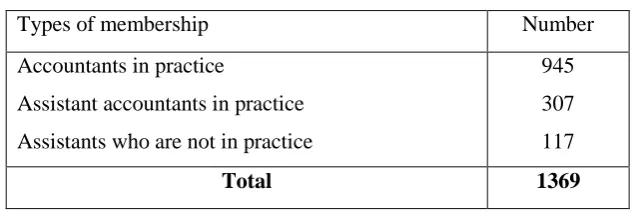
TABLE 2.1
Registered accountants in the Libyan Association of
Accountants and Auditors
Types of membership Number
Accountants in practice
Assistant accountants in practice
Assistants who are not in practice
945
307
117
Total 1369
Source: (Libyan Association of Accountants and Auditors 2010)
2.5.2 Legal Requirements
In Libya, as in many other countries, an attempt has been made to regulate accounting practice through direct governmental laws and regulations. Thus, the significant impacts on accounting and auditing in Libya have come from a) the Commercial Code (LCC); b) the Law Rules in Respect of Trades and Commercial Companies and Supervision Thereon; c) the Law Organization of the Accounting Profession in Libya; and d) The Libyan Income Tax Law.
2.5.2.1 The Libyan Commercial Code
hearing the findings of the auditor for the validity of the dismissal decision (Libyan Government 1953).
2.5.2.2 Law Rules in Respect of Trades and Commercial Companies and Supervision Thereon
Law rules in respect of trades and commercial companies and supervision thereon No. 65 issued in May 1970 is complementary to articles of the commercial law referred to above. Articles 13, 25 and 26 of this law state that nominating an auditing board is only required when a company‘s capital reaches five thousand dinars (Libyan Government 1970a). Also, this auditing board consists of three employed members and two members who act as reserves in the case of sickness or other absence. In addition, the members are nominated by the General Assembly of Shareholders which has the right to choose them from non-participants (Libyan Government 1970a). They are also required to be of Libyan nationality, be qualified, and have experience in accountancy and financial affairs. The General Assembly of Shareholders fixes the annual bonus for the controllers whose term of office is three years, with the possibility of being re-employed (Libyan Government 1970a). But the Law did not specify the quality qualifications required and necessary practical experience.
In 1970, the executive regulation of Law No. 131 was issued regarding supervision and control of insurance companies. It requires external auditors who are assigned to audit insurance companies to hold a bachelor degree in economics and have experience of more than five years or be a member of the Association of Accountants and Auditors Arab, or the holder of a certificate from one of the institutes or foreign accounting associations (Libyan Government 1970b). However, the development of the accounting and auditing profession began after issuance of Law No. 116 of 1973 which organizes the profession of accounting and auditing in Libya.
2.5.2.3 Law No. 116 of 1973 Organization of the Accounting Profession in Libya
Different tax laws have only required financial statements from the taxpayer, as well as other attached documents to be signed by the legal representative of the taxpayer, for example, a chartered accountant (Bait El-Mal, Smith & Taylor 1973). The introduction of law No. 116 of 1973 led to increased attention to the accounting and auditing profession (Ritchie & Khorwatt 2007) and the same law (Article 53) established the LAAA (Libyan Government 1973b). This Law comprises the following sections: the establishment of the LAAA, registration of accountants, exercise of the profession, fees, pension and contribution fund, responsibility of accountants and auditors, penalties and general and transitional provisions (Libyan Government 1973b). Therefore, the accounting profession has become limited to those registered with the LAAA. In other words, an accountant in Libya cannot practise the auditing profession in the country unless he/she is registered as a chartered accountant with the LAAA (Libyan Government 1973b). 2.5.2.4 The Libyan Income Tax Law
The Libyan Income Tax Law No. 64 of 1973 has had a major impact on accounting practice in Libya (Al-Kilani 1988; Bait El-Mal, Smith & Taylor 1973). For example:
1. Article 55 states that deductible donations to charities must not exceed 2 per cent of the taxpayer‘s net income (Libyan Government 1973a).
2. Article 56 indicates that establishment costs may be depreciated against revenues over three to five years using the straight-line method (Libyan Government 1973a). In this respect the Law ‗has followed the French law which allows the deduction of capital expenses from revenues and even permits the deduction to be made in one amount‘(Al-Kilani 1988, p. 130). 3. Article 59 Stipulates the following: where the accounts for a year have
been closed with a loss, the loss (or taxable losses) balance shall be carried forward for a maximum of five years from the year of the loss (Libyan Government 1973a).
5. Article 65 states that no distinction is made between operating income and extraordinary income. The Law provides that the profit resulting from the sale of a business or any of its tangible or intangible assets shall be deemed to be operating income (Libyan Government 1973a).
After this brief review of some Libyan laws and regulations, it seems that most of these laws/regulations focus on accounting and external audit practices. However, there is no attention to internal audit practices and there is a lack of laws and regulations which address the organization of the profession.
2.6 Development of the Libyan banking sector
The Libyan banking sector navigated numerous stages as part of the economic occupation. In general, the development of Libyan banking can be divided into six historical periods. Each period is characterized by the appearance of certain aspects of the development of banking activity which, in turn, is characterized by specific qualities. The following sub-section outlines these stages.
a. 1868-1940
Modern banks in Libya appeared in the second half of the 19th century, which characterized a general improvement in the Libyan economic condition. Such improvement required the establishment of financial institutions to serve an economy dominated by agriculture. Therefore, in this period, the Ottoman rule established an agricultural bank in 1868 in Benghazi; and another one in Tripoli in 1901 which had several branches spread across the state. Then the Ottoman bank opened another two branches in Libya: the first commenced business in Tripoli in 1906 and lasted until the year 1913; and the second one in Benghazi in 1911 continued until the Italian occupation (Benkato 1981). These banks were conservatively managed and subject to supervision from their home countries. However, the development of the Libyan banking system dates back only to the beginning of the Italian colonization.
September 1907. Then the third branch opened in Darnah in July 1912 (Ehtawish 2006). Besides its banking operations, the Bank of Rome played the role of Central Bank by issuing notes and coins to underpin its authority (EI-Baiah 1980). After the Italian invasion (in 1911), several Italian banks opened branches in Tripoli, namely: the Bank of Napoli, the Bank of Sicily and the Bank of Italia, along with two local banks—the Saving Bank and Bank of Tripoli (Otman 2007).
b. 1940-1951
During this period, Italian occupation expired at the end of the Second World War when Italy exited from Libya. As a result, all the Italian banks in Libya were closed and the currency of Italian Lire was replaced by a different unit of value (Al-Kilani 1988). After the Second World War, Libya was placed under British and French military administration. The British military department took over administration of the country and, in early 1943, Barclays Bank opened two branches: one in Tripoli and the other one in Benghazi. The French military department took over administration of the Fezzan, and then opened the Bank of Algeria (Central Bank of Libya 2006). These three states ruled independently and formed financial and economic relationships and implemented their own systems and procedures in relation to export and import regulations and currency. Despite the states of Tripoli and Cyrenaica being subjected to the rule of British colonialism, each state had its own currency. In Cyrenaica, the Egyptian pound replaced the Italian lira (Central Bank of Libya 2006). However, in Tripoli, British Military Currency was covered by the sterling pound on behalf of the occupation authorities. As in Fezzan, the French authorities were using the old Algerian franc, which was issued by the Algeria Bank. The colonial banks‘ lending policies were confined to banking operations within the limits of safety of depositors‘ funds and stability in the system (EI-Baiah 1980).
c. 1951-1962
activity in the country once again. In addition, four other banks, namely, the British Bank for Middle East in 1952, the Arab Bank in 1952, the Bank of Egypt in 1954, and the Tunisian-Algerian Real Estate Bank in 1955 entered the Libyan banking market (Benkato 1981). On 24 December 1951, Currency Law No. 4 came into force. It was the first financial law in Libya‘s modern history and the primary legal step towards regulation of the Libyan banking system. Under the Libyan Currency Law No. 4 of 1951, the Libyan Currency Committee commenced operations. The committee‘s tasks were issuing currency, investment of accumulated currency reserves and redeeming the three currencies which were circulating in the country—namely the British military Lira in the province of Western Region, the Egyptian Pound in the province of Eastern Region, and the Algerian Franc in the province of Southern Region. The head of this Committee was Mr Ruder from the Bank of England. After one year the Committee issued the first Libyan currency (Blowers & McLeod 1952).
d. 1962-1970
This period is considered as one of the most important periods in the development of the Libyan banking system. By issuing Law No. 4 of 1963, the Central Bank of Libya (CBL) replaced the National Bank of Libya and it was given the right of currency issue and assumed responsibility for maintaining monetary stability and the external value of the Libyan currency (EI-Baiah 1980). The CBL was also given full power to conduct inspections on national and foreign banks operating in Libya, with the ability to impose appropriate penalties. In addition, the important point in Law No. 4 of 1963 was that the share of Libyan citizens in foreign banks‘ capital operating in Libya should be no less than 51% which, hence, implies the Libyanization process (Central Bank of Libya 2006).
its objectives. In other words, CBL failed to perform as required due to its inability to Libyanize the other foreign banks, namely, Rome Bank, Barclays Bank and Naples Bank (Central Bank of Libya 2006). On 1 September 1969, the emergence of the new political regime (Al Fatah Revolution) accompanied many of the political and economic changes in Libya. Therefore, on 23 November 1969, the Revolution Command Council issued the decision relating to the conversion of all foreign banks operating in Libya to stock companies (Ehtawish 2006).
e. 1970-1993
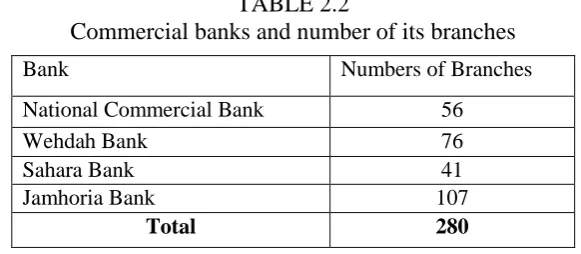
TABLE 2.2
Commercial banks and number of its branches
f. 1993-2005
The period from 1993 to 2005 witnessed major developments in commercial banks in improving the level of banking services through diversification and provisions of services to citizens. The commercial banks also contributed, along with other sectors, in playing a vital role in the development of the national economy through granting loans and providing credit facilities for the production and economic sectors, individuals, finance projects and foreign commerce programs (Central Bank of Libya 2006). The promulgation of the Banking Law No. 1 of 1993 was an important cornerstone in this period because the development of the commercial banks increased after issuance of the Law No.1 of 1993 by CBL (Otman 2007).
Article 51 of Law No.1 of 1993 states that the main aims of the commercial banks are to finance development plans and create or contribute to corporate and economic projects (Libyan Government 1993). In addition, Banking Law No. 1 of 1993 places many obligations on commercial banks. For example, Article 57 of this Law states that each bank must maintain a reserve of capital of no less than 25% of the net before the announcement of profits. According to this article the bank must also keep amounts equivalent at least to all of its obligations payable in Libya, as well as an amount equal to the bank‘s capital paid (Libyan Government 1993). Furthermore, Article 64 indicates that each bank all year round should offer, in all its offices and branches and in a visible place, a copy of the last revised budget, and publish it in a local newspaper. Article 94 of Law No. 1 of 1993 has placed general rules of control and supervision on the commercial banks. It also identifies some of the duties of the commercial banks (Libyan Government 1993). However, empirical evidence shows that the commercial
Bank Numbers of Branches
National Commercial Bank 56
Wehdah Bank 76
Sahara Bank 41
Jamhoria Bank 107