EU Tropical Forestry
Sourcebook
E_uropean Commission
Delegation
ltbranJ
2300 M
Street~ NW
Washington, DC 20037
2 • EUROPE: AN OVERVIEW
-
Europe: an overview
Gill Shepherd
Contents
1. INTRODUCTION . . . 3
2. 3. 4 SETTING THE SCENE: EUROPE'S OWN FOREST HISTORY . . . 3
THE HISTORY OF EUROPEAN INVOLVEMENT WITH TROPICAL FORESTRY . . . -4
THE STRUCTURE OF AID DELIVERY TODAY . . . . 4.1 Departments of development assistance . . . . 4.2 The status of aid within government structures . . . . 4.3 The administration of forestry assistance . . . . 4.4 Development personnel . . . . ... . 4.5 NGOs and the forestry sector . . . . 4 4 6 7 7 8 4.6 Multilateral and multi-bilateral assistance . . . 11
4. 7 Assisted credit scheme . . . 11
5. STRATEGY . . . 12
5.1 General development co-operation policies . . . 12
5.1.1 Aid process and progress . . . 12
5.2 Tropical forestry policy and strategy . . . 13
5.2.1 Social policies in non-forestry aid . . . 13
5.2.2 Key international conferences, meetings and reports . . . . . . . 13
5.2.3 TheearlyroleplayedbySweden . . . 13
5.3 Public pressure on governments for commitment to forests and the environment . . . 14
5.4 Current tropical forestry policy in Europe . . . 14
5.5 The definition of forestry . . . 14
6. ENVIRONMENTAL POLICY . . . 14
7. POLICY IMPACTS ON GEOGRAPHIC AND THEMATIC FOCUS . . . 16
7.1 The narrowing focus of aid . . . 16
7.2 Geographic focus . . . . . . 16
7.3 Thematic focus . . . . . . 16
8. PROJECT CYCLE MANAGEMENT . . . 18
9. DONOR COMPARATIVE ADVANTAGE . . . 20
9.1 Research strengths . . . 20
9.2 Other kinds of comparative advantage . . . 20
9.2.1 Colonial period experience . . . 20
9.2.2 Europe's own experience of people-forest interactions . . . . . . . 21
9.2.3 Specific skills . . . 21
9.3 Learning from programme experience . . . 21
9.4 The contribution of the European CommunityF . . . 21
9.5 Donor collegiality . . . 21
10. ISSUES AND TRENDS FOR THE FUTURE . . . 22
10.1 Devolution . . . 22
10.1.1 NGOs . . . 22
10.1.2 Consultingfirrns . . . . 10.2 The relationships between budgets and outputs . . . . 1 0. 2. 1 The cost of forestry projects . . . . 1 0.2.2 Aid volume forforestry . . . . 22 22 22 23 10.3 Institutional memory . . . 23
10.4 Effective aid delivery and donor collaboration . . . 23
10.5 Finding a way for larger and smaller donors to work together . . . 23
10.6 The evolving relationship between forestry and environment . . . 23
REFERENCES . . . . . . . 24
ACRONYMS . . . 24
ACKNOWLEDGEMENTS . . . 25
1.
INTRODUCTION
This book provides an overview of the ways in which Europe offers support to tropical forests through aid and research. Each of the Member States' current programmes is examined, along with those of the various Directorates-General (DGs) in the European Commission which support tropical forestry. It is called a Sourcebook because it will probably be used more as a work of reference than as a book to read from start to finish.
Its intended audience is threefold. Above all, its authors hope that it will be of value to the developing countries with which the European Union (EU) works. The book should make it simpler to understand the way in which aid to forestry is organised from country to country and within the Commission; it will indicate each donor's target countries for the funding of tropical forestry, and will suggest the particular interests of each. Contact points have been listed at the end of all chapters.
The second potential audience for the Sourcebook is the body of donors outside Europe. Hopefully it will offer more familiarity with, and a better understanding of, European tropical forestry experience in an easily accessible form.
Finally, donors within Europe are working interac-tively with one another to an ever increasing extent, and are more often co-funders of the same projects and programmes than in the past. At the same time, the importance of forestry in the portfolio, aid delivery mechanisms, implementation strategies, and vision for the future may all vary greatly from donor to donor. The authors hope that European donors will find it useful, therefore, to read about one another's structures and programmes. Their combined financial strength in the tropical forestry sector represents the largest single block of aid for forestry available in the world: the European Community and Member States funded 66.5% of all bilateral aid to forestry in 1993, and just under 40% of all aid in the sector (United Nations [UN] Economic and Social Council, 1996). This book should go some way to assessing the combined comparative experience of Europe as well.
The Sourcebook has been prepared in close colla-boration with the donors concerned, and each chapter represents the combined efforts of at least one in-country Research Associate, and an ODI Research Fellow. The latter has in each case taken particular responsibility for the consistency and the comparability of each chapter with the others. After a brief review of the country's own forest history, and the history of its involvement in tropical forestry, each chapter analyses the structure of aid delivery, policy, the thematic and regional distribution of forestry projects, research and training, and project cycle management. Each chapter concludes with an examination of one or two key projects, or summarises project reviews conducted in-country, and looks at future trends,
This first chapter draws out some of the interesting comparative findings from the study, attempts an assessment of the totality of Europe's comparative advantage in tropical forestry, and identifies issues for the future.
1. INTRODUCTION •
3
2.
SETTING THE SCENE: EUROPE'S
OWN FOREST HISTORY
Despite the enormous differences between temperate and tropical forests, Europe's own forest history encapsulates many of the issues which it has subse-quently encountered in the tropics. At the same time, Europe took to the tropics not only its own experience in forest management, but also, hardly surprisingly, the political and institutional assumptions of the time.
Most countries in Europe have an early history of slow domestic deforestation associated with agricultur-al expansion, charcoagricultur-al-based industries, and the in-creasingly commercial use of timber. In some places, such as France, Germany, Belgium and the
uit,
demand on the forest from different groups led, five or six hundred years ago, to the development of rules which gave use-rights of varied kinds to different categories of people, and which managed forest to meet these uses through a variety of systems. Such systems often evolved where nobility and peasantry both needed access to the same resource. In other areas, such as in the Netherlands and in parts of northern Italy, local communities demarcated their own forests and evolved local associations to manage them. In Sweden and Finland individually-owned portions of forest were common.All over Europe, too, the opportunity to begin to restore forest cover through reforestation programmes and through natural regeneration arose only when pressure could be relieved through a switch to coal from fuelwood and charcoal, and through increasing urbani-sation and agricultural intensification.
Forestry practice and forestry education, particularly in Northern European countries, have been heavily influenced from the eighteenth century onwards by the experience of German foresters, who first developed inventory methods and silvicultural techniques for sustainable-yield forestry. The Danish/Norwegian king invited German assistance with Danish forests during the eighteenth century and France drew on German methods in part when establishing forestry training at the Ecole de Nancy in the 1820s.
4 • EUROPE: AN OVERVIEW
It has been interesting to see these two stral)ds coming together, as debate since the Rio Conference in 1992 has centred on broader definitions of sustain-ability, and as environmental concerns have been increasingly raised simultaneously, both for forests at home and for forests in the tropics.
The European Member States currently have widely varying proportions of forest cover, from those with relatively little, such as Ireland (8%), the Netherlands (9%) and the UK (11 %) through to Sweden with 55% and Finland with 75%. In all cases, in sharp contrast to the situation in developing countries, the proportion of forest cover is rising (see Table 1).
3.
THE HISTORY OF EUROPEAN
INVOLVEMENT WITH TROPICAL
FORESTRY
Those countries with a colonial history (France, the Netherlands and the UK, and to a lesser extent Belgium, Germany, Italy, Portugal and Spain) developed an early expertise in tropical silviculture.
Initially, there was considerable reliance on German-educated foresters, as there had been in Europe itself. The Netherlands drew on German expertise in devising sustainable yield management systems for teak in Java. Britain appointed a German, Dr Dietrich Brandis, as the first Inspector-General of Forests in India in 1860. France's forestry school at Nancy based its curricula on German as well as its own experience.
The early impetus for Dutch and Spanish interest in tropical forests grew originally out of their supremacy in seaborne commerce, their large ship-building
indus-Table 1: Forest Cover as a %of national land area in the European Member States
Ireland
Netherlands
UK
Denmark
Belgium
France
Italy
Germany
Luxembourg
Portugal
Spain
Austria
Greece
Sweden
Finland
8%
9%
11%
12%
22%
27%
29%
29%
33%
36%
45%
46%
49%
55%
75%
(Source: Sourcebook chapters. and Eurofor, 1994.)
tries and the disappearance of suitable timber supplies in Europe. The Dutch shipped timbers from Java and (later) Dutch Guyana back to the Netherlands. In the case of Spain, shipyards were established in colonies such as Haiti, the Philippines and Cuba.
Colonial experience of tropical forest management can be said to have begun in South and South-East Asia, with Dutch management of teak forests in Java, German and British forest management in India and Burma, and French forest management in Indo-China. Lessons from these experiences were transferred to Malaya and East and West Africa during the British colonial period, and to Madagascar, West Africa and Equatorial Africa by the French.
After the colonies gained independence, mady of the individuals who had been employed by colonial forest services transferred to work on newly emerging aid programmes. Indeed aid was seen, in the early independence years, as a temporary loaning of expertise to ex-colonies until they no longer needed it. A priority was consequently made of training in tropical silvicul-ture, in sustained yield forest management, and planta-tion producplanta-tion. Commercial links were continued, not only in areas where the logging of hardwoods was important, but also at times where intensive plantations could be raised, as in the case of Spanish companies' investment in the tropics for pulp and paper to supply the home market.
Countries without previous involvement in tropical forests through colonies, developed an interest in tropical forestry through other routes. Both Finland and Sweden were major manufacturers and operators of forest logging and processing equipment for the home market, and became interested in the move towards industrial forestry in the tropics in the 1950s, 1960s and 1970s. Out of these commercial links grew other interests. In the case of Finland, training became a strong area of expertise. In the case of Sweden, possibly because of its own strong domestic tradition of farm forestry, as well as its traditions of social concern, came an interest in 'Social Forestry' and its funding for many years of the Food and Agriculture Organization's (FAO) 'Forests, Trees and People' programme. Denmark's experience of its own forest, which dwindled to a cover of only 3% at the beginning of the nineteenth century, and was then successfully rebuilt, led it to specialise first in domestic and then in tropical tree-seed production. Only very gradually, in the late 1970s and early 1980s did tropical forestry acquire the broader importance it has today.
4
THE STRUCTURE OF AID
DELIVERY TODAY
4.1
Departments of development
assistance
the case with interesting variations in the Netherlands (see Table 2a.)
Sometimes, by contrast, the Ministry of Foreign Affairs is given the responsibility of coordinating the aid efforts of a wide variety of other bodies as in the case of Portugal and the most extreme example -Spain, where there are up to 19 bodies which deal with
THE STRUCTURE OF AID DELIVERY TODAY •
5
forestry and environment aid. Spain too, is unique in the complexity of its decentralised aid. Several regional governments run substantial aid programmes of their own (especially the Basque country, Andalucia, Navar-ra and Cataluiia). Even local councils and individual parishes run small aid programmes with towns and villages in the developing world with whom they have
Table 2a: Aid Delivery Structures for Forestry in the Member States
6 • EUROPE: AN OVERVIEW
developed twinning arrangements. Similar twinni_ng arrangements are also encouraged in France.
France's very large aid programme is still strongly influenced by its colonial history, with distinct budgets and aid arrangements under a Ministry of Co-operation for 'concentration countries' (pays du champs- mainly ex-colonies), a special Secretariat for Overseas Depart-ments and Territories, and Ministry of Foreign Affairs management of aid to other countries.
Only Greece and the UK (since May 1997), direct no aid through the Ministry of Foreign Affairs at all. Greece devolves management of its budget through the Ministry of National Economy to other appropriate Ministries (the Ministry of Agriculture in the case of forestry). The UK has a separate Ministry for aid, the Department for International Development.
In Germany arrangements are complex, with the Ministry for Economic Co-operation and Development (BMZ) being the key institution responsible for formulating federal development policies, and mana-ging 70% of the federal aid budget. Financial operation (or capital assistance) and technical co-operation are administered on behalf of BMZ by the German Development Bank (KfW) and the German Agency for Technical Co-operation (GTZ) respectively. In the case of the Commission, with its Directorates-General in place of Ministries, aid delivery is structured in a way somewhat reminiscent of France. Its arrange-ments for ACP (African, Caribbean and Pacific) and ALA (Asian and Latin-American) countries set the Commission apart from most of the Member States.
The sheer size of the Commission is a second notable feature. There are relatively few forestry advisers (for the volume of money being spent) and these are therefore very over-extended. The work-load, and with the fact that the buildings of the different Directorates
working in forestry are now located inconveniently far from one another, have meant that regular informal exchanges of ideas about tropical forestry are difficult to organise.
Thirdly, while many Member States are internally organised around a pattern of fund-holding geographi-cal desks with sectoral advisers working laterally with them all, it is rare to find structures comparable to the Commission's pattern, seen in DGs IB and VIII, of vertical and horizontal budget lines, run by desks and advisers respectively. That this pattern has caused tensions is hardly surprising. It has also had the unfortunate effect of weighing down advisers with budget-line duties, so that they have little time to offer advice to the desks, and may even be \seen as competitors rather than facilitators. (See Table 2b).
4.2
The status of aid within government
structures
The status of the Government body responsible for aid implementation is important since it may potentially affect aid strategies, and, even more importantly, funding levels. Where, as in the majority of cases in Europe, aid is administered as part of a Ministry of Foreign Affairs or a similar body, it may be vulnerable to being used to achieve diplomatic goals as well as developmental ones.
Several countries have therefore built in arrangements to give aid a stronger 'voice' within such a structure. The Netherlands has a special Aid Minister without a ministry; Sweden's Division for International Develop-ment Co-operation has its own Minister even though it is located within the Ministry of Foreign Affairs; and the same arrangement is found in Denmark. Finland has a similar arrangement with a Minister specially
Table 2b: Aid Delivery Structures for Forestry in the European Commission
responsible for both Development Co-operation and Environment.
Other countries, such as Italy and Portugal, have Interministerial committees which meet regularly to plan aid policy. The Commission has likewise estab-lished an inter-service steering committee, meeting two or three times a year both to discuss policy issues and to discuss forestry projects proposed for funding. Simi-larly, several bilateral aid programmes have established professional support groups for forestry. DGIS in the Netherlands relies on such a group, drawn from tHe National Reference Centre for Nature Management (IKC) and the International Agricultural Centre (lAC). The Department for International Development (DFID) in the UK has a Forestry Professional Coordinating Group which meets quarterly with professionals from OFI, NRI, ODI, liED and WCMC.
An interesting feature of an increasing number of countries is the extent to which the broader public are increasingly consulted about aid priorities. This may be within the context of all aid, as is the case with Italy's Consultative Committee and Denmark's National Resource Base links. But also, after Rio, and sometimes before, several countries (e.g. Finland and the UK) established Consultative Groups for the discussion of forestry and environmental priorities between govern-ment and the general public.
4.3
The administration of forestry
assistance
Most forestry assistance is the responsibility of the central aid-giving agencies of donor countries. Ninety-five per cent of Belgium's sponsored tropical forestry activities come under the office of the Secretary of State for Development, for instance, and the majority of UK-funded forestry projects come under the Department for International Development. In other countries, forestry is more widely dispersed. In the Netherlands, the Ministry of Agriculture, Nature Management and Fisheries is responsible for policy development, but the Ministries of Economic Affairs and of Housing, Spatial Planning and the Environment also have responsibilities for international forestry. France's aid structure also inevitably means that many different, relatively unrelated bodies are involved in forestry assistance.
In countries with smaller aid programmes, responsi-bility for sector aid often lies with the appropriate domestic ministry. The General Forestry Directorate in the Ministry of Agriculture is Portugal's main forestry aid representative, for instance, and Greek forestry aid is managed by the Department of Agriculture. Spain's tropical forestry is managed through a great diversity of government bodies.
A further feature of funding often available to forestry, which reflects shifting priorities since UNCED in 1992, is that a number of countries have recently established separate budget lines to deal with global environmental issues such as biodiversity. These are often administered by departments other than those dealing with overseas development assistance to for-estry. In Denmark the Environment and Disaster Relief Facility is administered by agencies in the Ministry of Environment and Energy, in collaboration with the
THE STRUCTURE OF AID DELIVERY TODAY • 7
Ministry of Foreign Affairs. France's 'French Fund for the Global Environment' is administered by an inter-ministerial Committee, and in the UK, the Darwin Initiative is administered by the Department of the Environment, Transport and the Regions (DETR).
In the past, aid agencies often located forestry within agriculture departments. More recently, the trend has been for it to become more closely linked with the environment, as the previous paragraph attests. A second trend suggested by an analysis of country spending is that countries with smaller aid budgets have focused on the more agricultural aspects of forestry, while those with larger budgets have been able to tackle the larger and longer-endurin~ natural forest management issues. These have led inevitably to environmental considerations as well.
The integration of forestry with other sectors some-times makes it difficult to detect trends in forestry policy, and the level of forestry aid commitments. The exception occurs where countries have decided to dedicate a fixed sum to forestry and have to monitor disbursement rates. This occurred in Germany from 1991, in the UK from 1989 to 1994 and in Austria from 1993-95. A similar process is seen in the case of the European Commission's Tropical Forests Budget Line.
The relative importance of forestry overall varies widely across the EU. The country with the largest proportionate contribution to forestry by far is Finland, followed by the Netherlands, Germany and Sweden. In volume terms the largest donors are Germany, the EC, the Netherlands, the UK, France and Sweden (see Table 3).
Aid to the forestry sector has generally increased over the last decade, though this may not be a continuing trend. In Germany the proportion of state funding which goes to forestry and environmental activities has seen a fourfold increase since 1988. There was also a fourfold increase in the UK as a result of the Forestry Initiative (from 1989 until 1994) and funding rose in the early 1990s in the Netherlands. Portugal, on the other hand, has seen a decline in aid to the agriculture sector including forestry, from 3.7% in 1991 to 2.2% in 1994.
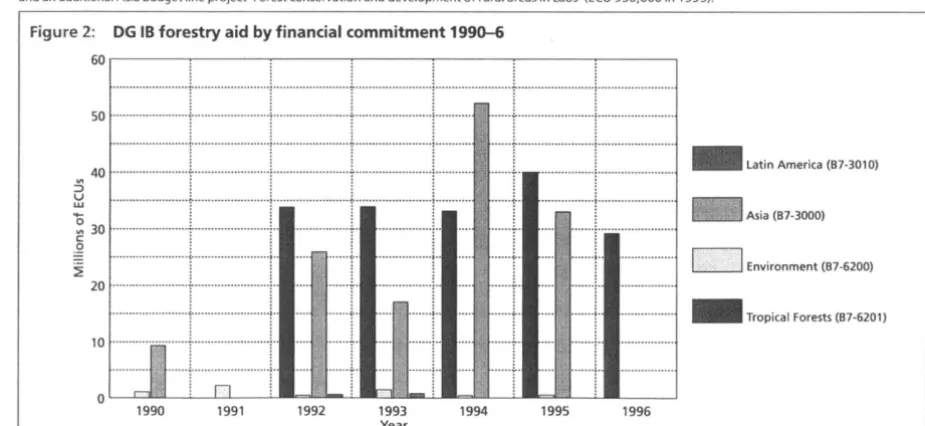
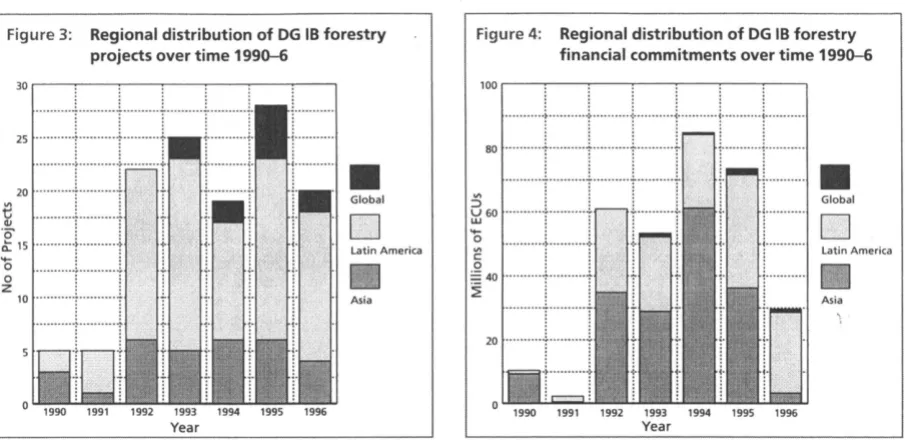
Overall forestry spending through the European Community aid programme has remained steady, with the exception of the Tropical Forestry Budget line itself, which grew from ECU 2m. in 1991 to ECU 50 m. in 1992, and will remain at this level until at least 1999.
The over-riding reason for the increased funding made available to forestry has been public concern about tropical forests within the donor countries. In the case of EC aid, it was primarily the concern of the European Parliament about tropical forests which increased the funds made available through the budget line created in 1991.
4.4
Development personnel
Tables 4a and 4b present information about the advice and arrangements for project implementation available to support forestry within each donor agency.
8 •
EUROPE: AN OVERVIEWOther countries, such as Austria, Italy, Ireland Spain and Portugal, rely on advice from universities, specia-lised research organisations, the national forestry service, consulting firms and NGOs.
Those countries with tropical forestry programmes appear to make increasing use of their embassies in the developing world. Sometime this means simply attach-ing staff from the specialist agency at headquarters to aid divisions at embassies (Belgium, Germany, Ireland, Italy, Sweden, the UK) but some countries have gone further and are now experimenting with the devolution of many aid management functions directly to the diplomatic service (Denmark, Finland). The Nether-lands is experimenting with the devolved management of the aid programme at embassy level. In the case of the EU, Country Delegations play an important role in the selection and monitoring of projects.
Few countries still maintain large numbers of technical co-operation employees, apart from France (500 for natural resource issues in concentration countries, of whom 25 specialise in forestry); Germany (115 GTZ employees working on forestry and con-servation issues); and the UK (about 80 in forestry in recent years).
The others rely on NGOs, consulting firms and universities, for the most part. Some countries have been able to retain specialist applied research bodies for tropical forestry implementation, such as Tropenbos in
the Netherlands and CIRAD-Foret and ORSTOM in France. Other important components of the cadre of tropical forestry implementers in Germany, Ireland, Italy and the Netherlands, are the volunteer services. Finally a few countries have made strong efforts to involve wider civil society (what Denmark calls its 'National Resource Base') in aid delivery: businesses, trade unions, local government, parishes and villages. Germany's political and church foundations are also of interest here.
--~ The Europead Commission, apart from its small number of forestry advisers, relies heavily on commer-cial European consulting firms for project implementa-tion, in coordination with counterpart national co-directors, and also on universities, NGOs and l-esearch bodies.
4.5
NGOs and the forestry sector
Several of the European Member States have found that NGOs in general have qualities and capabilities which cannot readily be matched in their bilateral aid programmes. Austria and Denmark note the ability of NGOs to educate the domestic public about aid issues. Italy runs a developing country volunteer service as an alternative to military service. Countries such as Belgium, Denmark, Ireland, Spain and the Netherlands have found, too, that NGOs can help them to simplify aid delivery. They may be able to work faster and more
Table 3: Official Development Assistance in Europe to the Forestry Sector in 1995 (US$ million)
Austria 767 1.10 (1993-95 only)
0.11 (usually)
Belgium 1 034 0.173
Denmark 1 623 1.00
Finland 388 4.6
France 8443 0.45
Germany 7 524 2.21
Greece 1522 n.d4
Ireland 153 0.253
Italy 1 623 0.30
Luxembourg 65 n.d4
Netherlands 3 226 2.47
Portugal 271 0.2
Spain 1348 0.4
Sweden 1 704 2.103
UK
3 157 1.55EC 3860 2.2
(Sources: 1 Organisation for Economic Cooperation and Development (OECD), 1996, p. 125 2 data from Sourcebook chapters except where indicated
3 data from Paper E/CN.17 /IPF/1996/ .. , presented to the Inter-Governmental Panel on Forests (IPF) II of the CSD,
UN Economic and Social Council, 1996. (The percentages used in this paper were calculated in 1993.
The same percentage has been assumed for 1995 to produce the figure in column 3.)
4
Forestry cannot be disaggregated from general oda (official development assistance) spending)
8.4
0.84
1.7
16.2
17.9
37.7
166.3
n.d
0.4
4.9
n.d
79.7
0.5
5.4
35.8
49.0
THE STRUCTURE OF AID DELIVERY TODAY • 9
Table 4a: Sources of sectoral advice and of specialists for project implementation in the Member States
flexibly than bilateral processes can, especially where large capable NGOs have been given block grants or framework agreements by the countries they belong to. NGOs are also valued where they have good local representation on the ground in developing countries, ·
(Source: Sourcebook chapters)
for their ability to respond innovatively and monitor closely, and for reaching the poorest effectively.
10 • EUROPE: AN OVERVIEW
Table 4b: Sources of sectoral advice and of specialists for project implementation in the Commission
NGO budget is larger than its modest bilateral budget. Apart from Luxembourg (30%), Denmark (17%), and Sweden (11 %), however, typical NGO contributions still hover at under 10% with Finland, the Netherlands and the UK spending about 7-8%; Germany, Spain and Italy 5-6%; and France around 2%. But overall percentages continue to rise and several countries plan to increase allocations to NGOs. The DAC (Develop-ment Assistance Committee of the OECD) average as recently as 1990 was only 2.8%. NGO projects tend also to be financed or co-financed at generous levels in many parts of Europe. Italy offers up to 100% funding; Austria, Belgium, Denmark, Finland, Germany, Ireland and Sweden fund at a 75-80% level; France and the UK offer co-funding at 50%.
NGOs are beginning to have a more official role, in line with their growing institutionalisation as conduits for aid. Countries as diverse as France, Ireland, and Italy now give NGOs a seat at the table on national level Development Co-operation Committees. As a result, perhaps, several countries note tensions between NGO desires for independence and the government's desire to implement its own policies through their agency.
Most NGOs tend to work in health, education, social services and general rural development. Although there are active lobbying NGOs such as Friends of the Earth raising environmental and forest issues in many countries in Europe, NGOs seem mainly to have avoided implementing forestry (except for farmer tree-nurseries in rural development projects) because they see it as too long-term and expensive. Even those countries with strong forestry traditions and relatively large forestry programmes, do not necessarily have extensive NGO involvement in the sector. For example, 80% of funding to Finnish NGOs was used for health, education and social services projects, and out of 348 projects implemented through co-operation with Fin-nish NGOs, only 20 dealt with forestry issues. How-ever, Denmark, Ireland, Germany, the Netherlands and the UK seem to have NGOs which are a key part of bilateral forestry implementation. In the UK, 17% of all bilateral forestry funding is channelled through the
(Source: Sourcebook chapters)
NGO sector, while in the Netherlands the figure in 1995 was 31%.
Yet this only presents part of the picture. Many more countries in Europe mention the importance of NGO advice in the forestry sector than would appear to be funding much NGO forestry. The explanation no doubt
lies partly in the fact that NGOs which specialise in rural livelihoods and rural development may offer forestry advice. It is also the case that many of the NGOs which campaign on behalf of tropical forests, and meet with aid donors at various national fora, do
not implement forestry projects. Sometimes European NGOs rely more on EC funding than on bilateral funds. The World Wildlife Fund (WWF), Belgium, for instance, works on Congo basin conservation, forestry and certification issues through DGVIII-funded con-tracts, issues with which the current Belgian bilateral aid programme has not been concerned.
In the case of the European Community Aid, the Tropical Forests and Environment budget lines (B7-6201 and B7-6200 respectively) managed by DG IB and DG VIII tend to prefer larger projects to fund because of their technical and administrative constraints. Average project size is over ECU 1 m.: suitable for consulting firms, but much too large for most NGOs. Projects of under ECU 1 m. and over ECU 250,000 are handled by these budget lines as 'small' projects.
4.6 Multilateral and multi-bilateral assistance
In many Member States, the proportion of the aid budget which is disbursed through multilateral agencies is increasing. Nevertheless, the proportion of funding which goes to multilateral programmes varies quite widely across the EU, as Table 5 shows. Greece's
bilateral commitments are abnormally low, leaving
multilateral commitments to take up 76% of the total
budget. Seven countries contribute between 40-50%
multilaterally (including Finland, Denmark, UK and
Belgium), while seven contribute 24-36% (including
France, Netherlands, Sweden and Germany). Those countries which have relatively low aid:GNP ratios have proportionately higher multilateral commitments, as would be expected. But more generally, as the multilateral component of the aid budget has increased, countries have become more concerned to influence the policies of multilateral organisations. Denmark calls it
'active multilateralism'. Spain has often tried to make
sure that its multilateral EU contributions are mainly channelled to Latin America; DFID in the UK has seconded three social development advisors and two forestry advisers to multilateral organisations (including the Commission) to assist in policy development; and the Netherlands, Germany and Finland have all in turn also seconded a forestry adviser to the Commission. Donors who fund the Global Environment Facility (GEF), or CGIAR (Consultative Group on International Agronomic Research) centres such as the Centre for International Forestry Research (CIFOR) and the International Centre for Research in Agroforestry (ICRAF) maintain close links with their programmes.
In the context of this understandable desire to see
THE STRUCTURE OF AID DELIVERY TODAY • 11
substantial multilateral contributions well-spent, it is difficult to understand why the OECD has
recom-mended the phasing out of 'multi-bilateral' or
'funds-in-trust' arrangements. They offered important benefits for both larger and smaller donors. Larger donors such as
Sweden and the Netherlands made major contributions
to the FAO on these terms, as did Denmark to the United Nations Sudo-Sahelian Organization (UNSO),
and were able to help shape the thinking of these
multilateral organisations in important ways in the
process. Some smaller donors such as Italy have in turn
been able to gain exposure to current tropical forestry approaches through their multi-bilateral involvement with FAO.
4. 7 Assisted credit scheme
Some form of assisted credit scheme operates in several donor countries. Austria offers subsidised export credits
to developing countries, to the benefit of Austrian
exporters; Finland has its 'pre-mixed concessional credit' scheme; Portugal has an economic co-operation fund, and the UK ran its Aid and Trade Provision in co-operation with the Department of Trade and Industry for many years. In Denmark and France, 50% of aid has
been tied to the provision of the country's own goods
and services; in Germany, 52%; and, topping the list,
67% in the UK. Soft financial co-operation loans are made by Germany, Spain and Italy to countries with per
capita incomes of under $2,800 p.a. Finland's credit
arrangements (40% of the total) mainly benefit forest
industries in Asian countries. Swedfund, in Sweden, puts up risk capital for joint ventures between Swedish and local companies, in countries with per capita
incomes of under $3,000 p.a.
[image:11.585.58.502.460.721.2]These measures have been criticised both by the DAC
Table 5: Aid Percentages spent bilaterally and multilaterally in Europe, 1995 ($ millions)
. ;;:"'" .. ,, j~ ~'~~;,· :·'<
Aid percentages Bilateral oda ., ·· Multilateral Total
France 6429 (76%) 2015 (24%) 8443 (100%)
Austria 560 (73%) 207 (27%) 767 (100%)
Netherlands 2245 (70%) 981 (30%) 3226 (100%)
Sweden 1189 (70%) 515 (30%) 1704 (100%)
Luxembourg 43 (66%) 22 (34%) 65 (100%)
Portugal 179 (66%) 92 (34%) 271 (100%)
Germany 4815 (64%) 2709 (36%) 7524 (100%)
Spain 816 (60%) 532 (40%) 1348 (100%)
Finland 220 (57%) 168 (43%) 388 (100%)
Ireland 88 (57%) 65 (43%) 153 (100%)
Denmark 895 (55%) 728 (45%0 1623 (100%)
UK 1670 (53%) 1487 (47%) 3157 (100%)
Belgium 514 (50%) 520 (50%) 1034 (100%)
Italy 806 (49%) 817 (51%) 1623 (100%)
Greece1 45 (24%) 144 (76%) 189 (100%)
(Sources:
1
Data for Greece not available in OECD (1996) and taken from country chapter
12 • EUROPE: AN OVERVIEW
and by the general public in many countries, on !he grounds that such loans are always tied to benefits for companies in the lending country and may not be truly development-related, and stricter criteria are now used to assess the suitability of projects for this type of funding. Finland found that there was too little development content in proposals to its credit scheme, that it was poorly monitored, and that it skewed aid away from Africa towards Asia. It is now phasing out the scheme. The UK government undertook to abolish its Aid and Trade Provision in its November 1997 White Paper.
5.
STRATEGY
5.1
General development co-operation
policies
[image:12.585.77.294.409.714.2]Most of Europe's donors currently have development co-operation policies which prioritize poverty reduc-tion, sustainable livelihoods, social equality, the rights of women, and progress. Some, such as Austria, Denmark Finland, Germany, Portugal, Sweden, and the UK seek for respect for human rights in the countries to which they offer official development assistance, along with attempts to promote democracy, good governance, and popular participation in the political process. Some too, (e.g. Austria, Portugal and Spain) explicitly seek to promote peace through aid. Forces which shape policy congruence include DAC, the
Table 6: Per cent of GNP spent on official development assistance by EU Member States 1994-5
Country %c;tfG~,P
Denmark 0.96
Netherlands 0.81
Sweden 0.77
France 0.55
Belgium 0.38
Luxembourg 0.36
Austria 0.33
Finland 0.32
Germany 0.31
Ireland 0.29
UK 0.28
Portugal 0.27
Spain 0.24
Italy 0.15
Greece 0.13
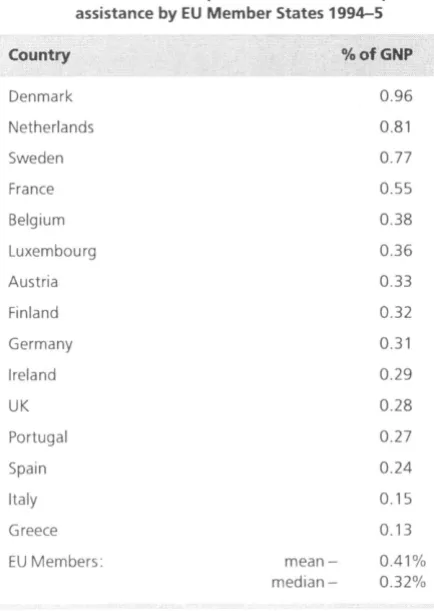
EU Members: mean- 0.41%
median- 0.32%
(Source: OECD, 1996, p. 125)
Note: since data for Greece is unavailable in OECD, 1996, it is taken from the Greek country chapter.
Development Assistance Committee of the OECD; UN and Bretton Woods institutions, and the Lome Con-ventions. Since the UNCED Conference in Rio in 1992, almost all countries have, in addition, added an explicit policy commitment to environmentally sustainable development and resource protection. The European Union has had a formal policy towards developing countries only since 1992 (in the Maastricht Treaty of European Union). Three objectives are listed: sustain-able economic and social development; the gradual integration of developing countries into the world economy, and the reduction of poverty. The Treaty also makes it legally obligatory to promote measures to deal with environmental problems.
Several countries have produced Aid White P~pers in recent years: the Netherlands in 1990 and 1996; Denmark with the goal of assessing aid in the post Cold War period; Finland in 1993 when, in a context of dramatic budget cuts, it was necessary to defend and justify the very existence of aid; and the UK in 1997, after the election of the first Labour Government for eighteen years. The production of such documents demonstrates a continuing active engagement in devel-opment co-operation.
The other measure of commitment to development co-operation has conventionally been the percentage of GNP spent on official development assistance. There has been a general reduction in aid budgets during the 1990s, and currently only three countries attain or pass the 0.7% ideal (see Table 6).
5
.
1.1
Aid process and progress
Initially, in the 1960s, the aid process, for those countries with a responsibility towards newly indepen-dent ex-colonies, was conceived as a gap-filling exercise -providing personnel and other kinds of help until they were no longer needed. The 'trickle-down' theories of the 1960s and 1970s, which assumed that aid would supply missing investment and that industrialisation was the inevitable development path, fitted well with this view. Aid strategies were not evolved until the 1970s and 1980s, whereupon country strategy papers were gradually developed which laid down what a particular donor's priorities were, and what perhaps recipient country priorities might be as well.
Aid orthodoxy for many donors (Finland and Sweden describe this path) was initially to put individual experts in line functions (1960s); to support assistance through free-standing projects (1970s); and finally to move to larger programmes combining several projects or focusing on particular sectoral interests (1980s). In the 1990s, these donors have encouraged a further shift in the aid relationship, to recipient country primacy in decision-making, and donor support only as requested with technical assistance and policy development.
towards social and institutional capacity-building goa'ls. Those who fund forestry note that it requires long-term commitment, however. (Germany's average is seven to ten years for technical co-operation projects.)
A further important shift has been the broader inclusion of social analysis into all kinds of projects, in acknowledgement that early projects did not always achieve development objectives, even where physical targets were reached. Several donors now incorporate social analysis into all project assessment. DFID (UK) social development advisors are involved from the earliest stages of the project cycle, and DIDC (Finland) requires institutional and participation analysis, as well as gender analysis, as part of baseline information collection. The degree to which this extends to forestry varies between countries, to some extent depending on the type of forestry project favoured. Efforts to integrate social considerations into forestry projects are being tried throughout Europe. So far, Finland and the UK are the only donors to have undertaken reviews or evaluations of the effectiveness of these attempts.
5.2 Tropical forestry policy and strategy The earliest forest policies and strategies in Europe were concerned with what would now be regarded as a very narrow definition of forestry. Belief in industrialisation as the key to forest development and better livelihoods for the rural poor followed the FAO's Jack Westoby (Westoby, 1985) for much of the 1960s and 1970s. French, Dutch, Swedish and British policies in this period all stressed production, forest industry, inven-tory, plantations, logging and the training of workers. A re-orientation to tropical forestry policies which ad-dressed local livelihoods more effectively came later, the impetus for change coming from several different directions.
5.2.1 Social policies in non-forestry aid
Firstly, social policies and changes in development theory have been very significant. Forestry moved later than many other sectors from models of industrialisa-tion as the source of wealth, towards theories based on sustainable livelihoods and the inter-linkage between social and ecological sustainability. Nevertheless, these shifts in tropical forestry thinking occurred far earlier in aid institutions, where the theories shaping aid in other sectors influenced forestry, than they did in forestry research institutions, where the discipline as a whole has been more isolated.
5.2.2 Key international conferences, meetings and reports
The second important sources of new strategy, cited by several donors, were various international conferences, meetings and reports. The most important for many of those interviewed for the country chapters, are set out in Box 1.
5.2.3 The early role played by Sweden
Sweden was a key actor in the shift towards a broader brief for forestry. It had seconded foresters to FAO in the 1960s to deal with tropical forestry issues, and had supported bilateral projects in Ethiopia, Tanzania and Vietnam in the 1970s. It consequently became aware
STRATEGY •
13
14 • EUROPE: AN OVERVIEW
5.3
Public pressure on governments for
commitment to forests and the
environment
An important influence on policy has been public pressure on governments for commitment to forests and the environment, often articulated through cam-paigning NGOs. These groups have by no means always prioritised sustainable livelihoods.
Pressure for government support to tropical forests would seem often to have been triggered initially by ., events affecting the environment at home, which then led to concern for forests and the environment inter-nationally. Public pressure for better nature conserva-tion and management came about in Spain, for instance, because of the public's demand for better state control of forest fires, and more protected areas. The Nordic interests in the environment which led to the 1972 Stockholm Conference and to the Brundtland Commission, emerged from two directions - the consciousness of forest dependence in countries such as Sweden and Finland, and the consciousness of past forest loss in Denmark. In Germany, a government report on damage to domestic forests greatly sensitised the public, and also led to boycotts of tropical timber. The link is not always clear, though. In France, energetic debate about the use of domestic forests for recreation or production has not produced an equally general interest in the fate of tropical forests. In Italy, interest in tropical forests preceded interest in domestic forests.
Several countries have responded to public interest in tropical forests very directly. In Austria, substantial funds were committed for a fixed period after Rio, which were focused above all on the rights of indigenous people, on small-scale timber extraction and on ecotour-ism. The funds were spent bilaterally because the Austrian people wanted 'ownership' of funds and outcomes. Public pressure in Spain generally pushes for aid funds to be spent first in Latin America, and then in response to international events such as the Rwanda crisis. The majority of the larger funders of tropical forestry in Europe have established a regular Forum or Committee, at which NGOs and other members of the public can comment on tropical forestry strategy and policy and be involved in the planning process, and where they may be challenged on their failures.
At one level, donors would argue that these pressures are healthy and helpful. At another, they exacerbate the tension between conservation and production priorities already seen in the Environment and Forestry debate. Because forests in Europe are increasingly used for recreation, the general public may be reluctant for the production needs of the developing world to be given due weight. For instance, the main author of the Sweden chapter notes that while in Sida ' ... assistance shall be targeted at the sustainable use of biodiversity', this is at variance with the valuing of biodiversity that prevails in forestry within Sweden. More dialogue with the public on these issues is clearly needed.
This area is one where the Commission itself is as yet almost entirely in a vacuum. It hardly experiences public pressure on its activities in forestry or in anything else, dialogue is limited, and the need to respond to diverse concerns quickly is correspondingly minimal.
5.4
Current tropical forestry policy in
Europe
Despite their interest in, and in some cases considerable commitment to tropical forests, Austria, Belgium, Greece, Ireland, Italy, Luxembourg, Portugal and Spain currently lack formal forest policies. Box 2 presents brief summaries of the forest policies of those Member States which have policies, together with the Commis-sion's most recent policy position.
5.5
The definition of forestry
Varied attempts to define forestry underlie the figures for volume of forestry funding found in each country in Europe (see Table 3), and in each Directorate-General. Researchers have arrived at the best figures they were able using results generated by local coding systems, and by making judgements based on project title. In some cases there was no substitute for a project-by-project estimate of the percentage of forestry activity each had contained, kindly carried out by an individual with a long institutional memory. It was rare to find anything comparable to the EC Tropical Forests Budget line where all projects funded within the envelope could be counted as forestry.
In the case of Denmark, agroforestry, multipurpose tree-planting, soil and water conservation and forest management all come partly or wholly under forestry within the Ministry of- Foreign Affairs. Forestry and other environment projects are also found under a separate budget in DANCED in the Ministry of the Environment. France counts environment, forest con-servation, nature reserves, wildlife, and biodiversity projects within its aid to forestry. Spain, on the other hand, uses the Spanish equivalent of the word forestry only to mean reforestation, and groups many of the activities which France classifies as forestry under an environment heading.
Classification problems have a threefold origin. Firstly, forestry itself has changed and continues to change. Most countries that fund forestry projects now fund a broad array of activities which would not have been counted as forestry at all twenty years ago, but which are now in the tropical forestry mainstream. Secondly, what constitutes 'forestry' can occasionally be a contentious political matter as far as developing country partners are concerned: sectoral divisions can result in situations where important forest impacts are not acknowledged. Finally, it is quite clear that when funding expanded, as it did for forestry, it caused the definitions to expand as well.
6.
ENVIRONMENTAL POLICY
support of the global environment. After the UNCED meeting, several countries established independent funds for the global environment, and also contributed to GEF directly.
• France committed substantial funds to the GEF after Rio (FF 807 m.), and also endowed its own parallel fund. Since 1994 the Interministerial
ENVIRONMENTAL POLICY • 15
Environment Fund, the FFEM has been in existence with funds of FF 440 m.
16 • EUROPE: AN OVERVIEW
• The Netherlands intends to create a fund of 0.1% of GNP for activities related to international environmental policy by 1999.
• The UK's Darwin initiative is one of the smaller funds with a budget of £3 m. per year for collaborative projects to help conserve global biodiversity.
Countries with budgets too small to set up independent funds, have nevertheless usually been able to contribute to the GEF.
UNCED explicitly linked northern and southern environmental issues, and several European countries have also made commitments to increase forest cover, or to undertake conservation monitoring. These in-itiatives are not directly considered here. However, they have perhaps had an impact on aid programmes in two ways. Firstly, as section 5.3 indicated, the public has tended to link concerns about environmental issues at home to pressure for particular kinds of actions in the tropics. Secondly, there has been a move by several donors to increase support for conservation projects through the aid programme. The Netherlands increased its funding for the conservation of tropical forests from 2% in 1986 to 29% in 1992. Spain has increased spending on conservation at the expense of forest management initiatives and Germany also has an increasing number of conservation projects. This pressure is also reflected in the rainforest-oriented commitments of DG IB and DG XI. The environment, in short, is now a high aid priority for many countries.
7.
POLICY IMPACTS ON
GEOGRAPHIC AND THEMATIC
FOCUS
7.1
The narrowing focus of aid
Many donors, faced with a reduction in overall funding capacity, have in recent years reviewed their policies and now focus more sharply on strategy objectives. In so doing, they have reduced the total number of countries to which they give funding, and their number of primary co-operation countries (also known as programme, priority, 'pays de champ' or concentration countries) as the DAC Committee of the OECD has recommended.
The criteria used for target country selection have also been formalised in many cases, and these now frequently include issues of democracy and human rights as well as the traditional poverty criterion. A further aspect of targeting being used by some aid agencies is only to support particular sectors within priority countries. Forestry remains a priority in all those Member States where it was important before.
The degree of concentration on primary co-operation countries nevertheless varies. Portugal and Italy spend 80% of bilateral aid on their concentration countries, but Finland only 44%. In the UK, 74% of forestry aid was disbursed in priority countries. The trend is likely to be for the increasing concentration of assistance on priority countries.
The main countries currently (1995) funded by each of the Member States in Africa, the Mediterranean and
Middle East, Asia, and Latin America and the Caribbean, are presented in Tables Ai, Aii, Aiii and Aiv.
7.2
Geographic focus
The tables in Annex I show several clear patterns. Firstly, poverty criteria are important: there are very few LLDCs (least developed countries) which do not have at least one European donor in this list. However, these criteria lead inexorably to a concentration on funding in Africa (Table Ai), followed by the poorer countries of other areas. Secondly, democracy and human rights criteria are having a major impact on the selection of countries to fund. Thirdly, there is strong donor loyalty to ex-colonies in the cases of France, Italy, the Netherlands, Portugal and to some e~tent the UK, and a strong loyalty to Latin America in the case of Spain. Fourthly, natural resource interests are clearly driving the wide-ranging donor interest that such countries as Indonesia and Brazil receive. Finally, Member States in southern Europe take a particular interest in the countries of the southern Mediterranean and the Middle East (Table Aii).
The problem which donors may need to address in due course is that the same poverty criteria and human rights criteria lead to the same set of countries. The paradox may well be that the very countries with the least institutional capacity and fewest trained profes-sionals are having to work with five to nine donors from the European Member States alone. Here is a case where better donor complementarity might well en-gender better effects, for more recipient countries, with more successful outcomes.
The countries where the overlap is greatest are as follows:
West Africa:
NE + E Africa: Southern Africa:
Asia:
Latin America:
drylands - Senegal, Burkina Faso, Niger
tropical moist forest - Cameroon Egypt, Ethiopia, Tanzania Mozambique, Zambia and Zimbabwe
Bangladesh, China, India, Indonesia and Vietnam
Nicaragua and Bolivia
While India, China or Indonesia can no doubt absorb diverse donors, smaller countries may find it more difficult.
Countries which have, overall, maintained the strongest interest in Africa are Belgi urn, Denmark, Finland, France, Ireland, Italy, the Netherlands, Portu-gal, Sweden and the UK (see Table 7a). Latin America has in recent years been a particular focus for Austria, Belgium, Germany, the Netherlands and Spain, while Asia continues to engage the particular commitment of Denmark, Finland, Germany, the Netherlands and the UK. France, in addition to its support for Africa, Madagascar and Mayotte (Comoros) makes substantial commitments to its Pacific Island Departments, and to Vietnam and Indonesia in Asia. The picture for the EC is set out in Table 7b.
7.3
Thematic focus
POLICY IMPACTS ON GEOGRAPHIC AND THEMATIC FOCUS • 17
Table 7a: The regional distribution of forestry aid for each European Member State (%of funds)
(Source: Sourcebook chapters)
Table 7b: The regional distribution of aid within the Directorates General of the Commission
chapters in this book show, in line with the changes of approach and policy outlined in Section 5. The shift away from industrial production and processing and towards increased support to forestry with local people has been all but universal. Afforestation and agro-forestry receive less support than they did, while sustainable forest management, collaborative forest management, and an interest in non-timber forest
products have all increased. Since 1992, donors have
also made a substantial financial commitment to
conservation projects and rainforests.
A further interesting shift is the extent to which support to forestry now consists of much more than
mere implementation. It also involves support for the evolution of a forestry sector with the capacity to respond to the social and economic, as well as the
biological conditions for sustainability. Table Sa
(Source: Sourcebook chapters)
illustrates current priont1es among Member States. Institutional and policy development is currently the lead issue being funded by these donors, followed by rural development forestry, conservation, research, and sustainable forest management. Afforestation and agroforestry, which might have led the list a decade ago, now come well below these other priorities in
terms of donor interest.
Most donor plans for the immediate future continue
to prioritise a very similar ranking of issues, with strong strategic support at national level, more management roles for those who live near forests, more integration of forestry and sustainable livelihoods, and more conser-vation. Some recognise potential conflicts of interest between poverty alleviation criteria and interests in
18 • EUROPE: AN OVERVIEW
Table Sa: The Thematic distribution of forestry aid among the European Member States
Notes:
The percentages given here are based on financial commitments.
France does not present thematic data in a way comparable with this figure.
Luxembourg has only one project (forest management).
Greece has no bilateral forestry projects.
(Source: Sourcebook chapters)
Table Sb: Thematic distribution of forestry aid management within the Directorates General of the Commission
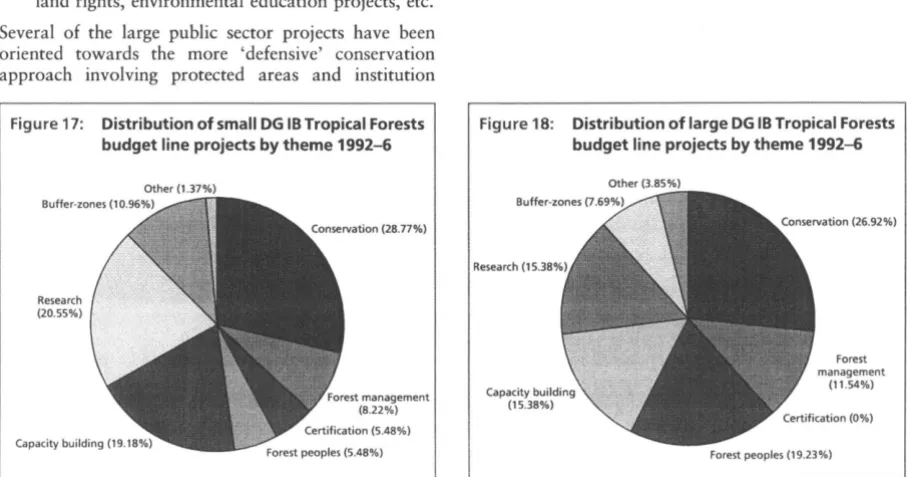
Table 8b depicts the position for the EC, where an even stronger focus on sustainable forest management, conservation, buffer zones and the like can be observed, together with some interesting funding for forest peoples, certification and timber issues.
(Source: Sourcebook chapters)
8.
PROJECT CYCLE MANAGEMENT
management and protected area management - blue-print projects have constrained timely and innovative responses to challenges as they appear. The response of most donors in Europe has been to adopt the logical framework approach to project planning, which sets clear objectives, but allows evolution and adaptation of the means by which they are reached, and the indicators which will be used to monitor progress.
Objectives-Oriented Project Planning (ZOPP) is closely associated with Germany, and has been used there since 1983. The methodology has been adapted to fit the needs of a variety of other countries, the UK using TEAM-Up, Belgium, Planification des interventions par objectifs (PIPO), and so on. Germany, and some of the other countries which have used the method for some time are already working on redesign to streamline and
PROJECT CYCLE MANAGEMENT • 19
simplify the process, and make it less costly, more flexible and a better communication and participation tool.
Others are only just beginning to adopt the method in all projects. They have found the EC Project Cycle Management Manuals (Commission of the European Community, 1993) of great value for materials devel-opment in their own countries. The Forest Sector Development Co-operation Guidelines (EC, 1996) are also beginning to be used and promoted, both inside and outside the Commission.
20 • EUROPE: AN OVERVIEW
9.
DONOR COMPARATIVE
ADVANTAGE
Europe's donors may be divided into three groups as far as their contributions to tropical forestry are concerned. The largest donors are Denmark, Finland, France, Germany, Netherlands, Sweden, UK, and European Community Aid. Belgium, Italy and Spain are medium-sized forestry donors, while smaller programmes of support are provided by Austria (since the end of its
Rainforest Initiative), Ireland, Luxembourg and
Portugal. Greece funds forestry almost entirely m ul til a terall y.
9.1 Research strengths
Universities which offer degrees in which tropical forestry forms all or a substantial part of the degree exist in the UK, Sweden, the Netherlands, Finland, France, Germany and Spain. A brief summary of some of the main areas of country research expertise for development, and the main regional foci for this research, are given in Box 3.
9.2 Other kinds of comparative advantage
The eighty three countries in which the Member States
currently fund aid programmes are tabulated in Annex I.
Member State and EC funding priorities, and thus the areas in which they are currently increasing their capacity and experience, are set out in Tables 8a and 8b.
There are a number of other general and specific areas of European comparative advantage worth mentioning here.
9.2.1 Colonial period experience
9.2.2
Europe's own experience of
people-forest interactions
A second factor of importance is the experience European countries can bring to forest-people interac-tions in the developing world. All have experienced forest loss, the generation of legislation to curb it, conflicts between local people and the State and the solutions adopted, and much is well-documented. Other experience is relevant here too. There is, for instance, a strong democratic and participative tradition in the Netherlands, fostered in the past by the village canal and dyke-management associations, which have been such an essential part of the country's survival.
Europe's most densely populated countries have had to incorporate many of their trees into farm landscapes. Less densely settled countries such as France have strong traditions of farmer and community manage-ment of patches of forest. Countries with more extensive forested areas such as Finland and Sweden have, in addition to these, complex systems of permits for forest use rights for non-timber forest products and hunting; shifting cultivation was still practised in some areas until the 1930s.
9.2.3
Specific skills
Some of the country chapters indicate highly specialised home-based experience- such as Austria's in the fields of ecologically friendly timber extraction on steep slopes; mountain hazard mapping, and the biological stabilisation of erosion and its prevention in mountain areas, for instance.
A few programmes offer specific implementation lessons. For instance, Ireland's support to a cluster of food security and environmental rehabilitation issues in Tanzania over a 1 0-18 year period, and its decade of support to forestry in the Sudan, offer an excellent example of a small donor with limited resources using them well in the natural resource arena. It achieved this by choosing only a few countries, by small, steady, long-term investments, and by a clear topic focus. The inputs have led to strong experience in drylands forestry.
9.3
Learning from programme experience
Donor funding has little meaning, however generous, if no efforts are made to draw the lessons of success and failure from what is funded: they are the only means by which the link between the implementation of field projects and global-level policy processes can be forged. Ideally, field projects are the testing ground for new ideas and approaches, and the results, like research results, are made public and can affect policy in due course. But this does not always happen in every case.
However, feedback mechanisms have been improving steadily in many of the Member States. Logical frame-works and the objectives-oriented planning process have been in use for several years. The result has been robust process project methodologies which facilitate better monitoring and evaluation practice, and lead to better outcomes. The production of Guideline docu-ments has been excellent in several countries and within the Commission itself. On the evidence from the individual chapters in this book, one of the most illuminating mechanisms for learning has been the comparative reviews undertaken by donors from time
DONOR COMPARATIVE ADVANTAGE • 21
to time, where a selection of completed projects are examined. Usually only the bigger donors have the resources to conduct these commendably frank reviews, but the insights they yield are important for everyone working in tropical forestry. Box 4 gives some examples of these.
9.4
The contribution of the European
Community
The European Community's comparative advantage in tropical forestry is potentially immense. It has sub-stantial financial resources, and aid delegations all over the world. That its ability to deliver high quality aid in the forestry sector has limitations is to do with 'the rapid build-up of aid funds in the early 1990s, unmatched by an adequate increase in technical or administrative support. Nevertheless, there have been some important achievements.
DG Vlll has made great progress in recent years in developing a strategic orientation for the Tropical Forestry budget line. Its increased funding for policy studies has been valuable (e.g. a paper on logging in the Congo basin by Pacific rim countries) and has heigh-tened the budget line's profile. Work on certification and on the operationalisation of the EU commitment to complementarity, coordination and coherence are also important. Finally, the recently produced Forest Sector Guidelines are being widely used.
DG ffi's strategy for the future is to programme its share of the Tropical Forest budget line in more detail, concentrating more on participation, natural forest management, and trade and certification issues, and less on conservation. More consideration of equity issues may lead to a wider selection of countries for funding in Asia and Latin America in future.
DG XI, too, is planning the development of a forestry strategy by the end of 1998. It has so far mostly funded small forestry and environment projects, many in the Amazon, on civil society issues.
Research funded from DG XII currently lacks a tropical forestry research strategy to focus limited funds more effectively. A recent evaluation highlighted the problems of overloaded staff, with no time to assist with project preparation, or build links to other forestry funders in the Commission. It also noted the many research problems caused by financial delays.