1
Wheat Inflorescence Architecture
Julian Greenwood
July 2017
A thesis submitted for the degree of Doctor of Philosophy at the Australian National University
Title and declaration
2
Statement of authorship
The research carried out in this thesis was conducted at the Commonwealth Scientific and Industrial Research Organisation (CSIRO) department of Agriculture & Food between March 2014 and July 2017 with support from the Australian National
University (ANU). I declare that this submission is my own work, and to the best of my knowledge contains no material previously published or written by another person nor material which has been accepted for the award of any degree or diploma of a university or other institution of higher learning except where due acknowledgement has been made.
3
Acknowledgements
Thank you to Kerrie Ramm and Scott Boden who taught me the bulk of my basic laboratory skills. Without your support in the lab none of what follows would have been possible. You are both fantastic scientists and generally just good people.
I would also like to thank Jose Barrero, Frank Gubler, Brett Ford, Sandra Stops, Tanya Phongkham, Trijntje Hughes, Jessica Hyles, Saul Newman and Ming Luo for all your general support, conversation and smiling faces in the lab. Special thanks to Jean
Finnegan for your support, enthusiasm and sour dough starter. Thank you to John Evans who always made me feel relaxed. Thanks to Carl Davies for your excellent
photography.
My research supervisors at CSIRO, Steve Swain and Ben Trevaskis possess a wealth of knowledge that I drew on frequently. I have learnt so much from them both. Despite you both having very busy schedules, you would always take the time to discuss things with me and see how I was doing. I was lucky to have you as supervisors and CSIRO is lucky to have you also.
The best thing about staying in your home town to do a PhD is that you have your family close by. Thank you all for being there for me. We don’t get to choose our families so it’s a blessing that you are all such lovely people.
Timo, I have never had another brother but I am certain they do not come better than you. You are the best thing that Mum and Dad have given me, though I did not yet exist when you were born. I hope my appreciation for you goes without saying because I don’t, and cannot thank you enough.
To my parents who brought me into this world. You have provided me with everything I could ever need and more. Without you, I can assuredly say, I would not exist nor would I have been able to do so many of the things I love.
4
Publications and presentations
Publications
Equal first author, currently under review at Plant Cell: Dixon, L; Greenwood J. et al.
TEOSINTE BRANCHED1 is a key regulator of inflorescence architecture and development in bread wheat.
First author, article accepted April 2017: Greenwood, J. et al. New alleles of the wheat domestication gene Q reveal multiple roles in growth and reproductive
development. Development (2017).
Co-authorship: Boden, S. A. et al. Ppd-1 is a key regulator of inflorescence architecture and paired spikelet development in wheat. Nature Plants 1, 10.1038/nplants.2014.16 (2015).
Conferences
Invited Speaker: Combio, Brisbane, Australia, October 2016 Novel trait induction in elite wheat varieties
Invited Speaker: EPSO/FESPB Plant Biology Congress, Prague, Czech Republic, June 2016 Novel trait induction in elite wheat varieties
Invited Speaker: CSIRO ‘Developing crops of the future workshop’, Kiama, Australia, April 2016 Novel alleles of the major wheat domestication gene Q
6
Table of Contents
Title and declaration ... 1
Statement of authorship... 2
Acknowledgements ... 3
Publications and presentations ... 4
Publications ... 4
Conferences ... 4
Abbreviations ... 10
Abstract ... 11
Chapter 1 - Introduction ... 12
Background ... 13
The grass inflorescence ... 13
Vegetative branching influences the number of inflorescences per plant... 13
The structural components of the grass inflorescence ... 14
Elongation of internode tissue influences architecture ... 14
The wheat inflorescence is distinct from rice and maize ... 16
Rice inflorescence ... 16
Maize inflorescence ... 16
Wheat inflorescence ... 17
Comparing the major grass crop inflorescences ... 17
The architecture of the grass inflorescence is controlled by meristem development and transition ... 20
Floral transition and rate of development in wheat are controlled through environmental integrators ... 25
Photoperiodic control of floral transition ... 26
Temperature influences floral transition and development ... 27
Genetic control of inflorescence architecture ... 29
Spikelet determinacy ... 29
miRNA regulation and inflorescence development ... 30
Floral transition is promoted by floral meristem identity genes ... 31
Conserved gene families across grass species allows for elucidation of general floral transition mechanisms ... 31
Regulation of inflorescence/rachis branch formation ... 33
Thesis outline ... 35
Thesis layout ... 36
7
Sterilisation, germination and planting ... 38
Growth conditions ... 39
Wheat cross pollination ... 39
DNA extraction ... 40
PCR ... 41
Taq polymerase PCR ... 41
High fidelity PCR ... 42
Sequencing PCR ... 42
Colony PCR ... 42
qPCR ... 43
Agarose gel electrophoresis ... 43
PCR Gel Extraction ... 44
Electroporation Transformation ... 44
Ligation of PCR product into pGEM-T Easy prior to sequencing ... 45
Preparing sequencing PCR product for sequencing submission ... 45
Tissue harvesting/ RNA extraction/ cDNA synthesis/ Expression analysis by qPCR 46 Additional materials and methods ... 47
Chapter 3 - Genetic control of inflorescence branching ... 48
Introduction ... 49
Previous work relating to branched inflorescence architecture ... 52
Results ... 56
Additional Brachypodium FZP mutants display delayed spike emergence and floral development ... 56
Previous work relating to paired spikelet formation in wheat ... 59
Misregulation of wheat floral transition genes leads to a unique branching phenotype known as paired spikelets ... 63
High branching 0053 has increased expression of TB1 and reduced expression of floral promoting genes compared to its low branching sibling ... 66
Overexpression of TaTB1 causes paired spikelet formation ... 68
Discussion ... 79
Comparative genomics to identify inflorescence branching genes ... 80
Environmental sensing modulates inflorescence development and floral transition ... 80
Paired spikelets appear to be developmentally distinct from rachis branches ... 81
Increased copies of TB1 promote paired spikelet formation ... 85
What are the consequences of TB1s direct interaction with FT ... 86
8
Unifying inflorescence branching and paired spikelet formation ... 89
Summary ... 92
Chapter 4 - New alleles of the wheat domestication gene Q reveal multiple roles in growth and reproductive development ... 93
Introduction ... 94
Results ... 94
Discussion ... 95
Modification of the AP2 transcription factor Q, or its downstream gene targets could refine yield traits... 95
The allelic series of Q indicates that alternative Q allele variants may be better suited for use in elite wheat cultivars ... 95
Alternative dwarfing pathways ... 96
Wheat hybrid development ... 98
Modified protein levels in gain-of-function Q have recently been reported ... 99
Modifying spikelet determinacy in wheat ... 100
Improving our understanding of the Q developmental pathway ... 101
Summary ... 103
Chapter 5 - Novel gene discovery ... 104
Introduction ... 105
Having the right material can simplify gene discovery ... 106
RNA sequencing ... 108
Exon capture... 109
Results ... 110
The late flowering mutant 1006 ... 110
Selecting tissue and harvest time ... 116
RNA sequencing and data analysis ... 117
Current analysis ... 118
Future analysis ... 120
Near isogenic awn/awnless material ... 121
Uncovering the causal gene B1 ... 122
Exon capture, RNAseq or Chromosome sorting ... 123
Discussion ... 124
Positional information removes bioinformatic complexity ... 124
SNP discovery does not require separation of reads into three genomes but expression analysis does ... 124
9 The awn/awnless B1 alleles are present in breeding material and mapping
populations ... 126
Exploiting natural diversity for genome wide association studies ... 126
Summary ... 127
Chapter 6 – General discussion ... 128
Mutagenesis is a powerful tool for elucidating gene function in wheat ... 129
Environment is a powerful tool for studying inflorescence development ... 131
A complex network controlling floral transition and inflorescence development 132 Altering inflorescence architecture ... 136
Inflorescence architecture and yield potential... 136
Closing statement ... 138
References ... 139
10
Abbreviations
bp base pair
CTAB Cetyl trimethylammonium bromide DNA deoxyribonucleic acid
dNTP deoxynucleoside triphosphate
EDTA ethylenediamine tetra-acetic disodium salt
h hours
IPTG isopropyl-C-D-thiogalactoside kb kilobase-pairs
LB Leuria-Bertani medium (in methods) low branching in chapter 3 min minute(s)
miRNA microRNA mRNA messenger RNA
PCR polymerase chain reaction
RACE rapid amplification of cDNA ends RNA ribonucleic acid
RNAi RNA interference RNase ribonuclease
RT-PCR reverse transcriptase polymerase chain reaction qRT-PCR quantitative real time polymerase chain reaction
qSL-PCR quantitative stem-loop real time polymerase chain reaction TBE Tris-borate-EDTA
TE Tris-EDTA
UV ultraviolet
11
Abstract
The development of the wheat inflorescence, or spike, determines the number, size and shape of grain produced. Altering spike development has the potential to increase grain yield to support increasing global demands. Despite the importance of this specialized structure, little is known about the genes which underlie its development and thus contribute to grain output.
Yield potential in wheat can be modified by numerous developmental outcomes. The number of vegetative branches, known as tillers determines the number of spikes per plant. Similarly, the number of nodes within the spike determines the number of grain bearing structures called spikelets. Increasing the number of spikelets per node in the form of branching further increases yield potential. Finally, the fertility of florets, which are the grain bearing units found within spikelets determine the number of grain set. Optimising these inflorescence structures is key for maximising yield potential in wheat.
The important floral regulators, PPD-1 and FT positively regulate floral transition and influence the rate of floral development. Increased expression of PPD-1 leads to increases in FT expression and promotion of floral development. We have shown that loss-of-function mutations in both PPD-1 and FT contribute to a reduction in expression of floral meristem identity genes, a delay in flowering, an increase in nodes within the inflorescence and the production of a unique form of inflorescence branch called a paired spikelet.
The important maize domestication gene TB1 is responsible for a reduction in vegetative branching and the single stem structure of modern maize. We show that increased copies of wheat TB1 reduce vegetative branches known as tillers as well as increase paired spikelet formation in wheat. We propose that TB1 interacts with FT in the inflorescence causing a similar reduction in meristem identity genes as we observed in FT and Ppd-1 mutants.
The wheat domestication gene Q, an AP2 transcription factor, is one of only a handful of genes which is known to directly influence spike development in wheat. We have identified a novel gain-of-function mutation of Q which confers resistance to miR172, a microRNA that typically targets AP2 transcripts for degradation. We show that
increased Q levels are associated with several phenotypes including, delayed flowering, the formation of ectopic florets in place of glumes, the formation of paired spikelets and a reduction in internode elongation throughout the plant. AP2 transcription factors are reported to delay flowering in other plant species. Increased expression of Q is therefore the likely cause of a delay in flowering time and the formation of paired spikelets not dissimilar to what we observed in loss-of-function mutations of FT and PPD-1. Taken together our results highlight a complex network of genes which regulate the number of grain producing units contributing to wheat yield. Many more genes
13
Background
Globally, three major grass crops; rice, wheat and maize, provide around sixty per cent of the total calories consumed by humans (FAOSTAT, 2014). These cereal crops have all been selectively bred to maximise grain number and/or size within the flowering portion of the plant, the inflorescence. A combination of genetics, breeding programs, and improved farming practices have contributed to significant increases in agricultural yields over the past 50 years (Slafer, 2003, Hedden, 2003). Over the last decade it has become increasingly clear that the current rate of increase in cereal productivity will be insufficient to keep up with growing demands especially in light of climate change trends (Bassu et al., 2011). Defining the yield of crop species are the developmental processes that determine the functional components of the plant. In the case of cereals this includes the grain bearing inflorescence. An improved understanding and
subsequent exploitation of the genetic factors influencing development processes in crop plants has the potential to contribute to significant increases in yield. This thesis will explore some of the genetic factors which influence inflorescence development in wheat and how best to uncover new gene function.
The grass inflorescence
Vegetative branching influences the number of inflorescences per plant
14
The structural components of the grass inflorescence
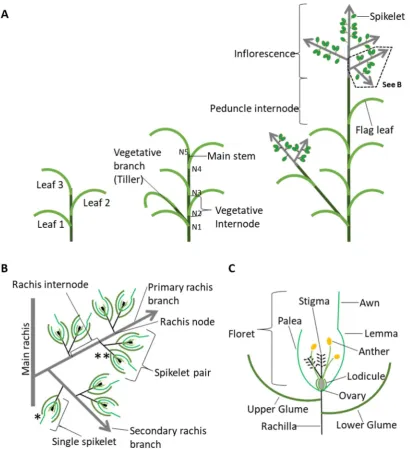
The grass inflorescence is made up of a combination of stems known as rachises which feature a series of nodes (rachis nodes) either bearing additional rachis branches or a shorter branch type known as the spikelet. Spikelets are grass specific floral structures which contain florets and the reproductive structures necessary for grain production
Figure 1.
Spikelets form either singly or in pairs, known as paired spikelets. The spikelet, features two sterile bracts known as glumes at its base, which are followed by a series of one or more florets. Each floret has a pair of bracts, the lemma and palea, which enclose the sexual organs. Each floret has the potential to bear a single grain. Variations in branching, the number of spikelets and their arrangement, and finally the number of florets per spikelet lead to the structural diversity of the many types of grass
inflorescences Figure 1. (Doust, 2007, Kellogg, 2006, Perreta et al., 2009, Kellogg, 2007)
Elongation of internode tissue influences architecture
15
16
The wheat inflorescence is distinct from rice and maize
The heavily cultivated grass crops, rice, maize and wheat, differ significantly in their
inflorescence structure. Not surprisingly, phenotypic and genetic differences place these
three species in separate subfamily groups (Gaut, 2002) sharing a common ancestor
some 70 million years ago (Salse et al., 2008).
Rice inflorescence
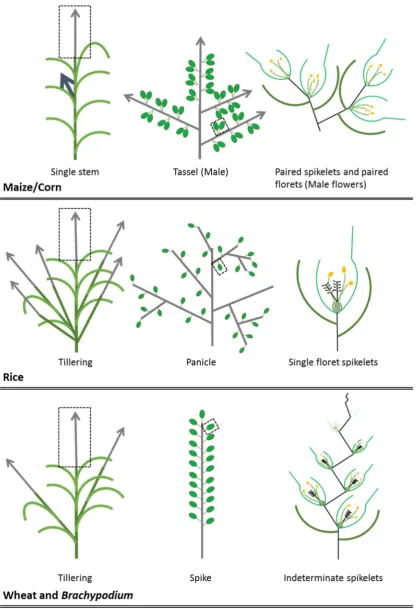
The rice inflorescence, or panicle, has a central inflorescence axis that aborts after the
production of several primary branches, which potentially bear secondary and then
tertiary branches etc. All rachis branches bear several single spikelets, with each
spikelet containing a single floret Figure 2. (Kellogg, 2007)
Maize inflorescence
Maize produces two distinct types of inflorescences: ears containing feminised flowers
that produce grains, and tassels that produce pollen. Ears produce many short primary
branches comprised of two spikelets, each containing a single developed floret. These
‘spikelet pairs’ are arranged in a spiral along the main inflorescence axis to generate
many grains, or kernels in the typical cob shape of the ear. The tassel inflorescence
consists of a central inflorescence axis with several long branches typically forming
from the base of the inflorescence. Spikelet pairs cover the apical portion of the main
rachis and primary rachis branches with each spikelet containing two male florets
17
Wheat inflorescence
The wheat inflorescence or spike does not produce primary inflorescence branches. Instead the wheat inflorescence produces a series of spikelets in an alternating pattern on the main rachis before the main stem terminates in a single terminal spikelet. Additionally, the spikelets produced in wheat form an indeterminate number of florets unlike the fixed or determinate spikelets of rice and maize (Perreta et al., 2009). The model grass species Brachypodium bears an inflorescence which closely resembles that of wheat featuring terminal spikelets, spikelet indeterminacy and a single rachis Figure 2. (Kellogg, 2007)
Comparing the major grass crop inflorescences
Domesticated maize or corn forms a single stem with two unique inflorescence types. The tassel, bears spikelets arranged in pairs with each spikelet containing a pair of florets. In the case of the maize tassel, florets do not develop female reproductive components, instead acting to pollinate the second inflorescence type of maize, the cob. The maize tassel forms an indeterminate number of rachis nodes and therefore spikelets whereas the panicle of rice (excluding the central rachis) and spikes of wheat and Brachypodium feature terminal spikelets. The main central rachis of rice aborts instead
of terminating as a spikelet. Rice, wheat and Brachypodium all feature vegetative branching with multiple tillers each potentially bearing their own inflorescence. Spikelets in rice, like in maize, are determinate. In contrast to maize, the rice spikelet forms only a single floret and bears all necessary components for fertile grain
19
Figure 2 Schematic of vegetative (left), inflorescence (middle) and spikelet (right) structures of maize/corn, rice, and, wheat and Brachypodium. The names for
inflorescences of the grasses are based on their structure and are shown in the middle of each schematic series. Structures are coordinated by colour to match the labelling in
20
The architecture of the grass inflorescence is controlled by meristem
development and transition
Plant development is driven by groups of pluripotent cells called meristems. In the above ground portion of the plant, all additional organs and meristems (axillary
meristems) are derived from the first shoot apical meristem (SAM) (Pautler et al., 2013, Tanaka et al., 2013).
Sections of the SAM are portioned to form a repeating series of units, called phytomers (Moore and Moser, 1995). Each phytomer consists of an internode, and a node region that contains the leaf primordium and an axillary meristem. The development of certain tissue types in each phytomer (the leaves and axillary meristem derived structures) is restricted to certain regions of the plant. Development of the leaf primordium, the axillary meristem and internode tissue is under strict genetic control. In the vegetative portion of the plant, leaf primordia develop into adult leaves and axillary meristems will either remain dormant or form tillers. Within the inflorescence, leaf primordia are repressed and axillary meristems either form rachis branches or spikelet structures. The specific architecture of the grass inflorescence is controlled through the manipulation of
apical and lateral (axillary) meristem stages determining how and where certain
structures form. Meristems are often named for the type of structures they produce (e.g.
a grass meristem that gives rise to floral structures is called an inflorescence meristem)
21
Table 1 Meristem transition determines the number of branches, spikelets and florets in the inflorescence
Vegetative Meristem
(VM)
During the vegetative stage of development, leaves and axillary meristems are derived from cells of the shoot apical meristem. Leaf primordia are continually produced by shoot apical meristems and during the vegetative phase of growth these leaf primordia develop into adult leaves. Axillary meristems at this stage can be supressed or develop into tillers, which form their own series of leaves and axillary meristems like the original SAM. Eventually the apical meristems (main and tillers) receive signals to begin floral development. Figure 3
Figure 3 Shoot apical meristem of wheat with developing leaf primordia at basal nodes. At this stage of development, leaf primordia are developing and enlarged relative to the axillary meristems, which are suppressed. From the base of one leaf primordium to the base of the next leaf primordia is one phytomer unit. Apical nodes are too undeveloped to make out specific structures. Scale bar 200µm
Inflorescence Meristem
(IM)
22
Figure 4 Developing inflorescence of wheat during double ridge stage.
This is the first visual indication of a transition to inflorescence
development. This stage is called double ridge for the clear enlarging of the two ridges of the leaf primordia and axillary meristems (spikelet meristems). Compared to the vegetative shoot apical meristem, axillary meristems appear enlarged at double ridge. Within the developing inflorescence, development of leaf primordia is supressed and axillary meristems go on to form floral structures. Scale bar 200µm
Branch Meristem
(BM)
A branch meristem is essentially an axillary meristem that maintains the behaviour of an inflorescence meristem or floral SAM. Additional branch meristems or spikelet meristems form from the axillary meristems it defines. The process controlling whether an axillary meristem should branch or transition to a spikelet meristem is under strict genetic and environmental regulation. In wheat, the branch meristem is short lived or completely bypassed meaning rachises do not form at any node.
Spikelet Meristem
(SM)
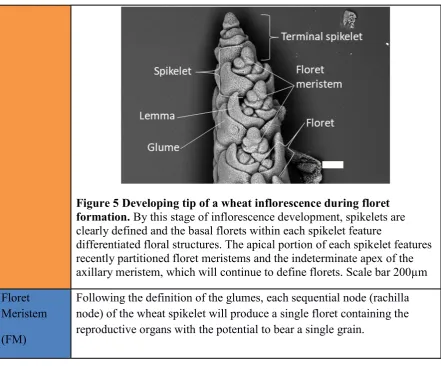
Once an axillary meristem has acquired spikelet meristem identity, the meristem will initiate the formation of spikelet structures, most notably a pair of leaf like bracts called glumes, which surround the subsequent floral organs. In wheat, the spikelet meristem is indeterminate and will continue to initiate floret meristems after the glumes are defined. Basal floret
23
Figure 5 Developing tip of a wheat inflorescence during floret formation. By this stage of inflorescence development, spikelets are clearly defined and the basal florets within each spikelet feature
differentiated floral structures. The apical portion of each spikelet features recently partitioned floret meristems and the indeterminate apex of the axillary meristem, which will continue to define florets. Scale bar 200µm
Floret Meristem
(FM)
Following the definition of the glumes, each sequential node (rachilla node) of the wheat spikelet will produce a single floret containing the reproductive organs with the potential to bear a single grain.
The diverse range of inflorescence architectures in different cereals is largely
determined by when and where branch meristems and inflorescence meristems
transition to spikelet meristems. In all grasses, axillary meristems are defined from a
subset of shoot apical meristem cells. Together, the identity or developmental stage of
axillary meristems and the apical meristem as well as elongation of cells between
24
The rice inflorescence is produced by three axillary meristem identities: branch
meristems produce the primary, secondary and tertiary branches, spikelet meristems
give rise to spikelets, and floret meristems produce the florets.
In maize four different types of axillary meristem identity give rise to this inflorescence:
branch meristems, spikelet pair meristems, spikelet meristems and finally floret
meristems. The production of ears and tassels in the same plant demonstrates that
changes in gene expression or activity can lead to changes in meristem identity and
branching that contribute to dramatic differences in inflorescence architecture.
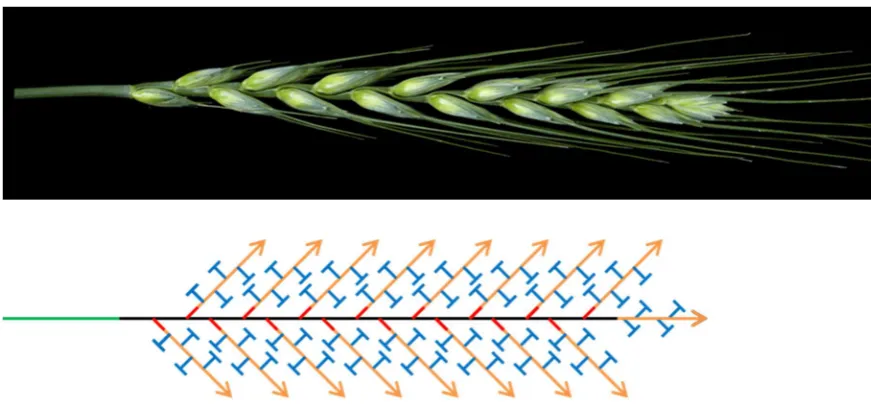
[image:24.595.112.548.442.647.2]Wheat transitions immediately through, or bypasses the branched meristem identity and thus the axillary meristems produce spikelets and florets on a single rachis. This occurs in an alternating phyllotaxy with the SAM eventually terminating in a spikelet (the terminal spikelet) which is rotated 90 degrees relative to the spikelets that have arisen from axillar meristems Figure 6. (Ciaffi et al., 2011, Perreta et al., 2009, Kellogg, 2007)
Figure 6 Wheat spike and schematic indicating the meristem states and their position in the developing Inflorescence. Vegetative, Inflorescence, Branch,
25
Floral transition and rate of development in wheat are controlled
through environmental integrators
A feature of many temperate plants is their ability to respond to their environment in a way that maximises their potential for setting seed/grain. In cropping systems, timing flowering to coincide with optimal seasonal conditions is essential for maximising yield. In wheat, several environmental sensors which modify flowering time have been utilised to tailor wheat varieties to specific growing regions (Trevaskis et al., 2007).
In wheat, a florally inductive signal which acts on the SAM, is required to transition from vegetative to reproductive development. The strength of the floral inductive signal affects the rate of inflorescence development and the number of floral organs deposited. Temperature, photoperiod and light quality (Gororo et al., 2001) all play roles in
26
Photoperiodic control of floral transition
The photoperiod dependent flowering pathway leads to flowering through interaction with the circadian clock of the plant and this is best understood in the model plant, Arabidopsis thaliana. In Arabidopsis the key circadian clock protein CONSTANS
(CO), when in the presence of light, up-regulates expression of FLOWERING LOCUS T (FT) (Kobayashi et al., 1999). FT protein moves from the leaves to the shoot apical meristem (Corbesier et al., 2007). In the apical meristem FT interacts with
FLOWERING LOCUS D (FLD) to activate the MADS-box floral meristem identity genes APETALA 1 (AP1) and LEAFY (LFY) (Abe et al., 2005, Wigge et al., 2005). FRUITFUL (FUL), another MADS box floral meristem identity gene, functions
redundantly with AP1 to drive floral meristem identity (Alvarez-Buylla et al., 2006). Many identified floral meristem identity genes are MADS box transcription factors which are not only required for the vegetative to floral transition but also to determine the correct formation of floral structures (Alvarez-Buylla et al., 2006, Chu et al., 2010).
The photoperiodic control of flowering in Arabidopsis and wheat is dosage dependant with flowering time being modulated dynamically under changing photoperiods. Short photoperiods result in low FT dosage and late flowering while increasing photoperiod will increase FT dosage and reduce flowering time (Mockler et al., 2003, Chen et al., 2014). Brachypodium shows a similar response (Ream et al., 2014).
Sensing photoperiod and acting upstream of CO in Arabidopsis is PSEUDO-RESPONSE REGULATOR7 (PRR7). In wheat, a close homologue of PRR7, PHOTOPERIOD1 (PPD1) functions in a similar manner (Shimada et al., 2009). In
27 Wilhelm et al., 2009, Díaz et al., 2012). Each of the gain-of-function PPD-1 mutations identified results in over expression of PPD-1, which in turn leads to increased
expression of FT and rapid flowering (Bentley et al., 2011). In contrast, loss of ppd1 and ft function leads to late flowering and inflorescence architecture defects (Boden et al., 2015). The gain-of-function PPD-1 alleles have been incorporated in what are known as photoperiod insensitive wheat varieties where accelerated flowering is observed (Beales et al., 2007, Shaw et al., 2012). Although other wild or photoperiod sensitive PPD-1 homeoalleles can be present in these varieties the flowering time effect contributed by photoperiod sensitive homeoalleles is minor compared to the strong gain-of-function alleles (Wilhelm et al., 2009, Beales et al., 2007, Shaw et al., 2012).
Close homologues of some photoperiod pathway genes described in Arabidopsis are present in grass crop plants but not all share similar functions. Unlike in Arabidopsis and wheat, the rice orthologue of CO acts as an activator of the rice FT in short days and as an inhibitor in long days (Itoh et al., 2010). Maize is descended from the short-day grass Teosinte. However, modern corn varieties have been bred to be mostly photoperiod insensitive, tailoring their flowering time to modern cropping systems (Bortiri and Hake, 2007). Because responses to photoperiod can differ greatly between species it is best to consider the photoperiodic control of flowering within individual species.
Temperature influences floral transition and development
As well as photoperiod, flowering in Arabidopsis and temperate grasses including many wheat varieties, is strongly regulated by exposure to cold (vernalisation) (Trevaskis et al., 2007). The photoperiod and vernalisation pathways are well characterised in
Arabidopsis and similar pathways are present in wheat (Turck et al., 2008, Distelfeld et
28 development and this requirement can only be overcome by very long periods under other floral promoting conditions like long days (Yan et al., 2003). Like photoperiod effects, the vernalisation response is dosage dependent. The longer the plant has spent in cold conditions, the greater the reduction in flowering time (Murai et al., 2003, Alonso-Peral et al., 2011).
Vernalisation insensitivity, seen in spring type wheat, is the result of expression of VERNALISATION1 (VRN1) in the absence of vernalisation. Increased VRN1 expression
can be achieved through insertions or deletions in the promoter region or first intron of VRN1 (Trevaskis, 2010, Yan et al., 2004). In winter wheat varieties, VRN1 expression is
increased under cold conditions resulting in negative regulation of VERNALISATION2 (VRN2).. VRN2 acts to repress FT until vernalisation has occurred, so in the absence of
repression by VRN2, FT can promote flowering (Li and Dubcovsky, 2008). The spring wheat habit can also be brought about by loss-of-function mutations in vrn2 (Bonnin et al., 2008, Distelfeld et al., 2009). VRN1 also acts as a floral meristem identity gene and is promoted by FT as well as exposure to cold (Li and Dubcovsky, 2008). Therefore, VRN1 expression can also be activated by the photoperiod pathway in an FT dependant
manner (Preston and Kellogg, 2007, Li and Dubcovsky, 2008, Trevaskis et al., 2007). FT is considered a floral integrator as it can be activated by both the photoperiod and
vernalisation pathways to promote flowering.
29
Genetic control of inflorescence architecture
In wheat, Brachypodium and rice, a range of environmental factors and florigens (like FT) determine the strength of floral inductive signals which then influence inflorescence
architecture. For example reductions in floral inductive signals lead to the formation of more rachis nodes and thus inflorescences bear more branches and/or spikelets (Zhang and Yuan, 2014, Rahman and Wilson, 1977, Rahman and Wilson, 1978, Ream et al., 2014). Besides these broad stroke type of influences, there are many other genetic factors, which when modified, can further alter meristem identities and maintenance, and ultimately, inflorescence architecture. These genetic factors can drastically change the numbers of, or types of inflorescence structures produced. Although inflorescence architectures between the grass crops are highly variable, often genes responsible for developmental changes in one species will be part of a similar developmental pathway in another species. Given the complexity of the wheat genomes, identifying mutants initially in rice, maize and Brachypodium can help us to identify potential gene targets in wheat.
Spikelet determinacy
One key aspect differentiating the wheat spike from other inflorescence forms is the presence of an indeterminate spikelet. Several mutants with altered spikelet determinacy have been generated in rice and maize (Laudencia-Chingcuanco and Hake, 2002,
Gallavotti et al., 2010, Lee et al., 2007). In maize, mutants of APETELLA2-like (AP2-like) genes INDETERMINATE SPIKELET 1(IDS1) and SISTER of INDETERMINATE SPIKELET 1 (SID1) lose spikelet determinacy, producing a spikelet more similar to that
30 grasses (Lauter et al., 2005, Varkonyi-Gasic et al., 2012, Brown and Bregitzer, 2011, Lee et al., 2014, Zhu et al., 2009).
miRNA regulation and inflorescence development
miRNAs are genomic encoded sequences which when transcribed are processed to generate short RNAs 21-24 nucleotides long (Chen, 2008). miRNAs act to regulate expression of their target genes by binding complementary sequences of gene transcript. Transcript is then targeted by an RNA-induced silencing complex. Once bound by the proteins in the silencing complex, miRNA targeted transcript can be either degraded or translation can be repressed by interference with the translational machinery (Zhang et al., 2006). Either outcome results in specific down regulation of a gene or class of genes. The plant specific miRNAs, miR172 and miR156 have both been implicated in regulating floral transition and inflorescence development (Jung et al., 2011). miR172 is broadly thought to act as a floral promotor whereas miR156 acts as a floral repressor (Lee et al., 2014, Jiao et al., 2010, Jung et al., 2014, Wu et al., 2009). Floral promotion by miR172 acts via repression of AP2s, which reduces their ability to antagonise flowering. miR156 negatively regulates SQUAMOSA PROMOTER BINDING PROTEIN-LIKE (SPLs) preventing them from promoting miR172 expression (Wu et al., 2009, Yu et al., 2012). Expression of miR156 is believed to decrease with the age of the plant, allowing for floral promotion by (Spanudakis and Jackson, 2014). The rice AP2-like genes OsINDETERMINATE SPIKELET 1 (OsIDS1) and
OsSUPERNUMERARY BRACT (OsSNB) inhibit flowering by negatively regulating FT
(Lee et al., 2014). SPLs, AP2s and their regulatory miRNA appear to make up a
31
Floral transition is promoted by floral meristem identity genes
MADS box genes play key roles during many stages of development including the definition of floral meristem identity (Fornara et al., 2004, Kobayashi et al., 2010, Kobayashi et al., 2012). In rice, OsMADS18 is expressed highly in meristems, and overexpression induces accelerated growth of axillary shoot meristems and early flowering (Fornara et al., 2004). OsMADS18 shares close homology toOsFUL1 and other MADS box transcription factors which have been shown to have very similar
overlapping functions in determining floral meristem identity (Kobayashi et al., 2012).
In rice, RNAi targeting of OsMADS18 transcript showed no noticeable phenotype, suggesting functional redundancy with other rice MADS box genes (Fornara et al., 2004). Triple knockdown of OsMADS14, 15 and 18 in a PANICLE PHYTOMER 2
(OsPAP2) mutant resulted in severe flowering defects where the most severely affected transgenic lines were unable to transition from a vegetative to an inflorescence meristem (Kobayashi et al., 2012). Based on the severe flowering defects seen in the transgenic lines, OsMADS14, 15, 18 and PAP2 are all likely be inflorescence meristem identity genes required for the vegetative to inflorescene phase transition.
Conserved gene families across grass species allows for elucidation of general floral transition mechanisms
The photoperiod and vernalisation responses of temperate grasses like wheat, barley and Brachypodium are well described (Shaw et al., 2012, Beales et al., 2007, Casao et al.,
2011, Ream et al., 2014). Based on conserved gene families in rice, maize, Arabidopsis, Brachypodium and wheat (Tanaka et al., 2013, Wang et al., 2015, Zhang and Yuan,
2014, Spanudakis and Jackson, 2014, Jung et al., 2014), we can expand on the
32
Figure 7 A general model of floral activation and regulation in temperate grasses.
33
Regulation of inflorescence/rachis branch formation
The AP2 ETHYLENE RESPONSE (ERF) transcription factors BRANCHED SILKLESS1 (BD1) in maize, and FRIZZY PANICLE (FZP) in rice, are required for the timely
transition of axillary meristems from branched/inflorescence to spikelet meristems. In bd1 mutants, the maize tassel produces extra branches but is eventually able to produce
a spikelet and determinate number of florets at the apex of each branch (Chuck et al., 2002). In rice, FZP produces a similar phenotype when mutated, but unlike maize bd1, severe mutant alleles of fzp are completely unable to transition from branch to spikelet production (Komatsu et al., 2003). Less severe alleles of fzp behave more like bd1 producing some spikelets (Komatsu et al., 2003). In comparison to the tassel, the ear of bd1 completely fails to acquire spikelet meristem identity (Chuck et al., 2002), a
consequence of differentially regulated inflorescence determining genes in the tassel compared to the ear of maize.
The AP2-like genes, OsIDS1 and SNB have been shown to act together to inhibit the expression of FZP thus regulating inflorescence branching in rice (Lee and An, 2012). In wheat, the production of secondary and higher order branching is rarely seen. This would suggest that a strong block on branching exists, perhaps as a consequence of multiple genetic copies of the wheat FZP orthologue.
34 they act to define spikelet meristem identity. Mutations in any of the RAMOSA pathway genes lead to inflorescence branching similar to bd1 mutants (Gallavotti et al., 2010, Vollbrecht et al., 2005, Satoh-Nagasawa et al., 2006, Bortiri et al., 2006).
A close homologue to REL2, ABERRANT SPIKELET AND PANICLE1 (ASP1) has been described in rice with asp1 mutants displaying numerous floral defects, reduced
branching and precocious spikelet formation (Yoshida et al., 2012, Ikeda-Kawakatsu et al., 2012). Both REL2 and ASP1 share homology with the Arabidopsis gene TOPLESS1 (TPL1). TPL1 has been shown to act as a transcriptional co-repressor by recruiting histone deacetylation complexes (HDAC) which negatively regulate transcription via chromatin modification (Krogan and Long, 2009). Inhibiting HDAC mimics the phenotype of the asp1 mutant suggesting that ASP1 may function similarly to TPL1 (Yoshida et al., 2012).
35
Thesis outline
In the case of most cereal crops, basic developmental research is progressing faster than ever before thanks in part to improvements in, and accessibility to genetic sequencing tools and online databases sharing newly acquired genetic information. In comparison to research in the other cereal crops where many novel genes affecting yield traits have been elucidated, wheat research has progressed more slowly. This is not to say that selection for elite yield traits in wheat is not occurring, but often the specific genes responsible for controlling traits are not being identified at a sequence level. A lack of basic genetic knowledge exists in wheat due, in part, to the large hexaploid genome of bread wheat, and large tetraploid genome of durum or pasta wheat. Additionally, a proportion of the wheat genome consists of highly repetitive regions making the assembly of an accurate, continuous reference genome sequence technically difficult and too expensive for most small research budgets.
Although there are difficulties with working in a polyploid species like wheat, it is important that we understand the basic genetic control of yield traits within each crop species. An understanding of basic gene function will allow us to direct yield increases through targeted breeding incorporating new alleles of yield determining genes. An improved understanding of inflorescence development genes will unlock potential to subtly manipulate these genes to maximise yield outcomes in different growing regions.
36 potential genetic targets in which allelic variation could be introduced to enhance grain production in wheat.
Thesis layout
Chapter 3 will explore the genetic control of inflorescence branching in wheat. Figure 7 highlights that PPD-1 regulated expression of FT is necessary to drive the floral
transition of the meristem. Using mutants of Brachypodium and wheat we show that changes in expression or function of PPD-1 and FT can modulate inflorescence branching. We show that transgenic wheat overexpressing TaTB1 also leads to increased branching. Our work in wheat relating to PPD-1, FT and TB1 has been published or is currently under review for publication. You can find these articles in the appendix section.
Chapter 4 looks at the function of the major wheat domestication gene Q, an AP2 transcription factor on chromosome 5A that in its domesticated form influences spike compaction, flowering time and grain separation from the spike at harvest. This chapter explores previously undescribed roles for Q in inflorescence development and the regulation of Q expression via its miR172-binding site. This work has been published and makes up the results section of this chapter. The published article can be found in the appendix section.
Chapter 5 uses two examples of wheat inflorescence phenotypes (one mutant and one a natural variant allele) with unknown genetic cause to describe the potential for
38
Sterilisation, germination and planting
All wheat grain was harvested from mature, dry plants. Grain was removed from the wheat spike and cleaned by hand to prevent cross contamination of individual lines. After harvest, grain was ‘after ripened’ by storing at 37°C for 1-2 weeks to ensure uniform germination.
Grain were planted around 3cm deep in ‘wheat special’ soil mix, prepared by the CSIRO potting shed. No sterilisation was required when planting grain directly in soil. For detailed phenotyping and other experiments, plants were grown in native tube pots (12cm tall 300ml pots). Plants grown for mutant screening were either planted in rectangular wooden trays (60cm x 25cm) at high density, 48 or 96 plants per tray or grown in native tube pots. For all planting, better rates of germination and better plant health was achieved when soil was never allowed to sit in water. Once germinated, plants were watered enough to ensure that complete drying of soil would not occur. One gram of Mini Osmocote® fertiliser was applied per plant once the third leaf had
emerged. Growth conditions are detailed in next section.
Plants grown for DNA extraction were plated evenly spaced in petri dishes on filter paper allowing approximately 1cm between grains. Sterile water containing Thiram (concentration as per manufacturer’s instructions) was added to saturate filter paper and create a thin film of liquid above the paper; 4ml for a 10cm petri dish. Petri dishes were covered and sealed with Parafilm® to prevent evaporation. Plates were wrapped in foil and stored at 4°C for 48 hours before being transferred to 22°C to allow for
39 taken from seedlings or adult plants grown in soil. The highest quality DNA extractions were achieved from seedling leaf samples.
Growth conditions
The following cabinet growth conditions were used. Plants were grown in controlled conditions for phenotyping and RNA extraction experiments.
Photoperiod Main Lights Dark
12h 12h at 22°C 12h at 16°C
16h 16h at 22°C 8h at 16°C
Light intensity Measured at 420μM m-1 s-1 50cm below light source just above leaf
canopy.
Plants were also grown in temperature controlled glasshouse and polyhouse conditions (24°C Day and 18°C night) for bulking seed, large scale phenotyping and mutagenesis screening. Plants were also grown for bulking seed and mutant screening in outdoor conditions under wire cage to protect from birds.
Wheat cross pollination
40 from crosses did not produce plants with intermediate mutant phenotypes indicating that the crossing method successfully avoided self-pollination. Plants for crossing were sown three at a time, twice a week for three weeks to ensure cross over of mature floral development between lines to be crossed. Mature pollen was applied to WT heads 2-3 times over a period of 3-5 days to maximise the chance of successful pollination. After each application of pollen, spikes were covered with their wax paper bags and the cross was recorded. For second and third applications of pollen, this process was repeated using the same donor plant each time.
DNA extraction
Adapted from cotton leaf extractions method (See below). Both 96 well-plate or individual tube extractions were performed using the same reagents but different volumes, centrifuges and spin speeds. For tube samples, liquid volumes added were doubledand all centrifugation was performed in desktop a micro centrifuge at
maximum speed. Plate samples had volumes added as below and centrifugation steps were performed in large free standing or benchtop centrifuge at stated rpm with plate basket attachments.
41 standard freezer (approx. -20°C) for 10 mins before adding 150ul of
chloroform:isoamyl alcohol (24:1) and shaking or vortexing for 1min. Samples were centrifuged for 10 minutes at 2000rpm (plates) or 5 minutes (tubes) then supernatant was carefully removed to fresh storage plate or 2ml snap lid tube. An equal volume of isopropanol was added to each sample before mixing and centrifuging for 30 minutes at 3000rpm (plates) or 20-30 minutes (tubes). All liquid was decanted from samples by inversion and light tapping on paper towel leaving the DNA pellet. The pellet of each sample was then ‘washed’ with 200ul of freshly prepared 70% ethanol then centrifuged at 3000rpm for 20 minutes (plates) or 15-20 minutes (tubes) before removal of ethanol by decanting or pipetting. Plates and tubes were left to dry completely at room
temperature before adding 50ul of TE. DNA concentration of samples was assessed by spectrophotmeter (NanoDrop) and adjusted to a final concentration of 100ng/μl.
Cotton Lysis Buffer
Final concentration Add
0.1M Tris-Cl pH8 (1M
Stock) 20ml
1.4M NaCl 16.4g
0.02M EDTA pH 8 (0.5M
stock) 8ml
2% (w/v) CTAB 4g
2% (w/v) PVP40 4g
Water
to 200ml
Autoclave
PCR
Annealing temperatures in PCR protocols varied based on melting temperature of primer pairs.
42 Per 20μl reaction: 1μl 100ng/μl DNA, 2μl 10xThermopol buffer (NEB), 0.6μl DMSO, 0.8μl 5mM dNTPs (Promega), 1μl 10µM Forward Primer, 1μl 10µM Reverse Primer, 0.2μl Taq DNA Polymerase (NEB), 12.4μl sterile water.
95°C 2min, (95°C 30sec, annealing 30sec, 72°C 1min per kb) 40 repeats, 72°C 10mins, 4-10°C hold
High fidelity PCR
Per 20μl reaction: 1μl 100ng/μl DNA, 4μl 5xGC Buffer (NEB), 1μl 5mM dNTPs (Promega), 1μl 10µM Forward Primer, 1μl 10µM Reverse Primer, 0.6μl DMSO, 0.2μl Phusion Polymerase (NEB), 11.8μl sterile water.
98°C 30sec, (98°C 10sec, annealing 30sec, 72°C 20sec per kb) 35 repeats, 72°C 10min, 4-10°C hold
Sequencing PCR
Per 10μl reaction: 2μl of gel purified DNA (concentration variable), 1μl 3.2µM either Forward or Reverse Primer, 3.5μl Sequencing Buffer, 1μl Big Dye (Applied Biosystems) sequencing mix, 2.5μl water.
96°C 1min, (96°C 5sec, 50°C 5sec, 60°C 4min) 30 repeats, 4-10°C hold
Colony PCR
Per 20μl reaction: Colony touched with tip of 200μl pipette tip and tapped once on bottom of PCR tube, 2μl 10xThermopol buffer (NEB), 0.8μl 5mM dNTPs (Promega), 0.2μl Taq DNA Polymerase (NEB), 1μl 10 µM M13 Forward Primer, 1μl 10 µM M13 Reverse Primer, 15μl sterile water.
43
qPCR
Per 20μl reaction: 5μl cDNA sample, 2μl 10xPCR Reaction Buffer -MgCl₂ (Invitrogen), 1.4μl 50mM MgCl₂ (Invitrogen), 0.8μl 5mM dNTPs (Promega), 1μl SYBR Green (Invitrogen), 0.1μl Platinum Taq (Invitrogen), 2μl 5uM Forward and Reverse Primer mix, 7.7μl sterile reverse osmosis water.
Per 10ul Reaction: 5μl cDNA sample, 1μl 10xPCR Reaction Buffer -MgCl₂
(Invitrogen), 0.7μl 50mM MgCl₂ (Invitrogen), 0.4μl 5mM dNTPs (Promega), 0.5μl SYBR Green (Invitrogen), 0.05μl Platinum Taq (Invitrogen), 1μl 5uM Forward and Reverse Primer mix, 2.35μl sterile reverse osmosis water.
94°C 4min, (94°C 30sec, 55-62°C 15sec, 72°C 20sec (florescence acquisition)) 30 repeats, 40°C 2mins, 55-99°C (florescence acquisition for every °C)
Agarose gel electrophoresis
Gel was prepared to a concentration of 1% Agarose dissolved in 1xTBE. For visualisation of general PCR including Taq PCR and Colony PCR 1μl/50ml of
RedSafe™ was added to gel moulds immediately prior to pouring gel. For visualisation
of Phusion PCR which would be subject to band excision and gel extraction 2μl/50ml of RedSafe™ was added to gel mould immediately prior to pouring gel. Liquid Agarose
solution was stored at 50°C for up to one month. Loading dye was added to PCR
44
PCR Gel Extraction
DNA bands were excised using straight edged disposable razors taking a minimum amount of gel with product. Gel extraction was performed as per QIAGEN Gel
Extraction Kit protocol using all recommended and optional wash steps in a bench top microfuge. 30μl of Elution Buffer was used to elute bound DNA. Purified DNA was then stored at -20°C until ready for use.
Electroporation Transformation
XL1-Blue Competent cells suspended in glycerol were stored at -80°C and then
transferred to prior to transformation. 1-1.5μl of ligation reaction was added to XL1-Blue Competent cells. Cells were transferred to a clean cuvette kept cool on ice. Cuvette
was tapped to ensure contents were accumulated at the base then cuvette was placed in an electroporation device and shocked at 2200-2300V. 200-500μl of cold LB was added to cells in cuvette and then contents of cuvette were transferred back to original
eppendorf tube. After 1 hour incubation at 37°C cells were placed on selective media.
Cells to be selected on ampicillin were incubated for 15 minutes only.
For blue/white colony selection Eppendorf tubes were then placed in 37°C water bath for 15-30min. 50μl and 200μl of cell suspension were spread plated on Ampicillin plates each of which had been spread with 60μl X-gal [20mg/ml in dimethylformamide] and 6μl IPTG [0.8M] and allowed to dry before adding cells. Plates were sealed with Parafilm® then incubated overnight at 37°C. Plates were incubated overnight at 4°C
before selecting white colonies.
45 Plated agrobacterium was grown at 28°C for 48 hours before screening for
transformants.
Ligation of PCR product into
pGEM-T Easy
prior to sequencing
The A-overhang necessary for ligation into the pGEM-T Easy vector (Promega) was added to PCR product by combining 15.8μl of gel purified DNA to 0.2μl of Taq Polymerase, 2μl 5mM dNTPs, 2μl 10xThermopol buffer then incubating for 15min at
72°C. Ligation into pGEM-T Easy vector was prepared by combining 1μl pGEM-T Easy, 1μl T4 DNA Ligase (Promega), 5μl A-overhang product, 7μl 2xRapid Ligation
Buffer (Promega) then incubated for 1hr at room temperature followed by incubation overnight at 4°C.
Preparing sequencing PCR product for sequencing submission
46
Tissue harvesting/ RNA extraction/ cDNA synthesis/ Expression
analysis by qPCR
Meristems were harvested from the main stem of wheat plants at varying stages of inflorescence development/transition. Using a sterile razor blade approximately the top third of plant material was removed longitudinally from the area covering the apical meristem. Any remaining vegetative tissue was carefully removed to expose the meristem. Entire meristems were extracted without taking surrounding leaf tissue and then placed in 1.5ml or 2ml eppendorf tubes before immediately freezing in liquid nitrogen. Depending on the size of the apical meristems, 3-5 were harvested per tube to make one biological replicate. Stem tissue was harvested from the top 0.5cm of the peduncle internode immediately below the apical meristem. Tissue samples were stored at -80°C until needed.
Unless stated otherwise in our attached published materials and methods, RNA
extraction from plant tissue was performed using the Spectrum™ Plant Total RNA Kit (SIGMA-ALDRICH) as per manufacturer’s instructions. Prior to RNA extraction tissue samples were ground as per DNA extraction method and the entire contents of the tube was used in RNA extraction. Ball bearings were removed using a magnet after the addition and mixing with first buffer. RNA concentration was determined using Spectrophotmeter (NanoDrop).
cDNA synthesis was performed using SuperScript™ III First-Strand Synthesis (Invitrogen) as per manufacturer’s instructions for 20μl reaction. cDNA was diluted tenfold by adding 80μl of sterile water before being stored at -20°C.
47 publications. Expression levels were normalised to housekeeping genes and shown relative to expression levels of ‘Wild Type’ sample. qPCR was performed on at least 3 biological replicates per tissue and genotype. Significance of expression differences between mutant and ‘wild type’ lines was assessed using a homoscedastic, single tailed, student’s t-test.
Additional materials and methods
49
Introduction
The grass inflorescence takes many species-specific forms. Much of this variation can be explained by differences in inflorescence branching. The degree of inflorescence branching is determined by the transition of axillary meristems from a branch or inflorescence meristem identity to a spikelet meristem identity. If the axillary meristem maintains a branch meristem or inflorescence meristem identity it will behave as an inflorescence meristem forming its own rachis with axillary meristems that themselves form branches or spikelets. The archetypal single rachis inflorescence of wheat is distinct from its grass crop relatives, maize and rice which produce branched inflorescences in their tassel and panicle respectively.
Axillary meristems of wheat rapidly transition to spikelet meristem identity preventing the formation of secondary rachises or primary and higher order branches (Poursarebani et al., 2015). Many spikelets (usually around 20) form along the main rachis of the wheat spike but typically the inflorescence does not branch to form an additional rachis or ‘primary branch’. The model grass, Brachypodium distachyon has a similar
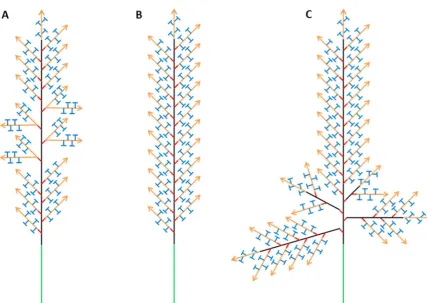
50 This chapter will investigate two forms of branching, the first a true inflorescence meristem branch in which an axillary meristem behaves similarly to the apical inflorescence meristem producing its own rachis with a series of axillary meristems which form branches or spikelets Figure 8, Figure 9; the second is the paired spikelet which we believe to be a unique form of branch where two spikelets form at a single rachis node in a distinct phyllotaxy Figure 8Figure 12. This chapter will build on unpublished and published data to better define inflorescence branching in wheat using wheat mutants, transgenic lines, Brachypodium as a model for the wheat inflorescence and the known genetic control of inflorescence architecture in other grass species.
Figure 8 Wheat spike schematics (A) Wheat spike bearing paired spikelets (B)
Archetypal wheat spike with single rachis and single spikelets (C) Branched spike with primary branches from the 1st, 2nd, 3rd and 4th rachis nodes (4 most basal nodes). The
various meristem states and their position in the developing Inflorescence, Vegetative, Inflorescence, Branch, Spikelet and Floral Meristems. The transition to each meristem stage and the formation of axillary meristems is under environmental and genetic control. Arrows represent indeterminate meristems which form an undefined number of structures (Spikelet Meristem) whereas ‘T’ symbols indicate that a meristem is
51 Several genes have been shown to affect inflorescence branching in the grasses. In rice, gain of function mutations of TAWAWA1 (TAW1) produce highly branched
inflorescences whereas loss of TAW1 function is associated with smaller less branched inflorescences (Yoshida et al., 2013). TAW1 appears to positively regulate SHORT VEGETATIVE PHASE (SVP) MADS-box transcription factors which are negative
regulators of spikelet meristem identity. At the same time, TAW1 negatively regulates expression of MADS-box transcription factors which themselves positively regulate spikelet meristem identity and spikelet organ formation. Thus, TAW1 appears to regulate the formation of branching by determining rates of meristem transition in a manner similar to FZP (Yoshida et al., 2013, Komatsu et al., 2003). TAW1 belongs to the ALOG gene family which is named after its earliest identified members
(Arabidopsis LSH1 and Oryza G1) (Zhao et al., 2004, Yoshida et al., 2009). The first described ALOG gene in Arabidopsis, LSH1, was shown to elicit developmental changes in a photoreceptor dependant manner (Zhao et al., 2004). However, the role of light quality or photoperiod in regulating branching in TAW1 has not been explored.
In maize, the RAMOSA transcription factors RA1, and RA2, together with RA3 (encoding a trehalose-6-phosphate phosphatase), positively regulate spikelet meristem determination and prevent the formation of long branches (Bortiri et al., 2006,
Gallavotti et al., 2010, Satoh-Nagasawa et al., 2006). Loss of function RA2 mutants feature disorganised inflorescences with higher degrees of branching and a reduction in paired spikelet formation (Bortiri et al., 2006). The maize ancestor teosinte initiates the development of a pair of spikelets but only one develops (Hubbard et al., 2002).
52 proportion of complete paired spikelets forming when the domestication allele of TB1 is crossed into teosinte (Doebley et al., 1995, Hubbard et al., 2002). Thus, the
development of paired spikelets in maize is influenced by TB1 but requires other genetic variation present in modern maize varieties before the vast majority of spikelet
meristems develop as pairs.
Previous work relating to branched inflorescence architecture
Here, in the introduction to this chapter, I will briefly describe work relating to my honours research which is not represented in the literature but precedes and contributes to the new results and discussion points of this chapter. During my honours year, I described in detail the phenotypes of the Brachypodium mutant MB71 which features a highly branched inflorescence. The mutation causal to the observed phenotypes was found to be a large insertion before the transcriptional start site of an AP2/ERF transcription factor (Derbyshire and Byrne, 2013). The AP2/ERF gene appears to be orthologous to FZP in rice and BD1 in maize, hereby referred to as BdFZP
(Brachypodium distachyon FZP). While (Derbyshire and Byrne, 2013) conclude that the insertion responsible for the phenotypes of MB71 results in decreased expression of BdFzp (80% of WT), I did not observe expression differences during the double ridge
53
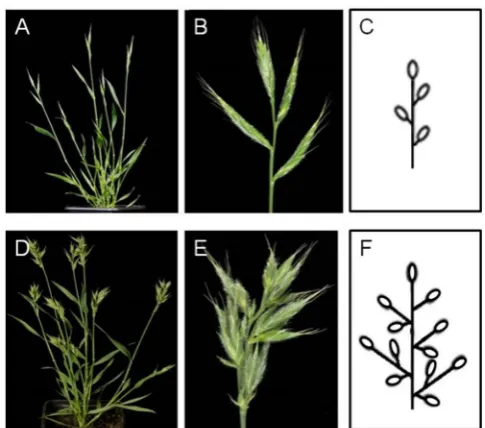
Figure 9 Bd21 and derived branched spike mutant MB71. (A) Bd21 whole plant.
(B) Close up of Bd21 spike with four spikelets. (C) Schematic of Bd21 spike showing single spikelets at each of the three rachis nodes and a single terminal spikelet. (D)
MB71 whole plant. (E) Close up of MB71 spike with multiple spikelets forming in branches off the main axis. (F) Schematic of MB71 spike showing the branching phenotype. Photos provided by Mary Byrne.
The branched inflorescence mutant MB71 was compared to its progenitor line Bd21
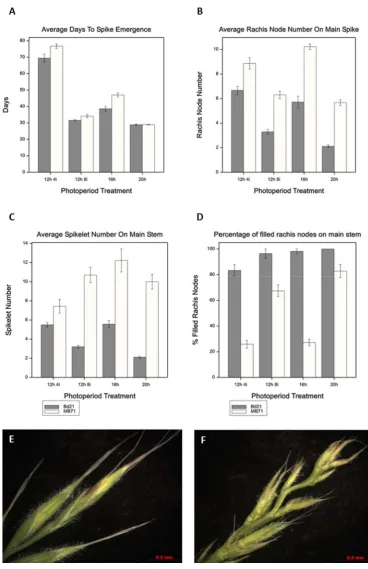
54 number Figure 10 B, as well as an increase in spikelet number Figure 10C. In MB71 multiple spikelets were present in branches at the basal rachis nodes whereas the apical rachis nodes were unfilled Figure 10 D, producing rudimentary structures but no complete spikelets, florets or grain. The number of spikelets per rachis node and the number of unfilled apical rachis nodes were increased in weakly inductive short day photoperiods (16h) compared to stronger florally inductive photoperiods (20h). Together these results indicate that loss of BdFZP function results in the delayed transition to spikelet meristem identity resulting in branched inflorescences and more rachis nodes on the primary axis of the inflorescence. A reduction in the number of filled rachis nodes under conditions which exaggerate these phenotypes (short days) indicates that there is a ceiling on the number of grain producing inflorescence
55
Figure 10 The branched spike Brachypodium mutant MB71 is delayed in
inflorescence development. (A) Days until main spike emergence (B) the number of rachis nodes on the main stem, (C) the number of spikelets on the main stem and (D)
the percentage of rachis nodes which were filled (spikelets present) on the main stem. Data is represented as the average with error bars representing standard error, n=10. X axis of figures indicates photoperiod length where h=daylight hours and i= length of incandescent light extension rich in far red light. (E) Main spike of Bd21 grown under 16 hour days just after spike emergence. (F) Main spike of MB71 grown under 20 hour days just after spike emergence showing delayed developmental stage of MB71
56
Results
Additional BrachypodiumFZP mutants display delayed spike emergence and floral
development
To confirm that loss-of-function mutations in BdFZP result in delayed inflorescence development in Brachypodium in an environment dependent manner, I ordered two additional BdFZP mutant lines from INRA (French National Institute for Agricultural Research) which have already been described to have a branched inflorescence
presumably caused by the single nucleotide mutations and predicted amino acid changes in the AP2 binding domain of BdFZP (Dobrovolskaya et al., 2015). The mutants, named MS (multi spikelet) and DS (double spikelet) were so named for their typical degree of branching. However, branches with more than two spikelets could be observed in DS plants. The MS and DS plants were derived from mutant populations in the
Brachypodium accession Bd21-3 whereas the MB71mutant was derived from Bd21. To
ensure uniform growth between Bd21-3 and Bd21 backgrounds, all lines were
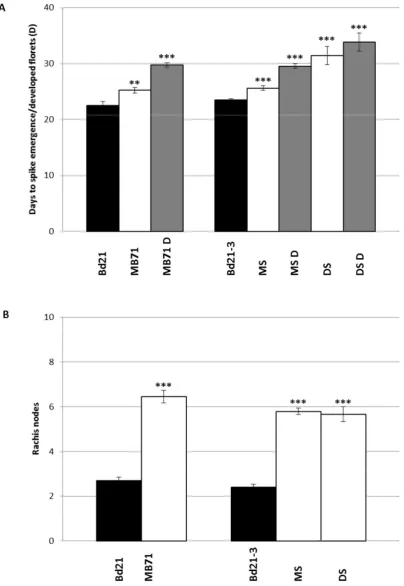
57 Main spikes of both DS and MS plants emerged later than their parental line Bd21-3
Figure 11A and had a similar increase in rachis node number Figure 11B. Spikes of MB71 emerged later with more rachis nodes than those of Bd21 in agreement with our previous observations Figure 10, Figure 11. In addition to delayed spike emergence and increased Rachis node number, all mutants had spikes with less developed spikelets and florets upon emergence when compared to their parental lines . This is again
consistent with our previous observations Figure 10E, F. To better assess this delay in development, we also scored the number of days until the florets of mutant spikes matched the developmental stage of just emerged parental spikes. Spikes of mutant lines were underdeveloped upon emergence from the flag leaf taking several days to match the developmental stage of just emerged WT/parental spike Figure 11A.
58
Figure 11 BdFZP mutants have delayed inflorescence development. A, Average
59
Previous work relating to paired spikelet formation in wheat
This section specifically highlights work by collaborators which relates to the assessment of paired spikelet formation in wheat. It has been included in a separate results section to clearly define which work is mine and which work has been produced by others. Results described after this section (Previous work relating to paired spikelet formation in wheat) are my own contributions.
60
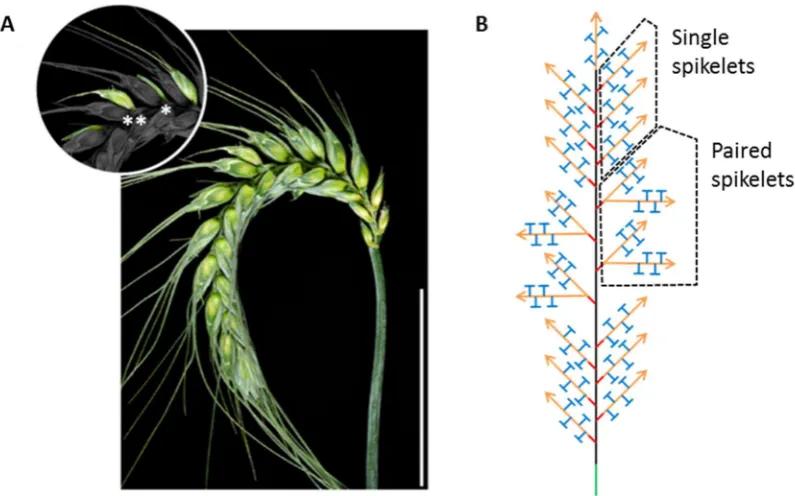
Figure 12 The paired spikelet phenotype of wheat. (A) Wheat spike with complete
(**) and rudimentary (*) paired spikelets. (B) Schematic representation of paired spikelet producing wheat spike. The archetypal single spikelet per rachis node morphology of wheat is present in the apical and basal portions of the spike. Paired spikelets form with the highest frequency in central rachis node positions.
In addition to the paired spikelet flowering time mutants we described in (Boden et al., 2015) we also isolated a spikelet line with many paired spikelets from a four way cross of elite Australian wheat cultivars (MAGIC population). The paired spikelet line, 0053 was carried through multiple generations of single seed descent selecting for individuals segregating for high and low paired spikelet frequency. High and low branching (high and low paired spikelet) near isogenic sibling lines were established Figure 13.
61
Figure 13 High frequency paired spikelet producing line was isolated from
MAGIC population with reduced tiller number. (A) Spikes of low paired spikelet
(0053 LB) (left), and high paired spikelet (0053 HB) (right) sibling lines. (B) The proportion of total (TPS, rudimentary plus complete) and complete paired spikelets (CPS) in 0053 high and low branching lines. (C) Tiller number of mature (after floral transition) 0053 low branching (left) and high branching (right) sibling lines. (D)
62 DNA based SNP-Chip analysis performed by Matt Hayden (DPI Victoria) and Colin Cavanagh (CSIRO) suggested that the 0053 high branching line had extra copies of chromosome 4D. The analysis also revealed that of the four parents in the MAGIC population, the paired spikelet phenotype was most strongly associated with genomic regions derived from the Baxter wheat variety. Several QTL associated with the paired spikelet phenotype were detected. This analysis suggests that that causal genetic basis for increased paired spikelets in 0053 HB is chromosomal duplications of chromosome 4D derived from the Baxter wheat variety. Even though the duplicated region is large and contains many expressed genes, QTL analysis revealed relatively few QTL on chromosome 4D which are strongly associated with paired spikelet formation including a region containing the likely orthologue of TB1. Over expression of the maize TB1 gene in wheat has been shown to reduce tiller formation in wheat (Lewis et al., 2008). With increases in TB1 expression known to reduce tiller number in wheat and maize, TB1 appeared to be a good candidate for a major contribution to tiller reduction and
63
Misregulation of wheat floral transition genes leads to a unique branching phenotype known as paired spikelets
We described the paired spikelet phenotype in the context of a series of late flowering, paired spikelet producing lines. These lines were compared to their non-paired spikelet producing sibling (near-isogenic) or parental lines (Boden et al., 2015). Under short day conditions (12h) flowering time was reduced and a high frequency of paired spikelets were produced in comparison to non-paired spikelet producing sibling and parental lines under the same conditions. Reduced flowering time was associated with a reduction in FT expression in the paired spikelet producing lines characteristic of delayed floral
transition early in the photoperiod sensing pathway (Boden et al., 2015). I characterised the expression of floral meristem identity genes in a subset of the paired spikelet
producing lines.The flowering time mutant alleles used in the floral meristem identity gene expression analysis are summarised in Table 2.
Developing inflorescence tissue was harvested at double ridge with 5 inflorescences per genotype constituting a single biological replicate. Three biological replicates for each of the six genotypes were harvested. As flowering time was not uniform between genotypes and early and late flowering lines, the developmental stage of meristems in each genotype were checked daily to ensure harvesting at the same inflorescence development stage. Meristems were harvested at the double ridge stage. Expression of the following meristem identity genes were measured: Suppressor of CONSTANS1 (SOC1), LEAFY (LFY), VERNALIZATION1 (VRN1), AGAMOUS-LIKE GENE1
(AGLG1), AGAMOUS-LIKE10 (AGL10) and AGL29. Each of these genes is thought to
64 Expression of LFY, VRN1, AGLG1, AGL10 and AGL29 were reduced in all late
flowering paired spikelet producing genotypes in comparison to their early flowering comparison lines. SOC1 expression was reduced in response to reduced PPD-1 function or expression but was not altered in the ft mutant suggesting FT independent regulation. Based on these results we concluded that paired spikelet development occurs via an FT dependant pathway where PPD-1 regulates FT expression and FT regulates the