2D-based Indoor Mobile Laser Scanning for Construction Digital Mapping
Application
Chao CHEN, (China, PR), Llewellyn TANG, (United Kingdom), Craig M HANCOCK, (United Kingdom), Jingjing YAN, (China, PR), Huib de LIGT, (Netherlands), Penghe
ZHANG, (China, PR)
Key words: Mobile Laser Scanning, Indoor Mapping, Construction, Indoor Positioning, BIM
SUMMARY
2D-based Indoor Mobile Laser Scanning for Construction Digital Mapping
Application
Chao CHEN, (China, PR), Llewellyn TANG, (United Kingdom), Craig M HANCOCK, (United Kingdom), Jingjing YAN, (China, PR), Huib de LIGT, (Netherlands), Penghe
ZHANG, (China, PR) 1. INTRODUCTION
Various 3D imaging techniques have been developed during the past few decades in order to meet the increasing requirements of industrial and social applications (U.S. General Services Administration, 2009). These techniques are able to measure or capture existing conditions in a natural or built environment, and then present them in 3D images for modelling aims. The generated 3D models are widely used for urban planning, landscape design, topographic analysis, environmental management, simulation of construction, disaster forecast, etc (Bosché, 2010). A valuable application of 3D imaging for architectural, engineering and construction (AEC) industry is the as-built quality control from construction mapping (Akinci, et al., 2006). As a well-known modern imaging technique, laser scanning (also known as light detection and ranging (LiDAR)) is developed for geospatial mapping and surveying (Klein, et al., 2011). The benefits it brings such as increased accuracy, reduced errors and rework, shortened schedule, improved quality control, 3D visualization and spatial analysis, make it appropriate for the civil and built environmental applications, particularly for indoor mapping and construction quality control.
2. LITERATURE REVIEW
Mobile laser scanning (MLS) is attracting more and more concerns due to its flexibility and mobility compared with TLS (Thomson, et al., 2013). Relevant concepts about mobile mapping systems were announced in the late 1980s and early 1990s (Barber, et al., 2008). Initially a 3D laser scanner was mounted on vehicles to rapidly capture information from existing natural or built environment. Nowadays portable and small-sized laser scanners are developed in order to bring users more convenience and make access into narrow and limited sites, such as corridors and roofs (Fryskowska, et al., 2015). Although the accuracy of MLS is lower than that of TLS, the benefits of cost and time saving brought by MLS still make it competitive. Currently, laser scanning is not only used for exterior mapping and surveying, but also considered for indoor application (Thomson, et al., 2013). TLS can be used for indoor quality control of as-built constructions. Combined with the technical assistance from ALS, the 3D presentations of building interior and exterior scenes can be implemented through the data integration of both laser scanning technologies (Kedzierski, et al., 2014).
Currently, for the AEC industry, 3D point clouds obtained from laser scanning usually are used for two main applications: quality control of as-built constructions and restoration of existing buildings (Alomari, et al., 2016). The point clouds which capture the real conditions of as-built or existing buildings and built environments are compared with their 3D design models through intermediary tools. The building design models are created and exported from BIM software, such as Autodesk Revit. BIM is an emerging technology for AEC industry in recent years. It is not only a 3D modelling tool, but also an innovative way to realize 3D visualization and multi-dimensional simulation for building project lifecycle from planning stage to operation and maintenance phase (Eastman, et al., 2011). Compared with traditional CAD (Computer Aided Design), BIM brings lots of benefits for construction projects, such as design optimization, clash detection, multi-disciplinary collaboration, time and cost savings (Eastman, et al., 2011). Its integration with laser scanning can help find out discrepancies between as-built constructions and corresponding design models (Alomari, et al., 2016). Furthermore, the 3D information captured from laser scanning is able to help implement the indoor mapping and scene restoration of existing buildings and built environments (Bassier, et al., 2016). Based on the real captured data and BIM 3D modelling, stakeholders can make a repair or retrofit plan for existing buildings, particularly for those historical constructions.
impacted by manual operation errors if users are not trained to a certain level (Hong, et al., 2015). Although Simultaneous Location and Mapping (SLAM) has been proposed in recent years to overcome the defects mentioned above, but due to the technical problems such as nonlinearity and incorrect association between observation and landmark (Thomson et al., 2013). From the economic aspect, the capital expense of a high-performance 3D laser scanner and bundled software is costly, people who intend to use this technique and meanwhile have budget control will consider this inevitably.
3. METHODOLOGY
To maintain the advantages of MLS and eliminate the barriers of conventional 3D laser scanning mentioned above, a novel indoor mobile laser scanning method is proposed. This method combines a 2D laser scanner with an IMU-GPS positioning approach to realize 3D indoor mapping. Different from the point clouds which are registered and generated from captured 3D raw datasets, this method integrates 2D scan images with the motion trajectory of the laser scanner in order to create 3D imaging for existing environments.
In this research, a SICK 2D laser scanner is used and the type is an LMS5xx LiDAR sensor that uses 905nm infrared as the light source (shown in Figure 1) (SICK AG., 2017). Compared with 3D laser scanners, it has much lighter weight and smaller size. Of course, the expense of this 2D laser scanner is also much cheaper. In addition, it has an operating range from 0-80m with high resolution and an aperture angle of 190o (view setting from -5o to 185o) (SICK AG.,
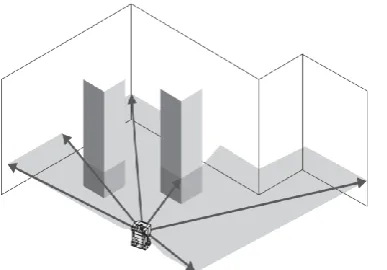
2017). If the viewing window of the 2D laser scanner is kept horizontally as shown in Figure 2, the scanning field will display as Figure 3 shows.
Figure 3. Scanning field in horizontal view (from SICK AG)
[image:5.595.78.201.312.426.2]As our research aim is to integrate 2D scan images with a trajectory acquired from IMU-GPS positioning system for 3D mapping, the viewing window of the laser scanner should be kept vertically as shown in Figure 4. Therefore, 2D scan images are presented in X and Z (or Y and Z) axes and the motion trajectory of the laser scanner is shown in Y (or X) axis.
Figure 4. Scan setting in vertical orientation
For this research, IMU is an appropriate option due to its low-cost, small sized and low energy consuming characteristics (Klein, et al., 2011). However, it can only give accurate predictions in a short term and the errors will accumulate over time. That means the measurement accuracy cannot be guaranteed in a long-term application. Therefore, the positioning results were calibrated by using filters during the data processing.
In addition, it is also crucial to realize time synchronization between the IMU-GPS system and the laser scanner. Because each position of the motion trajectory should be mapped to the corresponding 2D scan image which is generated by laser scanner at the same time. After the synchronized scan and positioning experiment, all the collected raw data will be processed through a MATLAB-based algorithm.
4. EXPERIMENT
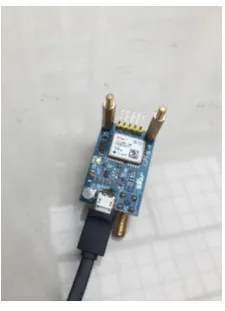
During the experiment, a computer room was used as the site (shown in Figure 5). The laser scanner and IMU were mounted on a trolley (shown in Figure 6), which was driven in an approximate linear motion from north to south and east to west. Then both laser scanner and a strap-down IMU (shown in Figure 7) were connected with a laptop by wires. The laptop was used to observe the scan profile and the IMU measurements. In addition, a GPS module was also connected with the laptop in order to synchronize the setting time of laptop with GPS time (shown in Figure 8). As IMU has its own measurement time record and the laser scanner uses laptop time, it is necessary to synchronize the IMU measurement time with laser scanning time by using the common GPS time. Although the experimental site was indoor, the GPS time was maintained continuously when we moved the module and laptop from outdoors into the room.
[image:6.595.270.515.463.617.2]
Figure 7. Strap-down IMU Figure 8. GPS module
First the scan was implemented from the northern side of the room to the southern side by trying to keep the trolley in an approximate linear motion, then this was again from the eastern side to the western side. Meanwhile, the relative positions of the 2D laser scanner and the IMU were maintained in order to eliminate the errors caused by relative displacement. This can be realized by fixing the centers of both devices on a vertical shaft. As the vertical elevation difference between the viewing window and the ground was 0.7m, the scan results would only show the profile images above this elevation.
5. RESULT ANALYSIS
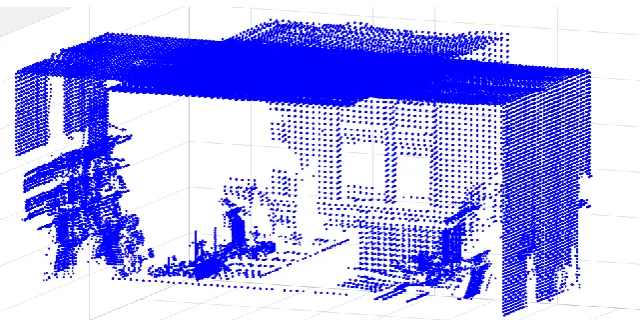
[image:7.595.353.466.73.229.2]Figure 9. Integrated 3D point clouds (without northern walls)
Figure 10. Integrated 3D point clouds (with northern walls)
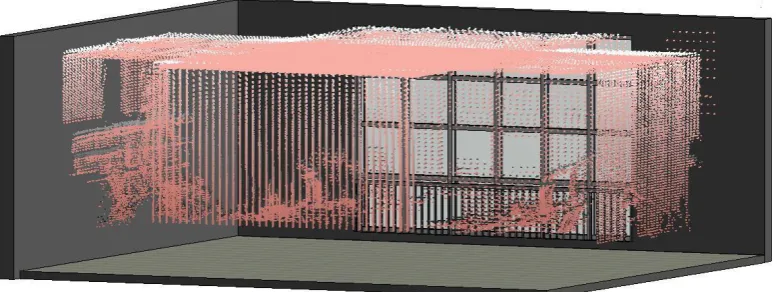
The next step is to import the scan point clouds into BIM tools. The objective of this step is to realize the integration of real site conditions with BIM design models for indoor mapping and discrepancy inspection. In this research, Cyclone and Autodesk Recap were used to implement the import of point clouds into Autodesk Revit (Tang, et al., 2010). Figure 11 and Figure 12
Figure 11. Created point clouds in Cyclone
Figure 13. BIM design model of the room
[image:10.595.75.322.423.622.2]Figure 14. Scan results integrated with BIM design model
6. OUTLOOK
For this research, although the experimental results indicate that the IMU-GPS system is applicable for indoor positioning, other advanced localization methods need to be experimented as they may highly improve the positioning accuracy and minimize measurement errors, even if the cost will also rise. Ultra-Wide Band (UWB) system can be another appropriate option due to its high performance for indoor applications (Belakbir, et al., 2014). Furthermore, limited by equipment and site conditions, the scan was not panoramic, which means the results did not provide a complete scan of the entire room. If high-quality 3D point cloud comparisons between existing buildings and designs are anticipated, we will need to improve the scan method to realize a panoramic scan of the indoor conditions, maybe both wheel-platform and handheld scanning methods will be experimented (Zlot, et al., 2014). In addition, as several software currently are used for the data transfer from scan to BIM tools, the data processing is complex and should be simplified to meet the requirements of large-scale indoor scan applications. Meanwhile, a common interface will be provided for the contrast between scan point clouds and BIM models in order to determine discrepancies, which are concerned about particularly for the quality control of as-built construction.
7. CONCLUSION
methods such as UWB system will be applied in further relevant studies to improve the overall performance of this indoor mobile laser scanning method (Tappero, et al., 2009). More tests will be run in narrow and complex indoor environments to prove the reliability of this method. It is also expected that the BIM integrated with this method will make the quality controls of as-built constructions, the indoor mappings of existing buildings and the restorations of historical heritages more digital, more efficient and more reliable (Zlot, et al., 2014).
ACKNOWLEDGEMENT
The work presented in this research study was undertaken under the aegis of the BIM-GIS Application in Green Built Environment Project, funded by Ningbo Science and Technology Bureau (2015B11011).
REFERENCES
Akinci, B., Boukamp, F., Gordon, C., Huber, D., Lyons, C. & Park, K., 2006, A formalism for utilization of sensor systems and integrated project models for active construction quality control, Automation in Construction, 15, pp. 124 – 138.
Alomari, K., Gambatese, J. & Olsen, M. J., 2016, Role of BIM and 3D Laser Scanning on Job sites from the Perspective of Construction Project Management Personnel, Construction Research Congress 2016: Old and New Construction Technologies Converge in Historic San Juan, pp. 2532-2541.
Barber, D., Mills, J. & Smith-Voysey, S., 2008, Geometric validation of a ground-based mobile laser scanning system. ISPRS Journal of Photogrammetry and Remote Sensing, 63, pp. 128-141.
Bassier, M., Vergauwen, M. & Van Genechten, B., 2016, Standalone Terrestrial Laser Scanning for Efficiently Capturing Aec Buildings for as-Built Bim. ISPRS Annals of Photogrammetry, Remote Sensing and Spatial Information Sciences, III-6, 49-55.
calculation of as-built dimensions for dimensional compliance control in construction, Advanced Engineering Informatics, 24, pp. 107-118.
Eastman, C., Teicholz, P., Sacks, R. & Liston, K., 2011, A Guide to Building Information Modeling For Owners, Managers, Designers, Engineers, and Contractors. In: BIM Handbook, 2 Ed., Wiley.
Fryskowska, A., Walczykowski, P., Delis, P. & Wojtkowska, M., 2015, ALS and TLS Data Fusion in Cultural Heritage Documentation and Modeling, The International Archives of the Photogrammetry, Remote Sensing and Spatial Information Sciences, XL-5/W7, pp.147-150. Hellmers, H., Eichhorn, A., Norrdine, A. & Blankenbach, J., 2014, Indoor localisation for wheeled platforms based on IMU and artificially generated magnetic field, UPINLBS 2014. Hong, S., Jung, J., Kim, S., Cho, H., Lee, J. & HEO, J., 2015, Semi-automated approach to indoor mapping for 3D as-built building information modeling. Computers, Environment and Urban Systems, 51, pp.34-46.
Kang, W., Nam, S., Han, Y. & Lee, S., 2012, Improved Heading Estimation for Smartphone-Based Indoor Positioning Systems, IEEE 23rd International Symposium on Personal, Indoor and Mobile Radio Communications, pp.2449-2453.
Kedzierski, M. & Fryskowska, A., 2014, Terrestrial and Aerial Laser Scanning Data Integration Using Wavelet Analysis for the Purpose of 3D Building Modeling, Sensor 2014, 14, pp. 12070-12092.
Klein, I. & Filin, S., 2011, LiDAR and INS Fusion in Periods of GPS Outages for Mobile Laser Scanning Mapping Systems, International Archives of the Photogrammetry, Remote Sensing and Spatial Information Sciences, XXXVIII-5/W12.
Lee, J.Y., Kim, H.S., Choi, K.H., Lim, J., Chun, S. & Lee, H.K., 2016, Adaptive GPS/INS integration for relative navigation, GPS Solution, 20, pp. 63–75.
Randall, T., 2011, Construction Engineering Requirements for Integrating Laser Scanning Technology and Building Information Modeling. Journal of Construction Engineering and Management, 137, pp.797-805.
on Indoor Positioning and Indoor Navigation, Japan.
SICK AG., 2017, Operating Instructions: LMS5xx Laser Measurement Sensors, Germany. Stephen, F., Deegan, C., Mulvihill, C., Fitzgerald, C., Markham, C. & McLoughlin, S., 2006, Inertial Navigation Sensor and GPS integrated for mobile mapping, Institute of Technology Blanchardstown, ITB, Dublin 15, Ireland.
Tang, P., Huber, D., Akinci, B., Lipman, R. & Lytle, A., 2010, Automatic reconstruction of as-built building information models from laser-scanned point clouds: A review of related techniques. Automation in Construction, 19, pp.829-843.
Tappero, F., Schaer, P. & Merminod, B, 2009, Decimeter-Level Positioning Engine for an Indoor Ultra-Wideband/Laser Scanner Positioning System, Ecole Polytechnique F´ed´erale de Lausanne, Switzerland.
Thomson, C., Apostolopoulos, G., Backes, D. & Boehm, J., 2013, Mobile Laser Scanning for Indoor Modelling, ISPRS Annals of the Photogrammetry, Remote Sensing and Spatial Information Sciences, II-5/W2.
U.S. General Services Administration, 2009, GSA BIM Guide Series 03: BIM Guide for 3D Imaging.
Zlot, R., Bosse, M., Greenop, K., Jarzab, Z., Juckes, E. & Roberts, J., 2014, Efficiently capturing large, complex cultural heritage sites with a handheld mobile 3D laser mapping system. Journal of Cultural Heritage, 15, pp.670-678.
BIOGRAPHICAL NOTES
Chao CHEN (1st author)
Academic experience:
Bachelor of Architecture and Built Environment, University of Nottingham, Ningbo China (2009 – 2011);
Bachelor of Architecture and Built Environment, University of Nottingham, UK (2011 – 2013); Master of Renewable Energy Sustainable Technology, Loughborough University (2013 - 2014); PhD in GIS and BIM Integration, University of Nottingham, Ningbo, China (2015 – now).
Chen, C., Yang, L., Tang, L. & Jiang, H., 2017, BIM-based Design Coordination for China’s Architecture, Engineering and Construction Industry. 2nd International Conference on Building Information Modelling (BIM) in Design, Construction and Operations. Alicante, Spain, May 10-12.
Tang, L., Chen, C., Tang, S. & Wu, Z., 2017, Building Information Modeling and Energy Efficiency Optimization. In: DENG, W. ed. Encyclopedia of Sustainable Technologies, Volume of Sustainable Built Environment, Elsevier.
Jin, R., Hancock, C., Tang, L., Chen, C., Wanatowski, D. & Yang, L., 2017, Empirical Study of BIM Implementation-Based Perceptions among Chinese Practitioners. Journal of Management in Engineering, Volume 33, Issue 5.
Llewellyn TANG (corresponding author)
Academic experience:
PhD, the City University of Hong Kong, Hong Kong, China; Fellow of the UK Higher Education Academy (FHEA);
Professional Member of the Institution of Engineering and Technology (MIET);
Associate Professor in construction management, University of Nottingham Ningbo, China.
Publication:
Tang L.C.M. & Oh, J.M., 2013, A study of effective knowledge sharing practices in an international quantity-surveying firm. International Journal of Information Management; Dwyer, T., Kimpian, J., Arto, K. & Tang, L.C.M., 2013, BIM and Intelligent Buildings, Intelligent Buildings Second edition, Edited by Derek Clements-Croome.
Craig M HANCOCK (co-author)
Academic experience:
BSc Hons Surveying and Mapping Science,Newcastle University, UK; PhD Space Geodesy,Newcastle University, UK;
Associate Professor in Geodesy and Surveying Engineering , University of Nottingham, Ningbo China.
Publication:
Hancock, C. M., Roberts, G. W., Bisby, L., Cullen, M. & Arbuckle, J., 2012, Detecting Fire Damaged Concrete Using Laser Scanning, FIG Working Week 2012. Rome, Italy, Detecting Fire Damaged Concrete Using Laser Scanning.
Jingjing YAN (co-author)
Academic experience:
PhD in Digital Economy, University of Nottingham, Ningbo, China (2015 – now).
Proceedings of the 14th International Conference on Location Based Services, pp. 44-49, ETH Zurich.
Huib de LIGT (co-author)
Academic experience:
MSc of Geodetic Engineering, Delft University of Technology,The Netherlands;
Senior Laboratory and Field Work Teacher (Engineering Surveying/GNSS) , Department of Civil Engineering, University of Nottingham, Ningbo, China.
Penghe ZHANG (co-author)
Academic experience:
PhD in Engineering Surveying and Space Geodesy, University of Nottingham, Ningbo, China (2013 – now).
CONTACTS
Chao CHEN,
Room 327, Faculty of Science and Engineering, University of Nottingham, Ningbo, China, 199 Taikang East Road, University Park,
Ningbo, CHINA, +86 8818 8641