Basic skills programmes in the
Probation Service: evaluation
of the Basic Skills Pathfinder
Home Office Online Report 14/04
Gráinne McMahon
Andy Hall
Basic skills programmes in the
Probation Service: evaluation
of the Basic Skills Pathfinder
Gráinne McMahon, Andy Hall, Geoff Hayward,
Caroline Hudson, Colin Roberts,
Rosa Fernández and Ros Burnett
Probation Studies Unit, Centre for Criminological Research,
in collaboration with the
Department of Educational Studies and SKOPE
University of Oxford
Contents
Acknowledgements vi
Summary vii
1. Why does the Probation Service need a basic skills programme? 1
What are basic skills? 1 The basic skills problem in the UK 1 The prevalence of basic skills needs among offenders 2 The relevance of basic skills to offending 3 Do basic skills interventions help to reduce offending? 5
Summary 6
2. The Basic Skills Pathfinder: background, projects and evaluation 7
History and basic skills provision in the Probation Service 7 The Basic Skills Pathfinder 10
3. Identifying basic skills needs 13
Preliminary screening to identify basic skills needs 13 The initial assessment procedure for basic skills needs 16
Conclusion 19
4. Profile of offenders with basic skills needs 20
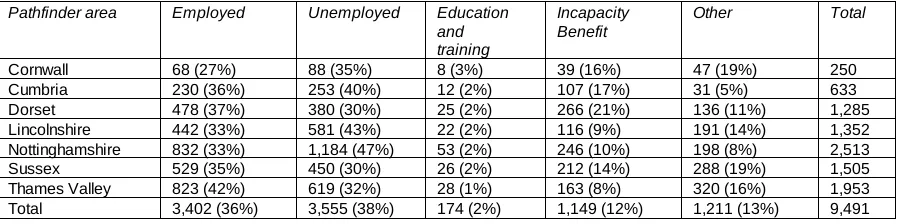
The scale of basic needs among the pathfinder samples 20 The nature of offenders' basic skills needs 21 Correlates and characteristics of offenders with basic skills 22 How are basic skills needs related to unemployment and other variables 31
Conclusion 33
5. The tuition and learning that took place 34
The tuition 34
The learning 39
Conclusion 43
6. Those who did not get there: the problem of attrition 44
The extent of the problem 44 Reasons and explanations for attrition 47 Dropping-out from tuition 52
7. How much does basic skills intervention cost? 55
Choice of method for costing of the projects 55 The analysis of costs for the pathfinder projects 56 Performance ranking of the pathfinder projects 60
Summary 63
8. Improving the process, increasing success 64
Stage 1: Screening 64
Stage 2: The initial assessment procedure for basic skills needs 66
Stage 3: Tuition 66
Monitoring and evaluation 68 An effective referral system 69
Motivational work 69
Conclusion 71
Appendices Appendix A The relationship of basic skills levels to other qualifications 76
Appendix B The Prison Service agenda for addressing basic skills needs 77
Appendix C Description of the projects in the Basic Skills Pathfinder evaluation 78
Appendix D Case studies of offenders who participated in basic skills tuition 85
Appendix E Reliability of the BSA Fast Track 20 Questions screening tool 94
Appendix F Analysis of the total screening sample 99
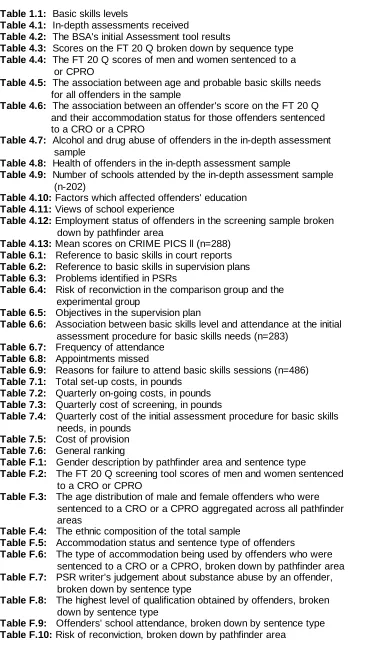
List of tables
Table 1.1: Basic skills levels 1
Table 4.1: In-depth assessments received 20
Table 4.2: The BSA's initial Assessment tool results 22
Table 4.3: Scores on the FT 20 Q broken down by sequence type 23
Table 4.4: The FT 20 Q scores of men and women sentenced to a 23 or CPRO
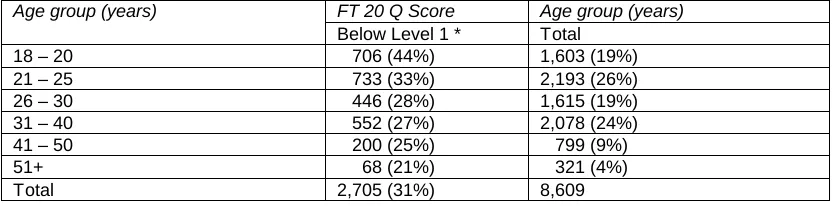
Table 4.5: The association between age and probable basic skills needs 24 for all offenders in the sample
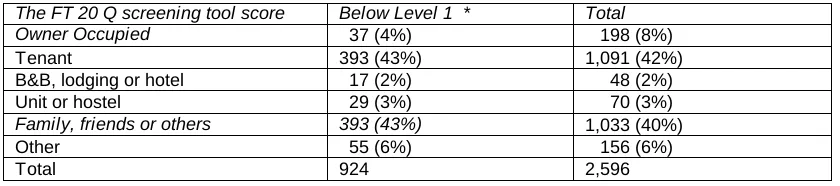
Table 4.6: The association between an offender's score on the FT 20 Q 25 and their accommodation status for those offenders sentenced
to a CRO or a CPRO
Table 4.7: Alcohol and drug abuse of offenders in the in-depth assessment 25 sample
Table 4.8: Health of offenders in the in-depth assessment sample 26
Table 4.9: Number of schools attended by the in-depth assessment sample 27 (n-202)
Table 4.10: Factors which affected offenders' education 27
Table 4.11: Views of school experience 28
Table 4.12: Employment status of offenders in the screening sample broken 29 down by pathfinder area
Table 4.13: Mean scores on CRIME PICS ll (n=288) 31
Table 6.1: Reference to basic skills in court reports 48
Table 6.2: Reference to basic skills in supervision plans 49
Table 6.3: Problems identified in PSRs 50
Table 6.4: Risk of reconviction in the comparison group and the 50 experimental group
Table 6.5: Objectives in the supervision plan 50
Table 6.6: Association between basic skills level and attendance at the initial 51 assessment procedure for basic skills needs (n=283)
Table 6.7: Frequency of attendance 52
Table 6.8: Appointments missed 53
Table 6.9: Reasons for failure to attend basic skills sessions (n=486) 53
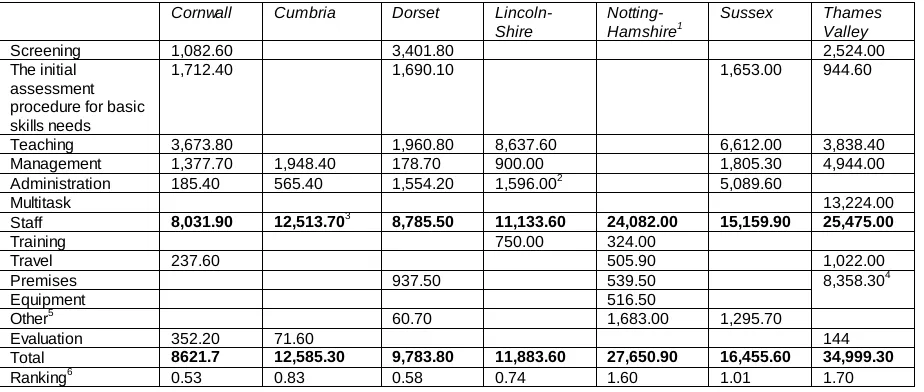
Table 7.1: Total set-up costs, in pounds 57
Table 7.2: Quarterly on-going costs, in pounds 58
Table 7.3: Quarterly cost of screening, in pounds 59
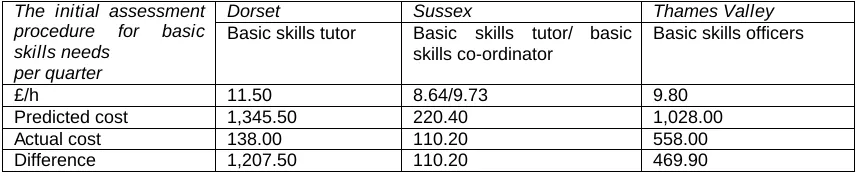
Table 7.4: Quarterly cost of the initial assessment procedure for basic skills 60 needs, in pounds
Table 7.5: Cost of provision 60
Table 7.6: General ranking 61
Table F.1: Gender description by pathfinder area and sentence type 101
Table F.2: The FT 20 Q screening tool scores of men and women sentenced 101
to a CRO or CPRO
Table F.3: The age distribution of male and female offenders who were 102 sentenced to a CRO or a CPRO aggregated across all pathfinder
areas
Table F.4: The ethnic composition of the total sample 102
Table F.5: Accommodation status and sentence type of offenders 103
Table F.6: The type of accommodation being used by offenders who were 104 sentenced to a CRO or a CPRO, broken down by pathfinder area
Table F.7: PSR writer's judgement about substance abuse by an offender, 104 broken down by sentence type
[image:5.595.90.480.100.752.2]Table F.8: The highest level of qualification obtained by offenders, broken 105 down by sentence type
Table F.9: Offenders' school attendance, broken down by sentence type 105
Table G.1: Results of a logistic regression for the probability of being 107 unemployed for the complete screening sample (n = 4283,
p <= 0.05; p <= 0.01)
Table G.2: Results of a logistic regression for the probability of being 108 unemployed for those offenders sentenced to either a CRO
or a CPRO (n = 1,492, p <= 0.05; p <= 0.01)
Table G.3: Results of a logistic regression for the probability of having 108 a probable basic skills need for the whole screening sample
(n = 5873, p <= 0.05; p <= 0.01)
Table G.4: Results of a logistic regression for the probability of having 109 probable basic skills need for those sentenced to either a CRO
or a CPRO (n = 2,028, p <= 0.05; p <= 0.01)
List of figures
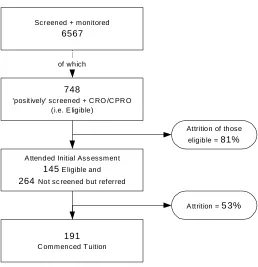
Figure 6.1: Attrition from PSR stage to initial assessment procedure 45 for basic skills needs
Figure 6.2: Attrition from screening to commencement of tuition 45
Figure 8.1: The process of addressing basic skills needs 65
Figure E.1: The FT 20 Q screening tool and literacy on the BSA's Initial 95 Assessment tool (n = 112)
Figure E.2: The FT 20 Q screening tool and numeracy on the BSA's Initial 95 Assessment tool (n = 211)
Figure E.3: Literacy on the BSA's BSA's Initial Assessment tool and Raven's 97 Progressive Matrices (n = 312)
Acknowledgements
The evaluation team would like to thank all the staff in the Basic Skills Pathfinder areas. These were Cornwall, Cumbria, Dorset, Lincolnshire, Nottinghamshire, Sussex and Thames Valley Probation Areas. Without their patience and forbearance, this report would not have been possible.
We are indebted to staff in the Research, Development and Statistics Directorate within the Home Office, in particular, Sarah Pepper, Claire Flood-Page, Robin Elliott and Guy Eaton. We would like to thank the staff of the National Probation Directorate, in particular, Laura Fairweather and Chris Johnson.
We owe a special thank-you to our former colleague in the evaluation team, Dr Caroline Hudson, who is now the Basic Skills Advisor in the National Probation Directorate, and on whose work in the interim report, some parts of this report are based.
We are much indebted to Dr Ros Burnett, our colleague in the Centre for Criminological Research, for editing this report.
We are also grateful to Jenny Anderson, George Battle and Mark Ryan for data input and to Steve Ballinger and the administrative team in the Centre for Criminological Research for all their support.
Colin Roberts
Summary
Previous research has shown that proportionally more offenders, when compared to the population as a whole, have low basic skills, poor school experience and are without vocational and academic qualifications. People with poor basic skills inevitably have restricted employment opportunities. Therefore, poor basic skills may be one factor underlying the over-representation of offenders and ex-prisoners in unemployment statistics. There is some evidence that interventions to improve basic skills and increase employment prospects are associated with reductions in reoffending. Projects to address the basic skills needs of offenders are therefore one way of potentially helping to reduce crime.
The Home Office Crime Reduction Programme funded a range of ‘pathfinder’ programmes aimed at developing evidence-based approaches to reducing crime. Pathfinder projects are exploratory, and are independently evaluated to learn more about ‘what works’. The Basic Skills Pathfinder was one of these programmes and was intended to explore how best to help offenders in the community to improve their skills in literacy and numeracy.
Seven probation areas (nine before reorganisation of the National Probation Service) were selected to develop basic skills projects under central guidance from the National Probation Directorate. The Probation Studies Unit in the University of Oxford Centre for Criminological Research, together with the University’s Department of Educational Studies and ESRC Research Centre on Skills, Knowledge and Organisational Performance, was commissioned to evaluate this pathfinder programme. The evaluation team collaborated with the project staff in the seven pathfinder areas in order to:
• make a baseline estimate of the prevalence of basic skills needs among offenders, by screening for basic skills needs all those offenders on whom pre-sentence reports had been prepared during the evaluation period;
• investigate the association between basic skills needs and other variables such as employment status, alcohol and drug abuse, school attendance and risk of reconviction;
• compare the different circumstances of those offenders who accessed basic skills provision (the experimental group) with those who did not (the comparison group);
• measure the progress of offenders who participated in basic skills provision within the seven pathfinder areas against intermediate outcomes such as improvements in basic skills, gaining and maintaining employment, and participation in further education and training. The time-span of the evaluation prevented the collection of reconviction data;
• undertake a cost-benefit analysis of the economic costs of implementing the basic skills projects, to compare these costs with positive results obtained through intermediate outcomes, and to estimate the resources needed to replicate the basic skills projects in other probation areas; and
• identify good practice and key challenges in the implementation of basic skills provision within community supervision.
‘Basic skills needs’ were defined as literacy and numeracy below Level 1, which, according to guidelines published by the Basic Skills Agency (BSA, 2000) is the minimum level of literacy and numeracy required for everyday functioning at work and in general. All of the seven projects developed their own model for tackling basic skills needs but were required to use the same screening and assessment tools, and to apply agreed procedures for data collection. The process of addressing basic skills needs involved three key stages:
• Screening for basic skills needs.
• Basic skills provision.
Each of these stages was dependent on complementary work by staff to motivate participation, to organise referral, and to monitor and evaluate progress. Offenders’ participation in tuition was generally voluntary, though co-operation with the further, in-depth assessment was often a requirement of their community supervision.
The scale of basic skills needs among offenders
It was found that a third of the sample of approximately 10,000 offenders probably had basic skills below Level 1. This proportion is significantly higher than those with serious literacy difficulties (estimated at around 20%) in the population as a whole, and reflects the proportion of individuals with serious numeracy difficulties (between 30%–50%) in the general population.
The characteristics of offenders with basic skills needs
The offenders who were ‘positively’ screened (as probably having basic skills needs) were more likely to be unemployed and without qualifications than those who were ‘negatively’ screened. The overall unemployment rate of 51 per cent among offenders in the screening sample was very high compared with the total UK unemployment rate of five per cent in 2001. There were important discrepancies between the characteristics of the whole sample who were ‘positively’ screened and the smaller sample of those who attended the next stage for the further, in-depth assessment. It was found that there was a significant association between alcohol or drug abuse and suspected basic skills need in the total screening sample but this was not the case for those who received the in-depth assessment of their basic skills needs. Likewise, there was a significant association between high risk of reconviction and being ‘positively’ screened, yet significantly more in-depth assessments were undertaken on ‘low risk’ offenders compared to ‘high risk’ offenders. Also, those with a history of irregular school attendance were significantly less likely to attend for the in-depth assessment of basic skills needs.
These discrepancies between characteristics of the sample screened and characteristics of the sample who were further assessed (and who attended basic skills tuition) are indicative of issues that ‘got in the way’ of planned interventions to meet basic skills needs, and that were reflected in high attrition.
The problem of attrition
There was a major problem with attrition (a lessening of numbers) at every stage of the Basic Skills Pathfinder evaluation process, which meant that only a small number of ‘eligible’ offenders received any basic skills tuition:
• Around a third of offenders were not screened at the PSR stage, although this had been required during the period of the evaluation.
• The highest rate of attrition occurred following screening for possible basic skills needs. Of the 1,003 who were screened as probably needing basic skills provision, only 194 (19%) subsequently attended for assessment, and only 16 per cent received a more in-depth assessment. The referral rate varied between areas (from 33% to 10% of those positively screened) and varied on a monthly basis within areas.
• The majority of those who did receive help with their basic skills, did so for only a few hours and then ‘dropped out’. The average number of sessions attended was six, while the most frequent number of sessions attended was only two.
Thus, the focus of the Basic Skills Pathfinder evaluation necessarily changed, from looking at both implementation issues and outcomes from basic skills provision, to focussing more on the reasons for attrition.
Explaining attrition
An analysis of why many of those who were ‘eligible’ did not access basic skills provision was undertaken, examining case material for the experimental group (145 offenders) and for a comparison group (311 offenders). The findings, together with interviews of probation staff, tutors and offenders, and statistical analysis of monitoring data (from five of the pathfinder projects), suggested the following explanations for the high attrition rate at each stage of the process:
• Problems other than basic skills needs were likely to be prioritised, for example, drugs rehabilitation, housing needs or attitudes to offending. A similar proportion of offenders in the comparison group could have benefited from basic skills help as in the experimental group, but the need to address the problem was less likely to be prioritised in the supervision plans for those in the comparison group.
• Offenders were often insufficiently motivated to attend the various stages of basic skills provision.
• Staff were inconsistent in applying the screening and referral criteria. Some offenders who were ‘eligible’ to be screened, and referred, were not, while others who had not been screened, or who were ‘negatively’ screened, were referred for the in-depth assessment and/ or basic skills provision.
The tuition and support provided
Basic skills tuition and other support was provided by qualified tutors or by mentors. Most of the tuition occurred on a one-to-one basis and generally took place in a probation office. Tutors were frequently based in probation offices, raising their profile among staff but potentially distancing them from their own professional development. Examples of good practice included: linking teaching material to the interests and needs of learners; applying a individual learning plan; providing transport for those who would otherwise be unable to attend; and ensuring that individuals have relevant information and encouragement to seek out support themselves over the long-term.
Quantitative data on outcomes for those who received basic skills provision was largely unavailable. Most of the small proportion who did progress to attending basic skills tuition only went on a small number of occasions. However, interviews with individuals who persevered in attending, and with their tutors, revealed encouraging ‘success stories’, indicating the major benefits that can be gained over even a short period of time. The most frequently mentioned motivation for attending was to improve their chances of gaining employment. Most thought that, by increasing their opportunities, and by changing their self-concept and quality of life, better basic skills would indirectly help them to avoid further offending.
A cost-benefit analysis
however, if attendance to group provision was guaranteed, then group provision would be cheaper than one to one.
Learning points and recommendations
Integration into case management systemsThe evaluation revealed that basic skills work was generally given less attention than the extensiveness and impact of the problem merits. There should therefore be an explicit process for basic skills screening, assessment, referral and provision built into community sentences and promoted by staff on every level, with appropriate training and administrative support. While there is a need for consistency and regulation at each stage, the system should be flexible to allow for differences in individuals’ readiness and motivation to address basic skills problems at different times. The quantity and quality of work undertaken at each stage of the process should be fully monitored and inspected.
Basic skills screening and the referral criteria
Experience gained in the pathfinder areas indicated that it was feasible and most appropriate for basic skills screening to be carried out by probation staff when they were interviewing an offender in order to prepare a court report. The BSA’s ‘Fast Track 20 Questions’ was shown to be an adequate screening tool, despite some drawbacks. There was general agreement that prior training in use of the screening tool was required. For those screened as likely to have basic skills needs, it was found that rapid referral for the further, in-depth assessment was most likely to lead to ‘take-up’ of provision by the individual.
The further, in-depth assessment
It was feasible for the further investigation of basic skills to be carried out at the commencement of a community sentence, in order to inform the case manager’s initial assessment and supervision plan. The majority of basic skills staff involved in carrying out the in-depth assessment thought that a shorter testing procedure, using fewer instruments than used during the evaluation period, would be more appropriate to avoid delays before tuition could be commenced. However, a common view was that the in-depth assessment should also include attention to speaking and listening skills.
Improving tuition
Planned tuition for basic skills should be integrated with other elements of a community sentence and included as an objective in the supervision plan and sentence. At the same time offenders should be helped to make contact with external providers of basis skills courses so that they are enabled to make improvements over the long-term.
More use should be made of information and communication technology (ICT) to facilitate learning and add to its appeal. Consideration should be given to the development of speaking and listening skills in accordance with the National Standards for Literacy and Numeracy (DfES, 2001) and the Adult Literacy Core Curriculum (BSA, 2001). More use could be made of group work to complement individualised teaching.
Outcome measures should include short-term, attitudinal changes to reflect increased self-efficacy and changed attitudes towards learning, employment prospects and desisting from crime. Positive outcomes can then be appropriately monitored over the short-term as well as long-term.
Motivational work
1. Why does the Probation Service need a basic
skills programme?
In order to appreciate why the Basic Skills Pathfinder was set up, it is necessary to be aware of the scale of basic skills need among offenders as well as the rest of the population, and the relevance of basic skills to offending and recidivism. This introductory section outlines the extent of the problem and national strategies to address it, and presents a brief literature review of research investigating the relationship between basic skills and other variables which have been found to be correlated with offending. Previous research investigating the effectiveness of educational interventions aimed at reducing offending is also discussed. A note of clarification about what was meant by ‘basic skills needs’ and the criterion applied during the pathfinder evaluation is first given.
What are basic skills?
The definition of ‘basic skills’ used by the Basic Skills Agency (BSA), and which has been applied for the Basic Skills Pathfinder evaluation, is:
The ability to read, write and speak in English or Welsh and use mathematics at a level necessary to function and progress at work and in society in general (BSA, 2000).
The emphasis is on everyday functioning rather than on developing skills for specific purposes that are separate from routine life. Functional literacy is defined in Skills for Life
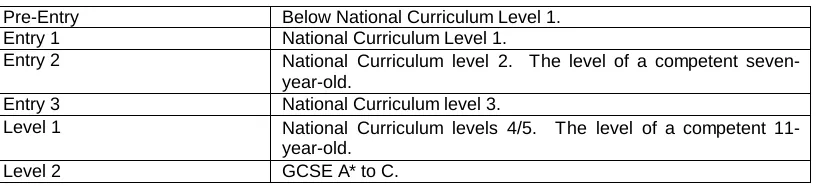
[image:12.595.94.502.552.645.2](Department for Education and Employment (DfEE), 2001) as the level that is expected of a competent 11/year/old. An example given of a serious difficulty with literacy is not being able to locate the page reference for plumbers in the Yellow Pages. An example of difficulty with numeracy, provided by the BSA, is working out the change from £2 after buying three items, one priced 68 pence, and two priced 45 pence. Functional numeracy is the equivalent to Entry and functional literacy is the equivalent to Level 1 in the hierarchy set out by the BSA. Table 1.1 below shows the definitions of the basic skills levels following the adjustments made to the levels as part of the development of the National Standards for literacy and numeracy (Department for Education and Skills (DfES), 2001) as specified by the Qualifications and Curriculum Authority (see Appendix A also). In this report, however, the basic skills levels before adjustment will be used (see chapter 3).
Table 1.1: Basic skills levels
Pre-Entry Below National Curriculum Level 1. Entry 1 National Curriculum Level 1.
Entry 2 National Curriculum level 2. The level of a competent seven- year-old.
Entry 3 National Curriculum level 3.
Level 1 National Curriculum levels 4/5. The level of a competent 11-year-old.
Level 2 GCSE A* to C.
For the purposes of the Basic Skills Pathfinder projects and throughout the evaluation, ‘basic skills needs’ was defined as literacy and numeracy skills below Level 1. From April 2002, the National Probation Directorate (NPD) has introduced ‘below Level 2’ as the criterion for assessing a person as having ‘basic skills needs’.
The basic skills problem in the UK
the BSA at that time. The product of this working group, A Fresh Start (DfEE, 1999), otherwise known as the Moser Report, has been crucial in drawing political attention to adult basic skills in England.
The report A Fresh Start suggested that one in five adults in England (approximately seven million) have serious difficulties with literacy and far more (30%–50%) have serious problems with numeracy. This is one of the worst levels of literacy and numeracy in Europe (Social Exclusion Unit, 2001). The report proposed far-reaching recommendations for developing adult basic skills practice and proposed a wide-ranging national strategy intended to ‘halve the levels of functional illiteracy and innumeracy in about a decade’ (DfEE, 1999).
In response to these recommendations, the Adult Basic Skills Strategy Unit (ABSSU) was set up in 2000, within the DfES. ABSSU is responsible for the implementation of Skills for Life
(DfEE, 2001), and for ensuring that efforts to improve literacy, language and numeracy at national and local level are consistent and well co-ordinated. While poor basic skills in adults is by no means a new phenomenon, basic skills provision for adults has been very much a ‘Cinderella’ service (Brooks et al., 2001), but this situation is now being addressed. Funding for Skills for Life (DfEE, 2001) rose by £150 million between 2000 and 2003, taking spending overall on basic skills to around £1.5 billion by the year 2004. Skills for Life includes detailed recommendations and national targets aiming to reduce the number of adults with difficulties with literacy and numeracy (750,000 by 2004 and 1.5 million by 2007).
The numerous proposals put forward in Skills for Life to tackle basic skills problems include targeting resources on disadvantaged areas and groups at risk of sustained social exclusion. Four priority groups were identified: (1) unemployed people and other benefit claimants; (2) prisoners and offenders supervised in the community; (3) public sector employees; and (4) workers in low-skilled jobs (half of the seven million people with weak literacy and numeracy skills are in work). Research has revealed that literacy and numeracy problems are common for each of these groups.
The prevalence of basic skills needs among offenders
It has long been known from research into the characteristics of offenders that the average educational achievement of offenders is lower than that of the general population. They leave school at a younger age, have higher levels of truancy, suspension and permanent exclusion from school, and have fewer qualifications. What has not been recognised, until relatively recently, is how high the proportion of adult offenders is who, as a result, have not mastered basic literacy and numeracy skills. Recent attention to the issue of basic skills beyond the field of criminal justice has filtered down into criminological research and work with offenders. See Caddick and Webster (1998) for a helpful review of this literature.
Estimates of the prevalence of basic skills needs among the offending population have varied. Stewart and Stewart (1993) investigated a representative sample of 1,389 offenders aged between 17 and 23, drawn from seven probation services. Most were found to be early school leavers with no qualifications, who ‘were ill-prepared for any possible employment opportunities’. A study during the 1970s found that 15 per cent of offenders in custody were semi-literate (Palfrey, 1974) while a more recent survey indicated that as many as one in two of all prisoners received into 16 prisons during one week had a low level of literacy (Adult Learning and Basic Skills Unit, 1994). In the report of the Social Exclusion Unit (2002),
Reducing Reoffending by Ex-Prisoners, it is noted that:
• fifty-six per cent of prisoners are unemployed before sentencing;
• fifty per cent have poor reading skills;
• eighty per cent have poor writing skills; and
• sixty-seven per cent have poor numeracy skills.
Furthermore, definitions may or may not distinguish between basic skills needs that reflect lack of opportunities to learn and basic skills difficulties that are a result of learning disabilities, such as dyslexia. This distinction needs to be recognised because of the implications for differences in provision to tackle the underlying causes. Where to draw the line between basic literacy skills and dyslexia is a matter of some controversy. According to some research, dyslexia is over-represented in offender populations (Devlin, 1996), while others (e.g. Rice, 1999) have argued that the frequency of literacy difficulties found can more appropriately be attributed to other factors such as poor school experience and socio-economic status. Other research has suggested that the likely prevalence of dyslexia in the population depends upon the definition adopted (Snowling et al., 2000).
Regardless of where the boundaries are to be drawn in defining basic skills, what is at issue is not distinct skills for occasional or specialist use, but ‘a set of tools for organising, planning and managing personal circumstances’ (Davis et al., 1997) that are woven into the social processes of every day life.
The relevance of basic skills to offending
At first glance, having difficulties with, for example, filling in forms or subtraction of one sum of money from another, might seem remote from the more apparent causes of, and acknowledged motives for offending. While there is not a direct causal connection between difficulties with literacy and numeracy and committing crime, a lack of basic skills is related to several other variables that are known to be correlated with crime: unemployment, poor school experience, social exclusion and various psychological or cognitive factors linked to self-concept and attitudes to offending.
Employment and basic skills
Fairly obviously, for those who have poor basic skills, a large proportion of the employment market is closed to them, and therefore legitimate sources of sufficient income may be outside their reach. Apart from the financial implications of being without work, the long-term unemployed are also deprived of the potential psychological and interpersonal benefits of employment.
People with poor basic skills who do gain employment are less likely to secure ‘a good job’ in which they would happily remain. Those entering the job market are now increasingly expected to have qualifications and the jobs which require few or no academic achievements are diminishing (Bynner and Parsons, 1999; Felstead et al., 2002). At present, those without academic qualifications are far more likely to be unemployed than those with qualifications (Aronwitz and DiFazio, 1994; Joshi and Paci, 1999). Atkinson (1992) referred to more poorly skilled individuals ‘swimming against a tide of increasing requirements’ in the labour market, suggesting that those with poorer skills are in danger of being drowned.
The International Adult Literacy Survey (IALS), carried out in 1996, showed that gaining employment and the amount earned were linked to literacy levels (Carey et al., 1997). An analysis of the data from the 1970 British Cohort Study and the 1958 National Child Development Study carried out by Bynner et al. (2001) suggests that individuals who improve their basic skills also improve their chances in the labour market by moving up the occupational status scale and resisting unemployment. Bynner et al. also suggest that::
Level one or better numeracy skills produced a return to earnings on average of 26 per cent more than for adults with skills below this level and 16 per cent for literacy skills at this level.
up the Cambridge delinquency study. Research by Lipsey (1995) found that employment was the most significant factor in reducing offending rates.
Offending and school experience
Behaviour at school, academic performance and school attendance have been identified as relevant to offending (Graham and Bowling, 1995; Rutter et al.,1998; Berridge et al., 2001). Graham and Bowling (1995) based on a sample of over 2,000 young people, found the odds of offending for those who had truanted from school were more than three times than for those who had not truanted. Three-quarters of the males temporarily excluded from school were offenders. The Audit Commission (1996) found that 43 per cent of offenders of school age sentenced in the youth court had been expelled. Berridge and co-authors aimed to establish whether and to what extent permanent exclusion from school had an independent effect upon the offending careers of 343 young people. They concluded that school exclusion is mainly a male phenomenon with a ratio of four-to-one male to female exclusions, and that offenders are considerably over-represented in exclusion statistics. Of those who had been excluded from school, 65 per cent had been cautioned or convicted of a criminal offence at some point in their lives. A MORI survey carried out for the Youth Justice Board (Youth Justice Board, 2001) found that excluded children were significantly more likely to commit criminal offences than children in school (60% compared to 25%).
Berridge et al. (2001) also found that most expelled students had experienced longstanding difficulties with education and were more likely to have special educational needs, usually related to emotional and behavioural difficulties. In some cases, under-achievement may arise as a result of a specific learning difficulty, such as dyslexia, rather than non-attendance or difficult behaviour (Hinshaw, 1992). Of course, such learning difficulties may themselves give rise to emotional and behavioural problems, and a reluctance to attend school, thereby compounding the problem.
Social exclusion, education and offending
A lack of basic skills may well play a large role in the gradual social exclusion of offenders from their communities and from society in general. The Social Exclusion Unit (2001) defines social exclusion as:
… a shorthand term for what can happen when people or areas suffer from a combination of linked problems such as unemployment, poor skills, low income, poor housing, high crime, bad health and family breakdown.
Based on an analysis of performance data from a reading test sat by individuals participating in the 1970 British Cohort Study at age 10, Bynner and Parsons (2002) concluded that ‘poor reading is an important element of social exclusion, with early risk factors compounding the process’. Research conducted by MORI on behalf of the BSA (BSA, 2001), and using semi-structured interviews with a representative sample of 2,089 adults throughout Great Britain showed links between poor basic skills, financial exclusion and social disadvantage. According to Bynner et al. (2001), increased levels of basic skills achievement would help to reintegrate those who are socially excluded, because of the resulting effect on levels of physical and mental health, achievement at school and opportunities to participate in various activities.
Basic skills and self factors
achievement may be limited to socialising with others who are similarly disadvantaged, perhaps leading them into ‘deviant’ subcultures (Cohen, 1955).
Do basic skills interventions help to reduce offending?
Given the prevalence of basic skills deficiencies amongst the offending population, it is clear that interventions to improve basic skills are important. For this reason, there has been considerable interest in looking at whether educational intervention could reduce reoffending either on its own or in association with other programmes. Research into this question is fraught with difficulty because of numerous other variables that could impact on future offending either in combination with a basic skills intervention or unrelated to it. An additional barrier against carrying out a rigorous evaluation is that educational intervention tends to rely on self-selection of programme participants rather than random assignment to the intervention and controlled comparison groups, and therefore the true impact of the intervention cannot usually be evaluated adequately (MacKenzie, 1997; Cecil et al., 1997). Other problems with this kind of research include the adequacy of follow-up periods. However, research has been carried out in an effort to measure the effectiveness of educational intervention programmes on offending behaviour.
Perhaps the most promising findings, although obtained in a prison study in Canada, were from Porporino and Robinson (1992) who evaluated an initiative funded by the Correctional Service of Canada to provide adult basic education in prisons. A substantial reduction in reoffending among those who attended the basic literacy and numeracy courses was reported. While 30 per cent of the adult basic education completers were returned to prison during the follow-up period, 36 per cent of those who were released before completing the course, and 42 per cent who withdrew from it, returned to prison. Moreover, those who were assessed as ‘higher risk’ offenders appeared to benefit more than ‘lower risk’ offenders, thus ruling out the possibility that the completers were more successful in the community because of their risk status. Post-release interviews of those offenders who had completed the adult basic education course revealed that 79 per cent were employed full time. Over three-quarters said that they felt more in control of their lives, and 30 per cent said their skills helped them with family matters. Porporino and Robinson conclude that:
The specific intellectual skills that are gained through Adult Basic Education training may equip offenders to deal more effectively with daily problems encountered in the community. Moreover, the sense of achievement and confidence that results from successfully completing a program may encourage some offenders to make further positive changes to their lives.
Another important study into the effects of educational intervention on offenders was carried out by Pearson and Lipton (1999) using a meta-analysis technique. They look specifically at educational programmes and vocational programmes. The authors cover research from 1968 to 1996, and they concluded that ‘program participants recidivate at a lower rate than non-participants’. However, because of methodological weakness in the studies carried out, they were unable to categorically attribute this outcome solely to the programme.
Summary
2. The Basic Skills Pathfinder: background, projects
and evaluation
The Basic Skills Pathfinder is part of the Crime Reduction Programme (including the What Works Strategy). This chapter briefly explains developments in the Probation Service leading up to the introduction of the Basic Skills Pathfinder. It should be noted that, following the reorganisation of probation services in April 2001 to form the National Probation Service (NPS) for England and Wales, the NPD has introduced an agenda for addressing poor basic skills. More recent events affecting basic skills provision since the commencement of the evaluation are therefore summarised. The chapter finishes with a description of the aims and stages of the Basic Skills Pathfinder and its evaluation.
History of basic skills provision in the Probation Service
Until recently, there was no systematic agenda within the service to address the basic skills needs of offenders. Davis et al. (1997) pointed to the previous low priority given to basic skills work within the Probation Service and, most importantly, a lack of direction at policy level in providing a framework in this area of community supervision practice. Although Davis et al.
reported that literacy and education were sometimes addressed by probation areas, this was limited to:
Ad hoc or unsystematic provision… If and when an offender’s poor level of literacy becomes apparent, the action taken depends more on the staff member’s interest in the subject and knowledge of local sources of assistance than it does on service-wide policies and dedicated systems.
The absence of any reference to basic skills work in the first two editions of the National Standards for the Supervision of Offenders in the Community (Home Office, 1991; 1995) suggests that this was an accurate description of the prioritisation given to such educational work by probation areas. However, in the most recent publication of National Standards
(Home Office, 2000) specific reference is made to identifying literacy and numeracy problems within the pre-sentence report (PSR).
An emerging focus
Probation Circular 40/1994 (Home Office, 1994) referred to the educational needs of offenders sentenced to community supervision prior to 1999. This was the original statutory basis for possible basic skills work. An emphasis was placed on work with offenders encompassing employment, training and education (ETE). The circular stated that: ‘Research studies emphasise that offenders can more successfully be rehabilitated into the community and kept from further offending if they are helped into employment, education, or job related training’and concluded that the methods employed by probation areas should therefore have regard to these goals.
The Crime Reduction Programme, ‘What Works’ and the pathfinders
The Home Office Crime Reduction Programme (Home Office, 1999) was a £403 million programme which ran for three years from April 1999. The intention of the Crime Reduction Programme was to obtain evidence on the most effective methods used by criminal justice services to tackle crime and its causes. Following rigorous evaluation and cost-benefit analysis, the best methods would be selected with a view to their development, accreditation and ‘roll out’ across services in England and Wales. Thus, a number of different ‘pathfinders’ were introduced, including offending behaviour programmes, employment projects and basic skills projects.
The Crime Reduction Programme dovetailed with the Home Office What Works policy, now taken up by both the Probation Service and the Prison Service (Home Office, http://www.crimereduction.gov.uk). These programmes combine to create an ambitious project to reduce crime in England and Wales. Between 1999 and 2002, £21million was earmarked for What Works from the Crime Reduction Programme investment, of which just over £13million was for NPS developments.
The Basic Skills Pathfinder evaluation consisted of seven projects in seven different probation areas (nine probation services before the reorganisation of the Probation Service), exploring how best to help offenders under supervision in the community to improve their skills in literacy and numeracy. Basic skills work has also become a more important part of HM Prison Service’s aims in the past few years (see Appendix B). Features of the seven projects and the objectives of the evaluation are outlined later in this chapter.
More recent developments following the Basic Skills Pathfinder evaluation
Basic skills provision within the NPS has now reached a new milestone with the full implementation of basic skills from 1 April 2002. The NPS is drawing on the Skills for Life
(DfEE, 2001) strategy and empirical findings from the Basic Skills Pathfinder evaluation to encourage good practice which has been shown to be feasible and effective in delivering basic skills work to offenders (Home Office, 1999a).
Probation areas were also allocated funds from the 2000 spending review for basic skills provision totalling £3.6million for 2002–03 and £7.9million for 2003–04. The Probation Service Delivery Agreement Measure, under Public Service Agreement 10 (Probation Circular 92/2000, Home Office, 2000a) has agreed to reduce the rate of reconvictions of all offenders punished by imprisonment or by community supervision by five per cent by 2004 compared to the predicted rate. The stated target is ‘to increase the educational and vocational qualifications of offenders with 6,000 completions of Level 2 basic skills awards in the Probation Service in 2002–03 and 12,000 completions in 2003–04’. This target was considered by basic skills staff to be unrealistic because the hours taken to achieve such improvements were not available for those offenders sentenced to community supervision. The BSA states that, on average, 300 hours of tuition would be required to move an individual from below Entry Level to Level 1, and 200 hours to move an individual from Level 1 to Level 2, though the evidence base for this claim is not cited. Probation Circular 15/2002 Basic Skills – revised National/Local Targets and Implementation Arrangements (Home Office, 2002) changes these targets. The 2002–03 targets are for 6,000 basic skills programme starts and 1,000 basic skills qualifications at any level.
In the Consultation Paper: Improving the Basic Skills of Offenders on Community Supervision
(Home Office, 2001) the NPD lays out its plans for basic skills work. As part of the challenge to improve the basic skills of offenders, it states that probation areas should endeavour to provide:
• screening and assessment for offenders sentenced to community supervision;
• continued learning opportunities for those offenders released on licence from prison;
• effective use of volunteers or mentors to support offenders participating on basic skills programmes;
• enough assistance for offenders to achieve qualifications; and
• sufficient provision to achieve Service Delivery Agreement targets.
It is expected that partnerships with educational providers in the community will be formed, and probation areas are recommended to access Learning and Skills Council (LSC) funding and provision for the majority of their offenders. A recent issue of What Works News (Issue 11, Dec 2002/Jan 2003, on the website for the NPS) has set out recommendations from the NPD for screening and assessment of basic skills.
The Basic Skills Pathfinder
The Crime Reduction Programme (Home Office, 1999; 1999a) provided funds for a Basic Skills Pathfinder to examine the extent to which systematic efforts to address poor basic skills within community sentences helped probation areas to reduce reoffending. The specific focus was on Community Rehabilitation Orders (CROs) and Community Punishment and Rehabilitation Orders (CPROs), but not Community Punishment Orders (CPOs).
The seven Basic Skills Pathfinder projects
Initially there were nine probation services involved in the pathfinder, but boundaries of some services changed following the formation of the NPS, resulting in seven projects. The Basic Skills Pathfinder areas were Cornwall, Cumbria, Dorset, Lincolnshire, Nottinghamshire, Sussex (formerly East and West Sussex) and Thames Valley (formerly Berkshire, and Oxfordshire and Buckinghamshire) Probation Areas. Each of these services had initiated some procedures and interventions to address basic skills needs before they became pathfinder projects. Apart from agreements made to use the same screening and assessment instruments during the period of the evaluation, and to follow agreed procedures for data collection, there was no single model of basic skills provision imposed and each area determined its own programme, strategy and methods of delivery. Each of the projects therefore had distinctive features and continued to evolve during the period of the pathfinder. Detailed descriptions of each project, plus their origins and ‘exit strategies’, are given in Appendix C.
The evaluation
The Probation Studies Unit in the University of Oxford Centre for Criminological Research, together with the University’s Department of Educational Studies and ESRC Research Centre on Skills, Knowledge and Organisational Performance, was commissioned by the Home Office Research, Statistics and Development Directorate to evaluate this pathfinder programme. The evaluation commenced in October 2000, which was after most of the basic skills projects in the seven (then nine) probation areas had commenced. The evaluation was completed in March 2002.
Objectives and methods of the evaluation
The evaluation of the Basic Skills Pathfinder had six objectives. These were to:
• make a baseline estimate of the prevalence of basic skills needs among offenders, by screening for basic skills needs all those offenders on whom PSRs had been prepared during the evaluation period;
• investigate the association between basic skills needs and other variables such as employment status, alcohol and drug abuse, school attendance and risk of reconviction;
• measure the progress of offenders who participated in basic skills provision within the seven pathfinder areas against intermediate outcomes such as improvements in basic skills, gaining and maintaining employment, and participation in further education and training. The time span of the evaluation prevented the collection of reconviction data;
• undertake a cost-benefit analysis of the economic costs of implementing the basic skills projects, to compare these costs with positive results obtained through intermediate outcomes, and to estimate the resources needed to replicate the basic skills projects in other probation areas; and
• Identify good practice and key challenges in the implementation of basic skills provision within community supervision.
The process of addressing basic skills needs involved three key stages, requiring the participation of the targeted offenders:
• Screening for basic skills needs.
• In-depth assessment (‘initial assessment’) of basic skills needs.1
• Provision of tuition.
Each of these stages was dependent on complementary work by staff to motivate participation, to organise referral, and to collect data for monitoring and evaluation of progress. A brief overview of each stage, and the data collected, is set out below, but the more detailed explanations, and methodological and practice issues involved at each of these stages is given in the appropriate section of this report.
Screening for basic skills needs (at the PSR stage)
It was the intention that all offenders on whom a PSR was prepared would be ‘screened’ to find out if they were likely to have to basic skills below Level 1. The BSA’s Fast Track 20 Questions (FT 20 Q) and a background information form were used for this purpose (described in Chapter 3).
The Basic Skills Pathfinder evaluation staff were trained by the evaluation team in the use of these instruments. From the perspective of probation staff this stage is generally referred to as the ‘PSR stage’ although, in some situations a briefer report, the specific sentence report (SSR) is prepared instead. During the period of the evaluation, screening data was received on 10,252 cases.
The evaluation team also collected data on offenders’ risk of reconviction status. The Offender Group Reconviction Score (OGRS2) was completed by all but one of the pathfinder areas. An alternative measure of the risk of reconviction was used in Sussex Probation Area: The Level of Service Inventory-Revised (LSI-R).
The initial assessment procedure for basic skills needs for those screened as likely to have basic skills needs (at the start of community supervision)
For those offenders who were positively screened as probably having basic skills below Level 1 and who were sentenced to either a CRO or CPRO, the pathfinder projects were asked to arrange an initial assessment procedure for basic skills needs. This would eliminate ‘false positives’ (those who were ‘positively’ screened as likely to have basic skills needs but who in fact did not have basic skills below Level 1) and help to determine more exactly the level and requirements of those who had been appropriately screened as probably having literacy and numeracy below Level 1. Five instruments (which will be described in Chapter 3) were provided by the evaluation team for use at this stage:
• The BSA’s Initial Assessment.
• Raven’s Progressive Matrices.
1
• An additional background information form.
• Social Problem-Solving Inventory-Revised (SPSI-R) (short-form).
• CRIME-PICS II.
The evaluation team trained relevant project staff in the use of each of these instruments. All of these were to be completed during the Initial Assessment Stage of probation practice. If, at this stage, the use of these instruments confirmed that the offender did have basic skills below Level 1, then the individual was to be referred for tuition. For those who subsequently attended tuition, these tests served as pre-tests for later comparison with post-tests.
Provision of tuition and courses
The final and, of course, key stage for those who were screened and then assessed as having basic skills needs was attendance for tuition. Various items of data were essential to monitor their attendance and progress. Attendance records and relevant progress data were to be provided by tutors, plus any information about positive outcomes (such as gaining employment or acceptance on a college course). Post-tests were also to be provided by project staff. The post-tests involved completion of some of the same instruments (pre-tests) that had been used to assess the need for tuition:
• The BSA’s Initial Assessment.
• SPSI-R (short-form).
• CRIME-PICS II.
It was suggested that these post-tests should be completed either at the end of offenders’ basic skills provision, or at the eight-month point in offenders’ basic skills provision. These post-tests provided a means of comparing the measures of basic skills level, problem solving ability and attitudes obtained before tuition commenced (pre-tests) with the same measures following tuition.
Data collection and analysis of outcomes
The evaluators aimed to monitor, on a monthly basis, the numbers of the following:
• Completed PSRs.
• Screenings completed.
• Referrals to the initial assessment procedure for basic skills needs.
• Attendances at the initial assessment procedure for basic skills needs.
• Completions of the in-depth assessments.
• Uptake of basic skills provision.
• Attendance on basic skills provision and attrition records.
• Progress and outcome measures.
Pathfinder areas were also asked to provide the evaluation team with information on date of sentence, offence type, court type, proposed outcome from the PSR, disposal (sentence) by the court, and disposal requirement data, on all offenders sentenced. The evaluation team requested copies of all of the above items.
areas.2 One probation area only provided monitoring data for a three-month period and another did not provide any at all.
Interviews were carried out with 97 probation staff, ten project managers, 17 tutors (some of whom were mentors acting in a tutoring capacity), and 20 offenders who were attending for basic skills tuition. A total of 37 basic skills sessions were observed. In addition a set of six case studies were compiled (see Appendix D).
For the economic evaluation of the Basic Skills Pathfinder, a cost-benefit analysis was undertaken (described in Chapter 7).
The findings from the evaluation of the pathfinder projects are presented in Chapters 2 to 7 and the key implications and recommendations are given in Chapter 8.
2 The reasons given for the lack of monitoring information in the other two pathfinders were that these data were not available, were difficult to collect or had
3. Identifying basic skills needs
In order to provide individuals with interventions to meet their basic skills needs, or to refer them to appropriate services, they must first be identified. Identification of basic skills needs in the pathfinder evaluation had two stages: screening, which was a relatively quick procedure to find out who is likely to have basic skills needs; and the initial assessment procedure for basic skills needs, which provided a more exact assessment of offenders’ basic skills levels. This chapter describes the instruments and procedures that were involved in each of these two stages, and the views of project staff on their use.
Preliminary screening to identify basic skills needs
The evaluators collected data on all those offenders for whom a PSR3 was prepared during the period of between seven and 12 months (the exact period varied from one pathfinder area to another). The National Standards for the Supervision of Offenders in the Community
(Home Office, 2000) stipulate that every PSR ‘shall state the offender’s status in relation to literacy and numeracy’. However, the sample of offenders for whom data were collected may not be fully representative of the larger population of offenders because courts are not always required to request PSRs. In 2000, for example, less than 20 per cent of all sentences passed followed a request for a report to be prepared (although oral representations and ‘old’ PSRs were likely to have been used in a proportion of these cases). In a minority of cases, the screenings were carried out during the preparation of SSRs rather than PSRs, and these were also included in the evaluation.
Description of the screening tools
Before the Basic Skills Pathfinder evaluation, probation areas were using a variety of tools for screening purposes. For the pathfinder evaluation, however, it was necessary for all areas to use the same screening procedures. Therefore two instruments (collectively referred to as ‘screenings’) were selected by the evaluation team for use by probation staff during the PSR interview: the FT 20 Q screening tool; and a background information form. The Basic Skills Pathfinder evaluation staff were trained by the evaluation team in the use of these instruments.
It was intended that these instruments would be completed by the PSR writer and based on self-report of the offender, with the exception of alcohol and drug abuse which was assessed from the perspective of the PSR writer. The evaluators subsequently learned, however, that both forms were not always completed in this way. Both of these two instruments were integral to the identification of basic skills needs and the subsequent process of meeting those needs.
The BSA Fast Track 20 Questions screening tool
The FT 20 Q screening tool has two questions about previous qualifications, 12 questions relating to everyday reading and writing practices, and six questions relating to everyday numeracy activities. The answers to these questions are scored using a simple system of ticks. Seven or more ticks on the FT 20 Q screening tool indicates that an individual is likely to have a literacy level below Level 1 and a numeracy level below Entry Level (BSA, 2000). These levels have since been adjusted, as part of the development of the National Standards for literacy and numeracy (DfES, 2001) (see Table 1.1 and Appendix A). For the purposes of the Basic Skills Pathfinder evaluation, however, both literacy and numeracy needs were taken to be below Level 1 and for the screening, the basic skills levels referred to in this report will be the levels before the adjustment: ‘below Level 1’ and ‘at or above Level 1’ .
Work by the BSA suggests that the correlation between the FT 20 Q screening tool scores and scores on the BSA’s Initial Assessment tool was high (77%) for the general population of
3 Preparation of a PSR involves interviewing the offenders and relevant others, plus detailed checks, in order to make an assessment. The report is written
adults on whom the FT 20 Q screening tool was piloted (BSA, 2000). This suggests that the FT 20 Q screening tool is fairly reliable for its purpose as a screening tool. Further reliability checks were run by the evaluation team using the data collected from the pathfinder (see Appendix E). A strong and significant association between scores on the FT 20 Q screening tool and the BSA’s Initial Assessment tool was found. Although not standardised, the FT 20 Q screening tool was selected because it was piloted by the BSA before it was made available for general use (BSA, 2000). It was also selected because it has the following advantages:
• It is quick to administer (up to 10 minutes to go through the questions and mark).
• It can be administered by non-experts in basic skills.
• It is not a formal test.
• The question-and-answer format is appropriate for use during a PSR interview.
It should be stressed that the FT 20 Q screening tool was designed only to provide an
indication of a likely basic skills need and was not designed to be a diagnosis of a definite basic skills need. This limitation is offset by the speed with which it can be administered and scored, an important consideration given the time constraints of the PSR interview. Also, use of a preliminary screening tool rather than going straight to a fuller assessment allows a quick check ‘to make sure’, whereas a longer assessment might seem heavy-handed and over-bearing.
All screening forms were to be returned, including ‘negative’ screenings (fewer than seven ticks, plus forms for those whose qualifications exempted them). Once a person had been screened, strict criteria were applied for referral to the next stage. If the individual was ‘positively’ screened as likely to have basic skills below Level 1 (seven or more ticks on the FT 20 Q screening tool) and if s/he had been sentenced to a CRO or CPRO, then s/he should have been referred for further assessment of her/his basic skills levels. This should have taken place as soon as the CRO or CPRO commenced, when the case manager was undertaking the Initial Assessment of the offender (for all offender needs), although designated project staff were ordinarily responsible for the basic skills assessments.
Screening for dyslexia?
In the context of the Basic Skills Pathfinder evalution, no attempt was made to screen for dyslexia. Partly this was due to lack of suitable and valid screening instruments, partly due to cost and time considerations, and partly due to the fact that not all pathfinder areas had staff with sufficient expertise to assess dyslexia. However, the evaluation team were provided with information from Nottinghamshire Probation Area where offenders were screened for dyslexia using the Kaufmann Brief Intelligence Test and the Wide Ranging Abilities Test.
The background information form
This was a self-report questionnaire administered by the PSR writer which included questions on personal information (gender, age, race/ethnic classification, accommodation status and domestic circumstances); alcohol and drug abuse (reported from the perspective of the PSR writer); criminological data (criminal history, risk of reconviction, current offence, proposal and sentence); educational data (school attendance and highest level of qualification achieved); employment status; first language; and PNC/ ID numbers (for a reconviction study).
The screening was undertaken by the probation staff who were responsible for preparing the PSR. Training on the use of the screening tool was provided by the evaluation team.
Use of the screening tools
identified benefits and also a number of problems thrown-up by the process and the FT 20 Q screening tool.
The staff interviewed were supportive, in principle, of screening for basic skills needs at the PSR stage, although some conceded that PSR writers may not have been the most appropriate people to do the screening because, in their view, basic skills work was not central to their role. One project manager also expressed doubts about the suitability of PSR writers to conduct screening, because of the host of other tasks and objectives to be achieved during the PSR interview in order to prepare a court report. Some staff thought it would be better for probation areas to create a new staff post dedicated to screening all offenders at the PSR stage. Evidence from Cumbria Probation Area, however, showed that such an arrangement for the screening of each offender in a back-to-back interview with the PSR interview had not, overall, been successful.
The timing of the screening
A small minority of PSR writers were categorical that screening for basic skills needs should not be conducted at the PSR stage, but the majority agreed, at least in principle, that it was important to screen offenders as early as possible – that is, as part of the pre-sentence assessment – so that sentencing and supervision plans, where applicable, could be appropriately informed. Quite apart from the need for poor basic skills to be addressed, literacy and numeracy problems could rule out the suitability of particular sentences and interventions, and could also affect the ability of the offender to co-operate.
However, despite this general recognition of the need for screening as part of assessment, many officers were against screening at the PSR stage because it added to their workload and was not seen as the highest priority. In particular, screening all offenders regardless of the expected court sentence, when only those sentenced to a CRO or CPRO would be ‘eligible’ for the basic skills project, was regarded as an ineffective use of time. Some voiced misgivings that screening would not be carried out with sufficient care because of time constraints, but would be treated as ‘just another administrative task resulting from the target culture’. Another concern was that offenders might deliberately respond in ways that underestimated or overestimated their basic skills if they thought it could influence the probation officer’s recommendation to the court. For the above reasons, many thought that screening would be better placed at the commencement of community supervision. Other advantages would be that it could be better addressed in the relative security of an established relationship between the officer and offender, and away from the pressure of a looming court sentence when the offender was more likely to focus on the issue. In the words of one PSR writer:
I doubt whether the PSR interview is the best environment in which to screen. The offender is more worried about whether they are going to go to prison and how much they are going to be fined, than answering questions [about basic skills].
The strengths and weaknesses of the screening tool
Overall, very few PSR writers reported that offenders refused or were reluctant to complete the FT 20 Q screening tool. On average, PSR writers completed two or three of the FT 20 Q screening tools per week, at five to ten minutes per FT 20 Q screening tool. In general, it was seen as doing what it was intended to do: that is, serving as an indicator of basic skills needs. Its perceived advantages were that it is:
• nationally recognised;
• not just for offenders but used for a variety of population groups;
• in a standard question-and-answer format;
• quick and easy to use;
• non-confrontational; and
Other pluses mentioned were that it provided useful information for inclusion in the court report; was a good way of introducing educational history, literacy and numeracy skills into the PSR interview; and it provided a uniform and systematic measure of basic skills needs for all offenders at the PSR stage.
Not all staff supported the use of the FT 20 Q screening tool for future use, and a few were extremely critical, arguing that in order for the FT 20 Q screening tool to be used in the long-term, it should be refined to make it more appropriate for use with offenders. The most frequently made criticisms were that it is:
• unreliable, trading speed for accuracy;
• clumsy, repetitive, ambiguous;
• intrusive, patronising, too simplistic;
• middle class and irrelevant; and
• a distraction from writing the PSR.
Some probation staff felt that the FT 20 Q screening tool was ‘embarrassing to administer’ because of its unsuitability for the target group. It was thought that the answers to some items, and therefore the final score on the test, were open to misinterpretation. For example, answers of ‘Never’ to the questions ‘How often do you read magazines?, ‘How often do you read a newspaper?, and ‘How often do you read for pleasure?’ need not imply that a person has poor reading ability but would nevertheless score as three ticks towards a ‘positive’ screening, thus potentially indicating a basic skills need. Staff had different ways of handling these perceived problems, occasionally even completing the screening tool after the interview based on assumptions they made about the individual’s basic skills during the course of the interview, although this was not advised. Thus, some suggested that answers to the FT 20 Q screening tool were partly dependent on the way in which the tool was administered by the PSR writer, and that therefore an offender’s score on the FT 20 Q screening tool could potentially alter from one use to the next (in successive PSRs) if s/he answered the questions differently.
There are variations and anomalies in the way that the FT 20 Q screening tool is completed between probation officers and between teams of probation officers.
(project manager.)
Perhaps the most serious objection to the FT 20 Q screening tool was that it ‘does not identify dyslexia’, a problem believed to be very prevalent in the offending population by probation staff.
Despite these difficulties, most concluded that although the FT 20 Q screening tool ‘is not perfect’, its faults would be likely to apply to any such screening tool or to be offset by other faults. For example, any screening tool would trade off accuracy of detail for the speed at which the tool could be completed.
The initial assessment procedure for basic skills needs
The pathfinder projects were asked to arrange a more detailed assessment and testing for all those offenders who were positively screened as likely to have basic skills needs and also who were sentenced to either a CRO or CPRO. This involved the use of several tests usually administered by designated project staff. During the Basic Skills Pathfinder evaluation, this stage coincided with the Initial Assessment Stage of probation practice.
Description of the assessment tools
Five assessment tools were chosen for use in the Basic Skills Pathfinder evaluation at the commencement of community supervision in probation practice. These were as follows.
The BSA’s Initial Assessment
This tool was selected for the pathfinder evaluation because, although it was not standardised, it was a nationally recognised tool which was used in a wide variety of contexts. It involved adminis