This is a repository copy of Multiple Regression Analysis in the Development of NiFe Cells
as Energy Storage Solutions for Intermittent Power Sources Such as Wind or Solar
.
White Rose Research Online URL for this paper:
http://eprints.whiterose.ac.uk/99899/
Version: Accepted Version
Article:
Gil Posada, J.O., Abdalla, A., Oseghale, C. et al. (1 more author) (2017) Multiple
Regression Analysis in the Development of NiFe Cells as Energy Storage Solutions for
Intermittent Power Sources Such as Wind or Solar. International Journal of Hydrogen
Energy, 41 (37). pp. 16330-16337. ISSN 0360-3199
https://doi.org/10.1016/j.ijhydene.2016.04.165
This is an open access article under the CC BY license (http://creativecommons.org/
licenses/by/4.0/)
[email protected] https://eprints.whiterose.ac.uk/
Reuse
This article is distributed under the terms of the Creative Commons Attribution-NonCommercial-NoDerivs (CC BY-NC-ND) licence. This licence only allows you to download this work and share it with others as long as you credit the authors, but you can’t change the article in any way or use it commercially. More
information and the full terms of the licence here: https://creativecommons.org/licenses/ Takedown
If you consider content in White Rose Research Online to be in breach of UK law, please notify us by
1
Multiple Regression Analysis in the Development of NiFe Cells as Energy Storage Solutions for
Intermittent Power Sources Such as Wind or Solar
Jorge Omar Gil Posada1, Abdallah H. Abdalla, Charles I. Oseghale and Peter J. Hall
Chemical and Biological Engineering, University of Sheffield, Sir Robert Hadfield Building, Mapping Street, Sheffield
S1 3JD, England, UK
Abstract
Multiple regression analysis was used to investigate the effect of bismuth sulphide and iron sulphide as anode additives
for NiFe cells. With this in mind, in-house made Fe/FeS/Bi2S3 based electrodes were cycled against commercially
available nickel electrodes. A simplex centroid design was used to investigate the combined effects of any of the
aforementioned additives on cell performance. The manuscript ends with an initial look at electrolyte systems as a means
to further improve the performance of our cells. Finally, our findings support the idea that HS- ions improve the overall
performance of NiFe cells.
Keywords: NiFe, electrolyte decomposition, cell performance, hydrogen evolution
1. Introduction
Although, there is a continuously increasing demand of energy coming from renewable sources; the intermittent nature of
these resources restrict their use (temporary wind profiles, availability of sun light, sufficient/constant supply of water,
etc); so energy generation and demand are not easily matched [1-5]. Nonetheless, we are facing a transition to integrate
an increasing share of energy coming from renewable sources to balance the electric grid [6-16]. Three different
strategies have been proposed to tackle the aforementioned problem: energy storage, transmission and full back up
capacity (for example by using fossil fuels); this manuscript looks at NiFe batteries as a means to store large amounts of
energy coming from intermittent power sources such as wind or solar.
1 Corresponding author. Chemical and Biological Engineering, University of Sheffield, Sir Robert Hadfield Building,
2
Among all renewable sources, wind power is, undoubtedly, one the world’s fastest growing technologies [3]. It is well
known that offshore wind is stronger and steadier than its onshore counterpart, so offshore wind farms could convert
larger amounts of wind energy into more useful forms of energy (such as electricity) [10, 17-19].
Unfortunately, large scale energy storage is still very expensive and inefficient. Broadly speaking, energy storage
demands electricity to be converted into some non-electrical form of energy which must be reverted back into electricity
for further use. This process is not 100% efficient and prices are still very high. Compared with our current technologies,
a more practical way to store large amounts of energy is very much needed. This is because, unfortunately, modern
batteries would utilize:
organic/flammable electrolyte systems
ultrapure and/or non-abundant (costly) reactants
environmentally unfriendly raw materials and components
costly nano-structuring procedures
These aspects will increase the price of the battery and would polarize general opinion against large scale implementation
of the intended solution.
NiFe cells are rechargeable aqueous batteries that were successfully commercialized by Edison back in the early 20th
century. Although, this technology was superseded by cheaper (and more toxic) lead-acid cells, there is a renewed
interest on them, arising from their environmental friendliness, low cost of raw materials, long life and tolerance to
electrical abuse (such as overcharge, over-discharge, being idle for extended periods and short-circuit conditions) and
compatibility with intermittent power sources, such as wind power and photo-voltaic’s (PV’s). In addition, this
technology would be suitable for relatively low specific energy applications (30-50 Wh kg-1) [20].
The low cost and abundance of the raw materials required to produce NiFe cells are two important aspects that further
encourage their use. Iron is the fourth most abundant element in the Earth’s crust [21, 22]. Nickel is less abundant than
iron, but it is still relatively abundant [23, 24]. Other materials/compounds such as potassium hydroxide, sulphur and
3
required to produce NiFe cells. Basically, there are not good reasons to foresee a shortage of any of the aforementioned
elements any time soon.
There are, of course, many challenges preventing a large scale utilization of NiFe cells for offshore wind applications,
such as low cell efficiency, electrolyte decomposition (hydrogen evolution), and low energy and power densities [31, 32].
Essentially, the major challenge preventing this technology from becoming a real solution to the large scale energy
storage problem is the low round trip performance of the battery, which is strongly related to the evolution of hydrogen
via decomposition of water on the surface of the iron electrode. So from our point of view, the evolution of hydrogen is
something we must reduce, minimize or even prevent rather than enhance; this is, we are not interested in storing and
utilizing the hydrogen that is produced during the charging of the battery, even though we could look at different ways of
utilizing such resource [33-35].
Under strong alkaline conditions, the main process taking place during the charging of an iron electrode is the reduction
of ferrous ions (Fe2+) to metallic iron (Fe0); conversely, during discharge, metallic iron is oxidized to ferrous ions. Eq. (1)
illustrates the charging and discharging (forward and backward reactions respectively) processes of an iron electrode
under alkaline conditions [32, 36].
0.87V 2
2 )
( 2 0
E OH Fe e OH
Fe (1)
Unfortunately, during the charging of the battery, water is electrochemically decomposed into hydrogen and hydroxyl
ions. Because of that, part of the energy that is intended to be stored in the battery, ended up wasted in the parasitic
evolution of hydrogen. Hydrogen evolution, therefore, accounts for a drastic reduction in the overall performance of the
battery, as indicated by Eq. (2).
0.83V 2
2
2 0
2
2
E OH H e O
H (2)
The evolution of hydrogen on the surface metals under alkaline conditions is a subject of paramount importance in
modern times [37, 38]. In particular on the surface of iron, as illustrated by Eq. (2) reflect the importance of this reaction,
but from a detrimental point of view [39-41]. There are plenty of situations where enhancing the evolution of hydrogen
is desired, however, in the realm of NiFe batteries the problem is exactly the opposite. It is crucial to reduce, minimise or
4
The prevention of electrolyte decomposition has been achieved by modifying the iron electrode by either
nano-structuring the anode or by the addition of elements (such as sulphur or bismuth), in such a way that the overpotential for
hydrogen evolution was increased [42, 43]. Electrolyte modification also permits preventing Eq. (2) from happening. In
fact, different electrolyte additives such as wetting agents [44], long chain thiols [45], etc., have been investigated for
such end [42]. With this in mind, NiFe batteries with exceptional capacities of nearly 800 mAh g-1 have been reported
[46, 47]. Although, highly efficient, these batteries require costly reactants and nano-structuring techniques. These
aspects would certainly influence the final price of the battery [46, 47].
In our previous publications, the role of selected electrode additives (such as bismuth and iron sulphide) on battery
performance has been explored [43, 48]. Our experimental findings suggested that bismuth sulphide and iron sulphide
effectively improve the performance of the NiFe cell. However, the remaining question is whether a synergistic effect
between them would exist. Conventional NiFe battery research would consider one single electrode additive at a time,
thus neglecting the occurrence of combined effects, this is, situations where the combined effect of the factors is greater
than the the sum of the parts. This manuscript ends with an initial look at electrolyte selection and improvement.
2. Experimental
By using a similar procedure as the one described in our previous publications [17, 43], iron based anodes were produced
by using varying amounts of Fe, PTFE, FeS and Bi2S3. Essentially, strips of nickel foam (10 mm × 40 mm × 1.8 mm)
were coated and then vacuum dried until approximately 0.2 – 0.25 g of iron powder were loaded on an area of
approximately 1 cm2. The chemicals and materials used were of the following specifications.
Iron powder (purity 99.5%, < 10 m) from Alfa Aesar
Iron sulphide (purity 99.5%) from Sigma Aldrich
Bismuth sulphide (purity 99.5%, < 5 m) from Sigma Aldrich
PTFE (Teflon 30-N, 59.95% solids) from Alfa Aesar
Nickel foam (purity 99.0%, density 350 g/m2) from Sigma Aldrich
Potassium hydroxide (purity ≥ 85.0%, pellets) from Sigma Aldrich
5
Lithium hydroxide (purity ≥ 98.0%) from Sigma Aldrich
In house deionized water was produced by using an Elix 10-Milli-Q Plus water purification system (Millipore, Eschborn,
Germany). Basically, varying amounts of electrolyte components were dissolved in our in-house produced deionized
water. The electrolyte system used for electrode development consisted of an aqueous solution of 5.1 M KOH.
Our previous experimental results have proven the usefulness of PTFE as a means to produce a conductive iron based ink
[49], we have kept the composition of PTFE at a constant value of approximately 6%w. Based on the constancy of the
binder and our desire to explore the composition space defined by formulations not exceeding 15%w on each additive,
[image:6.595.46.236.334.453.2]Table 1 was constructed.
Table 1 - Experimental determinations of factors and levels (free-PTFE basis).
Factor Concentrations (%w)
Low High
Fe 70 100
FeS 0 15
Bi2S3 0 15
By using six replicates per electrode formulation and the two standard deviation criteria for rejection, a surface response
model that allows the finding of electrode formulations that reduce electrolyte decomposition was obtained.
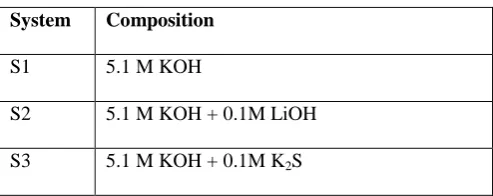
Broadly speaking, electrolyte systems for NiFe cells are concentrated solutions of potassium hydroxide and other minor
constituents, we decided to keep the concentration of KOH constant (5.1 M), and to explore the combined effect of
lithium hydroxide and potassium sulphide (six replicates per electrolyte formulation were used). Table 2 reports
[image:6.595.46.293.678.776.2]electrolyte systems under consideration.
Table 2 - Electrolyte systems under consideration
System Composition
S1 5.1 M KOH
S2 5.1 M KOH + 0.1M LiOH
6
S4 5.1 M KOH + 0.1M LiOH+ 0.1M K2S
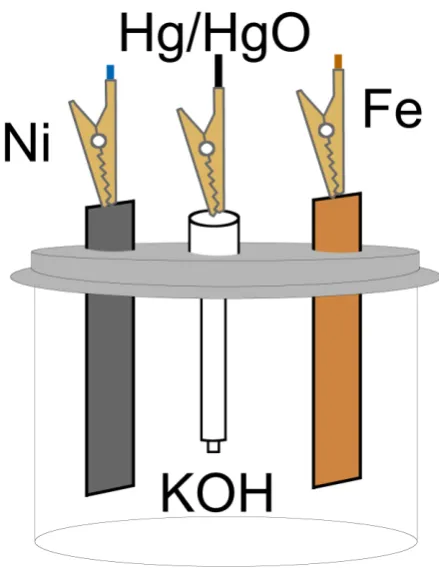
The electrode and electrolyte formulations were tested on a three electrode cell. In-house made anodes were tested in a
three-electrode cell. Nickel electrodes, obtained from a commercial nickel iron battery, where used as cathodes. All
potentials were measured against a mercury/mercury oxide (Hg/HgO) reference electrode (E0Hg/HgO = + 0.098 V vs.
NHE).
Experiments of charge and discharge were conducted on a 64 channel Arbin SCTS battery cycler under galvanostatic
conditions at room temperature until the steady state was reached. Cells were cycled from 0.6 to 1.4 V vs. Hg/HgO at a
C/5 rate. Formation and stabilization of the electrodes were found to be complete by the 30th cycle of charge and
[image:7.595.63.283.344.629.2]discharge [43, 48, 49]. Fig. 1 provides a sketch of the cell test configuration.
Fig. 1 - Test cell configuration.
7
3.1 Electrode formulation
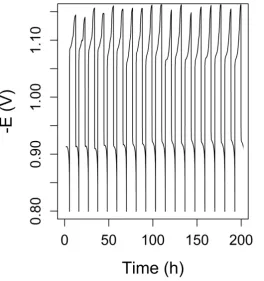
It has been recognised that any NiFe cell requires a relatively long conditioning period (in the order of 30 cycles of
[image:8.595.58.323.185.467.2]charge and discharge) before it reaches the steady state [17, 43, 48]. Fig. 2 confirms this observation.
Fig. 2 - Galvanostatic charge and discharge profile for a NiFe cell (sample F from Table 3, electrolyte system S1
from Table 2) versus mercury/mercury oxide (Hg/HgO) reference electrode.
Based upon Table 1, and by using the mixing rules in a three dimensional concentration space, a simplex centroid design
based on a conventional central composite design was proposed. Table 3 reports experimental values of coulombic
efficiency calculated for our electrodes developed by considering Table 1 and utilizing electrolyte system S1. It is
important to note that collected data exhibit large variability so a relatively large number of replicates (six in this case)
were used to increase the statistical force of the analysis. With this in mind, any sample whose coulombic efficiency lays
more than two standard deviations from the mean was rejected.
Table 3 - Experimental design matrix (PTFE-free basis, electrolyte system S4, 50th cycle).
8
A 7.5 15.0 43.5 ± 2.3 43.2
B 7.5 7.5 47.0 ± 1.2 46.6
C 7.5 0.0 42.9 ± 2.4 42.2
D 0.0 7.5 28.5 ± 2.3 26.9
E 15.0 7.5 45.7 ± 1.8 45.8
F 12.8 12.8 48.3 ± 3.0 46.5
G 12.8 2.2 46.1 ± 2.3 45.9
H 2.2 12.8 32.6 ± 1.9 33.2
I 2.2 2.2 32.4 ± 1.9 32.5
In order to determine whether a relationship existed between the factors and responses (coulombic efficiency and
electrode additives), polynomial functions, as the one represented by Eq. (3) were used
n i m j j i j i QY
1 0 ,
(3)Where Q represents coulombic efficiency, the terms are the expansion coefficients, the Y terms represent the weigh
per-cent of each component, n the number of component in the electrode formulation and m is the order of the
polynomial.
We began by investigating the simplest forms of Eq. (3) until the predicted by the model coulombic efficiencies closely
mirrored the experimental values. The response coulombic efficiency was explained by the composition factors. The
final quadratic model is represented by Eq. (4):
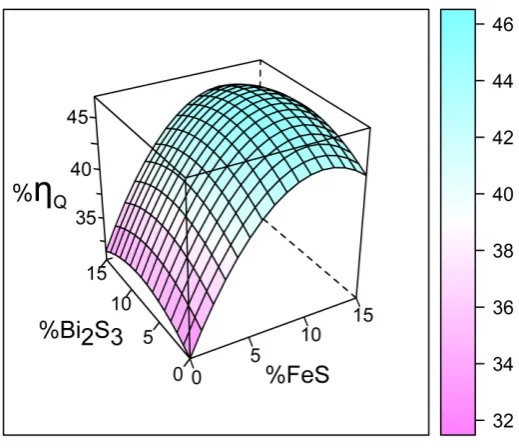
Q = 22.514 + 3.996YFeS + 1.117 YBi2s3– 0.183 Y2FeS– 0.0702 Y2Bi2s3 (4)
The regression analysis reveals not only a relatively high multiple correlation coefficient (r2 = 0.9533), but also a highly
significant model (F statistic 250.2), and as expected, all terms from the model are significant. Finally, no evidence
9
Note that at first glance, Eq. (4) seems to ignore the composition of iron in the electrode formulation. But this
observation is not correct, for all components within each formulation must add up to 100%. The model establishes that
iron, as an electrode component (factor) is not significant. This can be rationalised in terms of its dominance within the
formulations, for iron accounts for at least 70% of the electroactive material.
It is important to recognise that although, large variability on cell performance was always noted, the second order model
given by Eq. (4) renders a relatively good fit, and this is because by increasing the number of replicates, the likelihood of
[image:10.595.56.316.266.490.2]having used true values is enhanced. Fig. 3 provides a three dimensional representation of Eq. 4.
Fig. 3 - Second order coulombic efficiency representation
We are not going to give a presentation on how to find the maximum value of a differentiable function subject to a
constraint (such as %Bi2S3 + %FeS + %Fe = 100). The details of such procedure can be found in most books of calculus,
and this subject is out of the scope of this manuscript. The final electrode formulation that reduces electrolyte
decomposition was found to be 10.3% FeS + 7.5% Bi2S3 + 76.5% Fe + 5.7% PTFE, and was denoted by formulation M.
3.2 Electrolyte system
Now that we have developed an electrode formulation that renders low electrolyte decomposition, the next step is to
10
performance. Our strategy is to use our newly found electrode formulation M to find an electrolyte formulation that
further enhances cell performance.
As was explained in the introduction, electrolyte systems for NiFe cells, consist of aqueous solutions of concentrated
KOH (in the order of 5.0M) and lithium hydroxide. It has been reported that the soluble bisulfide anion (HS-) would
increase the performance of the NiFe cells by mitigating electrolyte decomposition; however, our previous experimental
results have shown that this is not entirely correct, for at low concentrations, the performance of the cell seems to be
independent of the presence of this additive [17, 48], but this aspect require further investigation. In order to do that, we
are going to compare electrolyte formulations and then we will find out whether or not meaningful differences in battery
performance exist.
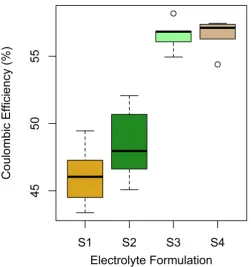
Fig. 4 compares electrolyte formulations (from Table 2) based on groups of 6 replicates per formulation. Each group
corresponds to a different box; each horizontal line within the box represents the mean coulombic efficiency for that
formulation. Likewise, whiskers indicate extreme values and empty circles outliers (data that lays more than two standard
[image:11.595.59.311.429.697.2]deviations from the mean).
Fig. 4 - Battery performance (electrode formulation M) as a function of electrolyte formulation. For information
11
A visual inspection of Figure 4 reveals that plain potassium hydroxide as electrolyte (formulation S1) is outperformed by
any of the remaining electrolyte systems. It seems clear that both lithium hydroxide and potassium sulphide increases the
performance of the NiFe cells. Although, these conclusions seem to be logical, we require a more formal way of drawing
conclusions. In this case, we are going to use the Tukey’s HSD to find out whether meaningful differences across
electrolyte formulations exist.
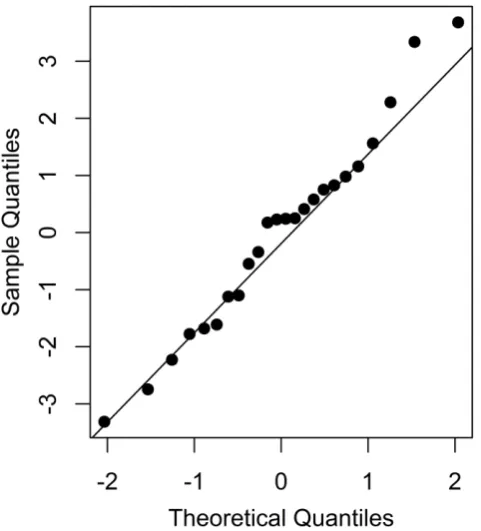
To begin with, we must check that our data is normally distributed; a residuals analysis indicates no evidence against
[image:12.595.64.305.267.533.2]normality. As shown in Fig. 5, data are randomly dispersed and a linear regression model is appropriate for the data.
Fig. 5 - Normal probability plot for coulombic efficiency residuals.
The same conclusion can be drawn by using more rigorous normality tests, such as the Shapiro-Wilk (SK) or
Kolmogorov–Smirnov test (KS test), which are nonparametric tests for normality. In this case the both tests consolidate
the lack of evidence against normality, as all p-values are significant (data not shown).
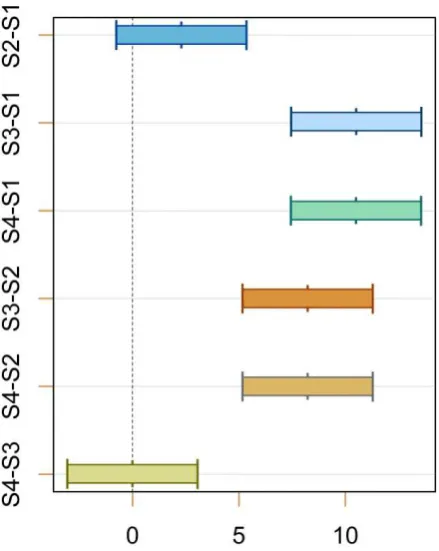
The Tukey HSD test reveals no meaningful differences among electrolyte systems S1 and S2 or between S3 and S4. The
12
Fig. 6 - 95% family-wise confidence level
The practical implications of the fact that there are meaningful differences neither between formulations S1 and S2 nor
between S3 and S4 are tremendous, for they imply that lithium hydroxide does not meaningfully enhance the
performance of the battery (well, not at least under our experimental conditions). It is important to mention here that it
has been suggested that lithium hydroxide would enhance the cycling life of the battery; this claim, of course, would
require long testing and it is propose as a future work.
Unlike lithium hydroxide, the Tukey-HSD reveals the use of potassium hydroxide does indeed enhance battery
performance. From this statement, it necessarily follows that soluble species coming from the aforementioned reactant
would be responsible for the prevention of electrolyte decomposition and thus the evolution of hydrogen. It has been
proposed that the soluble bisulphite anion (HS-) is indeed responsible for such behaviour. And our experimental results
13
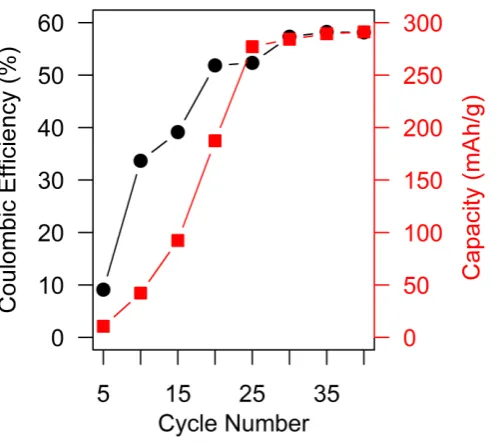
Fig. 7 - Battery performance versus cycling number for NiFe cell formulation (electrolyte system S4 and anode
formulation M). Key: circles coulombic efficiency, squares capacity.
Fig. 7 confirms the tendency described in Fig. 2, in the sense that battery performance tends to increase with the cycle
number during the conditioning period (first 20-30 cycles). Moreover, battery performance tends to increase in a rather
unpredictable manner; however, in the long run, the performance of the battery would increase until the steady state was
reached (this is taken as the end of the conditioning period). The authors believe this is because electrodes tend to fall
apart until they reached a stable configuration where they can handle the current requirements of the charge/discharge
test without major structural changes.
Finally, a large specific charge storage capacity close to 290 mAh g-1 was observed. Although, larger capacities (close to
800 mAh g-1) have been reported [46, 50-52], our manufacturing process is a more cost-effective solution, for it only
utilises commercial grade reactants, which makes it ideal for grid-scale energy storage applications.
The renewal of metal surface area on iron materials has been identified as a key parameter in the evolution of hydrogen
under strong alkaline conditions [53, 54]. We believe, therefore, that due to the breaking up of the electrode, new
electrode surface area is available for the electrochemical reactions to take place.
[image:14.595.62.311.61.282.2]14
By pursuing the development of cost effective offshore wind energy storage, aqueous based NiFe batteries with
coulombic efficiencies in the order of 58% and capacities in the order of 290 mAh g-1. These results are very promising
as we have used neither ultra-pure reactants, nor we have nano-structured the electrode, so our batteries hold a promise
for a real cost effective solution to store large amounts of energy coming from intermittent sources such as wind power.
The experimental approach used and explained in this manuscript has been successful in facilitating the development and
improvement of secondary NiFe cells, by reducing electrolyte decomposition and thus hydrogen evolution. The
formulation developed corresponds to an iron electrode formulation consisting of 10.3% FeS + 7.5% Bi2S3 + 76.5% Fe +
5.7% PTFE. It was also found that the aqueous electrolyte 5.1 M KOH + 0.1M LiOH+ 0.1M K2S further reduced the
evolution of hydrogen, thus improving the overall performance of the aqueous NiFe cell.
It was found that under our experimental conditions, potassium sulphide has a real incidence on the performance of the
battery; in other words, the presence of potassium sulphide in the electrolyte increases coulombic efficiency. This
conclusion also supports the idea that the soluble bisulfide anion (HS-) do improve the overall performance of NiFe cells.
From our experimental findings, we can conclude there is a link between electrode performance (coulombic efficiency)
and:
conditioning of the iron electrode (development of new surface area)
electrode composition
electrolyte composition (presence of potassium sulphide)
The data gathered during this project is subject to large variability; therefore, a relatively large number of replicates (6 in
total) and the two standard deviation criteria for rejection were used to increase the statistical force of the analysis.
Our experimental findings would suggest that at the level of confidence = 0.05, potassium sulphide, as electrolyte
additive, does enhance the performance of the battery.
Finally, the evidence for lithium hydroxide supports the idea that this additive only marginally improves cell
performance. However, it has been reported that in the long run, LiOH would enhance cycle life and round trip
15
5. Acknowledgments
The authors would like to acknowledge the U.K. Engineering and Physical Sciences Research Council for supporting this
work (EP/K000292/1; SPECIFIC Tranche 1: Buildings as Power Stations).
6. References
[1] Hedegaard K, Meibom P. Wind power impacts and electricity storage – A time scale perspective. Renewable Energy. 2012;37:318-24.
[2] Chen H, Cong TN, Yang W, Tan C, Li Y, Ding Y. Progress in electrical energy storage system: A critical review. Progress in Natural Science. 2009;19:291-312.
[3] Jacob A. Wind energy — the fuel of the future. Reinforced Plastics. 2001;45, Supplement 1:10-3.
[4] Samsatli S, Staffell I, Samsatli NJ. Optimal design and operation of integrated wind-hydrogen-electricity networks for decarbonising the domestic transport sector in Great Britain. International Journal of Hydrogen Energy. 2016;41:447-75. [5] Siyal SH, Mentis D, Howells M. Economic analysis of standalone wind-powered hydrogen refueling stations for road transport at selected sites in Sweden. International Journal of Hydrogen Energy. 2015;40:9855-65.
[6] Seljom P, Tomasgard A. Short-term uncertainty in long-term energy system models — A case study of wind power in Denmark. Energy Economics. 2015;49:157-67.
[7] Carrasco-Díaz M, Rivas D, Orozco-Contreras M, Sánchez-Montante O. An assessment of wind power potential along the coast of Tamaulipas, northeastern Mexico. Renewable Energy. 2015;78:295-305.
[8] Waewsak J, Landry M, Gagnon Y. Offshore wind power potential of the Gulf of Thailand. Renewable Energy. 2015;81:609-26.
[9] Haas J, Olivares MA, Palma-Behnke R. Grid-wide subdaily hydrologic alteration under massive wind power penetration in Chile. Journal of Environmental Management. 2015;154:183-9.
[10] De Prada Gil M, Domínguez-García JL, Díaz-González F, Aragüés-Peñalba M, Gomis-Bellmunt O. Feasibility analysis of offshore wind power plants with DC collection grid. Renewable Energy. 2015;78:467-77.
[11] Ayodele TR, Ogunjuyigbe ASO. Mitigation of wind power intermittency: Storage technology approach. Renewable and Sustainable Energy Reviews. 2015;44:447-56.
[12] Sun S, Liu F, Xue S, Zeng M, Zeng F. Review on wind power development in China: Current situation and improvement strategies to realize future development. Renewable and Sustainable Energy Reviews. 2015;45:589-99. [13] Bennoua S, Le Duigou A, Quéméré MM, Dautremont S. Role of hydrogen in resolving electricity grid issues. International Journal of Hydrogen Energy. 2015;40:7231-45.
[14] Guinot B, Montignac F, Champel B, Vannucci D. Profitability of an electrolysis based hydrogen production plant providing grid balancing services. International Journal of Hydrogen Energy. 2015;40:8778-87.
[15] Scamman D, Newborough M, Bustamante H. Hybrid hydrogen-battery systems for renewable off-grid telecom power. International Journal of Hydrogen Energy. 2015;40:13876-87.
[16] Gutiérrez-Martín F, Guerrero-Hernández I. Balancing the grid loads by large scale integration of hydrogen technologies: The case of the Spanish power system. International Journal of Hydrogen Energy. 2012;37:1151-61. [17] Posada JOG, Hall PJ. Surface response investigation of parameters in the development of FeS based iron electrodes. Sustainable Energy Technologies and Assessments.
[18] Hacatoglu K, Dincer I, Rosen MA. Sustainability of a wind-hydrogen energy system: Assessment using a novel index and comparison to a conventional gas-fired system. International Journal of Hydrogen Energy.
[19] Mostafaeipour A, Khayyami M, Sedaghat A, Mohammadi K, Shamshirband S, Sehati M-A, et al. Evaluating the wind energy potential for hydrogen production: A case study. International Journal of Hydrogen Energy. 2016;41:6200-10.
[20] Gao P, Liu Y, Lv W, Zhang R, Liu W, Bu X, et al. Methanothermal reduction of mixtures of PbSO4 and PbO2 to synthesize ultrafine -PbO powders for lead acid batteries. Journal of Power Sources. 2014;265:192-200.
16
[22] Morard G, Siebert J, Andrault D, Guignot N, Garbarino G, Guyot F, et al. The Earth's core composition from high pressure density measurements of liquid iron alloys. Earth and Planetary Science Letters. 2013;373:169-78.
[23] Oxley A, Barcza N. Hydro–pyro integration in the processing of nickel laterites. Minerals Engineering. 2013;54:2-13.
[24] Huang C-L, Vause J, Ma H-W, Li Y, Yu C-P. Substance flow analysis for nickel in mainland China in 2009. Journal of Cleaner Production. 2014;84:450-8.
[25] Lorand JP. Are spinel Iherzolite xenoliths representative of the abundance of sulfur in the upper mantle? Geochimica et Cosmochimica Acta. 1990;54:1487-92.
[26] Lorand JP. Abundance and distribution of CuFeNi sulfides, sulfur, copper and platinum-group elements in orogenic-type spinel lherzolite massifs of Ariège (northeastern Pyrenees, France). Earth and Planetary Science Letters. 1989;93:50-64.
[27] Lorand JP. Comment on ‘Content and isotopic composition of sulphur in ultramafic xenoliths from central Asia’ by D.A. Ionov, J. Hoefs, K.H. Wedepohl and U. Wiechert. Earth and Planetary Science Letters. 1993;119:627-34.
[28] Eggler DH, Lorand JP. Mantle sulfide geobarometry. Geochimica et Cosmochimica Acta. 1993;57:2213-22.
[29] Braunschweig H, Cogswell P, Schwab K. Synthesis, structure and reactivity of complexes containing a transition metal–bismuth bond. Coordination Chemistry Reviews. 2011;255:101-17.
[30] Leonard NM, Wieland LC, Mohan RS. Applications of bismuth(III) compounds in organic synthesis. Tetrahedron. 2002;58:8373-97.
[31] Chaurey A, Deambi S. Battery storage for PV power systems: An overview. Renewable Energy. 1992;2:227-35. [32] Halpert G. Past developments and the future of nickel electrode cell technology. Journal of Power Sources. 1984;12:177-92.
[33] Nowotny J, Bak T, Chu D, Fiechter S, Murch GE, Veziroglu TN. Sustainable practices: Solar hydrogen fuel and education program on sustainable energy systems. International Journal of Hydrogen Energy. 2014;39:4151-7.
[34] He F, Li F. Hydrogen production from methane and solar energy – Process evaluations and comparison studies. International Journal of Hydrogen Energy. 2014;39:18092-102.
[35] Liberatore R, Lanchi M, Giaconia A, Tarquini P. Energy and economic assessment of an industrial plant for the hydrogen production by water-splitting through the sulfur-iodine thermochemical cycle powered by concentrated solar energy. International Journal of Hydrogen Energy. 2012;37:9550-65.
[36] Shukla AK, Venugopalan S, Hariprakash B. Nickel-based rechargeable batteries. Journal of Power Sources. 2001;100:125-48.
[37] Danilov FI, Tsurkan AV, Vasil'eva EA, Protsenko VS. Electrocatalytic activity of composite Fe/TiO2 electrodeposits for hydrogen evolution reaction in alkaline solutions. International Journal of Hydrogen Energy.
[38] Safizadeh F, Ghali E, Houlachi G. Electrocatalysis developments for hydrogen evolution reaction in alkaline solutions – A Review. International Journal of Hydrogen Energy. 2015;40:256-74.
[39] Liang Y, Liu Q, Asiri AM, Sun X, He Y. Nickel–iron foam as a three-dimensional robust oxygen evolution electrode with high activity. International Journal of Hydrogen Energy. 2015;40:13258-63.
[40] Flis-Kabulska I, Flis J. Hydrogen evolution and corrosion products on iron cathodes in hot alkaline solution. International Journal of Hydrogen Energy. 2014;39:3597-605.
[41] Rosalbino F, Macciò D, Saccone A, Angelini E, Delfino S. Fe–Mo–R (R = rare earth metal) crystalline alloys as a cathode material for hydrogen evolution reaction in alkaline solution. International Journal of Hydrogen Energy. 2011;36:1965-73.
[42] Manohar AK, Yang C, Malkhandi S, Yang B, Prakash GKS, Narayanan SR. Understanding the Factors Affecting the Formation of Carbonyl Iron Electrodes in Rechargeable Alkaline Iron Batteries. Journal of the Electrochemical Society. 2012;159:A2148-A55.
[43] Gil Posada JO, Hall PJ. Multivariate Investigation of Parameters in the Development and Improvement of NiFe Cells. Journal of Power Sources. 2014;262:263-9.
[44] Manohar AK, Yang C, Malkhandi S, Prakash GKS, Narayanan SR. Enhancing the Performance of the Rechargeable Iron Electrode in Alkaline Batteries with Bismuth Oxide and Iron Sulfide Additives. Journal of the Electrochemical Society. 2013;160:A2078-A84.
[45] Malkhandi S, Yang B, Manohar AK, Prakash GKS, Narayanan SR. Self-Assembled Monolayers of n-Alkanethiols Suppress Hydrogen Evolution and Increase the Efficiency of Rechargeable Iron Battery Electrodes. Journal of the American Chemical Society. 2012;135:347-53.
[46] Wang H, Liang Y, Gong M, Li Y, Chang W, Mefford T, et al. An ultrafast nickel-iron battery from strongly coupled inorganic nanoparticle/nanocarbon hybrid materials. Nature Communications. 2012;3.
[47] Manohar AK, Malkhandi S, Yang B, Yang C, Prakash GKS, Narayanan SR. A High-Performance Rechargeable Iron Electrode for Large-Scale Battery-Based Energy Storage. Journal of the Electrochemical Society. 2012;159:A1209-A14.
[48] Gil Posada JO, Hall PJ. Post-hoc comparisons among iron electrode formulations based on bismuth, bismuth sulphide, iron sulphide, and potassium sulphide under strong alkaline conditions. Journal of Power Sources. 2014;268:810-5.
17
[50] Periasamy P, Ramesh Babu B, Venkatakrishna Iyer S. Performance characterization of sintered iron electrodes in nickel/iron alkaline batteries. Journal of Power Sources. 1996;62:9-14.
[51] Liu Z, Tay SW, Li X. Rechargeable battery using a novel iron oxide nanorods anode and a nickel hydroxide cathode in an aqueous electrolyte. Chemical Communications. 2011;47:12473-5.
[52] Ravikumar MK, Balasubramanian TS, Shukla AK. A nickel-iron battery with roll-compacted iron electrodes. Journal of Power Sources. 1995;56:209-12.
[53] Flis-Kabulska I. Transient hydrogen permeation through iron after potential jumps from cathodic to anodic polarisation in NaOH solution. Electrochemistry Communications. 2009;11:54-6.
18
Figure Caption
Fig. 1 - Test cell configuration.
Fig. 2 - Galvanostatic charge and discharge profile for a NiFe cell (sample F from Table 3, electrolyte system S1
from Table 2) versus mercury/mercury oxide (Hg/HgO) reference electrode.
Fig. 3 - Second order coulombic efficiency representation
Fig. 4 - Battery performance (electrode formulation M) as a function of electrolyte formulation. For information
on electrolyte system composition, please refer to Table 2.
Fig. 5 - Normal probability plot for coulombic efficiency residuals.
Fig. 6 - 95% family-wise confidence level
Fig. 7 - Battery performance versus cycling number for NiFe cell formulation (electrolyte system S4 and anode
formulation M). Key: circles coulombic efficiency, squares capacity.
Table Caption
Table 1 - Experimental determinations of factors and levels (free-PTFE basis).
Table 2 - Electrolyte systems under consideration