Comparison of Fuzzy Integral-Fuzzy Measure
based Ensemble Algorithms with the
State-of-the-art Ensemble Algorithms
Utkarsh Agrawal1,∗, Anthony J. Pinar2 Christian Wagner1, Timothy C. Havens2,3, Daniele Soria4, and Jonathan M. Garibaldi1
1 School of Computer Science, The University of Nottingham, Nottingham, NG8
1BB, UK
2 Department of Electrical and Computer Engineering, Michigan Technological
University, Houghton, MI, USA
3 Department of Computer Science, Michigan Technological University, Houghton,
MI, USA
4
Department of Computer Science, University of Westminster, London, WIW 6UW, UK
Abstract. The Fuzzy Integral (FI) is a non-linear aggregation oper-ator which enables the fusion of information from multiple sources in respect to a Fuzzy Measure (FM) which captures the worth of both the individual sources and all their possible combinations. Based on the expected potential of non-linear aggregation offered by the FI, its ap-plication to decision-level fusion in ensemble classifiers, i.e. to fuse mul-tiple classifiers outputs towards one superior decision level output, has recently been explored. A key example of such a FI-FM ensemble clas-sification method is the Decision-level Fuzzy Integral Multiple Kernel Learning (DeFIMKL) algorithm, which aggregates the outputs of kernel based classifiers through the use of the Choquet FI with respect to a FM learned through a regularised quadratic programming approach. While the approach has been validated against a number of classifiers based on multiple kernel learning, it has thus far not been compared to the state-of-the-art in ensemble classification. Thus, this paper puts forward a detailed comparison of FI-FM based ensemble methods, specifically the DeFIMKL algorithm, with state-of-the art ensemble methods including Adaboost, Bagging, Random Forest and Majority Voting over 20 public datasets from the UCI machine learning repository. The results on the selected datasets suggest that the FI based ensemble classifier performs both well and efficiently, indicating that it is a viable alternative when selecting ensemble classifiers and indicating that the non-linear fusion of decision level outputs offered by the FI provides expected potential and warrants further study.
Keywords: Ensemble Classification Comparison, Fuzzy Measures, Fuzzy Inte-grals, Adaboost, Bagging, Majority Voting and Random Forest
1
Introduction
Table 1: Acronyms and Notation FM Fuzzy Measure
FI Fuzzy Integral
CFI Choquet Fuzzy Integral
RAV Recursive Weighted Power Mean Aggregation Operator SSE Sum of squared error
SVM Support Vector Machines
nf number of features in each dataset
DeFIMKL Decision-level Fuzzy Integral Multiple Kernel Learning
MJSVM Majority Voting with Support Vector Machines ensemble classifier Xset of information sources i.e.X={x1, ..., xn} ⊂Rd
h(xi) support of the question for the sourcexi gFuzzy Measure
g(A) Fuzzy Measure for subset A
fk(x) output by thekth classifier in the ensemble
fg(x) final decision by the ensemble using CFI with respect to the FMg
generally using weights. Many combination techniques exist in the literature including Boosting, Bagging, Random Forest, Majority Voting, etc. [1]. These ensemble methods have been very popular in the machine learning community due to their ability of producing more accurate results than individual classi-fiers [2] in a very wide range of application areas [3].
Another approach to obtain ensemble classification is the use of the Fuzzy Integral (FI) aggregation defined with respect to a Fuzzy Measure (FM) [4–8]. The FI is a non-linear aggregation operator to fuse weighted information from multiple sources, where the weights are captured by a FM. The FM not only captures the worth of the individual sources, but also the weights of all subset of sources. Recently, a FM-FI based ensemble classification algorithm Decision-level Fuzzy Integral Multiple Kernel Learning (DeFIMKL) [4] was introduced, which aggregates the results of kernel-SVMs through the use of Choquet Fuzzy Integral (CFI) with respect to a FM learned by a regularised quadratic program-ming approach. Upon initial investigation in [4], [9], the accuracy of FI-FM based ensemble classification method were found to be better than classifiers based on multiple kernel learning. These works further concluded that DeFIMKL was the best among decision level fusion based FI-FM based ensemble classifiers and thus it has been selected in the work as representative of the FI-FM based ensemble classifier family. However, no in-depth comparison of the FI-FM based ensemble classifier with other ensemble methods have been found in the literature [4–9] (discussed in detail in section 2.3). Thus, the motivation of this study is to de-termine the performance of FM-FI based ensemble methods for the purpose of ensemble classification. We therefore compare DeFIMKL (FI-FM based ensem-ble classifier) with the state-of-the art ensemensem-ble methods including Adaboost, Bagging, Random Forest and Majority Voting on 20 datasets from UCI machine learning repository.
com-binations) which are capable of exploiting interactions between the models in the ensemble (through FM). FI-FM based ensembles have found applications in numerous domains including software defect prediction [10], Multi-Criteria De-cision Making (MCDM) [11], Brain Computer Interface (BCI) [12], Face Recog-nition in Computer Vision [13, 14], Forensic science [15], Explosive Hazard De-tection [16].
In the following section (Section 2) we discuss the literature on FI-FM based ensemble classification methods. In this section we also discuss the background of Adaboost, Bagging, Majority Voting and Random Forest ensemble classifi-cation methods. In Section 3 the UCI datasets are described along with the experimental settings of the selected algorithms. Section 4 presents the results and discussion followed by conclusions and future works in section 5. Table 1 lists the most commonly used acronyms in the paper.
2
Background
2.1 Fuzzy Measure
Fuzzy Measure (FM) captures the worth of each information source and all their possible combinations i.e. every subset in a power set [4], [17].
LetX ={x1, ..., xn} be a discrete and finite set of information sources and g: 2X→[0,1] be a FM having the following properties:
P1: Boundary condition, i.e., g(∅) = 0, g(X) = 1, and
P2: Monotonic and non-decreasing, i.e., g(A)≤g(B)≤1, if A⊆B⊆X.
For an infinite domain X there is an additional property to ensure continuity; however, it is not applicable in this paper as X is finite and discrete. In the context of multi-source data fusion, g(A) represents the weight or importance of subset A. The FM values of the singletons i.e. g(xi) are commonly called the densities. Three major approaches have been used to determine FMs: a) Experts: FMs could be specified by the experts, although it would be virtually impossible to specify FM for large collection of sources. b) Algorithms: Several algorithmic methods including Sugenoλ-measure and S-decomposable measure have been proposed in the literature [18, 19]. This method needs the weights of the individual sources to be defined in advance i.e. this method builds FMs from given source densities. c) Optimisation: Various methods including evolutionary algorithms and quadratic programming have been used to generate FMs. [17]. FMs derived using optimisation methods have been used in this work (described in Section 2.4) as they extract weights from the training data, where the worth of the sources are not known in advance. The information quantified by these FMs are combined using the aggregation operators, defined in the next subsection.
2.2 Fuzzy Integral
sources (provided by a FM ‘g’) and the support of the question (the evidence) [4, 17]. In the context of ensemble classifiers, FIs together with FMs extend the concept of weighted average ensembles and are able to capture the interactions among the classifiers in the ensemble, resulting in a non-linear ensemble classi-fier. The two most commonly used FIs in the literature include Choquet Fuzzy Integral (CFI) and Sugeno Fuzzy Integral (SFI) [20], although in this work CFI is in focus which is defined as follows:
Choquet Fuzzy Integral: Let h : X → [0,∞) be a real valued function that represents the evidence or support of a hypothesis. The discrete Choquet Fuzzy Integral (CFI) [4, 5, 17, 20] can be defined as:
Z
CF I
h◦g=CF Ig(h) = n X
i=1
h(xπ(i))[g(Ai)−g(Ai−1)] (1)
where π is a permutation ofX such thath(xπ(1))≥h(xπ(2))≥...≥h(xπ(n)), Ai= [xπ(1), ..., xπ(n)] andg(A0) = 0. More detail on the property of FIs and the CFI can be found in [21]. The next subsection discusses the literature on FI-FM based ensemble. It also presents the gap and motivation of the current study.
2.3 Related Work
In the past decade, researchers have turned their attention towards FI-FM based ensemble classifiers, and proposed a number of FI-FM ensembles generating FM from fuzzy densities i.e. algorithmic FM [14,18,19]. For example, Wang et al. [19] proposed the use of posterior probabilities to obtain the fuzzy densities from the ensemble of heterogeneous classifiers. Subsequently, theλ−measure was used to obtain the FM from the densities followed by aggregation using the CFI. The ensemble model was compared with five individual classifiers on the Satimage dataset. In another work, Fakhar et al. [18] proposed the use of the training accuracy and the fuzzy entropy (the reliability of information provided by each information source) to generate fuzzy densities followed by aggregation using the CFI. The proposed FI-FM based ensemble model was compared with seven fuzzy set theory based fusions, all of which are multibiometric identification systems [22]. The accuracy of the proposed FI-FM based ensemble outperformed the previously used classification models on the NIST database. Similarly, Wang et al [14] proposed a FI-FM ensemble where the fuzzy densities are generated using the accuracy rate, error distance and the failure extent of the Neural Network models. The model was tested on the JAFFE facial expression database and compared with five Neural Network models.
the error optimisation. The resultant ensemble was compared with the Multiple Kernel Learning Group Lasso (MKLGL) ensemble classifier on three datasets. FIGA performed better than MKLGL on all the three datasets.
Pinar and colleagues [4–8] built upon the previous works on data-driven FMs and proposed Decision-level Fuzzy Integral Multiple Kernel Learning (De-FIMKL) algorithm as an alternative to algorithmic and algorithm-optimisation hybrid FMs, which aggregates the outputs of SVM classifiers through the use of CFI with respect to a FM learned through a regularised quadratic programming approach. DeFIMKL was compared to FIGA, MKGL and other FI-FM based ensemble classifiers for six datasets. FIGA and DeFIMKL were best among the feature level fusion classifiers and decision level fusion classifiers respectively.
The researchers in all the above works concluded that FI-FM ensemble per-formed better than individual classifiers, but they left two important questions unanswered. First the comparison of FI-FM based ensemble with other state-of-the-art ensemble methods and secondly the performance on multiple datasets. In this paper we aim to answer these two questions and thus, compare FI-FM ensemble classifiers with other state-of-the-art ensemble classifiers. Since De-FIMKL was best among the FM-FI based ensemble classifier family for decision level fusion, it was selected as the representative of the FI-FM based ensemble classifiers, described in the next subsection.
2.4 Non-linear FM-FI ensemble classifier: DeFIMKL
Let fk(xi) be the normalised output generated by the kth classifier in an
en-semble on a feature vectorxi. The overall decision of the ensemble is computed
by the Choquet Integral, where g encodes the relative worth of each classifier in the ensemble. Thus, the output of the ensemble with respect to the FMgon feature-vectorxi is produced byfg(xi), mathematically described as follows,
fg(xi) =
m X
k=1
fπ(k)(xi)[g(Ak)−g(Ak−1)], (2)
where Ak = fπ(1)(xi), ..., fπ(k)(xi), such that fπ(1)(xi) ≥ fπ(2)(xi) ≥ ... ≥ fπ(m)(xi). It can be shown that (2) can be reformulated as
fg(xi) =
m X
k=1
[fπ(k)(xi)−fπ(k+1)(xi)]g(Ak). (3)
where fπ(m+1)= 0. Pinar et al. [4] proposed to learn FMg using a regularised sum of squared error (SSE) optimisation, described as follows,
E2=
n X
i=1
(fg(xi)−yi)2+v(u), (4)
whereyi is the class label forxi andv(u) is a regularisation function. Equation
(4) can be further expanded as
E2=
n X
i=1 (HxT
i∗u−yi)
whereyi is the actual class label forxi,uis lexicographically ordered FMg i.e. u= (g{x1}, g{x2}, ..., g{x1∪x2}, g{x1∪x3}, ..., g{x1∪x2∪...∪xm}), and
Hxi= .
fπ(1)(xi)−fπ(2)(xi) .
.
0
. . fπ(m)(xi)−0
, (6)
where Hxi is of size (2
m−1) and contains all the difference terms f
π(k)(xi)− fπ(k+1)(xi) at the corresponding locations ofAk inu. We can fold out the square terms from (5), producing
E2=
n X
i=1
(uTHxiH
T
xiu−2yiH
T xiu+y
2
i) +v(u)
= (uTDu+fTu+ n X
i=1
yi2) +v(u), (7)
whereD andf are
D=
n X
i=1 HxiH
T
xi, f =−
n X
i=1 2yiHxi
Equation (7) is a quadratic function and thus we can add the constraints on
u such that it represents a FM, producing a constraint QP. We can add the monotonicity constraint onuaccording to the properties P1 and P2 asCu≤0, such that C= MT 1 MT 2 . . Mn+1T
. .
MT
m(2m−1−1)
, (8)
where MT
1..Mm(2T m−1−1) are vectors representing monotonicity constraint such
as the one used in this work i.e.g{x1} −g{x1∪x2} ≤0 (see [5] for more details onC). Thus, the full QP to learn FMuis
minu 0.5uTDuˆ +fTu+v(u), Cu≤0, (0,1)T ≤u≤1, (9)
where ˆD= 2D. We test the performance using `1 regularisation, i.e.
whereλis the regularisation weight. The QPs at (9) and (10) provide a method to learn the FMu(i.e.g) from the training data. A new feature vectorx0, from a test set, can thus be classified using the following steps:
1. Compute the normalised SVM decision valuefk(x0),
2. Apply the CFI at equation 1 with respect to the learned FM g, 3. Compute the class label usingsign(fk(x0)).
2.5 State-of-the-art ensemble methods
Adaboost: Adaboost was introduced by Freund et al. [24] in 1997 which uses training sets to serially train each classifier and accords higher weight to the instances which are difficult to classify, with the objective of correctly classifying these in the next iteration [25]. Hence, after each iteration the weights of the misclassified instances are increased (which was initially equal for all instances) and the weights of the correctly classified instances are decreased. Moreover depending upon the overall accuracy, an additional weight (higher weight is assigned to more accurate classifiers) is assigned to each individual classifier, which is further used in the test phase. The sum of the weighted predictions is the final output of the ensemble model. The experimental settings and the base algorithm for the Adaboost are further discussed in the section 3.2
Bagging: Bagging (Bootstrap Aggregation) is an ensemble method introduced by Breiman et al. in 1996 [26], which aims to increase accuracy by combining the outputs of the classifiers in the ensemble. Sampling with replacement is used to train all the classifiers in the ensemble and thus some of the instances may appear more than once in the training set. Each classifier returns the class predictions for the test instances, and combines them using majority voting over all the class labels. Bagging is effective on unstable learning algorithms such as neural networks and decision trees [27] and thus we have chosen decision trees as the base classifier, discussed later in section 3.2.
Majority Voting with SVM (MJSVM): Letxbe an instance andSi(where i= 1,2, ...k) be a set of base classifiers (Support Vector Machines) that output class labelsmi(x, cj) for each class label cj (wherej= 1...n). The output of the final classifiery(x) for instancexis given by
y(x) = maxcj
k X
i=1
mi(x, cj). (11)
More details on the MJSVM are described in the Experimental settings sec-tion 3.2.
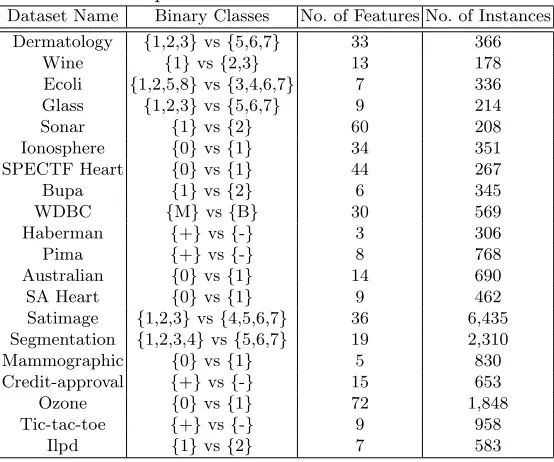
Table 2: Comparison of ensemble classification methods
Dataset Name Binary Classes No. of Features No. of Instances Dermatology {1,2,3}vs{5,6,7} 33 366
Wine {1}vs{2,3} 13 178
Ecoli {1,2,5,8}vs{3,4,6,7} 7 336
Glass {1,2,3}vs{5,6,7} 9 214
Sonar {1}vs{2} 60 208
Ionosphere {0}vs{1} 34 351
SPECTF Heart {0}vs{1} 44 267
Bupa {1}vs{2} 6 345
WDBC {M}vs{B} 30 569
Haberman {+}vs{-} 3 306
Pima {+}vs{-} 8 768
Australian {0}vs{1} 14 690
SA Heart {0}vs{1} 9 462
Satimage {1,2,3}vs{4,5,6,7} 36 6,435 Segmentation {1,2,3,4}vs{5,6,7} 19 2,310
Mammographic {0}vs{1} 5 830
Credit-approval {+}vs{-} 15 653
Ozone {0}vs{1} 72 1,848
Tic-tac-toe {+}vs{-} 9 958
Ilpd {1}vs{2} 7 583
classify a test sample each tree is traversed and a vote is assigned to the class based on the probability score. The output is selected by choosing the mode i.e. the output with most votes, of all the ’k’ classification outputs. Reducing the number of predictive variables ’m’ reduces the correlation between trees, which stops ensemble model from converging to similar generalisation error and in turn helps in increasing the accuracy. Thus, ’m’ needs to optimised to minimise the generalisation error.
3
Materials and Methods
3.1 Datasets and Pre-processing
20 benchmark datasets from the UCI machine learning repository [29] were se-lected to compare the performance of the sese-lected algorithms, as shown in Ta-ble 2. These selected datasets contain different range of number of instances with different type of datasets. Not all the UCI datasets are binary and thus in some cases multiple classes are joined together for the purpose of binary classifica-tion [30].
dataset, but to compare the performance of the classifiers. 2) to improve the clas-sification results, further processing specific to each dataset wold be required, leading to more challenging comparison [30].
3.2 Experiments
The results were produced by running each dataset for 100 trials. In each trial, 80% of the data were randomly used for training the classifiers and the remaining 20% for testing. Subsequently, the accuracies were statistically compared using a two-sample t-test.
The Adaboost ensemble was run with 200 decision trees, Bagging also with 200 but Random Forest ensemble method with 100 decision trees. The De-FIMKL and the MJSVM ensemble methods used the Support Vector Machine (SVM) algorithms with Radial Basis Function (RBF) kernels as their base clas-sifiers. Five RBF kernels with their width (σ) evenly spaced between 0.5−
1.5/(number of f eatures) were used for both the ensemble methods.
Addi-tionally,L1 regularisation withλ= 0.5 was used for all the datasets. The focus of this work is to show the effect on the final output with change in the aggrega-tion models (DeFIMKL and MJSVM), and thus the settings for the RBF kernels and other ensemble methods were kept the same for all the datasets.
An underlying issue with ensemble classification algorithms is determining the size of ensemble. Not much discussion is given to this parameter selection as they are not in the scope of the paper.
4
Results and Discussions
Table 3 reports the average accuracies of the DeFIMKL, MJSVM, Adaboost, Bagging and Random Forest ensemble classification algorithms with standard deviations over 100 runs. A series of two-sample t-tests were conducted, which compared the accuracy of each algorithm against that of the highest performing algorithm for each dataset. To illustrate the results of these tests, both the absolute highest performing algorithm, along with any further algorithms that were found not to have a significantly lower (atp<.05) accuracy, are highlighted in bold. Thus, the values highlighted in bold should represent the algorithm(s) with the highest accuracy for each dataset, and will include all values that were not found to significantly differ from the best-performing model.
Table 3: Accuracy comparison of ensemble classification methods for the bench-mark datasets*
Datasets DeFIMKL MJSVM Adaboost Bagging Random with trees Forest
Dermatology 97.35 (1.86) 97.47 (1.75) 96.69 (2.05) 97.31 (1.77) 95.47 (2.65) Wine 99.44 (1.18) 99.42 (1.44) 96.81 (2.91) 97.78 (2.68) 96.44 (3.14) Ecoli 96.77 (1.84) 96.84 (1.85) 95.57 (2.01) 96.34 (2.36) 95.82 (2.29) Glass 94 (3.8) 94.16 (3.73) 93.91 (3.92) 94.28 (3.13) 92.72 (3.78) Sonar 84.57 (4.7) 83.76 (5.4) 83.17 (5.89) 83.21 (6.2) 79.31 (6.2) Ionosphere 94.61 (2.71) 94.34 (2.59) 90.41 (3.72) 92.76 (2.74) 91.15 (3.57) SPECTF Heart 79.19 (4.4) 79.48 (4.18) 79.78 (4.98) 81.85 (5.01) 80.81 (4.23)
Bupa 69.88 (4.95) 69.77 (4.71) 70.93 (5.32) 70.43 (5.02) 69.77 (5.65) WDBC 97.22 (1.64) 97.28 (1.62) 96.59 (2.03) 95.51 (1.94) 95.11 (2.15) Haberman 73.77 (4.84) 73.92 (4.88) 73.4 (4.25) 69.34 (4.99) 69.24 (4.52) Pima 76.12 (3.17) 76.49 (3.14) 75.97 (3.22) 76.61 (3.16) 75.97 (3.21) Australian 85.75 (2.42) 85.85 (2.35) 85.94 (2.79) 86.96 (2.68) 86.37 (2.81) SA Heart 71.16 (4.04) 71.66 (3.89) 69.31 (4.23) 69.39 (4.23) 68.63 (4.07) Satimage 95.69 (0.58) 95.53 (0.56) 94.09 (0.6) 95.6 (0.47) 95.17 (0.69) Segmentation 91.81 (1.15) 91.46 (1.08) 92.86 (1.53) 96.03 (1.1) 96.29 (1.26) Mammographic82.16 (3.65) 82.88 (4.02) 81.8 (5.71) 78.6 (5.39) 77.21 (5.02) Credit-approval86.89 (2.38) 86.66 (2.73) 86.47 (2.84) 87.4 (3.15) 87.02 (2.83)
Ozone 97.12 (0.79) 97.1 (0.8) 96.76 (0.77) 96.85 (0.85) 96.64 (0.83) Tic-tac-toe 89.64 (2.25) 88.54 (2.39) 84.34 (2.5) 94.38 (1.85) 95.35 (1.95)
Ilpd 72.18 (3.58) 71.79 (3.58) 68.18 (4.49) 68.01 (4.38) 67.77 (4.15)
*The numbers report the average accuracies with standard deviations over 100 runs
thus be inferred that the non-linear CFI aggregation can squeeze out a better performance at the cost of additional memory complexity, although a detailed comparison is need to fully answer this question.
5
Conclusions and Future Works
FIs are aggregation operators which are capable of exploiting all the possible interactions among the inputs through the use of FMs. Thus, in the context of ensemble classification FI-FM based ensemble classifiers not only consider indi-vidual classifier in the ensemble but all the possible combinations of classifiers in the ensemble. FI-FM ensemble classifiers have been used in various applica-tions over the past decade, yet in most papers, a dataset oriented comparison with state-of-the-art ensemble classification has been made. Thus, in this paper we addressed this gap and compared a FI-FM based ensemble classification al-gorithm DeFIMKL with the state-of-the-art ensemble classification alal-gorithms Adaboost, Bagging, MJSVM and Random Forest over 20 datasets.
complexity without having to learn the huge 2n FM vector i.e. taking the ma-jority voting of the SVMs results in similar performance to the non-linear CFI aggregation of the SVMs.
It is important to note that the DeFIMKL and the MJSVM are only com-pared for one base classifier i.e. SVM. Thus, in future, we aim to include different base classifiers such as Neural Networks, Decision Trees, etc, to fully answer the question raised in the paper. The results suggest that DeFIMKL achieves good accuracy over a number of datasets, although a time complexity comparison is also needed to to answer the effect of base classifiers on the FI-FM ensemble methods. Thus, in future we also aim to compare the time complexity among the selected ensemble classifiers.
Acknowledgements: The research was supported by The University of Not-tingham Vice-Chancellor’s Scholarship for Research Excellence (International).
References
1. Krawczyk, B., Minku, L.L., Gama, J., Stefanowski, J., Wo´zniak, M.: Ensemble learning for data stream analysis: a survey. Information Fusion37(2017) 132–156 2. Domingos, P.: A few useful things to know about machine learning.
Communica-tions of the ACM55(10) (2012) 78
3. Islam, M.A., Anderson, D.T., Pinar, A.J., Havens, T.C.: Data-Driven Compres-sion and Efficient Learning of the Choquet Integral. IEEE Transactions on Fuzzy SystemsPP(99) (2017)
4. Pinar, A.J., Rice, J., Hu, L., Anderson, D.T., Havens, T.C.: Efficient Multiple Ker-nel Classification using Feature and Decision Level Fusion. In: IEEE Transactions on Fuzzy Systems. Volume 6706. (2016) 1–1
5. Anderson, D.T., Price, S.R., Havens, T.C.: Regularization-based learning of the Choquet integral. In: IEEE International Conference on Fuzzy Systems, IEEE (jul 2014) 2519–2526
6. Pinar, A.J., Havens, T.C., Islam, M.A., Anderson, D.T.: Visualization and learn-ing of the Choquet integral with limited trainlearn-ing data. 2017 IEEE International Conference on Fuzzy Systems (FUZZ-IEEE) (jul 2017) 1–6
7. Pinar, A.J., Anderson, D.T., Havens, T.C., Zare, A., Adeyeba, T.: Measures of the Shapley index for learning lower complexity fuzzy integrals. Granular Computing
2(4) (dec 2017) 303–319
8. Pinar, A., Havens, T.C., Anderson, D.T., Hu, L.: Feature and decision level fu-sion using multiple kernel learning and fuzzy integrals. 2015 IEEE International Conference on Fuzzy Systems (FUZZ-IEEE) (aug 2015) 1–7
9. Lequn Hu, Anderson, D.T., Havens, T.C.: Multiple kernel aggregation using fuzzy integrals. IEEE International Conference on Fuzzy Systems (FUZZ-IEEE) (2013) 10. Li, K., Chen, C., Liu, W., Fang, X., Lu, Q.: Software defect prediction using fuzzy integral fusion based on GA-FM. Wuhan University Journal of Natural Sciences
19(5) (2014) 405–408
11. Zhang, L., Zhou, D.Q., Zhou, P., Chen, Q.T.: Modelling policy decision of sus-tainable energy strategies for Nanjing city: A fuzzy integral approach. Renewable Energy62(2014) 197–203
13. Karczmarek, P., Pedrycz, W., Reformat, M., Akhoundi, E.: A study in facial regions saliency: A fuzzy measure approach. Soft Computing18(2014) 379–391 14. Wang, Z., Xiao, N.: Fuzzy Integral-based Neural Network Ensemble for Facial
Expression Recognition. Proceedings of the International Conference on Computer Information Systems and Industrial Applications (2015)
15. Anderson, D.T., Havens, T.C., Wagner, C., Keller, J.M., Anderson, M.F., Wescott, D.J.: Extension of the fuzzy integral for general fuzzy set-valued information. IEEE Transactions on Fuzzy Systems22(6) (dec 2014) 1625–1639
16. Pinar, A.J., Rice, J., Havens, T.C., Masarik, M., Burns, J., Anderson, D.T.: Ex-plosive hazard detection with feature and decision level fusion, multiple kernel learning, and fuzzy integrals. 2016 IEEE Symposium Series on Computational Intelligence, SSCI 2016 (dec 2017) 1–8
17. Wagner, C., Havens, T.C., Anderson, D.T.: The Arithmetic Recursive Average as an Instance of the Recursive Weighted Power Mean. In: IEEE Int. Conf. Fuzzy Systems. 2017. (2017)
18. Fakhar, K., El Aroussi, M., Saidi, M.N., Aboutajdine, D.: Applying the upper inte-gral to the biometric score fusion problem in the identification model. International Conference on Electrical and Information Technologies (ICEIT) (2015)
19. Wang, Q., Zheng, C., Yu, H., Deng, D.: Integration of heterogeneous classi-fiers based on choquet fuzzy integral. 7th International Conference on Intelligent Human-Machine Systems and Cybernetics, IHMSC 20151(2015) 543–547 20. Murofushi, T., Sugeno, M.: A learning model using fuzzy measures and the
Cho-quet integral. Proc. of the 5th Fuzzy System Symposium29(1989) 213–218 21. Grabisch, M.: The application of fuzzy integrals in multicriteria decision making.
European Journal of Operational Research89(3) (1996) 445–456
22. Ko, Y.C., Fujita, H., Tzeng, G.H.: An extended fuzzy measure on competitiveness correlation based on WCY 2011. Knowledge-Based Systems37(2013) 86–93 23. Anderson, D.T., Keller, J.M., Havens, T.C.: Learning fuzzy-valued fuzzy measures
for the fuzzy-valued sugeno fuzzy integral. Lecture Notes in Computer Science
6178 LNAI(2010) 502–511
24. Freund, Y., Schapire, R.E.: A desicion-theoretic generalization of on-line learning and an application to boosting. journal of computer and system sciences55(1997) 119–139
25. Galar, M., Fernandez, A., Barrenechea, E., Bustince, H., Herrera, F.: A review on ensembles for the class imbalance problem: Bagging-, boosting-, and hybrid-based approaches. IEEE Transactions on Systems, Man and Cybernetics Part C: Applications and Reviews42(4) (jul 2012) 463–484
26. Breiman, L.: Bagging predictors. Machine Learning24(2) (1996) 123–140 27. Sun, Q., Pfahringer, B.: Bagging Ensemble Selection. Proceedings of the 24th
international conference on Advances in Artificial Intelligence (2011) 251–260 28. Rodriguez-Galiano, V.F., Ghimire, B., Rogan, J., Chica-Olmo, M., Rigol-Sanchez,
J.P.: An assessment of the effectiveness of a random forest classifier for land-cover classification. ISPRS Journal of Photogrammetry and Remote Sensing67(1) (2012) 93–104
29. Lichman, M.:{UCI}Machine Learning Repository, University of California, Irvine, School of Information and Computer Sciences (2013)
30. Fern´andez-Delgado, M., Cernadas, E., Barro, S., Amorim, D., Amorim Fern´ andez-Delgado, D.: Do we Need Hundreds of Classifiers to Solve Real World Classification Problems? Journal of Machine Learning Research15(2014) 3133–3181