
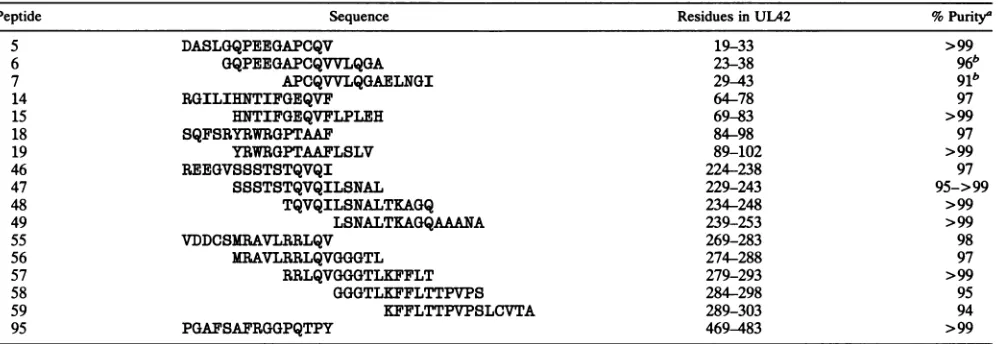
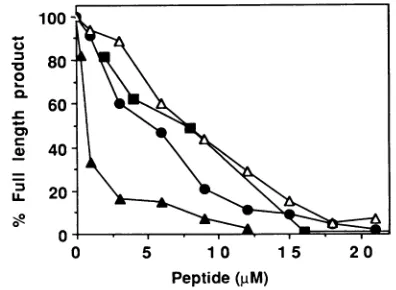
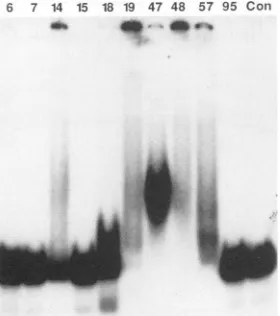
Inhibition of herpes simplex virus type 1 DNA polymerase activity by peptides from the UL42 accessory protein is largely nonspecific.
Full text
Figure

Related documents
To determine if macrophage depletion influenced the viral load in other PBMC, MV H protein expression was analyzed in 10 clodronate liposome-treated Ifnar ko -CD46Ge mice in which
Skin biopsies were obtained from infection sites 3 to 17 months after spontaneous papilloma regression or 6 to 10 months after induced regression from animals immunized with TrpE-E1
Herpes simplex virus (HSV) mutants defective for thymidine kinase expression (TK 2 ) have been reported to establish latent infection of sensory ganglia of mice, in that
All of the phylogenetically informative amino acid sequence differences between these viruses which could be located in the CPV structure were on or close to the outer or inner
If the differences in viral yields between KB and KBT4 cells were due to differences in transport of the uncoated viral DNA-protein complex to the nucleus and nuclear entry of the
The reovirus group C temperature-sensitive mutant tsC447, whose defect maps to the S2 gene, which encodes the major core protein r2, fails to assemble core particles at
Poliovirus infection at either 37 or 40°C resulted in the accumulation of labeled poliovirus proteins in HeLa cells and the inhibition of host cell protein synthesis (Fig..
Sequence and mapping analysis of other RTVL-H genomic and cDNA clones and PCR analysis of genomic DNA have shown that most elements in the human genome are deleted in these
