EFFECTIVENESS OF COMPUTER ASSISTED INSTRUCTION ON
KNOWLEDGE OF THE CARE AFTER CARDIAC SURGERY IN
PICU AMONG MOTHERS OF CHILDREN UNDER 12 YEARS
By
Neethu. S. Anandan
A DISSERTATION SUBMITTED TO THE TAMILNADU DR.M.G.R MEDICAL
UNIVERSITY, CHENNAI, IN PARTIAL FULFILLMENT OF THE
REQUIREMENTS FOR DEGREE OF MASTER OF
SCIENCE IN NURSING
EFFECTIVENESS OF COMPUTER ASSISTED INSTRUCTION ON
KNOWLEDGE OF THE CARE AFTER CARDIAC SURGERY IN
PICU AMONG MOTHERS OF CHILDREN UNDER 12 YEARS
Approved by the dissertation committee on : _________________________
Research Guide : __________________________
Prof .S . Ani Grace kalaimathi M.Sc (N).,PGDNA., DQA.,Ph.D
Principal,
MIOT College of Nursing, Chennai -116
Nurse Guide : ___________________________
Prof .S . Ani Grace kalaimathi M.Sc (N)., PGDNA., DQA.,Ph.D
Principal,
MIOT College of Nursing, Chennai-116
Medical Guide : ___________________________
Dr.Robert Coelho. MS, MCh
Director & Senior Chief Pediatric Cardiac Surgeon,
MIOT Hospitals, Chennai-89
A DISSERTATION SUBMITTED TO THE TAMILNADU DR.M.G.R MEDICAL
UNIVERSITY, CHENNAI, IN PARTIAL FULFILLMENT OF THE
REQUIREMENTS FOR DEGREE OF MASTER OF
SCIENCE IN NURSING
DECLARATION
I hereby declare that the present dissertation entitled “EFFECTIVENESS OF COMPUTER ASSISTED INSTRUCTION ON KNOWLEDGE OF THE CARE
AFTER CARDIAC SURGERY IN PICU AMONG MOTHERS OF CHILDREN
UNDER 12 YEARS” is the outcome of the original research work undertaken and carried out by me, under the guidance of Prof .S. Ani Grace Kalaimathi.MSc (N), PGDNA, DQA, Ph.D Principal and Head of the Department of Child Health Nursing ,MIOT College of Nursing, Chennai. I also declare that the material of this has not formed in any way, the basis for the award of any Degree or Diploma in this University or other Universities.
Neethu .S. Anandan
i
ACKNOWLEDGEMENT
I lift up my heart in gratitude to God Almighty, for I feel the hand of God on me, leading me through thick and thin to heights of knowledge. It is he who granted me the grace and the physical and mental strength behind all my efforts.
I express my genuine gratitude to the managing trustee of MIOT Educational institutions for giving me an opportunity to conduct the study.
I owe my wholehearted and sincere thanks to Prof. S.Ani Grace Kalaimathi .MS.c (N), PGDNA.,DQA.,Ph.D, Principal, Research guide and Nurse guide, MIOT College of Nursing for her valuable guidance, innovative suggestions, constant motivation and extreme patience which enabled me to complete the dissertation successfully.
I extend my thanks to Dr.Robert Coelho. MS, MCh
,
Director & Senior Chief Pediatric Cardiac Surgeon, MIOT Hospitals , Chennai, for having given me the permission to conduct this study at MIOT Hospitals and also, for his valuable suggestions and guidance for this study.I am highly indebted to Prof. Mrs .Jayasri M.Sc. (N), M.Phil, Ph.D, Vice Principal, MIOT College of Nursing for her valuable suggestions, timely, constant guidance, unceasing motivation and willingness to help all the time.
I am grateful to Prof. Dr.Antony Amalraj, M.Sc., Ph.D., Biostatistician for his help in statistical analysis. I have much pleasure of expressing my cardial appreciation and thanks to all the mothers who participated in the study with interest and co-operation .
ii
My heartfelt gratitude to Mrs. Vijayakumari MS.c (N) and Mrs.Anuratha, M.Sc. (N) , Lecturers, MIOT College of Nursing for their guidance and support throughout the study.
I am thankful to all the faculties of MIOT College of Nursing for their timely advice, encouragement and support.
I thank our Librarian Mrs.Bhuvaneshwari M.L.I.S for her constant help in reviewing the literature during thecourse of my work.
iii
ABSTRACT
A pre-experimental study to assess the effectiveness of computer assisted instruction on knowledge of the care after cardiac surgery in PICU among mothers of children under 12 years in selected hospitals at Chennai. The conceptual framework of the study was developed on the basis of Ludwig Yon Bertalanffy(1968) general system theory model .The study variable was mothers of children under 12 years of age.
An experimental research approach with pre – experimental pre and post test design was used to achieve the objectives of the study .The study was conducted in MIOT hospitals at Chennai, with a sample size of 30 mothers of children under 12 years. The samples were selected through non – probability convenient sampling technique.
The investigator used a demographic variable performa and with a structured questionnaire onknowledge of the care after cardiac surgery in PICU among mothers of children under 12 year to collect the data. The data collection tools were validated and reliability was established. The data was collected by using a self administered questionnaire method. After the pre test computer assisted instruction was administered to the mothers of children under 12 year and the post test was done after 7 days.
iv
v
TABLE OF CONTENTS
CHAPTER CONTENTS PAGE NO
I
II
III
INTRODUCTION
Need for the study
Statement of the problems Objectives of the study Operational definition Hypothesis
Assumptions Delimitation
Projected out come
REVIEW OF LITERATURE
Literature related to study on care after cardiac surgery in PICU.
Literature related to study on parental knowledge on PICU care.
Literature related to effectiveness of Computer Assisted Instruction.
Conceptual framework.
RESEARCH METHODOLOGY
Research approach Research design
1 – 11
12 - 45
vi
IV
V
VI
Research setting Population Sample Sample size
Sampling technique Sampling criteria Validity
Reliability Pilot study
Data collection procedure Human right protection
DATA ANALYSIS AND INTERPRETATION
DISCUSSION
SUMMARY, CONCLUSION, LIMITATIONS,
IMPLICATIONS AND RECOMMENDATIONS
REFERENCES
APPENDICES
54-69
70-74
75-80
81- 84
vii
LIST OF TABLES
S.NO TABLES PAGE NO
1.
2.
3.
4.
5.
6.
Distribution of sample according the demographic variables.
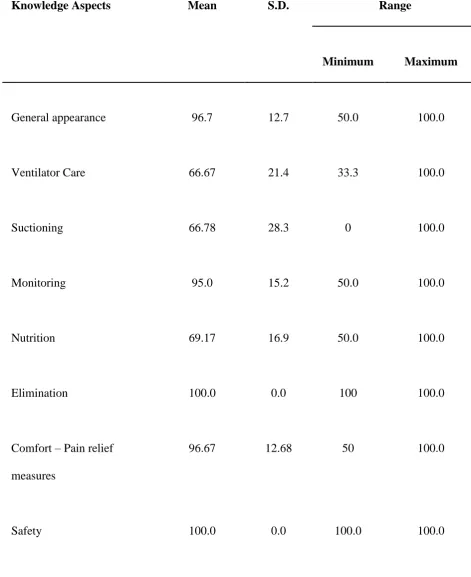
Mean and standard deviation of pre-test knowledge scores.
Percentage distribution of knowledge scores during pre- test
Mean and standard deviation of post-test knowledge scores.
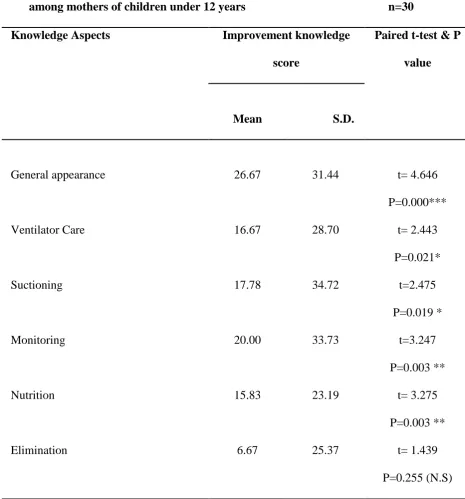
Effectiveness of knowledge on care of children after cardiac surgery.
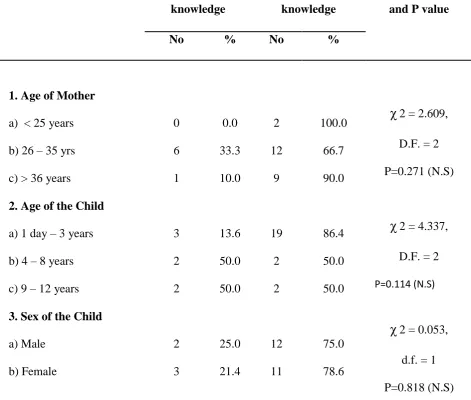
Association between selected demographic variables pre- and post-test knowledge scores of mothers of children under 12 years on care after cardiac surgery in PICU.
55
58
60
61
65
viii
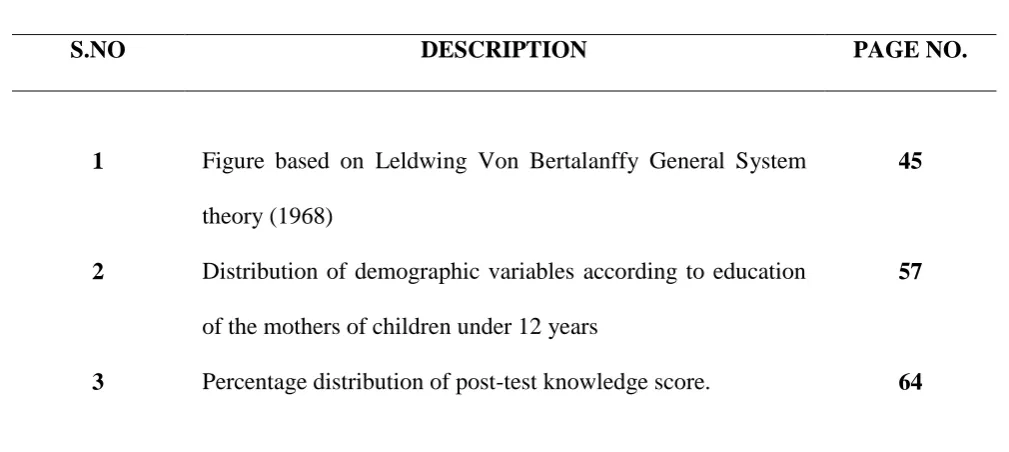
LIST OF FIGURES
S.NO DESCRIPTION PAGE NO.
1
2
3
Figure based on Leldwing Von Bertalanffy General System theory (1968)
Distribution of demographic variables according to education of the mothers of children under 12 years
Percentage distribution of post-test knowledge score.
45
57
[image:11.595.57.562.117.343.2]ix
LIST OF APPENDICES
S.NO DESCRIPTION PAGE NO
1
2
3
4
5
Letter seeking permission to conduct the study. Informed consent form.
Data collection tool Lesson plan
Teaching module
x
xi
xii-xviii
xix-xxxiv
1
CHAPTER I
INTRODUCTION
“Jesus said, let the little children come to me and
Do not forbid them, for of such is the kingdom of heaven”
St. Mathew 19:14
“The welfare of today’s children predict the health and welfare of the community
tomorrow” Gandhi 1967
Children are the jewels in their parents’ lives. When parents are informed that their child have congenital heart disease (CHD) even before the child is born, the joy of giving birth is often coupled with fear, guilt, sadness, shame, and blame because of the loss of the desired healthy child they had dreamed of (Cohn, 2003; Purcell, 2005). Many parents react to the initial diagnosis of their child’s CHD with a lack of acceptance or by denying that there is a problem (Canam, 2007; Lubinsky, 2005; Rosenthal, Biesecker & Biescker, 2001). Parents may also experience intense anger at the unfairness of the situation, or they may feel socially isolated and stigmatized. (Rosenthal et al., 2001).
2
Children are the image of God and they represent the future world. So the one who care for the children in illness should have that commitment and adequate knowledge as they render service to them.
Circumstances are different, health needs are different and most of all children are different. Working with present population each one should understand the remarkable responses of children with illness and appreciate the challenges and rewards they provide for the nurses who care for them.
Most of the children with congenital heart disease have normal cognitive and motor development. However some may have delayed achievement owing to hypoxia. Inactivity and parental overprotection may be a reason for the delay. The parents should be aware of the care that will be given in pediatric intensive care unit.
Heart surgery is required to be done in children to repair heart defects (known as congenital heart defects) with which a child is born and such surgeries are known as Paediatric Heart Surgeries. Apart from congenital defects these surgeries are also required to treat other heart diseases that a child would get after birth. This procedure is done for the child’s well-being. Heart Defects can occur inside the heart or outside the heart in the large blood vessels. Some heart problems need a surgery right after the baby is born while for others one can safely wait for a few months or years to have surgery.
3
Information should be given about the current working or confirmed diagnosis of the child, along with the current medical condition, including the status of function of various vital organ systems, the results of tests from the previous day, and the plan of management: both immediate and long term in simple terms which parents can understand. This personalized attention and time given by our consultants regularly allays the fears the parents they have about their child, clarify all doubts and questions and allows them to ask questions to fully understand their child's illness and the stage of illness. Any surgical procedures, invasive procedures are also explained sometimes with the help of simple diagrams and informed written consent obtained as and when necessary by consultants and pediatricians. The nurses will be always with the patient and give them therapeutic care and constant support to the parents and children.
The development of cardiac surgery and cardiopulmonary bypass techniques had reduced the mortality rates of these surgeries to relatively low ranks. For instance, repairs of congenital heart defects are currently estimated to have 4–6% mortality rates.
4
Approximately 1 in 5,000 CHD children will require surgical correction of their heart defect(s) (Hoffman, 1990). Each newborn with a CHD must undergo a careful evaluation for any additional defects before surgery because a heart defect may be associated with other congenital defects (VanVught, Sreeram, Schroder & Vries, 2000).
Need for the study
We live in a era often called as information age. The explosion of new knowledge is so great that keeping us up-to-date with the latest information. Knowledge of the parents varies according to their educational economic social status. In rural or remote areas the parents will not know the congenital heart disease, as the child get any problem in the birth they believe it is the sin carried from the parents. Cardiac specialized hospitals are playing major roles in treating and managing the child with Congenital Heart Disease.
Congenital heart disease is one of the most serious and most commonly occurring chronic illnesses in children (Grech & Elliott, 1998). Congenital heart disease involves structural, positional or functional abnormalities of the heart and/or related major blood vessels present at birth. It may be acyanotic or cyanotic, depending on whether non oxygenated blood is present in the systemic circulation system (Friedman, 1999; Lilly, 1998; Porth, 2002).
5
be as high as fifty percent in the first year of life, depending on the condition (NIH Guide: Paediatric Disease Clinical Research Network, 2000; Hamed & Maher, 2000). As a result, the economic strain on the health care system that results from caring for CHD children is significant (Bristow, 1995; Rossiter & Callan, 1993).
Because of the advancement of foetal imaging techniques since 1980, studies suggest that 30 to 60 percent of congenital heart defects can be discovered prenatally by foetal echocardiography Botto and Correa (2003);
Bristow (1995) and Allan (1996) indicated that the exact etiology of CHD remains elusive in most cases; however, the incidence of CHD is higher when there is an interaction between some factors in pregnant woman and genetic susceptibilities. Women at risk of having a CHD child include those with a family history of CHD, those exposed to rubella during the first three months of pregnancy, those who are over 40, those with chronic illness such as insulin-dependent diabetes, 25 those who are heavy smokers and who drink a lot of alcohol, or those exposed to drugs such as indomethacin. Also, chromosomal abnormalities (e.g., Down syndrome) are related to the increased incidence of heart defects in children (Karmer, et al., 1987; Porth, 2002; Wong, 1987). The overall occurrence of CHD in the newborn sibling of an affected child is relatively higher than in the general population. Both male and female children are affected equally (Hamed & Maher, 2000; Wong, 1987).
6
previous medical experience, the child's developmental status, the parent-child interaction, the seriousness of the illness, the severity of the medical procedure, and the coping style adopted by a child.
Further investigation of such mediating variables as mentioned above is of benefit to children and families, as it can alert health practitioners to those children (and parents) who are most at risk and, as well, enhance the effectiveness of preparatory interventions. It is recommended that the adoption of a family systems perspective in future research will further the understanding of how the child patients and their families cope with medical procedures.
Around six million people in India (2008) have coronary artery disease and five million have rheumatic heart disease. While 40% of them require cardiac surgery, there is a need for surgery to paediatric cases. Apart from the children being born with heart defects, a large number of children developed heart defect due to rheumatic disease. Around 2,500 child heart surgeries were performed every year in the country. But, the number of heart surgeries should be at least 5,000 annually considering the immediate needs of newborns. The reasons for congenital heart defect may be due to the prevalence of congenital cardiac disease was higher among the Asian population and marriages among close relatives could be one reason.
In Tamilnadu the Heart Line Hospital has completed total 500 cardiac congenital surgeries recently in 2009.
7
which can manifest themselves up to one year post-discharge. While a small number of studies have attempted to identify predictors of psychological outcome, this work remains in its infancy. The importance of the child's interpretation of the illness experience in influencing subsequent behavioural and emotional responses was highlighted.
The development of cardiac surgery and cardiopulmonary bypass techniques has reduced the mortality rates of these surgeries to relatively low ranks. For instance, repairs of congenital heart defects are currently estimated to have 4–6% mortality rates. The results of heart surgery in children often are excellent. Heart surgery can reduce symptoms, improve quality of life, and increase lifespan.
At Cincinnati Children's Hospital Medical Centre, in Cincinnati at Ohio approximately 200 to 300 open-heart operations are performed each year. In the United States, approximately 20,000 paediatric open heart procedures are performed each year. These procedures are done safely in younger children. Currently nearly 25 percent of children undergoing open heart surgery are under a month of age, and nearly 70 percent are under 1 year of age.
8
emotions as the most stressful dimensions of their PICU experience. Parents are frightened by some of the behaviours their child displays, such as being afraid, acting or looking as if in pain, and whining, or crying.
For assessing the mothers’ knowledge about post cardiac surgery care in pediatric intensive care unit, mothers need to have adequate knowledge about post cardiac surgery care in pediatric intensive care unit. Based on this extensive review of the study the investigator felt that the mothers of children under twelve years have very little knowledge about post surgery care in pediatric intensive unit. Computer assisted instruction on post cardiac surgery care in pediatric intensive care unit is the only way to bring a strong influence on mother’s knowledge about post cardiac care in pediatric intensive care unit.
Statement of the problem
A pre-experimental study to assess the effectiveness of computer assisted instruction on knowledge of the care after cardiac surgery in PICU among mothers of children under 12 years in selected hospitals at Chennai.
Objectives of the study
To assess the existing knowledge of the care after cardiac surgery in PICU among mothers of children under 12 years.
9
To associate post-test knowledge scores on knowledge of the care after cardiac surgery in PICU among mothers of children under 12 years with the selected demographic variables.
Operational definitions
Effectiveness
In this study it refers to the extent to which the computer assisted instruction will help in gaining parental knowledge scores on knowledge of the care given to children under 12 years in PICU after cardiac surgery
Computer Assisted Instruction
In this study it refers to the use of laptop as an aid for preparation of power point presentation with videos for a selected group of mothers on knowledge of the care given to children under 12 years in PICU after cardiac surgery.
Knowledge
In this study knowledge refers to the awareness and understanding of the care given in PICU by the mothers.
Care
10
Children under 12 years
In this study it refers to the children from birth to 12 years of age who have undergone cardiac surgery.
Cardiac surgery
In this study it refers to general cardiac surgical procedure used to treat a disease of the heart or its blood vessels.
Pediatric Intensive Care Unit
In this study the Paediatric Intensive Care Unit (PICU) is a multidisciplinary unit that provides intensive care for infants and children after cardiac surgery. This will be called as PICU.
Hypothesis
H1 - There is a significant difference between the pre-test and post-test score on knowledge of the care after cardiac surgery in PICU after giving computer assisted instruction among mothers of children under 12 years
11
Assumptions
Mothers whose children under 12 years in PICU after cardiac surgery may have inadequate knowledge on care after cardiac surgery in PICU of children under 12 years.
A computer assisted instruction will help to improve the knowledge on care after cardiac surgery in PICU among mothers of children under 12 years.
Computer assisted instruction will relieve the stress level of the mothers regarding knowledge of the care after cardiac surgery in PICU of children under 12 years.
Delimitations
The study is delimited to those mothers who have children bellow 12 years of age underwent cardiac surgery.
The study is delimited to mothers who speak in Tamil or English only.
The study is delimited to mothers who are willing to participate.
Projected outcome
The mothers will gain adequate knowledge regarding care given to the children under 12 years in PICU after cardiac surgery.
12
CHAPTER II
REVIEW OF LITERATURE
The review of literature refers to the activities involved in identifying and searching for information on a topic and developing and understanding the state of knowledge on the topic. Polit and Hungler [2004]
Literature review was done on care after cardiac surgery by means of extensive survey, books, journal, internet and media. Research as well as non-research literatures were reviewed to burden the understanding and gain insight into the problem under study.
The review has been divided under the following headings
Section I :
Literature related to study on care after cardiac surgery in PICU
Section II :
Literature related to study on parental knowledge on PICU care
Section III :
13
Section I:Literature related to study on care after cardiac surgery in PICU
Algra (2012) revealed that Bedside prediction rule for infections after paediatric cardiac surgery. The purpose of this study was to develop a bedside prediction rule to estimate the risk of a postoperative infection. All consecutive paediatric cardiac surgery procedures between April 2006 and May 2009 were retrospectively analysed. The primary outcome variable was any postoperative infection, as defined by the Centre of Disease Control (2008). All variables known to the clinician at the bedside at 48 hour post cardiac surgery were included in the primary analysis, and multivariable logistic regression was used to construct a prediction rule. He concluded that simple bedside prediction rule designed for use at 48 hour post cardiac surgery can discriminate between children at high and low risk for a subsequent infection.
Chechaiah (2012) discussed that Surgical intervention for congenital heart disease (CHD) can be complicated by pulmonary hypertension (PH), which increases morbidity, mortality, and medical burden. Consequently, postoperative management of PH is an important clinical consideration to improve outcomes. Inhaled nitric oxide (iNO) is a widely accepted standard of care for PH and has been studied in the context of cardiac surgery for CHD. However, large randomized, double-blind, placebo-controlled, multicenter clinical trials in paediatric patients are limited.
14
patients. The result revealed that the paediatric index of mortality 2 demonstrated poor performance with fair discrimination, poor calibration, and predictive ability for paediatric cardiac surgery population and thus cannot be recommended in its current form as an adequate adjustment tool for quality measurement in this patient group.
Plumpton.K.R. (2010) conducted a study to investigate associations between thyroid hormone and cortisol concentrations after cardiac surgery and postoperative intensive care course. His result reveals that infants < 3 months of age with low tri-iodothyronine or high cortisol concentration on PICU admission have a more complicated PICU course. Low cortisol concentration is common in the early post operative period, but is not associated with post-operative complications.
Pons Odena (2009) conducted a prospective study to report the experience with non invasive ventilation (NIV) after cardiac surgery. A total of 331 patients were admitted to the unit after cardiac surgery during this period. Of these 159 were extubated in the operating room. NIV was introduced in 29 episodes on 26 patients. Fallot’s tetralogy and AVD were the most common heart disease and 65% had type II respiratory failure. The respiratory problems usually involved were acute pulmonary oedema and atelectasis. NIV is effective and safe after cardiac surgery. It has very good results in respiratory failure due to Atelectasis and pulmonary oedema. NIV failure in these patients is strongly associated with pre operative pulmonary sequelae secondary to heart disease.
15
program including a feeding protocol and feeding flow was provided to the study group (n=19) and usual feeding care to the control group (n=19). The effect was analysed in terms of total feed intake, total calorie intake, gastric residual volume, and frequency of diarrhoea. Study revealed significant increase level of calorie intake and feeding amount compared to the control group.
Guardia Cam (2008) conducted a study to determine the nosocomial infection (NI) rate, main risk factors and microbial spectrum in a paediatric intensive care unit (PICU) for a group of patients. A prospective study was performed including all patients admitted to the PICU after cardiac surgery between December 2003 and November 2004. NI was defined according to centres for disease control criteria, result reviewed that 16 patients occurred atleast 1 episode of NI. The NI rate was 4.9 per 100 patients per day. The most common NI was pneumonia, followed by urinary tract infection. There were no episodes of sepsis. Aggressive monitoring and supportive devices are the main risk factors for NI. Presumed NI should be diagnosed according to standard criteria before starting antibiotic therapy and treatment modified depending on culture result.
16
Cardiol Young, etal. (2009) conducted a study on impact of oral health on the quality of life of young patients with congenital cardiac disease, findings indicated that it is of paramount importance that cardiologists and their associated staff educate patients and families about oral health and other issues associated with congenital cardiac disease.
Pazvakavambwa.I.E. (2004) conducted a study to find out if the status of a patient on arrival in the intensive care unit had any bearing on the immediate ICU outcome and if there are any correctable factors. He had undergone retrospective survey where 147 surgical patients admitted to the PICU during the period of whom 77 were male and 43 were emergency surgical procedures. All patients were coming from the operating theatre. Some simple measures could be undertaken to improve immediate ICU outcome in surgical patients in a resource limited environment, such as improving the ambient temperature in OT during surgery and standardizing transportation to PICU.
17
Flori (2003) conducted a study to characterise transthoracic intracardiac catheter uses and associated morbidities in paediatric patients recovering from congenital heart defect surgery and to identify potential risk factors associated with their use. A prospective data collection and review was used in 18 bedded PICU in a tertiary care hospital. Use of transthoracic intracardiac catheters in paediatric patients is safe. Young infants and paediatric patients with thrombocytopenia or with catheters in the left atrial or pulmonary artery position have a greater need for interventions after catheter removal, warranting added precautions.
Section II: Literature related to study on parental knowledge on PICU care
18
Fernandes (2011) conducted a study to assess parental knowledge regarding lifelong congenital cardiac care (LLCCC). In this multi centre study, he has administered a questionnaire to parents of children with moderate and complex CHD to assess knowledge of life long congenital cardiac care. A total of 500 parents participated; the median age of their children was 10 years (range: 2-18 years). Most parents (81%) understood that their child would need LLCCC, but only 44% recognized that their child's cardiology care should be guided by an adult congenital heart specialist in adulthood. More than half (59%) of the parents stated that their current cardiology team had never spoken to them about LLCCC, but 96% wished to learn more. Variables associated with parental LLCCC knowledge included previous discussions regarding LLCCC, underlying cardiac surgical diagnosis, and level of parental education. He concluded that substantial number of parents of children with moderate and complex CHD lack knowledge about LLCCC, but almost all of them have a desire to learn more about the care their child will need as an adult.
19
attentiveness, organization of the team, and flow of information during the handover. All three phases of the handover were significantly improved with the handover intervention. The observer scores were also significantly improved as were the perceptions of the staff following the implementation of the handover tool. There was no significant increase in the duration of the handover. Communication between the operating room and intensive care staff, regarding postoperative paediatric cardiac patients, significantly improved with the implementation of a structured handover.
20
Michelson (2009) conducted a study to broaden existing knowledge of pediatric end of life decision making by exploring factors described by parents of patients in the PICU as important/influential if they were to consider withdrawing life sustaining therapies. A quantitative and qualitative analysis of semi structured 1 to 1 interview was done in 40 of 70 parents. Forty parents interviewed said they could imagine a situation in which they could consider withdrawing life sustaining therapies. Parents described a broad range of views regarding possible consideration of withdrawing life sustaining therapies for their children and what factor would influence such a decision.
21
Tagarro Gac (2008) conducted a study to know in depth the parental perception on potential improvements relating to end of life care in the PICU. The method used was long and probing interviews with parents of decreased children. Answers were analyzed through content analysis (Qualitative methodology). Eleven parents and/or mothers agreed to meet for an interview, they mentioned that in depth life care may be improved in the following areas like information and communication, attention to families, death and after death time, unit organization, children care during admittance and empathy from the staff. It is possible to obtain information about end of life care by asking parents. Content analysis provides with useful knowledge to face child death and providing intensive care. The main areas to improve are related with family centered care.
Agarwal.S.(2008) discussed on the determinants if a paediatric intensive care unit (PICU) daily patient goal sheet would improve communication between health care providers and decrease length of stay (LOS). The result reveals that using a PICU daily patient goal sheet can improve communication between health care providers, help nurses identify the in-charge physicians, and be helpful for patient care. By explicitly documenting patient care goals, there is enhanced clarity of patient care plans between health care providers.
22
result reveals that Children hospitalized in the PICU should be monitored for posttraumatic stress disorder during and after their stay.
Robert (2007) conducted a study on knowledge on PICU care in San Francisco. Family members of all pediatric patients admitted to an intensive care of San Francisco General Hospital was screened for enrolment and recruited sequentially over a period of nine months. They determine the frequency of family members’ correct responses to the survey questions about PICU care. Family member responses were compared to the chart and real-time patient observation reality. Family members have poor overall understanding of PICU patients’ prognosis, resuscitation status and care, defined as prior as less than 75% correct responses to the yes/no PICU care questions.
Salim (2009) conducted a study to assess the knowledge of family members regarding ICU care before and after they were given the educational brochure. The result revealed family members deficiency in knowledge regarding the role of respiratory therapist, pulse oximetry and DNR status which improved after reading the educational booklet (82% and 97% (p value 0.02); 75% and 95% (p value 0.003); 43% and 97% (p value < 0.00001) respectively. On the follow-up questionnaire they scored above 85% consistently. 100% of family members found the educational brochure useful. Hence there was significant lack of understanding revolves around important issue of DNR, which showed improvement with education provided by the information brochure.
three-year-23
old child undergoing heart surgery due to congenital heart disease (CHD). In this phenomenological study in Taiwan nine mothers were interviewed in their homes. They were invited to share their experience of family interactions and relationships while facing a decision about their child's heart surgery. The interviews were recorded and transcribed for further analysis according to Colaizzi's phenomenological methodology. He concluded that when parents face their child having CHD and plan heart surgery, the whole family is living through a stressful decision-making process. According to the results of this study, it is obvious that the caregivers and their whole families experience psychological distress, role reorganization and remodelling of family functioning.
24
Grahn.K. (2006) revealed to examine attitudes and experiences of parents whose children have complex congenital heart disease (CHD) with respect to dental health information and advice, dental care, and service and to compare the results with data from an age- and gender-matched control group without any medical problems. Each group comprised parents of 33 children; the children's mean age was 9.4 years. All the cases and the controls resided in the county of Västerbotten, northern Sweden. Data were collected with a questionnaire with 20 joint questions to both groups and four additional questions to the CHD group. He concluded that children with CHD in northern Sweden mainly receive their dental health information from a physician or a dentist, and healthy children mainly receive information from a dental hygienist indicating that children with CHD are given priority in the dental care system. Parental attitudes to reception in the dental service differed, and parents of healthy children scored the reception at the dental clinic better than parents of children with CHD. It is suggested that children with severe CHD should receive dental care in clinics for paediatric dentistry, particularly at early ages.
25
determined. Univariate analyses and logistic regression were performed to identify significant determinants of knowledge in selected items. He concluded that parents of children with congenital heart disease have important knowledge gaps. His findings suggest that the current educational programme is inadequate and needs to be refined to promote better parental understanding of their child's heart disease, with the ultimate aim of enabling parents to impart such knowledge accurately to their children.
Studdert.D.M. (2003) conducted a study to determine the frequency, types, sources and predictors of conflict surrounding the care of PICU of patients with prolonged stay. He had undergone a prospective method in identifying conflicts by interviewing and treating physician and nurses at two stages during the patients PICU stay. The result enrolled that 110 patients based on the length of stay criterion. Clinicians identified 55 conflicts involving 51 patients in this group. Efforts to reduce and manage conflicts that arise in the care of critically ill children should be sensitive to the distinctive features of these conflicts. Knowledge of risk factors for conflict may also help to target such intervention at the patients and families who need them most.
26
prophylaxis. Results of this study and several other queries published over the past 20 years point to the need for continuous education of patients and their parents by physicians, nurses and allied health care providers.
Pye (2003) focused on parental education on newborn ccongenital heart surgery he examined parents experience a mixture of shock, disbelief, fear, anger, and often a profound sense of sadness. In the midst of these emotions they must learn to provide for the special needs of their infant. Providing parents with the knowledge and skills to care for their infant during this stressful time requires the concerted effort of a multidisciplinary team who can provide clear, concise, and consistent communication. He concluded that parents need to learn about care of the incision, nutritional support, and how to safely administer prescribed medications. Potential complications and when to call their health care provider or seek emergency care are an important focus of teaching. Information about infant development, challenges specific to their infant, and pragmatic strategies to support normal development are of prime interest to parents.
27
tended to lack knowledge themselves. An additional finding was that 68% of Jewish families turn to non-medical personnel for medical advice--an interesting finding not hitherto addressed. He concluded that ignorance of their child's problem did not correlate with its severity or complexity but rather with parental background: the less educated the parent, the more likely was the problem perceived incorrectly.
Smith. E.M. (2003) conducted a study to identify and describe the experience of mothers whose adoptive children are hospitalized and to compare those experiences to those of mothers whose biological children are hospitalized. A comparative descriptive design was used, the method adopted was mothers of hospitalized children (n = 33 adopted, n=19 biological) completed a slightly revised version of the parental stressor scale. Adoptive mothers perceived statistically, significantly higher level of stress related to their child’s behavioral/ emotional response to hospitalization. Children who had been with their family for less time perceived the hospitalization as more stressful. Nurses need to be aware of adaptive mothers consents related to attachment issues, limited family medical history and legal rights in order to provide sensitive and effective care. In-service education programs could be designed to help teach all staff about these important issues.
Section III:Literature related to effectiveness of Computer Assisted Instruction
28
selected through non- probability convenient sampling technique. The data were collected by using self administered method. She revealed that there was a significant improvement in the experimental group 1 means score comparison with the experimental group 2 mean score which were highly significant at P <0.006 level which indicates that the effectiveness of teaching methods. The result indicated that the teaching methods had significantly improved the level of knowledge on autism among 3rd year B Sc Nursing students.
29
Schroter (2011) compared computer based online interactive Diabetes Needs Assessment Tool (DNAT) versus online self-directed learning. Health professionals were randomised to a 4-month learning period and either given access to diabetes learning modules alone (control group) or DNAT plus learning modules (intervention group). Participants completed knowledge tests before and after learning (primary outcome), and surveys to assess the acceptability of the learning and changes to clinical practice (secondary outcomes). He concluded that both groups experienced a similar and significant improvement in knowledge. The learning materials were acceptable and participants incorporated the acquired knowledge into practice.
Jaclson.T.H. (2011) concluded a study to see the effectiveness of web-based teaching modules versus test-enhanced learning in dental education. The purpose of the study was to evaluate the effectiveness of self-tests as a component of web-based self-instruction in protectoral orthodontics and paediatric dentistry. He recorded the frequency of access to thirty relevant teaching modules and twenty-nine relevant self-tests for 157 second- and third-year D.D.S. students during the course of our data collection. There was a statistically significant positive correlation between frequency of accessing self-tests and course performance in one course that was totally based on self-instruction with seminars and multiple-choice examination (Level IV The data from this study suggest that increased use of web-based self-tests may be correlated with more effective learning in protectoral dental education by virtue of the testing effect and that dental students' usage of resources for learning changes significantly over the course of their education.
30
disorder. This study examined the efficacy of 2 computer-based training systems to teach children with attention deficit/hyperactivity disorder (ADHD) to attend more effectively. A total of 41 children with ADHD from 2 middle schools were randomly assigned to receive 2 sessions a week at school of either Neuro feedback (NF) or attention training through a standard computer format (SCF), either immediately or after a 6-month wait (waitlist control group). Parents, children, and teachers completed questionnaires pre- and post intervention. He concluded that this randomized control trial provides preliminary evidence of the effectiveness of computer-based interventions for ADHD and supports the feasibility of offering them in a school setting.
31
concluded that respondents did not use the application as intended. From the proposed framework, a social and economic factor (age) and a condition-related factor (chronic condition) predicted usage. Moreover, users were healthier and more knowledgeable about healthy behaviour than nonusers. We found no apparent effects of the intervention, although exploratory analyses showed that choosing to use or not to use the intervention led to different outcomes.
Nosik.M.R. (2011) discussed a study on effectiveness of a multi-component computer based training package that consisted of competency based instructions, video modelling, and two forms of feedback was evaluated in terms of treatment integrity of two procedures across four staff. Treatment integrity in completing critical steps of discrete-trial and backward chaining procedures were measured using a multiple baseline design across participants, counterbalanced for procedures. All four participants reached 100% treatment integrity on at least one skill in a role play setting. Maintenance probes showed skills maintained at the same levels 6 weeks following training.
32
Hamel.L.M. (2011) reviewed a study to examine the evidence regarding computer- or web-based interventions to increase preadolescent and adolescent physical activity. A systemic review was conducted. Fourteen randomized control trials or quasi-experimental studies were reviewed to: (1) determine the effect of computer- or web-based interventions on increasing physical activity and/or improving body mass index, weight, percent body fat or waist circumference as a result of increasing physical activity; and (2) examine if additional components associated with these interventions increased success. The result showed that Although most interventions demonstrated statistically significant increases in physical activity or positive health changes related to physical activity, findings were small or short-lived. He concluded that computer- and web-based interventions can promote physical activity among preadolescents and adolescents, particularly in schools. However, further efforts are needed to sustain positive changes.
33
CEVL platform improved urology residents' and medical students' correct assignment of SFU hydronephrosis grading to newborn renal ultrasounds.
Green.M.J. (2011) evaluated the effectiveness of a computer-based decision aid for teaching medical students about advance care planning. Second-year medical students at a single medical school were randomized to use a standard advance directive or a computer-based decision aid to help patients with advance care planning. Students' knowledge, skills, and satisfaction were measured by self-report; their performance was rated by patients. 121/133 (91%) of students participated. The Decision-Aid Group (n = 60) outperformed the Standard Group (n = 61) in terms of students' knowledge (p < 0.01), confidence in helping patients with advance care planning (p < 0.01), knowledge of what matters to patients (p = 0.05), and satisfaction with their learning experience (p < 0.01). Likewise, patients in the Decision Aid Group were more satisfied with the advance care planning method (p < 0.01) and with several aspects of student performance. Use of a computer-based decision aid may be an effective way to teach medical students how to discuss advance care planning with cancer patients.
Campos.J.H
.
(2011) conducted a study to compare the effectiveness of34
with limited thoracic anaesthesia experience. Both groups performed better than individuals in our prior study. Therefore, these methods should be considered when training anaesthesiologists to successfully place DLTs.
Reinhold.J. (2010) conducted a study to assess the effectiveness of a computer assisted Web-based educational module on enhancing understanding of substance abuse and drug diversion, and to assess students' abilities and confidence in applying the information. A web-based instructional module was presented to students enrolled in their second pre-professional year, and students were informed that it was part of a research study. Knowledge was tested using 10 pre- and post-module questions. Students were also presented with 5 survey questions assessing abilities related to the learning objectives. He concluded that web-based instruction is an alternative method for engaging students in course content. He found that 59% of our pilot study group worked in a pharmacy. From the success of the pilot study, the module was implemented as an extra credit assignment in a required course to provide a foundation for developing professional responsibility.
Bonnetain.E
.
(2010) did a study on benefits of computer screen-based35
procedures in the computer screen-based learning environment, a control group (CG) actively continued to learn cardiac arrest procedures using practical exercises in a traditional class environment. Both groups were given the same amount of practice, exercises and trials. The CG was then also tested on the high-fidelity patient simulator for CA2, after which it was asked to perform CA1 using the computer screen-based simulator. Performances with both simulators were scored on a precise 23-point scale. He concluded that Computer screen-based simulation appears to be effective in preparing learners to use high-fidelity patient simulators, which present simulations that are closer to real-life situations.
36
correctness of the answer, compared with the student-assessed treatment. In the latter, students hardly ever admitted to not knowing the answer. Therefore, student-initiated use of the tool in a student-assessed CAI requires to be improved.
Al Jasmi.F.(2010) had done a study in hunter disease e Clinic a interactive, computer-assisted, problem-based approach to independent learning about a rare genetic disease. The aim of the study is to develop interactive teaching software functioning as a virtual clinic for the management of MPS II. He concluded that the Hunter disease eClinic employs a CBT model providing the trainee with realistic clinical problems, coupled with comprehensive basic and clinical reference information by instantaneous access to an electronic textbook, the eBook. The program was rated highly by attendees at national and international presentations. It provides a potential model for use as an educational approach to other rare genetic diseases.
37
self-efficacy, intention and sexual behaviour. More research is needed to establish whether ICBI can impact on biological outcomes, to understand how interventions might work, and whether they are cost-effective.
Spijkerman.R
.
et al (2010) conducted a study to see the effectiveness ofcomputer assisted web-based brief alcohol intervention and added value of normative feedback in reducing underage drinking. The objective of the present study was to test, whether an online multi component brief alcohol intervention was effective in reducing alcohol use among 15- to 20-year-old binge drinkers and whether inclusion of normative feedback would increase the effectiveness of this intervention. A total of 575 online panel members (aged 15 to 20 years) who were screened as binge drinkers were randomly assigned to (1) a Web-based brief alcohol intervention without normative feedback, (2) a Web-based brief alcohol intervention with normative feedback, or (3) a control group (no intervention). Alcohol use and moderate drinking were assessed at baseline, 1 month, and 3 months after the intervention. Separate analyses were conducted for participants in the original sample (n = 575) and those who completed both post-tests (n = 278). He concluded that exposure to a Web-based brief alcohol intervention generated a decrease in weekly drinking among 15- to 20-year-old binge drinkers but did not encourage moderate drinking in the total sample. Additional analyses revealed that intervention effects were most prominent in males resulting in less weekly alcohol use and higher levels of moderate drinking among 15- to 20-year-old males over a period of 1 to 3 months.
38
randomized controlled trial, Dutch-speaking problem drinkers in the general population were randomly assigned (in blocks of 8, according to a computer-generated random list) to the 3-month e-therapy program (n = 78) or the waiting list control group (n = 78). The e-therapy program consisted of a structured 2-part online treatment program in which the participant and the therapist communicated asynchronously, via the Internet only. Participants in the waiting list control group received "no-reply" email messages once every 2 weeks. The primary outcome measures were (1) the difference in the score on weekly alcohol consumption, and (2) the proportion of participants drinking under the problem drinking limit. Intention-to-treat analyses were performed using multiple imputations to deal with loss to follow-up. A dropout questionnaire was sent to anyone who did not complete the 3-month assessment. The concluded that e-therapy for problem drinking is an effective intervention that can be delivered to a large population who otherwise do not seek help for their drinking problem. Insight into reasons for dropout can help improve e-therapy programs to decrease the number of dropouts.
39
Ryhnnen.A.M. (2010) conducted a study in aiming the systematic review to analyze what kind of internet or interactive computer based patient education programs have been developed and to analyze the effectiveness of these programs in the field of breast cancer patient education. The method adopted was randomized control on clinical trials or quasi experimental study. The interventions used were described as interactive computer or multimedia programs and use of the internet. The methodological solutions of the study varied. The effects of the studies were diverse except for knowledge related issues. The results suggest a positive relationship between the internet or computer based education program use and the knowledge level of patients with breast cancer but a diverse relationship between patients participation and other outcome measures.
Gina Owens (2008) done a comparative study with LEGO therapy and the social use of language programme (SULP) were evaluated as social skills interventions for 6-11 year old with high functioning autism and Asperger Syndrome. Results showed that the LEGO therapy group improved more than the other groups on autism specific social interaction scores. Maladaptive behaviour decreased significantly more in the LEGO and SULP group compared to the control group. There was a non-significant trend for SULP and LEGO groups to improve more than the non-intervention group in communication group in communication and socialization skills.
40
criteria. 4 CAPEPs were computer games, 7 only studied children, and 4 focused on urban population. Although interactive CAPEPs may improve patient asthma knowledge and symptoms, their effect on objective clinical outcome is less consistent.
Wattana nanthakasikorn (2005) conducted to investigate the effectiveness of computer assisted instruction (CAI) about breast feeding during the early stages of labour on knowledge and breast feeding behavior in primiparous adolescent mothers. The sample composed of 50 primiparous adolescent mothers who gave birth and received antenatal care at Siriraj Hospital where the sample was selected by simple random sampling and divided into experimental and control groups, with 25 subjects in each group. The samples in the control group received only routine nursing care, whereas those in the experimental group participated in CAI about breast feeding in combination with routine nursing care. Data were collected by a Personal Data Questionnaire, the Knowledge of Breastfeeding Questionnaire and the Breastfeeding Behavior Observation form. The data obtained was then analyzed by independent samples ‘t’test. Furthermore, the mean knowledge of breastfeeding scores in the experimental group was higher than those who received only routine nursing care, at a statistically significant level. Finally, the mean of breastfeeding behavior scores in the experimental group was higher than those who received only routine nursing care, at a statistically significant level.
41
42
CONCEPTUAL FRAMEWORK
A concept is an abstract idea or mental image of a phenomena or reality. Conceptualization is a process of forming ideas which centralized and forms conceptual framework for the development of research design. It helps the researcher to know what data need to be collected and gives direction to an entire research design.
A conceptual framework or model is a basic structure or outline of abstract, ideas, images that represent reality. Conceptual framework is a group of mental image or concepts that are related but relation is not explicit. The conceptual framework for the study is based on general system theory.
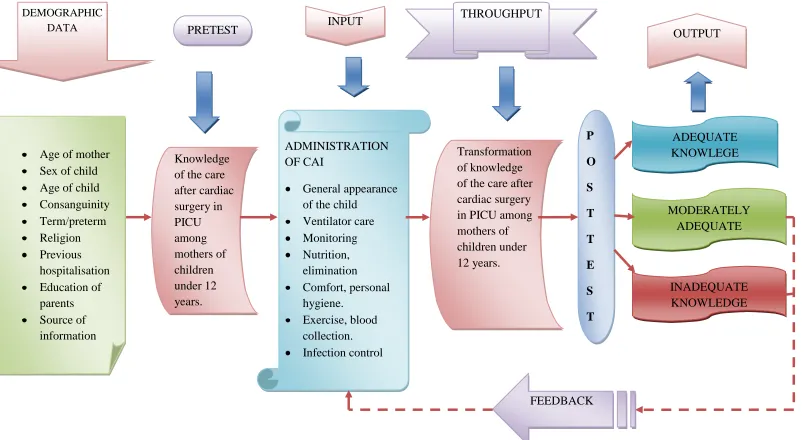
General system theory was first introduced by Von Bertanlanffy (1968). He described that general system theory is a set of interrelated parts that come together to form a whole. Each part is a necessary component required to make a complete meaningful whole.
Von Bertalanffy (1968) defies system as an organized whole until that produces an effect or a product whose interdependent component parts interact with the environment.
Open systems are those in which there is an organized whole unit that produces an effect or a product whose interdependent component part interacts with the environment.
43 They are characterized by,
Input of energy into the system
Throughput during which the system process changes and recognizes
imparted energy.
Output of energy into the environment in the form of goods, services and intellectual products.
In the present study the mothers were considered as an open system as they receive information from environment. The system uses this input to maintain homeostasis
Input
The first component of the system is input which is the information, energy and matter that enters into the system. For a system to work well input should contribute to achieve the purpose of the system. In the present study it refers to the administration of computer assisted instruction in the following aspects like general appearances of the child in PICU, ventilator care, suctioning, monitoring, nutrition, elimination needs, Infection, personal hygiene, Nutrition, exercise., blood collection, infection control, and psychological support to the child.
Throughput
44
surgery in PICU among mothers of children under 12 years, it is the transformation of knowledge on care after cardiac surgery in PICU.
Output
It is the return of matter, energy and information to the environment in the form of both physical and psychological behavior. Output varies widely depending on the type and purpose of the system affecting the environment. Here the output refers to the knowledge of mothers of children under 12 years regarding care after cardiac surgery in PICU. If knowledge level is found inadequate, rectification can be done by strengthening the existing knowledge through continuous monitoring which is not under the preview of this study.
Feedback
45
Figure 1: LELDWING VON BERTALANFFY’S GENERAL SYSTEM THEORY (1968)
DEMOGRAPHIC
DATA PRETEST INPUT
THROUGHPUT
OUTPUT
Age of mother Sex of child Age of child Consanguinity Term/preterm Religion Previous hospitalisation Education of parents Source of information Knowledge of the care after cardiac surgery in PICU among mothers of children under 12 years. ADMINISTRATION OF CAI General appearance of the child
46
CHAPTER III
METHODOLOGY
Methodology of research refers to the investigation of the ways of obtaining, organizing and analyzing data. A methodological study addresses the development in validation and evaluation of research tools and methods - (Polit, 2004)
This chapter deals with research approach, research design, setting, sample size, sampling technique, criteria for sample collection, development and description of tool, validity, reliability, pilot study, data collection procedure, data analysis and protection of human rights.
Research approach:
The research approach used for this study was quantitative approach.
Research design
A pre-experimental one group pre-test and post-test design only was used
NR
Pre-test Intervention Post-test
O1 X O2
Key
NR – Non randomization
O1 – Pre-test
X – CAI on care after cardiac surgery in PICU
47
Setting of the study
The study was conducted at Pediatric Intensive Care Unit in MIOT hospitals Chennai, which is a 600 bedded multispecialty hospital and has a specialized pediatric cardiology department with all facilities well equipped for monitoring the patient and excellent staff in taking care of the children. Every month 25-40 surgeries are done here.
Population
The population was all the mothers of children under 12 years of age underwent cardiac surgery.
Sample
The sample of the study comprises of mothers having children under 12 years of age who have underwent cardiac surgery in MIOT hospital, Chennai.
Sample size
The sample size was 30 mothers of children under 12 years of age who have underwent cardiac surgery.
Sampling technique
48
Sampling criteria
Inclusion criteria
Mothers who have children below 12 years of age underwent cardiac surgery.
Mothers who speak Tamil or English.
Mothers of children having both male and female child
Exclusion criteria
Mothers who cannot speak Tamil or English.
Mothers who are not willing to participate
Mothers of children who have undergone previous cardiac surgeries.
Data collection tool
Section
I-D
emographic dataThe demographic data includes
Age of the parents, age of the child, sex of the child, number of hospitalization, religion, previous hospitalization, family history, education of mother, source of information.
Section II-Knowledge on care of child in PICU
49
CAI
Computer Assisted Instruction is a technique used to teach the mothers on care after cardiac surgery in PICU to mothers of children under 12 years. It consists of information regarding the basic care given to the children in PICU after cardiac surgery. It is in the form of power point presentation with videos.
Blue print of the tool
S. no. Content Items Total questions
1. 2. 3. 4. 5. 6. 7. 8. 9. 10. 11. 12. 13.
General appearance of the child in PICU Ventilator care Suctioning Monitoring Nutrition Elimination
50
Scoring procedure
A questionnaire consisted of 30 questions and a score of one mark given for a correct response, 0 mark given for each incorrect response
Scoring and interpretation
Adequate knowledge - >75%
Moderate knowledge - 50-75%
Inadequate knowledge - <50%
Validity
The tool was developed through review of literature for content validity; the instrument was reviewed by experts in the area of the study.
Reliability
The reliability of the tool was established through pilot study. The reliability was tested by test retest method, the score was r =0.8
Pilot study
51
Data collection procedure
A formal permission was obtained from the management, Senior Chief Pediatric Cardiac Surgeon, Head of the Department of PICU (cardiac ward) and the Nursing Superintendent for conducting the study. The data collection was preceded for six weeks from 30.5.2011 to 9.7.2011. As per the inclusion criteria, 30 mothers of under 12 years children were selected in pediatric cardiac ward who underwent cardiac surgery. A time plan was scheduled for the data collection period. The list of children undergoing cardiac surgery was verified from the staff nurse after which the data was collected. Each day either one or two mothers were selected and an informed consent was obtained from the mothers after briefly explaining about the study. Then the base line demographic variables were gathered, after which the pre-test regarding structured self administered questionnaire on knowledge on care after cardiac surgery in PICU was assessed. The time taken to complete the pre-test for each mother was approximately 30 minutes to one hour. On the same day the computer assisted instruction regarding care after cardiac surgery was given to mothers which took approximately 30 minutes. After a week the mothers were given the post-test regarding care after cardiac surgery in PICU. This data collection procedure was carried out in this similar pattern for each of the mothers. The data collection was done as per the following schedule:
Number of samples Pre-test Post-test
1 30.5.2011 6.6.2011
52
1 1.6.2011 8.5.2011
1 2.6.2011 9.5.2011
1 3.6.2011 10.5.2011
1 4.6.2011 11.5.2011
1 6.6.2011 13.5.2011
1 7.6.2011 14.6.2011
1 8.6.2011 15.6.2011
1 9.6.2011 16.6.2011
1 10.6.2011 17.6.2011
1 11.6.2011 18.6.2011
1 13.6.2011 20.6.2011
1 14.6.2011 21.6.2011
1 15.6.2011 22.6.2011
1 16.6.2011 23.6.2011
1 17.6.2011 24.6.2011
1 18.6.2011 25.6.2011
1 20.6.2011 27.6.2011
1 21.6.2011 28.6.2011
1 22.6.2011 29.6.2011
1 23.6.2011 30.6.2011
1 24.6.2011 31.6.2011
1 25.6.2011 1.72011
1 27.6.2011 2.6.2011
1 28.6.2011 4.7.2011
1 29.6.2011 5.7.2011
1 30.6.2011 6.7.2011
1 31.6.2011 7.7.2011
53
Human rights protection
54
CHAPTER IV
DATA ANALYSIS AND INTERPRETATION
Analysis is defined as the method of organizing data in such a way that the research questions can be answered. Interpretation is the process of making sense of the results and of examining the simplification of the findings within a broader context. -Polit & Beck, 2004
This chapter deals with analysis and interpretation of the findings. The data’s were collected from mothers of children under 12 years to assess their knowledge of the care after cardiac surgery in PICU. The aim of the study was to determine the effectiveness of computer assisted instruction on knowledge of the care after cardiac surgery in PICU among mothers of children under 12 years.
Organization of findings
The study findings are presented in the following sections.
Section I : Distribution of sample according to the demographic characteristics.
Section II : Percentage distributions of knowledge mean score on pre-test and post- test.
Section III : Effectiveness of CAI on knowledge of the care after cardiac
surgery in PICU among mothers of children under 12 years. Section IV : Association between Demographic Variables and the post test Knowledge score.
55
Section –I
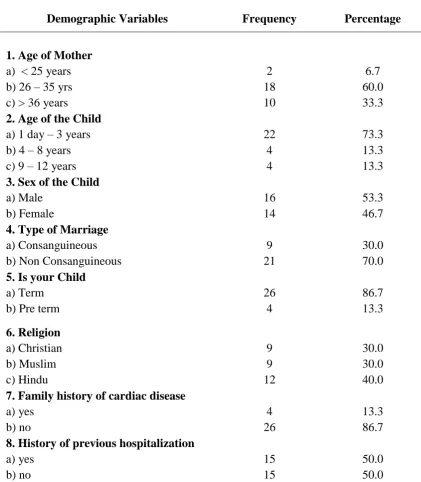
[image:67.595.102.524.233.716.2]This section deals with the description of demographic variables of mothers of children under 12 years after cardiac surgery in PICU.
Table 1: Distribution of sample according to their Demographic characteristics.
n=30
Demographic Variables Frequency Percentage
1.Age of