The application of deep eutectic solvent ionic liquids for
environmentally-friendly dissolution and recovery of precious metals
Gawen R.T. Jenkin
a,⇑, Ahmed Z.M. Al-Bassam
b, Robert C. Harris
b, Andrew P. Abbott
b, Daniel J. Smith
a,
David A. Holwell
a, Robert J. Chapman
c, Christopher J. Stanley
da
Department of Geology, University of Leicester, LE1 7RH, UK bDepartment of Chemistry, University of Leicester, LE1 7RH, UK c
School of Earth and Environment, The University of Leeds, LS2 9JT, UK d
Earth Sciences Department, Natural History Museum, London SW7 5BD, UK
a r t i c l e i n f o
Article history:
Received 1 July 2015 Revised 28 September 2015 Accepted 29 September 2015 Available online 9 October 2015
Keywords:
Ionic liquid Deep eutectic solvent Leach rate
Gold
Sulphide minerals
a b s t r a c t
The processing of ore by hydrometallurgy or pyrometallurgy typically has a high energy demand, and associated release of carbon dioxide. Thus there is a need to develop more energy-efficient and environmentally-compatible processes. This article demonstrates that deep eutectic solvent (DES) ionic liquids provide one such method since they can be used to selectively dissolve and recover native gold and tellurium, sulphides and tellurides.
Ionic liquids are anhydrous salts that are liquid at low temperature. They are powerful solvents and electrolytes with potential for high selectivity in both dissolution and recovery. Deep eutectic solvents are a form of ionic liquid that are mixtures of salts such as choline chloride with hydrogen-bond donors such as urea. DESs are environmentally benign, yet chemically stable and, furthermore, the components are already produced in large quantities at comparable costs to conventional reagents.
Electrum, galena and chalcopyrite, as well as tellurobismuthite (Bi2Te3), were soluble in DES through an
oxidative leach at 45–50°C. Leaching rates determined by a novel technique employing an optical profiler were very favourable in comparison to the current industrial process of cyanidation. Pyrite was notably insoluble by an oxidative leach. However, pyrite, and indeed any other sulphide, could be selectively dis-solved by electrolysis in a DES, thus suggesting a protocol whereby target inclusions could be liberated by electrolysis and then dissolved by subsequent oxidation.
Ionometallurgy could thus offer a new set of environmentally-benign process for metallurgy. Ó2015 Elsevier Ltd. This is an open access article under the CC BY license (http://creativecommons.org/
licenses/by/4.0/).
1. Introduction
The extraction of metals from ores is often an energy-intensive process, requiring either smelting or leaching at elevated temper-ature, or the use of large quantities of strong acids or bases that require energy to produce. These processes often produce wastes, in gaseous, liquid or solid form, which require treatment before they can be safely disposed, and this waste treatment requires fur-ther energy. The energy input equates to a significant cost and an associated CO2footprint, both of which it would be desirable to
reduce. Furthermore, some treatments, most notably cyanidation hydrometallurgy, has poor public perception and can negatively impact on the ‘‘social licence to operate” that all mining operations
must secure. The increasing intolerance to cyanidation has resulted in it being banned from use in a number of countries and states.
The question is whether the minerals processing community can develop new, low-energy, low-cost and more environmentally compatible metallurgical processes for the mining industry on a planet of over 9 billion people? The advent of heap-leaching and biohydrometallurgy have made significant advances in this direc-tion, but there still remain many ores for which the most eco-nomic, or only, option is energy-intensive hydrometallurgical or pyrometallurgical treatments.
We propose that ionic liquids could provide new environmentally-friendly approaches to processing a variety of ores, in particular those that are difficult and energy-intensive to treat. There is now a significant literature and extensive applica-tion of these liquids in the recovery of metals from scrap and metal oxides (Abbott et al., 2011a,b), the processing of reactive metals (Vaughan and Dreisinger, 2008), as well as applications across a
http://dx.doi.org/10.1016/j.mineng.2015.09.026
0892-6875/Ó2015 Elsevier Ltd.
This is an open access article under the CC BY license (http://creativecommons.org/licenses/by/4.0/).
⇑Corresponding author.
E-mail address:[email protected](G.R.T. Jenkin).
Contents lists available atScienceDirect
Minerals Engineering
range of chemical processing (Wasserscheid and Welton, 2008). However, there has been only limited attention paid to the possi-bility of using ionic liquids in processing base and precious metal ores (Whitehead et al., 2004, 2007, 2009; Luczak et al., 2008; Dong et al., 2009). There is a vast array of different types of ionic liquids and many are unsuitable to large-scale applications such as mineral processing due to high cost, lack of availability or toxi-city. In the following sections we explain what ionic liquids are, and then show that a group of ionic liquids known as deep eutectic solvents fulfil the requirements for industrial application. We then demonstrate that these ionic liquids can be used to rapidly dissolve a variety of ore minerals, including gold, at low temperatures, and show how the metal can then be recovered by electrolysis.
2. A new type of chemistry – ionic liquids
Ionic liquids are salts that are liquid at low temperature, typi-cally <100°C. These anhydrous liquids are composed of ions and, like high temperature molten salts, are electrolytes and powerful solvents. In contrast to aqueous liquids, where the solubility of metals is limited by the tendency for water to combine with metal ions and precipitate oxides and hydroxides, in water-free ionic liq-uids much higher metal concentrations can be achieved. High ligand concentrations are possible allowing much greater control on metal speciation in solution, whilst recovery from solution can be by electrowinning, cementation, ion exchange or precipita-tion (Abbott et al., 2011b). These features provide potential for high selectivity in both dissolution and recovery. Furthermore, ionic liquids have a wider electrochemical window than aqueous solutions and so can operate beyond the potential range of aqueous solutions making electrowinning of more reactive metals possible, whilst avoiding the evolution of gas at the electrodes (Smith et al., 2014). The higher metal concentrations that can be achieved, together with the fact that ionic liquids can be reused in a closed circuit, means that high volume/low concentration aqueous wastes are not produced.
In order to be suitable for large-scale metallurgical processing a reagent must be of low cost, readily available in large quantities, chemically stable to allow prolonged reuse, be environmentally benign, and have no restrictions (i.e. be a common, simple chemi-cal with well-known characteristics). Unfortunately all the ionic liquids that have previously been tested for dissolution of precious or base metal ores (Whitehead et al., 2004, 2007, 2009; Luczak et al., 2008; Dong et al., 2009) fail to meet one or more of these cri-teria. Ensuring that all these industry-necessary criteria are met from the outset led to the development at the University of Leices-ter of the deep eutectic solvents (DESs). These are mixtures of salts, such as choline chloride, with hydrogen-bond donors such as urea or citric acid (Abbott et al., 2004). The eutectic mixtures have melt-ing points that are significantly lower than their individual compo-nents, giving a room-temperature ionic liquid. It should be noted that DESs are not an ionic liquidsensu stricto, since they are a mix-ture rather than a single salt, nevertheless they are anhydrous liq-uids made of ions and share many properties with ionic liqliq-uids sensu stricto, although also exhibit some significant differences (Smith et al., 2014). The solvent properties of DESs can be adjusted by changing the hydrogen-bond donor, giving 105possible
differ-ent liquids and allowing the possibility of tailoring the properties of the liquid to a specific process (Abbott et al., 2004). DESs are environmentally benign, yet chemically stable. Their components are common, cheap chemicals, e.g. choline chloride (vitamin B4) is mainly used as an animal-feed additive, being already produced in large quantities (forecast to exceed 500 kt choline chloride p.a. in 2017;Global Industry Analysts, 2014) at low cost (€2/kg). Urea is a common nitrogen fertilizer (2012 worldwide production capacity was 184 Mt; Ceresana, 2012) that is non-flammable
and completely biodegradable, retailing at€0.5/kg. The behaviour of d-block metals and group IIIA–VA metals and semi-metals in DESs is well-understood (Abbott et al., 2011b). It has previously been shown that metal oxide extraction by DESs is economically viable even for low value metals (Abbott et al., 2009).
3. Demonstration 1 – dissolution rates of gold and other minerals in a deep eutectic solvent
Here we demonstrate how a variety of minerals can dissolved from ore samples using iodine (I2) as an oxidising agent within a
DES. We show how the dissolution rates can be rapidly estimated using a micro-leach technique with an optical profiler, and com-pare these observed rates to those of existing techniques. We investigate a quartz vein-hosted orogenic-type gold ore with rela-tively small gold particles (90% <100
l
m, most <40l
m;Dominy and Platten, 2008) because high efficiency of extraction of gold from such an ore would typically demand pyrometallurgy (roast-ing), a hydrometallurgical step (involving cyanidation), or both. In addition we investigate native tellurium and a telluride mineral, because telluride-bearing gold ores are typically refractory to cyanidation and are lost to tails (Spry et al., 2004; Zhang et al., 2010). Alternatively such ores may need to be roasted to make them amenable to cyanidation (Zhang et al., 2010). In either case tellurium (a rare element increasingly sought after for solar photo-voltaic panel construction; Woodhouse et al., 2013) is lost and becomes a potential environmental contaminant. Thus approaches that might liberate and recover goldandvaluable associated ele-ments from ores could both increase the value gained from an ore and reduce environmental legacies.3.1. Experimental
All samples were mounted in resin, cut and polished to produce a standard polished block with a flat surface as used for reflected light microscopy. The electrum, chalcopyrite, galena and pyrite investigated were all in two polished blocks of gold ore sample CGJ CON 002 from the Cononish gold deposit, Scotland, (Curtis et al., 1993; Spence-Jones, 2013; Hill, 2014) courtesy of Scotgold Resources Ltd. This gold-rich sample consists largely of pyrite, with lesser galena and chalcopyrite, in a quartz matrix. The electrum grain that was leached was silver-rich, measured as approximately 50 wt.% Au/(Au + Ag) by SEM-EDX.
Samples of native tellurium (BM 31691, Zlatna, Transylvania, Romania) and tellurobismuthite (Bi2Te3; BM 32070, Reed’s Mine,
Georgia, USA) were obtained as separate polished blocks from col-lections at the Natural History Museum, London.
The ionic liquid used was Ethaline, a DES mixture of 1 mol. eq. choline chloride and 2 mol. eq. ethylene glycol. Ethaline containing 0.1 mol dm3 iodine was prepared following the procedure of
Abbott et al. (2015). Polished blocks were etched by suspending them in a well-stirred solution at either 45°C (tellurium, telluro-bismuthite) or 50°C (electrum, galena, chalcopyrite, pyrite). One mount of CJG CON 002 was leached for 10 min after which the electrum and pyrite were measured. The other mount of CJG CON 002 was leached for three 5-min leach steps and after each step the galena and chalcopyrite were measured and then returned to the solution without repolishing. The last step for galena etched into some inclusions and so has not been included. The tellurium and tellurobismuthite mounts were measured after leaching for 5 min, and then after a further 10 min. The tellurium was mea-sured in two different locations on the mount. Ethaline was removed from samples by rinsing with water and then air drying prior to measuring etch depth.
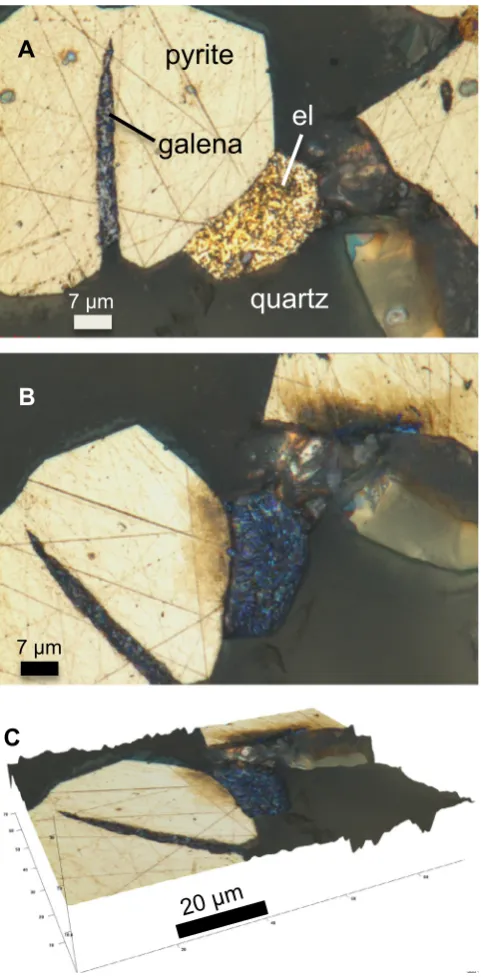
profiler using the inbuilt Zeta3D software version 1.8.5. This instrument captures a reflected light image of the sample surface identical to that given by a conventional reflected light microscope used for ore microscopy (Fig. 1A and B). However, in addition, the precise XYZ co-ordinates are captured, so that the same image can be viewed in 3D (Fig. 1C). The Zeta 2000 uses a motorised XY stage and accompanying control and positioning software to construct a 3D colour image of a surface. Images are constructed by determin-ing the features of an image that are in focus at different heights. These are then analysed to produce a reconstructed 3D topography of the surface. Line profiles were measured across grains where the dissolution rate was being measured using a flat surface of an insoluble phase (resin, quartz) to provide a reference height. Only
the relatively flat base of an etch pit was measured, away from grain boundaries or inclusions that retard dissolution by partly shielding the grain from the solution. Using distinctive features on the sample surface, care was taken to position the line profiles in precisely the same position pre- and post-dissolution so that an accurate estimate of the difference between the profiles could be measured. Linear etch rates are converted to molar etch rates using appropriate density and molecular masses with appropriate unit conversions.
3.2. Results
Reflected light images of CJG CON 002 pre- and post-dissolution show that the3015
l
m electrum grain was completely dis-solved after the 10 min leach (Fig. 1B). Galena and chalcopyrite were also etched, although chalcopyrite developed an iridescent blue tarnish. Pyrite appeared unreacted and only mildly tarnished in some places. Both native tellurium and tellurobismuthite also dissolved, with the tellurium showing an increase in surface roughness during dissolution.The etch depths measuredversustime are shown inFig. 2and given along with calculated dissolution rates inTable 1. Where etch depths were measured at more than one time the dissolution rate was linear within error since the scatter around the linear best fit line through the origin, measured by the standard error of esti-mate, is less than the measurement error for the instrument of 0.1–0.2
l
m as illustrated by the duplicate measurements of tel-lurium. The dissolution rates are therefore derived from the slope of the best-fit line. The electrum dissolved fastest at 0.172l
m/ min, but note that in 10 min the complete electrum grain had dis-solved and thus this represents aminimumdissolution rate. Tel-lurium dissolved a little slower than this followed by galena, then tellurobismuthite. Tellurobismuthite is strongly anisotropic with a perfect {0 0 0 1} basal cleavage. Observing the etching rates in two adjacent grains with different orientations suggests that the dissolution rate was50% faster parallel to thec-axis (perpen-dicular to the cleavage) compared to parallel to the cleavage. Chal-copyrite dissolved slowly compared to the other minerals. There was no measurable dissolution of the pyrite, with fine polishing scratches preserved on the surface.3.3. Discussion
3.3.1. Dissolution rates and industrial feasibility
The observation of linear dissolution rates suggest that there is no major biasing of our data over these time and length scales by, for example, enhanced early dissolution due to surface damage by
7 m
B
pyrite
el
galena
quartz
7 m
A
[image:3.595.39.280.217.707.2]20
m
C
Fig. 1.Reflected light image of gold ore (A) before, and (B, C) after reaction with a deep eutectic solvent for 10 min at 50°C. The electrum (el) grain in A has been completely removed in B and C whereas pyrite remains unreacted. C. Shows the same image as B in 3D illustrating the etch pit where the electrum originally was located.
0.0 0.5 1.0 1.5 2.0 2.5
0 5 10 15
Dissolved (
m)
t (mins)
[image:3.595.308.547.568.719.2]Bi2Te3
polishing, increasing dissolution rate due to the development of surface roughness and hence increased surface area, or later retardation of the reaction due to depletion of the liquid boundary layer. It is assumed that the electrum is also leaching at a linear rate. Our measured rates can be used to make a simple calculation of the lifetime of a grain dissolving under these conditions. Applying the electrum dissolution rate of 0.172
l
m/min (Table 2) to a 100l
m diameter grain dissolving in a well-mixed DES suggests that dissolution should be complete in4.8 h. Given that our elec-trum dissolution rate is a minimum, it is possible that this time could be shorter. This dissolution rate compares very favourably to cyanidation, for example, our (minimum) electrum dissolution rate translates to 2.8104mol m2s2 (Table 1), which is40times greater than the maximum gold dissolution rate in cyanide determined byWadsworth et al. (2000)of 0.69105mol m2
-s2. Our dissolution rate is at 50
°Cvs. 25°C used by Wadsworth
et al., but room temperature dissolution at realistic rates looks per-fectly feasible. Leaching rates are expected to increase approxi-mately linearly with iodine concentration, so this could also be used to increase dissolution rate.
These results show strong selectivity in the dissolution process with electrum rapidly going into solution, base metal sulphides dissolving more slowly, and pyrite remaining undissolved. Since pyrite is typically the major gangue in sulphide floatation concen-trates this technique could potentially separate the gold without the pyrite. This is assuming the gold is exposed at the pyrite sur-face and not ‘‘locked” as inclusions within it. However, we show below (Section5) that there are other approaches using DES that could be used to selectively dissolve pyrite to liberate gold inclu-sions. Since this technique will also dissolve other minerals, such as chalcopyrite, galena and a bismuth telluride from the gold ore, there is the potential to also recover other elements from the ore, simultaneously adding value to the ore and removing potential environmental contaminants from the tailings. Selective recovery of the dissolved species has already been demonstrated for lead from a mixed metal oxide matrix (Abbott et al., 2009) and is demonstrated here for gold in Section4.
3.3.2. Advantages of the micro-leach optical profiling technique Use of an optical profiler to monitor dissolution progress as we have done here with ionic liquid could also be applied to monitor the effectiveness of any hydrometallurgical technique. This tech-nique has a number of advantages compared to conventional bulk leaching techniques:
(1) It obviates the need to analyse solutions to monitor reaction. This can be time consuming, requires the analytical equip-ment, places limits on the sensitivity of the technique, and produces data that require deconvolution and may be non-unique if a number of phases are dissolving.
(2) It can monitor the dissolution rate of a number of minerals simultaneously.
(3) It can determine dissolution rates along different crystallo-graphic axes of anisotropic minerals.
(4) The sample used can be a portion of a polished section of ore or concentrate that has previously been characterised by microbeam techniques, so that dissolution can be related to mineralogical factors, e.g. composition, zonation, inclu-sions etc., thus providing direct information of practical use for designing a processing circuit.
Thus this technique potentially has wide application in metal-lurgical studies of ores.
4. Demonstration 2 – gold and silver recovery from solution
[image:4.595.41.566.85.182.2]To complete the process, the solubilised gold needs to be recov-ered from the DES as well as any other dissolved metals of interest. To demonstrate this we used three placer gold samples from the Scotgold exploration licence area collected by R. Chapman, since it was difficult to obtain significant quantities of gold from the Cononish deposit pre-production.
Table 1
Measured etch depthvs. time and calculated dissolution rates for a selection of minerals in Ethaline containing 0.1 mol cm3
iodine.
Mineral Electrum Galena Chalcopyrite Bi2Te3?c Bi2Te3\\c Tellurium
Temperature (°C) 50 50 50 45 45 45
Time (mins) Cumulative etch depth (lm)
5 – 0.42 0.20 0.22 – 0.61, 0.80
10 1.72* 1.02 0.19 – – –
15 – – 0.26 0.88 1.29 2.38, 2.13
Average dissolution rate
lm/min 0.172 0.099 0.019 0.057 0.086 0.150
mol m2
s1
2.8104* 5.1105
7.4106
9.3106
1.4105
[image:4.595.43.294.239.329.2]1.2104 * NB – minimum values.?c= perpendicular toc-axis (cleavage parallel), \\c= parallel toc-axis.
Table 2
Compositional data for placer gold concentrates.
Sample #
Locality Total weight (g)
wt.% Au/(Au + Ag) Bulk
XRF EMP range
EMP average
EDX recovered 1 Crom Allt
top
0.17 76.5 44–98 67.3 70.3
2 Crom Allt mid
0.33 64.6 45–99 64.0 82.1
3 Coire Ghamhnain
0.51 75.2 50–98 68.8 82.7
EMP = Electron MicroProbe, EDX recovered = Energy Dispersive X-ray analysis of material electrolytically recovered from solution at the cathode.
1 2 3
30 40 50 60 70 80 90 100
Sample
wt.% Au/(Au+Ag)
EMP average
EMP grains XRF bulk EDX recovered
[image:4.595.329.543.585.722.2]4.1. Experimental
The gold in the placer samples was electrum thought to be derived from erosion of nearby primary hydrothermal veins similar to those in the Cononish gold mine (Hill et al., 2013; Hill, 2014). The grains are thus similar in composition to the primary mineral-isation, although much larger (0.1–3 mm diameter) than the bulk of electrum grains in the ore. By their nature placer gold samples are inhomogeneous and bulk compositions were estimated by both electron microprobe analyses of a subset of grains in each sample and by bulk XRF of the entire loose sample (Table 2andFig. 3). Chapman et al. (2006) demonstrate that averages of electron microprobe data of a selection of placer grains provide a good esti-mate of the bulk composition.
The average of the electron microprobe data shows that the samples have broadly similar bulk compositions, with sample 2 possibly a little richer in Ag. Bulk XRF data shows a similar pattern although rather more Au-rich compositions – this may be due to lack of X-ray penetration into the coarser grains so that composi-tions sampled were dominated by grain rims, which naturally tend to be slightly Ag-depleted (Groen et al., 1990). There was a large range in individual grain composition and thus the90 mg sub-samples used for the dissolution and recovery experiments could differ somewhat from the bulk values depending on the random selection of different composition grains. The XRF data suggests that in addition to the electrum there was 6–24% of aluminosilicate minerals plus pyrite in the samples.
In each experiment, approximately 90 mg of sample was added to 3 mL of Ethaline with 0.1 mol dm3iodine and stirred at 50°C for 48 h to completely dissolve all the electrum. The solution was then subjected to electrolysis in a cell with a Ni sheet cathode and iridium oxide coated titanium mesh anode. Electroplating onto the cathode was carried out under constant current of 4 mA cm2
for between 2 and 20 h. Full experimental details are provided by Abbott et al. (2015).
4.2. Results
Electrodeposition resulted in a powdery brown/black deposit, the thickness of which increased with deposition time. EDX analy-sis of these deposits revealed that they conanaly-sist only of Au and Ag, demonstrating that these elements can be successfully recovered by this process. In addition, the EDX data show that the recovered deposits contained a greater proportion of Au (by 3–18%,Table 1 andFig. 3) compared to likely compositions of the starting material (best estimated by the mean electron microprobe data). This sug-gests that Au is preferentially being electroplated.
4.3. Discussion
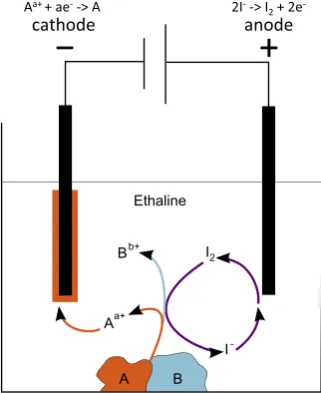
The iodine used in our demonstration experiments was simply being used as an oxidising agent to allow dissolution of the mineral, with iodide (I) being formed as a waste product, e.g. for gold dissolution:
2AuþI2¼2Auþþ2I
However, in an industrial process the iodine has the potential to be employed as an electrocatalyst, whereby it is continuously recoveredin situfrom the reduced iodide by electrochemical oxi-dation at the anode of a cell (Fig. 4). Dissolved metals can be selec-tively deposited at the cathode by adjusting the electrode potential (Abbott et al., 2011a). Quantitative separation of Au and Ag should be possible, given their difference in redox potentials (Abbott et al., 2011a).
5. Future potential – dissolution of refractory phases by electrolysis
We have shown in Section3that a range of ore minerals dis-solved by oxidation with iodine into a DES ionic liquid, but pyrite did not react under these conditions. We also attempted to dissolve calaverite (AuTe2), another notably refractory phase, by this
method but instead of dissolution there was a growth in surface relief and tarnish development. Sperrylite (PtAs2) and moncheite
(PtTe2), which are typically the more abundant platinum minerals
in many orthomagmatic deposits (e.g.Schouwstra et al., 2000), were unaffected under the same conditions. A common feature amongst these minerals is that they are a disulphide (pyrite), diarsenide (sperrylite) or ditellurides (calaverite and moncheite) suggesting the mineral structure may be particularly resistant to iodine oxidation. The ability to liberate gold inclusions and even submicroscopic ‘‘dissolved” gold from pyrite would be advanta-geous, as would the ability to dissolve calaverite in order to recover both gold and tellurium. Similarly new routes to treating the common platinum minerals, and which for moncheite could also recover tellurium, would be desirable.
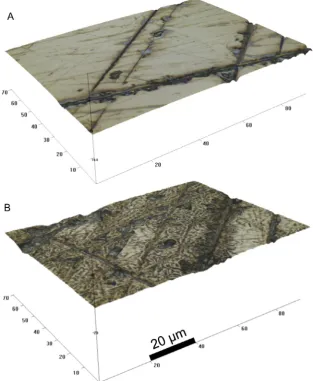
Fig. 5A shows the surface of a calaverite crystal that was made into an electrode that was used in a cyclic voltammetry experi-ment with an Ethaline electrolyte. After cycling the voltage at room temperature (1.2 to +1.2 V, scan rate 20 mV s1) the surface was
etched which indicated dissolution (Fig. 5B). The mechanism by which dissolution is taking place is currently being investigated, but preliminary observations suggest that this process will dissolve a range of sulphide minerals, including pyrite. Thus it seems there is the opportunity to develop protocols in which DES ionic liquids can be used for electrolytic dissolution of refractory minerals in order to liberate gold for subsequent oxidative dissolution and electrolytic recovery.
6. Conclusions
[image:5.595.346.507.67.264.2]Deep eutectic solvent ionic liquids meet all the criteria for a reagent that can be used in large-scale metallurgical processing, being cheap, readily available, chemically stable, environmentally benign and free of restrictions. A micro-leach technique we
developed using an optical profiler allows us to rapidly measure dissolution rates in a sample and compare different minerals. Results demonstrate that electrum, native Te, tellurobismuthite, galena and chalcopyrite were all soluble by oxidation with iodine at low temperatures in a DES solvent, whereas pyrite was not. Dissolution rates varied between minerals with electrum showing the fastest dissolution rate and chalcopyrite the slowest. The dissolution rate of electrum was very favourable compared to the current industrial process of cyanidation. We demonstrate that gold and silver could be recovered from the solution by electro-deposition and that the opportunity exists for separation of the gold and silver by deposition through applying different potentials. Preliminary work suggests that refractory phases, such as calaverite and pyrite, can be dissolved in DESs by electrolysis, hence suggesting a protocol whereby target inclusion minerals such as gold could be liberated from pyrite by electrolysis and then dissolved by oxidation and electrolytically recovered.
Given that ionic liquids contain no water, it is not appropriate to refer to their application to ore and metal processing as hydromet-allurgy. Instead, ionometallurgy (Abbott et al., 2011a) with deep eutectic solvents would seem to offer a new set of environmentally-benign tools for metallurgists that could both augment existing processes and ultimately replace some.
Acknowledgements
Our grateful thanks to Chris Sangster of Scotgold Resources for providing the ore sample for study. Technical support at Leicester by Colin Cunningham and Nick Marsh in the Department of Geology, and Frazer Nisbet, Department of Chemistry, was instru-mental to this research. Work on tellurium minerals and the devel-opment of the micro-leach technique was supported by a NERC Minerals Security of Supply (SoS) catalyst grant NE/L002191/1, but NERC had no role in the study design; the collection, analysis and interpretation of data; or in the writing of the report.
References
Abbott, A.P., Boothby, D., Capper, G., Davies, D.L., Rasheed, R.K., 2004. Deep eutectic solvents formed between choline chloride and carboxylic acids: versatile alternatives to ionic liquids. J. Am. Chem. Soc. 126, 9142–9147.
Abbott, A.P., Collins, J., Dalrymple, I., Harris, R.C., Mistry, R., Qiu, F., Scheirer, J., Wise, W.R., 2009. Processing of electric arc furnace dust using deep eutectic solvents. Aust. J. Chem. 62, 341–347.
Abbott, A.P., Frisch, G., Gurman, S.J., Hillman, A.R., Hartley, J., Holyoak, F., Ryder, K.S., 2011a. Ionometallurgy: designer redox properties for metal processing. Chem. Commun. 47, 10031–10033.
[image:6.595.143.457.70.452.2]Abbott, A.P., Frisch, G., Hartley, J., Ryder, K.S., 2011b. Processing of metals and metal oxides using ionic liquids. Green Chem. 13, 471–481.
Fig. 5.(A) 3D image of the polished surface of a calaverite (AuTe2) crystal captured with a Zeta 2000 optical profiler. (B) The calaverite surface after cyclic voltammetry
Abbott, A.P., Harris, R.C., Holyoak, F., Frisch, G., Hartley, J., Jenkin, G.R.T., 2015. Electrocatalytic recovery of elements from complex mixtures using deep eutectic solvents. Green Chem. 17, 2172–2179.http://dx.doi.org/10.1039/C4GC02246G.
Chapman, R.J., Leake, R.C., Warner, R.A., Cahill, M.C., Moles, N.R., Shell, C.A., Taylor, J. J., 2006. Microchemical characterisation of natural gold and artifact gold as a tool for provenancing prehistoric gold artefacts: a case study in Ireland. Appl. Geochem. 21, 904–918.
Ceresana, 2012. <http://www.ceresana.com/en/market-studies/agriculture/urea/>.
Curtis, S.F., Pattrick, R.A.D., Jenkin, G.R.T., Fallick, A.E., Boyce, A.J., Treagus, J.E., 1993. Stable isotopes and fluid inclusions of fault related mineralisation at Tyndrum, Scotland. Trans. Inst. Min. Metall. 102, B39–B47.
Dominy, S.C., Platten, I.M., 2008. Scotgold Resources Limited: Cononish Gold Project, Geological Review and Mineral Resource Estimate. Snowden Mining Industry Consultants Limited, Scotland.
Dong, T.-G., Hua, Y.-X., Zhang, Q.-B., Zhou, D.-G., 2009. Leaching of chalcopyrite with Brønsted acidic ionic liquid at ambient pressure and low temperature. Hydrometallurgy 99, 33–38.
Global Industry Analysts, 2014. Choline Chloride – A Global Strategic Business Report. <http://www.strategyr.com/Choline_Chloride_Market_Report.asp>.
Groen, J.C., Craig, J.R., Rimstidt, J.D., 1990. Gold-rich rim formation on electrum grains in placers. Can. Mineral. 28, 207–228.
Hill, N.J., 2014. Development of a genetic model for targeting gold mineralisation in the Dalradian Supergroup, Scotland. Unpublished PhD Thesis, University of Leicester.
Hill, N.J., Jenkin, G.R.T., Boyce, A.J., Sangster, C.J.S., Catterall, D.J., Holwell, D.A., Naden, J., Rice, C.M., 2013. How the Neoproterozoic S-isotope record illuminates the genesis of vein gold systems: an example from the Dalradian Supergroup in Scotland. In: Jenkin, G.R.T., Lusty, P.A.J., McDonald, I., Smith, M.P., Boyce, A.J., Wilkinson, J.J. (Eds.), Ore Deposits in an Evolving Earth, vol. 393. Geological Society, Special Publications, London, pp. 213–247.http://dx.doi.org/10.1144/ SP393.9.
Luczak, J., Joskowska, M., Hupka, J., 2008. Imidazolium ionic liquids in mineral processing. Physicochem. Prob. Min. Process. 42, 223–236.
Schouwstra, R.P., Kinloch, E.D., Lee, C.A., 2000. A short geological review of the Bushveld Complex. Platin. Met. Rev. 44, 33–39.
Smith, E.L., Abbott, A.P., Ryder, K.S., 2014. Deep eutectic solvents (DESs) and their applications. Chem. Rev. 114, 11060–11082. http://dx.doi.org/10.1021/ cr300162.
Spence-Jones, C., 2013. Metallurgical Investigation of Ore at Cononish Gold Mine, Scotland. Unpublished MGeol thesis, University of Leicester.
Spry, P.G., Chryssoulis, S., Ryan, C.G., 2004. Process mineralogy of gold: gold from telluride-bearing ores. JOM 56, 60–62.
Vaughan, J., Dreisinger, D., 2008. Electrodeposition of aluminium from aluminium chloride-trihexyl(tetradecyl) phosphonium chloride. J. Electrochem. Soc. 155, D68–D72.
Wadsworth, M.E., Zhu, X., Thompson, J.S., Pereira, C.J., 2000. Gold dissolution and activation in cyanide solution: kinetics and mechanism. Hydrometallurgy 57, 1–11.
Wasserscheid, P., Welton, T. (Eds.), 2008. Ionic Liquids in Synthesis. Wiley-VCH, Weinheim.
Whitehead, J.A., Lawrance, G.A., McCluskey, A., 2004. ‘Green’ leaching: recyclable and selective leaching of gold-bearing ore in an ionic liquid. Green Chem. 6, 313–315.
Whitehead, J.A., Zhang, J., Pereira, N., McCluskey, A., Lawrance, G.A., 2007. Application of 1-alkyl-3-methyl-imidazolium ionic liquids in the oxidative leaching of sulphidic copper, gold and silver ores. Hydrometallurgy 88, 109– 120.
Whitehead, J.A., Zhang, J., McCluskey, A., Lawrance, G.A., 2009. Comparative leaching of a sulfidic gold ore in ionic liquid and aqueous acid with thiourea and halides using Fe(III) or HSO5oxidant. Hydrometallurgy 98, 276–280. Woodhouse, M., Goodrich, A., Margolis, R., James, T., Dhere, R., Gessert, T., Barnes, T.,
Eggert, R., Albin, D., 2013. Perspectives on the pathways for cadmium telluride photovoltaic module manufacturers to address expected increases in the price for tellurium. Sol. Energy Mater. Sol. Cells 115, 199–212.