ON KNOWLEDGE AND PRACTICE REGARDING
NEWBORN CARE AMONG PRIMI GRAVID
MOTHERS AT SELECTED SETTING,
CHENNAI, 2015
DISSERTATION SUBMITTED TO
THE TAMIL NADU DR.M.G.R.MEDICAL UNIVERSITY
CHENNAI
IN PARTIAL FULFILMENT OF REQUIREMENT FOR THE DEGREE OF
MASTER OF SCIENCE IN NURSING
Internal Examiner:
ON KNOWLEDGE AND PRACTICE REGARDING
NEWBORN CARE AMONG PRIMI GRAVID
MOTHERS AT SELECTED SETTING,
CHENNAI, 2015
Certified that this is the bonafide work of
Mrs. K.J.PUNITHAVATHI
Omayal Achi College Of Nursing
No. 45, Ambattur Road,
Puzhal, Chennai ± 600 066.
COLLEGE SEAL :
SIGNATURE :
Dr. (Mrs.) S.KANCHANA
R.N., R.M., M.Sc.(N)., Ph.D., Post . Doc( Res).,
Principal & Research Director, ICCR,
Omayal Achi College of Nursing,
Puzhal, Chennai ± 600 066, Tamil Nadu.
DISSERTATION SUBMITTED TO
THE TAMIL NADU DR.M.G.R.MEDICAL UNIVERSITY
CHENNAI
IN PARTIAL FULFILLMENT OF REQUIREMENT FOR THE DEGREE OF
MASTER OF SCIENCE IN NURSING
EFFECTIVENESS OF NEONATAL CARE PACKAGE
ON KNOWLEDGE AND PRACTICE REGARDING
NEWBORN CARE AMONG PRIMI GRAVID
MOTHERS AT SELECTED SETTING,
CHENNAI, 2015
Approved by the Research Committee in April 2014.
PROFESSOR IN NURSING RESEARCH Dr. (Mrs.) S.KANCHANA
R.N., R.M., M.Sc.(N)., Ph.D., Post. Doc (Res)., Principal & Research Director,
Omayal Achi College of Nursing, ICCR, Puzhal, Chennai -600 066, Tamil Nadu.
CLINICAL SPECIALITY - HOD & RESEARCH GUIDE Mrs. RUTHRANI PRINCELY. J
R.N., R.M., M.Sc(N)., [Ph.D(N)]., Head of the Department, Child Health Nursing,
Omayal Achi College of Nursing, Puzhal, Chennai -600 066, Tamil Nadu. MEDICAL EXPERT
Dr. K. SANTHOSHINI RAMESH DCH, DNB(Peds)
Sir Ivan Stedeford Hospital, Ambattur,
Chennai.
DISSERTATION SUBMITTED TO
THE TAMIL NADU DR.M.G.R.MEDICAL UNIVERSITY
CHENNAI
IN PARTIAL FULFILMENT OF REQUIREMENT OF THE DEGREE OF
MASTER OF SCIENCE IN NURSING
I thank God Almighty for giving me the courage, strength and abundant blessings throughout my career and personal life.
Towards the commencement, I the investigator of this study would like to express my ardent thanks and fervent obligation to The Tamil Nadu Dr. M.G.R. Medical University, Chennai, for having given me this valued opportunity to undergo the post graduate programme in education in this esteemed university, for the foremost purpose of enriching my professional career.
I would like to express my heartfelt thanks and gratitude to the Managing Trustee, Omayal Achi College of Nursing for giving me an opportunity to pursue my post graduate education in this esteemed institution.
I accord my sedulous gratitude and immense thanks to Dr. K. R. Rajanarayanan, B.Sc., M.B.B.S., FRSH [London], Research Coordinator, ICCR and Honorary Professor in Community Medicine for the valuable suggestions and guidance throughout the study.
I express my deep sense of indebtedness to Dr. (Mrs.) S. Kanchana, Research Director ICCR and Principal, Omayal Achi College of Nursing for her constant source of inspiration and encouragement throughout the study.
I am extremely grateful to Dr. (Mrs.) Celina.D, Vice Principal, Omayal Achi College of Nursing for inculcating the knowledge of research to my level of understanding and thought provoking valuable advices throughout the study.
I am thankful to the ICCR Executive Committee Members for their suggestions during the Research proposal and mock viva presentations.
I extend my grateful endless thanks to Ms. Nandhini. P, Assistant professor and Mrs. Sangeethajanani. SA, Assistant professor, faculty of Child Health Nursing department for their constructive criticisms, valuable guidance and encouragement, which was a key for the successful completion of the study.
I express my earnest gratitude to Mrs. D. Sorna daya Rani, Tutor, faculty of Child Health Nursing department for her constant encouragement, scholarly suggestions and guidance in every phase of the study.
A bouquet of thanks to our class coordinator Mrs. Bhagavathy S, Assistant professor who constantly supported, guided and motivated for completion of the study.
A memorable note of gratitude to the Honorary Secretary, Managing Director, Chief Consultant Pediatrician and Sister Incharge, all maternity ward Staffs of Sir Ivan Stedeford Hospital, Ambattur, and Teja Hospital, Ambattur, Chennai for their concern and co-operation during data collection period.
I specially thank all the Primi gravid mothers participated in the study without whom this piece of work would not have come true.
My genuine thanks to Mr. Venkatesan, Biostatistician for his resourceful aid in statistical analysis of this study.
A bouquet of thanks to Mr.Yayathee Subbarayalu, Research fellow (ICMR), ICCR, Omayal Achi College of Nursing and all HODs and faculty Omayal Achi College of Nursing for rendering their constant and encouragement throughout the study.
I am indeed thankful to the Librarians of Omayal Achi College of Nursing and The Tamil Nadu Dr. M. G. R. Medical University, for their co-operation and help in collecting the related literature for this study.
effort in shaping and aligning the manuscript.
I thank all my IHOORZ FODVVPDWHV ³&$51,7(6´ 06c(N) 2013-15 Batch especially my department friends Ms. Anitha.R , Ms. Soumya Baby , Ms. Nisha Rachel .C and my peer evaluators Sharon Grace Joseph and Sulu Susan Rajan for their endless help and constructive ideas, which helped me to mould my study in a better way.
LIST OF ABBREVIATIONS
CNE - Continuing Nursing Education ENMR - Early Neonatal Mortality Rate IAP - Indian Academy of Paediatrics
ICCR - International Centre for Collaborative Research IEC - Information Education Communication
IMR - Infant Mortality Rate
LNMR - Late Neonatal Mortality Rate LSCS - Lower Segment Caesarian Section NMR - Neonatal Mortality Rate
SD - Standard Deviation
SISH - Sir Ivan Stedeford Hospital
UNICEF - United Nations International children's Emergency fund WHO - World Health Organization
F2 - Chisquare = - Equals to < - Less than > - More than % - Percentage +/- - Plus or minus
TABLE OF CONTENTS
CHAPTER NO. CONTENT PAGE NO.
ABSTRACT
1 INTRODUCTION
1.1 Background of the study
1.2 Significance and need of the study 1.3 Statement of the problem
1.4 Objectives of the study 1.5 Operational Definition 1.6 Assumptions 1.7 Null hypotheses 1.8 Delimitation
1.9 Conceptual framework 1.10 Outline of the report
2 REVIEW OF LITERATURE
2.1
2.2
Scientific reviews related to knowledge and practice of neonatal care
Scientific reviews related to effectiveness of Neonatal care package
3 RESEARCH METHODOLOGY
3.1 Research Approach 3.2 Research Design
3.3 Variables
3.7 Sampling size
3.8 Sampling technique 3.9 Criteria for sample selection
3.10 Development and description of the tool 3.11 Content validity
3.12 Ethical considerations 3.13 Reliability of the tool
3.14 Pilot study
3.15 Procedure for data collection 3.16 Procedure for data analysis
4 DATA ANALYSIS AND INTERPRETATION 5 DISCUSSION
6 SUMMARY, CONCLUSION, IMPLICATIOS,
RECOMMENDATION AND LIMITATIONS REFERENCES
LIST OF TABLES
TABLE
NO. TITLE PAGE NO.
4.1.1 Frequency and percentage distribution of demographic variables of primi gravid mothers with respect to age in years, religion and type of family .
4.1.2 Frequency and percentage distribution of demographic variables of primi gravid mothers with respect to occupation of the mother, gestational week and type of delivery.
4.2.2 Comparison of pretest and post test level of practice score regarding neonatal care among primi gravid mothers 4.3.1 Frequency and percentage distribution of post test level of
practice regarding neonatal care among primi gravid mothers.
4.4.1 Correlation between post test knowledge and practice score regarding neonatal care among primi gravid mother 4.5.1 Association of selected demographic variables with mean
FIGURE
NO. TITLE PAGE NO.
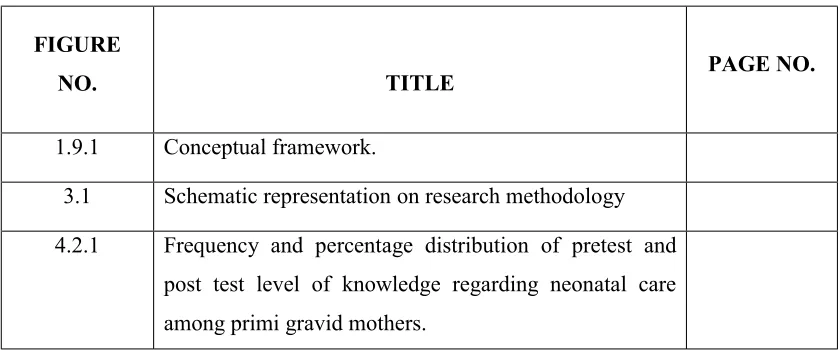
1.9.1 Conceptual framework.
3.1 Schematic representation on research methodology 4.2.1 Frequency and percentage distribution of pretest and
LIST OF APPENDICES
APPENDIX TITLE PAGE
NO.
A Ethical clearance certificate
B Letter seeking and granting permission for conducting the main study
C
Content validity
(i) /HWWHUVHHNLQJH[SHUWV¶RSLQLRQIRUFRQWHQWYDOLGLW\ (ii) List of experts for content validity
(iii) Certificate of content validity D Certificate of English and Tamil editing E IEC certificate for intervention tool from ICCR
F
Informed consent
(i) Informed consent request form (ii) Informed written consent form
G Copy of the tool for data collection with scoring key
H Coding for the demographic variables I Blue print of data collection tool J Intervention tool
K Plagiarism report
Abstract:
Abstract:
INTRODUCTION
Newborns are considered to be tiny and powerless, completely dependent on others for
OLIH 1HRQDWHV DUH ³DW ULVN´ IRU YDULRXV KHDOWK SUREOHPV HYHQ WKRXJK WKH\ DUH ERUQ ZLWK
INTRODUCTION
INTRODUCTION
Newborns are considered to be tiny and powerless, completely dependent on others IRUOLIH1HRQDWHVDUH³DWULVN´IRUYDULRXVKHDOWKSUREOHPVHYHQWKRXJKWKH\DUHERUQZLWK average birth weights. The morbidity and mortality rates in newborn infant are high. They need optimal care for improved survival.
Neonatal mortality or death is one of the major causes of concern with newborn all over the world, especially developing countries Globally an average of 3,53,000 babies are born each day around the world. The crude birth rate is 18.9 births per 1,000 population or 255 births globally per minute or 4.3 births every second (as of Dec. 2013 estimate) and 19.89 births/1,000 population .(UNICEF, 2014)
Aim and objective: To assess the effectiveness of Neonatal care package on knowledge and practice
among primi gravid mothers. Methodology: Quantitative approach. Pre experimental design was
adopted to assess the effectiveness of Neonatal care package on knowledge and practice among 60
primi gravid mothers who satisfied the inclusion and exclusion criteria at Sir Ivan Stedeford Hospital
and Teja Hospital. Non-probability purposive sampling technique was used to select the samples. The
level of knowledge and practice was assessed by using structured knowledge questionnaire and
observation checklist based on modified IAP guidelines. The pre test knowledge and intervention was
administered during the admission in antenatal ward and post test level of knowledge was assessed on
the second postnatal day. Post test level of practice was assessed on the first and second day for
normal delivery mothers and second and third day for L.S.C.S mothers. Results: The study findings
revealed that the pretest mean score of knowledge was 7.68 with standard deviation of 2.27 and the
SRVWWHVWPHDQVFRUHZDVZLWKVWDQGDUGGHYLDWLRQRI7KHFDOFXODWHGSDLUHGµW¶YDOXH
was found to be statistically highly significant at p<0.001 level and the correlation revealed that the
mean post test level of knowledge score was 10.21 with mean post test level of standard deviation of
1.88 and the post test practice score was 33.83 with post test level of standard deviation of 3.82. The
FDOFXODWHG µU¶ YDOXH ZKLFK LQGLFDWHG WKDW WKHUH ZDV statistically significant at p<0.01 level which
showed that the Neonatal care package had a effectiveness on improving knowledge and practice
among primi gravid mothers. Conclusion: The results depicted that there was a significant
improvement of knowledge and practice among primi gravid mothers after administration of Neonatal
care package.
Neonatal deaths occurs due to various causes such as complications during pregnancy, poor health condition of the mother, filthy conditions during delivery, critical conditions after birth and improper newborn care . It is essential that neonatal care to be taught to the primi gravid mothers to gain their confidence and improving the neonatal care.
Primi gravida is a medical term used to refer to a woman who is pregnant for the first time. Primi gravid mothers should be aware of all the components to reduce the mortality rates and improve the health of the newborn. There are number of interventions in the essential newborn care module which can be practiced by the mother such as prevention of infection by proper hand washing, thermal protection by keeping the neonate warmth, early and exclusive breast feeding.
During clinical posting the investigator observed that primi gravid mothers lack knowledge and practice to handle the neonates and primi gravid mothers can be motivated and encouraged to focus on newborn care through education and practicing on specific vital aspects of newborn care such as mummification, breastfeeding and hand washing which can have impact on neonatal mortality and morbidity rate. Hence the investigator devised Neonatal care package focusing on the knowledge and practice of specific components such as thermoregulation, breast feeding and prevention of infection.
Objectives
x To assess the effectiveness of Neonatal care package on knowledge and practice regarding neonatal care among primi gravid mothers.
Null hypothesis
NH1- There is no significant difference in the pre and post test level of knowledge and practice on Neonatal care among primi gravid mothers at p<0.05 level.
METHODOLOGY
mothers within 37-40 weeks of gestation admitted in SISH and Teja Hospital, Chennai. The sample size consisted of 60 primi gravid mothers (who fulfils the inclusion and exclusion criteria) selected by Non probability purposive sampling technique. The study included the primi gravid mothers with 37-40 weeks of gestation, and primi gravid mothers who can deliver either by normal vaginal delivery or by L.S.C.S. The study excluded primi gravid mothers who are not willing to participate in this study, primigravid mothers with any other comorbid illness, neonate with APGAR of less than 7 .
The instrument used in this study was knowledge questionnaire to assess the knowledge and observational checklist based on IAP guidelines to assess the practice of mothers on selected components of Neonatal care package. The investigator done this study through lecture cum video method on thermoregulation, breastfeeding, prevention of infection followed by lecture cum demonstration on mummification, breastfeeding techniques, hand washing was performed to each mother. Demonstration was done for 20 minutes and reinforcement given through leaflet. The investigator performed pretest and intervention during the admission of the primi gravid mothers in the antenatal ward and post test was assessed on the second postnatal day. Post test level of practice was assessed for normal delivery mothers on the first and second postnatal day and for L.S.C.S mothers on the second and third post natal day.
RESULT AND DISCUSSION
The findings of the study revealed that the pretest mean score of knowledge was 7.68 with standard deviation of 2.27 and the post test mean score was 10.21 with standard GHYLDWLRQRI7KHFDOFXODWHGSDLUHGµW¶YDOXHZDV higher than the table value which indicated , that there was a high statistical significant difference in the post test level of knowledge among prim gravid mothers at p<0.001 level
The study findings were analyzed by calculated paired 't' test. The calculated 'r' value indicated that there was significant improvement of knowledge with the post test score level of practice. Thus Neonatal care package was proved to be an effective method for improving the knowledge and practice of primi gravid mothers on their newborn.
CONCLUSION
The findings revealed that the post test mean score knowledge was 10.21 with standard deviation of 1.88. TKHFDOFXODWHGSDLUHGµW¶YDOXHis 7.826, which indicated there is significant difference in the post test level of knowledge. The post test practice score was 33.83 DQGFDOFXODWHGµU¶YDOXHLV0.4 which is statistically significant. Thus the study findings showed that there was significant improvement in knowledge and practice among primi gravid mothers after administration of Neonatal care package. Therefore the intervention tool can be utilized by the pediatric health care providers to impart knowledge and practice of selected components of neonatal care .
IMPLICATIONS
CHAPTER 1
1
INTRODUCTION
Neonatal period is a very crucial period and to a large extent determines the overall health status of the child and in turn adult life. The period of neonate is 0 to 28 days. Birth is a major challenge to the newborn to negotiate successfully from intrauterine to extra uterine life. The neonates are considered to be tiny and powerless, completely dependent RQRWKHUVIRUOLIH1HRQDWHVDUH³DWULVN´IRUYDULRXVKHDOWKSUREOHPVHYHQWKRXJKWKH\DUH born with average birth weights. The morbidity and mortality rates in newborn infant are high. They need optimal care for improved survival.
Neonatal mortality or death is one of the major causes of concern with newborn all over the world , especially developing countries .Globally an average of 353,000 babies are born each day around the world. The crude birth rate is 18.9 births per 1,000 population or 255 births globally per minute or 4.3 births every second (as of Dec. 2013 estimate) and 19.89 births/1,000 population (2014 ). the incidence of newborn mortality in India is roughly 26 million children born in India each year, 1.2 million die during the first four weeks. That's 30% of the 3.9 million global neonatal deaths.( UNICEF 2014)
Primi gravida is a medical term used to refer to a woman who is pregnant for the first time. Primi gravid mothers should be aware of all the components to reduce the mortality rates and improve the health of the newborn. There are number of interventions in the essential newborn care module which can be practiced by the mother such as prevention of infection by proper hand washing, thermal protection by keeping the neonate warmth, early and exclusive breast feeding.
Proper parenting especially by a primi gravid mothers for an newborn is very important as neonates needs special care. Care given by a mother to the neonate is not just important for their physical health but also promotes psychological and social well being. It is the responsibility of the primi mothers to attain this knowledge and they must gain it before the delivery of the neonate as the newborn care practices depends on the knowledge of the mother on newborn care.
Primi gravid mothers should be aware of all the components to reduce the mortality rates and improve the health of the newborn. There are number of interventions in the essential newborn care module which can be practiced by the mother such as prevention of infection by proper hand washing, thermal protection by keeping the neonate warmth, early and exclusive breast feeding.
Thermoregulation is important for both term and preterm neonates because they have to adopt from intrauterine life to extra uterine life during transition. Heat loss in neonates occur by evaporation, conduction, convection and radiation. Warmth to be provided by keeping the baby dry and wrapping the baby otherwise hypothermia will occur. Breastfeeding is the optimal source of nutrition. It provides immune factors, hormones and other bioactive components that can act as biological signals; and can decrease the incidence and severity of infectious disease, enhance neuro development, decrease the incidence of childhood obesity and some chronic illnesses. Newborn babies are more susceptible to infections because their immune system is immature. Proper hand hygiene may eliminate the risk of occurrence of infection .
1.1 BACKGROUND OF THE STUDY
Newborn care is an effective way to meet the neonatal needs like warmth, breast feeding, protection from infection, stimulation, safety and love. The first 28 days of the QHRQDWDOSHULRGLVWKHPRVWYXOQHUDEOHWLPHIRUDFKLOG¶VVXUYLYDO
Globally, an average of 353,000 babies are born each day around the world. The crude birth rate is 18.9 births per 1,000 population or 255 births globally per minute or 4.3 births every second (as of Dec. 2013 estimate) and 19.89 births/1,000 population (United Nations International Children's Emergency Fund, 2014).
3
Rama R, Gopalakrishnan S and Udayshankar PM (2014) conducted a cross sectional study to assess the knowledge regarding newborn care among 100 mothers in Kancheepuram district by using structured interview schedule. Results revealed that the level of knowledge regarding new born care was adequate for the mothers with 15% in feeding practices, 39% in immunization, 8% in growth and development and 42% in newborn illness in 33% of the mothers. The knowledge regarding new born care was found to have a significant association with the educational status of the mother. This study outcome explained that the need for better awareness and education program coupled to improve the level of knowledge regarding newborn care among mothers.
In India the infant mortality rate is 42, Neonatal mortality rate is 29, Early neonatal mortality rate is 23 and Late neonatal mortality rate is 6.(2012, Statistical Reporting Service Report)
In Delhi, 64 per cent newborns die within the first 28 days, the Infant Mortality Rate (IMR) in Tamil Nadu is 22 deaths per 1000 live births. The neonatal period is vulnerable, the first day of life (24 hours) is even more critical. Of the 2.8 million neonates dying across the world during the first 27 days, death during the first day of birth alone accounts for one million. 300,000 newborn deaths in India are on the very first day of birth. Thus, India accounts for about one-third of all neonates dying globally on the first day of birth.( The Hindu News papaer-2014).
The majority of all neonatal deaths (73%) occur during the first week of life, around 36% occur within the first 24 hours. Up to two thirds of newborn deaths could be prevented if skilled health workers perform effective health measures at birth (UNICEF 2014)
Good newborn knowledge will lead to positive attitude towards newborn and it reflects in their practices. Inadequate knowledge may be due to illiteracy, early marriage, lack of experience as in case of primi gravid also become reasons for mortality in developing countries.
Mala L.C., (2010) conducted a quasi experimental study among 60 mothers in Manipur to assess the effectiveness of educational programme on knowledge regarding breast feeding practices .Their knowledge were assessed by questionnaire and practice by observation. Result showed that 93.3% of the mothers had adequate knowledge, 40% of mothers breast fed their infants for 6 months, 91.3% of mothers breast fed their infant more than 2 years. The study concluded that majority of mothers had adequate knowledge regarding breast feeding.
Thus the investigator adopted the Neonatal care package as the intervention tool for the present study as it is easy and can be administered by the staff nurses to the primi gravid mothers as it improves the knowledge and practice of selected aspects of neonatal care.
1.2 SIGNIFICANCE AND NEED FOR THE STUDY
The healthy newborn infant born at term, between 38 to 42 weeks, cries immediately after birth, establishes independent rhythmic respiration, quickly adapts with the extra-uterine environment, has an average birth weight and no congenital anomalies. Primigravid mothers plays an active role in caring the newborn , hence knowledge about neonatal care and practice can enhance the mother to gain confidence and improves neonatal care.
5
Neelima Thakur and Arun Kumar., (2012) conducted a cross sectional survey among 6 Urban slum in Ganda community of Raipur city with 160 mothers of
newborns on knowledge and practices related to delivery and newborn care
practices, immediate care after birth, breastfeeding practices Community.
Semi-structured, pre-tested schedule was used to interview and the results revealed that
majority (80.62%) of home deliveries,73.75% of the mothers were applied paste of
mustered oil and turmeric powder on stump. Bathing the baby immediately after
birth was practiced in (67.5% ) of home deliveries. 61.87% of mothers initiated the
breastfeed within 2 hrs after birth.
Santhi M D and Kokilavani ., (2013) conducted a quasi experimental study to assess the effectiveness of video teaching programme on breast feeding among primigravid mothers in 6 main urban health maternity centers in Coimbatore. The data was collected from 30 primigravida mothers through interview schedule and observation check list. Result showed that 30 mothers in experimental group show excellent knowledge and practice and control group mother had very poor knowledge and practice.
Though newborn care is practiced by all mothers either from previous knowledge or from the information obtained from the hospital, primi gravid mothers has lack of experience to handle the neonates. The investigator during the clinical experience found that the primi gravid mothers can be motivated and encouraged to focus on newborn care through education and practicing on specific aspects of newborn care such as mummification, breastfeeding and hand washing which can have an impact on neonatal mortality and morbidity rate.
1.3 STATEMENT OF THE PROBLEM
1.4 OBJECTIVE
1. To assess and compare the pre and post test level of knowledge regarding neonatal care among primi gravid mothers.
2. To assess the post test level of practice regarding neonatal care among primi gravid mothers
3. To correlate the post test level of knowledge score with post test level of practice score on neonatal care among primi gravid mothers.
4. To associate the selected demographic variables with the mean differed score of knowledge and post test level of practice regarding neonatal care among Primi gravid mothers
1.5 OPERATIONAL DEFINITION 1.5.1 Effectiveness
Refers to the outcome of Neonatal Care Package on knowledge and practice on neonatal care among primi gravid mothers by using structured questionnaire devised by the investigator and observation checklist based on modified IAP guidelines which was assessed on the third day for knowledge and first and second postnatal day for normal delivery mothers and second and third day for the L.S.C.S mothers for the practice.
1.5.2 Neonatal care package
It refers to a set of information prepared by the investigator for the primi gravid mothers regarding neonatal care and it has the following components
x Lecture cum discussion with the aid of PowerPoint presentation for maintenance of thermoregulation, breastfeeding and prevention of infection
x Lecture cum demonstration on mummification, breastfeeding techniques and hand washing.
x Leaflet was given to reinforce.
1.5.3 Knowledge
7
1.5.4 Practice
Refers to the actions performed by the primi gravid mothers to practice selected components of neonatal care on their newborns such as mummification procedure, steps of breastfeeding technique and hand washing procedure which was assessed by using observation checklist based on modified IAP guidelines during first and second day for normal delivery mothers and second and third post natal days for LSCS mothers.
1.5.5 Neonatal care
Refers to the information and practice gained by the mother in regard to care their newborn , which is focused on thermal regulation, breastfeeding and prevention of infection
1.5.6 Primi gravid mothers
Refers to the women who is pregnant for the first time and between the age group of 18-30 admitted in the hospital for delivery.
1.6 ASSUMPTIONS
1. Primi gravid mothers may have some knowledge and practice regarding newborn care
2. Enhanced knowledge increase good practice on newborn care among primi gravid mothers
1.7. NULL HYPOTHESES
NH1: There is no significant difference in the pre and post test level of knowledge on neonatal care package among primi gravid mothers.
NH2: There is no significant correlation between the post test knowledge score with practice score on neonatal care among primi gravid mothers.
NH3: There is no significant association of selected demographic variables with the
mean differed level of knowledge and practice among primi gravid mothers.
1.8 DELIMITATION
1.9 CONCEPTUAL FRAMEWORK
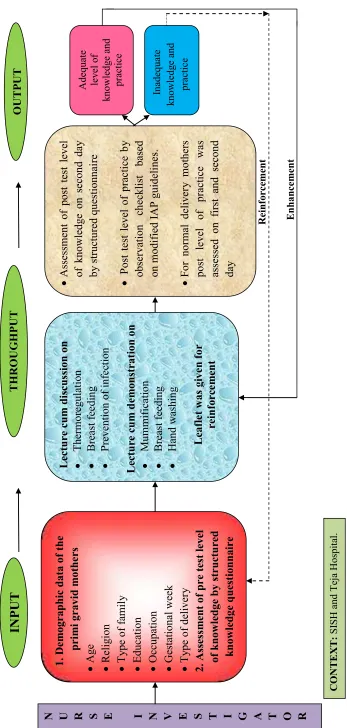
The study was based on modified Von Bertalanefy Open System Model (1968). The researcher adopted Von Bertalanefy open system model for conceptual framework. He was born in the year 1901 at Austria. The open system model was formulated in the year 1968.The open system enumerates various aspects of system and interaction. He formulated various theories based on management. The researcher applied Von Bertalanefy open system model in order to assess the effectiveness of neonatal care package regarding newborn care among Primi gravid mothers. This involves interaction between the researcher and the Primi gravid mothers.
An open system was a system which continuously interacts with its environment. The interaction can take the form of information, energy or material transfers into or out of the system boundary, depending on the discipline which defines the concept. An open system should be contrasted with the concept of an isolated system which exchanges neither energy and matter nor information with its environment. Open system theory was useful in breaking the whole process into sequential tasks to ensure goal realization. The three major aspects of the systems are:
a) Input b) Throughput c) Output
Input refers to any type of information, energy or material that enters the system from environment through its boundaries. In this study it refers to the pre test level of knowledge regarding newborn care among primi gravid mothers which was assessed using a structured knowledge questionnaire.
9
Output is the information that leaves the system, enters the environment through the system. In this study it refers to the assessment of pretest level of knowledge during antenatal period and post test level of knowledge was assessed on the second postnatal day by structured questionnaire and practice was assessed on first and second postnatal days in normal delivery mothers and for L.S.C.S mothers on the second and third postnatal days by using observational checklist based on IAP guide lines.
The feedback for the system depends on the output which may be reinforced or enhanced. The achievement of goal or need was indicated by positive outcome that is attainment of adequate knowledge and practice regarding newborn care which may be reinforced and negative outcome is indicated by the inadequate knowledge and practice regarding newborn care which may be reassessed by further assessing the demographic variables.
INPUT
THROUG HPUT OUTP U TN U R S E I N V E S T I G A T O R
1. Dem ographic data of the prim i gravid m o thers x Age x Relig ion x T y pe o f f amil y x Education x Oc cupation x Ge stational week x T y pe o f de liver y 2. Assess m e
nt of pre tes
t level of kno w ledge by str ucture d kno wled g e q uestionna ire Lecture cum discussion on x Thermoreg ulation x B reast feeding x Pre v
ention of infection
L ecture cum d e m o nstr a tion on x Mummification x B reast feeding x Ha nd wa shin g Leaf let w as given fo r rein force m e n t x
Assessment of post test
leve
l
of knowled
g
e on se
con d day b y structu re d questionnai re x
Post test leve
l of p
ra cti ce b y obser vation ch ecklist based on modified IAP g uideli nes. x F o
r normal deliver
y
mo
thers
post leve
l of practice wa
s
assessed on first
[image:29.612.115.462.21.749.2]and second day Adequat lev k nowledg prac Inadequate k nowledg prac F IG .1.9.1: CON CEP TU AL F R AMEWORK BA
SED ON VON BERTA
LANEF
Y
O
P
EN SYSTEM MODEL
11
OUTLINE OF THE REPORT
CHAPTER 1 : Dealt with the back ground of the study, need for the study, statement of the problem, objectives, operational definitions, null hypotheses, assumptions, delimitations and conceptual frame work.
CHAPTER 2 : Focuses with review of literature
CHAPTER 3 : Enumerates the methodology of the study and plan for data analysis CHAPTER 4 : Presents the data analysis and data interpretation.
CHAPTER 5 : Deals with the discussion of the study
CHAPTER 6 : Contains the summary, conclusion, implications, recommendations and limitations of the study.
CHAPTER 2
12
REVIEW OF LITERATURE
Review of literature entails systematic identification, selection and critical analysis of scholarly publications, unpublished scholarly print materials, audiovisual materials and personal communications to the problem of interest.
Hence the investigator had done a thorough exploration of books, journals, internet sources and had obtained clinical exerts opinion to lay a broad scientific foundation of the present study. The researcher had done the related review of literature to gain in-depth knowledge of various works, methods and overall effect of the intervention used for the present study.
This chapter is presented under 2 sections as follows
SECTION 2.1: Scientific reviews related to knowledge and practice of primi gravid mothers on neonatal care package
SECTION 2.2: Scientific reviews related to effectiveness of neonatal care package among primi gravid mothers
SECTION 2.1: SCIENTIFIC REVIEWS RELATED TO KNOWLEDGE AND PRACTICE OF PRIMI GRAVID MOTHERS ON NEONATAL CARE PACKAGE
Sujatha P and Prasad KV (2015) conducted a cross sectional study among 600 mothers in Government General Hospital Kakinada to assess the knowledge of infant feeding practices . Semi structured questionnaire was to collect the data. Result showed that 81% of mother are belong to Hindu religion , 64% from nuclear family , 50% of mothers are working and 49% mothers are belong to low socio economic status and 42.7% mother do not know about exclusive breast feeding and 20.6% of mothers had awareness regarding introdutcion of complementary feeds
Result showed that knowledge and awareness of breast feeding the majority 96.4% mother believed breastfeeding was beneficial, 57.8%(48) mothers had knowledge about offering breast milk as first food and 63.9% had knowledge that only breast milk should be provided for the baby. Mothers about 71.1% had knowledge about correct age for starting supplementary foods and 71.1% of mother had knowledge that the breast feeding should be continued till two year with additional foods.
Saadia Gul, Rehana Khalil, M. Tahir Yousafzai and Faiza Shoukat (2014) conducted a cross- sectional study to assess newborn care knowledge and practices among 170 mothers at a tertiary care hospital in Karachi, Pakistan. Mothers were interviewed through structured questionnaire. Results showed 92% mothers had one antenatal visit, tetanus toxoid coverage was 88%, home deliveries were 18%, 74% mothers had applied substances like coconut oil, mustard oil, purified butter and turmeric to the cord stump. Kohl application to the newborn's eyes were 68% and 86% of the mothers gave bath to newborn within 24hous of birth. 48% mothers initiated breast feed after 2 hours of delivery. 43% of mothers discard the colostrums and exclusive breast feeding rate was 26%. Through this study antenatal care coverage was good, but knowledge regarding newborn care was poor.
Darling .B. Jiji, Ranjita.S Wankhede and Bazil Alfred Benjamin., (2014) conducted a descriptive study among 100 post natal mothers to assess the knowledge, attitude and practice regarding newborn care in selected maternity centers in Madurai. Data was collected using structured interview schedule. Result showed that 65% of post natal mothers had moderate knowledge; 61% had favorable attitude and 57% of them had high practice of newborn care. There was a significant association between knowledge and attitude (r=+0.567), knowledge and practice (r=+0.388), attitude and practice (r=+0.321).There was a significant association between knowledge and education, monthly family income and obstetrical score at p<0.05.
14
undergone L.S.C.S. In this 25(83.3%) belongs to Hindu religion, 19(63.3%) were joint family, 17(56.7%) were in rural area and 17(56.7%) were housewives. 24(80%) newborns are in 37 weeks of gestation, 21(70%) are below 6 days of age, 24(80%) were male and 16(53.35%) newborn weight were 3000 grams. Through this 23(76.7%) of mothers had good knowledge and 16(53.33%) of mother had excellent practice on newborn. Relationship between knowledge and practice was not statistically significant at 0.05.
Navjot Brar, et. al., (2013) conducted a descriptive study in post natal wards of Shri Guru Tegh Bahadur Hospital Amritsar through questionnaire to a s s e s s t h e k n o w l e d g e regarding newborn care among primigravid postnatal mothers. The samples used was convenient sampling method. Result showed that out of total mothers 77.14% had inadequate knowledge, 17.14% had moderate and 5.71% had adequate knowledge regarding newborn care. Through this majority of mother had inadequate knowledge regarding newborn care.
Fransica Monebenimp et. al., (2013) conducted a Cross sectional study in Garoua city, Northen Cameroon among three hundred and forty seven mothers were interviewed using a standard questionnaire. Demographic data were collected and information gathered regarding cord care, thermal care, breast feeding and vaccines. Result showed that 211 (60.8%) had undergone four antenatal health checkup. For cutting umbilical cord the sterile material used was reported by 307(88.5%) mothers and 5(1.4%) mother had received information about danger sign. Traditional substance was applied on the cord by 188 (54.2 %) mothers and eye care was given 2 to 7 days by 194 (85.4%) mothers. First bath was delayed after six hours by 244 (70.3%) mothers and breastfeeding within one hour by 154 (44.3%). BCG and oral Polio vaccine was received by 315 (90.8%) and bed nets were used by 226 (65.1%) mothers
and after diaper care, only 10 (10%) followed it in practice. Mean practice of successful breast feeding was 37.5, 12 (60%) applied nothing kept cord dry. The study concluded that postnatal mothers have adequate knowledge regarding newborn care.
Francisca Monebenimp, et. al., (2013) conducted a cross sectional study among three hundred and forty seven mothers in Garoua city, Northen Cameroon to determine the knowledge and practice on essential newborn care. Data was collected using standard questionnaire. Information was gathered regarding cord care, thermal care, breast feeding and vaccine. Result showed that mean age of mother was 25.14 ± 5.70 years. 211 (60.8%) mothers had undergone four antenatal health check up. The mean age of the newborns was 14.71 ± 6.40 days. Material used for cutting the umbilical cord was reported by 307 PRWKHUV DQG KDG UHFHLYHG LQIRUPDWLRQ RQ QHZERUQ¶V GDQJHU VLJQV substances was applied on the cord by 188 (54.2) mothers while eye care was continued without any eye disease for 2 to 7 days by 194 (85.4%) mothers. First bath was delayed after 6 hours by 244 (70.3%) mothers and breastfeeding within one hour by 154 (44.3%). Baby received BCG and oral Polio vaccine by 315 (90.8%) and 316 (91%) newborns respectively. Be nets was used for treating insecticide by 226 (65.1%) mothers. Through this mother had poor knowledge regarding danger signs and they had poor practice regarding breastfeeding, eye care and cord care
Mbada CE., (2013) was conducted a Cross sectional study among three hundred and eighty three lactating mothers who have breast feed for 6month two year from a Semi-Urban community in Nigeria to assess the knowledge, attitude and technique of breast feeding. Data was collected through the structured knowledge questionnaire. Result showed that 71.3% had good knowledge and 54% had positive attitude. Sitting on chair to breast feed the baby was followed 62.4% and comfort of the baby and mother 60.8%. Position like Cross-cradle hold 80.4%, football hold technique 13.3%, breast-to-baby 18% and baby-to-breast latch-on 41.3%. Nigerian mothers had good knowledge and positive attitude towards breastfeeding
16
more visit and mother were most likely to deliver their babies at home. Newborn care practices include exclusive breast feeding 87.6%, wrapping the baby before delivery of the placenta 82.3% and dry cord care 65.2%. Bathing the baby within first 24 hours of life 74.7%, application of butter and other substance to the cord 19.9% and discharge of colostrum milk 44.5%. Through this there is no difference between facility and home deliveries.
Reza Sharafi and Hassan Esmaeeli., (2013) conducted a cross sectional study among post natal mothers in Ravar/Kerman medical health center to assess the knowledge regarding neonatal care. Data was collected using questionnaire. Result showed that 316 mothers with mean age of 25.87 were studied. In this 8.2% mother had poor knowledge, 78.5% had moderate and 13.3% had good knowledge. Urban mothers less than 24 years of age with 2or 3 children and with higher education had higher knowledge score.
Amolol L, Irmu G, Njai D and Easunna A ., (2013) conducted a Cross sectional study among 380 post natal mothers in Kenyatta national Hospital in Nairobi to assess essential new born care practices. Consecutive sampling technique was used. Data was collected using structured knowledge questionnaire. Result showed that exclusive breast feeding up to 6 month 93.7%, knowledge of colostrum 98.6%, vaccine prevent the disease 56.8% and about cord care 26.1%.
Vidhya K., (2012) conducted a pre-experimental study among 30 antenatal mothers Raja muthiah medical college and hospital, Chidambaram. Mother were selected based on convenient sampling technique. Result showed in pretest 97% of the antenatal mothers had inadequate knowledge on newborn care and in the post test 70% of the antenatal mothers had adequate knowledge on newborn care and 30% of antenatal mothers gained moderately adequate knowledge on newborn care.
them still practice oil instillation into nostrils of newborns and 61% of them administer gripe water to their babies. This study indicates that awareness and attitude of postnatal mothers towards neonatal care has lots of lacunae especially in those who belong to the lower socio-economic status. There is scope for improvement by providing better care and health education for antenatal mothers.
Klejewshi A, Urhaniah, Baczyk G and Cichocha (2012) was conducted a Cross sectional study among 101 pregnant women in Gynecology hospital in Poznan and Leszno to examine the level of knowledge about breast feeding. Data was collected through structured knowledge questionnaire. Result showed that majority of the mothers are willing to breast feed the baby. In this 98% mothers had knowledge about what are all the ingredients in breast milk and it is helpful for the development of the baby.
Agarwal PK, et. al., (2012) conducted a community based intervention on clean cord care practices in two districts of Uttar Pradesh, India. Findings showed that 30% of the mothers practiced clean cord care. Clean cord care was associated with 37% lower neonatal mortality after adjusting the mother's age, education, caste, religion, household wealth, newborn thermal care practice and care-seeking during the first week after birth. Thus the study concluded that promoting clean cord care practice among neonates in community-based maternal and newborn care programs has the potential to improve neonatal survival in rural India and similar other settings.
Nigam Richa and Sinha Umesh., (2012) conducted a Cross Sectional Study among 200 antenatal mothers attending OPD both public and private setting of Indore city to assess the knowledge regarding breast feeding practices. Data was collected using structured Knowledge questionnaire. Result showed that out of 200 antenatal mothers 81.5% had adequate knowledge about importance of breast feeding and 37 (18.5%) of mother don't know the importance of breast feeding.
18
53% had excellent knowledge regarding newborn care. 13% mother had average practice and 87% of mother had good practice score regarding newborn care.
Bhatt Shwetall, et. al., (2010) has conducted a cross sectional study among 175 post natal mothers in tertiary care hospital, Vadodara city to assess the knowledge, attitude and practice of postnatal mothers for early initiation of breast feeding. The research revealed that, delay in initiation of breast feeding were caesarian section and fatigue (29.7% and 21.1% respectively) and 32.6% mothers initiated breast feeding within one hour of delivery. The study concluded that lack of adequate information, maternal education level, socioeconomic factors, etc influences the early breast feeding practices which can be overcome by proper support, care and counseling provided by health care staff.
SECTION 2.2: SCIENTIFIC REVIEWS RELATED TO EFFECTIVENESS OF NEONATAL CARE PACKAGE AMONG PRIMI GRAVID MOTHERS
Sujatha V et, al., (2014) conducted a pre experimental study to assess the effectiveness of structured teaching programme on knowledge regarding antenatal care among 60 antenatal primi gravid mothers in Sree Balaji Medical College and Hospital, Chennai. Convenient sampling technique was used and data collected by using structured knowledge questionnaire. Results showed that in pretest 96.7% of mother had inadequate knowledge and in the post test 60% of mothers had adequate knowledge. The study concluded that educating the antenatal mothers help to prevent maternal and infant mortality and morbidity.
Tahani Al otaiby, Hoda jradi and Amen Bawazit., (2013) conducted a Cross- Sectional study among 100 antenatal mothers at multiple primary health centers in Riyadh city, Saudi Arabia to assess the antenatal knowledge and describe the learning needs. Questionnaire was used to collect the data. Result showed that antenatal mean knowledge score was 34.8%, followed by preference for one to one education 18.8%. Preferred education strategies were motivation and support, guidance, problem solving.
CHAPTER 3
RESEARCH
RESEARCH METHODOLOGY
This chapter describes the methodology adopted in this study to assess the effectiveness of neonatal care package among primi gravid mothers at selected setting, Chennai.
This phase of the study deals with the research design, variables, setting of the study, population, sample, criteria for sample selection, sample size, sampling technique, development and description of the tool, content validity, reliability of the tool, pilot study, procedure for data collection an plan for data analysis.
3.1 RESEARCH APPROACH
Quantitative Research Approach 3.2 RESEARCH DESIGN
The research design undertaken for this study was a pre-experimental, one group pretest and posttest design. According to Polit and Beck (2012)
The schematic representation of pre-experimental study as follows GROUP PRE-TEST
(O1)
Antenatal mothers
INTERVENTION (uu)
Antenatal mothers
POST ± TEST ( O2) Post natal mothers
Primi gravid mothers
Assessment of pretest level of
knowledge regarding neonatal care package among primi gravid mothers
using structured knowledge questionnaire
Neonatal care Package: Lecture cum discussion on ¾ Thermoregulation
¾ Breast feeding
¾ Prevention of infection
Lecture cum demonstration on ¾ Mummification
¾ Breast feeding technique
¾ Hand washing
Assessment of post test level of knowledge on second postnatal day by using structured knowledge
questionnaire and post test level of practice on first and second day for normal
delivery mothers and second and third day for
21
3.3 VARIABLES
3.3.1 Independent Variable
The independent variable of the present study was Neonatal care package.
3.3.2 Dependent Variable
The dependent variables of the present study were knowledge and practice on neonatal care among primi gravid mothers
3.3.3 Extraneous Variable
It consisted of demographic variable which includes age, religion, type of family, educational qualification, occupation, gestational week and type of delivery.
3.4 SETTING OF THE STUDY
The study was conducted in two settings
1. Sir Ivan Stedeford Hospital, Ambattur, Chennai. It was a 220 bedded hospital with 36 beds in maternity ward and approximately 300 deliveries are conducted per month.
2. Teja Hospital , Ambattur, Chennai . It is a multispecialty hospital with 25 beds for maternity ward and around 60 deliveries are conducted per month.
3.5 POPULATION 3.5.1 Target population
All Primi gravid mothers
3.5.2 Accessible population
All primi gravid mothers who are admitted in Sir Ivan Stedeford hospital and Teja Hospital during the study period.
3.6 SAMPLE
The study sample comprises of 60 Primi gravid mothers .
3.7 SAMPLE SIZE
3.8 SAMPLING TECHNIQUE
Non-probability purposive sampling technique was used to select the samples for the study.
3.9 CRITERIA FOR SAMPLE SELECTION 3.9.1 Inclusion Criterias
1. Primi gravid mothers in the age group of 18-30years who are admitted for safe delivery
2. Primi gravid mothers who are willing to participate 3. Primi gravid mothers between 37-40 weeks of gestation
4. Neonate with APGAR score of more than seven and accompanies with the mother after delivery.
3.9.2 Exclusion Criterias
1. Mother who cannot understand English or Tamil 2. Mother with comorbid illness
3.10 DEVELOPMENT AND DESCRIPTION OF THE TOOL
After an extensive review of literature and consultation with experts in the field of pediatrics the tool was constructed to generate the data for the study.
The tool constructed in the study has two parts:
3.10.1 Data collection tool: This consisted of three sections Section A: Assessment of demographic variables
Section B: Knowledge questionnaire
Section C: Observational checklist based on IAP guidelines
3.10.2 Intervention Tool (Neonatal care package) 3.10.1 DATA COLLECTION TOOL
Section A: Assessment of Demographic variables
23
Section B: Structured knowledge questionnaire:
A structured knowledge questionnaire was developed to assess the level of knowledge of primi gravid mothers on Neonatal care package with the following components:
I. Thermoregulation II. Breast feeding
III.Prevention of infection
Each item is a closed ended multiple choice questions with single correct answer. Each correct answer awarded with a score of'1' mark and the wrong answer awarded with a score of '0' mark. Total score is 15. Maximum score is 15 and minimum score is '0'.
Scoring Key
>75 ± Adequate Knowledge
51-75 ± Moderately Adequate Knowledge 50 ± Inadequate Knowledge
Section-C: Skill assessment using observational check list based on modified IAP guidelines
S.NO. COMPONENTS PRACTICE
1 Thermoregulation Mummification
2 Breast feeding Breast feeding technique
3 Prevention of infection Hand washing
Scoring Key
>75 ± Adequate practice
51-75 ± Moderately Adequate practice 50 ± Inadequate practice
3.10.2: INTERVENTION TOOL ( Neonatal care package)
Neonatal care package comprises of two components focusing on knowledge and practice. Knowledge was imparted through lecture cum discussion on thermoregulation, Breast feeding and prevention of infection. Practice was given through lecture cum demonstration focusing on mummification, Breast feeding techniques and hand washing. Mothers were reinforced with leaflets. Individual teaching was given for each mothers. Regarding intervention the lecture was given for 10 minutes and demonstration was done for 20 minutes. Totally the investigator used approximately 30 minutes with each mother to administer the intervention.
3.11 CONTENT VALIDITY
The content validity of the tool was ascertained from the following field of expertise
Pediatrician - 2 Pediatric Nursing Experts - 2
3.12 ETHICAL CONSIDERATION
The study was approved by the Ethical committee of International Center for Collaborative Research (ICCR), Omayal Achi College of Nursing and the ethical principles were followed in the study.
A. BENIFICIENCE
¾ Freedom from harm and discomfort
25
¾ Protection from exploitation
The investigator completely explained the procedure , nature of the study, an ensured that the participants in the study would not be exploited in any cost or denied from fair treatment.
B. RESPECT FOR HUMAN DIGNITY
The investigator followed the second ethical principle with respect for human dignity. It includes the right to self determination and the right to self disclosure.
¾ The Right to Self-determination.
The investigator had provided full freedom to the participants to decide
voluntarily whether to participate in the study, to withdraw from the study and the right to ask questions at any time during the course of the study .
¾ The right to full disclosure
The researcher has ful
O\GHVFULEHGWKHQDWXUHRIWKHVWXG\WKHSHUVRQ¶VULJKWWRUHIXVHSDUWLFLSDWLRQDQGWKHUHVHDUFKHU¶VUHVSRQVLELOLWLHVEDVHGRQZKLFKWKHLQIRUPHG consent both oral and written consent was obtained from the participants.
C. JUSTICE
The researcher adhered to the third ethical principle of justice, it includes SDUWLFLSDQW¶VULJKWWRIDLUWUHDWPHQWDQGULJKWWRSULYDF\
¾ Right to Fair Treatment
The researcher had selected the study participants based on the inclusion and exclusion criteria , no vulnerable or compromised candidates were selected as study participants.
¾ Right to Privacy
D. CONFIDENTIALITY
The researcher maintained confidentiality of the data provided by the study participants through individual coding for each participant.
3.13 RELIABILITY
The reliability of the tool was established for knowledge questionnaire by test- retest method and the score was 0.81and observational check list was done through Inter rater method and the reliability was r= 0.89 7KH µU¶ YDOXH LQGLFDWHG WKH JRRG SRVLWLYH correlation, which showed that the tool was reliable for conducting the main study.
3.14 PILOT STUDY
Pilot study is a trial run for the main study. The refined tool was used for pilot study to test the feasibility and practicability.
Formal administrative approval obtained from the International Center for Collaborative Research( ICCR) and Principal, Omayal Achi College of Nursing. The study was conducted in Sir. ivan Stedeford Hospital, Ambattur, and Teja Hospital, Ambattur, Chennai. A brief introduction about self and purpose of the study was explained to primi gravid mothers and informed written consent was obtained. Confidentiality regarding the data was assured so as to get cooperation throughout the procedure of data collection period.
Self introduction about the investigator and information regarding the nature of the study was explained to the Nursing Superintendent of Sir Ivan Stedeford Hospital to gain co-operation in the procedure of data collection. The investigator selected 10 primi gravid mothers who fulfilled the sample selection criteria using Non probability purposive sampling technique.
27
was assessed on second post natal day and post test practice was assessed on first and second postnatal days for normal delivery mother and second and third post natal days for the L.S.C.S mothers
3.15 PROCEDURE FOR DATA COLLECTION
Data collection procedure was done at Sir Ivan Stedeford hospital and Teja Hospital Chennai. Formal administrative approval was obtained from the International Center for Collaborative Research( ICCR) and Principal, Omayal Achi College of Nursing. The main study was conducted at Sir Ivan Stedeford Hospital in Ambattur and Teja Hospital in Ambattur. A formal permission was obtained from the medical director of the institution. The investigator had introduced herself and briefed on the purpose of the study to the participants. Cooperation was gained by pledging confidentiality at the period of data collection.
The data was collected within the period of 4 weeks. The investigator had given prior information regarding pretest, intervention and post test during admission of the primi gravid mothers in the antenatal ward . The written consent was obtained and demographic variables were collected . Pretest level of knowledge was assessed by using structured knowledge questionnaire. During the admission by means of one to one method each mother is given a comfortable place to listen the lecture cum discussion on selected components such as thermoregulation, breastfeeding and prevention of infection followed by demonstration of mummification by using manikin and a towel, breast feeding techniques and hand washing.
3.16 PROCEDURE FOR DATA ANALYSIS
The data collected were analyzed using both descriptive and inferential statistics
Descriptive Statistics
1. Frequency and percentage distribution to analyze the demographic variables. 2. Frequency and percentage distribution of level of knowledge and practice among
primi gravid mothers.
3. Mean and standard deviation to assess the post test level of knowledge and practice .
Inferential Statistics
1. Paired µW¶ WHVW WR FRPSDUH 3UH DQG 3RVW WHVW OHYHOof knowledge on neonatal care package in primi gravid mothers
2. Correlation Co-efficient to find out the relationship of knowledge with practice among Primi gravid mothers
29
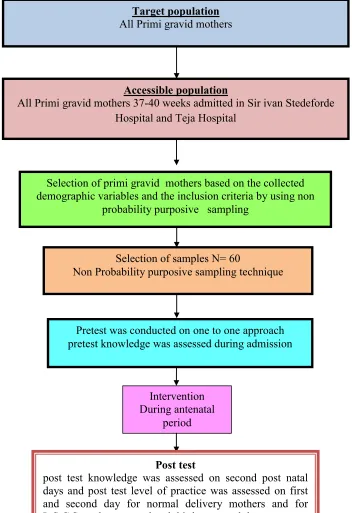
Fig. 3.1 SCHEMATIC REPRESENTATION ON RESEARCH METHODOLOGY
s Target population
All Primi gravid mothers
Accessible population
All Primi gravid mothers 37-40 weeks admitted in Sir ivan Stedeforde Hospital and Teja Hospital
Selection of primi gravid mothers based on the collected demographic variables and the inclusion criteria by using non
probability purposive sampling
Selection of samples N= 60
Non Probability purposive sampling technique
Pretest was conducted on one to one approach pretest knowledge was assessed during admission
Intervention During antenatal
period
DATA ANALYSIS AND INTERPRETATION Post test
CHAPTER 4
30
DATA ANALYSIS AND INTERPRETATION
This chapter deals with the analysis and interpretation of data collected from 60 primigravid mothers at selected settings, Chennai. The data collected was organized, tabulated, and analyzed according to the objectives. The findings based on the descriptive and inferential statistical analysis are present under the following sections.
ORGANIZATION OF THE DATA
Section 4.1: Description of the demographic variables among Primi gravid mothers
Section 4.2: Assessment and comparison of the pretest and post test level of knowledge regarding neonatal care among Primi gravid mothers
Section 4.3: Assessment of post test level of practice regarding neonatal care among primi gravid mothers
Section 4.4: Correlation between post test knowledge and practice scores regarding neonatal care among Primi gravid mothers
Section 4.5: Association of selected demographic variables with the mean differed score of knowledge and post test level of practice regarding neonatal care among Primi gravid mothers
SECTION 4.1: DESCRIPTION OF THE DEMOGRAPHIC VARIABLES OF PRIMI GRAVID MOTHERS
Table 4.1.1: Frequency and percentage distribution of demographic variables of primi gravid mothers with respect to age in years, religion and type of family.
N = 60
S.No. Demographic Variables No. %
1. Age in years
18 ± 22 16 26.67
22 ± 26 27 45.00
26 ± 30 17 28.33
2. Religion
Hindu 51 85.00
Christian 8 13.33
Muslim 1 1.67
Others 0 0.00
3 Type of family
Nuclear family 21 35.00
Joint family 39 65.00
Separated 0 0.00
Others 0 0.00
4 Education of the mother
Non Illiterate 2 3.33
Primary education 3 5.00
Secondary education 7 11.67
High school 6 10.00
Higher secondary 24 40.00
Degree and above 18 30.00
32
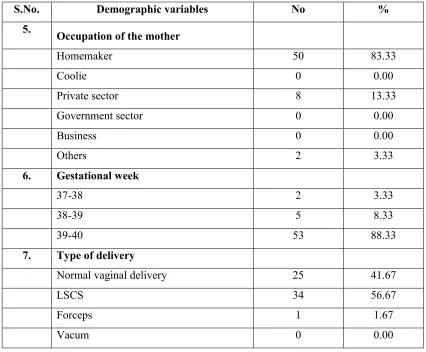
Table 4.1.2: Frequency and percentage distribution of demographic variables of primi gravid mothers with respect to occupation of the mother, gestational week and type of delivery
N=60
S.No. Demographic variables No %
5.
Occupation of the mother
Homemaker 50 83.33
Coolie 0 0.00
Private sector 8 13.33
Government sector 0 0.00
Business 0 0.00
Others 2 3.33
6. Gestational week
37-38 2 3.33
38-39 5 8.33
39-40 53 88.33
7. Type of delivery
Normal vaginal delivery 25 41.67
LSCS 34 56.67
Forceps 1 1.67
Vacum 0 0.00
The above table 4.1.2 shows frequency and percentage distribution of demographic variables of Primi gravid mothers with respect to occupation of the mother, gestational week and type of delivery
With regard to the primigravid mothers about 50 (83.33%) were homemakers, 53( 88.33%) of the mother delivered a newborn born in 39-40 of gestational week and 34(56.67%) born by L.S.C.S
34
SECTION 4.2: ASSESSMENT AND COMPARISON OF PRETEST AND POST TEST LEVEL OF KNOWLEDGE REGARDING NEONATAL CARE AMONG PRIMI GRAVID MOTHERS.
[image:56.612.113.523.166.445.2]N=60
Fig 4.2.1 Percentage distribution of pretest and post test level of knowledge regarding neonatal care among primi gravid mothers
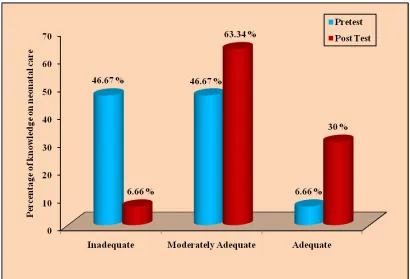
The above figure shows the pretest and post test level of knowledge regarding neonatal care package, 28(46.67%) primi gravid mothers had inadequate and moderately adequate knowledge in the pretest, whereas in the post test 38(63.34%) had moderately adequate knowledge, 18(30%) had adequate knowledge on newborn care package.
This above result shows that Neonatal care package has helped the primi gravid mothers to gain knowledge an aspects related to neonatal care.
Table 4.2.2: Comparison of pretest and post test knowledge scores regarding neonatal care among primi gravid mothers.
N = 60
Knowledge Mean S.D 3DLUHGµW¶9DOXH
Pretest 7.68 2.27 t = 7.826***
p = 0.000, S
Post Test 10.21 1.88
***p<0.001, S ± Significant, N.S- Non Significant
36
[image:58.612.110.534.161.286.2]SECTION 4.3: ASSESSMENT OF THE POST TEST LEVEL OF PRACTICE REGARDING NEONATAL CARE AMONG PRIMI GRAVID MOTHERS
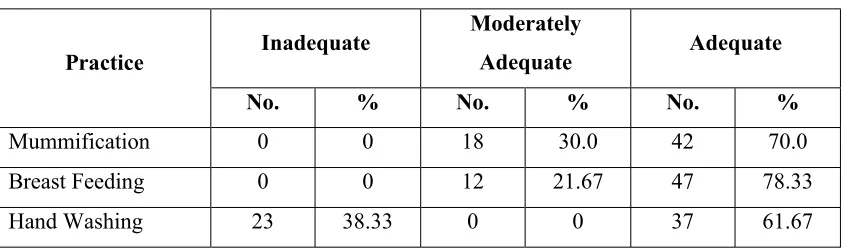
Table 4.3.1: Frequency and percentage distribution of post test level of practice regarding neonatal care among primi gravid mothers.
N= 60
Practice Inadequate
Moderately
Adequate Adequate
No. % No. % No. %
Mummification 0 0 18 30.0 42 70.0
Breast Feeding 0 0 12 21.67 47 78.33
Hand Washing 23 38.33 0 0 37 61.67
The above table 4.3.1 shows the post test level of practice regarding neonatal care among primi gravid mothers.
SECTION 4.4: CORRELATION BETWEEN POST TEST KNOWLEDGE AND PRACTICE SCORES REGARDING NEONATAL CARE AMONG PRIMI GRAVID MOTHERS.
Table 4.4.1: Correlation between post test knowledge and practice scores regarding neonatal care among primi gravid mothers.
N = 60
Variables Mean S.D µU¶9DOXH
Knowledge 10.21 1.88 r = 0.4
p =002, S**
Practice 33.83 3.82
**p<0.01, S ± Significant
38
[image:60.612.108.532.199.468.2]SECTION 4.5: ASSOCIATION OF SELECTED DEMOGRAPHIC VARIABLES WITH THE MEAN DIFFERED SCORE OF KNOWLEDGE AND POST TEST LEVEL OF PRACTICE REGARDING NEONATAL CARE AMONG PRIMI GRAVID MOTHERS
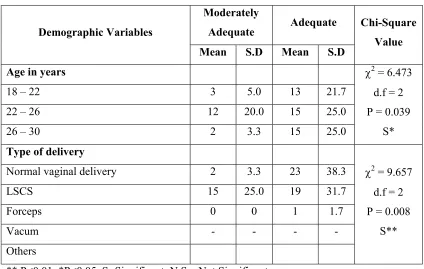
Table 4.5.1: Association of demographic variables with mean differed score level of practice regarding neonatal care among primi gravid mothers
N=60
Demographic Variables
Moderately
Adequate Adequate Chi-Square Value Mean S.D Mean S.D
Age in years F2 = 6.473
d.f = 2 P = 0.039
S*
18 ± 22 3 5.0 13 21.7
22 ± 26 12 20.0 15 25.0
26 ± 30 2 3.3 15 25.0
Type of delivery
F2 = 9.657 d.f = 2 P = 0.008
S**
Normal vaginal delivery 2 3.3 23 38.3
LSCS 15 25.0 19 31.7
Forceps 0 0 1 1.7
Vacum - - - -
Others
** P<0.01, *P<0.05, S- Significant, N.S ± Not Significant
None of the demographic variables was not significant association with mean differed score of knowledge level
The above table 4.5.1 shows that the demographic variables of age in years and type of delivery shown statistical significant association with mean differed score of practice at p<0.01 level. In this especially age of the primi gravid mothers 22-26 years of primi gravid mothers and L.S.C.S mothers shown statistical significant association with mean differed score of practice. The other demographic variables of neonates had not shown any statistical association with the mean differed score of practice level .
CHAPTER 5
39
DISCUSSION
This chapter discusses in detail the findings of the study derived from the statistical analysis and its pertinence to the objectives of the study and further discussion will exemplify these objectives were satisfied by the study. The purpose of the study was to assess the effectiveness of neonatal care package among primi gravid mothers.
The findings of the study discussed were based on the objectives as stated.
5.1 Description of the demographic variables among primi gravid mothers.
The demographic variables as shown in table 4.1.1 to 4.1.2 depicts that the age of primi gravid mothers 27(45%) were belong to the age group of 22-24, 51(85%) were Hindus, and 39(65%) belong to nuclear family, 50 (83.33%) were homemakers, with 53(88.33%) in 39-40 of gestational week and 34(56.67%) of the newborn born by L.S.C.S.
5.2 The first objective was to assess and compare pre and post level of knowledge regarding neonatal care among primi gravid mothers.
The analysis revealed that in the pretest, 28(46.67%) primi gravid mothers had moderately adequate knowledge regarding neonatal care. In the post test, 38(63.34%) had moderately adequate knowledge, 18(30%) had ade