_______________________________________________________________________
Authors
Helen Buckley Woods is an Information Specialist at ScHARR, University of Sheffield and EdD student.
Email: [email protected]
Andrew Booth is Reader in Evidence Based Information Practice, University of Sheffield and a founder of the Evidence Based Library and Information Practice movement.
Received 30 September 2013
What is the current state of practitioner research? The 2013
LIRG Research Scan
Helen Buckley Woods, Andrew Booth
Abstract
This paper reports on a scoping review commissioned as a research scan by the CILIP Library and Information Research Group (LIRG) and undertaken by a small research team at the School of Health and Related Research (ScHARR) at the University of Sheffield. Firstly the recent literature (2010-2012) on LIS practitioner-focused research was identified and briefly reviewed. This was supplemented by an entities scan; that is, a brief scan of key outputs (e.g. newsletters, discussion lists, etcetera) produced by CILIP specialist interest groups (SIGS). The team identified a total of 142 relevant papers. These were coded and characterised against relevant frameworks. A brief selection of items in each category was reviewed. The paper concludes by suggesting priorities to improve practitioner research at practitioner, organisational and strategic level. Particular attention was focused on the stimulation of collaborative “hive” research activities and on monitoring existing good practice from other groups, associations and countries.
1 Introduction
Library and Information Science practitioners engage with research in multiple ways: as consumers of research, by conducting their own research and by working in collaboration with academics. This paper reports on a scoping review,
engagement with research. It was not the authors‟ intention to identify every item of evidence and the review makes no claim to be a systematic review. Of several definitions for a scoping review the one that fits best with this project describes it as a “Preliminary assessment of potential size and scope of available research literature. Aims to identify nature and extent of research evidence…” (Grant and Booth, 2009, 95).
In addition to bearing the hallmarks of a scoping review the report focussed on current research (2010 onwards) in order to reveal a picture of contemporary issues as required by the commissioners. Another key element of the review methodology was to seek to include evidence from diverse sources. By expanding the data collection process, beyond peer reviewed journals and books, to include professional mailing lists, newsletters and conference websites the team was able to access a richer seam of data. Examples of practitioners working in an evidence based way may be observed in such publications. The authors also identified a thriving practitioner research community populated by examples from all sectors.
The research team comprised a practitioner and an academic opening up the possibility of different and complementary professional perspectives being applied throughout the process. In order to exploit this potential as much as possible the team kept a log throughout the process. Rather than being a formal record of progress (which was documented elsewhere) the log served as an effective way to capture thoughts whilst working that might otherwise have been lost. Using a Google document meant that responses to comments could be added easily. The log also proved to be a good place to raise and resolve specific
questions about methods as they arose. Issues discussed in this document were incorporated into regular project meetings as required and used to inform the final report.
The scoping review addressed the following key research questions as stated in the award brief:
What kind of research is relevant to LIS practitioners?
What do practitioners understand by “research” and how do they use it? What are the barriers and facilitators to using research in practice? The review also addressed the following additional questions:
What kind of research do practitioners undertake?
What is the status of practitioner / academic collaboration in research? The scope of the report sought to include all LIS practitioners and sectors as reflected in the CILIP membership.
2 Methodology
2.1 Evidence Identification
Two concurrent strands were pursued within the evidence identification phase of the project. Phase one comprised of searching pre-specified subject specific (e.g. LISA) and generalist electronic databases. A search strategy was created using keyword and subject headings incorporating terms around the concepts of “research” and “practitioner”. This was followed up by more specific phrase searches e.g. “evidence based practice” “practice based evidence” and so on. Retrieved records were downloaded into reference management software and duplicates were removed. Phase two began with an exploration of ephemeral evidence by scanning selected objects e.g. newsletters and conference web pages. The object of phase two was to identify examples of practitioner engagement with research, not otherwise uncovered by searching electronic databases alone. To identify a representative sample of practitioner-based research activities a sampling frame of CILIP special interest groups (SIGS) was established using data provided by CILIP. One, two or three “entities” were allocated for
exploration per SIG, according to the total membership of each group. Entities typically comprised a newsletter, blog, journal or conference website. For each assigned entity a range of items (e.g. postings, articles, presentations etcetera) was to be explored.
The next stage was to scan each entity resource from 2012 onwards for evidence of practitioner engagement in research. Subsequently a more time-effective approach involving searching each document using keywords such as “report”, “project”, “research” etc. was employed. Identified examples were added to a Word document and annotated. Records were kept in Excel of each SIG, the number of entities assigned and the names of the entities being searched.
2.2 Data Extraction
Original records from Reference Manager were exported into Excel where they were sifted for relevance and coded. The team sought to include papers that featured research as a topic and which explicitly made a connection between LIS practitioners and research. Such papers fell into three categories:
Practitioners working collaboratively with academics; Practitioners conducting their own research;
Practitioners as consumers of research.
Papers were assessed on the basis of the information available, as downloaded from bibliographic databases, usually title and abstract. However numerous papers did not have an abstract. Due to time restrictions it was not possible to seek the full text so judgements were made on the information available. A total of 142 references were identified for inclusion in the scoping review.
2.3 Mapping Frameworks
Included papers were coded using several frameworks as detailed below:
A framework developed by Boote et al. (2012), which reviewed and characterised public involvement in health research, proved easily applicable to the research scan. It enabled the team to categorise the stage at which LIS practitioners were engaged in the research process. The full list of categories employed comprised: Identification of questions/prioritisation, Commissioning and funding, Design, Peer review, Data collection, Advisory group/management, Data analysis and interpretation, Dissemination, Literature Reviews (including Systematic Reviews), Multiple Stages and Unclear / not specified.
Professional domain
The team employed a framework based on the work of Koufogiannakis and colleagues (2004), who developed a taxonomy of LIS domains through undertaking a content analysis of LIS literature. The full list of domains comprised: Collections, Education, Information Access & Retrieval, Library History, Management, Marketing & Promotions, Professional Issues,
Reference/Enquiries, Multiple Domains and Unclear / not specified.
Research role
A purpose-specific framework to categorise a practitioner‟s research role in a study was developed by the authors for use in this study. Categories were: Practitioners as consumers of research (Evidence Based Practice), Working collaboratively with academics (Research), Multiple Research Roles, Unclear / not specified.
Dissemination role
When assessing bibliographic records the research team used several categories to record a practitioner‟s dissemination role. Categories created for the Research Scan included: Practitioner as first Author, Practitioner as any Author, Editorial, Commentary or Correspondence, No Practitioner, Multiple Dissemination Roles, Unclear / not specified.
Sector
Records were assigned to sectors where possible using codes generated from the CILIP website and the LIS Research Landscape project (McNichol, 2002) as follows: Branch Libraries, College Libraries, Commercial Libraries, Defence Libraries, Further Education Libraries, LIS Funders, Government Libraries, Health Libraries, Industrial Libraries, Information/Library Schools, Legal Libraries, Local Studies Libraries, Mobile Libraries, National / Regional
Associations, Prison Libraries, Professional Associations / Trade Unions, Public Libraries, Research Libraries, School Libraries, University Libraries, Youth Libraries Group, Multiple Sectors, Unclear / not specified.
2.4 Data Synthesis
preceded by a list of papers included in that section for easy reference by the reader. Included papers were presented in a narrative format which featured the main themes that had emerged from the literature selected.
At this stage material from the entities exercise was added to the report under the question “What kind of research do practitioners undertake?” This provided insightful and illuminating examples of practitioner research and evidence based practice.
3 Background Trends
Before undertaking the detailed data analysis it was important to set the context of the report and to summarise the key themes to date in practitioner engagement with research. Three key themes were identified and briefly explored:
Evidence based library and information practice (EBLIP); Action research;
Practitioner based research.
In this section articles were included that traced developments in the EBLIP movement, for example the evolution, principles and future of EBLIP (Booth, 2011b; Eldredge, 2012; Koufogiannakis, 2011, 2012; Wilson and Grant, 2013). The Research Scan found several papers emanating from Europe (Decleve, 2010; Johansen, 2012; Johansen and Pors, 2012; Livonen, 2012; Madge, 2011)
suggesting the spread of EBLIP across the continent. Nevertheless, how this trend translates to grass roots adoption of EBLIP is difficult to establish. Decleve (2010) explores this question by considering the adoption of EBLIP in
non-English speaking countries. She concludes that there is little evidence of take up at grass roots level. Moving to consider the challenges practitioners face in adopting EBLIP, two papers are cited (Jamieson cited in Raven, 2011; Brettle, 2012) which emphasise a need to normalise an evidence based approach into routine practice. The Research Scan further highlights more EBLIP activity in particular sectors e.g. school libraries (Cahill and Richey, 2012) and the health sector (Wilson and Grant, 2013).
Action research is “... a broad approach to workplace-based research”
(Cruickshank et al. 2011,11). Several definitions are presented alongside a table of included items on this topic. In the Research Scan a wide variety of action research projects were identified across multiple sectors.
4 Results
4.1 Overview of results
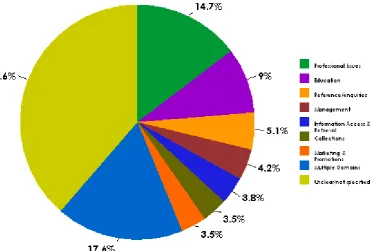
[image:6.595.150.524.234.485.2]The categorisation of included papers enabled the authors to produce a breakdown of the included studies by professional domain (Figure 1), sector (Figure 2), research stage, research role, and dissemination role, and enabled the authors to look at correlations between these headings.
Figure 1: Included studies by LIS Domain
“Professional issues” was the dominant category of papers in the Research Scan 14.7%. “Education” was also strong with 9% of papers being allocated to this domain. This is unsurprising as information literacy and user education remain a major part of the practitioner‟s role across sectors. 17.6% of papers explored multiple domains whilst over a third remained unclassified due to lack of data.
University 32.7% and Health libraries 10.6% were the dominant sectors with School libraries identified as 5.4% of included papers. Papers about, and
Figure 2: Included studies by Sector
4.2 Cross cutting themes
Research skills and competencies
Several articles referred to the role of librarians in teaching students research skills or developing skills in order to support researchers manage data. Only a small number of papers were found which explored LIS practitioners developing research skills for themselves (e.g. Hahn and Jaeger, 2013).
A key example of the latter is a study by Schrader et al. (2012) who conducted a survey of academic librarians‟ research learning needs at the University of Saskatchewan. The authors observed the existence of a flourishing research community and a supportive environment that fostered practitioner engagement with research.
Research Skills and LIS Education
Several papers explored the role of research methods education in Undergraduate LIS courses (e.g. Luo, 2011). Luo (2011) reported on the major benefits gained from attending a research methods course:
understanding of the fundamental principles and processes of conducting research; knowledge of different types of research methods, their respective liabilities, and how to appropriately apply them; and the ability to conduct a systematic and critical literature review of published research.
The Research Scan also identified a continuing role for practical CPD courses and articles on how to conduct research.
4.3 What kind of research is relevant to LIS practitioners?
The Research Scan coded 22 references as relevant and included in this section. Very few papers addressed this question directly, although some illuminating papers were identified. Content analysis and the Delphi method were among fruitful approaches to answering this question.
An apposite paper by Eldredge et al. (2012) reports on a Delphi study undertaken by the US Medical Library Association. The study was designed to identify the most important research questions and to plan the MLA‟s research direction. Participants were leaders in health librarianship and in the second phase, specified as authors, they published articles in four key health sciences librarianship
journals. Given their leadership role, however, the resultant list of questions generated by participants may not be representative of the MLA‟s membership.
The Research Scan found papers which took a content analysis approach, examining who is pursuing research and where such articles are published. This technique provided insight into the question of what is relevant to practitioners. Fourie (2012) conducted a content analysis of the themes and papers presented at a medical librarianship conference to identify possible future research topics that would be applicable to practitioners and particularly suitable for an action
research methodology.
Kloda and colleagues (2011) conducted research to establish how useful evidence summaries were to practitioners. They found that results identified in research papers were applicable in practice. Frequently, however, the critical appraisal review process uncovered problems with flawed methodologies. The authors concluded that further research was required to investigate this problem in order to improve research methodology and methods and ultimately to improve the evidence summaries themselves.
A clear theme identified in the Research Scan related to the need for research to demonstrate the impact of LIS practice. Hall (2010) concurs with this notion, reporting on the work of the LIS Research Coalition:
LIS practitioner engagement in research should also be channelled to build an evidence base that demonstrates the value and impact of LIS practice.
(Hall, 2010, 83)
4.4 What do practitioners understand by research?
22 references were coded as relevant to this question, 12 items were selected to provide an overview of current issues.
The report first considered the many definitions of research that exist in the wider LIS literature. For example Hernon and Schwartz (1999) defined research as:
(Hernon and Schwartz, 1999, 423)
This inclusive definition easily accommodates both positivist and interpretivist philosophical positions. It is also quite a loose definition and therefore facilitates the encouragement and fostering of practitioner research. As reported elsewhere in the Research Scan, the tension between the need for practitioners to produce good quality research and the barriers that this requirement might create is a perennial concern. If requirements are too demanding then practitioners will be discouraged from trying to do any research; if the bar is set too low – a kind of “anything goes” approach – then the results will be too poor to offer anything of value to the rest of the LIS community.
A related criticism of practitioner research is that it is often focussed on a small case study and therefore not generalisable. However, as Wellington and
Szcerbinski (2007) comment, the ability to relate to a case and learn from it is perhaps more important than being able to generalise from it.
Many papers identified in the Research Scan followed a formalised inquiry process and could therefore be classed as research. Several papers could also be described as evaluations of services or products, with some papers difficult to classify. The authors found that the boundaries between research and evaluation blurred even more by their inclusion of case studies, which could be classed as research or evaluation.
The Research Scan also considered the issue of hierarchies or taxonomies of evidence in EBLIP. Two LIS papers (Booth, 2010; Koufogiannakis, 2011) evoke the Social Science tradition in which, as Petticrew and Roberts (2003) suggest, it is regarded as more helpful to have a more inclusive approach to evidence when answering a question in practice. These authors suggest abandoning a hierarchy of evidence, which is most commonly used in biomedical science, and moving towards a taxonomy of evidence where different types of evidence are matched as they best answer a research question. They conclude:
“Horses for courses” is not a dramatic theoretical insight, but the energy dissipated in debates on methodological primacy could be better used were this aphorism to be accepted.
(Petticrew and Roberts, 2003, 529)
This type of approach seems to have been welcomed by the EBLIP movement as a more appropriate fit to our profession than a restrictive hierarchy application.
Finally in addressing this question, Aharony (2012) conducted a content analysis of ten key LIS journals and identified three major areas of research: information technology, methodology and social information science. Methodology and social information science were identified as new areas of interest in his sample journals.
4.5 How do practitioners use research?
From these 14 articles were selected for more detailed attention in the narrative overview.
From this literature, the LIRG Research Scan identified a significant role for research in increasing practitioner knowledge and more specifically in changing professional practice. However, there is reason to believe that the way in which this is accomplished is neither as rational nor mechanistic as models of evidence based practice might imply. A prominent theme centred on evidence based library and information practice is that practitioners use either their own research or that undertaken by others specifically to demonstrate the value and impact of their service. The nature of such justification may vary according to context. For example within school libraries evidence based practice is frequently portrayed as a survival strategy. In contrast, within health services such developments were typically associated with quality improvement and effective practice. Other sectors are yet to characterise their distinctive approach to evidence based
practice, although local and regional variants could be detected. Many exemplars demonstrated the application of an evidence based process to specific topics and / or sectors such as school libraries, information literacy, cataloguing, and more recently to approaches to management.
4.6 What are the barriers and facilitators to using research in practice?
Numerous articles were identified that examined the implications of various barriers and facilitators for library practitioner research. Addressing this particular question yielded 20 references on Barriers together with 38 references on
Facilitators. Of these, 46 (15 on barriers and 31 on facilitators) were selected to produce an overview of contemporary issues. To manage the volume of articles on this topic the authors used a variant of framework analysis. A recent systematic review of barriers and facilitators in the context of evidence based library and information practice was used as a structure to analyse reported barriers (Booth, 2011a).
Of particular interest were recent trends observed in suggested facilitators for practitioner research. Activities in the UK, and elsewhere, have resulted in increased recognition of the importance of research strategy and culture change (e.g. McMenemy 2010; Bhatti and Chohan, 2012). To support this, numerous initiatives relating to education and training have been devised, including specific attempts to support both initial research design and subsequent writing.
Mentorship received specific attention (Eldredge, 2010; Macauley, 2010; Stephens et al, 2011), partly through initiatives sponsored by ALIA in Australia (Carroll, 2010; Doessel, 2010). Aside from this, one of the most prominent
LACK OF TIME LACK OF FINANCIAL RESOURCES
LIMITATIONS OF EVIDENCE BASE LACK OF INFRASTRUCTURE
Data LACK OF ORGANISATIONAL
SUPPORT
Primary research POOR ACCESS TO EVIDENCE BASE
Secondary research/synthesis NEED FOR SKILLS/TRAINING
PROFESSIONAL CHARACTERISTICS NEED FOR EDUCATION
INAPPROPRIATE ORIENTATION OF RESEARCH
COMMUNICATION DIFFICULTIES
LACK OF RESEARCH CULTURE LANGUAGE/CULTURAL BARRIERS
(NON-ENGLISH SPEAKING)
FAILURE TO IMPLEMENT PACE OF CHANGE
LIMITATIONS OF EBLIP LEADERSHIP
Table 1 - Identified Barriers to Practitioner Research (2010-2012)
4.7 What kind of research do practitioners undertake?
A significant proportion of the total identified literature for the Research Scan sought to address this question. Many of the 133 references initially coded as relevant offered example case studies of such research opportunities. Nineteen references (14%) were selected for the topic overview. These were supplemented by a further 12 items identified from the Entities Scan which was considered particularly important in informing this question.
Unsurprisingly, and as recognised by numerous earlier authors, the Research Scan identified a prevalence of the “This is how it is done in my library” type of
research. This manifested itself in primarily qualitative research in the form of case studies. Surveys, both quantitative and qualitative, continue to dominate as a research method (Starr, 2012). One area of particular growth during the survey period (2010-2012) was that of Metrics (especially Bibliometrics) (Pan and Breen, 2011; Corrall et al, 2013). Within the U.K. some of the stimulus for this relates to the Research Excellence Framework (Delasalle 2012) and comparable initiatives (MacColl, 2010) and, more widely, an increased imperative to demonstrate the impact of research whether it be library research or the research of others.
organisational objectives, but also because it illustrates how research findings must be presented creatively and imaginatively in order to stimulate the interest of the already busy practitioner:
Dave Pattern’s (University of Huddersfield) keynote address reported on research that shows how library use can predict what grade students will get. Amusingly, there is even a 2 a.m. rise in library use for students who get lower grades – demonstrating that they’ve left it to the last minute. Apparently the highest achievers are in the library by 9 a.m. How does knowing that affect how we promote our library services?
(Katie the Librarian Blog, 2012)
The LIRG Research Scan also revealed a mother lode of research, captured from professional discussion lists, relating to Dissertation (Masters) and Thesis
(Doctoral) projects. Examples identified included: Biometrics in school and college libraries;
An investigation into the impact of technology upon the role of the school librarian and the design of the school library;
What role can the Librarian play in embedding information literacy within the secondary school?
How university libraries are supporting Higher Education (HE) in Further Education, particularly around encouraging the use of university resources by HE students in College settings and supporting the student experience.
It was noted that one practitioner-focused academic journal has recently introduced a regular quarterly feature focusing on the implications of recent dissertation research (Marshall, 2012).
4.8 What is the status of practitioner / academic collaboration in research?
The Research Scan identified 46 references of relevance to this question. From these approximately one-third (n=17) were selected in order to produce a topic overview. These articles could be divided into (i) those discussing the concept of practitioner / academic collaboration and (ii) examples of such collaboration. The former category carried widespread recognition of the imperative for practitioner-academic collaboration, with many emphasising the reciprocity of such
arrangements:
academics need to understand how important the issues of practitioners are, and help to design research that helps practitioners inform their own professional knowledge. Practitioners need to understand how important research is to their own practice, and work closely with academia to build a research culture within their organisations.
(McMenemy, 2010, 324)
Several authors reflected on the practical challenges posed by a recognised
“dearth of funding” (Ponti, 2013). Solutions centred on approaches to facilitate an “own account” research portfolio. For example Ponti (2013) suggests a
overheads occasioned by a commissioned research project. Strategic coordination of internally-supported research was also considered essential with Marsh and Evans (2012) describing the formation and operation of a Library Applied Research Group. Numerous authors endorsed attempting to access increasingly available amounts of funding available for institutional research support, utilising a portion of these for research-related purposes. For many such attempts would seek to capitalise on extended librarian involvement in research support (e.g. data curation – Adamick, 2011; Bracke, 2011; and Carlson, 2012).
5 Discussion
This cross-sectional survey of the professional library literature for 2010-2012, supplemented by a brief review of CILIP Group entities, reveals that practitioner research continues to make a large contribution to LIS research activity. Action research and other practitioner-focused methods are well-represented among the literature while Evidence Based Practice manifests significant growth in terms of both reach and spread, being seen in other regions and other sectors.
Notwithstanding the apparently healthy state of practitioner research, there is considerable evidence of the challenge being posed by other library-related initiatives. Two considerable areas of activity relate to supporting the research of others, whether these be academics or other professionals, and endeavours related to the availability of open access journals and / or data and associated institutional repositories. While such activities do offer the prospect of successful research collaboration for practising librarians, in the form of institutional or organisational research, the LIRG Research Scan recognises that they may also carry an
associated opportunity cost – deflecting time and energies away from so-called “professional” research. A particular concern relates to the fact that those topics that are prominent on the library and information professional agenda are unlikely to be carried forward by those outside the profession. If not by LIS practitioners and researchers then by whom?
There can be little debate that supporting the research of others and facilitating open access to articles and datasets are legitimate and, indeed, well-established activities for library and information professionals. Furthermore, it would be invidious for library practitioners to act as custodians to these facilities and not to take advantage of their positioning by researching in these areas. Indeed, research collaboration can help them to acquire and develop research skills that may subsequently be employed in researching professional issues. Clearly the issue is not whether effort should be expended in research support and developing open access resources. Instead it relates to the optimal balance between such activities and the library practitioner‟s own professional research. Facilitating discussion about what this optimal balance might be is an important role for professional organisations such as LIRG.
particularly well-suited to such an approach, whether this be face-to-face (as with the clinical librarian collaboration in the North West) or virtually (as with the Medical Library Association‟s 15 key questions for systematic review. Certainly this route to enlisting both support and resources is one that merits wider
consideration among the various library interest groups.
Despite accessing the wider international literature, the LIRG Research Scan was undertaken within a UK context. However, it is worth highlighting the benefits to be gained from monitoring significant pockets of good practice in other countries. Foremost among these are the multi-sectoral initiatives advanced by the
Australian Library and Information Association (ALIA) and the specific sectoral achievements of the Special Libraries Association. Lessons are to be learnt, not only from specific initiatives such as the ALIA Research Mentoring scheme, but also from the gains made as a result of a coordinated strategic approach to the advancement of research. It is particularly interesting to note that the U.S., U.K. and Australia have attempted to advance practitioner research using three different models; sectorally (via the Special Libraries Association), by having a separate library research interest group (i.e. LIRG) and engaging with an entire
professional association (i.e. ALIA). While there is insufficient evidence to allow one to conclude which of these is the stronger model, it is clear that there are significant gains to be made from asserting that research is everyone‟s business.
6 Limitations of the study
Within the time and resource constraints of this project this report represents a systematic, yet not comprehensive, attempt to survey the professional library literature at one particular point in time (Booth et al., 2011). Although the selection of a two year period enhances the chance of picking up significant themes within the literature, it is recognised that cross-sectional surveys are not an optimal means for capturing and identifying trends or larger patterns (Economic and Social Data Service, 2011). Replication of this scoping review at another not-too-distant point would maximise chances of comparison and contrast with the findings from this survey. Another more efficient approach would be to select a “panel” of key data sources (i.e. journals) and to then conduct repeated analyses of the contents of these journals at regular intervals. In this respect any observations on historical trends have been extrapolated from the authors‟ own prior
experience, and extensive reading, of practitioner research, especially evidence based library and information practice. No doubt other equally well-placed observers would attach different relative significance to the themes identified in this report and, more significantly, would identify themes not highlighted here.
Other limitations are known to be associated with the review methodology, namely that of the scoping review (Grant and Booth, 2009). The emphasis has been on engaging with a significant core of material within a short period of time. This approach has necessarily focussed on major databases and on published journal articles. The typical two year trajectory from completion of research to subsequent publication in a peer-reviewed journal does result in a reduced time horizon in terms of being able to identify current and new developments.
progress. Decisions on inclusion and exclusion and subsequent categorisation by domain and sector have been limited by being based only on a rapid scan of article title and abstract. Above all, a scoping review makes no assessment of the quality or, indeed, relative significance of any articles found. Clearly-focussed systematic reviews are required to unravel the full implications of literature identified during the course of this review.
7 Conclusion and implications for practice
The LIRG Research Scan is a cross-sectional observational study and therefore only seeks to capture current activity with correspondingly little scope to direct and to shape the agenda. However there are several implications at a strategic, institutional and individual level.
At a strategic level, there is a need to actively monitor good practice from research oriented professional associations in other countries. The identified barriers to getting research into practice share much commonality regardless of country or context. Indeed, approaches from other professions may be applied, particularly those which have formalised approaches to knowledge translation and
implementation science. Furthermore, the LIRG Research Scan report has identified a need to engage with poorly represented sectors – public libraries consistently feature among those for whom it proves challenging to integrate research into everyday working practice. Multi-sectoral initiatives, where a variety of practitioners from different sectors articulate the advantages of practitioner research (with specific concrete examples), seem essential in order to cross-fertilise these ideas between more and less engaged sectors. The Research Scan also recognises that limited involvement in research should not be taken as a marker of limited evaluation activity; the challenge is to build upon the techniques of, and findings from, myriad evaluation activities to create a usable, rigorous and generalisable evidence base. Such an approach would tap into more inclusive definitions of practitioner research, by embracing the widest possible array of methods and philosophical underpinnings.
At a local level difficult decisions have to be made by managers, and by
individual professionals, concerning the optimal blend of research and evaluation activity and how to manage this. Support for the research of others and the development of open access facilities are both valid professional activities. These activities offer a professional a route towards acquiring research skills and
knowledge, as well as a vehicle for multi-professional collaboration. However, such involvement may serve to close a window of opportunity for professional research into topic areas not identified or covered by other professions.
Multi-professional research collaboration may seem particularly attractive and feasible when ranged against the professional isolation experienced by the lone library practitioner researcher. The prospect of utilising the “hive” based approaches described in this Research Scan is especially significant. Individual practitioners already access wider groups and networks in order to pursue professional specialisms and interests. Such groups already involve
endeavour either to divide research tasks into manageable and achievable “chunks” or to employ common protocols and data collection tools across multiple institutions is a simple, yet potentially productive enhancement of this model. Social networking and file-sharing technologies together with improved low-cost communication facilities, such as Skype or Virtual Learning
Environments, make the practicalities of distributed collaboration much more viable.
The inexorable growth of evidence based practice, across multiple professions and within the library and information sector, has led to increasing recognition that “research is everyone‟s business”. This is not to say that every practitioner should necessarily become a researcher. Some may argue that the cause of rigorous research is poorly served by encouraging a proliferation of amateur occasional researchers who select only from the top tray of a research methods toolkit, design poorly conceived and non-reproducible survey instruments and produce a
superficial analysis of import only to their own institutions. Mechanisms to harness collective knowledge and expertise, to provide support and a sense of shared endeavour, and particularly to forge academic-practitioner partnerships, offer a viable alternative to such a superficial model. The generation and pursuit of “real life” practitioner questions that have the potential to impact on day-to-day working practice could do much to demonstrate the relevance of research to the busy practitioner. Well-focused dissertation proposals that actively engage with the practitioner research agenda offer a specific mechanism for improved academic-practitioner collaboration. While research may not yet be everyone‟s business, the LIRG Research Scan 2013 at least attests to the fact that research should be on everyone‟s agenda.
References
Adamick, J. (2011) Librarian involvement in Research Ethics: An Entry Point into the World of Sponsored Research, Issues in Science & Technology Librarianship, (65) Spring, 36-39.
Aharony, N. (2012) Library and Information Science research areas: A content analysis of articles from the top 10 journals 2007-8, Journal of Librarianship and Information Science, 44(1), 27-35.
Bhatti, R. and Chohan, T. M. (2012) Assessing the Role of Library Associations in Promoting Research Culture in LIS, Library Philosophy and Practice - Electronic Journal. [online] Article 839. URL:
http://digitalcommons.unl.edu/libphilprac/839/ [accessed 26.09.13].
Boote, J., Wong, R. and Booth, A. (2012) „Talking the talk or walking the walk?‟ A bibliometric review of the literature on public involvement in health research published between 1995 and 2009, Health Expectations. [online] URL:
http://onlinelibrary.wiley.com/doi/10.1111/hex.12007/abstract [accessed 28.01.14].
Booth, A. (2011a) Barriers and facilitators to evidence-based library and
information practice: An international perspective, Perspectives In International Librarianship, 2011, 1(1), [online] URL:
http://www.qscience.com/doi/abs/10.5339/pil.2011.1 [accessed 26.09.13].
Booth, A. (2011b) Is There a Future for Evidence Based Library and Information Practice? Evidence Based Library & Information Practice, 6(4), 22-27 [online] URL: http://ejournals.library.ualberta.ca/index.php/EBLIP/article/view/11826
[accesssed 26.09.13].
Booth, A. and Eldredge, J.D. (2010) A Voyage of Discovery: Identifying Barriers to EBLIP in the Caribbean, Evidence Based Library and Information Practice, 5(3), 68-72 [online] URL:
http://ejournals.library.ualberta.ca/index.php/EBLIP/article/view/8890 [accessed 26.09.13].
Booth, A., Papaioannou, D. and Sutton, A. (2011) Systematic approaches to a successful literature review. London: Sage.
Bracke, M.S. (2011) Emerging Data Curation Roles for Librarians: A Case Study of Agricultural Data, Journal of Agricultural & Food Information, 12(1), 65-74.
Brettle, A., Maden-Jenkins, M., Anderson, L., McNally, R., Pratchett, T., Tancock, J., Thornton, D., and Webb, A. (2011) Evaluating clinical librarian services: a systematic review, Health Information and Libraries Journal, 28(1), 3-22.
Brettle, A. (2012) Looking Forwards and Looking Back, Evidence Based Library & Information Practice, 7(1), 1-3 [online] URL:
http://ejournals.library.ualberta.ca/index.php/EBLIP/article/view/16520 [accessed 26.09.13].
Cahill, M. and Richey, J. (2012) Integration of evidence-based library and
information practice into school library education: A case study, School Libraries Worldwide, 18(2), 95-105.
Carlson, J. (2012) Demystifying the data interview. Developing a foundation for reference librarians to talk with researchers about their data, Reference Services Review, 40(1), 7-23.
Carroll, M. (2010) The ALIA Research Mentoring Program, Incite, 31(6), 10.
Corrall, S., Kennan, M. A., and Afzal, W. (2013) Bibliometrics and Research Data Management Services: Emerging Trends in Library Support for Research, Library Trends, 61(3), 636-674.
Cruickshank, P., Hall, H., and Taylor-Smith, E. (2011) Enhancing the impact of LIS Research Projects [online]. URL: http://www.researchinfonet.org/wp-content/uploads/2012/01/RiLIES_report_FINAL.pdf [accessed 26.09.13]
Dalrymple, P.W. (2010) Applying Evidence in Practice: What We Can Learn from Healthcare, Evidence Based Library & Information Practice, 5(1) 43-47. [online]. URL:
Decleve, G. (2010) EBLIP: bridging the language barrier Using evidence in practice, Health Information and Libraries Journal, 27(4) 332-337.
Delasalle, J. (2012) Research Evaluation: Bibliometrics and the Librarian. SCONUL Focus, 53, 15-19. [online]. URL:
http://www.sconul.ac.uk/sites/default/files/documents/5_1.pdf [accessed 26.09.13].
Doessel, N. (2010) Study Grant to Research Conference Mentoring. Incite, 31(12), 24.
Economic and Social Data Service. (2011) Analysing Change Over Time: A guide to ESDS microdata resource, [online]. URL:
http://www.esds.ac.uk/Government/docs/analysingchange.pdf [accessed 26.09.13].
Eldredge, J. D. (2010) Virtual Peer Mentoring (VPM) Might Facilitate the Entire EBLIP Process, Evidence Based Library and Information Practice, 5(1), 7-16. [online]. URL:
http://ejournals.library.ualberta.ca/index.php/EBLIP/article/view/7393 [accessed 26.09.13].
Eldredge, J. D. (2012) The evolution of evidence based library and information practice, part I: Defining EBLIP. Evidence Based Library and Information Practice, 7(4), 139-145. [online]. URL:
http://ejournals.library.ualberta.ca/index.php/EBLIP/article/view/18572 [accessed 26.09.13].
Eldredge, J. D., Ascher, M. T., Holmes, H. N. and Harris, M. R. (2012) The new Medical Library Association research agenda: final results from a three-phase Delphi study, Journal of the Medical Library Association: JMLA, 100(3), 214-218.
Fourie, I. (2012) Content analysis as a means of exploring research opportunities from a conference programme, Health Information and Libraries Journal, 29(3), 197-213.
Grant, M. J. and Booth, A. (2009) A typology of reviews: an analysis of 14 review types and associated methodologies, Health Information and Libraries Journal, 26(2), 91-108.
Hahn, T. B. and Jaeger, P. T. (2013) From practice to publication A path for academic library professionals, College and Research Libraries News, 74(5), 238-242.
Hall, H. (2010) Promoting the priorities of practitioner research engagement. Journal of Librarianship and Information Science, 42(2), 83-88.
Hernon, P. and Schwartz, C. (1999). Editorial: LIS Research – Multiple Stakeholders, Library and Information Science Research. 21(4), 423-427.
http://ejournals.library.ualberta.ca/index.php/EBLIP/article/view/10095 [accessed 26.09.13].
Holmes, C. and Woznicki, L. (2010) Librarians at your doorstep, College and Research Libraries News, 71(11), 582-585.
Johannsen, C.G. (2012) Evidence-based Practice in Libraries - Principles and Discussions. Libri: International Journal of Libraries & Information Services, 62(2), 174-184.
Johannsen, C.G. and Pors, N.O. (2012). EBLIP and Organisational Recipes: An Analysis of the Adoption and Interpretation of EBLIP in the Library and
Information Sector, Library and Information Science, 6, 43-65.
Katie the Librarian Blog (2012) CILIP CIG conference: The value of cataloguing. (Sunday 7th October 2012). [online]. URL:
http://librariankatie.blogspot.co.uk/2012/10/cilip-cig-conference-value-of.html
[accessed 26.09.13].
Kloda, L. A. Koufogiannakis, D. and Mallan, K. (2011) Transferring evidence into practice: what evidence summaries of library and information studies research tell practitioners, Information Research, 6(1). [online] URL:
http://informationr.net/ir/16-1/paper465.html [accessed 26.09.13].
Koufogiannakis, D. (2011) Evidence Based Practice: Science? Or Art? (Editorial). Evidence Based Library and Information Practice, 6(1),1-2. [online]. URL:
http://ejournals.library.ualberta.ca/index.php/EBLIP/article/view/9862 [accessed 26.09.13]
Koufogiannakis, D. (2012) Considering the place of practice-based evidence within Evidence Based Library and Information Practice (EBLIP), Library and Information Research, 35(111), 41-58.
Koufogiannakis, D., Slater, L. and Crumley, E. (2004) A content analysis of librarianship research, Journal of Information Science, 30(3), 227-239.
Livonen, M. (2012) Evidence-based Library Method, Signum, 1(1) 4-8.
Luo, L. (2011) Fusing research into practice: the role of research methods education, Library and Information Science Research, 33(3), 191-201.
Kavanagh, A. (2011) The evolution of an embedded information literacy module: Using student feedback and the research literature to improve student
performance, Journal of information literacy, 5(1), 5-22. [online]. URL:
http://ojs.lboro.ac.uk/ojs/index.php/JIL/article/view/LLC-V5-I1-2011-1 [accessed 26.09.13].
Koufogiannakis, D. (2010) The appropriateness of hierarchies, Evidence Based Library and Information Practice, 5(3), 1-3. [online]. URL:
http://ejournals.library.ualberta.ca/index.php/EBLIP/article/view/8853 [accessed 26.09.13].
MacColl, J. (2010) Library roles in university research assessment, Liber Quarterly, 20(2), 152–168. [online]. URL:
http://liber.library.uu.nl/index.php/lq/article/view/URN%3ANBN%3ANL%3AUI %3A10-1-113588 [accessed 26.09.13].
Madge, O. L. (2011) Evidence Based Library and Information Practice, Studii de Biblioteconomie şi Ştiinţa Informării, (15), 107-112.
Marsh, J. and Evans, G. (2012) Generating research income: library involvement in academic research projects, Library and Information Research, 36(113), 48-61. [online]. URL: http://www.lirgjournal.org.uk/lir/ojs/index.php/lir/article/view/539 [accessed 26.09.13].
Marshall, A. (2012) Calling All Students!!!. Health Information and Libraries Journal, 29(1), 72-74.
McKinney, P. (2013) Information literacy and inquiry-based learning: Evaluation of a five-year programme of curriculum development, Journal of Librarianship and Information Science. [online]. URL:
http://lis.sagepub.com/content/early/2013/05/08/0961000613477677.abstract
[accessed 26.09.13].
McMenemy, D. (2010) Fostering a Research Culture in UK Library Practice: Barriers and Solutions, Library Review, 59(5), 321-324.
McNicol, S. (2002) LIS researchers and practitioners: creating a research culture, Library and Information Research, 26(83), 10-16.[online]. URL:
http://www.lirgjournal.org.uk/lir/ojs/index.php/lir/article/view/134 [accessed 26.09.13]
Pan, R. and Breen, E. (2011) MyRI: An open access bibliometrics toolkit – collaboration in research skills support. Paper presented at LILAC 2011: Librarians‟ Information Literacy Annual Conference, London. [online]. URL: URL: http://www.slideshare.net/infolit_group/pan-breen [accessed 26.09.13]
Petticrew, M. and Roberts, H. (2003) Evidence, hierarchies, and typologies: horses for courses, Journal of epidemiology and community health, 57(7), 527-529.
Pickton, M. Heppell, C. and MacLellan, F. (2012) Research Active, CILIP UPDATE with gazette, October, 32-34.
Ponti, M. (2013) Peer production for collaboration between academics and practitioners, Journal of Librarianship & Information Science, 45(1) 23-37.
Raven, D. (2011) Showing them what we're worth. CILIP Update, 10(6) 40-41.
Sassen, C. and Wahl, D. (2013) Fostering Research and Publication in Academic Libraries, College & Research Libraries, [online]. URL:
http://crl.acrl.org/content/early/2013/04/05/crl13-447.full.pdf+html [accessed 26.09.13].
Scotti, G. J. (2010) Proving value and return on investment, Information Outlook, 14(4), 22-24.
Starr, S. (2012) Survey research: we can do better, Journal of the Medical Library Association: JMLA, 100(1), 1.
Stephens, J., Sare, L., Kimball, R., Foster, M., and Kitchens, J. (2011) Tenure support mechanisms provided by the Faculty Research Committee at Texas and University Libraries: A model for academic libraries, Library Management, 32(8), 531-539.
Wellington, J. and Szczerbinski, M. (2007) Research methods for the social sciences. London: Continuum.
Wilson, V. (2013) Formalized Curiosity: Reflecting on the Librarian Practitioner-Researcher. Evidence Based Library and Information Practice, 8(1), 111-117. [online]. URL:
http://ejournals.library.ualberta.ca/index.php/EBLIP/article/view/18901 [accessed 26.09.13].
Wilson, V. and Grant, M. J. (2013). Evidence based library and information practice: what's in it for you? Health Information & Libraries Journal, 30(2), 89-91.
Younger, P. (2010). Internet‐based information‐seeking behaviour amongst doctors and nurses: a short review of the literature, Health Information and Libraries Journal, 27(1), 2-10.
_______________________________
Acknowledgement
In addition to the £500 research grant gratefully received from the Library and Information Research Group (LIRG) we would like to acknowledge the support provided by our organisation (School of Health and Related Research (ScHARR), University of Sheffield) which enabled us to undertake this project.
Open access and copyright
Library and Information Research is an open access journal. A freely available copy of this paper may be downloaded from the journal‟s website:
http://www.lirgjournal.org.uk