Applied epidemiology in the Top End and
Timor-Lorosa’e
A thesis submitted for the degree of Master of Philosophy
(Applied Epidemiology)
October 2017
Anthony David Kneipp Draper
OzFoodNet Epidemiologist
Northern Territory Centre for Disease Control
Northern Territory Government Department of Health
Funded by the Australian Government Department of Health
Supervisor: Dr Stephanie Davis
ii
I declare that the material contained in this thesis is my own work, except
where due and accurate acknowledgement of another source has been
made.
You can’t win a marathon without putting some Band-Aids on your nipples
iv
Acknowledgments
I would like to thank my academic supervisor, Dr Stephanie Davis for her patience, guidance, direction and support throughout my MAE. I appreciated her honesty throughout. Thanks for getting me across the line.
I would like to thank my field supervisors, Dr Peter Markey and Dr Vicki Krause. They are fantastic role models. The Northern Territory (NT) Centre for Disease Control (CDC) is THE best place to work due to the positive environment they engender. I’ve never been in a workplace where we are provided with such fantastic development opportunities. I love how everyone at CDC works together to get the job done.
I am grateful to the teaching staff at the Australian National University (ANU), especially Dr Kerri Viney, Dr Emily Fearnley and Dr Mahomed Patel. Dr Martyn Kirk is an inspiration and a legend – I’d love to be an expert on foodborne disease one day like him.
Thanks to Dr Josh Francis for allowing me to look at his data from Bairo Pite and for the rest of the Francis family for their friendship.
The highlights of my study were the course blocks in Canberra. I’d like to thank my fellow MAE scholars for all that you taught me and for your friendships.
This research is supported by an Australian Government Research Training Program (RTP) Scholarship.
I am grateful to the National Centre for Epidemiology and Population Health at ANU and the NT Government for the opportunity to undertake the MAE. I am especially grateful to the ANU for supporting me to attend the TEPHINET (Training Programs in Epidemiology and Public Health Interventions Network) regional meeting in Cambodia in 2016.
Abstract
During 2015 and 2016 I undertook the Master of Philosophy in Applied Epidemiology (MAE) while continuing at the Northern Territory (NT) Centre for Disease Control (CDC) as the OzFoodNet (OFN) epidemiologist. I completed projects which form part of the requirement for attaining this degree and which taught the skills essential for good public health practitioners.
In addition to the numerous routine suspected foodborne outbreak investigations I led as chief investigator and OFN epidemiologist, I conducted two cohort studies which displayed my competence to investigate acute public health events. The first outbreak I investigated was an outbreak of Salmonella Saintpaul gastroenteritis amongst students who attended a school camp in a remote area of the NT. The results of this investigation suggested food or drink at the camp was contaminated by environmental Salmonella. There were multiple possible mechanisms for contamination to occur due to poor food safety knowledge, poor hygiene and structural deficiencies. I recommended that those preparing food in campgrounds and outdoor settings have appropriate knowledge of safe food handling procedures and recognise the risks of contaminating food or water with pathogens from the environment and appropriately maintaining facilities for food preparation and service.
The second cohort study I conducted was while investigating an outbreak of salmonellosis (S. Typhimurium 9) associated with consumption of contaminated duck prosciutto at a restaurant. My investigation showed that scientific principles underpin safe food handling processes and it is important not to deviate from safe methods, particularly when preparing high risk foods.
vi
CDC for disseminating information and is now the primary method for following up contacts as part of our measles public health response.
For my data analysis project I analysed a dataset of patients diagnosed with tuberculosis (TB) at the Bairo Pite Cinic (BPC) in Dili, Timor-Leste. The most obvious finding from my project was that data quality was poor and large amounts of data were missing. I rationalised the number of variables collected and created a new data dictionary by generating categorical variables from variables that were previously free-text. At the time of writing, a new database was under construction based on the rationalised set of variables and data dictionary I created. The ultimate public health impact of my work will be a new database and reporting tool that is simple to use and acceptable in a limited resource setting. The findings of my project will enable the BPC to more efficiently record information from cases of TB diagnosed at the clinic.
Thesis Contents
CHAPTER 1. INTRODUCTION ... 9
Introduction to the field placement, public health experience and summary of course requirements ... 9
CHAPTER 2. INVESTIGATE AN ACUTE PUBLIC HEALTH PROBLEM ... 55
An outbreak of salmonellosis associated with duck prosciutto at a Northern Territory restaurant ... 55
An outbreak of Salmonella Saintpaul gastroenteritis after attending a school camp in the Northern Territory, Australia ... 55
CHAPTER 3. DESIGN AND CONDUCT AN EPIDEMIOLOGICAL STUDY .... 97
Using short message service (SMS) as a tool to follow up campylobacteriosis notifications ... 97
CHAPTER 4. EVALUATION OF A PUBLIC HEALTH SURVEILLANCE
SYSTEM ... 135
Evaluation of the Royal Darwin Hospital Emergency Department Syndromic Surveillance System ... 135
CHAPTER 5. ANALYSIS OF A PUBLIC HEALTH DATASET ... 181
viii
Notes on this thesis
I have presented this thesis in five chapters. The first chapter is an introduction to my MAE experience. This chapter also contains my lesson from the field and my teaching exercise which was delivered to the MAE 2017 cohort.
Chapters two through five each focus on projects I completed as part of the requirements of the MAE and are presented in the following order; Investigation of an acute public health problem, planning and conducting an epidemiological study, evaluating a public health surveillance system and analysing a public health data set. Numbering for tables, figures and references restart at each new chapter.
CHAPTER 1. INTRODUCTION
Introduction to the field placement, public health experience and
summary of course requirements
Attendees, Northern Territory Centre for Disease Control Conference,
10
Chapter 1 Contents
Abbreviations ... 11
List of figures ... 12
List of tables ... 12
Introduction and overview of field placement ... 13
Introduction ... 13
The Northern Territory ... 13
My role at the NT CDC ... 13
The NT Department of Health and CDC ... 14
Public health experience during the MAE tenure ... 16
OzFoodNet ... 16
Non-foodborne disease surveillance ... 17
Outside of CDC ... 18
Summary of MAE course requirements ... 19
Lesson from the field ... 22
Teaching to MAE 2017 Cohort ... 23
Activities undertaken in addition to 4 core MAE projects ... 23
References ... 25
Appendix 1. Meliodosis awareness poster ... 27
Appendix 2. Media releases I helped to write (2015-2016) ... 28
Appendix 3. NetEpi – a solution for contact tracing during a measles outbreak [poster]. Presented at the 2015 Public Health Association of Australia Communicable Disease Control Conference, Brisbane 2015 ... 40
Appendix 4. Lesson from the field exercise (November 2015) ... 41
Appendix 5. Teaching exercise to first year MAE scholars (MAE 2017 cohort) .... 49
Abbreviations
BPC Bairo Pite Clinic
CDC Centre for Disease Control
CDNA Communicable Disease Network of Australia
CI Confidence Interval
FDTL Forca Defesa Timor Lorosa’e HIV Human immunodeficiency virus
HPOD Helipod
ID Identification
INTERFET International Force for East Timor IPT Isoniazid preventative therapy ISF International Stabilisation Force IT Information technology
LFF Lesson(s) from the field
MAE Master of Applied Epidemiology NT Northern Territory
NTP National Tuberculosis Program (Timor-Leste)
OFN OzFoodNet
OR Odds Ratio
PNTL Policia Nacional de Timor-Leste RDH Royal Darwin Hospital
SHBBV Sexual Health and Blood Borne Viruses SoNG Series of National Guidelines
TB Tuberculosis
12
List of figures
Figure 1. Screenshot of interview with Channel 9 News (11 September 2015) ... 19
List of tables
Introduction and overview of field placement
Introduction
Before I enrolled in the Master of Philosophy (Applied Epidemiology), or ‘MAE’, I had a 10 year career as a multi-skilled medical scientist working in both diagnostic pathology and research laboratories in Brisbane, Darwin, regional and remote Northern Territory (NT) and overseas in Timor-Leste and Solomon Islands. In 2012 I moved to the NT Centre for Disease Control (CDC) to take up the position as the OzFoodNet (OFN) epidemiologist. I had heard of the MAE program before but it sounded like something far beyond my ability. In spite of this I thought I would give it a try. In February 2015 I began the MAE while continuing in my normal job.
The Northern Territory
I have lived on-and-off in the NT since 2003 when I first came here seeking adventure and a different experience. For me, the NT is ‘reality’ but for others it is a very different place. The NT is the most sparsely populated jurisdiction in Australia but has the third largest area. The northern third of the NT is tropical and experiences 2 seasons; a ‘dry’ and a monsoon or ‘wet’. The southern part of the NT is known as the ‘Red Centre’ and experiences cold winters and extremely hot summers.
About half the population of the NT (46%) live in remote or very remote areas1 and 30% of the NT population is Indigenous compared to only 3% Australia wide.2 Unfortunately, Indigenous Territorians experience greater health disadvantage than non-Indigenous Territorians.
The NT is also only an hour’s flight by aeroplane to Asia and this is reflected in the highly multi-cultural population. The tropical climate and proximity to Asia means that there is a myriad of infectious diseases that are acquired locally or which are imported on a regular basis.
14
information to food safety agencies and other stakeholders so that they can manage risk, train people to investigate foodborne illness and provide information to inform policy. The network is overseen by a coordinating epidemiologist and central team based in the Office of Health Protection within the Australian Government Department of Health in Canberra.
Although my position is funded by the Commonwealth Government, I am employed by the NT Government. My office is in CDC which is based at the Royal Darwin Hospital (RDH) campus. My position falls in the surveillance section of CDC. There are 2 other members of the surveillance team; the Head of Surveillance, Dr Peter Markey and the Data Manager, Mrs Mary Verus. The director of the CDC and the NT’s representative on the Communicable Disease Network of Australia (CDNA) is Dr Vicki Krause.
In addition to my OFN duties I do other tasks as directed by my supervisors at CDC. We are a small team so people often get a chance to experience working in other sections and when it is busy people always offer to help each other out.
The NT Department of Health and CDC
The NT Department of Health (DoH) has 3 service delivery divisions; Central Australia Health Service, Top End Health Services and Territory Wide Services. The Centre for Disease control is in the Territory Wide Services division as well as Environmental Health (EH), Remote Health, Disability, Community Health and Health Development.4 CDC and EH work closely and have legislative responsibility to administer the following Acts;5
Food Act
Public Health Act
Radiation Protection Act
Poisons and Dangerous Drugs Act
Therapeutic Goods and Cosmetics Act
Tobacco Control Act
Volatile Substance Abuse Prevention Act
Cancer (Registration) Act
CDC’s primary function is to control and prevent communicable and non-communicable diseases in the Northern Territory. CDC has offices in the five major urban centres of the NT;
Nhulunbuy (East Arnhem region)
Darwin (Darwin region)
Katherine (Katherine region)
Tennant Creek (Barkly region)
Alice Springs (Central Australia region)
The staff at CDC are divided into units, including Sexual Health and Blood Borne Viruses (SHBBV), Immunisation (including those staff who maintain the NT immunisation register), Surveillance, Community Physician (which includes Injury Prevention), Medical Entomology, Community Paediatrics (including a project officer who maintains the NT cerebral palsy register), the Rheumatic Heart Disease program and the Trachoma program.
The surveillance section is responsible for undertaking surveillance on more than 90 notifiable diseases6 and mounting the necessary public health responses, including the investigation and management of outbreaks.
16
Public health experience during the MAE tenure
OzFoodNet
As the OFN epidemiologist my role mainly involves conducting surveillance of the following enteric diseases; salmonellosis, shigellosis, campylobacteriosis, cryptosporidiosis, Shiga-toxin producing Escherichia coli (STEC) infection, haemolytic uraemic syndrome (HUS), Vibrio food poisoning, invasive Vibrio disease, hepatitis A/E, Ciguatera poisoning, listeriosis, yersiniosis, amoebiasis, brucellosis, cholera and typhoid.
Gastroenteritis or suspected food or waterborne disease in more than one person in an institution or in those who are suspected to be co-exposed is also notifiable. This is typically reported to CDC by clinicians. I follow up these cases by administering a hypothesis generating questionnaire.
I administer hypothesis generating questionnaires to all salmonellosis, shigellosis, STEC, HUS, Vibrio food poisoning, hepatitis A/E, listeriosis, amoebiasis and typhoid cases notified in the Darwin region. Typically, I will administer between 10-15 salmonellosis questionnaires per week while the other diseases are less common. I provide advice to individual cases on potential exposures and how to minimise transmission. The main aim however, is to detect clusters/outbreaks of disease.
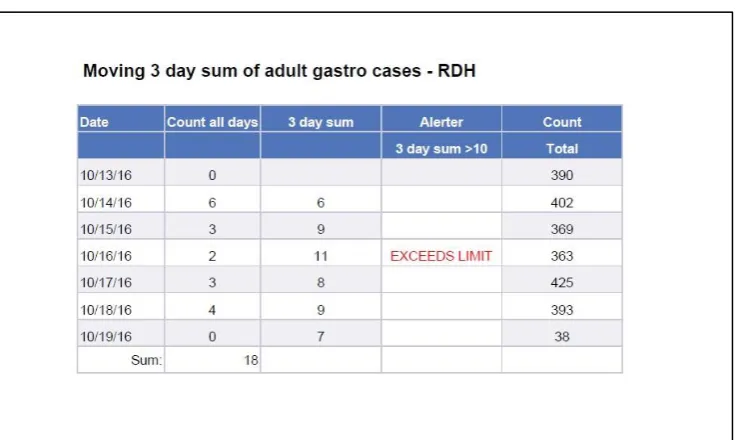
It is my role to conduct syndromic surveillance of adult gastroenteritis presentations to RDH daily in order to detect outbreaks or increases in gastroenteritis. An evaluation of this surveillance system forms a chapter in this thesis.
When cases of hepatitis A/E and typhoid are notified, I ensure that an appropriate public health response follows.
There are usually 1-2 outbreaks of enteric disease that I investigate per month. These can vary from small outbreaks at child care centres or within families to large restaurant outbreaks that result in analytical studies to describe the outbreak.
Non-foodborne disease surveillance
In addition to my OFN tasks, I also participated in other surveillance tasks as directed. Every morning at CDC we have a morning handover meeting. The staff at CDC participate in a roster that sees them manning the ‘call phone’ for a day. Being on-call involves receiving on-calls from clinicians about diseases that may require follow up, following up notifications of disease where a public health response is required, collecting enhanced data on various notifiable diseases, answering immunisation queries from clinicians and answering queries from the public. At the morning meeting, current health issues are discussed as well as breaking media and journal articles and other local and international topics that affect public health in the NT. My attendance and contribution to the on-call meetings has added to my public health knowledge and MAE experience.
I attend and participate in a number of meetings each week. On Mondays, a Territory wide meeting is held whereby the regional CDC offices connect by internet. This enables an interactive multi-media meeting to occur. The different sites are able to share presentations of data, graphs and figures. It also enables face-to-face communication and staff across the Territory are able to familiarise themselves with each other. There is an additional fortnightly Territory-wide surveillance meeting on the Thursday following fortnightly CDNA meetings. This meeting also involves all NT CDC offices connecting to a virtual meeting room via the internet. Each site reports on disease surveillance issues or outbreaks in their region, public health follow up they have performed and any issues they have related to these issues. The meeting is chaired by the head of surveillance who will go through the surveillance and jurisdictional reports presented at CDNA, the fortnightly NT surveillance reports and various flu surveillance reports and graphs. He will identify trends in notifications or data issues and discuss. The meeting also offers an opportunity for education and development for the staff who participate.
18
generating routine surveillance reports including flu surveillance reports and flu-tracking7 reports
acting as the secretary of the NT Zoonosis Committee
reporting to the Commonwealth of Australia on the NT’s surveillance of persons returning from Ebola affected countries during the Ebola outbreak in West Africa
establishing and managing a NetEpi8 contact tracing database for measles notifications in the NT
sitting on the listeriosis Series of National Guidelines (SoNG) working group as part of the CDNA review of the listeriosis case definition
conducting a literature review of the recognition of acute rheumatic fever outbreaks as part of a response to increased numbers of acute rheumatic fever in a remote Indigenous community in the NT9,10
assisting to develop and administer questionnaires at 2 remote Indigenous communities in order to investigate a cluster of children with high blood lead levels11
assisting to raise public awareness of melioidosis by meeting with stakeholders12
participating in the NT CDC conference organising committee
being a reviewer for the Northern Territory Disease Control Bulletin.
Outside of CDC
Figure 1. Screenshot of interview with Channel 9 News (11 September 2015).
I also conducted some work for the Bairo Pite Clinic (BPC) in Dili, Timor-Leste. For the data analysis project of my MAE I analysed data from the BPC tuberculosis (TB) register. The work involved not only analysing a dataset but also attempting to develop a new database. This project is described in more detail in Chapter 5 of this bound volume.
In October 2016, I was involved in the screening and data collection phase of a study in Timor-Leste which aimed to estimate the prevalence of rheumatic heart disease, scabies and impetigo in both urban and rural settings amongst school aged children. I was involved in establishing a data collection tool, a data dictionary and the analysis of the data in early 2017. There will be two papers submitted to peer reviewed journals as a result of this study.
Summary of MAE course requirements
20
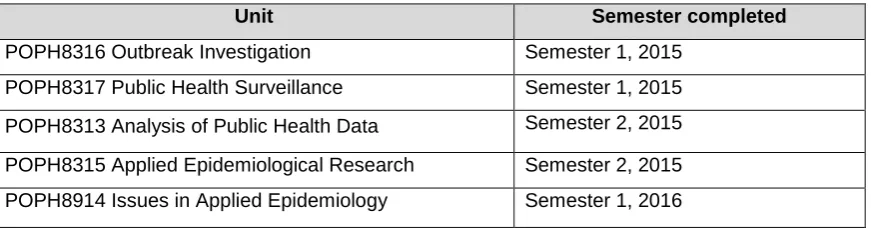
Table 1. Coursework units to qualify for Master of Philosophy (Applied Epidemiology).
Unit Semester completed
POPH8316 Outbreak Investigation Semester 1, 2015
POPH8317 Public Health Surveillance Semester 1, 2015
POPH8313 Analysis of Public Health Data Semester 2, 2015
POPH8315 Applied Epidemiological Research Semester 2, 2015
POPH8914 Issues in Applied Epidemiology Semester 1, 2016
Table 2. Compulsory field projects completed during the MAE.
Field project Details
Plan and conduct an
epidemiological
study
Using short message service (SMS) as a tool to follow up
campylobacteriosis notifications. [Chapter 3]
An outbreak of salmonellosis associated with duck prosciutto at a
Northern Territory restaurant. [Chapter 2]
An outbreak of Salmonella Saintpaul gastroenteritis after attending a school camp in the Northern Territory. [Chapter 2]
Analyse a public
health data set
The epidemiology of persons diagnosed with tuberculosis at the Bairo
Pite Clinic in Timor-Leste. [Chapter 5]
Using short message service (SMS) as a tool to follow up
campylobacteriosis notifications. [Chapter 3]
An outbreak of salmonellosis associated with duck prosciutto at a
Northern Territory restaurant. [Chapter 2]
An outbreak of Salmonella Saintpaul gastroenteritis after attending a school camp in the Northern Territory. [Chapter 2]
Evaluate a public
health surveillance
system
Evaluation of the Royal Darwin Hospital Emergency Department
Syndromic Surveillance System. [Chapter 4]
Investigate an acute
public health
problem
An outbreak of salmonellosis associated with duck prosciutto at a
Northern Territory restaurant. [Chapter 2]
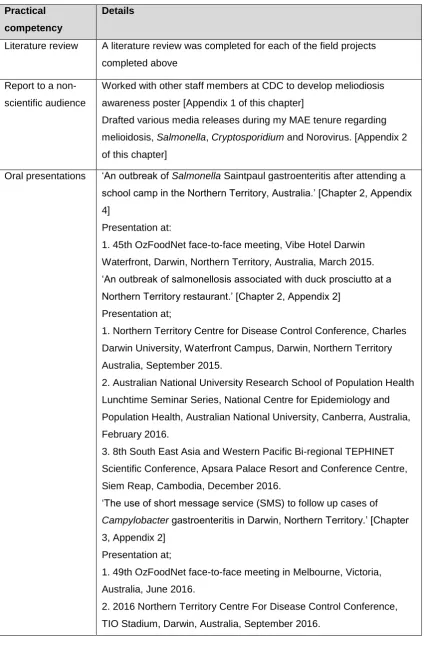
I completed the additional requirements of the MAE as outlined in Table 3.
Table 3. Additional required practical activities of the MAE program.
Practical
competency
Details
Literature review A literature review was completed for each of the field projects
completed above
Report to a
non-scientific audience
Worked with other staff members at CDC to develop meliodiosis
awareness poster [Appendix 1 of this chapter]
Drafted various media releases during my MAE tenure regarding
melioidosis, Salmonella, Cryptosporidium and Norovirus. [Appendix 2 of this chapter]
Oral presentations ‘An outbreak of Salmonella Saintpaul gastroenteritis after attending a school camp in the Northern Territory, Australia.’ [Chapter 2, Appendix
4]
Presentation at:
1. 45th OzFoodNet face-to-face meeting, Vibe Hotel Darwin
Waterfront, Darwin, Northern Territory, Australia, March 2015. ‘An outbreak of salmonellosis associated with duck prosciutto at a Northern Territory restaurant.’ [Chapter 2, Appendix 2]
Presentation at;
1. Northern Territory Centre for Disease Control Conference, Charles
Darwin University, Waterfront Campus, Darwin, Northern Territory
Australia, September 2015.
2. Australian National University Research School of Population Health
Lunchtime Seminar Series, National Centre for Epidemiology and
Population Health, Australian National University, Canberra, Australia,
February 2016.
3. 8th South East Asia and Western Pacific Bi-regional TEPHINET
Scientific Conference, Apsara Palace Resort and Conference Centre,
Siem Reap, Cambodia, December 2016.
‘The use of short message service (SMS) to follow up cases of
Campylobacter gastroenteritis in Darwin, Northern Territory.’ [Chapter
22 Practical
competency
Details
Publications 1. Draper A, Cook H. “NetEpi – a solution for contact tracing during a
measles outbreak. [poster]. Presented at the 2015 Public Health
Association of Australia Communicable Disease Control Conference,
Brisbane 2015. [Appendix 3 of this chapter]
2. Kurucz N, Markey P, Draper A, Melville L, Weir E, Davis S, Warchot
A, Boyd R, Stokeld D. Investigation into high Barmah Forest virus
disease case numbers reported in the Northern Territory, Australia in
2012/13. Vector-Borne and Zoonotic Diseases. 2016;16(2):110-116. 3. Draper A. Enteric disease in the Northern Territory in 2015. The Northern Territory Disease Control Bulletin. 2016;23(1):15-24. 4. Draper ADK, Markey P, Krause V, Davis S. The use of short
message service (SMS) to follow up cases of Campylobacter
gastroenteritis in Darwin, Northern Territory. The Northern Territory Disease Control Bulletin. 2016;23(2).
5. Boyd R, McGuinness S, Draper A, Neilson M, Krause V. Melioidosis awareness campaign – Don’t get melioidosis. The Northern Territory Disease Control Bulletin. 2016:23(1);1-4.
6. Draper ADK, Morton C, Heath J, Lim J, Schiek A, Krause V, Markey
P, Davis S. An outbreak of salmonellosis associated with duck
prosciutto at a Northern Territory restaurant. 2016. Published in
Communicable Disease Intelligence. [Chapter 2, Appendix 1] 7. Draper ADK, Morton C, Heath J, Lim J, Markey P. An outbreak of
Salmonella Saintpaul gastroenteritis after attending a school camp in the Northern Territory, Australia. 2016. Published in Communicable Disease Intelligence. [Chapter 2, Appendix 3]
Lesson from the
field (LFF)
Draper ADK. Estimating incubation periods and exposure times in
foodborne disease outbreaks. Conducted via teleconference,
November 2015. [Appendix 4 of this chapter]
Teaching “Administering questionnaires when conducting an outbreak investigation”
Delivered to MAE2017 cohort at National Centre for Epidemiology and
Population Health, March 2016. [Appendix 5 of this chapter]
Lesson from the field
important to define the learning objectives prior to developing the lesson plan and to confirm at the end of the lesson that those learning objectives were indeed achieved. I learned that it is important to provide unambiguous and easily interpretable questions and instructions to students. In the future I will plan to pilot tutorials before delivering them to check for ambiguity. The final major learning from my LFF was not to assume prior knowledge. I found that some things that I reluctantly included in my teaching because I thought they were overly simple, were in fact new and different concepts to others, particularly when Microsoft® Excel was involved.
Teaching to MAE 2017 Cohort
We chose to deliver a session to the MAE 2017 on administering questionnaires when conducting an outbreak investigation (Appendix 5 of this chapter). Again the major learning point for me was the need to carefully define the learning objectives of the teaching session prior to developing a teaching plan. Tanyth de Gooyer and I did most of the planning and development of the task and then minor tasks were delegated to other members of the team at the end of the development process. The learning objectives really were helpful in this instance because the subject matter we were teaching had the potential to veer off task. Learning objectives were useful for both tutors and students, to reinforce the principles of what was being taught. I learned that some people are comfortable presenting ‘off the cuff’ and some people are very anxious about teaching others. I learned that although I wasn’t too daunted by this exercise, some people were. By having an organised learning plan and documents prepared well in advance, people are given the opportunity to feel more comfortable in their role as teachers.
Activities undertaken in addition to 4 core MAE projects
24
References
1. Australian Bureau of Statistics. How many people live in Australia's remote areas? 2006. Available from:
http://www.abs.gov.au/ausstats/[email protected]/Previousproducts/1301.0Feature%20Article22 004?opendocument&tabname=Summary&prodno=1301.0&issue=2004&num=&view 2. Australian Bureau of Statistics. Regional Statistics - Northern Territory 2011. 2013. Available from:
http://www.abs.gov.au/ausstats/[email protected]/Latestproducts/1362.7Feature%20Article1Ma r%202011?opendocument#Aboriginal
3. Australian Government Department of Health. OzFoodNet; Australian Government. Canberra, 2010. Available from: http://www.ozfoodnet.gov.au
4. Northern Territory Government Department of Health. Divisions - Department of Health. Northern Territory Government. Darwin, 2014. [cited 01 March 2015] Available from:
http://www.health.nt.gov.au/library/scripts/objectifyMedia.aspx?file=pdf/29/46.pdf&sit eID=1&str_title=Organisational_Chart.pdf
5. Northern Territory Government Department of Health. Legislation. Northern Territory Government. Darwin, 2014. [cited 01 March 2015] Available from: http://www.health.nt.gov.au/Agency/Legislation/index.aspx
6. Northern Territory Government Department of Health. Notifiable diseases to be reported in the NT. Northern Territory Government Department of Health; Darwin, 2015. [cited 01 March 2015] Available from:
http://www.health.nt.gov.au/library/scripts/objectifyMedia.aspx?file=pdf/20/49.pdf&sit eID=1&str_title=Notifiable_conditions%20_to_be_reported_in_the_NT.pdf
7. New South Wales Government – Hunter New England Local Health District. Flutracking. New South Wales Government; Newcastle, 2016. Available from: http://www.flutracking.net/
8. Australian Government Department of Health and Ageing (DoHA). NetEpi – web based outbreak reporting server. DoHA; Canberra, 2008. Available from:
http://www.outbreak.health.gov.au/
9. Hardie K, Francis J, Krause, V, Gargan C, Schimann E, Holt D, Remenyi B, Fittock M, Krause V. Increased numbers and clustering of Acute Rheumatic Fever in an
Aboriginal community: spike in endemic disease or true outbreak? [poster]. Presented at the 2015 Public Health Association of Australia Communicable Disease Control
26
12. Boyd R, McGuinness S, Draper A, Neilson M, Krause V. Melioidosis awareness campaign – Don’t get melioidosis. The Northern Territory Disease Control Bulletin. 2016:23(1); 1-4.
28
40
Appendix 4. Lesson from the field exercise (November 2015)
Lesson from the Field
Anthony Draper – November 2015
Foodborne outbreak investigations
Estimating incubation periods and exposure times
This lesson from the field (LFF) exercise is a self-directed learning exercise and will be available on Wattle from 11/11/2015.
Please email all answers to [email protected] by Friday 20/11/2015. If anybody has problems please call me on (08)89227635 or contact me by email. Instructions
This LFF will require you to use Microsoft excel.
It consists of some simple data manipulation and use of pivot tables. Instructions are highlighted with red titles, questions in blue.
The technique used in this LFF is based on the World Health Organisation publication,
“Foodborne Disease Outbreaks. Guidelines for Investigation and Control” This document can be found at:
http://www.who.int/foodsafety/publications/foodborne_disease/outbreak_guidelines.pdf
You might also find the QLD Health document, “Foodborne pathogens compendium
for outbreak investigations – 2010” useful. It can be found at http://www.health.qld.gov.au/ph/documents/cdb/30586.pdf
Learning objectives
By the end of this LFF you should be able to:
Create a simple epicurve using pivot tables in Microsoft excel.
Complete the following tasks for an outbreak where only the onset time of
illness is known (i.e. the pathogen, time of exposure and incubation period are unknown);
o Calculate the range of onset times.
o Use the range of onset times and the median onset time to
42
Introduction to the LFF exercise
When investigating an outbreak of foodborne illness it is sometimes easy to determine a particular meal or time of the day when people ate the food that made them sick. This is usually the case when people who are otherwise unknown to each other are
exposed to contaminated foods at restaurants or at takeaways. These people come from different suburbs and households and the only thing they have in common is that they ate at that particular restaurant or takeaway at the same time.
Determining which particular meal or food made people sick becomes more difficult when you deal with groups who have shared multiple meals together over multiple days. This problem often presents when investigating outbreaks amongst members of the same family, bus tour groups, school camping groups and people on cruise ships. If you know the pathogen, you know the likely incubation period and can work back to determine a likely meal. However in remote locations in particular, lab results can take time to come back and it is important to determine a likely aetiology of an outbreak rather than waiting for these lab results.
Background to outbreak
It is Thursday November 12th 2015. You are working in the surveillance section at the Centre for Disease Control in Darwin. You receive a call from the headmaster at a primary school in Darwin who tells you almost half of one particular class is away sick from school. He also tells you that this class were on a school bus trip the week before. You manage to contact all of the sick kids and you create a simple line-listing which is attached to this LFF.
Instruction 1
1. Open the spreadsheet called “LFF Draper Exercise 1”.
Using pivot tables, let’s create an epicurve.
2. Click into cell A1 and then click ‘CTRL + A’ to select all cells.
3. Go to the command ribbon in Microsoft excel and select the ‘Insert’ tab and then select ‘Insert Pivot Table’.
5. In the newly opened pivot table, drag ‘ONSET DATE’ from the PivotTable Field List box on the right hand side into the Row Labels box below it. Similarly, drag ‘ONSET DATE’ into the Values box below it. Ensure that in the Values box it says ‘Count of ONSET DATE’.
44
Question 1
a) What kind of outbreak does the shape of the epicurve suggest?
Point source outbreak
The WHO guidelines for investigating outbreaks of foodborne illness state that if the shape of the epidemic curve suggests a point source outbreak, we can use the median onset time and range of onset times to determine the probable time of exposure:
There are 3 steps
1) Determine the median time of onset of illness.
2) Calculate the time between occurrence of the first and last case (width of the epicurve).
3) Subtract this amount of time from the median onset time to obtain the probable time of exposure.
Instruction 2
Rather than just looking at the data, try using Microsoft excel functions to answer the following questions.
Question 2
a) What is the median onset date and time in this outbreak?
7/11/2015 11:59pm (Fx=median(E2:E26))
a) What is the earliest onset date and time in the outbreak?
7/11/2015 7:00pm (Fx=min(E2:E26))
b) What is the latest onset date and time in the outbreak?
9/11/2015 8:00am (Fx=max(E2:E26))
c) What is the range (in hours) of the onsets in the outbreak?
37hours (Fx=(latest onset time – earliest onset time)*24)
d) What is the probable exposure time in this outbreak using the method outlined above?
6/11/2015 10:59am (~11am)
Instruction 3
Go back to your line listing. Add a new column called PROBABLE INCUBATION PERIOD.
Calculate the PROBABLE incubation period for each case based on our probable time of exposure.
Question 3
a) What is the median probable incubation period
37 hours
b) What is the range of the probable incubation period
33 hours to 69 hours. Instruction 4
You are able to obtain a rough itinerary of the school bus trip from one of the teachers. It is found below.
Friday 6
thNovember 2015
7.25 Arrive at school8.30 Leave for Crocodile Creek 9.15 Arrive at Crocodile Creek 11.00 Lunch together
12.30 Leave for Humpty Dumpty camp site
2.30 Arrive at Humpty Dumpty camp site – Set up camp 3.30 Snack/Afternoon tea
Activities 5.00 Showers 6.00 Dinner 7.00 Activities
8.30 Supper & prayers
46 11.00 Lunch together
12.30 Leave for Mt Alligator camp site
2.30 Arrive at Mt Alligator camp site – Set up camp 3.30 Snack/Afternoon tea
Activities 5.00 Showers 6.00 Dinner 7.00 Activities
8.30 Supper & prayers
9.30 Bed (lights out, noise out 10pm)
Sunday 8
thNovember 2015
7.30 Wake up, shower, set up breakfast8.00 Breakfast
9.30 Bus leaves Mt Alligator camp site 12.30 Lunch at Never Never Downs 1.30 Bus leaves Never Never Downs
4.30 Bus arrives at the Last Stop Roadhouse – set up camp 6.00 Dinner
7.30 Night stuff 9.00 Supper & prayers
9.30 Bed, lights out at 10 again.
Monday 9
thNovember 2015
7.30 Wake up8.00 Breakfast 8.00 Pack up camp
11.00 Arrive Alice Springs and set up camp 12.30 Lunch
1.30 Activities
2.30 Hiking excursion 6.00 Dinner
7.30 Night stuff 9.00 Supper & prayers
9.30 Bed, lights out at 10 again.
Tuesday 10
thNovember 2015
7.30 Wake up8.00 Breakfast 8.00 Pack up camp
9.00 Depart Alice Springs camp for airport 11.00 Arrive Alice Springs airport
12.30 Depart Alice Springs 6.00 Arrive Darwin Airport
6.30 Parents collect children – end of camp
Question 4
a) Which meal is likely the cause of the outbreak?
Lunch on 7th November 2015
Question 5
48
Symptom Number with symptom % of cases with symptom
Fever 18/26 69%
Nausea 23/26 88%
Vomiting 11/26 42%
Abdo pain 24/26 92%
Lethargy 23/26 88%
Headache 21/26 81%
Diarrhoea 27/28 96%
Bloody diarrhoea 8/25 32%
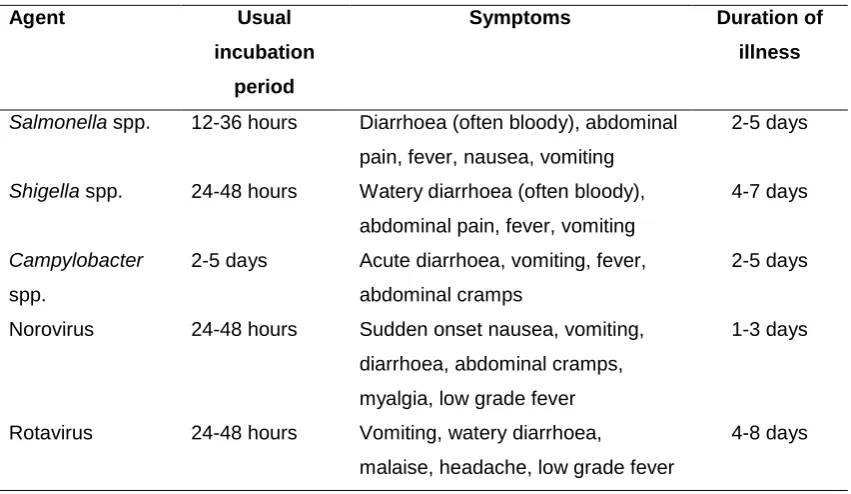
Below is a table of common agents of foodborne disease and their incubation periods and symptoms.
Agent Incubation period Symptoms Duration of illness
Salmonella spp. 6-72 hours Diarrhoea (often
bloody), abdominal pain, fever, nausea, vomiting
2-5 days
Shigella spp. 12-96 hours Watery diarrhoea (often bloody), abdominal pain, fever, vomiting
4-7 days
Campylobacter
spp.
1-10 days Acute diarrhoea, vomiting, fever, abdominal cramps
2-5 days
Norovirus 24-48 hours Sudden onset nausea, vomiting, diarrhoea, abdominal cramps, myalgia, low grade fever
1-3 days
Rotavirus 24-72 hours Vomiting, watery diarrhoea, malaise, headache, low grade fever
4-8 days
Question 6
Based on the probable incubation period you calculated earlier in Question 3b) and the symptoms described in Question 5, what agent is the likely cause of the outbreak?
Salmonella Spp.
CHAPTER 2. INVESTIGATE AN
ACUTE PUBLIC HEALTH
PROBLEM
An outbreak of salmonellosis associated with duck prosciutto at a Northern
Territory restaurant
An outbreak of Salmonella Saintpaul gastroenteritis after attending a school
56
Chapter 2 Contents
Prologue ... 57
Abstract ... 60
Introduction ... 60
Methods ... 60
Results ... 60
Conclusions ... 61
Lessons learned ... 61
Public health impact ... 62
Recommendations ... 62
Acknowledgements ... 63
Reference list... 64
Appendix 1. Journal article: An outbreak of salmonellosis associated with duck prosciutto at a Northern Territory restaurant ... 65
Appendix 2. Presentation: An outbreak of salmonellosis at a trendy Darwin
restaurant ... 70
Appendix 3. Journal article: An outbreak of Salmonella Saintpaul gastroenteritis
after attending a school camp in the Northern Territory, Australia ... 80
Appendix 4. Presentation: An outbreak of Salmonella Saintpaul following a school
Prologue
I have been the OzFoodNet (OFN) epidemiologist in the Northern Territory (NT) since 2012. It is my role not only to conduct surveillance on foodborne disease but to investigate outbreaks of enteric disease in the NT as well as participate in multijurisdictional outbreak investigations (MJOI) when outbreaks affect multiple states and territories across Australia.
During my time as a Master of Philosophy in Applied Epidemiology (MAE) scholar I was the lead investigator in all local gastroenteritis outbreak and cluster investigations in the NT. This involved conducting surveillance of foodborne disease by traditional laboratory methods as well as syndromic surveillance at the Royal Darwin Hospital (RDH) Emergency Department (ED). I also undertook investigations as a standard response to public complaints and concerns about food premises. These complaints were referred to the Centre of Disease Control (CDC) from our colleagues at the NT Department of Health Environmental Health (EH) Branch.
58
Abbreviations
ARF Acute rheumatic fever CDC Centre for Disease Control
ED Emergency Department
EH Environmental Health
MAE Master of Philosophy (Applied Epidemiology) NT Northern Territory
OFN OzFoodNet
PT Phage type
60
Abstract
Introduction
This chapter details two major public health investigations I investigated during my time as a Master of Epidemiology (MAE) scholar. The first was an outbreak of Salmonella Typhimurium phage type 9 (STm9) at a Darwin restaurant. The second outbreak was one which occurred just prior to commencing the MAE but much of the epidemiological investigation occurred while I was a scholar. It was an outbreak of S. Saintpaul gastroenteritis amongst students who had attended a school camp in a remote part of the Northern Territory.
Methods
Both outbreaks were investigated via an initial case series, environmental investigations and a cohort study. We performed the retrospective cohort studies via telephone using structured questionnaires developed from menus. Patrons at the restaurant outbreak were contacted using the restaurant’s electronic booking system which contained a name and phone number for each table as well as an itemised bill. Attendees at the school camp were also asked about activities and other environmental exposures.
Data were collected and entered into Microsoft Excel 2010 (Microsoft, USA) and analysed using Intercooled StataIC® 13 (StataCorp, USA). We calculated relative risks (RR) with 95 per cent confidence intervals (CI) and p values were considered significant at the 0.05 level. Fisher’s exact test was used when counts were <5. When a RR was infinite, exact logistic regression was used to calculate an odds ratio (OR) and 95% CI. The χ2 test was used to analyse gender. Age was analysed using the Mann Whitney Wilcoxon rank sum test.
Results
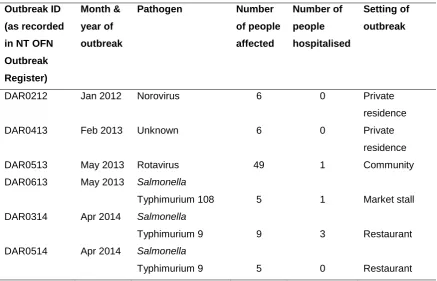
Contaminated duck prosciutto was identified as the likely cause of the STm9 outbreak and was consumed by all cases. Salmonella was not detected in any food samples but samples of duck prosciutto demonstrated bacterial contamination. The restaurant used inappropriate methodology for curing the duck prosciutto.
The environmental health inspection of the campground highlighted multiple opportunities for contamination to occur.
Conclusions
These two outbreak investigations demonstrate the experience I gained during the MAE program and my increased confidence to conduct epidemiological investigations. We published the first reported outbreak of salmonellosis associated with duck prosciutto and recommended that restaurants should consider purchasing pre-made cured meats, or if preparing them on site, ensure that they adhere to safe methods of production. Our second outbreak investigation highlighted the risks of food or drink being contaminated with environmental Salmonella, and the importance of preparing food and drink safely in campground settings.
Lessons learned
I had experience investigating outbreaks of enteric disease before I began the MAE but I feel that my skills have been enhanced as a result of completing the course. I was able to immediately apply my learnings from the unit POPH8316 Outbreak Investigation into my work practices. I have adapted the processes, templates and analysis methods I learned during the course block and adopted a more systematic approach to investigating outbreaks.
While investigating the outbreak of S. Typhimurium PT9 associated with consuming duck prosciutto, I learned of the usefulness of exact logistic regression analysis for calculating 95% confidence intervals. In cohort studies, when a square in an epidemiologist’s 4 x 4 table contains zero, Stata®
is unable to calculate a 95% confidence interval. Exact logistic regression (command:
62
was significantly associated with illness. However, when we looked at the epicurve and the timing of the outbreak, the EH team’s observations during their inspections and the biological plausibility that the cordial could have been the vehicle for S. Saintpaul infection, it strengthened our belief that the cordial was indeed the most likely cause of the outbreak.
Public health impact
The investigation of the outbreak of salmonellosis associated with eating duck prosciutto at the restaurant resulted in duck prosciutto being immediately removed from its menu. The restaurant was served with formal legal notices prohibiting it from serving raw meat dishes prepared on site. The publication of this outbreak investigation report in a peer reviewed journal highlights the risk of Salmonella infection from duck meat and in particular duck prosciutto. Novel foods like duck prosciutto are increasingly emerging on to the Australian culinary scene and it is important that people and restaurants preparing these foods establish and implement food safety procedures in order to limit the potential for such outbreaks to occur. Scientific principles underpin safe food handling processes and it is important not to deviate from safe methods, particularly when handling raw high risk foods which are becoming increasingly popular in Australian restaurants and homes. Restaurants should evaluate the benefit of preparing high-risk foods on site versus purchasing them from reliable suppliers.
The investigation of the outbreak of S. Saintpaul among camp attendees resulted in the camp proprietor being issued with a number of formal legal notices to address issues identified by the EH team. The proprietor voluntarily closed the camp in order to address the issues identified. The camp proprietor was directed to treat the drinking (bore) water with chlorine prior to its use as a potable drinking water supply and to make significant refurbishments or replace the kitchen facilities. The publication of this outbreak investigation report highlights the risks of environmental Salmonella and the lengths people must go to in order to ensure the safe production, processing and consumption of food in camp settings.
Recommendations
becoming increasingly popular in Australian restaurants and homes. Restaurants should evaluate the benefit of preparing high-risk foods on site versus purchasing them from reliable suppliers.
The public needs to understand the risks of contaminating food or drinking water with environmental Salmonella. They can minimise the risk by undertaking safe production, processing and consumption of food in camp settings and by appropriately maintaining and sanitising facilities.
Acknowledgements
64
Reference list
1. Dunlop C. Inpex workers caught up in salmonella scare [Internet]. Ntnews.com.au. 2016 [cited 13 September 2016]. Available from:
http://www.ntnews.com.au/news/northern-territory/food-poisoning-cripples-dozens-of-
darwin-victims-including-cluster-of-inpex-gas-workers/news-story/896c59dc7ba1f66e58e7192693ddda22
2. Northern Territory Government Newsroom [Internet]. Mediareleases.nt.gov.au. 2016 [cited 13 September 2016]. Available from:
http://mediareleases.nt.gov.au/mediaRelease/20770
3. Barklay S, Hardie K, Skov S, Coffey P, Smith S, Edwards K, Krause V. Lead in the Northern Territory – beyond paint and petrol. The Northern Territory Disease Control Bulletin. 2015:22(4);7-9.
4. Hardie K, Francis J, Krause, V, Gargan C, Schimann E, Holt D, Remenyi B, Fittock M, Krause V. Increased numbers and clustering of Acute Rheumatic Fever in an
Aboriginal community: spike in endemic disease or true outbreak? [poster]. Presented at the 2015 Public Health Association of Australia Communicable Disease Control
Conference, Brisbane 2015.
5. Hardie K, Krause V. Increased numbers and clustering of Acute Rheumatic Fever in an Aboriginal community: spike in endemic disease or true outbreak? The Northern Territory Disease Control Bulletin. 2015:22(2);20-21.
6. Melons recalled after salmonella outbreak [Internet]. News.com.au. 2016 [cited 13 September 2016]. Available from: http://www.news.com.au/national/breaking-
news/salmonella-fears-hit-rockmelon-supplies/news-story/6fd7ea7b790c5b6d590f65bb4508ed5f
7. Draper ADK, Morton CN, Heath JNI, Lim JA, & Markey PG. An outbreak of Salmonella Saintpaul gastroenteritis after attending a school camp in the Northern Territory, Australia. Comm Dis Intel 2017; 41(1).
8. Draper ADK, Morton CN, Heath JNI, Lim JA, Schiek AI, Davis S, Krause VL & Markey PG. An outbreak of salmonellosis associated with duck prosciutto at a Northern Territory Restaurant. Comm Dis Intel 2017; 41(1).
9. Poulsen J. EVOO restaurant investigated after diners fall ill [Internet]. NTnews.com.au. 2015 [cited 13 September 2016]. Available from:
70
Appendix 2. Presentation: An outbreak of salmonellosis at a trendy
Darwin restaurant
Presentation given at:
1. Northern Territory Centre for Disease Control Conference, Charles Darwin University, Waterfront Campus, Darwin, Northern Territory Australia, September 2015
2. Australian National University Research School of Population Health Lunchtime Seminar Series, National Centre for Epidemiology and Population Health, Australian National University, Canberra, Australia, February 2016
80
86
Appendix 4. Presentation: An outbreak of Salmonella Saintpaul
following a school camp
CHAPTER 3. DESIGN AND
CONDUCT AN
EPIDEMIOLOGICAL STUDY
98
Chapter 3 Contents
Abstract ... 99
Introduction ... 99
Methods ... 99
Results ... 99
Conclusions ... 99
Prologue ... 100
Lessons learned ... 100
Public health impact ... 101
Recommendations ... 102
Acknowledgements ... 102
References ... 102
Structure of this chapter ... 102
Abbreviations ... 102
Appendix 1. Journal article: The use of short message service (SMS) to follow up
cases of Campylobacter gastroenteritis in Darwin, Northern Territory ... 103
Appendix 2. Presentation: SMS follow up of campylobacteriosis in the Darwin region ... 111
Appendix 3. Stata .do file for analysing data collected by SMS ... 121
Appendix 4. Poster – “The use of short message service (SMS) to follow up cases of campylobacteriosis – Darwin, Northern Territory, Australia, 2016” ... 131
Abstract
Introduction
Campylobacter is a major cause of foodborne gastroenteritis in the Northern Territory (NT) but our detection of outbreaks is low. This study examines the effectiveness of using SMS to follow up campylobacter cases, to increase outbreak detection and collect risk factors.
Methods
From November 2015 to April 2016 campylobacteriosis cases aged 5 years and over in the Darwin region were sent an SMS message asking for details of food businesses eaten at and overseas travel in the week prior to illness. A second SMS asking if others were unwell was sent if cases reported eating at a food business. Thresholds for further investigation were ≥3 cases eating at the same franchise of a food chain, or ≥2 cases eating at the same non-franchise food business, within a 2 week period. Records were kept of resources required for follow up.
Results
Of the 97 eligible cases sent an SMS, 48 replied (response rate 49%). Median time to response was 19 minutes (Range 1 minute to 8 days). Females were 1.8 times (95% CI 1.2 – 2.6) more likely to respond than males (p<0.05). Twenty three (48%) respondents reported patronising a food business during their incubation period but no reports reached further investigation thresholds. Overseas travel was reported by 20/48 (42%), with the majority (13/20) reporting travel to Bali, Indonesia. On average, less than 5 minutes was required to follow up each case.
Conclusions
100
Prologue
I have been the OzFoodNet (OFN) epidemiologist in the Northern Territory (NT) since 2012 and in that time it has not been standard process to perform follow-up on sporadic campylobacteriosis notifications. In the NT, the traditional way to follow up sporadic notifications of other enteric disease such as shigellosis and salmonellosis is to administer a standardised hypothesis generating questionnaire via telephone, which is time-consuming.
A disadvantage that is inherent with telephoning people from the offices at CDC is that our telephone numbers are ‘private’ numbers. i.e. our phone numbers are not displayed on the screens of the people we are calling. In the age of telemarketing, there is a reluctance sometimes to accept phone calls from private number callers. I have been using short message service (SMS) for a number of years at CDC as an ad hoc method of counteracting this. Anecdotally I had found that sending an SMS telling people that the CDC wanted to contact them usually resulted in them almost instantaneously answering the private number that they had previously ignored.
I wanted to trial SMS as a follow up method as I hypothesised that it could be a way of capturing additional data while using minimal additional resources both in terms of manpower and cost. I also wanted to explore the use of SMS as a way of following up campylobacteriosis notifications because I wanted to see whether I could detect any outbreaks or clusters of disease and to determine how many cases in the Darwin area were acquired overseas, particularly from popular holiday destinations such as Bali.
I was involved in all aspects of this project including the design of the project, the sending of SMS messages, the collation of responses, the establishment of outbreak and cluster investigation thresholds and the collection, entry and analysis of all data.
With the assistance of my supervisors I wrote a report of this project that was published in the Northern Territory Disease Control Bulletin in June 2016.1 I also delivered two oral presentations at national conferences and a poster at an international conference on this project.
Lessons learned
I learned that although the project seemed at face value to be simple and straight forward, having a clear and well defined project plan is critical.
One of my major learnings was around the process of establishing thresholds for cluster and outbreak investigations. This was different from the normal surveillance work I do because in this instance we established alert thresholds based on exposures rather than outcomes.
Public health impact
This project provided an evidence base for whether CDC should consider using SMS for the follow up of diseases. We showed that using SMS places minimal extra burden on public health staff but it is not acceptable to use as a sole method for engaging with the public if a 100% response rate is desired.
We showed that when information needs to be disseminated and no response, or a limited and well defined response sought, SMS should be considered as a primary communication tool for communicating with the public. Conventional telephone should be used to communicate with those who do not respond to SMS communication.
The results of this project can influence daily practice at CDC and help to improve workflow and allocation of resources. SMS may continue to be used in the future for the follow up of campylobacteriosis and is being considered for the follow-up of other enteric diseases, particularly when the amount of cases requiring telephone interviews exceeds the capacity of the public health unit. Although travellers are generally aware of ‘Bali belly’ and the risk of enteric disease when travelling to countries in Southeast Asia, media alerts could be issued prior to peak travel times, particularly school holidays. Further studies could be done to identify particular risks amongst travellers returning from overseas travel with campylobacteriosis.
102
Recommendations
Automated SMS should be used increasingly at the NT CDC for public health follow up, as it is inexpensive and places minimal extra burden on public health staff. It should be combined with other methods of communication however when a 100% response rate is required.
Acknowledgements
I would like to acknowledge my supervisors, Dr Peter Markey, Dr Vicki Krause and Dr Stephanie Davis for their valuable feedback on my evaluation and report. I would also like to acknowledge Dr Kerri Viney who was the course convenor for POPH8317 Public Health Surveillance at the National Centre for Epidemiology and Population Health.
References
1. Draper ADK, Markey, P, Krause, V, Davis, S. The use of short message service (SMS) to follow up cases of Campylobacter gastroenteritis in Darwin, Northern Territory. The Northern Territory Disease Control Bulletin. 2016; 23(2).
Structure of this chapter
This journal article I wrote on this project is presented as the body of this chapter and is found in Appendix 1. The two oral presentations on this project are in Appendix 2, The Stata .do file used for data analysis is found in Appendix 3. The poster presentation I made at an international conference in Cambodia is found in Appendix 4. A discussion on establishing thresholds for public health action is included Appendix 5.
Abbreviations
CDC Centre for Disease Control HUS Haemolytic uraemic syndrome NT Northern Territory
OFN OzFoodNet
Appendix 1. Journal article: The use of short message service (SMS) to
follow up cases of Campylobacter gastroenteritis in Darwin, Northern
Territory
Appendix 2. Presentation: SMS follow up of campylobacteriosis in the
Darwin region
Presentation given at:
1. 49th OzFoodNet face-to-face meeting in Melbourne, Victoria, June 2016.