City, University of London Institutional Repository
Citation: Small, R., Roth, C., Raval, M., Shafiei, T., Korfker, D., Heaman, M., McCourt, C.
and Gagnon, A. J. (2014). Immigrant and non-immigrant women's experiences of maternity
care: A systematic and comparative review of studies in five countries. BMC Pregnancy and
Childbirth, 14(1), doi: 10.1186/1471-2393-14-152
This is the unspecified version of the paper.
This version of the publication may differ from the final published
version.
Permanent repository link: http://openaccess.city.ac.uk/3725/
Link to published version: http://dx.doi.org/10.1186/1471-2393-14-152
Copyright and reuse: City Research Online aims to make research
outputs of City, University of London available to a wider audience.
Copyright and Moral Rights remain with the author(s) and/or copyright
holders. URLs from City Research Online may be freely distributed and
linked to.
City Research Online:
http://openaccess.city.ac.uk/
[email protected]
R E S E A R C H A R T I C L E
Open Access
Immigrant and non-immigrant women
’
s
experiences of maternity care: a systematic and
comparative review of studies in five countries
Rhonda Small
1*, Carolyn Roth
2, Manjri Raval
1, Touran Shafiei
1, Dineke Korfker
3, Maureen Heaman
4,
Christine McCourt
5and Anita Gagnon
6Abstract
Background:Understanding immigrant women’s experiences of maternity care is critical if receiving country care systems are to respond appropriately to increasing global migration. This systematic review aimed to compare what we know about immigrant and non-immigrant women’s experiences of maternity care.
Methods:Medline, CINAHL, Health Star, Embase and PsychInfo were searched for the period 1989–2012. First, we retrieved population-based studies of women’s experiences of maternity care (n = 12). For countries with identified population studies, studies focused specifically on immigrant women’s experiences of care were also retrieved (n = 22). For all included studies, we extracted available data on experiences of care and undertook a descriptive comparison.
Results:What immigrant and non-immigrant women want from maternity care proved similar: safe, high quality, attentive and individualised care, with adequate information and support. Immigrant women were less positive about their care than non-immigrant women. Communication problems and lack of familiarity with care systems impacted negatively on immigrant women’s experiences, as did perceptions of discrimination and care which was not kind or respectful.
Conclusion:Few differences were found in what immigrant and non-immigrant women want from maternity care. The challenge for health systems is to address the barriers immigrant women face by improving communication, increasing women’s understanding of care provision and reducing discrimination.
Keywords:Maternity care, Immigrant women, Experiences of care, Communication
Background
Increasing global migration has implications both for health care provision in receiving countries and for the health care experiences of immigrant populations. This is nowhere more apparent than in the experience of women giving birth post-migration. A systematic review of immigrant women’s perinatal outcomes published in 2010 [1] identified very few studies over a ten-year period which described any aspect of immigrant women’s maternity care experiences in comparison with non-immigrant women. Some population-based studies of women’s experiences of maternity care conducted in a
few countries do include limited data on immigrant and refugee women’s experiences of care for comparison with non-immigrant women, but immigrant women are com-monly under-represented in these studies because of the for-midable challenges of undertaking inclusive cross-cultural research that is population-based and large scale [2,3]. These challenges include: sampling and recruitment is-sues, difficulties in translation and in assessment of valid-ity with the use of standard research instruments, and increased research costs. Other studies have specifically investigated the experiences of individual groups of immi-grant and refugee women, and to date these are mostly small and qualitative. Given the dearth of adequately-sized and appropriately conducted studies directly comparing representative immigrant and non-immigrant experiences of maternity care, a systematic review drawing * Correspondence:[email protected]
1
Judith Lumley Centre, La Trobe University, 215 Franklin Street, Melbourne VIC 3000, Australia
Full list of author information is available at the end of the article
on data in general population studies and in specific im-migrant studies in the same countries, would seem to offer the best opportunity for drawing together and comparing what is known about immigrant and non-immigrant experiences, and what women want – and get–from their maternity care.
Our purpose in selecting studies for this review was thus twofold. First, we aimed to identify and review all published population-based studies of women’s experiences of maternity care to determine what they say about what women want from care, including any data, if available, about immigrant women. Second, having identified the countries where such studies have been conducted, we aimed to investigate further what is known about the ex-periences of immigrant women in each of these countries, by identifying and reviewing studies focused specifically on immigrant women’s experiences of their maternity care. For the purposes of this review, we define immigrant women as those women not themselves born in the country in which they are giving birth.
There were two review questions:
1. What do immigrant and non-immigrant women want from their maternity care?
2. How do immigrant and non-immigrant women’s
experiences and ratings of care compare, both within and across included countries?
Methods Search strategy
Ovid was used to search the electronic databases Medline, CINAHL, Health Star, Embase and PsychInfo for the period 1989–2011. The search strategy was developed by MR with the assistance of the Health Sciences Librarian at La Trobe University in February 2010 and further searches were conducted to update the literature to December 2012. 1989 was chosen as the start year because the first population-based study of women’s experiences of mater-nity care was known to have been conducted in that year [4]. Terms combined in the search included: emigration/ emigrant, immigration/immigrant, migrant, ethnic group, ethnic minority, population groups, refugees, non-English speaking, women, view, opinion, attitude, experience, maternal health services, maternity care, perinatal care, prenatal/antenatal care, intrapartum care, postnatal care, delivery, obstetrics, midwifery. For an example of the search strategies used, see Additional file 1.
Inclusion and exclusion criteria
Population-based studies of women’s experiences of care, defined as those with national or regional samples with representativeness assessed, were identified, retrieved and reviewed. Studies with a hospital-based or convenience sample or where representativeness could not be assessed
were excluded. With these criteria, 12 studies from five countries were included [4-24]. One national study was identified from Scotland, [25] but subsequently excluded, as its overall population representativeness could not be assessed.
Studies focusing specifically on immigrant women’s ex-periences of maternity care from these same five countries were then also identified, retrieved and reviewed. Studies of ethnic minorities who were not themselves immigrants or refugees were excluded, as were retrieved studies which on review, were found to focus only on cultural beliefs and practices around childbirth without investigating im-migrant women’s actual experiences of the maternity care they received. For the immigrant studies, all retrieved studies were included (i.e. no quality criteria were applied), for two reasons. First, our purpose was to include as much data as possible about a diverse range of immigrant women’s experiences for comparison with data on non-immigrant women from the population-based studies. Second, the immigrant studies were relatively few across the included countries; and most were small and qualita-tive. Twenty-two studies of immigrant women’s experi-ences of care were identified, retrieved and reviewed across the five included countries [26-55].
Approach to analysis
Papers were read and the findings summarised, noting (where available) overall ratings of care and key conclu-sions about what women wanted from care (RS, MR and TS). The country, year of study, sample size and study type (e.g., population-based postal survey, qualitative interview study) were also noted. For the population-based studies, the main findings were recorded separately for non-immigrant and immigrant women, except when the data did not distinguish these groups of interest (the three US studies and two of the UK studies). Study findings were tabulated for ease of discussion and inter-pretation (MR and RS) and a descriptive thematic analysis of the extracted data was undertaken [56]. Two authors independently developed codes for describing the data (MR and RS) and a third author (TS) reviewed these. The resulting interpretation of the data was then reviewed and revised by all authors.
Results and discussion
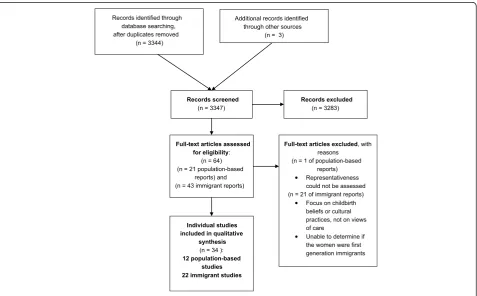
Figure 1 provides a flow diagram of the review process and the selection of studies.
The countries and the included studies Australia
Laotian, Thai, Korean, Filipino, Turkish, Muslim women from a range of countries) [26-39] were reviewed.
Canada
One national survey (2006) [11,12] and four studies of immigrant women (including Somali, South Asian, Punjabi, Muslim women from various countries) [40,43] were reviewed.
Sweden
One national study (1999–2000) [13-15] and two studies of immigrant women (including immigrant Somali, Eritrean and Sudanese women) [44,45] were reviewed.
United Kingdom
Four national surveys (1995, 2006 and 2007) [16-19] and six studies of immigrant women (including immigrant South Asian, Somali, Indian, Pakistani and Bangladeshi women) [46-51] were reviewed.
USA
Three national surveys (2002, 2006 and 2013) [20-24] and four studies of immigrant women (including Somali, Hmong, Puerto Rican and‘Hispanic’immigrant women) [52-55] were reviewed. Although Puerto Rico is an unincor-porated US Territory, not a separate country, Puerto Rican
women coming to the US have been considered ‘ immi-grants’for the purposes of this review.
These 12 population-based studies from five countries were conducted in the period 1989–2013 and involved 55,495 women (range 790–26,325). In four of the studies [16,18,20,22] (involving 31,887 women), it was not pos-sible to determine women’s country of birth in order to calculate the number of women who were immigrants. For the remaining eight studies [4-15,17,19] (involving 23,608 women) there were 2,682 women (8.3%) who were immigrants and 15,593 women who were non-immigrants. For the 22 specific studies of immigrant women [26-55], sample sizes ranged from 6 to 432, with a total of 2,498 immigrant women involved, with studies published between 1990 and 2012.
What do non-immigrant women want from their maternity care?
The key findings from the population-based studies about what non-immigrant women appreciate and want from their maternity care proved remarkably similar across the included countries, as can be seen in the study sum-maries provided in Table 1. Most of these population-based studies assessed women’s overall ratings of care for each of the three phases of care: during pregnancy, during labour and birth and during the postpartum hospital stay. The exceptions to this were: the Canadian survey, in which Records identified through
database searching, after duplicates removed
(n = 3344)
Additional records identified through other sources
(n = 3)
Records screened
(n = 3347)
Records excluded
(n = 3283)
Full-text articles assessed for eligibility:
(n = 64) (n = 21 population-based
reports) and (n = 43 immigrant reports)
Full-text articles excluded, with reasons
(n = 1 of population-based reports) Representativeness could not be assessed (n = 21 of immigrant reports)
Focus on childbirth beliefs or cultural practices, not on views of care
Unable to determine if the women were first generation immigrants
Individual studies included in qualitative
synthesis
(n = 34 ):
[image:4.595.61.539.112.408.2]12 population-based studies 22 immigrant studies
Table 1 Population-based studies of women ’ s experiences of maternity care (Continued) Deliver ed with care: a natio nal survey of women ’ s exper iences of m aternit y care 2012 [ 19 ] n=5,33 3; 1,152 im migrant wo men Postal or onl ine survey:4,945 po stal respon dents ; 407 onl ine respondent s Overall: 88% very satisfied or satisfied with antenat al car e; 87% with care for labor an d birth; 76 % with postnat al car e Ove rall findin gs abo ut what women wan t: all four survey s Key findin gs for imm igran t women : two survey s Con clusio ns and key re commendati ons: all four sur veys Being tr eated as an individu al, w ith p ersonalised care Analy ses for women born outsid e the UK are only available for the 2006 and 2010 survey s, for black and mi norit y ethnic (BM E) groups: Recom mendat ions focus ed on the nee d for: Caregivers who are support ive, ki nd, sensitive, and not rushed Individu ali sed care for a diverse childbear ing population Care from a small num ber of staff; know ing the midwives involved in care Wom en in these groups we re -Wom en to be given more choi ce about place of birth and care provider Feeling involved in de cisions about car e and having choi ces about care option s Less likely to feel spok en to with respect and understanding, an d in a way they cou ld understand More inf ormation and opportunity for d is cussion abou t care and more involvement for women in decision-making . Not being left alone in labour Less likely to feel the y had options in care or ade quate information Bein g listened to, and spoken to in a way that is unde rs tandabl e Les s likely to d escribe care pr oviders positively (eg as kind, informative, supp ort ive, sensitive, consid erate) B ei n g g iv en in fo rm at io n an d ex p la n at io n s w h en n ee d ed Less likely to be satisfied with car e
USA ‘Listening
Table
1
Population-based
studies
of
women
’
s
experiences
of
maternity
care
(Continued)
Ov
eral
l
fin
din
gs
a
b
o
u
t
w
ha
t
w
o
men
wa
nt:
all
three
surveys
Key
findin
gs
for
imm
igran
t
women
Con
clusio
ns
and
key
re
commendati
ons:
all
three
sur
veys
B
e
ing
tr
e
at
e
d
w
it
h
ki
n
d
n
e
ss
an
d
u
nd
e
rs
ta
n
d
in
g
No
finding
s
have
been
rep
orted
in
an
y
o
f
the
sur
veys
to
dat
e
spec
ifically
com
paring
im
migrant
and
non-immigran
t
wom
en
Key
recommendation
s
fo
r
car
e
improvements
include:
Supportive,
unrushed
care
Bette
r
access
for
women
to
eff
ective
,
safe
and
appropriate
mate
rnity
car
e
Feeling
comf
ortable
to
ask
quest
ions
Im
proved
education
of
wom
en
about
the
ir
rights
to
truly
inf
ormed
choi
ce,
with
full
an
d
clear
exp
lanations
about
all
aspects
of
care
Receiv
ing
inf
ormation
they
needed
Ac
tive
involvement
of
women
in
decision-making
Full
an
d
clear
explanations
under
sta
nding
what
was
done
an
d
w
h
y
Involvement
in
decision-making
about
care
Non
–
discriminatory
care
Interve
ntion
(onl
y)
whe
n
neede
women were asked to rate their satisfaction with six aspects of their interaction with health care providers during the entire pregnancy, labour and birth, and im-mediate postpartum period, [11] and the US surveys, where women were not asked to give overall ratings of their care except in response to a question in the 2005 and 2013 surveys asking women their view about the maternity care system overall, with 35% and 36% rating it as excellent, 47% and 47% as good, and 16% and 17% as poor, respectively [22,24].
Pregnancy care
Women commonly reported problems in pregnancy care with long waiting times, staff not taking time to attend to individual concerns and provide enough information, staff seeming rushed, and lack of continuity of care [3,6,9,12,13,17]. Seeing fewer caregivers during antenatal visits was associated with more positive experiences of care, or was seen as important by women in most studies [6,8,11-13,17]. The need for adequate and consistent information, being treated as an individual, and having effective interaction with caregivers were also commonly reported to be important in shaping positive experiences about pregnancy care [3,8,13,16-18].
Intrapartum care
Dissatisfaction with intrapartum care in the population based studies was consistently associated with lack of sufficient information during labour, the perception that caregivers were not kind and understanding, caregivers being unhelpful, and not having an active say in making decisions [4,5,7,15,17,19,21,22,24].
The nature of women’s interactions with caregivers appears to be a critical factor for women’s experiences at all stages of care. The earliest Australian survey conducted in 1989 revealed a four to sixfold increase in dissatisfac-tion if women had not received sufficient informadissatisfac-tion from caregivers [5]. Likewise, women who described their caregivers as not being very kind and understanding were four to five times more likely to be dissatisfied with their care; and caregivers regarded as being unhelpful was asso-ciated with significant dissatisfaction with intrapartum care [5]. The 2008 national survey in England reported that women were more satisfied with intrapartum care when they received individualised care, enough informa-tion and explanainforma-tions, and were cared for by kind and understanding staff [18]. Involvement in decisions about care and having an‘active say’also seem to be consistently important factors associated with more positive experi-ences of care in labour and birth [5,15,18,19,21,23,24].
Postpartum care
Women were less positive about their postpartum care compared with the care they received in pregnancy, or
during labour and birth in all three Australian surveys [8-10], in the four UK surveys [16-19] and also in the Swedish study [14].
The factors that seem to be important in women’s experiences of their postpartum care are focused on the attitudes and behaviour of staff: caregivers being sensitive and understanding, providing support and advice, and the helpfulness of that advice and support [10,14-19]. Factors associated with women’s negative experiences of postnatal care included: when their concerns and anxieties were not taken seriously, staff being rushed and too busy to spend time with them, staff not being sensitive and understand-ing, and not providing enough advice and support about baby care. Another important factor was receiving enough support and advice about women’s own health and recov-ery [10,15]. In the national Swedish study, content analysis of responses to open-ended questions regarding women’s negative experiences of postpartum hospital care two months and one year after the birth showed that the aspects of care women were most dissatisfied with were: shortages of staff and staff being rushed, staff behav-iour, lack of attention to women’s concerns, inadequate support and advice, and lack of sufficient information and explanation regarding baby care and women’s own phys-ical and emotional health after birth [14].
Summary of what non-immigrant women want
Drawing on the common themes emerging across the population-based studies from these five countries, we propose the ‘QUICK’ summary, where ‘QUICK’ is a mnemonic that captures the essence of what women want from their maternity care:
Q = Quality care that promotes wellbeing for mothers and babies with a focus on individual needs.
U = Unrushed caregivers with enough time to give information, explanations and support.
I = Involvement in decision-making about care and procedures.
C = Continuity of care with caregivers who get to
know and understand women’s individual needs and
who communicate effectively. K = Kindness and respect.
When one or more of these aspects of care was lacking, women were likely to be less happy with their care.
What do immigrant women want from their maternity care? Findings in the population-based studies
unlikely to be representative of all immigrant women, given English language requirements for participation – were less happy with their care than non-immigrant women and more likely to have difficulties with getting the information and support they required [4-10]. In the Canadian [11,12] and Swedish [13,15] studies, similar levels of satisfaction with care were found for immigrant and non-immigrant women, although language issues are acknowledged to have excluded many immigrant women from participation in the Swedish study, and almost one in five immigrant participants in the Canadian study reported not receiving care in a language they could understand [11,12]. Only two of the UK studies [17,19] provided data on immigrant women, with comparisons made for black and minority women without reference to country of birth in the others. Immigrant women of black and minority ethnicity were less likely to feel spoken to with respect and understanding, and in a way they could understand; to feel they had options in care or adequate information; and were less likely to describe care providers positively [17,19]. Findings for immigrant mothers were not reported in the US surveys [20-24]–the third survey did give the numbers of immigrant women participating, but did not report their experiences separately [24].
Findings in the studies specific to immigrant women The findings about what immigrant women value in their maternity care from studies conducted to investi-gate specific groups of immigrant women’s experiences are summarised in Table 2, and are organised by each receiving country.
Table 2 shows that the findings from these studies are not only quite consistent across immigrant groups originating from very different cultures and countries, but also that the ‘QUICK’ summary elements found in the population studies, appear also to be central in the accounts of immigrant women from these immigrant-specific stud-ies, again regardless of women’s country or culture of ori-gin, or of the country to which they had migrated.
However, additional challenges associated with negative impacts on women’s experiences of care emerge from the studies of immigrant women. First, language diffi-culties clearly hamper good communication and under-standing between immigrant women and their caregivers when women are not fluent in the language of the receiving country. Communication difficulties were identified as a key problem in almost all the immigrant studies [25-29,32-35,38-45,47-49,51,55]. Lack of informa-tion in community languages and insufficient access to interpreters when needed were also commonly reported and a few studies noted that even when interpreters were available, women did not always feel that they were competent [25,45,47]. Lack of familiarity with how care is provided or not receiving adequate information about
what options for care exist, were also common problems for immigrant women [26,28-32,35-38,41,48,50,51]. Sev-eral studies also reported immigrant women feeling they were not welcomed, or were made to feel anxious, when they came to hospital in labour [28-31,34,37].
Despite evidence that immigrant women want to be involved in decisions about their care, [28-31,39-41] some studies found that immigrant women were at times reluctant to make their wishes known [39,41]. Experiences of discrimination, and/or cultural stereotyp-ing were also commonly reported in the immigrant stud-ies from all five countrstud-ies [28-32,40,42,44,45,48,50,52]. Studies of Somali immigrants in Canada, Sweden and the UK also found that women felt staff were insensitive to their experiences of pain in labour and responded in-appropriately to traditional female genital cutting, demon-strating a lack of knowledge about this issue [40,44,45,50].
Some studies noted particular cultural issues that im-migrant women felt were not well understood during their maternity care and about which they desired more understanding from their caregivers. One US study of Hmong women described women's fears of being touched by doctors and nurses because of beliefs about the causes of miscarriage [53]. Some studies reported women's preference for female caregivers, [28-32,43] with Muslim women in particular expressing this preference. It is worth noting however that this question is rarely asked in studies of non-immigrant, or non-minority women, so whether immigrant women are more likely to prefer female care-givers than non-immigrant women is not readily known. Several Australian studies found that women sometimes found it difficult to follow traditional cultural practices in hospital (for example food preferences, not showering after birth), and women reported that they were rarely asked by caregivers about their postnatal practice prefer-ences [26,27,31,37,39].
Interestingly though, lack of attention to cultural issues or restrictions on traditional cultural practices by caregivers were not the principal focus of women's descriptions of negative aspects of the maternity care they received post migration. Communication problems and discriminatory or negative caregiver attitudes appear to be the more critical areas of concern reported by women in the studies reviewed here, just as immigrant women's positive experi-ences of care centred around appreciation of being treated with kindness and respect and having their individual concerns addressed competently and sympathetically.
UK). It aimed to investigate immigrant women’s needs and experiences of pregnancy and childbirth and found as we did, that good communication and information, an un-derstanding of how care operates in their new homeland, caregivers who are respectful, non-discriminatory and kind, and achieving a safe pregnancy and birth are key aspects of what immigrant women wanted from their maternity care [57]. The second review [58] included 40 qualitative studies from Australia, Canada, Denmark, Ireland, Israel, Japan, Norway, South Africa, Sweden, and the USA. Aiming to explore aspects of intercultural caring from immigrant women’s perspectives of their ma-ternity care, the review concludes that addressing commu-nication problems, providing continuity of care, addressing racism and discrimination and providing flexibility in care to accommodate individual and cul-tural diversity are likely to enhance immigrant women’s experiences of maternity care. What the current review additionally offers is a comparison with non-immigrant women, previously missing in the literature.
Strengths and limitations
This review has drawn together the available population-based studies of women’s experiences of maternity care in order to assess what is known about immigrant compared with non-immigrant women’s experiences. As immigrant women have often been under-represented in population-based research, we supplemented our re-view of these studies with the findings from studies focused on specific groups of immigrant women in each of the countries where population-based studies were identified. This is both a strength, and a limitation. It could be said that we are not comparing like with like, and that is true. Most of the specific immigrant studies are small and qualitative in design and the representative-ness of the immigrant participants cannot be ascertained. On the other hand, synthesising the evidence from a range of study types for immigrant women, in an area where assembling representative samples is particularly diffi-cult, has proved informative, particularly given the consistency that has emerged in the findings from both the population-based and the qualitative studies. Examining studies drawn from the same receiving countries is also a strength of this review. Had factors associated with different maternity care systems been important in shaping women’s experiences of care, then this should have become apparent in comparisons of women’s experiences in the different countries. It is significant that at least in relation to care in Australia, Canada, Sweden, the UK and the United States of America, women identify the same problems with care and articulate very similar wishes in relation to what they want from care when giving birth. We are not aware of other reviews that have as yet attempted to directly
compare immigrant and non-immigrant women’s experi-ences of care within and across countries, as we have done here.
Finally, this review is limited by the studies that have been conducted to date. Globally, relatively few countries have undertaken population-based studies of women’s experiences of their maternity care. Of these, only the Canadian study has used a multi-language strategy in an attempt to address the under-representativeness of immi-grant women in population studies, and the Australian research involved a companion study of three immigrant groups [28-31] in tandem with one of the three population surveys [4-8] undertaken there. It is also worth noting that the recent waves of migration between countries in the European Union and of refugee and asylum-seeking ar-rivals are not yet well represented in studies of women’s experiences of maternity care.
Summary of the key findings
This review has found that immigrant and non-immigrant women appear to have very similar ideas about what they want from their maternity care, notwithstanding the diver-sity of countries and cultures of origin of the women represented in the reviewed studies. In regard to women’s overall ratings of their maternity care however, immigrant women commonly gave poorer ratings of the care they received compared with non-immigrant women, and a range of additional challenges they faced tended to have negative impacts on their experiences of care. These chiefly included: communication difficulties due to language problems, lack of familiarity with how care was provided and experiences of discrimination.
Notably in this review, women from a range of immi-grant backgrounds in studies from all five receiving coun-tries, reported problems with discrimination or prejudice in their experiences of care. If services are to take seriously what immigrant women say they want, then perhaps what is most needed to improve care is an enhanced focus on promoting equity and non-discriminatory attitudes in care provision, along with strategies aimed at improving communication (including training in working effectively with interpreters), and better recognition of the need to familiarise immigrant women with how maternity care is provided, so that they can more actively participate in decisions about their care and feel less anxious and disem-powered about giving birth in their new country.
Conclusion
What this review has revealed is that improvements in immigrant women’s often poorer ratings of care will only come if more attention is paid to addressing the additional challenges they face due to language difficulties, lack of familiarity with care systems and at times, exposure to discriminatory attitudes and poorer quality care. Proper recognition of these extra challenges is required in the provision of care. In addition, maternity staff need to be supported–with time, resources and training–to enable them to provide appropriate and non-discriminatory care to immigrant women, in accord with published declara-tions and standards of quality care for immigrant popula-tions [59,60]. More inclusive approaches to enable the involvement of immigrant women in future population-based studies of women’s experiences of maternity care would also ensure that care improvements for immigrant women can be appropriately evaluated over time.
Additional file
Additional file 1:PRISMA checklist, including example search strategy.
Competing interests
The authors declare that they have no competing interests.
Authors’contributions
RS, CR, DK, AG and MH conceived the project; MR conducted the searches; MR, TS and RS reviewed the studies for inclusion; MR developed the first draft of the tables of studies and these were checked and modified by RS and TS, and subsequently by all authors. RS, MR, TS and CR were involved in drafting the manuscript and all authors (RS, CR, MR, TS, DK, CMcC, MH and AG) contributed to revising it critically for intellectual content and all approved the final manuscript.
Acknowledgements
The authors wish to acknowledge the support provided them by their universities or institutes; career support to Anita Gagnon was provided through a William Dawson Scholar award.
We also thank the members of ROAM (Reproductive Outcomes And Migration)–an international research collaboration; members (at the time of this project): Sophie Alexander (Université libre de Bruxelles, Belgium), Béatrice Blondel (INSERM, France), Simone Buitendijk (TNO Institute–
Prevention and Health, the Netherlands), Marie Desmeules (Public Health Agency of Canada), Dominico Di Lallo (Agency for Public Health of Rome, Italy), Anita Gagnon (McGill University and McGill University Health Centre, Canada), Mika Gissler (National Institute for Health and Welfare, Finland), Richard Glazier (Institute for Clinical Evaluative Sciences, Canada), Maureen Heaman (University of Manitoba, Canada), Dineke Korfker (TNO Institute– Prevention and Health, the Netherlands), Alison Macfarlane and Christine McCourt (City University London, UK), Edward Ng (Statistics Canada), Carolyn Roth (Keele University, UK), Marie-Josephe Saurel (INSERM, France), Rhonda Small, Mary-Ann Davey and Mridula Bandyopadhyay (La Trobe University, Australia), Donna Stewart (University Health Network and University of Toronto, Canada), Babill Stray-Pederson (Oslo University Hospital and University of Oslo, Norway), Marcelo Urquia (Institute for Clinical Evaluative Sciences, Canada), Siri Vangen (Department of Obstetrics and Gynaecology, Oslo University Hospital) and Jennifer Zeitlin (INSERM, France and EURO-PERISTAT).
Author details
1Judith Lumley Centre, La Trobe University, 215 Franklin Street, Melbourne
VIC 3000, Australia.2Clinical Education Centre, Keele University, Newcastle
Road, Staffordshire ST4 6QG, UK.3TNO Institute, Wassenaarseweg, Leiden CE 56 2301, Netherlands.4Faculty of Nursing, Helen Glass Centre for Nursing, 89
Curry Place, University of Manitoba, Winnipeg, MB R3T 2N2, Canada.5School
of Health Sciences, City University London, Bartholomew Close, London EC1A 7QN, UK.6McGill, Ingram School of Nursing & Department Ob/Gyn, MUHC Prog.Ob/Gyn, 3506 rue University, Montreal, Quebec H3A 2A7, Canada.
Received: 13 December 2013 Accepted: 9 April 2014 Published: 29 April 2014
References
1. Gagnon AJ, Zimbeck M, Zeitlin J, Gagnon AJ, Zimbeck M, Zeitlin J, ROAM Collaboration, Alexander S, Blondel B, Buitendijk S, Desmeules M, Di Lallo D, Gagnon A, Gissler M, Glazier R, Heaman M, Korfker D, Macfarlane A, Ng E, Roth C, Small R, Stewart D, Stray-Pederson B, Urquia M, Vangen S, Zeitlin J, Zimbeck M:Migration to western industrialised countries and perinatal
health: a systematic review.Soc Sci Med2009,69:934–946.
2. Small R, Yelland J, Lumley J, Rice PL:Cross-cultural research: trying to do it
better. 1. Issues in study design.Aust N Z J Public Health1999,23:385–389.
3. Small R, Yelland J, Lumley J, Rice PL, Cotronei V, Warren R:Cross-cultural
research: trying to do it better. 2. Enhancing data quality.Aust N Z J
Public Health1999,23:390–395.
4. Brown S, Lumley J:Antenatal care: a case of the inverse care law?Aust J
Public Health1993,17:95–103.
5. Brown S, Lumley J:Satisfaction with care in labor and birth: a survey of
790 Australian women.Birth1994,21:4–13.
6. Laslett A-M, Brown S, Lumley J:Women's views of different models of
antenatal care in Victoria, Australia.Birth1997,24:81–89.
7. Brown S, Lumley J:Changing childbirth: lessons from an Australian
survey of 1336 women.Br J Obstet Gynaecol1998,105:143–155.
8. Bruinsma F, Brown S, Darcy MA:Having a baby in Victoria 1989–2000:
women’s views of public and private models of care.Aust N Z J Public
Health2003,27:20–26.
9. Brown SJ, Bruinsma F:Future directions for Victoria’s public maternity
services: is this“what women want?”.Aust Health Rev2006,30:56–64.
10. Brown SJ, Davey M, Bruinsma FJ:Women’s views and experiences of postnatal hospital care in the Victorian survey of recent mothers 2000.
Midwifery2005,21:109–126.
11. Public Health Agency of Canada:What mothers say: the Canadian
maternity experiences survey.Ottawa: 2009. Available from
http://www.publichealth.gc.ca/mes.
12. Kingston D, Heaman M, Chalmers B, Kaczorowski J, O’Brien B, Lee L, Dzakpasu S, O’Campo P:On behalf of the maternity experiences study group of the Canadian perinatal surveillance system, public health agency of Canada. Comparison of maternity care experiences of Canadian-born and recent and non-recent immigrant women: findings
from the Canadian maternity experiences survey.J Obstet Gynaecol Can
2011,33:1105–1115.
13. Hildingsson I, Radestad I:Swedish women’s satisfaction with medical and
14. Rudman A, Waldenström U:Critical views on postpartum care expressed
by new mothers.BMC Health Serv Res2007,7:178.
15. Waldenström U, Rudman A, Hildingsson I:Intrapartum and postpartum
care in Sweden: women’s opinions and risk factors for not being
satisfied.Acta Obstet Gynecol Scand2006,85:551–560.
16. Garcia J, Redshaw M, Fitzsimons B, Keene J:First class delivery: a national
survey of women’s views of maternity care.London: Audit Commission; 1998.
17. Redshaw M, Rowe R, Hockley C, Brocklehurst P:Recorded delivery: a national
survey of women’s experience of maternity care 2006.Oxford: National
Perinatal Epidemiology Unit; 2007.
18. Commission H:Towards better births: a review of maternity services in
England.London: Healthcare Commission; 2008.
19. Redshaw M, Heikkila K:Delivered with care: a national survey of women’s
experiences of maternity care 2010.Oxford: National Perinatal Epidemiology
Unit; 2010.
20. Declercq ER, Sakala C, Corry MP, Applebaum S, Risher P:Listening to
mothers: report of the first national U.S. survey of women’s childbearing
experiences.New York: Maternity Center Association; 2002.
21. Maternity Center Association:Recommendations from listening to mothers: the first national US survey of women's childbearing
experiences.Birth2004,31:61–65.
22. Declercq ER, Sakala C, Corry MP, Applebaum S:Listening to mothers II: report
of the second national US survey of women’s childbearing experiences.New
York: Childbirth Connection; 2006.
23. Sakala C, Corry MP:Listening to mothers II reveals maternity care quality
chasm.J Midwifery Womens Health2007,52:183–185.
24. Declercq ER, Sakala C, Corry MP, Applebaum S, Herrich A:Listening to
mothers III: pregnancy and childbirth.New York: Childbirth Connection; 2013.
25. Hundley V, Rennie AM, Fitzmaurice A, Graham W, van Teijlingen E, Penney
G:A national survey of women’s views of their maternity care in
Scotland.Midwifery2000,16:303–313.
26. Rice PL, Naksook C:The experience of pregnancy, labour and birth of
Thai women in Australia.Midwifery1998,14:74–84.
27. Rice P, Naksook C, Watson L:The experiences of postpartum hospital stay
and returning home among Thai mothers in Australia.Midwifery1999,
15:47–57.
28. Small R, Lumley J, Yelland J, Rice PL:Shared antenatal care fails to rate
well with women of non-English-speaking backgrounds.Med J Aust1998,
168:15–18.
29. Small R, Liamputtong P, Yelland J, Lumley J:Mothers in a New Country: the role of culture and communication in Vietnamese, Turkish and
Filipino women’s experiences of giving birth in Australia.Women Health
1999,28:77–101.
30. Small R, Yelland J, Lumley J, Brown S, Liamputtong P:Immigrant
women’s views about care during labor and birth: an Australian
study of Vietnamese, Turkish, and Filipino women.Birth2002,
29:266–277.
31. Yelland J, Small R, Lumley J, Rice PL, Cotronei V, Warren R:Support,
sensitivity, satisfaction: Vietnamese, Turkish and Filipino women’s
experiences of the postnatal hospital stay.Midwifery1998,44:144–154.
32. Tsianakas V, Liamputtong P:What women from an Islamic background in
Australia say about care in pregnancy and prenatal testing.Midwifery
2002,18:25–34.
33. Tsianakas V, Liamputtong P:Prenatal testing: the perceptions and
experiences of Muslim women in Australia.J Reprod Infant Psychol2002,
20:7–24.
34. Tran M, Young L, Phung H, Hillman K, Willcocks K:Quality of health services and early postpartum discharge: results from a sample of
non-English-speaking women.J Qual Clin Pract2001,21:135–143.
35. Liamputtong P, Watson L:The voices and concerns about prenatal testing
of Cambodian, Lao and Vietnamese women in Australia.Midwifery2002,
18:304–313.
36. Liamputtong P, Watson L:The meanings and experiences of cesarean birth among Cambodian, Lao and Vietnamese immigrant women in
Australia.Women Health2006,43:63–82.
37. Chu CMY:Postnatal experience and health needs of Chinese migrant
women in Brisbane, Australia.Ethn Health2005,10:33–56.
38. Shafiei T, Small R, McLachlan H:Women’s views and experiences of maternity care: a study of immigrant Afghan women in Melbourne,
Australia.Midwifery2012,28:198–203.
39. Hoang HT, Le Q, Kilpatrick S:Having a baby in the new land: a qualitative exploration of the experiences of Asian migrants in rural Tasmania,
Australia.Rural Remote Health2009,9:1084.
40. Chalmers B, Omer HK:432 Somali women’s birth experiences in Canada
after earlier female genital mutilation.Birth2000,27:227–234.
41. Grewal S, Bhagat R, Balneaves L:Perinatal beliefs and practices of
immigrant Punjabi women living in Canada.J Obstet Gynecol Neonatal
Nurs2008,37:290–300.
42. Reitmanova S, Gustafson D:“They can’t understand it”: maternity health
and care needs of immigrant Muslim women in St. John’s
Newfoundland.Matern Child Health J2008,12:101–111.
43. Brar S, Tang S, Drummond N, Palacios-Derflingher L, Clark V, John M:
Perinatal care for south Asian immigrant women and women born in
Canada: telephone survey of users.J Obstet Gynaecol Can2009,
31:708–716.
44. Essén B, Johnsdotter S, Hovelius B, Gudmundsson S, Sjöberg NO, Friedman J, Ostergren PO:Qualitative study of pregnancy and childbirth
experiences in Somalian women resident in Sweden.Br J Obstet Gynaecol
2000,107:1507–1512.
45. Berggren V, Bergstrom S, Edberg A-K:Being different and vulnerable: experiences of immigrant African women who have been circumcised
and sought maternity care in Sweden.J Transcult Nurs2006,17:50–57.
46. Woollett A, Dosanjh-Matwala N:Postnatal care: the attitudes and experiences
of Asian women in east London.Midwifery1990,6:178–184.
47. Woollett A, Dosanjh-Matwala N:Pregnancy and antenatal care: the
attitudes and experiences of Asian women.Child Care Health Dev1990,
16:63–78.
48. McCourt C, Pearce A:Does continuity of carer matter to women from
minority ethnic groups?Midwifery2000,16:145–154.
49. Davies M, Bath P:The maternity information concerns of Somali women
in the United Kingdom.J Adv Nurs2001,36:237–245.
50. Harper Bulman K, McCourt C:Somali refugee women’s experiences of
maternity care in west London: a case study.Critical Public Health2002,
12:365–380.
51. Jayaweera H, D'Souza L, Garcia J:A local study of childbearing
Bangladeshi women in the UK.Midwifery2005,21:84–95.
52. Herrel N, Olevitch L, DuBos DK, Terry P, Thorp D, Kind E, Said A:Somali refugee women speak out about their needs for care during pregnancy
and delivery.J Midwifery Womens Health2004,49:345–349.
53. Jambunathan J, Stewart S:Hmong women in Wisconsin: what are their
concerns in pregnancy and childbirth?Birth1995,22:204–210.
54. Lazarus ES, Philipson EH:A longitudinal study comparing the prenatal
care of Puerto Rican and white women.Birth1990,17:6–11.
55. Shaffer C:Factors influencing the access to prenatal care by Hispanic
pregnant women.J Am Acad Nurse Pract2002,14:93–96.
56. Bowen G:Document analysis as a qualitative research method.J Qual Res 2009,9:27–40.
57. Balaam M-C, Akerjordet K, Lyberg A, Kaiser B, Schoening E, Fredriksen A-M, Ensel A, Gouni O, Severinsson E:A qualitative review of migrant women’s perceptions of their needs and experiences related to pregnancy and
childbirth.J Adv Nurs2013. doi:10.1111/jan.12139.
58. Wikberg A, Bondas T:A patient perspective in research on intercultural
caring in maternity care.Int J Qual Stud Health Well-being2010,8:5.
doi:10.3402/qhw.v5i1.4648.
59. Office of Minority Health U.S. Department of Health and Human Services:
National standards for culturally and linguistically appropriate services in health and health care: a blueprint for advancing and sustaining CLAS
policy and practice.Washington, DC: Office of Minority Health; 2013.
60. Bischoff A, Chiarenza A, Loutan L:“Migrant-friendly hospitals”: a European
initiative in an age of increasing mobility.World Hosp Health Serv2009,
45:7–9.
doi:10.1186/1471-2393-14-152