“EFFECTIVENESS OF VIDEO ASSISTED TEACHING PROGRAMME
ON KNOWLEDGE REGARDING OCCUPATIONAL HAZARDS AND
ITS PREVENTION AMONG COTTON MILL WORKERS AT
SELECTED INDUSTRIES,
SALEM”.
By
Reg.No: 301226451
A DISSERTATION SUBMITTED TO
THE TAMILNADU DR. M.G.R. MEDICAL UNIVERSITY, CHENNAI, IN PARTIAL FULFILLMENT OF THE REQUIREMENT FOR THE
DEGREE OF MASTER OF SCIENCE IN NURSING.
CERTIFICATE
Certified that this is the bonafide work of Ms.MARY ASHA.A, Final Year
M.Sc. (Nursing) student, Sri Gokulam College of Nursing, Salem, submitted in partial
fulfillment of the requirement for the Degree of Master of Science in Nursing to The
Tamilnadu Dr. M.G.R. Medical University, Chennai, under the Registration No.
301226451.
College Seal:
Signature: ………. Prof. Dr. K.TAMIZHARSI, Ph.D (N)., PRINCIPAL,
SRI GOKULAM COLLEGE OF NURSING,
3/836, PERIYAKALAM,
NEIKKARAPATTI,
“EFFECTIVENESS OF VIDEO ASSISTED TEACHING PROGRAMME
ON KNOWLEDGE REGARDING OCCUPATIONAL HAZARDS AND
ITS PREVENTION AMONG COTTON MILL WORKERS AT
SELECTED INDUSTRIES,
SALEM”.
Approved by the Dissertation Committee on: 27.11.2013
Signature of the Clinical Specialty Guide …..……… Prof. J. KAMINI CHARLES, M.Sc (N), Vice Principal and Head of the Department,
Department of Community Health Nursing,
Sri Gokulam College of Nursing,
Salem - 636 010.
Signature of the Medical Expert: ………. Dr. G.PRAKASH, M.D.,
Consultant, Community Medicine,
Sri Gokulam Hospital,
Salem - 636 004.
ACKNOWLEDGEMENT
First of all, I would like to say thanks to God Almighty, for giving me the
strength and health to do this research study. He is the source and inspiration in every
walk of my life and the foundation of knowledge and wisdom.
I wish to express my deep sense of gratitude and thanks to
Dr.K.Arthanari,M.S., Managing Trustee, Sri Gokulam College of Nursing for the facilities he had provided in the Institution which enabled me to do this study.
It is my bounden duty to express my heartiest gratitude to
Prof.Dr.K.Tamizharasi, Ph.D (N), Principal, Sri Gokulam College of Nursing. I proudly convey my deep indebtedness to my guide Prof.J.Kamini
Charles,MSc (N)., Vice principal and HOD of Community Health Nursing , Sri Gokulam College of Nursing , for her excellent suggestions, valuable guidance, kind
support, ever willing help from time to time, untiring and patience correction which
helped me to bring this study a flourishing one.
It is a sense of honour and pride for me to place on record my sincere thanks
to Dr.G.Prakash, M.D., Consultant, Community Medicine, Sri Gokulam Hospital for
his valuable suggestions and guidance throughout this study.
I broaden my honest recognition to all the Faculty Members of Sri Gokulam
College of Nursing, and special thanks to Mrs.G.Jayanthi, M.Sc.(N)., Mrs.A.Ramya, M.Sc. (N)., Lectures, Community Health Nursing Department, for their guidance and support during the course of this study.
I widen my genuine gratitude to the Dissertation Committee for offering
constructive criticism and due sanction for carrying out this research study.
I am obliged to the Medical and Nursing Experts for validating the tool and
I extend my sincere gratitude to the class coordinator Mrs.S.Vanitha
M.Sc(N), Professor and HOD of Mental Health Nursing, and class co-coordinator Mrs.E.Nagalskshmi, M.Sc(N)., Associate Professor and HOD of Child Health Nursing Department, for their constant support and valuable guidance towards this
study.
I wish to communicate my extraordinary credit to Dr.S.ShivaKumar, Ph.D.,
Biostatistician for his well-timed and opportune aid and backing in statistical analysis
and presentation of data.
I am delighted to convey my earnest gratefulness to the Librarian,
Mr.Jayaseelan.P.,M.Sc., for his helping hands in providing all needed literature to complete this research study.
I extend my warmest thanks to Mr.V.Murugesan, Sri Krishna computers who
have helped me to print this dissertation with technical perfection and a complete
success and I am thankful to Mr.Karthik, A Class Studio, for preparing wonderful
video.
My truthful praise to all the Samples who took part in this study, without
their cooperation and mutual aid, the study would not have been possible.
I articulate my hearty appreciation to my Brother and my parents Fr.Savari
Rayan, Fr.Dominic Savio, Mr.Arockia Samy. M, Mrs.Viyakula Mary. A, and Mr.Barnabas for helping me to complete this research study successfully.
Last I would like to lengthen my very special and individual merit to my ever
loving dear most Friends Ms.Mercy, Ms.Anfy, Ms.Linsa, Mr.Loganathan
Mr.Sanjai, Ms.Manjula, for their whole hearted and enthusiastic co-operation during this course and especially for this study. Without them, this study would not have
TABLE OF CONTENTS
CHAPTER NO CONTENT PAGE
NO.
I INTRODUCTION 1-13
Need for the study 3
Statement of the problem 7
Objectives 7
Operational Definitions 7
Assumptions 8
Hypotheses 9
Delimitations 9
Projected Outcome 9
Conceptual Framework 10
II REVIEW OF LITERATURE 14-29
Literature related to occupational Hazards 14 Literature related to respiratory problems
among spinning mill workers.
17
Literature related to prevention of occupational hazards.
22
III METHODOLOGY 30-37
Research Approach 30
Research Design 30
Population 32
Description of the setting 32
Sampling 32
Variables 33
Description of the Tool 33
Validity and Reliability 34
Pilot study 35
Method of Data collection 36
Plan for Data analysis 37
IV DATA ANALYSIS AND INTERPRETATION 38-53
V DISCUSSION 54-57
VI SUMMARY,CONCLUSION,IMPLICATIONS
AND RECOMMENDATIONS
58-62
BIBILIOGRAPHY 63-65
LIST OF TABLES
TABLE NO TITLE PAGE NO
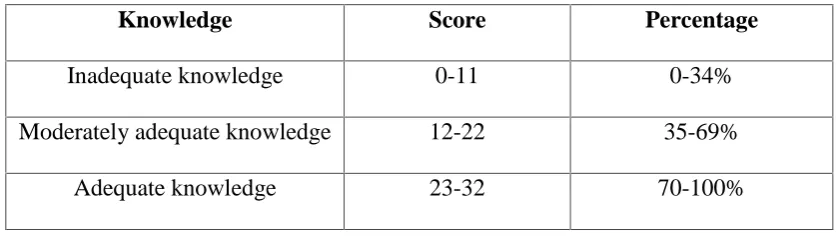
3.1 Scoring procedure for knowledge 34
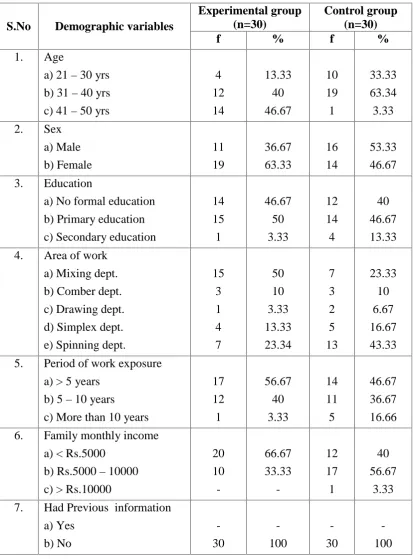
4.1 Frequency and percentage distribution of samples
according to their demographic variables
40
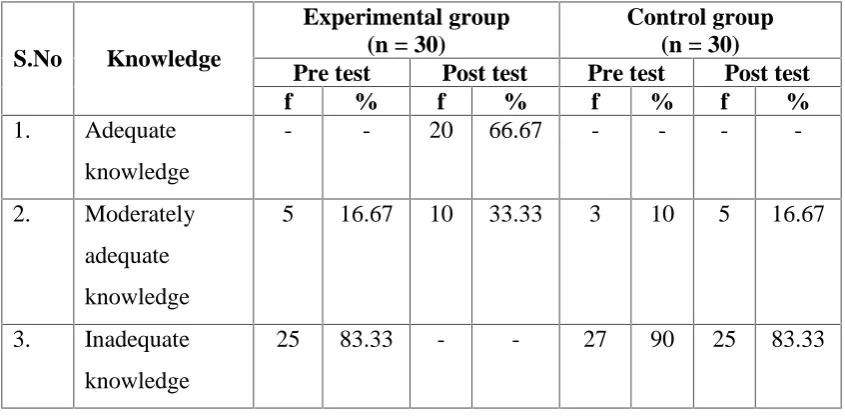
4.2 Frequency and percentage distribution according to
their pre test and post test scores on knowledge
regarding occupational hazards and its prevention
44
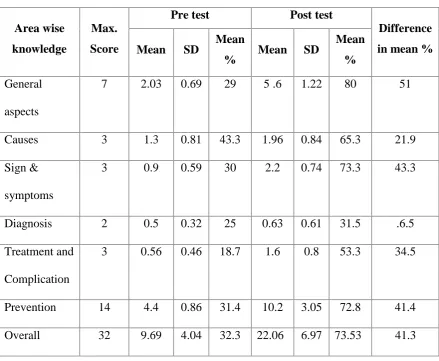
4.3 Area wise comparison between the pre test and post
test scores on knowledge regarding occupational
hazards and its prevention among samples in
experimental group
45
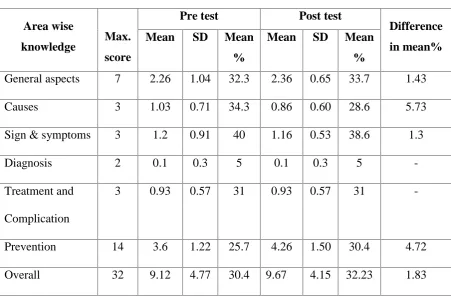
4.4 Area wise comparison between the pre test and post
test scores on knowledge regarding occupational
hazards and its prevention among samples in
control group
47
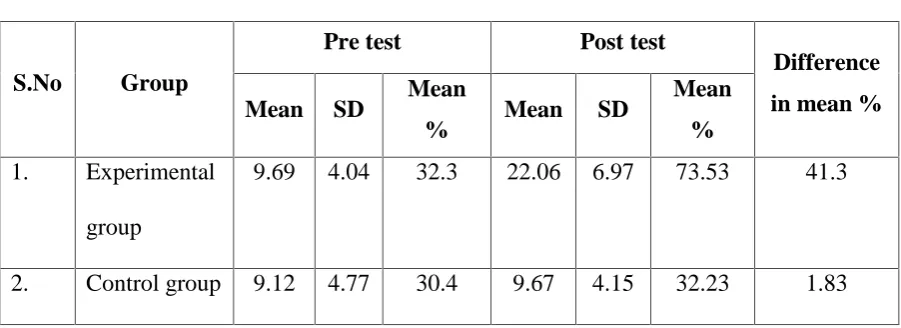
4.5 Mean standard deviation, mean percentage and
difference in mean percentage according to their
pre test and post test scores on knowledge
regarding occupational hazards and its prevention
among samples in experimental group and control
group
49
4.6 Mean, SD, and paired ‘t’ value on knowledge regarding occupational hazards and its prevention
among samples in experimental group
4.7 Mean, SD and Independent ‘t’ value on knowledge regarding occupational hazards and its prevention
among samples in experimental and control group
51
4.8 Chi-square test on the pre test scores on knowledge
regarding occupational hazards and its prevention
among samples and their selected demographic
variables
LIST OF FIGURES
FIGURE NO TITLE PAGE NO
1.1 Conceptual framework based on Modified
J.W.Kenny’s Open System Model.
12
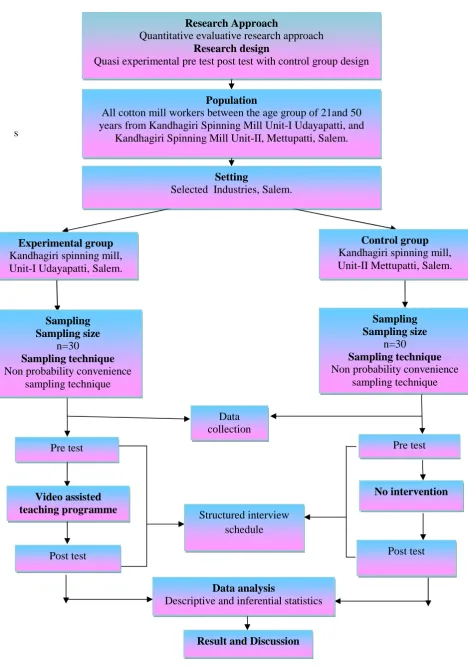
3.1 Schematic representation of research Methodology 31
4.1 Percentage distribution of samples according to
their pre test scores on knowledge regarding
occupational hazards and its prevention in
experimental group and control group.
42
4.2 Percentage distribution of samples according to
their post test scores on knowledge regarding
occupational hazards and its prevention in
experimental group and control group.
LIST OF ANNEXURES
ANNEXURE TITLE PAGE NO
A. Letter seeking permission to conduct a research
study.
i
B. Letter granting permission to conduct a research
study.
ii
C. Letter requesting opinion and suggestions of
experts for content validity of the research tool.
v
D. Tool for Data collection (English & Tamil) vi
E. Lesson Plan xxiv
F. Certificate of Validation lvi
G. List of Experts for Content Validity lvii
H. Formulae used in this study lxv
I. Certificate of Editing lxvii
ABSTRACT
Occupational hazard is one of the most important health problems in the world, especially in developing countries. WHO estimated that about 200,000 per year people are affected with occupational hazards.
A study was conducted to assess the effectiveness of video assisted teaching programme on knowledge regarding occupational hazards and its prevention among cotton mill workers at selected Industries, Salem. The design adopted was quasiexperimental (pre and post test with control group) research design. Settings of the study was Kandagiri spinning mill Udayapatti, Unit-I as experimental group and Unit-II Mettupatti, Salem as control group. The sample size was 60 and selected through non-probability convenience sampling technique by using structured interview schedule. Samples were analysed by descriptive and inferential statistical methods and interpretation were made based on the objectives.
CHAPTER- I INTRODUCTION
“Working may be an occupational hazard to you. Not working is an occupational hazard to the country.”
(12 Eustace 8:5)
Work is considered as a basic part of human existence. Most of the adults
spend approximately one-third to one-fourth of their life time at work and often
perceives work as a part of their self identity, self-expression and self-fulfilment.
Many people believe that work is worship, equally important is the place of work
because the workplace has significant influence on individual’s health and is a
primary site for the delivery of preventive health care. (Rogers, 2006)
The level of occupational health and safety, socioeconomic development of a
country, quality of life and wellbeing of working people are not only closely linked
with each other but also influence each other. This suggests that intellectual and
economic inputs on occupational health care are not burdens but have a positive and
productive impact on the company and national economy. Some industries and
countries have demonstrated that it is technically feasible and economically
productive to prevent and minimize hazards at work. This occupational health is an
important factor for sustainable socio-economic development that enables workers to
enjoy a healthy and productive life both throughout their active working years and
beyond, especially after their retirement. (WHO, 2005)
Textile industry is one of the leading industries both in India and in the world
at large. Nearly 14% of the total industrial production comes from textile industry and
it forms around 3% of GNP in India. After Indian railways, Indian textile industry
The current global labour force stands at about 2600 million and is growing
continuously. Approximately 75% of these working people are in developing
countries. The officially registered population constitutes 60-70% of the world’s adult
male and 30-60% of the world’s adult female population. Each year another 40
million people join the labour force and most of them are in developing countries. It is
imperative therefore to realize that workplace environmental hazards are a threat to a
large proportion of the world population.
Occupational health is a branch of Community Medicine which deals with the
effects of occupation of workplace on human health (Park. JE, 2009). Every
occupation is associated with one or other ill effects on health. One such occupational
group is cotton textile workers. (Hunter’s Disease of Occupation,2008)
The major health problems associated with cotton dust are respiratory
problems, which include Byssinosis, pneumonitis and Emphysema. The problems are
highly prevalent in the mills of developing countries. (Fantahum and Adebe, 2009)
Byssinosis is an occupational lung disease often observed among workers
exposed to cotton dust. Despite the fact that byssinosis has been recognized for over
100 years, the etiology and pathogenesis remain obscure. The ability of textile fibres
to produce byssinosis is determined by fibre type-cotton being the most potent,
followed by flax, hemp. Harvested cotton consists of a mixture of plant materials
including leaves, bracts and stems, fibre, bacteria, fungi, and other contaminants.
Very importantly, the compounds which cause byssinosis are water soluble. The
biological activity of cotton can be greatly reduced by either steaming or washing the
cotton before processing the textile work. (David, 2006)
The occurrence of respiratory symptoms represents the earliest response to
may be a risk factor for subsequent loss of pulmonary function in cotton textile
workers. (David, 2006)
The severity and extent of problem are well recognized in the developed
countries and control measures have been implemented to prevent the disease. This is
not true, however, for developing countries where the severity and extent of the
problem are not well studied and preventive measure are far from adequate.
(J.R.Parikh, 2007)
The occupational health nurse plays an important role in maintaining health
and safety of employees by assessing the work site for hazards and reducing risk that
could lead to disastrous situations. More effort could be directed at integrating
promotion of health and health protection activities to provide with an environment
more conducive especially to general health of the workers, so that the work site
offers an excellent setting to focus on both health protection and health promotion.
(Blix, 2009)
Need for the Study:
Occupational health is concerned with health in its relation to work and the
working environment. Occupational health implies not only health protection but also
health promotion, emergency care, wide range of preventive, curative services,
rehabilitative services, a concept which includes everything that can apply to promote
health and working capacity of the workers.
Occupation health is a branch of community medicine which deals with the
effects of occupation or workplace on human health. We have already seen that every
occupation is associated with one or the other ill effects on health and cotton mill
workers are not an exception to this fact. These workers are susceptible to various
conditions may range from chronic respiratory diseases due to cotton dust inhalation
to anaemia because of nutritional deficiency. Although many studies on chronic
respiratory disease among cotton mill workers have been carried out, a study
including complete health profile of cotton mill workers is limited and is need of
further research. (Indian Journal of Occupational and Environmental Medicine,
2010)
An occupation is something in which persons not only earn their daily bread
but also spend one-third of average adult life. The Bureau of Labour Statistics reports
that every 5 seconds a worker is injured in the world and every one second a worker is
temporarily or permanently disabled in India. The Centre for disease control and
prevention reported in 2006 that every day and average of 137 persons die from
injuries on the job. Each year 74000 require treatment in hospital emergency
departments for work related injuries. (Girijakumari, 2009)
According to a recent estimate, the cost of work related to heat loss and
associated productivity loss may amount to several percent of the total gross national
product of a country. In India there are about 20 million workers who are involved in
textile industry, among them 1.07 million workers are engaged in the manufacture of
cotton textile. Byssinosis, hypertension, noise induced hearing loss, dermatitis and
risk of cancer due to various chemicals and dyes are common occupational diseases
found among weavers. In a study done by NGO in 2008, byssinotic condition was
first recorded in Indian history in the last 150 years. A maximum number of
Byssinosis is a respiratory syndrome that occurs as a result of inhaling dust that is
produced when cotton is inhaled. The occupational nurse should realize that the
A longitudinal study was conducted to assess the prevalence of byssinosis and
to find out the association between smoking and byssinosis. 344 samples were taken
among the textile workers. The synergistic effect of smoking on cotton dust exposure
was evaluated. Indeed, smoking had significantly higher frequency than non-smoking.
In the survey conducted, it was observed that the frequency of respiratory symptoms
and prevalence of severe byssinosis were 14.9% and 12.6% respectively. The
reduction of symptoms was due to the old cotton mill. The reality is lower in the case
of non-smokers. The result indicated that smoking potenitates’ byssinosis and
smoking was found to show an additive effect of cotton dust exposure. (Maunder,
LR, 2007)
A study was conducted to determine the effect of past cotton dust exposure on
the respiratory tract; a total of 223 persons working in textile mills were included in
this study. A questionnaire was used to enquire about respiratory problems, the
participants underwent using several spirometric measurement. The most common
respiratory problem was pneumonitis 14.3%, the prevalence of byssinosis was only
20.2% and emphysema was 11% in cotton processing workers. (Basel, K.A, 2008)
The jobs and tasks in textile mills varied according to the product, process and
operations since the subjects were selected from four sections, such as the blow and
card room, spinning mills, finishing section and general section. The symptoms of
respiratory illness were identified as highest among the workers in the blow and card
room, and in the spinning section. In all, 53% of the workers have had such symptoms
that had a low peak expiratory flow rate (< 290 litres/minute). The differences of
mean peak expiratory flow rate were highly significant (409 litres/minute) between
those who had respiratory problems, and who had no such symptoms (504 litres/
section compared with the subjects in the general section because no one had the
symptoms of chest tightness or breathlessness from the general section. However,
many of them had symptoms of cough with or without phlegm (e.g. 43%), symptoms
of pneumonitis (6%) and also chest tightness and /or breathlessness (4%). (Taylor,
et.al, 2010)
Regular smoking was significantly associated with the occurrence of
respiratory related illness and its symptoms. A number of ‘beedi’(the name of a local
cigarette stick that contains more nicotine than usual cigarettes) smokers worked in
the production section. They smoked 2 to 25 sticks (a mean of 13 sticks) per day.
Non- smokers were less likely to be affected, but many of them suffered from casual
fever (20%) and also morning headaches (8%).
Prevalence of other health problems were also identified as restlessness at
night (24%), daytime sleepiness (11%), snoring (19%), impotence (31%), and feeling
physically weak (10%). The prevalence of hypertension (14%) was also noted among
some workers. Only 16% of the workers in the production section had been using
masks for more than 5-7 years, and no significant association was found between the
symptoms of respiratory illness and the length of their service. However, some
evidence from their health record (personally kept at home and from doctor’s prescription) proved that symptoms of respiratory illness were suspected among those
who were working for more than six-year duration. (Jackson, 2008)
Prevention of occupational hazards as an essential component of health aims
at training and educating these workers in order to promote good health. It is
extremely important to make people aware of the concerns of workplace. One of the
major responsibilities of community health nurse is to impart knowledge related to
who can play a vital role in preventing and controlling occupational hazards.
Therefore, she/he should function independently and carry out this particular
responsibility for better health of the workers. (Pyuish Gupta, 2010)
Statement of the Problem:
A Study to assess the Effectiveness of Video Assisted Teaching Programme
on Knowledge Regarding Occupational Hazards and its Prevention among Cotton
Mill Workers at Selected Industries, Salem.
Objectives:
1. To assess the knowledge regarding occupational hazards and its prevention
among cotton mill workers in experimental group and control group.
2. To determine the effectiveness of video assisted teaching programme
regarding occupational hazards and its prevention among cotton mill workers
in experimental group.
3. To associate between the pre test scores on knowledge regarding occupational
hazards and its prevention among cotton mill workers and their selected
demographic variables in experimental group and control group.
Operational Definitions: Effectiveness:
Effectiveness is a measure of the ability of video assisted teaching programme
regarding occupational hazards and its prevention among cotton mill workers to
produce a specific desired effect or result that can be quantitatively measured.
Video Assisted Teaching Programme:
It is a systematically planned teaching programme on occupational hazards
Knowledge:
It is the correct response given by the cotton mill workers regarding
occupational hazards and its prevention which can be assessed through structured
interview schedule.
Occupational Hazards:
It is a state of deviation from normal status of health to illness while working
in cotton mill industry. In this study it includes physical hazards, chemical hazards,
and mechanical hazards, psychosocial hazards of Byssinosis, pneumonitis, and
emphysema.
Prevention:
It refers to precautionary measures to be followed by cotton mill workers to
protect their health from occupational hazards.
Cotton Mill Workers:
They are the adult employees working at selected cotton industries, Salem.
Assumptions:
1. The cotton mill workers may have knowledge regarding occupational hazards
and its prevention.
2. Video assisted teaching programme may improve their knowledge regarding
occupational hazards and its prevention among cotton mill workers.
3. Increased level of knowledge among cotton mill workers regarding
occupational hazards and its prevention may help them to improve their
Hypotheses:
H1: There will be significant differences in pre test and post test scores on knowledge before and after video assisted teaching programme regarding occupational
hazards and its prevention among cotton mill workers in experimental group at
p≤ 0.05 level.
H2: There will be significant difference in post test scores on knowledge after video assisted teaching programme regarding occupational hazards and its prevention
among cotton mill workers in experimental group and control group at p ≤0.05 level.
H3: There will be significant association between the pre test scores on knowledge regarding occupational hazards and its prevention among cotton mill workers and
their selected demographic variables at p≤ 0.05 level.
Delimitations:
1. The study was limited to only 60 samples.
2. Study was limited to cotton mill workers who were available during the study
period.
3. Study period was limited to 4 weeks.
Projected Outcome:
1. This study would reveal the existing knowledge on occupational hazards and
its prevention among cotton mill workers.
2. This study would motivate the cotton mill workers to update their knowledge
regarding occupational hazards and its prevention.
3. This study would evaluate the effectiveness of video assisted teaching
programme on knowledge regarding occupational hazards and its prevention
Conceptual Framework:
This study is to assess the effectiveness of video assisted teaching programme
on knowledge regarding occupational hazards and its prevention among cotton mill
workers. The conceptual framework for this study was based on J.W.KENNY’s open
system model.
According to Kenny, all the living systems are open and they are in continuous
exchange of matters, energy and information.
The system receives input and gives back output in the form of information or
knowledge.
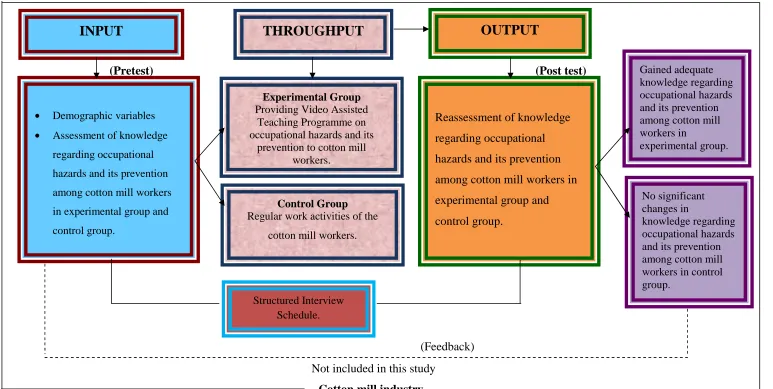
System model consist of 3 phases input, throughput, and output. These 3
phases also known as classical element of the system.
Input:
It is the first phase in open system. Based on Kenny, input can be a matter of
information. In this study, it is testing the knowledge on occupational hazards and its
prevention among cotton mill workers by using structured interview schedule.
Throughput:
According to theorist, information is continuous process through the system.
This is the activity phase, which allows the input to be changed. In the present study,
providing video assisted teaching programme regarding occupational hazards and its
prevention among cotton mill workers, only to the experimental group.
Output:
According to Kenny after processing the input, the system gives output
(Information/ knowledge). It is the third element of the system, where alteration can
In this study, majority of the cotton mill workers had gained adequate and
moderately adequate knowledge regarding occupational hazards and its prevention in
experimental group. There was no significant change in the knowledge regarding
occupational hazards and its prevention among cotton mill workers in control group.
Feedback:
According to throughput, feedback is the improvement of knowledge among
cotton mill workers. In this study, improved knowledge regarding occupational
hazards and its prevention among cotton mill workers in experimental group was
assessed by the investigator.
If there is no significant changes in the output, feedback will return to input
(Pretest) (Post test)
(Feedback) Not included in this study
[image:23.842.48.821.45.434.2]Cotton mill industry
Fig-1.1 : Conceptual Framework Based On Modified J.W. Kenny’s Open System Model On Effectiveness Of Video Assisted Teaching Programme On Knowledge Regarding Occupational Hazards And Its Prevention Among Cotton Mill Workers.
OUTPUT
THROUGHPUT
Demographic variables
Assessment of knowledge regarding occupational
hazards and its prevention
among cotton mill workers
in experimental group and
control group.
Reassessment of knowledge regarding occupational hazards and its prevention among cotton mill workers in experimental group and control group.
Gained adequate knowledge regarding occupational hazards and its prevention among cotton mill workers in experimental group. No significant changes in knowledge regarding occupational hazards and its prevention among cotton mill workers in control group.
Structured Interview Schedule.
Experimental Group Providing Video Assisted
Teaching Programme on occupational hazards and its
prevention to cotton mill workers.
Control Group Regular work activities of the
cotton mill workers.
Summary:
This chapter dealt with introduction, need for the study, and statement of the
problem, objectives, operational definition, assumptions, delimitations, projected
CHAPTER-II
REVIEW OF LITERATURE
Review of literature is an important step in the development of research
project and in broadening the understanding and developing an insight into the
problem area. It further helps in developing the broad context, in which the problem
fits, methodology, instruction of tool, development of evaluative approach and
analysis of data.
Literature review is a critical summary of research on a topic of interest often
prepared to put a research problem in context. (Denise. F. Polit, 2011)
The review of literature in this chapter is presented under the following headings.
1. Literature related to occupational hazards.
2. Literature related to respiratory problems in cotton mills.
3. Literature related to occupational hazards and its prevention.
1. Literature related to occupational hazards:
An analytical study was conducted in a textile mill that situated in Faisalabad.
Their selection of mill was based upon the facts that the mill had 6500 workers at the
same time and it was working round the clock. A sampling frame was chosen
covering only male workers of age 19-60 years with at least 2 years of service but
emphasized was on more than 10 years of work experience in the textile mill. First
two shifts were selected all workers were interviewed using a standard questionnaire.
They concluded that byssinosis usually begins to appear after several years of
exposure. The results showed that 14.42% (29) workers had started showing the
symptoms of byssinosis. There were 16(8%) workers in declutching department. In
blow room there were 6 (3%) diseased workers. Five (2.48%) diseased workers were
workers, 16 belong to ages 41-50. This is the period of age when social
responsibilities are at peak and also on decline of age. Certainly in the absence of
health and safety act at work, no compensation is awarded to such sick workers
suffering from byssinosis purely to the occupational reasons. (Saleema, et.al, 2007)
An analytical study was conducted based on the chronic disability, to discover
about the records of disable people working in industry, excluding for those who were
registered with the department of employment and productivity. A combined survey
conducted by six factory doctors consisting of 11,399 men of aged 16-64 from seven
companies is illustrated. In which 18 % of the population (1233 men) were recognised
as having chronic medical impairments, which could affect working capability. The
frequency increased from 3% under the age of 25 years to 28% over the age of
60(P<0.05). The only 1/3 of these men was formally registered and they were not true
representative of the entire disabled either in terms of severity of diagnosis. The result
showed that most occurring reason of disablement was pneumonitis, emphysema, and
asthma, disorders of the backbone, coronary heart disease and sever hearing loss.
(Taylor, et.al, 2006)
An observational study to investigate the risk of mortality in a group of textile
workers and observe whether specific occupational exposure was connected with
mortality. These workers may be affected to textile dusts, a broad series of chemicals
and electromagnetic radiation. The statistics of present and previous members of a
textile industry union were taken out from membership cards and coordinated with the
National Death Index for obtaining date and reason of death. The 113 deaths were
occurred in the cohort of 7684 textile workers. Both male and female textile workers
had same risk of death from any reason, cancer or cardiovascular disease to the
from injury. There were no significant data which reveals considerable increase in
risk with particular occupational exposures. (Frits Chi et Al, 2004)
A quasi experimental study was conducted among workers of spinning mills
are exposed to many occupational hazards which may contribute to disease and work
injuries. The main aim of this study was to evaluate the effect of health promotion
programme to improve health of workers in spinning mill. The sample comprised of
350 workers. Simple random technique was used. Tool used for this study was
interviewing questionnaire and observational checklist. Result showed that two thirds
of studied workers were exposed to respiratory disorders (65.7%and 62.8%). More
than half of the studied workers were exposed to hearing disorders (50.5%). More
than two fifths were complaining from chronic cough (42.8%), nearly two thirds of
the studied workers had poor knowledge about different types of protective equipment
and occupational diseases in spinning mill, almost two thirds of the studied workers
(67.1%) complained from musculoskeletal disorders, (56.1%) from hypertension.
There were statistically significant difference between before and after programme
implementation concerning workers health (P<0.01). (Sahar Ahmed Shafik, 2012)
A Quantitative correlational study was conducted in selected spinning mill
industry at Erode. The conceptual frame work used for the study was “Roys
Adaptation Model”. Tools used for this study were:1) Rating scale to assess the occupational stress and 2) checklist to assess the coping. The validity of the tool done
by five experts and reliability of the tool was checked r=0.8 and r=0.92 respectively
for both tools. Pilot study was conducted with 6 samples. Samples who met the
inclusive criteria were selected through non-probability convenient sampling
technique. The sample size was 60.The settings of the study were golden spinning
approximately 20 minutes and data collected from 6 samples per day. Booklet on
methods to overcome occupational stress was distributed to all samples. The data
were edited for completion. The result showed that majority of married women were
in the age group of 30-35 years21(35%) had higher secondary level of education
21(35%) were from nuclear family 29(48.3%)had family support 38(63.3%)reported
their husbands did not share in household activities 28(46.7%) had their last child in
the age of 3-6 years 18(30%)were from urban area 31(51.7%)had a distance of
5-15kms from the residence to workplace 21(35%) travelled for 10- 15 minutes
27(45%) had a monthly income of 5000 23 (38%)experienced stress in spinning
mill.(Kavitha N.M, 2011)
2. Literature related to respiratory problems in cotton mills:
An analytical study was conducted to investigate the prevalence of respiratory
problems, in particular byssinosis, and to explore factors associated with their
occurrence among a group of 595 randomly selected workers representing 40.5% of
those exposed to dusty operations in a typical Ethiopian cotton textile mill. A standard
questionnaire on respiration was administered and pre and post shift forced vital
capacity (FVC) and forced expiratory volume in one second (FEV1) were determined
for each worker; workers found to have byssinosis and other respiratory diseases were
compared with workers having no respiratory diseases in terms of the level and
duration of exposure to cotton dust and other variables. We analysed multiple air
samples from different sections in order to find out the elutriated cotton dust
concentrations (0.86-3.52 mg/m3). The prevalence of byssinosis was 43.2% among
blowers and 37.5% in carders in comparison with 4 to 24% among workers in other
sections. Prevalence of pneumonitis ranged from 17.6 to 47.7% and Emphysema from
were seen in those workers with respiratory tract diseases compared with those
workers without such diseases. A significant dose response relation for pulmonary
function and respiratory illnesses was also found by regression analysis. Preventive
measures are proposed. Further research including a nationwide survey of textile mills
is suggested. This is the first epidemiological study of the textile industry in Ethiopia.
(Ay Mgeni, 2007)
A cross-sectional study was conducted in cotton mills in Guntur District (AP)
in January 2009 to May 2009. Total 474 workers were included in the study. All study
subjects were male. Most of the study subjects belonged to age group 30–40 years
(56.96%) and lower socioeconomic status (36.09%) according to modified
Kuppuswamy’s classification. The literacy status was varied with 5.70% being illiterate and 37.13% were educated up to primary school. Most of workers were
working in Ring frame (41.56%) and majority (58.44%) were working for the last 5–
10 years. Mean height of study subjects was 147.42 cm and mean weight was 55.11
kg. The common morbid conditions found were eosinophilia (18.35%), iron
deficiency anemia (28.90%), byssinosis grade 1(7.80%), dental stains (6.54%),
refractive errors (7.80%), pneumonitis (4.85%), and upper respiratory tract infection
(8.64%). ( Pravin N. Yerpude, 2010)
A cross-sectional survey of 372 adult male textile workers from the spinning
and weaving sections of 15 textile mills from Karachi. Data were collected from
November to December 2009 through a structured, pretested questionnaire and
spirometry. The Result showed that Prevalence of byssinosis was 10.5%, chronic
cough 7.5%, chronic phlegm 12.9%, wheeze with shortness of breath 22.3%,
shortness of breath (grade 2) 21%, chest tightness ever 33.3%; whereas, a low
obstructive, 8% restrictive and 2% mixed pattern of lung function abnormality. After
controlling for potential confounders, work in the spinning section predicts frequent
wheeze (AOR=2.0; 95% CI 1.1 to 3.5), wheeze with shortness of breath (AOR=1.8;
95% CI 1.0 to 3.4), and obstructive pattern on spirometry (AOR=2.5; 95% CI 1.0 to
6.2). Prolonged duration of work predicts breathlessness grade 1 (AOR=1.8; 95% CI
1.0 to 3.1) and grade 2 (AOR=2.7; 95% CI 1.3 to 5.4), as well as decrements in
Forced Expiratory Volume in the first second (FEV1) and FEV1/Forced Vital Capacity
ratio. Lack of education predicts frequent wheeze (AOR=2.0; 95% CI 1.2 to 3.3), and
Sindhi ethnicity predicts chest tightness apart from during cold (AOR=2.7; 95% CI
1.1 to 6.6) Study highlights the burden of respiratory illnesses and symptoms, and a
low prevalence of asthma among textile workers in Karachi. Work in the spinning
section, lack of education, prolonged duration of work and Sindhi ethnicity, were
identified as important risk factors. (Zafar Fatmi, 2011)
A Cross sectional study was conducted among 462 cotton textile workers of
Central India. Interview technique was used to collect socio demographic,
anthropometric & addiction information on a predesigned performa followed by
detailed general and systemic examination. Result showed that present study revealed
that among 462 samples (25.3%) workers had chronic respiratory morbidities. The
morbidities included Byssinosis (11.7 %), pneumonitis (14%), Emphysema (11%),
Tuberculosis (1.5%), other obstructive pulmonary diseases (1.7 %) All the workers
were male and age ranged from 21– 58 years. Majority of the study subjects i.e. 97.4 % were literate and 94.6% belonged to class III & IV according to modified
Kuppuswamy’s classification. The spinning process was carried out in seven main
sections. Majority of the workers belonged to ring frame section (47%). The present
masks were provided as protective devices and (41.3%) of the workers were using it.
Total (34.7 %) workers were smokers. (Ajeet Vasantrao Saroji, 2010)
A Simple, randomized, prevalence study was conducted amongst 173 cotton
mill worker in the age group 21 – 51 years in the period of four months at Nagpur Zilla Sahakari soot Girni and V.S.P.M’s college of physiotherapy, workers with established cardiopulmonary disorders are excluded from study. Material used: Inch
tape, Weighing scale, Height Scale, Wright’s mini peak flow meter, pulmonary function testing equipment..Questionnaires collecting information about work, job,
duration, addiction, symptom, work room environmental and safety measures was
administered in local dialect to each worker on his first day of working week. It is
concluded from the present study that with the increase of Age and Exposure there is
decreased in PEFR, FEV1& FVC. Physical therapy intervention implies not only
health protection but also promotes health. (Jones RD, 2005)
An analytical study to investigate the respiratory health profile of textile mill
workers in Bangladesh, forced vital capacity was measured by peak expiratory flow
rate instrument among 210 subjects. The personal history, occupational history and
the state of health were also determined using a questionnaire and checklist. The
subjects who had a considerably low peak expiratory flow rate (<290 liters/ min) and
symptoms of chronic respiratory illness underwent x-ray examination. A statistically
significant low peak expiratory flow rate was identified among 52.9% of workers.
Among them 42.9% had symptoms of cough with or without phlegm, 57% had a
history of pneumonitis and 4.3% experienced chest tightness or breathlessness. The
study showed a high degree (P<0.001) of respiratory related illness symptoms among
the workers in the blow/ card room and the workers in the spinning section. (Ahmad
An observational study to investigate the prevalence of byssinosis. In this
study one hundred and sixty nine and one seventy five textile workers were enrolled
in the first (1991) and second (1996) surveys to assess the prevalence of byssinosis.
The synergistic effect of smoking on cotton dust exposure was evaluated although the
difference in the second study (38.9%) was not statistically significant, smoke had
significantly higher frequency than non- smoker in both surveys. The frequency of
respiratory symptoms and prevalence of severe byssinosis is the second survey was
(14.9% and 12.6%). The prevalence was higher in smokers than in non smokers found
in the second survey. The result indicate that the second survey reveals that the high
prevalence of byssinosis still smoking was found to show an effect of cotton dust
exposure. (Maunder LR, 2004)
A Cross sectional study of respiratory symptoms and lung function was made
in 1057 textile spinning operatives. Mostly 713 workers currently in cotton industry.
The remainder worked with manmade fibre lung function was assessed by measuring
forced expiratory volume in one second (FEV1) and forced vital capacity (FVC).
Exposure to cotton dust was measured in the work area. It was estimated with
accurate work history and best available hygiene data 3.5% of all operatives had
byssinosis, 55(5.3%) pneumonitis, 36 (3.5%) work related persistent cough, 55(5.3%)
non-byssinotic work related chest tightness and 56(5.3%) work related wheeze. A
total of 212 static work area dust samples (range 0.04-3.23 mg/m3) and 213 personal
breathing zone samples range (0.014.29.95 mg/m3) were collected. Percentage of
predicted FEV1 was reduced in current smokers (mean 89.5, 95% confidence interval
(95%& 88.91) in comparison with cotton(9738,96.6,-99.0).Regression analysis
identified smoking(p<0.01), increasing age (p<0.01) increasing time worked in the
appear as predictor FEVI was reduced in these operatives exposed to high dust co
concentration assessed by personal and worker area sampling.(Fishwick D, Fletcher
AM, 2006)
An Analytical study was conducted in the spinning mill of Karachi in June
2006. Mill workers who had worked for a period of minimum 5 years were selected.
A sample size of 83 conveniently selected workers participated in the research study.
Data collection was done through questionnaire, and pulmonary function tests. The
result showed that the mean age of the sample was 30±69 years. Of all the workers
72% used safety gadgets (masks) while working and 50% availed overtime. Smokers
amounted to 31% of the total employees. Around 35% workers complained of having
respiratory ailments of which 19% (16 workers) closely matched byssinotic
symptoms. Pulmonary Function Tests (PETs) confirmed 13 out of 16 workers to be
byssinotics. The association of byssinosis with respect to work areas was significantly
high in ring area (O.R=2.04) followed by carding (O.R=1.3). The association of
byssinosis was also high in workers who did not use safety gadgets, e.g. dust masks
(O.R=4.89) and in people who worked overtime (O.R=1.82). Associations with
respect to duration of employment and smoking could not yield significant results.
(Mohammed Irfan Farooque, 2006)
3. Literature related to occupational hazards and its prevention.
An analytical study to assess the excessive noise among spinning mill
workers. Excessive noise is a global occupational health hazard with considerable
social and physiological impacts, including noise-induced hearing loss (NIHL). This
paper describes the worldwide morbidity of occupational NIHL in the year 2000. The
proportion of the population exposed to occupational noise was estimated using noise
(NIOSH), adjusted by data on the distribution of the work force by occupational
category and economic sector, and economic activity rates in each WHO sub region.
These values for the exposed population and risk measures for NIHL were used to
develop estimates of the attributable fraction (AF) of adult-onset hearing loss
resulting from occupational noise exposure. The AFs were applied to WHO estimates
of total disability-adjusted life years (DALYs) from adult-onset hearing loss to
estimate the DALYs due to occupational noise. Result showed that Worldwide, 16%
of the disabling hearing loss in adults (over 4 million DALYs) is attributed to
occupational noise, ranging from 7% to 21% in the various sub regions at P<0.01. The
effects of the exposure to occupational noise are larger for males than females in all
sub regions and higher in the developing regions. Researcher Conclude that
occupational noise is a significant cause of adult-onset hearing loss. The majority of
this NIHL burden can be minimized by the use of engineering controls to reduce the
generation of noise at its source. (Marilyn Fingerhut, 2005)
An analytical study was conducted to evaluate the musculoskeletal disorder
among spinning mill workers in New York. In spite of the numerous reports on
musculoskeletal disorders in various specific groups of workers, few data on the
prevalence in the general working population are available except for back pain. We
analyzed the information collected through a nationwide survey in Taiwan in 1994 to
estimate the prevalence of musculoskeletal disorders by age, gender, and education
level and identify high-risk industries. In the survey, a standard questionnaire was
distributed to a representative sample of 22,475 non-self-employed workers in
Taiwan. National estimates were obtained by applying a weight to each participant.
Among the sampled workers, 18,942 (84.3%) participated, and 37.0% (standard
had a significantly higher overall prevalence than male workers (39.5% vs.
35.2%, p<0.05). Education and age also had significant associations with MSD
(p<0.001 in both genders). “Lower back and waist” were the most frequently affected
body parts (18.3% among males and 19.7% among females), but the prevalence of
MSDs of the neck, shoulders, hands and wrists were also above 10%. The top ten
high-risk major industries for musculoskeletal disorders of various body parts for each
gender were identified, and some industries, including “Basic Metal Industries” and “Buildings Construction,” were among the top ten for multiple body parts. Our study showed that MSDs of body parts other than the back are also prevalent, especially in
the neck, shoulders, hands and wrists. We also identified high-risk industries for
further research and intervention to estimate the prevalence of workplace noise
exposure and use of hearing protection devices (HPDs) at noisy work.. (V.Yerpude
2010)
An observational study was conducted to evaluate the prevalence of workplace
noise exposure. The total of 9,275 currently employed workers aged≥16 years was included in the weighted analysis. Hazardous workplace noise exposure was defined
as self-reported exposure to noise at their current job that was so loud that the
respondent had to speak in a raised voice to be heard. Industry and occupation were
determined based on the respondent's current place and type of work. Results showed
that Twenty-two million US workers (17%) reported exposure to hazardous
workplace noise. The weighted prevalence of workplace noise exposure was highest
for mining (76%, SE = 7.0) followed by lumber/wood product manufacturing (55%,
SE = 2.5). High-risk occupations included repair and maintenance, motor vehicle
operators, and construction trades. Overall, 34% of the estimated 22 million US
proportion of noise-exposed workers who reported non-use of HPDs was highest for
healthcare and social services (73.7%, SE = 8.1), followed by educational services
(55.5%) at P<0.05. (Geoffrey M, 2009)
A cross sectional study was conducted to estimate the prevalence of work
related asthma and work related wheezing in United States workers. To identify high
risk industries that could be targeted for future intervention. To determine the
population attributable risk of work related asthma and work related wheezing.
Methods used for this study was the third national health and nutrition examination
survey, 1988–1994 (NHANES III) was analyzed to determine the prevalence of work
related asthma and wheezing and to identify initially defined industries at risk among
United States workers aged 20 and older. Separate logistic models were developed
with work related asthma and work related wheezing as outcomes. Work related
asthma was defined as affirmative response to questions on self reported physician
diagnosed asthma and work related symptoms of rhinitis, conjunctivitis, and asthma.
Work related wheezing was defined as affirmative response to questions on self
reported wheezing or whistling in the chest in the previous 12 months and work
related symptoms of rhinitis, conjunctivitis, and asthma. All analyses were adjusted
for age, sex, smoking, and atopic. Results showed that prevalence of work related
asthma was 3.70% (95% confidence interval (95% CI) 2.88 to 4.52) and the
prevalence of work related wheezing was 11.46% (95% CI 9.87 to 13.05). at P<0.01.
The main industries identified at risk of work related asthma and wheeze included the
entertainment industry; agriculture, forestry, and fishing; construction; electrical
machinery; repair services; and lodging places. The population attributable risk for
work related asthma was 36.5% and work related wheezing was 28.5%. The findings
prioritise occupational asthma on the public health agenda. Future intervention
strategies need to be developed for effective control and prevention of asthma in the
workplace. (SR Tortolero, 2002)
A case cohort study was conducted to evaluate the associations between
occupational exposures in the textile industry and the risks of oesophageal cancer and
stomach cancer among female textile workers in Shanghai China. One hundred and
two workers with incident oesophageal cancer and 646 workers with incident stomach
cancer diagnosed between 1989 and 1998 were compared with an age-stratified
reference sub cohort (n = 3,188). Work histories were ascertained for all study
subjects from factory personnel records or interviews. Exposures were reconstructed
for chemicals and dusts by linking work history data with a job-exposure matrix
developed for the Shanghai textile industry. Hazard ratios and 95 percent confidence
intervals were calculated with Cox proportional hazards modelling adapted for the
case-cohort design. Risk of oesophageal cancer was associated with long-term (≥10
years) exposure to silica dust (hazard ratio = 15.8, 95% confidence interval: 3.5, 70.6)
and metals (hazard ratio = 3.7, 95% confidence interval: 1.9, 7.1). Cumulative
exposure to end toxin, a contaminant of cotton dust, was inversely related to risks of
both oesophageal cancer (p-trend = 0.01) and stomach cancer (p-trend < 0.001) when
exposures were lagged 20 years. Endoxin has not been previously reported to be a
protective factor for either stomach cancer or oesophageal cancer and therefore
warrants further study. (Karen J Wernlim, 2005)
A cross- sectional study was conducted to determine chronic effects of long
term exposure to cotton dust and end toxin on incidence of respiratory symptoms and
the effect of cessation of exposure. Respiratory health in 429 Chinese cotton textile
prospectively from 1981 to 1996. Byssinosis, chest tightness, and non-specific
respiratory symptoms were assessed by means of identical standardised
questionnaires at four time points. Exposures to cotton dust and end toxin were
estimated using area samples collected at each survey. Incidence and persistence of
symptoms were examined in relation to cumulative exposure and exposure cessation
using generalised estimating equations (GEE). The results showed that among cotton
workers, the cumulative incidence of byssinosis and chest tightness was 24% and
23%, respectively, and was significantly more common in smokers than in
non-smokers. A high proportion of symptoms were found to be intermittent, rather than
persistent. Among silk workers, no typical byssinosis was identified; the incidence of
chest tightness was 10%. Chronic bronchitis, cough, and dyspnoea were more
common and persistent in the cotton group than in the silk group. Significantly lower
odds ratios for symptoms were observed in cotton workers who left the cotton mills;
risk was also related to years since last worked. Multivariate analysis indicated a trend
for higher cumulative exposure to endotoxin in relation to a higher risk for byssinosis.
Researcher Conclude that chronic exposure to cotton dust is related to both work
specific and non-specific respiratory symptoms. Byssinosis is more strongly
associated with exposure to end toxin than to dust. Cessation of exposure may
improve the respiratory health of cotton textile workers; the improvement appears to
increase with time since last exposure. (X.R. Wang, 2003)
This quasi experimental field study explored the effect of noise attenuation on
urinary cortical excretion (sampled three times, at 6:30 and 10:30 AM and 1:30 PM)
and reported fatigue and post work irritability among 35 healthy industrial workers
chronically exposed to high ambient noise levels (>85 dB [A]) without using ear
cortical level at the end of the work shift was high and almost reached the morning
level. This elevation in cortical excretion was accompanied by high levels of
accumulated fatigue and post work irritability. Attenuating the noise reaching the
eardrum by 30 to 33 dB, by fitting the same workers with earmuffs for a period of 7
working days, resulted in a significant improvement in both psychological and
physiological stress reactions. Besides decreasing noise intensity, no other changes
were made, either to ongoing work activities or to the other characteristics of the
ambient noise. The cortical level declined steadily during the work shift and exhibited
the normal cortical diurnal rhythm. At the end of the work shift, this level was
significantly lower (P < .05) than that observed under the chronic noise-exposure
condition. There was also a reduction in reported fatigue (P < .05) and post work
irritability (P < .01). These findings demonstrate the "net" contribution of ambient
noise to elevating stress reactions to regular work demands. (Melamed, 2006)
An analytical study was conducted to assess the effects of mask fitness and
worker education on the prevention of occupational dust exposure. We examined dust
protective mask performance and its relation to pulmonary function as well as the
effects of worker education on the proper wearing of masks. One hundred and
seventy- eight workers from 15 factories subject to dust exposure participated in this
study. All participants were interviewed to obtain relevant personal information and
underwent both a mask leakage and a pulmonary function test. The mask leakage was
expressed as a percentage, with under 10% leakage indicating that the dust protective
mask worked efficiently. In addition, 23 workers from 2 factories were educated on
how to wear masks properly. The average mask leakage was 24.3%and 58% of
workers were ineffective masks. Through pulmonary function was almost normal, the
Mask education, which was very easy and took only a short time, dramatically
decreased average mask leakage from 32.1%to 10.5% (P< 0.001). Educating workers
to wear masks properly might prevent the worsening of pulmonary function in
response to dust exposure. Appropriate mask fitness by education could be useful in
preventing the development of byssinosis. ( Shinji Kojima, 2008)
Summary:
This chapter dealt with literature related to occupational hazards, respiratory
CHAPTER-III METHODOLOGY
Research methodology is the logic structure and strategy of study. It contains
clear description of samples studied, adequate information pertaining to reliability and
validity, sufficient description on collection of data, appropriateness of statistical
treatment and data processing procedures.
This chapter describes methodology adopted to assess the effectiveness of
video assisted teaching programme on knowledge regarding occupational hazards and
its prevention among cotton mill workers at selected Industries, Salem.
Research Approach:
Quantitative evaluative research approach was adopted for the study.
Research Design:
The research design adopted for this study was quasi experimental (pre test
and post test with control group) design which was used to measure the effectiveness
of video assisted teaching programme on occupational hazards and its prevention.
E = Experimental group
C = Control group
O1= Pre test knowledge on occupational hazards and its prevention.
X = providing video assisted teaching programme to cotton mill workers in
experimental group.
O2= Post test knowledge on occupational hazards and its prevention. E = O1 X O2
s
Figure-3.1. Schematic Representation of Research Methodology
Research Approach
Quantitative evaluative research approach Research design
Quasi experimental pre test post test with control group design
Population
All cotton mill workers between the age group of 21and 50 years from Kandhagiri Spinning Mill Unit-I Udayapatti, and
Kandhagiri Spinning Mill Unit-II, Mettupatti, Salem.
Setting
Selected Industries, Salem.
Control group Kandhagiri spinning mill, Unit-II Mettupatti, Salem. Experimental group
Kandhagiri spinning mill, Unit-I Udayapatti, Salem.
Sampling Sampling size
n=30
Sampling technique Non probability convenience
sampling technique
Sampling Sampling size
n=30
Sampling technique Non probability convenience
sampling technique Data collection Post test Post test Pre test Pre test No intervention Video assisted teaching programme Structured interview schedule Data analysis
Descriptive and inferential statistics
Population:
Population is the set of people or entities to which the results of a research are
to be generalised. (Denise F. Polit and Beck, 2011)
The population of the study comprises of all cotton mill workers with age
group between 21 and 50 years at selected Industries, Salem.
Description of the Setting:
The physical location and conditions in which data collection takes place in a
study. (Denise F.Polit and Beck, 2011)
The study was conducted at selected Industries, Salem. The samples for
experimental group were selected from Kandhagiri Spinning Mill Unit-I, Udayapatti,
Salem and the samples for control group were selected from Unit-II, Mettupatti,
Salem which was 20 kms and 22kms away respectively from Sri Gokulam College of
Nursing, Salem. The settings were selected by using non probability convenience
sampling technique and based on the availability of samples and feasibility in terms of
co-operation.
Sampling:
Sampling is the process of selecting a representative segment of the population
under study. (Denise F. Polit and Beck, 2011)
Sample:
The samples in the study comprises of cotton mill workers with age group
between 21 and 50 years from Kandhagiri spinning mill Unit-I Udayapatti and
Kandhagiri Spinning Mill Unit- II, Mettupatti Salem, and who fulfilled the inclusion
Sample size:
Sample size consists of 60 cotton mill workers among 30 were in experimental
group and 30 were in control group.
Sampling technique:
Non probability convenience sampling technique was adopted for selecting the
samples for the study.
Criteria for sample selection: Inclusion criteria
Cotton mill workers in the age group between 21 and 50 years.
Both male and female
Who were willing to participate in the study. Who were able to understand Tamil.
Exclusion criteria:
Cotton mill workers who were sick or on leave during data
collection.
Workers who were already exposed to Video assisted Teaching
programme.
Variables:
Independent variable: Video assisted teaching programme
Dependent variable: Knowledge regarding occupational hazards and its prevention.
Description of the Tool:
With the investigator’s personnel and professional experiences and after
extensive literature review and discussion with experts the tool was developed for
The tool consists of the following sections.
Section-A:
This section consists of demographic variables such as age, sex, educational
status, and area of work, work exposure, family monthly income, and previous
information.
Section-B: Structured Interview schedule on occupational hazards and its prevention:
It consisted of 32 multiple choice items to assess the knowledge on
occupational hazards and its prevention among cotton mill workers. The structured
interview schedule had 4 alternative responses, the correct response was given a score
[image:45.595.105.524.401.519.2]of one and incorrect was scored as zero.
Table- 3.1: Scoring procedure for knowledge
Knowledge Score Percentage
Inadequate knowledge 0-11 0-34%
Moderately adequate knowledge 12-22 35-69%
Adequate knowledge 23-32 70-100%
Validity and Reliability: Validity:
Validity refers to the degree to which an instrument measures what it is
supposed to measure. (Polit and Hungler, 2011)
Validity of the tool was obtained on the basis of opinion of subject experts
(Two medical experts, Five Community Nursing Specialist), Minor modifications
were made as suggested by experts and the final tool was prepared. The tool was