The role of experiential knowledge in foreign market commitment:
A process perspective on the internationalisation of
Australian services SMEs
A thesis submitted for the degree of Doctor of Philosophy of The Australian National University
Genrikh Salata
August 2017
i
Signed Statement of Originality
The work presented in this thesis, is to the best of my knowledge my own work, except as acknowledged in the text. The material has not been submitted, either in whole or in part, for a degree at this or any other university.
ii
Abstract
A dissertation submitted in fulfilment of the requirements for the degree of Doctor or Philosophy
The Australian National University, 2017
Committee Co-Chair: Associate Professor Pierre van der Eng Committee Co-Chair: Professor Jacqueline Lo
Committee Member: Dr Annmarie Elijah
The Uppsala internationalisation model established some foundations for research in international business. But since the introduction of this internationalisation process model in mid-1970s, the business environment has changed significantly. It is important to reflect on how these changes affect the interplay between experiential learning and foreign market commitment, a key plank in the Uppsala model. This thesis focuses on a core assumption that underlies the model: that a high degree of foreign market commitment results from rational decisions that firms take during a learning process based on complete knowledge and information. In 2009, the protagonists of the Uppsala model offered a much more nuanced perception of a firm’s learning process, when they stressed that firms rely of a wider range of relationships, interactions and contexts that impact on their accumulation of experiential knowledge. Some studies have used proxy variables to capture this process through variance-based quantitative analysis. This thesis uses a process approach, conceptualised on the basis of several theories to understand the complexity of the learning process that underlies the internationalisation of firms.
iii
instrument to understand causal relationships between experiential knowledge accumulation or learning and foreign market commitment, as well as other internationalisation processes that take place over periods of time. This research is focused on the micro-foundations of internationalisation attempts of firms. These processes are analysed in light of relevant spatiotemporal context. The findings document the key aspects of the internationalisation process without devoting the analysis to what Outhwaite (1987: 7-12) has labelled the positivist ‘law-explanation orthodoxy’.
Instead, this thesis relies on abductive reasoning and longitudinal case studies to contextualise learning processes and changes in such processes over a period of time throughout the internationalisation process. It analyses the internationalisation of seven Australian services SMEs in order to provide causal explanations for a specific sequence of critical events that influenced the foreign market commitments of these firms. An additional methodological contribution of this thesis is the implementation of content analysis, clustering and multidimensional scaling of the contents of interviews, which accounts for relevant context without undermining the scientific explanation and rigour of the approach.
By studying case histories and the chronology of critical events in the internationalisation attempts of these firms, we demonstrate that an accommodating learning style is most closely associated with the foreign market commitment of firms. Nonetheless, experiential learning is dynamic in nature and often requires decision makers to touch all bases of the learning cycle. As expected, the key sources of knowledge are relevant business and people-to-people networks, as well as prior learning experiences of decision makers that often go beyond the lifespan of the firm.
iv
entry mode, degree of internationalisation) are intermittent. These findings precisely challenge the results of variance-based studies that rely on limited firm-level indicators to capture and analyse experiential learning processes.
v
Acknowledgements
When I began my PhD research journey I did not expect it was going to take 7 years and neither did I expect it to be such a challenging and fruitful undertaking. Throughout this time, I received advice and support from people who made an invaluable contribution to my learning and personal development. First and foremost, I would like to express gratitude to my supervisors: Associate Professor Pierre van der Eng, Professor Jacqueline Lo and Dr Annmarie Alijah. I am very grateful for the support and guidance by Dr Gary Buttriss who helped me to frame my thoughts around the processes and mechanisms of internationalisation. Thank you for encouraging and supporting me throughout this ambitious project.
I would like to thank all of my friends at the Centre for European Studies at the Australian National University. You gave me a unique opportunity to work on a cross-disciplinary project in the most stimulating environment and with access to people who have impressive expertise. Needless to say, this contribution goes far beyond my knowledge of the international business discipline.
Without doubt, none of this would be possible without the support of my family and my mom. I am certain that there are no words in any language that can express the magnitude of your determination to give your son the best of everything in life. Мама, наконец-то я смог приготовить достойный подарок на твой День Рождения!
Instead of listing the names of all the people who have helped me to get to this point – I will pay tribute by saying thanks in person.
vi TABLE OF CONTENTS
Chapter 1: Introduction ... 1
1.1 Introduction ... 1
1.2 Internationalisation defined as a process ... 2
1.2.1 ‘Experiential knowledge’ and foreign market commitment interplay – the key mechanism of the internationalisation ... 2
1.2.2 The 1977 Uppsala model – processual vs stages-centred interpretations ... 3
1.3 Practice-oriented research: gap-spotting and problematisation ... 4
1.3.1 The crisis of language – ‘experience’ vs learning from experience? ... 5
1.4 The evolution of research related to experiential knowledge and internationalisation... 6
1.5 Research aims ... 8
1.6 Method ... 10
1.6.1 The rationale for a process approach ... 10
1.6.2 In-depth case studies and case history timelines... 11
1.6.3 Sequence analysis of interview narratives ... 11
1.7 Contribution of the thesis ... 13
1.7.1 Guidelines for practitioners ... 13
1.7.2 Theoretical and methodological contributions ... 14
1.8 Thesis structure ... 15
Chapter 2: Literature Review ... 16
2.1 Introduction ... 16
2.2 Internationalisation Process Models ... 17
2.2.1 Uppsala Internationalisation Model... 17
2.2.2 Innovation-related internationalisation models ... 23
2.2.3 Systematic planning models, contingency perspective and other approaches to the firm’s internationalisation process ... 28
2.3 Contemporary studies on the role of experiential knowledge in the internationalisation process ... 30
2.3.1 Absorptive Capacity Theory ... 35
2.3.2 Micro-level processes as a source of experiential knowledge ... 39
2.3.3 Empirical findings of prior research on micro-processes of the internationalisation process of firms ... 41
2.4 The role of knowledge in early internationalising firms ... 43
2.4.1 The distinctive context of professional services firms ... 45
2.4.2 Defining professional services firms ... 47
vii
2.4.4 Increasing importance of services industries and SMEs ... 51
2.5 Defining experience and experiential knowledge ... 54
2.5.1 Kolb’s Experiential Learning Theory ... 60
2.5.2 4I Multi-level Learning Framework ... 63
2.5.3 Other learning theories... 64
2.6 Research Conceptualisation ... 67
2.6.1 Research questions and conceptualisation of the research ... 67
2.6.2 Proposed conceptual framework ... 73
2.7 Conclusion... 76
Chapter 3: Research approach and Method ... 77
3.1 Introduction ... 77
3.2 Process approach or event-driven method of analysis ... 78
3.2.1 Overview ... 78
3.2.2 Justification of process approach ... 85
3.3 Case study research ... 87
3.3.1 Overview ... 87
3.3.2 Justification for the use of qualitative case study research ... 89
3.3.3 Multilevel data analysis ... 91
3.3.4 Designing multiple case studies ... 93
3.3.5 Justification for the application of process approach to case study research ... 94
3.4 Conducting the research ... 95
3.4.1 Research design phase ... 99
3.4.2 The prepare, collect and analyse phase ... 101
3.4.3 Data analysis ... 104
3.4.4 Text analysis (sequence methods) ... 106
3.5 Summary and conclusion ... 115
Chapter 4: Case Descriptions ... 116
4.1 Introduction ... 116
4.2 Industry ... 118
4.3 Firm size and ownership ... 118
4.4 Firm-level internationalisation reliance and exposure ... 119
4.5 Interviewees ... 121
4.6 Case descriptions ... 122
4.6.1 Case 1: Aspen Medical ... 122
4.6.2 Case 2: Recruitment Systems ... 125
4.6.3 Case 3: Sterian ... 126
4.6.4 Case 4: XP Solutions ... 128
viii
4.6.6 Case 6: eWater ... 131
4.6.7 Case 7: Straker Translations ... 133
4.7 Conclusions ... 135
Chapter 5: Discussion of Results ... 136
5.1 Introduction ... 136
5.2 The chronology of critical occurrences and events ... 136
5.2.1 Case history 1: Straker Translations ... 136
5.2.2 Case history 2: Aspen Medical ... 144
5.2.3 Case history 3: Recruitment Systems ... 152
5.2.4 Case history 4: Sterian ... 161
5.2.5 Case history 5: XP Solutions ... 170
5.2.6 Case history 6: SYPAQ ... 178
5.2.7 Case history 7: eWater ... 189
5.3 The results of the sequence and discourse analysis ... 195
5.3.1 Narrative data: examples of coded text and sequence overlaps ... 197
5.3.2 Experiential learning processes explained: accommodating learning style and foreign market commitment as part of the same leaf on the clustering dendrogram 200 5.3.3 Experiential knowledge accumulation is a complex process that touches all bases of learning ... 203
5.3.4 How do business networks influence foreign market commitment? ... 206
5.3.5 The importance of the context of situation and time ... 207
5.3.6 Human choice and judgement as part of the internationalisation decision making process ... 209
5.3.7 Visualisation of the code co-occurrences matrix ... 210
5.3.8 Sequence analysis of the narrative data: hierarchical clustering dendrogram and key constructs influencing the internationalisation process ... 213
5.3.9 What do key decision-makers learn through experiential learning? ... 222
5.3.10 The summary of the conclusions from sequence analysis ... 223
5.4 Conclusion... 224
Chapter 6: Conclusions and Contributions to the literature ... 233
6.1 Introduction ... 233
6.2 Response to the research questions - what did we learn? ... 233
6.3 Contribution to the literature ... 239
6.4 Methodological limitations and strengths of the study... 246
ix LIST OF FIGURES
Figure 2.1: Integration of Kolb’s Experiential Learning Theory, Uppsala
Internationalisation Model and Absorptive Capacity Framework ... 74
Figure 3.1: Outcome-driven theoretical explanations ... 80
Figure 3.2: Event-driven theoretical explanations ... 81
Figure 3.3: Multilevel research analysis ... 91
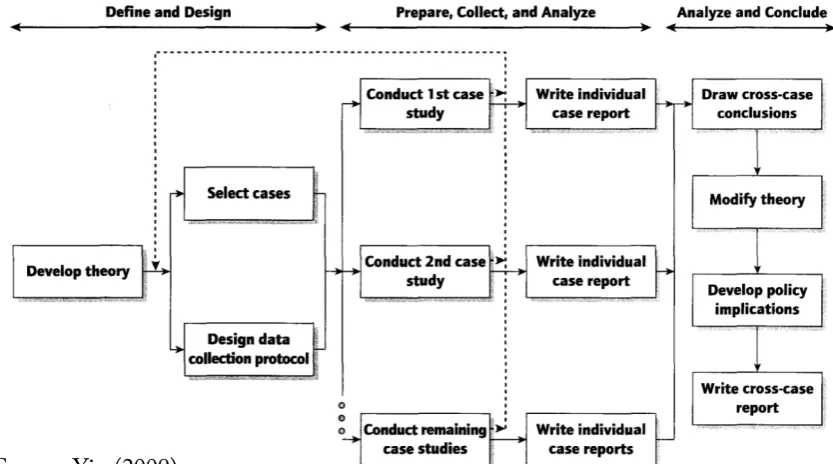
Figure 3.4: Case Study Research Design ... 93
Figure 5.1: Straker Translations – the internationalisation history of the firm ... 138
Figure 5.2: Aspen Medical – the internationalisation history of the firm ... 146
Figure 5.3: Recruitment Systems – the internationalisation history of the firm ... 154
Figure 5.4: Sterian – the internationalisation history of the firm ... 162
Figure 5.5: XP Solutions – the internationalisation history of the firm ... 171
Figure 5.6: SYPAQ – the internationalisation history of the firm ... 180
Figure 5.7: eWater – the internationalisation history of the firm ... 190
Figure 5.8: Sequence analysis - coding example ... 198
Figure 5.9: Experiential learning processes that enable foreign market commitment . 201 Figure 5.10: Experiential learning processes that lead to lower in-market commitment or de-internationalisation. ... 202
Figure 5.11: Experiential learning cycle – mixed learning and the internationalisation process ... 205
Figure 5.12: Key cluster - Market Commitment and Context of Situation and Time 208 Figure 5.13: Key cluster - human choice and individual-level aspects as part of the internationalisation process. ... 209
Figure 5.14: Code co-occurences from the narrative data ... 211
Figure 5.15: Mind-map of codes depicting the relationships established through the sequence analysis. ... 214
Figure 5.16: 2D Multidimensional Scaling ... 216
Figure 5.17: Average-linkage hierarchical clustering dendrogram ... 219
Figure 5.18: In-depth similarity analysis of the clustering results ... 220
x LIST OF TABLES
Table 2.1: A review of Innovation-Related Internationalisation Models ... 25
Table 3.1: Comparison of variance and process approaches ... 84
Table 3.2: Process approach using multiple case study design ... 96
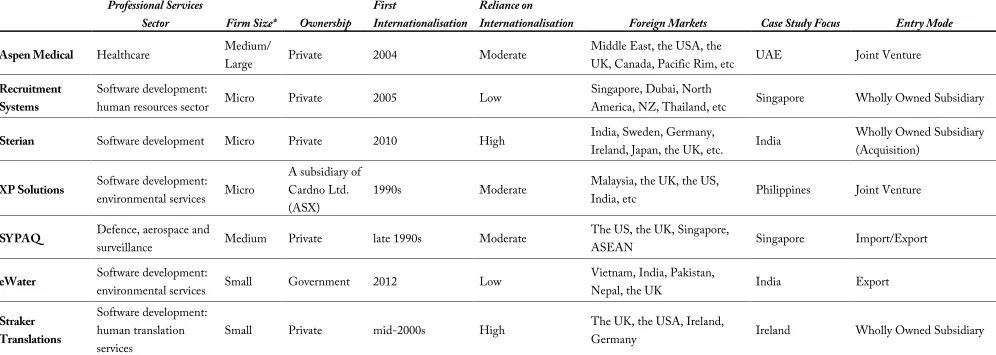
Table 4.1: Case study characteristics... 117
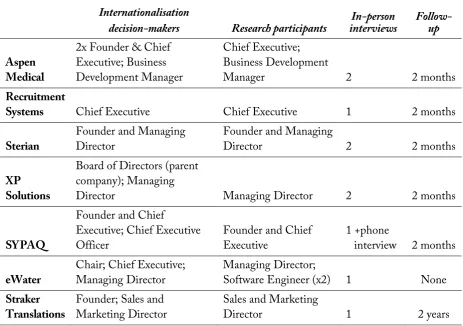
Table 4.2: Case study decision-makers and research participants ... 122
xi LIST OF APPENDIXES
Appendix A: Variations of Internationalisation Process ... 268
Appendix B: Professional services firms and internationalisation entry modes ... 270
Appendix C: Kolb’s diagram of similarity among conceptions of basic adaptive processes ... 273
Appendix D: Relevant literature on the internationalisation process of firms, knowledge formation and learning processes that have formed the research questions ... 274
Appendix E: Interview Protocol ... 275
Appendix F: Experiential learning cycle and new knowledge learnt ... 278
1
CHAPTER 1: INTRODUCTION
“We need to be armed with existing theories, but not blinded, nor bound, by them. We need to listen to the surprises we encounter in the field, rather than imposing existing theoretical categories on the fragments of data we are assembling. Then, when our existing theoretical assumptions break down, we need to read widely and beyond the immediacy of our own field, to provide theoretical ballast for an alternative explanation.”
(Welch, Nummela, & Liesch, 2016: 789)
1.1 Introduction
The purpose of this PhD thesis is to synthesise the practice and theory of international business, identify concepts that are most relevant to studying the internationalisation of firms, challenge the assumptions of variance-based literature in this field and present a process-centred enquiry. In effect, the epigraph to this thesis sums up the undertaking of this research. The objective of this thesis is in line with the plea of Vahlne and Johanson (2014: 159, 173) to ‘improve the relevance of empirical research in the international business area’, which is achieved by studying complex micro-level events and using evidence collected through longitudinal case studies to build a more realistic set of assumptions about how decision making in companies impacts on the processes by which companies internationalise their operations.
2 by Johanson and Vahlne (1977) remain valid today. In particular, the theoretical assumption that ‘learning by experience results in a gradually more differentiated view of foreign markets’ (Johanson & Vahlne, 2015: 1415).
1.2 Internationalisation defined as a process
This thesis adopts the definition of ‘internationalisation’ of Welch and Luostarinen (1988: 36) – ‘the process of increasing involvement in international operations’. This definition is supported by the notion that analysing the process is just as important as studying the stages of international development. Welch and Luostarinen (1988) therefore raised the importance of longitudinal studies, the impact of individuals on the evolution of the firm, de-internationalisation as well as inward and outward trade flows. Their definition helps to account for the complexity of the internationalisation decision-making. Building on it, this thesis argues that successful internationalisation is defined by the decision-makers’ ability to learn and accumulate relevant experiential knowledge (in line with Johanson & Vahlne, 1977; Johanson & Vahlne, 1990, 1992, 2003, 2006; Johanson & Wiedersheim-Paul, 1975). As such, the internationalisation process consists of two main sub-processes: experiential learning1 and commitment building2.
1.2.1 ‘Experiential knowledge’ and foreign market commitment interplay – the key mechanism of the internationalisation
Effectively, ‘experiential knowledge’ is the driving force of the firm’s internationalisation. The importance of the knowledge-commitment cycle is obvious and instinctive, and yet there is now a handful of studies that provide empirical evidence in relation to this dynamic change mechanism (see the discussion in Section 2.3.2 and in Welch and Paavilainen-Mäntymäki (2014) in particular). Nevertheless, the discussion of the international business strategy is still disproportionally focused on macro-level investigations deploying sophisticated statistical analysis. These are
1 Johanson and Vahlne (1977: 28) defined experiential knowledge as ‘critical kind of knowledge in the present context’, it presents ‘the framework for perceiving and formulating opportunities’ as it allows an individual to form a ‘feeling’ about how foreign market opportunities fit into the current and future context.
3 certainly valid, but do not allow for a careful assessment of the micro-foundations of learning and the relevant complex of micro-level events that impact of the internationalisation process. As Vahlne and Johanson put it: ‘we see far too many “rigorous” studies with little originality and, at best, a marginal contribution’ (Vahlne & Johanson, 2014: 173).
The importance of studying processes3 was reinstated with the special session ‘About Time: Putting Process Back into Firm Internationalisation Research’ at the 2013 Academy of International Business Conference and the follow-up focused issues of the
Management International Review in October 2013 and December 2016 (see Welch et al., 2016; Welch & Paavilainen-Mäntymäki, 2014). Similarly, the 2014 special section of the International Business Review also revived the importance of studying the role of knowledge and learning in company internationalisation (see Pla-Barber & Alegre, 2014). The studies in this new strand of international business literature emphasise the importance of history, behavioural rather than neoclassical assumptions, the need to account for time and hermeneutics (cf. Buckley, 2016; Fletcher & Harris, 2012; Hurmerinta, Paavilainen-Mäntymäki, & Hassett, 2016). The timing and purpose of this thesis is synchronous with these renewed calls to explore the process underpinnings of the 1977 Uppsala model.
1.2.2 The 1977 Uppsala model – processual vs stages-centred interpretations
There is a disconnect in understanding the 1977 model as a stage or the process model and it is important to draw this distinction to clarify the scope of this study. Welch et al. (2016: 788) explain that empirical observations are often mistaken as a theoretical model. The reception and operationalisation of the Uppsala theory as a stage model focuses primarily on the observation that firms develop in the domestic market and then take incremental steps to internationalise. This observation is based on a sample of over
3 Welch and Paavilainen-Mäntymäki (2014) explained that process theory should explain an
interdependent chain of events leading to internal change that is not captured by variance studies. Process-centred research most commonly unfolds in three main stages: 1. Identification of the key events
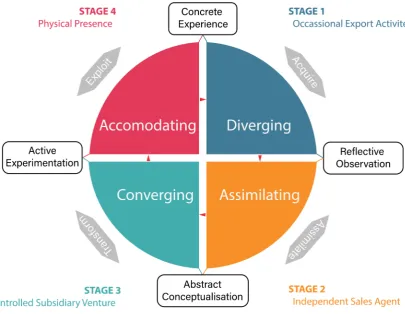
4 2,000 subsidiaries of Swedish multinationals (Vahlne & Wiedersheim-Paul, 1975). The four stages were identified as follows: Stage 1 – Occasional Exports; Stage 2 – Independent Sales Agent; Stage 3 – Controlled Subsidiary; Stage 4 – Physical Presence or Wholly Owned Subsidiary.
This empirical observation led to a number of studies that focus primarily on stages models and show that there is no identical internationalisation path across companies. However, there is no agreement on the interpretation and the number of internationalisation stages provided in these studies (Bilkey & Tesar, 1977; Cavusgil, 1980; Czinkota, 1982; Reid, 1981). The timeframe of the internationalisation also differs with evidence suggesting that new firms move through the stages faster and/or even skip these stages (Forsgren, 1989, 2002; Newbould, Buckley, & Thurwell, 1978). These discrepancies can be resolved by turning to the process nature of the internationalisation. As an example, firms can exploit experience in similar markets (Barkema & Drogendijk, 2007) and the growth of their internationalisation ‘is a result of its ability to use, combine and develop resources’ (Johanson & Vahlne, 2003: 8). But, considering the process nature of the internationalisation, Welch et al. (2016: 792) point out that ‘this resource base is particular to the firm and perceptions of its managers’. Inevitably, this takes us back to the key mechanism of the internationalisation process – the interplay between ‘experiential knowledge’ and firm-level foreign market commitment.
1.3 Practice-oriented research: gap-spotting and problematisation
5 company internationalisation. The search for a more practical explanation as to what is ‘experiential knowledge’ and how exactly it impacts on the decision-maker’s opportunity recognition, which then determines the firm-level commitment of resources, appeared to confirm the views expressed in Welch et al. (2016: 789) that this mechanism ‘has not been empirically tested or further developed conceptually’.
Spotting a gap in the existing theoretical literature that then sustains an empirical study is insufficient for process-focused research examining the internationalisation of firms (Liesch et al., 2013; Middleton, Liesch, & Steen, 2011). Even so, it is important to identify the extent of the academic literature in this field. There are less than 40 empirical studies that analysed the internationalisation of firms as a process and very few of these studies attempt process theorising to explain why and how certain patterns occur (Welch & Paavilainen-Mäntymäki, 2014: 11). Further, De Clercq, Sapienza, Yavuz, and Zhou (2012) elaborated that out of 37 studies on early internationalisation (born-globals, international new ventures) – 24 surveys are predominantly focused on data collected at one point in time and only about 10 use in-depth case studies based on interviews. Lastly, Rosenbaum and Madsen (2012) analysed empirical literature on professional services firms (PSF) over the past 20 years. They found 14 empirical articles that look at the entry mode choice for the PSFs. Out of these 14 studies, just 6 look at the role of networks and no studies examined experiential learning and its influence on market entry decision-making.
1.3.1 The crisis of language – ‘experience’ vs learning from experience?
6 unconscious processes (Chase & Simon, 1973; Chi, Feltovich, & Glaser, 1981; Kirschner, Sweller, & Clark, 2006). Then, slight variations in experiential knowledge (long-term schemas) will unconsciously guide to a different response under uncertainty (Ericsson, 2008; Ericsson & Charness, 1994; Ericsson & Kintsch, 1995). Learning is supported by the relationship between working and long-term memory, whereas experience relates primarily to the internal or external stimuli (Nadkarni, Herrmann, & Perez, 2011).
This thesis intends to show that learning from experience is different from experience. Therefore, it is very appropriate to move beyond the variance-based studies that rely on proxy variables and assume that learning processes occur. The exposure to information by itself does not imply learning. This view is supported by Burgoyne (1995: 61) who explains that knowledge (tacit and affective knowledge, articulated cognitive knowledge) is ‘learned through the active interpretation of experience by the learner’. Moreover, Kolb (1984: 41) explains that ‘… knowledge is created through the transformation of experience. Knowledge results from the combination of grasping and transforming experience.’ There are obvious synergies with the latest publication by Welch et al. (2016: 790) who argue that ‘information is not knowledge … it needs to be processed, learnt, absorbed and acted upon’.
The descriptive framework used in this thesis to examine experiential knowledge (i.e. Kolb’s Experiential Learning Theory, ELT) is based on the argument that learning is best conceived as a process and not a behavioural outcome. ELT defines experiential knowledge as a process of transforming experience into knowledge, which in turn modifies ideas and actions of individuals over a period of time (Kolb, 1984). Kolb (1984: 41) identified four basic learning styles that are associated with different approaches to learning, which are described in Section 2.5.1 as part of Chapter 2.
1.4 The evolution of research related to experiential knowledge and internationalisation
7 Gabrielsson, & Wictor, 2004; Barkema, Bell, & Pennings, 1996; Benito & Gripsrud, 1992; Chetty & Campbell-Hunt, 2003; Cui, Li, & Li, 2013; Erramilli, 1991; McNaughton, 2003). The issue is that these studies do not operationalise ‘experience’ in the same manner. And they seek to capture ‘experiential knowledge’ in a very mechanical way, relying primarily on proxy measures and without actively demonstrating what is being learnt. For example, the proxy measures include: overseas work or overseas educational attainment experience (Cui et al., 2013), percentage of international to total sales (Andersson et al., 2004), number of export markets (McNaughton, 2003), number of previous expansion experiences (Barkema et al., 1996; Benito & Gripsrud, 1992; Davidson, 1980), employees located overseas (Coviello & Munro, 1997), number of years engaged in internationalisation and geographic scope (Erramilli, 1991), increasing market commitment (Luo & Peng, 1999). Further, Barkema and Drogendijk (2007) rely on the degree of internationalisation as a proxy for the ‘experiential knowledge’, assuming a linear relationship between experience and market commitment. This paper has been quoted frequently as demonstrating that firms gain experiential knowledge/learning through the internationalisation process, even though it does not answer what exactly firms learn (Dau, 2013; Keen & Wu, 2011).
8 The third group of studies looks at ‘experiential knowledge’ as a process – prioritising the exploratory, deductive and abductive reasoning. These studies address de-internationalisation of firms, variations to market commitment over a period of time, as well as, post-entry development and adaptation (see Chandra, 2007, 2017; Johanson & Vahlne, 2006, 2009; Karlsen, Silseth, Benito, & Welch, 2003; Lamb & Liesch, 2002; Nummela, Loane, & Bell, 2006; Welch & Welch, 2009). Welch and Paavilainen-Mäntymäki (2014) demonstrated that the studies addressing these issues are a minority and called for a renewed research specifically in this area. It is critical to study not only macro-level entry modes (temporal states of the firm) but also consider micro-level processes that underpin the firm-level change (i.e. experiential learning of the key decision-makers).
The 1977 Uppsala model never actually demonstrated the relationship between experiential knowledge and foreign market commitment: ‘we also assumed [emphasis added, author] that learning by experience results in a gradually more differentiated view of foreign markets’ (Johanson & Vahlne, 2009: 1415). Provided that the experiential learning and foreign market commitment interplay is the key mechanism of the internationalisation process, it is important to challenge the assumptions about experiential knowledge and further develop our conceptual understanding of the process. This PhD thesis sets out to research questions based on the problematisation approach. Its underlying purpose is to test the driving mechanism of the 1977 Uppsala model in light of its legacy in understanding the process of company internationalisation.
1.5 Research aims
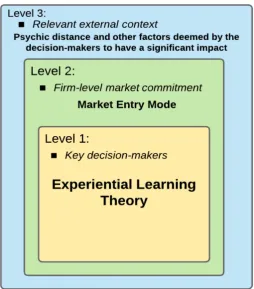
9 theories, for example the Uppsala incremental internationalisation model, innovation-related internationalisation models, systematic planning and contingency perspectives. Therefore, this thesis will analyse the micro-foundations of learning with reference to key decision-makers in firms as the unit of analysis and also Kolb’s Experiential Learning Theory.
The process theory of the interaction between experiential knowledge and market commitment is still evolving today (Fransson, Håkanson, & Liesch, 2011; Johanson & Vahlne, 2003, 2009; Vahlne & Johanson, 2013). The recent revisions of the Uppsala internationalisation model reaffirm that experiential learning and commitment building are the key sub-processes driving the internationalisation of firms. Professional services firms have been the subject of increasing interest. However, little is actually known about their accumulation of experiential knowledge and its relation to their internationalisation processes (Brown, Dev, & Zhou, 2003; Contractor, Kundu, & Hsu, 2003; Knight & Kim, 2009; Knight & Liesch, 2002; Nummela et al., 2006). Similarly, the literature on early internationalising firms (born globals, international new ventures) does not directly examine what such firms have learned and most studies tend to infer learning from other data (Bingham & Eisenhardt, 2011; Child & Hsieh, 2014; De Clercq et al., 2012; Svensson & Payan, 2009).
Di Gregorio et al. (2009: 972) highlight that the difference between services and manufacturing firms ‘is particularly important in the context of SMEs and their internationalisation efforts’. Services have the following four characteristics that are distinct to manufactured goods: ‘(1) intangibility (i.e., the fact that services cannot be touched, are difficult to measure, and exhibit uncertain quality ex ante); (2) perishability (i.e., the fact that companies typically cannot store surplus services); (3) inseparability of production and consumption of service output; and (4) heterogeneity in outputs, resulting from a high degree of service customization and specialization (Aharoni, 1993; Erramilli & Rao, 1990).’ (Di Gregorio et al., 2009: 972). Section 2.4.2 will provide a detailed discussion of the key characteristics of professional services firms: knowledge intensity, knowledge tacitness, and professionalisation of the workforce.
10 1.6 Method
1.6.1 The rationale for a process approach
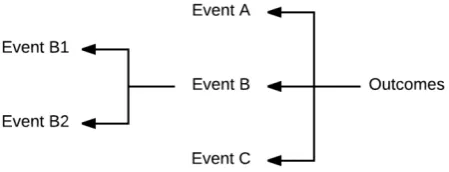
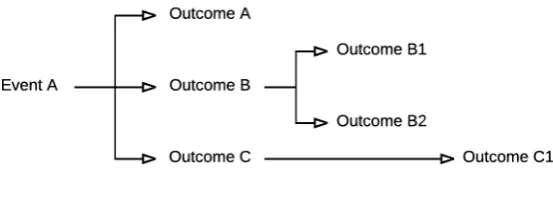
The key limitation of the variance-based studies is their inability to explain the firm’s movement from one internationalisation stage to another. Variance-based studies tend to characterise firms into different stages without explaining the underlying reasons for internationalisation-related change in the sample of firms, or the salient differences between firms in the sample that are entirely similar in all respects except the degrees to which they have internationalised their operations. The use of proxy measures does not help to synthesise the already fragmented field of IB with a ‘constellations of labels used to describe essentially the same phenomena … and … constellations of researchers that use their own unique labels in this field’ (Svensson & Payan, 2009: 406). This PhD thesis argues that when studying the internationalisation process it is particularly important to adapt an event-driven, rather than outcome driven theoretical explanation (see Aldrich, 2001). At the 2013 Academy of International Business conference Vahlne (2013) openly criticised the dominance of variance approach in international business research and stated that the ‘research topic should not be simplified too much to allow for prevalent statistics methods’.
There is an increasing body of literature that calls for the use of the process approach in internationalisation research (Aldrich & Martinez, 2007; Coviello & Jones, 2004; Jones & Khanna, 2006; Jones & Coviello, 2005; Liesch et al., 2013; McAuley, 2010; Middleton et al., 2011; Welch & Paavilainen-Mäntymäki, 2014; Zahra, 2005). Welch and Paavilainen-Mäntymäki (2014: 2) found that most studies ‘have not taken a processual approach that incorporates time, dynamism and longitudinal observations’. And this has been the case for quite some time, as it was already noted by Kutschker, Bäurle, and Schmid (1997) who argued that the field of international management is dominated by static studies.
11 demonstrate intra-mode micro-level change as well the firm-level change during the course of the internationalisation process (Butler, 1995; Jones & Coviello, 2005; Liesch, 2013; Middleton et al., 2011).
1.6.2 In-depth case studies and case history timelines
This thesis utilises multiple case study analysis in an attempt to understand the contextual factors that impact on the process of firm internationalisation and the experiential learning of key decision-makers in particular. Welch and Paavilainen-Mäntymäki (2014: 16) reaffirm that case studies are well-suited to obtain ‘retrospective and real-time insights’ in this area of research. Further, to place time at the centre of enquiry, this thesis presents seven timelines depicting the chronology of events that led to a specific learning and internationalisation outcomes for each case.
This thesis reviews the internationalisation process of the following seven Australian services firms: SYPAQ, Aspen Medical, Sterian, Recruitment Systems, Straker Translations, eWater, XP Solutions. Each case timeline will demonstrate a causality between specific micro-processes and the impact on the decision-makers perception of the foreign market opportunity. Interviews were conducted with key decision-makers within each firm. A follow-up phone interview was conducted within 3-6 months for six out of seven case studies and one case was followed in detail 2.5 years after the initial study. Aspects of longitudinal research were captured in this thesis through the study of archival data, which helped to capture information depicting processual change over time. The sampling process targeted firms that are still undergoing the internationalisation process and/or were targeting new untapped markets, which also minimised problems associated with the respondents’ memory recall.
1.6.3 Sequence analysis of interview narratives
12 unit of analysis; 2. calculating the distance matrix between the sequences; 3. cluster analysis of the distance matrix (Biemann & Datta, 2014). Section 3.4.4 provides a detailed review of this method with relevant sequence/code and narrative examples.
13 1.7 Contribution of the thesis
1.7.1 Guidelines for practitioners
The key contribution of the thesis is a detailed time-sensitive assessment of the internationalisation pathways of seven Australian services SMEs. This serves as the evidence base for a holistic understanding of the experiential learning - foreign market commitment mechanism, as will be discussed in Chapter 5. The findings will show that an extensive overreliance on one learning mode can lead to overconfidence and that it is important for key decision-makers to touch all different bases of learning to minimise the level of risk that a firms exposes itself to when internationalising its operations. At the same time, the thesis will demonstrate that the accommodating learning style is certainly most dominant amongst the key decision-makers that are driving the internationalisation strategy of the firm.
The analysis of the internationalisation-related decision making is grounded in bounded rationality. And the decision-makers’ references to intuition, ‘gut feel’ and emotions are closely associated with the notion of accommodating learning. It is critical to understand how this intuition is formed and what the learning processes are that predate the current perception of the foreign market opportunity. This will be achieved by deconstructing a timeline of critical events, relevant learning and internationalisation-related outcomes (see Figures 5.1 – 5.7). The timelines depict the common strategies utilised by the decision-makers, the key sources of knowledge as well as the relevant situational context that impacts on the internationalisation process at that time.
14 decision-makers invest a far greater effort in building formal and informal business networks as well as trust between the colluding parties. Therefore, export/investment facilitation agencies should focus program delivery efforts on activities leading to the recognition, discovery and operationalisation of relevant foreign market opportunities.
1.7.2 Theoretical and methodological contributions
This thesis will contribute to the process theory of the internationalisation by examining the concept of experiential knowledge in its ‘naturalistic context’ and assessing the efficacy of theory on the basis of the practice of international business (in line with Piekkari, Welch, & Paavilainen, 2009: 569). Reviewing the micro-foundations of learning, with reference to the Kolb’s Experiential Learning Theory, will help to refine existing theory and understand what is learnt by the key decision-makers as part of the internationalisation process. This thesis will review historical patterns depicting the formulation of experiential knowledge at the key decision-makers’ level. This thesis will reconfirm that change processes (experiential learning, building business networks and trust) are incremental, while market commitment decisions (market entry mode, degree of internationalisation) are intermittent. In effect, the ambition of this research is to demonstrate that the true process nature of the 1977 Uppsala model is still relevant in the context of the internationalisation of Australian services firms today. This research will then help to encourage future studies to synthesise the understanding of the key driving mechanism of the 1977 Uppsala model (i.e. the interplay between experiential knowledge and foreign market commitment) in light of its process-centred underpinnings.
15 Future research should distinguish between ‘experience’ and ‘learning from experience’. Access to information or experience do not necessarily lead to knowledge. Studies need to demonstrate what exactly key decision-makers or firms learn as part of this process.
1.8 Thesis structure
16
CHAPTER 2: LITERATURE REVIEW
2.1 Introduction
This research explores the concept of experiential learning of Australian professional services firms and its role in the process of the internationalisation of these firms. The international business literature provides several internationalisation process models. However, none provides a sufficient explanation of what exactly firms learn throughout the internationalisation process and how that shapes their strategic decisions. The aim of this chapter is to provide a focused review of relevant theoretical and empirical work in international business literature to draw attention to the gaps that are addressed by this research. The conceptual framework that is presented based on this literature review will provide a better understanding of the experiential knowledge concept, which is the key mechanism underpinning the internationalisation process of firms.
This chapter begins with an overview of the roots of the internationalisation process literature. The Uppsala model is the dominant framework, which was developed 40 years ago for manufacturing companies. The Uppsala model evolved from the behavioural theory of the firm. However, it does not explicitly consider key decision-makers as a primary source of experiential knowledge. Innovation-related internationalisation models, systematic planning and contingency perspectives on firm internationalisation evolved after the Uppsala model, mainly to address inconsistencies in the internationalisation path of firms. These frameworks are discussed to illustrate that experiential learning remains the pivotal assumption in the internationalisation process of firms. The contingency perspective draws greater attention to key decision-makers and managers by looking at small and medium sized enterprises (SMEs), which is in line with the focus of this research.
17 medium-sized enterprises, international new ventures and professional services firms is discussed in Section 2.4.
The evolution of internationalisation literature is covered to illustrate the interaction between various approaches that explain the internationalisation process of firms. There are multiple intersections between internationalisation theories, all of which are important to understanding the key success factors to the internationalisation of SMEs and professional services firms (PSFs).
This research aims to understand what is experiential learning and its exact role in the internationalisation process of firms. Section 2.5 will draw on the discussed internationalisation literature in order to define the experiential learning concept. To improve our understanding of the experiential learning this chapter presents the Experiential Learning Theory (ELT) from learning and education discipline. This study not only applies the ELT, but also looks at how learning is captured by other theories. The overview of several learning theories supports that the experiential knowledge resides at an individual level, which is complementary to the operationalisation of this study.
This chapter concludes with a section on research conceptualisation, where internationalisation theories are connected with the ELT to provide a better grasp of experiential learning construct. This will also assist in studying internationalisation as a learning process. Propositions and research questions will be presented as a reflection on the research gaps outlined throughout the chapter. The literature review clearly illustrates the need for a better understanding of the experiential learning and its role in the internationalisation process of PSFs.
2.2 Internationalisation Process Models
2.2.1 Uppsala Internationalisation Model
18 markets4 while gradually moving to more distant markets in other countries, consequently increasing investment and risk (Johanson & Vahlne, 1977). This behaviour can be explained as a process of balancing uncertainty and experiential learning. Accumulation of experiential knowledge has an uncertainty-reducing effect which in turn facilitates the commitment of a firm to a foreign market and thus the internationalisation process of the firm (Johanson & Vahlne, 2009). The Uppsala model underwent several revisions. However, the main principles remain the same (Johanson & Vahlne, 1977, 1990, 2006, 2009; Johanson & Wiedersheim-Paul, 1975; Vahlne & Johanson, 2013). The internationalisation process is perceived to consist of two main sub processes: experiential learning and commitment building. As suggested by Vahlne and Johanson (2013), these two sub-processes form a firm-level capability to identify opportunities and mobilise relevant resources – this process is called internationalisation of the firm. Internationalisation is highly diverse and context-specific, what the decision-makers perceive as psychically close markets depends ‘on the experiences made by critical people in the firm’ (i.e. experiential knowledge) (Johanson & Vahlne, 2009; Vahlne & Johanson, 2013: 195).
The original Uppsala internationalisation process model was first introduced by Johanson and Vahlne (1977) to identify elements that are commonly shared by firms engaging in international operations. The model built on work by Johanson and Wiedersheim-Paul (1975), who for the first time studied company internationalisation in a European context, while prior research had concentrated on the analysis of American firms. Johanson and Wiedersheim-Paul (1975) offered inductive studies of four Swedish multinational firms. Then, Johanson & Vahlne (1977) explained ‘how’ internationalisation unfolds by reviewing 2,000 subsidiaries of Swedish multinationals. They identified four internationalisation stages (foreign market entry modes): (1) occasional export activities; (2) regular export through independent sales agents; (3) export sales through a controlled foreign subsidiary venture; (4) creation of production or manufacturing capacity in a foreign country. These internationalisation stages are examples of foreign market commitment of a firm. The study did not seek to explain why firms internationalise and/or what key decision-makers learn as part of the internationalisation process.
19 Unlike the behavioural theory of the firm, the Uppsala model does not explicitly incorporate the managerial or decision-making perspective in any of the four stages. The three phases of the investigation process as described by Aharoni (1966) – Phase I: General Indicators, Phase II: On-the-Spot Investigation, Phase III: Presentation – were not included in the interpretations of internationalization theory by Johanson and Wiedersheim-Paul (1975) and Johanson and Vahlne (1977). The Uppsala model is focused on internationalisation outcomes and pays little attention to decision making as a process (Liesch, 2013; McAuley, 2010; Welch & Paavilainen-Mäntymäki, 2013). Consequently, the managerial perspective on internationalisation, including aspects of individual-level decision-making are ignored in the international business literature (Aharoni, 2010). The evolution of IB research diverged from Yair Aharoni’s continuing calls to focus on decision-makers’ unique abilities and limitations such as overconfidence and bias.
The theoretical argument of Johanson and Vahlne (1977) is that foreign market commitment is determined by the firm’s knowledge of a foreign market opportunity at a given point in time. This is based on the assumption that internationalisation is a result of incremental decisions within a firm, where the aims are to maximise long-term profit and minimise the perceived risks. Johanson and Vahlne (1977: 27) said: ‘the model assumes that the state of internationalization affects perceived opportunities and risks which in turn influence commitment decisions and current activities’. Their ‘state of internationalisation’ concept incorporates two aspects: 1. The current foreign resources/market commitment; 2. Knowledge of foreign markets and operations. The Uppsala theory assumed that the knowledge of foreign market opportunities is developed as a result of accumulated market commitment, which then will initiate decisions/actions.
20 At the same time, Pauwels and Matthyssens (1999: 13) argued that the international business literature evolved towards a three-dimensional of conceptualisation market commitment. The first dimension is the amount of economic resources allocated to a specific market and resource-specificity (structural exit barriers). The second dimension is attitudinal (material and immaterial) support by the top managers for a particular market (Gundlach, Achrol, & Mentzer, 1995). The third dimension is a snowballing process of market commitment, where it can become a self-justifying process without any link to the external business environment or internal organisational priorities (Gundlach et al., 1995; Pauwels & Matthyssens, 1999; Ross & Staw, 1993).
The Uppsala model referred to several kinds of knowledge; the most general definition of knowledge provided by the researchers is in line with Carlson (1974): knowledge relates to ‘present and future demand and supply, to competition and to channels for distribution, to payment conditions and the transferability of money, and those things vary from country to country and from time to time’. Johanson and Vahlne (1977) stressed the importance of identifying the source of knowledge and how it is acquired. They distinguish between ‘objective knowledge’ and ‘experiential knowledge’. Objective knowledge can be taught, whereas experiential knowledge can only be learnt through experience.
The Uppsala theorists rely on Penrose’s (1966) definition of experiential knowledge as follows: ‘much of the experience of businessmen is frequently so closely associated with a particular set of circumstances that a large part of a man’s most valuable services may be available only under these circumstances’ (Penrose, 1966: 53 in Johanson & Vahlne, 1977). Further, the scholars believe that experience itself cannot be transmitted, it produces a subtle change in individuals and cannot be separated from them. They argue that the experiential knowledge will make people feel or perceive a market opportunity in a specific manner. Johanson and Vahlne (1977: 28) believe that experiential knowledge is most critical in the marketing of ‘complex and soft-ware-intensive products’ – thus, this might also be applicable in economic sectors beyond manufacturing industry.
21 general knowledge can be transferred between markets, market-specific knowledge is specific to its geographical location and can be gained mainly through experience. The explanations of market-specific knowledge and experiential knowledge provided by Johanson and Vahlne (1977) are somewhat synonymous. The theorists also argue that there is a ‘direct relation’ between experiential/market-specific knowledge and market commitment (Johanson & Vahlne, 1977: 28).
Since the Uppsala model did not provide a dedicated instrument to assess knowledge, the current state of internationalisation (market commitment) of a firm has been used as a proxy for knowledge in follow-up studies (for a detailed review of these studies see Section 2.5). Additionally, Johanson and Vahlne (1977) argue that the state of internationalisation (market commitment and knowledge) hypothetically affects the firm’s perceived opportunities and risks. In other words, a greater market commitment might reflect a perception that the opportunity is high and the risk is low.
A large number of international business studies (e.g. Andersson et al., 2004; Barkema et al., 1996; Benito & Gripsrud, 1992; Chetty & Campbell-Hunt, 2003; Erramilli, 1991; McNaughton, 2003) proposed that experiential knowledge is positively related to a firm’s market discovery/commitment, relying on the underlying assumptions of a linear relationship between knowledge and market commitment by Johanson and Vahlne (1977). Nonetheless, Hohenthal, Johanson, and Johanson (2003: 670) claimed that market discovery is still ‘a strangely neglected area in the international expansion literature’ because the majority of studies looked simply at the antecedents and consequences of market discoveries during internationalisation. By contrast, Hohenthal et al. (2003) argued that internationalisation is far from systematic and that the linear development is often interrupted by unexpected discoveries. For these reasons Hohenthal et al. (2003) proposed that a deeper understanding of learning can explain the changes in the pace and orientation (market destination) of firms’ internationalisation.
22 extensive experience. The ‘international establishment chain’ refers to the sequence of four different internationalisation stages (no regular export activities, export via agent, sales subsidiary, production/manufacturing).
The Uppsala model is only a simplified pattern, where differences between the four stages are exaggerated while in practice it is not always obvious when a firm moves from one stage to another (Johanson & Wiedersheim-Paul, 1975: 307). Not surprisingly, at the time when the Uppsala model was introduced, the evidence showed that firms do not necessarily follow an identical internationalisation path (Bilkey & Tesar, 1977; Cavusgil, 1980; Czinkota, 1982; Reid, 1981).
The Uppsala theorists argued that throughout the internationalisation process some firms establish subsidiaries in more distant markets at an early stage, while others prefer to establish activities in host countries with a low psychic distance to the home country (Davidson, 1980; Erramilli, 1991). Psychic distance is defined broadly as factors that prevent the flow of information between firm and the market, such as differences in language, culture, political system, level of education, etc. (Johanson & Wiedersheim-Paul, 1975: 24). If higher psychic distance negatively affects the flow of information, it will also negatively affect learning.
Even then, the psychic distance argument is operationalised differently in the original Uppsala paper and consequent internationalisation studies. Some studies and assess psychic distance by looking at the decision-maker’s prior knowledge, while others measure the construct using national level data (Van Ruth, 2008). Johanson and Vahlne (2003) indicated that experiential knowledge will reduce the perceived psychic distance between markets.
23 Abbott (1990) argued that analysing sequences of social events or organisational behaviour is a major methodological problem in general. This research views internationalisation as a process – a sequence of social events (e.g. learning through business networks) which results in a specific organisational behaviour. Internationalisation is a good example where researchers cannot agree on the most dominant force behind foreign market commitment, although Johanson and Vahlne (1990) claim that experience is indeed the main driving force. This is due to a difficulty in conceptualisation and measurement of data that are used to capture a sequence of events or actions (‘sequence data’) (Abbott, 1990). The major challenge in studying company internationalisation is to identify patterns and features (subsequences of events) that are common to longer sequences of internationalisation (change in market entry mode, the amount of resources invested, etc.). An example of such subsequences might be specific actions taken by key decision-makers to facilitate learning, where researchers can identify what has been learned and why this information is important (see Section 2.3.2 for an example of a sequence study). If there is no common sequence of learning, there must be certain subsections or interdependencies in learning patterns that occur prior to the market commitment stage.
This subsection discussed the development of the Uppsala internationalisation model and the main assumptions on the role of knowledge in internationalisation that are underpinned by the difficulties in capturing the experiential knowledge construct. While the empirical evidence is largely based on the study of firms in the manufacturing sector, the general applicability of experiential knowledge is also valid for firms engaged in the marketing of complex and less tangible products. The next subsections will discuss the common aspects of internationalisation models that were introduced after the Uppsala model.
2.2.2 Innovation-related internationalisation models
24 internationalisation process of firms as follows5: 1) Experiential learning: the Uppsala model (Johanson & Vahlne, 1977; Johanson & Wiedersheim-Paul, 1975) and innovation–related internationalisation models (Bilkey & Tesar, 1977; Cavusgil, 1980, 1984; Cavusgil & Sikora, 1987); 2) Systematic planning (Johansson & Yip, 1994; Miller, 1993; Yip, Biscarri, & Monti, 2000); 3) Contingency perspective (Coviello & Munro, 1997; Jones, 1999; Welch & Welch, 1996).
Throughout the literature review, Li et al. (2004) illustrate that the above-mentioned approaches, despite their important contributions, do not provide a convergent understanding of the internationalisation process of firms. To explain this further, and to see whether learning and/or managerial processes are captured as part of the internationalisation of firms, the following sections will address alternative frameworks developed subsequent to the Uppsala model.
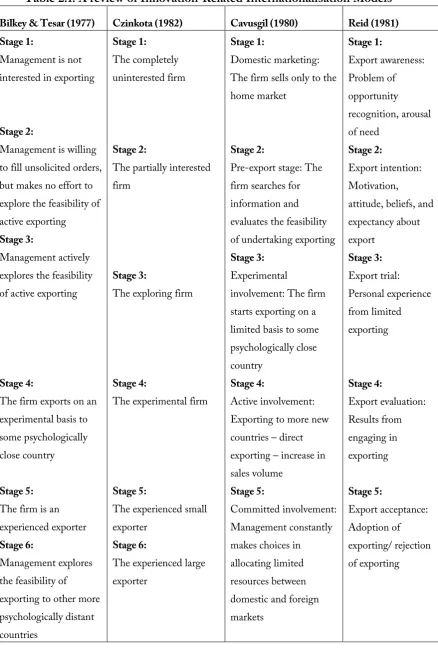
Bilkey and Tesar (1977), Cavusgil (1980), Reid (1984), Czinkota (1982) offer several ‘innovation-related internationalisation models’. The innovation-related models address a firm’s internationalisation process as an innovation/adaptation. The internationalisation process unfolds when a firm tries to solve strategic, structural and human resource dilemmas (Lam & White, 1999). These models differ to the Uppsala model in the interpretation and the number of internationalisation stages they present.
Innovation-related models focus mainly on exporting activities and concentrate on explaining the motivations behind the decision to conduct business across borders. These models also describe the internationalisation process of a firm by relying on various stages, which is illustrated by the Table 2.1 below.
25 Table 2.1: A review of Innovation-Related Internationalisation Models
Bilkey & Tesar (1977) Czinkota (1982) Cavusgil (1980) Reid (1981)
Stage 1:
Management is not interested in exporting
Stage 2:
Management is willing to fill unsolicited orders, but makes no effort to explore the feasibility of active exporting
Stage 3:
Management actively explores the feasibility of active exporting
Stage 4:
The firm exports on an experimental basis to some psychologically close country
Stage 5:
The firm is an experienced exporter
Stage 6:
Management explores the feasibility of exporting to other more psychologically distant countries Stage 1: The completely uninterested firm Stage 2:
The partially interested firm
Stage 3:
The exploring firm
Stage 4:
The experimental firm
Stage 5:
The experienced small exporter
Stage 6:
The experienced large exporter
Stage 1:
Domestic marketing: The firm sells only to the home market
Stage 2:
Pre-export stage: The firm searches for information and evaluates the feasibility of undertaking exporting
Stage 3:
Experimental
involvement: The firm starts exporting on a limited basis to some psychologically close country
Stage 4:
Active involvement: Exporting to more new countries – direct exporting – increase in sales volume
Stage 5:
Committed involvement: Management constantly makes choices in allocating limited resources between domestic and foreign markets Stage 1: Export awareness: Problem of opportunity recognition, arousal of need Stage 2: Export intention: Motivation,
attitude, beliefs, and expectancy about export Stage 3: Export trial: Personal experience from limited exporting Stage 4: Export evaluation: Results from engaging in exporting Stage 5: Export acceptance: Adoption of exporting/ rejection of exporting
Source: Adapted from Andersen (1993).
26 have minimal interest in active exporting at Stage 2. However, the other 4 internationalisation stages in the first two models have greater differences and yet remain incremental in nature. On the other hand, Cavusgil (1980) and Reid (1981) claimed that internationalising firms go through 5 stages. They discussed a sample of companies that have taken an active role in searching for feasible export opportunities with a consecutive expansion into a greater offshore market.
Innovation-related models pay a greater attention to pre-internationalisation (i.e. Stage 1-2 in Table 2.1), when compared to the Uppsala model. Andersen (1993) hypothesised that a jump from Stage 1 to Stage 2 in the models by Bilkey and Tesar (1977) and Czinkota (1982) is due to a ‘push’ mechanism (external change/agent). However, the progression from Stage 1 to Stage 2 in Cavusgil (1980) and Reid (1981) is due to a ‘pull’ mechanism (internal change/agent) that provides the initial incentive to internationalise (Andersen 1993). These models differentiate the source of the initial internationalisation decision and the incentives to start exporting. A more contemporary paper by Lam and White (1999) emphasised the role of managerial choices in studying organisational internationalisation path instead of a strong firm-level focus. Overall, it is clear that these studies attempted to account for a broader range of contextual factors that influence firm’s internationalisation process than the original Uppsala model.
The innovation-related internationalisation models illustrate that there is a large number of variables that play an important role in theorising firm internationalisation, which makes it problematic to develop a complete process internationalisation model. Andersen (1993) concluded that neither Uppsala, nor innovation-related models explain how internationalisation begins and how experiential knowledge of foreign markets affects the commitment of resources by firms to foreign markets.
27 in the same way and will not react in the same manner. This scholar draws attention to the importance of particular managerial and environmental forces that prevail in each firm.
Oviatt and McDougall (1997) suggested that a traditional view of incremental and risk-averse internationalisation (i.e. Johanson & Vahlne, 1977) is challenged by the changing market conditions: ‘Perhaps, the inevitability of international operations is so obvious and the experiential knowledge of foreign markets is sufficiently present among entrepreneurs that the incremental steps emphasised in traditional internationalisation theory are unnecessary’ (Oviatt & McDougall, 1997: 93). As a solution, the authors suggest a closer look at International New Ventures. Oviatt and McDougall (1994: 49) defined ‘International New Ventures’ (INV) or ‘born-globals’ ‘as a business organization that, from inception, seeks to derive significant competitive advantage from the use of resources and the sale of outputs in multiple countries’. The discussion in the born-global/INV literature indeed pays a greater attention to pre-export behaviour (Chandra, 2007), which is in line with the focus of innovation-related internationalisation models (see Section 2.4 for further discussion on early internationalising firms).
The relevance of knowledge in the internationalisation process of the firm is most prominent at the roots of the INV literature. If foreign market experience of an entrepreneur is generally greater than in earlier periods of the firm history, and if experience indeed explains accelerated moves into foreign markets, then the Uppsala model is reinforced (Oviatt & McDougall, 1997: 96). Further, Madsen and Servais (1997) argued that the underlying assumptions of the internationalisation process of born-global firms are similar to the Uppsala Model.
28
2.2.3 Systematic planning models, contingency perspective and other approaches to the firm’s internationalisation process
Systematic planning models present an extremely rational approach and do not consider key decision-makers who assess internationalisation information on the basis of their current knowledge. As suggested by Root (1987), Miller (1993) and Yip et al. (2000) the internationalisation process is a rational outcome of the company’s relevant motivation, market research and strategic planning. The systematic planning models rely on the rationality, viability and availability of market information. The value of lengthy systematic planning is challenged by Li et al. (2004) on the basis of the experience of many firms with rapid early internationalisation in the context of a turbulent business environment. As such, there is no strong empirical evidence to support systematic planning internationalisation scenarios. The behavioural perspective of firm decision-making shows that relevant decisions are made simultaneously. Further, the internationalisation process is significantly driven by the key decision-makers within the firm who assess decisions, set objectives and entry modes rather than organisational routines.
The contingency perspective takes a closer look at the role of contextual factors (operating environment, internal firm factors, etc.). It pays a greater attention to the key decision-makers within the firm and managerial behaviour. The internationalisation of the firm is presented as a chaotic process dependent on internal and external contextual factors. Most of the contingency perspective studies look at small and medium-sized enterprises (e.g. Jones, 1999; Li et al., 2004; Welch & Luostarinen, 1993) in a broad range of industries. Coviello and Munro (1997), as an example, argue that internationalisation of software companies is affected by informal business networks that facilitate an accelerated internationalisation process (the role of networks and its relation to the Uppsala model is discussed below in Section 2.3).
29 classification error since these ventures ‘are not really new, except in a legal entity sense, because prior knowledge is retained and adapted; prior relationships, contacts, and energies may be brought forward; and resources of prior ties can be accessed and utilized’ (Chandra, 2007: 148). This evidence supports an argument that internationalising firms still follow an evolutionary internationalisation path, which is evident if researchers account for prior historical context (e.g. Jones & Khanna, 2006; Madsen & Servais, 1997). Evidence on the learning process of early internationalising firms will be discussed in Section 2.4.
These different models of the internationalisation process (Uppsala incremental internationalisation model, innovation-related internationalisation models, systematic planning and contingency perspectives) are interrelated and try to address the issues that were not resolved in earlier studies. Melin (1992) argued for a holistic approach to studying the internationalisation process, regardless of the boundaries between disciplines, to account for a high degree of complexity, uncertainty and change over time. The author stressed the need to study strategic decision-making process of the firm by focusing on institutional, social and the sectoral context. The process of ‘symbolic interaction and sensemaking’ (as described by Melin (1992: 105)) is an integral part of the internationalisation of firms and requires a different set of methodologies that can capture what happens within the firms and inevitably involves relationships, people and key decision-makers.
30 say that these arguments do not overlap across various internationalisation periods, which is conceptualised in what Li et al. (2004) called the ‘Hybrid Model of Internationalisation Process’.
Since there is no convergent understanding of firm internationalisation, the Hybrid Model aims to reconcile experiential learning and systematic planning perspectives on SMEs internationalisation. The model presents three internationalisation process phases: antecedents, planning, and execution. The antecedents phase include motivation (market seeking, customer following, technology acquiring) and corporate competence (technology, innovation capabilities, international experience and entrepreneurship). The planning phase consists of generating general knowledge through market research, selection of entry mode and market location. The execution phase determines the level of involvement of firms in foreign market and the risks they perceive, which are determined by the entry mode and psychic closeness of the market. The Hybrid Model incorporates feedback loops between the three internationalisation phases (execution, motivation, planning) and internationalisation can stop at any of the three phases. The experiential learning and systematic planning models are complementary in explaining the internationalisation process of firms (Li et al., 2004). The approach taken by Li et al. (2004) shows that internationalisation process of firms should not be studied in isolation, regardless of the main model that is used.
The next section will outline the development of the internationalisation literature which is most relevant to explaining the role of experiential knowledge.
2.3 Contemporary studies on the role of experiential knowledge in the internationalisation process