''A PRE-EXPERIMENTAL STUDY TO ASSESS
THE EFFECTIVENESS OF VIDEO ASSISTED
TEACHING PROGRAMME ON KNOWLEDGE
AND PRACTICE REGARDING SAFE HANDLING
OF CHEMOTHERAPEUTIC DRUGS AMONG THE
STAFF NURSES AT SELECTED HOSPITALS,
THANJAVUR.''
By
Reg.No : 301212452
A DISSERTATION SUBMITTED TO THE TAMILNADU
DR.M.G.R.MEDICAL UNIVERSITY,CHENNAI,IN
PARTIAL FULFILLMENT OF THE REQUIREMENT
FOR THE AWARD OF THE DEGREE OF MASTER OF
SCIENCE IN NURSING
''A PRE-EXPERIMENTAL STUDY TO ASSESS THE
EFFECTIVENESS OF VIDEO ASSISTED TEACHING
PROGRAMME ON KNOWLEDGE AND PRACTICE
REGARDING
SAFE
HANDLING
OF
CHEMOTHERAPEUTIC DRUGS AMONG THE STAFF
NURSES
AT
SELECTED
HOSPITALS,
THANJAVUR''.
BY
Reg.No : 301212452
Research Advisor :
Prof. Mrs. Vanitha Innocent Rani ., M.Sc(N),Ph.D, The principal,
Our Lady of Health College of Nursing. Clinical Specialty Advisor :
Mrs. Iraimani ., M.Sc (N),
HOD of Medical Surgical Nursing Department, Our Lady Of Health College of Nursing.
SUBMITTED IN PARTIAL FULFILLMENT OF THE REQUIREMENT FOR THE AWARD OF THE DEGREE OF MASTER OF SCIENCE IN NURSING FROM THE TAMILNADU
Dr. M.G. R. MEDICAL UNIVERSITY,CHENNAI.
DECLARATION
I hereby declare that the present dissertation titled ''A Pre-experimental study to assess the effectiveness of video assisted teaching programme on knowledge and practice regarding safe handling of chemotherapeutic drugs among the staff nurses at selected hospitals, Thanjavur'', outcome of the original research work undertaken and carried out by me, under the guidance of Research guide Prof. Mrs. Vanitha Innocent Rani .,M.Sc(N),Ph.D, Principal, Our lady of Health College of Nursing and Clinical specialty guide Mrs. Iraimani .,M.Sc(N), Medical Surgical Nursing Department, Our Lady Of Health College of Nursing.
I hereby declare that the material of this has not found in any way, the basis for the award of any degree/diploma in this University or any other University.
301212452
CERTIFICATE
CERTIFIED THAT THIS IS THE BONAFIDE WORK OF 301212452
AT OUR LADY OF HEALTH COLLEGE OF NURSING SUBMITTED IN PARTIAL FULFILLMENT OF THE REQUIREMENT FOR THE AWARD OF THE DEGREE OF MASTER OF SCIENCE IN NURSING FROM THE TAMILNADU
Dr. M.G. R. MEDICAL UNIVERSITY,CHENNAI.
Examiners : 1.
2.
Prof. Mrs. Vanitha Innocent Rani ., M.Sc(N),Ph.D, The principal,
ACKNOWLEDGEMENT
I praise and thank God almighty for his grace and abundant blessings he has showered upon me to bring this dissertation with an immiscible presence and guidance who has helped me to complete the project successfully.
I extent my sincere gratitude to our bishop Rev. Fr. Dr. Devadoss Ambrose D.D.L.S.S. S.T.D for his valuable prayer and support throughout our studies.
I would like to thank our Correspondent Rev. Fr. A. M. A Prabhakar who extended his helping hand during my study to complete successfully.
I express my cordial thanks to Prof. Mrs. Vanitha Innocent Rani, M.Sc[N],Ph.D, Principal of Our Lady of Health College of Nursing who had supported and given encouragement and suggestions during my study.
I extend my special gratitude to all the Valuators for their expert opinion and guidance to improve the project work.
I am very gratitude to the Administrators of Rohini Hospital and Thanjavur Cancer Centre, for provided all the facilities to carry out my project successfully.
I extend my sincere thanks to our statistician Dr. Dharmalingam Ph.D., for his excellent support and guidance in analyzing and interpretation of the data in my study.
I extend my heartfelt thanks to Mrs. Jeyanthi M.Sc (N)., Lecturer, Medical Surgical department, for her constant support, ideas and valuable suggestions throughout my study.
I am also deeply grateful to Mrs. Sharon Sophia M.Sc(N).,Vice Principal, for being supportive and helpful during my project.
I would like to extend my thanks to our Coordinator Mrs. Ambika M.Sc(N) for her support and guidance .
My deepest gratitude to Mrs. Gowri M.Sc (N), Mrs. Leema Roselin M.Sc(N), Ms. Saranya M.Sc (N), Ms. Sweety M.Sc(N) and Mrs. Synthiya M.Sc(N) for being their supportive and valuable help in time during my project.
I extend my thanks to Librarian Mrs. Jenifer., BBA,M.L.IS, PGDCA, for her co-operation in procuring books whenever needed.
I also accord my respect and gratitude to the Faculties of our lady of health school and college of nursing for their timely support throughout the period of my project.
I immense a special thanks to all the study participants for their continuous co-operation and patience during my study.
I would like to thank all my family members for their love, moral support and encouragement throughout the study to complete successfully.
LIST OF CONTENTS
S.NO CONTENTS PAGE
NO
I INTRODUCTION
Back ground of the study Need for the study
Statement of the problem Objectives
Hypothesis of the study Operational definitions Assumptions Limitations Projected outcome 2 6 9 9 10 10 11 11 12
II REVIEW OF LITERATURE
Review of literature Conceptual framework
14 29
III RESEARCH METHODOLOGY
Research approach Research design Variables of the study Settings of the study Population
Sample Sample size
Sampling technique Sampling Criteria
Data collection tool Report of the pilot study
Reliability and Validity of the tool Method of data collection
scoring and Interpretation procedure Plan for data analysis
Protection of human subjects
35 35 36 36 36 37 38
IV DATA ANALYSIS
Organization of data presentation of data
40 42
V DISCUSSION 59
VI SUMMARY AND CONCLUSION
Summary Conclusion Nursing implication Recommendations 64 66 67 68 REFERENCES Books Journals Web sites ANNEXURES
TABLE NO
TITLE OF TABLES PAGE
NO 1.1 4.1 4.2 4.3 4.4 4.5 4.6
Common types of cancer and its estimation on 2013. Frequency and percentage distribution of demographic variables of the staff nurses .
Comparison of the level of knowledge between pre and post test among the staff nurses regarding safe handling of chemotherapeutic drugs.
Comparison of the level of practice between pre and post test among the staff nurses regarding safe handling of chemotherapeutic drugs.
Comparison of the level of practice between pre and post test level of knowledge and practice among the staff nurses regarding safe handling of chemotherapeutic drugs.
Correlate the level of knowledge and practice regarding safe handling of chemotherapeutic drugs among the staff nurses.
Association between the pre test level of knowledge and practice regarding safe handling of chemotherapeutic drugs among the staff nurses and their selected demographic variables.
3 42 47 49 51 54 56
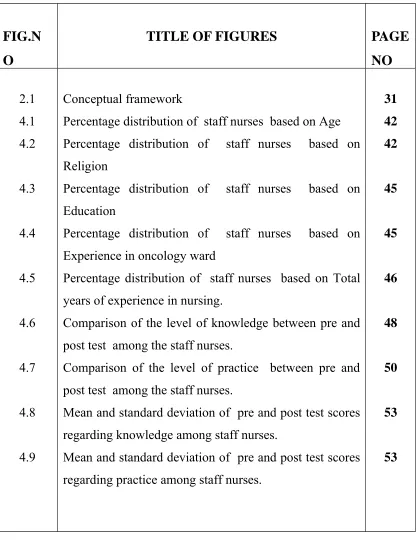
FIG.N O
TITLE OF FIGURES PAGE
NO 2.1 4.1 4.2 4.3 4.4 4.5 4.6 4.7 4.8 4.9 Conceptual framework
Percentage distribution of staff nurses based on Age Percentage distribution of staff nurses based on Religion
Percentage distribution of staff nurses based on Education
Percentage distribution of staff nurses based on Experience in oncology ward
Percentage distribution of staff nurses based on Total years of experience in nursing.
Comparison of the level of knowledge between pre and post test among the staff nurses.
Comparison of the level of practice between pre and post test among the staff nurses.
Mean and standard deviation of pre and post test scores regarding knowledge among staff nurses.
Mean and standard deviation of pre and post test scores regarding practice among staff nurses.
31 42 42 45 45 46 48 50 53 53
[image:10.595.116.533.82.622.2]S.NO TITLE OF ANNEXURES
1. 2.
3. 4. 5. 6. 7. 8. 9.
Letter seeking permission to conduct research study.
Letter seeking experts opinion for conduct validity of the tool and independent variables.
List of experts validated the tool and independent variables. Content validity certificate
Certificate for English editing Research tool
Teaching schedule
Video assisted teaching content Snap shots
SHORT FORMS ABBREVIATION HOD Head of the Department
H0 Null hypotheses H1 Research hypotheses SD Standard deviation
λ2 Chi-square S Significant NS No significant
ASCO American Society of Clinical Oncology ONS Oncology Nursing Society
ANM Auxiliary nurse midwifery GNM General nursing and midwives B.Sc (N) Bachelor of science in nursing
ABSTRACT
nurses by using purposive sampling technique. The Self administered knowledge questionnaire and observational check list were given to assess the knowledge and practice in pre and post test levels. Finally, the statistical analysis of data revealed that, in knowledge ('t'=14.18) and practice('t'=18.53) scores of 't' value had a significant difference in pre and post test levels of the staff nurses at 0.05 level. The correlation between the post test levels of knowledge and practice regarding chemotherapeutic drugs, the 'r' value is 0.77; it indicates that there is a positive and significant correlation. The study findings revealed that the Video assisted teaching programme was effective for the staff nurses.
VIDEO ASSISTED TEACHING PROGRAMME
ON
VIDEO ASSISTED TEACHING PROGRAMME
SUBJECT : MEDICAL SURGICAL NURSING
TOPIC : SAFE HANDLING OF CHEMOTHERAPEUTIC DRUGS GROUP : STAFF NURSES
VENUE : THANJAVUR CANCSR CENTRE AND ROHINI HOSPITAL,THANJAVUR.
DURATION : 45 minutes
METHOD OF TEACHING : VIDEO ASSISTED TEAHING PROGRAMME
TEACHING AIDS : VIDEO TEACHING AND VIDEO DEMONSTRATION NAME OF THE INVESTIGATOR : MRS.THAMIZHARASI.T
CENTRAL OBJECTIVE:
The group will able to understand and gain knowledge , develop their skills in practices regarding safe handling of chemotherapeutic drugs.
SPECIFIC OBJECTIVES:
The Staff Nurses will be able to,
define chemotherapy.
list down the general instructions for preparation and administration of cytotoxic drugs.
demonstrate the procedure of preparation and administration of cytotoxic drugs.
explain the procedure for management of spillage during direct contact, spillage inside the hood and outside the hood.
perform the chemotherapy drug spill check list.
explain the management and prevention of extravasation.
enlist the advances in chemotherapy.
S.
N
O TI
ME
SPECIFIC
OBJECTIVES CONTENTS
RESEARC
HER
ACTIVITY
LEARNE
R
ACTIVIT
Y
A.V.
AIDS
EVALU
1.
2m ts
Staff nurses will able to understand about the topic.
INTRODUCTION
Good morning to all....
As we all know that one of the leading cause of death is a cancer. To reduce the severity of cancer we need to get treatment. One of the common treatment for cancer is chemotherapy. It can be given for variety of cancer and it has been proven to be effective also.
chemotherapy drugs not only affect the patients, it affects the nursing personnel also when we are getting repeated exposures to cytotoxic drugs.
Cancer chemotherapy drugs can cause Mutagenesis, Teratogenesis, Carcinogenesis, and Sterility when administered to humans. The risk varies with the specific drug and its concentration, and with the frequency and duration of exposure to the drugs.
Video teaching
2.
3. 3m
ts Staff nurses can able to explain the cancer and its treatment
WHAT IS CANCER?
Cancer is a disease process whereby the cells are proliferating abnormally and ignoring the growth-regulating signals in the environment
surrounding the cells.
TREATMENTS FOR CANCER
• Radiation Therapy
• Chemotherapy
• Unproven and unconventional therapy.
• Surgical procedures
Here my topic is related to the chemotherapy.
Video teaching
Listening
Lap-Top
CONCEPTUAL FRAMEWORK BASED ON HEALTH BELIEF MODEL
INDIVIDUAL PERCEPTIONS MODIFYING FACTORS LIKELIHOOD OF ACTION
Perceived susceptibility to disease like
Carcinogenesis,Mutogenesis & Teratogenesis
Demographic
variables(Age,Gender,Education,Years of experience in oncology ward,Total years of experience in nursing) Sociopsychological
variables(Personality,Pressure from authorities)
Perceived threat of illness such as abortion,infertility etc..
CUES TO ACTION
Video assisted teaching Video assisted demonstration Source of information from others
Staff nurses perceived benefits of &barriers to taking action(use of safety precautions)
INTRODUCTION
BACKGROUND OF THE STUDY
Diseases can rarely be eliminated through early diagnosis or good
treatment, but prevention can eliminate disease.
—Denis burkitt
Cancer is the uncontrolled growth of abnormal cells in body. The
treatment of cancer with chemotherapeutic drugs started in early 20th
century.
Since then chemotherapy begin to use to treat many types of cancer.
Cytotoxic drugs sometimes known as antineoplastic, anticancer or cancer chemotherapy drugs include a wide range of chemical compounds.
Because of their ability to kill tumor cell by interfering with cell division, they
are extensively used to treat cancer Cancer therapy is broadly based upon the
use chemotherapeutic drugs with strong anti-cancer cytotoxic effects. Their
widespread use has led to concerns about the hazards that they can cause
among hospital personnel involved in their use, as besides cancer cells these
agents can also affect normal cells causing them important damages . In order to minimize occupational exposure to chemotherapeutic cytotoxic drugs,
special department design and equipment are necessary as well as personal
protective measures and safety practices during all procedures involving the
use of these agents, such as transportation and storage, preparation and
reconstitution, administration and care of patients and finally disposal.
Awareness of chemotherapy effects typically influences treatment plans
for patients undergoing cancer therapy to prevent or mitigate adverse
outcomes. However, beyond the patient safety concerns arising from the
necessary therapeutic use of these drugs, occupational risks to health care
workers handling these drugs in the course of their duties still need to be fully
Worldwide, more than 11 million new cases of cancer are diagnosed
each year, and that number is expected to rise to 16 million by 2020. In United
States on 2014 Feb 21,the national cancer institute estimated new cases from
breast cancer were 2,35,030 and deaths were 40430. In the United States, the
American Cancer Society (ACS) predicts that almost 1.4 million new cancer
cases will be diagnosed in 2006 and this figure will double by the year 2050
because the US population is growing and aging. The estimated new cases of
all cancers in 2013 were 1,660,290 and estimated deaths in 2013 were
580,350.
TABLE 1.1 : COMMON TYPES OF CANCER AND
ESTIMATION ON 2013
S.NO COMMON TYPES OF CANCER
ESTIMATED NEW CASES 2013
ESTIMATED DEATHS 2013
1.
Prostate Cancer 238,590 29,720
2.
Breast Cancer 232,340 39,620
3 Lung and Bronchus
Cancer 228,190 159,480
4. Colon and Rectum
Cancer 142,820 50,830
5. Melanoma of the
Skin 76,690 9,480
6. Bladder Cancer 72,570 15,210
7. Non-Hodgkin
Lymphoma 69,740 19,020
8. Kidney and Renal
9. Thyroid Cancer 60,220 1,850
10. Endometrial Cancer 49,560 8,190
- -
-ALL CANCER
SITES 1,660,290 580,350
In 2013, it is estimated that there will be 1,660,290 new cases of all
cancer sites and an estimated 580,350 people will die of this disease.
This increased patient load, along with the use of high-dose
chemotherapy, combinations of several drugs, and the use of antineoplastic
drugs for diseases other than cancer, will increase the potential for exposure of
the health care worker to these drugs.
For the past 3 decades, treatment for many of these cancer cases has
relied principally on anticancer chemotherapy. The first such agent, sulphur
mustard gas, was observed to cause changes in bone marrow of World War I
veterans who were hospitalized many years later. This led to its evaluation as
an anticancer agent, and the related, but less toxic, nitrogen mustards were
later demonstrated to produce tumor regression in lymphoma patients. With
approximately 100 different antineoplastic drugs now in use and many more
under development, drugs used to treat cancer have opened new avenues, from
improving the quality of life of patients with cancer to a complete cure.
Many of the cytotoxic drugs are known to be Carcinogenic,
Teratogenic and Mutagenic to humans. Recent studies shows the increase in
the potential risks due to occupational exposure to these drugs. These may
include hair loss, headache, acute irritation as well as adverse reproductive
outcomes including infertility, spontaneous abortion and congenital
The potential occupational risks for health care professionals may vary
due to differences in the frequency and duration of use and individual
vulnerability . All hospital staff working with chemotherapy drugs should take
protective measures to protect themselves from possible exposure which is
greatly increase during administration of these drugs, therefore strict safety
protocol is required at all times.
Chemotherapy is designed to kill unhealthy cells, but it can also damage
the healthy ones. While handling chemotherapy drugs and other potent or
hazardous drugs for their patients, nurses must be extremely careful not to
ingest them in any quantity.
Over five and one half million healthcare workers (HCWs) are
potentially exposed to hazardous drugs (HDs) in the workplace. The
Occupational Safety and Health Administration [OSHA] acknowledged this
occupational risk and issued recommendations for the safe handling of
hazardous drugs more than twenty years ago (OSHA, 1986). According to the
National Institute for Occupational Safety and Health [NIOSH] (2004), there
is documented evidence of contamination of the work environment with
hazardous drugs , which increases the potential for exposure by nurses,
pharmacists and other healthcare workers when these agents are handled
inappropriately. So, the National Institute for Occupational Safety and Health
(NIOSH) has released an alert outlining the risks of handling chemotherapy
NEED FOR THE STUDY
“Avoid the worst put safety first”
The International Agency for Research on Cancer has classified several antineoplastic drugs in Group 1 (human carcinogens), among which
chlorambucil, cyclophosphamide (CP) and tamoxifen, Group 2A (probable
human carcinogens), among which cisplatin, etoposide, N-ethyl- and
N-methyl-N-nitrosourea, and Group 2B (possible human carcinogens), among
which Bleomycins, Merphalan and Mitomycin C. The widespread use of these
mutagenic/carcinogenic drugs in the treatment of cancer has led to anxiety
about possible genotoxic hazards to medical personnel handling these drugs.
In response to reports of measurable air levels of antineoplastic
agents in hospitals and preliminary evidence of exposure to personnel
handling these agents, a survey was designed and conducted to document the
current handling practices of injectable antineoplastic drugs by hospital and
health care workers at two major teaching hospitals and three affiliated
community hospitals. The survey included assessment of drug preparation,
administration, and disposal. A sample of nurses who routinely come in
contact with these drugs was interviewed for validation of the observed
results. Handling practices for drug preparation were not consistent from
practitioner to practitioner. In some cases, where laboratory coats and
disposable gloves were provided, it was not a routine practice to wear them.
Based on such analysis of risk factors, recommendations for improved
practices are given.
Surveys have associated workplace exposures to antineoplastic drugs
with acute health effects, primarily in nurses. These included hair loss,
headaches, acute irritation, and/or hypersensitivity, as well as adverse
reproductive outcomes (including infertility, spontaneous abortions, and
congenital malformations). A meta-analysis of 14 studies performed in the
antineoplastic drugs and adverse reproductive effects in female health care
workers. The most common reproductive effects found in these studies were
increased fetal loss, congenital malformations, low birth weight and congenital
abnormalities, and infertility.
A study was done to identify the routines followed and the equipment
used by hospital staff when handling antineoplastic drugs . Efforts had been
made to protect the personnel from potential adverse effects from the
medications prepared or administered. However, still a shortage of protective
equipment such as ventilated cabinets. Existing cabinets were often not used
and maintained in a proper manner. On the basis of the responses to the
questionnaire, it may be concluded that there is still a need for further
evaluation of the routines used in the practical handling of antineoplastic
agents in hospital wards.
Ramanand Chaudhary.,Basant Kumar Karn (2012), was conducted to determine both the level of information that nurses possessed and the
method of administration nurses used during chemotherapeutic drug
preparation and administration at chemotherapy units of all hospitals in west
turkey. Nurses showed that their actual administration method was insufficient
according to their level of information, with average administration
evaluations of 5·46 for protection of the environment and 6·59 for
self-protection. The ratio for nurses’ usage of the safety cabinet during the
preparation of chemotherapeutic drugs was very low at 14·2%. Only 7·4% of
nurses had received in-service education about chemotherapeutics. Thus, it has
been recognized that nurses’ information and administrations during
preparation and administration of chemotherapeutic drugs are of utmost vital
importance in removing the harmful effects of chemotherapeutic agents.
Falk and Colleagues(2009) found that the nurses who prepared and administered antineoplatic drugs had higher indicators of mutagenic
response was also observed in the urine mutagenicity frequency with additive
exposure over the work week that decreased over the weekend. This study
suggested that nursing personnel were being occupationally exposed to
mutagenic antineoplastic drugs. These findings were supported by numerous
studies examining urine mutagenicity, chromosomal aberrations, sister
chromatid exchanges and other end points in studies on pharmacists and
Nurses who handle antineoplastic drugs.
Majd T. Mrayyan, Middle East Journal of nursing (2009) reported that Healthcare practitioners may underestimate the exposure risk associated
with hazardous drugs. The risk of exposure extends along the drugs’ entire life
cycle, including the manufacturing, transporting, dispensing, and
administering processes. The safe handling of hazardous drug spills is
uniquely different from other healthcare spills, and exposure extends beyond
patients and healthcare practitioners because nonclinical staff are often
involved with the containment and disposal of spills. PA-PSRS has received
more than 40 reports of patients and staff exposure to hazardous drugs. Many
events involved intravenous (IV) tubing disconnections resulting in hazardous
drugs leaking to the floor, the patient, hospital gowns, and linens. Many
exposure incidents were attributed to IV port or site leaks and involved IV
spiking issues, resulting in large hazardous spills. Risk reduction strategies
include developing a hazardous drugs program; encouraging personnel
compliance in the storing, dispensing, transporting, and administering of these
medications; managing spills; and disposing of hazardous drugs in such a way
that the most appropriate guidelines are used to minimize exposure.
Based on the above information it is evident that the nurses are at
greater risk of developing adverse effects due to occupational exposure to
antineoplastic drugs. Apart from this during my clinical exposure I have
noticed that nurses are inadequately protected due to lack of knowledge and
essential to assess the knowledge and improve their existing knowledge
regarding safe handling of antineoplastic drugs among the staff nurses.
STATEMENT OF THE PROBLEM
''EFFECTIVENESS OF VIDEO ASSISTED TEACHING PROGRAMME ON KNOWLEDGE AND PRACTICE REGARDING
SAFE HANDLING OF CHEMOTHERAPEUTIC DRUGS AMONG THE
STAFF NURSES AT SELECTED HOSPITALS,THANJAVUR.''
OBJECTIVES
• To assess the knowledge and practice regarding safe handling of
chemotherapeutic drugs among the staff nurses before
administration of video assisted teaching programme. • To develop video assisted teaching programme.
• To evaluate the effectiveness of video assisted teaching programme
regarding safe handling of chemotherapeutic drugs among the staff
nurses.
• To correlate the knowledge and practice regarding safe handling of
chemotherapeutic drugs among the staff nurses.
• To determine the association between the pre test level of
knowledge and practice regarding safe handling of
chemotherapeutic drugs among the staff nurses and their selected
demographic variables such as Age , Gender, Religion, Education,
Experience in oncology ward, Total years of experience in nursing.
HYPOTHESES
H1 - There is a significant difference between the pre test and post test scores of knowledge and practice regarding safe handling of
chemotherapeutic drugs among the staff nurses.
H2 - There is a significant correlation between the post test of knowledge and practice regarding safe handling of chemotherapeutic drugs among the
staff nurses.
H3 - There is a significant association between the pre test level of knowledge and practice regarding safe handling of chemotherapeutic drugs
among the staff nurses and their selected demographic variables such as
Age , Gender, Religion, Education, Experience in oncology ward and Total
years of experience in Nursing.
OPERATIONAL DEFINITIONS
EFFECTIVENESS:
It refers to the extent to which the video assisted teaching programme
has influenced the knowledge and practice of the staff nurses regarding safe
handling of chemotherapeutic drugs.
KNOWLEDGE:
It refers to the information gained by the staff nurses through video
assisted teaching programme regarding safe handling of chemotherapeutic
drugs.
PRACTICE :
It refers to the technical skill gained by the staff nurses through video
assisted teaching programme regarding safe handling of chemotherapeutic
drugs.
CHEMOTHERAPEUTIC DRUGS:
It refers to a group of drugs which are widely used to control the
VIDEO ASSISTED TEACHING PROGRAMME:
It refers to an information, education and communication method for
communicating health message regarding safe handling of chemotherapeutic
drugs among the staff nurses.
STAFF NURSES:
It refers to the persons who are qualified nurses working in the
oncology ward in a selected hospitals , Thanjavur.
ASSUMPTIONS
• The staff nurses may not have aware about risk of exposure to
chemotherapeutic drugs
• Video assisted teaching programme may enhance the knowledge
and practice.
LIMITATIONS
• The study is limited to the nurses who are working in oncology
ward at selected hospitals, Thanjavur. • The study period is limited to 6 weeks.
PROJECTED OUTCOME
This study helps to improve the knowledge and practice of staff nurses regarding safe handling of chemotherapeutic drugs.
The Video assisted teaching programme on knowledge and
practice regarding safe handling of chemotherapeutic drugs will protect
the health care personnel and others from ill effect on
CHAPTER-II
REVIEW OF LITERATURE
Literature is a key step in a research process. The main goal of literature is a strong base to carry out research activities in the education and clinical practice. An extensive review of literature relevant to research was done to gain insight and collect maximum information for laying the foundation for this study.
PART - I
It is divided into two sections.
SECTION - A
Information related to safe handling of chemotherapeutic drugs.
SECTION - B
The information related to the management of spillage.
PART - II
Conceptual framework.
SECTION A : SAFE HANDLING OF CHEMOTHERAPEUTIC DRUGS.
Al-Azzam SI, Awawdeh BT, Journal of oncology pharmaceutical practices(2014) reported that the majority of participants (74.2%), representing nine out of 15 (60%) hospitals, reported full compliance of workplace with all requirements of the guidelines. Items with full compliance in all hospitals were availability of policies and procedures for safe handling of antineoplastic agents, availability of reporting system and availability of sharp containers. Concerning healthcare workers' guidelines, worker with full compliance were 46.4% of participants. Items with least compliance rate were working inside biological safety cabinet (65.1%) and having training program of handling chemotherapy medications(66.7%).Finally, concerning items-related
personal protective equipments, only 10.7% of participants reported full compliance. Items with least compliance rates were wearing goggles, shoe cover, and hair cover. The result of this study showed the levels of compliance with guidelines pertaining to work place and workers who prepare and administer anti neoplastic medications. Among other points, compliance with guidelines pertaining to wearing personnel protective equipments was limited and required further improvement.
Especially, during the first trimester, exposure should be limited as much as possible. During the second and third trimesters, work may be allowed if standard safety precautions are followed . In brief, the responsibility lies with nurses to follow the guidelines . At the very first indication of suspected exposure, they should try to remove themselves from the source .
Keat CH., Sooaid NS ., clinical journal of oncology nurses(2013) reported that prospective interventional study with a before and after design requested a single group of 96 nurses in 15 wards actively providing chemotherapy to answer a self-administered questionnaire. A performance checklist was then used to determine the compliance of all these wards with the recommended safety measures. The first and second assessments took 2 months respectively with a 9-month intervention period. The mean age of nurses was 32.2±6.19 yrs. Most of them were female (93.8%) and married. The mean knowledge score of nurses was significantly increased from 45.5 ±10.52 to 73.4±8.88 out of 100(p<0.001) at the end of the second assessment. Overall, the mean practice score among the wards was improved from 7.6±5.51 to 15.3±2.55 out of 20 (p<0.001).The pharmacist -based interventions improved the knowledge, attitude and safe practices of nurses in cytotoxic drug handling. Further assessment may help to confirm the sustainability of the improved practices.
contents there of (e.g. infusion bags and syringes) are readily contaminated by aerosols and spillages and afford a secondary source of exposure to pharmacists, nurses and cleaning staff. Closed system transfer devices (CSTDs), designed to prohibit the transfer of contaminants into the working environment during drug transfer between the vial and syringe, have been successful in further reducing, but not eliminating surface contamination. Given that the number of patients requiring treatment with chemotherapeutic agents is predicted to increase, further efforts to reduce occupational exposure to anti-cancer drugs, including the refinement and wider use of CTSDs, are recommended.
Siden R., Kem R., Ostrenga A., Journal of oncology pharmaceutical practices (2013) reported that increased use of oral chemotherapy for the treatment of cancer introduces new challenges for patients and caregivers. Among them are the ability to swallow oral solid dosage forms, the proper administration of the agents and the safe-handling of chemotherapeutic drugs in the home. Since these drugs are hazardous, proper preparation, administration, and disposition introduces a variety of safety issues. The increased toxicity of these drugs coupled with complicated dosing regimens and the occasional need to dilute the drug or measure a liquid dosage form require careful instruction of the patient and/or caregivers. The purpose of this project was to create templates for writing patient instruction brochures.
This article describes one organization's multidisciplinary effort to standardize chemotherapy practice according to the American Society of Clinical Oncology and Oncology Nursing Society's 31 safety standards for chemotherapy administration and also describes how the organization integrated and developed standards of practice using interdisciplinary approaches. The article equips healthcare professionals with a multidisciplinary process for high-quality clinical standards of practice that may reduce errors and ensure safety.
Vioral AN., Kennihan HK, Journal of oncology pharmaceutical practices (2012) found that a Chemotherapy involves an intricate, high-risk, multidisciplinary process of prescribing, dispensing, and administering complex multi medication regimens with narrow therapeutic indices. Chemotherapeutic agents also require safe-handling precautions for patients and healthcare providers. In addition, a number of chemotherapy and targeted therapies have expanded to non oncology populations. This complexity demands standardization of chemotherapy practice for all healthcare providers to ensure safe outcomes. This article describes one organization's multidisciplinary effort to standardize chemotherapy practice according to the American Society of Clinical Oncology and Oncology Nursing Society's 31 safety standards for chemotherapy administration. The article also describes how the organization integrated and developed standards of practice using interdisciplinary approaches. The educational processes used during implementation and the lessons learned are discussed to assist healthcare providers involved in standardizing chemotherapy administration. The article equips healthcare professionals with a multidisciplinary process for high-quality clinical standards of practice that may reduce errors and ensure safety.
Nurse III/IV leadership group at the University of North Carolina Hospitals embarked on the challenge of a comprehensive standards review regarding personal protective equipment necessary when handling waste after hazardous drug administration. This review led to practice improvements in education, the use of chemotherapy related gloves when handling hazardous waste, and changes in the disposal options available to staff. A discharge teaching pamphlet on safe handling for the caregivers of patients receiving hazardous drug was created and piloted in this study.
Magda M. Mohsen and Manal E. Fareed, International journal of medical,pharmaceutical sciences (2011 ),reported that a Widespread use of chemotherapeutic drugs in the treatment of cancer has lead to higher health hazards among employee who handle and administer such drugs, so nurses should know how to protect themselves, their patients and their work environment against toxic effects of chemotherapy. Aim of this study was carried out to examine the effect of chemotherapy safety protocol for oncology nurses on their protective measure practices. Safety protocol for Oncology Nurses seemed to have positive effect on improving nurses' knowledge and practice.
(11%-18%). Nurses in private practices were less likely to have chemotherapy designated PPE, use PPE, and use spill kits for HD spills.
Vagka E., Dallidou P et..al, European Journal of Cancer Care(2011) enumerated that the expansion of chemotherapy raised concerns about the health and safety of hospital personnel. Very little is known about the conditions of handling of chemotherapeutic agents by healthcare workers in Greece and possible adverse effects related to their safety practices, as well as the safety policies adopted by the Greek hospitals. A self-evaluation questionnaire was completed by 353 healthcare workers involved with the use of chemotherapeutic drugs in 24 Greek hospitals and the answers were statistically analysed. The majority of the healthcare workers are aware of the dangers of their work, although they had received limited training and medical surveillance. A significant percentage of them does not use personal protective equipment or use it inadequately. The safety design of their workplace is rather poor. Different health problems have been experienced, deriving from the respiratory, central nervous system, reproductive, gastrointestinal and musculoskeletal system. The improvement of safety training and procedures as well as medical surveillance seems to be a vital priority of hospital administration in Greece, in order to comply with the European guidelines and for the prevention of occupational diseases and environmental pollution.
about antineoplastic agents is high among nurses, along with the level of personal protective equipment use, medical surveillance and employee training seems to be lagging behind.
Ellice Mellinger, AORN Journal(2010) found that safe handling of chemotherapeutic agents during administration and disposal is critical. Most antineoplastic agents are toxic compounds that are carcinogenic, mutagenic, or teratogenic. Direct contact may cause irritation of the skin, eyes, and mucous membranes. Perioperative personnel should know how to handle hazardous materials safely to protect the patient, other staff members, and themselves. These safety precautions include appropriately identifying the patient; correctly preparing, verifying, and documenting the chemotherapeutic agents being administered; consistently wearing personal protective equipment; transporting the chemotherapeutic agent in a puncture-resistant container labeled “chemotherapy”; properly disposing of the chemotherapeutic agent and supplies; and handling a spill if one occurs.
cytotoxic drugs as well as presence of in-service training programs. There was poor use of protective equipment in the study group.
Kyprianou M, Kapsou M, Raftopoulos V, Soteriades ES,Europian journal of oncology for nurses (2010) reported that a total of 88 nurses participated in the survey (20 male and 68 female). The mean age of the nurses was 33 years (age range 21-60). The majority of nurses were aware of the potential hazards associated with handling of chemotherapy. The mean score of the participants' knowledge was 79.43 out of 100. Most of the participants reported high levels of compliance with the use of personal protective equipment such as gloves and protective gown (95.4%, and 84.5%) during reconstitution of antineoplastic agents, respectively. Almost all nurses (98.8%) reported use of a safety cabinet during preparation, however only 53.4% reported that they have annual medical checkups and only 33% reported having received specialized training. While the level of knowledge about antineoplastic agents is high among nurses, along with the level of personal protective equipment use, medical surveillance and employee training seems to be lagging behind.
influence on nurses’ hazardous drug safe handling precaution use and suggest fostering a positive workplace safety climate and reducing barriers as interventions.
Eisenberg S,Journal of infusional nurses (2009) found that a antineoplastic chemotherapy describes a group of hazardous drugs commonly used in the treatment of cancer. Since the discovery of their presence in nurses and pharmacists more than 2 decades ago, numerous studies have reported on the short- and long-term consequences of exposure. Guidelines describing proper equipment and procedures have been established in an effort to eliminate or minimize environmental and biologic exposure. Nursing compliance, however, has been variable. This study described the dangers of exposure, how it occurs, and steps to keep nurses safe while working with these hazardous drugs.
Harrison, Valanis, Vollmer,Journal of clinical oncology(2009)said that Acute symptoms have been reported in nurses and pharmacists who were occupationally exposed to hazardous drugs. These include hair loss, abdominal pain, nasal sores, contact dermatitis, allergic reactions, skin injury, and eye injury .
posted for 6 weeks of open public comment. Three hundred twenty-two comments were reviewed by the Steering Group and used as the basis for final editing to a final set of standards. The final list includes 31 standards encompassing seven domains, which include the following: review of clinical information and selection of a treatment regimen; treatment planning and informed consent; ordering of treatment; drug preparation; assessment of treatment compliance; administration and monitoring; assessment of response and toxicity monitoring. Adherence to ASCO and ONS standards for safe chemotherapy administration should be a goal of all providers of adult cancer care.
Boston, MA, Oncology nurses forum(2008), concluded that the best among six commercially available disposable protective gown materials, the gowns with polyethylene or vinyl coating provided adequate splash protection and prevented penetration of the challenge chemicals during the 1-minute observation period. Polypropylene-based gowns did not provide adequate splash protection and should not be used to prepare chemotherapy.
Philip E Johnson , Journal of oncology pharmaceutical practices (2008) stated that the majority of respondents were aware of the WHO recommendations for IV Vincristine, although the rate of implementation of the guidelines ranged from 24.1 to 53.6%. When compared to the ISMP 2006 survey there was a 25.8—37.4% improvement in following many of the safe practice guidelines. Administering IV Vincristine via a mini bag showed the lowest rate of adoption (less than 40%). Of the 35 survey items on general chemotherapy safety strategies, 80% of respondents had implemented at least 21 items in the survey. Overall 32.4% of respondents did not consider oral chemotherapy as requiring the same safety concerns as parenteral therapy. The results of this survey will provide a new baseline for the adoption rate of safe medication practice recommendations related to oncology. Further work on addressing barriers in adopting identified safe practice recommendations needs to be conducted.
SECTION - B : MANAGEMENT OF SPILLAGE
receive specific training which includes principles of chemotherapy administration, safe handling of cytotoxic drugs, classes of chemotherapeutic agents and cell kinetics, anaphylaxis, spill, and extravasations management, management of chemotherapy side effects and patient teaching.
Linda skinker, AORN Journal (2010) revealed that Safe handling of chemotherapeutic agents during administration and disposal is critical. Most antineoplastic agents are toxic compounds that are carcinogenic, mutagenic, or teratogenic. Direct contact may cause irritation of the skin, eyes, and mucous membranes. Perioperative personnel should know how to handle hazardous materials safely to protect the patient, other staff members, and themselves. These safety precautions include appropriately identifying the patient; correctly preparing, verifying, and documenting the chemotherapeutic agents being administered; consistently wearing personal protective equipment; transporting the chemotherapeutic agent in a puncture-resistant container labelled “chemotherapy”; properly disposing of the chemotherapeutic agent and supplies; and handling a spill if one occurs.
maintenance and repair. As nurses and health care providers are involved in preparation and administration of chemotherapeutic agents, they may expose themselves to hazardous effects that have been reported in several studies.
Kumari Sunita, Sukhpal Kaur, Nursing midwifery research journal( 2009) found that the nurses, during preparation and administration of cytotoxic drugs are at higher risk to the dreadful side effects of these drugs. To determine the patterns of the cytotoxic drug spillages& the exposure of the nurses to these spillages, an observational assessment was carried out in the Chemotherapy administration areas (Radiotherapy Ward, Radiotherapy and Medical Day Care Rooms)at a tertiary care hospital. A direct non participatory observation was carried out for one month to assess the subjects. All the nursing personnel (22)who were posted in the chemotherapy administration areas participated in the study. During one month observation, 77.3% of the nurses experienced small spills (< 5ml or 5gms). The common site of the spillage for more than half(52.9%) of the subjects was surface of preparation of the drug and 47% experienced spillage over both surface of preparation and the gloves worn by them. The prevalence of spill per person in all the three research settings was 1.3, 2 and 3.6 respectively for Radiotherapy Ward, Radiotherapy and Medical Day Care Chemotherapy rooms. Results suggest that drug spills are common in chemotherapy administration areas. Guidelines to manage the cytotoxic drug spills to be displayed in the unit and a "chemotherapy spill kit" to manage cytotoxic spills should be made available in all the chemotherapy administration areas.
associated with orally administered antineoplastics, under the leadership of ASCO and ONS. The workgroup participants developed recommended standards, which were presented for public comment. Public comments informed final edits, and the final standards were reviewed and approved by the ASCO and ONS Boards of Directors. Significant newly identified recommendations include those associated with drug prescription and the necessity of ascertaining that prescriptions are filled. In addition, the importance of patient and family education regarding administration schedules, exception procedures, disposal of unused oral medication, and aspects of continuity of care across settings were identified. This article presents the newly developed standards.
Pennsylvania patient safety authority, Pennsylvania patient safety (2009)Stated that Healthcare practitioners may underestimate the exposure risk associated with hazardous drugs. The risk of exposure extends along the drugs’ entire life cycle, including the manufacturing, transporting, dispensing, and administering processes. The safe handling of hazardous drug spills is uniquely different from other healthcare spills, and exposure extends beyond patients and healthcare practitioners because nonclinical staff are often involved with the containment and disposal of spills. PA-PSRS has received more than 40 reports of patients and staff exposure to hazardous drugs. Many events involved intravenous (IV) tubing disconnections resulting in hazardous drugs leaking to the floor, the patient, hospital gowns, and linens. Many exposure incidents were attributed to IV port or site leaks and involved IV spiking issues, resulting in large hazardous spills. Risk reduction strategies include developing a hazardous drugs program; encouraging personnel compliance in the storing, dispensing, transporting, and administering of these medications; managing spills; and disposing of hazardous drugs in such a way that the most appropriate guidelines are used to minimize exposure.
HEALTH BELIEF MODEL
The health belief model is a health protection model that provides a framework to explain why some people take specific actions to avoid or treat illness, where as others fail to protect themselves (stanhope & Lancaster,2004;pender et al 2006).The model has been used to predict and explain health behavior on the basis of value-expectancy theory and kurt Lewin's cognitive theory.
Lewin is the cognitive theorist who conceptualized that certain aspect of a person's life space have negative, positive or neutral values. He believed that disease is a negative and as a result, exerts a force to move the person towards health behavior. He also believed that behavior is a function of the subjective value of an outcome and of the subjective expectation that a particular action will achieve that outcome (Rosenstock 1974).
The health belief model states that the probability that a person will take appropriate health care actions depends on the person's value of health, perceptions about disease, and perceived threats of disease. In addition action is motivated by perception about the medical team & therapy plans, past experience, contact with risk factors, level of participation in regular health care, life aspirations and factors in the environment.
The four components are perceived susceptibility, perceived severity, perceived benefits and perceived barriers.
The first component of this model involves the individual's perception of susceptibility to an illness. persons subjective perceptions of the risk if contracting health condition like Carcinogenesis, Mutagenesis & Teratogenesis. Perceived severity refers to the perceived seriousness of contracting an illness or leaving it untreated. In chemotherapy the staff nurses might not perceive that serious personal harm will occur as a result of lack of safe handling of chemotherapy drugs.
action(video assisted teaching programme. Video demonstration, sources of information from others etc..).
The third components of the likelihood that a person will take a preventive action results from the persons perception of the benefits of and barriers to taking action. Preventive action may include medical advice. in-service education, continuing education etc..
CHAPTER-III
RESEARCH METHODOLOGY
This chapter is devoted to the Methodology of Research approach and
Design, Variables, Setting, Population, Sample, Sample Size, Sampling
Technique, Sampling Criteria , Data collection tool, Report of Pilot study,
Reliability and Validity of tool, Method of data collection, Scoring and
Interpretation, Plan for data analysis andProtection of human subjects.
RESEARCH APPROACH
An Evaluative approach was used in this study by the investigator.
RESEARCH DESIGN
In a Pre-experimental design, One-group pretest-post test design was
used for this study.
VARIABLES OF THE STUDY
¾ INDEPENDENT VARIABLES: Video assisted teaching programme ¾ DEPENDENT VARIABLES:
Knowledge and practice of the staff nurses.
¾ DEMOGRAPHIC VARIABLES:
Age, Gender, Religion, Education, Experience in oncology ward
and Total years of experience in nursing.
The study was conducted in selected hospitals at Thanjavur, such as
Rohini hospital and Thanjavur Cancer Centre.
POPULATION
The population were the staff nurses who are working in oncology ward
at selected hospitals, Thanjavur.
SAMPLE
The sample comprised of the Staff nurses.
SAMPLE SIZE
The sample size comprised of 50 staff nurses those who were
working in oncology ward.
SAMPLING TECHNIQUE
Purposive sampling technique was used to select the staff nurses.
SAMPLING CRITERIA
INCLUSION CRITERIA:
• The staff nurses who have completed ANM, Diploma or Degree in
Nursing
• All shift of the staff nurses.
• Both male and female staff nurses
• Staff nurses who are working in oncology ward. EXCLUSION CRITERIA:
• Untrained nurses. • Non nursing personnel
DATA COLLECTION TOOL
Semi structured questionnaire will have III parts. PART I :
It consist of Self administered knowledge questionnaires regarding
safe handling of chemotherapeutic drugs among the staff nurses. PART III:
It consist of observational Check list to observe practice of the staff
nurses regarding safe handling of chemotherapeutic drugs.
REPORT OF THE PILOT STUDY
Pilot study was conducted for a period of one week. The investigator
obtained permission from the participants prior to the study. The purpose of
the study was explained to the subjects prior to the study. Pilot study was
conducted for 5 staff nurses in Right Hospital and purposive sampling
technique was used to select the sample. The knowledge and practice was
assessed by semi structured knowledge questionnaire and observational check
list respectively. Immediately after the pretest, Video assisted teaching
programme was given in the form of Video recorded. The effectiveness was
assessed on 7th
day by using the same questionnaire. The mean value of
knowledge (23 )of post test was higher than the mean value of pre test
knowledge (13.2 ) and the mean value of post test practice (13) was higher
than the mean value of pre test practice(10.6). It was shown that Video
assisted teaching programme was effective. After pilot study, the tool was
considered to be feasible and practicable.
RELIABILITY AND VALIDITY OF TOOL
To evaluate the effectiveness of Video assisted teaching programme
the tools were constructed and modified by the researchers which were
validated by the expert committee members. The reliability of the tool was
established by test-retest (Karl Pearson co-efficient formula) method. The tool
was feasible and practicable.
METHOD OF DATA COLLECTION
Written formal permission was obtained from the head of the hospital
administered knowledge questionnaire and observational check list to assess
the knowledge and practice respectively. After the pre test, Video assisted
teaching programme was given. On 7th day the investigator conducted the
post test to determine the knowledge and practice with the same questionnaire.
SCORING AND INTERPRETATION PROCEDURE
PART-II
It consist of 30 items related to knowledge regarding safe handling of
chemotherapeutic drugs. Each items carries ''1'' mark for suitable answer and
''0''for wrong answer.
OBTAINED SCORE
= x 100 TOTAL SCORE
LEVEL OF
KNOWLEDGE SCORE PERCENTAGE
Inadequate 0-10 0-33%
Moderately Adequate 11-20 34-67%
Adequate 21-30 68-100%
PART -III
It consist of 15 items related to practice regarding safe handling of
chemotherapeutic drugs. Each carries ''1'' mark for correct practice score and
''0'' for wrong answer.
LEVEL OF
PRACTICE SCORE PERCENTAGE
Inadequate 0-5 0-33%
Moderately Adequate 6-10 34-67%
PLAN FOR DATA ANALYSIS
Collected data were tabulated and analyzed using descriptive
statistical methods.
S. NO
DATA
ANALYSIS METHODS REMARKS
1. Descriptive
statistics
Mean, Frequency
and Standard
deviation
To describe the
demographic variable to
assess the knowledge and
practice values of pre test
and post test.
2. Inferential
statistics
'T' Test, Paired 't'
test
Correlation
co-efficient.
Chi-square test
Analyzing the significant
difference between the
effectiveness of video
assisted teaching
programme and
improvement of
knowledge and practice
regarding safe handling of
chemo drugs.
Analyzing the correlation
between pre and post test
knowledge and practice
about safe handling of
chemotherapeutic drugs. Analyzing the association
between demographic
variables and knowledge
handling of
chemotherapeutic drugs.
PROTECTION OF HUMAN SUBJECTS
Formal permission was obtained from the hospital authorities.
Research proposal was approved by the dissertation committee of Our Lady of
Health College of Nursing, prior to the pilot study. After the clear
explanation about the study, oral consent was obtained from each participant
of the study before started the data collection.
Assurance was provided to the subjects that the anonymity,
CHAPTER-VI
SUMMARY AND CONCLUSION
A pre- experimental study was conducted to assess the knowledge and
practice regarding safe handling of chemotherapeutic drugs among 50 Staff
nurses from Thanjavur Cancer Centre and Rohini hospitals .The sample was
selected based on the criteria by using purposive sampling technique. The
instruments used in this study was demographic variables, Semi structured
knowledge questionnaire and observational check- list for practice. For
analysis of data , descriptive and inferential statistics were used. The major
findings are summarized as follows.
From the frequency and distribution table, it was implied that among
50 staff nurses , most of them aged between 20-31 years, among them
27(54%) were between the age of 20-25 yrs, 19(38%) were between 26-31 yrs
and 4(8%) of them were above 31 yrs. All 50(100 %) of them were females.
Among them, the Hindu's are 41(82%) ,the Christians are 9(18 %) and none
of them are Muslims. In education, 28(56%) of them studied ANM , 17(34%)
of them studied Diploma in Nursing and 5(10%) of them studied Degree in
Nursing (B.Sc Nursing). Regarding the experience in oncology ward, 17(34%)
had less than 1 year,23(46%) had 1-5 yrs and 10(20%) had more than 5 yrs.
Based on the total years of experience in nursing,24(48%) of them had less
than 3 yrs, 19(38%) of them had 4-6 yrs of experience and 7(14%) of them
had more than 6 yrs of experience.
In pre test ,out of 50 samples, 26(52%) had inadequate knowledge, 24
[48%] had moderately adequate knowledge and no one had adequate
knowledge. In post test, none of them had inadequate knowledge, 38[76 %]
had moderately adequate knowledge and 12[24 %] had adequate knowledge.
Likewise in pretest, 9(18%)had inadequate practice,41[82%]had
post test 16[32 %] had moderately adequate practice ,34[68%] had adequate
practice and none of them had inadequate practice. The comparison of pre test
scores as well as the post test scores of the staff nurses had some
improvements. So the results concluded that video assisted teaching
programme about knowledge and practice was very effective for the staff
nurses.
Regarding the mean and SD of pre and post test survey , the table
shown that, in pre test the mean score of knowledge was 10.84 with SD
2.5 and in post test, the mean score of knowledge was 17.04 with SD of 4.4.
The 't' value of CV = 14.18 ,TV=1.65(CV>TV), which is statistically
significant at 0.05 level. Regarding practice, the pre test mean score was
7.1 with SD of 1.6 and in post test, the mean score of practice was 12.08
with SD of 2.2. The 't' value of CV=18.53,TV=1.65 (CV>TV) , which is
statistically significant at 0.05 level. The above results revealed that, there
was a significant difference between the knowledge and practice score of the
staff nurses regarding safe handling of chemotherapeutic drugs.
Regarding the correlation between the post test scores of knowledge
and practice ,the table shown that the correlation value of post test
knowledge and practice score was 0.77 ; this revealed that there was a
positive and significant correlation. So, the results indicates that there was a
positive and significant correlation between the post test scores of
knowledge and practice regarding safe handling of chemotherapeutic drugs
among the staff nurses.
Regarding the demographic variables, the analysis stated that there was
no significant association between the knowledge and their selected
demographic variables like Age , Gender, Religion, Education, Experience in
oncology ward and Total years of experience in nursing. In practice ,there was no significant association between the practice and their selected
of experience in Nursing. So H0 is accepted. There is a significant association
in pre test level of practice between the experience in oncology ward where
the H0 is rejected. The significant association between the knowledge and
practice was tested at 0.05 level. Hence, there was a significant association in
pre test level of practice in the selected demographic variable of experience in
oncology ward. So the third hypotheses H3 was accepted.
CONCLUSION
The objective of the study was to determine the effectiveness of Video
assisted teaching programme on knowledge and practice among staff nurses
regarding safe handling of chemotherapeutic drugs. The results shown that
there was a significant difference between pre and post test knowledge and
practice scores ( paired 't' test value 1.65). In relation to the effectiveness of
Video assisted teaching programme, there had been markedly increased
knowledge and practice after the administration of Video assisted teaching
programme. So, the given Video assisted teaching programme was effective
for the staff nurses.
The findings of the present study have certain improvement
implications for the Nursing services, Nursing education, Nursing
administration and Nursing research.
NURSING SERVICE:
Nurse as a leader, health organizer, educator, motivator, supervisor and
team member in various situation of work education may be given to care
givers or health care workers regarding safe handling of chemotherapeutic
drugs.
The findings of the study will help to create awareness among the
nurses regarding safe handling of chemotherapeutic drugs.
NURSING EDUCATION:
The results of the study will help the nurse educator to import the
knowledge and practice regarding safe handling of chemotherapeutic drugs to
the staff nurses.
The study emphasize the need of educating the nursing personnel
through In-Service or Continuing Education programme to update their
knowledge and practice skills in educating the staff nurses regarding safe
handling of chemotherapeutic drugs.
NURSING ADMINISTRATION:
The findings of the present study will help the nurses to organize and
plan for educational programme by using various teaching methods and
demonstration.
• This study can be a baseline for further studies to build upon. • This study can be conducted in various aspect to the staff
nurses.
RECOMMENDATION
Based on the research findings of the study, it is recommended that
• Comparative study can be done to find out the effectiveness of
various methods of teaching on safe handling of
chemotherapeutic drugs.
• An exploratory survey can be done to find out the limitations
faced by the nurses in following safe handling of
chemotherapeutic drug practices.
CHAPTER-V
DISCUSSION
This chapter represents the discussion of the study based on the
objectives.
The study was a pre-experimental design to evaluate the effectiveness
of video assisted teaching programme on knowledge and practice
regarding safe handling of chemotherapeutic drugs among the staff nurses
at selected hospitals, Thanjavur.
An interview was conducted to assess the knowledge and observed
the practice skills by self administered knowledge questionnaire and
observational check list among the staff nurses who were handling
chemotherapeutic drugs in Thanjavur cancer centre and Rohini Hospital at
Thanjavur. After pre test the Video assisted teaching programme was given by
the investigator. After 7 days from the pre test, post test was conducted by
using the same questionnaire. The data was grouped and analyzed using
descriptive statistics and inferential statistics.
The first objective of this study was to assess the knowledge and practice regarding safe handling of chemotherapeutic drugs among the staff nurses before administration of video assisted teaching programme. The data analysis reveals that the level of knowledge in pre test
26(52%) possessed Inadequate knowledge,24(48%) had moderately adequate
knowledge and none of them had adequate knowledge. The results shown that
there was a lack of knowledge among the staff nurses regarding safe handling
of chemotherapeutic drugs. In pretest, the level of practice were 9(18%) had
inadequate practice, 41(82%) had moderately adequate practice and no one
had adequate practice.
The second objective of this study was to develop video assisted teaching programme
From the pre test value of knowledge and practice, it shown that the
practice, no one had adequate knowledge and practice. So, the Video assisted
teaching programme