EFFECTIVENESS OF VIDEO ASSISTED TEACHING
PROGRAMME ON KNOWLEDGE REGARDING PREVENTION
OF CHILD ABUSE AMONG SCHOOL TEACHERS IN CAPRON
HALL GIRLS HIGER SECONDARY SCHOOL AT
MADURAI DISTRICT.
A DISSERTATION SUBMITTED TO THE TAMILNADU DR.M.G.R.
MEDICAL UNIVERSITY, CHENNAI, IN PARTIAL FULFILLMENT OF THE REQUIREMENTS FOR THE DEGREE OFMASTER OF
SCIENCE IN NURSING.
EFFECTIVENESS OF VIDEO ASSISTED TEACHING
PROGRAMME ON KNOWLEDGE REGARDING PREVENTION
OF CHILD ABUSE AMONG SCHOOL TEACHERS IN CAPRON
HALL GIRLS HIGER SECONDARY SCHOOL AT
MADURAI DISTRICT.
J.P.SATHIAVARTHINI
A DISSERTATION SUBMITTED TO THE TAMILNADU DR.M.G.R. MEDICAL UNIVERSITY, CHENNAI, IN PARTIAL FULFILLMENT OF
THE REQUIREMENTS FOR THE DEGREE OF MASTER OF SCIENCE IN MENTAL HEALTH NURSING.
CERTIFICATE
This is a bonafide work of Mrs.J.P.SATHIAVARTHINI, M.Sc (N) II Year Student from Sakthi college of Nursing, Dindigul, Tamilnadu, India ,submitted in partial fulfillment for the Degree of Master of Science in Nursing under the Tamil Nadu Dr.M.G.R Medical University, Chennai.
Signature of the Principal __________________________________
Prof. V. JANAHI DEVI, M.Sc (N).,
EFFECTIVENESS OF VIDEO ASSISTED TEACHING
PROGRAMME ON KNOWLEDGE REGARDING PREVENTION
OF CHILD ABUSE AMONG SCHOOL TEACHERS IN CAPRON
HALL GIRLS HIGER SECONDARY SCHOOL AT
MADURAI DISTRICT.
1. RESEARCH GUIDE:________________________
Prof.V.JANAHI DEVI M.Sc (N)., Principal
Sakthi College Of Nursing, Oddanchatram,
Dindugul. (DT)
2. CLINICAL GUIDE:___________________________
Asst.Prof.T. Hema. M.Sc (N), RNRM,
Sakthi College Of Nursing,
Oddanchatram, Dindugul. (DT)
3. MEDICAL EXPERT : _____________________________
Dr.C.Ramasubramanian, M.D,DPM.,
Consultant psychiatrist
Reg.no.28039
Ahana Hospitals LLP,
CERTIFIED BONAFIDE WORK DONE BY
J.P. SATHIAVARTHINI
SAKTHI COLLEGE OF NURSING, ODDANCHATRAM,
DINDUGUL.
SUBMITTED IN PARTIAL FULFILMENT OF THE
REQUIREMENTS FOR THE DEGREE OF MASTER OF
SCIENCE IN NURSING FORM THE TAMIL NADU DR.M.G.R
MEDICAL UNIVERSITY, CHENNAI.
EXAMINERS:
1.______________________
ACKNOWLEDGEMENT
I praise and thank the God Almighty who has been my source of strength in every step of my life and foundation of my knowledge and wisdom.
It is my greatest privilege to recall many persons to whom I am indebted for their contribution in various ways directly and indirectly .I offer my sincere thanks to all those who have contributed to the successful completion of this work.
I would like to express my deep and sincere gratitude to our Chairman Dr.K.Vembanan M.B.B.S.,M.S., and I express my deep gratitude and heartfelt thanks to our Vice-Chairman Dr.K.GokilaVembanan M.B.B.S.,D.G.O., for their support and encouragement for successful completion of the study.
I express my deep gratitude and sincere heartfelt thanks to the awesome personality Prof.V.Janakidevi,M.Sc.,(N)., Principal, Sakthi College of nursing for laying the strong foundation for my study by excellent guidance, valuable suggestions, support and encouragement which have been very valuable for the successful completion of this task.
I would like to express my immense gratitude and whole hearted thanks to my Clinical guide Asst.Prof.T.HemaM.Sc (N)., Deparment of Mental health
Mrs.SumathiM.Sc (N)., Head of the Department of Mental Health Nursing, I have been amazingly fortunate to have any advisor who gave me the freedom to explore on my own and at the same time guidance to recover when my steps faltered.
I extended my sincere thanks to all Faculty members of Sakthi College of Nursing for their suggestion for this study.
I feel a deep sense of gratitude to Ms. Ponkodi, Librarian, Sakthi College of Nursing for the sources of Books, journals references.
I express my heartfelt thanks to Mr. Manikandan, statistician, Who spend his invaluable time, continuous enthusiastic encouragement for his share in the arduous task of this study.
I express my heartfelt thanks to the headmistress of Capron hall girls Hr.Sec School at Madurai, in Madurai District Mrs. Sathiyavathy Kalarani granting permission to conduct this study.
I extended my warmest thanks to Mrs.S.Miriyam Chithra, M.A.B.Ed.,, (Tamil) and Mr. Alan Suresh Raj M.A., B.Ed., (English) for doing Tamil and English editing.
I am grateful thanks to Mr.K.Veerashanmugaraj, BCA M.BA., and B.Ed., Ms.Brindha B.Com (CA)., for providing strong support, excellent contribution and encouragement for to create Audio visual aids successfully.
and support,without which this study would not have been completed successfully.Of course,I cannot forget my daughters D.Blessy Jasmine and D.Praisy Evangeline for their love,prayers and scarification throughout the study period.
At the very outset,I remember my beloved parents Mr.J.Paulraj and Mrs.G.LalithaPaulraj,who gave meaning to my life in so many ways.I am thankful to my sister Mrs.J.P.KarunyaJustine and my brother Mr.J.P.Caldwell Margachis for their love and prayers.
I express my immense gratitude to my classmates for their prayers and support in entire course of my study.
Completion of a thesis is not the result of solitary efforts. It is outcome of cooperation and untiring efforts of many loving persons whose names are mentioned and not mentioned. A bouquet of gratitude to all of them.
ABSTRACT
Background: Child abuse is a global public health problem with serious consequences for the victims and society. Most studies on child maltreatment in India have focused on the role of teachers as perpetrators and the prevalence of abuse within schools. Due to their strategic importance in breaking the cycle of abuse, it is important to document teachers‘ knowledge towards identifying and reporting suspected cases of child abuse in relation to existing mandatory laws.
The present study entitled “to evaluate the effectiveness of video assisted teaching programme on knowledge regarding prevention of child abuse among school teachers in Capron hall girls higher secondary school at Madurai (Dist).
LIST OF CONTENTS
CHAPTER CONTENTS PAGE
NO
I INTRODUCTION 1
NEED FOR THE STUDY 4
STATEMENT OF THE PROBLEM 10
OBJECTIVES OF THE STUDY 10
HYPOTHESIS 10
OPERATIONAL DEFINITIONS 10-11
ASSUMPTIONS 11-12
DELIMITATION 12
PROJECTED OUTCOME 12
II REVIEW OF LITERATURE
STUDIES RELATED TO INCIDENCE AND PREVELANCE
STUDIES RELATED TO KNOWLEDGE REGARDING PREVENTION OF CHILD ABUSE.
13-17 18-23
CONCEPTUAL FRAMEWORK 24-26
III METHODOLOGY
RESEARCH APPROACH 27
RESEARCH DESIGN 27
VARIABLES UNDER THE STUDY 28
SETTING OF THE STUDY 28
POPULATION 28
SAMPLE & SAMPLE SIZE 28
SAMPLING TECHNIQUE 28
PILOT STUDY 31
DATA COLLECTION PROCEDURE 32
PLAN FOR DATA ANALYSIS 32
ETHICAL CONSIDERATION 33
IV DATA ANALYSIS AND INTERPRETATION 34-47
V DISCUSSION 48-51
VI SUMMARY AND RECOMMENDATIONS
SUMMARY 52 CONCLUSION 53 IMPLICATIONS 54 RECOMMENDATIONS 55
LIMITATIONS 55 VII REFERENCES
BOOK REFERENCE 56-58
JOURNAL REFERENCE 58-67
NET REFERENCE 68
LIST OF TABLES
TABLE NO
TITLE PAGE
NO 1 Frequency and Percentage Distribution of school teachers according to
their demographic data.
35
2 Mean , SD and mean% scores of pre test to evaluate the effectiveness of video assisted teaching programme on knowledge regarding prevention of child abuse among teachers in selected school.
42
3 Mean , SD and mean% scores of post test to evaluate the effectiveness of video assisted teaching programme on knowledge regarding prevention of child abuse among teachers in selected school.
43
4 comparison of pre&post test score to evaluate the effectiveness of video assisted teaching programme on knowledge regarding prevention of child abuse among teachers in selected school.
44
5 paired “t”-test values to evaluate the effectiveness of video assisted teaching programme on knowledge regarding prevention of child abuse among teachers in selected school.
45
6 Association of pre test knowledge scores of school teachers with their selected demographic variables.
46
LIST OF FIGURES
FIGURE TITLE PAGE
NO
1 Conceptual frame work based on modified penders health promotion model.
26
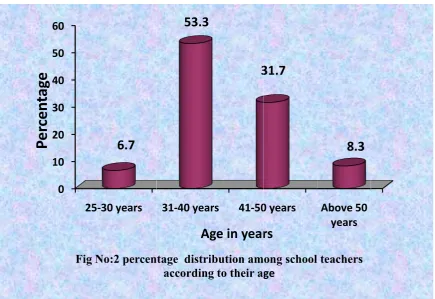
2 Percentage Distribution of school teachers according to their age. 37
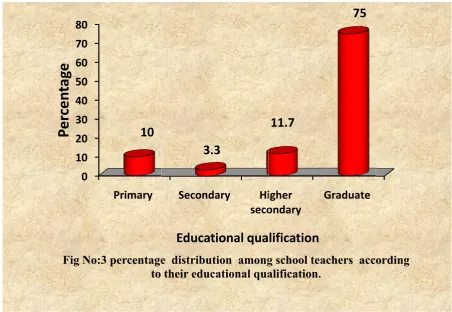
3 Percentage Distribution of school teachers according to their educational
qualification. 38
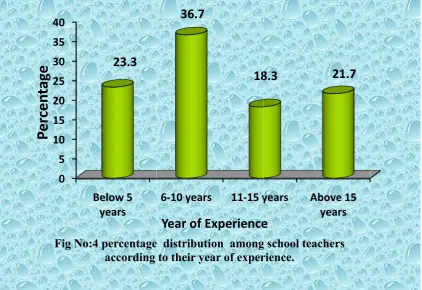
4 Percentage Distribution of school teachers according to their year of
experience. 39
5 Percentage Distribution Of school teachers according to their previous
knowledge. 40
6 Percentage Distribution of school teachers according to the type of
family. 41
7 Comparison of pre test and post test knowledge scores 44
LIST OF APPENDICES
APPENDIX. NO TITLE
I PERMISSION LETTER
II CONTENT VALIDITY
III CERTIFICATE OF CONTENT VALIDITY
IV LIST OF EXPERTIES
V CERTIFICATE FOR ENGLISH EDITING
VI CERFICATE FOR TAMIL EDITING
VII ENGLISH TOOLS
VIII TAMIL TOOLS
IX ENGLISH CONTENT FOR VIDEO ASSISTED TEACHING PROGRAMME
X TAMIL CONTENT FOR VIDEO ASSISTED TEACHING PROGRAMME
CHAPTER – I
INTRODUCTION
CHAPTER-I INTRODUCTION
"It shouldn't hurt to be a child"
Child abuse or maltreatment constitutes all forms ofphysical and/or emotional ill-treatment, sexual abuse, neglect or negligent treatment or commercial orother exploitation, resulting in actual or potential harm to the child's health, survival, development or dignity.
W.H.O
Child abuse include physical assault, physical neglect, emotional abuse, and sexual assault that involves physical contact.Child abuse has far-reaching negative effects on its victims and on society. Survivors of child maltreatment are at greater risk for physical, emotional, work, and relationship problems throughout childhood and into adulthood.
Neilson (2014) All forms of physical and/or emotional ill-treatment, sexual abuse, neglect or negligent treatment or commercial or other exploitation, resulting in actual or potential harm to the child‘s health, survival development or dignity in the context of a relationship of responsibility, trust or power‘‘.
Johnson-Reid, Kohl, & Brett,(2012) potential harm and ―…rests on actual harm being done to children…Flowing from above, child maltreatment or abuse can be categorized into physical abuse; emotional abuse; sexual abuse and neglect.
One of the major problems in understanding the scope of the subject of 'child abuse' is that it is extremely difficult to get responses from children on such a sensitive subject because of their inability to fully understand the different dimensions of child abuse and to talk about their experiences. It is therefore difficult togather data on abused children. Within countries, much less from country to country or region to region. Yet governments do estimate that the number of abused and neglected children is alarming, and unless governments get their act together and respond to the situation by way of both prevention and treatment, we will be doing a grave in justice to our children and would be denying them their basic rights.
Every year, thousands of families welcome a new baby into their home. The upcoming years are spent watching Disney movies, going to parks and petting zoos, buying ice cream from the truck, and finger painting with their family. Almost all those children brought into the world get to experience what it is to have a loving family, but for a small percentage, life is not so rosy. They are forced to deal with things that most of us would never imagine in our worst nightmares.
According to WHO (2010) ). It is estimated that 25-50% of children have suffered some forms of physical abuse and annually, there are 31, 000 homicides recorded among children under 15 years .
These findings and assertions are in tandem with the recent South African Police Service‘s crime statistics report for 2011/2012 which showed that between April 2011 and March 2012, 1 in 10 cases of reported serious contact crimes committed in South Africa were perpetrated against a child(SAPS,2012). According to the report, serious contact crimes include murder, attempted murder, sexual offences, assault with grievous bodily harm, common assault, aggravated robbery and common robbery. The same report showed that 1 in 20 of all reported murder as well as attempted murder cases were children .
Rape 227,080 children are sexually abused each year. Assaults 811,000 children are physically abused each year. Hatred. 97,320 children are emotionally abused each year. Neglect 2,011,280 children are neglected each year. Murder 60,500 children die of child abuse each and every year. Child abuse is a state of emotional, physical, economic and sexual maltreatment meted out to a person below the age of eighteen and is a globally prevalent phenomenon.
Jewkes et al., ( 2009). In South Africa, according to a recent report by the South African Medical Research Council , child abuse is still a pervasive problem despite the protection offered by various legislative instruments enacted since the advent of popular democracy .
Andersson & Ho-Foster,( 2008) In the survey, male child sexual abuse was very common especially in rural areas with 44% of all the male children respondents reporting that they have been coerced into having sex.
NEED FOR THE STUDY:
Globally, child abuse and its consequences remain a major public health problem .Psychologists conducted a study in the United States in 2010 which examined over 200 regular church attendees from eleven different denominations of Christianity, most of whom were educated, upper-middle class White Americans, found that extrinsic religious orientation was associated with a greater risk of physical child abuse.
A 2010 article in the BBC reports that thousands of African children have been abandoned, tortured and murdered because they are believed to be witches.
According to WHO, 2010, Despite the limitations associated with accurately determining the burden of child abuse, the United Nations Secretary General report on child abuse estimated that about 150 million girls and another 73 million boys less than 18 years were sexually assaulted worldwide (Pinheiro, 2006). Estimates from high-income countries showed that 4-16% and about 10% of children have been physically abused and subjected to psychological maltreatment respectively
In 2009 CBS News states that Unemployment and financial difficulties are associated with increased rates of child abuse. reported that child abuse in the United States had increased during the economic recession. It gave the example of a father who had never been the primary care-taker of the children. Now that the father was in that role, the children began to come in with injuries.
According to major countries, U.S. Department of Homeland Security
enticement . Nine Fresno -area residents are among the 255 child predators arrested during a Five week operation conducted by U.S. Immigration and Customs Enforcement’s (ICE) Homeland Security Investigations (HSI) and Internet Crimes Against Children (ICAC) task forces across the United States and its territories Operation iGuardian, which ran May 28 to June 30, was a surge operation conducted as part of HSI’s Operation Predator to identify and rescue victims of online sexual exploitation and to arrest their abusers as well as others who own, trade and produce images of child pornography.
In surveying public school students in Grades 6, 9 and 12 in the United States. A further study in the United States found that 28% of physically abused adolescents used drugs compared to 14% of non-abused adolescents Compared to 22% of the non-abused group, 36% of physically abused adolescents also had high levels of alcohol use.
Recent study by the Centers for Disease Control (CDC) estimated the total lifetime economic burden resulting from child maltreatment in the United States to be as large as $585 billion (Fang, Brown, Florence, & Mercy, 2012).
was a lower percentage, still showed a relationship in the fourth country (Moldova). Each country also showed a connection between the father not working outside of the home and either emotional or physical child abuse.
This study was conducted by reviewing medical literature, published between January 1987 and May 2005. In addition, reports were obtained from regional meetings and professional organizations. Each study or report was reviewed, assessed, and summarized.The result of this study was three studies from Kuwait identified 27 children; 22 with physical abuse, 3 with sexual abuse, and 2 with Munchausen's syndrome by proxy (MSP), and 3 deaths. Eleven case reports from Saudi Arabia identified 40 abused children; 24 with physical abuse, 6 with sexual abuse, 4 with MSP, and 6 with neglect. Fatal outcome was documented in 5 children. In Oman,5 cases of MSP were reported. A total of 150 hospital-based cases were reported from Bahrain; 50 with physical abuse, 87 with sexual abuse, and 10 with both forms of abuse. In Yemen, population based surveys revealed a wide spread use of corporal punishments and cruelty to children at homes, schools, and juvenile centers, which ranged from 51-81%.
care, nutrition and education. This reflects the socio-economic reality of the developing countries of the Asian region. The main factors that contribute to the magnitude of the problem of child abuse are poverty, illiteracy, caste system and landlessness, lack of economic opportunities, rural-urban migration, population growth, political instability and weak implementation of legal provisions.
In India, Bengaluru saw a number of cases of child sexual abuse in 2014 and people were out on streets protesting against the rise in crime against children. Out of 289 cases registered under Protection of Children Against Sexual Offenses Act (POCSO) in the last two years.
In India Harmful traditional practices like child marriage, caste system, discrimination against the girl child, childlabour and Devadasi tradition impact negatively on children and increase their vulnerability to abuse andneglect. Lack of adequate nutrition, poor access to medical and educational facilities, migration from ruralto urban areas leading to rise in urban poverty, children on the streets and child beggars, all result in breakdown of families. These increase the vulnerabilities of children and exposes them to situations of abuse and exploitation.
In India 33,098 cases of crimes against children were reported during 2011 as compared to 26,694 cases during 2010, suggesting a recent increase of 24.0 percent. Reports show that 53.22% of the abused children reported having faced one or more forms of sexual abuse.
destination country for trafficked children from within India and adjoining countries has, by conservative estimates, three to five lakh girl children in commercial sex and organized prostitution.
The population of children aged 0-6 years is 16.4 crores as per the 2007 Census. According to a UNESCO report, however, of the total child population, 2.07 crores (6%) are infants below one year; 4.17 crores (12%) are toddlers in the age group 1-2 years; 7.73 crores (22.2%) are pre-schoolers in the age group 3-5 years. The report highlights that only 29% of pre-primary age children are enrolled in educational institutions in India.
India has the world's largest number of sexually abused children, with a child below 16 years raped every 155th minute, a child below 10 every 13th hour and one in every 10 children sexually abused at any point of time. The National Crime Records Bureau (NCRB) reported 14,975 cases of various crimes against children in 2005.
Services under the ICDS scheme covered only 3.41 crore children in the age group 0-6 years as in March 2004, which is around 22% of the total children in that age group. Supplementary nutrition too was being provided to 3.4 crore children, as against 16 crore children. Of these, 53% were reported to be under-nourished.
Pradesh from where 127,58,46,42 and 39 cases were received respectively. Northeastern states of India, Sikkim, Meghalaya, and Tripura reported no child abuse complaints.
One of the major problem in our country is child abuse and women abuse.The most of the time children handling by teachers than parents.So both of them can be a safeguarding their children.Therefore, the researcher felt this topic is so important and evident topic for today’s society and had interest to evaluate the knowledge of teachers in the selected school and give information Phamplet to them so that they are benefitted. As today’s children are the future of our country so safeguarding the children is safeguarding the nation.
STATEMENT OF THE PROBLEM:
A quasi experimental study to evaluate the effectiveness of video assisted teaching programme on knowledge regarding prevention of child abuse among school teachers in selected school at Madurai.
OBJECTIVES OF STUDY:
1. To evaluate the pre test and post test level of knowledge regarding prevention of child abuse.
2. To evaluate the effectiveness of video assisted teaching programme on knowledge regarding prevention of child abuse.
RESEARCH HYPOTHESIS:
H1- The mean post test score on knowledge regarding prevention of child abuse is significantly higher than the mean pre test score among school teachers working at Capron hall school.
H2- There will be a significant relationship between pre test child abuse score with their selected demographic variables among school teachers working at Capron hall school.
OPERATIONAL DEFINITIONS:
Effectiveness:
It means producing the intended result.
In this study effectiveness refers to what extent the video assisted teaching programme can improve the knowledge of teachers in post test score.
Knowledge:
Refers to the awareness and understanding of the topic selected.In this study regarding prevention of child abuse.
Evaluate:
Refer to the organized systematic process of collecting information.In this,it is knowledge from teachers regarding prevention of child abuse.
Video assisted teaching programme:
It refers to the systematically developed teaching module designed for health education. In this, it is knowledge from teachers regarding prevention of child abuse. Teachers:
teacher who has handling child or children are taken for the study within the age group of 26 to 58years.(primary,secondary & higher secondary).
Child abuse:
It refers to the physical,sexual,or emotional mistreatment or neglect of a child or children.
ASSUMPTIONS:
Abused children will have difficulty in grow normally than non-abused children.
Child abused children may have frustration when abused by someone.
Use of video teaching programme helps to increase the knowledge of teachers.
Video teaching programme helps to establish the trusting relationship between teachers and students.
Communicating with children effectively is essential for prevention of child abuse in future.
Use of video teaching programme helps to improve the awareness of teachers.
DELIMITATIONS: The study will be delimited to
PROJECTED OUTCOME:
The finding of the study would help to identify and increase the knowledge among school teachers.
CHAPTER - II
CHAPTER-II
REVIEW OF LITERATURE
According to polit and hungler (1999) a review of related literature is an essential aspect of scientific research. It broadens the understanding of the researcher and helps to gain an insight necessary for the development of a broad conceptual context into which the problem fits.
This chapter consist of,
a. Studies related to incidents and prevelance of child abuse b. Studies related to knowledge on prevention of child abuse.
STUDIES RELATED TO INCIDENTS AND PREVELANCE OF CHILD ABUSE:
quality of data and reporting, these findings should be interpreted with caution. Several recommendations are made for improving data quality and reporting consistency on this important issue.
Teicher MH,Samson JA;(2013): Conducted a study on Childhood
maltreatment increases risk for psychopathology. For some highly prevalent disorders. Neurobiological findings in maltreated individuals were reviewed and compared with findings reported for these disorders. Maltreated individuals with major depression, anxiety, and substance use and post traumatic stress disorders have an earlier age at onset, greater symptom severity, more comorbidity, a greater risk for suicide, and poorer treatment response than nonmaltreated individuals with the same diagnoses.. Maltreated individuals also differ from others as a result of epigenetic modifications and genetic polymorphisms that interact with experience to increase risk for psychopathology. Phenotypic expression of psychopathology may be strongly influenced by exposure to maltreatment, leading to a constellation of ecophenotypes. While these ecophenotypes fit within conventional diagnostic boundaries, they likely represent distinct subtypes.
professionals involved in the assessment of cases to attain the correct diagnosis is crucial. It is suggested that its incidence indicators be assessed at the national level.
Valtolina GG,Colombo C;(2012): Conducted a quantitative research,on "children left behind" refers to minors who are left in their home country while one or both of their parents emigrate for work for at least six months. The emotional neglect felt by these children is associated with lack of affection and physical intimacy. Through a review of the literature, the purpose of this paper was to show that distress in this pattern of deprivation is manifested by the children in several ways and in different contexts: low school performance, drop-out from school, conflicts with teachers and peers, anxiety low self-esteem, tendency to feel depressed, apathy, suicidal behaviour, and substance abuse.
Shenk, & Putnam, (2009): Concluded in their Meta-analyses of 21 studies of child sexual abuse reported that this form of abuse more than doubled the risk of adolescent pregnancy (i.e., prior to age 20 years). Further to this, a study by Fergusson and colleagues (2010) found that young women (18 years of age) exposed to child sexual abuse had significantly higher rates of teenage pregnancy, increased rates of sexually transmitted diseases, and higher rates of multiple sexual partnerships and appeared to be more vulnerable to further sexual assault and rape
Harkness & Lumley, (2008) Concluded in their seven large-scale studies, all studies showed a high association between child maltreatment and depression in adolescence . For example, the authors cited a longitudinal study by Brown and colleagues which found that children and adolescents who reported a history of abuse or neglect were three times more likely to exhibit a depressive disorder than non-maltreated children. Similarly, in a Victorian study of characteristics of children referred to a therapeutic health service for children who had been abused or neglected (the Take Two Program), 62% of children met the criteria for at least one mental health diagnosis .
Ministry of Women and Child Development (2007) conducted a study related to physical abuse and sexual abuse, involving 12,447 children, reported that 69% were physicallyabused and 53% were subjected to one or more forms ofsexual abuse.
STUDIES RELATED TO KNOWLEDGE ON PREVENTION OF CHILD ABUSE.
Cristofel et, al;(2014) conducted a study on recognition and reporting practices of child abuse by South African teachers provides a strong motivation for an exploratory study aimed at examining primary school teachers‘ at South Africa. For Reporting process and the provision of training which improves professionals‘. Such training should also address underlying negative attitudes and beliefs which hinder reporting. The above findings and assertions have implications for child abuse detection and reporting in South African schools. The unacceptably high burden of child abuse in South Africa coupled with the dearth of literature on knowledge of manifestations of child maltreatmen.suggestions on improving child abuse detection and reporting in South African school teachers.
Benjamine Olamide (2012): Conducted a study on assess the teachers‘ knowledge and attitudes towards identifying and reporting suspected cases of child abuse. observational, descriptive, cross sectional, quantitative methods were used. A self-administered questionnaire was completed by 237 teachers selected by multi-stage stratified proportional random sampling from a total of 2496 primary school teachers.. The level of significance was set as 95%. The study results showing that teachers were generally knowledgeable about possible indicators of child abuse. There were critical gaps in participants‘ knowledge of reporting procedures and most of the teachers (70.2%) have had no training on child abuse detection and reporting. Previous training on child abuse was associated with an increased likelihood to have detected abuse in the past (OR 4.86, 95%CI 2.64-8.96, p < 0.01). while most teachers agreed that all forms of child maltreatment should be reported, they still displayed differential reporting of suspected cases. The decision to report was often influenced by their perceived seriousness of the on-going abuse while uncertainty about on-going abuse was one of the most important barriers to lodging a report of suspected cases.
requires a report, and to be able to override their concerns about the consequences of their reporting.
Bridgstock (2010) conducted a cross sectional study has a two-part process in which teachers must first detect…and then report…” these cases. They hypothesized that the detection phase is subject to knowledge of the signs and symptoms of child abuse and neglect while the reporting phase is influenced by the teachers‘ awareness of the laws, policies and procedures for reporting; their attitudes and their beliefs about the likelihood that the outcome of reporting will benefit the child; and whether the school set up facilitates or hinders reporting.The results of this study the teachers had lack of knowledge before training.after that the teachers knowledge was improved to detect the child abuse earlier.
behaviour that suggest child abuse . Thus, professionals do not have to prove the occurrence of abuse, they are only required to report their suspicion to designated personnel who will then investigate and determine if maltreatment has actually occurred.
Keervann Walsh (2008) conducted a qualitative study to identify and evaluate their child abuse and neglect knowledge among school teachers at New York.Selected a eight purposively selected early childhood teachers. Findings reveal that, in the absence of preservice and inservice education specifically about child abuse and neglect, early childhood teachers held and deployed knowledge in resourceful ways. They used, as a basis, their existing early childhood knowledge and adapted this knowledge by augmenting it with a range of personal and professional knowledge resources to fit their particular challenges and situations. This approach, however competent and innovative, also reveals shortfalls in knowledge. Implications of this research are drawn for child abuse and neglect curriculum development in initial and continuing teacher education including the case for specialist knowledge needed to establish teachers’ professional reputation for dealing capably with cases of child abuse and neglect.
Haj-Yahia & Attar-Schwartz, (2008) conducted a study using an observational, descriptive cross sectional quantitative study design. Using a self-administered questionnaire, this study sought to describethe recognition capabilities; attitudes and reporting practices of the teachers with respect to suspected cases of child abuse
teachers at Queensland, Australia.This study examines a cohort of 81 Primary School teachers, by regarding child sexual abuse questionnaire. Using quantitative and qualitative data, the results show that while these teachers have a substantial awareness of the role's importance, without gender or age differences, they are suffering a crucial lack of confidence in their ability to identify child sexual abuse, and also in their ability to respond appropriately to suspicions of it., this study accords with a variety of imperatives in national and international government-sponsored research, policy and practices which are focussing on this timely, ubiquitous and costly issue, but teacher preparation to respond more effectively to child sexual abuse and its mandatory reporting.
Prinsloo et,al; (2006) conducted a study related to the body of knowledge by examining primary school teachers‘ knowledge of manifestations of child abuse and neglect as well as document their attitudes and reporting practices at Australia. Given the paucity of literature on the recognition and reporting practices of child abuse by South African teachers.
CONCEPTUAL FRAME WORK
Polit and Hungler (1995) state that “the conceptual framework is inter-related concepts or abstractions that are assembled together in some rationale scheme by virtue relevance to a common thing”. This is the device that helps to stimulate research knowledge.
The conceptual framework adopted for the present study was based on Pender’s Health Promotion Model. Health promoting behavior is desired outcome when providing client care and education. Health promoting behavior may be an action directed towards attaining positive health outcomes such as optimal well being, personal fulfillment and productive living. Pender identifies the following factors as having a potential influence on health promoting behavior. It includes
INDIVIDUAL CHARACTERISTICS :
PRIOR RELATED BEHAVIOR:
Prior related behavior is a health promoting behaviors should result in enhanced functional ability and better quality of life at all stages of development. In this study the researcher focuses that to check the previous knowledge regarding prevention of child abuse.
DEMOGRAPHIC VARIABLES:
BEHAVIORAL SPECIFIC COGNITION AND EFFECT:
PERCEIVED BENEFITS OFACTION:
Anticipated positive out comes that will occur from health behaviour.In this study the researcher focuses are the expected positive outcomes of proposed health promoting knowledge,that is create awareness regarding prevention of child abuse.
PERCEIVED BARRIERS TO ACTION:
Anticipated, imagined or real blocks and personal costs of understanding a given behavior.In ths study the researcher focuses on person believes and lack of motivation.
PERCEIVED SELF EFFICIENCY:
Judgment of personal capability to organise and execute a health-promoting behaviour.In this study the researcher focuses that, promoting the teachers self efficiency to identify the cases of child abuse and related problems after administration of video assisted teaching programme.
INTERPERSONAL INFLUENCES:
HEALTH PROMOTING OUTCOME:
HEALTH PROMOTING BEHAVIOR:
Fig.1.CONCEPTUAL FRAMEWORK BASED ON MODIFIED PENDERS HEALTH PROMOTION MODEL(1996)
Behavioral specific cognition and effect
Commitment to plan of
action
Individual characteristics
Health promoting outcome
Prior related
behavior
Knowledge on child
Teachers demographic variables
Biological factors: Age & sex Socio economic factors: Education ,type of
family,previous knowledge and year of experience.
Perceived benefits of action
Increased knowledge regarding child abuse
Perceived barriers of action
Personal beliefs ,lack of motivation
Perceived self efficiency
Health personnel ability to sustain and health promoting behavior
Interpersonal influences
Mass media and news paper
Health promoting behavior Likely hood acquiring knowledge on child abuse Adminiistr
CHAPTER –III
RESEARCH
CHAPTER-III
METHODOLOGY
Research methodology is the systematic way to solve the research problem (Kothari 1990).It consists of all general and specific activities from identification of the problem to final interpretation and conclusion. This chapter deals with the research approach, research design, population, the setting, sample and sampling technique. It further deals with development of tool, procedure for data collection and plan for data analysis.
RESEARCH APPROCH:
A evaluative approach is used for this study .
RESEARCH DESIGN:
Research design selected for the present study was one group pretest and post test design.
O1---Pre test
X---Video Assisted Teaching Programme regarding prevention of child abuse. O2---Post test
VARIABLE UNDER STUDY:
Dependent Variable: Knowledge of teachers regarding prevention of child abuse. Independent Variable: video assisted teaching programme regarding prevention of child abuse.
SETTING:
The study was conducted at Capron hall school at Madurai,Tamilnadu.
POPULATION:
The target population for this study was primay,secondary and higher secondary school teachers.
SAMPLE & SAMPLE SIZE:
The sample consists of primary,secondary and higher secondary school teachers working in Capron hall school in Madurai and sample size was 60.
SAMPLING TECHNIQUE:
Non-Probability convenient sampling technique was used to select the subject for the study.
CRITERIA FOR SAMPLE SELECTION:
The sample is selected based on the following inclusion & exclusion criteria.
Inclusion Criteria:
Teachers who are speak and understand English and Tamil.
Teachers who are willing to participate in the study.
Exclusion Criteria:
Teachers who were not present on the day of data collection.
Teachers who were not willing to participate in the study. TOOL AND SCORING PROCEDURE:
A structured Interview Schedule was used to evaluate the knowledge regarding prevention of child abuse among school teachers and it consists of two sections.
PART: 1 Demographic variables such as age,sex,educational status, year of experience, previous knowledge and type of family.
PART: 2 Structued Interview Schedule regarding prevention of child abuse .
DESCRPTION OF THE INSTRUMENT:
DESCRPTION OF THE QUESTIONNAIRE:
AREA OF QUESTIONS NO.OF QUESTIONS
Introduction 2
Rights of child 1
Definition 1
Causes 3 Types 9
Prevention 10
Legal issues 2
Child helpline 2
Over All 30
INTERPRETATION:
Score Percentage (100%)
Level of knowledge
0-15 0-50% In adequate
16-23 51-75% Moderately adequate
VALIDITY AND RELIABILITY OF TOOLS: VALIDITY
The validity of the tool was established in consultation with 5 nursing experts and those 1 expert from psychiatry, There was a changes made according to the opinions given by experts.
RELIABILITY
The reliability of the tool was established by test retest technique. The calculated reliability(r= 0.84) was found feasible. The tool was found significant and feasible.
PILOT STUDY
DATA COLLECTION PROCEDURE: PHASE:1
The formal written permission were got from the headmistress of the Capron hall school after explain the benefits of video assisted teaching programme regarding prevention ofchild abuse.
PHASE:2
The data were collected in Capron hall school. The researcher obtained verbal consent from the participants, after explaining the benefits of the study, using Non- probability convenient sampling technique. 60 samples were collected. It was divided in to two sub groups and each group comprises of 30 teachers.In first group they were 30 teachers assembled and administration of structured interview schedule that includes demographic variables. After 30mts video teaching was given for 45mts regarding prevention of child abuse and phamlets given to each participants. 1hour and 30mts was utilized for first group. Then another 1hr and 30mts was utilized for the second group. The 10th day also video teaching was given for 45mts regarding prevention of child abuse and phamlets given to each participants and utilized 1hr &30mts for each group for post test, finally the data were analyzed.
PLAN FOR DATA ANALYSIS:
ETHICAL CONSIDERATIONS
The proposed study was conducted after the approval of dissertation committee. The written permission was obtained from Capron hall school in Madurai. Oral consent was obtained from each participant before data collection. Assurance was given to them that confidentiality will be maintained throughout the study and it was maintained.
CHAPTER – IV
DATA ANALYSIS AND
CHAPTER-IV
DATA ANALYSIS AND INTERPRETATION
This chapter deals with the analysis and interpretation of the data collected to evaluate the effectiveness of video assisted teaching programme on knowledge regarding prevention of child abuse among school teachers.
ORGANIZATION OF DATA:
The collected data were analyzed and interpreted under the following headings:-
Demographic data
Comparison of pre and post test score to evaluate knowledge regarding prevention of child abuse among school teachers.
Effectiveness of video assisted teaching programme to improve the knowledge regarding prevention of child abuse among school teachers.
Section A: Demographic variable:
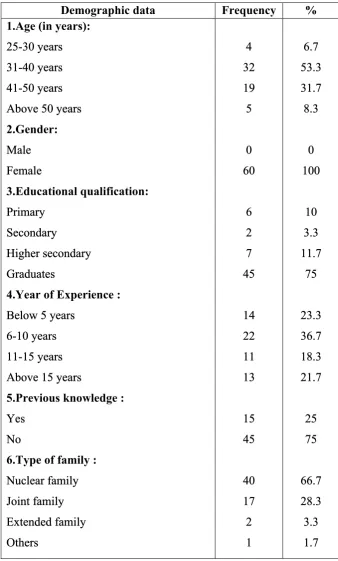
Table: 1 Frequency and percentage distribution of school teachers working in
selected school at Madurai, according to their demographic data.
(n=60)
Demographic data Frequency %
1.Age (in years): 25-30 years 31-40 years 41-50 years Above 50 years 2.Gender: Male Female 3.Educational qualification: Primary Secondary Higher secondary Graduates
4.Year of Experience : Below 5 years
6-10 years 11-15 years Above 15 years
5.Previous knowledge : Yes
No
Pe
rc
e
n
ta
ge
0 10 20 30 40 50 60
25‐3
g
Fig N
30 years
6.7
No:2 percen
31‐40 yea
53.3
Ag
ntage distri according
rs 41‐50
3
ge in year
ibution am g to their ag
0 years
31.7
rs
ong school
ge
Above 50
years
8.3
[image:56.595.112.548.206.505.2]0 10 20 30 40 50 60 70 80
Pe
rc
e
n
ta
[image:57.595.107.560.208.520.2]ge
Fig No:3
Primary
10
percentage to
Seconda
3.3
Educat
e distribut their educary Hi seco
3
ional
qua
tion amongational qua
igher
ondary
11.7
lification
g school tea alification.Graduate
75
Pe
rc
e
n
ta
ge
0 5 10 15 20 25 30 35 40
Be y
[image:58.595.112.535.210.500.2]g
Fig No:4 p
elow 5
years
23.3
percentage according
6‐10 years
36.7
Year
of
E
e distributi to their yes 11‐15 y
18
Experience
ion amongar of exper
years A
8.3
e
g school tea rience.
bove 15
years
21.7
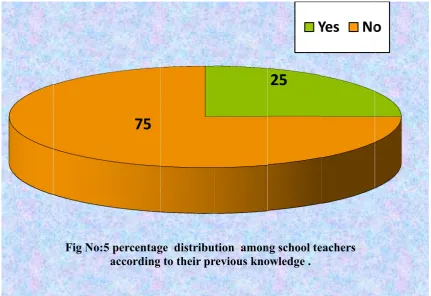
Fig No:5
75
5 percentag according
ge distribu to their pr
ution amon revious kno
25
ng school te owledge .
Y
eachers
F
0 10 20 30 40 50 60 70
Pe
rc
e
n
ta
[image:60.595.113.538.237.531.2]ge
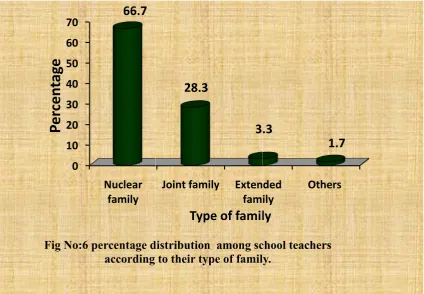
Fig No:6 pe
Nuclear
family
66.7
ercentage d according
Joint fami
28.3
Typ
distribution to their typ
ily Exten fam
3
pe
of
famil
n among sc pe of famil
ded
ily
Ot
.3
ly
chool teach y.
thers
1.7
Section B: Comparison of pretest and post test score to evaluate the knowledge regarding prevention of child abuse among teachers in selected school at
Madurai
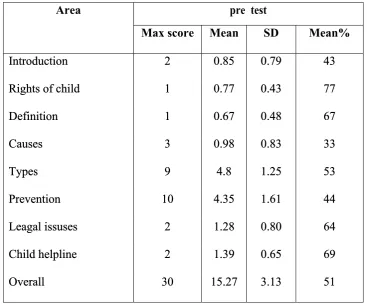
[image:61.595.132.500.285.589.2]Table:2 Mean , SD and mean% scores of pre test to evaluate the effectiveness of video assisted teaching programme knowledge regarding prevention of child abuse among teachers in selected school at Madurai.
Table:2 The table reveals that overall pretest mean score on knowledge regarding prevention of child abuse among school teachers was 51% shows Inadequate knowledge.
Area pre test
Max score Mean SD Mean%
Introduction 2 0.85 0.79 43 Rights of child 1 0.77 0.43 77
Definition 1 0.67 0.48 67
Causes 3 0.98 0.83 33
Types 9 4.8 1.25 53
Prevention 10 4.35 1.61 44
Leagal issuses 2 1.28 0.80 64 Child helpline 2 1.39 0.65 69
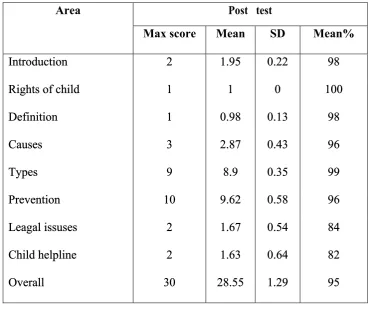
Table:3 Mean , SD and mean% scores of post test to evaluate the effectiveness of video assisted teaching programme knowledge regarding prevention of child
[image:62.595.130.503.181.490.2]abuse among teachers in selected school at madurai
Table: 3 The table reveals that overall pretest mean score on knowledge regarding prevention of child abuse among school teachers was 95% shows Adequate knowledge.
Area Post test
Max score Mean SD Mean%
Introduction 2 1.95 0.22 98
Rights of child 1 1 0 100
Definition 1 0.98 0.13 98
Causes 3 2.87 0.43 96
Types 9 8.9 0.35 99
Prevention 10 9.62 0.58 96
Leagal issuses 2 1.67 0.54 84 Child helpline 2 1.63 0.64 82
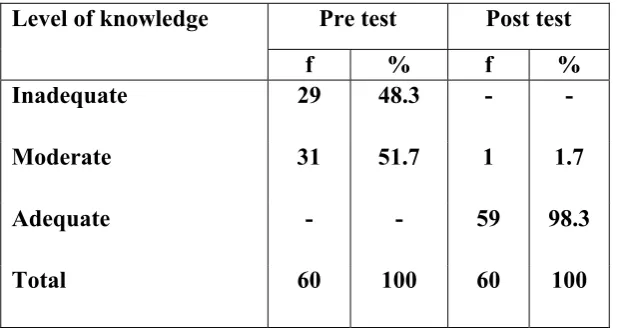
Table:4 comparison of pre & post test scores to evaluate the effectiveness of video assisted teaching programme on knowledge regarding prevention of child
abuse among teachers in selected school at Madurai.
Level of knowledge Pre test Post test
f % f %
Inadequate 29 48.3 - -
Moderate 31 51.7 1 1.7
Adequate - - 59 98.3
[image:63.595.163.472.181.347.2]Total 60 100 60 100
0 20 40 60 80 100
Percentage
Fig.N
Inadequat 48.3
No:7 Comp
te M 0
parison of p
Moderate 51.7
1.7
pre test and
Ade
d post test
equate
0
98.3
knowledgee scores
[image:64.595.109.557.210.434.2]Section:C
Table:5 paired “t”-test values to evaluate the effectiveness of video assisted teaching programme on knowledge regarding prevention of child abuse among
teachers in selected school at Madurai.
Area pre test post test Mean difference
‘t’-value
p-value
Mean SD Mean SD
Introduction 0.85 0.79 1.95 0.22 1.1 10.43 0.000*** Rights of child 0.77 0.43 1 0 0.23 4.24 0.000*** Definition 0.67 0.48 0.98 0.13 0.32 5.23 0.000*** Causes 0.98 0.83 2.87 0.43 1.88 15.82 0.000*** Types 4.8 1.25 8.9 0.35 4.1 23.32 0.000*** Prevention 4.35 1.61 9.62 0.58 5.27 24.95 0.003** Leagal issuses 1.28 0.80 1.67 0.54 0.38 3.09 0.000*** Child helpline 1.39 0.65 1.63 0.64 0.24 2.04 0.04* Overall 15.27 3.13 28.55 1.29 13.28 32.59 0.000***
*-p<0.05, significant and **-p<0.01 &***-p <0.001 , Highly significant
TableNo:6 Association of pre test knowledge scores of school teachers and their selected demographic variables.
Demographic variables Inadequate Moderate Adequate
χ2 p-value
f % f % f %
1.Age (in years): 25-30 years 31-40 years 41-50 years Above 50 years
1 18 8 2 1.7 30 13.3 3.3 3 14 11 3 5 23.3 18.3 5 - - - - - - - - 2.11 (df=3) 0.55 2.Gender: Male Female - 29 - 48.3 - 31 - 51.7 - - - -
0 1
3.Educational qualification: Primary Secondary Higher secondary Graduates 2 1 2 24 3.3 1.7 3.3 40 4 1 5 21 6.7 1.7 8.3 35 - - - - - - - - 2.08 (df=3) 0.554
4.Year of Experience : Below 5 years
6-10 years 11-15 years Above 15 years
4 11 8 6 6.7 18.3 13.3 10 10 11 3 7 16.7 18.3 5 11.7 - - - - - - - - 4.86 (df=3) 0.182
5.Previous knowledge : Yes No 5 24 8.3 40 10 21 18.3 35 - - - - 1.802 (df=1) 0.179
6.Type of family : Nuclear family Joint family Extended family Others 20 7 1 1 33.3 11.7 1.7 1.7 20 10 1 0 33.3 18.3 1.7 0 - - - - - - - - 1.46 (df=3) 0.691
*-P<0.05 ,significant and **-P<0.01 &***-P<0.001 , Highly significant
CHAPTER - V
CHAPTER-V
DISCUSSION
Children in most sections of Indian society are traditionally and conventionally not consulted about matters and decisions affecting their lives. The conservative nature of Indian society makes it difficult for the teachers and parents to differentiate the incidence of child abuse. The present study focuses to evaluate the knowledge of teachers regarding prevention of child abuse. The discussion about the study findings are presented in this chapter based on the objectives and related literature.
The discussion will therefore be made under the following headings:
1. (a) To evaluate the pre test level of knowledge regarding prevention of child abuse among school teachers.
(b)To evaluate the post test level of knowledge regarding prevention of child abuse among school teachers.
2. To evaluate the effectiveness of video assisted teaching programme on knowledge regarding prevention of child abuse.
First Objective:
(a) To evaluate the pretest level of knowledge regarding prevention of child
abuse among school teachers.
In pre test the majority 29 (48.3%) number of teachers with Indequate knowledge and 31 (51.7%) number of teachers with moderately adequate level of knowledge and overall mean score was(51%) .
This study findings were consistent with the study conducted by Manuela WA, Ruiter,et,al; (2013) and he concluded that a majority of that although both groups of professionals are aware of child abuse signs and risks, they are also lacking specific knowledge. The results suggest that frontline workers are in need of supportive tools in the child abuse detection and reporting process. On the basis of our findings, directions for improvement of child abuse detection and reporting are discussed.
(b) To evaluate the post test level of knowledge regarding prevention of child
abuse among school teachers.
In post test the majority 59 (98.3%) number of teachers with indequate knowledge and (1..7%) number of teachers with moderate level of knowledge and overall mean score was(95%) .
Second Objective: To evaluate the effectiveness of video assisted teaching programme on knowledge regarding prevention of child abuse.
The mean and SD of pre test knowledge score was(15.27± 3.13) and post test knowledge score was (28.55±1.29).The paired ‘t’ value shows that there is significant difference between pre test and post test knowledge score (t-32.59) at,(< 0.001) shows that there is statistical difference between the pre and post test level of knowledge regarding prevention of child abuse among school teachers.
This study findings were consistent with the study conducted by Benjamine Olamide (2012). and he concluded that, primary school teachers had invaluable insight into teachers‘ ability to recognise manifestations of child abuse; their knowledge of South African mandatory reporting laws and procedures; their previous reporting practices and some of the beliefs shaping their attitudes and practices. The overall response rate for this study was 71% (237 respondents out of 332 contacted participants). This is better than the figures reported for other studies but comparable to that reported by , this response rate meets the generally acceptable quality threshold of 60% for surveys . For instance, in-service training contributed less than a quarter to the pool of teachers with any training on child abuse despite the fact that most of the teachers (86.5%) expressed their willingness to participate in any training aimed at strengthening their child abuse detection and reporting skills.
Third objective To associate the pretest level of knowledge regarding prevention of child abuse among school teachers with their selected demographic variabl
teachers were significant at*_ p < 0.05 level and **_p<0.01&***_p<0.001,highly significant.
CHAPTER – VI
SUMMARY, CONCLUSION,
IMPLICATION, RECOMMENDATIONS
CHAPTER-VI
SUMMARY, CONCLUSION, IMPLICATION,
RECOMMENDATIONS AND LIMITATIONS.
This chapter briefly presents the Summary of the study, Conclusion, Implications for using, Recommendation and limitations.
SUMMARY OF THE STUDY:
The study was done to evaluate the effectiveness of video assisted teaching programme on knowledge regarding prevention of child abuse in Capron hall school at Madurai.
An evaluative study with one group pre test and post test,i.e.,Quasi experimental design was used for the study.The total sample of the study was 60 school teachers.The samples were selected by Non-probability convenient sampling method which met the inclusion criteria.The study was based on penders health promotion theory was applied to the study.Review of literature helped the investigator to develop necessary tool. The instrument consist of two parts with demographic variables,structured knowledge questionnaire to evaluate the improve the knowledge among school teachers.
Data were collected at Capron hall girls higher secondary school at Madurai.This data were analyzed using both descriptive and inferential statistics.
MAJOR FINDINGS OF THE STUDY:
Regarding sex, majority 60 number (100%) of teachers are females.
Regarding educational status, majority 45 number (75%) of teachers were graduates.
With Regarding year of experience of majority 22 number(36.7%)of teachers within 6-10years.
Regarding the previous knowledge,majority 45 number(75%) of teachers have inadequate knowledge.
With regard to the type of family majority 40 number (66.7%) of teachers were nuclear family.
knowledge regarding prevention of child abuse among school teachers in pre test the mean 51% had overall inadequate knowledge score .
The obtained t value for the mean difference between the pre test and post test level of knowledge among school teachers was 32.59 and it was significant at 0.001 level.
CONCLUSION:
The study findings revealed that there was a significant improved the knowledge regarding prevention of child abuse after the video assisted teaching programme.The provision of video assisted teaching programme will motivate the school teachers and help them to improve the knowledge level.
NURSING IMPLICATIONS: Nursing service:
The nurse personnel need to prepare teaching and learning materials like information guide, which can be studied at schools.
Nursing education:
The nurses should be encouraged to participate in awareness programs regarding child abuse.
As a nurse educator there is an abundant opportunity for nursing professionals to educate people about child abuse.
Nurse educator should conduct health campaigns and should use different strategies
Nursing administration:
The nursing administrator should develop standardized protocols in managing abused children and their rehabilitation.
Nursing administrator can organize continuing education programmes on the prevention of child abuse for nursing personnel and motivate them to educate the common public.
Nursing research:
The researcher can develop appropriate health education tools for educating people.
The study will motivate beginning researchers to conduct the same study with different variables on large scale.
RECOMMENDATIONS
A similar study can be done with a large sample for generalization
Teachers 'participation in meetings held by village education committees on issues dealing with school.
LIMITATIONS:
REFERENCES BOOK REFERENCES
Bimla kapoor “The text book of psychiatric nursing” 20th edition published by kumar publishing house, delhi.
Black JM, Hawks JH, Keene AM. Medical surgical nursing. 6th ed. Philadelphia: Elsevier Mosby; 2006.
Brockop Y.Dorothy, Hastings A. Marie and Tolsma., (2003) “Fundamentals of nursing research”, (3rd ed.), USA; Jones and Bartlett Publishers.
Deborah, A., (2003) “Psychiatric nursing”, (4thed). Philadelphia: W.B Saunders
Company.
Dona Wong.et.all., "Wong's essential of pediatric nursing" 6th Edition -2202. Gopsons, paper limited. Noida. .
Elizabeth m.varcolis “The text book of mental health &psychiatric nursing”, published by jaypee brothers.
Elizabeth,M.,(1996)”Mental health nursing”,(3rded). Philadelphia:W.B sounders company.
Fortinash, P., et.al., (1996) “Psychiatric mental health nursing”, (1sted). Philadelphia: Mosby publication.
Gelder , M .Et Al. “Shorter Oxford Text Book Of Psychiatry”.4th Edition. Oxford New Delhi University Press: 2002.
Gelder Lopez. “New Oxford Of Psychiatry” .1st Edition .Italy Oxford Press.1998
Gurumani ,N., (2005) “An introduction to Biostatics”, (2nd ed.), New Delhi; MJP publishers (P) Ltd.
Haber,S., (1997) “Comprehensive psychiatric nursing”, (5thed). St.Louis Missouri: Mosby Publishers, 623-628.
Jarrell Stephen, B., (1994).”Basic statistics”, (1sted.), USA; WM. C. Brown Publishers, 108 – 141.
Jacob anthikod, “psychiatric nursing,” 4th edition jaypee brothers medical publishers.
Keltzner,L., (2003) “Psychiatric nursing”, (4thed). USA: Mosby publishers. Mary townsed. R.N.., "Essential of psychiatric/mental health nursing".
First Edition 1999. F. A Davis & company Philadelphia 9.
Mary.c.townsend “The text book of mental health nursing” 6th edition F.A.Daris company publications.
Mary Ann boyd, “Psychiatric contemporary practice,” 3rd edition, Lippincott Williams Wilkins.
Mary Ann Boyd, D., (2008) “Psychiatric nursing”, (4thed). New Delhi: Lippincott publishers.
Marriner TA, Raile AM. Nursing theorists and their work. 5th ed. Sakraida T.Nola J. Pender. The Health Promotion Model. St Louis: Mosby; 2005
Nareen caven frish lawrence, “Psychiatric &Mental health nursing”, 3rd edition,haryand Thomson Delmar learning publications.
Polit DF, Beck CT. Nursing research:Principles and methods. 7th ed. Philadelphia: Lippincott Williams & Wilkins; 2007
Potter PA, Perry AG. Fundamentals of nursing. 6th ed. St.Louis: Elsevier Mosby; 2006.
Parul Datta., "Pediatric nursing". 2nd Edition (2009). Jaypee Brothers Medical Publishers (P) limited.
Polit, F. Denise and Cheryl Tatano Beck., (2008) “Nursing Research”, (5th ed.), New Delhi; woltersKluwes (India) Pvt. Ltd.
Poilt&Hangler, 'Nursing Research Principles And Methods' 5th Edition; Philadalphia; Lippincott Company.
Prabhakara, G.N., (2006) “Biostatistics”, (1sted.), New Delhi; Jaypee Brothers Medical publishers (P) Ltd.
Stuart, W., (2005) “Principles and practice of psychiatric nursing,” (8thed). St.Louis Missouri: Mosby Publishers.
Suraj Gupta., "The short text book of pediatrics" 8* edition -1995., Jaypee Brothers Media Publishers.
Sreevani “The text book of mental health psychiatric nursing” (3rded). published by jaypee brothers.
Wanda, K., (2006) “Psychiatric mental Health Nursing”, (6thed). USA: Lippincott Publishers.
William and Beck, R., (1992)”Mental health psychiatric nursing” (3rded). Philadelphia : Mosby publication.
JOURNAL REFERENCES
Abrahams, N., Casey, K. & Daro, D. (1992). Teachers‘ knowledge, attitudes, and beliefs about child abuse and prevention. Child Abuse & Neglect, 16: 229–238.
Ainsworth, F. (2002). Mandatory reporting of child abuse and neglect: does it really make a difference? Child & Family Social Work,7:57–63.
Alvarez, K.M., Kenny, M.C., Donohue, B. & Carpin, K. M. (2004). Why are professionals failing to initiate mandated reports of child maltreatment, and are there any empirically based training programs to assist professionals in the reporting process? Aggression and Violent Behavior, 9: 563-578.
Andersson, N. & Ho-Foster, A. (2008). 13,915 reasons for equity in sexual offences legislation: International Journal for Equity in Health, 7:20.
Aynsley-Green, A & Hall D. (2009). Safeguarding children: a call to action. Lancet, 373: 280-281.
Baginsky, M. & Macpherson, P. (2005). Training teachers to safeguard children: Developing a consistent approach. Child Abuse Review, 14(5): 317–330.
Beck, K.A., Ogloff, J.R.P. & Corbishley, A. (1994). Knowledge, compliance, and attitudes of teachers toward mandatory child abuse reporting in British Columbia. Canadian Journal of Education, 19:15-29.
Centers for Disease Control and Prevention (CDC). (2010). Strategic direction for child maltreatment prevention.
Centers for Disease Control and Prevention (CDC). (2011). Epi Info version 3.5.3.
Centers for Disease Control and Prevention (CDC). (2012b).
Centers for Disease Control and Prevention (CDC). (2012a). Child maltreatment: Risk and protective factors.
Commission on Social Determinants of Health (CSDH). (2008). Closing the gap in a generation: Health equity through action on the social determinants of health.
Geneva: World Health Organisation. Coovadia, H., Jewkes, R., Barron, P., Sanders, D. & McIntyre, D. (2009).. Child and Family Social Work, 13:378– 390.
Denler, H., Wolters, C. & Benzon, M. (2009). Social Cognitive Theory: Dubowitz, H. & Bennet, S. (2007). Physical abuse and neglect of
children.Lancet, 369:1891-1899.
Durrheim, K. & Painter, D. (2009). Ch. 7 – Collecting Quantitative Data: Sampling and Methodology. In Terre Blanche, M., Durrheim, K. & Painter, D. (eds). Research in practice: Applied methods for the social sciences. Cape Town: UCT Pr