T E C H N I C A L A D V A N C E
Open Access
Seven steps to mapping health service
provision: lessons learned from mapping
services for adults with Attention-Deficit/
Hyperactivity Disorder (ADHD) in the UK
Anna Price
1*, Astrid Janssens
1,2, Susan Dunn-Morua
3, Helen Eke
1, Philip Asherson
4,5, Tony Lloyd
6and
Tamsin Ford
1Abstract
Background:ADHD affects some individuals throughout their lifespan, yet service provision for adults in the United Kingdom (UK) is patchy. Current methods for mapping health service provision are resource intensive, do not map specialist ADHD teams separately from generic mental health services, and often fail to triangulate government data with accounts from service users and clinicians. Without a national audit that maps adult ADHD provision, it is difficult to quantify current gaps in provision and make the case for change. This paper describes the development of a seven step approach to map adult ADHD service provision in the UK.
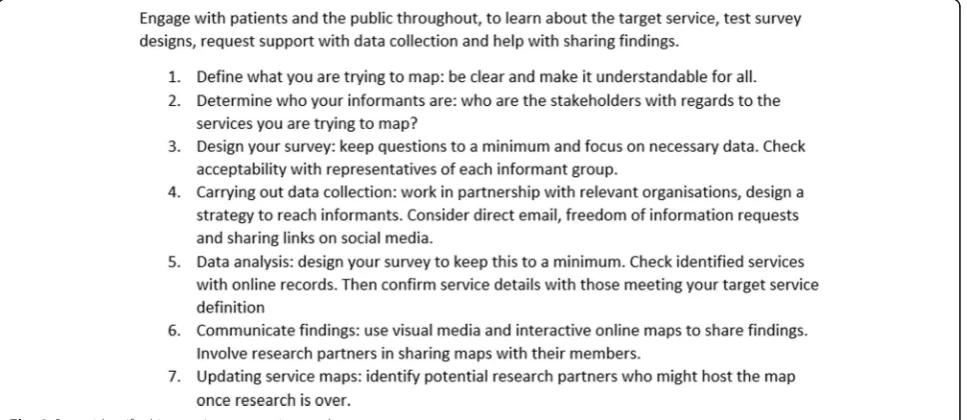
Methods:A mapping method was piloted in 2016 and run definitively in 2018. A seven step method was developed: 1. Defining the target service 2. Identifying key informants 3. Designing the survey 4. Data collection 5. Data analysis 6. Communicating findings 7. Hosting/updating the service map. Patients and members of the public (including clinicians and commissioners) were involved with design, data collection and dissemination of findings.
Results:Using a broad definition of adult ADHD services resulted in an inclusive list of identified services, and allowed the definition to be narrowed to National Health Service (NHS) funded specialist ADHD services at data analysis, with confidence that few relevant services would be missed. Key informants included patients, carers, a range of health workers, and commissioners. A brief online survey, written using lay terms, appeared acceptable to informants. Emails sent using national organisations’mailing lists were the most effective way to access informants on a large scale. Adaptations to the methodology in 2018 were associated with 64% more responses (2371 vs 1446) collected in 83% less time (5 vs 30 weeks) than the pilot. The 2016 map of adult ADHD services was viewed 13,688 times in 17 weeks, indicating effective communication of findings.
Conclusion:This seven step pragmatic method was effective for collating and communicating national service data about UK adult ADHD service provision. Patient and public involvement and engagement from partner organisations was crucial throughout. Lessons learned may be transferable to mapping service provision for other health conditions and in other locations.
Keywords:(3–10) mapping, Survey, ADHD, Transition, Health service provision
© The Author(s). 2019Open Access This article is distributed under the terms of the Creative Commons Attribution 4.0 International License (http://creativecommons.org/licenses/by/4.0/), which permits unrestricted use, distribution, and reproduction in any medium, provided you give appropriate credit to the original author(s) and the source, provide a link to the Creative Commons license, and indicate if changes were made. The Creative Commons Public Domain Dedication waiver (http://creativecommons.org/publicdomain/zero/1.0/) applies to the data made available in this article, unless otherwise stated.
* Correspondence:[email protected]
Background
Attention-deficit/hyperactivity disorder (ADHD) is a neurodevelopmental disorder that affects a significant proportion of individuals across their lifespan, for which there are effective, evidence based treatments [1]. Mental health service provision in higher income countries is separate for children and adults, and the transition often occurs at a key developmental stage [2, 3]. Epidemio-logical studies show an estimated prevalence of ADHD of 5–6% in children, and 3–4% in adults [4–7]. The number of young people with ADHD graduating from children’s services has increased rapidly, because of a rise in childhood prescription rates, [8] and studies have found that many young people with ADHD are likely to need continued care into adulthood [9–11]. Therefore providing a supported transition for this group in line with clinical guidelines is important [12, 13]. However, provision for adults with ADHD remains relatively scarce across the world [14] and is known to be patchy and difficult to access in the United Kingdom (UK) [15].
Atlases of Health, which map international health ser-vice provision using government and expert sources, are well-established tools designed to provide objective and reliable information on healthcare service provision [16– 18]. The European Service Mapping Schedule [19] is a survey instrument for the description and classification of mental health services. It was adapted by Signorini et al. [20], and used to survey child psychiatry representa-tives on the characteristics of child and adolescent men-tal health services (CAMHS) across the European Union (EU). While valuable, these tools often fail to triangulate government and expert reports of service provision with the experience of service users and clinicians in practice. The general focus also means that they may not capture condition specific information.
The Atlas of Variation series [21] uses routinely avail-able data and consultation with clinical experts, to pro-vide government reports (with maps, charts and time-series data) on provision and patient outcomes for a se-lection of health topics [22]. However, to date, ADHD services and outcomes have not been mapped. The in-formation provided is also highly complex, difficult for lay readers to understand and does not include accounts from service users and clinicians. Independent regulators such as the Care Quality Commission use inspection methodology including consultations with staff and ser-vice users and observing clinical practice to provide de-tailed reports on the state of care [23]. Findings are reported in a format that is accessible to a range of stakeholders. However, this is a resource intensive process, and most specialisms are not identified separ-ately from community mental health, which makes it im-possible to learn about adult ADHD service provision from these reports [23]. Without a national audit aimed
specifically at mapping adult ADHD provision, drawing on a range of stakeholder sources, it is difficult to quan-tify and address current gaps in healthcare and make the case for appropriate change.
In a recent survey of every National Health Service (NHS) mental health trust in England, senior health pro-fessionals were asked to provide information on transi-tion protocols, pathways and commissioned services for ADHD [24]. Over two thirds of NHS Trusts responded (68%). The survey was designed to be completed by a se-nior healthcare professional within the trust and it is un-known whether non-response from 17 trusts reflects reluctance to report on gaps in services or other reasons for non-response such a lack of time or personnel. Less than half of the responding mental health trusts in Eng-land offered specialist provision for adults with ADHD and less than a third had specific commissioning ar-rangements for this group [24]. In a separate survey, all healthcare professionals working in child and adult health services in the East Midlands region of England, were asked about transitional health services for young people with ADHD [25]. The overwhelming majority of respondents reported a lack of provision [25]. Despite a relatively low response rate (19%), surveying all staff re-sulted in responses from a variety of professionals work-ing with people with ADHD includwork-ing psychiatrists, managers, nurses and paediatricians. This method, al-though more resource intensive and limited to a smaller geographic area, included perspectives of cli-nicians working daily with patients. It is possible however, that they will not have daily experience of service provision in practice, while the pressures of managing a resource strapped service may conflict with straightforward reporting.
Our recent systematic review of qualitative research about transition into adult ADHD services found that a lack of available information about adult ADHD services created difficulties in accessing treatment [26]. People with ADHD reported they did not know where to access treatment [27], while some clinicians reported difficulties in finding an adult service to refer patients on to [28]. This work indicates the importance of information about where services for ADHD are, what they offer and how to access them. Methods used to map ADHD services need to collect data that is relevant and accessible to pa-tients and clinicians as well as service providers and commissioners. Different stakeholders are likely to have different perspectives on what is as well as what needs to be available and it would be interesting to explore dif-ferences between provider’s reports on service availabil-ity and patient experiences of provision.
ADHD provision in the UK. This paper describes the seven step approach that we developed. The methods used are intended to meet current needs for national service data specific to ADHD and to enable a compari-son of differences in reported information by different stakeholder groups.
Methods
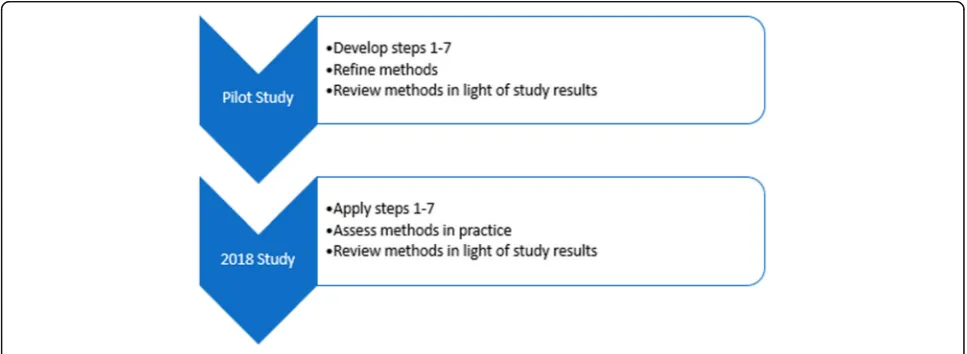
The mapping methodology was piloted in 2016, followed by a definitive study in 2018: the mapping findings are reported in full elsewhere [29]. An iterative process of trialling and reviewing methods (Fig.1), led the develop-ment of the seven step mapping method described in the current paper (Fig.2).
For a detailed seven step description of piloting work and adaptations involved in the development of this method see Additional file1. For a summary of the steps identified, see Fig.3.
Patient and public involvement
People with ADHD and their families, health workers, and commissioners were involved with design, data col-lection, and dissemination of research findings. An ad-visory group of parents of young people with mental health difficulties, including ADHD, guided the iterative development of methods. Clinical and ADHD focussed organisations supported distribution of the surveys and communication of findings.
Defining target services
Services to be included were broadly defined as “any mental health service for people with ADHD aged 18 and above” located in the UK. In the2018 study, notes were added to clarify that this could include any “ spe-cialist doctor or team, mental health team, clinic, charity or support group that treats or supports adults with ADHD” (see Additional files 2 and 3). Following data
collection, a second narrower definition was used to cre-ate a more focussed list of either: adult NHS specialist, private and charitable services, with a focus on treating ADHD or neurodevelopmental conditions (pilot); or dedicated adult ADHD services funded by the NHS (2018 study).
Sample
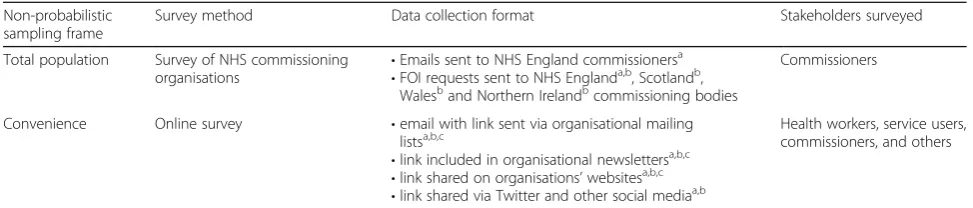
As Table1 illustrates, informants were purposively sam-pled from a range of key stakeholder groups (service users, clinicians, and commissioners) via multiple meth-odologies and sampling frames.
Data collection
Data on services was collected using a brief survey. Sur-veys were either, tailored by respondent type and made up of 9–15 questions (pilot) (see Additional file 2), or suitable for all respondent types and made up of 5–9 questions (2018 survey)(see Additional file 3). The sur-vey collected basic demographic information, including the role or‘identity’of informants, with a drop down list of options including‘other’(see Additional file2). Infor-mants were asked to provide details of services they knew about for adults with ADHD. In 2018 respondents were asked to view a pre-populated list of services iden-tified in the pilot, before being asked to provide details of any other services. They were also asked to confirm whether they knew of someone who had used that ser-vice. Surveys were distributed using a variety of methods (see Table1). In 2018, data collection was planned in ad-vance with research partners (see Additional file 4), and informants were given the opportunity to indicate add-itional roles, and asked to indicate whether they, or any-one they knew, had experience of using an identified service for treatment/support of adult ADHD.
[image:3.595.56.540.540.717.2]Analysis
Descriptive statistics summarised the numbers of and geographic locations of respondents by informant group. An open source geographic information system, QGIS 2.18 [30], was used to display the balance of responses by UK region and stakeholder group.
Data cleaning
Raw data on services provided by informants, were uploaded into Excel and matched against existing on-line information by the lead researcher, using search terms derived from the informant’s description, their geographic location, and other terms relevant to search such as “ADHD, neurodevelopmental, and health service”. Where service details could not be matched against online data, they were independently checked. Unmatched service details were checked a minimum of three times before being categorised as unidentifiable.
Service checking
Details of identified services such as location, service name, and the provider organisation were verified against online information (for example, via health pro-vider or support group websites, or through service leaf-lets) by a second researcher. A list of services was created and categorised by type, provider organisation and location. A record was kept of which informants had identified which service.
Identified services were divided into two groups, with group one including all identified services, while group two was restricted to either: specialist ADHD services, including adult NHS specialist, private and charitable services with a focus on treating ADHD; or neurodeve-lopmental conditions (pilot); or dedicated adult ADHD services, funded by the NHS (2018 survey).
For adult NHS specialist services, details of the treat-ment and support provided was checked via a brief questionnaire completed by the relevant health provider: phone or email contact (pilot); or via freedom of
Fig. 2Seven steps to map a service
[image:4.595.62.539.87.226.2] [image:4.595.58.542.510.720.2]information (FOI) requests (pilot and 2018 survey) (Additional file 5). FOIs give individuals the right to ac-cess recorded information held by public sector organi-sations, and allow administrators to prioritise the request [31].
Reliability and validity
Non-probabilistic sampling methods, which were cost ef-fective and enabled rapid data collection, were chosen to meet survey aims of covering a wide geographic area, minimising missing data, and including multiple infor-mants. Data collection methods were developed iteratively to ensure information was gathered from a range of infor-mants and on as many relevant services as possible, with the aim that the resultant map of services would provide reliable and valid information. In the2018 survey, a prag-matic target of collecting data from a minimum of 51 in-formants per UK region was identified.
Communicating findings
Interactive maps of identified services were created using Google My Maps, to communicate data on identified services with stakeholders [32,33].
Results
Defining target service
Dividing identified services into two groups led to two lists of services. The first was a comprehensive and in-clusive index of the wide range of public, private and voluntary services in the UK reported by informants, where adults with ADHD could access treatment/sup-port. The second was a map of NHS funded specialist ADHD services, with details about treatments available.
In the pilot study, respondent provided information on treatment/support available at services was unreliable as conflicting details were given for the same service, and these questions were removed in the 2018 study. Check-ing specifications of provision via the service/relevant NHS trust at the service checking stage provided more consistent data. The inclusion of a question in 2018, ask-ing informants if they knew of someone who had used the service, made it possible to distinguish services
which informants had direct knowledge of from those they had just heard of.
Identifying informants
Targeting a range of key stakeholders made it possible to investigate differences in service knowledge between groups. During the pilot, ongoing qualitative research [34] highlighted the important role of primary care clini-cians as gatekeepers of specialist services, and data col-lection was adjusted part-way through the pilot to include general practitioners (GPs).
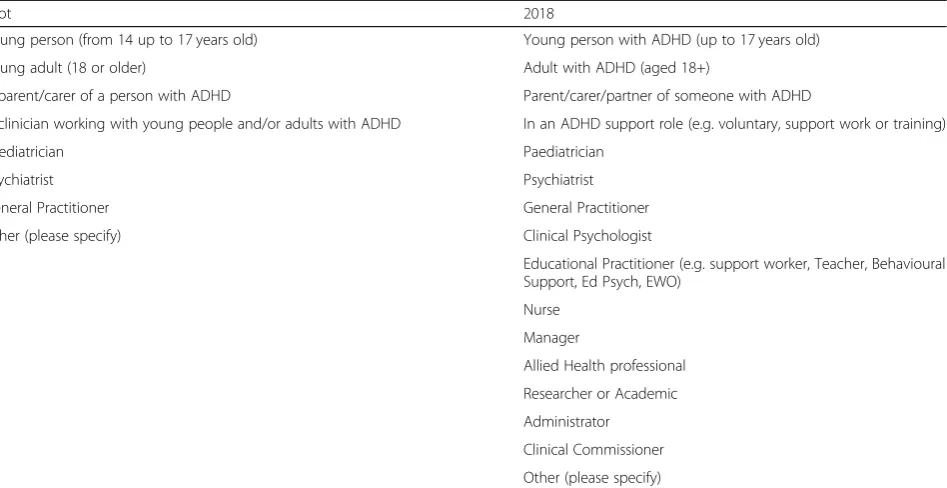
Free text responses of ‘other’ to the identity question in the pilot provided data which was used to populate the list of stakeholder identity options in 2018 (see Table 2). The pilot received 224 (15%) responses of
‘other’, compared with 86 (4%) in 2018, indicating this was a more acceptable list of pre-populated options.
In 2018, 1010 (47%) of informants identified them-selves as having two or more roles.
Designing the survey
Use of online survey methodology and a short question-naire format appeared acceptable. Surveys were designed using lay terms to be accessible to all informants. The 2018 survey took respondents a median of 3 min to complete, and achieved 2371 responses with 79% com-pleting all relevant questions.
Designing a single questionnaire for all informant groups in 2018 simplified data collection, as stakeholders could be sent a single link. It reduced subsequent data cleaning and enabled use of analytic tools built into the hosting software to rapidly identify areas/key groups where responses were low. Use of a pre-populated list of identified services in 2018 appeared acceptable, and re-duced data cleaning.
Data collection
[image:5.595.55.542.98.202.2]The 2018 strategy of planning data collection in advance with research partners, with a primary focus on emails, was associated with 64% more responses (1446 com-pared with 2371) in 83% less time (5 weeks comcom-pared with 30) when compared with the pilot.
Table 1Mapping study sample
Non-probabilistic sampling frame
Survey method Data collection format Stakeholders surveyed
Total population Survey of NHS commissioning organisations
•Emails sent to NHS England commissionersa •FOI requests sent to NHS Englanda,b, Scotlandb,
Walesband Northern Irelandbcommissioning bodies
Commissioners
Convenience Online survey •email with link sent via organisational mailing listsa,b,c
•link included in organisational newslettersa,b,c •link shared on organisations’websitesa,b,c •link shared via Twitter and other social mediaa,b
Health workers, service users, commissioners, and others
NHSNational Health Service,FOIfreedom of information,ADHDattention-deficit/hyperactivity disorder,AMHSadult mental health service,a
Pilot study,b
2018 study, c
Distributing links via emails sent from national organi-sations’ mailing lists appeared to be the most effective dissemination tool, with high response numbers for stakeholders where this strategy was used (see Table 3). Response numbers were relatively low when direct email was not possible, despite survey promotion via organisa-tional newsletters and social media.
Use of social media, in particular Twitter, appeared to raise awareness of the survey. During the 2018 survey, linking with relevant organisations resulted in high levels of engagement on Twitter, with 44,000 tweet impres-sions, and 101 survey link clicks. It is unknown how tweet impressions relate to survey response numbers.
The first approach to contacting commissioning orga-nisations, via direct email, resulted in a low response
rate of 9%. Subsequent use of FOI requests resulted in excellent response rates of 80–90% (see Table4).
Balance of responses
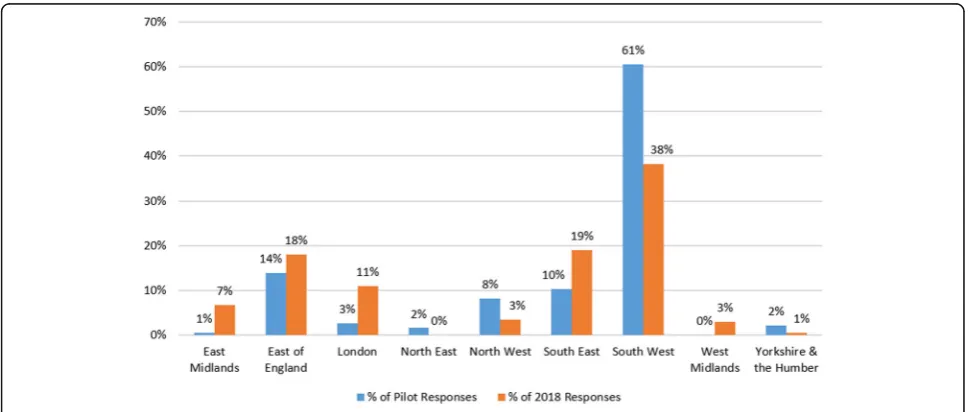
Use of regional organisations’mailing lists was an effect-ive tool for data collection but tended to result in a higher number of responses from that geographic area. During the pilot, the survey was emailed to GPs via the Clinical Research Network (CRN) South West, resulting in 200 responses. However, 61% of these came from the South West. In 2018, emails via a spread of English CRNs led to a 94% increase in GP responses (387) and also resulted in less dominance of responses from the South West (38% of responses, see Fig.4).
By contrast, emails distributed by organisations with a national reach, such as the Royal College of Psychiatrists, were associated with a relatively even spread of re-sponses by geographic region (see Fig.5).
Minimum responses
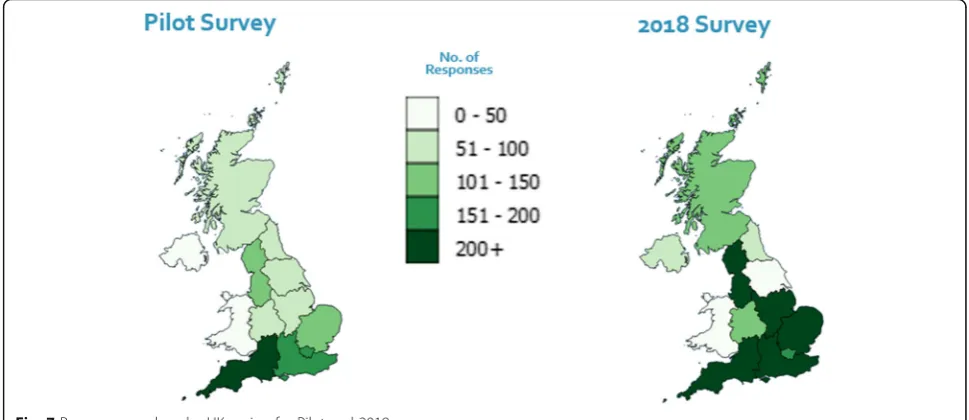
[image:6.595.65.539.99.343.2]Strategies aimed at increasing response numbers in 2018, were combined with targeting of under-represented regions and stakeholder groups part way through data collection, which led to an increase in re-gions with 51 or more informants (see Figs. 6 and 7). However, responses for Yorkshire and the Humber dropped from 85 to 42, and for Wales response numbers remained low at 33.
Table 2‘Identity’categories used in the pilot and adapted/added to for the 2018 survey
Pilot 2018
Young person (from 14 up to 17 years old) Young person with ADHD (up to 17 years old)
Young adult (18 or older) Adult with ADHD (aged 18+)
A parent/carer of a person with ADHD Parent/carer/partner of someone with ADHD
A clinician working with young people and/or adults with ADHD In an ADHD support role (e.g. voluntary, support work or training)
Paediatrician Paediatrician
Psychiatrist Psychiatrist
General Practitioner General Practitioner
Other (please specify) Clinical Psychologist
Educational Practitioner (e.g. support worker, Teacher, Behavioural Support, Ed Psych, EWO)
Nurse
Manager
Allied Health professional
Researcher or Academic
Administrator
Clinical Commissioner
Other (please specify)
ADHDattention-deficit/hyperactivity disorder,Ed Psycheducational psychologist,EWOeducation welfare officer
Table 3Pilot and 2018 survey data collection strategies used; response numbers by stakeholder group
Stakeholders Pilot 2018 Survey
Strategies Responses Strategies Responses
Psychiatrists 1a,4,5 380 1a,4,5 530
Paediatricians 3,5 104 3,5 74
GPs 2,5 200 1a,5 387
Health Professionals 2 116 1a 306
Service Users 3,5 477 3,5 455
1 = email via national organisation’s mailing list, 2 = email via regional organisation, 3 = Promotion via organisation’s newsletter/website, 4 = promotion via conference, 5 = promotion via social media,a
[image:6.595.57.290.602.698.2]Data analysis and handling Data handling
Analysing pilot data was challenging. Data from multiple surveys required merging, and different questions by in-formant group made comparison difficult. Double data entry was used to reduce risks of data processing errors. Use of a single survey in 2018 made comparison of data provided by different informant groups’straightforward and reduced the risk of data processing errors.
Identifying services
Service identification was faster in 2018 as the pre-populated list of services reduced the instances of ser-vices being identified by informants using free text (and thus needing hand matching to online information) from 100 to 16% of total instances (see Table5).
Checking services
Narrowing the focus of service checking in 2018, com-bined with use of FOIs to NHS Trusts reduced the data processing burden. In the pilot, 83% of identified
services (172 out of 208) met criteria of the second ser-vice definition, meaning they needed to be checked by researchers. Following 26 weeks spent contacting these services, 132 services had responded with data of mixed quality: a 77% response rate. By contrast, in 2018, only 23% of identified services (66 out of 292) met the nar-rower service checking criteria. These were checked via FOIs to 56 NHS trusts, with 49 responding within 10 weeks (an 88% response rate).
Communicating findings
The QGIS software [30] allowed us to analyse the sam-ple geographically and by stakeholder group, producing clear visual representations of response numbers by lo-cation (see Fig.7).
[image:7.595.57.538.99.210.2]Google My Maps, an interactive tool on which the service list could be uploaded for sharing, was an appro-priate platform to communicate service locations. Pre-senting the final list of services (from the pilot) as a map, available via a research webpage, resulted in more
Table 4Response rates from commissioning organisations, with data collection strategies used
Commissioning Organisations Strategy Response numbers (response rate %)
Pilot 2018 Survey
CCGs (England) Emaila 19 (9%) N/A
CCGs (England) FOIb 169 (80%) 190 (89)
Health Boards (Scotland) FOIb N/A 12 (86)
Health Boards (Wales) FOIb N/A 6 (86)
Health and Social Care Trust (Northern Ireland) FOIb N/A 5 (100)
Total 169 (80%) 213 (90%)
CCGClinical commissioning group,a
an email was sent with a survey link or, if requested, with the questionnaire attached,b
an official Freedom of Information (FOI) request sent with the questionnaire attached
[image:7.595.56.543.511.717.2]than 34,000 views, indicating it was accessible and of interest to a large number of stakeholders [35].
Hosting/updating service map
As services change and develop, service maps need ac-tive maintenance to remain accurate. The 2018 map was uploaded with clear information about when data collec-tion took place [32]. A national ADHD professional body, that aims to support practitioners and provide in-formation to all stakeholders, has agreed to host and up-date the map [33].
Discussion
To expand and extend the findings from existing re-search [20, 24, 25], we piloted and refined methods for
mapping adult ADHD services in the UK, with the aim of meeting current needs for national data about adult ADHD service provision. Adult ADHD continues to be under recognised in many countries, presenting particu-lar barriers to caring for young people and adults with the condition [36], and mapping services can help to in-form service development and reduce geographic health inequalities [16,17,21,37]. We developed seven steps to map services rapidly, using available technology, and in-cluding the perspectives of a range of stakeholders.
Patient and public involvement (PPI) work with the parent advisory group, clinicians and commissioners, helped clarify the questions to ask. Research partner-ships with clinical and ADHD support organisations made it possible to reach large numbers of informants
Fig. 5Percentage of psychiatrist responses by UK region and by survey
[image:8.595.56.543.87.289.2] [image:8.595.56.542.506.716.2]across the UK and share findings. Piloting was instructive and important, as was a careful study of previous literature in order to produce a definitive map quickly and effi-ciently. Future research should aim to; gather background information on the range of services accessed by patients; develop a working definition of target services; and iden-tify all key stakeholders, in advance of data collection.
A two-stage approach to the definition of the target service meant a wide range of services were indexed during data collection, with a narrower focus on NHS funded specialist ADHD services during analysis. The narrower focus on NHS funded specialist ADHD ser-vices, meant provision could be checked against govern-ment guidelines [12, 13, 38]. A balance needs to be struck between surveying all services relevant to stake-holders, which is time-consuming, but may reveal the sometimes hidden role of generic, voluntary and private services, and focussing on NHS specialist services. The first stage results in ‘messier’ data, but reflects stake-holders’experiences of the complex nature of health ser-vice provision, providing validity.
Deciding on an appropriate way to narrow the focus when checking services was challenging due to high levels of heterogeneity in configuration of adult ADHD services in the UK [14], but the detailed pilot allowed us to make decisions about the narrower definitions that
were based on empirical data. One recommended model of care, that of adult ADHD specialists working within general NHS mental health services [14], was not in-cluded in service checking, which is a limitation. How-ever all generic NHS services identified by respondents as providing treatment/support were indexed. Limiting the 2018 map to specialist services for adults with ADHD funded by the NHS, produced a serviceable map in line with the study aims.
Surveying an inclusive range of informants served several functions. It helped reduce this risk of missing services [24] because multiple respondent types were asked about services in their area. It also allowed for comparisons between provider reports on service availability and patient experiences of provision. Find-ings are reported in full elsewhere [39]. Interestingly, over 40% of study informants identified themselves with two or more ADHD related roles, a reminder that survey respondents often occupy multiple iden-tities [40]. Including of a range of informants is a strength when compared with mapping methods which rely on expert or government sources alone [18, 20]. However, the identification of key informants was more complex than expected; responses to the pilot, PPI work and previous literature all provided data that informed the final list.
[image:9.595.55.540.89.299.2]Fig. 7Response numbers by UK region for Pilot and 2018 surveys
Table 5Numbers of unique services identified, and incidences of services being identified, by survey
Survey Pilot 2018 Survey
Incidenceaof services being identified via free text 789 543
Incidenceaof services being identified via pre-populated list – 3119
Total incidencesaof service identification 789 3662
a
[image:9.595.56.539.668.725.2]During data collection, different dissemination methods appeared to work better for different stake-holders. Direct emails from trusted organisations gained high numbers of responses from busy clinicians. FOIs were effective when contacting commissioners, as they ensured someone with allocated time and resources re-ceived and responded to the query. FOIs can be a powerful tool for improving the transparency of mental health provision; which is known to be critical to deliv-ering good outcomes and ensuring consistency of ser-vices [37,41]. However care needs to be taken to ensure appropriate and responsible use, as FOIs have resource implications for the relevant public body [42]. Social media appeared to be a powerful and suitable resource for raising the profile of the survey [43]. Our use was mainly limited to Twitter, but this was an effective method of linking with ADHD focussed and appropriate clinical organisations and user groups. More proactive use of other social media formats might have increased response numbers from young adults with ADHD.
Strengths and limitations
This methodology provides a blueprint for producing a definitive map quickly and efficiently. However, services are dynamic and service maps will need maintenance and clear information on the limitations of data accur-acy. Although details of provision from dedicated ser-vices were checked, treatments provided by generic AMHS were not verified, meaning information was not gathered on all NHS services potentially treating adults with ADHD in line with NICE guidelines [12].
The aim of the survey was to gain a balance of re-sponses, by geographic area and by stakeholder group, in order to achieve an accurate picture of service provision. This was achieved, although there were low response numbers from some regions and from some stakeholder groups, such as young adults with ADHD. A recent study looking at patterns of instant messaging use in students in the South West of England found 96% used Facebook and 59% used Instagram, compared with 58% using Twitter [44]. A more extensive use of social media formats that are accessible to young people with ADHD, such as Facebook (38), might have improved re-sponse numbers from these groups.
The online survey and data collection methods used were pragmatic and ‘fit for purpose’[45], making use of technological advances to reach a wide audience rapidly and at relatively low cost. The non-probabilistic sam-pling methods allowed organisations to share the survey via their mailing lists without compromising data pro-tection. It also facilitated link sharing across a variety of open forums. Respondents were not selected randomly and, except for commissioners, response rates could not be assessed, however this was not important as the aim
was to gain an accurate and nuanced picture of service provision, not to generalise findings.
Future work
Future mapping work should focus on checking details of provision offered by all adult NHS services that po-tentially meet NICE guidelines for treatment of adult ADHD [12]. Given sufficient resources, FOI requests sent to all provider organisations of AMHS could pro-vide this information in a time efficient and cost effect-ive way. However, a balance needs to be struck between additional research costs involved and benefits in terms of the quality of data received. This study and previous qualitative research has found a lack of clarity within generic AMHS on whether or not they provide treat-ment for adult ADHD [14, 26, 36]. Therefore it would be necessary to find a method of checking that services provide treatment in practice from the perspectives of a range of stakeholders, including service users.
Finding a way of sharing and updating the map in a way that is accessible to all stakeholders is important. It is a reflection of the quality of relationships built during the mapping exercise, and high levels of unmet need [36], that a national ADHD organisation has agreed to host the map [33]. The research team is supporting them to host this resource and update it into the future. This methodology could be usefully adopted to map health services for other conditions, such as ASD, where identified barriers to transition include a lack of compre-hensive and integrated adult services [46,47].
Conclusion
This seven step process appears to be a pragmatic and ef-ficient method for collating and communicating national service data about adult ADHD service provision in the UK. The inclusion of data from a range of stakeholders minimises the risk of missing information about services and allows comparison of perceptions of provision be-tween commissioners, health workers and service users. We found information learned through PPI, and support from partner organisations both during the development of the surveys, data collection and for dissemination of re-sults was crucial. Lessons learned here may be transferable to mapping service provision for other health conditions and in different contexts. For adult ADHD services, this method is an effective tool for quantifying provision and revealing gaps in service, so that, where indicated, an in-formed case can be made for change.
Additional files
Additional file 1:Detailed Methodology. (DOCX 53 kb)
Additional file 3:2016 Pilot Survey. (PDF 590 kb)
Additional file 4:Key Research Partners. (DOCX 12 kb)
Additional file 5:Checking Service Details. (DOCX 25 kb)
Abbreviations
ADHD:Attention-deficit/hyperactivity disorder; AMHS: Adult mental health services; ASD: Autism spectrum disorder; CAMHS: Child and adolescent mental health services; CATCh-uS: Children and Adolescents with ADHD in Transition between Child and Adult Services; CCGs: Clinical commissioning groups; CRN: Clinical Research Network; EU: European Union; FOI: Freedom of information requests; GPs: General practitioners; NHS: National Health Service; NIHR: National Institute for Health Research; QGIS: Open-source desktop geographic information system; UK: United Kingdom
Acknowledgements
The authors would like to thank the following people: Abigail Woodley, Andi Stanescu and Tom Reed for data cleaning; Kate Powell and Rachel Califano for service checking. Kerry Pearn and Dr. Sean Manzi from the PenChord team (http://clahrc-peninsula.nihr.ac.uk/penchord) for support with QGIS Mapping Software. The CATCh-uS parent advisory group for survey develop-ment. All the organisations and individuals that supported this work, includ-ing the Royal College of Psychiatrists, the ADHD Foundation and the Clinical Research Network South West.
This study was part of the CATChuS project, which was funded by the National Institute for Health Research Health Services and Delivery Research Programme (project number 14/21/52) and the National Institute for Health Research (NIHR) Collaboration for Leadership in Applied Health Research and Care South West Peninsula. These funders had no role in study design, data collection, data analysis, interpretation of data, or writing of the paper. The views and opinions expressed therein are those of the authors and do not necessarily reflect those of the NIHR Public Health Research Programme, NIHR, NHS or the Department of Health.
Authors’contributions
AP, AJ and TF designed the study, AP collected, analysed and interpreted the data, under supervision from AJ and TF. AP drafted the work and AJ, TF, SD-M, HE, PA and TL substantively revised the manuscript. All authors read and approved the final manuscript.
Funding
This study was part of a wider study CATCh-uS and is funded by the National Institute for Health Research (HS&DR Programme Funding: 14/21/52) and supported by the University of Exeter. The funding body had no role in the design of the study, data collection, analysis, interpretation of the data, or writing of the manuscript.
Asherson is supported by the National Institute for Health Research (NIHR) Biomedical Research Centre at South London and Maudsley NHS Foundation Trust and King’s College London, and an NIHR Senior Investigator award (NF-SI-0616-10040).
Availability of data and materials
The datasets generated and/or analysed during the current study are not publicly available because they are part of ongoing research that is not yet published, but they are available from the corresponding author on reasonable request.
Ethics approval and consent to participate
This study received ethical approval from the Health Research Authority (HRA) approval (HRA-IRAS reference 159209) and the University of Exeter Medical School Ethics Committee (REC Application Number: 15/07/070). Both regarded this work as not requiring informed consent, as consent was implied by the participants choice to respond to the survey.
Consent for publication
Not applicable.
Competing interests
Kings College London research support account for Professor Philip Asherson received honoraria for consultancy to Shire, Flynn-Pharma, Eli-Lilly, Novartis, Lundbeck and Medice; educational/research awards from Shire, Lilly,
Novartis, Flynn Pharma, Vifor Pharma, GW Pharma and QbTech; speaker at sponsored events for Shire, Lilly, Novartis, Medice and Flynn Pharma. No other authors have any competing interests to declare.
Author details
1University of Exeter Medical School, St Luke’s Campus, Exeter EX1 2LU, UK. 2Department of Public Health, University of Southern Denmark, J. B. Winsløws Vej 9B, DK-5000 Odense C, Denmark.3AADD-UK, 3 Eastcroft, Blagdon, North Somerset BS40 7RT, UK.4Kings College London, Institute of Psychiatry Psychology and Neuroscience, De Crespigny Park, Denmark Hill, London SE5 8AF, UK.5UK Adult ADHD Network, London, UK.6ADHD Foundation, 151 Dale Street, Liverpool L2 2AH, UK.
Received: 13 August 2018 Accepted: 20 June 2019
References
1. Bolea-Alamanac B, Nutt DJ, Adamou M, Asherson P, Bazire S, Coghill D, Heal D, Muller U, Nash J, Santosh P, et al. Evidence-based guidelines for the pharmacological management of attention deficit hyperactivity disorder: update on recommendations from the British Association for Psychopharmacology. J Psychopharmacol. 2014;28(3):179–203.
2. Singh SP, Paul M, Ford T, Kramer T, Weaver T, McLaren S, Hovish K, Islam Z, Belling R, White S. Process, outcome and experience of transition from child to adult mental healthcare: multiperspective study. Br J Psychiatry. 2010; 197(4):305–12.
3. Singh SP, Tuomainen H. Transition from child to adult mental health services: needs, barriers, experiences and new models of care. World Psychiatry. 2015;14(3):358–61.
4. Fayyad J, De Graaf R, Kessler R, Alonso J, Angermeyer M, Demyttenaere K, De Girolamo G, Haro JM, Karam EG, Lara C, et al. Cross-national prevalence and correlates of adult attention-deficit hyperactivity disorder. Br J Psychiatry. 2007;190:402–9.
5. Simon V, Czobor P, Bálint S, Mészáros Á, Bitter I. Prevalence and correlates of adult attention-deficit hyperactivity disorder: meta-analysis. Br J Psychiatry. 2009;194(3):204–11.
6. Polanczyk G, de Lima MS, Horta BL, Biederman J, Rohde LA. The worldwide prevalence of ADHD: a systematic review and metaregression analysis. Am J Psychiatry. 2007;164(6):942–8.
7. Willcutt EG. The prevalence of DSM-IV attention-deficit/hyperactivity disorder: a meta-analytic review. Neurotherapeutics. 2012;9(3):490–9. 8. Beau-Lejdstrom R, Douglas I, Evans SJW, Smeeth L. Latest trends in ADHD
drug prescribing patterns in children in the UK: prevalence, incidence and persistence. BMJ Open. 2016;6(6):e010508.
9. Faraone SV, Biederman J, Mick E. The age-dependent decline of attention deficit hyperactivity disorder: a meta-analysis of follow-up studies. Psychol Med. 2006;36(2):159–65.
10. Cheung KK, Wong IC, Ip P, Chan PK, Lin CH, Wong LY, Chan EW. Experiences of adolescents and young adults with ADHD in Hong Kong: treatment services and clinical management. BMC Psychiatry. 2015;15(1):95. 11. van Lieshout M, Luman M, Twisk JWR, van Ewijk H, Groenman AP, Thissen
AJAM, Faraone SV, Heslenfeld DJ, Hartman CA, Hoekstra PJ, et al. A 6-year follow-up of a large European cohort of children with attention-deficit/ hyperactivity disorder-combined subtype: outcomes in late adolescence and young adulthood. Eur Child Adolesc Psychiatry. 2016;25(9):1007–17. 12. Attention deficit hyperactivity disorder: diagnosis and management (NG87).
https://www.nice.org.uk/guidance/ng87/chapter/Recommendations. Accessed 27 June 2019.
13. Transition from children's to adults’services for young people using health or social care services (NG43).https://www.nice.org.uk/guidance/ng43. Accessed 27 June 2019.
14. Coghill D. Organisation of services for managing ADHD. Epidemiol Psych Sci. 2017;26(5):453–8.
15. Singh SP. Transition of care from child to adult mental health services: the great divide. Curr Opin Psychiatry. 2009;22(4):386–90.
16. Fernandez A, Salinas-Perez JA, Gutierrez-Colosia MR, Prat-Pubill B, Serrano-Blanco A, Molina C, Jorda E, Garcia-Alonso CR, Salvador-Carulla L. Use of an integrated atlas of mental health care for evidence informed policy in Catalonia (Spain). Epidemiol Psych Sci. 2015;24(6):512–24.
17. The world health report 2000: health systems: improving performance.
18. Atlas of health in Europe: 2008.http://www.euro.who.int/en/publications/ abstracts/atlas-of-health-in-europe,-2nd-edition-2008. Accessed 27 June 2019. 19. Johnson S, Kuhlmann R. The European service mapping schedule (ESMS):
development of an instrumentfor the description and classificationof mental health services. Acta Psychiatr Scand. 2000;102(s405):14–23. 20. Signorini G, Singh SP, Boricevic-Marsanic V, Dieleman G, Dodig-Curkovic K,
Franic T, Gerritsen SE, Griffin J, Maras A, McNicholas F, et al. Architecture and functioning of child and adolescent mental health services: a 28-country survey in Europe. Lancet Psychiatry. 2017;4(9):715–24.
21. The NHS atlas of variation in healthcare: reducing unwarranted variation to increase value and improve quality. http://fingertips.phe.org.uk/profile/atlas-of-variation. Accessed 27 June 2019.
22. Atlases.https://www.england.nhs.uk/rightcare/products/atlas/. Accessed 27 June 2019.
23. The state of care in mental health services 2014 to 2017.http://www.cqc. org.uk/publications/major-report/state-care-mental-health-services-2014-2017. Accessed 27 June 2019.
24. Hall CL, Newell K, Taylor J, Sayal K, Hollis C. Services for young people with attention deficit/hyperactivity disorder transitioning from child to adult mental health services: a national survey of mental health trusts in England. J Psychopharmacol. 2015;29(1):39–42.
25. Hall CL, Newell K, Taylor J, Sayal K, Swift KD, Hollis C.‘Mind the gap’ --mapping services for young people with ADHD transitioning from child to adult mental health services. BMC Psychiatry. 2013;13:186.
26. Price A, Janssens A, Woodley AL, Allwood M, Ford T. Review: experiences of healthcare transitions for young people with attention deficit hyperactivity disorder: a systematic review of qualitative research. Child Adolesc Ment Health. 2019;24(2):113–22.
27. Matheson L, Asherson P, Wong IC, Hodgkins P, Setyawan J, Sasane R, Clifford S. Adult ADHD patient experiences of impairment, service provision and clinical management in England: a qualitative study. BMC Health Serv Res. 2013;13:184.
28. Wong IC, Asherson P, Bilbow A, Clifford S, Coghill D, DeSoysa R, Hollis C, McCarthy S, Murray M, Planner C, et al. Cessation of attention deficit hyperactivity disorder drugs in the young (CADDY)--a
pharmacoepidemiological and qualitative study. Health Technol Assess. 2009;13(50):iii–iv, ix-xi 1-120.
29. Young people with attention deficit hyperactivity disorder (ADHD) in transition from children's services to adult services (Catch-uS): a mixed methods project using national surveillance, qualitative and mapping studies.https://www.journalslibrary.nihr.ac.uk/programmes/hsdr/142152/. Accessed 27 June 2019.
30. QGIS Development Team. QGIS Geographic information system, version 2.18. In: Open Source Geospatial Foundation Project; 2018.http://qgis.osgeo.org. 31. The Guide to Freedom of Information.http://www.legislation.gov.uk/ukpga/
2000/36/contents. Accessed 27 June 2019.
32. CATCh-uS Mapping study - map of services.http://medicine.exeter.ac.uk/ catchus/mapping/adhdservices/. Accessed 27 June 2019.
33. Adult ADHD Service Map.https://www.ukaan.org/adult-adhd-service-map. Accessed 27 June 2019.
34. Study Protocol: Young people with Attention Deficit Hyperactivity Disorder (ADHD) in transition from children's services to adult services (Catch-uS): a mixed methods project using national surveillance, qualitative and mapping studies.https://www.journalslibrary.nihr.ac.uk/programmes/hsdr/142152/ #/documentation. Accessed 27 June 2019.
35. CATCh-uS Mapping study - pilot map of services.http://bit.ly/ AdultADHDservices2016. Accessed 27 June 2019.
36. Kooij JJS, Bijlenga D, Salerno L, Jaeschke R, Bitter I, Balazs J, Thome J, Dom G, Kasper S, Nunes Filipe C, et al. Updated European consensus statement on diagnosis and treatment of adult ADHD. Eur Psychiatry. 2019;56:14–34. 37. Five year forward view.
https://www.england.nhs.uk/publication/nhs-five-year-forward-view/. Accessed 27 June 2019.
38. Attention deficit hyperactivity disorder: Diagnosis and management of ADHD in children, young people and adults (CG72).https://www.nice.org. uk/guidance/CG72. Accessed 27 June 2019.
39. Ford T, Janssens A, Paul M, Ani C, Young S, Newlove-Delgado T: Study Publications and outputs: Young people with Attention Deficit Hyperactivity Disorder (ADHD) in transition from children's services to adult services (Catch-uS): a mixed methods project using national surveillance, qualitative and mapping studies. 2015.https://www.journalslibrary.nihr.ac.uk/ programmes/hsdr/142152/#/documentation.
40. Gee JP. Chapter 3 : identity as an analytic Lens for research in education. Rev Res Educ. 2016;25:99–125.
41. Next steps on the NHS five year forward view.https://www.england.nhs.uk/ wp-content/uploads/2017/03/NEXT-STEPS-ON-THE-NHS-FIVE-YEAR-FORWARD-VIEW.pdf. Accessed 27 June 2019.
42. Savage A, Hyde R. Using freedom of information requests to facilitate research. Int J Soc Res Method. 2012;17(3):303–17.
43. Moorhead SA, Hazlett DE, Harrison L, Carroll JK, Irwin A, Hoving C. A new dimension of health care: systematic review of the uses, benefits, and limitations of social media for health communication. J Med Internet Res. 2013;15(4):e85.
44. Piwek L, Joinson A.“What do they snapchat about?”patterns of use in time-limited instant messaging service. Comput Human Behav. 2016;54:358–67. 45. Baker R, Brick JM, Bates NA, Battaglia M, Couper MP, Dever JA, Gile KJ,
Tourangeau R. Summary report of the AAPOR task force on non-probability sampling. J Surv Stat Methodol. 2013;1(2):90–143.
46. Anderson KA, Sosnowy C, Kuo AA, Shattuck PT. Transition of individuals with autism to adulthood: a review of qualitative studies. Pediatrics. 2018; 141(Suppl 4):S318–27.
47. McConachie H, Hoole S, Le Couteur AS. Improving mental health transitions for young people with autism spectrum disorder. Child Care Health Dev. 2011;37(6):764–6.
Publisher’s Note