Design thinking frameworks as
transformative cross-disciplinary
pedagogy
Final Report
James Cook University
Project Team: Professor Neil Anderson (Project Leader), Dr Raoul
Adam, Dr Theresa Petray, Dr Pauline Taylor, Professor Ton Otto
Report authors: Neil Anderson, Raoul Adam, Pauline Taylor, Dianna
Madden, Gavin Melles, Christopher Kuek, Natalie Wright and Bev
Ewens
Design thinking frameworks as transformative cross-disciplinary pedagogy 2
Support for the production of this report has been provided by the Australian Government Office for Learning and Teaching. The views expressed in this report do not necessarily reflect the views of the Australian Government Office for Learning and Teaching.
With the exception of the Commonwealth Coat of Arms, and where otherwise noted, all material presented in this document is provided under Creative Commons Attribution-ShareAlike 4.0 International License http://creativecommons.org/licenses/by-sa/4.0/.
The details of the relevant licence conditions are available on the Creative Commons website (accessible using the links provided) as is the full legal code for the Creative Commons Attribution-ShareAlike 4.0 International License
http://creativecommons.org/licenses/by-sa/4.0/legalcode.
Requests and inquiries concerning these rights should be addressed to: Office for Learning and Teaching
Department of Education
GPO Box 9880,
Location code N255EL10 Sydney NSW 2001
[2014]
Design thinking frameworks as transformative cross-disciplinary pedagogy 3
Acknowledgements
Design thinking frameworks as transformative cross-disciplinary pedagogy 4
List of acronyms used
BED Binary-Epistemic Design DT Design Thinking
ECU Edith Cowan University EOI Expression of Interest
ICT Information Communication Technology JCU James Cook University
OLT Office for Learning and Teaching QUT Queensland University of Technology Q&A Question and answer
Design thinking frameworks as transformative cross-disciplinary pedagogy 5
Executive summary
This seed project ‘Design thinking frameworks as transformative cross-disciplinary
pedagogy’ aimed to examine the way design thinking strategies are used across disciplines to scaffold the development of student attributes in the domain of problem solving and creativity in order to enhance the nation’s capacity for innovation. Generic graduate attributes associated with innovation, creativity and problem solving are considered to be amongst the most important of all targeted attributes (Bradley Review of Higher Education, 2009).
The project also aimed to gather data on how academics across disciplines conceptualised design thinking methodologies and strategies. Insights into how design thinking strategies could be embedded at the subject level to improve student outcomes were of particular interest in this regard. A related aim was the investigation of how design thinking strategies could be used by academics when designing new and innovative subjects and courses. This aim is critically important because research in higher education has demonstrated that achieving graduate attributes is very challenging within disciplines and often little attention is given to achieving generic attributes at the subject level. Design thinking principles and frameworks are considered to be excellent scaffolds for supporting the development of creative and innovative mindsets but little empirical research has been conducted. The national ‘Creative Australia Cultural Policy’ (2012) recommended embedding design thinking in education, government and business in its two major conclusions. In this project the work that is currently being done to embed design thinking in higher education is highlighted.
The key proposition that was tested through a case study approach was that design thinking frameworks can be implemented at the university subject level or subject planning level to successfully scaffold students' ability to solve problems and approach problems with an innovative and creative mindset. Eight case studies were completed to illustrate how design thinking strategies were used in different discipline areas to improve student learning outcomes. The case studies presented initial empirical evidence to support the use of design thinking frameworks. The strategies highlighted are applicable and relevant to a particular discipline area but also have potential application in a range of other discipline areas.
In order to gain an understanding of how academics defined design thinking, to engage audiences from a range of disciplines, and form a multi-university, collaborative approach, a series of lectures, seminars and discussion sessions were organised and conducted at
Charles Darwin University, Queensland University of Technology, Swinburne University and Edith Cowan University. In addition, further funding was sourced from DFAT (Department of Foreign Affairs and Trade) to conduct lectures and seminars and discussions in two
Malaysian Universities, especially since the government of Malaysia recently opened the Design Thinking Institute and declared that the use of design thinking was the highest government priority to foster innovation (web link).
Design thinking frameworks as transformative cross-disciplinary pedagogy 6
of view expressed by the participants. The review found that design thinking was not poorly defined. The confusion arose due to a failure to recognise the distinction between the concept of design thinking, which was regarded as a methodology based on the way that designers approach complex problems (often described as wicked problems), and a separate issue that involves a variety of ways that people try to scaffold student learning through the use of design thinking strategies. It made sense to use design thinking strategies that suit the disciplinary context and that educators can build up a repertoire of design thinking strategies that can be successfully employed across disciplines – selecting appropriate transferable strategies for the situation. The definitions of design thinking are consistent and comparable but the approaches to scaffolding design thinking vary. The conclusion is that the variety of approaches is a strength, rather than a weakness, of design thinking.
In summary:
• A critical literature review was conducted and used as a lens to interpret feedback from a wide range of participants;
• Six highly successful lecture/seminar/discussion events were held in Australia and Malaysia;
• Eight illustrative case studies were conducted;
• An innovative website to assist in dissemination was created; • A series of publications has resulted; and
• A multidisciplinary, multi-university team was formed; an EOI for a large grant application accepted; and a large grant application to continue the work of the collaborative team has been written.
Recommendations
Design thinking frameworks have considerable potential to scaffold the development of student skills in problem solving and creativity across disciplines. More effective support for the development of these skills could contribute substantially to the nation’s innovative capacity. To ensure the design thinking methodology is not employed in a superficial way that would have limited outcomes, further work is needed to provide educators with knowledge and experience in using strategies and understanding where these strategies fit within the various components of the methodology. Further work on case studies in
different discipline areas that specifically target the use of particular strategies in context would support effective implementation.
The definition of design thinking has been articulated clearly in the literature as being the strategies that designers use when creating products or solving problems. The challenge is in making these strategies explicit, so that they can be readily accessible to stakeholders in higher education, in order to improve student learning.
It is recommended that a ‘Higher Education Design Thinking Toolkit’ be created that shows: categories of strategies, individual strategies described and placed under each category, followed by case studies that can be used as exemplars for the successful implementation of each strategy. Further research is needed to determine which strategies work best in
Design thinking frameworks as transformative cross-disciplinary pedagogy 7
It is also recommended that the current design thinking website be expanded to include the partner university teams and the design thinking toolkit for higher education and then expansion to include other university case studies.
The need to clear up misconceptions about design thinking was uncovered by the
Design thinking frameworks as transformative cross-disciplinary pedagogy 8
Table of Contents
Executive summary ... 5
Figures ... 9
Chapter 1 ... 10
Project outcomes and impacts ... 10
Approach and methodology ... 11
How the program advances existing knowledge in the field with particular reference to OLT program priorities ... 12
Factors that were critical to success or impeded success ... 13
To what extent are the outcomes useful for implementation in a variety of institutions and discipline areas? ... 13
Linkages across disciplines ... 14
James Cook University case studies ... 14
Case Study 1 by Professor Neil Anderson, James Cook University ... 14
Case Study 2 by Dr Raoul Adam, James Cook University ... 18
Case Study 3 by Dr Pauline Taylor, James Cook University ... 20
Case Study 4 by Dr Dianna Madden, James Cook University ... 23
Chapter 2 ... 28
Workshops and case studies at other universities ... 28
Case Study 1: Swinburne University by Dr Gavin Melles ... 28
Future Designers Program ... 28
Case Study 2: Edith Cowan University by Dr Christopher Kuek ... 30
Case Study 3: QUT Community Engaged Learning Lab Design Thinking/Design Led Innovation Workshop by Natalie Wright... 36
Case Study 4: Edith Cowan University by Bev Ewens ... 40
Chapter 3 ... 43
Dissemination and formation of partnerships ... 43
Journal and conference papers ... 45
Project website ... 46
Appendix A ... 50
Design Thinking Literature Review Summary ... 50
Design thinking frameworks as transformative cross-disciplinary pedagogy 9
Figures
Figures
Figure 1. Screenshot from instructional video. ... 17
Figure 2. Stanford University design school design thinking model... 21
Figure 3. Activity Model used in the Creative Arts School. ... 26
Figure 4. Student's design output before the introduction of design thinking framework limited to only retail object (work by Tessa Collins). ... 32
Figure 5. Design thinking framework allows students to explore design holistically and to arrive at designing services through co-creation methods (works by Lauren Mills). ... 32
Figure 6. Outline of the design thinking model. ... 38
Figure 7. Professor Anderson with CEO of Genovasi, Carol Wong. ... 40
Design thinking frameworks as transformative cross-disciplinary pedagogy 10
Chapter 1
Project outcomes and impacts
The original stated outcomes for this project were:
1) A critical literature review of existing models for design thinking and their implementation;
2) A set of four case studies of design thinking frameworks used at JCU to assist in the understanding of perceived benefits and impacts on student achievement in the specified graduate attributes;
3) Conducting national workshops and producing a report on the use and evaluation of design thinking at different Australian universities that participate in the workshops;
4) Gaining commitment from universities across different states to become formal partners with JCU in a large Office for Learning and Teaching (OLT) grant application based on findings from the pilot study;
5) Producing a set of strategies to assist academics in implementing design thinking frameworks into curriculum and teaching approaches in a variety of contexts;
6) Writing an application for a comprehensive, multi-university study of the impact of design thinking on achieving the specified generic graduate attributes; and
7) Disseminating strategies, models and findings at JCU, nationally and internationally to influence practice for the benefit of students’ learning in the specified attribute area.
This project has achieved considerably more than the stated outcomes in some areas and has achieved the stated outcomes in the other areas. A critical literature review has been written and can be found in Appendix A. This literature review and the associated papers were available to team members on a shared drive, which facilitated the publication of journal and conference papers and provided a sound empirical basis for interpreting participant’s responses received via discussions at events and formal survey feedback.
The second outcome of producing four case studies was expanded to eight case studies with the contribution of academics from other universities. This also fulfilled the second part of outcome three which sought to illustrate the use of design thinking at other Australian universities. National workshops were successfully conducted in Darwin, Brisbane, Melbourne and Perth. Additional international workshops were held in Kuala Lumpur, Malaysia, which enabled international sharing of ideas on design thinking and international dissemination of project outcomes as stated in outcome seven. The workshops generated great interest, attracting over 300 participants. In the case of the Melbourne event, the venue needed to be increased in size due to the event being booked out on the online registration site.
Design thinking frameworks as transformative cross-disciplinary pedagogy 11
recognised the need for further work in this important area to enhance students’ problem solving and creativity in order to foster innovative mindsets and enthusiastically agreed to begin a productive collaboration. The strategies referred to in objective five can be found throughout the detailed case studies available in this report. Objective six – concerning the completion of a large application to the OLT – could only be achieved if a successful EOI (Expression of Interest) grant application was endorsed by the OLT. This application was completed and received endorsement and, recently, a full collaboratively written application has been completed ready for submission.
Approach and methodology
The approach in the original application was not varied in practice apart from expanding the number of case studies. The approach and methodology was tightly linked to the planned outcomes. The original stated approach was:
(1) Critical literature review. Literature reviews were conducted in 2011 and early 2012 but
as this is a rapidly emerging field across many different discipline areas, there was a need for updating of the literature bank and critical analysis to be completed in order to determine progress in the field. The extensive, existing critical review revealed different design models, theories and anecdotal evidence of their use and that few substantial case studies have been conducted on design thinking use in higher education curriculum and teaching approaches despite this being a pressing need.
(2) Illustrative case studies were to be documented after research and analysis using a
mixed method case study approach (Yin, 2009) combined with design anthropological methods (Otto, Smith, & Gunn, forthcoming; Kjaersgaard & Otto, 2012). The investigators were to collaborate closely with lecturers and students using a mix of methods that included participatory observation, open and structured interviews, video-feedback, focus groups and workshop modeling.
One case study involved Dr Raoul Adam’s work with exploring a combination of design thinking models related to wicked problems and research and theory from psychology, namely research in cognitive-developmental psychology such as evaluativistic thinking, relational and contextual reasoning, complementary reasoning, synthetic thinking and dialectical thinking and how this informs the design thinking model that he is using with first year undergraduate students.
Another case study involved Dr Taylor’s work in the Teaching and Learning Division on using design thinking to improve the first year experience and to broaden participation in
university courses in the School of Business. Another case involved Professor Anderson’s work in the Graduate Certificate of Tertiary Teaching, Masters subject, and in the
undergraduate subject in the use of digital technologies and design technologies in school-based education, where students examine a variety of design thinking models and choose one model to scaffold the design of an online learning activity for undergraduate students in different discipline areas or for their undergraduate students.
Design thinking frameworks as transformative cross-disciplinary pedagogy 12
(3) Workshops were to be conducted in four sites across Australia to engage a strategically
selected group of participants as well as those participating through open invitation. Participants were invited to provide formal presentations outlining how they have used design thinking at their university. Participants were to review descriptions and
presentations about uses of design thinking across discipline areas and reflect on their perceived value and report through group discussion notes and summaries and through formal surveys. This approach provided valuable insights about design thinking that helped shape the plan for the larger study to emerge from this pilot study. These insights included a developing understanding of how people defined design thinking and what
misconceptions about the concept and the underpinning learning theories and philosophies existed along with insights into the wide variety of ways that design thinking has been used and the challenges that academics faced. For example, some academics felt that the system they worked in did not encourage risk-taking, whereas the design thinking strategies
encourage the use of multiple prototypes while taking risks.
How the program advances existing knowledge in the field with
particular reference to OLT program priorities
The OLT priority in ‘Innovation and Development’ targeted by this project was in the area of research in learning and teaching and ‘Curriculum Renewal and Teaching Approaches’. In addition, this work involves the promotion of cross-, inter-, or trans-disciplinary programs and pedagogies. As stated in the original rationale for this project, there was a pressing need for illustrative case studies to provide educators with examples of how design thinking has been used in context across discipline areas to enhance student learning. Another important contribution was the clarification of the definition of design thinking along with a rationale for the diversity of approaches that have been used to scaffold the process of design thinking. To ensure widespread availability of the case studies and the work on clarifying the definition of design thinking, the team has published in national and
international journals and included the case studies in this document as well as highlighting the work at conferences and forums. For example, the Council of Australian Deans (ICT) learning and teaching forum in Sydney (May, 2014). The case studies highlight innovative practice in individual subjects (education) as well as examples of wider curriculum
development using design thinking (business and health). The case studies provide examples of the use of design thinking strategies in context, with the view of highlighting transferable strategies that will be of use by academics to ensure that creative students develop critical problem-solving skills, ultimately leading to innovation.
The team is also aware that design thinking is currently being used in the United States by cross-disciplinary teams as a means of facilitating university-wide system change (University of Minnesota, for example). The work conducted in this project by a cross-disciplinary team employing design thinking strategies is an example of how this approach fosters and
Design thinking frameworks as transformative cross-disciplinary pedagogy 13
Factors that were critical to success or impeded success
Six major events were organised in one year. The enthusiastic support from collaborating universities ensured the four originally planned events were successful. Collaborative team planning was necessary in the first few months concerning all elements of the project. The most significant factor in being able to deliver two additional events was the interest in design thinking which led to a response and cooperation from the other universities. On reflection, fewer events within a single year may be more appropriate, especially if the work is done in a different area of study which does not have such traction across disciplines.
The team’s use of design thinking strategies greatly enhanced the planning and
implementation of the seed project and the planning for the larger application. For example, considerable time was spent on ‘understanding’ in terms of the stakeholders (users –
including academics and students), the system and context in which the users operated in across institutions and disciplines through consultation, collaboration, opportunities enabled by national events and case studies. Another example is the use of prototyping in producing diagrammatic representations of the approach to be employed during the project. Lessons learnt during the pilot study informed the development of multiple
prototypes for the large grant approach, resulting in a final model that encompasses 1st and
2nd generation innovation in implementing design thinking in higher education.
A larger response to the formal survey would have strengthened survey findings. An online survey approach was employed and potential participants were sent an email and follow-up email with a hyperlink to the survey but ultimately the response was low. For further work in this field, the team will need to think about ways to overcome the typical low response rate to online surveys. For example, participants might be given access to touchpads at events, so that they can respond immediately.
To what extent are the outcomes useful for implementation in a
variety of institutions and discipline areas?
Design thinking frameworks as transformative cross-disciplinary pedagogy 14
understanding of how these strategies are used in context. In the pilot study, the approach needed to be broad in order to suit the project’s timeframe. Case studies were selected where academics deliberately used design thinking strategies to enhance particular elements of student learning. In some cases comparisons could be made between past student results without the use of design thinking frameworks and previous offerings of the same offerings with the same staff without the strategies. In other cases the way that student outcomes linked to the design thinking strategies relied on the perceptions of experienced academics.
Linkages across disciplines
Including the project team, collaborating universities and case studies, the following disciplines were involved: Education, Anthropology, Creative Arts, Design, Business, Health and Law.
James Cook University case studies
Case Study 1 by Professor Neil Anderson, James Cook University
Context
This case study was conducted in the School of Education and involved three academic staff across two campuses. The group who used the design thinking framework as part of their assessment consisted of a third year cohort undertaking a four year undergraduate education degree in the areas of secondary, primary and early childhood education. The subject ED3441 (Technologies Across the Curriculum) is offered in four modes at a regional university in Queensland, Australia. The four groups included 38 students who studied at a campus in Far North Queensland, another group of 110 students who studied on-campus at the main university site, a completely online group of 48 students who specialise in early childhood education and another smaller group of 12 who undertake distance learning in remote communities with the assistance of tutors. The smaller group is made up of Aboriginal and Torres Strait Islander students who are assisted to undertake education degrees while living in their own communities. The university is very successful in graduating Aboriginal and Torres Strait Islander students as teachers. Although the groups are all
studying to be teachers, these groups are very diverse in their locations, needs and contexts.
Design thinking frameworks as transformative cross-disciplinary pedagogy 15
higher order thinking and problem solving, despite their previous years of education and training. A design thinking framework was chosen as it had successfully been used to
address these issues in a variety of discipline areas and had been applied in education in the design of computer games (Hayes & Games, 2008); in school-based learning of geography (Carroll et al., 2010); in the Bertie County school system (www.projecthdesign.org/) and in Katie Salen’s ICT and design infused school in New York (www.Q2L.org). Proponents of design thinking (e.g. Brown, 2008; Martin, 2009) claim that explicitly teaching students to ‘think like a designer’ within a project-based learning environment enhances their ability to be creative and to contribute to the process of innovation. Exponents of design thinking emphasise the development of ‘empathy’ for the users of products or those affected by the outcomes of problem solving efforts and pre-service teachers and practicing teachers should display a high degree of empathy for students in their care (Brown & Wyatt, 2010).
A fairly simple set of steps were chosen to scaffold the design thinking process and these were an adaption of Carroll et al. (2010) and Bell’s (2008) steps: Understand the user and the system the user operates in, Observe, Point of view, Ideate, Prototype and Test. Drawing students’ attention to these steps ensured that students would not focus only on the technical aspects of using Google Sites or solely on creating a web-based learning activity that complied with the WebQuest format. Hayes and Games (2008) reviewed the research on student-constructed computer games and found that this activity was used mainly to teach students the technical aspects of programming and almost always ignored the important elements of design and concluded that design thinking had great potential to contribute to students’ creativity and skills of innovation and problem solving. This paper provided incentive for the author to embed design thinking approaches in the assessment tasks undertaken by the undergraduate students. Hayes and Games recommended that “educators should explore the full educational potential of making games for learning, which includes explicit attention to design. Why continue to overlook such a rich and valuable aspect of game-based learning?” (p. 328). Likewise, in the field of web-design and creating web-supported learning activities, design thinking approaches have a lot to offer.
The task
This is the brief summary of the activities quoted directly from the subject outline provided to the students:
“Task 2: Web-based learning activity. Word count: 1100-1600 words
Task Description: Design and complete a web-supported learning activity based on the WebQuest format. Demonstrate use of the design thinking steps in creating your website and online learning activity. Ensure that you include:
a) Title of the web-supported learning activity (using the WebQuest format), student level, curriculum area targeted
b) Provide the URL (internet address) of the completed WebQuest
Design thinking frameworks as transformative cross-disciplinary pedagogy 16
by referring to the literature such as journal articles, books and trusted web sources. You should employ a critical approach arguing that there are benefits as well as possible negative aspects. Reflect on your use of design thinking strategies and then discuss your opinion about the usefulness of these strategies when designing this learning activity. You should reference a minimum of 6-10 resources. Possible areas of discussion include: activity-based learning, problem-based learning and achieving higher order thinking in students. The references listed at the end are not counted in the word count. The journal articles are to be found using the university library databases, Google Scholar or searching the web. This gives you an opportunity to demonstrate your information literacy skills as this is part of the subject. You must show competence in using APA referencing.
d) Explain the particular benefits of your WebQuest (section c is about WebQuests in general), linking your argument back to the two new subjects in the National Curriculum: Design Technologies and Digital Technologies. Reflect on your use of ICTs and then explain how you have used a wide variety of ICTs in your activity (600 – 1000 words).
Readings have been provided about WebQuests but, in short, it is a framework for developing an inquiry-based learning activity that is scaffolded with web and other
resources. A WebQuest is not an ICT but a scaffolded approach to creating an inquiry-based learning activity. It is up to the creator to use multiple ICTs in designing and producing the WebQuest and to ensure their students use multiple ICTs to complete the activity.
See the subject site for details and resources. If you don’t already have a Gmail account, you will need to get one so that you can use Google Sites to host your activity.”
Resources
In addition to the brief description of the task above, students had access to a range of resources which included selected papers about design thinking and WebQuests; YouTube videos with the themes of design thinking and WebQuests and use of Google Sites and purpose designed and produced videos for the subject that show how to create WebQuests using Google Sites. The two groups not attending the face-to-face courses at either of the two campuses did not have access to the live lectures and could not attend the face-to-face computer laboratory tutorials. In order to cater for the needs of the external students, selected lectures were made available via recorded video and audio in the subject
Design thinking frameworks as transformative cross-disciplinary pedagogy 17
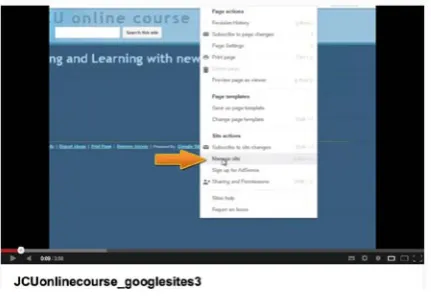
Figure 1. Screenshot from instructional video.
Results
Tracking and reporting of results from the use of design thinking in the subject is in the preliminary phase, and at this stage relies on anecdotal reports from the staff involved in the subject and formal anonymous feedback from students which is collected through the university’s SFT (Student Feedback on Subjects) process. The formal student feedback involves a score on a five-point scale from a consistent batch of questions and also allows the addition of comments. The scores and the comments indicate a high degree of satisfaction with the usefulness of the design thinking format. The average marks for this assessment piece have increased significantly since the addition of the focus on design thinking and the opinion of markers (who have been involved with the subject over the last five years) is that the design thinking framework has all but eliminated the previous lack of attention to the needs of the users (learners in schools) and the system that the users operate in (particular schools) and has more generally enhanced the design process. The students use the scaffolding framework in two ways – the first involves the creation of a concept for the web-based learning activity and the second being in the design and construction of the website. The university SFT for the subject was very high in 2012 and significantly higher than the university average and has significantly increased since the introduction of design thinking. Staff in the subject considered that the design thinking framework (steps) assisted in meeting the university’s new set of generic graduate
attributes in the domain of skills associated with problem solving, innovation and creativity. This is particularly important considering that the new wave of updated graduate attributes in many universities has emphasised the development of these skills. For example, at this university the graduate attributes used over the previous 10 years included only a brief mention of ‘ability to solve problems’ whereas the new set developed over the last two years includes attributes that are explicitly developed through the use of design thinking. These (draft) attributes from the university policy include:
• “Develop innovative and sustainable options and solutions to problems through research and inquiry
Design thinking frameworks as transformative cross-disciplinary pedagogy 18
(http://www.jcu.edu.au/curriculumrefresh/graduateattributes/JCU_107432.html)
Conclusion
Authentic assessment tasks such as the development of web-supported learning activities that can be offered online provide an ideal opportunity for students at the undergraduate or postgraduate level to develop and use these important skills. Barrie (2007) defined graduate attributes as the “skills, knowledge and abilities of university graduates, beyond disciplinary content knowledge, which are applicable in a range of contexts and are acquired as a result of completing any undergraduate degree” (p. 440). Employers particularly covet attributes targeted by design thinking and some argue that the current emphasis on graduate
attributes has been driven by the employability agenda (Bath, Smith, Stein, & Swann, 2004). This is supported by the high numbers of students enrolling in Stanford’s short courses on design thinking due to the perception that employability will be increased by demonstrated competence in these attributes. A consistent theme in the literature concerning graduate attributes has been the emphasis placed on fostering innovative and creative mindsets in students and providing them with strategies that enable them to achieve outcomes that involve different paths and solutions to new problems. Barrie (2007) claims that innovation and creativity “lie at the heart of all scholarly learning and knowledge, with the potential to transform the knowledge they are part of and to support the creation of new knowledge and transform the individual” (p. 440). Although universities prioritise the development of graduate qualities and have recently increased the emphasis on developing innovative mindsets, these policies are often not enacted at the subject level since lecturers are often concerned about covering the content. Often in the ICT and education specialised subjects, developing technical skills are an important priority and can overshadow the development of other important skills. Using authentic assessment tasks that foster the development of technical skills in context, and the incorporation of design thinking models is showing promise in meeting the graduate attributes associated with innovation and creativity but ongoing research and tracking of specific outcomes is needed to provide empirical evidence concerning the adoption of design thinking frameworks in the education of pre-service teachers.
Case Study 2 by Dr Raoul Adam, James Cook University
Lead academic’s view on the definition of design thinking
Binary-epistemic design (BED) involves (a) the identification of key binary constructs and positions that define a problem (e.g. prescriptive/descriptive, concrete/abstract,
general/specific, fixed/fluid, replication/innovation, analytic/holistic), and (b) the application of para-positional approaches to tensions between positions. A binary-epistemic approach maintains the abstract integrity and value of each binary constituent (e.g. analytic and holistic) while recognising the need for contextualised choices between binary constituents (e.g. analytic or holistic).
Design thinking frameworks as transformative cross-disciplinary pedagogy 19
BED is a deliberate attempt to sustain a dynamic equilibrium between polarities in an abstract sense, while allowing for relational and contextual choices and emphases in a concrete sense. Design thinking is sometimes contrasted with scientific thinking in that it emphasises emergent solutions, dynamic systems, subjective realities and divergent approaches, rather than fixed solutions in static systems with objective realities allowing convergent approaches. Beckman and Barry (2007) acknowledge the historical shift
between the two epistemes, “Design then shifted from a clear-cut problem-solving process to a problem-formulating process” (p. 26). Stewart (2011) identifies a ‘shift in focus’ (p. 516) between functionality and experience, production and use. Adams, Daly, Mann, and
Dall’Alba (2011) note the historical dominance of epistemology in the
epistemology/ontology binary, and mind in the mind/body binary. Tonkinwise (2011) argues that design thinking has not yet moved far enough to accommodate the aesthetic
dimension of design in the functional/aesthetic binary. While these shifts of emphasis have been historically and relationally necessary to challenge the hegemony of the analytical approach, the binary-epistemic design approach introduced here assumes that the opposition is theoretically unnecessary. In theory, BED embraces the necessary tensions, paradoxes, dialectical and dialogical possibilities evident in binaries like analytic/synthetic, subjective/objective, convergent/divergent, quantitative/qualitative and reductive/holistic. In practice, BED allows for evaluative selection, (re)balancing, and even re-equilibrating opposition between polarities in context, however, always with an awareness of the
paradoxical dance of opposites and the spectrum and degrees of difference between poles.
Design thinking models, frameworks or strategies used
The six phases of binary-epistemic design represent a design cycle between the intuitive identification of a problem and experimentation with a (re)solution in context. Intermediate phases organise the problem artefacts into useful categories or dimensions; analyse the binary constructs most relevant to these categories; evaluate or diagnose the problem in light of binary-epistemic dynamics; and synthesise a solution by altering the existing binary relationships through the addition, subtraction or rearrangement of artefacts. Artefacts represent any knowledge, information, data and experiences that help to inform a problem.
Outline of the learning activity / project and how design thinking was used
Design thinking frameworks as transformative cross-disciplinary pedagogy 20
Outcomes
1. An online interactive rubric to support first year students’ academic literacy (i.e. http://libguides.jcu.edu.au/irwc).
2. Development and application of a design process and philosophy (i.e. binary-epistemic design).
How was design thinking useful in the learning activity or project?
BED is by no means limited to material or digital problems and products. As a way of thinking grounded in a consensus of theories of epistemological development, it has broad applicability to wicked problems and conflicts that arise from, or are exacerbated by, solely dichotomising (i.e. either/or) ways of thinking. Such problems often arise at complex social, political and cultural interfaces. These problems can be as exacerbated by relativistic
indifference as they are by universalistic interference; by disabling complexification as by reductive simplification; and by abstract detachment as by concrete disorientation. There is always a need for meaningful processes to conceptualise and manage, without
unnecessarily oversimplifying, these problems. Design thinking provides an overarching framework for approaching wicked problems. As conceptualised here, binary-epistemic design provides a specific process and set of conceptual tools that operate within this framework to provide a small but arguably important perspective on wicked problems. Furthermore, the process and conceptual tools of BED give some functionality to an
important, but largely under-operationalised body of theory and research in epistemological development. Summarily, BED represents a ‘way of knowing’ that allows sophisticated access to complex problems.
Case Study 3 by Dr Pauline Taylor, James Cook University
Context
The Australian higher education sector is facing an issue of unprecedented complexity in relation to increasing student diversity. The ‘wicked’ problem of student experience and retention, particularly in the first year of tertiary study, has proven to be intractable internationally (NCES, 2005; Tinto, 2006-2007) and resistant to concerted policy and
resourcing efforts. Participation concerns are particularly pertinent for domestic students at the university where this study was conducted as enrolments show higher proportions than the norm of traditionally marginalised groups, including low socioeconomic status and first in family to attend university. Many students experience considerable geographical and economic challenges in accessing higher education. Increased flexibility both via wholly online or blended learning courses has been highlighted as desirable for current and prospective students in commissioned market research reports.
Design thinking frameworks as transformative cross-disciplinary pedagogy 21
but no systemic local research had been conducted on student experiences of this
phenomenon. Further, although some studies have been undertaken showing the benefits of online assessment (Bugbee, 1992; Bunderson, Inouye, & Olsen, 1989; Butler, 2003; Sereci, 2003) it would appear that little research has been undertaken on students’
perceptions in this discipline. A review of the literature found only scarce previous research in other countries and a lack of Australian studies, especially relating to tertiary students in business courses.
Understanding and responding to the student experience is critical to academic integrity and student retention, particularly so in the first year of study. Bradley et al. (2008, p. 57) identify that Australian higher education students face some of the highest relative costs to fund their study and institutions need to find innovative ways to engage students in learning experiences which are not reliant upon traditional ‘places’ and modes of study.
Lead investigator’s view on the definition of design thinking
Empirical research internationally (NCES, 2005; Tinto, 2006-2007) demonstrates the need for new ways of thinking about how to tackle the ‘wicked’ (Rittle & Webber, 1973) or complex and seemingly intractable issues of student access, experience and retention in higher education. Although there is no single, commonly agreed definition of what design thinking is in the literature, there is broad agreement that it can be viewed as an intellectual approach to solving complex problems (Kimbell, 2009) that emphasises empathy, abductive reasoning, and rapid prototyping. Historically, higher education systems across the Western (and new) world were often designed to be elitist and exclusionary (Wybrow, et al., 2013). It follows then, that with changing student cohort, they could, and should, be redesigned to be more egalitarian and inclusive.
Design thinking models, frameworks or strategies used
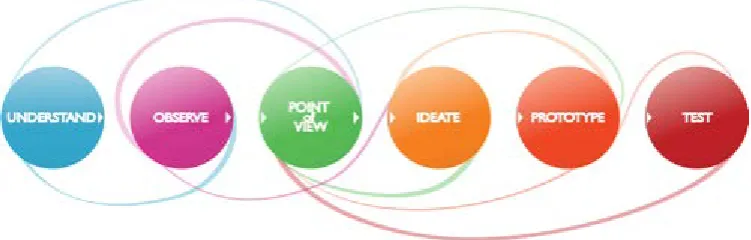
The literature relating to design thinking refers more to approaches rather than specific models (for example, Rowe, 1987). However, Stanford University’s design school model (Figure 2) is helpful in making explicit how design thinking was used in this study. The model highlights six interlinked and cyclical phases. Design thinking approaches emphasise deep understanding of, and empathy with the user, ideation of possible solutions, rapid
Design thinking frameworks as transformative cross-disciplinary pedagogy 22
Figure 2. Stanford University design school design thinking model.
In this case, the problem was to understand the lived reality of online assessment in order to design better teaching and learning experiences for increasingly diverse students.
How design thinking was used
The first phase of this project sought to gain insights into students’ real world experiences of online assessment. Following the model outlined in Figure 2, the team immersed
themselves understanding and observing the student experience in two foundation business subjects which used online multiple choice questions, albeit differently as an assessment task. Data from the first subject (in Semester one) were collected from a survey and quantitatively analysed. Findings allowed the team to empathise with students’ point of
view. These insights led to an ideation phase where various solutions to address student
needs were proposed and shared with a wider teaching group. These solutions were
prototyped where feasible in the second subject (in Semester two). Further data were
collected in Semester two (test). This sequence has been repeated in the same subjects in 2013.
Methodology
Design thinking frameworks as transformative cross-disciplinary pedagogy 23
Clarke, 2006; Patton, 2002; Seidel, 1998) and compared with the quantitative data.
Summary of findings
Findings provided important understandings of how students experienced online
assessment and valuable insights into their life-worlds. Online assessment was universally welcomed by this cohort of students regardless of prior experience with technology, age or gender. The flexibility afforded by online assessment of this type in terms of context, format and timing reduced assessment stressors and facilitated learning, particularly for those students who might be considered to need additional support: low socioeconomic status, those with high work/parenting responsibilities, and students from non-English speaking backgrounds.
Further, students in this study found the higher stakes, multiple attempt, online assessment task in subject one the easiest to manage and the most worthwhile for learning in
comparison with the lower stakes, textbook generated online assessment experienced in subject two. This finding provides an interesting perspective on the first year transition pedagogy assessment principle identified by Kift, Nelson, & Clarke (2010) which emphasises the importance of early low stakes assessment. Qualitative survey data indicate that, whilst “little and often” assessment may be theoretically and pedagogically desirable for first year students, it may simply not be practical in a context where students are trying to juggle competing time demands. Findings from this project contradict results from other studies into student experiences of online assessment (Marriott & Lau, 2008) and may provide insights into the particular difficulties faced by low socioeconomic students who have to undertake proportionately high amounts of paid work to finance their studies.
How was design thinking useful in the learning activity or project?
Design thinking approaches in addressing genuine problems were very useful in this project. The emphasis on understanding how these students operated in the ‘real’ world of study has highlighted important considerations for academic staff and managers in online course design that are absent from the literature. Findings show that devising online assessment tasks which positively influence student experience and outcomes is complex design work that needs to be iteratively informed by learners’ experiences.
References
Details are provided on p. 47 of the report.
Case Study 4 by Dr Dianna Madden, James Cook University
Context
Design thinking frameworks as transformative cross-disciplinary pedagogy 24
subjects in the School of Creative Arts at James Cook University in Townsville (Australia) and the Graphic Design program at Flagler College in St Augustine, Florida (USA). These subjects were used to explore the concept of design thinking with creative arts students: (1) a third year Interactive Media Design subject at JCU, (2) a Music and Sound Media subject (also at JCU), and (3) various subjects in a graphics design course (Flagler College).
Each of the design lecturers had a slightly different, but complementary working definition of design thinking.
Lecturer 1
Professor (mainly research): Interactive Media Design, School of Creative Arts, JCU
Design thinking is a human-centred innovation process that emphasises observation, collaboration, fast learning, visualisation of ideas, rapid concept prototyping, and concurrent business analysis, which ultimately influences innovation and business strategy.
Lecturer 2
Senior Lecturer: Music and Sound Media Design, School of Creative Arts, JCU
Design thinking is the process of generating more than one solution to any given problem. Essentially assessing and testing each of those solutions, not necessarily establishing a single solution, but always leaving open the possibility that a set of multiple solutions would be appropriate or available.
Lecturer 3
Lecturer: Graphic Design program, Flagler College
Design thinking is so hard to define because it is just the way many designers
Design thinking frameworks as transformative cross-disciplinary pedagogy 25
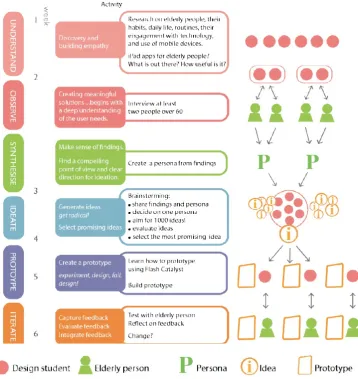
Figure 3 shows the activity model used in the creative arts school.
Figure 3. Activity Model used in the Creative Arts School.
From: Fleischmann, K., Visini, G., & Daniel, R. (2012). We want to add to their lives not take away. In P. Rodgers (Ed.), Articulating design thinking. Oxfordshire, UK: Libri Publishing.
A brief description of the task and design brief given to each group of students is described next.
1. Third Year Interactive Media Design subject – JCU, School of Creative Arts. This project was conducted with 19 design students and one design lecturer. The design brief was as follows (taken from the subject outline):
“How can the design of products, spaces and services make growing old seem more attractive and inviting?
You are asked to design a product or service for older people that surpasses
Design thinking frameworks as transformative cross-disciplinary pedagogy 26
Students followed the steps below to use the design thinking paradigm to complete the design task.
• Introduction to design thinking process
• Research in a group of two designers and creation of a persona • Workshop: learn how to prototype with Flash Catalyst
• Brainstorming in teams: outcome is product or service • Design product or service
• Prototype, user test and change if required • Document
• Present and submit
2. Third Year Music and Sound Media Design subject – JCU, School of Creative Arts.
This project was conducted with music media design students and one design lecturer. Rather than having a specific design brief that implements design thinking, the lecturer has attempted to add tutorials and workshops that will encourage collaboration between the students. Some of the issues associated with this approach are discussed in the Results section below.
3. Second, third and fourth year subjects in the Graphic Design program – Flagler College.
The lecturer in this case has implemented design thinking activities throughout the design methodologies, digital image studio, web design and interactive design subjects that she teaches. She used an iterative process that included problem finding, discovery research, concept development, prototype testing and implementation.
For example, in the Interactive Design subject, students follow a human-centred approach to designing mobile applications for people. This semester, they are
designing iPad apps for a speech language pathologist to use in therapy sessions with autistic students. They start by conducting research with users (in-depth contextual interviews and observation) to discover opportunities for design. Students then explore a range of concepts, develop an idea, build a low-fidelity (paper) prototype, test it with users, incorporate feedback from usability testing, and then design a high-fidelity (digital) prototype.
Results
Design thinking frameworks as transformative cross-disciplinary pedagogy 27
During real world projects, if a client is not open-minded, if they have an ego and believe their way is the only, right way to do things, then that severely limits the possibilities.
Lecturer 2 stated that he struggles with implementing design thinking in the classroom due to students’ resistance to considering multiple solutions to a problem. He suggests
“Australian society and many western cultures are very goal oriented and goal based, and often essentially reinforce a solution to a particular problem and you know if you think about a lot of the schooling that most students have gone through that would be the case. There would have been in many ways to think that there is a solution to the problem. Period. There is one right answer.” He emphasises to his students that there may be several answers to a problem that are all valid.
Conclusions
Each of the researchers believes that design thinking was of value in their particular learning activity or project. Lecturer 3 describes this as follows, “After every HCD project, we debrief. I ask students what they liked and what was the hardest part about the project. Every semester, the point comes up about how this approach made them realise that they’re designing for other people, not themselves. Compared to other design subjects, we spend a lot of time doing user research, focusing on the process more than the outcome. For the students who just want to make pretty design, this can be frustrating, but the majority of students get it. They develop empathy for users, which informs their design decisions, and they learn how to find problems, not just solve them.”
Lecturer 2 notes that he uses the design thinking process on a pretty regular basis. He states, “… if I created a piece of music I know that there is any number of solutions. I consider that a problem, just like a puzzle to solve. Even after a composition as far as most people are concerned is finished, it’s not finished. It’s just one version.” While it can be used individually, he sees design thinking fitting most naturally in a group or collaborative
environment where it provides the option of generating or brainstorming ideas and in order to generate a divergent set of possibilities in context.
Design thinking frameworks as transformative cross-disciplinary pedagogy 28
Chapter 2
Workshops and case studies at other universities
Successful lecture/workshop events were held in:
Darwin (Charles Darwin University)
This event attracted 58 participants from a variety of discipline areas. The format involved formal lectures delivered by Professor Neil Anderson and Dr Pauline Taylor from James Cook University, followed by a Q&A session and a workshop in group format.
Brisbane (Queensland University of Technology)
This event attracted 31 participants mainly from the School of Design at QUT. The format involved formal lectures delivered by Professor Neil Anderson (JCU), Professor Jim Gall (QUT), Dr Oksana Zelenko (QUT), Natalie Wright (QUT), Dr Gavin Sade (QUT), Associate Professor Barbara Adkins (QUT) and Dr Manuela Taboada (QUT). This was followed by a Q&A session and group work.
Perth (Edith Cowan University)
This event attracted 35 participants from different discipline areas at ECU and other Perth-based universities and members of the public and/or government departments. The format involved formal lectures delivered by Professor Neil Anderson (JCU), Associate Professor Jenny Lane (ECU) and Dr Chris Kueh (ECU) followed by Q&A and group work.
Melbourne
This event attracted 45 participants from different discipline areas at Swinburne and other Melbourne universities such as Royal Melbourne Institute of Technology (RMIT) and
Monash University and members of the public and/or government departments. The format involved formal lectures delivered by Professor Neil Anderson (JCU), Dr Gavin Melles
(Swinburne), Professor Nita Cherry (Swinburne) and Professor Sarah Pink (RMIT).
In order to report on the use of design thinking at other Australian universities four additional case studies were provided as follows.
Case Study 1: Swinburne University by Dr Gavin Melles
Future Designers Program
Description
Design thinking frameworks as transformative cross-disciplinary pedagogy 29
air infiltration in buildings to increase consumer and policy makers’ awareness. The aim was to increase action to minimise air infiltration in buildings to support low carbon or energy efficient buildings. Working through a design-led process with the three key stakeholder groups, the students engaged them to develop innovative communication and engagement solutions utilising the stakeholders’ expertise.
Objectives
To facilitate industry engagement to develop the students’ industry experience utilising a design-led process to create tangible outcomes for the stakeholders to use to stimulate action.
Methodology
Design thinking process and related methodologies were deployed over an 11 week time cycle through three workshops with the three key stakeholder groups. The IDEO (an international design and consulting firm) process included:
1. Inspiration; 2. Ideation; and
3. Implementation process.
Each workshop brought students, stakeholders and materials together for three-hour innovation workshops at the following sites:
• Air Barrier Technologies training site (week 2) • Swinburne University Design Factory (week 6)
• Victorian Building Authority or Henley Homes offices (week 11).
In between the workshops, students were supported by two Swinburne mentors and the three industry mentors (estimated 1/2 day total per mentor) to facilitate the IDEO process to develop tangible solutions.
The final deliverable was a proof of concept with sufficient detail to be utilised for
communication by the stakeholders about air tightness in buildings and the associated risks.
Project team
Composition and capabilities
Design thinking frameworks as transformative cross-disciplinary pedagogy 30 Selection process
Recruitment and selection into the team was dependent on students having completed HDC011 Design Thinking and achieving the grade of distinction. They also had a mix of industrial, graphic and other design skills. They demonstrated capacity to both research and design for a range of contexts through the undergraduate program.
Outcomes for Students
Students engaged industry stakeholders to enable them to understand and develop communication tools about a real industry problem through design-led engagement. As a result, students were better prepared through this experience to engage in formal
workplaces in relevant industries and gain an appreciation about how design can play a role in upstream engagement with business problems and development of solutions. Students also developed awareness of low carbon sustainable buildings.
Outcomes for Industry Partner
Industry partner leverages education partner’s design-led capabilities to demonstrate capacity of the education provider for future collaboration. The stakeholders developed an appreciation of the benefits of engagement with the education provider, particularly the Swinburne Design Faculty, as well as developing relationships with the students before they emerge into the workforce. The industry partners also gained an understanding and
demonstration of the research and design skills of students, and their capacity to engage with business projects at the upstream end. This achieved innovative R&D outcomes at minimal cost while providing a win for the education provider to further enhance the course.
Outcomes for Educational Provider
The project demonstrated the value of the collaborative design skills programs to industry, specifically training in design thinking approaches but also mainstream design skills. The project develops further the existing industry relationships with promise for future projects and research opportunities.
Case Study 2: Edith Cowan University by Dr Christopher Kuek
Introduction
Design thinking frameworks as transformative cross-disciplinary pedagogy 31
expand design education to align with changes in global design professions, and is
committed to provide study content that will generate graduates who can adapt to the new challenges.
Lead academic’s view on the definition of design thinking
Design thinking refers to the methods that designers use to identify and approach complex challenges, with the aim to create radical innovations (Lande et al, 2011, p. 211). This defers from the production-focus design that is generally known in the retail and marketing sector. Design thinking is a process- and experiential-driven framework that emphasises
stakeholders’ needs. This allows designers to work trans-disciplinarily while contributing to broader communities.
Design thinking models, frameworks or strategies used
Design thinking expands designers’ roles from being specialists in producing and marketing of retail products to contributing effective services to meet the needs of the broader society. The first step is to embed design thinking content in all undergraduate units across 2D and 3D Design. The aim is to generate thinking designers who can merge practice and research. The characteristics of design thinking that underpin design education content at ECU are:
Design ethnography: Designers need to consider a product and/or service from
stakeholders’ point of view. This focus produces design outcomes that circulate around empowering end users and the organisations involved. According to Hekkert & Van Dijk (2011), this qualitative design focus helps designers to understand and generate outcomes that communicate insights into stakeholders’ needs. This approach also allows designers to collaborate with people from various disciplines to achieve effective services. ECU Design promotes design ethnographic approach as the means to inspire more holistic and in-depth creative processes;
Co-design and co-creation: Design is shifting from ‘design for people’ to ‘design with
people’. This approach allows services and systems to be developed together with users and stakeholders. The outcome of this method is effective systems and services that will
contribute a vast return on social investments. ECU Design students are gradually being introduced to ethnographical and co-creation methods;
Visualisation techniques: Designers are trained as visual thinkers – they sketch ideas and
develop opportunities in visual forms. The impact of this method can be huge if applied to other disciplines. For example, the visualisation of an organisation’s structure in a glance, or to map users’ experiences in a cohesive manner that will help service providers in
understanding their services holistically. At ECU Design, students are encouraged to utilise visuals not just as presentation tools, but also as thinking tools;
Deconstructing situations: One of the strongest skills a good designer has is the ability to
Design thinking frameworks as transformative cross-disciplinary pedagogy 32
Trans-disciplinary: Design thinking embraces diversity of knowledge and skill. This approach
emphasises design methods as catalysts to react with various stakeholders involved in social sectors. At ECU, two levels of trans-disciplinarity are pursued: content between the 2D and 3D Design streams are now drawn closer, and students are encouraged to explore design opportunities outside of common design disciplines; and students are expected to be involved in social innovation, sustainability, and service delivery through interactions with real life clients.
These attributes are being introduced and emphasised in undergraduate content. These approaches encourage students to tackle design challenges from a holistic point of view. Students have shown progress in developing methods and thinking in their design works.
Based on a design thinking framework, ECU Design students are introduced to reflective design process and methods:
• Unpacking: This stage encourages students to question, investigate and re-define
the obvious problems identified by clients. This step allows critical thinking and questioning minds to be incorporated into creative process. Students can learn to view design challenges from broader perspectives. Methods used in this stage include empathy mapping, persona, and affinity diagrams;
• Exploring: Similar to traditional brainstorming, this process encourages students to
explore possibilities without judgement. In the light of service design, this process emphasises exploration of ideas through the lens of stakeholders. This service-based approach varies from object-based brainstorming that tends to focus on forms;
• Prototyping: Using simple materials and methods such as storyboarding and
visualisation, this step encourages students to fail, but with the focus on knowing the reason. It is often that the prototyping process involves co-creation sessions with stakeholders. Visualisation of the proposed touchpoints allows students to collaborate closely with stakeholders to identify strengths and weaknesses of the idea; and
• Implementing: Creative implementation of ideas enables services to be
approachable and effective. Students are encouraged to pitch their ideas as practical outcomes, with innovative edge, to clients. This step therefore emphasises design entrepreneurship, which empowers students in seeing their design as relevant intervention to the identified challenges.
These four stages are embedded into teaching schedules of design units. The idea of holistic design and design thinking approaches are therefore being reinforced through practice.
How design thinking was used
Design thinking frameworks as transformative cross-disciplinary pedagogy 33
process skills, including card sorts; running meetings; group dynamics; and other basics of working with others. The focus of the unit is working with others. Students learn by using techniques, methods and processes that help facilitate teamwork and working with client groups. Learning in the unit is both by research into the topics and by applying processes to tasks. There are two assignments: the first is to run a focus group on a piece of design work. The design could be a poster, a piece of furniture, a space, or any designed artefact. The second assignment asks students to take on a broad unframed challenge, a ‘wicked problem’ (Buchanan, 1992). The topic for this assignment was ‘The First Year Experience’. For most universities the first year experience dictates a range of things such as retention, and pass-fail rates, and is an important area for monitoring and improving. To carry out the first assignment, students will need to be able to manage groups, ask effective questions and be able to be objective in assessing a design’s effectiveness. This assignment helps develop their organisational and team working skills. It teaches them to ask questions using basic questioning frameworks such as SWOT (Strengths, Weaknesses, Opportunities and Threats) and ORID (Objective, Reflective, Interpretive and Decisional) (Hogan, 1999). In the second assignment students are introduced to the school’s first year coordinator and also the dean of teaching and learning. They are asked to consider these as part of their
information gathering. By this time we’ve covered some basics of questioning, and students use questions to gain information on the dimensions of the problem. This forms part of the first stage of the Value Management design process. While these thinking and working methods are based on strategic management skills, they form the foundation to design thinking approaches such as co-design, and the identification of stakeholders and their inclusion into the design process.
The application of design thinking approaches are emphasised through real world challenges as projects. For example, Identity Design unit introduces service design to innovate
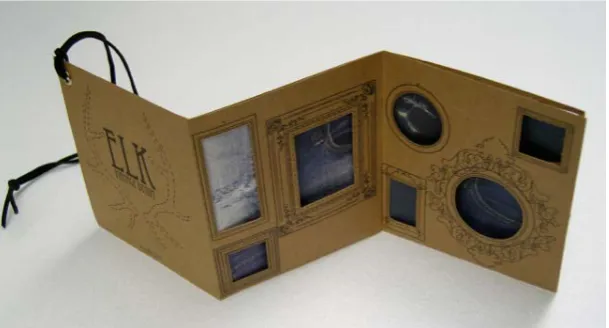
stakeholders’ experiences. This provides students with new insights into design processes. Previously, the unit focused on designing brand identity for businesses through artefacts such as logos, stationery, and a style guide. While this unit content was adequate to assist students in developing skills designing and producing branding artefacts, it was difficult to direct students to investigate more about user experience of a corporate identity. Figure 4 shows an example of branding stationeries that were previously the focus of Identity Design unit. In 2012, the unit took on the idea of innovating experiences in the City of Perth.
Students were given the opportunity to observe and analyse improvement opportunities in Perth City. Based on design thinking framework, they then had the semester to develop user-centred solutions that contribute to solving social, economic and environmental issues. This project allowed students to develop questioning minds and to explore empathic design methods. For example, a student explored ways to overcome traffic congestion in Perth. Through conversations with users and user-design processes, he proposed to activate the river system as a public transport channel. In 2013, the unit again collaborated with the City of Perth. Students were encouraged to explore new services for the city. The focus on broad application of design pushed students to approach design holistically. This was
Design thinking frameworks as transformative cross-disciplinary pedagogy 34
regarding designers reaching out to their communities. These efforts are already showing positive results when students begin to think and talk about design outcomes as services and experiences. Students’ feedback from online evaluations is positive. Comments included:
• The approach and freedom within the unit allowed students to develop individual ideas. The collaboration during class time that allowed us to talk to each other and reflect on each other’s ideas/work was very constructive;
• Challenging, creative, out-of-the-box thinking;
• Learning about different design aspects that I was unfamiliar with; • Engaged in real life n think [creatively];
• Challenging, made you think outside the square; and
• We got to be a part of something real with the Perth community, apply it to our local area.
[image:34.595.74.379.346.510.2]Design thinking frameworks as transformative cross-disciplinary pedagogy 35
Figure 5. Design thinking framework allows students to explore design holistically and to arrive at designing services through co-creation methods (works by Lauren Mills).
Outcomes and the usefulness of design thinking
The introduction of design thinking as a teaching framework has shifted students’ attitude to design in the short period of time. They are now seeing design as a broader field than simply the application of the elements and principles of design. For the past four years Western Australia has adopted a new design curriculum for year 11 and 12 school students. Within the curriculum, students are now required to consider environmental and political dimensions of design as well as economic and cultural. This means that many students are already thinking of design as a social agent when they arrive at university. The team’s new approach enables us to build on these foundations and to