PACKAGE ON KNOWLEDGE AND LEVEL OF
ANEMIA AMONG ADOLESCENT GIRLS
AT SELECTED SETTINGS
WEST BENGAL
DISSERTATION SUBMITTED TO
THE TAMIL NADU DR.M.G.R.MEDICAL UNIVERSITY
CHENNAI
IN PARTIAL FULFILMENT OF REQUIREMENT FOR THE DEGREE OF
MASTER OF SCIENCE IN NURSING
Internal examiner
:
PACKAGE ON KNOWLEDGE AND LEVEL OF
ANEMIA AMONG ADOLESCENT GIRLS
AT SELECTED SETTINGS
WEST BENGAL 2013
Certified that this is the bonafide work of
MS. HEPHZIBAH DOROTHY.J Omayal Achi College of Nursing
#45,Ambattur Road, Puzhal Chennai – 66
COLLEGE SEAL:
SIGNATURE:
Dr.(Mrs).S.KANCHANA
R.N., R.M., M.Sc.(N)., Ph.D., Post Doc (Research) Principal & Research Director in Nursing,
Omayal Achi College of Nursing, Puzhal, Chennai – 66,Tamil Nadu.
DISSERTATION SUBMITTED TO
THE TAMIL NADU DR.M.G.R.MEDICAL UNIVERSITY
CHENNAI
In partial fulfillment of requirement for the degree of
MASTER OF SCIENCE IN NURSING
This dissertation is dedicated to my beloved
father (late) Mr. Jacob Manuel who was
the brainwave behind me becoming a
Herewith I humbly offer my bunch of gratitude to the following intellectual personages who rallied together with me to make this dissertation a reality.
I express my deep sense of gratitude to the Vice Chancellor and Research Department of the Tamilnadu Dr. M.G.R. Medical University, Chennai for this invaluable opportunity to pursue the Post Graduate Nursing Programme at this esteemed University.
It is my honor to express my sincere thanks to the Managing Trustee, Omayal Achi College of Nursing, for having given me the precious opportunity to undergo the Post Graduate Nursing Program in this eminent and prestigious Institution.
I humbly offer a bouquet of thanks to Dr. K. R. Rajanarayanan , M.B.B.S., FRCH., [London], Research Coordinator, International Centre for Collaborative Research (ICCR) and Governing Council Member, for ethical approval and expert leadership throughout this study.
I am deeply obliged to enunciate my heartfelt credit and gratefulness to Dr. (Mrs.) S.Kanchana, Principal and Research Director, ICCR, Omayal Achi College
of Nursing for her cordial guidance, constant inspiration and continuous support throughout the study to make it a reality.
I express my endless gratitude to Dr. (Mrs.) D. Celina, Vice Principal, Omayal Achi College of Nursing, for her igniting and brainstorming suggestions, seasoned with constant encouragement as a key for the successful completion of this study.
My earnest thanks to ICCR Executive Committee Members for their valuable suggestions during the research proposal, pilot study and mock viva presentation.
Head of the Department, Child Health Nursing for her importunate suggestions, perpetual enlightment and relentless motivation until the final version of this study. My special thanks to Mrs. Susan Mathew, Former HOD, and Child Health Nursing for her guidance and support.
My earnest thanks to Ms.P.Nandhini, Assistant Professor, Child Health Nursing Department and Nurse Researcher, ICCR for her pleasant guidance. I extend a warm note of thanks to Mrs.Sangeetha Janani, Tutor, Child Health Nursing Department. My deepest gratitude to Mrs.Sorna Daya Rani, Tutor, Child Health Nursing for her constant support, motivation and guidance.
I express my heartfelt thanks to all the Head of the Departments, faculty, administrative staff and Mrs. Stella James, Warden , Omayal Achi College of Nursing, Chennai, for their suggestions and support throughout the study.
I enormously thank Mrs. Namita Sanfui , Panchayat Pradhan and the members of Taldi Panchayat for granting me permission to conduct the study and without whose help the study could not have been successfully completed.
I specially thank the Director, Living Hope, Mrs.Hemaltha Das, faculty, and the staff of Living Hope, Taldi for their support during the data collection procedure.
I acknowledge my sincere gratitude to Mr.Venkatesan, Biostatistician for his help and guidance in statistical analysis of the study.
I extend my profound gratitude to all the Nursing and Medical experts for their suggestions in validating the tool for the study.
Anderia and Mr. Saiful Islam Khan, Headmaster, Government Higher Secondary School, Kachkumrakali for their kind cooperation and permission to conduct the study in the school venue.
I extend my thanks to the Mrs. Judith Anand, Mr.Muthukumaran and Mr.Ashokan, Librarians of Omayal Achi College of Nursing and Librarians of The Tamil Nadu Dr. M.G.R. Medical University, for their co-operation in collecting the related literature for this study.
I am very much grateful to Mrs. Celia Skelsin for editing this manuscript and tool in English.
My heartfelt thanks to Mr.Tapan Banerjee, Mr.Hasim Gazi and Mr.Sanjay Kumar Naskar in translating and editing the manuscript and tool in Bangla.
My delightful thanks to Mr.Siraj Laskar, Mr.Palash Baidya, Mr.Paritosh Mondal, Mr.Ratan Barman and Mrs.Susan Banerjee, for conducting
entertainment programme that motivated the adolescent girls to participate regularly.
I extend my thanks to Mr.Tara Shankar, lab-technician, Ms.Pratima Banerjee, ANM and Mrs. Abhaya Binu, Staff Nurse for their assistance in data collection.
My sincere gratitude to Mr.G.K.Venkataraman, Elite Computers, for typing, and aligning the manuscript.
I sincerely thank all my peer evaluators Mrs.Janeta Vinu, Ms. Srimathi.S Ms.Savitha Devi. S, all my classmates axios and seniors for their constructive ideas, sustenance and encouragement that enabled and moulded the study in a better way.
World Vision, Coimbatore, Mrs.Jasmine Amos, Staff Nurse, Mrs.Sasikala Umesh
Lecturer, Christian Medical College and Hospital, Vellore. Mrs. & Mr.Christopher (Pastor AG Church, Kolkata), Mrs & Mr. Solomon Nesakumar (Deputy Commissioner
Kolkata Port), Ms.Pia Runzhiemer, (Proprietor, German Bakery, Kolkata) Mrs.Smitha Khan (Faculty, AG Church School, Kolkata), Mrs & Mr.Pandit and Mr. Kiran Kasturi who supported me enormously in times of great needs during my study.
With overwhelming love , my immense note of appreciation to my husband Mr. Jebakumar Samuel, my parents Mrs. Annammal Jacob, Mrs.& Mr.Samuel, my brothers and my sister in laws Mrs & Mr.Joshua Jacob and Mrs & Mr. Selwyn Jacob, for their enormous love and support during my study.
I fondly shower the special petals of ovation to my precious and only beloved daughter Ms. Janice Daniella Jebakumar for enduring absolute solitude for this entire duration of the study.
Above all I humbly lift my heart and bow my soul to the God Almighty, my guiding light of wisdom, for His unconditional love, faithfulness and constant showers of blessings that enabled me in all my endeavors.
ANOVA
Analysis of Variance
BMI
Body Mass Index
CDC
Centre for Disease Control
EDTA
Ethylene Diamine Tetra Acetic acid
Hb
Hemoglobin
IAP
Indian Academy of Pediatrics
ICCR
International Collaboration Centre for Research
ICMR
Indian Council of Medical Research
IERB
Institutional Ethics Review Board
LAC
Latin America and Caribbean
NA
Northern America
NFHS
National Family Health Survey
NHANES
National Health And Nutrition Examination Survey
NIN
National Institute of Nutrition
UNFPA
United Nations Framework for Population Activities
UNICEF
United Nations Integrated Children’s Fund
WHO
World Health Organization
CHAPTER NO. CONTENT PAGE NO. ABSTRACT
1 INTRODUCTION 1
1.1 Background of the study 2
1.2 Significance and need for the study 4
1.3 Statement of the problem 7
1.4 Objectives 7
1.5 Operational definitions 7
1.6 Assumptions 9
1.7 Null hypotheses 9
1.8 Delimitations 9
1.9 Conceptual framework 10
1.10 Outline of the report 15
2 SCIENTIFIC REVIEWS OF RELATED
LITERATURE 16
3 RESEARCH METHODOLOGY 24
3.1 Research approach 24
3.2 Research design 24
3.3 Variables 25
3.4 Setting of the study 25
3.5 Population 25
3.7 Sample size 26
3.8 Criteria for sample selection 26
3.9 Sampling technique 26
3.10 Development and description of the tool 26
3.11 Content validity 31
3.12 Ethical consideration 31
3.13 Reliability of the tool 32
3.14 Pilot study 33
3.15 Data collection procedure 34
3.16 Plan for data analysis 36
4 DATA ANALYSIS AND INTERPRETATION 38
4.1 Organization of data 38
4.2 Presentation of data 39
5 DISCUSSION 65
6
SUMMARY, CONCLUSION, IMPLICATIONS,
RECOMMENDATIONS AND LIMITATIONS 71
REFERENCES 79
S.NO. TITLES PAGE NO.
1.1 Global and WHO member states prevalence of anemia
2
4.1.1
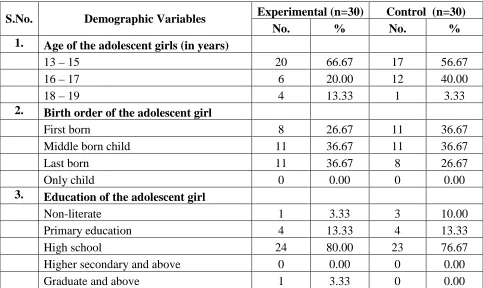
Frequency and percentage distribution of age, birth order and education of the adolescent girls.
39
4.1.2
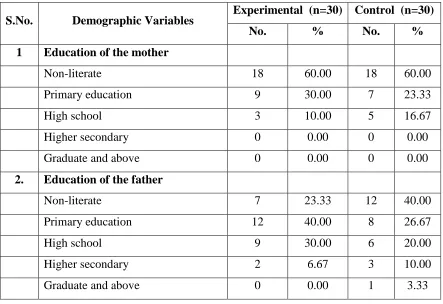
Frequency and percentage distribution of education of the father and mother of the adolescent girls.
40
4.1.3
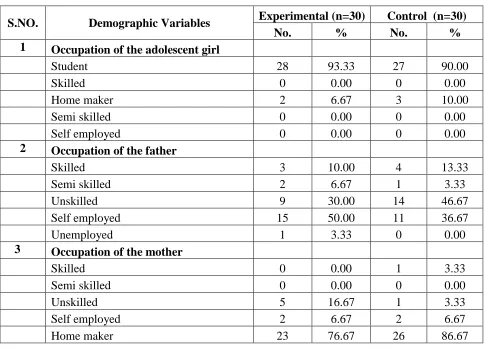
Frequency and percentage distribution of occupation of the adolescent girls, adolescent girls’ father and adolescent girls’ mother.
41
4.1.4
Frequency and percentage distribution of type of family, total family income and religion of the adolescent girls.
42
4.1.5
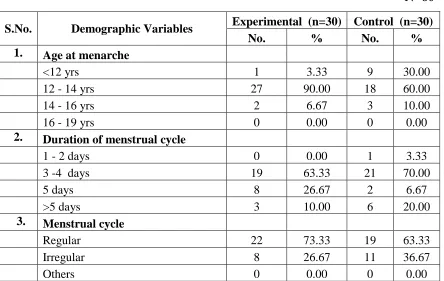
Frequency and percentage distribution of age at menarche, duration of menstrual cycle and regularity of menstrual cycle.
43
4.1.6
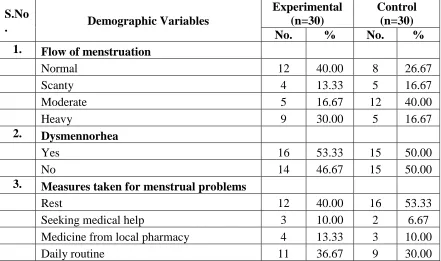
Frequency and percentage distribution of flow of menstruation and dysmennorhea.
44
4.1.7
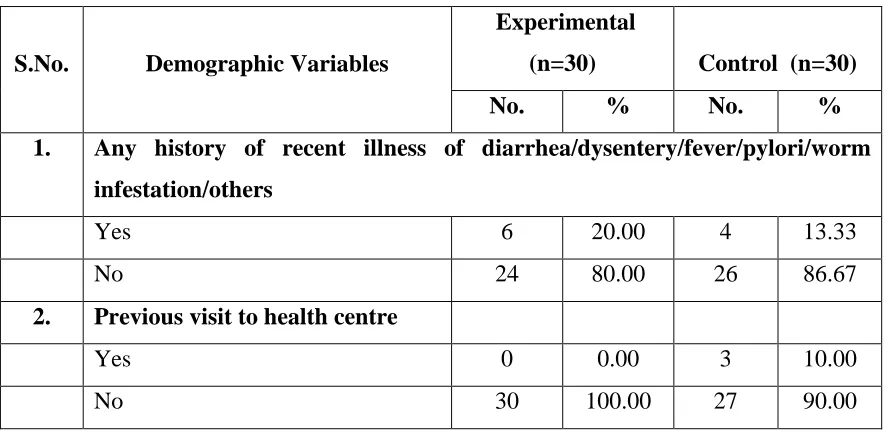
Frequency and percentage distribution of recent illness, visit to health centre and treatment for worm infestation.
45
4.1.8
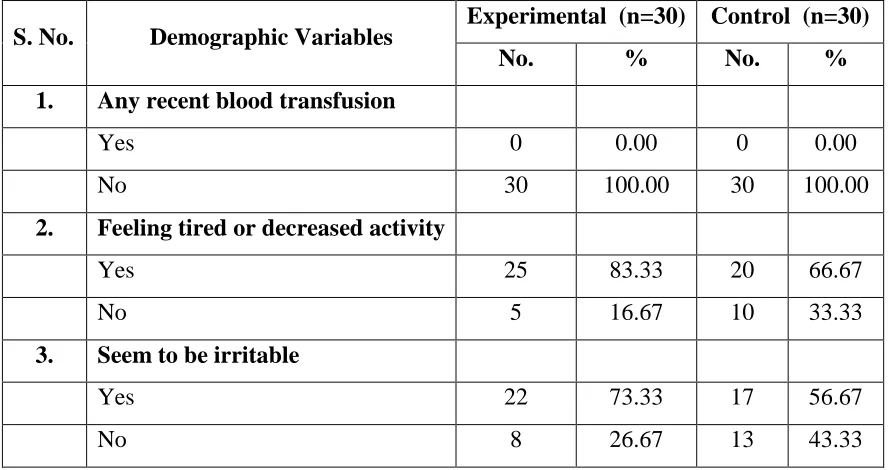
Frequency and percentage distribution of blood transfusion, feeling tired or decreased activity and irritability.
46
4.1.9
Frequency and percentage distribution of type of diet, meal frequency and meal timings of adolescent girls.
47
4.1.10
Frequency and percentage distribution of appetite, skipping of meals and frequency of skipping meals of adolescent girls.
48
4.1.11
Frequency and percentage distribution of compensation of skipped meals, food allergy and use of iron fortified salt among adolescent girls.
49
4.2.1
Frequency and percentage distribution of Weight and Height of the adolescent girls in the experimental and control group
4.2.2
Frequency and percentage distribution of BMI among adolescent girls – Experimental group and control group
51
4.3.1
Frequency and percentage distribution of clinical signs adolescent girls in the experimental and control group.
52
4.6.1
Comparison of pretest and post test knowledge score on anemia among adolescent girls in the experimental and control group.
57
4.6.2
Comparison of pretest and post test hemoglobin among adolescent girls in the experimental and control group
58
4.6.3
Comparison of post test knowledge score on anemia among adolescent girls between the experimental and control group
59
4.6.4
Comparison of post test hemoglobin score among adolescent girls between the experimental and control group
60
4.6.5
Comparison of the mean increment or reduction in the hemoglobin levels between experimental and control group.
61
4.7.1
Correlation between the post test knowledge and hemoglobin score among adolescent girls in the experimental and control group.
62
4.8.
Association of selected demographic variables with the mean difference score on level of anemia among adolescent girls in the experimental group.
FIGURE NO. TITLE PAGE NO.
1.1 Conceptual framework 14
4.4.1
Frequency and percentage distribution of pre-test level of knowledge on anemia among adolescent girls in the experimental group
53
4.4.2
Frequency and percentage distribution of pre-test level of knowledge on anemia among adolescent girls in the control group.
54
4.5.1
Frequency and percentage distribution of pretest and post level of anemia among adolescent girls in the experimental group
55
4.5.2
Frequency and percentage distribution pretest and post level of anemia among adolescent girls in the control group.
56
4.8.1
Association of selected demographic variables with the mean difference score on level of anemia among adolescent girls in the experimental group.
APPENDIX TITLE PAGE NO. A Ethical Clearance Certificate and IEC Approval
Certificate
i
B Letter seeking and granting permission for conducting the main study.
iii
C Content validity
I) Letter seeking expert’s opinion for content validity Ii) List of experts for content validity
Iii) Certificate of content validity
v vi vii
D Certificate for English editing xv
E Certificate for Bangla editing xvi
F Informed consent
I) Informed consent request form Ii) Informed written consent form
xvii xviii G Copy of the tool for data collection with scoring key xxi
H Plagiarism report xliv
I Coding for the demographic variables xlv
J Blue print of data collection tool l
K Intervention tool li
L M.Sc dissertation execution plan – GANTT CHART
ABSTRACT
ABSTRACT
ABSTRACT
ABSTRACT
level of anemia among adolescent girls at selected settings, West Bengal.
INTRODUCTION
Adolescents are the greatest asset of any country. “Adolescence” origins from a Latin word “adolescere” which means “to grow up”. Adolescence represents a critical stage of transition from childhood to adulthood. In these formative years of life, there is an abrupt and greater increase in the growth and development in various dimensions makes the adolescent girls vulnerable to various health problems. One of the major problems among adolescent girls is anemia. The iron requirement increases dramatically due to the expansion of the lean body mass, total blood volume and the onset of menstruation. This demand is further challenged by reduced dietary intake, decreased absorption, the strenuous physical work, gender disparity, lack of proper education, early marriage. Irrespective of the background, majority of the adolescent girls in India, are highly ignorant about anemia, its significant health consequences and the effects of anemia in their offspring. This further augments the vulnerability of adolescent girls to develop anemia. Anemia not only has lasting negative consequences in the adolescent
Adolescent anemia is the most intractable but preventable burden in developing countries like
India. Aims and objectives: To assess the effectiveness of nutritional intervention package on
knowledge and level of anemia among adolescent girls. Methodology: A quasi experimental non
equivalent control group design was chosen. 30 anemic adolescent girls from Kachkumrakali and
Anderia of West Bengal, were selected using purposive sampling. Anthropometric measurement,
hemoglobin, clinical assessment and knowledge on anemia was assessed. Nutritional intervention
package including education on anemia and nutritional supplement was administered to
experiment group for 27days. Results: Experimental group showed significant increase in the
knowledge ( posttest mean score 16.37 with SD 2.20 ) when compared to control group.( mean
score 8.73 with SD 1.72. and ‘t’ value 14.949 at p < 0.001 level).Similarly, there was significant
increase in the level of hemoglobin with the posttest mean score of 10.66 with SD 1.19,when
compared to control group,(mean score 9.40 with SD 1.28 and ‘t’ value 3.932 at p < 0.001
level).There was a positive correlation (r =0.488 at p<0.006) between the posttest knowledge score
(mean=16.37 & SD = 2.20) and the posttest hemoglobin level (mean= 10.66 & SD=1.19) in the
experimental group. Conclusion: Hence the nutritional intervention package is an effective
strategy to improve knowledge on anemia and level of anemia.
Keywords: nutritional intervention package, level of knowledge, anemia, adolescent girls
give birth, later in life. The prevention of anemia, among adolescent girls should aim to improve their overall physical, cognitive and social dimensions of health and improved pregnancy outcomes to result in decreased incidence of pregnancy loss, neonatal mortality rate, infant mortality rate, low birth weight babies, through integrated approaches. There is a wide variety of health programmes have been commenced and being carried out at national and international level including iron and folic acid supplementation, dietary modification , dietary diversification and dietary fortification. It is essential to create awareness at the grass root level through education on adolescent health, disseminating knowledge on iron rich foods and dietary modifications with dietary diversification. Though it is a challenging task to modify the dietary behavior of adolescent girls who are in their impressionable period of life, it is possible to influence their behavior through adequate education, reinforcement on locally available dietary resources that are rich in iron, healthy cooking practices, and introduction to cheap iron fortified foods.
Objective of the study
To assess the effectiveness of nutritional intervention package on knowledge and level of anemia among adolescent girls.
Null Hypothesis of the study
NH1 There is no significant difference in the pre test and post test level of knowledge and level of anemia between experimental and control group.
RESEARCH METHODOLOGY
investigator was nutritional intervention package that consisted of education on management of anemia and nutritional supplement. The level of knowledge was assessed by structured knowledge questionnaire, hemoglobin measurement using clinical assessment based on modified WHO palmar pallor guidelines and photo electric colorimeter by cyanmethemoglobin method. Analysis of data was done using descriptive and inferential statistics.
RESULTS AND DISCUSSION
The present study aimed to assess the effectiveness of nutritional intervention package on knowledge and level of anemia among adolescent girls.
The analysis on the post-test revealed that the majority 24(80%) of the adolescents in the experimental group had moderately adequate knowledge while 4(13.33%) had adequate knowledge and 2(6.06%) had inadequate knowledge. In the control group all of them had inadequate knowledge.
The pretest mean score for knowledge was 8.37 with S.D 1.83 and the post- test mean score was 16.37 with S.D 2.20. The calculated‘t’ value was t = 20.087 which was found to be statistically highly significant at p<0.001 level in the experimental group.
With regard to the hemoglobin level among adolescent girls in the experimental group, in the pre-test none of them had normal hemoglobin, 15(50%) had mild anemia, 12(40%) had moderate anemia and 3(10%) had severe anemia. whereas in the post-test majority 22(70%) had only mild anemia whereas, 8(26.67%) had moderate anemia and 1(3.03%) adolescent girls had normal hemoglobin none of them had severe anemia.
The pretest mean score for level of anemia was 9.47 with S.D 1.47 and the post- test mean score was 10.66 with S.D 1.19. The calculated‘t’ value was t = 10.500 which was statistically highly significant at p < 0.001 level.
adolescent girls had mild anemia, 16(53.33%) had moderate anemia and 1(3.03%) had severe anemia.
There was a significant improvement in the knowledge and level of hemoglobin after the administration of nutritional intervention package. The nutritional supplement and information on anemia was an effective interventional tool in improving the knowledge and level of anemia among adolescent girls with anemia.
CONCLUSION
The present study assessed the effectiveness of nutritional intervention package on knowledge and level of anemia among adolescent girls. The findings of the study revealed that there is significant improvement in the knowledge and level of anemia among adolescent girls, who received the intervention. Hence the nutritional intervention package can be utilized to prevent and treat anemia.
IMPLICATIONS
INTRODUCTION
Adolescents are the greatest asset of any country. “Adolescence” origins from a Latin word “adolescere” which means “to grow up”. Adolescence represents a critical stage of transition from childhood to adulthood. In these formative years of life, there is an abrupt and greater increase in the growth and development in various dimensions. This calls for integrated approaches to meet the assorted health needs of the adolescents in particular the adolescent girls.
In adolescent girls, the rapid biological, psycho-social, and hormonal changes are followed by sexual maturation and puberty. These changes places a greater nutritional demand especially, the iron requirements peak dramatically due to the expansion of the lean body mass, total blood volume and onset of menarche. The demand is further challenged by reduced dietary intake, the strenuous physical work, gender disparity, lack of education, early marriage and multiple child births.
Anemia among adolescent girls is the most intractable but preventable severe public health epidemic. The most common type of anemia in adolescent girls is iron deficiency anemia. Anemia affects people of both developing and developed countries globally with major consequences on health as well as on social and economic development. Anemia occurs at all stages of the life cycle, but adolescent girls are more vulnerable to develop anemia that causes problems in their growth and development, survival and health of their children they give birth, later in life.
continue to live with such morbidity, thus perpetuating the intergenerational cycle of maternal and child under nutrition.
1.1 BACKGROUND OF THE STUDY
In adolescent girls, the rapid biological, psychosocial and cognitive changes that begin during puberty place a great demand on the nutritional requirements and make them more vulnerable to nutritional deficiencies especially anemia.
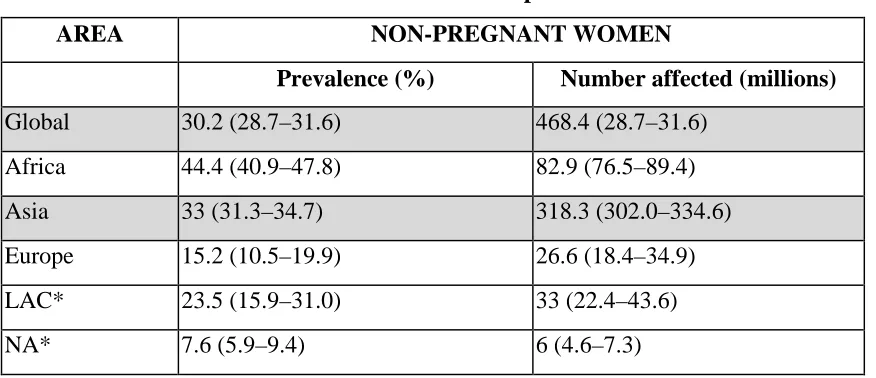
[image:22.595.92.530.374.563.2]World Health Organisation (2005) stated that the global anemia prevalence estimates 30 percent affecting 468.4 million non-pregnant women. In Asia the prevalence of anemia is estimated to be 33% affecting 318.3 million which is almost two third of the world wide prevalence of anemia. The highest prevalence was among the adolescent girls.
Table 1. 1 Global and WHO member states prevalence of anemia
AREA NON-PREGNANT WOMEN
Prevalence (%) Number affected (millions)
Global 30.2 (28.7–31.6) 468.4 (28.7–31.6)
Africa 44.4 (40.9–47.8) 82.9 (76.5–89.4)
Asia 33 (31.3–34.7) 318.3 (302.0–334.6)
Europe 15.2 (10.5–19.9) 26.6 (18.4–34.9)
LAC* 23.5 (15.9–31.0) 33 (22.4–43.6)
NA* 7.6 (5.9–9.4) 6 (4.6–7.3)
Source: WHO Data base 2013
*Latin America and the Caribbean (LAC), Northern America (NA)
The table 1.1 depicts the prevalence of anemia among a various WHO members states.
adolescent girls between the age group of 16 and 19 years, the respective values were 11 and 3 percent.
In all Member States of the South-East Asia Region, (2008) reported that more than 25% of adolescent girls are reported to be anemic; in some countries the prevalence is as high as 50%. Africa and Asia account for more than 85 per cent of the absolute anemia burden among adolescent girls.
The Indian Census (2011) report revealed that of the 109.4 million adolescent girls, 67.8 – 98.5 million adolescent girls have anemia. Nearly 22 per cent of anemic girls have mild anaemia (Hb 11.9 - to 10 gm /dL), 48.7 per cent have moderate anemia ( Hb 9.9 - 7gm / dL) and 27.2 per cent have severe anaemia (Hb <7 gm / dL).
G. S. Toteja, et al (2013) conducted a study among adolescent girls and pregnant women in 16 districts of 11 states of India, that showed the overall prevalence of anemia (Hb < 12 g / dL ) was 90.1%, while severe anemia (Hb < 7.0 g/dL) was 7.1%.
Prakash V Kotecha (2011) stated that India's anemia is, largely due to iron deficiency, with Bihar topping the list, with the highest anemia prevalence (78%) in children while West Bengal scored the send place in the highest prevalence of anemia (72%). The prevalence of anemia in Children, Mizoram, Goa, and Kerala are below 50%, while eight out of 26 states have anemia prevalence of more than 70%.
National Family Health Survey 2005-2006 stated that the prevalence of anemia among adolescent girls (15-19 years) in West Bengal is 62%
1.2 SIGNIFICANCE AND NEED OF THE STUDY
Health of the adolescent girls is the corner stone to nurture and harness the energy to create healthy children and healthy generation. But in reality, the adolescent girls are trapped in societies that make them powerless to make essential choices in terms of education, health and nutrition. Further the ignorance of adolescent girls about anemia, its significant health consequences and the effects of anemia in their offspring augments their vulnerability to develop anemia.
Anemia is abnormally low hemoglobin level that can be called as a manifestation but not a disease in itself. Anemia is an iceberg that has a very few overt symptoms when it is mild. The medical help is sought only when the symptoms are prominent, when anemia is severe.
WHO Global Health Risks’ Report (2009) states that globally, anemia affects over 800 million women of which anemia accounted for 400,000 deaths and 1.5% of the Global Disability Adjusted Life Years. This cost is disproportional borne by developing nations as 60% of the morbidity and 95% of the mortality related to iron-deficiency. South Asia and sub-Saharan Africa bear about 70% of the global mortality burden attributable to iron-deficiency anemia, the common form of anemia among adolescent girls.
There is a wide variety of health programmes at national and international level to combat anemia, such as iron and folic acid supplementation, adolescent anemia control programme, IMNCI and integrated dietary approaches. These programmes aims to improve the overall physical, cognitive and social dimensions of the adolescent girl’s health, to improve pregnancy outcomes, to decrease the incidence of pregnancy loss, neonatal mortality rate, infant mortality rate and low birth weight babies. Reaching the adolescent girls at the grass root level to exterminate this public health epidemic is essential need of the hour.
childhood anemia. Low birth weight is associated with increased child mortality and morbidity.
Sue Rod Well stated that anemia constitutes the second most prevalent nutritional deficiency in the world. General iron balance is precarious in many places. The vulnerable life cycle periods include early childhood, adolescents, reproductive years of women from menarche to menopause and pregnancy.
The Centres for Disease Control and Prevention (2011) recommends annual anemia screening of all adolescent girls. It is worth noting that one gram of iron per day is lost by every non-menstruating adolescent girl and 0.6-2.5 grams of iron is lost per day by every menstruating adolescent girl. An average adolescent girl can lose up to 12.5-15 mg of iron per each menstruation cycle. But one might lose up to 42 grams per cycle.
Premlatha et al., (2012) stated that the attention over anemia has shifted to prepare adolescent girls to have adequate iron stores prior to conception to avoid maternal and/or infant morbidity and mortality, as pregnancy is too short a period to build iron stores to meet the needs the growing fetus.
World Health Organisation (2011) has stated that in India over 70 % of adolescent girls consumes iron less than 50% of the Recommended Daily Allowance of iron which is 60 grams/ week. Hence adolescent nutrition has to be specifically addressed, as an integrated approach comparable to the Integrated Management of Neonatal and Childhood Illness (IMNCI) with promotion, prevention, and treatment components. As in the IMNCI strategy for children, adolescents should be screened for anemia every year and managed at the community level.
UNICEF (2011) stated that Indians consume diet that is primarily cereal based and bioavailability of iron from such diets is limited. So it is critical to ensure that prevention of anemia through food based approaches to enhance iron intake and iron absorption thus preventing anemia among adolescent girls.
food fortification, micronutrient supplementation, dietary diversification of vulnerable groups, as well as control of diseases such as malaria and worm infestations.
Vanisha S. Nambiar and Shilpa Parnami (2007) stated that Indian diets provide mostly non‐heme iron, which is very poorly absorbed (only 2‐20% bioavailability). Food‐based strategies advocate a diet including easily accessible and inexpensive green leafy vegetables to alleviate micronutrient deficiencies. The drumstick leaves is rich in beta carotene (~40,000µg /100g), a precursor of vitamin A. The study revealed that the freshly blanched drumstick leaves with vitamin C from lemon juice showed a positive relationship in improving anemia and a strong association between and iron absorption.
Anderson and Thankachan (2009) conducted a randomized, double- blind, controlled trial in South India with of micronized double fortified salt. The study revealed that double fortified salt was effective in reducing iron deficiency anemia in school age children.
Fredericka Meijer, UNFPA Representative of India and Bhutan (2012) reflected that “The greatest returns on investment come from investing in adolescent girls. Educated and healthy adolescent girls reach their full potential and have healthier children.”
“What you are is not only what you eat but also what your mother ate”. Iron rich foods can meet the enormous demand of iron requirement in an adolescent girl. As the adolescent girls are in their impressionable period of life, it is crucial to influence their behaviour through adequate education, reinforcement on locally available dietary resources that are rich in iron, healthy cooking practices, and introduction to cheap iron fortified food.
that adolescent girls are the most defenceless population to develop anemia that is primarily due to improper dietary intake, lack of knowledge regarding anemia and socio cultural taboos. Hence the investigator established that providing a comprehensive nutritional intervention package for anemia can improve the knowledge and level of anemia among adolescent girls.
1.3 STATEMENT OF THE PROBLEM
A study to assess the effectiveness of nutritional intervention package on knowledge and level of anemia among adolescent girls at selected settings, West Bengal.
1.4. OBJECTIVES
1. To assess the frequency of anemia among adolescent girls.
2. To assess and compare the pre-test and post-test level of knowledge and level of anemia in the experimental and control group.
3. To assess the effectiveness of nutritional intervention package on knowledge and level of anemia among experimental and control group.
4. To correlate the post test level of knowledge with the level of anemia among experimental and control group.
5. To associate the selected demographic variables with mean differed score of knowledge and level of anemia among experimental group.
1.5 OPERATIONAL DEFINITIONS 1.5.1 Effectiveness
It is the outcome of knowledge and level of anemia among adolescent girls which was assessed by structured knowledge questionnaire and clinical assessment based on modified WHO palmar pallor guidelines and hemoglobin assessment by photo electric digital colorimeter.
1.5.2 Nutritional intervention package
Education on anemia through video show and poster presentation Video Show includes
• Introduction to general health, nutrition and anemia
• Causes and signs and symptoms of anemia
• Diagnosis of anemia
• Treatment for anemia
• Home Care management of anemia. Poster on iron rich diet.
Preparation
Administration of Tab.Albendazole 400mg in empty stomach to deworm and administration of curd 50 ml, after six hours of deworming to promote the growth of healthy bacteria in the intestines for all adolescent girls with mild, moderate and severe anemia.
Administration of nutritional supplement
• Administration of 300 ml of drumstick leave juice, with iron fortified salt and lime juice was given two hours before lunch every day for 27 days, for each adolescent girl with mild, moderate and severe anemia.
Preparation of drumstick leave juice: Preparation included, adding of 9 kg of clean washed drumstick leaves in 9 litres of boiling water and cooking for 10 minutes, then strained. Then 2250 grams of jaggery was dissolved in this strained drumstick leaves juice and once again strained .Then 30 grams of iron fortified salt and extract from 15 lemons was dissolved in the juice when it was luke warm.
• 75 grams of boiled bengal gram dhal with iron fortified salt and lime juice was given one hour before lunch every day for 27 days for each adolescent girl with mild, moderate and severe anemia.
1.5.3 Knowledge
It is the ability of the adolescent girls to understand about anemia which was assessed by using structured knowledge questionnaire.
1.5.4 Level of anemia
It is the level of hemoglobin lesser than 12gm/dL in the venous blood, based on ICMR guidelines that were measured by photo electric digital colorimeter and clinical assessment based on modified WHO palmar pallor guidelines.
1.5.5 Adolescent girls
The girls belong to the age group of 13-19 years, who are residing at Kachkumrakali and Anderia village, West Bengal.
1.6 ASSUMPTIONS
1. Adolescent girls may have anemia.
2. The nutritional intervention package may help to improve knowledge and level of anemia among adolescent girls.
3. Increased level of knowledge on anemia may improve the dietary habits and improve the level hemoglobin.
1.7 NULL HYPOTHESES
NH1 There is no significant difference in the pre test and post test level of knowledge and level of anemia between experimental and control group.
NH2 There is no significant relationship between the post test levels of knowledge with level of anemia in experimental group.
NH3 There is no significant association between the knowledge and level of anemia among adolescent girls with the mean differed score of selected demographic variables in experimental group.
1.8 DELIMITATIONS
1. The study was delimited to a period of 5 weeks.
1.9 CONCEPTUAL FRAMEWORK
The conceptual framework was based on Wiedenbachs Helping Art of Clinical Nursing Theory.
This section explains the conceptual framework adopted for the study. A conceptual framework is a schematic representation that depicts the pathway of systematic steps, activities and outcome that directs the investigator to achieve the objectives of the study.
The conceptual framework of this study was based on Wiedenbachs helping art of Clinical Nursing Theory that was published on 1964. Ernestine Wiedenbachs proposed this theory as prescriptive theory that directs the action for a desired situation conceived to explicit the goal. The aim of this study was to improve the knowledge and level of anemia among adolescent girls. So the investigator developed a prescription that is nutritional intervention package based on this central purpose and implemented to accomplish the goals.
Wiedenbachs views for effective nursing practice the nurse should possess factual and speculative knowledge, judgement and skills. According to Wiedenbachs, Nursing practice consists of
• Identifying the need for help
• Ministering the needed help
• Validating that the need
Identifying the need for help
In identifying the need, the nurse perceives the person as consistent or inconsistent behaviour. The two components in identifying the need for help is the central purpose and general information
General Information - The Nurse explores with the person, the meaning of his behaviour in a aim to elicit a revealing response from the person to identify the need. This means the person indicates ability or no ability to resolve the problem. When no ability is indicated the person has a need for help. In this study the investigator assessed the general information that included demographic variables, biophysical variables and the pretest knowledge. Demographic variables included age, literacy-adolescent girl, father and mother, type of family, socio economic status, birth order, number of siblings, occupation of the father, mother, income of the family, marital status of the adolescent girls, number of children for the adolescent, menstrual history and dietary habits. The biophysical variables included anthropometric assessment, hemoglobin estimation and clinical assessment. Knowledge was assessed through structured questionnaire. It revealed that adolescent girls lacked knowledge on anemia and had mild, moderate and severe anemia.
Ministering the need for help
In this step the nurse formulates a plan for meeting person’s need for help based on available resources. The following components are there in ministering the need for help.
Prescription refers to plan of care, broad general and specific actions, the nature of action that is mutually agreed by the nurse and the person, to fulfil the central purpose. In this study the investigator’s prescription was education on anemia and nutritional supplement to improve the knowledge and level of anemia among adolescent girls.
Ministering implies to the implementation of planned actions through nursing care plan. In this study the investigator gave Education on anemia and nutritional supplement to improve the knowledge and level of anemia among adolescent girls.
• Education on anemia was administered through video show and poster presentation
Treatment for anemia, Home Care management of anemia and poster-was projected on iron rich diet.
• Administration of nutritional supplement
The investigator administered Tab.Albendazole 400mg in empty stomach to deworm and administration of curd 50 ml, for all adolescent girls in the experimental group. Followed by this 300 ml of drumstick leave juice, with iron fortified salt and lime juice was administered two hours before lunch every day for 27 days. 75 Gms of boiled Bengal gram dhal with iron fortified salt and lime juice was given one hour before lunch every day for 27 days for each adolescent girl.
Realities refer to the physical, emotional and spiritual factors that come into play in a situation that involves nursing actions. This consists of the following components.
Agent is the participating nurse or a designer who has the personal attributes, capabilities, commitment and competence to provide nursing care and who directs all action towards the goal. In this study the agent is the researcher.
The recipient is the patient who has personal attributes, problems, capabilities, aspiration and abilities to cope. The recipient is the one who receives a nurse’s action or on whose behalf actions are taken. The recipient is vulnerable and dependent. In this study the recipients are the adolescent girls with anemia.
The goal is the nurses desired outcome, it directs action and suggests the reason for taking those actions. In this study the goal was to improve the knowledge and level of anemia among adolescent girls.
The means are the activities and devices used by the nurse to achieve the goal. The means in this study was nutritional intervention package
Validating the needed help
It refers to the validation of evidence that shows a person’s needs have been met and the central purpose is achieved. This step includes the post assessment after ministering the help to compare and infer the outcome. This enables the researcher to decide the recommended action to continue, quit or modify the nursing action. In this study the effectiveness of nutritional intervention package on the knowledge and level of anemia among adolescent girls was assessed for knowledge, using standard knowledge questionnaire. For biophysical variables, anthropometric assessment, hemoglobin estimation and clinical assessment based on modified WHO palmar pallor scale.
Reassessment - Investigator recommended reassessment when there was no improvement in the level of knowledge and level of hemoglobin.
Reinforcement – Investigator reinforced when there was enhancement in the level of knowledge and level of hemoglobin. The enhancement of the intervention is recommended.
IDENTIFYING THE NEED FOR HELP
Assessment of Demographic Variables for both
experimental and control group
Age, literacy-adolescent girl, father and mother, type of family, socio economic status, birth order, number of siblings, occupation of the father, mother, income of the family, menstrual
history and dietary habits
Pretest for both
experimental and control group.
Biophysical Variables
• Anthropometric measurement • Level of hemoglobin • Clinical assessment using
WHO palmer pallor guidelines Knowledge assessment through structured questionnaire Positive Outcome
Improvement in the level of knowledge and anemia among adolescent girls
REINFORCEMENT
CENTRAL PURPOSE
TO IMPROVE THE KNOWLEDGE AND LEVEL OF ANEMIA AMONG ADOLESCENT GIRLS
MINISTERING THE NEEDED HELP VALIDATING THE NEED FOR HELP
PRESCRIPTION Experimental group
Nutritional intervention package that includes
Education on anemia with video show and poster on iron rich
foods.
Nutritional supplement Drumstick leave Juice and boiled bengal gram
dhal
MINISTRATION.
Education on anemia and administration of nutritional supplement for 27 days.
REALITIES Agent: Nurse Investigator
Recipient:
Adolescent girls with anemia
Goal: To improve the knowledge and level of anemia among
adolescent girls
Mean : Nutritional intervention package
Control group
Routine Home Care
Negative Outcome
No Improvement in the level of knowledge and
[image:34.595.28.829.61.501.2]anemia among adolescent girls
FIG 1: CONCEPTUAL FRAMEWORK BASED ON WIEDENBACH’S HELPING ART CLINICAL NURSING AND PRESCRIPTIVE THEORY (1970).
Pretest for both experimental and
control group Biophysical Variables
• Anthropometric measurement
• Level of hemoglobin
• Clinical assessment using WHO palmer pallor guidelines
Knowledge assessment through structured questionnaire
CONTEXT
Kachkumrakali and Anderia village, West Bengal
REASSESSMENT
Framework:
1.10 OUTLINE OF THE REPORT
CHAPTER I : Deals with the back ground of the study, need for the study, statement of the problem, objectives, operational definitions, null hypotheses, assumptions, delimitations and conceptual frame work. CHAPTER II : Focuses on review of literature related to the present study.
CHAPTER III : Enumerates the methodology of the study. CHAPTER IV : Presents the data analysis and data interpretation. CHAPTER V : Deals with the discussion of the study
CHAPTER VI : Gives the summary, conclusion, implications, recommendations and limitations of the study.
REVIEW OF LITERATURE
Polit and Beck (2008), stated that review of literature is a systematic search of a published work to gain information about a research topic. The literature review, not only involves searching, surveying and evaluation of the relevant literature but also describing, synthesizing and assimilating the information into a summary, critically analyzing the facts gathered methodologically to identify areas of controversy and formulate questions for further research, and presenting it in a discursive organized prose.
Hence the investigator intended to establish a platform for the study by an intensive survey of relevant data base from the seminal works performed by scholars to expand a deeper insight into the research problem, related theories, hypothesis, and appropriate methodology to establish the appropriateness of the current study with the previous studies, as well as to implement and disseminate significant practices to combat anemia among adolescent girls.
This chapter enumerates the related literature from both research and non-research materials in the following sections.
SECTION 2.1: Scientific reviews related to anemia among adolescent girls. SECTION 2.2: Scientific reviews related to causes of anemia
SECTION 2.3: Scientific reviews related to signs and symptoms and diagnosis of anemia
SECTION 2.4: Scientific reviews related to treatment of anemia SECTION 2.5: Scientific reviews related to complications of anemia
SECTION 2.1: SCIENTIFIC REVIEWS RELATED TO ANEMIA AMONG ADOLESCENT GIRLS.
Premalatha, et al., (2012), conducted a cross sectional survey among 400 adolescent school girls of 13-17 years at Chennai, to study the prevalence and risk factors of anemia among adolescent girls. Anthropometric and hemoglobin by cyan method were obtained. The results revealed that anemia was prevalent among 78.75% of the adolescent girls. There was significant association of anemia with the socioeconomic profile and dietary habits. The study recommended kitchen gardens, iron rich foods and iron fortification should be considered to prevent and treat anemia.
Gupta S et al., (2012) conducted a comparative study between rural and urban school children (n= 172) in the age group of 6-16 years of age at Midnapore, West Bengal to assess the nutritional status and prevalence of anemia. Height, weight and hemoglobin were measured. The overall prevalence of anemia was 80.2% with no significant difference between the gender as well as the rural (83.7%) and urban (76.7%) children. High prevalence of thinness was observed in urban area (48.8% versus 41.9%), while severe thinness was high among rural children (18.5% versus 13.9%).There was no significant difference between the prevalence of anemia and normal nutritional status between urban and rural children.
Nader Soleimani, Naser Abbaszadeh (2011) conducted a cross sectional survey with a purpose to study the relationship between anemia and academic achievement among 46 high school adolescent girls in Garmsar city, Iran. Serum ferritin, serum iron, mean corpuscular volume, mean cell hemoglobin and hemoglobin were measured. The study revealed that there was a significant positive relationship between some hematological indices (Ferritin, Serum Iron, MCV, MCH, HCT, Hb) and academic achievement. The study concluded that anemia is more prevalent among Iranian female students that might affect their learning and educational achievement adversely.
adolescent girls had the highest prevalence of anemia 78.3%, while the adolescent boys had 52.3% of anemia.
SECTION 2.2: SCIENTIFIC REVIEWS RELATED TO CAUSES OF ANEMIA Shoshanna Revel-Vilk, et al., (2012), conducted a quasi experimental study among 105 adolescent girls with menorrhagia. In the total of 105 adolescent girls who reported heavy periods, 94 filled the initial anonymous questionnaire followed by a more comprehensive detailed bleeding questionnaire and a pictorial blood assessment chart. Among the 94 girls who completed the full questionnaire, 34 reported menorrhagia (36%; 95% CI, 26.5%-46.7%). Hemoglobin levels were assessed among the 62 girls, revealed 6 had anemia (9.6%) and all of them had menorrhagia Almost one-third (11 of 34) of these girls did not perceive having menorrhagia according to their response to the initial questionnaire. The study concluded that adolescents with menorrhagia were at the risk of developing anemia.
Ursula Viana Bagni, et al. , (2010), conducted a cross sectional study among 707 adolescents in Brazil to study the prevalence of anemia and association of overweight , excessive body fat and sexual maturation. Hemoglobin, BMI and Body fat was determined by bioelectrical impedance. The sexual maturation was assessed by breast or genitalia development and pubic hair development. Among adolescents the prevalence of anemia was 22.8% with the higher rate among adolescent girls compared to adolescent boys. Overweight girls had lower hemoglobin levels compared to those who were not overweight (p< 0.01). The study concluded that overweight plays a role in reduction of hemoglobin levels among adolescent girls.
and schistosomiasis (snail fever), while heavy menstruation was the principal risk factor in older girls.
Duclaux Larax.R and Lachaux (2009) reported a case of a 15 year old adolescent girl who presented with symptoms of Helicobacter pylori gastritis that was confirmed with endoscopy treatment. She presented with recurrent bouts of anemia. Then she was treated with medicines for Helicobacter Pylori infection and iron supplementation that corrected the anemia successfully. The case study concluded that Helicobacter Pylori infection is a frequent cause of refractory anemia but often missed in the diagnosis.
SECTION 2.3: SCIENTIFIC REVIEWS RELATED TO SIGNS AND
SYMPTOMS AND DIAGNOSIS OF ANEMIA
Sayeed Unisa et al., (2010) conducted a community based study among 559 unmarried adolescent girls using systemic sampling to evaluate the value of four clinical indicators, low cost estimation of hemoglobin in 5 districts of West Bengal. From each districts one village with high prevalence of anemia (> 40 percent) and one village with low prevalence (≤ 40 percent) were selected. The diagnosis anemia was based on self reported symptoms, clinical indicators and level of haemoglobin. The prevalence of anemia was 94% (mild anemia 45%, moderate anemia 49% and severe anemia < 1%).There was higher level of sensitivity ranging from pallor of the palms 53% to pallor of the eyelids 91%, while the specificity for palm, tongue and nail is ranging between 80-65% and eyelid 29 %. The study concluded that clinical indicators of pallor are useful to diagnose anemia against cyan method.
BMI (r 0.32, p < 0.1). The study concluded that iron deficiency anemia significantly impairs the growth in children.
SECTION 2.4: SCIENTIFIC REVIEWS RELATED TO TREATMENT OF
ANEMIA
Joshi M, Gumashta R (2013) conducted a randomized control in adolescent girls with iron deficiency anemia, at Maharashtra to evaluate the effectiveness, adverse drug reaction and compliance level of adolescent girls in regard to the weekly iron folic acid supplementation versus daily iron supplementation for anemia among adolescent girls with the mean age of 13.48-13.55 years by using block randomization. Initial estimation of hemoglobin levels showed anemia in 120 adolescents with the mean hemoglobin of 10.1±1.1 gm/dl. All the adolescent girls were administered Tab.Albendazole 400 mg and health education on anemia. One group received daily Iron and Folic Acid supplementation while the other group received weekly Iron and Folic Acid supplementation for 3 months. The mean improvement in the hemoglobin in both the study groups was almost equal i.e. 1.0±0.7 gm/dl and 1.0±0.8 gm/dl. Abdominal pain was the most reported adverse drug reaction. The study concluded that the weekly supplementation of iron and folic acid in anemia is more promising than daily regimen with less adverse reactions and better treatment compliance.
Nambiar, Paramani and Guin (2010) conducted a quasi experimental study to assess the effect of drumstick leaves and vitamin C supplementation on hematological indices of 700 adolescent girls between the age of 16-21 years from the faculty of Family and community sciences of Vadodara, Gujarat. 100 girls were selected with positive findings in pallor assessment. The demographic data, height, weight and BMI was assessed followed by collection of blood for hemoglobin, hematocrit, packed cell volume, mean corpuscular volume and red cell morphology. The girls were divided into 3 groups, one group (Group A-21 girls), received freshly blanched drumstick leaves with boiled mung/desi chana /kabuli chana with 2 ml of lime juice, Second group (Group B n= 20) received blanched drumstick leaves in with boiled mung/desi chana / kabuli chana. Group C (n=20) received boiled mung/desi chana /kabuli chana without drumstick leave juice, for a period of 45 days during lunch hour. Hematological indices were assessed after 45 days and after 3 months. The study revealed that prevalence of anemia exists (54%) among adolescents of the middle and high income groups of urban Vadodara. The prevalence of anemia in group A reduced by 28.6%,in Group B 5% and in Group C 4.7 %. It showed a strong association between vitamin C and iron, as well as a causal association between Vitamin A from drumstick leaves and iron metabolism.
SECTION 2.5: SCIENTIFIC REVIEWS RELATED TO COMPLICATIONS OF ANEMIA
Chen MH et al., (2013) conducted a nationwide population based study to determine the association between psychiatric disorders and iron deficiency anemia among children and adolescent. The National Health Insurance Database from 1996 to 2008 was utilized to group 2957 the children and adolescents with iron deficiency anemia to compare them with the specific age and gender-matched controls (1:4) to investigate the increased risk of psychiatric disorders. Among the total of 2957 adolescents with iron deficiency anemia, there was increased risk of bipolar disorder as well a low risk of other mood disorders, autism spectrum disorder, attention deficit hyperactivity disorder, and developmental disorders were identified. The study concluded that there is an increased risk of psychiatric disorders in patients with IDA and the exact mechanism is yet to be cleared.
Norma B Lerner & Richard Sills (2009) conducted a retrospective study among school children (10-12 yrs) to assess the possible relationship between anemia and physical growth. Children were divided into two groups according to gender. Hemoglobin, Mean Corpuscular Volume, serum ferritin and body mass index (BMI) were assessed. The standard deviation scores for height were calculated. In both groups irrespective of the cause they had reduced anthropometric measurements, decreased ferritin levels with microcytic hypochromic anemia. There were significant relationship between the anthropometric measures and the various causes of anemia (p<0·05) (ANOVA). The study concluded that anemia plays an important role in influencing the physical growth in children.
Stolz Erwin et al., (2007) conducted a prospective study in 121 clients with cerebral venous thrombosis and 120 healthy clients in control group .Total blood count and blood for coagulation profile were compared. The female hemoglobin level less than 12gm /dl in males < 13gm/dl were considered to be anemic. The calculated odds ratio values were calculated based on a logistic regression model and the level of significance of p ≤ 0.2. The study concluded that there is a significant and independent association between cerebral venous thrombosis with severe anemia
SECTION 2.6: SCIENTIFIC REVIEWS RELATED TO EFFECTIVENESS OF EDUCATIONAL PROGRAM ON ANEMIA
Dongre and Deshmukh (2011) conducted a Participatory Action Research among adolescent girls in 23 villages Anji, in Wardha District of Maharashtra. Hemoglobin colour scale was used to assess the hemoglobin. Iron folic acid tablets and liquid iron prophylaxis was given for a period of 100 days in a year through community participation. Education was given on iron rich foods and on iron supplementation. The results showed that there was a significant reduction in the nutritional anemia from 73.8% to 54.6% among the adolescent girls. The study concluded that once-weekly iron supplementation and nutritional education, improved the hemoglobin status of the unmarried rural adolescent girls.
Manjeet Kaur et al., (2011) conducted a true experimental study among 50 medical students in the age group of 17-19 years, Amritsar to assess the impact of nutritional education in reducing iron deficiency anemia in adolescents. Hematological indices were done to assess their iron status at baseline, and follow up study after 12 months. It was found that 62% of girl students had mild anemia (Hb>12gm/dl), and 14% of them had anemia of moderate degree (Hb>12gm/dl) at baseline. The adolescent girls were then given education on iron deficiency anemia. The results showed that there was a significant improvement in the hematological indices in the follow up study after 12 months. The study concluded that nutrition education is one of the appropriate, effective and sustainable approach to correct and prevent iron deficiency anemia.
RESEARCH METHODOLOGY
Polit and Beck (2008) stated that research methodology involves the steps, procedure and strategies for gathering and analysing data in a study. Research Methodology is the systematic, theoretical analysis of the methods applied to a field of study that gives a clear cut idea on what the researcher is carrying out his or her research.
This chapter depicts the methodology adopted for this study that includes the research design, variables, setting, population, sample, criteria for selection of the sample, sample size, sampling technique, development and description of the tool, content validity, reliability of the tool , pilot study, data collection procedure and plan for data analysis.
3.1 RESEARCH APPROACH
Quantitative research approach was used for the study.
3.2 RESEARCH DESIGN
The research design adopted for this study was quasi experimental, non equivalent control group design. According to Polit and Beck (2011) the design is quasi experimental, as the investigator incorporated an intervention with control group but no randomization was used as availability of the sample size was limited.
GROUP PRE-TEST
(O1)
INTERVENTION (X)
POST TEST (O2)
Experimental group
Assessment of pre test level of hemoglobin, and knowledgeon anemia among adolescent girls with anemia.
.
Administration of Nutritional Intervention
Package for the adolescent girls with
anemia
Assessment of post test level of hemoglobin, and knowledgeon adolescent
girls with anemia.
Control Group
Assessment of pre test level of hemoglobin, and knowledgeon anemia among adolescent girls with anemia..
Routine Home care
Assessment of post test level of hemoglobin, and knowledgeon adolescent
3.3 VARIABLES
3.3.1 Independent Variable
Nutritional intervention package was the independent variable used in this present study.
3.3.2 Dependent Variables
The level of knowledge on anemia and level of hemoglobin of adolescent girls with anemia were the dependent variables used for this study.
3.3.3 Extraneous Variables
The extraneous variables in the present study were age of the adolescent girl, literacy of the adolescent girl, literacy of the father and mother of the adolescent girl, type of family, socio economic status, birth order, number of siblings, occupation of the father, occupation of mother, income of the family, menstrual history, dietary habits, height, weight and BMI.
3.4 SETTING OF THE STUDY
The study was conducted in Kachkumrakali and Anderia of Taldi Panchayat of south 24 paragnas district, West Bengal. The total adolescent girls of age group 13-19 years were 150 and 125 in Kachkumrakali and in Anderia respectively.
3.5 POPULATION 3.5.1 Target Population
The target population includes all the adolescent girls in the age group of 13-19 years residing at Kachkumrakali and Anderia.
3.5.2 Accessible population
All the adolescent girls in the age group of 13-19 years with mild, moderate and severe anemia at Kachkumrakali and Anderia village of Taldi Panchayat , West Bengal.
3.6 SAMPLE
3.7 SAMPLE SIZE
The study comprised of 60 adolescent girls with mild, moderate and severe anemia who fulfilled the sample selection criteria. Among 60 adolescent girls 30 were in experimental group and 30 in control group.
3.8 CRITERIA FOR SAMPLE SELECTION 3.8.1 Inclusion criteria
1. Adolescent girls in the age group of 13-19 years with mild, moderate, and severe anemia.
2. Adolescent girls who are willing to participate in the study.
3. Adolescent girls who accept to consume the nutritional supplement everyday for 27 days.
4. Adolescent girls who can understand Bangla or English. 5. Adolescent girls who are present at the time of data collection
3.8.2 Exclusion criteria
1. Adolescent girls who are on iron supplements
2. Adolescent girls who has any other hematological disorders 3. Adolescent girls who are married
4. Adolescent girls who have not attained menarche.
5. Adolescents girls who had deworming treatment within 3 months.
3.9 SAMPLING TECHNIQUE
Non probability purposive sampling technique was used in selecting the samples for the study.
3.10 DEVELOPMENTAL AND DESCRIPTION OF TOOL
3.10.1 PART.A DATA COLLECTION TOOL 3.10.2 PART.B INTERVENTIONAL TOOL 3.10.1 PART.A
SECTION 1: DEMOGRAPHIC VARIABLES
It consisted of age, literacy-adolescent girl, father and mother, type of family, socio economic status, birth order, number of siblings, occupation of the father, occupation of mother, income of the family, marital status of the adolescent girls, number of children, menstrual history, health history, and dietary habits.
SECTION 2: BIO PHYSICAL VARIABLES
1. Anthropometric Measurements: Height, Weight, BMI.
Height: The adolescent girls were asked to stand against the manual stadiometer that was fixed on the wall. The headpiece was kept onto the upper most (superior) point on the head with sufficient pressure to compress the hair. Then the height was noted and recorded.
Weight: The adolescent girls were asked to step up backwards onto the standard portable weighing scale and stand still over the centre of the scale with body weight evenly distributed between both feet. The adolescent girls arms hanging freely by the sides of the body, with palms facing the thighs and hold her head up, and face forward. Then the weight was measured to the nearest fraction and recorded.
According to ICMR –modified mean weight and height for adolescent girls between 13-19 years.
AGE OF THE
ADOLESCENT GIRL MEAN HEIGHT(CM)
MEAN WEIGHT
(KG)
13-15 YRS 147 38
16-17 YRS 149 39
Scoring key for height and weight
2. Level of hemoglobin by using cyanmethemoglobin method with photo electric colorimeter
Photo electric colorimeter is used to determine hemoglobin concentration. It has LCD display for direct hemoglobin results, auto calibration, auto zero facility and standard memory facility. With the minimum sample of 1 ml, the measurement of hemoglobin concentration is carried out using latest LED technology, the green light produced is projected through the sample and measured by sensitive photo diode. The measurements are made using cyanmethemoglobin method, the most preferred and the most accurate method for determining the hemoglobin concentration.
Procedure
1. The nurse Investigator explained the procedure in Bangla / English. 2. Obtained informed consent.
3. The site was cleaned with alcohol swab and fresh venous blood 1ml was collected into the EDTA vial. It was mixed well and incubated at room temperature for 5 minutes.
4. From that 20 micro litre of blood is drawn through pipette and added in 5 ml of drabkin’s solution in a test tube.
5. It was tested in photoelectric colorimeter and documented by the certified lab technician.
Level anemia was calculated based on ICMR hemoglobin scale for adolescent girls aged 13-19 years.
1. Normal Hb levels : 12.0–14 g/dL 2. Mild anemia : 10.0–11.9 g/dL 3. Moderate anemia : 7.0–9.9g/dL 4. Severe anemia : < 7.0 g/dL 5. Very severe Anemia : < 4.0 g/dL
Score Interpretation (weight) Interpretation (height)
>75 % Adequate mean weight Adequate mean height
3. Clinical Assessment based on modified WHO palmer pallor guidelines
It consisted of 6 signs, if any one sign is present the score was ‘1’ and if it is not present the score was given ‘0’
1. Scanty hair 2. Pallor
3. Pale conjunctiva 4. Pale Lips
5. Koilonychias
6. Pale nails
SECTION 3.KNOWLEDGE QUESTIONNAIRE
It consisted of structured knowledge questionnaire to assess the level of knowledge on anemia with the following components
• Introduction to general health, nutrition and anemia (10 questions)
• Causes, signs and symptoms and Diagnosis (5 questions)
• Treatment and complications (5 questions)
• Home Care management of anemia. (5 questions)
Scoring key
Each item was a closed ended multiple choice questions with single correct answer. Each correct response was awarded with a score of ‘1’ mark and the wrong question was awarded with a score of ‘0’ marks. Total score was 25. Maximum score was 25 and minimum score was ‘0’.
Score Interpretation