UNIVERSITI TEKNIKAL MALAYSIA MELAKA
CASE STUDY FOR THE EFFECT OF TEMPERATURE
CHANGES TOWARDS ELECTRICITY CONSUMPTION IN FTK
USING STATISTICAL APPROACH
This report submitted in accordance with requirement of the Universiti Teknikal Malaysia Melaka (UTeM) for the Bachelor Degree of Engineering Technology
(Industrial Automation & Robotics) with Honours
by
SITI NADZIRAH BINTI NOR HAMDAN
B071310302
910711-03-5174
FACULTY OF ENGINEERING TECHNOLOGY
ii
UNIVERSITI TEKNIKAL MALAYSIA MELAKA
BORANG PENGESAHAN STATUS LAPORAN PROJEK SARJANA MUDA
TAJUK: Case Study For The Effect Of Temperature Changes Towards
Electricity Consumption In Ftk Using Statistical Approach
SESI PENGAJIAN: 2016/2017 Semester 1
Saya SITI NADZIRAH BINTI NOR HAMDAN
mengaku membenarkan Laporan PSM ini disimpan di Perpustakaan Universiti Teknikal Malaysia Melaka (UTeM) dengan syarat-syarat kegunaan seperti berikut:
1. Laporan PSM adalah hak milik Universiti Teknikal Malaysia Melaka dan penulis. 2. Perpustakaan Universiti Teknikal Malaysia Melaka dibenarkan membuat salinan
untuk tujuan pengajian sahaja dengan izin penulis.
3. Perpustakaan dibenarkan membuat salinan laporan PSM ini sebagai bahan pertukaran antara institusi pengajian tinggi.
4. **Sila tandakan ( )
SULIT
TERHAD
TIDAK TERHAD
(Mengandungi maklumat yang berdarjah keselamatan atau kepentingan Malaysia sebagaimana yang termaktub dalam AKTA RAHSIA RASMI 1972)
(Mengandungi maklumat TERHAD yang telah ditentukan oleh organisasi/badan di mana penyelidikan dijalankan)
( )
Alamat Tetap:
Lot 3986, kampung kadok dalam,
16450 ketereh, kota bharu,kelantan.
Tarikh: ________________________ Disahkan oleh: ( ) Cop Rasmi: Tarikh: ________________________ Tarikh: _______________________
iii
DECLARATION
I hereby, declared this report entitled “Case Study For The Effect Of Temperature Changes Towards Electricity Consumption In Ftk Using Statistical Approach”is the
results of my own research except as cited in references.
Signature :
Author’s Name : SITI NADZIRAH BINTI NOR HAMDAN
iv
APPROVAL
This report is submitted to the Faculty of Engineering Technology of UTeM as a partial fulfillment of the requirements for the degree of Bachelor of Electrical Engineering Technology (Industrial Automation & Robotics) with Honours. The member of the supervisory is as follow:
...
v
ABSTRAK
vi
ABSTRACT
vii
DEDICATION
To my beloved parents
My mother
Siti Zainah binti Ahmad Father
Nor Hamdan Bin Abdullah Siblings
Noor Hafizuddin
Mohd Syukri
Zulkifli
Siti Nor Hamizah
Siti Nur Fatinah
For the prayers, supports and encouragement.
viii
ACKNOWLEDGEMENT
In the nama of Allah, Most Generous and Most Merciful. With the deepest sense of gratitude to ALLAH the Almighty for giving me strength and ability to complete this final year project report. These special thanks goes to my supervisor namely Puan Nor Hafizah bt Hussin for his cooperation and advice that really help me to understand about my topic.
I would like to express my appreciation and thanks to my friends who have shared some knowledge to me in the completion of this report. Their entire companion is truly appreciated as it was an extraordinary delight to know them.
ix
TABLE OF CONTENTS
Declaration iii
Approval iv
Abstrak v
Abstract vi
Dedication vii
Acknowledgement viii
Table of Content ix
List of Tables xiii
List of Figures xiv
List Abbreviations, Symbols and Nomenclatures xv
CHAPTER 1: INTRODUCTION 1
1.0 Introduction 1
1.1 Objectives 3
1.2 Problem Statement 4
1.3 Work Scope 5
CHAPTER 2: LITERATURE REVIEW 6
2.0 Introduction 6
x
2.1.1 Carbon dioxide 7
2.1.2 Methane 7
2.1.3 Nitrus Oxide 7
2.1.4 Chlorofluorocarbons (CFCs) 7
2.2 Greenhouse Radiation 8
2.2.1 The consequences of changing atmospheric greenhouse 8
2.3 The Impacts of Global Climate Change 9
2.3.1 Agriculture 9
2.3.2 Ecosystem and Biodiversity 13
2.3.3 Coastal Zones and Sea Level Rise 14
2.3.4 Water resources and water availability 16
2.3.5 Electricity production and consumption 18
2.4 Causes of electrical consumption increasing 19
2.4.1 Weather 19
2.4.2 Time 19
2.4.3 Economy 20
2.4.4 Environment 20
2.5 Principal component analysis 20
2.6 Smooth transition regression models 21
xi
CHAPTER 3: METHODOLOGY 23
3.0 Introduction 23
3.1 Flow chart of research 23
3.2 Methodology 24
3.2.1 Data Collection 24
3.2.2 Theoretical/Analysis using Regression Model 25
3.3 The Flow Chart for The Analysis Using Regression Model are as follows 26
3.3.1 Phase 1: Model identification 27
3.3.2 Phase 2: Analyze the result 28
3.3.3 Phase 3: Develop relationship between The Temperature 32
Changes and Electricity Consumption
CHAPTER 4 : RESULT AND DISCUSSION 33
4.0 Introduction 33
4.1 Data Collection 33
4.2 Analysis Of A Data And Method Using Statistical Analysis Software 34
In Excel Analysis
4.2.1 Factory One 34
4.2.2 Factory Two 39
4.2.3 Factory Three 42
4.3 Hypothesis testing to check the relationship between temperature 46
xii
4.3.1 Factory One 46
4.3.2 Factory Two 48
4.3.3 Factory Three 50
CHAPTER 5 : CONCLUSION AND RECOMMENDATIONS 53
5.0 Introduction 53
5.1 Conclusions 53
5.2 Recommendations 56
REFERENCES 57
xiii
LIST OF TABLES
4.2.1(a) Summary output for factory one 35
4.2.1(b) Minitab software at factory one 37
4.2.2(a) Summary output for factory two 39
4.2.2(b) Minitab software at factory two 41
4.2.3(a) Summary output for factory three 42
xiv
LIST OF FIGURES
2.1 Phenomena of global warming 6
2.4(a) Ordination rates on domestic consumers in Peninsular Malaysia 19
2.4(b) Calculation of electricity bill payment 19
3.1 Process flow chart 23
3.2.2(a) Example of kilowatt meter reading 24
3.2.2(b) Example of usage electricity consumption in Malaysian 24
3.3 Flow chart for the analysis using regression model 26
3.3.2(a) Examples of positive,negative and no correlation 28 3.3.2(b) Example of the pearson correlation coefficient 29
3.3.2(c) Example of scatter diagrams with different values of correlation 30
4.2.1 The graph a scatter plot for factory one 36
4.2.2 The graph a scatter plot for factory two 40
xv
LIST OF ABBREVIATIONS, SYMBOLS AND
NOMENCLATURE
C = Celcius
CFCs = Chlorofluorocarbons
C02 = Carbon Dioxde
ENSO = El Nino Southern Oscillation
FTK = Fakulti Teknologi Kejuruteraan
GNP = Gross National Product
IPCC = Intergovernmental Panel on Climate Change
N2O = Nitrogen
PSM = Projek Sarjana Muda
1
CHAPTER 1
INTRODUCTION
1.0 Introduction
It is generally agreed that climate is one of the key factors influencing the energy consumption. Temperature is the most important factor because the utilization of warming and cooling gadgets in extensive scale. Climate change is thought to be one of the greatest dangers confronting nature and humankind today. It is a certain, inescapable, and dangerous planetary crisis that influences each part of our lives and future. The longer the sun gives light to a place in the earth's surface, the more heat absorbed, and the is higher. Climate change is any whole deal essential change in the "normal climate" that a given territory experiences. Normal climate may incorporate normal temperature, precipitation and wind designs.
2 Global warming, open burning (dimness) are a portion of the great cases of worldwide component that are trans-outskirt in nature while industrialization, clearing of land for agribusiness, infringement of delicate biological system are cases of national and confined causal factors. Global climate change happens in light of the fact that these gasses ingest infrared radiation where can warm the climate. This assimilation directs the characteristic warmth stream into space, warming the lower climate. A portion of the warmth from the lower air is traded to the ocean and raises its temperature too. This maintenance of warmth in the climate is a characteristic wonders on that has made earth regular surroundings for its million of species.
Agriculture is profoundly delicate to atmosphere changeability and atmosphere extremes, for example, dry seasons, surges and serious tempests. A few factors directly connect climate change and agricultural efficiency are normal temperature increment and change in precipitation entirety and cases. The purpose of this study is to investigate relationship between the affect of temperature changing on electricity consumption in FTK using statistical analysis. Therefore, to achieve this objective is first thing that must be done is taking the kilowatt meter readings and record temperature readings in FTK. The climate data and the kilowatt meter is taking on Monday untill Friday for sixty day. The data is taken on 10.40 am everyday. The purpose is to see the relationship temperature changing on the electricity consumptions in FTK. This is also to compare either the readings of temperature and electricity is high and which save energy. Then to see effect of temperature change does result to use of usage electric in FTK.
3 Factory 2 and Factory 3 that shows an increasing in the relationship between temperature and electricity consumption.
For Factory 1, the correlation value is 0.536. For Factory 2, the correlation value is 0.323 and Factory 3, the correlation value is 0.663. This value shows is positive correlation and the value shows that there is a relationship between temperature and electricity consumption. The final part of this project is making a hypothesis testing to check whether there is a significant correlation between temperature and electricity consumption. The finding shows that using 5% level of significance, we can conclude that there is a significant correlation between temperature and electricity consumption.
1.1 Objectives
The main goals of this project is to investigate the impact of temperature changes on the electricity consumption in FTK using statistical analysis.
The objectives of this study is:
1. To study the temperature and the electricity consumption in FTK.
2. To analyze the temperature and the electricity consumption using statistical analysis.
4
1.2 Problem Statement
Nowadays, people are more concern about energy consumption in the FTK. The uses of energy consumption in the FTK is occur electricity high because many people use aircond and fans in hot weather. Moreover,the wastage has been hit with energy consumption rate can increase the high tariff rates. Therefore, the use of high rates continuosly should be reduced in each square area. The waste must also be controlled to reduce the use of aircond, fans and electrical utilization.
One of the biggest problems facing Malaysian today especially in FTK is the challenge caused by increased energy consumption and the increase of temperature on earth. Climate change is the most serious risk to nature and humanity.Climate change infers yearly temperature of the earth has swung all over by a couple of degrees celsius. Specifically, power utilization assumes a vital part in adjusting to environmental change as far as our dependence on warming and cooling needs notwithstanding temperature changes.
5
1.3 Work Scope
This assessment would be focusing on the effects of temperature changes on the electricity consumption in Technology Campus Utem (FTK) using statistical analysis. In order to assess this condition, several models are going to develop in regression models. The project are based on two phase; firstly in Phase 1, collecting the overall data of electricity consumption and collecting temperature and the Phase 2, the test system is analyzed with the presence of regression models to compared either the readings of temperature and electricity is high and which save energy .
In Phase 1, the work is done by taking the kilowatt meter readings and record the temperature readings in FTK. The climate data and the kilowatt meter is taking on Monday untill Friday for sixty day. Then the data are taken on 10.40 am everyday. The purpose is to see the relationship between temperature changing on the electricity consumptions in FTK. It is also to compare either the readings of temperature and electricity is high and which save energy. Then to see effect of temperature change does result to use of usage electric in FTK.
In Phase 2, the work is done by analysis the data using regression analysis. We obtain the equation of regression line 𝑦̂ 𝑚𝑥 + 𝑏 where this will explain the relationship between temperature and electricity consumption whether it is positive or negative. Then, to strengthen the result, we plot a scatter plot to show there relationship. To prove that there is a correlation between temperature and electricity consumption, we obtain the value of correlation and make a hypothesis testing. If the slope is positive, means that we will get an increasing line for the relationship between temperature and electricity consumption.
6
CHAPTER 2
LITERATURE REVIEW
2.0 Introduction
In this chapter, the purposes of the literature review are to discuss about the effects of climate change on the electricity consumption. In the sources and the information are from past researches and websites will be used to conduct this assessment. Then it tells about the causes and the impacts of global climate change. Thus due to the climate change the causes of electrical consumption become arise.
2.1 The Reason of Global Climate Change
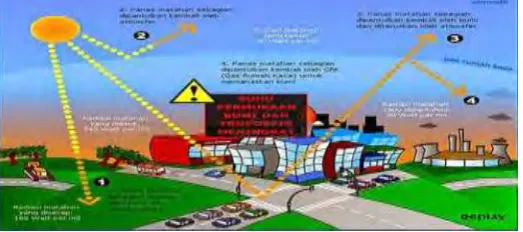
[image:21.595.190.452.562.678.2]The reason of global climate change are carbon dioxide, methane, nitrous oxide, chlorofluorocarbons (CFCs) and greenhouse radiation. Most atmosphere researcher concur that the primary driver of the ebb and flow a worldwide temperature alteration pattern is human extension of the nursery impact. Hence, when the air traps warm emanating from earth toward space. Certain gasses noticeable all around square warmth from escaping.
7 2.1.1 Carbon Dioxide
Carbon dioxide (CO2). A minor yet critical part of the environment, carbon
dioxide is discharged through common techniques, for instance, breath and spring of spouting magma emanations and through human activities, for instance, deforestation, arrive utilize changes, and replicating fossil invigorates. Individuals have extended air CO2 obsession by a third since the mechanical insurgency began. This is the most imperative seemingly perpetual “forcing” of environmental change.
2.1.2 Methane
A hydrocarbon gas delivered both through characteristic sources and human exercises, including the decay of squanders in landfills, horticulture, and particularly rice development, and in addition ruminant processing and compost administration connected with household domesticated animals. On a particle for-atom premise, methane is a significantly more dynamic nursery gas than carbon dioxide, additionally one which is considerably less plenteous in the air.
2.1.3 Nitrous Oxide
A capable nursery gas created by soil development rehearses, particularly the utilization of business and natural composts, fossil fuel ignition, nitric corrosive generation, and biomass burning.
2.1.4 Chlorofluorocarbons (CFCs)
8
2.2 Greenhouse Radiation
On Earth, human exercises are changing the typical nursery. Over the traverse of the most recent century the fuming of fossil fills like coal and oil has expanded the gathering of barometrical carbon dioxide (CO2). This happens in light of the way that the coal or oil fuming method joins carbon with oxygen recognizable all around to make CO2. To a lesser degree, the clearing of area for agribusiness, industry, and other human exercises have expanded groupings of nursery gasses.
2.2.1 The consequences of changing the natural atmospheric effects greenhouse
1. Overall, Earth will get the opportunity to be more sweltering. A couple of territories may welcome more smoking temperatures, yet others may not.
2. Hotter conditions will apparently incite more dissipation and precipitation by and large, however singular areas will change, some getting to be wetter and others dryer.
3. A more grounded nursery effect will warm the oceans and deficiently condense cold masses and other ice, growing sea level. Ocean water in like manner will develop if it warms, contributing further to sea level rising.
9
2.3 The Impacts of Worldwide Climate Change To Human Habitat and
Environment
The impacts of worldwide climate change to human habitat and environment are agriculture, biological system and biodiversity,coastal zones and ocean level rise,water assets and water availability and electricity production and consumption. The effects of global climate change are taken by previous journal.
2.3.1 Agriculture
According to ( Rahman H.A., 2009 ) that say farming is one of the ranges incredibly influenced by great atmosphere change. Farming in Malaysia contributes around 3.6% of GNP and the minimum 33% of the nation's populace depends to the agriculture division for their occupation, with somewhere in the range of 14% working in ranches and estates. From the range utilize perspective, around 39.2% of total territory utilize on the other hand around 5.18 million hectares are planted with tree crops such as elastic, oil palm, cocoa, coconut, products of the soil. In this manner, critical environmental change unquestionably influences the horticulture segment in term of creation and additionally the affecting socio financial aspects issue to the general population required in the area and the country in general.