Abstract— This study aimed to investigate the challenges met by the respondents in monitoring students’ performance in Mathematics to develop an interactive learning system. The study used the Descriptive Research Method. Respondents were pooled from the day care centers based on their proximity and availability. Sample population reached twenty-five (25) parents and eighteen (18) teachers. The Child Development Centers are all government facilitated schools. These day care centers are located in Marikina City. The selected parents are those who have computers and internet at home. The survey questionnaire was used as the main data gathering. The result of the study showed that the experienced monitoring challenges of the parents were lack of materials, such as reviewers, lessons and learning tools were not provided to them, while the experienced monitoring challenges of the teachers were lack of updates about the learner’s assessment and numerical evaluation. Respondents agreed that they ‘highly accept’ the system; therefore, using the interactive learning system in monitoring students’ performance became easier for both of them as well as boosted the students’ interest in learning Mathematics because of visual presentation and animation. The researcher concluded that in terms of monitoring students’ performance, the use of materials such as reviewers, lessons, learning tools is significant to parents and it was suggested that the display of grades and teacher’s remarks should be improved. The researcher is highly recommending considering the integration and utilization of information communication technology and multimedia to the early childhood care, education and curriculum to the day care centers. Teachers and parents should be trained about the use of the system and be oriented on the importance of technology to enhance monitoring and teaching.
Index Terms— animation, computer-aided tool, interactive multimedia.
I. INTRODUCTION
Internet and social media play a great role in the parent – teacher communication through the use of technology. It can even help in discussing lectures and assignments to their children. Some teachers use technology efficiently to improve their lessons and increase student knowledge as technology can be used to have progress in learning: for example, the ways technology can be of better communication between home and school [23]. Through the use of technology, schools can provide tools that allow teachers to communicate and parents can be informed of the student’s progress. Performance should be monitored for completion, accuracy and student should receive timely and specific feedback [4]. Teacher’s aptitude on measuring students’ skill and observing the learning progress is important to have effective instruction. It is essential for the parents to monitor how their children are coping with the lectures and activities at school especially in Mathematics, one which is considered a major subject.
Revised Manuscript Received on April 12, 2019.
Frescian C. Ruiz, Polytechnic University of the Philippines, Philippines.
Technology has become a systematically catalyst of change for creating, implementing, managing, and communicating new concepts of teaching and learning. Classroom teaching has evolved from the traditional way of chalk-board teaching to image presentation, overhead projector to LCD’s and PowerPoint presentation than the usual visual aids, and now the application of Computer-Aided Instruction (CAI) in teaching. However, traditional education system for kindergarten students is still the foundation of learning mostly in public schools.
Multimedia is one of the most important innovations in the age of technology. On the combination of images, text, audio or sounds, illustrations, video and animation, it is very imperative to create realistic learning environment for children. Moreover, multimedia is very imperative to create realistic learning environment for children. The necessity to cultivate some interactive learning materials for children may improve their learning capabilities.
This study suggested a system wherein the parents will be updated of their children’s progress on topics and lessons in Mathematics. The teacher can view students’ performance based from assessments. These assessments can also be done by the teacher covered by their activities each topic in Mathematics. There will also be instructional materials for teachers in helping students acquire new knowledge or skills through visual presentation with animation. This tool contains lessons and questions with the use of visual representation in 2D Animation in which children will love to see and enjoy while learning. This animation tool can be an alternative to the traditional way of teaching playgroups and parents can use this at home to review the lessons while having an enjoyable parent – child bonding.
Teaching, enhanced by information communication technology and multimedia, is becoming a huge opportunity for the educators to strengthen their teaching prowess and for learners to widen their training and developing venues.
Based on Republic Act no. 6972, Filipino children up to six (6) years of age deserve the best attention and care at the family and community levels. Because of this, an established day care center in every barangay with a total development and protection of children program is therefore provided in this Act instituted in every barangay day care center. This public day-care system serves the largest provider of early childhood care and education services for 3- to 4-year-olds [18].
There should be an additional support to the day care teachers when it comes to instructional materials, appropriate lectures and activities that will help students cope the lessons that are envisioned to be discussed.
Interactive Learning System in Mathematics
for Day Care Center
It is not the teacher that always educates a student. The educators of children are their parents and their teachers. Parents are their first teacher before they transpire in school. They have a great impact on their child’s knowledge during school and beyond. Parents and school teachers all have crucial roles to work on child development and the effect is better if partnership occurs between them.
International research shows some positive impacts in child’s development with parental engagement, this includes having higher grades and test scores. There is enrolment in higher level programs and advanced classes. In addition, successful completion of classes, lower drop-out rates, higher graduation rates, and a greater likelihood of commencing postsecondary education [10].
In 2007, NCTM produced a position statement emphasizing that all children need an early start in learning Mathematics. One of the research-based recommendations to help teachers develop high-quality learning activities for children aged 3 to 6 is to support children’s learning by thoughtfully and continually assessing children’s mathematical knowledge, skills, and strategies [22].
Conceptual Framework
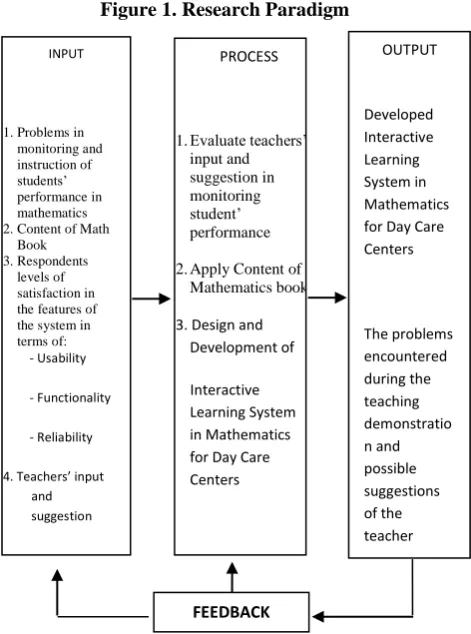
[image:2.595.56.292.379.696.2]The Input-Process-Output Model of the General System Theory is incorporated in the development of a portal for a parent to view the child’s school performance in mathematics with instructional materials.
Figure 1. Research Paradigm
In this study, the inputs are the challenges met by the kindergarten teachers in teaching Mathematics. Inputs also include the levels of satisfaction in the features of the system in terms of: Usability, Functionality, and Reliability. These inputs are to be processed through the development of an interactive learning system. After that, a survey was
administered and the gathered data were converted into generated information which served as the basis for the revision of the system. Data is analyzed from the existing literatures and studies. Through this process, the data were converted into the output which is the developed teaching-learning tool.
II. REVIEW OF LITERATURE AND STUDIES
Early Childhood Education
Early Childhood Care and Development (ECCD) System refers to the full range of health, nutrition, early education and social services programs that provide for the basic holistic needs of young children from birth to age six (6), to promote their optimum growth and development. This is based on the Republic Act No. 8980 or an act promulgating a comprehensive policy and a national system for Early Childhood Care and Development (ECCD) [19].
In this law, Education is one among the programs that is designed in order to provide the needs of the children. This is being implemented in either center-based or home-based program. As articulated in the established Republic Act No. 6972, Center-based programs, such as the day care service in public and private pre-schools, kindergarten or school based programs, community or church-based early childhood education programs initiated by non-government organizations or people's organizations, workplace-related child care and education programs, child-minding centers, health centers and stations. On the other hand, home-based programs, such as the neighborhood-based play groups, family day care programs, parent education and home visiting programs [18].
These legal mandates in the country are simply indications that early childhood development is very important for individuals. In fact, several researches were conducted to improve the implementation of the activities towards improving early childhood development and education in the country and abroad.
In a study which focused on addressing discrepancies between the existing care and education programs and children's level of understanding is important to maximize a child's development potential [3]. This is based on the idea that previous studies present evidence that early childhood education affects a child's holistic development into adulthood. This review focused on early care and education in the Philippines and its public health implications. First, this review briefly discussed basic principles and theories of child development and the legal and administrative fundamentals of early childhood care and development in the Philippines. It also provided a discussion on the public health implications of early child care and education. Finally, it concluded with providing recommendations to parents and the education and health sectors which can contribute to the enhancement of early education in the Philippines.
The study explained that early childhood care and education put emphasis on the social, emotional, cognitive, and physical needs of the child for a strong foundation of learning and well-being all throughout life.
INPUT
1. Problems in monitoring and instruction of students’ performance in mathematics 2. Content of Math
Book 3. Respondents
levels of satisfaction in the features of the system in terms of:
- Usability
- Functionality
- Reliability
4. Teachers’ input and suggestion
OUTPUT
Developed Interactive Learning System in Mathematics for Day Care Centers
The problems encountered during the teaching demonstratio n and possible suggestions of the teacher PROCESS
1. Evaluate teachers’ input and suggestion in monitoring student’ performance 2. Apply Content of
Mathematics book 3. Design and
Development of
Interactive Learning System in Mathematics for Day Care Centers
Another study conducted to improve the early childhood development and education is the curriculum review and critical analysis for early childhood education and development [3]. Many different curricula or teaching approaches can create an enriched learning environment for children. A curriculum should reflect current research on child development and it should include specific learning goals for children. Well-planned learning activities can also be embodied in a particular philosophy or approach to early childhood education. A good curriculum provides a balance of play and structured activities, teacher-initiated and child-initiated exploration. Early childhood education often focuses on learning through play, based on the research and philosophy of Jean Piaget, which posits that play meets the physical, intellectual, language, emotional and social needs (PILES) of children. Children's natural curiosity and imagination naturally evoke learning when unfettered. Thus, children learn more efficiently and gain more knowledge through activities such as dramatic play, art, and social games.
Since curriculum is discussed including its content, methodology is one among its inputs. There is a study where Area Instructional Model is applied in the Kindergarten’s teaching-learning process [13]. Qualitative data revealed that there is a development when it comes to mathematical abilities and characters of the kindergarten learners when the Area Instructional Model will be applied. Considering this finding, it only cited that kindergartens’ learning needs will be addressed through innovative techniques in facilitating learning process.
Computer-Assisted Instruction
eLearning is learning utilizing electronic technologies to access educational curriculum outside of a traditional classroom. In most cases, it refers to a course; program or degree delivered completely online [9].
UNESCO summarized the positive impact of eLearning. It was explained that effective learning comes from using information communications technology (ICT) to broaden educational opportunity and help students develop the skills they—and their countries—need to thrive in the 21stcentury. While conclusive, longitudinal studies remain to be done, an emerging body of evidence suggests that eLearning can deliver substantial positive effects: students are more engaged and able to develop 21st century skills; teachers have a more positive attitude toward their work and are able to provide more personalized learning; family interaction and parental involvement may increase; communities benefit from bridging the digital divide; economically disadvantaged students and children with disabilities benefit particularly; and economic progress can result from direct job creation in the technology industry as well as from developing a better educated workforce [21].
In a learning program, computer aided instruction (CAI) is being used. In the study conducted by De Witte, Haelermans and Rogge [5], the effectiveness of CAI was measured. Specifically, the researh relies on a rich data set consisting of (i) pupil‐level information on the use of a Dutch computer‐assisted program and (ii) detailed school‐ level information on, among others, outcomes on national exams. This suggests that the use CAI programs to catch up
on learning outcomes. Moreover, using an instrumental variable design, the researchers argue that given the participation in the CAI program, making more exercises leads to higher test results. Working with a CAI program seems therefore effective.
Aside from Mathematics, effective integration of ICT in English language teaching classrooms depends on a host of factors. One of the important factors is teachers’ knowledge and skills in using ICT in class [25].
This paper reports a case study of four secondary school ESL teachers’ use of ICT in teaching English literature to second language (L2) learners. The data collection method included observation of the teachers’ lessons. Each lesson was video recorded and played back during a stimulated recall interview with teachers after each lesson. The TPCK model proposed by Mishra and Koehler is used as a framework for the analysis of the interview data [14]. They suggested that teachers‟ use of technology is guided by the dynamic relationship between teachers‟ technological, pedagogical and content knowledge. The analysis of the interview data will hopefully provide a better understanding of how the different types of knowledge interact and influence teachers ‟use of ICT in teaching English literature to L2 learners. Furthermore, through an analysis of teachers‖ use of ICT in teaching specific subject content, this study also hopes to advance the development of the TPCK model. The findings will also contribute to an understanding of the role of literature in language teaching.
Aside from that, CAI offers numerous advantages for education and training when properly designed and implemented. Recent computer developments in hardware and software enhance the effectiveness and reduce the cost of CAI. Experience with the use of CAI in a large general contracting and construction management firm is also reported. Survey concluded that CAI can now be widely adopted from training and education supplements in civil engineering [12].
A survey of animation content in education was administered in a study, it concluded that as a complementary learning approach, animation always stimulates students’ interest in learning. The key point is to integrate the animation content into the teaching activities in the classroom. Realistic feeling, immersiveness and interactivity are always regarded as the criteria of choosing animation content in teaching activities [24].
Computer-Assisted Instruction for Early Education
Recent development in the role of kindergarten in children’s progress includes the use of Information and Communication Technologies (ICTs). ICT nowadays, is recognized as a tool that can foster the knowledge and the experiences for this crucial age and the support of specific areas in kindergarten according to the educational perspective is thought significant.
advantages and profits using the appropriate educational tools that offers the use of ICT [8]. However, the role of the teacher in such situations is thought significant and demands elaboration and clarification especially when the use of ICT is incorporated with traditional teaching methods. In addition to their conclusion, according to them, early education and the interventions that ICT’s can contribute in many areas of child’s development calls for more research hoping that the results of the current study are encouraging as there is the general consensus that ICTs do play a significant role in both ensuring and enhancing learning skills of kindergarten children in a regular class.
There are several developed digital learning tools and materials in order to develop the learning skills of kindergarteners with the integration of ICT. In the study of ―Interactive electronic Storybooks for Kindergarteners Promote Vocabulary Growth‖ the results of their experimentation showed that using alternative materials in reading stories had an effect to their vocabulary words. In order to deepen their study, they developed an interactive animated e-book device as a learning device for kindergarteners. The finding of the study showed that e-storybooks and applications fulfilled the promise that multimedia additions can enrich book reading experiences and comprehension of the kindergartens when used properly [20].
In connection with the reading and vocabulary enhancement of the early learners through the use of ICT, the intervention of teacher to student has improved. Digital storytelling is an alternative tool in children’s way of expression. It has done through several mediums such as television, but the development of digital storytelling targets the teaching intervention into a new way. By making use of dramatization with a digitalized story material (graphics, music etc.) the result was pleasant especially for the participating children. It was found that there is a positive interaction among students and with their teachers. Although, according to the result, no evidence was found to indicate that the creation of digital storytelling motivates children’s interest in storytelling. However, teachers and children must have a companionship in this learning process [17].
Aside from basic language and communication skills for the kindergarteners, developers and creators also conducted and designed digitalized instructional materials for the early learners in order to practice and shape their numerical skills through the use of ICT. Goodwin of Macquire University developed instructional materials for the kindergarteners in order to study the student on how to learn fractions in a digital manner [11]. Overall, the result of the study was that interactive tools support the cognitive apparatus of young learners. The study has established that digital technologies, such as the materials being used in the observation, can provide unique learning opportunities for early learner students.
In another study on the impact of using multimedia interactive programs at children ability to learn basic math skills, it was stated that interactive enhanced learning method such as using multimedia can provide a very useful alternative for traditional education especially in cases
where it is not applicable to teach through traditional methods [16].
The importance of ICT by any means and any purpose, is the inclusion of all. No matter who or where you are, the access to technology is a privilege. That’s why studies have been conducted not just for the people who are in urbanized area, but also included the people who are in rural parts of a country in able for them to ease their misery due to lack of access to technology and knowledge. In order to provide learning materials to rural areas, educational materials for children not just for kindergarteners but for other children have developed. They have designed web based education for them to have access education for them to make education accessible, flexible and efficient. Nayak et al. of India developed a web based education and studied on how it affects the literacy rate of the rural area people [15]. As a result, their exposure from web based education has improved their knowledge level and basic reading and computing skills.
III. METHOD OF RESEARCH
This study used the descriptive method of research. It attempts to deploy an interactive learning system for selected day cares in Marikina city; hence, it should be evaluated and described on a certain degree of standard. Dulock defined descriptive research as a method used to describe systematically and accurately the facts and characteristics of given area of interest or population [7].
Using the numerical representative to evaluate the levels of acceptability and other variables measured through Likert Scale, hence, quantitative research is the most suitable approach to this study. Quantitative research approach emphasizes and uses objective measurements and statistical, mathematical, or numerical analysis of data collected through polls, questionnaires, and surveys [1].
Population, Sample Size, and Sampling Technique
Ten (10) day care centers in Marikina City were identified. On a purposive and convenience bases, respondents were pooled from this locale based on their proximity and availability. Purposive sampling is a non-probability sampling method and it occurs when elements selected for the sample are chosen by the judgment of the researcher [2]. Researchers often believe that they can obtain a representative sample by using set criteria to select the appropriate respondents; while, convenience sampling is sampling, also known as availability sampling, is a specific type of non-probability sampling method that relies on data collection from population members who are conveniently available to participate in study [6]. Teachers who are working and connected; and parents whose children are enrolled in the said institutions were the respondents of this study.
Description of Respondents
are located in Marikina City. These centers have an average of thirty (30) students per class. The selected parents are those who have computers and internet at home.
Research Instrument
The instrument used is a researcher-made questionnaire to measure the following variables: challenges encountered by the respondents in instruction and monitoring the students’ performance; the level of acceptance of the respondents on the developed prototype in terms of: functionality, reliability, and Usability; and suggested recommendations to improve the developed system.
[image:5.595.307.545.298.424.2]The researcher used the Likert scale to address the measurement of the perceptions of the respondents about the proposed system. The Likert Scale is a psychometric response scale often used in questionnaires, and most widely used scale in survey research. When responding to a Likert questionnaire item, respondents specify their level of agreement to a statement. The researcher used ranks from one to five: five being the highest and one being the lowest rank.
Table 1 Likert Rating Scale Rati
ng Numerical Scale
Verbal Interpretation Level of
Frequency
Level of Acceptability
Level of Suggestibility 5 4.21 – 5.00 Always Highly
Acceptable
Highly Suggested 4 3.41 – 4.20 Often Acceptable Suggested
3 2.61 – 3.40 Sometimes Moderately Acceptable
Moderately Suggested
2 1.81 – 2.60 Seldom Slightly Acceptable
Slightly Suggested
1 1.00 – 1.80 Never Not
Acceptable Not Suggested
Furthermore, a standard criterion for evaluating transaction processing system was used in this study as software evaluation instrument. It defines the usability of the system in terms of functionality, reliability, usability, and efficiency. These were some of the external and internal quality models presented by the ISO/IEC 9126.
Statistical Treatment of Data
For careful analysis of data, the researcher used the following statistical tools:
1. Percentage
The quotient will divide 100 to exchange the quotient to percentage (%).
Formula:
Where:
P=Percentage n=Frequency N=Population size
2. Frequency distribution is an organized tabulation or graphical representation of the number of individuals in each category on the scale of measurement. It allowed the researcher to have a glance at the entire data conveniently. It showed whether the observations were high or low and also
whether they were concentrated in one area or spread out across the entire scale. Thus, frequency distribution presents a picture of how the individual observations are distributed in the measurement scale.
Formula:
Where
w=Weighted Mean
=Weighted Mean of each item =Number of Frequency
Software Design and Development
Following the Rapid Application Development (RAD) process, this study followed the principles of analysis, design and evaluation to develop an interactive learning system in mathematics using the procedure shown in Figure 1. The research procedure was divided into three stages as follows.
Figure. 2 Outline of the Research Procedure
Fig 2 shows that the analysis stage includes the group interviews on teachers to know the problems they encountered in teaching. One of the problems that occurred in the analysis phase is lack of parent-teacher communication, not to date informing of the child’s performance, and the difficulties of handling students’ attention in discussion especially in Mathematics. The design and implementation include the development of the system. And the last stage contains evaluation of the functionality, efficiency and usability toward the Interactive Learning System in Mathematics.
System Architecture
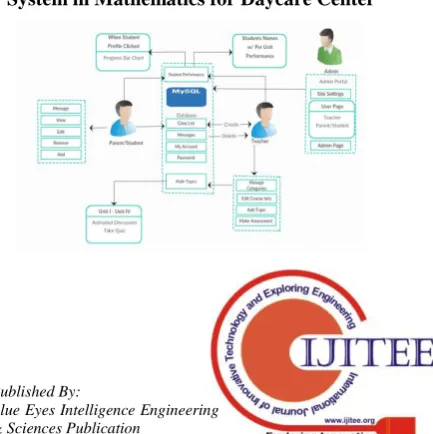
Figure 3. System Architecture of Interactive Learning System in Mathematics for Daycare Center
Analysis
Design and Implementati
on
Evaluatio n
Interactive Leaning System in Mathematics Components
Teacher focused group interviews
Syste m
Develo p-ment
The evaluation
of functionality
, efficiency,
and usability
Interactive Leaning System in Mathematic
[image:5.595.47.293.300.482.2] [image:5.595.331.548.612.829.2]Fig 3 illustrates how the Intelligent Learning System in Mathematics for Daycare Center (ILSMDC) works. The system can be accessed using a computer, tablet, cellphone and other gadget used to browse the internet. This shows also the different access role of the users such as Administrator, Teacher and Parent/Students.
Only the Administrator is responsible to perform the user management and the configuration of the system. However, the teacher can register user account for students/parents.
The Administrator manages the whole system and performs the backup of all the database, add/delete users, create/modify password, notify, access to messaging, add interactive animation for Mathematics lessons that will help the parent monitor his child’s progress and know what topics his child have difficulty. The teacher will manage messages, child performance, class list and child information in the parent account; however, the parent is limited to perform the User Management to add/delete user accounts but he can review his child’s performance in each topic of each unit in Mathematics after the exam.
The learning capability of the system allows the parent to know more or to give updates on the current topics his child is currently taking. The teachers can send messages to each other and to the parents. They could give updates or announcement for each upcoming event of the school. Also, upon registering a student, they can also make a default username/password for the parents since their child are too young to use e-learning portals. In addition, they can also modify the password and change some of their profile on the settings menu.
The ILSDC’s Database structure contains segmented data tables for username/password, user profile, messages, child performance, content of the animated lessons and class list. The researcher, as the Admin of the system, will have the access in creating user account for teachers in Marikina Day Care Centers. Before the teacher, parent/student users can login, the Administrator who will manage the system should configure first the User Management to add username, default password and then performs the Configuration Management to add the Math lessons. Add levels such as nursery, kinder, prep and sections of each student, the administrator is also responsible in changing teacher account at the respective kinder school.
To access the system, the user should open the web portal login menu to prompt the page with three login options and select the type of user assigned to him. Then, each type of user will enter the username and password to open the main menu. Successful login will open the page where all system functionalities will be used for participating Teacher, Parent/Child Assessment. Each type of user has specific restrictions according to the design that was programmed in the system. The teacher has all the rights to manage the class list, add child performance and delete/add login for parents/student. Unlike the teacher, parents can only view the associated account of their child and review the existing animated Math lessons. A teacher can notify messages to parents who belonged to his/her class or group. Moreover, for the Parent/Student type of user, he can view the messages, student’s current units/activities and grades on his individual account. He can review the animated lessons that
[image:6.595.322.531.97.189.2]the teacher discussed in Mathematics such as shapes, sizes, patterns and numbers.
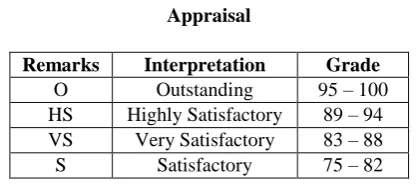
Table 2 Appraisal
Remarks Interpretation Grade
O Outstanding 95 – 100
HS Highly Satisfactory 89 – 94 VS Very Satisfactory 83 – 88
S Satisfactory 75 – 82
Table 2 presents the appraisal or the rating; this rating was patterned after the grades (equivalent remarks) of the students in their card. This appraisal reflects the grade received by the student/child based on the exercises in the system. After each exercise, the system displays remarks in the student/parent dashboard. It can be seen when the mouse is put over the color green progress bar per unit. A letter O is an Outstanding remark rated from 95 to 100. HS is for Highly satisfactory having a grade of 89 to 94. VS is for Very Satisfactory with a grade of 83 to 88 and S for Satisfactory when grade fall from 75 to 82.
Software Development
system but for some aspects that may take time to accomplish when creating custom components, one can just actually search for an already built library. One good example of this is the use of graphs in the system. It will take time for the researcher to create a custom graph component to show student performance but there are PHP class libraries that were available. In the case of the system, Libchart was used, a free chart creation PHP library. This is one of the advantages of creating web applications using PHP.
In order to show contents to parents, students and teachers on web browsers the researcher used HTML, CSS and JavaScript. HTML is the acronym for Hypertext Markup Language and is the standard markup language for creating web pages and web applications. It gives structure to a web document by denoting structural semantics for text such as headings, paragraphs, list, links and other items. Browser interprets data from HTML document to display contents on the computer screen.
In order to set visual styles of the web pages and give the user better interface, CSS or Cascading Style Sheet was used. CSS enables the separation of presentation and content, including aspects such as layouts, colors and fonts. This separation reduced complexity of designs and repetition in structural content making the site easier to maintain by sharing visual styles across pages. JavaScript is also used in the development of the system. Alongside HTML and CSS, JavaScript is considered as one of the three core technologies of World Wide Web. Unlike PHP as a server-side script, JavaScript is a client-side script, meaning it is the browser that interprets this language making web contents dynamic and interactive.
Several web frameworks and libraries were applied that are related to these three core web technologies in the development of the system. One of these frameworks is Bootstrap. Bootstrap includes HTML and CSS based components for typography, forms, buttons, tables and other, as well as JavaScript plugins, making web development easier and faster. The researcher also used jQuery and its plugins in the development of the system. JQuery is a fast, small, and feature-rich JavaScript library for HTML document manipulation, event-handling, animation and Ajax. User interactions within pages were possible through the use of this library, since programming events on web pages is possible through user keyboard and mouse input. Ajax allows web pages to be updated asynchronously by exchanging small amounts of data with the server behind the scenes. This means that it is possible to update parts of a web page, without reloading the whole page. Using jQuery and the plugins of this library provide dynamic interactivity on the website. On the editing topic units, the researcher created a customized script that allows the teacher to edit the unit name. When a teacher clicks the unit name, it will become an input form and when the user hits enter key on the keyboard the data will be sent using Ajax post request without reloading the page. JQueryUI was used for drag and drop function as well as radio input form and checkbox input form design when the user is taking a quiz. A good example of combining different technologies for web development is the use of TinyMCE on the system
when teacher adds contents, class and topic. It uses JavaScript, CSS and HTML for a better content design.
In addition, Adobe Flash CC was used in the creation of animating shape, size, patterns and numbers so it can allow streaming of audio and video, and can capture mouse, keyboard input. Flash has shown its capability in the web design industry and years ago opened a new light to web design and new-looking features in the web.
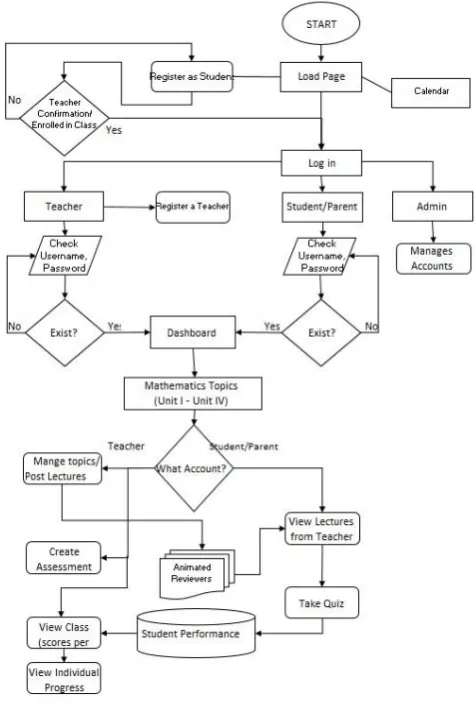
Figure 3 shown illustrates the whole process of the Interactive Learning System for Day Care Centers. When the home page loads, there are three users that can log in through the system, the admin, teacher, and parent account.
The Admin has the access to add, edit and delete the teacher account. The interface is same as the Teacher account. He/She is responsible for managing the system.
For an existing teacher account, the options are to register the student profiles, username and password of the parents as well as the schedule and view the class list depending on the school year, level and section.
[image:7.595.311.549.367.723.2]There are three (3) levels; nursery kinder and prep; three (3) sections; Love, Hope and Charity. Teacher can view the students’ performance in Mathematics. The book has four parts, unit one (1) readiness skills, two (2) number concept, three (3) addition, and four (4) subtraction. In each topic per unit an assessment can be created.
The questions can be answered by multiple choice, true or false, matching type and sorting. Two scores of the students for each unit are then displayed: the first attempt and the latest. The number of attempts could also be seen. If the teacher wants to show the detailed information about a specific student, he/she can click the name of the student. History of the scores, date taken and the attempts will be displayed using a bar graph.
The view for the existing parent account is the content of the book with the topics included arranged per unit. An animated reviewer can be viewed in each lesson in Mathematics. These reviewers are interactive since the user can answer the comprehension part in each uploaded file. Scores will be shown after finishing all the questions and the number of attempts in answering the specific topic of the subject. The assessment/quiz can be answered depending on the schedule that the teacher posted.
The users, either teacher or parent, have messaging capability, view child performance, calendar or activities and change password part.
Figure 4 presents the reviewers in animated file of Adobe Flash Animate CC. The animated discussion is followed by five (5) questions. The first three (3) questions are basic questions with two choices while the 4th and 5thare advanced with three choices. The flash responds if the answer is correct and incorrect when clicked by showing happy and sad face. The score is displayed after answering all questions in each topic. The number of attempts is included to show if the student needs to study more. The topics were taken from the Mathematics book of Kindergarten which has four (4) units. The number of flash files corresponds to the number of topics that the book has.
Figure 4. Process Flow of the Interactive Reviewers
IV. SUMMARY OF FINDINGS, CONCLUSIONS
AND RECOMMENDATION
The study aimed to develop and evaluate an interactive learning system for selected day care centers in Marikina City. It used descriptive-quantitative method. The respondents were twenty-five (25) parents and eighteen (18) teachers from the Child Development Centers in Marikina City.
Based on the gathered data, the following findings were drawn:
1. The experienced monitoring challenges of the parents were materials, such as reviewers, lessons, and learning tools were not provided to the parents with a weighted mean of 4.55 (Always) and there was a low attendance in school activities with 3.80(Often).The experienced monitoring and instruction challenges by the teachers were: ―There were no updates about the learner’s assessment and numerical evaluation‖ with a weighted mean of 4.22 (Always) and ―There was no time to coordinate with the parents because of school work‖ with 2.66 (Sometimes).
2. The system was highly acceptable in terms of functionality (4.82); reliability (4.62); and usability (4.375) and with an overall weighted mean of 4.605. 3. The teachers recommended the following areas for
improvement: ―Animated reviewer for Math topics‖ with a weighted mean of 3.50 (Suggested) and ―Display of grades and teacher’s remarks‖ with 3.44 (Suggested); whereas, the parents recommended the following: ―Display of grades and teacher’s remarks‖ with 4.56 (Highly Suggested); ―Animated reviewer for Math topics‖ with 4.32 (Highly Suggested) and ―Notice for any update regarding room and class activities is posted‖ with 4.32 (Highly Suggested).
CONCLUSIONS
Based on the findings of the study, the following conclusions were derived:
1. Materials, such as reviewers, lessons, and learning tools were not provided to the parents.
2. The developed system was highly acceptable for both teachers and teachers in relation to functionality, reliability, and usability.
3. It was suggested that the display of grades and teacher’s remarks should be improved.
RECOMMENDATIONS
Based on the findings and conclusions, the researcher submits the following recommendations:
1. The Day Care Centers should consider the integration and utilization of information communication technology and multimedia to their early childhood care, education and curriculum.
3. The parents should be trained about the use of the system and oriented on the importance of technology and media like the developed system to thoroughly enrich and maximize the benefits that the system can provide.
Future researchers and MSIT students could use this study as their reference. They may propose a similar study incorporating the respondents’ suggested areas and features of the system for improvement. They may also continue innovating the system for higher levels such as primary, secondary and tertiary education utilizing other disciplines as content of instruction
REFERENCES
1. E. R. Babbie, ―The Practice of Social Research, ― London: Sage Publications, 2010
2. K. Black, ―Business Statistics: Contemporary Decision Making 6th edition‖, John Wiley & Sons, 2010
3. Ñ. Corpuz, N. Cruz, M. Baston, D. G. Del Socorro, and E. C. Hidalgo, ―Early Childhood Education: A. Curriculum Review and Critical Analysis‖, International Journal of Sciences: Basic and Applied Research (IJSBAR), 2016
4. K. Cotton, ―Monitoring Student Learning in the Classroom. School Improvement Research Series‖, Office of Educational Research and Improvement (OERI). U.S. Department of Education, 1988
5. K. De Witte, C. Haelermans, and N. Rogge, ―The Effectiveness of a Computer- Assisted Math Learning Program‖, 2014
6. J. Dudovskiy, ―Purposive sampling. [online] Research Methodology ― Available at: http://research-
methodology.net/sampling-in-primary-data-collection/purposive-sampling/ [Accessed 4 Apr. 2017]. 7. H. L. Dulock, ―Research Design: Descriptive Research‖,
Sage Journal, 154, October 1993
8. [8] A. S. Drigas and G. K. Kokkalia, ―ICTs in Kindergarten‖, iJET – Volume 9, Issue 2, 2014
9. eLearningNC, ―What is eLearning?.Retrieved from www.elearningnc.gov/about_elearning/
what_is_elearning/, 2018
10. L. Emerson, J. Fear, S. Fox, and E. Sanders, ―Parental Engagement in Learning and Schooling: Lesson from Research. Family – School & Community Partnerships Bureau‖, 2012
11. K. Goodwin, ―The impact of interactive multimedia on kindergarten students' representations of fractions‖, Issues in Educational Research, 18(2), 2008
12. C. Hendrickson, A. Pasquale, W. Robinson, and M. Rossi-Velasco, ―Applications of Computer Aided Instruction‖, Journal of Professional Issues in Engineering Education and Practice - J PROF ISSUE ENG EDUC PRACT. 112. 10.1061/(ASCE)1052-3928(1986)112:3(194), 1986
13. D. Mardiana, A Mudrikah, and N. Amna, ―Developing kindergarten students’ mathematical abilities and character by using area instruction model‖, International Journal of Research in Education and Science (IJRES), 3(1), pp.299-306,2017
14. P. Mishra and M. Koehler, ―Technological Pedagogical Content Knowledge: A Framework for Teacher Knowledge‖, Teacher College Record, Vol. 108, No. 6, pp. 1017-1054, 2006
15. S. K. Nayak and Dr.N. V. Kalyankar, ―E-Learning Technology for Rural Child Development‖, International Journal on Computer Science and Engineering, Vol. 02, No. 2, pp. 208-212, 2010
16. S. Nusir, I. Alsmadi, M. Al-Kabi, and F. Sharadgah, ―Studying the Impact of Using Multimedia Interactive Programs on Children’s Ability to Learn Basic Math Skills‖, E-Learning and Digital Media, Vol 10. No. 3., 2012
17. E. Papadimitriou, A. Kapaniaris, D. Zisiadis, E. Kalogirou, ―Digital Storytelling in Kindergarten: An Alternative Tool in Children’s Way of Expression‖, Mediterranean Journal of Social Sciences MCSER Publishing, Vol. 4, No. 11., 2013
18. Republic Act no. 6972, ―Barangay-Level Development and Protection of Children Act‖, Department of the
Interior and Local Government
(DILG).http://www.dilg.gov.ph/PDF_File/issuances/repu blic_acts/RA_6972.PDF, 1990
19. Republic Act no. 8980, ―An Act Promulgating a comprehensive Policy and a National System for Early Childhood Care and Development (ECCD), Providing Funds therefor and for other Purposes‖, Early Childhood
Care and Development (ECCD)
Council.http://www.eccdcouncil.gov.ph/cmsms/uploads/ downloads/RA%208980%20ECCD%20Act.pdf, 2000 20. D.J.H. Smeets, and A.G. Bus, ―The interactive Electronic
Storybooks for Kindergartners to Promote Vocabulary Growth‖, Journal of Experimental Child Psychology, doi:10.1016/j.jecp.2011.12.003, 2012
21. UNESCO, ―Positive Impact of e-Learning‖, Intel Corporation, 2012
22. J. Way, ―Number Sense Series: Developing Early Number Sense‖, Enriching Mathematics. Retrieved from: https://nrich.maths.org/2477, 2011
23. L. Wardlow, ―The Positive Results of Parent Communication: Teaching in a Digital Age, by Pearson‖, Retrieved from http://researchnetwork/ pearson.com/uploads/DigitalAge_ParentCommunication _121113, 2013
24. L. Xiao, ―Animation Trends in Education‖, International Journal of Information and Education Technology (IJIET), Vol. 3, No. 3. Doi: 10.7763/IJIET.2013.V3282, 2013