Kit Devine
May 2016
Testing times: Virtual heritage, ‘time travel’ and the user experience of museum
visitors: a case study of an enriched time-based virtual heritage world.
3
3
DECLARATION BY CANDIDATE
This thesis comprises only my original work towards the PhD. Due acknowledgement has been made in the text to all other materials used. The thesis is fewer than 100 000 words in length, exclusive of tables, maps, bibliographies and appendices as approved
by the Research Higher Degrees Committee.
Signature: ………
4
5
5
TABLE OF CONTENTS
Title page 1
Declaration by Candidate 3
Acknowledgements 6
Dedication 7 List of Illustrations 8
List of Videos 13
List of Appendix Tables 14
Abstract 15 Introduction 16
Chapter 1: Background 28 Chapter 2: Time travel 74 Chapter 3: An ideal time-based virtual heritage world 92 Chapter 4: Building and evaluating a virtual version of the Sydney Rocks 110 Chapter 5: Results and findings 178
Chapter 6: Conclusions 262
Bibliography 268
Appendix 1a: Big Dig buildings 284
Appendix 1b: Surrounding buildings 287
Appendix 1c: Questionnaire 299
Appendix 1d: Questionnaire data 306
Appendix 1e: Questionnaire data, Two Most Liked 366
Appendix 1f: Questionnaire data, Two Least Liked 373
6
6
ACKNOWLEDGEMENTS
This would not have been possible without the help and support of several institutions and a multitude of people.
A HUGE thank you to Professor Jeffrey Shaw and Professor Sarah Kenderdine for their inspiration, support, guidance and friendship. Without them this would never have happened.
Very warm thanks to go to my supervisor, Dr. Sharon Peoples.
I am most grateful for the assistance and support of the iCinema Centre for Interactive Cinema Research, the Australian Film, TV and Radio School and the Australian National University. I am also deeply indebted to Dr. Wayne Johnson, the Rocks Discovery Museum, the Sydney Harbour Foreshore Authority and the Sydney Harbour YHA for their keen interest, helpfulness and support.
To Dr Denise Ferris, mentor and stalwart supporter, Thank you.
To my very understanding a supportive collegues, Dr Martyn Jolly, Dr Lucian Leon, Jean-Philippe Demaris and Dr Rowan Conroy, Thank you.
To my readers, Dr. Annette Trickett, Michele de Gabriele, Sarah Paterson and Dr. Shilo McClean a most grateful and heartfelt Thank you.
7
7
DEDICATION
For my parents James and Elizabeth Alston
For my godmother Elizabeth Streetly
For my siblings, Robert, Michael and Susannah
For Stephen Devine
8
8
LIST OF ILLUSTRATIONS
1 FA-18 HUD while engaged in a mock dogfight 38
2 Hein's Theory of Knowledge continuum 51
3 Hein's Theory of Learning continuum 52
6 Hein's four educational theories 52
4 Advanced Visualisation and Interaction Environment (AVIE) 59
5 Virtual Room, Melbourne Museum 60
7 Screenshot from Empire: Total War 66
8 Map of Sydney Cove, Port Jackson, March1788 by William Bradley 115
9 Aerial view of Sydney with Big Dig site circled in red 118
10 Enlarged aerial view of Sydney with Big Dig site circled in red 118
11 Big Dig Site c 1810 122
12 Big Dig Site c 1823 122
13 Big Dig Site c 1860 123
14 View from the roof of the YHA 124
15 Blue sky texture 130
16 Blue sky with clouds texture 131
17 Overcast sky texture 131
18 Thunderstorm sky texture 131
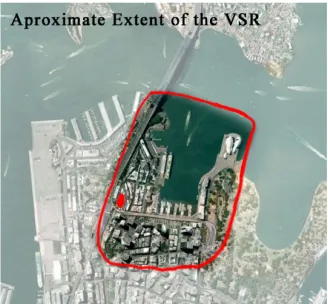
19 Approximate extent of the VSR 139
20 A view of Sydney Cove March 7th 1792, The Port Jackson Painter 143
21 Detail from A view of Sydney Cove March 7th 1792, The Port Jackson Painter 143
22 Wattle-and-daub hut with bark roof parget wooden chimney 1890 143
23 A postcard of a wattle and daub bush farmers homestead in South Australia circa 1900 144
24 Butcher's shop in a slab hut with bark roof, Tambaroora NSW 144
25 Early settlers hut in the Wielangta Forest, Tasmania 145
9
9
27 Lyons Cottage in Tasmania, a humble worker’s
cottage from the nineteenth century 146
28 Plans for 95 Gloucester Street 147
29 Gloucester Street 148
30 Gloucester Street 1901 148
31 Whalers Arms 1901 149
32 Top level page for the Guidebook 152
33 Webpage with links to all the different streets in the VSR 154
34 Webpage with links to all the street addresses for Gloucester Street 154
35 Webpage with links for a specific address in Gloucester Street 155
36 Guidebook entry for Sunday 15th June 1788 157
37 The VSR and Guidebook at start up 158
38 Screengrab VSR Tour – 1788 pre-settlement 162
39 Screengrab VSR Tour - 1788 arrival of the First Fleet 162
40 Screengrab VSR Tour - c 1800 163
41 Screengrab VSR Tour - c 1820 at the back of the Cribbs House 163 42 Screengrab VSR Tour - time-lapse c 1800 164
43 Screengrab VSR Tour time-lapse c 1850 165
44 Screengrab VSR Tour time-lapse c 1890 165
45 Screengrab VSR Tour time-lapse c 1950 165
46 Screengrab VSR Tour time-lapse c 1965 166
47 The boning knife recovered from the Cribb well 167
48 The alcohol still recovered from the Cribb well 167
49 The china bowls recovered from the Cribb well 168
50 Age of participant 183
51 Sex of participant 183
52 Occupation of participant 184
53 Visited the Rocks 185
54 Visited virtual museums or virtual heritage sites 186
55 Computer use 187
56 Played electronic game 187
10
10
58 Interaction mode in the VSR 189
59 Number of modes tried 190
60 Order of interaction by respondents who tried all three
modes 192
61 Most liked interaction mode by respondents who tried all
three modes 193
62 Recommended order of interaction by respondents who tried
all three modes 196
63 Responses to the statement ‘the Virtual Sydney Rocks Tour gave me a feeling of what it was like to be in the Rocks
at different times’ 201
64 The VSR Tour gave me a feeling of what it was like to be in
the Rocks at certain times (58 respondents) 202 65 The VSR Tour gave me a feeling of what it was like to be in
the Rocks at certain times (31 respondents) 202 66 Responses to the statement ‘the Virtual Sydney Rocks
Game gave me a feeling of what it was like to be in the
Rocks at different times’ 203 67 The VSR Game gave me a feeling of what it was like to
be in the Rocks at certain times (58 respondents) 204 68 The VSR Game gave me a feeling of what it was like to
be in the Rocks at certain times (31 respondents) 204 69 Responses to the statement ‘Exploring the Virtual
Sydney Rocks gave me a feeling of what it was like to be
In the Rocks at different times’ 205
70 Exploring the VSR gave me a feeling of what it was
like to be in the Rocks at certain times (58 respondents) 206 71 Exploring the VSR gave me a feeling of what it was
like to be in the Rocks at certain times (31 respondents) 206 72 Which way of interacting was the most effective at
making you feel like you were actually there (31 respondents) 208 73 Responses to the statement ‘I learned some of the
11
11
74 I learned some of the history of the Sydney Rocks
by taking the VSR Tour (58 respondents) 213 75 I learned some of the history of the Sydney Rocks
by taking the VSR Tour (31 respondents) 213 76 Responses to the statement ‘I learned some of the
history of the Sydney Rocks by playing the VSR Game’ 214 77 I learned some of the history of the Sydney Rocks
by playing the VSR Game (58 respondents) 215 78 I learned some of the history of the Sydney Rocks
by playing the VSR Game (31 respondents) 215 79 Responses to the statement ‘I learned some of the
history of the Sydney Rocks while Exploring the VSR’ 216 80 I learned some of the history of the Sydney Rocks
while Exploring the VSR (58 respondents) 217 81 I learned some of the history of the Sydney Rocks
while Exploring the VSR (31 respondents) 217 82 Which way of interacting helped you learn most
about the history of the Sydney Rocks 218 83 Responses to the statement ‘I saw how the Sydney
Rocks has changed over time by taking the VSR Tour’ 222 84 I saw how the Sydney Rocks has changed over time
by taking the VSR Tour (58 respondents) 223 85 I saw how the Sydney Rocks has changed over time
by taking the VSR Tour (31 respondents) 223 86 Responses to the statement ‘I saw how the Sydney Rocks
has changed over time by playing the VSR Game’ 225 87 I saw how the Sydney Rocks has changed over time
by playing the VSR Game (58 respondents) 225 88 I saw how the Sydney Rocks has changed over time
by playing the VSR Game (31 respondents) 226 89 Responses to the statement ‘I saw how the Sydney
12
12
90 I saw how the Sydney Rocks has changed over time
by Exploring the VSR (58 respondents) 227
91 I saw how the Sydney Rocks has changed over time by Exploring the VSR (31 respondents) 228
92 Which way of interacting was the most effective at showing you how the Sydney Rocks has changed over time 229
93 Two things most liked about the VSR 232
94 Two things least liked about the VSR 235
95 Ways to improve the VSR 238
96 Age of participants who did not play the game 241
13
13
LIST OF MOVING IMAGE WORKS (see attached dvd)
1 Oculus Rift demonstration 2 Virtual Warrane II (2012)
3 Interview with Prof. Jeffrey Shaw about the Pure Land project 4 Pure Land AR Edition
5 CityViewAR in use
6 The Matrix (1999) Bullet Time
7 Bo Derek Running on the beach in the movie 10 (1979) 8 The mannequin sequences from The Time Machine (1960) 9 Time Passing By in The Time Machine (2002)
10 The Time Traveller's Wife (2009)
11 The Terminator’s arrival from Terminator 1, 2 and 3 12 Every time travel scene from the Back to the Future films 13 All the opening titles from Dr Who (1963-2011)
14 Time travel in Bill & Ted's Excellent Adventure (1989) 15 Time travel in Hot Tub Time Machine (2010) 16 Time travel in A Sound of Thunder (2005)
17 Star Trek: Original Series - preview of The City on the Edge of Forever (1967)
18 Star Trek: Original Series - time travel sequence from Tomorrow is Yesterday (1969)
19 Star Trek: Original Series - time portal sequence from All Our Yesterdays (1969)
20 Time travel sequence from Star Trek IV (1986) 21 Time-lapse of the Helheim Glacier
22 Opening sequence of Contact (1997) 23 The VSR Training Video
14
14
LIST OF APPENDIX TABLES
1a Big Dig buildings 284
1b Surrounding buildings 287
1c Questionnaire 299
1d Questionnaire Data 306
1e Two most liked things 366
1f Two least liked things 373
15
15
ABSTRACT
16
16
INTRODUCTION
‘I design and research virtual worlds for their own sake, because I want to see people develop better ones. I’m pleased for them to be used as objects of research by anthropologists, economists, social theorists, computer scientists or whomever, but our agendas are different. Researchers in these areas want to advance their own fields of study, but I just want better virtual worlds; that is where my emphasis lies.’
Richard Bartle (Bartle 2007: 2)
17
17
world that offered users unprecedented control over time, a choice of activities supporting different interaction modes and direct, easy access to a large amount of additional, relevant and authoritative information.
The seminal New Media theorist Lev Manovich has identified databases and 3D computer graphics, which he terms ‘navigable space’, as the two key forms of New Media (Manovich 2001). The term navigable space perfectly encapsulates the freedom of movement experienced by users in computer-generated virtual worlds. The author believes that what she calls ‘navigable time’, or time travel with agency, holds great potential for heritage education (Devine 2014). It gives users the same freedom of movement in time that they currently experience in the navigable space of virtual worlds. They can go to a particular time and date of their own choosing, and additionally, by changing the speed and direction of time, they can view forwards or backwards time-lapses to directly observe changes that take place over timescales outside the normal range of human experience.
18
18
eastern side. Within months the convicts were constructing wattle-and-daub huts on the sandstone ledges of what was already known as ‘the Rocks’ (Kelly 1997). The Big Dig site is high up in the Rocks and the excavations revealed traces of some of the early huts overlaid with 200 years of urban development. The dig uncovered over three quarters of a million artefacts and evidence of 42 separate dwellings while the historical research produced a host of documentary evidence. This led to the identification of specific individuals, the houses they lived in and, in some cases, a direct connection with artefacts recovered during the dig (Crook, Ellmoos, and Murray 2005, Karskens 1999).
This site was an ideal subject for the author's research to investigate the user experience of navigable time and to discover what navigable time can offer museum audiences. The dataset was exemplary, the site was of historic significance, the time range of two hundred years was both small enough to be manageable and large enough to show great change. Creating a virtual heritage world is a huge undertaking usually requiring a multi-disciplinary team including, at the very least, an historian, a 3D team of modeler, texture artist and animator, a game designer, a game programmer, a web designer and IT support. However, given the author's previous career in commercial computer graphics, it was possible to use the Big Dig data to construct a prototype that, while lacking the polish of a commercial game world, would demonstrate the functionality of a time-based virtual heritage world sufficiently well for users to have engaging, memorable and educational experiences and to give meaningful feedback.
19
19
news, goods and the chance of work. The harbour was clearly visible from the Big Dig site for the first hundred years and today frequent glimpses can be caught between the buildings and over the rooftops. This forced her to reconsider the scope of the project. Given the centrality of place in virtual heritage and the assumption that a museum visualisation of a place is intended to give people an informed idea of what that place is like, she felt that it was imperative to also include much of the area surrounding the Big Dig site including Sydney Cove and its eastern shore. So the Virtual Big Dig became the Virtual Sydney Rocks (VSR) with over 200 additional buildings, albeit in much lower resolution, and this doubled the build time.
Obsolescence is a spectre haunting all technologically-based projects and the author had specifically designed the VSR to be as future-proof as possible. However, the choice of game engine was determined by her association with the iCinema centre for Interactive Cinema Research which was using Virtools. Unfortunately towards the end of the research project the developers of Virtools, Dassault Systèmes, decided to cease all development and support for it. As a result the Virtools version of the VSR can no longer be run, however, due to the modular design approach followed by the author, the models and website were unaffected and, regardless of this major roadblock, the VSR is currently being ported to the Unity game engine for further development.
20
20
Museum and, once finished, the revised version of the VSR will be made available to the Rocks Discovery Museum for their use.
The background to this research is interdisciplinary in nature. This thesis weaves together theory and praxis concerned with place, heritage place, virtual environments, virtual heritage, presence, informal learning, serious games, time
and time travel in contemporary culture. Each of these areas is worthy of detailed examination but discussion is restricted here to the parts that are relevant to the user experience of time-based virtual heritage worlds. The salient features of these areas are examined and a discussion is presented on how they might assist or detract from the educational role of time-based virtual heritage.
It is difficult to overstate the impact of New Media and the Internet on contemporary culture. For museums the changes have been both challenging and empowering (Parry 2007, Witcomb 2003). These newer modalities can reach much larger audiences and facilitate exploration along multiple pathways, unlike the majority of exhibitions where there is a defined entry and exit and a curated pathway between the two. This anti-narrative aspect of databases is deeply at odds with the temporal anti-narrative of heritage. Navigable time, when used to jump to specific, but temporally scattered times, is likewise deeply anti-narrative. However, navigable time, when used in a time-lapse fashion re-imposes the temporal order and restores the traditional time-based narrative of heritage (Devine 2014).
21
21
as seen in commercial game worlds, is very impressive and electronic gaming is now a mainstream activity with players who are much more representative of the general population than the predominately young male players who were the early norm (Yee 2005). Massively multiplayer online role-playing games (MMORPGs) such as World of Warcraft have millions of players who regularly spend many hours in the game world.
These worlds are extensive in scale, richly detailed and populated with both player-controlled characters and non-player characters player-controlled by artificial intelligence software. Role-playing is an affective and powerful way to directly experience how class and gender-based rules shape a person’s life. However, most if not all commercial role-playing games are predicated on the assumption that the player has the power to significantly affect outcomes in the game world regardless of class and gender. Is this level of agency appropriate in a virtual heritage world? How many players would want to play a game where they had to be a lowly slave all the time? Alternative types of games such as puzzles, quizzes and treasure-hunts may be more appropriate for virtual heritage.
‘Virtual worlds are places. Remember that and many design issues cease to be issues at all. People go to places, do things there, and then they go home.’
Richard Bartle. Designing Virtual Worlds (2004)
22
22
They usually have a choice of activity. As well as just wandering around, visitors to the real Sydney Rocks can go on walking tours, visit two different local history museums - the Rocks Discovery Centre and the Susannah Place Museum - and see Cadman’s Cottage which is the oldest building in the Rocks, dating from 1816. Over half the buildings in the Rocks are on the Heritage and Conservation Register and many of these house shops, restaurants and bars where visitors can discover different aspects of contemporary local culture.
Just as the real world can host a variety of activities so too can a virtual world. As well as games it can provide tours and support free exploration. The author argues that being able to offer users a range of activities based on different interaction modalities has several advantages. It empowers users by adding to their level of agency and this contributes to engagement. In addition, following a Constructivist approach to the informal learning that takes place in museums, it supports users in their construction of knowledge by providing them with a range of learning modes and supporting multiple pathways through the content. George Hein has written extensively about learning in museums and he points out that museum audiences vary widely in age, background and temperament which makes it difficult to design exhibits that appeal to everyone (Hein 1998).
23
23
to game designers, researchers and developers of virtual heritage worlds. There are many factors of presence as well as types of presence but, as with learning in museums, individual user factors are critical (Lombard and Ditton 1997, Devine 2007, Riva, Davide, and IJsselsteijn 2003).
Presence implies a place to be present in and there is a rich body of writing on place with particular relevance to heritage. The philosophy of place espoused by Yi-Fu Tuan in Space and Place (1977) concerns itself with the layers of human meanings that overlay geography. Places are locations that have associated human meanings on personal, societal and historical levels. As well as the cultural connotations, there is also a powerful experiential aspect to place that is well known to game designers, cinematographers and landscape archaeologists (Alton 1995, Bartle 2003, Tilley 1994). Virtual environments, with their propensity to evoke an experiential affect in users, lend themselves well to the use of lighting and sound to create an enhanced sense of the phenomenological experience of virtual place. Within the VSR the time and date is used to determine the position of the sun so that users can see how the time of day affects the ambience of the Rocks. For the first year of settlement the meticulous records of the First Fleet make it possible to include weather based on the historical record. During this time there were periods of extremely wet weather at a time when most of the people of the First Fleet were living in tents (Cobley 1987). In the VSR the rainy days feature the sound of rain and random flashes of lightning followed by thunder prompting users to consider the role of weather in daily life.
24
24
meanings that contribute to its heritage value (Champion 2007, Chen and Kalay 2008, Roegiers and Truyen 2008, Roussou 2006, Smith 2006, Devine 2007). In the real world people exploring heritage places often pause to consult a guidebook, or an internet-based resource using their smart phone, to find out additional information. It is very easy to provide similar functionality in the virtual world. The simple act of clicking on an object or building can directly connect users to a database of relevant data. When used in this way the entire 3D world should be seen as merely the tip of, and interface to, a huge iceberg of data (Manovich 2001). While Bartle notes that virtual worlds are places that people go to and do stuff and then they go home this assumes that they have something to do. The author deemed it critically important that the VSR have sufficient content to be both a useful resource supporting cultural presence and one that encouraged and rewarded prolonged engagement. The web-based VSR Guidebook, described in detail in Chapter 4, acts as an aggregator of internet content. Each building and important object links directly to a web page containing links to relevant and reputable information from sites such as the Dictionary of Sydney, the National Library of Australia, the Australian Dictionary of Biography and the Heritage and Conservation Register of New South Wales. Users are able to quickly and easily access additional relevant information and they can decide to what depth they wish to go.
25
25
learning experience. This thesis begins with an examination of the background in theory and praxis of the research, it then proposes a time-based design for an ideal virtual heritage world and reports on the implementation and testing of a prototype virtual heritage world supporting navigable time. It concludes with the analysis of the test findings and calls for continued research into the educational potential of time-based virtual heritage.
Chapter 1 explores the interdisciplinary background to the research beginning with the phenomenological and cultural experience of place and the critical importance of time to both. The chapter continues with a concise summary of virtual environments, an examination of the current state-of-the-art and of the phenomenon of presence, or the feeling of being located in the virtual world displayed on the screen that is commonly reported by users of virtual environments. Presence is capable of evoking a powerful affect in users but it has been found to be highly dependent on individual user factors. The nascent field of virtual heritage is surveyed and concepts of place in virtual environments and place in virtual heritage are explored. A Constructivist framework is used to examine the informal learning that takes place in museums. The emergent field of serious games, which uses game-style interactions for training and learning, is examined and the appropriateness of different game genres for virtual heritage is debated. The combination of navigable space and databases to create enriched virtual heritage worlds is proposed and Chapter 1 concludes with an examination of time-based virtual heritage.
26
26
the focus here is more on time travel than on time itself per se. and, in particular, on time travel as it applies in a heritage context. The widespread use of time travel in popular culture from the late nineteenth century to the present day is discussed and the author concludes that time travel is an established trope of the contemporary human imaginary and that time-lapse is a powerful tool for understanding processes that take place over timeframes outside of direct human experience. The chapter concludes by arguing that navigable time offers opportunities for users to engage with virtual heritage in new ways that lead to historical insight, understanding and learning.
In Chapter 3 the author proposes a hypothetical state-of-the-art educationally focused and time-based virtual heritage world, with supporting online database. This ideal virtual heritage world would support a range of interactions intended to foster immersion leading to historical understanding, insight and learning not only of individual historical narratives, but also of wider historical processes and of the public understanding of heritage itself. Issues of authenticity and completeness related to the re-creation in virtual form of tangible and intangible heritage are explored followed by an examination of the relationship between the virtual and the real. The learning opportunities afforded by navigable time, integrated databases and different activities are debated. The chapter concludes with an examination of issues pertaining to user engagement and technical obsolescence.
27
27
examining the design decisions taken by the author. The creation of the various parts of the virtual world such as the buildings and terrain, the sounds and the supporting website are described in detail and this is followed by a discussion of the design and content of the example game and tour developed for testing. The chapter concludes with a discussion about the choice to use a questionnaire for evaluating the Virtual Sydney Rocks and an examination of the questions.
Chapter 5 analyses, discusses and summarises the findings from the testing of the VSR. It is split into two parts, the first of which analyses the responses to the questionnaires completed by testers and the second of which presents the findings. Both journey and destination focused time travel are found to be engaging and educational by users. Additionally, there was no clear favourite among the three different activities available to users, with each activity preferred by a significant minority of users. The chapter concludes with a summary of the additional findings that emerged from the data.
CHAPTER 1: Background
1.1 Place and space 30
1.2 Rethinking place – the role of the body 32 1.3 Rethinking place – the cultural dimension 33
1.4 Heritage place 35
1.5 Virtual environments, presence and place 36
1.6 Virtual heritage place 44
1.7 Authenticity, completeness and spectacle in virtual heritage 48
1.8 Learning in museums 50
1.9 Virtual heritage in museums 55
1.10 On-site AR and heritage 61
1.11 Serious Games in museums 63
1.12 Suitable games for virtual heritage 65
1.13 Enriched virtual heritage 68
1.14 Time-Based virtual heritage 71
1.15 Conclusion 72
29
29
Time is critical to heritage place in two ways. Over years, decades and centuries the activities, habits and customs of people change along with the more tangible changes evidenced in the built environment. A particular date will determine what buildings exist, the dress, behaviours and customs of the inhabitants and the activities that take place. Over time a place will itself acquire multiple historical and cultural narratives. Place makes time visible, acting as a memorial to the past. Time also determines the phenomenological aspect of place. The cycles of day and night, the waxing and waning of the moon, and the progression of the seasons are key contributors to the look, sound and smell of a place. The individual experience of place is an inseparable fusion of the cognitive and sensory, and time is critical to both.
30
30
1.1 Place and space
To be (at all) is to be in (some) place
– Archytas of Tarentum 428–347 BC (Casey, 1997:4)
Place and time are fundamentals of existence. One can only ever physically be in a place and only ever be in one place at one time. As a result both place and time have been of great interest to philosophers through the ages. Given the importance of place to heritage it is useful to examine different conceptions of place, and the closely related concept of space, and how these have changed over time. Place is both a noun and a verb and its meanings range from being purely locative, such as in ‘Place the vase on the table’ to redolent with individual, historical and cultural meanings such as in ‘New York is a place like no other’. Place is also used metaphorically such as in the term ‘knowing your place’ where it refers to an individual’s awareness of their position with regard to social hierarchies. Place is always particular, referring to somewhere specific and unique.
Space, like place, has a range of meanings. It is used to describe un-occupied place such as in ‘There is some space on the bottom shelf.’ It is also used to describe an infinite cosmos containing within it individual places as in ‘The Earth is a tiny speck in the vast infinity of Space.’ Generally space is considered homogeneous and empty while place is particular and filled. Place is the instantiation and space is the potential.
31
31
have shaped and influenced the subsequent philosophical discourse. For Plato (c425 BC – c347 BC), as detailed in the Timaeus, the world is a created and finite world of discrete places. Existence can only be in place and the act of creation creates the place to be in. This act of creation happens in the Receptacle, which is that in which all becoming takes place. For Plato place is eternal and place and time are indivisible. However, for Aristotle (c384 BC-c322 BC) place is an innate attribute of a body. His interest in place is in the context of physics not cosmology or cosmogony. Aristotle argued that there was a place for everything and everything was in its place and he proposed a closed and finite world of discrete places. For the Atomists the Cosmos was an eternal and infinite spatial universe with discreet places within it, but for Philoponus (c. 490 – c. 570) the Cosmos consisted of discrete places within a homogeneous and finite space.
The rise of Christianity saw a shift in emphasis away from place and towards space. For Christian philosophers, the infinite and eternal Christian god presupposed an eternal and infinite universe. Therefore philosophical investigation tended to focus on the infinite and eternal space of the cosmos not the unique and particular places within it. Ideas to do with space replaced those to do with place. Concepts such as the absolute, the infinite and the immense replaced those of limit, boundary, and setting. In the seventeenth century many of the leading philosophers of the day, such as Pierre
Gassendi (1592-1655), Isaac Newton (1642-c1726), René Descartes (1596-1650) and
32
32
Newtonian physics dominated scientific thought until the early twentieth century when Albert Einstein (1879-1955) proposed in his general theory of relativity that space and time are interwoven into a single continuum known as space-time. As a result, events that occur at the same time for one observer can occur at different times for another. In other words the location of the observer is critical: place matters. This shift in thinking is echoed in the change from a modernist to a postmodernist stance in heritage. There is now wide recognition that the past is experienced in the context of the present. The location of the observer in time is critical: time matters.
1.2 Rethinking place – the role of the body
Philosophers such as Immanuel Kant (1724-1804), Alfred Whitehead (1861-1947), Edmund Husserl (1859-1938) and Maurice Merleau-Ponty (1908-1961), recognising that consciousness is embodied, acknowledged that the feeling of being embedded in the physical world was a complex qualitative whole experienced kinesthetically. Kant noted the fundamental relational aspect of up and down, left and right, and back and front while Husserl noted that his body placed him at the centre of things (Casey 1997). George Lakoff and Mark Johnson point out in the now-classic Metaphors We Live By (1980) that ‘Most of our fundamental concepts are organized in terms of one or more spatialization metaphors’ (Lakoff and Johnson 1980: 17). The experience of being in a place is, for each individual person, a fusion of the physical and the cognitive. It is an amalgam of the sensory impression of the place, the cultural associations of the place and the unique personality of the individual.
In A Phenomenology of Landscape: Places, Paths and Monuments (Explorations in
33
33
the landscape are in turn hidden and then revealed as a person walks a trackway. This would not be apparent when studying a two-dimensional map and Tilley argues convincingly that directly experiencing a landscape offers important insights into how earlier inhabitants related to it (Tilley 1994).
The phenomenological aspect of place is an integral part of the experience of place. The immediate sensory impression of place is highly variable. The light, sounds and smells of a place are determined in part by the weather and in part by the seasons of the year, the time of day or night and the phases of the moon. Time is a critical factor in the experience of place, as this thesis will demonstrate.
1.3 Rethinking place – the cultural dimension
Concurrent with the re-appraisal of the role of the body in creating a sense of place has been an exploration of the contribution of culture to the experience of place. Casey identifies a renaissance of interest in place from a wide range of disciplines including history, the natural world, politics, gender relations, geographic experience, architecture and the sociology of the polis and the city. For these writers place is not conceived of as a fixed thing but it is an ‘ongoing and dynamic, ingredient in something else’ (Casey 1997: 286). The author would add archaeology, computer graphics, heritage and virtual heritage to the list of disciplines that are re-thinking place.
34
34
freedom, and threat of space, and vice versa. Furthermore, if we think of space as that which allows movement, then place is pause; each pause in movement makes it possible for location to be transformed into place.” (Tuan 1977: 6). For Tuan the act of spending time in a location is critical to creating the experience of place.
The central theme of Tuan’s book is the individual experience of the world. That experience begins in infancy with direct sensory interaction with the physical world and over time deepens as greater conceptual and symbolic understanding is developed. Place is the amalgam of direct sensory impressions and the web of individual memories, human meanings and connections that overlay the topography of homes, environs, regions and countries. Tuan’s recognition of the centrality of individual experience supports this thesis that argues that individual factors play an important role in the experience of virtual heritage. Tuan also recognises the important role that time plays in the transformation of space to place declaring that “What begins as undifferentiated space becomes place as we get to know it better and endow it with value” (Tuan 1977: 6). Tuan also notes the way that place makes time visible, acting as a memorial to the past. While the personal experience of place is limited to a single lifetime the cultural timescale of a place can span many lifetimes. Tuan’s insights into the rich and dynamic relationship between place and time support this thesis which argues that time is a critical and neglected affordance of virtual heritage.
35
35
just sensory impression - it is also richly layered with historical, cultural and personal meanings. Particular places have been officially designated as heritage places, a concept examined in greater detail in the following section.
1.4 Heritage place
In 1972 the general conference of the United Nations Educational, Scientific and Cultural Organization (UNESCO) adopted a recommendation concerning the protection, at national level, of cultural and natural heritage (UNESCO 1972). A World Heritage Site is a place that is listed by UNESCO as being of outstanding universal value from the point of view of history, art or science. Australia in turn defines its national heritage as comprising ‘exceptional natural and cultural places that contribute to Australia's national identity’ (Australia 1999). However, heritage is not just made up of tangible objects. Song, music, dance, drama, cuisine, crafts and skills are all examples of intangible culture. The 2003 Convention for the Safeguarding of the Intangible Cultural Heritage identifies living heritage as the mainspring of humanity's cultural diversity (Ahmad 2006).
36
36
associated with them and the activities that take place within them. The meanings of heritage places are not frozen but change over time, not only due to temporal wear and tear on material fabric, but also due to wider societal changes that affect attitudes about those places and the activities within them. Heritage places are dynamic and experienced in the context of the present. Smith is useful for this thesis in that, like Relph and Tuan, she identifies the dual contributions of individual experience and culture to place. She also recognises the deep interconnection between time and place, an idea which is central to this thesis.
1.5 Virtual environments, presence and place
This thesis concerns itself with the use of time-based virtual heritage in museums to provide immersive experiences that encourage historical understanding, insight and learning. This section begins with a short summary of 3D computer-generated environments and related technologies such as Augmented Reality (AR). It then explores the phenomenon of presence which is frequently reported by users of virtual environments and which offers a powerful tool to evoke affect in users of heritage-based virtual worlds and contribute to the creation of a sense of place.
37
37
Initially the costs were high and the quality was low but improvements in hardware, software and pricing over the last thirty years mean that creating virtual worlds is much more affordable than it has ever been. The current state-of-the-art is embodied in the extensive, richly detailed and populated worlds of commercial game franchises like Grand Theft Auto and Assassin’s Creed. The budgets for these games rival those of big
budget Hollywood movies and the huge financial rewards generated by a successful commercial game mean that multi-million dollar development costs are increasingly common. Assassin’s Creed (2007) reportedly took a team of 300 people two years to make at a cost of $US20 million dollars. However, with over six million copies of the game sold in the first year of its release it generated hundreds of millions of dollars in revenue, guaranteeing an even bigger budget of $US24 million for the sequel (Most Expensive Video Games, 2013). This is dwarfed by Grand Theft Auto V (GTA 5), the latest in the Grand Theft Auto franchise, which was created over four years by a team of 250 people, and is reputedly the most expensive computer game to date with the production costs put as high as $US265 million (Farnham, 2013). These are not so much games as expansive worlds in which numerous stories play out. Game reviewer Hollander Cooper describes GTA 5, as ‘absolutely, brutally, amazingly massive, and features so much content you could play for months without seeing it all.’ (Cooper, 2013).
38
38
Currently most consumer experiences of virtual worlds are in games played on a home computer where the images are displayed on a single screen. More immersion is experienced by delivering a left eye and a right eye view individually to the corresponding eye and this is commonly referred to as ‘virtual reality’ (VR). Traditionally this has required a fairly heavy and bulky helmet but the Oculus Rift, acquired by Facebook for two billion US dollars in 2014, is one of a number of products under development that aim to bring the same functionality to a low-priced, light-weight and robust consumer product (Dredge, 2014)1.
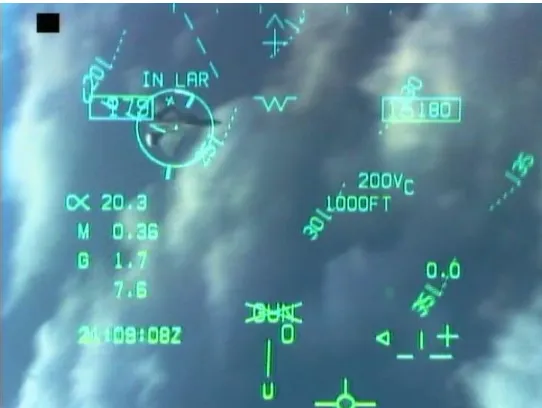
[image:38.595.134.405.497.701.2]The Google Glass project is different in that it seeks to overlay text and graphics onto the real-world view of the user. The term augmented reality (AR) is often used to describe this and it is commonly seen in the HUDs or Heads-Up Displays used by action movie characters such as Iron Man. The first HUDs were developed by the military in the 1960s and they are now a common feature of many first person shooter games (see Figure 1).
Figure 1: FA-18 HUD while engaged in a mock dogfight
1
Video 1 on the accompanying dvd shows an Oculus Rift demonstration. The video is also available at
39
39
Navigable space is not limited to virtual versions of physical environments. The virtual world can just as easily serve as an interface to data (Manovich, 2001; Devine, 2007). For example, selecting an object or building could open up relevant text, photographic, video or audio data and provide important contextual information. Used in this way the virtual world is just the visible tip of a large iceberg of data.
Many people experiencing virtual environments report a feeling of presence or ‘being there’ where ‘there’ refers to the virtual world. Lombard and Ditton’s comprehensive overview of the presence literature in 1997, At the Heart of it All: The Concept of Presence, describes presence as the illusion that a technologically mediated experience
40
40
grouped into the three main categories of experiential realism, social interaction and individual user characteristics.
The more realistic the virtual environment, the more presence will be felt. The realism is not limited to how it looks but also extends to how things behave physically. The goal of a flight simulator is to make the user feel like they are really in the aircraft. This is achieved by making the simulator look, sound and behave as closely as possible to the real aircraft. The pilots are enclosed in a capsule mounted on a platform that moves in response to their actions. The capsule contains a working replica of the cockpit of the plane and the view out of the windows is an image that changes in response to the motion of cockpit capsule, so that as the pilots move the controls the view outside the cockpit changes accordingly. In addition, the platform tilts and moves up and down to give a bodily sensation as close as possible to the real. The result is a training environment that is considered of such worth that hours spent flying a simulator count towards the required flight hours per year that commercial pilots must do to retain their licenses. Simulators also exist for train crews, ship crews and medical procedures (Mueller-Wittig et al. 2002).
41
41
factors, with researchers noting that ‘differences among individual users often account for more variability in performance than system design factors’ (Kaber, Draper et al. 1999: 379).
Social engagement is a very powerful way to create a sense of presence. Two people talking on the telephone, despite the low bandwidth and audio-only connectivity, have a strong sense of a shared space that is neither physical nor computer generated but psychological. Social presence was not a factor in the popularity of the early computer games like Doom (1993) and Quake (1996) because they were single player. Later games such as Counter-Strike (1999) supported multiple players and team play, while in MMORPGs such as World of Warcraft tens of thousands of players are online simultaneously in 3D environments so large that it would take someone days to fully explore them (Navigating Azeroth with a World of WarCraft Map, 2007). Team play is a common option in many games and social interaction is considered the key dynamic for the long-term success of multi-player online game worlds (Bartle 2003, Yee 2005).
42
42
engagement of the user with the virtual world would appear to be the key factor of presence. To put it simply, you are present wherever your attention is.
Sportspeople and gamers talk about being ‘in the flow’ to describe their complete absorption in the game they are playing. The idea of ‘flow’ was formulated by Mihaly Csikszentmihalyi in the mid-1970’s to explain happiness (Csikszentmihalyi and Hermanson 2009) and he identified the following eight major contributing components:
• A challenging activity requiring skill • A merging of action and awareness
• Clear goals
• Direct, immediate feedback • Concentration on the task in hand
• A sense of control
• A loss of self-consciousness • An altered sense of time
43
43
merging of action and awareness, skill, a sense of control, a loss of self-consciousness and an altered sense of time). However, after the dragon has been killed, the loot is sorted out and people hang out together. It is argued that during this phase very few of the components of flow come into play yet the participants are as immersed as they were during the battle.
44
44
Presence has been ascribed to experiential realism, social interaction, individual user characteristics and individual identity, and it continues to be a rich area of research for many disciplines. Regardless of the factors of presence, in and of itself presence presumes a place to be present in. With respect to virtual game worlds the author agrees with Bartle that ‘others may debate whether or not virtual spaces are actual places, but for players and designers there is no conception that they might not be. The five million people who enjoy World of Warcraft certainly look upon it as a world, and in the face of this any argument to the contrary is pretty well moot’ (Bartle 2007: 2). Virtual worlds are undoubtedly real places in their own right to the people who spend time in them and virtual game worlds provide important practical examples of virtual place-making. Virtual heritage worlds are likewise real, though virtual, places in their own right, but what is the nature and purpose of virtual heritage places, and what is their relationship with real heritage places? These questions are examined in the following section.
1.6 Virtual heritage place
Walter Benjamin’s influential essay The Work of Art in the Age of Mechanical
Reproduction (1968) introduces the idea of a unique ‘aura’ that objects acquire from
45
45
the attraction of the tableau tenfold and resulted in a significant rise in receipts for two months (Schwartz 1995).
Objects can carry many meanings only some of which are fixed. Susan Pearce proposes that heritage is always seen through the eyes of the present and uses the example of a broadsword to illustrate this (Pearce 1992). The sword was carried at the Battle of Culloden in 1745 by a Scottish chieftain. The sword, by its design, manufacture and ownership, reveals much about the culture, material technology and social structure of the Scottish Highland clans. At the time of the battle the defeated Highland Scots were considered barbaric by the victorious English but by 1840 they were depicted as noble and romantic in popular novels. Culloden is now a tourist park and the sword is part of a museum display. The sword represents not only a particular moment in history (the Battle of Culloden) but also the changing attitudes to the Highland Scots over the following 250 years. Pearce argues that ‘because, unlike we ourselves who must die, it [the sword] bears an eternal relationship to the receding past, and it is this that we experience as the power of the actual object’ (Pearce 1992: 28).
46
46
general public. There is an inherent and central pedagogical dimension to virtual heritage.
In the last 30 years 3D computer graphics has evolved from simple graphical representation to interactive and populated environments with image and sound qualities that approach realism. These immersive environments, with their propensity to evoke a sense of ‘being there’, would seem to be ideal for giving people a feeling either of what an extant but remote or otherwise inaccessible heritage place is like in the present or of what a heritage place used to be like in the past. Bharat Dave argues that virtual heritage is now able to move beyond the early focus on reconstruction to interpretation. He believes that virtual technologies offer ‘passages through time and space that are qualitatively different from what may be possible using traditional media and narratives’ (Dave 2008: 40).
47
47
another place and time. They argue that something more than moving and looking around is needed to modify an individual’s understanding of the cultural importance of a heritage place. They identify social agency, modifiable artefacts and dynamic environments as the key features of hermeneutic environments that can deliver cultural immersion (Champion and Dave 2007).
Sara Roegiers and Frederik Truyen propose a three-fold framework for meaningful historical representation. They identify time, space and community as the key ingredients for responsible heritage representation (Roegiers and Truyen 2008). For Xiaolei Chen and Yehuda Kalay place is both setting and activity and virtual heritage design needs to take both into consideration (Chen and Kalay 2008). Maria Roussou considers the main components of virtual heritage environments to be representation, experience design and interaction with one of the key challenges being to design meaningful interactions for users (Roussou 2006). Common to all is the recognition that the cultural dimension is an integral aspect of virtual heritage places. This aligns with the writings, discussed earlier, of Tuan, Relph and Smith with regard to place and heritage place.
48
48
1.7 Authenticity, completeness and spectacle in virtual heritage
All heritage studies face a two-fold dilemma. As discussed earlier the past is viewed from the perspective of the present, with each generation finding its own meaning, and in addition that view is based on incomplete data so an historical reconstruction can only ever be an interpretation. However, there is widespread concern that the strong visuals and immersive affect of virtual heritage may cause the general public to conflate the interpretation with reality (Affleck and Kvan 2008, Roegiers and Truyen 2008, Silberman 2008).
The issue of fragmentary data raises the tangled issues of completeness and authenticity. There is much about the past that is unknown and unknowable. For example for many ancient cultures there is no surviving evidence of clothing or hairstyles so any depiction of them is purely speculative. All social behaviour prior to the invention of writing is completely lost to time. Did Neolithic peoples kiss hello? How many kisses? The London Charter for the Computer-based Visualisation of Cultural Heritage (2006) prompted discussion which has led to an emerging international consensus on best practice in heritage visualisation across disciplines (London Charter for the Computer-based Visualisation of Cultural Heritage, 2006). The Charter seeks to address the very
49
49
However, if only what is known is included then a reconstruction will be incomplete. Adding things for which there is no evidence – even if done by experts – is speculative. Either one has an incomplete model or one has a model with parts that are made up and neither is a true representation of how it actually was. Presenting only what is known with certainty and relying on the imagination of the public to fill in the details is problematic. Many popular film and TV shows contain historical inaccuracies that are then accepted by the public as truths (Umanath, Butler, and Marsh 2012). An extreme example would be the public imagination of Neolithic life which, for English speaking people of a certain age, is likely to include caveman archetypes from popular culture such as the film A Million Years B.C. (1966) and the TV show The Flintstones (1960-1966). Both of these examples have humans and dinosaurs co-existing when in reality humans evolved many millions of years after the demise of the dinosaurs. It is therefore better to use the informed speculation of the experts instead of relying on the imagination of the general public. This issue will be revisited in the following chapter.
50
50
Given the strong affect of the real it is unlikely that users will conflate the virtual place with the real place but, the imprimatur of the museum gives a stamp of authenticity to the model and the audience expectation will be that, unlike Hollywood, truth will not be sacrificed for spectacle. There are a number of ways to address these concerns that are in keeping with the London Charter. The more speculative parts could be built in less detail, colour-coded, or annotated with additional information.
Heritage places are locations imbued with rich layers of historical and cultural meanings. An individual’s experience of a heritage place is the gestalt of the primary sensory impression of the place itself, the individual’s unique perspective and those rich historical and cultural layerings (Smith 2006). A virtual heritage place is not, and can never be, the place itself but it can be an environment that seeks to engender the kind of immersion that leads to historical insight. Before examining how such learning might be supported in virtual heritage it is important to examine both interactivity in museums and informal learning more closely.
1.8 Learning in museums
51
51
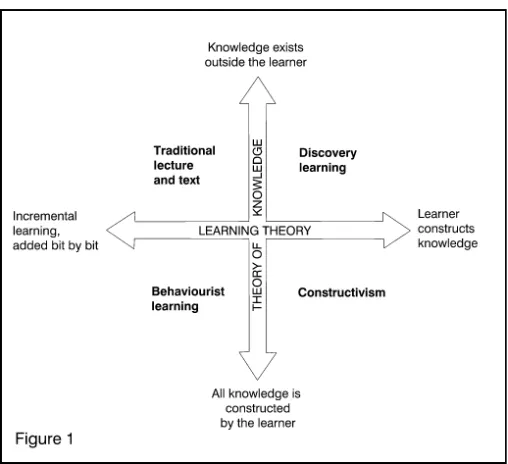
temperament. Some of them come singly, others in pairs, some in family groups or in school parties (Falk and Dierking 2000, Hein 1998, Hooper-Greenhill 2007). This cross-section of visitors makes designing educational experiences for museum audiences difficult. Some people may prefer more organised while others prefer less organised exhibits. However, as George Hein points out, ‘the same users can fall into either category depending on their reasons for visiting, the company they are in, or the mood generated by the situation that they find as they enter the museum’ (Hein 1998: 137). Learning strategies by museums have varied as different theories of education have gained and lost acceptance. In Learning in the Museum (1998) Hein describes an educational theory as consisting of a theory of knowledge (an epistemology), a theory of learning and a theory of teaching. He outlines the shift in theories about learning, away from the idea of the mind as a tabular rasa on which new facts are inscribed, to the idea that the mind constructs meaning by linking new knowledge with existing knowledge. He proposes a continuum of knowledge theory that encapsulates this spectrum (see Figure 2). At one end of the range knowledge is completely independent of the learner and at the other end knowledge is actively constructed by the learner.
Figure 2: Hein's Theory of Knowledge continuum
52
[image:52.595.143.397.385.617.2]52
Figure 3: Hein's Theory of Learning continuum
Hein combines the two and uses the four different quadrants so delineated to identify four educational theories. These he terms Traditional lecture and text, Behaviourist learning, Discovery learning and Constructivism (see Figure 4).
Figure 4: Hein's four educational theories
53
53
assumes that knowledge exists outside of the learner and that learners discover it for themselves through active engagement. This approach is familiar to science students who have to carry out experiments in the laboratory to confirm what they are being told in the classroom and is widely used in science museums and discovery centres where many of the exhibits are specifically designed for user interaction. For Behaviourists, s u c h a s Lev Vygotsky (1896-1934), learning assumes that knowledge is constructed by the user incrementally. In practice this equates to practical training where the ‘what’ to do is more important than the ‘why’ to do. An example of this would be a trainee pilot for whom learning how fast she needs to be travelling before lifting up off the runway is of immediate and pertinent practical importance while knowing the details of the theory of lift are not.
54
54
Within museums there is a growing acknowledgement of the multiple voices and perspectives of history and heritage (Parry 2007, Witcomb 2003, Hein 2000). Communication between the museum and the public is moving away from top-down dissemination of knowledge to a dialogue. Andrea Witcomb believes that visitors should be able to ‘play a part in producing its meaning, challenging the authority of the Museum to produce and regulate their subjectivity’ (Witcomb 2003: 129). She identifies three types of interactivity in museums. The first is technical interactivity and this describes physical interaction, such as button pushing, that is often only used to support the delivery of a linear top-down narrative, preventing any negotiation of meaning. The second, spatial interactivity describes the use of a non-linear exhibition design to encourage visitors to follow multiple equally valid paths through the museum. Visitors have the opportunity to make their own connections and contrasts between the multiple stand-alone displays. The third is dialogic interactivity in which the public is encouraged to engage with ideas. Witcomb uses the Museum of Sydney as an example of this type of interactivity. The Museum is situated on the site of the First Government House in Sydney and its focus is on the ideas and historical processes of colonisation rather than the specific history of the building itself (Witcomb 2003). As discussed earlier, the London Charter states the importance of a clear purpose for virtual heritage and the different types of interactivity identified by Witcomb offer a useful framework for developers of virtual heritage.
55
55
fabric pieces to create a map of the city of Porto and then colouring, cutting out and assembling paper models of the principle buildings which are then placed on the map (Alexandre 2011). The term ‘serious games’ is used to describe games which are primarily intended as vehicles for learning (Anderson et al. 2009a, Kelly et al. 2007, Michael and Chen 2005, Mortara et al. 2013). The book Museums at Play (2011) contains the insights of over fifty museum and gaming experts from a total of fourteen different countries (Beale 2011). There is currently great interest in and development of computer-based serious games. Sections 1.11 and 1.12 of this chapter examine heritage-based electronic serious games in detail.
The Constructivist model of learning is widely accepted in virtual heritage (Affleck and Kvan 2008, Roegiers and Truyen 2008, Roussou 2006). Learning opportunities in virtual heritage are dependent on the supported interactions. If only passive wandering is supported then only one interpretation on the data can be presented and the interaction is limited and technical in nature. However, if the virtual world is linked to an integrated database it is possible to support multiple narratives and different interpretations supporting both spatial and dialogic interaction. A modifiable and inhabited virtual heritage world supporting meaningful activities and multiple voices demands the active social engagement of users creating cultural immersion as well as encouraging Constructivist learning by creating opportunities for cultural insight and understanding (Champion and Dave 2007, Champion 2008, Chen and Kalay 2008, Kenderdine et al. 2008, Roussou 2006).
1.9 Virtual heritage in museums
56
56
Kenderdine 2007, Hein 2000, Hooper-Greenhill 2007, Parry and Arbach 2007, Witcomb 2003). Here the discussion is restricted to the use of New Media by museums for public edification and, in particular, to examining the use of virtual worlds for heritage (virtual heritage). In the early days of virtual heritage the costs were very high and there was a very real danger of rapid obsolescence (Roussou 2000). Now that the technology has matured and the costs have fallen significantly, virtual heritage is poised to make a significant contribution to heritage learning.
Kalay discusses the challenges of using New Media for heritage in his introduction to New Heritage: New Media and Cultural Heritage (2008). He uses two analogies to explore the relationship between technologies, affordances and practice. The first, forcing a square peg into a round hole, describes the inappropriate use of New Media for something it is not well suited to do. The second, the horseless carriage, describes the use of New Media to do something old media can do while missing the fact that it can do much, much, more besides (Kalay, Kvan, and Affleck 2008). Virtual worlds seem to fall into the latter category with most virtual heritage being used to create the virtual equivalent of a diorama and completely ignoring its ability to include the dimension of time.
57
57
as it existed in 1550. The technology at the time was too slow for real-time rendering so single still frames for each of the rooms of the digital reconstruction were pre-rendered and stored on a laser disc. As the visitor navigated through the virtual castle the images were displayed one by one. The term ‘virtual tour’ comes from the Virtual Royal Tour of the system given to HRH Queen Elizabeth II when she opened the visitors’ centre (Virtual Heritage 2013). Learning oportunites are limited as only tangible heritage for a single time period is displayed while user interaction is restricted to moving from room to room.
Rome Reborn is an on-going project to create a digital version of Rome from an early
58
58
This provided opportunities for multiple voices to be heard and different interpretations to be presented supporting spatial and dialogic interaction.
Several research projects have created populated virtual worlds. Virtual Uruk is a virtual heritage project that uses artificial intelligence (AI) to create an inhabited historical world. Implemented in the online world of Second Life it is an example of a cross-disciplinary collaboration between historians and artificial intelligence researchers. Virtual Uruk shows the simple daily routines of a fishing family in the ancient
Mesopotamian town of Uruk. Every morning the family wake in their mud hut and the father leaves the house to go to the river and spend the day fishing and in the evening he returns home (Bogdanovych et al. 2010). The Digital Songlines project developed a toolkit using the Torque game engine for indigenous groups in Australia to use to build virtual worlds that depicts Aboriginal life in Australia. It was used to create Virtual Warrane (2007) and Virtual Warrane II (2012) which depict indigenous life in Sydney
Cove prior to white settlement (Head 2007). Both Virtual Uruk and the two versions of Virtual Warrane show visual fidelity, support passive wanderings and activity-based
interactions (games) and provide social interaction with inhabitants (Wyeld et al. 2007). Users can actively engage with the virtual world through a range of learning modes offering different opportunities for educators. Both Virtual Warranes meet Relph’s three requirements for place-ness - physical setting, observable activities and cultural encoding. Time however is completely ignored and this limits the re-creation of the phenomenological affect that is an important contributor to place-ness. It also neglects key details of lives lived in a close relationship with nature and dependent upon fluctuating food sources dictated in part by diurnal, tidal and seasonal cycles2.
2 Video 2 on the accompanying dvd depicts a demonstration of Virtual Warrane II. The video is also
59
[image:59.595.226.426.54.206.2]59
Figure 5: AVIE