White Rose Research Online URL for this paper:
http://eprints.whiterose.ac.uk/97530/
Version: Accepted Version
Proceedings Paper:
Zaidi, SAR, Imran, A, McLernon, DC et al. (1 more author) (2014) Enabling IoT
Empowered Smart Lighting Solutions: A Communication Theoretic Perspective. In:
Wireless Communications and Networking Conference Workshops. IEEE WCNCW 2014 -
Workshop on IoT Communications and Technologies, 06-09 Apr 2014, Istanbul, Turkey.
Institute of Electrical and Electronics Engineers (IEEE) , pp. 140-144. ISBN
978-1-4799-3086-9
https://doi.org/10.1109/WCNCW.2014.6934875
[email protected] https://eprints.whiterose.ac.uk/
Reuse
Unless indicated otherwise, fulltext items are protected by copyright with all rights reserved. The copyright exception in section 29 of the Copyright, Designs and Patents Act 1988 allows the making of a single copy solely for the purpose of non-commercial research or private study within the limits of fair dealing. The publisher or other rights-holder may allow further reproduction and re-use of this version - refer to the White Rose Research Online record for this item. Where records identify the publisher as the copyright holder, users can verify any specific terms of use on the publisher’s website.
Takedown
If you consider content in White Rose Research Online to be in breach of UK law, please notify us by
Enabling IoT Empowered Smart Lighting Solutions:
A Communication Theoretic Perspective
Syed Ali Raza Zaidi,
Member, IEEE,
Ali Imran,
Member,IEEE,
Des. C. McLernon,
Member,IEEE,
and Mounir Ghogho,
Senior Member, IEEE
Abstract—The aim of this article is to explore the design space
of the IoT empowered smart lighting systems from communi-cation theoretic perspective. It is noted that traditional wired solution such as digital addressable lighting interface (DALI) need to be replaced all together. The solutions proposing to replace just the end connections by wireless transceivers will not fit in the emerging IoT paradigm. Different architectural blocks of smart lighting systems are briefly described. The key enablers for each of these blocks, their evolution trajectories, existing challenges and possible pathways are briefly summarized. It is noted that the functionality of the building block of IoT based smart lighting system can be translated into an abstract reference architecture. A hirerichical networking architecture is proposed and different networking issues are discussed. Finally, a communication theoretic perspective for wireless interface selection is presented.
Index Terms—IoT, DALI, Poisson process, Interference, Light-ing, Gesture Recognition, Smart phone
I. INTRODUCTION
A. Motivation
M
ODERN day lighting systems are rapidly departing from the conventional design objective, i.e., providing illumination. Over the years, evolution of the lighting system and modern day life style has generated several new design objectives. More specifically, a modern day lighting system must possess some intelligence to optimize the use of en-ergy while maximizing the utility (in terms of illumination) and convenience (in terms of access/control). Consideration of such design goals have triggered development of digital communication protocols among devices. Digital Addressable Lighting Interface (DALI) is one of the well known industrial interface which provides an interoperable way for controlling dimmable light ballasts from different manufacturers.Taking a step further, smart lighting has evolved due to enormous penetration of sensors and actuators in day-to-day activities. It turns out that the flexibility provided by a wired interface such as DALI cannot be deemed sufficient. Specially, considering the design constraints for the future lighting systems. This observation is based on two underlying reasons:
1) Like all other wired interfaces, the curse of wiring plagues the DALI interface too. Specifically, DALI
S. A. R. Zaidi, D. C. McLernon and M. Ghogho is with the School of Electronic and Electrical Engineering, University of Leeds, Leeds, UK, e-mail: {eenarz, d.c.mclernon, m.ghogho}@leeds.ac.uk.
A. Imran, S. A. R. Zaidi are affiliated with Qatar Mobility and Innovations Center, Doha, Qatar, Emails:{alii}@qmic.com. M. Ghogho is also affiliated with International University of Rabat, Rabat, Morocco.
requires dedicated wiring between controller, ballasts and the actuators. Deployment and maintenance of such wires is a significant overhead in most of the existing infrastructure. To worsen the situation, deployment of ballasts or actuators may only be feasible on certain possible locations which are suited to the routing of wires. These locations may not be optimal in terms of maximizing the illumination utility or the accessibility convenience.
2) DALI was designed to provide control over individual or group of light ballasts by employing flexible addressing mechanism. Hence the design of the interface is lim-ited to actuation by a certain interface and dimming operation of the light. In future smart home automation systems will be designed based on IoT principles, i.e., lighting systems will not only interact with the dweller but with other devices too. Such flexibility cannot be handled by DALI in a scalable manner.
These issues have propelled a huge surge of activities across different vendors to design a replacement wireless interface. However, the trend has been to replace the wires between DALI controller and switches by a wireless interface such as Zigbee. This has been the trend in design of other IoT applications too. However, in this article, we argue that Zigbee may not be the optimal choice. The main objective of this article is to highlight the key challenges in realization of IoT empowered smart lighting solutions from a communication theoretic perspective. As a by product, we highlight the current open issues in the domain with the hope that the article will trigger research efforts on some of these fronts.
B. Organization
II. IOT EMPOWEREDSMARTLIGHTINGSYSTEMS Before presenting arguments in favor of any wireless tech-nology as a replacement for the currently existing DALI interface, a fundamental inspection of the architectural blocks of IoT enabled smart lighting systems is necessary. The only way towards a future proof wireless design is to envision the evolution of these components in future. To this end, in this section, we explore the possible evolution trajectories for such a lighting system. These futuristic considerations can be transformed in to deployment and design constraints which serve as guide towards selection of communication protocols.
A. Access Interfaces
In past, the access interface or actuation mechanism for the light ballasts were limited to digital switches or 1-10v analogue dimmers. However, in IoT enabled systems it is envisioned that variety of alternate interfaces will be employed for control.
1) Smart Phones: According to Ericsson’s mobility report [5], 2.5x times growth is expected in the number of smart phone subscriptions over next five years across the globe. Currently smart phone subscriptions are approximately around 1800 million. Such exponential growth in smart phone pene-tration is mainly attributed to the growing popularity of smart phone applications (apps). Currently, Apple’s app store has at least 1.1 million third party apps while Android store hosts more than 0.7 million apps. In past few months, several apps have emerged to enable utilization of a smart phone as an ac-tuation/control interface for the smart lighting systems. These apps are designed to work with specialized light emitting diode (LED) bulbs (e.g. INSTEON, Hue etc.). With a rich set of user interface features, smart phones provide an ideal interface for controlling IoT based smart lighting systems. Perhaps a more sophisticated intelligent lighting system can also employ on-board sensors on these smart phones for implementing lighting scene control or predictive ambient adjustments. Notice that most of the current smart phones do not have 802.15.4 Zigbee interface. Hence the choice of wireless technologies narrow down to WIFI, bluetooth and GSM/LTE. Most of the existing products in market are employing the bluetooth v4.0 which is frequently known as bluetooth low energy (BLE).
Missing piece of the puzzle: The above mentioned evolution path triggers an interesting design question, i.e., a light ballast with a certain wireless technology can be controlled with a smart phone, does this system effectively replaces the DALI type interface? In our opinion, this is not necessarily the case. A fully functional lighting control system should act as a bridge between actuator, sensors and device. Such gateway operation ensures efficient scheduling of devices, prioritization of the event triggers, efficient energy management by sleep scheduling and perhaps also a preemptive wake up strategy. Replicating these features across each single lighting unit is gross waste of computation resources and may lead to significant delays. Hence a better approach is to design a wireless room controller which can interact with variety of actuators and devices using standardized wireless interfaces. Such a gateway can also implement a flexible protocol for
commissioning new devices or actuators in the room area network (RAN).
2) Gesture Recognition: With the advent of modern day gaming, gesture recognition is evolving as a promising way to interact with the smart surroundings. The key advantage of gesture recognition compared to the smart phones is that the developed application is not tied to a particular interface, operating system or hardware device. It is energy efficient as compared to smart phones which deplete the battery power by running apps, no power source is required for the actuation interface. Moreover, such systems provides an intiutive and natural way of interaction with the actuators. Gesture recog-nition driven systems can also be considered as a smart way of provisioning assisted living.
In past, gesture recognition was mainly dealt from image processing perspective. Images were captured using an a pair of standard charge couple device (CCD) or complementary charged metal oxide semiconductor (CMOS) cameras. How-ever, recently time-of-flight (ToF) [9] imaging has emerged as a promising technology for implementing three dimensional gesture recognition. The ToF camera computes distances based on the timing properties of the transmitted and reflected signals between camera and the object. It is envisioned that in future such ToF empowered gesture recognition systems will serve as a key enabler for controlling smart home devices. However, in order to realize such a system there are many open frontiers on which efforts are required.
Challenges for Provisioning Gesture Recognition based Actuation: The first and the foremost challenge is the cost efficiency of such a system. Currently, the ToF cameras such as SWISSRANGER by MESA Imaging cost around 2000-4000$ per module. With such a high cost, these modules cannot be fitted in each device as is the practice with microcontroller units (MCUs) with on board Zigbee or BLE transceivers. Even deploying one of these sensors per room on a gateway basis is also quite infeasible. It is expected that cost will come down with the evolution of these devices as has been the trend in other semiconductor devices. However, for near future there are some alternative solutions which can be employed.
create different gesture stimuli.
From signal and communication theoretic perspective there are many frontiers for development. Some of the challenges can be understood with the help of a toy example. Consider a scenario where the discussed gesture recognition system is deployed in a smart home. The first question is how many detectors or sensors are required? Where should they be placed? Can we turn these devices OFF for energy sav-ings? How do these gateway system interact with the device modules? Should we just deploy a DALI type gateway with such gesture recognition and wireless interface or should we replace the control wires by wireless connections too? Does knowing the user mobility pattern (for instance in case of assisted living) helps? How to perform efficient classification and implement robust learning mechanism? Where do we place intelligence, centralization vs. distributed intelligence? All these questions require a communication theoretic explo-ration of the design space of such solutions. Mobile cloud computing is evolving rapidly and in future these room, home and building networks will be interconnected through a mobile cloud, provisioning remote control and monitoring facilities. Beside communication theoretic challenges, there is a huge potential for applying statistical signal processing algorithms such as compressive imaging. With compressive sensing and imaging sparsity across time, space and/or frequency can be exploited to reduce the volume of generated data.
3) Beyond Camera based Gesture Recognition: Over last few years, there have been several advancements in the area of urban sensing specially through the wall imaging. More recently, it was shown that the Doppler shift in the strength of WiFi signals can be employed for efficient gesture recognition [8]. The authors demonstrated that using multiple antenna beamforming techniques, the system can also deal with the presence of multiple dwellers.
Recently, authors in [3] studied detection of gait impairment after abdominal surgery. The detection was performed using a simple ear worn 3-axim micro-electro mechanical-system (MEMS) accelerometer. We notice that the template of signa-ture generated by gait impairment differs with the recovery stages. More specifically, it is observed that the template signature varies with different gestures. Such a system can also be employed in context of IoT to create a control interface for the devices. Both above mentioned techniques exploit the advances in the statistical signal processing and communication for provisioning gesture recognition. There is a termendous potential for creating more robust mechanisms which will enhance the user convenience, while minimizing the operational energy costs. In fact, another emerging area in communication networks is microwave power transfer coupled with energy harvesting [7]. We recognize that the algorithms developed in this area can be tailored for IoT based access and sensing interfaces to remove the cabling requirements all together. This will enable designers to optimize the location of sensors in terms of their utility rather than limiting the design due to power dissemination layout.
B. Sensors
The second important block of IoT driven smart lighting or for that matter any other system is integration of sensors. From the smart lighting systems perspective, there are numerous sen-sors which are currently integrated into commercial solutions. In this section, we briefly summarize the functionalites of these sensors which may help in selection of appropriate wireless technologies.
1) Presence Detector: Most of the buildings have already installed passive infrared sensors (PIR) for security reasons. Modern day buildings are using them for detecting human mobility patterns and hence turning light ballasts ON/OFF accordingly. More sophisticated motion sensors will also be included in future solutions. It is envisioned that in future, smart lighting systems will exploit collective intelligence and context awareness to determine motion trajectories and hence opportunistically adjusting the ambient. Huge amount of en-ergy savings are possible by dimming the LED bulbs in an intelligent and environment aware manner.
2) Blind Control: Complementing the in building lighting with the natural source of light, i.e., sun offers enormous amount of energy savings. The motorized blind control with sun light sensor can harvest such energy gains in an efficient manner. More sophisticated blind control systems are capable of performing adjustments on a single blind or group of blinds. These can also be used to create different aesthetic patterns.
3) Ambience and Proximity Sensors: Ambience light sen-sors are key component of the smart lighting system. They can detect variations in ambience and hence instruct controller to adjust the lighting levels to satisfy the requirements specified for the current scene. Note that the output of the ambient light sensor can also be used to optimize blind angles so that the sun light can complement the light produced by LED ballasts. Proximity sensors are used to determine the proximity of the user, they are particularly useful for controlling a localized lighting systems. These sensors can also be employed for implementing an emergency lighting control system.
III. TRANSFORMINGFUNCTIONALITES& ADVANCES TO ARCHITECTURE
In last two sections, we briefly explored the two important building blocks of IoT based smart lighting systems. The aim of this section, is to summarize the inferences in terms of an overall architecture. In developing the overall architecture, we do not consider any specific wireless technology. We will defer the selection for the subsequent discussion.
Proximity Sensor
Ambience Sensor
Blind Controller
Wireless Interface
Individual or Group Light Ballasts Controller
Text Text
Lighting Control Actuators
Room Network Controller
CT
[image:5.612.317.557.51.232.2]Smart Buttons Smart Phone User
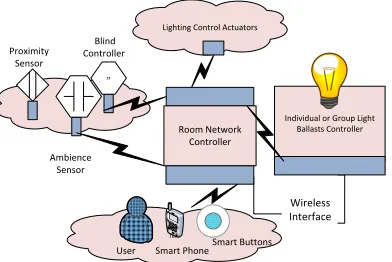
Figure 1. Generic Architecture for IoT Empowered Smart Lighting System
architecture decouples all functional units from RNC where core processing is carried out. The RNC can also interact with imaging sensors and process data to establish gesture based control.
We envision that RNC will form core of the room automa-tion network. It will implement machine learning, preemptive scheduling, gesture profile mapping, event prioritization and security policies. From communication theoretic perspective, it will also act as scheduler for medium access control. In order to ensure interoperability between all interacting components, RNC needs to implement a lightweight discovery and message exchange protocol. The format of exchange data should be determined considering the energy and latency requirements. Binary XML and Binary JSON are two potential candidates.
B. Interconnecting RNCs
A central problem to such system is a single point of failure, i.e. RNC. However, this can be avoided by using same wireless interface across most of the components. Some components such as smart phones can also be used as bridge due to availability of multiple wireless interfaces such as BLE and WIFI. The discovery and association protocol needs to be engineered to mitigate the single point of failure. If direct interaction of interacting components is sub-optimal, an alternative solution is to associate these components with neighboring RNC. This can be provisioned by creating home or building network which comprises of different RNCs. Such network will provision flexible association and monitoring for large buildings. The building network can then be connected to on site or remote application server where data analytic can be used to derive inferences and hence change the device profile to optimize energy consumption. Flexible association with RNCs will also provide capability of offloading certain events to less saturated RNCs. From communication perspec-tive, RNCs can coordinate activites in a better manner to minimize the co-channel interference. At this juncture, we should highlight that it is not necessary to employ same wireless interface to connect RNCs together as that of the components. RNCs can have dual interface and can hence use different interface for interacting with each other. For example, RNCs can be connected using WIFI or TV white spaces, while devices can be connected to RNCs using Zigbee or BLE. Fig. 2 highlights the key components of RNCs.
Device Medium Access Scheduler Self
Organization Engine
Event Prioritization
Engine
Event-Actuator/ Controller
Mapping Prediction
Engine
User defined
Profiles Device Profiles
Task Scheduler Learning & Cognition
Engine
Energy Management Engine
Discovery Attributes and Protocol
Medium Access Protocol for RCN
PHY Hardware
[image:5.612.78.274.60.191.2]Reconfigurati on Engine
Figure 2. Building Blocks of Room Network Controller
IV. WIRELESSINTERFACE
The last but the most important design issue is selection of the wireless interface for IoT based smart lighting system. Cur-rently a wide spectrum of wireless technologies are available to enable connectivity between devices. BLE, WIFI, Zigbee, ANT and near field communication (NFC) are few prominent connectivity solutions. It is beyond scope of this article, to survey all of these protocols. Interested readers are directed to [10] for a detailed comparison. In this article, our focus is to highlight only important yet less explored aspects of interface selection.
A. Co-existence and Interference
better performance in terms of co-existence by using frequency hopping. However, this comes at cost of increased delay as compared to Zigbee. The throughput attained by BLE is typically 3x times higher than Zigbee. Unfortunately, from the IoT perspective it seems that there is no ideal candidate. In fact, the solutions have to be tailored and customized by exploiting inherent hirer chary, possibility of prioritization and cooperation.
Similar to the cellular networks, self organization (SON) [1] algorithms should be developed with the prime consideration of interference. RCNs should have SON engines which will ensure efficient co-existence across the building area network. On the RCN level, a dynamic time division multiple access (D-TDMA) type protocol can be explored to provide the required functionality. One key limitation in current technolo-gies is the gap between the research and the commercial product. For example, the BLE protocol has four advertisement channels which are shared across devices. The collisions in these channels can be easily reduced by employing a simple threshold based sensing mechanism. Energy detectors which are frequently used in the context of cognitive radio networks are a straightforward choice. In brief, there exists a tremendous potential for adopting the techniques developed in context of cellular and cognitive radio networks by tailoring them for IoT.
B. Modeling Issues
In order to design interference resilient protocols, appro-priate modeling of aggregate interference is critical. The ag-gregate interference is characterized by the network geometry. While in the context of cellular and ad hoc networks geometric uncertainties can be captured using Poisson point process and its variants [2]. This is certainly not the case in IoT wireless networks. Devices are mostly located on the walls or ceilings, houses have fixed geometry and within a certain areas houses are laid according to a certain layout. Hence a simple Poisson process based model may not be very useful in characterizing the aggregate interference. It is more appropriate to have a statistical morphogenesis models for random cities [4]. While these models have been developed in context of gaming and interior design they are not analytically tractable. One ap-proach towards, tractable models will be based on developing parametrized models of spatial tessellation whose properties on different scales coincide with the information obtained from geographical information systems (GIS) at least in average sense. These models can then be used to predict and optimize the performance of IoT wireless networks.
V. CONCLUSIONS
In this paper, we explored the design space of IoT en-abled smart lighting systems from communication theoretic perspective. We highlighted the major components of such a lighting system and the corresponding design challenges associated with them. We then proposed a hirerichical wireless network architecture which is derived from the functionality of different building blocks of a smart lighting systems. Lastly, we discussed the choice of wireless interface from
the aggregate interference perspective and proposed possible pathways towards architecting the IoT enabled smart lighting systems.
REFERENCES
[1] O Aliu, Ali Imran, M Imran, and Barry Evans. A survey of self organisation in future cellular networks. 2012.
[2] J.G. Andrews, R.K. Ganti, M. Haenggi, N. Jindal, and S. Weber. A primer on spatial modeling and analysis in wireless networks. Commu-nications Magazine, IEEE, 48(11):156–163, 2010.
[3] Louis Atallah, Omer Aziz, Edward Gray, Benny Lo, and Guang-Zhong Yang. An ear-worn sensor for the detection of gait impairment after abdominal surgery.Surgical Innovation, 20(1):86–94, 2013.
[4] Thomas Courtat, Catherine Gloaguen, and Stephane Douady. Mathe-matics and morphogenesis of cities: A geometrical approach. Physical Review E, 83(3):036106, 2011.
[5] AB Ericsson. On the pulse of the network society.White Paper, 2013. [6] Martin Haenggi. Mean interference in hard-core wireless networks.
Communications Letters, IEEE, 15(8):792–794, 2011.
[7] Kaibin Huang and Vincent KN Lau. Enabling wireless power transfer in cellular networks: architecture, modeling and deployment.arXiv preprint arXiv:1207.5640, 2012.
[8] Qifan Pu, Sidhant Gupta, Shyamnath Gollakota, and Shwetak Patel. Whole-home gesture recognition using wireless signals. InProceedings of the 19th annual international conference on Mobile computing & networking, pages 27–38. ACM, 2013.
[9] Sebastian Schuon, Christian Theobalt, James Davis, and Sebastian Thrun. High-quality scanning using time-of-flight depth superresolu-tion. In Computer Vision and Pattern Recognition Workshops, 2008. CVPRW’08. IEEE Computer Society Conference on, pages 1–7. IEEE, 2008.