Western University Western University
Scholarship@Western
Scholarship@Western
Electronic Thesis and Dissertation Repository
4-20-2015 12:00 AM
Novel Physical Layer Authentication Techniques for Secure
Novel Physical Layer Authentication Techniques for Secure
Wireless Communications
Wireless Communications
Jiazi Liu
The University of Western Ontario Supervisor
Xianbin Wang
The University of Western Ontario
Graduate Program in Electrical and Computer Engineering
A thesis submitted in partial fulfillment of the requirements for the degree in Doctor of Philosophy
© Jiazi Liu 2015
Follow this and additional works at: https://ir.lib.uwo.ca/etd Part of the Systems and Communications Commons
Recommended Citation Recommended Citation
Liu, Jiazi, "Novel Physical Layer Authentication Techniques for Secure Wireless Communications" (2015). Electronic Thesis and Dissertation Repository. 2794.
https://ir.lib.uwo.ca/etd/2794
This Dissertation/Thesis is brought to you for free and open access by Scholarship@Western. It has been accepted for inclusion in Electronic Thesis and Dissertation Repository by an authorized administrator of
NOVEL PHYSICAL LAYER AUTHENTICATION TECHNIQUES FOR
SECURE WIRELESS COMMUNICATIONS
(Thesis format: Monograph)
by
Jiazi Liu
Graduate Program in Electrical and Computer Engineering
A thesis submitted in partial fulfillment
of the requirements for the degree of
Doctor of Philosophy
The School of Graduate and Postdoctoral Studies
The University of Western Ontario
London, Ontario, Canada
c
Acknowledgements
First of all, I would like to express my sincerest appreciation to my supervisor, Dr. Xianbin
Wang, for his encouragement, guidance and support from the initial to the final stages during
my doctoral studies. I have been lucky to have the opportunity to be Dr. Wang’s student, and
this work could never have been completed without his precious advice and constant
supervi-sion. I cannot describe how fruitful and enjoyable experiences I have learnt from him.
I would like to thank the members of my dissertation committee, Dr. Jean-Yves Chouinard,
Dr. Han-Ping Hong, Dr. Anestis Dounavis and Dr. Vijay Parsa, for their precious time reading
my thesis and valuable comments and suggestions.
My sincere thanks go to the faculty, staff and students I have met at Western University,
who have helped me to complete my studies and experience a very nice and pleasant life in
Canada. I would like to extend my thanks to all the colleagues in our research group for their
support in all respects during my studies. I am also grateful to all my friends who cared for me
and helped me to overcome the difficulties of the life.
Last but not the least, I would like to express my heartfelt thanks to my grandparents and
parents. Their endless love and support have always been the source of any motivation in my
life.
Abstract
Due to the open nature of radio propagation, information security in wireless
communi-cations has been facing more challenges compared to its counterpart in wired networks.
Au-thentication, defined as an important aspect of information security, is the process of verifying
the identity of transmitters to prevent against spoofing attacks. Traditionally, secure wireless
communications is achieved by relying solely upon higher layer cryptographic mechanisms.
However, cryptographic approaches based on complex mathematical calculations are ineffi
-cient and vulnerable to various types of attacks. Recently, researchers have shown that the
unique properties of wireless channels can be exploited for authentication enhancement by
pro-viding additional security protection against spoofing attacks. Motivated by the vulnerability of
existing higher-layer security techniques and the security advantages provided by exploring the
physical link properties, this study proposes five novel physical layer authentication techniques
to enhance the security performance of wireless systems.
In order to effectively and efficiently detect spoofing attacks in multipath fading
environ-ments, both spatial and temporal information of the signal propagation environment can be
exploited to provide a comprehensive analysis for improving authentication performance. A
ro-bust channel-based authentication scheme is proposed by using the unique properties of
chan-nel impulse response (CIR) and monitoring the difference between two adjacent CIRs under a
binary hypothesis testing. In fast fading environments, the reliability of CIR-based
authenti-cation is challenged by the fast channel variation. In order to solve the problem of unreliable
spoofing detection, we exploit a long-range channel predictor to predict future CIRs in order to
enhance the authentication performance. Multiple observations of CIR difference are used to
form the final decision in the authentication process. In practice, the performance of
channel-based physical layer authentication mechanisms is substantially degraded due to the large
chan-nel variation induced by the environmental changes and terminal mobility. In order to address
this issue, we integrate additional multipath delay characteristics into the channel-based
au-thentication framework, and propose an enhanced physical layer auau-thentication scheme based
on a two dimensional quantization method.
Furthermore, since the feasibility of traditional channel-based physical layer security schemes
is hampered by the severe channel conditions, a novel physical layer authentication scheme is
proposed by exploiting the advantages of amplify-and-forward (AF) cooperative relaying. The
essence of the proposed scheme is to select the best relay among multiple AF relays, such that
the legitimate transmitter would experience better channel conditions than a spoofer. Towards
this goal, two best relay selection schemes are developed based on the notion of maximizing
the SNR ratios of the legitimate link to the spoofing link at the destination and relays,
respec-tively. To evaluate the performance, we define our performance metrics based on the outage of
effective SNR ratios and the probability of spoofing detection.
To prevent eavesdropping attacks in conventional orthogonal frequency division
multiplex-ing (OFDM) systems, a continuous physical layer authentication system is developed based
on an adaptive OFDM system with time-varying transmitter-receiver interaction enabled by
the precoded cyclic prefix (PCP) and outlined in the final part of the dissertation. Instead of
traditional CP in an OFDM system, PCP sequences are employed as guard intervals and
sig-naling links as well, which are generated with the same temporal and spectral characteristics
of data-carrying OFDM signals in order to conceal system parameters to adversaries.
Keywords: Wireless communications, physical layer authentication, CIR, channel
predictor, 2-D quantization, AF cooperative relaying, best relay selection, PCP-OFDM.
Contents
Acknowledgements ii
Abstract iii
Table of Contents v
List of Figures x
List of Tables xii
List of Appendices xiii
List of Abbreviations xiv
1 Introduction 1
1.1 Research Motivations and Objectives . . . 1
1.2 Dissertation Contributions . . . 4
1.3 Dissertation Outline . . . 6
2 Security Challenges and Solutions in Wireless Communications 9 2.1 An Overview of Wireless Security Issues . . . 9
2.1.1 Security Challenges of Wireless Communications . . . 9
2.1.2 Major Security Requirements . . . 10
2.2 Traditional Wireless Security Techniques . . . 11
2.2.1 Seven Layers of the OSI Model and Their Security Vulnerabilities . . . 11
2.2.2 Security Limitations of Traditional Approaches . . . 16
2.3 Physical Layer Security Techniques . . . 17
2.3.1 Wireless Channel-Based Physical Layer Security . . . 18
2.3.2 RF-DNA Based Physical Layer Security . . . 20
2.3.3 Diversity Technique-Based Physical Layer Security . . . 21
2.3.3.1 PHY Layer Security in Multiple-Antenna Systems . . . 21
2.3.3.2 Cooperative Relaying and Security Enhancement . . . 22
2.4 Wireless OFDM System and its Security Vulnerabilities . . . 26
2.4.1 OFDM Introduction and System Modeling . . . 27
2.4.2 Security Weaknesses of OFDM . . . 30
2.5 Summary . . . 32
3 Noise-Mitigated CIR-Based Physical Layer Authentication 33 3.1 Introduction . . . 33
3.2 System Modeling . . . 35
3.2.1 Channel Model . . . 35
3.2.2 Hypothesis Testing . . . 36
3.3 CIR-based Authentication . . . 37
3.3.1 Noise Impact on CIR Difference Evaluation . . . 37
3.3.2 Adaptive Threshold for Authentication . . . 39
3.4 Simulation Results . . . 42
3.4.1 Simulation Scenarios . . . 42
3.4.2 Numerical Results and Discussion . . . 42
3.5 Summary . . . 43
4 CIR-Based Authentication Enhancement Using Channel Predictor 47 4.1 Introduction . . . 48
4.2 Authentication Model . . . 50
4.2.1 Channel Model . . . 50
4.2.2 Hypothesis Testing . . . 51
4.3 Channel Prediction Based Authentication Enhancement . . . 52
4.3.1 Noise-Mitigated CIR Estimates . . . 53
4.3.2 Channel Predictor based on CIR estimates . . . 54
4.3.3 Authentication Analysis Using Channel Predictor . . . 59
4.3.4 Multiple Observations of CIR Difference . . . 60
4.3.5 Parameter Optimization . . . 63
4.4 Simulation Results . . . 64
4.4.1 Simulation Scenarios . . . 64
4.4.2 Numerical Results and Discussion . . . 64
4.5 Summary . . . 66
5 CIR-Based Authentication Enhancement Using 2-D Quantization 68 5.1 Introduction . . . 69
5.2 System Model . . . 71
5.2.1 Channel Model and Variations . . . 72
5.2.2 Channel Estimates . . . 74
5.2.3 Hypothesis Testing based on 2-D Quantization . . . 75
5.3 Statistical Analysis of 2-D Quantization under Two Hypotheses . . . 77
5.3.1 Under HypothesisH0 . . . 77
5.3.2 Under HypothesisH1 . . . 81
5.4 Performance Analysis for Authentication . . . 84
5.4.1 Derivation of FAR and PD . . . 84
5.4.2 Parameter Optimization . . . 87
5.5 Benchmark Method and Simulation Results . . . 87
5.5.1 Performance Analysis for Benchmark Method . . . 89
5.5.2 Numerical results . . . 91
5.6 Summary . . . 93
6 Channel-based Authentication Enhancement Using AF Cooperative Relays 99 6.1 Introduction . . . 100
6.2 System Model Based on AF Cooperative Relaying . . . 102
6.2.1 Direct Transmission (DT) . . . 104
6.2.2 Amplify-and-Forward (AF) . . . 105
6.3 Best Relay Selection . . . 107
6.4 Performance Analysis . . . 109
6.4.1 Outage Analysis of First Relay Selection Scheme . . . 110
6.4.2 Outage Analysis of Second Relay Selection Scheme . . . 112
6.4.3 Authentication Analysis . . . 119
6.5 Simulation Results . . . 122
6.5.1 Example 1 : Effect of Alice-Eve distance . . . 123
6.5.2 Example 2 : Effect of the number of available relays . . . 127
6.6 Summary . . . 129
7 Continuous Physical Layer Authentication Using PCP-OFDM System 131 7.1 Introduction . . . 132
7.2 Transmitter Design of Continuous Physical Layer Authentication System . . . . 133
7.2.1 PCP-OFDM Transmitter . . . 134
7.2.2 PCP Generation . . . 135
7.3 Receiver Design of Continuous Physical Layer Authentication System . . . 137
7.3.1 PCP-OFDM Receiver . . . 137
7.3.2 PCP Detection . . . 141
7.4 Performance Analysis for Cross Layer Authentication . . . 144
7.4.1 Stealth Performance . . . 144
7.4.2 System Robustness Performance . . . 146
7.4.3 Cross-layer Optimization . . . 148
7.5 Simulation Results . . . 149
7.6 Summary . . . 150
8 Conclusions and Future Work 154 8.1 Conclusions . . . 154
8.2 Future Work . . . 157
Bibliography 158
A Derivation of the ProbabilityP(S =k) 172
B Derivation of CDF ofWi 174
C Derivation of IntegralF(t) 176
Curriculum Vitae 177
List of Figures
2.1 The OSI model with examples of applications and security vulnerabilities. . . . 16
2.2 An adversarial multipath environment including multiple scattering surfaces. . . 19
2.3 An illustration of direct transmission and cooperative transmission. . . 24
2.4 Example of an OFDM symbol. . . 28
2.5 ISI cancelation. . . 29
2.6 The block diagram of an OFDM system. . . 30
3.1 CIR-based Authentication in the “Alice-Bob-Eve” Scenario. . . 35
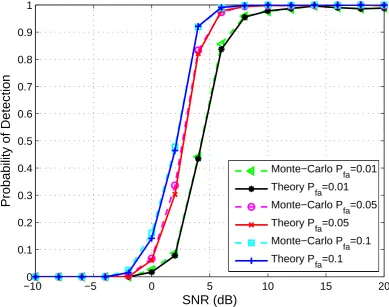
3.2 Adaptive threshold values for authentication versus SNRs under different false alarm rates. . . 44
3.3 Probability of detection versus SNRs at different false alarm rates. . . 45
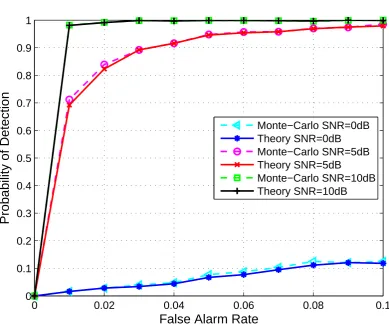
3.4 Receiver operating characteristic for the CIR-based authentication under three different SNRs. . . 46
4.1 The envelope of CIR for one path component in the multipath Rayleigh fading channel under two different maximum Doppler frequencies. The sampling rate fs= 1MHz. . . 55
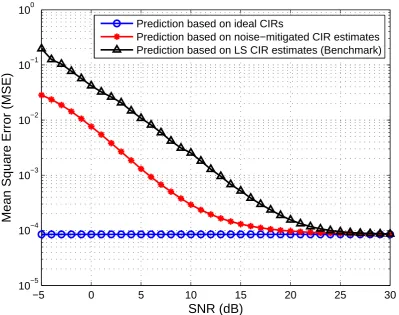
4.2 MSE of the total error versus SNR values under three different scenarios. . . 57
4.3 The procedure of achieving multiple CIR differences. . . 61
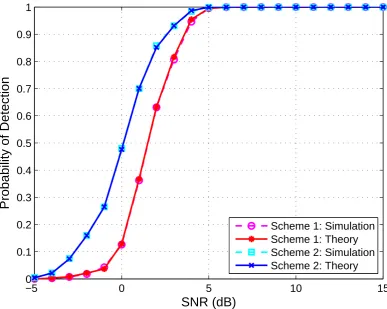
4.4 Probability of detection versus SNRs at Pf a =0.1. . . 65
4.5 Receiver operating characteristic (ROC) at SNR of 5dB. . . 66
5.1 Channel model and channel variations in the dimensions of amplitude and time delay. . . 72
5.2 Probability of detection and false alarm rate under various threshold values of
δT andδZ, respectively. . . 88
5.3 False alarm rate versus different values ofθunder the optimized threshold val-ues. . . 94
5.4 False alarm rate versus different SNRs under the optimized threshold values. . 95
5.5 Probability of detection versus different values of θ under the comparison of theory and Monte Carlo. . . 96
5.6 Probability of detection versus different SNRs under the comparison of theory and Monte Carlo. . . 97
6.1 Our cooperative system with multiple relays under the “Alice-Bob-Eve” sce-nario. The best relay is selected based on the proposed relay selection schemes. 103 6.2 Comparison of outage probabilities based on closed-form expressions and Monte-Carlo simulations. . . 120
6.3 Outage probabilities versus Alice-Eve distance under different values of trans-mit power ratio. . . 124
6.4 PD versus Alice-Eve distance under different values of transmit power ratio. . 125
6.5 PD versus Alice-Eve distance under different values of FAR. . . 126
6.6 Outage probability versus the number of available relays under different values of transmit power ratio. . . 128
6.7 PD versus the number of available relays under different FAR values. . . 129
7.1 Transmitter block diagram of the proposed continuous authentication system. . 134
7.2 Sparse input to OFDM modulator used for PCP sequence generation. . . 136
7.3 Receiver block diagram of the proposed continuous authentication system. . . . 138
7.4 Auto-correlation of PCP-OFDM, CP-OFDM and AWGN. . . 145
7.5 PCP detection error rate under different lengths of PCP. . . 151
7.6 Overall detection error rate under different lengths of PCP. . . 152
7.7 Overall detection error rate under three different channels. . . 153
List of Tables
3.1 Simulation Parameters . . . 43
5.1 Optimal values of parameters under different values ofθ . . . 92
5.2 Optimal values of parameters under different SNRs . . . 93
List of Appendices
Appendix A Derivation of the ProbabilityP(S =k) . . . 172
Appendix B Derivation of CDF ofWi . . . 174
Appendix C Derivation of IntegralF(t) . . . 176
List of Abbreviations
Abbreviation Description First use
AF Amplify-and-Forward
. . . .
5ARP Address Resolution Protocol
. . . .
14AWGN Additive Gaussian White Noise
. . . .
146CDF Cumulative Distribution Function
. . . .
42CF Compress-and-Forward
. . . .
23CFR Channel Frequency Response
. . . .
2CFO Carrier Frequency Offset
. . . .
2CIR Channel Impulse Response
. . . .
2CJ Cooperative Jamming
. . . .
26CP Cyclic Prefix
. . . .
4CSI Channel State Information
. . . .
2DF Decode-and-Forward
. . . .
23DoS Denial of Service
. . . .
31DT Direct Transmission
. . . .
104FAR False Alarm Rate
. . . .
6FFT Fast Fourier Transform
. . . .
27ICI Inter-Carrier Interference
. . . .
137IDFT Inverse Discrete Fourier Transform
. . . .
27IEEE Institute of Electrical and Electronics Engineers
. . . .
4IFFT Inverse Fast Fourier Transform
. . . .
27IP Internet Protocol
. . . .
14ISI Inter-symbol Interference
. . . .
3LLC Logical Link Control
. . . .
14LOS Line-of-Sight
. . . .
36LS Least Squares
. . . .
52LTE Long-Term Evolution
. . . .
4MAC Media Access Control
. . . .
14MIMO Multiple-Input Multiple-Output
. . . .
21MISO Multiple-Input Single-Output
. . . .
21MSE Mean Square Error
. . . .
39OFDM Orthogonal Frequency Division Multiplexing
. . . .
3OSI Open Systems Interconnection
. . . .
1PCP Precoded Cyclic Prefix
. . . .
6PD Probability of Detection
. . . .
6PDF Probability Density Function
. . . .
79QoS Quality of Service
. . . .
14RF Radio Frequency
. . . .
10RF−DNA Radio Frequency Distinct Native Attribute
. . . .
2RIP Routing Information Protocol
. . . .
14ROC Receiver Operating Characteristic
. . . .
43RSS Received Signal Strength
. . . .
20SER Symbol Error Rate
. . . .
146SIMO Single-Input Multiple-Output
. . . .
21SNR Signal-to-Noise Ratio
. . . .
6TCP Transmission Control Protocol
. . . .
13UDP User Datagram Protocol
. . . .
13WiMax Worldwide Interoperability for Microwave Access
. . .
4WLAN Wireless Local Area Network
. . . .
4WSNs Wireless Sensor Networks
. . . .
17Chapter 1
Introduction
1.1
Research Motivations and Objectives
Information security is critical for any communication systems. Compared to wired
net-works, wireless communication networks face more security challenges primarily due to the
nature of openness [1]. Moreover, high-level security mechanisms in wired communications
cannot be directly applied in wireless communication systems. Therefore, it is certainly worth
investigating techniques to secure wireless communications. Traditionally, wireless security
techniques are achieved by relying solely on the upper layers of the open systems
intercon-nection (OSI) network model. However, existing higher-layer security mechanisms are
de-signed based on the computational hardness of mathematical functions, which are not feasible
for practical wireless communication systems with limited resources. Additionally, traditional
cryptographic techniques are susceptible to various types of attacks and do not directly leverage
the unique properties of the wireless medium to address security threats. To this end, physical
layer security has drawn a lot of attention in recent years; this security is achieved based on
the lowest layer of the OSI model by exploiting physical link properties to provide additional
security protection [2].
In wireless communications, spoofing is a severe security threat due to the broadcast
na-ture of radio signal propagation, in which adversaries attempt to impersonate the legitimate
user within a network in order to gain illegitimate advantages [1]. In order to defend systems
against spoofing attacks, the receiving end should be equipped with authentication
2 Chapter1. Introduction
nisms, which provide systems with the ability of validating the identities of involved users.
By exploiting the advantages of securing wireless transmissions at the physical layer, a variety
of physical layer authentication schemes have been proposed by using the inherent properties
of wireless channels [3–12] or the imperfections of hardware devices [13–17]. The
funda-mental principle behind channel-based physical layer authentication is that the spatial, spectral
and temporal properties of the wireless fading channel have natural randomness and they are
rapidly decorrelated between different geographic locations. As a consequence, the properties
of the channel link between legitimate terminals are only available to the intended receiver
but cannot be duplicated by adversaries. Additionally, radio-frequency distinct native attribute
(RF-DNA) fingerprint-based physical layer authentication exploits device impairments, such as
I/Q modulator imbalance and carrier frequency offset (CFO), for device discrimination. These
device imperfections, which are unclonable and unforgeable to intruders, are caused by
manu-facturing variability. Therefore, the intrinsic characteristics of the physical layer attributes can
be adopted as a way to improve the authentication performance of wireless communication
systems via the physical layer.
Based on a comprehensive study of channel-based physical layer authentication,
exploit-ing the physical layer properties of the wireless channels brexploit-ings the potential to enhance
au-thentication performance in spoofing detection. Mathematically, channel-based physical layer
authentication is formulated as a binary hypothesis testing problem. As the channel state
in-formation (CSI) measurements over different links can be dramatically distinguished at the
receiving end, two hypotheses are defined based on the difference of adjacent CSI
measure-ments in time. In the presence of spoofers, the final decision is made by comparing the channel
difference with a threshold in order to determine if a spoofing attack has occurred. In [6, 8, 9],
the characteristics of channel frequency response (CFR) were well studied for authentication
enhancement; however, the CFR analysis in the received signal fails to exploit the spatial
in-formation related to the signal propagation environment. Thus, effective, efficient and robust
channel-based authentication approaches are needed to defend against spoofing attacks.
In rich scattering environments, it is noteworthy that the properties of channel impulse
response (CIR) represent the spatially geographical locations of wireless terminals.
1.1. ResearchMotivations andObjectives 3
over time. Therefore, the characteristics of CIR of a multipath fading channel represent the
spatial and temporal information related to the signal propagation environment, which can
be exploited to develop robust physical layer authentication schemes. However, in fast
fad-ing environments, the processfad-ing delay and outdated CIR measurements may result in large
channel variation. Moreover, the variation between two successive CIRs can also be caused
by the movement of mobile terminals or environmental changes. As a result, the
reliabil-ity of channel-based physical layer authentication schemes is challenged by the fast channel
variation. Also, the robustness of decision-making for authentication is degraded as the final
decision is just based on a single observation of the channel variation. Therefore, we argue
that reliable channel-based authentication approaches are needed to improve the authentication
performance under a fast fading environment.
In practical wireless communication systems, it has been noticed that user mobility may
affect and complicate the functioning of applications and protocols. In high mobility
envi-ronments, the performance of CIR-based physical layer authentication schemes is significantly
degraded due to the large channel variation induced by the environmental changes and terminal
mobility. It is therefore important to enhance the performance of CIR-based authentication in
high mobility environments.
Physical layer authentication techniques for wireless communications can prevent
ma-licious attacks without upper layer data encryption. However, the reliability of traditional
channel-based physical layer authentication schemes is hampered by severe channel
condi-tions. In order to overcome this limitation, the application of multiple antennas has been
ex-plored to combat channel fading and improve the performance of secure wireless
communica-tions. However, as a result of cost and size limitations of multiple antennas, these scenarios are
rarely implemented in practice. For the practical implementation of channel-based
authenti-cation systems, efficiently exploiting the advantages of multiple antenna arrays to enhance the
performance of spoofing detection has yet to be investigated.
Orthogonal frequency division multiplexing (OFDM) is a multiplexing method in which
data are transmitted over the equally spaced, overlapped carrier frequencies. The advantages
of OFDM include: 1) It can achieve high data rates with great bandwidth efficiency and
4 Chapter1. Introduction
help of cyclic prefix (CP); 3) Channel equalization becomes much simpler compared to single
carrier systems. Due to these advantageous features, OFDM has been included in the
physi-cal layer specifications of a large variety of wireless standards, from the well-established and
widespread wireless local area network (WLAN) transmissions of the family Institute of
Elec-trical and Electronics Engineers (IEEE) 802.11 to the more recent worldwide interoperability
for microwave access (WiMax) and long-term evolution(LTE) protocols. However,
conven-tional OFDM systems do not have inherent security features due to the distinct time and
fre-quency characteristics of OFDM signals. In order to secure OFDM-based wireless systems,
conventional higher-layer cryptographic techniques provide secrecy without considering the
lower layer. The virtual physical layer transparency brings security vulnerability to the
infor-mation protected by higher-layer cryptographic techniques, as the inforinfor-mation can often be
deciphered by using exhaustive trial. Consequently, an additional physical layer based security
approach is necessary to enhance the security of OFDM systems.
Considering the aforementioned wireless security issues, our contributions to
authentica-tion enhancement in wireless communicaauthentica-tions are discussed in the next secauthentica-tion.
1.2
Dissertation Contributions
The main contributions of this dissertation are summarized as follows:
• A comprehensive survey of existing wireless security techniques is illustrated and the weaknesses of the existing state-of-the-art security approaches are explained in detail.
Security vulnerabilities of OFDM-based wireless networks are discussed as well. These
wireless security issues were the motivation for five of the contributions of the
disserta-tion.
• A robust physical layer authentication scheme is proposed to detect anomalous behaviors through the statistical analysis of the inherent properties of CIR difference in a
time-varying multipath environment. The variation between two consecutive CIR estimates
from a transmitter of interest is monitored at the receiver in order to distinguish the
1.2. DissertationContributions 5
of noise and interference from wireless environments, we develop a new test statistic
based on the difference between noise-mitigated CIRs.
• In fast fading environments, the reliability of CIR-based physical layer authentication is challenged by the fast channel variation. To address this issue, a long-range channel
predictor is utilized to predict future CIRs in order to compensate for the effects of fast
channel variation in the authentication performance. Moreover, by exploiting the
long-range channel predictor, multiple CIR differences are calculated by the receiver in an
observation window, and a final decision is formed based on the multiple observations of
CIR differences in order to increase the robustness of decision-making for authentication.
To find an optimal threshold in decision-making, the ratio of the threshold to the window
size is optimized by minimizing the total error rate subject to false alarm constraints
under different channel conditions.
• In a high mobility environment, the performance of spoofing detection for CIR-based physical layer authentication is degraded significantly due to the large variation in the
channel amplitude over time. In contrast with the temporal variation of channel
am-plitude, another characterization of wireless channels, viz., the multipath delay spread,
is relatively stationary over long time intervals [18]. More importantly, multipath
de-lay spread profiles are distinct from one location to another if the locations are spatially
separated. Therefore, we propose an enhanced CIR-based physical layer
authentica-tion scheme by integrating addiauthentica-tional multipath delay characteristics into the CIR-based
authentication framework. A two-dimensional quantization method is developed to
pre-process the temporal channel variations in the dimensions of channel amplitude and path
delay. Based on the quantization method, the decision rule in the authentication process
is simplified.
• Motivated by the security advantages of cooperative transmissions, a novel physical layer authentication scheme is developed by exploiting the advantages of amplify-and-forward
(AF) cooperative relaying. Considering multiple trusted AF relays in the scenario, only
one relay is selected to provide the best end-to-end path between legitimate end nodes
6 Chapter1. Introduction
developed based on the notion of maximizing the signal-to-noise ratio (SNR) ratios of
the legitimate link to the spoofing link at the destination and relays, respectively. In
order to evaluate the performance of the proposed scheme, we define our performance
metrics in terms of the outage probability of the effective SNR ratios and the probability
of spoofing detection.
• In order to enhance the security of OFDM systems, a new continuous physical layer authentication system is proposed based on an adaptive OFDM platform by exploiting
precoded cyclic prefix (PCP) instead of conventional CP to convey time-varying
trans-mission parameters and secure the legitimate transtrans-missions as well. The PCP sequences
are generated with the same time and frequency domain characteristics as data-carrying
OFDM signals in order to be concealed from eavesdroppers. By using the PCP, the
trans-mitter can adjust its operating parameters continuously and only share the link adaptation
information with legitimate receivers. Additionally, cross-layer design is utilized to
con-tinuously generate optimal PCPs according to dynamic communication conditions.
1.3
Dissertation Outline
The following details the organization of remaining chapters of this dissertation.
Chapter 2 includes a comprehensive discussion on wireless communication security,
in-cluding wireless security issues and countermeasures, as well as major security requirements
and security design principles. Additionally, the security vulnerabilities of wireless OFDM
systems are discussed after a general introduction of OFDM technology.
In Chapter 3, a robust physical layer authentication scheme is proposed by studying the
statistical analysis of the inherent properties of CIR in a time-varying multipath environment.
Specifically, a new test statistic is developed based on the variation between two consecutive
noise-mitigated CIRs in order to distinguish between different transmitters for authentication
purpose. Based on the defined authentication test, false alarm rate (FAR) and probability of
detection (PD) are theoretically derived for evaluating the performance of the proposed scheme.
To address the problem of unreliable spoofing detection caused by fast channel variation,
1.3. DissertationOutline 7
negative impacts of fast channel variation in Chapter 4. By exploiting the long-range channel
predictor, multiple CIR differences are achieved by the receiver in an observation window to
form a final decision under a simple hypothesis testing. In order to optimize the threshold of
decision-making, an optimization problem is defined based on minimizing the total error rate
under false alarm constraints.
In Chapter 5, we develop an enhanced physical layer authentication scheme by
integrat-ing additional multipath delay characteristics into the CIR-based authentication framework. A
two-dimensional quantization method is developed to preprocess the temporal channel
varia-tions in the dimensions of channel amplitude and path delay. More specifically, two one-bit
quantizers are used in the two dimensions, respectively, to quantize the difference between
ad-jacent channel realizations (i.e., channel amplitudes and time intervals). The quantizer output
becomes identical if the difference is larger than a threshold, otherwise it is zero. By exploiting
the quantization method, the decision rule for authentication test is simplified. In order to
ver-ify the performance of the proposed authentication scheme, FAR and PD are defined and their
closed-form expressions are derived as well.
In Chapter 6, a novel physical layer authentication scheme is proposed based on an AF
cooperative relaying system, where one best relay is selected to provide the best end-to-end
path between the source and destination in the presence of a spoofer. To achieve this goal,
two best relay selection schemes are developed. Specifically, the first scheme is based on the
notion of maximizing the end-to-end SNR ratio of the legitimate link to the spoofing link, while
the second scheme is based only on the first-hop SNR ratio in order to reduce computational
complexity and resource consumption. For performance analysis, the outage of the effective
SNR ratios and the probability of spoofing detection are derived.
A new continuous physical layer authentication technique with time-varying transmission
parameters is investigated in Chapter 7 to enhance the security of conventional OFDM
sys-tems. A PCP sequence, which introduces an additional signaling link to carry the time-varying
transmission parameters, is employed in each OFDM symbol for physical layer authentication.
The new PCP sequences are generated with the same time and frequency domain
character-istics as data-carrying OFDM signals to be concealed from unauthorized receivers. With the
8 Chapter1. Introduction
successfully decode the PCP sequence and obtain necessary parameters to decode OFDM data.
In addition, a cross-layer design approach is introduced to continuously generate optimal PCPs
according to dynamic communication conditions.
Chapter 2
Security Challenges and Solutions in
Wireless Communications
Advances in communications and networking technologies are rapidly making ubiquitous
network connectivity a reality. Wireless networking technologies bring convenience into our
lives, whereas the open nature of the wireless medium and limited options of transmission
techniques have introduced many security challenges that do not exist in the wired networks.
In this chapter, security issues in wireless communications are illustrated and addressed, based
on a comprehensive literature survey of existing wireless security techniques. Additionally, the
system modeling of OFDM is given, and the vulnerabilities of conventional OFDM systems
for secure data transmission are discussed as well.
2.1
An Overview of Wireless Security Issues
2.1.1
Security Challenges of Wireless Communications
Security is an implicit part of any communication system that is relied upon for the
trans-mission of private information. Consequently, the reliability to share secret information in the
presence of malicious attackers is critically important. From a general perspective, security is
concerned with unauthorized users trying to access, forge or modify messages intended for
le-gitimate receivers. In wired networks, signals travel through the wires, which makes the wired
10 Chapter2. SecurityChallenges andSolutions inWirelessCommunications
communications secure as long as only authorized users have access to the data. Unlike wired
data communications, wireless communications is based on electromagnetic waves using radio
frequencies (RF) propagating through open space, which provides the freedom of user mobility
and the flexibility of data transmission, but also brings significantly more security challenges
than traditional wired communications. Therefore, secure wireless communications becomes
critical for wireless data transmission.
There are many factors contributing to the increasing security challenges in wireless
com-munications. Primarily, the broadcast nature of the wireless medium makes transmitted signals
available to any receiver within the transmission range, which leads to easy access to
adver-saries. Moreover, the mechanisms of high-level security in a wired network cannot be directly
applied in wireless scenarios. Additionally, limited processing power is incurred by the limited
space, cost and power constraints of wireless devices. Considering these essential limitations
of wireless communications, security mechanisms for wireless systems should be developed to
address increasing threats.
2.1.2
Major Security Requirements
Security aims at defending information from various malicious attacks, such as
eavesdrop-ping [2], communications jamming [20], injection and modification of data [20], traffic
anal-ysis [21], and spoofing [22]. Generally, the requirements of security can be mainly divided
into six categories, i.e., confidentiality, authenticity, integrity, availability, non-repudiation and
privacy. Their functions are explained as follows:
• Confidentiality: This is also known as secrecy, which means that only authorized users can access information. This level of confidentiality should be maintained while data is
transmitted from source to destination within the network.
• Authenticity: This means an ability of a system to validate the identities of involved users and establish trust in provided information.
• Integrity: This means that only authorized users can modify data in authorized ways. A system should ensure completeness as well as accuracy in all its components and prevent
2.2. TraditionalWirelessSecurityTechniques 11
• Availability: This means that authorized users can access data and resources of a system in a timely manner, which ensures the reliability of all components in a system. Failing
to meet this feature can cause a denial of service.
• Non-repudiation: This means an ability of a system to prove a certain message sent by a sender or received by a receiver, an action cannot be falsely denied by either the sender
or receiver.
• Privacy: This is usually addressed separately from confidentiality, which means an abil-ity of a system to protect the identities of users and enable feasible control of one’s
personal information by users.
In the implementation of every security mechanism, one or several of these principles are
required to assure the secrecy of communications systems. In order to address the
afore-mentioned security issues in wireless communications, effective, efficient and robust security
approaches are required. In the next section, a comprehensive literature review on existing
wireless security techniques is presented from two perspectives, i.e., traditional security and
physical layer security.
2.2
Traditional Wireless Security Techniques
2.2.1
Seven Layers of the OSI Model and Their Security Vulnerabilities
The OSI model was introduced by the International Standards Organization in 1978, as a
first step toward the requirement of internationally standardized protocols for data
communi-cations. It defines a hierarchical architecture that logically separates networking functions
re-quired to support system-to-system communications. Consequently, each layer can be viewed
as an independent module. Due to this layered architecture, network problems can be more
eas-ily solved through a divide-and-conquer methodology, and a protocol can also be theoretically
substituted by another at the same layer, as can network services.
From a high-level application perspective, data is sent down the stack layer-by-layer in one
12 Chapter2. SecurityChallenges andSolutions inWirelessCommunications
next station and back up the hierarchy. In what follows, the seven layers of the OSI model
are illustrated (starting from the top layer) in terms of their general functionality and security
vulnerabilities.
• Application layer:
The application layer is the top layer of the OSI model and refers to the user interface
supporting the end user functions. It provides a variety of high-level functions such as
file transfer, access and management, virtual terminal, electronic mail and messaging
handling, and common management information protocol. It also provides application
access security checking and information validation.
From the security perspective, the open-ended nature of the application layer brings
var-ious threats to the end of the stack. One of the primary threats at the application layer is
that the weak security design of applications allows unauthorized users to freely use the
application resources. Applications may establish identity or set privilege over
untrust-worthy channels. However, this “all or nothing” approach of security controls, which
forces administrators to give either unlimited access or none at all, results in either
ex-cessive or insufficient access.
• Presentation layer:
The presentation layer is responsible for converting incoming and outgoing data from
one presentation format to another, where the syntax and semantics of the transmitted
information are managed, making it possible for different computers to communicate
with each other. More specifically, this layer provides various communications services
related to information representation, such as data compression and encryption.
Vulnerabilities at the presentation layer are mainly caused by weaknesses or
shortcom-ings in the implementation of the presentation layer functions. In particular, format string
vulnerability takes advantage of the poor handling of unexpected incoming data, which
can crash applications, surrender the controls of data format and transmission, or
ex-ecute arbitrary instructions. Additionally, the flaws of cryptography protocols may be
2.2. TraditionalWirelessSecurityTechniques 13
• Session layer:
The session layer is responsible for session handling between applications by
establish-ing, maintainestablish-ing, synchronizestablish-ing, controlling and terminating connections. It also
pro-vides security services, such as login passwords and exchange of user IDs, to control
access to session information.
Since the session layer is concerned with the control of access to applications, it falls prey
to the weaknesses of handling passwords and authentication. In particular,
password-based access is prone to attackers, who are allowed to use unlimited and undetected
attempts to guess the passwords. Additionally, most of protocols at this layer lack strong
authentication, as they allow lower layers to intercept their credentials.
• Transport layer:
The transport layer is concerned with the transmission by breaking up data streams from
the upper layer into packets passing to the lower layer, and reassembling the incoming
data packets from the lower layer back into a coherent stream for the upper layer, without
modification, loss or duplication during the transmission. This layer provides the
end-to-end communications control, and the aforementioned transmission needs are achieved
based on transport protocols such as transmission control protocol (TCP) and user
data-gram protocol (UDP). Data flow control and error checking are provided as well at this
layer.
Most transmission protocols usually do not implement strong controls to identify the
source of a transmission, which leads to interruption or redirection of the flow of the
transmission. For instance, UDP protocol can be trivially spoofed due to a complete lack
of sequencing or state at the transport layer. In addition, the use and re-use of ports for
multiple functions is another security vulnerability of the transport layer.
• Network layer:
The network layer deals with the global network topology to handle the operation of
taking packets from source to destination over multiple possible paths, where basic
In-14 Chapter2. SecurityChallenges andSolutions inWirelessCommunications
ternet protocol (IP) addresses and routing tables to identify nodes and construct paths
over the Internet. Address resolution protocol (ARP) is implemented to convert the IP
addresses to the link layer addresses, routing information protocol (RIP) is utilized to
distribute routing information within the network, and IP protocol is used to identify the
transmission protocol (such as TCP or UDP) from the higher layer in order to direct the
higher layer how to handle the incoming data. Additionally, if all the networks send
packets at the same time, such congestion is managed by the network layer. More
gen-erally, the network layer provides the quality of service (QoS) such as transmitting time,
jitter and delay.
To achieve the aforementioned goals at the network layer, protocols at this layer lack
necessary protection against malicious attacks. In particular, most routing protocols have
only a basic level of security, which can be exploited by spoofers propagating false
net-work topology. Additionally, most netnet-work layer protocols lack authenticating source
addresses, thereby unsecured third parties located therein can use false addresses to
im-personate the source.
• Data link layer:
The data link layer is concerned with frame transmission between two directly connected
local devices, which has two sublayers, i.e., logical link control (LLC) and media access
control (MAC). The main tasks of this layer are (1) to split the input bits from the
physi-cal layer into data frames so that no apparent errors can be seen by the network layer, and
(2) to encapsulate the network layer data packets into frames structured based on MAC
addresses whose headers contain the source and destination addresses. This layer
pro-vides error control, frame synchronization and flow control for the physical level based
on the attached link-layer headers.
Due to the insecure addressing structure and weak encryption algorithms, the data link
layer is prone to several types of attacks [23]. For instance, ARP spoofing can be
achieved by an attacker because the ARP protocol, as a stateless protocol, does not
provide a method to a host to authenticate the peer from which the packet originated.
2.2. TraditionalWirelessSecurityTechniques 15
they can be easily modified. Additionally, link-layer encryption has been used to
pro-tect information in transit between two points. However, a lack of authentication in the
transmission link can cause vulnerability at the link when messages must be transmitted
between unauthorized hosts.
• Physical layer:
The physical layer is the lowest layer of the OSI model and responsible for
transmit-ting raw bits across a communication medium. This layer is concerned with the actual
data encoding, modulation, synchronization and transmission through the network at the
electrical and physical level.
Reviewing the flow of information through the OSI model, we can see that all of the
above layers depend upon the physical layer for data delivery. Therefore, the physical
layer is critical to data communications. However, it is the most vulnerable and
change-able among the seven layers, as all information security assets are based on the physical
security. For instance, from a networking perspective, communications can be easily
stopped if one can disconnect a device from the network or physically switch it with
another. Additionally, errors at the physical layer can be kept and passed through all the
above layers [24].
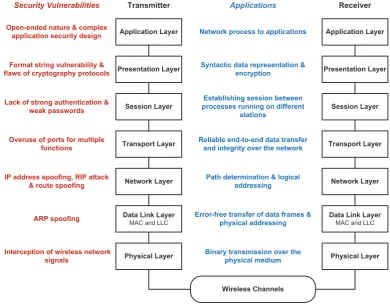
Figure 2.1 illustrates the OSI model referred to as a layered protocol architecture, where a
specific set of network functions is allocated to each layer that provides services to the upper
layer and receives services from the lower layer. From the security point of view, security
pro-vision of each layer of the OSI model can be achieved independently, and secure data
transmis-sion is accomplished generally based on the use of strong authentication and data encryption
at higher layers. However, these higher-layer based security solutions are vulnerable to various
types of attacks. It is also noteworthy to mention that higher layers cannot be secured without
secured lower layers. Therefore, secure data transmission at the lowest layer can fundamentally
16 Chapter2. SecurityChallenges andSolutions inWirelessCommunications
Presentation Layer
Session Layer
Network Layer
Data Link Layer
MAC and LLC
Physical Layer Transport Layer
Application Layer Network process to applications
Syntactic data representation & encryption
Establishing session between processes running on different
stations
Reliable end-to-end data transfer and integrity over the network
Path determination & logical addressing
Error-free transfer of data frames & physical addressing
Binary transmission over the physical medium
Interception of wireless network signals
ARP spoofing IP address spoofing, RIP attack
& route spoofing Overuse of ports for multiple
functions
Lack of strong authentication & weak passwords Format string vulnerability & flaws of cryptography protocols
Open-ended nature & complex application security design
Security Vulnerabilities Applications
Presentation Layer
Session Layer
Network Layer
Data Link Layer
MAC and LLC
Physical Layer Transport Layer Application Layer
Wireless Channels
Transmitter Receiver
Figure 2.1: The OSI model with examples of applications and security vulnerabilities.
2.2.2
Security Limitations of Traditional Approaches
Traditionally, wireless security is achieved by relying on the upper layers of the OSI
ref-erence model. Traditional wireless security techniques can be discussed in two parts, i.e.,
authentication and encryption. Authentication is a policy of verifying the identity of
commu-nication partners, whereas encryption is responsible for encrypting transmitted data using an
encryption key so that the data can only be decrypted by legitimate users in the presence of
adversaries.
Typically, authentication relies on the MAC addresses of hardware at the link layer or IP
addresses at the network layer to identify users. However, this mechanism is vulnerable for
three reasons. First of all, devices can be stolen by adversaries, thereby unauthorized user can
get access to the network. Moreover, MAC addresses can be changed in some hardware. A
malicious device can duplicate the MAC address to spoof the legitimate user and use it to gain
2.3. PhysicalLayerSecurityTechniques 17
which is one serious threat that can be launched easily [25]. Additionally, intruders can use
an IP address of a trusted user with modified packet headers to get unauthorized access to the
network.
Furthermore, encryption is generally implemented at all the upper four layers, in which
case the transmitted messages are encrypted based on a secret key. Encryption approaches can
be classified into key and symmetric-key schemes [26]. Specifically,
asymmetric-key encryption schemes use a public and private asymmetric-key-pair to perform the opposite functions by
encrypting data with the public key and decrypting data with the private key. Therefore,they
do not require a secure initial exchange of the secret keys between the legitimate users. On the
other hand, symmetric-key encryption supposes that a secret key is privately shared between
the legitimate users, and that key is used to secure the transmission against potential
intrud-ers. However, key-based encryption techniques may cause key distribution and management
problems especially in large number node networks [27, 28].
Additionally, traditional higher-layer security techniques mainly rely on complex
mathe-matical calculations that consume considerable resources. Consequently, these traditional
se-curity solutions are not feasible for wireless networks such as wireless sensor networks (WSNs)
and ad hoc networks, which exploit resource-constrained nodes within the network. Moreover,
traditional encryption techniques are inefficient in certain existing scenarios, as they do not
di-rectly leverage the unique properties of the wireless medium to defend against security threats
[19, 26, 29].
2.3
Physical Layer Security Techniques
Physical layer security, which exploits physical link properties, is a promising paradigm
to provide energy-efficient security solutions and enhance the security performance of
wire-less communications systems [30]. Security from the information-theoretic perspective was
pioneered by Shannon [31], who introduced the definition of perfect secrecy and theoretically
characterized that the fundamental ability of the physical layer can provide secure
communi-cations. In this section, a comprehensive literature survey on existing wireless security
18 Chapter2. SecurityChallenges andSolutions inWirelessCommunications
into three major categories based on the wireless channel, RF-DNA and diversity technique,
respectively.
2.3.1
Wireless Channel-Based Physical Layer Security
In wireless communications, due to the presence of scatterers and reflectors in the
envi-ronment, a transmitted signal undergoes multiple paths that combine constructively or
destruc-tively at the receiver. Consequently, the received signal is the superposition of multiple copies
of the transmitted signal via different paths from the transmitter to the receiver, where each
copy experiences differences in attenuation, phase shift and propagation delay. In a multipath
propagation environment, the wireless channel can be mathematically modeled by using the
method of the impulse response in the time domain,
h(t, τ)=
L−1
∑
l=0
αl(t)eθl(t)δ(τ−τl), (2.1)
where L is the number of multipath components. αl(t), θl(t) and τl are amplitude, phase and
propagation delay of thelth path, respectively.
From the expression of the multipath channel in equation (2.1), the wireless channel
char-acterized by CIR has the following major properties:
• Reciprocity: As during the coherence time, the observed channel impulse responses at two geographically separated communicating terminals are the same.
• Correlated temporal variation: Wireless channels vary with time but the variation is usu-ally highly correlated in time.
• Spatial decorrelation: According to the propagation theory [32], the radio channel re-sponse decorrelates rapidly in space from one transmitter-receiver pair to another if these
two pairs are at least half a wavelength away.
Based on the above properties, the wireless channel has unique location-specific
character-istics that are only determined by the two specific ends of the channel. Therefore, the
2.3. PhysicalLayerSecurityTechniques 19
of secure wireless communications. Additionally, exploitation of the physical link properties
by the channel-based physical layer security tends to convert the open nature of the wireless
medium from a security disadvantage into a security advantage.
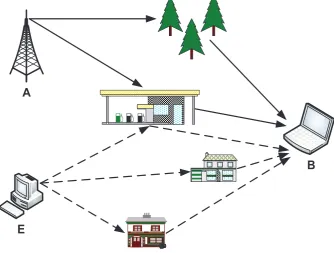
To illustrate the general idea of channel-based physical layer security, Figure 2.2 shows a
typical adversarial multipath scenario including multiple scattering surfaces, where terminals
A, B and E are located in spatially different locations. It indicates that the legitimate
commu-nications between terminal A and terminal B experiences different paths from the transmission
between the adversary E and terminal B. Therefore, exploiting the unique characteristics of the
wireless propagation environment can discriminate among different transmitters.
E A
B
Figure 2.2: An adversarial multipath environment including multiple scattering surfaces.
A variety of channel-based physical layer security schemes have been proposed in the
liter-ature. Specifically, by exploiting the channel reciprocity in wireless communications, a
multi-path channel randomness-based secret key generation system was developed in [33]. Two-way
training signals were employed by legitimate communicating terminals to obtain the same
observations of the multipath fading channel coefficients under a static channel over two
20 Chapter2. SecurityChallenges andSolutions inWirelessCommunications
channel; however, it is unavailable for an adversary due to the fast spatial decorrelation of
mul-tipath channels. Moreover, the received signal strength (RSS), which is a location-dependent
feature associated with the transmit power and CSI, was utilized to differentiate between
trans-mitters [4, 5]. However, such physical layer security schemes are vulnerable to intruders who
can adjust transmitting power to spoof the legitimate user.
Alternatively, using the temporal and spatial properties of radio signal propagation in
wire-less networks, Xiao [6, 8, 34], He [9, 35] and Tugnait [10] proposed physical layer security
approaches, and obtained performance enhancement in detecting spoofing attacks. In
particu-lar, Xiao explored the properties of channel difference between two consecutive CFR
measure-ments in multipath fading environmeasure-ments, and not only analyzed the characteristics of channel
difference from single carrier communication networks to multi-carrier wireless systems, but
also extended her method from the assumption of time-invariant channel to mobile terminals.
In [9], He considered both the amplitude and phase information of CFR to fully achieve
au-thentication based on Xiao’s work, and this work was expanded by using the RAKE receiver
to distinguish users [35]. Following the approaches provided by Xiao, Tugnait [10] used
time-domain training-based CIR to accomplish authentication instead of the CFR-based method,
which considered the time-invariant channel.
2.3.2
RF-DNA Based Physical Layer Security
RF-DNA fingerprinting involves exploiting natural imperfections and unclonable variations
of a unique device induced by the analog components to identify and authenticate devices at
the physical layer, which cannot be changed post-production and mimicked by adversaries in
a manner analogous to biometrics. Various RF characteristics, such as transient amplitude and
phase, I/Q modulator imbalance and CFO, are extracted from the intrinsic physical
proper-ties of devices. These hardware impairments are observed differentially even in two devices
constructed with the same manufacturing and packaging processes, and they are allowed by
manufacturers as wireless transceivers as such minor imperfections are acceptable for practical
implementations in the communication standards [36, 37]. Therefore, the distinct features of
2.3. PhysicalLayerSecurityTechniques 21
threats via the physical layer.
Many RF-DNA fingerprint-based device identification and authentication schemes have
been proposed in the literature. Specifically, a RF fingerprinting system was designed to
identify WiFi devices in [38] by exploiting the amplitude and phase of transient signals to
enhance wireless security. Moreover, [39] investigated a RF fingerprinting approach by
ex-ploiting transient signal features for hardware-specific identification based on 802.11a OFDM
signals. In [13], a stable and robust identification technique was proposed based on combining
several device-specific characteristics, including the frequency offset, modulated phase offset
and in-phase/quadrature-phase offset. Furthermore, a RF identification system was introduced
in [40] relying on the RF characterization of integrated circuits to defend against
counterfeit-ing. [16] proposed a novel physical layer authentication scheme by exploiting the unique bias
in RF oscillators between a specific transmitter-receiver pair that is characterized by the
device-dependent CFO. In [17], a physical layer authentication approach was developed by exploiting
the time-varying clock offsets. Additionally, [15] investigated a device fingerprint-based
esti-mation method by exploiting device-specific I/Q imbalance to differentiate different wireless
devices.
2.3.3
Diversity Technique-Based Physical Layer Security
2.3.3.1 PHY Layer Security in Multiple-Antenna Systems
Since the capacity of single antenna systems is bounded by the Shannon limit, diversity
techniques have been developed to improve system performance by using multiple replicas of
transmitting signals passed over multiple channels of different characteristics. Multiple antenna
techniques provide physical layer secrecy with new and exciting opportunities, and also provide
extremely high spectral efficiency as well as link reliability through space diversity for wireless
communications [41].
By exploiting multiple antenna array structures, secure transmissions in multiple-antenna
systems were investigated in the literature [42–50], where the channel from source to
legit-imate destination was modeled as single-input multiple-output (SIMO) [42], multiple-input
Further-22 Chapter2. SecurityChallenges andSolutions inWirelessCommunications
more, [51] designed a MIMO authentication system by superimposing a stealthy fingerprint
on transmitted data, and also studied the tradeoffs between stealth, security and robustness.
Moreover, a channel-like fingerprint signal was introduced to MIMO transmissions, where the
fingerprinting was generated to mimic distortions like time-varying channel effects [52]. In a
rich multipath environment, by exploiting the location-specific properties of the wireless
chan-nels, CFR-based physical layer authentication in [6] was extended to a MIMO scenario that
analyzed the impact of MIMO techniques on the performance of spoofing detection based on
the ability of security gain [53]. By exploiting the properties of array redundancy and
chan-nel diversity, Li et al. [54] developed a MIMO security scheme to effectively randomize the
reception at the eavesdropper.
Innovative cross-layer designs for security enhancement combining physical layer security
with upper-layer traditional security are desirable for wireless networks. In [55], a cross-layer
security scheme for MIMO systems was proposed by using an extra dimension provided by
MIMO systems to add artificial noise to the transmitted signals; as a result, received signals
by the eavesdropper became a degraded version of legitimate signals. Additionally, [56]
com-bined cryptographic techniques operating in higher layers with security approach exploiting
redundant antennas at the physical layer to provide enhanced security performance for
wire-less networks.
2.3.3.2 Cooperative Relaying and Security Enhancement
MIMO systems use the technique of space diversity to improve communications
perfor-mance where multiple antennas are equipped at the transmitter and receiver. However, the
hardware implementation of MIMO systems is not feasible, particularly in mobile equipments,
due to size, weight and cost limitations [57]. As an alternative, cooperative diversity is achieved
through user cooperation, in which information is allowed to be transmitted between source and
destination via other nodes in a network in order to enjoy the advantages of MIMO systems
with single antenna equipped users. More specifically, cooperative communications provides
the advantages of higher spatial diversity and achievable data rates, lower transmission delay
and power, better frequency reuse and more adaptability to network conditions. Additionally,
2.3. PhysicalLayerSecurityTechniques 23
enhance the security performance of wireless networks.
A classic cooperative communications network is illustrated in Figure 2.3, which consists
of one source, one destination andN nearby relay nodes. The message transmission over the
direct channel between the source and the destination is called direct transmission, and the
message transmission with the help of relay nodes is called cooperative transmission.
Informa-tion transmission takes place in two phases. In the first phase, the message is broadcast from
the source, and received by the destination and the N relays. In the second phase, a subset or
all the relays process the received message then forward it to the destination based on a specific
cooperation transmission protocol.
By a careful investigation of the relaying strategies, cooperative transmission protocols can
be categorized into three types: the amplify-and-forward (AF) protocol in which relays amplify
the source signals and then retransmit them to the destination, the decode-and-forward (DF)
protocol in which relays first decode source signals and then encode and forward them to the
destination, and finally the compress-and-forward (CF) protocol in which relays first maps
source signals into another signals in a reduced signal space and then encode and forward them
as new codewords to the destination. Depending on the network topology and the quality of
the channel between the source and the relays, one protocol may perform better than the others
in terms of system capacity or diversity. Generally, the AF protocol is usually preferable due
to its low complexity on the relays.
The advantages of the cooperative communications come at the price of a reduced spectral
efficiency. Particularly, during the second phase, the data transmission from each relay to the
destination occurs through orthogonal channels, which in turn leads to the spectral inefficiency.
The concept of best relay selection is an efficient and simple method to resolve this
shortcom-ing of the cooperative communications. Specifically, instead of usshortcom-ing all the available relays,
the best relay is selected based on a specific criterion. Similar to the original cooperative
com-munications, the best relay selection also can achieve the full diversity [58, 59]. It is worth
mentioning that the best relay selection scheme can be extended to multiple relay selection
schemes in which multiple relays are selected among the set of the available relays. In the case
of single relay selection, only one node is selected as a cooperative relay, which minimizes
24 Chapter2. SecurityChallenges andSolutions inWirelessCommunications
Also, single relay selection has higher bandwidth efficiency and lower energy consumption
compared with all-participate relaying scheme. In contrast, multiple relay selection fully
ex-ploits the available degrees of spatial diversity, and better leverages the trade-offbetween error
performance and spectral efficiency.
In what follows, a comprehensive summary on the existing cooperative communications
techniques is provided followed by introducing security enhancement in cooperation
commu-nications.
Rn R2 R1
Source Destination
…
.
Direct Transmission
Phase 2 Phase 1
Cooperative Transmission
Figure 2.3: An illustration of direct transmission and cooperative transmission.
• Existing cooperative communications schemes:
In wireless networks, cooperative mechanisms achieve space diversity with the help of
relay nodes. The concept of relay channel was introduced by van der Meulen [60, 61]
and studied later in [62], where a three-node relay channel, consisting of a source, relay
and destination, was investigated for channel capacity analysis. To illustrate the scenario
that relay nodes help a pair of terminals communicate, the model of relay channels was
developed in [63]. Furthermore, wireless relay channels and their modeling,