University of South Carolina
Scholar Commons
Theses and Dissertations
1-1-2013
Molecularly Imprinted Polymer-New
Characterization Methods and Designs
Di Song
University of South Carolina
Follow this and additional works at:https://scholarcommons.sc.edu/etd
This Open Access Dissertation is brought to you by Scholar Commons. It has been accepted for inclusion in Theses and Dissertations by an authorized administrator of Scholar Commons. For more information, please [email protected].
Recommended Citation
Song, D.(2013).Molecularly Imprinted Polymer-New Characterization Methods and Designs.(Doctoral dissertation). Retrieved from
M
OLECULARLYI
MPRINTEDP
OLYMER–
N
EWC
HARACTERIZATIONM
ETHODS ANDD
ESIGNSby
Di Song
Bachelor of Science
Beijing Institute of Technology, 2006
Submitted in Partial Fulfillment of the Requirements
For the Degree of Doctor of Philosophy in
Chemistry and Biochemistry
College of Arts and Science
University of South Carolina
2013
Accepted by:
Ken D. Shimizu, Major Professor
Linda S. Shimizu, Committee Member
John L. Ferry, Committee Member
Sarah C. Baxter, Committee Member
ii
iii
D
EDICATIONThis work is dedicated to
My Family
iv
A
CKNOWLEDGEMENTSFirst, I would like to thank my advisor, Dr. Ken D. Shimizu, for his guidance, advice,
knowledge, and patience. None of my accomplishment would be possible without your
help and encouragement. I will never forget your efforts to train me how to think in
different directions and how to write paper up. My experience in graduate school under
your supervision has not only trained me to be a better experimental chemist, but also has
made me a good scholar. I feel very grateful to have you as my advisor.
Next, I would like to thank my committee members, Dr. Linda S. Shimizu, Dr. John
L. Ferry, and Dr. Sarah C. Baxter. I’m very grateful for all the efforts you put there
during my Ph.D. I want to give special thanks to Dr. Linda S. Shimizu. Thank you for
your direction, guidance, idea, and great suggestions in my research plan, research
proposal, and my thesis.
I would like to thank all the members of Shimizu group, both past and present.
Without you, my experience would not have been so great. I have enjoyed the fun and
have cherish every moment that working with your guys, Roger, CJ, Yagang, Bill, Chen,
Xiaolong, Diana, Ping, Yinyan, Irene, and Yang. You mean a lot to me, not only as
coworkers, but as good friends as well.
I would like to thank my family who give me endless love and support. To my
parents, no words can express my deep gratitude to you. You always undoubtedly love
v
spend five years to attain my graduate degree thousands of miles away from you. I am
grateful for everything you have done for me. I also would like to thank my grandparents
who took care of me when I was young. I still can remember these days I lived with you
and I miss you so much.
At last, I would like to thank all my friends. We shared many sorrow, happy, bitter,
vi
A
BSTRACTChemical sensors are important in a wide range of applications. However, there
is no commercially available molecularly imprinted polymers (MIPs) based sensor.
Thus, the design and development of sensors utilizing imprinting technique have been an
area of active research. In Chapter 1, first a brief introduction to imprinting techniques is
given. Then we provide a short review of progresses in design of MIPs sensors using
multi-functional monomers. Multi-functional monomers (multi-FMs) are high affinity
monomers towards target molecules and are able to introduce other functionally active
groups for sensing and catalysis. Two classes of multi-FMs will be reviewed and
discussed. Then, new advances which we have achieved and strategies which we have
developed will be discussed at the end of this chapter.
A new method of verifying and characterizing the imprinting efficiency of
molecularly imprinted polymers (MIPs) was developed and tested. In the new polar
solvent titration (PST) method, a series of MIP and non-imprinted polymers (NIPs) are
prepared with increasing concentrations of a polar solvent. The templation and monomer
aggregation processes can be systematically disrupted by the polar solvent additives. The
changes in the binding capacities of the polymers in each series provide a measure of the
relative magnitudes of the imprinting effect and monomer aggregation effects. The new
method was tested using three different urea functional monomers that had varying
vii
anion was used as template for these polymers. The new MIP characterization method
can differentiate differences in binding capacity arising from templation and monomer
aggregation. To independently verify the new characterization method, the MIPs were
also characterized using binding isotherm analysis. The two methods appeared to give
consistent conclusions. However, the results from the PST method provided more
information about the presence and relative magnitudes of the templation and processes
that influenced the binding properties of the polymers.
In Chapter 3, first we studied the importance of monomer aggregation for
molecular imprinting. Monomer aggregation can improve the imprinting effect by
suppressing the number of background binding sites. Then, the effects of crosslinking
degree were evaluated using MAA and EA9A system. High crosslinking degree was
required for imprinting effects. Higher crosslinked polymer exhibits greater imprinting
effect. The relative magnitudes of the effect of crosslinking degree are estimated using
urea functional monomers and phosphate template system. The effect of decreasing 13%
of crosslinking degree was estimated to reduce 24% of the binding capacity. Next, the
influence of functional monomer to template ratio on imprinting was studied and the
range of this ratio was optimized. Finally, the above results were combined to design
new functional monomers and new MIPs with improved imprinting effect.
A diacid functional monomer was shown to be a better monomer compared to MAA.
In Chapter 4, a lanthanide-containing polymer sensor was designed and prepared.
This polymer showed sensitive and selective response to carboxylates. First a fluorescent
europium-containing complex bearing styrene functionalities was synthesized. The
viii
polymerization conditions thermally. The sensing properties of the polymer were
characterized by monitoring the fluorescence response using fluorimeter after pipetting a
series of different anion solutions in varying concentrations. The polymer showed highly
selectivity to carboxylate anions over halide and other oxy-anion analytes. Also, MIPs
templated with two different carboxylates showed better selectivity to the corresponding
ix
T
ABLE OFC
ONTENTSDEDICATION ... iii
ACKNOWLEDGEMENTS ... iv
ABSTRACT ... vi
LIST OF TABLES ... xiii
LIST OF FIGURES ... xiv
LIST OF SCHEMES ... xix
LIST OF SYMBOLS ... xxi
LIST OF ABBREVIATIONS ... xxii
CHAPTER 1INTRODUCTION TO MOLECULARLY IMPRINTED POLYMER SENSORS ...1
1.1 GENERAL INTRODUCTION ...1
1.2TYPES OF IMPRINTING MECHANISM ...3
1.2.1COVALENT IMPRINTING ...4
1.2.2 METAL ION IMPRINTING ...7
1.2.3NON-COVALENT IMPRINTING ...7
1.3CHALLENGES IN MIP AND SOLUTION ...9
1.4EXAMPLES OF MULTI-FMS WITH HIGHER BINDING AFFINITIES AND SELECTIVITIES ...11
1.5EXAMPLES OF MULTI-FMS CONTAINING A COMBINATION OF RECOGNITIONS GROUPS AND OTHER FUNCTIONAL GROUPS ...15
x
1.7MIP-NEW CHARACTERIZATION METHODS AND DESIGNS ...19
1.8REFERENCES ...21
CHAPTER 2CHARACTERIZATION OF MOLECULARLY IMPRINTED POLYMERS USING A NEW POLAR SOLVENT TITRATION METHOD ...28
2.1INTRODUCTION ...29
2.2EXPERIMENTAL SECTION ...36
2.2.1GENERAL ...36
2.2.2SYNTHESIS OF FM1 ...37
2.2.3SYNTHESIS OF FM2 ...37
2.2.4SYNTHESIS OF FM3 ...37
2.2.5PREPARATION OF TBA-DPP ...38
2.2.6POLYMERIZATION-GENERAL ...38
2.2.7PREPARATION OF MIP1-3 AND NIP1-3 ...39
2.2.8BATCH BINDING STUDY ...40
2.2.9GAS ADSORPTION POROSIMETRY ...40
2.2.10SURFACE MORPHOLOGY IMAGE ...40
2.3RESULTS AND DISCUSSION ...40
2.4CONCLUSIONS ...53
2.5REFERENCES ...54
CHAPTER 3A STUDY OF THE VARIABLES IN THE MOLECULAR IMPRINTING PROCESS AND THE NEW DESIGN OF MOLECULARLY IMPRINTED POLYMER ...57
3.1INTRODUCTION ...57
xi
3.2.1POLAR SOLVENT TITRATION ANALYSIS ...62
3.2.2POLYMER PREPARATION ...63
3.2.3BATCH BINDING STUDY ...67
3.2.4SYNTHESIS OF FM3 ...67
3.2.5SYNTHESIS OF FM4 ...68
3.2.6AGGREGATION CONSTANT ...68
3.2.7ASSOCIATION CONSTANT ...68
3.2.8SURFACE AREA STUDY ...69
3.3RESULTS AND DISCUSSION ...69
3.3.1FUNCTIONAL MONOMER AGGREGATION ...69
3.3.2CROSSLINKING DEGREE ...75
3.3.3FUNCTIONAL MONOMER TO TEMPLATE RATIO ...81
3.3.4NEW DESIGN OF MOLECULARLY IMPRINTED POLYMER ...83
3.4CONCLUSIONS ...92
3.5REFERENCES ...92
CHAPTER 4CARBOXYLATE SELECTIVE LANTHANIDE POLYMER “TURN-ON” SENSOR ...94
4.1INTRODUCTION ...94
4.2EXPERIMENTAL SECTION ...96
4.2.1GENERAL ...96
4.2.22-HYDROXY-4-(4-VINYLBENZYLOXY)BENZALDEHYDE ...96
4.2.3BIS[2-HYDROXY-4-(4-VINYLBENZYLOXY) BENZALDEHYDE ETHYLENEDIIMINE (SALEN) ...97
xii
4.2.5TETRABUTYLAMMONIUM PHENYLACETATE ...97
4.2.6TETRABUTYLAMMONIUM TOSYLATE ...98
4.2.7TETRABUTYLAMMONIUM BENZOATE ...98
4.2.8TETRABUTYLAMMONIUM DIPHENYLPHOSPHATE ...98
4.2.9POLYMERIZATION ...99
4.2.10FLUORESCENCE ...99
4.3RESULTS AND DISCUSSION ...100
4.4FUTURE WORK ...112
4.5CONCLUSIONS ...114
4.6REFERENCES ...114
REFERENCES ...116
xiii
L
IST OFT
ABLESTable 2.1 BET surface areas for polymers...47
Table 2.2 Polymerization conditions, correlation factors, and calculated constants for the isotherms ...52
Table 3.1 Polymerization components for preparation of MIP 0 ...64
Table 3.2 Polymerization compositions for MIP 0 and NIP 0 with varying degree of crosslinking ...65
Table 3.3 Polymerization conditions for MIP 2, MIP 3 and MIP 1a ...65
Table 3.4 Polymerization compositions for MIP 0(a - e) ...66
xiv
L
IST OFF
IGURESFigure 1.1 The cholesterol-based molecular tweezer system ...13
Figure 1.2 Bis-urea and mono-urea monomers ...14
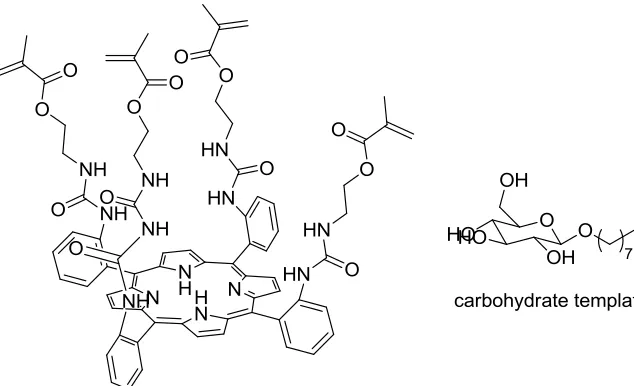
Figure 1.3 Porphyrin-based multi-urea FM and carbohydrate template ...15
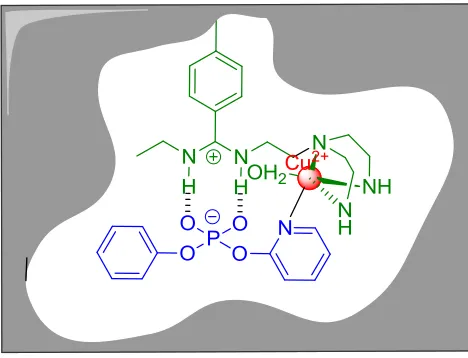
Figure 1.4 Representation of reactive site in MIP matrix. The FM, template, and the
coordinated metal were highlighted in green, blue, and red, respectively ...16
Figure 1.5 Representation of the three functional groups on monomer ...17
Figure 2.1 Three urea functional monomers and tetrabutyl ammonium diphenyl
phosphate template (TBA-DPP) ...34
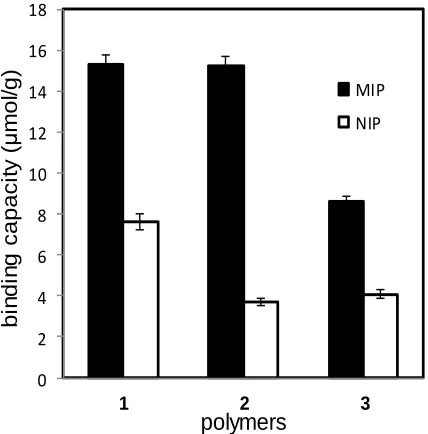
Figure 2.2 Binding capacities to 3.5 mL 0.5 mM TBA-DPP of 105 g MIPs and NIPs
polymerized with FM 1, FM 2, and FM 3 ...36
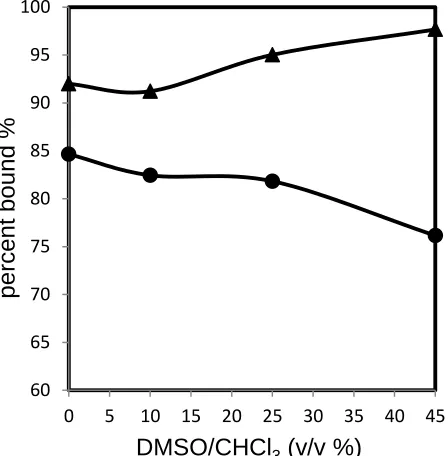
Figure 2.3 Percent bound for 0.5 mM TBA-DPP CHCl3 solution of 20 (triangle), and 105
(circle) mg MIP 1 (solid) and NIP 1 (empty) prepared in solutions of increasing polarity
from pure CHCl3 to 45% v/v DMSO/CHCl3 ...41
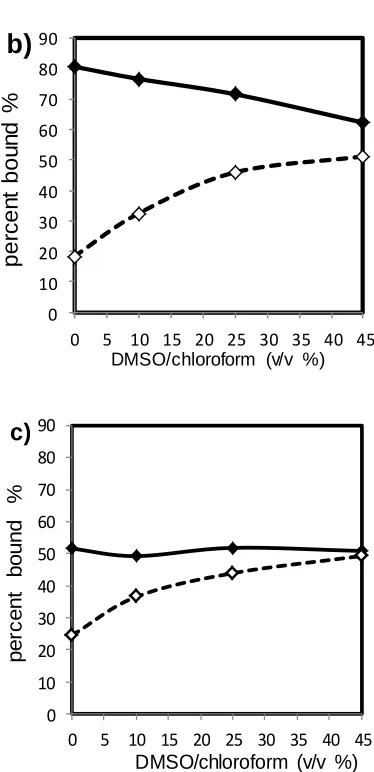
Figure 2.4 Binding capacities for TBA-DPP of MIPs (solid) and NIPs (empty). a) 40 mg
MIP 1 and NIP 1; b) 60 mg MIP 2 and NIP 2; c)105 mg MIP 3 and NIP 3,in solutions of
increasing polarity from pure CHCl3 to 45% v/v DMSO/CHCl3 ...43
Figure 2.5 SEM images of a) MIP 2 made in pure chloroform; b) NIP 2 made in pure
xv
Figure 2.6 Percent bound for 0.5 mM TBA-DPP CHCl3 solution of 105 mg NIPs
prepared with FM 1 (diamond), FM 2 (square), and FM 3 (triangle) in solutions of
increasing polarity from pure CHCl3 to 45% v/v DMSO/CHCl3 ...49
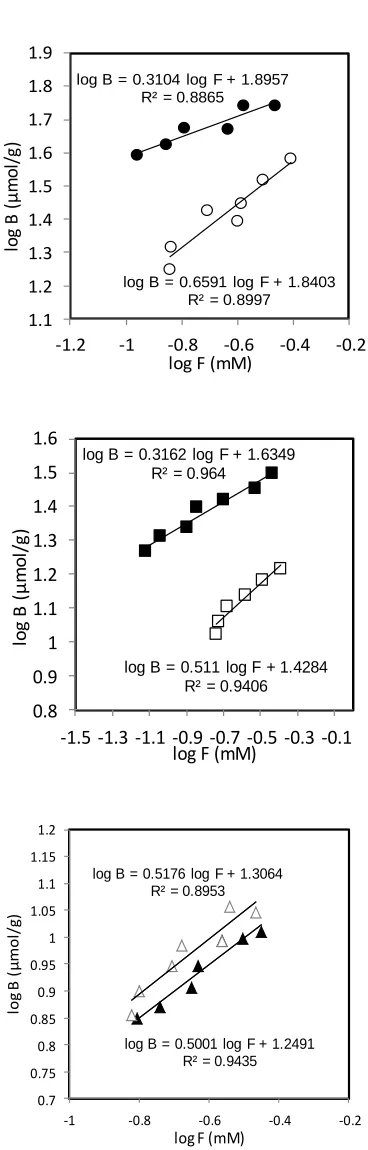
Figure 2.7 Binding isotherms of MIPs (solid) and NIPs (empty) prepared with FM 1
(circle), FM 2 (square), and FM 3 (triangle) measured for their binding to 0.5 mM
TBA-DPP in CHCl3. The resulting data were fitted to Freudlich isotherm model to give straight
lines ...51
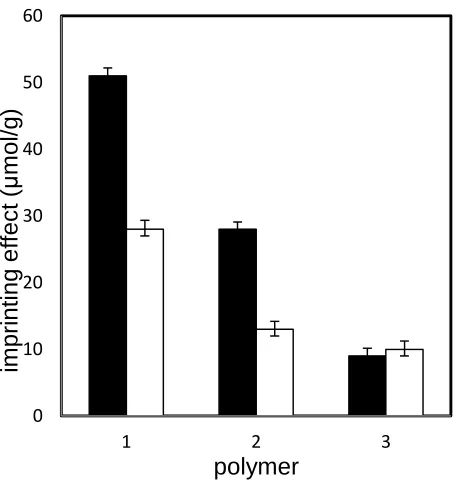
Figure 2.8 Calculated binding capacities of MIPs (solid) and NIPs (empty) from binding
isotherm analysis when F = 0.25 mM ...53
Figure 3.1 Structure of FMs, templates and cross-linkers utilized in the study of effect of
monomer aggregation ...58
Figure 3.2 Structures of functional monomer, template, crosslinker and co-monomer used
in the study of effect of crosslinking degree ...60
Figure 3.3 Urea monomers and template TBA-DPP for the study of effect of crosslinking
degree ...61
Figure 3.4 New multifunctional diacid FM 3 and template EA9A ...62
Figure 3.5 Binding capacities for EA9A of a series MIPs and NIPs polymerized in
acetonitrile solutions containing varying percentages of methanol or acetic acid ...73
Figure 3.6 Binding capacities for TBA-DPP of MIPs (solid) and NIPs (empty) prepared
in solutions of increasing polarity from pure CHCl3 to 45% v/v DMSO–CHCl3, as
measured by uptake studies using 60 mg polymer in 3.5 mL of 0.5 mM TBA-DPP in
xvi
Figure 3.7 The binding capacities of MIPs (solid) and NIPs (empty) that made with
varying crosslinking degree ...77
Figure 3.8 Binding capacities towards TBA-DPP of MIPs (solid) and NIPs (empty) made
with a) FM 1 (0.6 mM), b) FM 2 (0.6 mM), c) FM 1 (0.7 mM) and a co-monomer MMA
(0.6 mM), and d) MMA (0.6 mM) ...78
Figure 3.9 The binding capacities of MIPs (solid) and NIPs (empty) that made with
varying amount of template ...82
Figure 3.10 Multi-functional monomer pools for imprinting ...84
Figure 3.11 The intra-molecular hydrogen bonding and monomer aggregation in FM 3 .86
Figure 3.12 Concentration dependent behavior of FM 3(solid) and FM 4 (empty). ...87
Figure 3.13 Binding capacities of MIPs (solid) and NIPs (empty) made with FM 3
(triangle) and MAA (diamond). ...90
Figure 4.1 UV-vis spectra of salen solution (53 mM, solid line) and salen-europium
complex suspension (broken line) in DMF ...101
Figure 4.2 Fluorescent emission spectra (exited at 350 nm) a) before polymerization:
salen solution in DMF (solid) and salen-europium complex suspension in DMF (dotted);
b) salen-europium polymer in solid state ...103
Figure 4.3 FT-IR spectra of a) salen, and b) salen-europium complex ...104
Figure 4.4 The analyte list used in this study...106
Figure 4.5 Titration results of europium-containing polymers (9.9 mg) to 200 μL solution of benzoate anion, tosylate anion, phenylacetate anion, diphenyl phosphate anion, acetate
anion, triphenyl phosphate, chloride anion, fluoride anion, DMF, DMSO, and triphenyl
xvii
0.30, 0.60, 0.90, 1.20, 1.50, 1.80, 2.10, 2.40, 2.70 and 3.00 mM, from left to right, in
acetonitrile...108
Figure 4.6 Changes in fluorescent intensity (excitation at 350 nm) of the polymer (9.5
mg) in response to 200 μL of increasing concentrations of different anions and neutral analytes in concentration ranges (0 to 3 mM) in acetonitrile. Benzoate anion (solid
triangle), tosylate anion (empty circle), phenylacetate anion (solid diamond), diphenyl
phosphate anion (empty diamond), acetate anion (solid square), triphenyl phosphosphine
oxide (check), chloride anion (empty triangle), fluoride anion (solid circle). ...109
Figure 4.7 Changes in fluorescent intensity (excitation at 350 nm) of polymer (9.5 mg)
when tested with 200 μL of 3 mM acetonitrile solution of fluoride anion (cube), acetate anion (diamond), phenylacetate anion (cross), benzoate anion (round), and chloride anion
(triangle) after 3 cycles ...110
Figure 4.8 Change in fluorescent intensity (excitation at 350 nm) of 9.5 mg of MIP
(TBA-PhOAc) in response to 200 μL of increasing concentrations of different anions and neutral analytes in concentration ranges (0 to 3 mM) in acetonitrile. Benzoate anion
(solid triangle), tosylate anion (empty circle), phenylacetate anion (solid diamond),
diphenyl phosphate anion (empty diamond), acetate anion (solid square), triphenyl
phosphosphine oxide (check), chloride anion (empty triangle), fluoride anion (solid
circle). ...111
Figure 4.9 Change in fluorescent intensity (excitation at 350 nm) of 9.9 mg of a) NIP; b)
MIP (TBA-OAc) in response to 200 μL of increasing concentrations of different anions and neutral analytes in concentration ranges (0 to 3 mM) in acetonitrile. Benzoate anion
xviii
diphenyl phosphate anion (empty diamond), acetate anion (solid square), triphenyl
phosphosphine oxide (check), chloride anion (empty triangle), fluoride anion (solid
xix
L
IST OF SCHEMESScheme 1.1 Illustration of the three-step molecular imprinting process. In this example,
the urea functional monomer and the diphenylphosphate tetrabutyl ammonium salt
template are highlighted in red and blue, respectively ...3
Scheme 1.2 Schematic illustrating the preparation of imprinted dendrimer through
covalent imprinting process ...6
Scheme 1.3 Schematic representation of an MIP sensor array that use a dye-displacement
strategy ...8
Scheme 1.4 Schematic demonstration of MIP photo-responsible controlled uptake and
release ...18
Scheme 2.1 Illustration of the three-step molecular imprinting process. In this example,
the urea functional monomer and the diphenylphosphate tetrabutyl ammonium salt
template are highlighted in red and blue, respectively ...30
Scheme 2.2 Schematic representation of the origins of differences in binding capacity of
MIPs and NIPs (a) due to an imprinting effect and (b) due to functional monomer
aggregation ...32
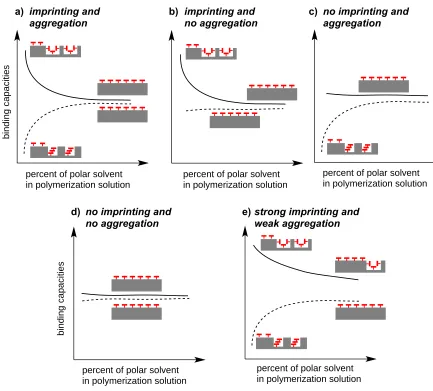
Scheme 3.1 The 5 PST outcomes showing varying combinations of imprinting effects in
xx
Scheme 3.2 Schematic illustration of the influence of functional monomers dimerization
upon MIPs and NIPs ...70
Scheme 4.1 Representation of a lanthanide polymer sensor for carboxylates ...95
Scheme 4.2 Schematic illustration of synthetic approach of lanthanide-containing
xxi
L
IST OFS
YMBOLSB Analyte bound to polymer.
F Free analyte in solution.
a Freundlich isotherm constant.
m Freundlich isotherm constant.
Kagg Aggregation constant.
Ka Association constant.
λmax The wavelength of maximum absorption.
J Coupling constant.
xxii
L
IST OFA
BBREVIATIONSMIP ... Molecularly imprinted polymer
NIP ... Non-imprinted polymer
FM ... Functional monomer
Multi-FM... Multi-functional monoer
Mono-FM ... Mono-functional monomer
BET ... Brunauer-Emmett-Teller method
MAA ...Methacrylic acid
MMA... Methyl methacrylate
EGDMA ...Ethylene glycol dimethacrylate
AIBN ... 2-2'-Azoisobutyronitrile
TBA-DPP ... Tetrabutylammonium diphenylphosphate
TBA-PhOAc ... Tetrabutylammonium phenylacetate
TBA-OAc ...Tetrabutylammonium acetate
TBA-Bz ... Tetrabutylammonium benzoate
TBA-OTs ... Tetrabutylammonium tosylate
TBA-Cl ... Tetrabutylammonium chloride
1
CHAPTER
1
I
NTRODUCTION TO MOLECULARLY IMPRINTED POLYMER SENSORSAbstract
Molecularly imprinted polymers (MIPs) are synthetic polymeric materials that are
formed in the presence of a template to form active sites similar to those formed in
antibodies and proteins. MIPs are economic and easy to prepare. However, there are
currently no MIP-based sensors and catalysts that are commercially available due to the
low fidelity of imprinting process. Thus, the design and development of new monomers
that have higher imprinting efficiencies have been an area of active research.
Multi-functional monomers (multi-FMs) are a new class of monomers to address this problem
via high affinity towards target molecules and ability to easily introduce other
functionally active groups for sensing and catalysis. The goal of this chapter is to provide
an introduction to MIPs with a specific focus on the design of multi-FMs for imprinting.
After giving a brief introduction to MIPs, two classes of unique multi-FMs will be
reviewed and discussed. Then, new advances which we have achieved and strategies
which we have developed will be discussed at the end of this chapter.
1.1General introduction
Chemical sensors are important in a wide range of applications including
environmental hazard assessment, medical monitoring, and pharmaceutical quality
control.1-5 Sensors are typically constructed from the combination of two basic elements.
2
electrical signal when challenged with a chemical analyte of interest. The second is a
recognition platform that can differentiate the analyte of interest from common and
structurally similar molecules. Examples of commonly utilized recognition platforms in
sensors include materials with innate specificity such as polymer films, silica, and metal
oxides and tailored materials such as enzymes, antibodies, and synthetic molecular
receptors.6-16 The innate recognition materials are typically readily available and
inexpensive but possess relatively low affinities and specificities for individual analytes.
The tailored materials have much higher affinities and specificities, which result in more
sensitive and selective sensors. Their major drawback is that they are generally
expensive and require considerable resources and effort to customize to the analyte of
interest.
MIPs are recognition materials that have been used in sensors which possess
attributes of both of the above classes.17-20 MIPs are synthetic polymers that can be
inexpensively and readily prepared often from commercially available starting materials.
The recognition properties of MIPs can also be tailored using a molecular templation
process as shown in Scheme 1.1. The molecular imprinting process involves three
steps. First, functional monomers bearing a recognition group are mixed with the
template molecule which is either the analyte of interest or a structural analog. Second,
the resulting monomer-template complex is polymerized in the presence of a high
percentage of a crosslinker to preserve the complementary distance and orientation
between the functional monomer recognition groups. Finally, the removal of the
template creates complementary cavities within a rigid highly-crosslinked polymer
3
has facilitated the integration of MIPs into a variety of sensing platforms and sensing
applications.21-23
Scheme 1.1 Illustration of the three-step molecular imprinting process. In this example, the urea functional monomer and the diphenylphosphate tetrabutyl ammonium salt template are highlighted in red and blue, respectively.
Due to the highly cross-linked structure, good stability, tolerance in harsh condition
such as high temperature, pressure and organic solvents, acid and base, as well as the low
cost, MIP is an ideal sensitive material for molecular recognition.
1.2 Types of imprinting mechanism
MIP according to the different types of interaction of template and functional
monomer in polymerization process can be divided into covalent, non-covalent, metal ion
and non-polar imprinting.24 In this section, we will mainly focus on the three most
4 1.2.1 Covalent imprinting
Covalent imprinting technique is imprinting processes using chemical reactions to
form monomer-template complex. The advantages of covalent molecular imprinting are
the firm stoichiometry of monomer to template and the homogeneity of imprinted sites.
Thus, functional monomers are only associated with templates in recognition sites,
forming a majority of templated sites rather than non-selective background sites. The
strength of covalent imprinting is quite high since it involves the chemistry of forming
and breaking bonds. However, high energy is required for bond formation and cleavage,
leading to being time consuming for template to associate with and dissociate from
monomers/polymers. Also, covalent imprinting requires synthetic efforts. Thus, the use
of molecular imprinting covalent is limited, and commonly used for catalytic
applications.
There are two types of covalent imprinting, reversible covalent and semi-covalent.
Reversible covalent imprinting is an imprinting technique to both form and dissemble
complex covalently through single bond formation and cleavage. These conditions limits
the technique to reversible condensation reactions, which are applicable to templates with
specific structures. For example, boronate ester is the most successful approach for
reversible covalent imprinting.25-31 Covalent imprinting also involves weak bond
formation and cleavage such as Schiff’s base32 and ketal (acetal)33, 34 formations, and
strong covalent bond formation and cleavage such as esterification.35, 36
The semi-covalent imprinting was covalent imprinting as templation technique
during polymerization. Here the rebinding of template is actually a non-covalent process.
5
Zimmerman and co-workers published a series of works on dendrimer monomolecular
imprinting and recognition of porphyrins, amines and sugars.37-44 The origin of this
strategy was in 1999 when his first porphyrin-cored dendrimer was synthesized and
published (Scheme 1.2).45 This monomolecular imprinting idea has both the features of
covalent imprinting and non-covalent imprinting, and involves relatively small number of
functional monomer that was used. One dendrimer monomer was utilized for the
recognition of a template, which was not only efficient, economical, but also
environmental friendly. On the other hand, the rebinding study was non-covalent in
nature, requiring no synthetic efforts. Porphyrin bearing m-dihydroxybenzene
functionalities was designed as a covalently-bound template to form complexes before
the formation of dendrimer. Large conjugated π systems were introduced to facilitate the
monitoring of imprinting effect. Figure 1 below shows an example of the process of
monomolecular imprinting. Those cored dendrimer monomers were first synthesized
following previous designed procedure with covalently bonded porphyrin core. After
making the dendrimer matrix, it was polymerized through ring opening metathesis
polymerization (ROMP). Porphyrin was removed chemically with strong base to yield a
dendrimer monomer with donut-like hallow inner framework bearing multiple carboxylic
acid functionalities. It was carried out with the original template and a series of
porphyrin-based analytes bearing different functionalities such as phenol, pyridine and
pyrimidine. The association constants between dendrimer and porphyrin-based template
lied in the range of 105 M-1, which is extremely high and efficient compared to ordinary
6
7 1.2.2 Metal ion imprinting
Transition metals have been used to bind to a broad range of both charged and
neutral analytes through coordination between heteroatoms of the analyte and the outer
unfilled orbitals of the metal. Metal ion imprinting can be classified into three types,
metal ion -templated imprinting,46-49 metal ion-mediated imprinting,50-54 and metal ionic
crystal imprinting.55, 56 Among these three types, metal ion-mediated molecular
imprinting has been investigated heavily. This technique normally involves
complexation among functional monomer, metal ions, and template. Functional
monomers bind to metal ion to form the polymerizable complex which in turn binds to
the template through metal ion. More details on this topic will be discussed in Chapter 4.
1.2.3 Non-covalent imprinting
Non-covalent imprinting refers to molecular imprinting strategies in which template
and functional monomer form complexes in solution mainly driven by weak forces such
as hydrogen bonding, electrostatic interactions, hydrophobic effects and pi-pi interaction.
Non-covalent imprinting is the predominant method for imprinting due to the ease in
preparation. Typically, this technique requires no or little synthetic chemistry. The
imprinting process starts spontaneously when monomer and template are mixed together.
The associated monomer/template complex is stable under polymerization conditions
such as free radical polymerization. However, non-covalent imprinting has drawbacks.
Non-covalent imprinting process is a dynamic equilibration. This leads to the low yield
of imprinted sites. It also creates a lot of non-selective binding sites due to the
heterogeneity of non-covalent imprinting process, which may largely affect the
8
Scheme 1.3 Schematic representation of an MIP sensor array that use a dye-displacement strategy (adapted from reference 68).
Researchers have achieved great success in the area of non-covalent imprinting.57-61
Most functional monomers for non-covalent imprinting are commercially available such
as acidic monomers including the most widely used methacrylic acid (MAA),62 acrylic
acid,63 and itaconic acid,64 neutral monomers including acrylamide,65 2-hydroxyethyl
methacrylate,66 and basic monomers such as 4-vinylpyridine.67 Our group has utilized
MAA to prepare non-covalent colorimetric MIP sensor array that can accurately identify
seven different aromatic amines in 2005.68 Dye displacement method was introduced to
visualize the colorimetric response for each analytes (Scheme 1.3). Linear discriminant
analysis was utilized to classify the resulting response patterns and proved this array can
give 94% accuracy. This array is superior to individual MIPs due to the poor selectivity
9
sensor array made through non-covalent imprinting technique possess high great
accuracy of discrimination even though the functional monomer MAA has no selectivity
towards structurally similar templates.
The majority of this dissertation will focus on the use of non-covalent imprinting due
to the established techniques and the ease in preparation. Only Chapter 4 investigates
metal ion-mediated imprinting to .
1.3 Challenges in MIP and solution
Despite their many attractive qualities, there have not been any commercial examples
of MIP-based sensors. A major reason is the relatively limited binding properties of
MIPs. MIPs have higher binding affinities than innate recognition materials such as
silica and polymer films. However, their average binding affinities and selectivities fall
far short of other tailored recognition materials such as antibodies or aptamers.
One reason for the poor binding properties of most MIPs is that they are prepared
using commercially available or synthetic-easy functional monomers which contain a
single recognition group. This leads to low imprinting efficiencies as mono-functional
monomers (mono-FMs) have low binding affinities for the template. Therefore, it is
entropically unfavorable to form monomer-template complexes that contain more than
one FM.69 Examples of commonly used mono-FMs include methacrylic acid (MAA),
methacrylamide (MA), and 2-vinyl pyridine (2-VP).70-76 Mono-FMs are attractive
because they are commercially available, inexpensive, and surprisingly versatile. They
have been used to successfully imprint a wide range of molecular and macromolecular
templates including pharmaceuticals, environmental pollutants, herbicides, pesticides,
10
Mono-FMs impose a number of key limitations on the properties and utility of the
resulting MIPs. Specifically, the low binding affinities of mono-FMs for the template
and the difficulties in formation of entropically unstable complexes of multiple
monomers and one template ultimately lead to poor imprinting efficiencies. To
efficiently form monomer-template complexes that contain multiple FMs, a large
stoichiometric excess (at least 3- to 5-fold) of monomer is typically used in mono-FMs
imprinting protocols. This strategy does lead to the formation of the desired higher
ordered monomer-template complexes; however, one side effect is that the excess
monomer is also incorporated into the polymer matrix, creating a large population of
non-selective background sites that tend to dominate the binding properties of the MIPs.90, 91
One solution to the above problems is multifunctional monomers (multi-FMs).
Multi-FMs are monomers containing more than one recognition groups or bearing different
functionalities. There are two types of multi-FMs that will be discussed in this chapter,
multi-FMs with higher binding affinities and selectivities, and multi-FMs containing a
combination of recognition groups and other functional groups capable of signaling (or
catalyzing, response to stimuli).
Multi-FMs with higher binding affinities and selectivities normally contain multiple
recognition functionalities towards template within a single molecule. These
functionalities are in close proximity and a combination of these functionalities
contributes to high association to template molecule compared to a mono-FM. The
higher affinity of FMs to template leads to forming reduced/less background sites due to
11
Multi-FMs containing a combination of recognition groups and other functional
groups consist of some functionality such as a signaling functionality (or catalytic,
responsive functionality, and so forth) is a bonus for molecular imprinting since it
broadens the applications. Those potentials and advantages will boost the design and
development of multi-FMs.
However, there are some limitations in utilization of multi-functional
monomers. First, the majority of them are not commercially available. The design of
synthetic route and the actual synthesis might be difficult and expensive. The specificity
of this kind of monomer could be more limited, but sometimes could be a good feature
for imprinting. Thus, rational design and development of efficient and economic
friendly multi-FMs is important.
1.4 Examples of multi-FMs with higher binding affinities and selectivities
The most commonly used multi-FM with higher binding affinities and selectivities
for MIP is commercially available itaconic acid. It was first reported as a monomer for
MIPs by Suedee and co-workers’ in 1999 for the enantioseparation of adrenergic drugs.92
Phenylethanolamine adrenergic agonists are widely used nasal congestion medicines. All
of them are chiral and only the R absolute configuration of the hydroxyl group-attached
carbon is preferred for pharmaceutical and medical applications. Therefore, the
resolution of the mixture of stereoisomers is important. Both itaconic acid and MAA, a
mono-FM, were utilized to make MIPs as chiral stationary phases (CSPs). The best
resolution was achieved using ITA as functional monomer. MIP prepared with itaconic
12
phase (10% acetic acid) for elution. These results demonstrated that multi-FM itaconic
acid is a better monomer than mono-FM MAA in imprinting.
Computational calculation also suggested multi-FM itaconic acid is a better
monomer for imprinting compared to mono-acid monomers due to its higher affinity and
selectivity. Pavel and Lagowski reported a computational approach for the selection of
monomers for imprinting of theophylline and its derivatives in 2005.93 There were 25
commonly used FMs including itaconic acid and corresponding polymers were screened,
5 out of 25 were acid monomers. Each of the monomer-template complexes was
investigated by molecular dynamics simulations to predict interaction energies, contact
distances and active binding groups. Multi-FM itaconic acid predicted to form the most
stable FM-template complex among all the acid monomers.
Multi-FM tweezers bearing two cholesterol arms has been successfully utilized to
recognize and extract cholesterol (Figure 1.1).94-97 Compared to analogous ‘one-armed’
tweezers receptor, it was able to discriminate certain structurally related steroids such as
stigmasterol and cholesterol acetate. The recognition of cholesterol was of interests due
to the current focuses on extraction of the steroid from food sources.98, 99 The backbone
of the tweezers was constructed from 3.5-dibromobenzoic acid, propargyl alcohol, and
cholesterol arms through a multi-step synthesis. The optimum stationary phase was
determined by chromatographic screening process of multi-component mixture of
structurally related steroids. A series of polymers were made thermally, with various
co-monomers, various solvents and high density of various cross-linkers. The binding
capacities were tested and were found that MAA, EGDMA and THF are the best and
13
protocol. All the components were proven to contribute to the binding even though the
binding affinity was mainly depended on the tweezers. The imprinting efficiency of the
resulting polymers made with chosen MAA, EGDMA and tweezers, was characterized
by chromatographic study and showed sufficient binding capacity (74%) and selectivity.
Figure 1.1 The cholesterol-based molecular tweezer system (adapted from reference 94).
Hall et al. reported a high affinity multi-functional urea monomer for the
enantioselective sensing of oxyanions (Figure 1.2).100-102 A series of urea FMs including
a bis-urea monomer were synthesized in one step from a polymerizable isocyanate and a
nonpolymerizable diamine with a high yield. The association constant of bis-urea
multi-FM to template was obtained from titration data to be 1500±200 M-1 in competitive
solvent DMSO-d6 with a 1:1 stoichiometry. The association constant of a structurally
similar mono-urea was calculated as 30 ± 4 M-1 which was two orders smaller than that
of the bis-urea. The MIP made with bis-urea exhibited high affinity for the template over
the other enantiomer and other analytes, however, the low affinity of MIP made with
mono-urea was demonstrated by its low retention factor which was much lower (k < 1)
14
Figure 1.2 Bis-urea and mono-urea monomers (adapted from reference 100).
Our group designed and developed a porphyrin-based tetra-urea multi-FM for the
recognition and sensing of carbohydrates based on previous publications.103-105 Both the
porphyrin and urea participated in the association with carbohydrates and provide high
affinity and differentiate closely related carbohydrates (Figure 1.3). Porphyrins were
proved to be an optical-sensitive receptor and could transduce signals when bound to
other molecules.106-111 It provides a large contact surface and space for monosaccharide.
Even though porphyrin was proved to have binding affinity to carbohydrate, it is hard to
design and develop rational sugar receptors due to the complexity of the non-covalent
hydrogen bonding. The incorporation of urea functionalities in close proximity provided
more hydrogen donors/acceptors for hydrogen bonding thus enlarged the association
between monosaccharide and monomer. Both porphyrin and urea functional group
together provide the quality and complementary binding sites. They show high
association constants with carbohydrates that range between 6.2×10⁴ to 1.2×10⁵ M-1 in
chloroform. Binding properties of resulting polymers were characterized with
structurally similar aromatic-derived carbohydrate instead of alkyl-derived due to their
15
Figure 1.3 Porphyrin-based multi-urea FM and carbohydrate template (adapted from reference 103).
In summary, the above examples demonstrated that multi-FMs normally have greater
affinity than structurally similar mono-FMs, thus have better imprinting effect according
to the literature.
1.5 Examples of multi-FMs containing a combination of recognition groups and other functional groups
Functional monomers containing sensing, catalytic, or responsive moieties other than
recognition sites will be discussed in this section. First, functional monomers are capable
of transducing signals may be of interest for making MIPs for sensing. In the past, most
of researches showed a way to introduce optical-sensitive properties into molecularly
imprinted polymers. That is to use a fluorescent co-monomer to transduce signals. The
main drawback is that those optical-sensitive co-monomers randomly distribute on the
surface of polymer matrix, causing overestimated or false response because some of the
signals are not due to templated-site bindings but background binding. Thus, the design
16
Wulff and coworkers designed and developed a series of multi-FMs that containing
catalytic moiety that could be used in formation of transition state imprinted polymers for
carbonate hydrolysis (Figure 1.4).112-114 These monomers consisted of two key
components, the amidinium functionality and the tri-amine-transition metal functionality.
The amidinium functionality was able to bind to phosphate or carboxylate anions, and
catalyze. A tri-amine was introduced to threefold coordinate with transition metals (four
coordination capacity) to form a complex with a free coordination site for other ligands,
such as pyridinyl groups in the template. The incorporation of Zn2+ or Cu 2+ to chelate
with tri-amine greatly enhanced the catalysis efficiency (catalyzed to uncatalyzed
reaction of 105-fold). Even higher carbonate hydrolysis efficiency (one order of
magnitude bigger) was observed with introduction of two amidinium moieties. These
polymers were considered to have higher activity compared to catalytic antibodies and
provide a novel strategy to design artificial molecular catalyst.
17
A fluorescent bi-functional monomer that post-modified with FITC dye was
designed for the recognition of protein with a post-modification method by Takeuchi and
co-workers in 2010 (Figure 1.5).115 In the past, biomolecules were needed for the
recognition of protein. Considering the high cost and time-consuming, artificial mimics
of bio-functional molecules are preferred. Molecular imprinting has been successfully
developed in this area.116-121 The functional monomer in this paper consists of three
components: polymerizable group, NH group which is close to recognition group that can
be post-modified to introduce fluorescence molecular after polymerization, and benzoic
acid recognition group for protein. After preparation of functional monomers, two series
of polymers layers were made on top of glass chips with previously immobilized initiator
immerged in 0.1 M Tris–HCl buffer (pH 7.4). After wash then an amino-reactive
fluorescent dye FITC was inserted on NH group next to the recognition site. The binding
constant between protein and imprinted polymers are at around 106 M-1 which proved the
high affinity. The selective enhancement of fluorescence by lysozyme enables the
post-modification of multi-FM a promising technology for protein imprinting.
Figure 1.5 Representation of the three functional groups on monomer (adapted from reference 115).
A multi-FM with introduction of a photo responsive functionality, azobenzene, was
designed and the resulting FM and imprinted polymer that showed photo-isomerization
18
association constants were 2800 and 2200 M-1 for cis and trans isomers obtained in
DMSO-d6, respectively. The difference in association constant was 600 M-1 that are not
impressive but considering that the competitive solvent DMSO was used, which
disrupted the self-aggregation of monomers, the difference should be larger in other
solvents when aggregation is present. Pre-polymerization solution and pure monomer in
solution were irradiated under UV at 365 nm to get the thermally unstable cis-isomer
before polymerization was conducted. Monomer/polymer isomerization was observed
when change the irradiation wavelength to 440 nm. Binding efficiency was tested
through batch binding assay. Irradiation of polymers at different wavelength allowed the
partial uptake/release (40% of load) of N-Z-L-methylesterglutamate anion. This
photo-regulated MIP showed great photo responsive properties making it promising to the
design of stimuli-responsive MIPs and application in drug delivery systems.
Scheme 1.4 Schematic demonstration of MIP photo-responsible controlled uptake and release (figure adapted from reference 122).
In summary, multi-FMs that containing moieties other than recognition
functionalities have broaden the applications of MIP and make it versatile as imprinting
multi-19
function polymer materials by introducing multi-functionalities into a single monomer
instead of utilizing two or more different monomers that have separate properties.
1.6 Conclusion
The above examples demonstrate the advantages and versatility of both types of
multi-FMs. Multi-FMs were proved to have high affinity toward targeted molecules and
can greatly reduce the required amount of functional monomers, thus decrease the
background binding. Multi-FMs containing a combination of recognition groups and
other functionalities can introduce sensing, responsive, and catalytic properties, etc. to
MIP. We confidently believe that the future advances in MIP will involve the design of
these two types of multi-FMs and development of synthetic routes towards them.
1.7 MIP – new characterizations and designs
This dissertation focuses on improving the imprinting effect in MIPs and
investigating better characterization methods. One major challenge in developing new
imprinted polymers and in optimizing the imprinting process is finding an accurate
method of measuring the imprinting effect. In Chapter 2, a new method of characterizing
and verifying the imprinting efficiency of molecularly imprinted polymers (MIPs) was
developed and examined. This new PST method not only appeared to give accurate and
consistent conclusions with the traditional binding isotherm analysis, it can also
differentiate whether differences in binding capacity are due to templation, other
self-assembly processes, or a combination of the two in the pre-polymerization solution.
Moreover, it can estimate the relative magnitude of imprinting effect to other processes.
Chapter 3 studies the rational design of new functional monomers by examining
cross-20
linking degree, and monomer to template ratio. Functional monomer aggregation was
found to greatly suppress the number of background binding sites. It leads to an
improvement in imprinting efficiency by increasing the percentage of actual imprinted
sites in total binding sites and thus, the selectivity. Crosslinking degree was shown to be
important as it controls the rigidity of the recognition sites within the MIPs. If the
crosslinking degree is too low, the MIP will exhibit irreproducible binding properties due
to the flexibility of imprinted sites. The amount of templates used in making an MIP is
correlated to the resulting imprinting effect. Given these factors, this chapter presents our
approaches to design new multi-FMs. Several multi-FMs that aggregate were designed
and the synthetic routes were developed. A multi-FM containing two carboxylic acid
functionalities within defined proximity was designed and synthesized following this
strategy. The resulting MIP showed good imprinting effects towards adenine with
reduced background non-selective sites. The suppression of background sites was due to
the great monomer intra- and inter-molecular self-assembly.
An interesting study on a carboxylate selective lanthanide polymer sensor is
presented in Chapter 4. This preliminary study develops a metal ion-mediated imprinted
polymer. The lanthanide containing monomer and resulting polymer were first chosen
and synthesized using a slightly modified version of the literature procedure. A
polymerizable salen ligand coordinated with Eu3+ and became a fluorescent complex
monomer bearing two europium functionalities. The complex monomer and resulting
polymer were able to recognize carboxylate anions through dative bonding with the
europium metal. These interactions could be monitored by fluorimetry due to the sensing
21 1.7 References
1. Patel, P. D. Trac-trend. Anal. Chem. 2002, 21, 96-115.
2. El-Ali, J.; Sorger, P. K.; Jensen, K. F. Nature 2005, 442, 403-411.
3. Timmer, B.; Olthuis, W.; van den Berg, A. Sensor Actuat. B-Chem. 2005, 107, 666-677.
4. Kroemer, G.; Dallaporta, B.; Resche-Rigon, M. Annu. Rev. Physiol. 1998, 60, 619-642.
5. Lee, C. C.; MacKay, J. A.; Frechet, J. M. J.; Szoka, F. C. Nat. Biotechnol. 2005, 23, 1517-1526.
6. McQuade, D. T.; Pullen, A. E.; Swager, T. M. Chem. Rev. 2000, 100, 2537-2574.
7. Thomas, S. W. III; Joly, G. D.; Swager, T. M. Chem. Rev. 2007, 107, 1339-1386.
8. Sanchez, C.; Julian, B.; Belleville, P.; Popall, M. J. Mater. Chem. 2005, 15, 3559-3592.
9. Walcarius, A. Chem. Mater. 2001, 13, 3351-3372.
10. Batzill, M.; Diebold, U. Prog. Surf. Sci. 2005, 79, 47-154.
11. Kolmakov, A.; Moskovits, M. Annu. Rev. Mater. Res. 2004, 34, 151-180.
12. Navani, N. K.; Li, Y. F. Curr. Opin. Chem. Biol. 2006, 10, 272-281.
13. D'Orazio, P. Clin. Chim. Acta 2003, 334, 41-69.
14. Keusgen, M. Naturwissenschaften 2002, 89, 433-444.
15. Karlsson, M.; Davidson, M.; Karlsson, R.; Karlsson, A.; Bergenholtz, J.; Konkoli, Z.; Jesorka, A.; Lobovkina, T.; Hurtig, J.; Voinova, M.; Orwar, O. Annu. Rev.Phys. Chem. 2004, 55, 613-649.
16. Sakai, N.; Mareda, J.; Matile, S. Acc. Chem. Res, 2005, 38, 79-87.
17. Chen, L.; Xu, S.; Li, J. Chem. Soc. Rev. 2011, 40, 2922-2942.
18. Pichon, V.; Chapuis-Hugon, F. Anal. Chim. Acta 2008, 622, 48-61.
22
20. Sellergren, B. Molecularly imprinted polymers: man-made mimics of antibodies and their applications in analytical chemistry. (1st edition). Elsevier: Amsterdam, New York, 2001.
21. Al-Kindy, S.; Badia, R.; Suarez-Rodriguez, J. L.; Diaz-Garcia, M. E. Crit. Rev.Anal.
Chem. 2000, 30, 291-309.
22. Hillberg, A. L.; Brain, K. R.; Allender, C. J. Adv. Drug Deliver. Rev. 2005, 57, 1875-1889.
23. Holthoff, E. L.; Bright, F. V. Anal. Chim. Acta 2007, 594, 147-161.
24. Mayes, A. G.; Whitcombe, M. J. Adv. Drug Deliver. Rev. 2005, 57, 1742-1778.
25. Wulff, G.; Sarhan, A. Angew. Chem. Int. Edit. 1972, 11, 341.
26. Kugimiya, A.; Matsui, J.; Abe, H.; Aburatani, M.; Takeuchi, T. Anal. Chim. Acta 1998, 365, 75-79.
27. Ishi-i, T.; Nakashima, K.; Shinkai, S. Chem. Commun. 1998, 9, 1047-1048.
28. Sallacan, N.; Zayats, M.; Bourenko, T.; Kharitonov, A. B.; Willner, I. Anal. Chem. 2002, 74, 702-712.
29. Gao, S. H.; Wang, W.; Wang, B. H. Bioorganic Chem. 2001, 29, 308-320.
30. Kanekiyo, Y.; Sano, M.; Iguchi, R.; Shinkai, S. J. Polym. Sci. Pol. Chem. 2000, 38, 1302-1310.
31. Bossi, A.; Piletsky, S. A.; Piletska, E. V.; Righetti, P. G.; Turner, A. P. F. Anal. Chem. 2001, 73, 5281-5286.
32. Wulff, G.; Vietmeier, J.; Makromol. Chem. 1989, 190, 1727-1735.
33. Shea, K. J.; Dougherty, T. K., J. Am. Chem. Soc. 1986, 108, 1091-1093.
34. Wulff, G.; Wolf, G. Chem. Ber. 1986, 119, 1876-1889.
35. Shea, K. J.; Thompson, E. A. J. Org. Chem. 1978, 43, 4253-4255.
36. Damen, J.; Neckers, D. C. Tetrahedron Lett. 1980, 21, 1913-1916.
23
38. Schultz, L. G.; Zhao, Y.; Zimmerman, S. C. Angew.Chem. Int. Ed. 2001, 40, 1962-1966.
39. Zimmerman, S. C.; Zharov, I.; Wendland, M. S.; Rakow, N. A.; Suslick, K. S. J. Am.
Chem. Soc. 2003, 125, 135004-13518.
40. Mertz, E.; Zimmerman, S. C. J. Am. Chem. Soc. 2002, 125, 3424-3425.
41. Mertz, E.; Beil, J. B.; Zimmerman, S. C. Org. Lett. 2003, 5, 3127-3130.
42. Mertz, E.; Elmer, S. L.; Balija, A. M.; Zimmerman, S. C. Tetrahedron 2004, 60, 11191-11204.
43. Beil, J. B.; Zimmerman, S. C. Chem. Commun. 2004, 488-489.
44. Hashidzume, A.; Zimmerman, S. C. Tetrahedron lett. 2009, 50, 2204-2207.
45. Wendland, M. S.; Zimmerman, S. C. Synthesis of cored dendrimers. J. Am. Chem.
Soc. 1999, 121, 1389-1390.
46. Nishide, H.; Tsuchida, E. Makromol. Chem. 1976, 177 , 2295-2310.
47. Yu, K. Y.; Tsukagoshi, K.; Maeda, M.; Takagi, M. Anal. Sci. 1992, 8, 701-703.
48. Rosatzin, T.; Andersson, L. I.; Simon, W.; Mosbach, K. J. Chem. Soc., Perkin Trans. 2 1991, 8, 1261-1265.
49. Kubo, H.; Player, T. N.; Shinoda, S.; Tsukube, H.; Nariai, H.; Takeuchi, T. Anal.
Chim. Acta 2004, 504, 137-140.
50. Fujii, Y.; Matsutani, K.; Kikuchi, K. J. Chem. Soc.-Chem. Commun. 1985, 7, 415-417.
51. Subat, M.; Borovik, A. S.; Konig, B. J. Am. Chem. Soc. 2004, 126, 3185-3190.
52. Hart, B. R.; Shea, K. J. Macromolecules 2002, 35, 6192-6201.
53. Striegler, S. Macromolecules 2003, 36, 1310-1317.
54. Wulff, G.; Gross, T.; Schonfeld, R. Angew. Chem.Int. Edit. Engl. 1997, 36, 1962-1964.
55. D'Souza, S. M.; Alexander, C.; Carr, S. W.; Waller, A. M.; Whitcombe, M. J.; Vulfson, E. N. Nature 1999, 398, 312-316.
24
57. Vlatakis, G.; Andersson, L. I.; Muller, R.; Mosbach, K. Nature 1993, 361, 645-647.
58. Sellergren, B. Makromol. Chem. 1989, 190, 2703-2711.
59. Sellergren, B. Chirality 1989, 1, 63-68.
60. Sellergren, B.; Lepisto, M.; Mosbach, K. J. Am. Chem. Soc. 1988, 110, 5853-5860.
61. Alexander, C.; Andersson, H. S.; Andersson, L. I.; Ansell, R. J.; Kirsch, N.; Nicholls, I. A.; O'Mahony, J.; Whitcombe, M. J. J. Mol. Recognit. 2006, 19, 106-180.
62. Arshady, R.; Mosbach, K. Makromol. Chem. 1981, 182, 687-692.
63. Andersson, L.; Ekberg, B.; Mosbach, K. Tetrahedron Lett. 1985, 26 , 3623-3624.
64. Suedee, R.; Songkram, C.; Petmoreekul, A.; Sangkunakup, S.; Sankasa, S.; Kongyarit, N. J. Pharm. Biomed. Anal. 1999, 19, 519-527.
65. Yu, C.; Mosbach, K. J. Mol. Recognit. 1998, 11, 69-74.
66. Sreenivasan, K. Talanta 1997, 44, 1137-1140.
67. Haginaka, J.; Sanbe, H. Chem. Lett. 1999, 8, 757-758.
68. Greene, N. T.; Shimizu, K. D. J. Am. Chem. Soc. 2005, 127, 5695-5700.
69. Zimmerman, S. C.; Lemcoff, N. G. Chem. Commun. 2004, 5-14.
70. Vallano, P. T.; Remcho, V. T. J. Chromatogr. A, 2000, 887, 125-135.
71. Takeuchi, T.; Fukuma, D.; Matsui, J. Anal. Chem. 1999, 71, 285-290.
72. Spivak, D. A.; Shea, K. J. Macromolecules 1998, 31, 2160-2165.
73. Bereczki, A.; Tolokan, A.; Horvai, G.; Horvath, V.; Lanza, F.; Hall, A. J.; Sellergren, B. J. Chromatogr. A 2001, 930, 31-38.
74. Lin, C. I.; Joseph, A. K.; Chang, C. K.; Wang, Y. C.; Lee, Y. D. Anal. Chim. Acta 2003, 481, 175-180.
75. Tan, Z. X. J.; Remcho, V. T. Electrophoresis 1998, 19, 2055-2060.
25
77. Courtois, J.; Fischer, G.; Sellergren, B.; Irgum, K. J. Chromatogr. A 2006, 1109, 92– 99.
78. Caro, E.; Marce, R. M.; Cormack, P. A. G.; Sherrington, D. C.; Borrull, F. Anal.
Chim. Acta 2006a, 562, 145–151.
79. Le Moullec, S.; Bégos, A.; Pichon, V.; Bellier, B. J. Chromatogr. A 2006, 1108, 7-13.
80. Kawaguchi, M.; Hayatsu, Y.; Nakata, H.; Ishii, Y.; Ito, R.; Saito, K.; Nakazawa, H.
Anal. Chim. Acta 2005, 539, 83-89.
81. Muldoon, M.; Stanker, L. J. Agric. Food Chem. 1995, 43, 1424-1427.
82. Matsui, J.; Doblhoff-Dier, O.; Takeuchi, T. Chem. Lett. 1995, 6, 489.
83. Caro, E.; Masque, N.; Marce, R. M.; Borrull, F.; Cormack, P. A. G.; Sherrington, D. C. J. Chromatogr. A 2002, 963, 169-178.
84. Koeber, R.; Fleischer, C.; Lanza, F.; Boos, K.-S.; Sellergren, B.; Barceló, D. Anal.
Chem. 2001, 73, 2437-2444.
85. Bjarnason, B.; Chimuka, L.; Ramstrom, O. Anal. Chem. 1999, 71, 2152–2156.
86. Spivak, D. A.; Shea, K. J. Anal. Chim. Acta 2001, 435, 65-74.
87. Takatsy, A.; Vegvari, A.; Hjerten, S.; Kilar, F. Electrophoresis 2007, 28, 2345-2350.
88. Bolisay, L. D.; Culver, J. N.; Kofinas, P. Biomaterials 2006, 27, 4165-4168.
89. Verheyen, E.; Schillemans, J. P.; van Wijk, M.; Demeniex, M.A.; Hennink, W. E.; van Nostrum, C. F. Biomaterials 2011, 32, 3008-3020.
90. Szabelski, P.; Kaczmarski, K.; Cavazzini, A.; Chen, Y.-B.; Sellergren, B.; Guiochon, G. J. Chromatogr. A 2002, 964, 99-111.
91. Umpleby, R. J. II; Rampey, A. M.; Baxter, S. C.; Rushton, G. T.; Shah, R. N.; Bradshaw, J. C.; Shimizu, K. D. J. Chromatogr. B, 2004, 804, 141-149.
92. Suedee, R.; Songhram, C.; Petmoreekul, A.; Sangkunakup, S.; Sankasa, S.; Kongyarit, N. Analysis 1999, 19, 519-527.
93. Pavle, D.; Lagowski, J. Polymer 2005, 46, 7528-7542.
94. Davidson, L.; Blencowe, A.; Drew, M. G. B.; Freebairn, K. W.; Hayes, W. J. Mater.
26
95. Potluri, V. K.; Maitra, U. J. Org. Chem. 2000, 65, 7764-7769.
96. D’Souza, L. J.; Maitra, U. J. Org. Chem. 1996, 61, 9494-9502.
97. Maitra, U.; D’Souza, L. J. J. Chem. Soc., Chem. Commun. 1994, 2793-2795.
98. Ricci, F.; Palleschim G. Biosens.Bioelectron.2005, 21, 389-407.
99. Hishiya, T.; Shibata, M.; Kakazu, M.; Asanuma, H.; Komiyama, M. Macromolecules 1999, 32, 2265-2269.
100. Hall, A. J.; Achilli, L.; Manesiotis, P.; Quaglia, M.; Lorenzi, E. D.; Sellergren, B. J.
Org. Chem. 2003, 68, 9132-9135.
101. Manesiotis, P.; Hall, A. J.; Emgenbroich, M.; Quaglia, M.; De Lorenzi, E.; Sellergren, B. Chem. Commun. 2004, 2278-2279.
102. Hall, A. J.; Manesiotis, P.; Emgenbroich, M.; Quaglia, M.; Lorenzi, E. D.; Sellergren, B. J. Org. Chem. 2005, 70, 1732-1736.
103. Lee, J.-D.; Greene, N. T.; Rushton, G. T.; Shimizu, K. D.; Hong, J.-I. Org. Lett. 2005, 7, 963-966.
104. Kim, Y. H.; Hong, J. I. Angew. Chem. Int. Ed. 2002, 41, 2947-2950.
105. Ladomenou, K.; Bonar-Law, R. P. Chem. Commun. 2002, 2108-2109.
106. Matile, S.; Berova, N.; Nakanishi, K.; Novkova, S.; Philipova, I.; Blagoev, B. J. Am.
Chem. Soc. 1995, 117, 7021-7022.
107. Matile, S.; Berova, N.; Nakanishi, K.; Fleischhauer, J.; Woody, R. W. J. Am. Chem.
Soc. 1996, 118, 5198-5206.
108. Ogoshi, H.; Mizutani, T. Acc. Chem. Res. 1998, 31, 81-89.
109. Papkovsky, D. B. Sensor. Actuat. B-Chem. 1993, 11, 293-300.
110. Murakami, H.; Nagasaki, T.; Hamachi, I.; Shinkai, S. J. Chem. Soc.-Perkin Trans. 2 1994, 5, 975-981.
111. Wang, E. J.; Meyerhoff, M. E. Anal. Chim. Acta 1993, 283, 673-682.
112. Liu, J.; Wulff, G. J. Am. Chem. Soc. 2008, 130, 8044-8054.
27
114. Liu, J. Q.; Wulff, G. Angew. Chem. Int. Ed. 2004, 43, 1287-1290.
115. Sunayama, H.; Ooya, T.; Takeuchi, T. Biosens. Bioelectron. 2010, 26, 458-462.
116. Takatsy, A.; Vegvari, A.; Hjerten, S.; Kilar, F. Electrophoresis 2007, 28, 2345-2350.
117. Bossi, A.; Bonini, F.; Turner, A.P.F.; Piletsky, S.A. 2007, 22, 1131-1137.
118. Hansen, D. E. Biomaterials 2007, 28, 4178-4191.
119. Takeuchi, T.; Hishiya, T. Org. Biomol. Chem. 2008, 6, 2459-2367.
120. Linares, A. V.; Vandevelde, F.; Pantigny, J.; Falcimaigne-Cordin, A.; Haupt, K.
Adv. Funct. Mater. 2009, 9, 1299-1303.
121. Zhao, Y. J.; Zhao, X. W.; Hu, J.; Li, J.; Xu, W. Y.; Gu, Z. Z. Angew. Chem. Int. Ed. 2009, 48, 7350-7352.
28
CHAPTER 2
C
HARACTERIZATION OF MOLECULARLY IMPRINTED POLYMERS USING A NEWPOLAR SOLVENT TITRATION
(PST)
METHODAbstract
A new method of characterizing molecularly imprinted polymers (MIPs) was
developed, which provides a more accurate means of verifying and measuring the
molecular imprinting effect. In the new PST method, a series of imprinted and
non-imprinted polymers are prepared in solutions containing increasing concentrations of a
polar solvent. The polar solvent additives systematically disrupt the templation and
monomer aggregation processes in the pre-polymerization solutions, and the extent of
disruption is captured by the polymerization process. The changes in binding capacity
within each series of polymers are measured, providing a quantitative assessment of the
templation and monomer aggregation processes in the imprinted and non-imprinted
polymers. The new method was tested using three different diphenyl phosphate
imprinted polymers made using three different urea functional monomers. Each
monomer had varying efficiencies of templation and monomer aggregation. The new
PST characterization method was found to have several advantages. The method could
differentiate differences in binding capacity arising from templation or monomer
aggregation. The method was also easy to carry out. To independently verify the new
characterization method, the MIPs were also characterized using traditional binding
29
the results from the PST method were more easily interpreted and provided more
information about the presence and relative magnitudes of the templation and processes
that influenced the binding properties of the polymers.
2.1 Introduction
The molecular imprinting technique is a synthetically efficient, inexpensive, and
rational approach for preparing polymers with tailored molecular recognition properties.1,
2
Due to these attractive characteristics, molecularly imprinted polymers (MIPs) have
been successfully utilized in many applications including chromatographic separations,3, 4
artificial immunoassays,5, 6 solid-phase extraction,7, 8 sensing,9, 10 and even catalysis.11-13
The three-step imprinting process can typically be carried out in a single vessel using
commercially or readily accessible functional monomers (FMs). For example, Scheme
2.1 shows a schematic representation of the imprinting process for the diphenyl
phosphate imprinted polymers prepared in this study. First, the urea FM and diphenyl
phosphate template form a hydrogen bonded monomer-template complex in the
pre-polymerization solution. Polymerization with a cross-linker captures the
monomer-template complex within a rigid polymer matrix. Finally, removal of the monomer-template
molecules generates binding sites with a complementary shape to the template molecule
and lined with complementary recognition groups.
A major challenge in developing new imprinted polymers is finding an accurate
method of measuring the imprinting effect.14-16 The enhancements in binding capacity
and selectivity imparted by the imprinting process are often very subtle and thus is easily
obscured or is mistaken for other processes or factors. For example, one of the most
common methods of verifying and characterizing the imprinting effect is via the
30
the presence and absence of the template molecule.17, 18 The observation of a higher
binding capacity for the molecularly imprinted polymer (MIP) versus the non-imprinted
polymer (NIP) is interpreted as evidence of an imprinting effect (Scheme 2.2a), and the
magnitude of the difference is used as a measure of the imprinting effect. However, the
NIP is not always a good control polymer for identifying the imprinting effect. Thus, this
simple analysis can lead to the incorrect assignment of polymers as imprinted polymers.
Scheme 2.1 Illustration of the three-step molecular imprinting process. In this example, the urea functional monomer and the diphenylphosphate tetrabutyl ammonium salt template are highlighted in red and blue, respectively.
The higher binding capacity of an MIP versus an NIP can arise from three sources.
These are: 1) the imprinting effect (Scheme 2.2a), 2) differences in polymer surface area
and morphology,18 or 3) functional monomer aggregation (Scheme 2.2b) that leads to a