ISSN: 2147-611X
www.ijemst.com
The Use of Comics in Experimental
Instructions in a Non-formal Chemistry
Learning Context
Fiona Affeldt, Daniel Meinhart, Ingo Eilks University of Bremen
To cite this article:
Affeldt, F., Meinhart, D. & Eilks, I. (2018). The use of comics in experimental instructions
in a non-formal chemistry learning context.
International Journal of Education in
Mathematics,
Science
and
Technology
(IJEMST),
6
(1),
93-104.
DOI:10.18404/ijemst.380620
This article may be used for research, teaching, and private study purposes.
Any substantial or systematic reproduction, redistribution, reselling, loan, sub-licensing,
systematic supply, or distribution in any form to anyone is expressly forbidden.
Authors alone are responsible for the contents of their articles. The journal owns the
copyright of the articles.
Volume 6, Number 1, 2018
DOI:10.18404/ijemst.380620
The Use of Comics in Experimental Instructions in a Non-formal
Chemistry Learning Context
Fiona Affeldt, Daniel Meinhart, Ingo Eilks
Article Info
Abstract
Article History
Received: 18 May 2017
Practical work is an essential component of science education. However, insufficient approaches towards practical work can limit the potential it has for promoting both students' motivation and situational interest. One suggestion to solve this problem is to use alternative forms of lab instruction which are both motivating and easy to comprehend. One potential avenue is the increased use of pictorial information instead of pure text-based approaches. This case describes the use of comics in experimental instructions in non-formal chemistry learning. Comics visualise stories, are viewed as comprehensible to students, and also allow instructors to connect scientific tasks with authentic situations taken from students´ lives. This paper describes a study of 6th grade students´ perceptions (age range 11-13 years) of using comic-based lab instructions in a non-formal inquiry-based laboratory learning environment which focused on the chemistry of water quality. Semi-structured interviews of pairs of students were conducted during their visits to the non-formal laboratory. These 22 interviews (44 students total) were then analysed using qualitative content analysis. Overall, very positive perceptions by the students could be identified with respect to comic-based experimental instructions. Further research on the most promising use of comics in science education is needed.
Accepted: 07 October 2017
Keywords
Chemistry education Non-formal education Inquiry learning
Experimental instructions Comics
Introduction
Practical work in the laboratory is an essential pedagogy in science education (e.g., Blosser, 1980; Di Fuccia, Witteck, Markic & Eilks, 2012; Hofstein, Kipnis & Abrahams, 2015; Hofstein & Lunetta, 2004; Lunetta, Hofstein & Clough, 2007). Laboratory work is believed to have the potential to both arouse and maintain students' interest and motivation in science class. At the same time lab exercises can also promote students' learning about the nature of science and help to develop their general skills (Bennett, 2003; Hofstein et al., 2015). But the literature also suggests that the positive effects of practical work are not necessarily self-evident (Tobin, 1990). Lab work has definite limits if it merely follows pre-scribed pathways, if the activities and observations are incomprehensible to the students, or if the approaches selected do not intellectually engage the students with the activities (Hofstein et al., 2015). One pre-requisite for successful practical work is that the approach chosen for any experimental activity must be easy to comprehend and directly connected to the student's life world to allow situated learning (SCORE, w.y.).
Many educational papers indicate the need for more innovative and creative pedagogies to motivate students in science education, especially with regard to practical work (Eilks, Prins & Lazarowitz, 2013; Di Fuccia et al., 2012; Henary, Owens & Tawney, 2015). This means taking students' media skills and experiences into consideration. The current generation is often described as the Net Generation (Oblinger, Oblinger & Lippincott, 2005). One essential characteristic feature of this generation is that it is no longer intimately connected to traditional forms of text-based communication. Students are very often more heavily engaged with visual and multimedia communication, based on their experiences with the Internet, YouTube, WhatsApp, or Instagram. Even very young students today, at least in developed countries, can switch easily between different media forms and their corresponding representations, but they often have problems reading and understanding longer texts (Oblinger et al., 2005).
specific images such as comics suit students´ media experiences better than conventional text-based instructions. An additional problem is the decrease in average reading skills among students. This is often caused by the immigration history of growing numbers of students, who lack linguistic ability in their country's official language (Di Fuccia et al., 2012; Fertig & Schmidt, 2002; Prediger, Renk, Büchter, Gürsoy & Benholz, 2013). This linguistic fact needs to be taken into account when creating instructional materials for school. One suggestion for overcoming such difficulties is a different form of presenting both scientific content and experimental instructions, basing them more intensely on pictorial information (Markic, Broggy & Childs, 2013).
In the context of presenting science-related contexts and tasks, several different tools have been suggested to directly include intuitive understanding for students and make it more motivating and comprehensible to them. Visual tools are seen as especially important for providing information and embedding it into comprehensible learning situations. One creative way to do this is the use of cartoons or comics (Kennepohl & Roesky, 2008). Comics, whether they are digital media based or traditionally printed on paper, generally belong to the media world of the younger generation. The popularity of comics has been suggested as a cause of both the higher visual literacy and of the decreasing reading skills of today´s students (Tatalovic, 2009).
There are many studies on concept cartoons and their effects on science education (Keogh & Naylor, 1999; Kennepohl & Roesky, 2008). Concept cartoons and comics both use images associated with text. Concept cartoons generally consist of only one picture where different characters mention each one a concept of which one is right and the other represent commonly held misconceptions (Keogh & Naylor, 1999). Comics instead usually narrate a story through a sequence of frames (Tatalovic, 2009) and are usually not connected to representations of any misconceptions. This paper presents the results of a case study incorporating comic-based lab instructions into half-day, non-formal, inquiry-based educational environments, which focus on the chemistry of water quality. This unit was designed for 6th grade students (age range 11-13 years). A survey using semi-structured interviews with pairs of students (22 interviews, 44 students total) was conducted while the students visited a non-formal educational chemistry laboratory in the northwest of Germany. The focus of the study was to identify students’ perceptions of comic-based experimental instructions and compare them with their previous experiences in traditional school science classes. The aim was to discover whether the innovations being tested motivated students for inquiry-based learning. A further question was how well the new methods fit students´ capabilities, especially in comparison to conventional laboratory instructions. This study attempts to discover what kind of comic-based instructions are preferred by today`s students. It also focuses on students' attitudes towards open to guided-inquiry learning which is supported by the aid of comics as an alternative to confirmatory experiments based on prescribed practices.
General Framework and Intervention
General Framework
Research on cartoons and comics in science education suggests that using graphic illustrations can lead to better understanding of scientific phenomena than is often realised by conventional textbooks. This is especially true when students feel uncomfortable with the topic being covered (Trnova, Trna & Vacek, 2013). Hosler and Boomer (2011) showed improvements in content knowledge and attitudes among less-motivated, disinterested students after they began to learn with comics. The study pointed out that comics help to engage students and shape students’ attitudes in a positive way. Furthermore, the researchers found that the interplay of text and pictures in comics can exceed conventional textbook learning by weaving both components into a story, which helps generate coherence and context for scientific information. Thus, comics provide a pedagogical tool that can engage students in a certain issue, motivate them to grasp relevant information, help to remember the content, and bring more fun into science learning (Hosler & Boomer, 2011). This is especially the case for students with limited linguistic skills (Spiegel, McQuillan, Halpin, Matuk & Diamond, 2013). As early as 1949, Hutchinson had already suggested the use of comics as instructional material, particularly in special needs classes and for low-achieving students. If comics show how to conduct an experiment, the students can follow the pictures, review prior steps and then move on to further steps. This includes finishing or even creating their own comics, instead of writing down texts.
relevant to both the curriculum and students´ lives, and remain highly visible and accessible (Arroio, 2011; Hosler & Boomer, 2011; Lin & Lin, 2016). This can improve students' skills in dealing with everyday life and with socio-scientific issues. Comics also have the ability to present a comprehensive and authentic situation, which engages the learner with science. It has been suggested that this factor can lead to increased student motivation, including situational interest and learning about applications of science in everyday life (Childs, Hayes & O’Dwyer, 2015).
A review of the literature shows that some research on the use of comics in science lessons has already been carried out (Hosler & Boomer, 2011; Lin & Lin, 2016; Spiegel et al., 2013; Tatalovic, 2009). A study by Kerneza and Kosir (2016) indicated a positive effect on reading literacy and reading motivation. Di Raddo (2006) suggested comics as a visual aid in learning lab safety and to help engage students and sustain their interest. Szafran, Pike and Singh (1994) described the benefits of comics in the context of microscale chemistry and laboratory work. While using comics in instructions and practical exercises, Trnova et al. (2013) found both advantages and disadvantages which impact students learning science. They found that comics can help students better understand the nature of experiments. The visual associations provided by educational comics support the understanding of abstract concepts better than a long text written in more-or-less strictly scientific language. Rota and Izquierdo (2003) pointed out that a comic allows teachers to combine text and art in order to make an effective pedagogical tool. They stated that teaching science via comics by telling a gripping adventure story makes the information more motivating to students.
A study carried out by Lin and Lin (2016) showed that the combination of contextualized scientific language with visual representations and humor in science comics engages middle-lever achievers more than high-level achievers. The learning effect of comics on mediocre students was also higher than that produced using written texts. Low-level achievers and disinterested students also seemed to benefit more from creative approaches, since high-level achievers are already actively engaged in and motivated by science. Furthermore, Spiegel et al. (2013, p. 2322) found that comics in science education “can be both engaging and effective at conveying science knowledge” among a broad diversity of students. They mentioned comics as a “useful tool for attracting hard-to-reach students” and added that comics can lead to deeper interest across a wider spectrum of students. Unfortunately, there has been no information published to date on the use of comics in experimental instructions for very intense practical work scenarios. Only very few non-formal laboratory-based science learning courses, as e.g. described in Garner, Siol & Eilks (2015) or Affeldt, Tolppanen, Aksela & Eilks (2017) have thus far been described using comics in intense practical work but did not present findings about their use from a student perspective.
In general, the use of comics in science lab instructions and non-formal settings remains insufficiently researched. But the generally available knowledge of learning with comics suggests that the use of comics in experimental instructions may improve students' access to and comprehension of practical work, both in school and in non-formal educational laboratories. Comics can also help reduce the amount of text facing students and lower the demands placed upon them by large reading assignments. They also have the potential to connect experimental tasks with students' daily life situations, personal experiences and a priori knowledge. Comics can also serve as a basis for young people to communicate with their peers (Arroio, 2011; Lin & Lin, 2016).
Intervention
This study describes the use of comics in a non-formal chemistry learning context. Comics were used in different modules of a project named “Chemistry, environment, sustainability in the non-formal student laboratory” (Affeldt, Weitz, Siol, Markic & Eilks, 2015). The project used creative approaches to experimental instructions. It was intended to motivate students on all the various levels of achievement, personal need, and educational and socio-economic background in chemistry lab work, with a special emphasis on students with disadvantaged educational backgrounds, from lower socio-economic status areas, and with lower linguistic capabilities (Affeldt et al., 2017).
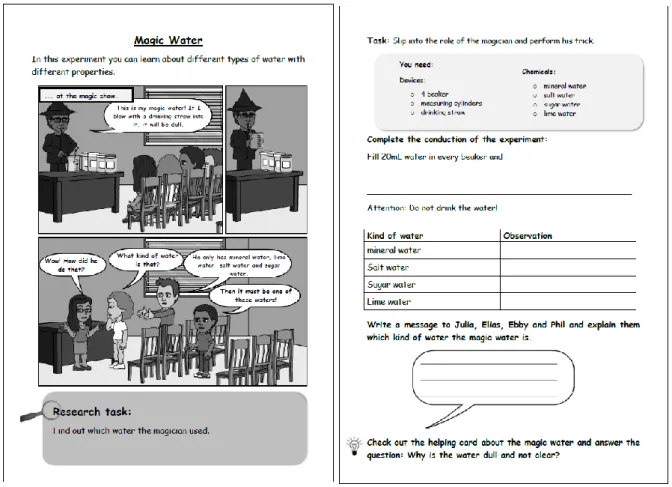
Figure 1. First page of an experimental instruction Figure 2. Second page of an experimental instruction
Figure 3. Comic strip to introduce a scientific issue Figure 4. Single comic figure reflecting on
The figures in the comics were complemented with speech or thought bubbles wherever information or questions needed to be provided. The text of the comics was written in simple, colloquial language without technical terms. If scientific terms became necessary, they were explained in other parts of the instructional materials. Understanding these terms was supported by optional, language-sensitive help cards (Affeldt et al., 2015). The comics were designed to avoid giving immediate answers, so that students need to think about the solution and discuss it among themselves. The comics were also created with the growing diversity of German school students in mind, respecting the widely different migration backgrounds and linguistic capabilities among students from the target student population (Di Fuccia et al., 2012; Markic & Abels, 2014). Thus, the figures in the comics represented different ethnic backgrounds and are gender balanced. However, the comics did not focus the role of students´ cultural knowledge and experience as a strategy to make the instructions more multicultural in detail. In some places, empty spaces were also left for the students to complete the story or to continue with their comic based on their findings from the experimental tasks. The experimental instructions also played different roles. These included mentioning ideas for scientific inquiries, presenting scientific information, suggesting approaches for developing an experiment, or providing helpful hints for solving the tasks in the instructions (see Figure 1, 2, 3, 4).
Background, Method and Sample
Background
This study elaborates data from the non-formal learning environment “Exploring and Improving the Quality of Water”. This learning environment targets 6th grade students (age range 11–13) in lower secondary science education in Germany. Students visit the non-formal learning environment with their teachers as whole classes, generally for about three hours. The sessions start with a short introduction and safety instructions. The students are then free to perform inquiry-based experiments in small groups for about two hours. Selection of the experiments is done by the corresponding teacher, who has the choice of choosing from a set of roughly 20 experiments. The teacher also decides whether students are free to perform experiments of their own choice, or whether they need to follow a previously-defined list of experiments. The sessions end with a short reflection period, which includes the class, their teacher, and the non-formal laboratory staff (Affeldt et al., 2015).
The experimental instructions for this learning environment consist of two pages for each experimental task (Fig. 1a, b). The first page gives a task for an inquiry-based experiment in comic form and a suggested line of inquiry. The second page consists of a short list of laboratory equipment and chemicals which are available for the experimental work. Most of the second page gives suggestions concerning the inquiry process. These instructions aim at provoking autonomous and guided-inquiry learning efforts by the participants (Affeldt et al., 2015). According to this more open learning approach, the experimental instructions are not given as step-by-step instructions. Instead, the students first have to familiarize themselves with the context of the experiment with the help of a comic. With this in mind they have to develop and discuss their own ideas for how to best design and conduct the experiment. The next step is to document how the experiment might be done. Supporting measures for operating the experiment are provided by optional differentiated help cards providing support for understanding the content matter, the potential steps of the experiment, and any linguistic issues or necessary technical terms related to the task (Affeldt et al., 2015). The help cards offer the students to approach the experimental task quite open, but in case of problems help them to move over to a more guided or structured inquiry mode. The use of the differentiated help cards differs generally from one group of students to another, but mainly is operated carefully and reflected (Affeldt, Markic & Eilks, submitted).
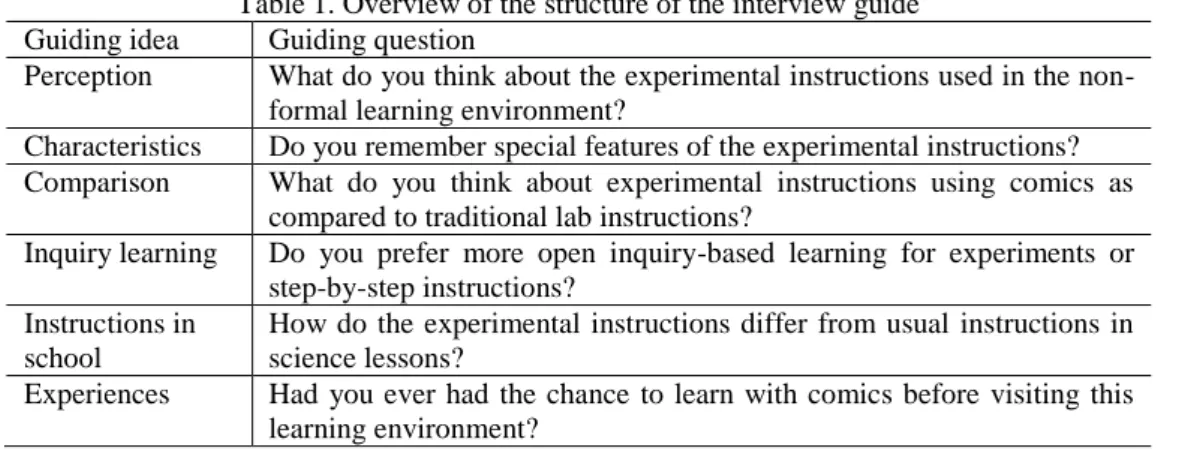
Method
Data was collected using semi-structured interviews. The overall structure of the interview guide is presented in Table 1. The interview guide encompasses questions about students´ perceptions of the use of comics in experimental instructions. It also asks if the students considered such creative elements as effective and motivational as compared to traditional, text-based instructions in students' regular school classes. Each section of the interview was introduced by a guiding question which is then further supported by optional sub-questions. The interview guide was pre-tested in two pilot interviews.
presenting a problem, or supporting a task. The students were asked for spontaneous comments on the design of the instructions.
Table 1. Overview of the structure of the interview guide Guiding idea Guiding question
Perception What do you think about the experimental instructions used in the non-formal learning environment?
Characteristics Do you remember special features of the experimental instructions? Comparison What do you think about experimental instructions using comics as
compared to traditional lab instructions?
Inquiry learning Do you prefer more open inquiry-based learning for experiments or step-by-step instructions?
Instructions in school
How do the experimental instructions differ from usual instructions in science lessons?
Experiences Had you ever had the chance to learn with comics before visiting this learning environment?
The interviews were conducted with pairs of students during their visit when they had a break. Interviewing pairs of students has the risk that dominant students will guide the direction of the interview for both students. However, this approach was chosen in the hope that with these very young students a situation in pairs would provide them with more confidence and that interaction would lead to a richer data base. All of the interviews lasted 10-15 minutes and were first audio-taped, then transcribed. Analysis was carried out following the principles of qualitative content analysis (Mayring, 2000). Using inductive and deductive category development the collected data was first open coded. Afterwards the codes were regrouped in a cyclical process into more general categories. This led to a reduction from 37 initial codes into five core categories with each three to seven sub-categories that later were applied to the data.
After initial rating was completed, two researchers applied the grid of categories to the data. Inter-rater agreement was calculated using Cohen´s kappa (Cohen, 1990). The agreement was = .99. The high agreement can be explained by most of these quite young students having provided very direct, short statements which allowed quite clear, concise coding. In cases of disagreement a joint re-rating was done after discussion between the raters to search for inter-subjective agreement (Swanborn, 1996).
Sample
All students were 6th graders (age range 11-13) from different comprehensive schools from an urban area in the northwest of Germany. The visit of the non-formal learning environment was a compulsory visit of the whole class organized by the corresponding teachers. The classes generally were very heterogeneous in terms of educational background and achievement. The corresponding schools are located in lower socio-economic status areas and are faced with a high degree of students having a migration background.
The sample of the study was purposefully selected to include a good balance of male and female students, high and low achievers, and students with and without migration backgrounds. Students with these corresponding characteristics were suggested by the teachers and participated on a voluntary basis. The total sample consisted of 22 interviews with a total of 44 students from 11 different learning groups. A total of 16 students had a migration background. This is the typical 1:3 ratio of students with migration backgrounds generally in urban regions in Germany although the proportion of students with migration backgrounds was higher in the schools the classes in this project generally are coming from. The gender distribution was almost equal (19 male; 25 female). The findings are presented relating to the number of student pairs (N = 22).
Findings and Discussion
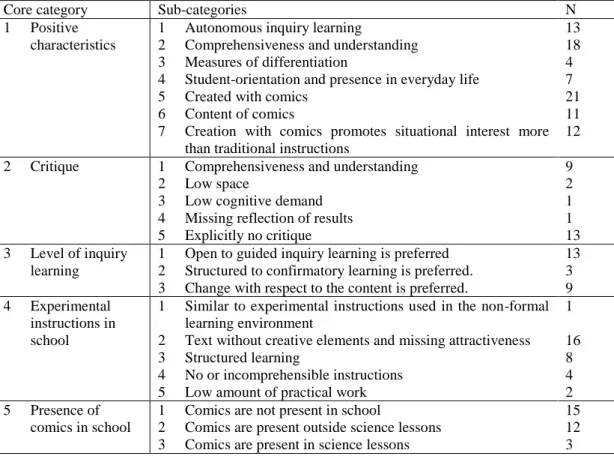
Table 2. Overview of the core- and sub-categories (N refers to the numbers of interviews with each two students.)
Core category Sub-categories N
1 Positive characteristics
1 Autonomous inquiry learning
2 Comprehensiveness and understanding 3 Measures of differentiation
4 Student-orientation and presence in everyday life 5 Created with comics
6 Content of comics
7 Creation with comics promotes situational interest more than traditional instructions
13 18 4 7 21 11 12 2 Critique 1 Comprehensiveness and understanding
2 Low space
3 Low cognitive demand 4 Missing reflection of results 5 Explicitly no critique
9 2 1 1 13 3 Level of inquiry
learning
1 Open to guided inquiry learning is preferred 2 Structured to confirmatory learning is preferred. 3 Change with respect to the content is preferred.
13 3 9 4 Experimental instructions in school
1 Similar to experimental instructions used in the non-formal learning environment
2 Text without creative elements and missing attractiveness 3 Structured learning
4 No or incomprehensible instructions 5 Low amount of practical work
1 16 8 4 2 5 Presence of
comics in school
1 Comics are not present in school
2 Comics are present outside science lessons 3 Comics are present in science lessons
15 12 3
The First Category: Positive Characteristics
Generally, the use of comics in experimental instructions received very positive feedback. The students were open to comic-style experimental instructions. Almost all of the student pairs (21 out of 22 interviews) mentioned the design as a positive feature of the lab instructions: ´I liked everything, also because of the comic´ or ´Yes, I have more fun with comics´. The comics in the experimental instructions were named as an essential point that made teaching and learning ´a little bit more interesting´. The main benefit of using comics was seen to be the increase in student motivation and in the avoidance of reading texts: ´I think the comics in the experimental instructions are well-developed. Students are more interested in the introduction because of the comics. Nobody wants to read things like that in normal text style. Thus, we want to know what the children say.´.
In 18 of the 22 interviews the students referred to aspects related to comprehensibility. They pointed out that they could more easily cope with instructions in comic style. For example: ´In comics, we can see people and it is easier to understand the intent because of the pictures. In other instructions we just have to note down […]´. Especially students with lower linguistic abilities or deficits in reading skills were more engaged to explore the material's content because of the low complexity, simple language, and creative characters in the comics: ´I liked the comic; there are no long sentences. It is just shortened, so that we had to read a bit and then we understood and […] it was funny because of the figures […]`.
Eleven pairs of students explicitly emphasized the story in the comics and the specific figures as a positive styling element. Thus, they liked ´…the story of the four friends and that they explain everything very well´. The special feature was ´…that the figures need students´ help and so that we have to support them in their experiment´. The personalization of the inquiry-based question with young students in the comics offers students a chance for identification with the figures. The specific figures and content in the comics match with what the students know from outside of school.
role and encouraged them to deal with the scientific questions more intensely. Students said that they were familiar with reading illustrated stories created with pictures or other techniques of designing the reading matter. They listed photo love stories, which are often published in youth magazines and consist of a series of photos with text and thought bubbles, as one such source. Students explicitly mentioned: ´I also read comics at home´. They expressed their familiarity with comics as a reason for their appreciation of the experimental instructions.
The Second Category: Critique
When it came to listing negative aspects, there was almost unanimous agreement that hardly anything about the experimental instructions did not appeal to the participants. However, the interviews were conducted with quite young students and one must confess that the students might have been reluctant to mention quite critical views. Nevertheless, a total of 13 pairs of students explicitly stated that they found no negative side to the instructions. In the other interviews, the criticism was very minor. Nine pairs mentioned single issues with regard to comprehensiveness. This might be a result of the uncommon and very open structure of the lab instructions. However, the main intention of the instructions was to provide a bare minimum of necessary information, so as not to overload the students with a high volume of written text. This was done to challenge the students and might have demanded too much from some of them. This was described by one student: ´In one instruction there were no tasks, just speech balloons, and we had to read them, […] but then we did not understand what we had to do.´ This criticism may also be connected to the fact that the reading skills of many 6th graders from this target population are often not well-developed (Markic & Abels, 2014). Coping with comic sequences containing easy sentence structures and a low volume of text should give students, especially those with low linguistic ability, a chance to understand the content. However, even this form of text still might demand too much from some students. Another reason for students´ statements about insufficient comprehensiveness was the phenomena of the “quick glimpse” or skimming technique used by many children. Students are often unmotivated to thoroughly and carefully read texts, even if they know they are vitally important and made of extremely short sentences in speech balloons.
The Third Category: Level of Inquiry Learning
In 13 of the 22 interviews students claimed positive perceptions of the fundamental concept of the instructions, which can be described as a guided inquiry approach. They mentioned that they liked inquiry-based learning in science. One student said: ´I like the fact that we have to puzzle and that not everything is explained.´ This aspect was supported by statements concerning the higher learning effect in comparison to the more conventional instructions often used in schools. The following statement supports this argument: ´Other instructions in school explain in detail how to conduct the experiment. Here you have to explore how the experiment has to finally look in an autonomous way. That is good because otherwise students will not work well.´ This statement indicates that students have positive opinions concerning the open instructions. They prefer such openness in teaching and learning materials over conventional instructions. Twelve pairs of students explicitly linked this to the comics. They described comic-based inquiry approaches as more challenging than “cookbook recipe” instructions or those based solely on text. The latter instructions were often described as far too structured, less fancy, and quite typical of lab instructions in school. Four students also named measures associated with differentiation (e.g. a dictionary for scientific terms, graded help cards, etc.) as positive aspects of the learning environment, which allowed them to better perform the experiment on their own.
The Fourth Category: Experiences with Experimental Instructions in School
Concerning the use of experimental instructions in science lessons, 16 pairs of students stated that lab instructions in school were unattractive due to too much text without any kind of creative components. Statements like: ´Instructions in school […] are sometimes boring in their explanations and consist of long texts. That is not much fun!´ and ´School is boring because of texts. Here it is more fun because of explanations via comics´ support the suggestion that lab instructions in school contain too much text and neglect creativity. The fact that experimental instructions generally do not use comics was especially emphasized by some of the participants. When the students were asked how instructions in school are normally presented, eight students listed step-by-step “to do” lists as the primary design. Comments such as ´[…]a dull paper that says what you have to do […]´ indicate that experimental instructions used in German science lessons are still mainly cookbook recipes. Four pairs explained that they do not use any kind of printed experimental instructions in school and two pairs said that they do not experiment at all.
The Fifth Category: Presence of Comics in School
The last part of the interview examined the presence of comics in teaching and learning in school or in science education. Roughly two thirds of the students stated that they had very rarely been confronted with any comics in school. However, 12 student pairs could remember the use of comics outside of science lessons. This was mainly in other subjects like Latin, German, religion, math, art, French and English. Only three (out of 22) pairs of students could remember the use of comics in science classes. This might have influenced the students' positive perception of the non-formal learning environment. It is possible that there may have been a novelty effect. The non-formal learning environment generally attracts many students because of its different learning situation and out-of-school location. The low level of integration of comics in science classes might be due to different reasons. They may rarely occur in the textbooks in use in schools. The use of comics by teachers might be due to the limited time and the heavy workload facing teachers, including the time pressure involved in creating one's own comics or in spending time searching for them from other sources. Since the use of comics for lab instructions in science is generally uncommon, the corresponding concepts and examples to guide the teachers may also be lacking. However, no evidence for teachers' openness, beliefs and attitudes in the use of comics is available, even if the necessary, corresponding materials were freely available to them.
Conclusion and Recommendations
This case study examined the views of 6th grade students on comic-based experimental instructions and looked into the potential of comics to engage students in inquiry-based learning. The perceptions found in this study indicate that comics have potential to increase learner motivation and personal engagement when dealing with scientific issues. These findings support the positive effects of using comics in science education as previously described by researchers such as Tatalovic (2009). The current study also indicates that approaching lab work through creative elements like comics offers chances to enrich the learning experience as compared to conventional, purely text-based instructions. Students perceived comics as a positive, situational context supporting practical work. At the same time comics were viewed as provoking more open, inquiry-based science learning. Comics connected with daily life contexts were seen to help make the learning experience more intense and to allow students to make their own connections to science questions. Comics helped students to approach science within the framework of a story, which provides a novel avenue to the inquiry-based learning of science.
This study indicates that comics have the potential to attract and motivate a wider spectrum of science students than is currently the case. Sones had already mentioned this factor in 1944 and argued that comics as educational medium allow for simplified language and universal understanding. Later studies by Hosler and Boomer (2011), Lin and Lin (2016) and Spiegel et al. (2013) have shown that learning with comics has great potential for improving science retention among students with low levels of literacy. Our findings indicate similar effects, but do not limit the positive perception to lower achieving students. However, the study does suggest that scientifically disinterested students and those with lower levels of science achievement can be helped in their lab work efforts by creative, comic-based instructions.
might also lack the necessary skills to draw or digitally create comics. More research is needed on the views of teachers, their personal attitudes and PCK on the use of creative elements such as comic-based instructions in science education. However, further research is also needed on whether the positive perceptions described here continue on into higher classes or declines with the age of the learner. Research might also reveal whether different forms of comics are needed to best address the various age groups in schools.
The findings of this study were embedded in the context of non-formal learning, which represents one possibility for enriching formal learning environments, especially with a view on students that are often have problems in the formal learning sector (Affeldt et al., 2017). The relaxed, non-formal setting gave teachers a chance to learn about the use of comics in experimental instructions, how their students would react to them, and to reflect upon whether such aids fit their own, personal teaching style. Affeldt et al. (2015) have already described a non-formal laboratory as a good place to develop innovations for science teaching and to allow teachers to personally experience them with their students. Non-formal learning environments also provide educators with the chance to create innovative experimental instructions in various forms and relate them to what their students experience in their daily lives. They can also address what motivates their students and find ways more easily and quickly implement new and innovative materials and methods (Garner, Hayes & Eilks, 2014). Additionally, non-formal learning environments allow teachers to familiarize themselves with innovations which may personally motivate them to transfer such ideas into their own science classrooms (Eilks et al., 2013). Nevertheless, more research is needed into whether the participating teachers actually implement comics in their classes and what the resulting effects are.
This study indicates that researchers need to invest more time and effort into the design of instructional materials based on comics. Further research is needed to find out exactly which of the potential comic designs are the most promising and effective in a practical school or non-formal learning environment. Also the frame of this study, the non-formal learning environment as a short-term intervention, implies short-term effects and the study is only able to show preliminary results for the students’ perception, and any indicators for changes in motivation and interest. Further research is needed to measure long-term effects, e.g. also for knowledge development. The study was necessarily limited in scope, since it focused on learning material in a specific non-formal learning environment. It was also geared towards a particular age of student. The selected age range of this study is the start of the lower secondary level in Germany, where students are still somewhat childlike in their personal behaviour and learning tactics and strategies. It would be interesting to research how older students perceive comics as supports to inquiry-based learning. For this reason, further research is needed to find out exactly which kind of comics are the most motivating and challenging for different groups in terms of age, achievement, or educational background. It is also necessary to identify the characteristics of best practice comics, the connection between age group and the motivating effects of comics and, finally, whether or not similar effects can also be observed in formal educational settings. At least it should be not neglected that studies on innovations in science education, e.g. the use of comics in experimental instructions to motivate low-achieving and low-interested students, is limited by the novelty factor (Orion & Hofstein, 1994). It should be kept in mind that if one frequently uses comics, original effects in terms of motivation and situational interest might cool down.
Acknowledgements
We gratefully acknowledge the generous funding of the project “Chemistry, environment, sustainability in the non-formal student laboratory” by the German Federal Environmental Foundation (Deutsche Bundesstiftung Umwelt).
References
Arroio, A. (2011). Comics as a narrative in natural science education. Western Anatolia Journal of Educational Sciences, 93-98.
Di Fuccia, D., Witteck, T., Markic, S., & Eilks, I. (2012). Current trends in practical work in German science education. Eurasia Journal of Mathematics, Science and Technology Education, 8(1), 59-72.
Eilks, I., Prins, G. T., & Lazarowitz, R. (2013). How to organize the chemistry classroom in a student active mode. In: I. Eilks & A. Hofstein (eds), Teaching Chemistry - A Studybook (pp. 183-212). Rotterdam: Sense.
Affeldt, F., Weitz, K., Siol, A., Markic, S., & Eilks, I. (2015). A non-formal student laboratory as a place for innovation in education for sustainability for all students. Education Sciences, 5, 238-254.
Garner, N., Siol, A., & Eilks, I. (2015). The potential of non-formal laboratory environments for innovating the chemistry curriculum and promoting secondary school level students education for sustainability. Sustainability, 7(2), 1798-1818.
Affeldt, F., Tolppanen, S., Aksela, M., & Eilks, I. (2017). The potential of non-formal chemistry education for curriculum development and innovation – A perspective based on two cases from Finland and Germany. Chemistry Education Research and Practice, 18, 13-25.
Affeldt, F., Markic, S., & Eilks, I. (submitted). Students´ use of graded learning aids for inquiry learning. Chemistry in Action.
Bennett, J. (2003). Teaching and learning science: A guide to recent research and its applications. London: Continuum.
Blosser, P. (1980). A critical review of the role of the laboratory in science teaching. Columbus: Center for Science and Mathematics Education.
Childs, P. E., Hayes, S. M., & Anne O’Dwyer (2015). Chemistry and everyday life: Relating secondary school chemistry to the current and future lifes of students. In I. Eilks & A. Hofstein (eds.), Relevant chemistry education (pp. 33-54). Rotterdam: Sense.
Cohen, J. (1960). A coefficient of agreement for nominal scales. Educational and Psychological Measurement, 20, 37-46.
Di Raddo, P. (2006). Teaching chemistry lab safety through comics. Journal of Chemical Education, 83(4), 571-573.
Fertig, M., & Schmidt, C. M. (2002). The role of background factors for reading literacy: Straight national scores in the PISA 2000 study. IZA Discussion Paper No. 545. Retrieved from http://legacy.iza.org/en/webcontent/publications/papers/viewAbstract?dp_id=545
Grunwald, P. (2003). Key technology trends: Excerpts from new survey research findings, exploring the digital generation, educational technology. Washington: Department of Education.
Henary, M., Owens, E. A., & Tawney, J. G. (2015). Creative reporting in undergraduate organic chemistry laboratory inspires nonmajors. Journal of Chemical Education, 92, 90-95.
Hofstein, A., Kipnis, M., & Abrahams, I. Z. (2013). Teaching and learning in the chemistry laboratory. In A. Hofstein, & I. Eilks (Eds.), Chemistry education – A studybook (pp. 153-182). Rotterdam: Sense. Hofstein, A., & Lunetta, V. N. (2004). The laboratory in science education: Foundations for the twenty-first
century. Science Education, 88, 28-54.
Hosler, J., & Boomer, K. B. (2011). Are comic books an effective way to engage non-majors in learning and appreciating science? CBE – Life Sciences Education, 10, 309-317.
Hutchinson, K. (1949). An experiment in the use of comics as instructional material. The Journal of Educational Sociology, 23(4), 236-245.
Kennepohl, D., & Roesky, H. W. (2008). Drawing attention with chemistry cartoons. Journal of Chemical Education, 85(10), 1355-1360.
Keogh, B., & Naylor, S. (1999). Concept cartoons, teaching and learning in science: An evaluation. International Journal of Science Education, 21, 431-446.
Kerneza, M., & Kosir, K. (2016). Comics as a literary-didactic method and their use for reducing gender differences in reading literacy at the primary level of education. CEPS (Center for Educational Policy Studies) Journal, 6, 125-159.
Lin, S.-F., & Lin, H.-S. (2016). Learning nanotechnology with texts and comics: the impacts on students of different achievement levels. International Journal of Science Education, 38, 1373-1391.
Lunetta, V. N., Hofstein, A., & Clough, M. P. (2007). Learning and teaching in the school science laboratory: An analysis of research, theory, and practice. In S. K. Abell, & N. G. Ledermann (Ed.), Handbook of Research on Science Education (pp. 393-431). Mahwah: Lawrence Erlbaum.
Markic, S., & Abels, S. (2014). Heterogeneity and Diversity: A growing challenge or enrichment for science education in German schools? Eurasia Journal of Mathematics, Science & Technology Education, 10, 271-283.
Markic, S., Broggy, J., & Childs, P. (2013). How to deal with linguistic issues in the chemistry classroom. In I. Eilks, & A. Hofstein (Eds.), Teaching chemistry - A studybook (pp. 127-152). Rotterdam: Sense. Mayring, P. (2000). Qualitative content analysis. Forum Qualitative Social Research, 1(2). Retrieved from
http://www.qualitative-research.net/index.php/fqs/article/view/1089/2385
Oblinger, D., Oblinger, J., & Lippincott, J. K. (2005). Educating the Net Generation (pp. 6ff). Educause. Retrieved from http://net.educause.edu/ir/library/pdf/pub7101.pdf
Prediger, S., Renk, N., Büchter, A., Gürsoy, E., & Benholz, C. (2013). Family background or language disadvantages? Factors for underachievement in high stakes tests. In A. Lindmeier, & A. Heinze (Ed.), Proceedings of the 37th conference of the international group for the psychology of mathematics education (pp. 49-56). Kiel: PME.
Rota, G., & Izquierdo, J. (2003). “Comics” as a tool for teaching biotechnology in primary schools. Electronic Journal of Biotechnology, 6(2), 85-89.
SCORE (w.y.). Practical work in science. Retrieved from http://www.score-education.org/policy-themes/curriculum/practical-work-in-science
Spiegel, A. N., McQuillan, J., Halpin, P., Matuk, C., & Diamond, J. (2013). Engaging teeanagers with science through comics. Research in Science Education, 43, 2309-2326.
Sones, W. W. D. (1944). The comics and instructional method. TheJournal of Educational Sociology, 18, 232-240.
Swanborn, P. G. (1996). A common base for quality control criteria in quantitative and qualitative research. Quality & Quantity, 30(1), 19-35.
Szafran, Z., Pike, R. M., & Singh, M. M. (1994). Microscale chemistry in the comics. Journal of Chemical Education, 71(6).
Tatalovic, M. (2009). Science comics as tools for science education and communication: A brief, explanatory study. Journal of Science Communication, 8(4), 1-17.
Tobin, K. (1990). Research on science laboratory activities: In pursuit of better questions and answers to improve learning. School Science and Mathematics, 90, 403-418.
Trnova, E., Trna J., & Vacek, V. (2013). The roles of cartoons and comics in science education. In M. F., Dorrio, B. V., & Kires, M. (Ed.), Proceedings of the 10th International conference on hands-on science (pp. 239-242). 1-5 July, Pavol Jozef Safarik University, Kosice, Slovakia.Angeli, E., Wagner, J., Lawrick, E., Moore, K., Anderson, M., Soderland, L., & Brizee, A. (2010, May 5). General format. Retrieved from http://owl.english.purdue.edu/owl/resource/560/01/
Author Information
Fiona Affeldt
University of Bremen, Institute for Science Education Leobener Str. NW2, 28334 Bremen, Germany Contact: [email protected]
Daniel Meinhart
University of Bremen, Institute for Science Education Leobener Str. NW2, 28334 Bremen, Germany
Ingo Eilks