BE FAST BELLA STROKE AWARENESS CAMPAIGN: A QUALITATIVE STUDY OF IMPLEMENTATION FACTORS
Jessica Link Reeve
A dissertation submitted to the faculty at the University of North Carolina at Chapel Hill in partial fulfillment of the requirements for the degree of Doctor of Public Health in the Department of Health Policy and Management in the Gillings School of
Global Public Health.
Chapel Hill 2020
Approved by: Leah Frerichs Sarah Birken
ABSTRACT
Jessica Link Reeve: BE FAST Bella Stroke Awareness Campaign: A Qualitative Study of Implementation Factors
(Under the direction of Leah Frerichs)
Background: Stroke is the fifth leading cause of death in the United States. A stroke occurs every 40 seconds on average, with a death resulting from a stroke every four minutes. Community awareness campaigns for stroke have considerable variability in how they are developed and implemented. The research presented here included a review of the literature to determine if community awareness campaigns for stroke are a useful public health strategy for improving stroke preparedness, and additionally provided a valuable opportunity to learn about perceptions of the BE FAST Bella campaign directly from stakeholders, as well as factors that influenced its implementation in their local community.
Methods: This study used a qualitative, case study design to gain insights about stroke awareness campaigns. The study implemented key informant
interviews of partners who participated, at various levels, in the Wisconsin Coverdell
Stroke Program’s stroke awareness campaign. These partners and additional
stakeholders then attended a workshop to generate strategies for improving stroke awareness campaigns.
1. Implementation climate: high level of buy in
2. Cosmopolitanism: strong internal and external connections
3. Design quality and packaging: BE FAST fit within existing structures 4. Reflecting and evaluating: BE FAST was used to improve care
outcomes
Conclusion: The information gathered through this study has informed the Wisconsin Coverdell Stroke Program, providing crucial insight into stroke awareness campaign implementation at the local level and capturing initiatives that may have gone unnoticed. This study highlighted examples of best practices, identified levels of engagement, and created a learning opportunity for more deeply understanding the work being done on a local level. Broadly across large public awareness
campaigns, the research supports the idea that a statewide campaign can be
implemented by local partners, but suggests that high buy-in is required at the local level and that the campaign must meet local needs. Internal and external
In loving memory of my beloved grandfather, your dedication to service and commitment to education inspired two generations of women dedicated to public
ACKNOWLEDGEMENTS
The completion of this doctoral program would not have been possible without the amazing encouragement and support from my family, friends and colleagues.
To my entire dissertation committee, I am so honored to have a committee filled with female powerhouses. Your thoughtful feedback and mentorship guided me to a stronger overall product. I am indebted to my committee chair Dr. Leah Frerichs for her guidance. Thank you for taking this journey with me.
To the Wisconsin Stroke Coverdell Program team, the staff that supported me during stressful times and frequent travel, our program is a national leader because of all of you. And to all our partners, thank you for continuing to push the envelope and advocating for stroke awareness and quality stroke care within your local communities.
To my mentor, Mary Pesik, for listening while I translated my learning to the work place and for the encouragement you have given me each step of the process.
To my fur babies, Jack and Hyde, who kept my feet warm during countless hours of writing and were there for every moment of this process.
To my friends who understood every time I didn’t have enough time in the
your nudging, this dream would never have become a reality. Thank you for listening, helping me process and supporting me along the way.
To my parents, Barbara and Glen Link, who taught me that it is possible to have a family, earn a doctoral degree and work full time. You led by example on how to include my family in the process and not lose sight of what is most important. This entire process would have been impossible without your constant support and
genuine curiosity about my learning.
Most importantly, to my husband Joe Reeve, who, from an early date when I nervously told you I had just been accepted into this incredible program, told me that you would support me in whatever I wanted to do in life. You held my hand every step of this journey and bore the brunt of the household responsibilities. You brought the most incredible joy to my life with Vera and took my hand in marriage in the middle of this chaos. I love what we have created together.
TABLE OF CONTENTS
LIST OF TABLES ... xi
LIST OF FIGURES ... xii
LIST OF ABBREVIATIONS ... xiii
CHAPTER 1: INTRODUCTION ... 1
Stroke Awareness Campaigns... 2
Wisconsin Coverdell Stroke Program ... 6
Stroke Awareness Messaging in Wisconsin ... 10
BE FAST Bella Stroke Awareness Campaign: A Qualitative Study of Implementation Factors ... 12
CHAPTER 2: REVIEW OF THE LITERATURE ... 13
Sources ... 13
Inclusion and Exclusion Criteria ...14
Study Selection and Data Abstraction ...14
Search Strategy Results ... 15
Overview of Results ...16
What Types of Stroke Awareness Campaigns Were Used? ... 17
Were there Changes in Stroke Symptom Knowledge After the Intervention? ... 18
Were there Correct Responses or Actions to Stroke Symptoms? ...19
Were there Differences in Outcomes by Gender? ... 20
Strengths and Weaknesses ... 21
Discussion ... 22
Implications for a Study of the BE FAST Bella Stroke Awareness Campaign’s Implementation ... 26
CHAPTER 3: RESEARCH DESIGN AND METHODLOGY ... 27
Research Questions and Aims ... 27
Conceptual Framework ... 27
Methods ... 30
Sampling/Participants ... 31
Interview/Data Collection Procedures ... 34
Data Analysis ... 36
CHAPTER 4: RESULTS ... 43
Key Informant Interviews ... 43
Key Findings in Response to the Research Questions and Aims ... 44
Intervention Characteristics ... 50
Outer Setting ... 51
Inner Setting ... 51
Process ... 53
Areas for Improvement ... 60
Workshop Findings ... 62
Workshop Theme 1: Communication ... 64
Workshop Theme 2: Health Equity ... 66
Workshop Theme 3: Sustainability ... 67
Summary of Findings ... 68
CHAPTER 5: PLAN FOR CHANGE ... 69
Process for Implementing Recommendations ... 70
CHAPTER 6: DISCUSSION ... 75
Public Health Benefits of this Research ... 75
Drawbacks and Limitations ... 75
Plans for Future Dissemination ... 76
APPENDIX 1: LITERATURE REVIEW TABLES ... 78
APPENDIX 2: RECRUITMENT EMAILS... 83
APPENDIX 3: INTERVIEW GUIDE ... 85
APPENDIX 4: DEPARTMENT OF HEALTH SERVICES HUMAN SUBJECTS PROTECTION ... 93
APPENDIX 5: WORKSHOP AGENDA ... 94
APPENDIX 6: WORKSHOP NOTES ... 95
LIST OF TABLES
Table 1: Stroke Campaign Language ... 4
Table 2: Search Terms...14
Table 3: Consolidated Framework for Implementation Research (CFIR) ... 29
Table 4: Implementation Construct to Interview Question Map ... 35
Table 5: Codebook Guidelines from the Consolidated Framework for Implementation Research ... 39
Table 6: Major Themes Identified from Interviews with Partners ... 44
Table 7: Themes of Implementation Factors by Low- and High- Participating Partners ... 46
Table 8: Themes of Implementation Factors by Stakeholder Type Partners ... 48
Table 9: Themes of Implementation Factors by CFIR Construct... 55
Table 10: Group Composition for Small Group Discussions... 63
Table 11: Priority Areas Identified from Workshop ... 64
Table A: Overall Quality, Conclusions, and Limitations of Reviewed Studies ... 78
LIST OF FIGURES
Figure 1: American Heart Association FAST Message ... 5
Figure 2: National Institutes of Health Sudden Symptom Message ... 5
Figure 3: Wisconsin Coverdell Stroke Program BE FAST Message ... 6
Figure 4: Centers for Disease Control and Prevention: Stroke Systems of Care Continuum ... 7
Figure 5: Drive times to Certified Stroke Centers in 2012 ... 9
Figure 6: Drive times to Certified Stroke Centers in 2019 ... 9
Figure 7: PRISMA Flow chart of search method and screening results ...16
Figure 8: Data Analysis in Qualitative Research ... 37
Figure 9: Turn the Curve Thinking...41
Figure 10: Kwik Trip Locations in Wisconsin ... 66
LIST OF ABBREVIATIONS
9-1-1 Emergency phone number for North America
ASRH Acute Stroke Ready Hospitals
BAC Brain Attack Coalition
BE FAST Balance-Eyes- Face-Arm-Speech- Terrible Headache and Time to call
BRFSS Behavioral Risk Factor Surveillance System
CDC Centers for Disease Prevention and Control
CT Computed Tomography
EMS Emergency Medical Services
FAST Face-Arm-Speech-Time to call 9-1-1
HSPC Human Subjects Protection Committee
PSC Primary Stroke Center
PRISMA Preferred Reporting Items for Systematic Reviews and Meta-Analyses
TJC The Joint Commission
TSC Thrombectomy-Capable Stroke Center
CHAPTER 1: INTRODUCTION
Stroke is the fifth leading cause of death in the United States, killing about 140,000 Americans each year, the equivalent of one out of 20 deaths. In the United States, a stroke occurs every 40 seconds on average, with someone dying as the result of a stroke every four minutes (Benjamin et al., 2018). Stroke is a leading cause of disability and costs the United States an estimated $34 billion per year for health care services, medications, and missed work. Approximately 87 percent of strokes are ischemic strokes, defined as a blockage of a vessel which provides blood
to an area of the brain. If the area isn’t receiving blood due to the blockage, it can
begin to die. Seeking treatment quickly increases the chance of survival and reduces likelihood of disability (Mozzafarian D, 2016). Stroke patients who arrive at the emergency department within three hours of symptom onset are less likely to experience long-term disability than patients who received delayed care (Fang, 2005).
response. When implemented effectively, stroke awareness campaigns have led to a short term reduction in time before a stroke patient’s arrival to an emergency
department, an increase in the use of the time-sensitive clot busting drug (alteplase), increased speed of arrival by emergency medical services (EMS), and increased reporting of suspected stroke by EMS (Mellon, Doyle, Rohde, Williams, & Hickey, 2015).
Stroke Awareness Campaigns
Development and implementation of community awareness campaigns for stroke are variable. A previous systematic review indicated awareness interventions vary widely and description of the development process for intervention materials and methodology was often not included, limiting potential replication (Mellon et al., 2015). The three most common public awareness messages are the Sudden Signs, the FAST message, and an expansion of the FAST message called the BE FAST message. The Sudden Signs was originally created by the Brain Attack Coalition to identify 99.9% of the presenting symptoms of stroke (Kleindorfer, 2007). Since the list of symptoms in Sudden Signs is considerable, health care professionals were concerned it may be too difficult for the public to remember this information. In 1999, FAST was created based on the Cincinnati Prehospital Stroke Scale. This was an attempt to simplify the message by combining three common stroke warning signs with a plan of action. Although the FAST message captures 88.9% of stroke symptoms (Beal, 2017), the BE FAST message has been shown to reduce the proportion of
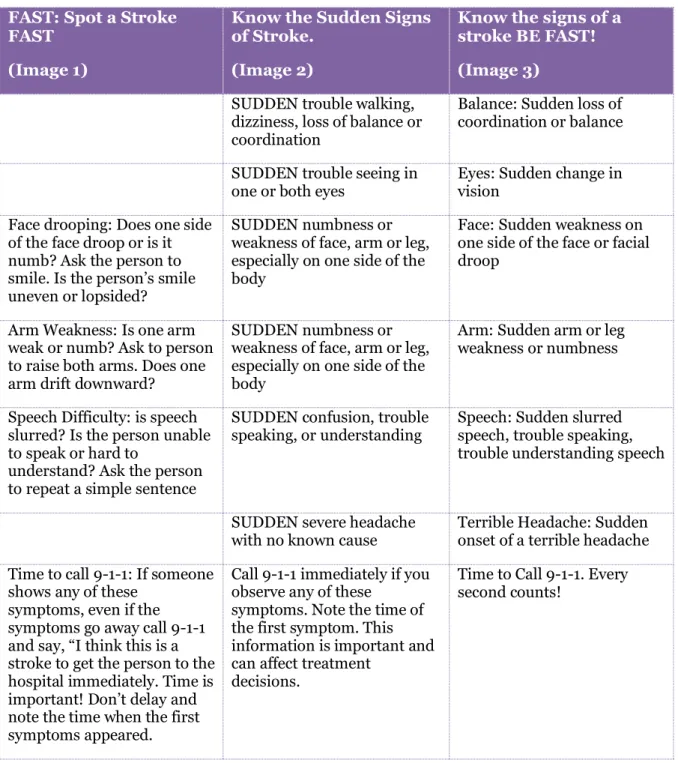
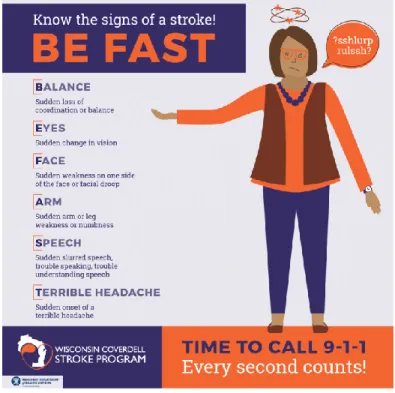
Despite variation in the rates of stroke symptom identification, all three messages are well-accepted by national organizations within the stroke community. However, even the most common public awareness messages have significant variations in imagery and no standard language. Figures 1-3 provide examples of three of the most common awareness campaign messages. Figure 1 is the FAST message from the American Stroke Association, Figure 2 is the National Institutes of Health Sudden Symptom message, and Figure 3 is the BE FAST campaign designed by the Wisconsin Coverdell Stroke Program. Table 1 demonstrates a side-by-side comparison of the language used by the three campaigns.
Beyond different potential public awareness messages, there is often
variability within the implementation of a campaign. Awareness campaigns are often created by a statewide or national organization and then shared with smaller
Table 1: Stroke Campaign Language FAST: Spot a Stroke
FAST
(Image 1)
Know the Sudden Signs of Stroke.
(Image 2)
Know the signs of a stroke BE FAST!
(Image 3)
SUDDEN trouble walking, dizziness, loss of balance or coordination
Balance: Sudden loss of coordination or balance
SUDDEN trouble seeing in
one or both eyes Eyes: Sudden change in vision
Face drooping: Does one side of the face droop or is it numb? Ask the person to
smile. Is the person’s smile
uneven or lopsided?
SUDDEN numbness or weakness of face, arm or leg, especially on one side of the body
Face: Sudden weakness on one side of the face or facial droop
Arm Weakness: Is one arm weak or numb? Ask to person to raise both arms. Does one arm drift downward?
SUDDEN numbness or weakness of face, arm or leg, especially on one side of the body
Arm: Sudden arm or leg weakness or numbness
Speech Difficulty: is speech slurred? Is the person unable to speak or hard to
understand? Ask the person to repeat a simple sentence
SUDDEN confusion, trouble
speaking, or understanding Speech: Sudden slurred speech, trouble speaking, trouble understanding speech
SUDDEN severe headache
with no known cause Terrible Headache: Sudden onset of a terrible headache
Time to call 9-1-1: If someone shows any of these
symptoms, even if the symptoms go away call 9-1-1
and say, “I think this is a
stroke to get the person to the hospital immediately. Time is
important! Don’t delay and
note the time when the first symptoms appeared.
Call 9-1-1 immediately if you observe any of these
symptoms. Note the time of the first symptom. This information is important and can affect treatment
decisions.
Figure 1: American Heart Association FAST Message
Figure 3: Wisconsin Coverdell Stroke Program BE FAST Message
Wisconsin Coverdell Stroke Program
by providing underserved populations with better access to high-quality care. The program has been perpetually recruiting partners over the course of the grant period.
Once recruited, partner’s sign a memorandum of understanding with the Wisconsin
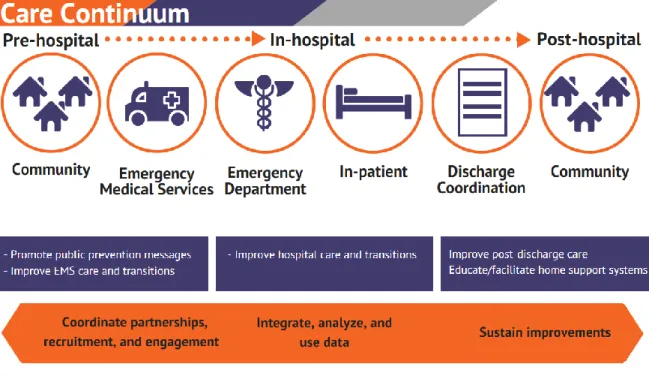
Department of Health Services outlining their commitment to improve stroke systems of care as shown in Figure 4.
Figure 4: Centers for Disease Control and Prevention: Stroke Systems of Care Continuum
Since receiving funds in 2012, the Wisconsin Coverdell Program has helped move the needle on stroke care through rapid cycle quality improvement. For example, in 2018 the Program led a quality improvement project on EMS prenotification. The process identified possible reasons for Wisconsin’s low prenotification rate, which was lower than the national average. Through small tests of change with hospitals, we
because prenotification allows the receiving hospital to prepare for an incoming patient which makes them more likely to receive the timely treatment they need for the best possible outcome.
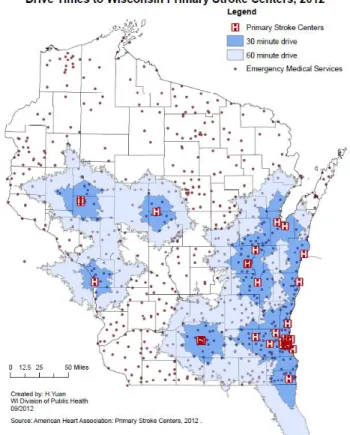
The Program has also made strides in data quality and timeliness in reporting. Our multi-disciplinary approach demonstrated the following results based on annual data from 2013 to 2017. The median time between arrival to the emergency room and computed tomography (CT) initiation decreased from 22 minutes in 2013 to 13 minutes in 2017. The percentage of acute ischemic stroke patients who received alteplase in 60 minutes or less increased from 46.4% to 80.1% by 33.7% from 2013 to 2017 (Bluma, 2019). In 2012, EMS data were reviewed annually with at least a six month lag in reporting. In 2018, EMS data were reviewed quarterly and accessed within 15 days after the quarter closed to begin analysis. EMS partners received quarterly reports within 45 days after the quarter end. Timely reports have allowed partners to provide feedback and address any data concerns more quickly. As illustrated in Figure 5 and
Figure 6, the Program has decreased gaps in service areas where treatment is over 60 minutes away, by supporting hospitals to become engaged in stroke care. In figure 5 the white space indicating areas that are outside of a 60 minute drive from certified stroke centers that were engaged in stroke care in 2012. Figure 6
Figure 5: Drive times to Certified Stroke Centers in 2012
There have traditionally been two levels of stroke certification for hospitals, Primary Stroke Center (PSC) and Comprehensive Stroke Center (CSC). In November 2013, the Brain Attack Coalition (BAC) released its recommendations for acute stroke ready hospitals (ASRHs). These recommendations guide hospitals to increase stroke capacity and develop stroke programs, as well as states and regions working towards developing stroke systems of care. In January 2018, the Joint Commission (TJC) began certifying hospitals for a fourth level of stroke care called
Thrombectomy Stroke Capable (TSC).
Stroke Awareness Messaging in Wisconsin
In addition to the quality improvement work, stroke awareness is a vital component of the program. In the fall of 2017, the Wisconsin Coverdell Stroke Program utilized unspent funding from a previous grant year to centrally develop a stroke awareness campaign to be disseminated to partner hospitals, emergency medical services (EMS), and professional organizations across the state. For the development process, we systematically followed the Intervention Mapping framework (Bartholomew LK, 2011) to identify the most appropriate target populations and educational strategies. The process indicated that a culturally-appropriate character would be the best way to convey the stroke awareness messaging, so the program partnered with a local marketing firm to create an effective character.
at higher risk of stroke because of age. The character was created as a female because nearly 60% of stroke deaths are in women, stroke is the third leading cause of death for women, and nearly one in five women will have a stroke in her lifetime. Despite these statistics, most women do not know their risk of having a stroke (Benjamin et al., 2018). The character was purposely designed to be non-descript and relatable to multiple populations. The Stroke Coordinators of Wisconsin (SCoW) guided the design of the character and campaign language. SCoW is a performance and learning collaborative composed of Wisconsin stroke coordinators. The coordinator role is different at every hospital. A stroke coordinator often has multiple roles within the hospital including clinical educator, director of clinical quality and/or staff nurse. The role may be their full-time position or only a portion of their job. SCoW members reacted to the stroke awareness campaign and suggested edits to the
character and content. Her name, Bella, was selected by vote as an appropriate name for multiple cultures in Wisconsin.
After materials were finalized, all partners had multiple opportunities to order BE FAST Bella materials for their local communities. Announcements were made at quarterly SCoW meetings and two emails were sent to EMS and hospital partners. There was no limit on the number of bookmarks, magnets, posters or blood pressure wallet cards that could be ordered. After all partner requests were submitted, over 117,000 messaging pieces were ordered by 70 organizations. Over half of our partners elected to receive digital files so as to be able to add their own logos to future promotional materials. Pictures, social media files, and a social media toolkit were sent to all partners. Paper materials were mailed in April to partners in
Wisconsin. After all orders were fulfilled, hospital and EMS partners were given the opportunity to order extra materials. In addition to the delivery of individual
marketing materials, three cities were selected for bus campaigns that ran from May
– June. A radio ad on the Wisconsin Radio Network was played across the state for the month of May. It included 2,500 messages and resulted in an estimated 2.4 million gross impressions. There was considerable variability in the implementation of the campaign across various Wisconsin Coverdell Partners. Individual partners decided which materials to order, how many, and how they would distribute the materials.
BE FAST Bella Stroke Awareness Campaign: A Qualitative Study of Implementation Factors
This dissertation reviewed the literature to determine if community
CHAPTER 2: REVIEW OF THE LITERATURE
Based on a preliminary review, over 3,000 articles examined educational interventions targeted at the public for stroke. This included a systematic review of stroke warning campaigns (Mellon et al., 2015). In order to compliment the
systematic review and current research, this literature review investigated the
following question: Are community awareness campaigns for stroke a useful public
health strategy to improve stroke preparedness? Specifically, the articles were
reviewed to identify the types of campaigns utilized, changes in stroke knowledge and responsive behavior, differences in gender response and impact, and factors that influenced implementation. The review aimed to identify gaps in knowledge about stroke awareness campaigns that may lead to opportunities for future research. Sources
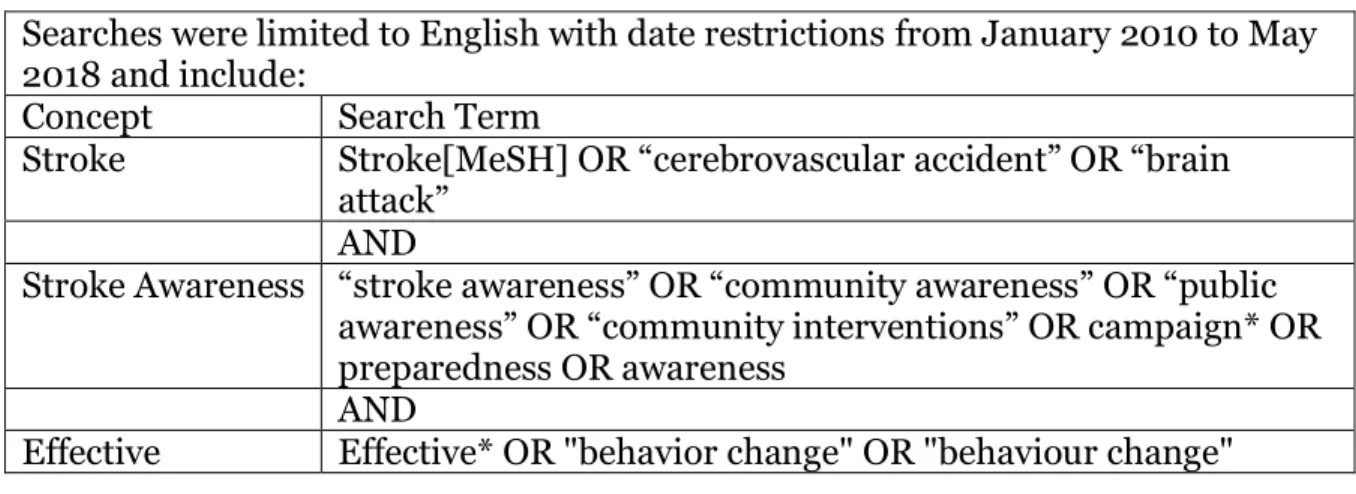
Table 2: Search Terms
Searches were limited to English with date restrictions from January 2010 to May 2018 and include:
Concept Search Term
Stroke Stroke[MeSH] OR “cerebrovascular accident” OR “brain attack”
AND
Stroke Awareness “stroke awareness” OR “community awareness” OR “public awareness” OR “community interventions” OR campaign* OR
preparedness OR awareness AND
Effective Effective* OR "behavior change" OR "behaviour change"
Inclusion and Exclusion Criteria
Preliminary research identified numerous studies exploring the effectiveness of stroke awareness campaigns. Articles from January 2010 to May 2018 were included in order to incorporate new studies not captured in the systematic review undertaken by Mellon, 2015.
The exclusion criteria were as follows:
• Studies that addressed individual stroke education after stroke
• Hospital based interventions (i.e. post-stroke patient education)
• Education aimed at EMS staff
• Education efforts aimed specifically at the pediatric population
• Poster or presentation abstracts
Study Selection and Data Abstraction
criteria and loaded into EndNote x8. Full text articles were retrieved through EndNote and reviewed for inclusion criteria. Notes on the articles were captured in an excel spreadsheet including names of the authors, year, intervention, study design, study population, limitations, and study quality.
Search Strategy Results
The primary search strategy yielded 516 references total from the three databases searched. Articles were saved as XML files and loaded into and
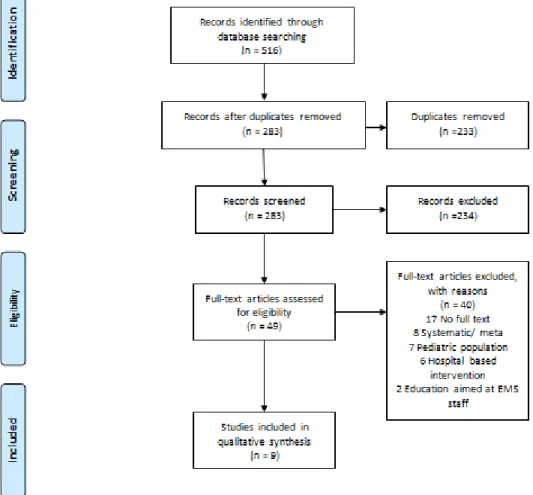
deduplicated in Covidence, which resulted in a final total of 283 articles. Covidence created a Preferred Reporting Items for Systematic Reviews and Meta-Analysis (PRISMA) flow diagram. As shown in Figure 7: PRISMA Flow chart of search method and screening results, the 283 articles were reviewed by initial title and abstract; 234 studies were deemed clearly irrelevant by title or abstract because they did not meet the inclusion criteria. A full-text review was completed on the
remaining 49 articles. In the full text review, 40 articles were excluded for the following reasons: presentation/poster abstracts or no full text available (n=17), systematic review or meta-analysis (n=8), pediatric population (n=7), hospital based intervention (n=6) and education aimed at EMS staff (n=2). The final studies (n=9) were included in the review.
Table A in Appendix 1 demonstrates abstracted data, including author, year, intervention type, study design, study population, limitations, and quality ratings. During the review process, studies were rated for quality. The quality ranking of high, moderate or low was determined by the study design, threats to internal and external validity, and potential bias using guidelines from the Cochrane
2019). Table B in Appendix 1 demonstrates the abstracted data related to the campaign type, knowledge of stroke symptoms, action in response to stroke
symptoms, differences by gender, and factors related to the implementation of the stroke awareness message.
Figure 7: PRISMA Flow chart of search method and screening results
Overview of Results
conducted in European countries, specifically Italy, Ireland, and Sweden (Denti et al., 2017; Mellon, Hickey, Doyle, Dolan, & Williams, 2014; Nordanstig, Jood, & Rosengren, 2013). Two studies were from Japan - one focused on adults over 65 in rural areas (Inoue, Honda, Watanabe, & Ando, 2015), while the other focused on a broader population of adults aged 40-74 (Nishikawa et al., 2016). The last study evaluated several awareness campaigns across multiple countries, including Canada, England, and Australia (Trobbiani et al., 2013).
Two studies were randomized controlled trials (B. Boden-Albala et al., 2010; Denti et al., 2017), one study used a quasi-experimental non- equivalent comparison group (Beal, 2017), one study used a community-based participatory research
approach using a single group with the same individuals pre- and post-test (Skolarus et al., 2016), and the last six studies evaluated effectiveness of campaigns with cross-sectional research that surveyed a set population through mailed and telephonic surveys.
What Types of Stroke Awareness Campaigns Were Used?
radio. Nordanstig (2013) evaluated the Swedish equivalent of FAST (AKUT) after a 27-month national public information campaign. A peer-led workshop-based health behavior intervention was carried out by Skolarus (2016) utilizing a Think FAST workbook. Trobbiani (2013) examined the differences between 3 campaigns using similar messaging; England and Australia used FAST while Canada used the sudden onset of similar symptoms for their awareness campaign. Two studies did not
identify the specific stroke education messaging that was used for the study (Denti et al., 2017; Nishikawa et al., 2016). Denti (2017) mentioned their messaging described the most frequent symptoms, the need to call the emergency phone number and the need for early intervention. Educational products were produced in cartoon form. Were there Changes in Stroke Symptom Knowledge After the
Intervention?
Two of the nine studies focused only on the methodology of evaluating a public awareness campaign without reporting outcomes (Bernadette Boden-Albala et al., 2014; Mellon et al., 2014). Of the remaining seven, six studies showed an
improvement in the ability to identify stroke symptoms. One study showed no significant increase in stroke recognition (p=0.34) in an immediate post-test
(from 26% to 37%). Nishikawa’s (2016) study found knowledge of early stroke symptoms improved significantly for the intervention area (p<0.001) but not in the control area (p=0.088).
In a study by Nordanstig (2013), 15% had heard of the FAST message before the intervention, compared to 51% during and 50% twenty-one months after the campaign. In the same study, 4% could recall some of FAST before the campaign, 23% during and 14% after. These results were considered statistically significant (p<0.0001). Nishikawa (2016) found knowledge of early stroke symptoms improved significantly for the intervention area (p<0.001) but not in the control area
(p=0.088). Trobbiani (2013) noted statistically significant improvement in knowledge of the FAST elements campaign in England and Australia (p<0.001). Were there Correct Responses or Actions to Stroke Symptoms?
Two studies noted no difference in the correct action or response to stroke symptoms. Denti (2017) noted that the difference in likelihood of arrival to the emergency room within two hours was not statistically significant between the intervention and control group. Nishikawa (2016) similarly observed that the intent to call 911 showed no statistically significant differences in either the intervention or control group.
Nordanstig (2013) was able to demonstrate improved outcomes with intent to call 911: 65% before, 76% during, and 73% after 21 months with the 1,500 randomly selected residents that were surveyed at eight points in time before, during, and after the campaign. Skolarus (2016) found appropriate stroke response increased in the immediate post-test (p<0.001). Trobbiani (2013) indicated that a high percentage would call 911 in England (97%), and Australia (90%) but did not have similar outcomes in Canada (67%).
Were there Differences in Outcomes by Gender?
Two studies noted that women generally had a better knowledge of stroke symptoms than men (Inoue et al., 2015; Nordanstig et al., 2013), while in another, male sex was associated with quicker arrival to hospital (Denti et al., 2017). One third of the studies tracked gender but did not analyze for statistical differences (Bernadette Boden-Albala et al., 2014; Nishikawa et al., 2016; Skolarus et al., 2016). Mellon (2014) noted no significant differences between genders with regard to arrival within 3.5 hours. Trobbiani (2013) did not make any note of gender and Beal (2017) only studied women.
implementation factor of engaging - involving appropriate individuals in the implementation and use of the intervention. Beal (2017) and Skolarus (2016)
addressed intervention characteristics of trialability by conducting pilot tests on the selected intervention. Nordanstig (2013) noted that certain external policies could influence outer setting - the economic, political, and social context of the research –
for instance, Swedish national stroke guidelines recommend that information on the importance of recognizing stroke symptoms should be made publicly available. Denti (2017) found their campaign was delivered fairly consistently/homogenously and thus determined that inadequate implementation was unlikely. Finally, Trobbiani’s
(2013) preliminary evidence suggested variation in factors such as audience, media mix, and messaging contributed to differing levels of effectiveness. Notably, none of the studies considered factors that influenced variation in implementation of the stroke awareness messaging and processes.
Strengths and Weaknesses
Three studies were deemed of high quality due to their clearly identified evaluation methods. Beal (2017) used a quasi-experimental nonequivalent
include conclusions in the article. Inoue (2015) believed there may be selection bias in their study. Nishikawa (2016) observed changes even in the control population. Mellon (2014) had very short time periods between campaigns, making it difficult to draw reliable conclusions. Two studies were deemed of low quality. Both Skolarus (2016) and Trobbiani (2013) had substantial attrition that resulted in missing data. The differences in sample sizes from pre- to post-intervention created validity concerns acknowledged by the research team.
Discussion
This literature review covered many different populations from multiple countries, racial groups and cultural and ethnic backgrounds. The nine studies
mostly drew from long-standing public awareness campaign messages, but there was a clear lack of standardization across the stroke preparedness messaging and
evaluation. Furthermore, the reviewed studies included multiple types of
interventions that made it difficult to compare and combine the results. However, lessons can be learned from the studies and translated into small-scale changes for local campaigns.
identify presenting symptoms and assess the proportions of patients who would be missed based on only the FAST symptoms versus the proportion missed after inclusion of gait-related or visual symptoms (i.e., balance/leg weakness [B] and vision, eyes [E]; BE-FAST) (Aroor, 2017). Using the BE FAST message, the
proportion of stroke patients not identified was reduced from 14.1% to 4.4% (Aroor et al., 2017).
Besides the inclusion of balance and eyes in the BE-FAST message improving the amount of stroke patient symptoms captured, it is also critical that
non-traditional stroke symptoms like these are more prevalent in women than men. Similar to a heart attack, women’s signs and symptoms can be much milder, including weakness, fatigue, and mental status changes (Bushnell et al., 2018). Notably, none of the studies evaluated how the new BE FAST message impacts stroke symptom knowledge. While it was not formally evaluated until 2017, it has been in practice by Intermountain Healthcare in Salt Lake City since 2011. Many stroke coordinators in Wisconsin were concerned that the BE FAST message might be too long, as many individuals cannot remember the even shorter FAST message.
Most of the studies observed a change in stroke symptom knowledge after the intervention, indicating that symptom knowledge can be improved and even
typically constrained and resources could be saved by conducting campaigns at less frequent intervals or conducting campaigns focused on high risk populations.
Data showing an improved response or action to stroke symptoms were limited; however, measuring responses such as intent to call 9-1-1 is difficult. A few studies assessed arrival times from symptom onset, while others assessed the arrival mode as a proxy for intent. Rather than directly observing responses, many of the studies relied on lab-based studies where participants were asked to identify correct actions based on fictitious, but realistic, scenarios. Unfortunately, although most people know quickly arriving by EMS is beneficial for improving stroke outcomes, external factors can influence actual responses during real emergency situations. For example, in the United States, many perceive ambulance rides as extremely costly and reasons exist for not calling 911 including a preference for the local hospital over a stroke center, not realizing it was an emergency and thinking that it would be quicker to drive (Ramirez, 2019). In Wisconsin many rural residents share the belief, waiting for EMS to arrive and transfer will take longer than arriving in a private vehicle, indicating that they potentially do not understand that treatment begins in the ambulance, not when they arrive at the hospital.
population, but with differing outcomes when stratified by race and gender. The lack of assessment by gender is a critical gap in the research that should be addressed in the future. Data on gender related to the Wisconsin Coverdell Program is collected in program records but inaccessible for this study due to data use agreements.
This review found that the majority of studies in the United States have been targeted at, and tailored to, black communities which is likely due to increased risk of stroke for African American populations. This may influence generalizability. For example, if stroke awareness education was provided to specific black communities, it is hard to know if the targeted education would yield similar results at a statewide level. Those studies can inform public awareness campaigns in the future, but do not provide strong evidence for what would be effective at a statewide level.
Implementation factors were not specifically addressed in many of the studies. Intervention characteristics, process, and outer setting constructs were identified and considered, but no formal evaluation was completed. One study
concluded that inadequate implementation was unlikely due to the lack of consistent delivery of the intervention. However, this is only one out of multiple constructs related to implementation that should be considered before drawing this conclusion.
This review did have limitations. Many studies excluded through the initial abstract and title reviews focused on education within the hospital or were
interventions designed for EMS staff. The exclusion criteria omitted articles that were saved for future use and added value to the Wisconsin Coverdell Stroke
Implications for a Study of the BE FAST Bella Stroke Awareness Campaign’s Implementation
This review identified opportunities for future research in many different areas. Stroke awareness campaigns using the FAST message are an effective method for improving stroke symptom recognition. Most of the studies showed knowledge gained at statistically significant levels, but evidence was limited that the knowledge translated to the correct action. Further research is needed to determine how
communities respond to campaigns and what can be done to better translate awareness to action. Additional community education could improve the local
population’s awareness of EMS coverage and how to find information about
individual coverage before an emergency happens.
CHAPTER 3: RESEARCH DESIGN AND METHODLOGY
Research Questions and Aims
The goal of this dissertation is to identify factors that influence the implementation of community outreach campaigns for stroke awareness by Wisconsin Coverdell Stroke Program partners. My primary research question is:
What are the perceptions of stroke care providers regarding implementation
factors influencing stroke awareness campaigns within their community?
The aims of the research are the following:
Aim 1: Identify perceptions from hospital stroke coordinators and EMS providers
of barriers and facilitators to the implementation of stroke awareness campaigns
in their local communities.
Aim 2: Identify opinions from hospital stroke coordinators and EMS providers
about how to improve the implementation of stroke awareness campaigns in their
local communities.
Conceptual Framework
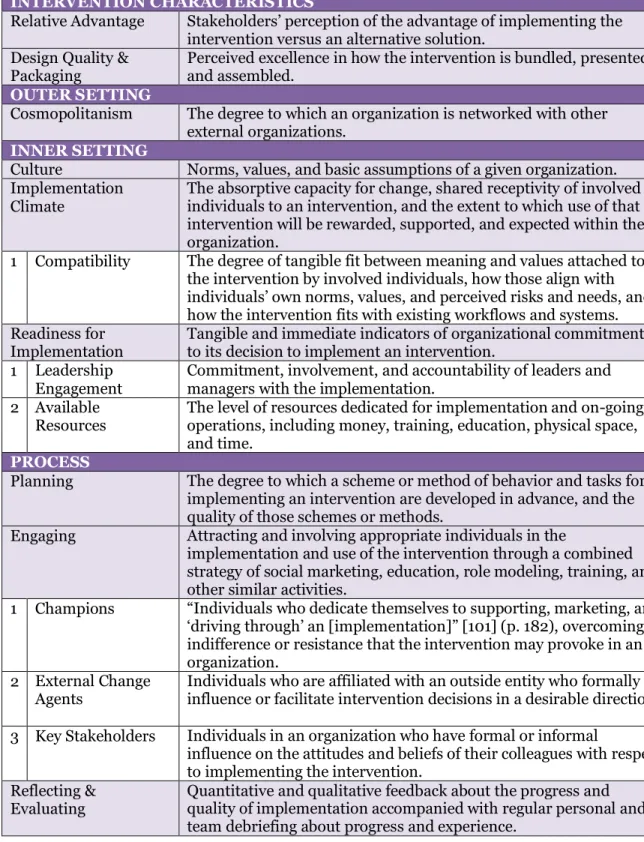
The Consolidated Framework for Implementation Research (CFIR) was utilized to identify perceptions of barriers and facilitators (constructs) to
implementation of stroke awareness campaigns in local communities. The CFIR includes 39 constructs: discrete theoretical concepts which are classified into five domains of conceptually-related constructs. Domains include intervention
process. The CFIR has been applied to a diverse array of studies, including research identifying determinants of successful implementation of evidence-based practices in public health agencies (Kirk MA, 2016). The framework’s online availability facilitates access to validated sample interview questions and coding instructions. Fifteen of the CFIR constructs were selected to guide this dissertation, as identified in Table 3. CFIR constructs were chosen by reviewing the short description; a few constructs were removed because they were not relevant. For example, the
Table 3: Consolidated Framework for Implementation Research (CFIR)
INTERVENTION CHARACTERISTICS
Relative Advantage Stakeholders’ perception of the advantage of implementing the
intervention versus an alternative solution. Design Quality &
Packaging Perceived excellence in how the intervention is bundled, presented, and assembled. OUTER SETTING
Cosmopolitanism The degree to which an organization is networked with other external organizations.
INNER SETTING
Culture Norms, values, and basic assumptions of a given organization.
Implementation Climate
The absorptive capacity for change, shared receptivity of involved individuals to an intervention, and the extent to which use of that intervention will be rewarded, supported, and expected within their organization.
1 Compatibility The degree of tangible fit between meaning and values attached to the intervention by involved individuals, how those align with
individuals’ own norms, values, and perceived risks and needs, and
how the intervention fits with existing workflows and systems. Readiness for
Implementation Tangible and immediate indicators of organizational commitment to its decision to implement an intervention. 1 Leadership
Engagement Commitment, involvement, and accountability of leaders and managers with the implementation. 2 Available
Resources The level of resources dedicated for implementation and on-going operations, including money, training, education, physical space, and time.
PROCESS
Planning The degree to which a scheme or method of behavior and tasks for
implementing an intervention are developed in advance, and the quality of those schemes or methods.
Engaging Attracting and involving appropriate individuals in the
implementation and use of the intervention through a combined strategy of social marketing, education, role modeling, training, and other similar activities.
1 Champions “Individuals who dedicate themselves to supporting, marketing, and
‘driving through’ an [implementation]” [101] (p. 182), overcoming
indifference or resistance that the intervention may provoke in an organization.
2 External Change
Agents Individuals who are affiliated with an outside entity who formally influence or facilitate intervention decisions in a desirable direction.
3 Key Stakeholders Individuals in an organization who have formal or informal
influence on the attitudes and beliefs of their colleagues with respect to implementing the intervention.
Reflecting &
The results-based accountability framework was used to guide workshop participants. The Results-Based Accountability Guide uses and is based upon concepts and materials developed by Mark Friedman, author of Trying Hard is Not Good Enough (Trafford 2005). Workshop participants were divided into groups, after finding consensus on the most critical measures to improve, the Results-Based Accountability Guide provides a step-by-step process called turn the curve thinking. Methods
This study used a qualitative, case study design to gain insights about stroke awareness campaigns. The qualitative case study design employed a variety of sources to facilitate exploration of the implementation characteristics. The process ensured implementation characteristics were viewed through diverse perspectives. The study implemented key informant interviews of partners who had varying levels of participation in the Wisconsin Coverdell Stroke Program’s stroke awareness
campaign. The results from the key informant interviews were used to address Aim 1. These partners and additional stakeholders then attended a workshop to generate strategies for improving stroke awareness campaigns using the Results Based Accountability framework, addressing Aim 2.
The study was approved by the University of North Carolina (UNC) at Chapel
Hill’s Institutional Review Board. The office of Human Research Ethics at UNC
reviewed the submission, Reference ID 233398, and it was determined to be exempt from further review according to the regulatory category cited above under 45 CFR 46.101(b). Additional approvals and forms were not required by the State of
standards for public health practice and is in compliance with existing Wisconsin statutes. The HSPC concluded that this analysis is considered public health practice, and additional IRB review and oversight were not required (Appendix 3).
Sampling/Participants
Key informant interviews provided the opportunity to have in-depth, semi-structured interviews with partners that had first-hand knowledge and experience with the campaign. The interviews provided insight into what happened at a local level and helped to capture initiatives that may have gone unnoticed. Further, interview participants were purposively sampled in two groups:
organizations/agencies with high participation in the BE FAST campaign, and those with low participation. This sampling approach allowed me to determine if these groups experienced differences in implementation barriers and facilitators. To identify members of high- and low-participation groups, we relied on internal program records, which are currently used to report process and outcome performance measures and includes demographic information on each partner, locations, certification levels, size, primary contact information, and participation in program events including BE FAST Bella. Specifically, program staff recorded
participation by all partners in program-sponsored meetings, educational events, annual surveys, and special requests for evaluation. In addition, program staff tracked all requests for BE FAST Bella materials and made notes of additional ways Bella has been used by tracking partner communication (emails, phone, in-person conversations). For example, some partners communicated that they made
Hospital partners were considered high-participating if they ordered a large amount of BE FAST Bella materials relative to their hospital size (between 800 and 12,000 individual BE FAST Bella items), participated in the annual hospital
inventory and attended three out of the last four Stroke Coordinator meetings. Hospital partners were considered low-participating if they ordered a small amount of BE FAST Bella materials (less than 800 individual BE FAST Bella items), attend SCOW meetings occasionally (two or fewer of the last four meetings) and may or may not have completed the annual hospital inventory.
EMS partners were considered high-participating if they ordered a large amount of BE FAST Bella materials relative to their community size (between 250 and 2,000 individual BE FAST Bella items) participated in the annual EMS
inventory, and engaged in quality improvement based on results presented in quarterly EMS report cards for stroke data. EMS partners were considered low-participating if they ordered a small amount of BE FAST Bella materials (less than 250 individual BE FAST Bella items), may or may not have completed the annual EMS inventory, and did not actively engage in funding or quality improvement opportunities.
Key informant interviews were conducted with partners from hospitals, EMS agencies, and statewide organizations with the following breakdown:
• 6 hospital partners (2 low-, 4 high-participating)
• 6 EMS partners (2 low-, 4 high-participating)
• 3 statewide partners (1 low-, 2 high-participating)
Interviews from each agency/organization were conducted with the main program contact on stroke initiatives as identified in the Coverdell Stroke Partner Agreement on file at the Wisconsin Department of Health Services. For hospitals, this participant is each hospital’s respective stroke coordinator. The EMS partners’
main program contact varies by agency. Depending on the size of the agency, the contact could be the medical director, training director or a staff person interested in stroke. Similarly, the program contact varies across the statewide partners.
Statewide partners are large organizations that help advance stroke work in Wisconsin. Statewide partners include industry partners like Genetech and
Medtronic, professional organizations such as the Wisconsin Hospital Association and the Wisconsin EMS Association, state agencies like the Wisconsin EMS Office and the Wisconsin Office of Rural Health, and advocacy organizations such as the American Heart Association. The program contact for these agencies can be a quality improvement coordinator, executive director, or a stroke sales
representative.
Inclusion/Exclusion Criteria. All interviewees had to be in their current role
since at least March of 2018 to ensure exposure to the BE FAST Bella Stroke
Coverdell Stroke Program and received communication from the program at least monthly.
Interview/Data Collection Procedures
The interviews were conducted and recorded using Skype for Business after gaining consent to record. During the interview, I took simultaneous notes. The interviews assessed the perceptions of hospital and EMS partners on facilitators and barriers to implementing the BE FAST Bella Stroke Awareness Campaign at a local level. The questions were structured in relation to the 15 CFIR constructs identified in Table 3. The interviews were semi-structured to allow for dialogue, conversation, and a free flow of information. The key informant interviews were pilot-tested with
the program’s Stroke Project Specialist, a former stroke coordinator, to assess clarity and understandability of the questions and estimate interview duration. The
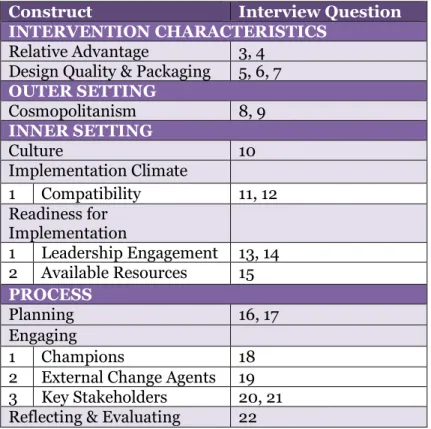
interviews were scheduled in advance, and interviewees were provided a list of questions prior to their scheduled interview for review. The questions were structured using the CFIR guide and mapped in Table 4.
Table 4: Implementation Construct to Interview Question Map
Construct Interview Question
INTERVENTION CHARACTERISTICS
Relative Advantage 3, 4 Design Quality & Packaging 5, 6, 7
OUTER SETTING
Cosmopolitanism 8, 9
INNER SETTING
Culture 10
Implementation Climate
1 Compatibility 11, 12 Readiness for
Implementation
1 Leadership Engagement 13, 14 2 Available Resources 15
PROCESS
Planning 16, 17
Engaging
1 Champions 18
2 External Change Agents 19 3 Key Stakeholders 20, 21 Reflecting & Evaluating 22
Informed consent was secured from all participants using the adult consent form and the verbal/phone consent form that was generated during the Institutional Review Board (IRB) process through the Office of Human Research Ethics at the University of North Carolina at Chapel Hill. The overarching principle for the
While recording interviews with key informants, I took simultaneous notes. All completed forms, digital recordings, and field notes will be kept in a locked cabinet at the Wisconsin Department of Health Services. The Institutional Review Board determined that the study met the criteria for Level II data security
requirements. Data Analysis
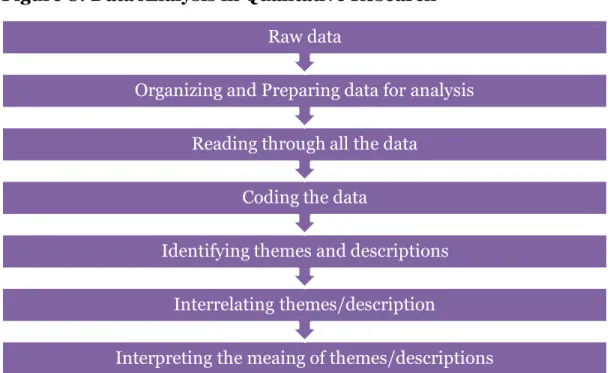
Data analysis followed the qualitative research design in Figure 8. Data from the key informant interviews were transcribed verbatim using Temi, an online
advanced speech recognition software. Since the interview recordings were clear, the transcription resulted in 90-95% accuracy. After the online transcription was
completed, I compared every recording to the transcript to ensure accuracy. This process also allowed me to become familiar with the data. All notes and transcripts were reviewed for overall understanding, during which I identified patterns and themes that were then used to guide planning of the subsequent workshop.
Once the transcription was complete and reviewed, the data were exported to MAXQDA to be coded. MAXQDA is a software system designed to organize
Figure 8: Data Analysis in Qualitative Research
Source: Creswell, 2018
A preliminary codebook was created based on the CFIR constructs. I provided one hospital, EMS and statewide transcript, draft code book, interview guide, and the Implementation Construct to Interview Question Map to an external coder who has experience in qualitative research and familiarity with the Wisconsin Coverdell Stroke Program. We reviewed all of the documents and then independently coded all three transcripts. We reviewed the transcripts together to determine reliability, find any discrepancies, and refine the codebook. We came to consensus on additional codes and clarified definitions from the preliminary codebook. Both coders were confident of the results and a codebook for classification of data was finalized as displayed in Table 5. At this point, I coded the remaining interviews alone.
The analysis was conducted in three iterative phases: immersion, reduction, and interpretation, with each phase of creating new knowledge. An expert in
Interpreting the meaing of themes/descriptions Interrelating themes/description
Identifying themes and descriptions Coding the data
Reading through all the data
qualitative research was consulted for guidance on data organization, display, and interpretation.
The process of coding allowed me to index the data and identify emerging themes related to the aims of the research question. Key informant partner data were separated by level of participation allowing themes to be compared and contrasted. During the interpretation phase, I identified explanations, patterns, themes, and relationships while determining recommendations on how the findings may be used.
Table 5: Codebook Guidelines from the Consolidated Framework for Implementation Research
Construct Inclusion criteria
INTERVENTION CHARACTERISTICS
Relative Advantage Include statements that demonstrate the innovation is better or worse than existing programs
Design Quality & Packaging Include statements regarding the quality of the materials
OUTER SETTING
Cosmopolitanism Include descriptions of outside group membership and networking done outside the organization
INNER SETTING
Culture Include statements related to structure and focus of the organization
Implementation Climate Include statements regarding the general level of receptivity to implementing the innovation 1 Compatibility Include statements that demonstrate the level of
compatibility the innovation has with organizational values and work processes. Include statements that the innovation did not need to be adapted
Readiness for
Implementation Include statements regarding the general level of readiness for implementation
1 Leadership Engagement Include statements regarding the level of engagement of organizational leadership
2 Available Resources Include statements related to the presence or absence of the resources described above or resources specific to the innovation that is being implemented
PROCESS
Planning Include evidence of pre-implementation diagnostic assessments and planning as well as refinements to the plan
Engaging Include statements related to engagement strategies and outcomes
1 Champions How the champion became engaged with the innovation and what their role is in implementation.
2 External Change Agents How the external change agent (entities outside the organization that facilitate change) became engaged with the innovation and what their role is in implementation 3 Key Stakeholders How the stakeholder became engaged with the
innovation and what their role is in implementation Reflecting & Evaluating Include statements that refer to the process used in
implementation, i.e., the implementation team’s (lack of)
Workshop Methods
I hosted a workshop to gather additional information. The workshop goals were to gain a deeper understanding of the factors that influenced implementation by our partners and to identify opinions about how to improve the implementation of the BE FAST Bella Stroke Awareness campaign at the local level. The workshop occurred after initial key informant interview data were analyzed. The data collected from the key informant interviews aided in developing the prompts and questions presented at the workshop.
The workshop began with a short presentation to share preliminary data from the key informant interviews and set expectations for the day. All of the individuals who served as key informant interviewees were invited to participate, as well as the entire membership of the Wisconsin Coverdell Stroke Steering Committee. The Steering Committee provides oversight and guidance to the program, and includes stroke partners from hospitals and EMS, professional organizations, academic institutions, public health, and industry across the state. The inclusion of this
additional group of partners served to create buy in and create a sense of urgency as the program moved towards the plan for change. The workshop provided an
opportunity for the group to come to a consensus on how best to advance the BE FAST Bella campaign.
brainstorm ways to work together on future campaigns. Workshop participants were guided using the results-based accountability framework. The Results-Based
Accountability Guide uses and is based upon concepts and materials developed by Mark Friedman, author of Trying Hard is Not Good Enough (Trafford, 2005). Workshop participants were divided into groups of four to five participants. After finding consensus on the most critical measures to improve, the Results-Based Accountability Guide provides a step-by-step process called turn the curve thinking in Figure 9: .
Figure 9: Turn the Curve Thinking
Source: Trafford, 2005
Each group was presented with a theme that was common among the key informant interviews and asked to discuss the following questions:
1. How are we doing?
3. Who are the partners that have a role to play in turning the curve? 4. What works to turn the curve?
5. What is our action plan to turn the curve?
This methodology was used to identify priority areas for the Wisconsin Coverdell Program to address in order to improve future stroke awareness
CHAPTER 4: RESULTS
This chapter reports the results of the semi-structured key informant
interviews held with partners who had first-hand knowledge and experience with the BE FAST stoke awareness campaign. These interviews provided insight into what happened at a local level and helped capture initiatives that may have gone
unnoticed. Themes detailed below were identified across the CFIR constructs. A total of 15 interviews were conducted, the majority of the participants were female (60%) and all had been working in their current position since at least January of 2018. Interviewees had been working with the current grant for an average of 3.23 years as of June 30th, 2019.
Key Informant Interviews
To address Aim 1 (identifying perceptions from hospital stroke coordinators and EMS providers of barriers and facilitators to the implementation of stroke awareness campaigns in their local communities),I identified four major themes for a successful implementation of the BE FAST Bella Campaign as identified in Table 6. Across the various stakeholder types and levels of participation, the themes included implications from intervention characteristics, outer setting, inner setting, and process. Many themes were applicable to more than one CFIR construct. The first theme was a high level of buy in, including robust participation from key
being well connected within their own organization, within their community and within the statewide stroke community. The third theme emphasized how the stroke campaign, in this case BE FAST Bella, fit into existing structures. Many interviewees commented on how easy it was to implement the campaign based on the type and quality of materials. One interviewee even remarked that “Bella walked right in and
sat down”, emphasizing how the materials created made it so simple to implement
the campaign in various settings. Fourth, BE FAST Bella was used to improve care outcomes. Interviewees often mentioned how the quality of patient care was
impacted by their quality improvement efforts, community events and ongoing staff education efforts.
Table 6: Major Themes Identified from Interviews with Partners Theme # Major Theme
1. Implementation climate: high level of buy in
2. Cosmopolitanism: strong internal and external connections 3. Design quality and packaging: BE FAST fit with existing
structures
4. Reflecting and evaluating: BE FAST used to improve care outcomes
Key Findings in Response to the Research Questions and Aims
Table 7: Themes of Implementation Factors by Low- and High- Participating Partners
Themes Low Participating
Quotes Participating High Quotes
Comparison
Intervention
Characteristics I mean somehow you have to tell people what a stroke is. Cause obviously people don't know. So I don't know that BE FAST is too long to remember because really what you want them to
remember is the, and some of the signs and symptoms, you know, whether they remember a couple of them.
It has more of an advantage, in recognition of two very important stroke symptoms; It has really brought an awareness to the dizziness at our
facility, So we’re
really starting to recognize dizziness as a stroke symptom.
High participating partners were more excited about the campaign, the low participating partners were neutral on the
message and didn’t
have a preference on BE FAST over any other
campaign.
Outer Settings Depending on what my work allows me to do, what the unit needs, then I can try to, make it for, the meetings and, if it gets, gets, gets too wild and hairy and crazy at work, then if I can respond to emails and all that stuff without staying after a 12 hour shift, then I'll do it though so it kind of just varies.
Quite a bit actually. That's pretty much what my job is
outreach coordinator. I work with multiple entities on different trainings, outreach, EMS services, other hospitals, schools, community programs. Our department itself, is big on community outreach and EMS outreach, so it's a pretty vast outreach program.
High participating partners noted a higher amount of internal and external networking.
The difference was most notable in hospital partners.
There wasn’t a
discernable difference among statewide partners and EMS.
Inner Settings I guess when we first initially started all this, actually had a different director and she was a little, you know, more gung Ho on all of it. Like she was like the cheerleader kind of type of person anyway, but she was like that. Um, but there's not one particular person that's, excited about it.
We kind of ran with it once you sent us the camera ready things because we already had a lot of, we were planning to utilize it and all we did and we just, once we got it, we just kind of
dropped it in to all the things where we had fast before.
Process We do quality
assurance on all of our stoke calls. We created a new position within the fire department called an EMS
coordinator. And one of the areas that we focus heavily on is the quality assurance of the stroke calls that we go on. And then our assessments of the patients.
We try to implement all the Coverdell metrics into our QI/QA process to make sure that we're doing kind of what the standard is as far as EMS care and kind of putting that out there as well to our other EMS services when we do
education. So we try to tie it in with
whatever we're doing.
Both high and low participating partners identified how they have worked stroke quality measures in their quality improvement efforts.
Both EMS and hospital partners had a high level of buy in for the
intervention, though for different reasons. EMS trusted the message because it came from the state and had backing from the Department of Health Services (DHS), while hospital partners appreciated the evidence-based reasoning behind the change and the level of engagement in campaign design. In regard to intervention
characteristics, EMS partners were very direct about the fact that they have many competing priorities and stroke is typically just 5% of the calls that they take.
Table 8: Themes of Implementation Factors by Stakeholder Type Partners
Themes EMS Hospital State
Organization Comparison Intervention
Characteristics Yeah, I think that they're good. It’s
about having a consistent, recognizable message out there and I really believe that, that we're, we're getting some positive feedback by the consistency of the message.
In, in our, in our community and our
facilities are big on following best practices, evidenced based clinical research. So as soon as, we talk about those types of things and say that, with new research showing that the balance and the eyes are, everybody was like, Oh yeah, absolutely.
I don't think that there is much distinction between them.
EMS partners had a high level of buy in because it came from the state and had backing from DHS.
Hospital partners had a high level of buy in because of the evidence behind the change and the level of engagement in campaign design.
Statewide partners were more neutral on the campaign.
Outer Settings I do it a lot. I would say that I have a very good working relationship, especially with the hospitals in the area. So, at least within the medical community. We do a lot of networking and we do a good job.
I network a lot. There's always discussion what other facilities are doing and we collaborate.
It doesn't feel like they're our competition. And I think when you quit thinking about other facilities as being competition, but as being partners in improving the healthcare in the state of Wisconsin, that is when you feel
Daily. I mean, that's my job.
We spend a lot of time
figuring out how we're going to get the word out. How they're doing with the patients that come in, how do we get more people in? How do you spread the word? How do you make people come in for treatment? Um, all that kind of stuff.
like you're doing the right thing. And we have a lot of that going on here.
So we, I mean that's what I do every single day of the year.
Inner Settings We do a lot of them fire prevention things. When it comes to getting the personnel to do it, we're understaffed and,
That's just a, a matter of fact for us is that we are understaffed our call volume continues to rise. We continue to take on additional things. We try to be proactive but we're turning out to be more reactive just because of the number of things that we're asked to do.
I think starting off it was great. I mean we had what we were able to do to him, you know, to especially the maintenance and the posters. I mean that, that's how we started. So I, and then as things
progressed and utilize the bookmarks and found different ways to utilize that stuff is, is great.
I would say that stroke, the stroke is one of many clinical conditions that we focus on regarding quality. I would say stroke is in the top.
EMS partners were very frank about the fact that they have many competing priorities and stroke is typically 5% of the calls that they take.
Hospitals were very engaged but most hospital
partner’s that
were interviewed were stroke coordinators and doing stroke work every day.
Statewide partners aligned with the type of partner that they typically
represent or saw it was one of many quality initiatives that are a focus.
Process We really have
a difficulty getting good information out of our reporting system. We have to have better reporting.
According to what I'm seeing, just looking at stroke alerts, I think there's a lot more coming in by EMS and there it had
previously been. I know
Checkpoint, it's a publicly reported data website. Stroke inpatient core measures were retired because hospitals had essentially topped out on those, on those