Review article
Barriers and facilitators of interventions for improving
antiretroviral therapy adherence: a systematic review
of global qualitative evidence
Qingyan Ma1,2,3,4, Lai Sze Tso1,3, Zachary C Rich1, Brian J Hall5,6, Rachel Beanland7, Haochu Li1,4,8, Mellanye Lackey9, Fengyu Hu2, Weiping Cai2, Meg Doherty7and Joseph D Tucker§,1,4
§Corresponding author:Joseph D Tucker, University of North Carolina Chapel Hill Project-China, No. 2 Lujing Road, 510095 Guangzhou, China. ([email protected])
Abstract
Introduction: Qualitative research on antiretroviral therapy (ART) adherence interventions can provide a deeper understanding of intervention facilitators and barriers. This systematic review aims to synthesize qualitative evidence of interventions for improving ART adherence and to inform patient-centred policymaking.
Methods: We searched 19 databases to identify studies presenting primary qualitative data on the experiences, attitudes and acceptability of interventions to improve ART adherence among PLHIV and treatment providers. We used thematic synthesis to synthesize qualitative evidence and the CERQual (Confidence in the Evidence from Reviews of Qualitative Research) approach to assess the confidence of review findings.
Results: Of 2982 references identified, a total of 31 studies from 17 countries were included. Twelve studies were conducted in high-income countries, 13 in middle-income countries and six in low-income countries. Study populations focused on adults living with HIV (21 studies,n1025), children living with HIV (two studies,n46), adolescents living with HIV (four studies, n70) and pregnant women living with HIV (one study, n79). Twenty-three studies examined PLHIV perspectives and 13 studies examined healthcare provider perspectives. We identified six themes related to types of interventions, including task shifting, education, mobile phone text messaging, directly observed therapy, medical professional outreach and complex interventions. We also identified five cross-cutting themes, including strengthening social relationships, ensuring confidentiality, empowerment of PLHIV, compensation and integrating religious beliefs into interventions. Our qualitative evidence suggests that strengthening PLHIV social relationships, PLHIV empowerment and developing culturally appropriate interventions may facilitate adherence interventions. Our study indicates that potential barriers are inadequate training and compensation for lay health workers and inadvertent disclosure of serostatus by participating in the intervention.
Conclusions: Our study evaluated adherence interventions based on qualitative data from PLHIV and health providers. The study underlines the importance of incorporating social and cultural factors into the design and implementation of interventions. Further qualitative research is needed to evaluate ART adherence interventions.
Keywords: ART adherence; intervention; qualitative research; systematic review; health policy.
To access the supplementary material to this article please see Supplementary Files under Article Tools online.
Received18 April 2016;Revised15 August 2016;Accepted14 September 2016;Published17 October 2016
Copyright:–2016 Ma Q et al; licensee International AIDS Society. This is an Open Access article distributed under the terms of the Creative Commons Attribution 3.0 Unported (CC BY 3.0) License (http://creativecommons.org/licenses/by/3.0/), which permits unrestricted use, distribution, and reproduction in any medium, provided the original work is properly cited.
Introduction
High levels of antiretroviral therapy (ART) adherence are necessary to achieve viral suppression, prevent drug resis-tance [1] and reduce opportunistic infections and morbidity [2]. UNAIDS proposed the 90-90-90 goals to end the AIDS epidemic by 2030 [3]. The third goal focuses on achieving viral suppression among all those who receive ART [3]. However, only 30% of PLHIV achieve viral suppression in the United States [4] and PLHIV in many other countries around the world have problems with viral suppression.
A key to attaining this goal is improving ART adherence. The WHO definestreatment adherenceas ‘‘the extent to which
a person’s behaviour taking medications, following a diet and/or executing lifestyle changes corresponds with agreed recommendations from a healthcare provider’’ [5]. Barriers to improving adherence include availability and cost of ART [2], poor healthcare infrastructure [6], low individual willingness to change lifestyles [2,6] and conflicts between medical practice and traditional cultural values [7]. Although a range of interventions have been undertaken to improve ART adherence, worldwide ART adherence rates vary widely [5].
evaluate data on the effectiveness of interventions, qualita-tive reviews are helpful to summarize data on participant and stakeholder experiences of interventions. Qualitative research provides useful information on personal experiences [14] in addition to social and cultural factors influencing ART adherence [15]. Qualitative research has been increasingly integrated into interventions focused on improving ART adherence [16,17].
A systematic review of qualitative evidence of inter-ventions for improving ART adherence can help to better understand barriers and facilitators to interventions [18,19]. It is imperative to understand potential participant harms and benefits to more effectively address health equity and human rights [20]. Therefore, the purpose of this review was to synthesize the global qualitative evidence of interventions for improving ART adherence among PLHIV and to inform patient-centred policymaking.
Methods
Search strategy
Our search strategy was implemented on 8 February 2015 to identify eligible studies using search terms in English without date restriction. We followed PRISMA guidance [21] and completed the ENTREQ checklist for qualitative systematic reviews [22] (Supplementary File 1 and 2). Our study was registered in PROSPERO (CRD42015017248). The following 19 databases were searched: CENTRAL (Cochrane Central Register of Controlled Trials), EMBASE, LILACS, PsycINFO, PubMed (MEDLINE), Web of Science/Web of Social Science, CINAHL, British Nursing Index and Archive, Social Science Citation Index, AMED (Allied and Complementary Medicine Database), DAI (Dissertation Abstracts International), EPPI-Centre (Evidence for Policy and Practice Information and Coordinating Centre), ESRC (Economic and Social Research Council), Global Health (EBSCO), Anthrosource and JSTOR. Conference proceed-ings including the Conferences on Retroviruses and Opportu-nistic Infections (CROI), International AIDS Conference (IAC) and alternating year International AIDS Society (IAS) clinical meetings were searched from their inception dates (1993, 1985 and 2001, respectively). We contacted the researchers and relevant organizations and checked the reference lists for all included studies. After identifying and deleting duplicates, citations and abstracts were imported into EndNote X7.
Study selection
Two reviewers (QM and ZR) independently screened 2840 titles, 1066 abstracts and 137 full texts. Standardized in-clusion criteria screened for studies were as follows: (1) intervention was clearly described; (2) qualitative findings were reported; (3) qualitative methodologies were used in data collection and analysis; and 4) the qualitative data presented experiences, attitudes and acceptance of interven-tions to improve ART adherence among PLHIV and treatment providers. Qualitative studies in mixed methods research were also included. A third reviewer (HL) resolved discrepan-cies at the level of full text between the two reviewers.
Quality assessment
Two reviewers (QM and ZR) assessed the quality of included studies using an adaptation of the Critical Appraisal Skills Programme (CASP) quality-assessment tool [23]. No studies were excluded on the basis of quality assessment. Quality assessment included the following domains: qualitative, context, reflexivity, methodology, data collection, data analysis and sufficiency in evidence. For example, reflexivity refers to whether the researchers critically examined their relationship with participants when designing research questions and data collection [23]. The overall quality assessment ofhigh,
moderateor low was based on independent evaluation by
two reviewers with discussion until consensus was reached in the case of discrepancies.
Data extraction
Two reviewers (QM and ZR) extracted the data using a standardized set of categories including the following: (1) primary source data (quotes from stakeholders in improving ART adherence interventions); (2) secondary source data (interpretation from qualitative research studies); (3) char-acteristics of the studies such as location of the research, study dates, type of intervention, analytical methodology, themes, HIV-infected key populations and the population from which the data was collected. The first reviewer (QM) reviewed all manuscripts and assessed data extraction completeness.
Data synthesis
We used a thematic synthesis approach that was developed
a priori[24]. All data were entered into a spreadsheet.
Com-parisons across different studies were made using thematic analysis. We conducted initial open coding on each relevant text. First, we identified the six intervention-specific themes and analyzed their policy implications. Next, we identified themes that cut across different types of interventions. For each individual study, we assessed their quality, relevance, region and study location, income of the country and inter-vention type.
Each qualitative review finding was assessed using the CERQual (Confidence in the Evidence from Reviews of Quali-tative Research) approach. CERQual is a method to assess and describe how much confidence to place in the findings from systematic reviews of qualitative evidence [25,26]. It has been used in other meta-synthesis of qualitative evidence [27]. The CERQual approach includes four elements: (1) meth-odological limitations of the individual studies, (2) relevance to the review question, (3) coherence and (4) adequacy of data [28]. The methodological limitations of the individual studies contributing to each review finding were assessed using the modified CASP tool [23]. Relevance was assessed by evaluating the applicability of the review findings to the context (perspective, population, setting) of the review question. Coherence was assessed by the degree of similarity across multiple studies or by whether convincing explanations accounted for the variation across studies [28]. Adequacy was assessed through the thickness of data, the number of studies, the stratification of countries or regions and the income level of the country in each individual study. If a review finding was supported by enough details from multiple primary studies, we claimed that the data for this finding Ma Q et al.Journal of the International AIDS Society2016,19:21166
http://www.jiasociety.org/index.php/jias/article/view/21166 | http://dx.doi.org/10.7448/IAS.19.1.21166
was adequate. Based on an overall assessment of methodo-logical limitations, relevance, adequacy and coherence, the confidence in the evidence for each review finding was assessed as high, moderate, low or very low [28].
Results
Study characteristics
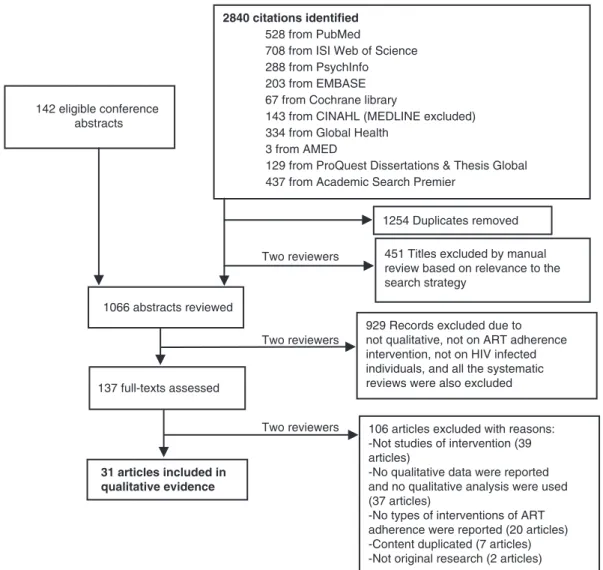
A total of 2982 titles and abstracts were identified for screening. Of these, 137 studies were examined at the level of full text (Figure 1). A total of 31 studies, including one dissertation [29] and 30 journal articles, were included for data extraction. Among the studies, 15 used mixed methods [16,17,2941] and 16 were qualitative studies [15,4256]. All studies were conducted in a single country. Twelve studies were conducted in high-income countries (HICs: Canada and United States) [33,34,40,4446,4852,56], 13 in middle-income countries (MICs: Brazil, China, India, Nigeria, Peru, Romania, South Africa, Swaziland, Thailand and Zambia) [15,17,3032,36,38,4143,47,53,54] and six in low-income countries (LICs: Mozambique, Rwanda, Tanzania, Uganda and
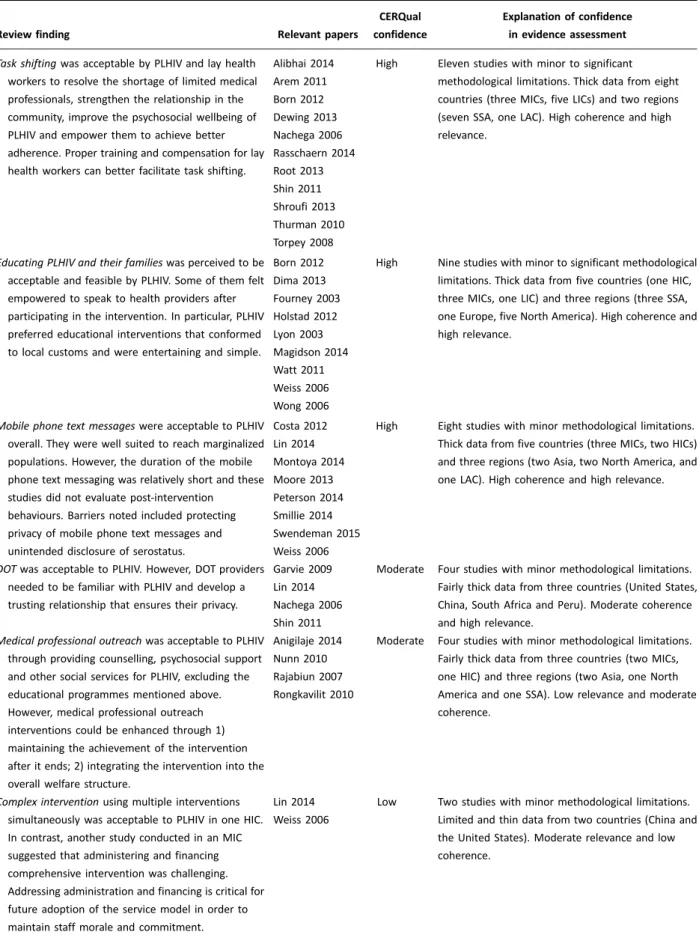
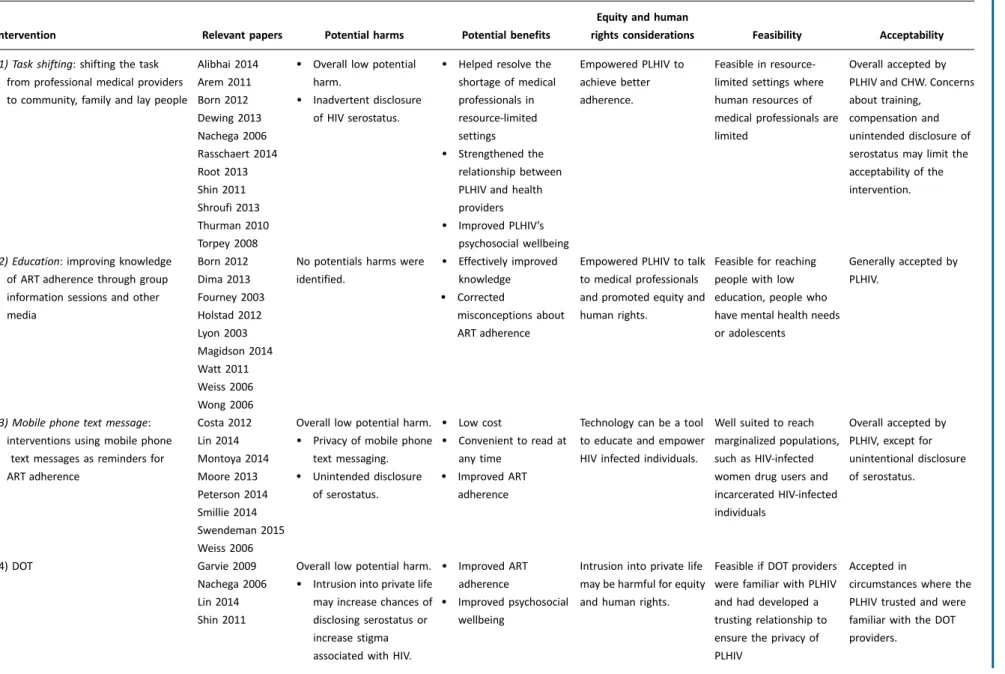
Zimbabwe) [16,29,35,37,55]. The overall studies focused on children living with HIV (two studies) [30,54], adolescents (four studies) [43,45,48,53], adults (21 studies) [15,1637,39 41,44,46,4952,54,56] and pregnant women (one study) [55]. We identified 11 themes, including 6 themes related to types of intervention and 5 cross-cutting themes (Table 1). Our policy implication analysis revealed potential benefits, harms, equity and human rights, acceptability and feasibility for each intervention specific themes (Table 2). Table 3 summarized the quality, relevance, region and study location, income of the country and intervention type for the individual study.
Qualitative synthesis
Twenty-three studies provided detailed experiences of PLHIV [15,17,29,3237,39,40,4446,4856]. Thirteen studies explored the experiences of healthcare providers and lay health workers in addition to the experiences of PLHIV [15,16,31,33,35,37,38,4143,47,54,55]. Table 1 presents the summary of qualitative findings and CERQual confidence assessments.
2840 citations identified 528 from PubMed
708 from ISI Web of Science 288 from PsychInfo 203 from EMBASE 67 from Cochrane library
143 from CINAHL (MEDLINE excluded) 334 from Global Health
3 from AMED
129 from ProQuest Dissertations & Thesis Global 437 from Academic Search Premier
142 eligible conference abstracts
1066 abstracts reviewed
137 full-texts assessed
31 articles included in qualitative evidence
1254 Duplicates removed
451 Titles excluded by manual review based on relevance to the search strategy
929 Records excluded due to not qualitative, not on ART adherence intervention, not on HIV infected individuals, and all the systematic reviews were also excluded
106 articles excluded with reasons: -Not studies of intervention (39 articles)
-No qualitative data were reported and no qualitative analysis were used (37 articles)
-No types of interventions of ART adherence were reported (20 articles) -Content duplicated (7 articles) -Not original research (2 articles) Two reviewers
Two reviewers
Two reviewers
Table 1. Summary of qualitative finding of interventions for ART adherence
Review finding Relevant papers
CERQual
confidence
Explanation of confidence
in evidence assessment
Task shiftingwas acceptable by PLHIV and lay health workers to resolve the shortage of limited medical
professionals, strengthen the relationship in the
community, improve the psychosocial wellbeing of
PLHIV and empower them to achieve better
adherence. Proper training and compensation for lay
health workers can better facilitate task shifting.
Alibhai 2014
Arem 2011
Born 2012
Dewing 2013
Nachega 2006
Rasschaern 2014
Root 2013
Shin 2011
Shroufi 2013
Thurman 2010
Torpey 2008
High Eleven studies with minor to significant
methodological limitations. Thick data from eight
countries (three MICs, five LICs) and two regions
(seven SSA, one LAC). High coherence and high
relevance.
Educating PLHIV and their familieswas perceived to be acceptable and feasible by PLHIV. Some of them felt
empowered to speak to health providers after
participating in the intervention. In particular, PLHIV
preferred educational interventions that conformed
to local customs and were entertaining and simple.
Born 2012
Dima 2013
Fourney 2003
Holstad 2012
Lyon 2003
Magidson 2014
Watt 2011
Weiss 2006
Wong 2006
High Nine studies with minor to significant methodological
limitations. Thick data from five countries (one HIC,
three MICs, one LIC) and three regions (three SSA,
one Europe, five North America). High coherence and
high relevance.
Mobile phone text messageswere acceptable to PLHIV overall. They were well suited to reach marginalized
populations. However, the duration of the mobile
phone text messaging was relatively short and these
studies did not evaluate post-intervention
behaviours. Barriers noted included protecting
privacy of mobile phone text messages and
unintended disclosure of serostatus.
Costa 2012
Lin 2014
Montoya 2014
Moore 2013
Peterson 2014
Smillie 2014
Swendeman 2015
Weiss 2006
High Eight studies with minor methodological limitations.
Thick data from five countries (three MICs, two HICs)
and three regions (two Asia, two North America, and
one LAC). High coherence and high relevance.
DOTwas acceptable to PLHIV. However, DOT providers needed to be familiar with PLHIV and develop a
trusting relationship that ensures their privacy.
Garvie 2009
Lin 2014
Nachega 2006
Shin 2011
Moderate Four studies with minor methodological limitations.
Fairly thick data from three countries (United States,
China, South Africa and Peru). Moderate coherence
and high relevance.
Medical professional outreachwas acceptable to PLHIV through providing counselling, psychosocial support
and other social services for PLHIV, excluding the
educational programmes mentioned above.
However, medical professional outreach
interventions could be enhanced through 1)
maintaining the achievement of the intervention
after it ends; 2) integrating the intervention into the
overall welfare structure.
Anigilaje 2014
Nunn 2010
Rajabiun 2007
Rongkavilit 2010
Moderate Four studies with minor methodological limitations.
Fairly thick data from three countries (two MICs,
one HIC) and three regions (two Asia, one North
America and one SSA). Low relevance and moderate
coherence.
Complex interventionusing multiple interventions simultaneously was acceptable to PLHIV in one HIC.
In contrast, another study conducted in an MIC
suggested that administering and financing
comprehensive intervention was challenging.
Addressing administration and financing is critical for
future adoption of the service model in order to
maintain staff morale and commitment.
Lin 2014
Weiss 2006
Low Two studies with minor methodological limitations.
Limited and thin data from two countries (China and
the United States). Moderate relevance and low
coherence. Ma Q et al.Journal of the International AIDS Society2016,19:21166
http://www.jiasociety.org/index.php/jias/article/view/21166 | http://dx.doi.org/10.7448/IAS.19.1.21166
Types of intervention
Task shifting (11 studies, high CERQual confidence) Adherence interventions focused on task shifting were only identified in LIC and MIC settings [15,29,16,31,3538,42,54,55].
The tasks shifted included adherence support and counsel-ling [15,16,29,35,36,38,42,55], education [31], directly ob-served therapy (DOT) [54] and case management [37]. These tasks were shifted from professional medical providers to Table 1 (Continued)
Review finding Relevant papers
CERQual
confidence
Explanation of confidence
in evidence assessment
Strengthening social relationshipsamong PLHIV and between non-infected community members was
incorporated into peer education, task shifting and
DOT. Strengthening social relationships can increase
acceptability and feasibility of the intervention,
improving psychosocial wellbeing of PLHIV and
enhancing ARV adherence.
Alibhai 2014
Arem 2011
Born 2012
Dewing 2013
Garvie 2009
Lyon 2003
Nachega 2006
Rasschaert 2014
Root 2013
Shin 2011
Shroufi 2013
Thurman 2010
Torpey 2008
Weiss 2006
High Fourteen studies with minor to significant
methodological limitations. Thick data from nine
countries (five LICs, three MICs, one HIC) and three
regions (one North America, one LAC, seven SSA).
High coherence and high relevance.
Empowerment of PLHIVrefers to PLHIV’s increased capacity, confidence and comfort to communicate
with health providers and non-HIV-infected people
about their serostatus and ART after participating
in the intervention programmes. This cross-cutting
theme emerged in seven intervention studies,
including education, mobile phone text messaging
and task shifting. Empowered PLHIV were more
motivated to achieve better ART adherence.
Alibhai, 2014
Lyon 2003
Montoya 2014
Nachega 2006
Rasschaert 2014
Thurman 2010
Watt 2011
High Seven studies with minor to significant
methodological limitations. Thick data from seven
countries (five LICs, two HICs) and two regions (two
North America, five SSA). High coherence and high
relevance.
Compensationwas identified in studies of task shifting, education and complex interventions. Inadequate
compensation for lay health workers and health
providers were barriers for improving ART
adherence.
Arem 2011
Born 2012
Lin 2014
Nachega 2006
Thurman 2010
High Five studies with minor methodological limitations.
Thick data from five countries (two MICs and three
LICs) and two regions (one Asia and four SSA). High
relevance and moderate coherence.
Confidentialityemerged as a key barrier in studies of DOT, task shifting and mobile phone text message
interventions. PLHIV worried that participating in the
intervention could lead to inadvertent disclosure of
their HIV status. However, establishing a trusting
relationship between PLHIV and DOT providers was
helpful for overcoming concerns of intrusion into
private life and reducing stigma.
Garvie 2009
Nachega 2006
Shin 2011
Swendeman 2015
High Four studies with minor methodological limitations.
Fairly thick data from four countries (United States,
South Africa, Peru and India). High coherence and
high relevance.
Integrating religious beliefs into the intervention strategy, for example Christianity and Buddhism, played an
ancillary role in the interventions of mobile phone text
messaging, task shifting and medical professional
outreach. Integrating the religious belief into the
intervention strategy can make the intervention more
culturally appropriate and more acceptable to PLHIV.
Montoya 2014
Rongkavilit 2010
Root 2013
Moderate Three studies with minor to moderate
methodological limitations. Fairly thick data from
three countries (United States, Thailand and
Swaziland). High coherence and moderate relevance.
Table 2. Summary of evidence-to-policy implications for qualitative findings of ART adherence interventions
Intervention Relevant papers Potential harms Potential benefits
Equity and human
rights considerations Feasibility Acceptability
(1) Task shifting: shifting the task
from professional medical providers
to community, family and lay people
Alibhai 2014
Arem 2011
Born 2012
Dewing 2013
Nachega 2006
Rasschaert 2014
Root 2013
Shin 2011
Shroufi 2013
Thurman 2010
Torpey 2008
Overall low potential
harm.
Inadvertent disclosure
of HIV serostatus.
Helped resolve the
shortage of medical
professionals in
resource-limited
settings
Strengthened the
relationship between
PLHIV and health
providers
Improved PLHIV’s
psychosocial wellbeing
Empowered PLHIV to
achieve better
adherence.
Feasible in
resource-limited settings where
human resources of
medical professionals are
limited
Overall accepted by
PLHIV and CHW. Concerns
about training,
compensation and
unintended disclosure of
serostatus may limit the
acceptability of the
intervention.
(2) Education: improving knowledge
of ART adherence through group
information sessions and other
media
Born 2012
Dima 2013
Fourney 2003
Holstad 2012
Lyon 2003
Magidson 2014
Watt 2011
Weiss 2006
Wong 2006
No potentials harms were
identified.
Effectively improved
knowledge
Corrected
misconceptions about
ART adherence
Empowered PLHIV to talk
to medical professionals
and promoted equity and
human rights.
Feasible for reaching
people with low
education, people who
have mental health needs
or adolescents
Generally accepted by
PLHIV.
(3) Mobile phone text message:
interventions using mobile phone
text messages as reminders for
ART adherence
Costa 2012
Lin 2014
Montoya 2014
Moore 2013
Peterson 2014
Smillie 2014
Swendeman 2015
Weiss 2006
Overall low potential harm.
Privacy of mobile phone
text messaging.
Unintended disclosure
of serostatus.
Low cost
Convenient to read at
any time
Improved ART
adherence
Technology can be a tool
to educate and empower
HIV infected individuals.
Well suited to reach
marginalized populations,
such as HIV-infected
women drug users and
incarcerated HIV-infected
individuals
Overall accepted by
PLHIV, except for
unintentional disclosure
of serostatus.
(4) DOT Garvie 2009
Nachega 2006
Lin 2014
Shin 2011
Overall low potential harm.
Intrusion into private life
may increase chances of
disclosing serostatus or
increase stigma
associated with HIV.
Improved ART
adherence
Improved psychosocial
wellbeing
Intrusion into private life
may be harmful for equity
and human rights.
Feasible if DOT providers
were familiar with PLHIV
and had developed a
trusting relationship to
ensure the privacy of
PLHIV
Accepted in
circumstances where the
PLHIV trusted and were
familiar with the DOT
providers.
Ma
Q
e
t
al.
Journal
of
the
International
AIDS
Society
2016,
19
:21166
http://www
.jiasociety
.org
/index.php/jias/
article/view/21166
|
http://dx.doi.org
/10.7448/IAS.19.1.21166
community, HIV-infected peers and laypeople. Five studies evaluated task shifting to the community level [29,3537,54]. Five other studies evaluated task shifting to HIV-infected peers [15,16,31,38,55] and one other study evaluated task shifting to laypeople [42]. Task-shifting studies focused on pregnant women living with HIV [55], impoverished adults and children living with HIV [54] and PLHIV in general [15,16,29,31,3538,42]. These studies indicated that task shifting reduced the shortage of medical professionals in LICs and MICs [16,31,38] and helped strengthen the relation-ship between PLHIV and health providers by building trust [15,35,54]. In addition, task shifting improved the psychoso-cial wellbeing of PLHIV [36,37,54,55]. Several studies re-ported that proper training for lay health workers should be a necessary part of task shifting [31,3538]. One study from Mozambique further clarified that essential knowledge and problem-solving skills were more useful than disease-specific treatment literacy in training for lay health workers [35]. Our findings also indicated that task shifting can be better facilitated and accepted by integration into the overall health system [15,35,37].
Educating PLHIV and their families (Nine studies, high CERQual confidence)
The importance of educating PLHIV and their families on the knowledge of ART adherence was a key issue for improving adherence. Nine studies focusing on education were iden-tified in HICs (five countries) [33,40,44,46,48], MICs (three countries) [31,41,43] and LICs (one country) [39]. These interventions improved knowledge of the ART adherence of adults living with HIV (n359), people with low education [44], those with mental health needs [33] and adolescents (n43) [43,48]. The interventions were implemented through peer education [31,48], group information sessions [39,40] and videos, music or comic books [41,44,46]. Educational programmes were well received by PLHIV. They felt their knowledge of ART treatment was improved. One participant living with HIV from the United States asserted that the educational intervention was useful because ‘‘I now feel re-sponsible and like I should take more care of myself’’ [48]. Educational interventions also corrected misconceptions about ART adherence for PLHIVfor example, that they can still take the pill later if they forget [39]. PLHIV generally affirmed that interventions were acceptable and feasible. Some individuals often felt empowered to seek advice from health providers after obtaining more knowledge through participating in the intervention [39,46]. In particular, indivi-duals preferred educational interventions that were enter-taining [44,46], simple [44] and used familiar metaphors that were consistent with local cultural norms [41].
Mobile phone text messages (Eight studies, high CERQual confidence)
Interventions using mobile phone text messages for medi-cation reminders were identified in eight studies in HICs (five studies) [34,40,49,51,56] and LIMCs (three studies) [17,32,47]. Overall, text message interventions were accep-table [17,34,51,56] and feasible [17,34,49,56] for PLHIV and low cost for health providers [32,34]. They were well suited for reaching marginalized populations, such as women
(n84) [32,56], people who use drugs (n49) [34,47,49] and incarcerated individuals (n24) [51]. Intervention partici-pants reported that the text messages were an incentive to take care of themselves [32] and a reminder to take medication [17,32,49]. However, the duration of the mobile phone text-messaging intervention was relatively short (weeks to months) and participants preferred long-term interventions [32]. An additional shortcoming is that these studies did not evalu-ate post-intervention behaviours. Concerns about privacy of mobile phone text messages and unintended disclosure of serostatus were noted [17]. One participant from India stated: ‘‘No one in my family knows anything about my HIV status. So it would raise certain issues of embarrassment for me’’ [17].
Directly observed therapy (Four studies, moderate CERQual confidence)
DOT was identified in four studies of adherence intervention across high income countries (HICs) (one study) [45] and low and middle income countries (LMICs) (three studies) [15,47,54]. DOT was considered an acceptable intervention
by adolescents (n17) [49], impoverished adults (n95) and children (n13) [54], as well as by health providers for people who use drugs [47]. An impoverished adult living with HIV in Peru said: ‘‘most of all, for those of us who have had the support of. . .[the DOT team], they have made us more conscientious’’ [54]. Two studies suggested that having DOT providers familiarized with PLHIV could help cultivate trusting relationships, which were able to ensure the privacy of these individuals [45,54]. Another study in South Africa also illustrated that having a family or community member from a trusted source as a DOT provider was acceptable and an important part of the treatment support network [15].
Medical professional outreach (Four studies, moderate CERQual confidence)
Medical professional outreach was identified in four studies across HICs (two studies) [50,52] and LMICs (two studies) [30,53]. The outreach interventions included counselling [52,53], psychosocial support [30] and other social services [50], Table 3. Summary of the studies
First author Quality Relevance Region Location of research Income Type of intervention
Alibhai High High Sub-Saharan Africa Uganda Low Task shifting
Anigilaje High High Sub-Saharan Africa Nigeria Middle Medical professional outreach
Arem High High Sub-Saharan Africa Uganda Low Task shifting
Born Moderate High Sub-Saharan Africa Zambia Middle Task shifting
Costa High High LAC Brazil Middle Mobile phone text messaging
Dewing Low High Sub-Saharan Africa South Africa Middle Task shifting
Dima High High Europe Romania Middle Education
Fourney High High North America United States High Education
Garvie High High North America United States High DOT
Holstad High High North America United States High Education
Lin High Moderate Asia China Middle Complex intervention
Lyon Moderate High North America United States High Education
Magidson High High North America United States High Education
Montoya High Low North America United States High Mobile phone text messaging
Moore High High North America United States High Mobile phone text messaging
Nachega High Moderate Sub-Saharan Africa South Africa Middle Task shifting DOT
Nunn High Low North America United States High Medical professional outreach
Peterson High Moderate North America United States High Mobile phone text messaging
Rajabuin High Low North America United States High Medical professional outreach
Rasschaert High High Sub-Saharan Africa Mozambique Low Task shifting
Rongkavilit High Moderate Asia Thailand Middle Medical professional outreach
Root Moderate Moderate Sub-Saharan Africa Swaziland Middle Task shifting
Shin High High LAC Peru Middle Task shifting
Shroufi High Moderate Sub-Saharan Africa Zimbabwe Low Task shifting
Smilie High High North America Canada High Mobile phone text messaging
Swendeman High High Asia India Middle Mobile phone text messaging
Thurman Moderate Moderate Sub-Saharan Africa Rwanda Low Task shifting
Torpey Moderate High Sub-Saharan Africa Zambia Middle Task shifting
Watt High High Sub-Saharan Africa Tanzania Low Education
Weiss High High North America United States High Complex intervention
Wong Low High Sub-Saharan Africa South Africa Middle Education
DOT, directly observed therapy; LAC, latin american countries. Ma Q et al.Journal of the International AIDS Society2016,19:21166
http://www.jiasociety.org/index.php/jias/article/view/21166 | http://dx.doi.org/10.7448/IAS.19.1.21166
excluding the educational programmes mentioned above. In these interventions, medical professionals provided the outreach intervention to children living with HIV (n33) and their caregivers [30], newly released prisoners (n20) [50], adolescents (n10) [53] and other underserved populations (drug users, homeless people and incarcerated individuals) (n76) [52]. The outreach intervention helped participants integrate ART adherence into their routine lives [52], provided better family support [30], community support [50] and knowl-edge of ART adherence [53].
However, several barriers existed for the outreach inter-ventions. The first one was lack of programme sustainability [30]. This barrier posed a potential harm for the intervention, as the termination of the intervention would set back ART adherence. The second barrier was the intervention not being well integrated into the existing welfare and social support system [50]. Outreach interventions work better if integrated into the overall welfare structure, such as providing stable housing to newly released prison inmates to reduce non-medical barriers to adherence [50].
Complex intervention (Two studies, low CERQual confidence) A complex intervention is a study design combining multiple single interventions for simultaneous implementation. Two studies evaluated complex interventions focusing on counsel-ling, mobile phone text messages and social support groups [40,47]. Each type of intervention had been evaluated in a previous section. These studies reported sharp differences between the acceptability and feasibility of complex inter-ventions in HICs (United States) [40] and LMICs (China) [47]. The study from the United States reported that PLHIV bene-fited from the complex intervention, while the study from China reported that barriers to administering and financing the complex intervention may negatively impact its accept-ability and feasibility for health providers.
Cross-cutting themes
Strengthening social relationships (14 studies, high CERQual confidence)
Strengthening social relationships is a cross-cutting theme iden-tified in HICs (three studies) [40,45,48] and LMICs (11 studies) [15,16,29,31,3538,42,54,55]. This includes strengthening social relationships among PLHIV [16,31,35,38,55] and between PLHIV and their family or community [15,29,36,37,40,42,45,48,54]. In-terventions, including education (three studies) [31,40,48], task shifting (10 studies) [15,29,16,3538,42,54,55] and DOT (two studies) [45,54], utilized strategies strengthening social relationships to improve ART adherence. The review finding suggests that interventions strengthening social relationships increased the intervention acceptability and feasibility by PLHIV [33,35,45] and lay health workers [54,55]. Strengthened social relationships also improved the psychosocial wellbeing of PLHIV, as identified in a study of task shifting in Mozambique [35], a study of DOT in Peru [54] and a study of educational inter-vention in the United States [48]. This is the potential benefit of these interventions.
Empowerment of PLHIV (Seven studies, high CERQual confidence)
Empowerment of PLHIV refers to providing PLHIV with in-creased capacity, confidence and comfort in communicating with health providers and non-HIV infected people about their serostatus and ART after participating in the intervention programmes. This cross-cutting theme emerged in studies in HICs (two studies) [48,49], MICs (one study) [15] and LICs (four studies) [28,35,37,39]. This theme also encompasses inter-ventions from task shifting (four studies) [15,29,35,37], to education (two studies) [39,48] and mobile phone text mess-ages (one study) [49]. In one educational intervention among adolescents living with HIV in the United States, one ado-lescent participant said: ‘‘It was very comforting. [I felt] open to speak on subjects that were normally hard to talk about with non-HIV people’’ [48]. Empowerment of PLHIV through interventions has an important potential benefit. The em-powered individual living with HIV is more motivated to sustain better adherence [15] and to seek medical advice from health providers and support from community members [35,39].
Compensation (Five studies, high CERQual confidence) Compensation for lay health workers and health providers was identified as a cross-cutting theme only in studies con-ducted in LMIC settings [15,16,31,37,47]. The need for adequate compensation to motivate lay healthcare workers was identified in studies of task-shifting interventions (two studies) [15,37], educational interventions (one study) [31] and complex interventions (one study) [47]. Inadequate compensation for peer educators [31], limited financial sup-port for family members of PLHIV [15] and community case managers [37] in task shifting, and improper financial com-pensation for health providers in complex intervention [47] could be barriers for implementing the interventions. How-ever, one study of a task-shifting intervention in Uganda showed that no peer health workers quitting the study may be the indicator that the compensation was sufficient [16].
Confidentiality (Four studies, high CERQual confidence) Concerns about loss of confidentiality associated with par-ticipating in adherence interventions emerged as a barrier in intervention implementation [15,17,45,54]. It is important to note that this barrier was reported in high income countries (HICs) [45], MIC [15], and LMIC [19,56] settings across the three well-established types of interventions, such as task shifting [15], DOT [45,54] and a mobile phone text message intervention [17]. Adolescents living with HIV and adults reported that participating in interventions could inadver-tently reveal their HIV status [15,17,45,54]. The studies also suggested that establishing a trusting relationship between HIV and DOT providers was helpful for overcoming concerns of intrusion to private life and reducing stigma [45,54]. A community health worker who participated in a community-based DOT intervention in Peru said: ‘‘little by little, they trusted me, they confided in me, they spoke with me about so many experiences’’ [54].
Integrating religious beliefs into interventions (Three studies, moderate CERQual confidence).
in HIC [49] and LMIC [36,53] settings. In a mobile phone text message intervention for current or former drug users in the United States [49], Christian beliefs were incorporated into the adherence intervention text message, such as ‘‘God grant me the serenity to do this.’’ The intervention was acceptable to PLHIV. In a task-shifting intervention for PLHIV in Swaziland, religious aspects were integrated into community-based care. One participant of this intervention said: ‘‘[and they counsel that] whenever I take ART, I must also pray to God because He is the one who cares [about] our lives’’ [36].
Discussion
We systematically reviewed the qualitative evidence on barriers and facilitators of interventions for improving ART adherence. We also assessed the potential harms and benefits of the in-terventions and their equity and human rights implications. Our qualitative review findings bring together the powerful voices of those living with and affected by HIV. In addition, using the CERQual approach is a methodological advance [25] that provides transparency in examining the confidence of review findings. Our results may help inform evidence-based interven-tion design and patient-centred public health policy.
Our review identified several types of adherence interven-tions that introduced concerns about confidentiality. The possibility of inadvertent disclosure of serostatus through participation in the intervention was reported in DOT inter-ventions [45,54], task shifting interinter-ventions [15] and a mobile phone text message intervention [17]. None of these studies mentioned whether serostatus disclosure was captured as an adverse outcome, and two related quantitative evaluations of the same interventions also did not measure this adverse outcome [17,57]. Another quantitative evaluation mentioned that loss of confidentiality might be a minor barrier to participation in mobile phone-based interventions [5860]. Future studies could improve implementation effec-tiveness by addressing this concern and by incorporating measures to ensure the confidentiality of participants [15,17].
Empowerment of PLHIV is a major benefit we identified in several types of adherence interventions, including task shifting, education and mobile phone text message interven-tions. PLHIV empowerment could have significant implica-tions for health equity and was not previously evaluated by quantitative adherence reviews [2,10,11], although other reviews noted the potential for empowerment as a result of interventions [13,61,62]. One review of both quantitative and qualitative evidence of interventions for HIV-infected preg-nant and postpartum women in sub-Saharan Africa high-lighted the importance of empowerment for women living with HIV [61]. Our findings are consistent with these reviews: that participating in these interventions empowered PLHIV, gave them greater motivation to sustain better adherence [15] and provided them with more courage to seek medical advice from health providers and support from community members [35,39]. This finding is consistent with other interventions that formally incorporated empowerment of PLHIV into their intervention design and secondary outcomes [6365]. This suggests that empowerment of PLHIV may be useful when designing and implementing ART adherence interventions.
Our review identified inadequate compensation for peer educators [31] and lay health workers [15,37] as a key barrier for ART adherence interventions in LMICs. Delayed payment or limited financial support for lay health workers may result in reduced morale, commitment and capacity for supporting task shifting. Another systematic review suggested that task shifting has substantial cost savings for LMICs [12], but those studies did not evaluate levels of adequate compensation for lay health workers in calculations for the total cost of successful interventions. This finding is consistent with the World Health Organization’s suggestion that policymakers should consider how compensation structures can better account for the opportunity costs for health workers to better implement task-shifting needs [66]. Other studies also identified inadequate compensation as a potential barrier of task shifting in LMICs [6769]. For ART adherence interven-tions, it is particularly important to integrate fair compensation into the initial intervention design to ensure health equity and the long-term commitment of community health workers.
Among intervention-specific themes, task shifting is an important intervention in LMICs. There are implications at policy, community and individual levels of the findings that task-shifting interventions were only conducted in LMICs. Building upon previous quantitative systematic reviews that examined the efficacy of task shifting [12,69], our qualitative evidence suggests that at policy level the implication is that the WHO’s HIV ART guidelines were well received in LMICs [5], and this finding is consistent with another literature review of task shifting in resource-limited settings [62]. At the local community level, our qualitative evidence reported that task shifting reduced the shortage of medical profes-sionals in LMICs, and community health workers and PLHIV had positive perceptions toward task shifting. At the in-dividual level, the implication is that task shifting helped strengthen social relationships between PLHIV and their local communities and empowered PLHIV.
Our qualitative evidence also highlighted the importance of strengthened social relationships due to task shifting. The stronger social relationships provided more social support for adherence [15,36,55], contributed to better psychological wellbeing [29,16,33,54,70] and reduced HIV- and ART-related stigma [29,54]. Although perceived by PLHIV as favourable, during implementation of task shifting, inadequate training for lay health workers [15,31,37,38] emerged as a potential barrier. In addition, the long-term impact of task shifting was not addressed [12]. Given these findings, longitudinal re-search on task shifting may be useful [12,69].
There are several limitations to our study. First, all studies included used data from single interviews without follow-up observations. People’s perceptions towards an intervention may change over the course of the intervention. Second, qualitative data were limited to pregnant women, children and adolescents and were not available among key popula-tions such as sex workers and men who have sex with men (MSM). There was only one intervention targeting pregnant women [55], two interventions targeting children living with HIV [30,54] and four targeting adolescents [43,45,48,53]. Third, none of the adherence interventions focused on individuals with high CD4 counts. These individuals are Ma Q et al.Journal of the International AIDS Society2016,19:21166
http://www.jiasociety.org/index.php/jias/article/view/21166 | http://dx.doi.org/10.7448/IAS.19.1.21166
increasingly important in the context of universal test and treat programmes. Fourth, only 9 out of 31 intervention studies specified poor adherence and difficulty in adhering to ART [34,40,42,45,48,49] and new ART initiators [38,39,56] in their recruitment criteria for intervention studies. Fifth, this review was not completely integrated with a quantita-tive review. Further systematic reviews of interventions would benefit from paired qualitative and quantitative evalua-tions that create comparable categories of intervention. Finally, we only included published studies and conference abstracts, excluding potentially useful grey reports and related materials.
Conclusions
Our qualitative evidence suggests that strengthening PLHIV social relationships, empowering PLHIV and developing culturally appropriate interventions may facilitate adherence interventions. Our study indicates that inadequate training and compensation for lay health workers and inadvertent disclosure of serostatus by participating in the intervention are potential barriers for ART adherence interventions. These findings have several research and policy implications. From a research perspective, qualitative research brings in the voices of PLHIV and health providers, which extends the quantitative research by assessing equity and human rights implications. Future qualitative evaluations are needed to provide more evidence of interventions targeting pregnant women, children, adolescents, sex workers and MSM. These key populations are of important implication in promoting ART adherence and HIV treatment in general. Our data sug-gest the need for interventions targeted to those subgroups at greatest need, such as those with treatment failure and demonstrated poor adherence. Additional qualitative re-search can help inform the scale-up of effective interventions and guide the transition from intervention to sustainable and routine programmes. From a policy perspective, four implica-tions stand out. First, our findings underline the importance of taking social and cultural factors into consideration when implementing ART adherence interventions. Second, training to ensure privacy and confidentiality in the context of an ART adherence intervention is essential for these types of programmes. Next, proper training and compensation for lay health workers and peer educators should be included during implementation. Finally, policymakers should consider how to maintain intervention effects over time. As universal test and treat strategies are increasingly implemented around the world, ensuring high levels of adherence will be critical to achieve the third and final UNAIDS 90-90-90 goal of achieving viral suppression [3].
Authors’ affiliations 1
University of North Carolina Project-China, Guangzhou, China;2Guangzhou Eighth People’s Hospital, Guangzhou, China;3Center for Medical Humanities, Zhongshan School of Medicine, Sun Yat-sen University, Guangzhou, China;4Institute for Global Health and Infectious Diseases at UNC-Chapel Hill, Chapel Hill, NC, USA;5Department of Health, Behavior and Society, Johns Hopkins Bloomberg School of Public Health, Johns Hopkins University, Baltimore, MD, USA;6Global and Community Mental Health Research Group, Department of Psychology, University of Macau, Macau, China;7Department of HIV/AIDS, World Health Organization, Geneva, Switzerland;8Department of Epidemiology, School of Public Health,
Shandong University, Jinan, China;9Spencer S. Eccles Health Sciences Library, University of Utah, Salt Lake City, UT, USA
Competing interests
The authors have no conflicts of interest to declare.
Authors’ contributions
JT, MD and RB initiated and conceived the study. JT, QM, ZR and ML planned the analyses. ML conducted the literature searches. QM and ZR extracted the data. Data extraction was double checked by QM. QM synthesized the qualitative data, created CERQual table and wrote the first draft of the paper. All authors provided input to subsequent drafts of the paper and all approved the final version.
Acknowledgements
We want to thank the Guangzhou Eighth People’s Hospital and UNC Project-China for providing administrative support. We also want to extend our appreciation to Yang Bin and Zhang Ye at the Guangdong Center for Skin Disease and STI Control for help. This work was commissioned by the World Health Organization and supported by the South China-UNC STD Research Training Center, UNC Project-China and NIH Fogarty International Center (1D43TW009532-01, NIAID 1R01AI114310-01).
References
1. Sethi AK, Celentano DD, Gange SJ, Moore RD, Gallant JE. Association between adherence to antiretroviral therapy and human immunodeficiency virus drug resistance. Clin Infect Dis. 2003;37(8):11128. doi: http://dx.doi. org/10.1086/378301
2. Mathes T, Pieper D, Antoine SL, Eikermann M. Adherence-enhancing interventions for highly active antiretroviral therapy in HIV-infected patients
a systematic review. HIV Med. 2013;14(10):58395. doi: http://dx.doi.org/10. 1111/hiv.12051
3. UNAIDS. 90-90-90 An ambitious treatment target to help end the AIDS epidemic. 2014. [cited 2016 Sep 29] Available from: http://www.unaids.org/ en/resources/documents/2014/90-90-90
4. Bradley H, Hall HI, Wolitski RJ, Van Handel MM, Stone AE, LaFlam M, et al. Vital signs: HIV diagnosis, care, and treatment among persons living with HIV*
United States, 2011. MMWR Morb Mortal Wkly Rep. 2014;63(47):11137. 5. World Health Organization (WHO). Consolidated guidelines on HIV preven-tion, diagnosis, treatment and care for key populations. Geneva: World Health Organization; 2014.
6. Balcha TT, Jeppsson A, Bekele A. Barriers to antiretroviral treatment in Ethiopia: a qualitative study. J Int Assoc Physicians AIDS Care (Chic). 2011;10(2):11925. doi: http://dx.doi.org/10.1177/1545109710387674 7. Power R, Koopman C, Volk J, Israelski DM, Stone L, Chesney MA, et al. Social support, substance use, and denial in relationship to antiretroviral treatment adherence among HIV-infected persons. AIDS Patient Care STDS. 2003;17(5):24552. doi: http://dx.doi.org/10.1089/108729103321655890 8. Ortego C, Huedo-Medina TB, Llorca J, Sevilla L, Santos P, Rodriguez E, et al. Adherence to highly active antiretroviral therapy (HAART): a meta-analysis. AIDS Behav. 2011;15(7):138196. doi: http://dx.doi.org/10.1007/s10461-011-9942-x
9. Mills EJ, Nachega JB, Bangsberg DR, Singh S, Rachlis B, Wu P, et al. Adherence to HAART: a systematic review of developed and developing nation patient-reported barriers and facilitators. PLoS Med. 2006;3(11):e438. doi: http://dx.doi.org/10.1371/journal.pmed.0030438
10. Barnighausen T, Chaiyachati K, Chimbindi N, Peoples A, Haberer J, Newell ML. Interventions to increase antiretroviral adherence in sub-Saharan Africa: a systematic review of evaluation studies. Lancet Infect Dis. 2011;11(12):94251. doi: http://dx.doi.org/10.1016/S1473-3099(11)70181-5
11. Van Galen KA, Nellen JF, Nieuwkerk PT. The effect on treatment adherence of administering drugs as fixed-dose combinations versus as separate pills: systematic review and meta-analysis. AIDS Res Treat. 2014;2014:6. doi: http:// dx.doi.org/10.1093/heapol/czs058
12. Mdege ND, Chindove S, Ali S. The effectiveness and cost implications of task-shifting in the delivery of antiretroviral therapy to HIV-infected patients: a systematic review. Health Policy Plan. 2013;28(3):22336. doi: http://dx.doi. org/10.1093/heapol/czs058
14. Greenhalgh T, Taylor R. Papers that go beyond numbers (qualitative research). BMJ. 1997;315(7110):7403. doi: http://dx.doi.org/10.1136/bmj. 315.7110.740
15. Nachega JB, Knowlton AR, Deluca A, Schoeman JH, Watkinson L, Efron A, et al. Treatment supporter to improve adherence to antiretroviral therapy in HIV-infected South African adults: a qualitative study. J Acquir Immune Defic Syndr. 2006;43(Suppl 1):S12733. doi: http://dx.doi.org/10.1097/01.qai. 0000248349.25630.3d
16. Arem H, Nakyanjo N, Kagaayi J, Mulamba J, Nakigozi G, Serwadda D, et al. Peer health workers and AIDS care in rakai, Uganda: a mixed methods operations research evaluation of a cluster-randomized trial. AIDS Patient Care STDS. 2011;25:71924. doi: 10.1089/apc.2010.0349
17. Swendeman D, Jana S, Ray P, Mindry D, Das M, Bhakta B. Development and pilot testing of daily interactive voice response (IVR) calls to support antiretroviral adherence in India: a mixed-methods pilot study. AIDS Behav. 2015;19(Suppl 2):14255. doi: http://dx.doi.org/10.1007/s10461-014-0983-9 18. Hannes K. Chapter 4: critical appraisal of qualitative research. In: Noyes J, Hannes K, et al., editors. Supplementary guidance for inclusion of qualitative research in Cochrane systematic reviews of interventions. London, UK: Cochrane Collaboration Qualitative Methods Group; 2011.
19. Tso LS, Best J, Beanland R, Doherty M, Lackey M, Ma Q, et al. Facilitators and barriers in HIV linkage to care interventions: a qualitative evidence review. AIDS. 2016;30(10):163953. doi: http://dx.doi.org/10.1097/QAD.0000000000001101 20. Loutfy M, Khosla R, Narasimhan M. Advancing the sexual and reproductive health and human rights of women living with HIV. J Int AIDS Soc. 2015; 18(Suppl 5):20760. doi: http://dx.doi.org/10.7448/ias.18.6.20760
21. Moher D, Liberati A, Tetzlaff J, Altman DG. Preferred reporting items for systematic reviews and meta-analyses: the PRISMA statement. Int J Surg. 2010;8(5):33641. doi: http://dx.doi.org/10.1016/j.ijsu.2010.02.007 22. Tong A, Flemming K, McInnes E, Oliver S, Craig J. Enhancing transparency in reporting the synthesis of qualitative research: ENTREQ. BMC Med Res Methodol. 2012;12(1):18. doi: http://dx.doi.org/10.1186/1471-2288-12-181 23. CASP. CASP qualitative checklist[Internet]. [cited 2015 Aug 31]. Available from: http://media.wix.com/ugd/dded87_29c5b002d99342f788c6ac670e49f274.pdf 24. Booth A, Papaioannou D, Sutton A. Systematic approaches to a successful literature review. Thousand Oaks: CA Sage Publications; 2012.
25. Noyes J, Lewin S. Supplemental guidance on selecting a method of qualitative evidence synthesis, and integrating qualitative evidence with Cochrane intervention reviews. In: Noyes J, et al., editors. Supplementary guidance for inclusion of qualitative research in Cochrane systematic reviews of interventions. London, UK: Cochrane Collaboration Qualitative Methods Group; 2011.
26. Lewin S, Glenton C, Munthe-Kaas H, Carlsen B, Colvin CJ, Gu¨lmezoglu M, et al. Using qualitative evidence in decision making for health and social interventions: an approach to assess confidence in findings from qualitative evidence syntheses (GRADE-CERQual). PLoS Med. 2015;12(10):e1001895. doi: http://dx.doi.org/10.1371/journal.pmed.1001895
27. Bohren MA, Vogel JP, Hunter EC, Lutsiv O, Makh SK, Souza JP, et al. The mistreatment of women during childbirth in health facilities globally: a mixed-methods systematic review. PLoS Med. 2015;12(6):e1001847. doi: http://dx. doi.org/10.1371/journal.pmed.1001847
28. Group G-CP. What is the CERQual approach? 2015[Internet]. [cited 2016 Sep 29]. Available from: http://cerqual.org/whatisthecerqualapproach/ 29. Alibhai AA. The effectiveness of a volunteer community health worker program to support an antiretroviral treatment program for AIDs patients in western Uganda. Ann Arbor, MI: ProQuest Information & Learning; 2014. 30. Anigilaje EA, Dabit OJ, Tyovenda RK, Emebolu AJ, Agbedeh AA, Olutola A, et al. Effects of leisure activities and psychosocial support on medication adherence and clinic attendance among children on antiretroviral therapy. HIV AIDS (Auckl). 2014;6:12737. doi: http://dx.doi.org/10.2147/HIV.S64964 31. Born LJ, Wamulume C, Neroda KA, Quiterio N, Giganti MJ, Morris M, et al. Evaluation of a task-shifting strategy involving peer educators in HIV care and treatment clinics in Lusaka, Zambia. J Public Health Afr. 2012;3(1):e3. doi: http://dx.doi.org/10.4081/jphia.2012.e3
32. Costa T, Barbosa B, Gomes eCD, Sigulem D, Fa´tima MH, Filho A, et al. Results of a randomized controlled trial to assess the effects of a mobile SMS-based intervention on treatment adherence in HIV/AIDS-infected Brazilian women and impressions and satisfaction with respect to incoming messages. Int J Med Inform. 2012;81:25769. doi: http://dx.doi.org/10.1016/j.ijmedinf. 2011.10.002
33. Magidson JF, Seitz-Brown CJ, Safren SA, Daughters SB. Implementing behavioral activation and life-steps for depression and HIV medication
adherence in a community health center. Cogn Behav Pract. 2014;21(4):386
403. doi: http://dx.doi.org/10.1016/j.cbpra.2013.10.002
34. Moore DJ, Montoya JL, Blackstone K, Rooney A, Gouaux B, Georges S, et al. Preliminary evidence for feasibility, use, and acceptability of individualized texting for adherence building for antiretroviral adherence and substance use assessment among HIV-infected methamphetamine users. AIDS Res Treat. 2013;2013:585143. doi: http://dx.doi.org/10.1155/2013/585143
35. Rasschaert F, Telfer B, Lessitala F, Decroo T, Remartinez D, Biot M, et al. A qualitative assessment of a community antiretroviral therapy group model in Tete, Mozambique. PLoS One. 2014;9(3):e91544. doi: http://dx.doi.org/10. 1371/journal.pone.0091544
36. Root R, Whiteside A. A qualitative study of community home-based care and antiretroviral adherence in Swaziland. J Int AIDS Soc. 2013;16:17978. doi: http://dx.doi.org/10.7448/IAS.16.1.17978
37. Thurman TR, Haas LJ, Dushimimana A, Lavin B, Mock N. Evaluation of a case management program for HIV clients in Rwanda. AIDS Care. 2010;22(6):75965. doi: http://dx.doi.org/10.1080/09540120903443376 38. Torpey KE, Kabaso ME, Mutale LN, Kamanga MK, Mwango AJ, Simpungwe J, et al. Adherence support workers: a way to address human resource constraints in antiretroviral treatment programs in the public health setting in Zambia. PLoS One. 2008;3(5):e2204. doi: http://dx.doi.org/10.1371/journal. pone.0002204
39. Watt MH, Aronin EH, Maman S, Thielman N, Laiser J, John M. Acceptability of a group intervention for initiates of antiretroviral therapy in Tanzania. Glob Public Health. 2011;6(4):43346. doi: http://dx.doi.org/10.1080/17441692. 2010.494162
40. Weiss L, French T, Waters M, Netherland J, Agins B, Finkelstein R. Adherence to HAART: perspectives from clients in treatment support programs. Psychol Health Med. 2006;11(2):15570. doi: http://dx.doi.org/10. 1080/13548500500159430
41. Wong IY, Lawrence NV, Struthers H, McLntyre J, Friedland GH. Develop-ment and assessDevelop-ment of an innovative culturally sensitive educational videotape to improve adherence to highly active antiretroviral therapy in Soweto, South Africa. J Acquir Immune Defic Synd. 2006;43(Suppl 1):S1428. doi: http://dx.doi.org/10.1097/01.qai.0000248345.02760.03
42. Dewing S, Mathews C, Schaay N, Cloete A, Louw J, Simbayi L. ‘‘It’s important to take your medication everyday okay?’’ An evaluation of counselling by lay counsellors for ARV adherence support in the Western Cape, South Africa. AIDS Behav. 2013;17(1):20312. doi: http://dx.doi.org/10. 1007/s10461-012-0211-4
43. Dima AL, Schweitzer AM, Amico KR, Wanless RS. The information-motivation-behavioral skills model of ART adherence in Romanian young adults. J HIV/AIDS Soc Serv. 2013;12(34):27493. doi: http://dx.doi.org/10. 1080/15381501.2012.749819
44. Fourney AM, Williams ML. Formative evaluation of an intervention to increase compliance to HIV therapies: the ALP project. Health Promot Pract. 2003;4(2):16570. doi: http://dx.doi.org/10.1177/1524839902250771 45. Garvie PA, Lawford J, Flynn PM, Gaur AH, Belzer M, McSherry GD, et al. Development of a directly observed therapy adherence intervention for adolescents with human immunodeficiency virus-1: application of focus group methodology to inform design, feasibility, and acceptability. J Adolesc Health. 2009;44(2):12432. doi: http://dx.doi.org/10.1016/j.jadohealth.2008.05.006 46. Holstad MM, Baumann M, Ofotokun I, Logwood SJ. Focus group evaluation of the LIVE network-an audio music program to promote ART adherence self-management. Music Med. 2012;4(2):7481. doi: http://dx.doi.org/10.1177/ 1943862111433875
47. Lin CQ, Cao XB, Li L. Integrating antiretroviral therapy in methadone maintenance therapy clinics: service provider perceptions. Int J Drug Policy. 2014;25(6):106670. doi: http://dx.doi.org/10.1016/j.drugpo.2014.04.021 48. Lyon ME, Trexler C, Akpan-Townsend C, Pao M, Selden K, Fletcher J, et al. A family group approach to increasing adherence to therapy in HIV-infected youths: results of a pilot project. AIDS Patient Care STDS. 2003;17(6):299308. doi: http://dx.doi.org/10.1089/108729103322108175
49. Montoya JL, Georges S, Poquette A, Depp CA, Atkinson JH, Moore DJ, et al. Refining a personalized mHealth intervention to promote medication adher-ence among HIVmethamphetamine users. AIDS Care. 2014;26(12):147781. doi: http://dx.doi.org/10.1080/09540121.2014.924213
50. Nunn A, Cornwall A, Fu JN, Bazerman L, Loewenthal H, Beckwith C. Linking HIV-positive jail inmates to treatment, care, and social services after release: results from a qualitative assessment of the COMPASS program. J Urban Health. 2010;87(6):95468. doi: http://dx.doi.org/10.1007/s11524-010-9496-7 Ma Q et al.Journal of the International AIDS Society2016,19:21166
http://www.jiasociety.org/index.php/jias/article/view/21166 | http://dx.doi.org/10.7448/IAS.19.1.21166
51. Peterson J, Cota M, Gray H, Bazerman L, Kuo I, Kurth A, et al. Technology use in linking criminal justice reentrants to HIV care in the community: a qualitative formative research study. J Health Commun. 2014;20(3):17. doi: http://dx.doi. org/10.1080/10810730.2014.927036
52. Rajabiun S, Mallinson RK, McCoy K, Coleman S, Drainoni ML, Rebholz C, et al. ‘‘Getting me back on track’’: the role of outreach interventions in engaging and retaining people living with HIV/AIDS in medical care. AIDS Patient Care STDS. 2007;21(Suppl 1):S209. doi: http://dx.doi.org/10.1089/ apc.2007.9990
53. Rongkavilit C, Naar-King S, Kaljee LM, Panthong A, Koken JA, Bunupuradah T, et al. Applying the information-motivation-behavioral skills model in medication adherence among Thai youth living with HIV: a qualitative study. AIDS Patient Care STDS. 2010;24(12):78794. doi: http://dx.doi.org/10.1089/ apc.2010.0069
54. Shin S, Mun˜oz M, Zeladita J, Slavin S, Caldas A, Sanchez E, et al. How does directly observed therapy work? The mechanisms and impact of a compre-hensive directly observed therapy intervention of highly active antiretroviral therapy in Peru. Health Soc Care Community. 2011;19(3):261271. doi: http:// dx.doi.org/10.1111/j.1365-2524.2010.00968.x
55. Shroufi A, Mafara E, Saint-Sauveur JF, Taziwa F, Vinoles MC. Mother to mother (M2M) peer support for women in prevention of mother to child transmission (PMTCT) programmes: a qualitative study. Plos One. 2013;8(6):6. doi: http://dx.doi.org/10.1371/journal.pone.0064717
56. Smillie K, Van Borek N, Abaki J, Pick N, Maan EJ, Friesen K, et al. A qualitative study investigating the use of a mobile phone short message service designed to improve HIV adherence and retention in care in Canada (WelTel BC1). J Assoc Nurses AIDS Care. 2014;25(6):61425. doi: http://dx.doi.org/10. 1016/j.jana.2014.01.008
57. Munoz M, Bayona J, Sanchez E, Arevalo J, Sebastian JL, Arteaga F, et al. Matching social support to individual needs: a community-based intervention to improve HIV treatment adherence in a resource-poor setting. AIDS Behav. 2011;15(7):145464. doi: http://dx.doi.org/10.1007/s10461-010-9697-9 58. Shet A, Arumugam K, Rodrigues R, Rajagopalan N, Shubha K, Raj T, et al. Designing a mobile phone-based intervention to promote adherence to antiretroviral therapy in South India. AIDS Behav. 2010;14(3):71620. doi: http://dx.doi.org/10.1007/s10461-009-9658-3
59. Huang D, Sangthong R, McNeil E, Chongsuvivatwong V, Zheng W, Yang X. Effects of a phone call intervention to promote adherence to antiretroviral therapy and quality of life of HIV/AIDS patients in Baoshan, China: a randomized controlled trial. AIDS Res Treat. 2013;2013:580974. doi: http:// dx.doi.org/10.1155/2013/580974
60. Van der Kop ML, Karanja S, Thabane L, Marra C, Chung MH, Gelmon L, et al. In-depth analysis of patient-clinician cell phone communication during the WelTel Kenya1 antiretroviral adherence trial. PLoS One. 2012;7(9):e46033. doi: http://dx.doi.org/10.1371/journal.pone.0046033
61. Hodgson I, Plummer ML, Konopka SN, Colvin CJ, Jonas E, Albertini J, et al. A systematic review of individual and contextual factors affecting ART initiation, adherence, and retention for HIV-infected pregnant and postpartum women. PLoS One. 2014;9(11):e111421. doi: http://dx.doi.org/10.1371/jour-nal.pone.0111421
62. Wouters E, Van Damme W, van Rensburg D, Masquillier C, Meulemans H. Impact of community-based support services on antiretroviral treatment programme delivery and outcomes in resource-limited countries: a synthetic review. BMC Health Serv Res. 2012;12:194. doi: http://dx.doi.org/10.1186/ 1472-6963-12-194
63. Cote J, Godin G, Gueheneuc YG, Rouleau G, Ramirez-Garcia P, Otis J, et al. Evaluation of a real-time virtual intervention to empower persons living with HIV to use therapy self-management: study protocol for an online randomized controlled trial. Trials. 2012;13:187. doi: http://dx.doi.org/10.1186/1745-6215-13-187
64. Crouch PC, Rose CD, Johnson M, Janson SL. A pilot study to evaluate the magnitude of association of the use of electronic personal health records with patient activation and empowerment in HIV-infected veterans. PeerJ. 2015;3:e852. doi: http://dx.doi.org/10.7717/peerj.852
65. Mutchler MG, Wagner G, Cowgill BO, McKay T, Risley B, Bogart LM. Improving HIV/AIDS care through treatment advocacy: going beyond client education to empowerment by facilitating client-provider relationships. AIDS Care. 2011;23(1):7990. doi: http://dx.doi.org/10.1080/09540121.2010. 496847
66. World Health Organization. Increasing access to health workers in remote and rural areas through improved retention: global policy recommendations [Internet]. 2010. [cited 2016 Sep 29]. Available from: http://www.searo.who.int/ nepal/mediacentre/2010_increasing_access_to_health_workers_in_remote_and_ rural_areas.pdf
67. Ochieng B, Akunja E, Edwards N, Mombo D, Marende L, Kaseje DC. Perceptions of health stakeholders on task shifting and motivation of community health workers in different socio demographic contexts in Kenya (nomadic, peri-urban and rural agrarian). BMC Health Serv Res. 2014;14(Suppl 1):S4. doi: http://dx.doi.org/10.1186/1472-6963-14-S1-S4
68. Sander LD, Holtzman D, Pauly M, Cohn J. Time savings realized and potentialand fair compensation for community health workers in Kenyan health facilities: a mixed-methods approach. Hum Resour Health. 2015;13:6. doi: http://dx.doi.org/10.1186/1478-4491-13-6
69. Callaghan M, Ford N, Schneider H. Review a systematic review of task-shifting for HIV treatment and care in Africa. Hum Resour Health. 2010;8:8. doi: http://dx.doi.org/10.1186/1478-4491-8-8