warwick.ac.uk/lib-publications
Original citation:
MacKinnon, Heather J., Wilkinson, Thomas J., Clarke, Amy L., Gould, Douglas W., O'Sullivan, Thomas F., Xenophontos, Soteris, Watson, Emma L., Singh, Sally J. and Smith, Alice C. (2018) The association of physical function and physical activity with all-cause mortality and adverse clinical outcomes in non-dialysis chronic kidney disease : a systematic review. Therapeutic Advances in Chronic Disease.
Permanent WRAP URL:
http://wrap.warwick.ac.uk/104259
Copyright and reuse:
The Warwick Research Archive Portal (WRAP) makes this work by researchers of the University of Warwick available open access under the following conditions. Copyright © and all moral rights to the version of the paper presented here belong to the individual author(s) and/or other copyright owners. To the extent reasonable and practicable the material made available in WRAP has been checked for eligibility before being made available.
Copies of full items can be used for personal research or study, educational, or not-for profit purposes without prior permission or charge. Provided that the authors, title and full bibliographic details are credited, a hyperlink and/or URL is given for the original metadata page and the content is not changed in any way.
Publisher’s statement:
This had been posted ahead of publication.
MacKinnon, Heather J., Wilkinson, Thomas J., Clarke, Amy L., Gould, Douglas W., O'Sullivan, Thomas F., Xenophontos, Soteris, Watson, Emma L., Singh, Sally J. and Smith, Alice C. (2018) The association of physical function and physical activity with all-cause mortality and adverse clinical outcomes in non-dialysis chronic kidney disease : a systematic review. Therapeutic Advances in Chronic Disease.
Copyright © 2018 The Authors. Reprinted by permission of SAGE Publications.
http://journals.sagepub.com/home/taj A note on versions:
The version presented here may differ from the published version or, version of record, if you wish to cite this item you are advised to consult the publisher’s version. Please see the ‘permanent WRAP url’ above for details on accessing the published version and note that access may require a subscription.
1
FINAL AUTHOR ACCEPTED VERSION
The association of physical function and physical activity with
all-cause mortality and adverse clinical outcomes in non-dialysis chronic
kidney disease: a systematic review
Running title: The importance of being active in chronic kidney disease
Authors : Heather J MacKinnon MSc1,2, Thomas J Wilkinson PhD1,2, Amy L Clarke PhD1,2, Douglas W Gould PhD1,2, Thomas F O’Sullivan MSc1,2, Soteris Xenophontos MSc1,2, Emma L Watson PhD1,2, Sally J Singh PhD3,4, Alice C Smith PhD1,2
1 Leicester Kidney Lifestyle Team, Department of Infection, Immunity and Inflammation,
University of Leicester, UK;
2 John Walls Renal Unit, Leicester General Hospital, University Hospitals of Leicester NHS Trust,
UK.
3 School of Sport, Exercise and Health Sciences, National Centre for Sport and Exercise Medicine,
Loughborough University, Loughborough, UK
4 Centre for Exercise and Rehabilitation Services, University Hospitals of Leicester NHS Trust,
Leicester, UK
Corresponding author: Thomas J Wilkinson PhD, [email protected]
2
Abstract
Objective: People with non-dialysis dependent chronic kidney disease (CKD) and renal transplant recipients (RTR) have compromised physical function and reduced physical activity (PA) levels.
Whilst established in healthy older adults and other chronic diseases, this association remains
underexplored in CKD. We aimed to review the existing research investigating poor physical
function and PA with clinical outcome in non-dialysis CKD.
Data sources: Electronic databases (PubMed, MEDLINE, EMBASE, Web of Science, Cochrane Central Register of Controlled Trials) were searched until December 2017 for cohort studies
reporting objective/subjective measures of PA/physical function and the associations with adverse
clinical outcomes/all-cause mortality for patients with non-dialysis chronic kidney disease stages 1
to 5 and RTR. The protocol was registered on the International Prospective Register of Systematic
Reviews (PROSPERO) (CRD42016039060).
Review methods: Study quality was assessed using the Newcastle-Ottawa Scale and the Agency for Healthcare and Research Quality (AHRQ) standards.
Results: 29 studies were included; 12 reporting on physical function and 17 on PA. Only 8 studies were conducted with RTR. The majority were classified as “Good” according to the AHRQ
standards. Although not appropriate for meta-analysis due to variance in the outcome measures
reported, a coherent pattern was seen with higher mortality rates and/or prevalence of adverse
clinical events associated with lower PA and physical function levels, irrespective of the
measurement tool used. Sources of bias included incomplete description of participant flow through
the study and over-reliance on self-report measures.
Conclusions: In non-dialysis CKD, survival rates correlate with greater PA and physical function levels. Further trials are required to investigate causality and the effectiveness of physical
function/physical activity interventions in improving outcomes. Future work should identify
3
4
Introduction
Chronic kidney disease (CKD) is a long term condition affecting approximately three million
people in the UK and >61,000 people have end stage renal disease and require dialysis or a renal
transplant(1). Research into kidney disease has historically tended to concentrate on patients with
severe renal impairment requiring renal replacement therapy, however there is a significant
proportion of the UK population living with earlier stage CKD and interventions to promote a
healthy lifestyle with this group are starting to emerge.
People living with non-dialysis CKD experience a high symptom burden with progressively
impaired physical function and low levels of physical activity (PA). These negatively affect quality
of life (QoL) and independence(2, 3). In non-dialysis CKD patients, even a small increase in regular
PA levels can improve self-reported quality of health and life, as well as improving exercise
tolerance and cardiovascular reactivity(4). In older adults(5), and in other chronic disease
populations such as diabetes(6, 7), it is well-established that both reduced physical function and PA
are associated with an increased risk of cardiovascular disease (CVD) and all-cause mortality(8, 9).
Whilst evidence is limited in non-dialysis chronic kidney disease populations, it is well established
in patients undergoing dialysis that both self-reported(10-13) and objective(13-15) physical function
is a significant and independent predictor of all-cause mortality and future hospitalisation. Notably,
regularly physically-active dialysis patients have a decreased risk of CVD and death(16), however
the physiological and social impact of dialysis is such that findings in this group are not directly
transferable to a patient population that does not require renal replacement therapy. Although renal
transplant recipients (RTR) generally report improved physical function, PA, and QoL following
transplantation, it often remains poor(17, 18), and patients who have undergone transplantation
5
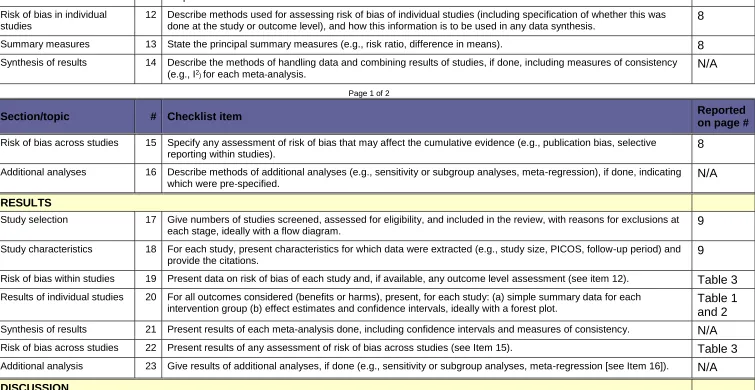
Physical function and PA are two key ‘modifiable’ lifestyle factors that may reduce mortality and
clinical adverse events and have a positive impact on quality of life in non-dialysis CKD and RTR.
Furthermore, early identification, using simple physical function or physical activity measures, of
patients at risk of clinical adverse events may focus interventions (e.g., exercise or nutrition)
designed to improve such outcomes.
Physical function and PA should be viewed as two independent concepts. Physical function is the
ability to perform activities of daily living, and is assessed using simple tests to reflect these tasks
(e.g. getting out of a chair) or by subjectively rating competency in completing different tasks(13).
PA is any bodily movement produced by contraction of skeletal muscle that increases energy
expenditure above a basal level(20). PA and physical function correlate significantly and both
concepts are important to clinicians and patients, hence this review will explore the relationship of
each with clinical outcomes.
We performed a systematic review to identify the association between physical function and PA
with all-cause mortality and other adverse clinical outcomes in non-dialysis CKD (i.e. including
RTR). No systematic review of the current literature has been performed on this association in this
patient group. We hypothesised that patients with non-dialysis CKD who are functionally limited or
less physically active will demonstrate a higher risk of all-cause mortality and adverse clinical
6
Methods
Protocol and registration
The protocol was registered on the International Prospective Register of Systematic Reviews
(PROSPERO) (CRD42016039060). Data is reported in line with the ‘Preferred Reporting Items for
Systematic Reviews and Meta-Analyses’ (PRISMA) guidelines(21).
Search strategy and selection criteria
We aimed to identify observational studies that explored the link between physical function, PA,
and adverse clinical outcomes and all-cause mortality in non-dialysis CKD. The primary question of
interest was the association between objective and subjective measures of physical function, PA,
and the likelihood of death (i.e. all-cause mortality) and adverse clinical outcomes in patients with
CKD not currently requiring dialysis therapy. For the purpose of this review, an ‘adverse clinical
outcome’ was defined as one (or more) of the following events: end-stage renal disease (i.e. the
need for/time to dialysis), unforeseen hospital admission, or non-fatal cardiovascular event (e.g.,
myocardial infarction, stroke, etc.). The primary outcome of interest was all-cause mortality.
Data sources and search strategy
The following electronic databases were searched from their date of establishment to July 2016 and
a further search was performed in December 2017 to gather any new literature. National Centre for
Biotechnology Information (NCBI) PubMed (which includes the Medical Literature Analysis and
Retrieval System Online (MEDLINE)), Excerpta Medica dataBASE (EMBASE), Web of Science
(WOS) (which includes the KCI-Korean Journal Database, MEDLINE, Russian Science Citation
Index, and SciELO Citation Index), and the Cochrane Central Register of Controlled Trials
(CENTRAL). The search strategy was tailored to each database and used a combination of key
7
transplantation”, “physical activity”, “mortality”, “death”, “cardiovascular event”. Other non-MeSH
search terms used were: “renal impairment”, “physical function”, “physical performance”,
“disability”, “all-cause mortality”, “cardiovascular diseases”; “adverse event”, “hospital
admission”.
As per the PRISMA statement, an example full electronic search strategy can be found for the
NCBI PubMed database in supplementary material 1.
Article eligibility criteria
The eligibility for full text review of each citation was independently evaluated by two authors
(HJM, TJW) on the basis of title and abstract. Any article deemed potentially relevant was retrieved
for full-text review. The reference lists of any relevant articles were also screened to identify studies
which may have been missed in the search.
Inclusion criteria:
1. Human adults (aged 18 years or over);
2. CKD (any stage) or RTR;
3. Cohort studies including secondary analysis of randomised control trials and abstracts;
4. Reporting physical function or PA outcome measures;
5. Reporting association with adverse clinical outcomes and all-cause mortality in either unadjusted
or adjusted terms.
Specific exclusion criteria:
1. Renal failure - any dialysis modality;
2. Review articles;
8
4. Non-English articles.
Data extraction
Following a preliminary pilot search in NCBI PubMed, a data extraction form was created to
capture relevant information from included studies. Each article was reviewed by two independent
members of the research team during the data extraction process. The following information was
extracted for each study:
1. Study characteristics: such as the year of publication, study design, and sample size;
2. Patient characteristics, such as mean age, sex distribution, race, and comorbidities;
3. Definitions and incidences of: CKD, physical function (or its associated domains), PA, clinical
adverse events, and all-cause mortality;
4. Reported association of physical function or PA with adverse clinical outcomes and/or all-cause
mortality in either unadjusted or adjusted terms (e.g., hazard or odds ratio).
Evaluation of quality and risk of bias
Each study was evaluated for quality and risk of bias using the Newcastle-Ottawa Scale (NOS)(22)
independently by two reviewers. Discrepancies in scoring were settled by mutual agreement.
Primary authors HJM and TJW had the final verdict decision. The NOS is a quality evaluation
method for non-randomized studies which uses three criteria: Selection, Comparability, and
Outcome. Each study is designated a number of stars for each section, based on predetermined
queries(22). The NOS has been extensively used to evaluate quality and bias for systematic reviews
and meta-analyses and is recommended by the Cochrane Collaboration(23). Scores from the NOS
were transformed into Agency for Healthcare Research and Quality (AHRQ) standards (‘Good’,
9
Results
Study selection
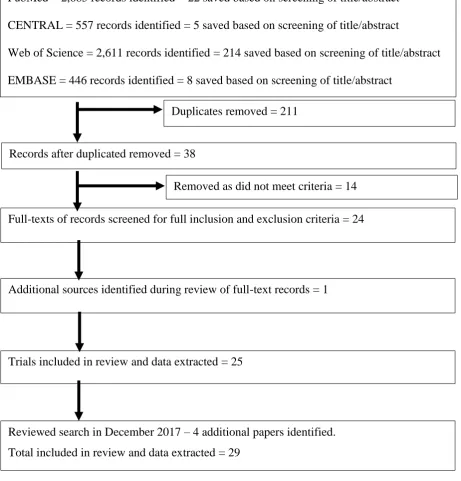
A total of 6299 records were identified by systematic searching and 249 were deemed appropriate
based upon the title and abstract alone. Upon removal of 211 duplicates, 38 records were assessed
against the full eligibility criteria and 14 records were removed. One additional source was
identified during the original review process. In December 2017, a re-search found 4 additional
studies. A total of 29 trials were reviewed (see PRISMA diagram, Figure 1).
Study characteristics
Overall, the articles demonstrated a range of follow-up times (median follow-up = 7.0 years; range
1(24)- 15.9 years(25)) and sample sizes (median = 719; range 26(26)- 50,620(27)). Studies were
conducted in the USA(25, 28-41),Taiwan(27, 42-44), Estonia(26), the Netherlands(45), Korea(46),
the UK(47, 48), Italy(24), Hungary(49), Brazil(50), Finland(51), and Slovakia(52) ensuring data
from a variety of cultures are included which, although increasing generalisability, may mean
culturally specific behaviour trends are masked. Studies included single- (25, 26, 38, 42-45, 47, 49,
50, 52) and multi-centre investigations(24, 30, 33-37, 39-41, 48, 51), and population-wide
surveys(27-29, 31, 32, 46). The majority of these studies are observational except Pechter et al(26)
who described a 10 year programme of supervised hydrotherapy exercise, and Chen et al(30) who
reported observational data collected as part of an RCT investigating effects of different diets in
kidney disease.
The disease populations studied varied with 19 investigations conducted in non-dialysis CKD(24,
26-29, 31-33, 35, 37, 39, 40, 42, 43, 46, 47, 50, 53, 54), seven with RTR(36, 38, 41, 45, 48, 49, 52),
and Tikkanen-Dolenc et al(51) studied both CKD and RTR. Some studied all five stages of
10
42, 50). Gulati et al(25) studied a female only population with no pre-existing diagnosis of CKD,
however the mean eGFR of the study population was 53.7 ml/min/1.73m² and 79% were found to
have an eGFR <60ml/min/1.73m². Further, Robinson-Cohen et al(34) conducted a general
population study but calculated HR for stratified eGFR bands and, henceforth, both of these papers
have been included in the review. Two papers(39, 50) investigated physical function as a subset of
another concept: Delgado et al(39) investigated frailty in CKD, whilst Periera et al(50) studied the
incidence of sarcopenia. Similarly Chang et al(43) measured hand-grip strength (HGS) to
investigate the effects of protein-energy wasting.
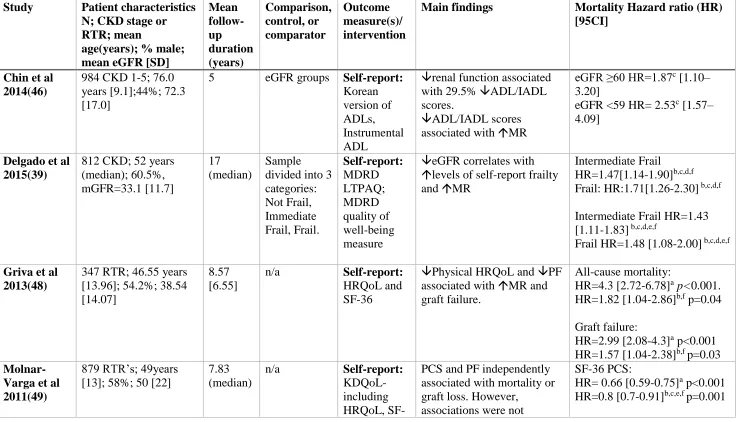
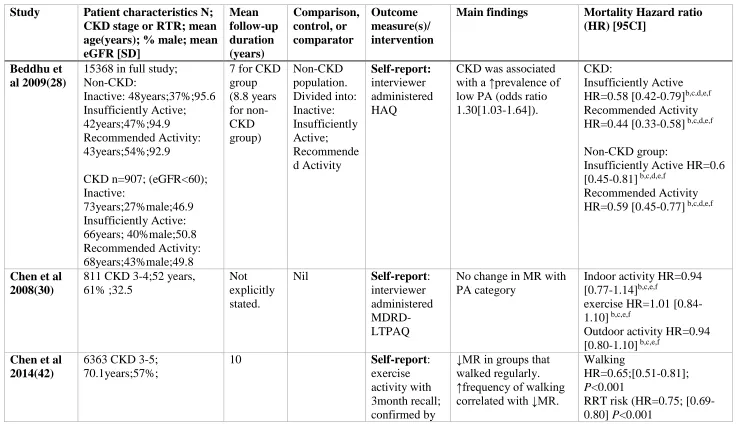
The association between physical function and all-cause mortality or adverse clinical outcomes are
summarised in Table 1, and studies reporting the association between PA and outcomes can be found in Table 2. Ten papers investigated physical function, whilst 15 studied PA. Two papers used cumulative measures using both PA and physical function(34, 38), however these have been
included in the table corresponding to the main emphasis of the individual trial. Tsai et al(44)
investigated physical function as “indices” of the person’s ability to engage in PA in addition to
reporting PA behaviour.
Outcomes reported
The majority of the papers studied mortality, either as all-cause(24-33, 36, 38-43, 45-52) or
cardio-vascular mortality(37, 45). Other outcomes reported included prevalence of frailty(39),
sarcopenia(50), protein-energy wastage(43), major adverse cardio-vascular event(44), first
hospitalisation(44), rate of decline of renal function(34, 35), or risk of requiring dialysis(26, 42-44).
One study reported an odds ratio of developing diabetic nephropathy(27).
Overall, the results showed that poorer physical function and lower PA was associated with
11
were reported in some studies (summarised in Table 1) varying from 1.04(52) to 5.7(24) dependent on measurement type and population studied.
Only four papers(36, 38, 45, 51) reviewed the importance of being active with a renal transplant and
four(41, 48, 49, 52) of the 10 papers investigating physical function studied renal transplant
recipients. Outcomes studied were all-cause mortality(36, 38, 41, 45, 48, 49, 51, 52),
cardio-vascular mortality(45), graft failure(38, 45, 48, 49), and death with a functioning transplant(36, 49).
Higher PA levels both prior to transplantation(36) and post-transplant(38, 45) were associated with
lower mortality rates. Similarly lower physical function levels were associated with increased
mortality hazard ratios(48, 49, 52).
Objective physical function
Six papers used objective measures of physical function including the Short Physical Performance
Battery (SPPB)(24, 41), HGS(43, 44, 50), using a Bruce protocol treadmill test to determine
cardiorespiratory fitness(25), the ‘timed-up-and-go’ (TUAG)(40), the 6 minute walk test
(6MWT)(40), 30 second chair stands(44), 2 minute step(44) and gait speed(40). The Short Physical
Performance Battery (SPPB), TUAG, the 6MWT, and gait speed were independently associated
with increased all-cause mortality(24, 40, 41). Greater scores in the 2 minute step were correlated
with a reduced risk of commencing dialysis(44). The number of chair stands achieved in 30 seconds
was shown to correlate with reduced risk of a major adverse cardio-vascular event and with
all-cause hospitalisation(44). Since both TUAG and the SPPB include measured of a person’s gait
speed and ability to stand from a chair, it may be inferred that a measure of physical function
utilising walking and standing provides a useful measure of physical function in CKD when
12
HGS was measured in three studies(40, 43, 50), with inconsistent results. Pereira et al(50) measured
HGS as a marker of saropaenia which was demonstrated to correlate with mortality risk;
Roshanravan et al(40) found HGS was relatively preserved compared to lower limb strength, as
6MWT, gait speed, and TUAG had greater area under the ROC values than HGS. However, Chang
et al(43) found that HGS was an independent outcome predictor in CKD.
Cardiorespiratory fitness was found to modify the association between eGFR and mortality(25). A
maximum cardiorespiratory fitness level of <5 METS (Metabolic Equivalent of Task ~17.5
ml/kg/min) combined with an estimated glomerular filtration rate (eGFR) of <45mL/min/1.73 m²
was associated with increased mortality rates compared to those with better fitness and higher
eGFR(25).
Objective physical activity
Only one study(29) used an objective PA measure (i.e. accelerometry), whilst another(34)
combined gait speed with a questionnaire to give a cumulative PA score.
Subjective physical function
Self-report measures of physical function were used by six papers(39, 46-49, 52). The 36-item
Short Form survey ‘SF-36’ was used in three of these(48, 49, 52) and a significant relationship
between the ‘Physical Component Score’ (PCS) and outcomes was consistently demonstrated. The
other subjective methods used included ‘Modification of Diet in Renal Disease (MDRD) Quality of
Wellbeing measure’(39), ‘Korean version of ADL’s’(46), ‘Instrumental ADL’(46), ‘Health Related
Quality of Life (HRQoL)’(48) and ‘Kidney Disease Quality of Life measure (KDQoL)’(49) which
included ‘HRQoL’, ‘SF-36’ and ‘Center for Epidemiologic Studies Depression Scale’ (CES-D).
13
Subjective physical activity
Thirteen studies which explored PA associations used questionnaires including ‘Household Adult’
questionnaire(28, 32) (a translated version was used by Tsai et al(44)), ‘Leisure Time Physical
Activity Questionnaire’(31), ‘Modified Diet in Renal Disease Leisure Time Physical Activity
Questionnaire’ (MDRD-LTPAQ)(30), ‘Four-Week Physical Activity History Questionnaire
(FWH)’(35), ‘Multi-Ethnic Study of Atherosclerosis (MESA) Typical Week Physical Activity
Survey’(33), ‘Physical Activity Scales for the Elderly’ (PASE)(36), ‘Minnesota Leisure Time PA’
questionnaire(37, 45) (a translated version was used by Tikkanen-Dolenc et al(51)), and ‘Tecumseh
Occupational Activity Questionnaire’(45). One study(27) failed to report which method was used
and two used clinician judgement to classify PA(38, 42). Questionnaires were frequently used in
conjunction with a compendium of activities to give MET score for further analysis(27, 28, 31-33,
36, 44, 45, 51).
The most common PA reported was walking, with data showing that increasing walking duration
and intensity correlates with favorable health benefits. The dose-response relationship remains
unclear. Navaneethan et al(31) and Ricardo et al(33) demonstrated reduced mortality risk only when
guideline PA levels were achieved (i.e. >150mins/week moderately-vigorous PA) whilst Beddhu et
al(29) found replacing sedentary time with light activity resulted in a lower mortality risk but
upgrading to moderate/vigorous PA did not reduce the risk further. Robinson-Cohen et al(35) found
the risk of developing end stage renal disease decreased with every 60 min/week increase in PA
with the largest reduction when >150minutes was achieved. Similarly, Tikkanen-Dolenc et al(51)
stratified HR’s according to intensity, duration and frequency of PA and demonstrated increased
HR’s when each of these differed from the guideline amounts, with the greatest increase in risk
when target duration of PA was not achieved. In contrast, Tsai et al(44) found no change in hazard
ratios with PA levels as measured by questionnaires, but found that various functional measures
14
despite large sample sizes, the P values reported are often not significant(35) or not specified(29,
31, 33).
Risk of bias
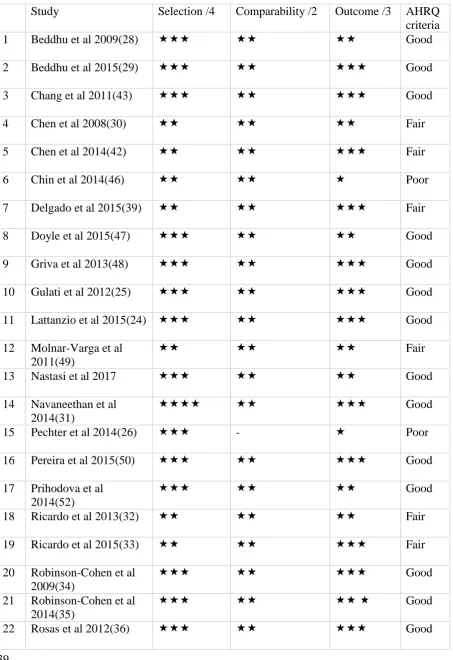
Each study was evaluated for quality and risk of bias using the Newcastle-Ottawa Scale and Agency
for Healthcare Research and Quality (AHRQ standards. These results are summarised in Table 3. Overall the quality of these papers was mixed, with 20 classed as ‘Good’, 7 as ‘Fair’ and 2
determined to be ‘Poor’ quality. Sources of potential bias identified included not fully describing
15
Discussion
Summary of review findings
Overall, our review has shown that, in patients with non-dialysis CKD, reduced physical function
and PA levels are associated with increased mortality and adverse clinical events, including decline
in renal function, increased risk of requiring renal replacement therapy, and poor renal graft survival
(RTR only). Similar observations have been observed in dialysis patients(16) and in other chronic
populations(6, 7). This has important clinical implications, potentially providing an opportunity to
improve outcomes. The concepts of PA and physical function have significant overlap and although
engagement in functional tasks can be considered a category of PA, function can also be considered
an antecedent of activity. The two concepts are also frequently intertwined in the literature which
necessitated the consideration of the two ideas in the same review.
Bias was assessed in this review using the NOS. Interestingly, the papers studying disease
progression were scored negatively by the NOS as the outcome, i.e. CKD, was present at the start of
the trial and this represents a weakness for this scoring system. Hazard ratios were reported in
many, but not all, papers, however, some studies reported mortality risk whilst others reported
survival analysis, making the data unsuitable for meta-analysis. Studies which yielded hazard ratios
were calculated both as unadjusted models and adjusted for confounding variables, such as age,
body mass index (BMI), gender, depression, and kidney function levels; however sensitivity
analysis to confirm these findings was poorly reported.
It is important to state the difficulty deducing causality from the data presented, as patients with
greater illness burden are often less active and have a reduced functional level. Further longitudinal
studies are needed whereby interventions increase PA or physical function to assess resultant
16
it appears that being active on most days, in line with the current PA recommendations, is
beneficial, even low levels of PA may confer some benefit in renal patients. It is also important to
consider that there is a physical function minima, below which PA is impossible. Whilst in
principle, encouraging patients to be more active may be a straightforward suggestion, the
complexity of successful behaviour change interventions should not be underestimated.
The data was not appropriate for meta-analysis due to the variance in the measurement outcomes
and the analysis methods used. This demonstrates the need to identify accepted norm assessments
of physical function and PA to use in the renal community to allow comparison between
interventions. The paucity of research in the transplant population is also demonstrated in regard to
both PA and physical function.
Physical function and outcome
Reduced physical function was found to correlate with frailty, sarcopenia, and protein-energy
wastage which, in turn, are associated with mortality. Despite the potential confounders introduced
by investigating these wider concepts, the value of maintaining functional ability and activity levels
remained clear. Only one paper(49) assessed depression as a co-variant when exploring the
relationship between physical function and mortality. Once the hazard ratio analysis was adjusted,
the significance of the model dropped. Due to the frequent concomitance of depression and
functional loss, further investigations are required to determine whether this is a trend as yet
uncharted, or a coincident pattern.
Doyle et al.(47) assessed physical function using the Barthel score, where ability to engage in
activities of daily living is assigned an ordinal score, and demonstrated a higher score on hospital
discharge was associated with a lower risk of all-cause mortality. Whilst this score is frequently
17
or as a self-report tool. Ricardo et al(32) calculated a ‘healthy lifestyle score’, based on BMI, PA
levels, dietary intake, and smoking behaviour. Their results demonstrated a positive relationship
between a ‘healthy’ lifestyle and mortality rates but it is difficult to isolate the effect of PA.
Objective tests were more commonly used to measure physical function. A gait speed reduction of
0.1m/s was associated with a 26% increased mortality risk, whilst a 1-second longer TUAG score
correlated with an 8% increased risk of death(40). Thus these objective tests could be useful
prognostic tools in chronic kidney disease, and may provide interventional targets yielding direct
patient benefit. HGS measurements generated inconsistent results and hence requires further
investigation before recommendations can be made about its use as an outcome measure in
non-dialysis CKD.
Physical activity and outcome
Interestingly, Pechter et al(26) found a 100% survival in patients who maintained engagement in a
10 year hydrotherapy programme, compared to 55% in the control group (no exercise) who either
died or required renal replacement therapy. However it may be argued that only the patient group
with a low co-morbidity burden are able to engage continuously in this type of intervention which
may confound these results. It must be considered that financing such supervised exercise for the
entire CKD population is untenable under modern health systems. Conversely, Chen et al(30)
reported no change in mortality risk with higher PA levels, although the authors acknowledge the
data’s wide confidence intervals. Also, the sample studied was generally more active than a general
CKD cohort with 50% walking or exercising regularly.
Measurement of PA should be conducted using objective accelerometry where possible, however
cut-18
offs determining ‘activity’ or ‘inactivity’ vary widely, and as such, different constructs are being
compared. This also limits exploration of dose-response effects and potential benefits.
Outcome measure use
A key finding from this review was the large breadth of measures used to assess both physical
function and PA. Both objective and subjective measures were used, and whilst each confer their
own strength and limitations, the heterogeneity makes it difficult to compare effects and prevents
meta-analysis. In many instances, questionnaire-based assessments were used, particularly in the
measurement of PA level. This has substantial limitations in regard to recall bias and desirable
responses and for some of these questionnaires validity in the renal population remains
undemonstrated. Some questionnaires were administered by interviewers(30-32, 37, 45) which may
have increased completion rates and corrected one of the common criticisms of questionnaire use.
In Yango et al(38), retrospective clinician judgement on patient PA level was used, and such
subjectivity means minimal conclusions can be drawn from this trial. Methodological flaws were
also demonstrated by Chen et al(42) who asked participants and their care-givers to recall a 3 month
history of PA. The ‘Minnesota Leisure Time Physical Activity’ questionnaire, used by three
studies(37, 45, 51), has been criticised as it requires a full year’s recall which has been previously
demonstrated to be limited by recall bias(55). We propose future researchers should use commonly
reported and validated measures to aid synthesis of data between clinical trials. The SF-36 was used
by 3 papers(48, 49, 52) and a 1 point increase in the Physical Component Score correlated with
between a 1.8%(49) and 4%(52) decrease in mortality risk in renal transplant recipient and hence
this subjective outcome measure is recommended for further use.
Despite a consensus among nephrologists that PA is important for patients, assessment of physical
function or PA advice is not a part of the routine management of CKD. Efforts to improve both
19
physical function, it appears simple objective tests, such as the TUAG and gait speed, (but perhaps
not hand-grip strength), and self-reported measures, in particular the SF-36 (Physical Component
Score), are useful prognostic tools in CKD. As such, research or clinical practice should use these
physical function tests when assessing intervention effects. Complex and ‘laboratory’-based
measures, such as those measuring VO2 or using an accelerometer or isokinetic dynamometer,
provide high quality and reliable data, however these assessments are often impractical in a clinical
setting and poorly tolerated by patients. More pragmatic measures of physical function and physical
activity, such as the TUAG, gait speed, or via self-report, can be quickly and cheaply conducted in a
clinic waiting room and hence provide a real-world method of assessing the patient’s functional
status which correlates with morbidity and mortality. When assessing either physical functioning or
activity, a researcher or healthcare professional should be aware of the relative strengths and
limitations of each assessment.
Conclusions
This is the first systematic review elucidating the relationship between physical function and PA
with clinical outcomes in the under-explored area of non-dialysis CKD. Better physical function
and greater PA levels both correlate with improved outcomes including both reduced all-cause and
cardio-vascular mortality risk, reduced risk of rapid decline in renal function, reduced prevalence of
frailty and sarcopenia, and graft survival in transplant recipients. However, causality as yet remains
unproved and further research is needed.
Clinical Messages
Reduced physical function and PA levels are associated with increased mortality risk and
increased risk of adverse clinical outcomes in both non-dialysis CKD and in RTR.
Further work is needed to investigate causality within this relationship.
20
Conflict of Interest Statement.
The authors declare that there is no conflict of interest.
Funding
This report is independent research supported by the National Institute for Health Research
Leicester Biomedical Research Centre and the NIHR Collaboration for Leadership in Applied
Health Research and Care East Midlands (CLAHRC EM). We also gratefully acknowledge
additional funding from The Stoneygate Trust.
The views expressed are those of the author(s) and not necessarily those of the NHS, the National
Institute for Health Research Leicester BRC, CLAHRC EM or the Department of Health and Social
Care
Contributions: Initial design: ACS, TJW, HJM: conducting searches: TJW, HJM: article retrieval: TJW, HJM: article review: HJM, TJW, ALC, DWG, ELW, TFO, SX, ACS: drafting manuscript:
21
References
1. Byrne C CF, Castledine C, Dawnay A, Ford D, Fraser S, Lambie M, Maxwell H, Steenkamp
R,, Wilkie M WA. UK Renal Registry, 19th Annual Report of the Renal Association. Nephron.
2017;137 (suppl1).
2. Padilla J, Krasnoff J, DaSilva M, Hsu CY, Frassetto L, Johansen KL, et al. Physical
Functioning in patients with chronic kidney disease. Journal of Nephrology. 2008;21:550-9.
3. Heiwe S, Tollback A, Clyne N. Twelve weeks of exercise training increases muscle function
and walking capacity in elderly predialysis patients and healthy subjects. Nephron. 2001;88:48-56.
4. Kosmadakis GC, John S, Clapp EL, Viana JL, Smith AC, Bishop NC, et al. Benefits of regular
walking exercise in advance pre-dialysis chronic kidney disease. Nephrology Dialysis
Transplantation. 2012;27(3):997-1004.
5. Morie M, Reid KF, Miciek R, Lajevardi N, Choong K, Krasnoff JB, et al. Habitual Physical
Activity Levels are Associated with Performance in Measures of Physical Function and Mobility in
Older Men. Journal of the American Geriatrics Society. 2010;58(9):1727-33.
6. Glenn KR, Slaughter JC, Fowke JH, Buchowski MS, Matthews CE, Signorello LB, et al.
Physical activity, sedentary behavior and all-cause mortality among blacks and whites with diabetes.
Annals of Epidemiology. 2015;25(9):649-55.
7. Martinez-Gomez D, Guallar-Castillon P, Mota J, Lopez-Garcia E, Rodriguez-Artalejo F.
Physical Activity, Sitting Time and Mortality in Older Adults with Diabetes. Int J Sports Med.
2015;36(14):1206-11.
8. Wu C-Y, Hu H-Y, Chou Y-C, Huang N, Chou Y-J, Li C-P. The association of physical
activity with all-cause, cardiovascular, and cancer mortalities among older adults. Preventive
Medicine. 2015;72:23-9.
9. Kokkinos P. Physical activity, health benefits, and mortality risk. ISRN Cardiol.
22
10. Knight EL, Ofsthun N, Teng M, Lazarus JM, Curhan GC. The association between mental
health, physical function, and hemodialysis mortality. Kidney Int. 2003;63(5):1843-51.
11. DeOreo PB. Hemodialysis patient-assessed functional health status predicts continued
survival, hospitalization, and dialysis-attendance compliance. Am J Kidney Dis. 1997;30(2):204-12.
12. de Oliveira MP, Kusumota L, Haas VJ, Ribeiro Rde C, Marques S, Oller GA. Health-related
quality of life as a predictor of mortality in patients on peritoneal dialysis. Rev Lat Am Enfermagem.
2016;24:e2687.
13. Painter P, Roshanravan B. The association of physical activity and physical function with
clinical outcomes in adults with chronic kidney disease. Curr Opin Nephrol Hypertens.
2013;22(6):615-23.
14. Kutner NG, Zhang R, Huang Y, Painter P. Gait Speed and Mortality, Hospitalization, and
Functional Status Change Among Hemodialysis Patients: A US Renal Data System Special Study.
Am J Kidney Dis. 2015;66(2):297-304.
15. Johansen KL, Dalrymple LS, Glidden D, Delgado C, Kaysen GA, Grimes B, et al. Association
of Performance-Based and Self-Reported Function-Based Definitions of Frailty with Mortality
among Patients Receiving Hemodialysis. Clin J Am Soc Nephrol. 2016;11(4):626-32.
16. Stack AG, Molony DA, Rives T, Tyson J, Murthy BV. Association of physical activity with
mortality in the US dialysis population. Am J Kidney Dis. 2005;45(4):690-701.
17. Greenwood SA, Lindup H, Taylor K, Koufaki P, Rush R, Macdougall IC, et al. Evaluation of
a pragmatic exercise rehabilitation programme in chronic kidney disease. Nephrology Dialysis
Transplantation. 2012;27(Supplement 3):iii126-iii34.
18. Dontje ML, de Greef MHG, Krijnen WP, Corpeleijn E, Kok T, Bakker SJL, et al. Longitudinal
measurement of physical activity following kidney transplantation. Clinical Transplantation.
23
19. Aakhus S, Dahl K, Widerøe TE. Cardiovascular disease in stable renal transplant patients in
Norway: morbidity and mortality during a 5-yr follow-up. Clinical Transplantation.
2004;18(5):596-604.
20. Caspersen CJ, Powell KE, Christenson GM. Physical activity, exercise, and physical fitness:
definitions and distinctions for health-related research. Public Health Rep. 1985;100(2):126-31.
21. Moher D, Shamseer L, Clarke M, Ghersi D, Liberati A, Petticrew M, et al. Preferred reporting
items for systematic review and meta-analysis protocols (PRISMA-P) 2015 statement. Syst Rev.
2015;4:1.
22. Wells GS, B; O'Connell, D; Peterson, J; Welch, V.; Losos, M; Tugwell,P The
Newcastle-Ottawa Scale (NOS) for assessing the quality of nonrandomised studies in meta-analyses 2011 [cited
2017 18/12/2017]. Available from: http://www.ohri.ca/programs/clinical_epidemiology/oxford.asp.
23. Higgins JG, S (editors). Cochrane Handbook for Systematic Reviews of Interventions. The
Cochrane Collaboration. 2011.
24. Lattanzio F, Corsonello A, Montesanto A, Abbatecola AM, Lofaro D, Passarino G, et al.
Disentangling the Impact of Chronic Kidney Disease, Anemia, and Mobility Limitation on Mortality
in Older Patients Discharged From Hospital. J Gerontol A Biol Sci Med Sci. 2015;70(9):1120-7.
25. Gulati M, Black HR, Arnsdorf MF, Shaw LJ, Bakris GL. Kidney Dysfunction,
Cardiorespiratory Fitness, and the Risk of Death in Women. Journal of Womens Health.
2012;21(9):917-24.
26. Pechter U, Raag M, Ots-Rosenberg M. Regular aquatic exercise for chronic kidney disease
patients: a 10-year follow-up study. Int J Rehabil Res. 2014;37(3):251-5.
27. Wang IK, Tsai MK, Liang CC, Yen TH, Huang CC, Wen SF, et al. The role of physical
activity in chronic kidney disease in the presence of diabetes mellitus: a prospective cohort study. Am
J Nephrol. 2013;38(6):509-16.
28. Beddhu S, Baird BC, Zitterkoph J, Neilson J, Greene T. Physical Activity and Mortality in
24
29. Beddhu S, Wei G, Marcus RL, Chonchol M, Greene T. Light-intensity physical activities and
mortality in the United States general population and CKD subpopulation. Clin J Am Soc Nephrol.
2015;10(7):1145-53.
30. Chen JL, Lerner D, Ruthazer R, Castaneda-Sceppa C, Levey AS. Association of physical
activity with mortality in chronic kidney disease. J Nephrol. 2008;21(2):243-52.
31. Navaneethan SD, Kirwan JP, Arrigain S, Schold JD. Adiposity measures, lean body mass,
physical activity and mortality: NHANES 1999-2004. BMC Nephrol. 2014;15:108.
32. Ricardo AC, Madero M, Yang W, Anderson C, Menezes M, Fischer MJ, et al. Adherence to
a Healthy Lifestyle and All-Cause Mortality in CKD. Clin J Am Soc Nephrol. 2013;8(4):602-9.
33. Ricardo AC, Anderson CA, Yang W, Zhang X, Fischer MJ, Dember LM, et al. Healthy
Lifestyle and Risk of Kidney Disease Progression, Atherosclerotic Events, and Death in CKD:
Findings From the Chronic Renal Insufficiency Cohort (CRIC) Study. Am J Kidney Dis.
2015;65(3):412-24.
34. Robinson-Cohen C, Katz R, Mozaffarian D, Dalrymple LS, de Boer I, Sarnak M, et al.
Physical Activity and Rapid Decline in Kidney Function Among Older Adults. Archives of Internal
Medicine. 2009;169(22):2116-23.
35. Robinson-Cohen C, Littman AJ, Duncan GE, Weiss NS, Sachs MC, Ruzinski J, et al. Physical
Activity and Change in Estimated GFR among Persons with CKD. Journal of the American Society
of Nephrology. 2014;25(2):399-406.
36. Rosas SE, Reese PP, Huan Y, Doria C, Cochetti PT, Doyle A. Pretransplant Physical Activity
Predicts All-Cause Mortality in Kidney Transplant Recipients. American Journal of Nephrology.
2012;35(1):17-23.
37. Shlipak MG, Fried LF, Cushman M, Manolio TA, Peterson D, Stehman-Breen C, et al.
Cardiovascular mortality risk in chronic kidney disease: comparison of traditional and novel risk
25
38. Yango AF, Gohh RY, Monaco AP, Reinert SE, Gautam A, Dworkin LD, et al. Excess risk of
renal allograft loss and early mortality among elderly recipients is associated with poor exercise
capacity. Clin Nephrol. 2006;65(6):401-7.
39. Delgado C, Grimes BA, Glidden DV, Shlipak M, Sarnak MJ, Johansen KL. Association of
Frailty based on self-reported physical function with directly measured kidney function and mortality.
BMC Nephrology. 2015;16.
40. Roshanravan B, Robinson-Cohen C, Patel KV, Ayers E, Littman AJ, de Boer IH, et al.
Association between physical performance and all-cause mortality in CKD. J Am Soc Nephrol.
2013;24(5):822-30.
41. Nastasi AJ, McAdams-DeMarco MA, Schrack J, Ying H, Olorundare I, Warsame F, et al.
Pre-Kidney Transplant Lower Extremity Impairment and Post-Kidney Transplant Mortality. Am J
Transplant. 2018;18(1):189-96.
42. Chen IR, Wang S-M, Liang C-C, Kuo H-L, Chang C-T, Liu J-H, et al. Association of Walking
with Survival and RRT Among Patients with CKD Stages 3-5. Clin J Am Soc Nephrol.
2014;9(7):1183-9.
43. Chang YT, Wu HL, Guo HR, Cheng YY, Tseng CC, Wang MC, et al. Handgrip strength is
an independent predictor of renal outcomes in patients with chronic kidney diseases. Nephrol Dial
Transplant. 2011;26(11):3588-95.
44. Tsai YC, Chen HM, Hsiao SM, Chen CS, Lin MY, Chiu YW, et al. Association of physical
activity with cardiovascular and renal outcomes and quality of life in chronic kidney disease. PLoS
One. 2017;12(8):e0183642.
45. Zelle DM, Corpeleijn E, Stolk RP, de Greef MH, Gans RO, van der Heide JJ, et al. Low
physical activity and risk of cardiovascular and all-cause mortality in renal transplant recipients. Clin
J Am Soc Nephrol. 2011;6(4):898-905.
46. Chin HJ, Ahn SY, Ryu J, Kim S, Na KY, Kim KW, et al. Renal function and decline in
26
47. Doyle EM, Sloan JM, Goodbrand JA, McMurdo MET, Donnan PT, McGilchrist MM, et al.
Association Between Kidney Function, Rehabilitation Outcome, and Survival in Older Patients
Discharged From Inpatient Rehabilitation. Am J Kidney Dis. 2015;66(5):768-74.
48. Griva K, Davenport A, Newman SP. Health-Related Quality of Life and Long-Term Survival
and Graft Failure in Kidney Transplantation: A 12-Year Follow-Up Study. Transplantation.
2013;95(5):740-9.
49. Molnar-Varga M, Molnar MZ, Szeifert L, Kovacs AZ, Kelemen A, Becze A, et al.
Health-Related Quality of Life and Clinical Outcomes in Kidney Transplant Recipients. Am J Kidney Dis.
2011;58(3):444-52.
50. Pereira RA, Cordeiro AC, Avesani CM, Carrero JJ, Lindholm B, Amparo FC, et al.
Sarcopenia in chronic kidney disease on conservative therapy: prevalence and association with
mortality. Nephrol Dial Transplant. 2015;30(10):1718-25.
51. Tikkanen-Dolenc H, Waden J, Forsblom C, Harjutsalo V, Thorn LM, Saraheimo M, et al.
Physical Activity Reduces Risk of Premature Mortality in Patients With Type 1 Diabetes With and
Without Kidney Disease. Diabetes Care. 2017;40(12):1727-32.
52. Prihodova L, Nagyova I, Rosenberger J, Roland R, Groothoff JW, Majernikova M, et al.
Health-Related Quality of Life 3 Months After Kidney Transplantation as a Predictor of Survival
Over 10 Years: A Longitudinal Study. Transplantation. 2014;97(11):1139-45.
53. Chen JLT, Lerner D, Ruthazer R, Castaneda-Sceppa C, Levey AS. Association of physical
activity with mortality in chronic kidney disease. Journal of Nephrology. 2008;21(2):243-52.
54. Chiang HH, Livneh H, Yen ML, Li TC, Tsai TY. Prevalence and correlated of depression
among chronic kidney disease patients in Taiwan. BMC Nephrology. 2013;14(78).
55. Richardson MT, Leon AS, Jacobs DR, Ainsworth BE, Serfass R. Comprehensive evaluation
of the Minnesota leisure time physical activity questionnaire. Journal of Clinical Epidemiology.
27
56. Wang IK, Tsai M-K, Liang C-C, Yen T-H, Huang C-C, Wen S-F, et al. The Role of Physical
Activity in Chronic Kidney Disease in the Presence of Diabetes Mellitus: A Prospective Cohort
28
Table 1. Summary of findings; association between physical function with all-cause mortality or adverse clinical outcomes
Study Patient characteristics N; CKD stage or RTR; mean
age(years); % male; mean eGFR [SD]
Mean follow-up duration (years) Comparison, control, or comparator Outcome measure(s)/ intervention
Main findings Mortality Hazard ratio (HR) [95CI]
Chin et al 2014(46)
984 CKD 1-5; 76.0 years [9.1];44%; 72.3 [17.0]
5 eGFR groups Self-report:
Korean version of ADLs, Instrumental ADL
renal function associated with 29.5% ADL/IADL scores.
ADL/IADL scores associated with MR
eGFR ≥60 HR=1.87c [1.10– 3.20]
eGFR <59 HR= 2.53c [1.57– 4.09]
Delgado et al 2015(39)
812 CKD; 52 years (median); 60.5%, mGFR=33.1 [11.7]
17 (median)
Sample divided into 3 categories: Not Frail, Immediate Frail, Frail. Self-report: MDRD LTPAQ; MDRD quality of well-being measure
eGFR correlates with
levels of self-report frailty and MR
Intermediate Frail HR=1.47[1.14-1.90]b,c,d,f Frail: HR:1.71[1.26-2.30] b,c,d,f Intermediate Frail HR=1.43 [1.11-1.83] b,c,d,e,f
Frail HR=1.48 [1.08-2.00] b,c,d,e,f
Griva et al 2013(48)
347 RTR; 46.55 years [13.96]; 54.2%; 38.54 [14.07]
8.57 [6.55]
n/a Self-report:
HRQoL and SF-36
Physical HRQoL and PF associated with MR and graft failure.
All-cause mortality:
HR=4.3 [2.72-6.78]ap<0.001. HR=1.82 [1.04-2.86]b,f p=0.04 Graft failure:
HR=2.99 [2.08-4.3]a p<0.001 HR=1.57 [1.04-2.38]b,f p=0.03
Molnar-Varga et al 2011(49)
879 RTR’s; 49years [13]; 58%; 50 [22]
7.83 (median)
n/a Self-report:
KDQoL- including HRQoL,
SF-PCS and PF independently associated with mortality or graft loss. However,
associations were not
SF-36 PCS:
29
36 and CES-D scale.
significant after adjustment for depression.
10-point PCS yields 18%MR; 10-point PF associated with 11% MR.
Adjusted for depression score HR= 0.82 [0.71-0.95]b,c,e,f p=0.008
PF score
HR=0.84 [0.80-0.87]a p<0.001 HR=0.88 [0.83-0.93] b,c,e,f p<0.001
Adjusted for depression score HR=0.89 [0.84-0.94] b,c,e,f p<0.001
Prihodova et al 2014(52)
151 RTR; 47.09 years [13.2]; 56.3%; 51.16 [15.6]
7.1 [2.2] N/A Self-report: SF-36
survival with eGFR (2% per point), PCS (4% per point)
Survival analysis: PCS HR=1.04 p<0.05a
Doyle et al 2015(47)
3012 CKD 1-5; 84 years; 41%
12 Comparison across eGFR groups
Self-report/objec tive: Barthel score
discharge Barthel Score (i.e. PF) were associated with all-cause MR
Barthel Score ≥10, eGFR <30 HR=7.0 eGFR HR=3.0
Barthel Score 19-20, eGFR <30 HR: 1.5 eGFR 45-90 HR=1.25
Chang et al 2011
128 CKD1-5; 60.7 years [14.8]; 46.8%; 46.6 [28.2]
2.825 eGFR groups Objective: HGS
HGS used as measure of protein-energy wasting.
HGS is independent predictor of outcome.
Risk of all-cause mortality or dialysis initiation:
HR=0.9 p=0.004 (CKD1-5) HR=0.91[0.83-0.99] p=0.031 CKD3b-5
Gulati et al 2012(25)
5716; 52.5years [10.8]; 0%; 53.7 [8.3]
15.9 n/a Objective:
Treadmill test using Bruce protocol to measure cardiorespirat ory fitness Cardiorespiratory fitness significantly modified the association between eGFR and mortality (p < 0.001).
30
eGFR ≥ 60 + fitness level of > 8 METs MR=0.56
deaths/1000 person-years
Lattanzio et al 2015(24)
487 CKD post-hospital discharge; 80.1 years [6.0]; 45.8%; 50.4 [14.7]
1 none Objective:
SPPB
MR with older age, hypoalbuminemia, cognitive impairment, impaired ADL’s, eGFR <30, anemia and SPPB < 5.
SPPB=5-8 HR = 1.96, [0.63-6.07]b,c
SPPB: 0-4 HR = 5.70, [1.98-12.4]b,c
SPPB= 5-8: HR = 1.45 [0.53-4.27]b,c,d,f
SPPB: 0-4: HR = 2.93 [1.07-8.63] b,c,d,f
Nastasi et al 2017(41)
719 RTR; 51.6 years [14.2]; 62.3%;
2
(median)
N/A Objective:
SPPB
1 point reduction in chair stand or walking speed score correlates with 1.21 and 1.5 fold increase in mortality risk
SPPB <10 HR=3.57 [1.83-6.98]a p<0.001
HR=2.3 [1.12-4.74]b,c,d,f p=0.02
Pereira et al 2015(50)
287 CKD 3-5; 59.9 years [10.5]; 62%; 25.0 [15.8]
Up to 3.33
N/A Objective: Sarcopenia measured using HGS and Bioelectrical Impedance Analysis
Presence of sarcopenia significantly predicts all-cause mortality.
HR=2.89 [1.4-5.96]a p=0.004 HR=3.58 [1.43-8.31]b,c,d p=0.003
Roshanrava n et al 2013(40)
385 CKD2-4; 61 years [13]; 84%; 41 [19]
3
(median)
N/A Objective: TUAG; HGS; 6MWD;Gait speed
PF measures reliant on lower limb strength 30-39% compared to normative values but grip strength relatively preserved.
MR=47 deaths per 1000person-years.
Gait speed ≤ 0.8m/s
HR=2.45 [1.09–5.54]b,c,d,e,f (per 0.1m/s slower HR=1.26)
TUAG ≥12s
31
CKD = chronic kidney disease; RTR = renal transplant recipients; ADL = activities of daily living; eGFR = estimated glomerular filtration rate
[ml/min/1.73m²]; HR = hazard ratio; PA = physical activity; PF = physical function; MDRD LTPAQ = Modification of Diet in Renal Disease Leisure
Time Physical Activity Questionnaire; HRQoL= health related quality of life; SF-36 = 36-item Short Form survey; KDQoL= Kidney Disease Quality
of Life; CES-D = Centre for Epidemiologic Centres Scale for Depression; PCS = physical composite score; SPPB = Short Physical Performance
Battery; MR = mortality rate; MET = metabolic equivalent task; TUAG = Timed- Up-and-Go; HGS = hand grip strength; 6MWD = 6 minute walk
distance
a = unadjusted model; b = adjusted for age; c = adjusted for gender; d= adjusted for BMI; e = adjusted for eGFR; f = adjusted for additional co-variants
(see reference for full analysis)
0.1m/s gait speed
associated with 26% risk of death;
1s longer TUAG associated with ~8% MR
32
Table 2. Summary of findings; association between physical activity level with all-cause mortality or adverse clinical outcomes
Study Patient characteristics N; CKD stage or RTR; mean age(years); % male; mean eGFR [SD] Mean follow-up duration (years) Comparison, control, or comparator Outcome measure(s)/ intervention
Main findings Mortality Hazard ratio (HR) [95CI]
Beddhu et al 2009(28)
15368 in full study; Non-CKD: Inactive: 48years;37%;95.6 Insufficiently Active; 42years;47%;94.9 Recommended Activity: 43years;54%;92.9
CKD n=907; (eGFR<60); Inactive: 73years;27%male;46.9 Insufficiently Active: 66years; 40%male;50.8 Recommended Activity: 68years;43%male;49.8
7 for CKD group (8.8 years for non-CKD group) Non-CKD population. Divided into: Inactive: Insufficiently Active; Recommende d Activity Self-report: interviewer administered HAQ
CKD was associated with a ↑prevalence of low PA (odds ratio 1.30[1.03-1.64]).
CKD:
Insufficiently Active HR=0.58 [0.42-0.79]b,c,d,e,f Recommended Activity HR=0.44 [0.33-0.58] b,c,d,e,f Non-CKD group:
Insufficiently Active HR=0.6 [0.45-0.81] b,c,d,e,f
Recommended Activity HR=0.59 [0.45-0.77] b,c,d,e,f
Chen et al 2008(30)
811 CKD 3-4;52 years, 61% ;32.5
Not explicitly stated.
Nil Self-report: interviewer administered MDRD-LTPAQ
No change in MR with PA category
Indoor activity HR=0.94 [0.77-1.14]b,c,e,f
exercise HR=1.01 [0.84-1.10] b,c,e,f
Outdoor activity HR=0.94 [0.80-1.10] b,c,e,f
Chen et al 2014(42)
6363 CKD 3-5; 70.1years;57%;
10 Self-report:
exercise activity with 3month recall; confirmed by
↓MR in groups that walked regularly. ↑frequency of walking correlated with ↓MR.
Walking
HR=0.65;[0.51-0.81]; P<0.001
33
family/care-giver ↑duration of exercise
HR=0.77 [0.70-0.85] P<0.001)
RRT risk HR=0.89; [0.86-0.92]; p<0.001for each 30min increase.
↑frequency of exercise HR=0.83[0.78-0.90] p<0.001 RRT risk HR=0.92; [0.90-0.94]; p<0.001 for each category increase.
Navaneetha n et al 2014(31)
11,586
9,433 non-CKD; 43.9years [0.3]; 50.6%; 96.8 (0.4)
2,153 CKD; 60.7years [0.7]; 43.1% [1.0]; 72.9 [0.9]
4.5 Non-CKD Self-report: Interviewer administered PA
questionnaire
PA below recommended levels mortality HR=1.36 [1.00-1.85]b,c,d,e,f
For each log unit
↑METS/week HR=0.97[0.95-1.00] b,c,d,e,f
PA <450 METS/week CKD HR= 1.34 [0.98-1.84] b,c,d,e,f
Non-CKD HR=1.65 [1.19-2.28] b,c,d,e,f
PA <450 METS/week CKD HR= 1.36 [1-1.85] b,c,d,e,f
Non-CKD =1.65 [1.21-2.26] b,c,d,e,f
Ricardo et al 2013(32)
2288 CKD 1-4; 59 years; 40%; 78
13 Self-report -
interviewer
Individuals in the highest eGFR strata
34
administered HAQ
were less likely to adhere to the
recommended level of PA than those in the lowest eGFR strata (42% v 34%)
HR = 0.86 [0.67–1.10]b,c,e,f p = 0.22
Recommended PA HR=0.73 [0.57-0.92]b,c HR = 0.80 [0.65–0.99] b,c,e,f p = 0.04
Ricardo et al 2015(33)
3006 CKD eGFR20-70;58years [11]; 52%; 43[14]
4 (median) N/A Self-report: MESA.
Less than ideal PA HR=0.74 [0.57-0.96]b,c,f
Ideal PA HR 0.60 [0.49-0.74] b,c,f
Robinson-Cohen et al 2014(35)
256 CKD3-4; 82%;
0 min/wk - 61.8[11.3] years; 37.8[20.1]
1-60 min/wk- 58.8[12.8] years: 41.0[18.6]
60-150 min/wk- 61.7[12] years; 37.4[18.2]
>150 min/wk- 61.7[12.5] years; 40.5[14.0] 3.7 (median) Subdivided into groups based on min/week PA; Self-report: Four-Week Physical Activity History Questionnaire
↓annual decline in eGFR (2.8%) in highest PA categories
Each ↑60-min PA associated with ~0.5%/yr slower decline.
HR for incident ESRD Any PA HR=0.59b,c [0.28-1.24] p=0.19
Per 60min/week increment HR=0.9b,c [0.74-1.10] p=0.32
Rosas et al 2012(36)
507 RTR;47.8 years[12.8]; 61%
8.4 Self-report:
Physical Activity scales for the Elderly
Inactive: MR 36.3% Moderate: MR 23.3% Active: MR: 16.3%
METS (per 10 unit change) HR=0.91a [0.87-0.96] p<0.001
HR=0.93b,c [0.88-0.97] p=0.002
Moderate tertile
HR=0.81a [0.55-1.2]; p=0.3 HR=0.91b,c,f [0.61-1.36]; p=0.7
35
HR=0.45a [0.29-0.72]; p=0.001
HR=0.53b,c,f [0.33-0.84]; p=0.01
Shlipak et al 2005(37)
6495
CKD group (eGFR<60) 1249;75[6]years;47%;50[1. 73]
Non CKD group
4559;772[5]years;41%;87[ 20]
8.6 Non-CKD Self-report: MLTPAQ
CV MR = 32 deaths per 1000person-years in CKD; 16 deaths per 1000person-years in non-CKD.
CKD: Low PA
HR=1.58b,c,f [1.25-2.01]; p<.001;
non-CKD: low PA HR=1.31b,c,f [1.10-1.57] p.003;
Tikkanen-Dolenc et al 2017
310 CKD, including RTR (n=64) and dialysis-dependent patient (n=36) (2639 in full study)
11.4 Self-report:
Finnish version of MLTPAQ
HR for CKD & RTR (excluding dialysis-dependent)
LTPA (moderate/high LTPA used as reference)
Low HR=1.99 [0.95-4.15] a Low HR=2.12 [0.99-4.57] c,f
Exercise Intensity
(moderate/high intensity used as reference)
Low HR=3.11 [1.31-7.38] a Low HR=2.4 [0.99-5.81]c,f
Exercise Frequency
(moderate/high freq used as reference)
Low HR=2.85 [1.4-5.8] a Low HR=2.6 [1.15-5.84] c,f
36
Low HR=4.03 [1.8-9.01] a Low HR=2.87 [1.21-6.84] c,f
Wang et al 2013(27)
445,075;
41.1years[13.8];50%
42,757 CKD, no DM; 49.4years[16.5];52.3%;69.4
7863 CKD + DM;
59.3years[11.8];54.9%;66.2
Up to 12 Healthy population; CKD; CKD + DM
Self-report: questionnaire (not specified)
MR per 100,000 person-years: Healthy population: inactive: 362 [352-372] Low-active: 314 [300– 328]
Fully active: 281.4 [269–295] CKD+DM Inactive: 1,317.2 [1,191–1,456] Low-active: 912.2 [744-1118]
Fully active:871 [745– 1018]
DM/CKD:
low-active HR= 0.78b,c [0.65 – 0.92]
fully active HR=0.63b,c [0.55 – 0.73]
Yango et al 2006(38)
402 RTR however data only presented for n=64 >60years
64years[4];65%
3 Retrospective Cohort study
Self-report: PA level assessed based on history obtained by the examining physician.
1 year survival rate: Overall 78%
Active 94% Inactive 24%
3 year survival rate: Overall 71%
Active 24% Inactive 24%
None calculated
Zelle et al 2011(45)
540 RTR patients: 51years [12]; 54%
5.3 [4.7-5.7]
N/A Self-report:
Interviewer-led Tecumseh Occupational Activity Questionnaire; MLTPAQ
HR=0.58 [0.4- 0.70]a p<0.001
37
Robinson-Cohen et al 2009(34)
4011
PA score 2-3:
896;72.8years [5.4]; 30.7%; 75.1[18.3]
PA score 4-6: 2137; 72.0 years [5.1];
40.3%;78.9[17.2]
PA score 7-8: 896;71.2 years [4.4];56.7%; 81.1[16.2]
7 (median) Divided into categories based on PA score Objective and self-report: Gait speed used in combination with PA questionnaires to give cumulative PA score.
Lower risk of RDKF was found with
increased PA scoreb,c,d,f Same relationship could be seen when the results were stratified into groups using eGFR
HR of developing RDKFb,c,d,f eGFR<60
PA score 4-6 HR=0.75 [1.45-1.27]
PA score 7-8 HR=0.78 [1.4-1.51]
p=0.44
eGFR 60-89
PA score 4-6 HR=0.88 [0.71-1.09]
PA score 7-8 HR=0.63 [0.47-0.85]
p=0.02
eGFR90-119
PA score 4-6 HR=0.72 [0.56-0.92]
PA score 7-8 HR=0.69 [0.51-0.94]
P=0.04
Beddhu et al 2015(29)
3626 in full study; 383 CKD 2.86 [0.64] Non-CKD population Objective: Accelerometry
↑sedentary duration was associated with
↑mortality
Non CKD: HR 1.18 [1.09-1.28]b,c,f
CKD subgroup: HR 1.16 [1.04-1.13] b,c,f
Pechter et al 2014(26)
26 CKD;
Intervention: 7; 52years; 42%;50.9[9.2]
Control group; 9; 48 years; 50%; 51.6[7.1]
10 Sedentary
control group who did not consent to exercise
Intervention: regular aquatic exercise for 10 years (>32 weeks a year, 30 mins, 2x a week)
Active group: 0% MR; 0%
commenced dialysis Control group: 55% MR; 22% commenced dialysis
38
Tsai et al 2017(44)
161 CKD1-5; 67.2 years [7.8]; 54%; 34.5[28.8]
2.425 CKD1-3 v CKD4-5 comparison
Objective:
HGS
30s chair stand 2min step
Subjective:
Taiwan version of the WHO QoL-BREF Interviewer administered HAQ
COMBINED PA & PF
No relationship between PA and outcomes
Risk of initiation of dialysis: High HGS HR=0.89[0.84-0.96]
High 2min step HR=0.304[0.01-0.95]
eGFR = estimated glomerular filtration rate; RTR = renal transplant recipient; HR = hazard ratio; PA = physical activity; PF = physical function; HAQ
= Household Adult Questionnaire; MDRD LTPAQ = Modification of Diet in Renal Disease Leisure Time Physical Activity Questionnaire; MESA=
Multi-Ethnic Study of Atherosclerosis Typical Week Physical Activity Survey; MLTPAQ = Minnesota Leisure Time Physical Activity Questionnaire;
MR = mortality rate; RRT risk = risk of requiring renal replacement therapy; CV = cardiovascular; RDKF = rapid decline in kidney function;
a = unadjusted model; b = adjusted for age; c = adjusted for gender; d = adjusted for BMI; e = adjusted for eGFR; f = adjusted for plus additional
39
Table 3. Papers reviewed, Newcastle-Ottawa Scale score, and bias criteria
Study Selection /4 Comparability /2 Outcome /3 AHRQ criteria
1 Beddhu et al 2009(28) Good
2 Beddhu et al 2015(29) Good
3 Chang et al 2011(43) Good
4 Chen et al 2008(30) Fair
5 Chen et al 2014(42) Fair
6 Chin et al 2014(46) Poor
7 Delgado et al 2015(39) Fair
8 Doyle et al 2015(47) Good
9 Griva et al 2013(48) Good
10 Gulati et al 2012(25) Good
11 Lattanzio et al 2015(24) Good
12 Molnar-Varga et al 2011(49)
Fair
13 Nastasi et al 2017 Good
14 Navaneethan et al 2014(31)
Good
15 Pechter et al 2014(26) - Poor
16 Pereira et al 2015(50) Good
17 Prihodova et al 2014(52)
Good
18 Ricardo et al 2013(32) Fair
19 Ricardo et al 2015(33) Fair
20 Robinson-Cohen et al 2009(34)
Good
21 Robinson-Cohen et al 2014(35)
Good
40
23 Roshanravan et al 2013(40)
Good
24 Shlipak et al 2005(37) Good
25 Tikkanen-Dolenc et al 2017
Good
26 Tsai et al 2017(44) Good
27 Wang et al 2013(56) Fair
28 Yango et al 2006(38) Good
41
Figure 1. PRISMA flow diagram
PubMed = National Centre for Biotechnology Information (NCBI) PubMed (which includes
the Medical Literature Analysis and Retrieval System Online (MEDLINE)); CENTRAL =
Cochrane Central Register of Controlled Trials; WoS = Web of Science (which includes the PubMed = 2,685 records identified = 22 saved based on screening of title/abstract
CENTRAL = 557 records identified = 5 saved based on screening of title/abstract
Web of Science = 2,611 records identified = 214 saved based on screening of title/abstract
EMBASE = 446 records identified = 8 saved based on screening of title/abstract
Duplicates removed = 211
Additional sources identified during review of full-text records = 1
Trials included in review and data extracted = 25
Removed as did not meet criteria = 14 Records after duplicated removed = 38
Full-texts of records screened for full inclusion and exclusion criteria = 24
Reviewed search in December 2017 – 4 additional papers identified.
42
KCI-Korean Journal Database, MEDLINE, Russian Science Citation Index, and SciELO
43
Supplementary material 1.
Example search strategy from NCBI PubMed
User query using pre-defined search terms
“kidney diseases” AND “physical activity” AND “mortality” AND (Clinical Trial[ptyp]
AND Humans[Mesh])
Query Translation
("kidney diseases"[MeSH Terms] OR ("kidney"[All Fields] AND "diseases"[All Fields]) OR
"kidney diseases"[All Fields]) AND ("exercise"[MeSH Terms] OR "exercise"[All Fields] OR
("physical"[All Fields] AND "activity"[All Fields]) OR "physical activity"[All Fields]) AND
("mortality"[Subheading] OR "mortality"[All Fields] OR "mortality"[MeSH Terms]) AND
(Clinical Trial[ptyp] AND "humans"[MeSH Terms])
Individual translations
kidney diseases
"kidney diseases"[MeSH Terms] OR ("kidney"[All Fields] AND
"diseases"[All Fields]) OR "kidney diseases"[All Fields]
physical
activity
"exercise"[MeSH Terms] OR "exercise"[All Fields] OR ("physical"[All
Fields] AND "activity"[All Fields]) OR "physical activity"[All Fields]
mortality
"mortality"[Subheading] OR "mortality"[All Fields] OR "mortality"[MeSH
Terms]