University of Warwick institutional repository: http://go.warwick.ac.uk/wrap
A Thesis Submitted for the Degree of PhD at the University of Warwick
http://go.warwick.ac.uk/wrap/3761
This thesis is made available online and is protected by original copyright. Please scroll down to view the document itself.
Teachers’ and Pupils’ Perceptions of Sex
Education in Taiwan and England
- A Comparative Study
by
Liang, Chung-Hsuan
A thesis submitted in partial fulfilment of the requirements for the
degree of Doctor of Philosophy in Education
University of Warwick, Institute of Education
Tables of Contents
Chapter I Introduction ...1
1.0 Introduction...1
1.1 Motivation...1
1.2 Rationales of the study...2
1.3 Objectives of the study...4
1.4 Research questions...4
1.5 The focus of the inquiry - England & Taiwan...5
1.6 An outline of the thesis ...6
1.7 Conclusion ...8
Chapter II Sex Education - an Overview of Perspectives ...9
2.0 Introduction...9
2.1 Concepts of sex education ...9
2.1.1 Developmental theories ...12
2.1.2 Perceived control theories...14
2.1.3 Attitude and intentions theories...17
2.1.4 Social environment theories ...22
2.2 Approaches to sex education...24
2.2.1 Abstinence (-only) sex education ...24
2.2.2 Morality approach / Sex education as moral education...26
2.2.4 Right-based approach ...29
2.2.5 Comprehensive sex education ...30
2.3 Conclusions...32
Chapter III Sex Education in Taiwan...33
3.0 Introduction...33
3.1 Sex education in Taiwan ...33
3.1.1 Initiation stage of sex education in Taiwan ...34
3.1.2 Developing stage of sex education in Taiwan ...34
3.1.3 Integration stage of sex education in Taiwan ...35
3.2 The transition of curriculum for sex education in Taiwan ...36
3.2.2 Nine-Year Joint Education Reform ...36
3.3 Practice of sex education in Taiwan...39
3.3.1 Curriculum of sex education in Taiwanese schools ...39
3.3.2 Teaching of sex education in Taiwan ...41
3.3.3 Learning of sex education in Taiwan...43
3.4 Conclusion ...45
Chapter IV Sex & Relationships Education in England ...47
4.0 Introduction...47
4.1 Sex & Relationships Education in England ...47
4.1.1 Evolution of sex education in England...47
4.1.2 Education Act 1986 ...48
4.1.3 Section 28 of the Local Government Act ...49
4.2 National Curriculum in England...50
4.2.1 The introduction of National Curriculum ...50
4.2.2 Education Act 1993 ...51
4.2.4 Guidelines for Sex and Relationships Education...52
4.3 Practices in Sex and Relationships Education in England...54
4.3.1 Sex and Relationships Education curriculum ...54
4.3.2 Teaching of Sex and Relationships Education ...57
4.3.3 Learning of Sex and Relationships Education...59
4.5 Conclusion ...61
Chapter V Methodology and Research Design ...63
5.0 Introduction...63
5.1 Theoretical considerations ...63
5.1.1 Comparative research ...63
5.1.2 Case study...66
5.2 The mixed method approach...68
5.2.1 Multi-scenario research as the approach of Inquiry ...68
5.2.2 Theoretic findings and the reconstruction of theories ...70
5.3 Research design ...72
5.3.1 Questionnaires ...72
5.3.2 Focus groups and interviews...78
5.4 Considerations in relation to data analysis...80
5.4.2 Qualitative approach & the conduct of focus groups/interviews...87
5.4.3 Triangulations ...88
5.4.4 The process of reaching analytical judgements ...88
5.4.5 Looking for explanation ...89
5.4.6 Reliability and validity ...90
5.4.7 Qualitative methods, rigour, trustworthiness, and subjectivity ...90
5.4.8 Ethical considerations...94
5.5 Conceptual framework...95
5.5.1 Reference for the development of my conceptual framework...95
5.5.2 Defining sex education in the framework...96
5.6 Conclusion ...100
Chapter VI The Findings of Sex Education in Taiwan ...102
6.0 Introduction...102
6.0.1 Introduction to participating schools in Taiwan ...102
6.1 Findings of teachers in Taiwan ...104
6.1.1 Finding of teachers in T1...104
6.1.2 Finding of teachers in T2...111
6.2 Findings of pupils in Taiwan...124
6.2.1 Pupils’ feelings/attitudes towards sex education in T1...124
6.2.2 Pupils’ feelings/attitudes towards sex education in T2...129
6.2.3 Pupils’ feedback regarding topics within sex education in T1 ...134
6.2.4 Pupils’ feedback regarding topics within sex education in T2 ...136
6.2.5 Pupils’ experiences of teaching/learning methods in T1...138
6.2.6 Pupils’ experiences of teaching/learning methods in T2...140
6.2.7 Pupils’ needs and expectations of sex education in T1 ...142
6.2.8 Pupils’ needs and expectations of sex education in T2 ...143
6.3 Comparison of teachers’ perceptions between T1 & T2...145
6.3.1 Teachers’ feelings/attitudes towards SE between T1 & T2...145
6.3.2 Topics within sex education between T1 & T2 ...146
6.3.3 Teaching methods of sex education between T1 & T2 ...146
6.3.4 Training for teachers between T1 & T2 ...148
6.3.5 Difficulty within sex education between T1 & T2 ...148
6.3.6 Views on policy of sex education between T1 & T2...149
6.4.1 Pupils’ feelings/attitudes towards SE between T1 & T2...150
6.4.2 Topics within sex education between T1 & T2 ...153
6.4.3 Teaching/Learning methods of sex education between T1 & T2...156
6.4.4 Pupils’ needs and expectations of SE between T1 & T2...160
6.5 Conclusion ...161
Chapter VII The Findings of SRE in England...163
7.0 Introduction...163
7.0.1 Introduction to participating schools in England...163
7.1 Findings of teachers in England...165
7.1.1 Finding of teachers in E1...165
7.1.2 Finding of teachers in E2...174
7.2 Findings of pupils in England ...182
7.2.1 Pupils’ feelings/attitudes towards SRE in E1 ...182
7.2.2 Pupils’ feelings/attitudes towards SRE in E2 ...187
7.2.3 Pupils’ feedback regarding topics within SRE in E1...192
7.2.4 Pupils’ feedback regarding topics within SRE in E2...194
7.2.5 Pupils’ experiences of teaching/learning methods in E1...196
7.2.6 Pupils’ experiences of teaching/learning methods in E2...198
7.2.7 Pupils’ needs and expectations of SRE in E1...200
7.2.8 Pupils’ needs and expectations of SRE in E2...201
7.3 Comparison of teachers’ perceptions between E1 & E2...201
7.3.1 Teachers’ feelings/attitudes towards SE between E1 & E2...201
7.3.2 Topics within SRE between E1 & E2...202
7.3.3 Teaching methods of SRE between E1 & E2...203
7.3.4 Training for teachers between E1 & E2 ...204
7.3.5 Difficulty within SRE between E1 & E2...205
7.3.6 Views on policy of SRE between E1 & E2 ...205
7.4 Comparison of pupils’ perceptions between E1 & E2 ...206
7.4.1 Pupils’ feelings/attitudes towards SRE between E1 & E2 ...206
7.4.2 Topics within SRE between E1 & E2...209
7.4.3 Teaching/Learning methods of SRE between E1 & E2 ...213
7.4.4 Pupils’ needs and expectations of SE between E1 & E2...217
Chapter VIII Comparison of Sex Education between Taiwan & England ...220
8.0 Introduction...220
8.1 Comparing findings of teachers between Taiwan & England...220
8.1.1 Teachers’ feelings/attitudes towards SE between Taiwan & England ..220
8.1.2 Topics within sex education between Taiwan & England...221
8.1.3 Teaching methods of sex education between Taiwan & England...222
8.1.4 Training for teachers between Taiwan & England ...223
8.1.5 Difficulty within sex education between Taiwan & England...224
8.1.6 Views on policy of sex education between Taiwan & England ...225
8.2 Comparing findings of pupils between Taiwan & England...226
8.2.1 Pupils’ feelings/attitudes towards SE between Taiwan & England...226
8.2.2 Topics within sex education between Taiwan & England...230
8.2.3 Teaching/learning methods of SE between Taiwan & England...233
8.2.4 Pupils’ needs and expectations of SE between Taiwan & England ...237
8.3 Comparison between genders ...238
8.4 Comparison between four schools ...240
8.4.1 Teachers’ perceptions between four schools ...240
8.4.2 Pupils’ perceptions between four schools...242
8.5 Conclusion ...250
Chapter IX Differences between Schools, Countries and beyond...252
9.0 Introduction...252
9.1 Issues in sex education...252
9.1.1 Feeing and attitudes towards sex education...252
9.1.2 Topics within sex education ...266
9.1.3 Teaching/ Learning methods within sex education ...271
9.1.4 Training for teachers...276
9.1.5 Difficulties within sex education ...279
9.1.6 Policy, suggestions and expectations...283
9.2 Modelling the data ...287
9.2.1 The construction of the explanatory model ...288
9.2.2 Revisiting the framework ...295
9.2.3 The explanatory model and the framework ...297
9.3 A final view on sex education in Taiwan and England ...299
Chapter X Conclusion, Limitations and Implications...305
10.0 Introduction...305
10.1 A review of the outlines of the thesis ...305
10.2 Strengths of this study...306
10.3 Limitations ...307
10.4 Implications... 311
10.4.1 The implications for policy makers ...311
10.4.2 The implications for teachers/coordinates of sex education...312
10.4.3 The implications for pupils...313
10.4.4 The implications for academic researchers...314
10.5 Reflection on approaches of sex education...315
10.6 Reflection on the process of the inquiry/the significance of subjectivity.316 10.7 Reflection after the journey of this study...318
10.8 Conclusion ...319
Bibliography ...320
List of Tables
Table 5.1 Participants in focus groups...78
Table 6.1 Gender distribution in T1...103
Table 6.2 Gender distribution in T2...104
Table 6.3 Codes for questionnaire section I...124
Table 6.4 Pupils’ level of agreement of section I in T1...125
Table 6.5 Correlation of section I in T1...126
Table 6.6 Comparison of section I between genders in T1...127
Table 6.7 Comparison of section I between tutor groups/classes in T1 ...127
Table 6.8 Pupils’ level of agreement of section I in T2...130
Table 6.9 Correlation of section I in T2...131
Table 6.10 Comparison of section I between genders in T2...132
Table 6.11 Comparison of section I between tutor groups/classes in T2 ...132
Table 6.12 Codes for questionnaire sections 2 ...134
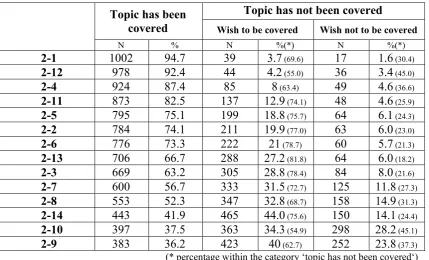
Table 6.13 Coverage of topics in T1 (presented in a descending order) ...135
Table 6.14 Coverage of topics in T2 (presented in a descending order) ...137
Table 6.15 Codes for questionnaire sections 3 ...138
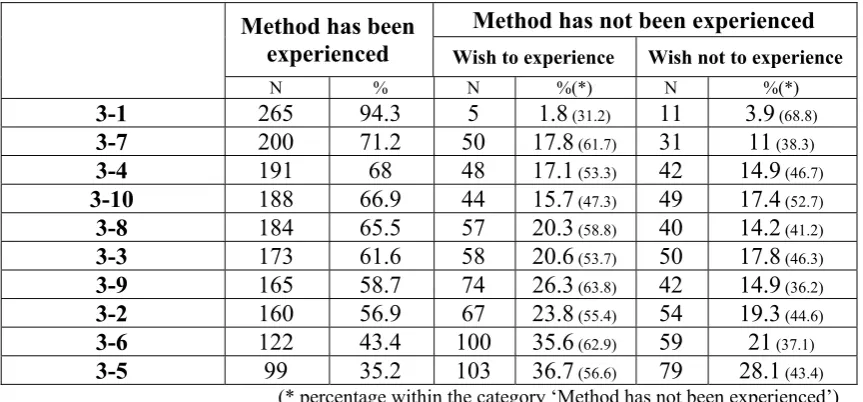
Table 6.16 Teaching/Leaning methods in T1 (presented in a descending order)...139
Table 6.17 Pupils’ favourite method in T1 (presented in a descending order)...139
Table 6.18 Teaching/Leaning methods in T2 (presented in a descending order)...141
Table 6.19 Pupils’ favourite method in T2 (presented in a descending order)...141
Table 6.20 Teachers’ feelings/attitudes towards SE between T1 & T2...146
Table 6.21 Teachers’ views on topics within SE between T1 & T2...146
Table 6.22 Teachers’ views on teaching methods of SE between T1 & T2...147
Table 6.23 Teachers’ views on training between T1 & T2...148
Table 6.24 Teachers’ views on difficulty within SE between T1 & T2 ...149
Table 6.25 Teachers’ views on policy of SE between T1 & T2 ...150
Table 6.26 Pupils’ feelings/attitudes towards SE between T1 & T2 (survey)...151
Table 6.27 Pupils’ feelings/attitudes towards SE between T1 & T2 (focus groups).152 Table 6.28 Coverage of topics within SE between T1 & T2 ...154
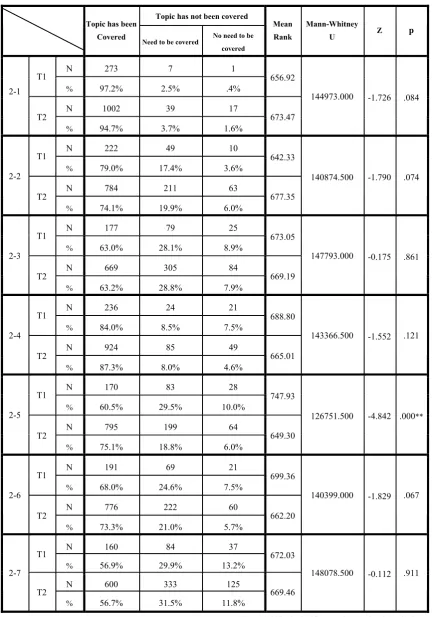
Table 6.28 Coverage of topics within SE between T1 & T2 (continued)...155
Table 6.29 Pupils’ views on topics within SE between T1 & T2 ...156
Table 6.30 Teaching/Leaning methods between T1 & T2 (continued) ...159
Table 6.31 Pupils’ favourite teaching/learning method between T1 & T2...159
Table 6.32 Pupils’ views on teaching/learning methods of SE between T1 & T2 ....160
Table 6.33 Pupils’ needs and expectations of SE between T1 & T2...161
Table 7.1 Gender distribution in E1...164
Table 7.2 Gender distribution in E2...164
Table 7.3 Pupils’ level of agreement of section I in E1...183
Table 7.4 Correlation of section I in E1...184
Table 7.5 Comparison of section I between genders in E1...184
Table 7.6 Comparison of section I between tutor groups/classes in E1 ...185
Table 7.7 Pupils’ level of agreement of section I in E2...188
Table 7.8 Correlation of section I in E2...189
Table 7.9 Comparison of section I between genders in E2...189
Table 7.10 Comparison of section I between tutor groups/classes in E2 ...190
Table 7.11 Coverage of topics in E1 (presented in a descending order) ...193
Table 7.12 Coverage of topics in E2 (presented in a descending order) ...195
Table 7.13 Teaching/Leaning methods in E1 (presented in a descending order)...196
Table 7.14 Pupils’ favourite method in E1 (presented in a descending order)...197
Table 7.15 Teaching/Leaning methods in E2 (presented in a descending order)...198
Table 7.16 Pupils’ favourite method in E2 (presented in a descending order)...199
Table 7.17 Teachers’ feelings/attitudes towards SE between E1 & E2...202
Table 7.18 Teachers’ views on topics within SE between E1 & E2...203
Table 7.19 Teachers’ views on teaching methods of SE between E1 & E2...204
Table 7.20 Teachers’ views on training between E1 & E2...204
Table 7.21 Teachers’ views on difficulty within SE between E1 & E2 ...205
Table 7.22 Teachers’ views on policy of SE between E1 & E2 ...206
Table 7.23 Pupils’ feelings/attitudes towards SE between E1 & E2 (survey)...208
Table 7.24 Pupils’ feelings/attitudes towards SE between E1 & E2 (focus groups).209 Table 7.25 Coverage of topics within SE between E1 & E2 ...211
Table 7.25 Coverage of topics within SE between E1 & E2 (continued)...212
Table 7.26 Pupils’ views on topics within SE between E1 & E2 ...213
Table 7.27 Teaching/Leaning methods between E1 & E2 ...215
Table 7.27 Teaching/Leaning methods between E1 & E2 (continued) ...216
Table 7.28 Pupils’ favourite teaching/learning method between E1 & E2...216
Table 7.30 Pupils’ needs and expectations of SE between E1 & E2...217
Table 8.1 Teachers’ feelings/attitudes towards SE between Taiwan & England ...221
Table 8.2 Teachers’ views on topics within SE between Taiwan & England ...221
Table 8.3 Teachers’ views on teaching methods of SE between Taiwan & England223 Table 8.4 Teachers’ views on training between Taiwan & England ...223
Table 8.5 Teachers’ views on difficulty within SE between Taiwan & England...224
Table 8.6 Teachers’ views on policy of SE between Taiwan & England...225
Table 8.7 Pupils’ feelings/attitudes towards SE between Taiwan & England (survey) ...228
Table 8.8 Pupils’ feelings/attitudes towards SE between Taiwan & England (focus groups) ...229
Table 8.9 Coverage of topics within SE between Taiwan & England...231
Table 8.9 Coverage of topics within SE between Taiwan & England (continued) ...232
Table 8.10 Pupils’ views on topics within SE between Taiwan & England...233
Table 8.11 Teaching/Leaning methods between Taiwan & England ...235
Table 8.11 Teaching/Leaning methods between Taiwan & England (continued)...236
Table 8.12 Pupils’ favourite teaching/learning method between Taiwan & England237 Table 8.13 Pupils’ views on teaching/learning methods of SE between Taiwan & England ...237
Table 8.14 Pupils’ needs and expectations of SE between Taiwan & England ...238
Table 8.15 Pupils’ feelings/attitudes towards SE between genders...239
Table 8.16 Pupils’ feelings/attitudes towards SE between four schools ...243
Table 8.17 Coverage of topics within SE between four schools ...245
Table 8.17 Coverage of topics within SE between four schools (continued)...246
Table 8.18 Teaching/Leaning methods between four schools...248
Table 8.18 Teaching/Leaning methods between four schools (continued) ...249
Table 9.1 Feeling and attitudes towards sex education...266
Table 9.2 Issues of topics within sex education...271
Table 9.3 Issues of teaching/learning methods within sex education...275
Table 9.4 Issues of training for teachers ...278
Table 9.5 Issues of difficulties within sex education...283
Table 9.6 Issues of views on of sex education policy and expectations ...287
Figure 9.1 Explanatory model of sex education ...293
List of Figures
Figure 2.1 Theory of reasoned action ...18
Figure 2.2 Theory of planned behaviour...18
Figure 2.3 Theory of interpersonal behaviour ...20
Figure 2.4 Health belief model ...22
Figure 5.1 Conceptual framework for sex education...99
Figure 9.1 Explanatory model of sex education ...293
Acknowledgement
I was very fortunate to receive advice and assistance of many people who have support me to the completion of this thesis.
I am particular grateful to my supervisors Peter Lang and Michael Hammond for their insightful and invaluable advice. Their guidance has immensely contributed to the accomplishment of this thesis.
I would like to offer my sincere appreciation for the support, encouragement and love provided by my parents. I would also want to offer my gracious thanks to all friends for their support throughout the period of my study.
Abstract
This is a study of teachers’ and pupils’ perceptions regarding sex education in two countries, Taiwan and England. It is a mixed method comparative study of four schools, two in each country. Interviews, focus groups and surveys were undertaken in these schools during the 2007/08 academic year. There were approximately 2100 participants - all year eight pupils (aged between 12 and 14) and volunteering teachers/coordinators.
It was found that sex education was taught within all four participating schools and was consistently recognised as a valuable part of the curriculum.
Two distinct approaches to sex education were found in the two countries. Perceptions of sex education were consistent across both schools in Taiwan and a key reason for this was that sex education had developed through a top-down policy. There was more variation between the two schools in England reflecting more flexible policies.
Abbreviations
DfEE – Department for Education and Employment E1 - an English secondary school in Coventry, England
E2 - an English secondary school in South Warwickshire, England FPA - Family Planning Association
Ofsted - Office for Standards in Education PSE – Personal and Social Education
PSHE – Personal, Social and Health Education QCA – Qualifications and Curriculum Authority RE – Religious Education
SE - Sex education
SHADOW - Sexual Health and Drugs Outreach Work
SIECUS - Sexuality Information and Education Council of the United States SRE - Sex and Relationships Education
STD – Sexually Transmitted Disease STI – Sexually Transmitted Infection
Chapter I Introduction
1.0 Introduction
In this chapter I will firstly explain my motivation and rationales for undertaking the study described in this thesis. Secondly, I will define the objectives for this study. Thirdly, research questions of this study will be illustrated, this will be followed by the discussion of the rationales for choosing the focuses of this study- Taiwan and England. Finally, an outline of the thesis will provide a structure of this study and the aims of each chapter. These sections will provide a brief understanding of the purpose of this study.
1.1 Motivation
Sex education has been a much debated subject in many societies; including Taiwan, where I grew up. Through years of study in health related issues in education, I began to appreciate the importance of sex education. It became apparent to me that many aspects of sexuality were shaped during the educational and institutional experiences of children and young people. This belief was further reinforced by my experiences as a trained Health Education teacher in Taiwan.
I was fortunate to be offered the opportunity to study in the UK; which I believed would be a perfect time for me to investigate my initial (naive) thoughts regarding the ways of implementation of sex education. I decided to choose the area of sex education as my research focus. The other personal decision was not only to look into the nature of sex education through political analysis but also the practice in England. I believed that if there is a definitive model, I would find it in western society. Subsequently, I decided to undertake research to compare the sex education in the two countries - Taiwan and England.
Initially, I was looking for a different or “better” model of sex education during the project. However, this has always been a problematic hypothesis as I perceived this during my period of study in Taiwan. I progressively moved towards a more realistic view of the practice of sex education. I realised that the purpose of my study is to illustrate the current practice of sex education in two countries and demonstrate their consistencies and differences. I hope I will be able to accomplish this in the following journey. Based on my initial thoughts, I hoped I have used this opportunity to learn more about the nature of sex education and offered practical insights into it by investigating sex education in its natural settings.
1.2 Rationales of the study
differently. This means when it comes to sex education the concepts and the practices are also likely to differ significantly. Therefore it is in my interest to look into how different the practices and concept of sex education will be and to what extent. This became the focus of this study.
Theoretically, the school-based curriculum is designed to enhance and enrich learners’ knowledge, attitude, practice, and also to empower youngsters for their future lives. Most curricula are developed by referring to governmental guidelines. However, these guidelines are mainly developed upon the basis of accepted perceptions, which often refer to adults’ beliefs. Pupils’ voices are often missed or neglected. In order to achieve a better understanding of the strengths and weaknesses of today’s sex education, we must make some effort to understand the needs of the participants - pupils and teachers. Whilst pupils are the target of education, teachers are the key channel through which pupils receive sex education. Through the investigation of this study, we will not only have better understanding of pupils’ and teachers’ needs, but also knowledge of the nature of sex education in these two countries.
education reflects its own social construct. For example, Che (2005) indicated the social and cultural impacts on sex education in Chinese society, which not only influenced the implementation but might have contributed to its outcomes as well. Therefore, a comparative investigation of sex education in different social contexts is a pressing and vital issue.
1.3 Objectives of the study
The purpose of this study was to investigate teachers’ and pupils’ attitudes towards sex education in secondary schools of England and Taiwan. A comparative approach was adopted to allow me to focus on different perceptions of sex education within different social contexts. Finally, it allowed me to identify the differences and similarities in the contents and practices of sex education in these two countries. I was able to look into the strengths and weaknesses of approaches which were adopted by each country. This also illuminated more understanding of sex education as a whole. Ultimately, I was able to offer some suggestions for the future design and practice of sex education.
1.4 Research questions
Research questions for this study were divided into two catogories, they were teachers and pupils. This presented the focus (main participants) of this study which was on these two groups. The research questions were as follows:
Teachers’ perspectives
1.What are teachers’ perceptions with regard to:
(a) Their feelings and attitudes of undertaking sex education within their school. (b) Pupils’ need for sex education.
(c) Teachers’ perceptions of the effectiveness of the methods and techniques used for the delivery of sex education.
Pupils’ perspectives
2.What are pupils’ perceptions with regard to:
(a) Their feelings and attitudes toward sex education within their school.
(b) Their satisfaction with the sex education implemented at their school and to what extent they find these activities helpful and useful.
(c) Their need for sex education and to what extent the need has been met.
1.5 The focus of the inquiry - England & Taiwan
Choosing the focus of the inquiry could be vital yet tricky in any study, especially a comparative one. Most countries have their own sex education to some extent, and I believe they would all have their own characteristics and unique designs. Comparing them proved to be a very interesting and revealing journey. However, I needed to consider a lot of factors of engaging in an investigation in an unfamiliar territory. Therefore, I chose Taiwan and England as the focus of the inquiry based on the factors of manageability and accessibility.
The rationales for choosing Taiwan and England as my focus of the inquiry were as follows:
1) Education in Taiwan was a field I was familiar with.
All the years living, studying and teaching in Taiwan had made me familiar with the education system and practices of sex education in Taiwan. Therefore, choosing Taiwan as part of my focus was a logical decision to make. This enabled me to look again into sex education in Taiwan and also allowed me to reflect on some of my experience. This process helped me to investigate a familiar field with fresh views, the possible detachment from the phenomenon in Taiwan proved to be a beneficial process.
It was easier for me conduct this study while living in the UK. The day-to-day living in this country also provided me with the opportunity to understand the social context and infrastructure of this particular place. This had contributed to my study immensely, and also made my observations more insightful and complete.
3) Every country had their own rendition of sex education which made it very interesting to compare these two countries.
The differences between Taiwan and England were significant factors which contributed to its practices and outcomes. The differences will be explored in the following chapters.
4) The existing connections with these schools in England and Taiwan.
This study required field work into educational institutions, therefore, connections with schools were necessary and essential. Prior to this study, I had already built strong relationships with a few schools in Taiwan. During the course of this study, I also established good relationships with several schools in England. These relationships enabled me to have support from the school and its staff; this also helped the data analysis.
1.6 An outline of the thesis
This thesis contains ten chapters, they are as follows (excluding this chapter):
Chapter II
Chapter III
A brief history of sex education in Taiwan will be illustrated in this chapter. This will be followed by further discussions of different aspects of the practice of sex education in Taiwan.
Chapter IV
A brief history of Sex and Relationships Education in England will be illustrated in this chapter. This will be followed by further discussions of different aspects of the practice of Sex and Relationships Education in England.
Chapter V
Methodology and research design of this study will be explained in this chapter. Critical consideration of methodology will be discussed and followed by the rationales of the methods I have adopted. The detailed illustration of instruments of this study will also be explained. The procedure and methods in data analysis will be presented in this chapter. A pre-conceptualised framework will be demonstrated for the (pre-)understanding of the sex education.
Chapter VI
Collected data from Taiwanese samples will be presented in this chapter. Further comparisons of data from Taiwan will also be illustrated. A neutral stance will be taken during the process of data presentation.
Chapter VII
Collected data from English samples will be presented in this chapter. Further comparisons of data from England will be illustrated. A neutral stance will be taken during the process of data presentation.
Chapter VIII
genders) will also be made. A neutral stance will be taken during the process of data presentation.
Chapter IX
In this chapter, findings from Chapters VI, VII & VIII will be discussed in detail. Significant findings will be cross-examined with other evidence and relevant studies. An explanatory model will be introduced based on the gathered evidence and the framework for sex education demonstrated in Chapter V will be revisited and refined. This chapter aims to explain the phenomena cumulatively, and achieve a holistic view on sex education.
Chapter X
Strengths and weaknesses of this study will be discussed in this chapter. Implications of this study will also be illustrated in this chapter, this will be followed by my reflections to conclude the journey of this study.
1.7 Conclusion
Chapter II Sex Education - an Overview of Perspectives
2.0 Introduction
This chapter discusses concepts and theories which concern sex education. Firstly, I will discuss the definition of sex education and its association with health education. With the establishment of their association, I will then discuss concepts and theories which can contribute to sex education from health education paradigm. There will be four groups of theories/concepts discussed in this section, they are developmental theories, perceived control theories, attitude and intentions theories and social environment theories.
Secondly, approaches of sex education will be discussed. There will be five approaches illustrated in this section, they are abstinence-only sex education approach, morality education approach, health approach, right-based approach and comprehensive sex education approach. Discussion in this section is to define these approaches and their potential contribution to sex education along with their limitations and weaknesses.
Finally, combining these discussions will provide a theoretical base for sex education and current development of sex education in a broader context. This can further provide foundations for understanding sex education in different countries which will be illustrated in the following chapters.
2.1 Concepts of sex education
reproduction (biology) aspects and the fear arousal aspects. Hence he argued that sex education should be:
1.A comprehensive and progressive process of care, guidance and example as
well as information.
2.An education to bring about adult attitudes and behaviour. It is a social and
socializing process.
3.Instruction and training in all that may help to form normal and wholesome
attitudes, values and ideals to sex, and to shape conduct in accord with these
attitudes, value and ideals.
4.It is to be developed as an organic part of the entire educational program. (cited from Kilander, 1970 p.6) It is clear that his view is that sex education should be a holistic concept. This view of sex education is still widely adopted today. For example, Halstead & Reiss (2003) summarised the aims of school sex education as:
Helping young people to know about biological topics as growth, puberty and conception.
Preventing children from experience abuse.
Decreasing guilt, embarrassment and anxiety about sexual matters.
Encouraging good relationships.
Preventing under-age teenagers form engaging in sexual intercourse.
Preventing under-age teenage girls from pregnancy.
Decreasing the incidence of sexually transmitted infections.
important role of schools in shaping sexuality in pupils, and the use of school curriculum to achieve this could be found in many countries. This suggests the importance of sex education in schools and society.
Although the definitions of sex education differ, its goals and objectives tend to be similar. Kilander’s (1970) definition of sex education illustrated the aspects relating to attitude, behaviour and socialising. It is significant to find the association between sex education and the paradigm of health education; it is thus clear to identity that one of the goals of sex education was to confront sexual health issues. However, in order to understand sexual health, it is necessary to define health first. The World Health Organization’s (1948) definition was ‘Health is a state of complete physical, mental and social well-being and not merely the absence of disease or infirmity.’, and this helped to widen views on health. The World Health Organization in the Ottawa Charter for Health Promotion stated health is ‘a resource for everyday life, not the objective of living. Health is a positive concept emphasising social and personal resources, as well as physical capacities.’ With this comprehensive view of health, we can see sexual health issues in a broader context. We can also clearly see sex education as part of broader health education. Wight & Abraham (2000) stressed the significant role of health education for sex education, especially the theory adoption for interventions and programmes. This further strengthened the connection between sex education and health education.
With the recognition that sex education is closely associated with health, it is important to investigate health education when considering issues of sex education. Health education or health behaviours are focused on general health related issues including sexual health.
2.1.1 Developmental theories
Developmental theories provide a focus on the developmental sequences or stages of an individual’s development (Saunder, 2005). Strange et al. (2003) noticed the effect of age difference on pupils’ responses to sex education programmes, it was suggested that older pupils had more positive experiences within sex education sessions. Woodcock et al. (1992) also identified the timing issues of introducing topics of sex education, for example the inclusion of some topics of sex education proved to be more successful in certain age groups. It is clear that development (maturity) is a key issue in relation to successful sex education, as identified by Buston & Wight (2004) in a study of pupils’ participation in sex education programmes. Therefore, it is apparent that a clearer identification of development stages, as suggested by Erickson (1959), would help inform the ‘suitable/appropriate’ design of sex education. Saunders (2005) also argued that theories of development can help us to have more appropriate presentation of material and more appropriate expectations for the participants’ level of understanding and behaviour.
Psychosocial development theory
Psychosocial development theory was developed by Erikson (1959), it clearly defined eight stages through the life cycle. Erikson proposed two opposite outcomes for each stage; he suggested that successful fulfilment of ‘tasks’ in each stage would result in a healthier personality and successful interaction with others. Identity vs. Role Confusion was the fifth stage of this theory. This stage was argued to take place around adolescence which was the age of the pupils in this study. Erikson suggested that young people who are constantly searching for an identity are more likely to be excluded from the ‘mainstream’ norm e.g. dropping out of school. The notion of ‘searching identity’ was used to represent the experience of uncertainty and experiment. Gest et al. (1999) further identified that this behavioural pattern (e.g. the early drop out of school) is strongly associated with teenage pregnancy. It was concluded the ‘non-mainstream’ norm was an early indicator for risky sexual behaviour among secondary students.
Saunders (2005) suggested that programmes which follow Erikson’s ideas would help pupils to identify goals, to explore present and future roles and relationships, and to explore and define their values. It was mentioned that pupils’ un-guiding exploration of different (experimental) experiences could sometimes (hypothetically) result in a delay or an unsmooth transition of stages.
Halstead & Reiss (2003) stated that one of the aims of sex education is “Helping young people question the role of women and men in society”. This was coherent with Erikson’s theory, and highlighted the importance of identity, especially sexual identity. Many researchers argued that gender/role identity is a key factor in sex education (Measor, 2004; Prendergast, 1996; Reiss 1998), which needs to be addressed to ensure the programme (sex education) can help young people to experience and explore roles. This might help youngsters to achieve a sense of well-being and contribute to their adult adjustment.
Cognitive development theory
Cognitive development theory was developed by Piaget, and it defined individual’s development into four pre-determined stages (Piaget, 1955). This theory greatly influenced many aspects of educational research paradigms, including health (sex) education. Piaget suggested cognitive development was not an entirely smooth process, but noted several key moments of transition.
Two of these stages are associated with institutional sex education, especially in the secondary level. They are: concrete operational and formal operational.
Concrete operational stage usually concerns children between aged seven and eleven; and the formal operational stage is usually achieved by age eleven. Atherton (2009) summarised the characteristics of these stages as:
Concrete operational - Classifies objects according to several features and can order them in series along a single dimension such as
size.
It was suggested that each person would reach a certain stage of cognitive development around a particular age (e.g. eleven years old for the formal operational stage), but some people would only reach that stage later on. Brown & Eisenberg (1995) argued that young people’s cognitive development is strongly associated with behaviours that would result in unintended pregnancy. This was demonstrated by comparing unintended pregnancy rates between different age groups and their level of cognitive development. This argument also highlighted the issue of ‘maturity’ in sex education, which was concluded by Buston & Wight (2004) as an important factor in pupils’ participation in sex education.
There were considerable debates regarding the appropriate contents of sex education and its timing (Somers, 2005). Therefore, ideas of cognitive development can help with the process of choosing adequate materials for certain age groups. Based on this theory, a consideration of pupils’ cognitive development would influence their understanding of teaching materials; if pupils’ development has not reached a certain level, it will be impossible for them to understand complex materials. Strange et al. (2003) argued that different contents (topics) of sex education were preferred by pupils of different gender. Perhaps this could be accounted for by different cognitive developmental levels. Female pupils prefer topics about relationships and male pupils prefer the facts of sex. The apparent contrast between these two is similar to the difference between concrete and formal operational stage. Measor et al. (1996) identified the common delay of maturity among male students in secondary schools. Participants in this study often mentioned the benefit of postponing materials for boys, this was a strong suggestion for the different developmental stages between genders around the age of thirteen and fourteen. If we combine these findings with the argument of the level of maturity in pupils’ participation in sex education from Buston & Wight’s (2004) study, it is clear that the acceptance or suitability of content of sex education is influenced by pupils’ cognitive development.
2.1.2 Perceived control theories
process (Saunders, 2005). All these theories have an emphasis on different intrapersonal characteristics, and it is felt that health (sex) education and health promotion might aim to promote decisions based on healthier choices. Therefore, theories which explain this decision making process would make a significant contribution to health (sex) education.
The importance of this group of theories can be seen in relation to the widely adopted ‘informed choices’ approach to sex education. Reiss (1995) identified this as one key philosophical framework adopted in sex education- developing skills for decision making.
Locus of control theory
Locus of control theory is an extended theory which sought to explain an individual’s thoughts on external or internal factors of life (Rotter, 1975). Lefcourt (1982) further suggested that an individual with an internal locus of control is more likely to have personal control in any given situation. On the contrary, an individual with an external locus of control believes outside factors have more control in any given situation. The internal or external locus of control could be easily treated as a person’s sense of control over various situations and the casual factors which might contribute to them.
Lefcourt (1982) also suggested that people with a stronger internal locus of control are more likely to feel they have achieved their desired behaviour/goal. Many studies (e.g. Wallston et al., 1976; Hurd, 2000) identified locus of control in considering a youngster’s sexual health behaviour. It was suggested that people with internal locus of control are more likely to follow desirable paths of behavioural patterns. For example, the use of contraception to prevent unintended pregnancy is a typical desired behaviour in many societies, and people with internal locus of control are likely to use it.
predicting health behaviour. Dignan & Adame (1979) reported that sex education which focuses on knowledge and communication skills would increase participants’ internal locus of control. This established the importance of locus of control in its current status in health (sex) education. Therefore, the idea of informed choice could be treated as two part; the informed process is the accurate imparting/receiving of information and material. Through this process the choice is the outcome influenced by the empowerment within an internal locus of control.
Therefore, this approach stressed the importance of an individual’s inner process with regard to the sense of control over situations; it also suggested ways to enhance this sense of control by receiving adequate information and improving communication skills.
Self-efficacy
Self-efficacy was defined by Bandura (1977) as “conviction that one can successfully execute the behaviour required to produce the behavioural outcome”. He also suggested that self-efficacy is a determinant for starting a new behaviour and keeping certain behaviour changes. Noticeably, it was situation specific, as one can experience negative outcome in any given instance, but people with greater self-efficacy would believe that they will succeed next time even when they encountered failure (Saunders, 2005).
Noar et al. (2004) illustrated the importance of self-efficacy in school-based sexual health programmes by comparing theories and approaches of HIV prevention programmes. It was argued that most of these theories and approaches recognised the concept of self-efficacy as an important one. Many empirical studies also found this concept useful to explain the outcomes of sex education, they suggested that the increase of self-efficacy will increase the likelihood for one to engage in desired (healthier) behaviours (e.g. Mahoney et al., 1995; Basen-Enquist, 1994).
less likely to encounter possible risky behaviour, and this could significantly reduce the chances of undesired outcomes (e.g. unintended pregnancy).
The concept of self-efficacy has been developed into several other theories/frameworks, especially in health behavioural research paradigms (Noar et al., 2004; Schwarzer, 2008). It has been seen as helpful in explaining mediating factors in behavioural change (Glanz et al., 2002). For example in the context of socialising, it is often put into consideration along with other factors such as knowledge and belief of change in the social cognitive theory (Munro et al., 2007).
Based on the concept of self-efficacy, health (sex) education programmes should enhance participants’ skill of dealing with potential risky situations by increasing their confidence of successfully handling these situations. Establishing this confidence would not only avoid the short-term crisis, but also enable the long term behavioural change included in many countries’ objectives of sex education. For example the objectives of Sex and Relationships Education published by the Social Exclusion Unit (1999) in the UK stressed behavioural issues within.
2.1.3 Attitude and intentions theories
These theories generally argue that an individual’s attitude and intention is an important indicator of his/her behaviour. Therefore, they illustrate factors which may determine or affect one’s intention to accomplish certain behaviour (Saunders, 2005). All these theories have their limitations, but have been adapted to provide a more comprehensive framework. The most important element of these theories is the significance of ‘desired behaviour’, the underpinning ideology is based on behaviourism.
Theory of planned behaviour
favourable or unfavourable evaluation of the behaviour in question. Secondly, subjective norm is a social factor which refers to the perceived social pressure whether or not to perform certain behaviour. (Ajzen & Madden, 1986)
The conceptual framework of theory of reasoned action can be simply illustrated in the following figure:
Figure 2.1 Theory of reasoned action (Ajzen & Fishbein, 1980)
Azjen proposed another conceptual addition to the previous theory in considering volitional control. Perceived behavioural control was added to the previous framework, and the new proposed theory was the theory of planned behaviour (Ajzen & Madden, 1986). Perceived behavioural control is a person’s perceived capability to perform the behaviour (Ajzen & Manstead, 2007). In the following figure we can clearly identify the new amendment of this theory and its proposed effects.
Figure 2.2 Theory of planned behaviour (Ajzen & Madden, 1986)
This theory has been widely adopted in many fields, especially in research involving health-related behaviours. Ajzen & Manstead (2007) reviewed interventions which adopted this approach, and they concluded that many of them
Subjective Norm Attitude toward
the behaviour
Intention
Behaviour
Subjective Norm Attitude toward
the behaviour
Intention
Behaviour
showed significant and positive results. They especially emphasised the positive results in explaining and predicting health-related behaviour, including sexual behaviour.
The idea of planned behaviour can be applied in sex education by planning programmes which enhance proposed determinants. For example, a discussion of consequences of teenage pregnancy could change young people’s attitude towards contraception or social norms in relation to this issue. However, some other factors can influence the validity of this approach. For example, Godin et al. (1996) argued that the differences between male and female in regard to the explanatory value of determinants in this approach. It was suggested that female’s behaviour is influenced significantly by subjective norms whilst male behaviour is more influenced by attitudes. Furthermore, Saunders (2005) argued the fluid nature of intention and attitudes, which may change in a different context.
Despite some drawbacks to this theory, it still provides a clear framework for designing programmes of health (sex) education. The strength of this theory is the clear (simple) determinants for the implementation of planning health (sex) education, and it has been tested and found effective in various interventions and programmes (Ajzen & Manstead, 2007).
Theory of interpersonal behaviour
The theory of interpersonal behaviour was proposed by Triandis (1977), it was established not only on the basis that intention would cause behaviour but other hypothetical components could interact with intention or directly influence behaviour. There were some new/significant components proposed, they were: (1) cognitive (thoughts about the behaviour) (2) affective (feelings about the behaviour) (3) Social belief (4) normative beliefs (what family members/friends believe) (5) personal normative belief (6) role beliefs (7) habits (Saunders, 2005).
on behaviour, for example, the past experiences and its outcome can influence one’s intention to engage them again in the future (Collazo, 2004). Although this approach provided some insights into behaviour, especially the affective and past experience perspectives, it has not been fully empirically tested, especially in comparison with some other similar approaches e.g. theory of planned behaviours (Saunders, 2005; Gagnon et al., 2006). Results of few studies (e.g. Chan & Fishbein, 1993; Godin, et al., 1996; Schaalma et al., 1993) where this approach was adopted were varied, as Saunders (2005) argued the need for further investigations of this approach. Therefore, the recognition of its status still remains unclear.
Triandis’ theory (1977) is similar to the one of Ajzen (Ajzen & Madden, 1986), but the inclusion of some further components enables it to have more explanatory value. For example the inclusion of habit in this theory enables us to put pupils’ past experiences into consideration during planning. It also suggests that the inclusion of experiential activities would be beneficial in shaping intentions for desired behaviour. Theory of interpersonal behaviour is a considerably more complex theory due to the various factors/components it contains. This is its strength as well as its weakness.
Figure 2.3 Theory of interpersonal behaviour (Triandis, 1977)
Health belief model
The health belief model was proposed by Rosenstock (1974), and it was long established as a useful conceptual framework when trying to understand many
Facilitating Conditions
Behaviour Beliefs about outcomes
Evaluation about outcomes Norms
Roles Self-concept
Emotions
Attitude
Social Factors
Affect
Intention
preventive health behaviours (Saunders, 2005). The key elements of health belief model can be divided into three stages: individual perceptions, modifying factors and likelihood of action (Glanz et al., 2002).
This theory proposes that in order for an individual to take action to avoid a disease, the individual needs to believe that (a) he or she is susceptible to the disease (perceived susceptibility); (b) the disease could have at least a moderately severe impact on some component of his or her life (perceived threat); (c) certain behaviours could be beneficial in reducing his or her perceived susceptibility or severity in the event of affliction with the disease (perceived benefits); and (d) these behaviours would not be impeded by factors such as cost, pain, and embarrassment (barriers) (Lin et al., 2005).
This theory has been widely adopted in several domains in health related issues. Due to its focus on disease and behaviour aspects, it is widely adopted in disease prevention researches/interventions. Although Steers et al. (1996) reported that the result of its predictability varied between studies, it was still considered by others (e.g. Lin et al., 2005) as a useful theory/model. This inconsistency in effectiveness of adoption of this theory brought a lot of attention to it, subsequently extra factors (introduction of self -efficacy) were added to compliment it (Rosenstock et al., 1988). Within the issues relating to sex education, this theory is hugely popular with the HIV/AIDS prevention interventions/programmes. However, studies suggested that this theory would be more beneficial if the programme/intervention had been conducted within a more ethnic specific group (Steers et al., 1996). This suggestion was proposed due to the variation of (health) beliefs in different social or ethnic groups (Ashig-Giwa, 1999).
Figure 2.4 Health belief model (Glanz et al., 2002)
2.1.4 Social environment theories
All of the theories discussed previously were focused primarily on personal attitudes and perception and their influence on behaviour. However, the influences of environmental factors were lacking in those theories, hence the inclusion of social environment theories provides the way of explaining issues in a wider picture. These theories primarily illustrate the role of others in the social environment on an individual’s decision making, whilst less attention is given to personal characteristics (Saunders, 2005).
Social learning theory/ Social cognitive theory
Social learning theory/Social cognitive theory is highly influential within social environment theories. This theory suggests that behaviours are learnt from others in the social environment (Bandura, 1977). It recognises the role of cognitive and behavioural influences on behaviour but focuses primarily on the social influences on individual’s behaviour. It suggests that behaviours are learnt by direct and indirect interactions with others through rewards and punishers, and by the observation of others. It is also influenced by the individual’s attitude towards certain behaviour.
Parents and other adults often try to control or influence the social learning of
Perceived
Susceptibility Perceived Threat Demography Socio-economic Personality Knowledge
Cue to Action Education Media Information
Perceived benefits Versus Barriers to behaviour change
Likelihood of behavioural change
children by limiting their activities or by limiting and/or encouraging their interaction with others (Saunders, 2005).
The practical application of this theory was further strengthened by the work of Rosenstock et al. (1988), which saw behaviour as largely determined by expectancies and incentives. They were defined as:
Expectancies
Expectancies about environmental cues (beliefs about how events are connected).
Expectancies about the consequences of one’s own action (outcome expectation).
Expectancies about one’s own competence to perform the behaviour needed to influence outcomes (efficacy expectation).
Incentives
Incentive (or reinforcement) is defined as the value of a particular object or outcome. The outcome may be health status, physical appearance, approval of others, economic gain, or other consequences. Behaviour is regulated by its consequences (reinforcements), but only as those consequences are interpreted and understood by the individual.
Following this theoretical model, Saunders (2005) suggested that sex education programmes should be led by a tutor or speaker who is respected by participants. She also identified the theoretical basis for choosing a high prestige person for campaigning programmes. This claim was further reinforced by the findings of Akers & Lee (1996) in a study of investigating smoking behaviour and prevention programmes for young people.
2.2 Approaches to sex education
Meredith (1989) drew attention to the dilemmas and debates within sex education and concerns regarding its content. Braeken & Cardinal (2008) further suggested that debate was confused with the explanation of ‘irresponsible’ sex behaviour getting lost in political, ideological and moral considerations. There are clearly many approaches and considerations within sex education practice as discussed below.
2.2.1 Abstinence (-only) sex education
Breaken & Cardinal (2008) defined the ideology of abstinence sex education as based on the idea of abstinence as being the most effective measure to prevent unwanted pregnancy and the transmission of HIV among young people. It developed in oppositions to school sex education which was generally regarded as encouraging irresponsible sexual behaviour (Halstead & Reiss, 2003).
Abstinence-only sex education is mainly pioneered in America. It treats young pupils/recipients as innocent minded so that minimum information about sexual health or relationships is given. The main focus of this approach is to impose the idea that abstinence is a very important way to stop all the relevant problems. This approach has been formed into programmes since the mid-1980s, and its influence was still prevalent many years later, as noted by Landry et al. (1999).
There is no clear theoretical framework adopted in this approach. It is primarily based on an ideology of sexuality. No clear illustrations are provided as to the delivery of this approach. Advocates of this believe that abstinence is the right way to be educating young people about sex, which is sometimes referred to as a ‘fear-based’ education (e.g. in the study by Halstead & Reiss, 2003; Blake & Francis, 2001). The approach could be said to be influenced by fear arousal processes or the perceived threat in the health belief model.
For purposes of this section, the term ‘abstinence education’ means an educational or motivational program which—
(A) has as its exclusive purpose, teaching the social, psychological, and health gains to be realized by abstaining from sexual activity;
(B) teaches abstinence from sexual activity outside marriage as the expected standard for all school age children;
(C) teaches that abstinence from sexual activity is the only certain way to avoid out-of-wedlock pregnancy, sexually transmitted diseases, and other associated health problems;
(D) teaches that a mutually faithful monogamous relationship in context of marriage is the expected standard of human sexual activity;
(E) teaches that sexual activity outside of the context of marriage is likely to have harmful psychological and physical effects;
(F) teaches that bearing children out-of-wedlock is likely to have harmful consequences for the child, the child's parents, and society;
(G) teaches young people how to reject sexual advances and how alcohol and drug use increases vulnerability to sexual advances; and
(H) teaches the importance of attaining self-sufficiency before engaging in sexual activity.
These eight points clearly defined the approach of abstinence sex education which went on to have wide adoption in the United States. Landry et al. (1999) also noticed the significant change regarding recognition of abstinence sex education after the legislation in a study of understanding local policies of sex education in the United States.
young people’s education. Blake (2008) argued the right of young people to know more about sex/sexuality in their current school education.
2.2.2 Morality approach / Sex education as moral education
Halstead & Reiss (2003) argued that sex education is more than the study of human sexuality in a biology or social science course. It should be educational, and they further argued that education was a value-laden activity. They identified three types of value, and argued that moral values were the most dominant among all. Hence, ‘Moral Value’ and ‘Value’ were used interchangeably within sexual matters. Thomson (1997) further identified the promotion of morality or value in sex education. This promotion was also clearly identified and defined in Kilander’s (1970) definition of sex education.
Braeken & Cardinal (2008) argued that sex education is still tied to sexual morality and religion. They further claimed that sex education is sometimes used to pass on religious and moral values with regard to sexuality. Although Lamb (1997) regarded sex education and moral education as two separate enterprises, the trend to integrate them was clearly observed. As Halstead & Reiss (2003) argued that education is not a value-free activity, hence sex education should involve the delivery of some ‘essential’ values, which was again coherent with the previous argument from Braeken & Cardinal’s (2008) study of establishing association between sex education and morality values.
Moral value is a context sensitive issue, the argument on what is ‘right’ or ‘wrong’ for young people is often debatable. People from different social context could hold different beliefs on what is ‘right’. For example, the moral values of pre-marital sex is a sensitive issue, especially in a religious context. Fincham (2007) also identified this limited/partial value being held among stakeholders in Catholic schools in England by looking into their delivery of PSHE.
It is important for moral values regarding sexuality to be delivered to pupils through sex education; however, this imposes some challenges. For example, morality and persisting cultural/religious values often prevent adequate examination of certain topics, especially with respect to sexual diversity, non-marital sexual relationships and other sensitive topics such as homosexuality (Breaken & Cardinal, 2008).
There is also another noticeable confusion within this approach, which is its close similarity with abstinence (-only) sex education, in that both aim to deliver certain values. It is apparent that abstinence (-only) sex education is to deliver certain moral values, but these values are restricted to the values of postponing sexual intercourse. On the other hand, the morality approach of sex education focuses on a broader variety of moral values. It is not to be restricted to values regarding postponing sexual intercourse, although it could be in certain contexts. For example in the work of Fincham (2007), he identified the limited values among Catholic schools in England (e.g. sex before marriage was often mentioned as a taboo in sex education). The feedback from pupils in this study showed their perceptions regarding sex education were negative due to the limited information provided. Overall, the morality approach offers a broader view of sex education in comparison with the abstinence (-only) sex education approach.
2.2.3 Health approach / Sex education as health education
Breaken & Cardinal (2008) defined this approach as “education that focuses on concerns about unwanted pregnancy, STIs and HIV. It is given from a sexual and
Many studies illustrated several concerns regarding public sexual health. For example Wellings et al. (2001) and Johnson et al. (2001) both conducted a wide survey on the sexual behaviour in Britain and the increase of risky sexual behaviour was reported in both studies. With the epidemic of HIV/AIDS and the failure to reduce teenage pregnancy rates, the health approach is widely acknowledged, including at government level; for example in statements from the Department of Health in the UK (Department of Health, 2001). Many researchers also singled out these threats as a call for implementation of sex education (Parker et al., 2009).
Sex education which adopts the health approach usually focuses on specific and topical sexual health issues; it could be viewed as a reactive process, for example, to tackle teenage pregnancy. DiCenso et al. (2002) systematically reviewed interventions to reduce unintended teenage pregnancy; 22 studies were selected in their study based on a randomised sampling with a controlled design. Although the conclusion was that the effectiveness of these interventions was unclear, the number of studies reviewed within proved the popularity of interventions which focused on specific health issues.
However, this approach to sex education was often delivered in a narrow, value-free and objective manner, which drew some criticism. Breaken & Cardinal (2008) argued that programmes which focused on health outcomes might have less focus on addressing inequality and girls are often seen as the more vulnerable group (e.g. the role of girls in teenage pregnancy programmes was often seen as the primal susceptible group, the potential undesirable outcomes were often discussed with the examples of teenage mothers). It was further argued that this approach could make it difficult to address “full, complicated, active sexual lives” (Breaken & Cardinal, 2008 p.52).
2.2.4 Right-based approach
Blake (2008) argued for pupils’ right and entitlement to receive sex education. His claim for young people as being the best advocates of their needs was clearly shared by many others, for example the National Children’s Bureau (2004). In this publication, it was clear that young people wish to participate more in current education and they had clear understanding of their own needs. Reiss (1995) had earlier made a similar point by stating “promoting personal autonomy” is an important element of sex education.
Breaken & Cardinal (2008) defined this approach as focusing on rights within cultural and social power dynamics; this called for a sex education which was able to address social inequality and exclusion. It was a clear attempt to tackle the shortcomings of the health education approach above. They further illustrated the aims of this approach were to explore existing cultural and social power dynamics around health and sexuality by promoting the concept of ‘right’.
The right-based approach could be adopted in any structure of sex education, it allows any programmes to be developed as long as the needs and right of pupils are taken into account. This approach also regards education as a complex political, social, developmental and philosophical process that can either contribute to existing power relations or to change them (Breaken & Cardinal, 2008).
sex education fields, the right of pupils is often neglected by adults, which could result in the denial of children’s autonomy and right to choose (Epstein& Johnson, 1998). The introduction of this approach to current programmes is to hand back the ‘right’ to its participants (Breaken & Cardinal, 2008). This is based on the belief that young people know their needs and they could also clearly identify and voice their needs (Brook, 2007). It was clear that the share of rights for young people is essential and critical.
Breaken & Cardinal (2008) suggested that the integration of the right-based approach would eventually allow young people to create credible and informed negotiation plans with adults and to demonstrate “why and how their right to these choices are of importance to their happiness and development”. In this approach, young people are no longer viewed as innocent bodies, but rather as humans with rights. They should share the same degree of autonomy with others in society. This ideology is further supported by the stance of the international community (i.e. United Nations), as the Convention on the Rights of the Child (1989) clearly stated the right of all children.
2.2.5 Comprehensive sex education
Comprehensive sex education is a concept favoured by many researchers, and many believe that it is the most appropriate approach for sex education in current society (Kirby, 2006; Breaken & Cardinal, 2008). However, the use of terminology proves to be problematic, and confusion is noticeable. This approach of sex education was established to oppose that of abstinence (-only) sex education, therefore comprehensive sex education was referred to as ‘abstinence-plus education’ in Collins et al.’s (2002) study. It drew on abstinence education but with extra information. This was contradictory to the definition of comprehensive sex education made by Breaken & Cardinal (2008). Comprehensive sex education was defined as not merely an add on for other approaches, it should cover all approaches.
Constantine et al. (2007) argued that comprehensive sex education should be threefold which provides “complete, accurate, positive and developmentally appropriate information on human sexuality, including the risk-reduction strategies