Georgia State University
ScholarWorks @ Georgia State University
Educational Policy Studies Dissertations Department of Educational Policy Studies
5-17-2019
The Perceptions and Experiences of Elementary
Georgia Science Ambassadors: What Educational
Leaders and Policymakers Need to Know
Charles E. Harper Jr Georgia State University
Follow this and additional works at:https://scholarworks.gsu.edu/eps_diss
This Dissertation is brought to you for free and open access by the Department of Educational Policy Studies at ScholarWorks @ Georgia State University. It has been accepted for inclusion in Educational Policy Studies Dissertations by an authorized administrator of ScholarWorks @ Georgia State University. For more information, please [email protected].
Recommended Citation
Harper, Charles E. Jr, "The Perceptions and Experiences of Elementary Georgia Science Ambassadors: What Educational Leaders and Policymakers Need to Know." Dissertation, Georgia State University, 2019.
ACCEPTANCE
This dissertation, THE PERCEPTIONS AND EXPERIENCES OF ELEMENTARY GEORGIA
SCIENCE AMBASSADORS: WHAT EDUCATIONAL LEADERS AND POLICYMAKERS
NEED TO KNOW, by CHARLES HARPER, was prepared under the direction of the
candidate’s Dissertation Advisory Committee. It is accepted by the committee members in
partial fulfillment of the requirements for the degree, Doctor of Education, in the College of
Education & Human Development, Georgia State University.
The Dissertation Advisory Committee and the student’s Department Chairperson, as
representatives of the faculty, certify that this dissertation has met all standards of excellence and
scholarship as determined by the faculty.
______________________________ Sheryl Cowart Moss, Ph.D.
Committee Chair
______________________________ ______________________________________ Kristina Brezicha, Ph.D. Yinying Wang, Ed.D.
Committee Member Committee Member
______________________________ Date
______________________________ William Curlette, Ph.D.
Chairperson, Department of Educational Policy Studies
______________________________ Paul A. Alberto, Ph.D.
Dean
AUTHOR’S STATEMENT
By presenting this dissertation as a partial fulfillment of the requirements for the advanced degree
from Georgia State University, I agree that the library of Georgia State University shall make it
available for inspection and circulation in accordance with its regulations governing materials of
this type. I agree that permission to quote, to copy from, or to publish this dissertation may be
granted by the professor under whose direction it was written, by the College of Education and
Human Development’s Director of Graduate Studies, or by me. Such quoting, copying, or
publishing must be solely for scholarly purposes and will not involve potential financial gain. It is
understood that any copying from or publication of this dissertation which involves potential
financial gain will not be allowed without my written permission.
NOTICE TO BORROWERS
All dissertations deposited in the Georgia State University library must be used in accordance
with the stipulations prescribed by the author in the preceding statement. The author of this
dissertation is:
Charles Harper 405 Rabbits Run Fayetteville, GA 30214
The director of this dissertation is:
Dr. Sheryl Cowart Moss
Department of Educational Policy Studies College of Education and Human Development
CURRICULUM VITAE
Charles Harper
ADDRESS: 405 Rabbits Run Fayetteville, GA 30214
EDUCATION:
PROFESSIONAL EXPERIENCE:
2019-Present
2016-2019
Middle Grades Instructional Coach Flat Rock Middle School
Fayette County Schools, GA
K-5 Instructional Coach District Central Office Fayette County Schools, GA
2007-2016 Teacher
Inman Elementary School Fayette County Schools, GA
PRESENTATIONS AND PUBLICATIONS:
Harper, C. (2019, February). Broadening the Target: Painting a “3-D Science” Picture for Leaders, Georgia Science Teachers Association Conference, Columbus, GA.
Harper, C. (2018, March). Phenomena: Bring It On, National Science Teachers Association Conference, Atlanta, GA.
Ed.D. 2019 Georgia State University Educational Leadership
Ed.S. 2012 Lincoln Memorial University Curriculum and Instruction
M.A. 2010 Central Michigan University Curriculum and Instruction
B.A. 2007 Clayton State University
Harper, C. (2018, March). STEAM Gardening, National Science Teachers Association Conference, Atlanta, GA.
Harper, C. (2018, March). STEAM + Gardening: Connecting Two Corner Pieces of the Gifted Puzzle, Georgia Association of Gifted Children Conference, Athens, GA.
Harper, C. (2017, December). This is Not Your Everyday Culturally Responsive Workshop, Culturally Responsive Schools: High Impact Practices to Engage and Challenge All Learners Drive In Conference, Griffin, GA.
Harper, Charlie. (2017, October). The STEAM Powered Classroom. Educational Leadership, Vol. 75, No. 2, p.70-74.
Harper, C. (2017, October). Farm to School STEAM, Sixth Georgia Farm to School Summit, Augusta, GA.
Harper, C. (2017, March). Your Truth, My Truth, The Truth, Georgia Association of Gifted Children Conference, Athens, GA.
Harper, C. (2015, November). Sensational Seasonal STEM, Griffin RESA Drive in Gifted Conference, Griffin, GA.
PROFESSIONAL SOCIETIES AND ORGANIZATIONS
2017-Present Association for Supervision and Curriculum Development 2017-Present Georgia Science Teachers Association
2017-Present Georgia Association of Gifted Children 2017-Present National Science Teachers Association
THE PERCEPTIONS AND EXPERIENCES OF ELEMENTARY GEORGIA SCIENCE
AMBASSADORS: WHAT EDUCATIONAL LEADERS AND POLICYMAKERS
NEED TO KNOW
by
CHARLES HARPER
Under the Direction of Dr. Sheryl Cowart Moss
ABSTRACT
The purpose of the study was to characterize the Georgia Science Ambassadors Program (GSAP)
by investigating the perceptions and experiences of elementary-level (K-5) Georgia Science
Ambassadors (GSA). The GSAP was instituted to augment the leadership capacity of science
educators across the state and to support the implementation of the new Georgia Standards of
Excellence (GSE) for Science. The study explored GSA’s perceptions about how the relative
distribution of leadership and support has influenced their ability to lead GSE implementation.
A sample of 15 elementary-level ambassadors was purposively selected for the study. Data were
gathered through semi-structured interviews and document analysis. Data analysis was
A combination of provisional, structural, and values coding was used to identify emergent
themes and patterns. The findings suggested that elementary-level GSA have been largely
marginalized by principals. Distribution of leadership and support to the elementary science
ambassadors has been sparse and inconsistent. Even in rare cases when leadership and support
were distributed to ambassadors, it was oftentimes mediated by other factors, such as time
constraints, conflicting priorities, and teachers’ receptivity of the GSE. Ambassadors’
perceptions and experiences generated insights and recommendations for improving the
program, orchestrating similar policy endeavors, and leading the implementation of reform-based
science standards. A summary and discussion of the findings include limitations of the study,
suggestions for future lines of inquiry, and the theoretical, practical, and policy implications of
the study.
INDEX WORDS: boundary spanning, cognition, constructivism, distributed instructional
leadership, knowledge brokers, Georgia Science Ambassadors Program, Georgia Standards of
THE PERCEPTIONS AND EXPERIENCES OF ELEMENTARY GEORGIA SCIENCE
AMBASSADORS: WHAT EDUCATIONAL LEADERS AND POLICYMAKERS
NEED TO KNOW
by
CHARLES HARPER
A Dissertation
Presented in Partial Fulfillment of Requirements for the
Degree of
Doctor of Education
in
Educational Leadership
in
the Department of Education and Policy Studies
in
the College of Education and Human Development
Georgia State University
Copyright by Charles Harper
DEDICATION
ii
ACKNOWLEDGMENTS
I would like to acknowledge my beautiful and loving wife, kids, family, and friends, for
their patience, encouragement, and support throughout my doctoral journey. To all of my
teachers and professors, past and present, for investing in me. Not only did they inspire every
measure of success in my life, but they constructed a solid foundation on which I could
continually build upon as a lifelong learner - may their investments in me pay dividends. A
special thanks to the first and greatest of those teachers, my parents. They taught me the
importance of setting goals, but more importantly that hard work, perseverance, and kindness are
truly the only means to actualize your dreams. My parents have always modeled the simple
enjoyment of life, relationships, and continuous learning, and that is a treasure which I will
always appreciate and yearn to give others. My deepest respect and most abiding gratitude go to
all of my Georgia State University professors for their leadership, wisdom, and mentorship. I am
especially grateful to the three brilliant champions on my committee, namely Dr. Sheryl Cowart
Moss, Dr. Kristina Brezicha, and Dr. Yinying Wang. Their guidance, support, honesty, patience,
and constant encouragement were instrumental in the completion of this project. I would also be
remiss without acknowledging and thanking the Georgia Science Ambassadors who willingly
shared their stories, their successes, and their struggles with me. Their dedication and passion
for science education is not only inspiring, it gives us all hope for a better educational system and
a better world. Finally, I would like to offer a whole handful of thanks to my Cohort V family.
The laughs, snacks, camaraderie, and compassion for one another helped me progress through
the tunnel when the light at the opposite end was imperceptible. Now, let us lead others towards
iii
TABLE OF CONTENTS
LIST OF TABLES ... iv
LIST OF FIGURES ... v
1 THE CASE OF THE GEORGIA SCIENCE AMBASSADORS PROGRAM ... 1
Guiding Questions ... 1
Definition of Terms ... 2
Purpose and Rationale ... 4
Literature Review ... 7
References ... 37
2 PERCEPTIONS AND EXPERIENCES OF ELEMENTARY GEORGIA SCIENCE AMBASSADORS ABOUT LEADERSHIP AND SUPPORT ... 53
Purpose of the Study ... 53
Statement of the Problem ... 54
Significance of the Study ... 55
Methodology ... 57
Findings ... 80
The Case of the GSAP ... 84
Discussion ... 125
References ... 134
iv
LIST OF TABLES
Table 1. Demographics of the Sample ... 69
v
LIST OF FIGURES
Figure 1. Funneling Approach to Analyze the Georgia Science Ambassadors Program ... 7
Figure 2. Subsystems of the Georgia Science Ambassadors Program ... 13
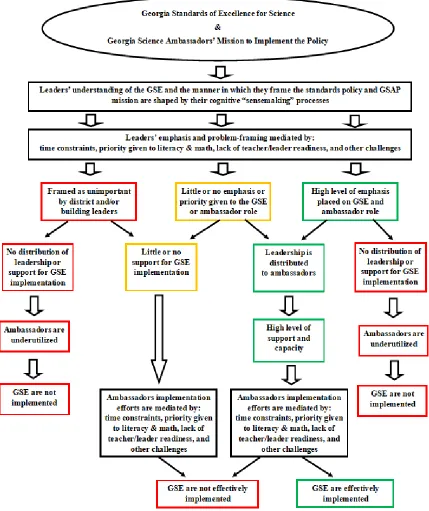
Figure 3. Systems View of Leader Inputs, Mediating Factors, and Policy Outcomes. ... 83
Figure 4. GSAP Training Presentation Slides Addressing Language and Sensemaking ... 119
1
CHAPTER 1
THE CASE OF THE GEORGIA SCIENCE AMBASSADORS PROGRAM
A pioneering approach has been underway to promote inquiry-based science instruction
in Georgia schools. The Georgia Science Ambassadors Program (GSAP) was instituted in 2016
to help implement the newly adopted Georgia Standards of Excellence (GSE) for Science. The
goal of the GSAP was to support the implementation of the new standards by augmenting the
leadership capacity of science educators across the state (Georgia Department of Education,
2016b). The program was an innovative merger of distributed instructional leadership (Harris,
2007; Klar, 2012; Halverson & Clifford, 2013) and policy implementation. A corps of 299
Georgia Science Ambassadors (GSA), including 74 elementary-level ambassadors, were trained
by the Georgia Department of Education (GADOE) and commissioned as instructional leaders to
implement the reform-based science standards. This case study investigated the perceptions of
elementary-level science ambassadors about the leadership that has been distributed to them and
the types and levels of support they have received.
Guiding Questions
The following two research questions guided the study, governed my efforts, and
permeated every stage and aspect of the investigation:
1. What are the perceptions and experiences of Georgia Science Ambassadorsabout the
distribution of leadership and support and how it has influenced their ability to lead
the implementation of the Georgia Standards of Excellence (GSE) for Science?
2. How do Georgia Science Ambassadors describe the levels and types of support they
have received for implementing the new Georgia Standards of Excellence (GSE) for
2
The research questions emanated from my active participation in the GSAP. They were crafted
to discern whether specific opportunities and challenges are inherent in the GSE policy initiative,
to spark discourse about the program’s overall integrity, and to generate qualitative data that
could ultimately benefit the GSAP. The GADOE is using a research-based, data-informed,
continuous improvement cycle to measure and improve the Science Ambassador Professional
Learning initiative (Tio, 2018), so the empirical findings of the case study may contribute to that
cycle.
Definition of Terms
1. Boundary Spanning: The formal and informal processes of obtaining, filtering, and
transmitting information across and within organizational boundaries by select
individuals (Aldrich & Herker, 1977; Tushman & Scanlan, 1981). This report will
reference boundary spanning in terms of boundary spanning individuals, roles, and
activity.
2. Cognition: A “sensemaking” process by which individuals construct new
understandings by noticing and interpreting stimuli, and how prior knowledge,
beliefs, values, experiences, emotions, context, and other variables influence the
sensemaking process (Spillane, Reiser, & Reimer, 2002). The use of the term
“cognitive” throughout this report will refer to those related to cognition.
3. Constructivism: Theory of learning which assumes that all knowledge is constructed
by the learner through contextual experiences and actions performed on objects
(Savasci & Berlin, 2012; Wheatley, 1991). The use of the term “constructivist” (e.g.,
beliefs, teaching practices, etc.) throughout this report will refer to those related to
3
4. Distributed Instructional Leadership: A leadership approach that uses the concepts
and techniques of distributed leadership, which stretches leadership functions and
activities over a number of individuals, to create optimal learning environments for
students and teachers (Halverson & Clifford, 2013; Spillane, Halverson, & Diamond,
2004).
5. Knowledge Brokers: People that facilitate the mobilization and transaction of
knowledge and create connections between researchers and various audiences
(Meyer, 2010).
6. Georgia Science Ambassadors Program (GSAP): A program devised by the Georgia
Department of Education to augment the leadership capacity of science leaders across
the state and provide school systems and schools with the manpower and support
necessary to implement the new Georgia Standards of Excellence for Science
(Georgia Department of Education, 2016b). The GSAP is composed of science
educational leaders that are individually and collectively known and referred to as
Georgia Science Ambassadors (GSA).
7. Georgia Standards of Excellence (GSE) for Science: The academic standards-policy
in Georgia which represents the foundational knowledge and skills required for all
students to develop proficiency in science; the standards integrate the core knowledge
to be mastered with the science and engineering practices needed to engage in
scientific inquiry and engineering design (Georgia Department of Education, 2016b).
8. Next Generation Science Standards (NGSS): K–12 science content standards
4
setting the expectations for what they should know and be able to do (National
Research Council, 2013).
9. General Systems Theory (GST): A transdisciplinary perspective that portrays any
“whole” or system as a complexity of interdependent smaller parts; general systems
theory and systems thinking attempt to solve problems holistically by placing
emphasis on the dynamic interaction of parts and interrelated subsystems that form
the whole (Bridgen, 2017; Banathy & Saybrook, 2003; Mania-Singer, 2017). In this
paper, the use of the term systems thinking (Shaked & Schechter, 2013, 2016, 2018)
will be used to denote the operationalization of systems theory (i.e. recognizing the
interrelationships of components within a whole as opposed to breaking the system
down and focusing on the component parts themselves).
Purpose and Rationale
The principle aim of the study was to characterize the GSAP by describing and analyzing
how elementary-level ambassadors have perceived the distribution of leadership and support for
carrying out their implementation responsibilities. It was an exploratory investigation situated at
the junction of science education reform, distributed instructional leadership, and policy
implementation. A case study methodology was the preferred approach to investigate the GSAP
based on the nature and characteristics of the proposed study (Lincoln & Guba, 1985; Smith,
1978; Stake, 1995; Yin, 2003). Case studies are most appropriate for intense empirical inquiry
that analyzes the particularity and complexity of a contemporary program within an authentic
and important context (Stake, 1995; Yin, 2003).
The GSAP’s singularity as an enterprise that melded distributed instructional leadership
5
of its neoteric blueprint and singularity, the GSAP had not yet been fully explored. Aside from
the logical rationale behind the program’s inception, little was known about the substantive
quality of the GSAP. I recognized a need to move beyond a perfunctory understanding of the
GSAP’s tactical intent by closely examining the perceptions and experiences of its constituent
members. Educational-leadership research was warranted in this case to learn more about the
recent and ongoing work of Georgia Science Ambassadors, the purview of the GSAP, and how
both coincided with established tenets of effective leadership and support for policy initiatives.
I anticipated that each ambassador’s implementation efforts would unfold within a unique
policy ecosystem (Biggs, 1993; Bolman & Deal, 2013), a complex and multi-layered network of
dynamic and interdependent people, parts, and processes. I also surmised that their outcomes
would be largely influenced by, if not wholly dependent on, their leaders’ willingness to support
the GSAP vision and mission. These notions were so compelling that they spurred the idea for
the research and offered a suitable theoretical framework within which the study could be
grounded.
Theoretical framework. A theoretical framework based on distributed instructional
leadership theory and systems theory was utilized within an interpretivist-constructivists
epistemology (Guba & Lincoln, 1994; Denzin & Lincoln, 1998). My preference for using an
interpretivist-constructivist epistemology was attuned to my assumption that GSA’s work has
been inherently interpretative. The theoretical framework was based on four constructs – the
definition of the problem, purpose behind the research, significance of the study, and the
research questions (Grant & Osanloo, 2014). A combination of distributed instructional
leadership theory and systems theory was particularly fitting for several reasons. First, as
6
implement the GSE with fidelity, and transform the pedagogy of science education in Georgia,
they have had to rely on the distribution of leadership and support from other individuals
(National Academies of Sciences, Engineering, and Medicine, 2019; Stiles, Mundry, & DiRanna,
2017). Secondly, the types and levels of leadership and support which each GSA has received
and contributed towards GSE implementation, has manifested within and through a network of
systems and subsystems (Andreadis, 2009; Biggs, 1993). According to McLaughlin (2006),
policies vary across and within implementing systems and sites, but the policy that ultimately
matters is what gets enacted within the system, not what originated externally. Biggs (1993)
described education as an ecosystem, a myriad of interacting, multi-leveled systems and
subsystems. The ambassadors constitute an organization that acts as a subsystem of the GADOE
and its educational system of Georgia, but also interacts with and responds to a multitude of
other macro and micro systems (e.g., political, learning management, support, budgetary, beliefs
and values, evaluation, etc.).
The formulation of the theoretical framework was precipitated by the research questions
and a review of contemporary literature about distributed instructional leadership and systems
theory (Andreadis, 2009; Chen & Stroup, 1993; Shaked & Schechter, 2017). In applying the two
perspectives, I preliminarily considered and examined potential systems-related functions,
including professional learning, support for policy initiatives, power and positionality, boundary
spanning and knowledge brokering, and cognitive “sensemaking.” The inquiry addressed
cognitive and sociocultural perspectives of instructional leadership and support (Coburn, 2005;
Honig, 2012) such as social constructionism, social capital (Coburn & Russell, 2008; Frank,
Zhao, & Borman, 2004), and the role of language in “sense-making” (Hill, 2006). Indeed,
7
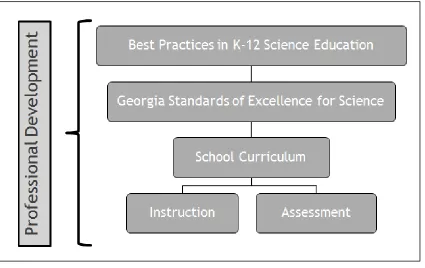
includes curriculum, instruction, professional development, and assessment (National Research
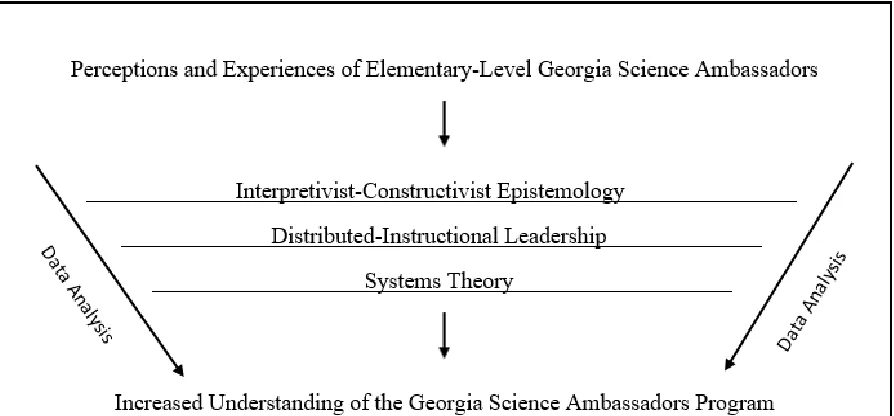
Council, 2012). Figure 1 depicts the theoretical funneling approach and structural schema I
conceived to guide the study. A more complete examination of distributed instructional
[image:22.612.84.531.214.422.2]leadership and systems theory will be presented in the literature review section.
Figure 1. Funneling approach to analyze the Georgia Science Ambassadors Program.
Literature Review
The literature review surveyed a breadth of relevant research findings and provided a
framework for analyzing and interpreting the perceptions and experiences of the Georgia Science
Ambassadors about leadership and support. It was firmly grounded in the assumption that using
multiple theoretical lenses to examine both the process and product of educational policy may
help us to better understand and conceptualize the complex issues under study (Cooper,
Fusarelli, & Randall, 2004). The literature review focused on three topics that aligned with the
8
filters for exploring the GSAP, included (a) distributed instructional leadership (Harris, 2007;
Klar, 2012; Halverson & Clifford, 2013), (b) positionality and power as they relate to
boundary-spanning activity (Coldren & Spillane, 2007; Tushman & Scanlan, 1981), and (c) support for
achieving policy initiatives (Mac Iver & Farley, 2003). I used these three thematic categories to
identify, organize, and analyze obvious and emergent themes that related to ambassadors’ work,
such as professional learning, cognitive “sensemaking,” reform-based science standards,
problem-framing, capacity building, authority and discretion, voice and autonomy, etc. The
interpretive lenses of distributed instructional leadership, power and positionality, and support
for policy initiatives served as the guideposts since they were interrelated and complementary,
they contextualized the research questions, and they encompassed other pertinent research-based
themes.
The literature base was well established with rich qualitative data that could potentially
inform the GSAP and its ambassadors. The Science GSE closely resemble the Next Generation
Science Standards (National Research Council, 2013), so research articles related to the NGSS
and their implementation were thoroughly reviewed. One particular document, Framework for
Leading NGSS Implementation (Stiles et al., 2017), emerged as a centerpiece of the review and
offered important comparison points for the current study. Considering the comparable nature of
the GSE and NGSS, the requisite leadership skills and knowledge for implementing the two
standards policies are likely similar. However, no specific leadership competencies have
previously been empirically identified, explicated, or prescribed for the GSE initiative. Stiles et
al. (2017) interviewed 23 leaders in California and Washington in an effort to define the
leadership knowledge and actions required to implement the NGSS. The present study built
9
working for over two years to implement the GSE. The review of literature also included studies
related to Common Core Math and Reading Standards (Durand, Lawson, Wilcox, & Schiller,
2016; Reade & Carroll, 2018; Remillard & Reinke, in press) so parallels could be made between
the distribution of leadership and support for Common Core implementation and that of the
GSAP approach.
Despite a decade of science education reform efforts, such as Benchmarks for Science
Literacy (American Association for the Advancement of Science, 1993), the National Science
Education Standards (National Research Council, 1996), and the most recent Next Generation
Science Standards (National Research Council, 2013), student achievement in science has been
less than desired (Davis, 2003) and the goals of inquiry standards have yet to be realized
(Marshall, Horton, Igo, & Switzer, 2009). This may be due to the fact that educational policy
implementation is an extremely complex phenomenon that is subject to a myriad of forces
(Cooper et al., 2004; Honig, 2006; Weatherley & Lipsky, 1977). Malen (1994) underscored the
inherent role of politics in the adoption and implementation of educational policy. According to
Malen (1994), “Policy implementation is a dynamic political process that affects and reflects the
relative power of diverse actors and the institutional and environmental forces that condition the
play of power” (p.85). Honig (2006) framed policy implementation as the contextual and
relational product of particular policies, people, and places. Standards policies (e.g.,
reform-based science standards) are no exception, and those that call for more inquiry and
student-centered instructional practices pose special challenges for teachers, students, and implementing
agents alike (Anderson & Helms, 2001; Spillane & Callahan, 2000; Stiles et. al, 2017).
Schneider and Ingram (1990) described policy tools as instruments through which
10
among their list of various tools. More specifically, capacity-building tools are those which
provide information, training, education, and resources for enabling individuals, groups, or
agencies to contribute to policy goals (Schneider & Ingram, 1990). In this regard, the GSAP and
its ambassadors may qualify as capacity-building policy tools. It is a professional network of
trained instructional leaders supported by print, digital, and web-based resources, and their
mission is to transform science education in the state of Georgia by training and supporting other
educators to leverage the new science standards. However, Spillane and Callahan (2000) pointed
out that local implementers do not usually encounter reform proposals exclusively through the
neat packages assembled by the state policy makers, but rather through a variety of arenas and
formats otherwise known as policy environments.
The relative success or failure of any educational policy implementation, including state
standards, may depend on the clarity of the policy message, implementing agents’ cognition or
sensemaking processes (Spillane, Reiser, & Gomez, 2006), the degree of support and
reinforcement for implementing the policy (Datnow & Stringfield, 2000; Mac Iver & Farley,
2003), and the agendas and interests of local implementers (Cooper et al., 2004). Teachers are
the street-level bureaucrats ultimately responsible for implementing learning standards, and their
knowledge, beliefs, experiences, teaching skills, perceptions of the standards, sense of
self-efficacy, and personal motivation levels contribute to varying degrees of implementation
(Klieger & Yakobovitch, 2011). At the same time, building and district leaders may have
conflicting beliefs, values, and intentions related to proposed reforms, which can result in
confusion, inconsistent reform efforts, and implementation failure (Foley, 2001). The following
sections link GSA’s leadership roles and essential responsibilities to current research about
11
support of policy initiatives. Additionally, the review includes the sub-topics of reform-based
science standards, cognitive sensemaking, boundary-spanning, problem-framing, capacity
building, and professional development.
Systems theory and thinking for leadership and policy implementation. The research
literature highlighted in the following section demonstrates the versatility of systems theory and
systems thinking for studying and understanding a variety of phenomena. The review indicates
how a systems perspective can be applied to instructional leadership, organizations, policy
implementation, the research process in general, and the GSAP investigation specifically. A
systems perspective of learning and organizational effectiveness is explained, the need for
systems thinking in leadership is argued, six key drivers of systems change are discussed, and the
connection between systems thinking and professional development is introduced. Systems
thinking is made relevant to various aspects of ambassadors’ implementation work, such as a
research-based model, which depicts the GSAP’s organizational sub-systems.
Systems thinking is viewed by some principals as an enabler of instructional leadership,
particularly for improving curriculum, developing professional learning communities, and
interpreting performance data (Shaked & Schechter, 2018). Stone and Heen (2014) explained
the multiple benefits of using a systems lens for understanding feedback, which is essentially
what the participants of the study provided via qualitative interviews. According to Stone and
Heen (2014), systems thinking offers a better sense of the whole by accounting for multiple
perspectives, correcting for any single perspective, revealing circles and cycles of causality, and
clarifying how individuals’ interlocking actions, choices, and preferences resulted in particular
outcomes. More importantly, a systems approach characterizes problems as multifaceted, which
12
resolution and forward progress (Stone & Heen, 2014). One example of this was a study by
Edgerton and Desimone (2018), which examined the links between policy, instruction,
challenges, and resources for implementing College and Career Readiness Standards. Edgerton
and Desimone (2018) measured how teachers experienced policy in terms of resources,
challenges, and professional development, how those policy perceptions related to instruction,
and whether the perceptions held constant across rural, suburban, and urban districts. They
discovered significant differences in standards-emphasized content between those who teach
different subjects (e.g., ELA and Math), educational levels (elementary versus secondary),
subgroups (e.g., students with disabilities), and in different settings (rural, suburban, or urban).
Those findings highlighted the multi-dimensional systems aspect of standards implementation.
A systems perspective of learning and organizational effectiveness also related to the case
study. Andreadis (2009) conceptualized organizations as large processing units that use a series
of interdependent and linked work processes to create valuable products or services. According
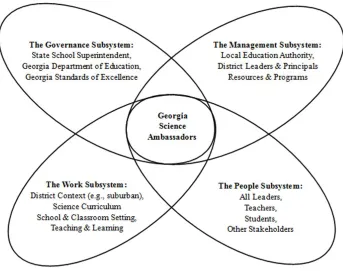
to Andreadis (2009), every organization serves as a host to four interrelated and intersecting
subsystems (governance, management, work, people) within which people perform hundreds of
simple and complex tasks on a daily basis. Each of the tasks act as a mini-system unto itself,
with inputs, outputs, and consequences that affect all other subsystems of the organization. A
systems perspective is useful for understanding organizational effectiveness, and it may be
necessary for leading organizational change and improvement. Figure 2 shows how a modified
13
Figure 2. Subsystems of the Georgia Science Ambassador Program.
Systems change, which includes the discipline of systems thinking, is one of six
foundational leadership knowledge areas required to lead the implementation of reform science
standards such as the NGSS and GSE (Stiles et. al, 2017). According to Stiles and her
colleagues, “Leaders at all levels of the system need to know the research on individual,
organizational, and systems change, and develop an understanding of the principles of systems
change and how these principles inform the implementation of the NGSS” (p. 19). As the
elementary science ambassadors and other leaders work to implement the GSE, their critical
actions should be informed by and focused on six system drivers, which Stiles et al. (2017)
proposed will most influence the impact of the standards on classroom practice. Those six
drivers included: (a) standards, (b) curriculum, instruction, and assessment, (c) policies, (d) key
14
connected these system drivers within the systems theory framework, and it applied them to the
analysis of GSA participants’ perceptions and experiences.
A thorough examination of professional learning (PL) as a system driver will follow, but
it is worth noting at this point the bridge between professional learning, systems theory, and the
implementation work of science ambassadors. Learning is a dynamic process that occurs within
a dynamic system; learning outcomes depend on context, time, people, the dynamic interplay
between knowledge development and reasoning, and the motivations, beliefs, goals, and values
of the people within the system (National Academies of Sciences, Engineering, and Medicine.
2018). Learning Forward’s (2017a) Standards for Professional Learning have called upon
leaders to establish organizational systems and structures to support professional learning. The
standards recommend that leaders actively engage policy makers and decision makers to ensure
that resources, policies, and other structures are leveraged to support, monitor, and evaluate
professional learning (Learning Forward, 2017b). This assumes that leaders such as the GSA
comprehend systems theory and systems thinking well enough to recognize and employ their
own stature, engage with educational leaders and policy makers, and establish systems and
structures to support effective implementation of the GSE for Science. Shaked and Schechter
(2016) found that middle leaders, those responsible for implementing decisions and making them
a reality, lacked knowledge of systems thinking and its potential impact on their practices.
Distributed instructional leadership. This section provides a synopsis of distributed
instructional leadership, a variant of the classic distributed leadership model, and it explains how
both relate to organizational improvement and policy implementation. The literature reviewed in
the following paragraphs distinguish the subtle differences between distributed leadership and
15
surround distributed leadership, such as the disconnect between its theory and practice.
Connections are made between the research literature on distributed leadership and the mission
of science ambassadors.
Distributed leadership is grounded in activity and context as opposed to role and position;
leadership functions and activities are stretched over a number of individuals and accomplished
through multiple leaders’ interactions (Harris, 2007; Spillane et al., 2004). Distributed
leadership is primarily concerned with leadership practices (Harris & DeFlaminis, 2016), and it
focuses on the interactions of formal and informal leaders (Harris & Spillane, 2008). By
comparison, distributed instructional leadership attempts to describe how leaders can create
optimal learning environments for students and teachers by drawing on the conceptual tools and
techniques of distributed leadership and distributed cognition (Halverson & Clifford, 2013;
Spillane et al., 2004).
Research has shown that distributed leadership positively influences organizational
outcomes (Lee, Hallinger, & Walker, 2012; Harris & Spillane, 2008). Lee et al. (2012) found
that distributed instructional leadership can be used to forge and sustain professional interactions
among staff across programs and organizational units. However, a chief concern for leaders is
how distributed leadership should be leveraged, and by whom, in order to transform and improve
organizations (Harris & Spillane, 2008). According to the Georgia Leadership Institute for
School Improvement (2015), principals who wish to distribute leadership effectively must be
genuinely inclined to recalibrate their leadership to allow teachers to assume new leadership
roles and join in school decision-making. This may require principals to use reflective practices
or research-based self-assessments to decipher their own dispositions towards authentic
16
School Improvement, 2015). These findings signify a potential challenge to the GSAP design
and ambassadors’ implementation efforts. Principals and district leaders have ultimately decided
whether and how to leverage distributed instructional leadership for rolling out the GSE,
including whether and how to utilize their science ambassadors. However, GSAP programming
did not account for the leaders’ inclinations, reflective practices, or their willingness to grow new
leaders.
Martin, Kragler, and Frazier (2017) asserted that school leadership should take a more
active role in implementing any new policy by carefully reviewing it with teachers, accounting
for teachers’ and leaders’ beliefs, needs, practices, and assumptions, and working collaboratively
with teachers to develop a plan for implementation. However, even if school leaders opt for a
distributed leadership approach to policy implementation, district leaders may limit
decision-making authority and narrow participation in decision processes (Coburn, Toure, & Yamashita,
2009). Such limiting and narrowing by district leaders is noteworthy because it signifies how
one or more individuals can alter or influence other actors and outcomes within the system
(Andreadis, 2009), including the distribution of leadership and support. Corrigan (2013) also
pointed out differences between the rhetoric and practical application of distributed leadership;
his argument was premised on the inadequate treatment of power in distributed leadership
theory. Corrigan (2013) proposed that our educational system and the teaching profession are
highly regulated by governmental authority, which wields accountability through a hierarchal
power structure, and the appeal and hopeful language of distributed leadership does not change
that reality. Elementary GSA operate within this hierarchy, so the distribution of leadership and
support which they rely on is subject to the power dynamics that Corrigan (2013) described. A
17
dissonance that is sometimes created by different actors’ cognition, authority, positionality, and
decision-making processes.
Positionality and power. The research literature examined in this section accounts for
power dynamics and the significance of position, authority, and relationships. The selected
studies highlight the central role that leaders play in policy implementation, such as
problem-framing and limiting participation in decision-making processes. This section also looks at
whether teacher and leader roles are complementary, as well as the disparities that exist between
leaders’ self-perceptions of instructional leadership compared to others’ perceptions of them.
Attention was given to social network patterns, which included GSA, and the importance of
where individuals were located (i.e. central or periphery) within the advice-seeking network of
followers. Finally, the concepts of boundary spanning and knowledge brokering were examined.
The topics and discussions clarify how elementary science ambassadors have negotiated the
power structures and political arenas in which they are situated in order to transmit information
about the GSE for science.
Schools can be thought of as political arenas, with a particular social architecture, which
comprises a myriad of formal and informal roles, relationships, and power dynamics (Bolman &
Deal, 2013). Policy unfolds through the communications and actions of individuals within these
organizational and political arenas, which may be a function of their respective positionality or
authority status. Coburn (2006) showed how problem-framing during policy implementation
was not only shaped by authority relations, but it also motivated and coordinated action,
reshaped authority relations, and influenced teachers’ beliefs and practices. However, when
disagreements occurred or extended debate did not yield a shared decision, the ultimate solutions
18
In 2017, the Georgia Science Teachers Association (GSTA) and the Georgia Council on
Social Studies (GCSS) administered a survey to Georgia teachers and administrators. According
to the results, 50% of elementary teachers said that too little time was spent teaching science,
whereas only 40% percent of administrators felt that inadequate time was spent on science
instruction; administrators and teachers both believed that the amount of science instructional
time was primarily determined by principals, followed second by district offices (Georgia
Science Teachers Association & Georgia Council of Social Studies, in press). The disconnect
between administrators’ and teachers’ perceptions about the amount of professional learning and
support still needed may be a direct result of whether and how leaders have framed the issue of
the Georgia Standards of Excellence for Science. The misalignment between elementary school
teachers’ and administrators’ beliefs about the amount of time dedicated to science instruction
and the need for supplemental training and support also relates to Coburn et al.’s (2009) findings
about positional authority taking precedence. Although teachers and leaders disagree about the
adequacy of instructional time allotted to science instruction, both parties agreed that principals
usually decided how much time was designated for each subject (Georgia Science Teachers
Association & Georgia Council of Social Studies, in press).
Firestone and Martinez (2007) suggested that the capacity to adopt an inquiry-oriented
approach to teaching science is a function of instructional and distributed leadership practices.
More specifically, they considered the distribution of leadership tasks and activities across roles
and whether the work of district leaders and teacher leaders was complementary (Firestone &
Martinez, 2007). Blitz and Modeste (2015) examined differences between teachers’ and leaders’
assessment of distributed leadership practices. The top two sub-domains with the greatest
19
instructional leaders and socially distributed leadership; the fourth highest was collaborative
school-wide focus on teaching and learning, which also focused on teachers’ roles in leadership
tasks (Blitz & Modeste, 2015). The connection of these findings to the GSAP is that (a)
ambassadors may be underutilized simply because the principal views him/herself as being the
instructional leader of the school, (b) principals may genuinely believe that they are distributing
leadership and support to the GSA when in actuality they are not, and (c) the principal fails to
garner collaborative school-wide support for GSE implementation because he/she perceives that
it already exists.
Social network analysis research has provided what might be an early indicator that
leadership tasks and activities have not been distributed to elementary ambassadors and that
elementary-level GSA are not complementing the work of district leaders. Wang and Hendrick
(2017) analyzed the social and advice-seeking networks that have facilitated the distribution of
information about the Science GSE across the state. The researchers administered a social
network analysis survey to 688 Georgia science educators, including 50 science ambassadors, to
measure centrality and betweenness. Centrality and betweenness describe the extent to which
individuals are integrated in the network, function as a bridge between different subgroups, and
influence the flow of information across network paths. According to Wang and Hendrick
(2017), the higher the in-degree centrality of an individual, the more influence they may have on
the flow of information. An individual’s position within an advice network of followers is
critical to their leadership (Chiu, Balkundi, & Weinberg, 2016; Oc, 2018). Group members who
are more centrally located in the network are more often perceived as competent, socially
powerful leaders (Oc, 2018). The analysis by Wang and Hendrick (2017) found that science
20
to being centrally located. Only two GSA were among the top ten individuals with the highest
in-degree centrality, but one was a district science leader and the other was a high school teacher
with 25 years of experience. Wang and Hendrick (2017) anticipated that as the implementation
of the Science GSE continues (a) more teachers and leaders will engage in the standards
advice-seeking network, (b) the number of ambassadors in the advice-advice-seeking network will grow, and
(c) ambassadors’ centrality in the network will increase.
Knowledge brokers and boundary spanners. Policy implementation may depend on the
extent to which information is mobilized, translated, and transferred across organizational
boundaries (Meyer, 2010; Tushman & Scanlan, 1981). Knowledge brokers are people and
organizations that translate and mediate knowledge, make it more robust and usable, and
transmit it between places (Meyer, 2010). Boundary spanners engage in knowledge brokering
by processing, filtering, and transmitting information that connects different constituencies and
links organizations to their external environment (Aldrich & Herker, 1977; Wenger, 1998).
Individuals in boundary spanning positions use negotiation, persuasion, and their coordinating
roles for dovetailing and diplomatic efforts (Bolman & Deal, 2013). Coldren and Spillane
(2007) described boundary spanning as having a significant role in instructional leadership
practices, particularly as those practices relate to professional resources, development, and the
situational context. On policy learning, Leicester (2007) characterized boundary spanning
individuals as intrinsically curious and motivated to learn, seeking out knowledge in unrelated
disciplines or professional areas in order to make sense of their circumstances. Durand et al.
(2016) found that “odds-beating” districts relied on bridging and brokering strategies to
successfully implement the CCSS and performed higher than “typical performing” districts on
21
import, and disseminate information across boundaries may depend in large part on how others
perceive them in terms of competence, communicative and contextual attunement, and
connectedness (Tushman & Scanlan, 1981). Ultimately, the aptitude of a leader for boundary
spanning, bridging, and knowledge brokering may translate to particular types and levels of
support, both internal and external, for his/her implementation of a given policy.
Support for achieving policy initiatives. The following section includes a review of
literature related to general aspects of leadership and support for policy implementation. The
review begins with a look at what capacity entails (e.g., human, social, financial capital), how it
intersects with leadership dispositions and competencies (e.g., hierarchal position, cognition,
problem-framing), and how leaders leverage their options to manage types and levels of support.
An extensive examination of reform-based science standards with constructivist underpinnings is
provided since the central policy being investigated, the GSE for Science, fits that criteria. The
keystone of the GSAP was professional learning, so research related to professional development
for education reforms are also highlighted.
Policies can be supported or thwarted at various junctures within the system. Leaders’
knowledge, skills, positionality, social capital, and financial resources likely determine how they
interpret policies, frame issues, distribute leadership, and manage types and levels of support.
Notwithstanding the available research on how central offices might support policy initiatives
(Durand et al., 2016; Honig, 2006; Mac Iver & Farley, 2003; Spillane & Callahan, 2000), the
precise role of leadership in policy implementation has not been explicated (Akerson, Cullen, &
Hanson, 2009; Boyle et al., 2013; Davis, 2003; Eisenhart, Finkel, & Marion, 1996). Human
capital, social capital, and financial resources are three highly intertwined factors that help
22
(Spillane & Thompson, 1997). Some researchers have argued that educational leaders play a
pivotal role in the policy translation and implementation processes by framing policy problems,
creating the conditions for policy implementation, building the leadership capacities of others
(Coburn, 2005, 2006; Klar, 2012; Spillane & Thompson, 1997), and distributing leadership
(Halverson & Clifford, 2013.) The particular way in which a problem or policy is framed may
determine measures of preparation, levels of support yielded, and how leadership gets
distributed. Cooper et al. (2004) highlighted the critical need to adequately support local
decision makers so they will have the capacity to successfully implement proposed reform
policies. Building capacity is vital for sustaining implementation of the GSE. Human capital
and capacity can be built through communities of practice among teachers and leaders, which are
characterized by a network of relationships built out of collaboration, communication, and
sharing of knowledge (Stiles et al., 2017).
Durand et al. (2016) underscored the importance of proactive and adaptive leadership
skills to implement policy innovations such as the CCSS. Stein and Coburn (2008) showed how
districts can support ambitious reform efforts by creating so-called architectures for learning, the
organizational conditions and systems that lead to significant opportunities for teachers to learn
new ideas and practices that align with the reform goals. Indeed, district office leaders
oftentimes interpret new standards-policies (Coburn, 2005; Hill, 2006; Honig, 2006; Veal et al.,
2016) and attempt to lead reform efforts (Brezicha, Bergmark, & Mitra, 2015; Coburn, 2001,
2005, 2006). One way that central offices support new instructional practices is through
professional development for administrators and teachers (McLaughlin & Marsh, 1978). Some
studies suggest that professional development may be the key to successful implementation of
23
et al., 1996), and administrators must create a context and conditions that support the
professional learning (Brunsell, Kneser, & Niemi, 2014; McLaughlin & Marsh, 1978).
However, the precise role of distributed instructional leadership in that process, and for policy
implementation in general, has yet to be determined. Since the central policy of the present case
was the Georgia Standards of Excellence for Science, a logical sequence of discussion points
was reform-based science standards with constructivist underpinnings, followed by cognitive
sensemaking, and finally professional learning as a critical support for implementation.
Reform-based science standards with constructivist underpinnings. The Georgia
Standards of Excellence (GSE) for Science signified a nationwide trend of re-conceptualizing
and improving science instruction. Reform-based state standards such as the GSE for Science
signal new directions and approaches in educational policymaking, and they illustrate the manner
in which policy makers have attempted to transform and improve science teaching and learning
(Spillane et al., 2002). The GSE and other similar standards promote innovative instructional
practices that are more constructivist in nature, engaging and appealing for students, and which
are expected to produce more STEM field workers (Georgia Department of Education, 2016b;
National Research Council, 2012). However, Bianchini and Kelly (2003) pointed out that the
United States has a lengthy history of proposed science education reforms, which include Project
2061: Science for All Americans (American Association for the Advancement of Science, 1989),
the National Science Education Standards (National Research Council, 1996), the state of
California’s (2006) State Content Standards, and the Next Generation Science Standards
(National Research Council, 2013). The GSE for Science may simply be the latest attempt at
what Spillane et al. (2002) referred to as unprecedented efforts to reform the quality and content
24
The NGSS immediately preceded and inspired the GSE for Science, and they were
intended to be used by states for the same purpose as Common Core State Standards (CCSS) for
Reading and Math – to align curriculum, instruction, assessment, and professional development
(National Research Council, 2013). Similar to the NGSS, the GSE for Science promote a
progressive science curriculum and pedagogical practices for science instruction based on the
most recent and comprehensive research (Georgia Science Teachers Association, 2016). In fact,
the same resource that was used to formulate the NGSS, A Framework for K-12 Science
Education (National Research Council, 2012), served as the foundational document for drafting
the GSE for Science (Georgia Department of Education, 2016a). According to this resource, the
overarching goals of K-12 science education are for all students to gain an appreciation for the
beauty and wonder of science, possess sufficient knowledge of science to engage in discussions
and carefully consume scientific and technological information, learn skills that enable career
choice – especially STEM field occupations – and continually learn about science outside of
school (National Research Council, 2012). Learning standards and science instruction that
qualifies more students for STEM field careers is especially important since up to 76% of new
jobs created in the U.S. will require workers that have proficiency in STEM (Georgia Science
Teachers Association, 2016). New science benchmarks and learning standards such as the
NGSS and GSE represent a crucial first step, but the overarching goals cannot be achieved unless
curricula, instruction, professional development, and assessment are also changed to align with
the framework’s vision (National Research Council, 2012).
Klieger and Yakobovitch (2011) characterized “standards” in education as the
framework, outline, and uniform criteria used for planning learning and evaluating students’
25
such as the NGSS and GSE for Science may be considered policy innovations since they are
structured to improve the instructional core (Durand et al., 2016; Elmore, 2004). A major feature
of reform-based standards, which may or may not be considered an improvement, is their
emphasis on inquiry teaching methods. Innovative science standards prompt teachers to re-think
how they teach science by requiring opportunities for students to authentically engage in science
practices and experiences (Veal et al., 2016). Such standards are typically constructivist in
nature, and they encourage an approach that is grounded in students’ prior knowledge of and
experience with scientific ideas (Spillane & Callahan, 2000). Multiple research studies have
suggested significant benefits of inquiry instruction, including increased student achievement,
long-term retention, a narrowing of achievement gaps, and more equitable learning opportunities
(Boyle et al., 2013). Wilson, Taylor, Kowalski, and Carlson (2009) showed that traditional
instruction created an achievement gap by race, whereas inquiry instruction did not. Similarly, a
study by Januszyk, Miller, and Lee (2016) concluded that the NGSS benefited English Language
Learners (ELL) in particular because the standards demonstrated a commitment to accessibility
of science content by all students, which in turn makes Science, Technology, Engineering, and
Mathematics (STEM) fields a more viable option for ELL students.
Although the GSE for Science have not yet been fully implemented or evaluated, there
exists a rich and robust body of research literature, which may elucidate and inform the GSAP
about distributed instructional leadership (Halverson & Clifford, 2013; Firestone & Martinez,
2007), systems theory (Andreadis, 2009), how to support curriculum changes (Datnow &
Stringfield, 2000; Jones, Potter, & Ebrahim, 2001; Mac Iver & Farley, 2003), reform-based
standards (Davis, 2003), cognition (Coburn, 2005; Coburn et al., 2009), and policy
26
based on the California NGSS K-8 Early Implementation Initiative Project (Tyler, Britton,
Iveland, Valcarcel, & Schneider, 2016) and the recent webcast of a Workshop on NGSS District
Implementation (National Academies of Sciences, Engineering, and Medicine, 2019) revealed
valuable insights and lessons learned, many of which may be transferrable to the GSE Science
Initiative in Georgia. Other studies investigated the significance of cognition in interpreting new
standards-policies (Hill, 2006; Honig, 2006; Veal et al., 2016), the role of district leadership in
the implementation process (Durand et al., 2016; Mac Iver & Farley, 2003; Spillane & Callahan,
2000), and the importance of professional learning for successful implementation of science
reforms (Akerson et al., 2009; Boyle et al., 2013; Martin et al., 2017). Publications from the
National Science Teachers Association have promoted inquiry-based science education (Bybee,
2013; Schwarz, Passmore, & Reiser, 2016) and provided guidelines for introducing teachers and
administrators to the NGSS (Brunsell et al., 2014). Professional resources and qualitative
findings about the benefits of reform-based science standards abound (Boyle et al., 2013;
Januszyk et al., 2016; Veal et al., 2016). However, they are offset by cogent illustrations of the
challenges associated with their implementation (Anderson & Helms, 2001; Spillane & Callahan,
2000).
Change is hard, as Davis (2003) denoted in the title of her study about reform and science
teachers’ learning of innovative practices. There are special challenges associated with
implementing any policy or reform agenda (Anderson & Helms, 2001), and novel learning
standards are no different. The implementation of new standards is subject to systemic and
dynamic forces. Lipsky (1980) asserted that policy actors at the lowest levels of implementation,
for instance classroom teachers, function as street-level bureaucrats who decide if and how
27
implementers ignoring, sabotaging, or adapting the reform policies (e.g., reform-based science
standards) to fit their own agendas and preferences (Spillane, 2000). Datnow and Stringfield
(2000) noted the important role that context plays in the implementation of any reform. Indeed,
Spillane and Callahan (2000) claimed that, when teachers’ work environments do not incentivize
implementation and fail to provide opportunities to learn about the new standards, effective
implementation is unlikely. Unfortunately, implementation is often shaped by ambiguity,
uncertainty, and perceived incoherence of professional development focused on new science
standards, specifically with regard to instructional goals, accountability measures, and adequate
resources (Allen & Penuel, 2015). In studying the implementation of the National Science
Education Standards, Anderson and Helms (2001) identified the dilemmas that teachers face,
which include time constraints, tension between idealized expectations and perceived realities,
and countering the deeply ingrained current culture of student roles, work, and equity issues.
Another challenge posed by innovative science standards may be the unfamiliarity of
subject matter content (SMK) and pedagogical content knowledge (PCK) embedded within the
standards (Marshall et al., 2009). Spillane and Callahan (2000) found that new state standards
encouraged a fundamental transformation of the pedagogy and epistemological functions of
science education, which involved much more than simply changing the forms of instructional
activities. For instance, the GSE for Science require students to use crosscutting concepts to
make connections across scientific disciplines. The standards also ask students to emphasize
evidence and use scientific principles, models, and theories when they construct scientific
explanations. These expectations demand new and different pedagogical approaches on the part
of the teacher as well as fundamentally different learning outcomes for students. The goal of
28
about it (Moulding, Bybee, & Paulson, 2015). This requires that teachers (a) recognize the
importance of curiosity for teaching and learning, (b) be able to sustain and build students’
curiosity into genuine interest in scientific phenomena, and (c) understand ways to utilize that
curiosity and interest for effective science instruction (Moulding et al., 2015).
Finally, reform-based standards may be perceived as an asset or a detriment by teachers
at the classroom level, but that outcome may reflect the level of implementation support
provided by building leaders or district central offices (Datnow & Stringfield, 2000; Durand et
al., 2016). According to Durand et al. (2016), the main challenges of policy innovations are
leaders’ preparation, readiness, and competency for adopting and implementing the policy;
making sense of the policy and its requirements; developing contingencies for local
implementation; and understanding how the policy’s features might facilitate, constrain, or
impede implementation. Harvey (2017) reported that middle and high school principals were not
perceived as a knowledgeable source of support for implementing the GSE for Science, and they
offered little or no assistance with improving teachers’ instructional practices. Research clearly
indicates the challenges and benefits associated with reform-based science standards, but much
research is still needed (Anderson & Helms, 2001).
Cognitive perspective. Policy implementation necessarily involves a process of
interpretation and adaptation, whereby meaning is constructed (Anderson & Helms, 2001;
Datnow & Stringfield, 2000; Spillane, 1998; Spillane & Callahan, 2000). Interpreting new
educational standards involves teachers constructing ideas about instruction, and that is
influenced by their personal beliefs, values, knowledge, dispositions, the policy itself, and the
context of their sensemaking (Spillane, 1998). There are cognitive, historical, cultural,
29
learning, and these also determine how central office administrators participate in teaching and
learning improvement efforts (Honig, 2008). It is no surprise then that local policymakers
develop divergent understandings of the standards they are charged with implementing.
Ambassadors’ perceptions about distributed leadership and support for implementing the
GSE may have largely depended on their interpretations of the new standards and their
ambassador roles and responsibilities. Research has shown that successful implementation of
any policy hinges on implementing agents’ cognition about the policy initiative and
implementation process, which includes perceptions and interpretations based on past experience
and knowledge (Honig, 2006; Spillane & Callahan, 2000, Spillane et al., 2006). Interestingly,
the vast majority of Georgia Science Ambassadors are predominantly classroom teachers with
minimal training on constructivist-based science education and little or no knowledge of policy
processes. The teaching experience of ambassadors ranged widely, but it may be worth noting
that some were initiated into the group having less than five years of service in the field of
science education. The teaching tenure of Georgia Science Ambassadors, combined with their
diverse levels of familiarity with policy and constructivist-based science, may contribute to how
they have perceived and experienced their GSAP policy work.
Policy implementation is shaped by individuals’ knowledge and experiences, social
context, formal and informal organizational structures, professional affiliations, social networks
and interactions, organizational histories and traditions, and constraints (Spillane et al., 2006).
Coburn and colleagues (Coburn et al., 2009) argued that decision-making processes, including
the use of evidence, are centrally about interpretation, argumentation, and persuasion. An
“interpretive space” always exists between the definition of a problem and proposed solutions; as
30
working knowledge determine how they move from information to appropriate action (Coburn et
al., 2009). The term “decision makers” in this sense can include science ambassadors as well as
building, district, and other leaders.
Spillane and Callahan (2000) attributed implementation failure to local implementers’
misconstruing the intent of science reform policy proposals. Similarly, Coburn (2001) found that
educational policy enactment hinges on teachers’ interpretation and discretion. If practitioners
perceived the changes called for in the new standards as dramatic and difficult to put into
practice, their implementation results were generally unsuccessful (Anderson & Helms, 2001).
Spillane et al. (2006) observed that, in cases where the implementation of policies pressed for
complex changes in extant behavior, implementing agents were oftentimes novices that drew
surface-level connections between new policy ideas and prior experiences, which resulted in a
conserving nature of teachers’ sensemaking of new state standards. When new standards-based
instructional approaches require fundamental shifts in how individuals view their practices and a
restructuring of a complex set of existing mental schemas, “the new ideas may be perceived as
minor variations of what is already understood rather than as different in critically important
ways” (Spillane et al., 2006, p.51). A major goal of current science educational reforms is for
students to use the scientific and engineering practices to make sense of the natural and designed
world, but since this seems like nothing new to many educators, their students remain passive
recipients of knowledge by studying and recounting factual information and definitions (Schwarz
et al., 2016).
Language plays a pivotal role in how reform policies are interpreted and implemented.
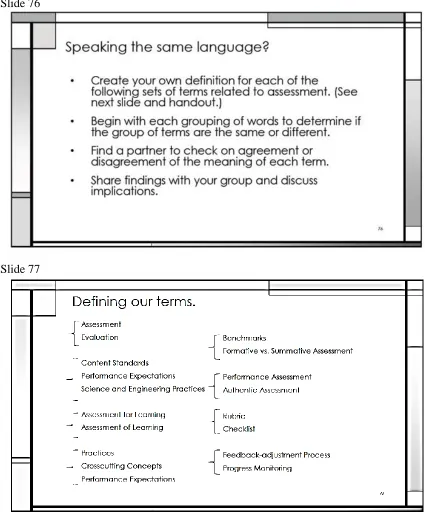
Hill (2006) noted that language is a key medium for the construction and expression of policy,