327
International Journal of Pharmaceutical Sciences and Drug Research
2017; 9(6): 327-333
Research Article
CODEN (USA): IJPSPP
ISSN: 0975-248X
Development and Optimization of Fast Dissolving Oral Film Containing
Aripiprazole
S. Jyothi Sri
1, D.V.R.N Bhikshapathi
2*1Jawaharlal Nehru Technological University, Kukatpally, Hyderabad-500072, Telangana, India 2Vijaya College of Pharmacy, Hayathnagar, Hyderabad-501511, Telangana, India
Copyright © 2017 D.V.R.N Bhikshapathi et al. This is an open access article distributed under the terms of the Creative Commons Attribution-NonCommercial-ShareAlike 4.0 International License which allows others to remix, tweak, and build upon the work non-commercially, as long as the author is credited and the new creations are licensed under the identical terms.
ABSTRACT
The present investigation was aimed with the objective of developing fast dissolving oral films of Aripiprazole to attain quick onset of action for the better management of Schizophrenia. Fourteen formulations (F1-F14) of Aripiprazole mouth dissolving films by solvent-casting method using HPMC E5, HPMC E15, Maltodextrin, PG and PVA. Formulations were evaluated for their physical characteristics, thickness, folding endurance, tensile strength, disintegration time, drug content uniformity and drug release characteristics and found to be within the limits. Among the prepared formulations F13 showed minimum disintegration time 10 sec, maximum drug was released i.e. 99.49 ± 0.36% of drug within 8 min when compared to the other formulations and finalized as optimized formulation. FTIR data revealed that no interactions take place between the drug and polymers used in the optimized formulation. The in vitro dissolution profiles of marketed product and optimized formulation was compared and found to be the drug released was 20.73 ± 0.25 after 8 min. Therefore, it can be a good alternative to conventional Aripiprazole for immediate action. In vitro evaluation of the Aripiprazole fast dissolving oral films confirmed their potential as an innovative dosage form to improve delivery and quick onset of action of Aripiprazole. The mouth dissolving film is potentially useful for the treatment of Schizophrenia where the quick onset of action is desired.
Keywords: Aripiprazole, Schizophrenia, Mouth dissolving films, disintegration time, HPMC.
DOI: 10.25004/IJPSDR.2017.090607 Int. J. Pharm. Sci. Drug Res. 2017; 9(6): 327-333
*Corresponding author: Dr. D.V.R.N. Bhikshapathi
Address: Vijaya College of Pharmacy, Hayathnagar (M), Hyderabad-501511, Telangana, India Tel.: +91-9848514228
E-mail: [email protected]
Relevant conflicts of interest/financial disclosures: The authors declare that the research was conducted in the absence of any commercial or financial relationships that could be construed as a potential conflict of interest.
Received: 11 October, 2017; Revised: 25 October, 2017; Accepted: 31 October, 2017; Published: 20 November, 2017
INTRODUCTION
Fast-dissolving drug delivery system is rapidly gaining interest in the pharmaceutical industry. These systems either dissolve or disintegrate generally within a
Int. J. Pharm. Sci. Drug Res. November-December, 2017, Vol 9, Issue 6 (327-333)
systems may offer superior clinical profiles with potential oro mucosal absorption, thus increasing the drug bioavailability with respect to oral administration. Fast dissolving drug delivery systems are mainly tablets, and their rapid disintegrating properties are obtained through special process (freeze-drying or tablet molding, overall) or formulation modifications (super-disintegrants and sugar-based ingredients). [1-2]
The purpose of developing a dosage form for a very quick onset of action, which is very convenient for administration, without the problem of swallowing and using water. A solid dosage form that dissolves or disintegrates quickly in the oral cavity, resulting in solution or suspension without the need for the administration of water, is known as an oral fast-dispersing dosage form. Mouth Dissolving Film is also known as Fast dissolving film, Quick dissolving film, Rapid dissolving film, Oral thin film (OTF), Orally Dissolving Films (ODF). Bioavailability of drug in film dosage form is greater than the convectional dosage form. [3-4] Mouth Dissolving Films are typically the size
of a postage stamp and disintegrate on a patient’s tongue in a matter of seconds for the rapid release of one or more APIs.
Antipsychotic drugs given in form of mouth dissolving films are advantageous for patients suffering from these types of syndromes as they provide better patient compliance. Idiosyncrasies in behavior of patients is also well managed, since the drug can be disguised with aesthetic appearance, sweet taste and likely flavors which resemble more with a mouth freshener than a medicine. Aripiprazole which was an atypical antipsychotic and antidepressant drug used to treat schizophrenia. Aripiprazole shows partial agonist activity at serotonin 5-HT1A receptors & dopamine D-2
receptors and antagonist activity at serotonin 5-HT2A
receptors. The drug has a half-life of 75 hours and attains peak plasma concentration occurring within 3-5
hours. [5] It is well absorbed, with peak plasma
concentrations occurring and means elimination half-lives of approximately for drug and its active metabolite, dehydro aripiprazole. The present investigation highlights the formulation and evaluation of mouth dissolving films of Aripiprazole for better patient compliance and to provide effective mode of
treatment to the impaired and non-cooperative patients suffering from Schizophrenia.
MATERIALS AND METHODS Materials
Aripiprazole purchased from Dr. Reddy’s Lab’s, Hyderabad, HPMC E5, HPMC E15, Maltodextrin, PVA, Propylene glycol, Aspartame, Mannitol, Citric acid were purchased from S.D. Fine chemicals, Mumbai. Amaranth was purchased from oxford laboratory, Mumbai.
Formulation and development of fast dissolving film Fast dissolving oral films of Aripiprazole were prepared by the solvent-casting method. The water-soluble polymers were soaked in half quantity of distilled water for overnight to obtain a uniform dispersion. Aqueous solution was prepared by adding plasticizer to above polymeric solution and could stir for 4 hours and kept for 1 hour to remove all the air bubbles entrapped. Aqueous solution II was prepared by dissolving the Aripiprazole, mannitol, aspartame in specific proportion in remaining amount of distilled water. Both aqueous solutions I and II were mixed and stirred for 1 hour and kept for 30 min for sonication. Then the mixture solution was casted onto a plastic Petri dish having surface area of 63.64 cm2 and it was
dried in the oven at 50°C for 24 hours. The film was carefully removed from the Petri dish, checked for any imperfections, and cut according to the size required for testing (2 × 2 cm2).
Evaluation of films Appearance
All prepared films were checked for their appearances either they are transparent or opaque or presence of air bubble. [6]
Thickness uniformity
The thickness of the patch was measured using digital Vernier Caliper with a least count of 0.01 mm. The thickness was measured at different strategic points of the film and average was taken and SD was calculated.
[7]
Weight uniformity
Weight variation is studied by individually weighing randomly selected films and calculating the average
weight and standard deviation was calculated. [8]
Table: 1 Formulation of Aripiprazole
Ingredients F1 F2 F3 F4 F5 F6 F7 F8 F9 F10 F11 F12 F13 F14
Aripiprazole (mg) 10 10 10 10 10 10 10 10 10 10 10 10 10 10
HPMCE15 (mg) 200 210 220 230 250 260 270 - - - -
HPMC E 5 (mg) - - - 280 280 240 290 210 235 300
Maltodextrin (mg) 110 120 130 140 150 160 170 180 180 190 120 130 140 140
PVA 170 190 200 210 220 230 240 240 250 260 260 270 280 290
Aspartame (mg) 20 20 20 20 20 20 20 20 20 20 20 20 20 20
Propylene Glycol 60 70 70 80 60 80 90 90 100 110 120 130 120 110
Mannitol 10 10 10 10 10 10 10 10 10 10 10 10 10 10
Citric acid (mg) 10 10 10 10 10 10 10 10 10 10 10 10 10 10
Water (ml) Q.S Q.S Q.S Q.S Q.S Q.S Q.S Q.S Q.S Q.S Q.S Q.S Q.S Q.S
Vanilla Q.S Q.S Q.S Q.S Q.S Q.S Q.S Q.S Q.S Q.S Q.S Q.S Q.S Q.S
Drug Content uniformity
Drug content determination of the film was carried out by dissolving the films of required size in pH 1.2 phosphate buffer (0.1N HCl) using magnetic stirrer for 1hour. The drug concentration was then evaluated spectrophotometrically at 218 λmax of nm. The determination was carried out five times for all the formulations and average with standard deviation was recorded.
Folding endurance
Folding endurance was determined by repeated folding of the film at the same place till the strip breaks. The number of times the film is folded without breaking
was computed as the folding endurance value. [9]
Surface pH of film
The pH was determined by dissolving a film in 2 ml of pH 1.2 phosphate buffer and then the pH of the obtained solution was measured by pH meter. The average of five determinations was done for each form.
[10]
In vitro disintegration time
The film size required for dose delivery (4 cm2) was
placed on a glass Petri dish containing 10 ml of pH 1.2 phosphate buffer (0.1N HCl). The time required for the
film to break was noted as in vitro disintegration time.
[11]
In vitro drug release studies
900 ml of 0.1N HCl was placed in the vessel and the USP-II apparatus (Paddle method) was assembled. The medium could equilibrate to temperature of 37 ± 0.5°C. A Film was placed in the vessel and was covered; the apparatus was operated up to 1 h at 50 rpm. At definite time intervals, 5 ml of dissolution medium was withdrawn; filtered and again replaced with 5 ml of fresh medium to maintain sink conditions. Suitable dilutions were done with dissolution medium and were analyzed spectrophotometrically at λmax of 218 nm
using a UV-spectrophotometer. [12]
Drug Excipient compatibility studies (Fourier Transform Infrared Spectroscopic studies)
Compatibility studies are carried out by mixing definite properties of drug and excipient and kept in glass vials, which is stored at 55°C for one month. The drug-excipient interaction study was carried out using by KBr pellet method. To study the compatibility of various formulation excipients with Aripiprazole, solid admixtures were prepared by mixing the drug with formulation excipient separately and it was filled and characterized by using Fourier transform infrared spectroscopy (FTIR). [10]
RESULTS AND DISCUSSION
Formulation and development of fast dissolving oral films
Fast dissolving oral films of Aripiprazole were
prepared by solvent-casting technique using
combination of HPMC E 5, HPMC E15, Maltodextrin, and polyvinyl alcohol and Maltodextrin as well as HPMC E15, PVA individually in different ratios.
Formulations containing 300 mg of HPMC E5 and HPMC E15 can form the film, but it was very difficult to remove entirely from Petri dish. The results obtained for 300 mg of PVA also like that of HPMC E15 and film was unable to remove. Proportion of HPMC and Maltodextrin were sticky and were difficult to cast on to the Petri plate. The polymeric solutions containing PVA were more transparent. Air entrapped in the polymeric solutions created a problem in casting films. Swelling of polymers required time.
The polymers HPMC E15 and HPMC E5, PVA, Maltodextrin used for the preparation of fast dissolving oral films showed good film forming properties. PVA & HPMC both have good film forming capacity. The sticky nature of polymeric solutions of some formulations may be attributed to HPMC and Maltodextrin. The Propylene Glycol used as Plasticizer for casting the films on Petri plate was found satisfactory. Solvent casting technique was simple and satisfactory. Air entrapment can be overcome by constant and slow stirring while mixing of polymers. Ultra-sonification of polymeric solutions can remove the air bubbles to a large extent and results in homogenous polymeric solutions.
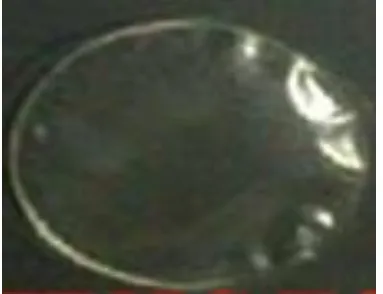
Fig. 1: Aripiprazole fast dissolving oral films
Table 2: Ease of handling of formulations F-1 to F-12
Formulation code Ease of handling
F1 Unable to peel off from the plate F2 Unable to peel off from the plate F3 Thick, easy to peel F4 Thin, easy to peel F5 Thin, easy to peel F6 Very thin, little difficult to peel F7 Thick, easy to peel F8 Unable to peel off from the plate F9 Unable to peel off from the plate F10 Very thin, little difficult to peel F11 Very thin, little difficult to peel F12 Very thin, little difficult to peel F13 Excellent, Thin easy to peel F14 Very thin, little difficult to peel
Evaluation of films
Int. J. Pharm. Sci. Drug Res. November-December, 2017, Vol 9, Issue 6 (327-333) Table 3: Evaluation parameters of films of formulations F-3 to F-7
Physical parameters F3 F4 F5 F6 F7
Physical appearance Transparent Transparent Transparent Transparent Transparent
Thickness 0.09 ± 0.002 0.08 ± 0.003 0.05 ± 0.005 0.13 ± 0.002 0.09 ± 0.003
Content uniformity (%) 99.89 ± 0.38 98.92 ± 0.43 98.99 ± 0.28 99.95 ± 0.75 99.40 ± 0.86
Weight variation (mg) 32.68 ± 0.82 38.61 ± 0.76 32.21 ± 0.30 32.15 ± 0.54 32.05 ± 0.35
Folding Endurance 309 ± 4.35 307 ± 3.13 294 ± 5.21 248 ± 3.86 208 ± 4.60
pH 6.61 ± 0.059 6.75 ± 0.055 6.63 ± 0.035 6.42 ± 0.024 6.25 ± 0.029
Disintegration time (sec) 23 ± 1.6 28 ± 1.5 25 ± 2.8 24 ± 1.7 21 ± 1.1
All the values are represented as Mean ± SD (n=5)
Table 4: Evaluation parameters of films of formulations F10 to F14
Physical parameters F10 F11 F12 F13 F14
Physical appearance Transparent Transparent Transparent Transparent Transparent
Thickness 0.13 ± 0.004 0.10 ± 0.003 0.12 ± 0.002 0.15 ± 0.002 0.07 ± 0.003
Drug content uniformity (%) 99.90 ± 0.30 98.89 ± 0.28 98.99 ± 0.11 99.99 ± 0.20 99.69 ± 0.32
Weight variation (mg) 32.26 ± 0.92 32.19 ± 0.41 32.68 ± 0.13 39.17 ± 0.25 32.34 ± 0.84
Folding Endurance 301 ± 3.13 274 ± 3.88 298 ± 4.05 315 ± 4.13 195 ± 4.51
pH 6.68 ± 0.037 6.62 ± 0.021 6.55 ± 0.048 6.93 ± 0.034 6.79 ± 0.031
Disintegration time (sec) 20 ± 1.2 29 ± 2.1 25 ± 1.1 10 ± 1.2 22 ± 2.1
All the values are represented as Mean ± SD (n=5)
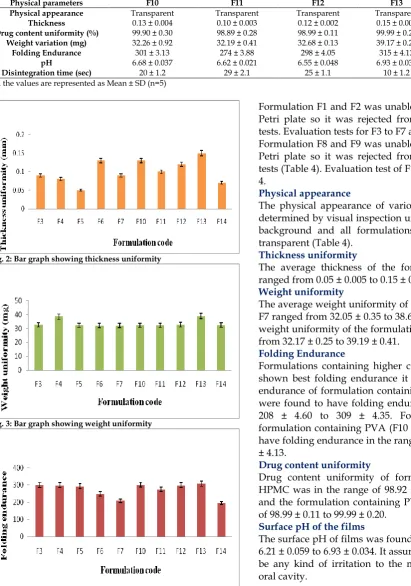
Fig. 2: Bar graph showing thickness uniformity
Fig. 3: Bar graph showing weight uniformity
Fig. 4: Bar graph showing folding endurance
Formulation F1 and F2 was unable to peel off from the Petri plate so it was rejected from further evaluation tests. Evaluation tests for F3 to F7 are as Table 3.
Formulation F8 and F9 was unable to peel off from the Petri plate so it was rejected from further evaluation tests (Table 4). Evaluation test of F10 to F14 are as Table 4.
Physical appearance
The physical appearance of various formulations was determined by visual inspection under black and white background and all formulations were found to be transparent (Table 4).
Thickness uniformity
The average thickness of the formulation F1 to F14 ranged from 0.05 ± 0.005 to 0.15 ± 0.002.
Weight uniformity
The average weight uniformity of the formulation F3 to F7 ranged from 32.05 ± 0.35 to 38.61 ± 0.76. The average weight uniformity of the formulation F10 to F14 ranged from 32.17 ± 0.25 to 39.19 ± 0.41.
Folding Endurance
Formulations containing higher conc. of polymer had shown best folding endurance it is about 300.Folding endurance of formulation containing HPMC (F3 to F7) were found to have folding endurance in the range of 208 ± 4.60 to 309 ± 4.35. Folding endurance of formulation containing PVA (F10 to F14) was found to have folding endurance in the range of 195 ± 4.51 to 315 ± 4.13.
Drug content uniformity
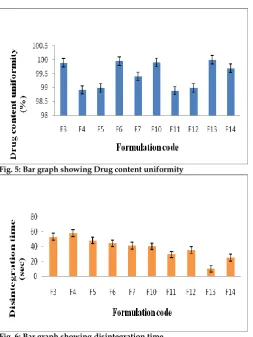
Drug content uniformity of formulations containing HPMC was in the range of 98.92 ± 0.43 to 99.89 ± 0.38 and the formulation containing PVA was in the range of 98.99 ± 0.11 to 99.99 ± 0.20.
Surface pH of the films
Table 5: In vitro drug release of films of formulation F-3 to F-7
Time (min) F3 F4 F5 F6 F7
1 23.99 ± 0.35 16.8 ± 0.26 27.64 ± 0.21 36.78 ± 0.58 40.12 ± 0.35
2 35.41 ± 0.23 24.99 ± 0.35 37.16 ± 0.65 47.09 ± 0.24 54.99 ± 0.12
3 47.09 ± 0.46 37.16 ± 0.65 47.89 ± 0.21 55.89 ± 0.41 66.14 ± 0.45
4 55.64 ± 0.41 47.09 ± 0.21 56.89 ± 0.21 66.18 ± 0.55 75.74 ± 0.49
5 63.92 ± 0.04 56.89 ± 0.21 66.18 ± 0.65 76.92 ± 0.43 84.65 ± 0.34
6 74.64 ± 0.19 66.18 ± 0.65 76.92 ± 0.24 84.69 ± 0.21 91.18 ± 0.23
7 82.43 ± 0.43 76.92 ± 0.24 85.72 ± 0.78 92.19 ± 0.55 94.89 ± 0.31
8 89.88 ± 0.55 85.72 ± 0.78 91.45 ± 0.32 93.46 ± 0.43 96.08 ± 0.56
9 91.23 ± 0.54 90.14 ± 0.54 93.04 ± 0.76 95.25 ± 0.41 97.61 ± 0.67
10 93.24 ± 0.53 91.45 ± 0.32 94.51 ± 0.43 97.84 ± 0.21 99.11 ± 0.53
11 94.45 ± 0.32 93.04 ± 0.76 95.82 ± 0.54 99.13 ± 0.41 -
12 95.52 ± 0.43 94.51 ± 0.43 96.99 ± 0.65 - -
13 96.04 ± 0.58 95.82 ± 0.54 98.89 ± 0.32 - -
14 99.16 ± 0.43 96.99 ± 0.65 - - -
15 - 97.04 ± 0.58 - - -
16 - 98.28 ± 0.26 - - -
All the values are represented as Mean ± SD (n=3)
Table 6: In vitro drug release of films of formulation F-10 to F-14
Time (min) F10 F11 F12 F13 F14
1 36.86 ± 0.39 21.67 ± 0.15 45.99 ± 0.45 49.12 ± 0.49 37.09 ± 0.25
2 46.79 ± 0.45 34.97 ± 0.19 55.67 ± 0.32 69.89 ± 0.41 58.18 ± 0.53
3 56.87 ± 0.32 44.81 ± 0.35 64.41 ± 0.41 87.56 ± 0.54 75.72 ± 0.34
4 65.61 ± 0.41 54.97 ± 0.31 73.25 ± 0.37 93.45 ± 0.23 81.45 ± 0.28
5 74.95 ± 0.37 63.51 ± 0.42 82.26 ± 0.41 96.78 ± 0.48 85.51 ± 0.35
6 83.12 ± 0.41 72.65 ± 0.37 88.92 ± 0.21 97.45 ± 0.42 91.99 ± 0.23
7 89.82 ± 0.21 81.82 ± 0.41 92.36 ± 0.43 98.01 ± 0.51 93.01 ± 0.26
8 91.43 ± 0.43 87.19 ± 0.11 94.24 ± 0.41 99.49 ± 0.36 95.28 ± 0.34
9 92.30 ± 0.32 89.13 ± 0.13 95.99 ± 0.26 - 97.28 ± 0.34
10 93.21 ± 0.24 91.41 ± 0.12 96.80 ± 0.38 - -
11 94.82 ± 0.41 92.51 ± 0.14 98.99 ± 0.25 - -
12 96.99 ± 0.26 93.52 ± 0.41 - - -
13 99.89 ± 0.25 95.89 ± 0.26 - - -
14 - 96.90 ± 0.18 - - -
15 - 98.86 ± 0.05 - - -
All the values are represented as Mean ± SD (n=3)
Fig. 5: Bar graph showing Drug content uniformity
Fig. 6: Bar graph showing disintegration time
In vitro disintegration time
Disintegration time of the formulations F3 to F7 was found to be in the range of 41 ± 1.1 to 58 ± 1.5 and disintegration time of formulations F10 to F14 was found to be in the range of 10 ± 2.1 to 43 ± 2.
In vitro drug release
It was noticed that the films got hydrated rapidly and began to dissolute the drug within minutes. Films formed by higher quantity of polymer had shown slower dissolution rate this might be due to the increase level of polymer, results in formation of high viscosity gel layer caused by more intimate contact between the particles of polymer results in decreased in mobility of drug particles in swollen matrices, which leads to decrease in release rate. From the In vitro drug release, it was observed that in formulation containing low concentration of polymer, the drug release was found to be faster and higher from films of F13 when compared with the other films, i.e 99.49 ± 0.36 within 8 min, so F13 is considered as a optimized formulation based on in vitro release studies and other evaluation parameters (Table 5 & Figure 7, 8).
Ex vivo drug permeation study
Ex vivo permeation study was carried out by using porcine oral mucosa. Permeation studies were
conducted on optimized formulation F13. At 8th minute
Int. J. Pharm. Sci. Drug Res. November-December, 2017, Vol 9, Issue 6 (327-333)
82.93% of drug was permeated within 10 min. The amount of the drug that permeated through the oral mucosa can bypass the first pass metabolism, so bioavailability of drug may have enhanced Table 7.
Fig. 7: Cumulative % drug release of formulation of F3-F7
Fig. 8: Cumulative % drug release of formulation of F10-F14
Table 7: Ex vivo drug permeation data of optimized formulation F-13
Time (min) % drug permeation
1 16.78
2 28.42
3 40.25
4 47.99
5 56.04
6 66.29
7 72.02
8 77.78
9 80.35
10 82.93
Fig. 9: Ex-vivo drug permeation data of optimized formulation F-13
Comparative In vitro study data of optimized
formulation (F13) and conventional marketed tablet formulation
The drug release profiles of optimized fast dissolving film formulation and marketed tablet formulation of
Aripiprazole (RIZACT-5) were compared. There was significant difference between both formulations. The cumulative drug release at the end of 8th min was
99.28±0.34 and 20.73±0.25 for optimized (F13) and marketed formulations respectively. So, it was concluded that, drug release from the formulation fast dissolving film of Aripiprazole was very rapid when compared to the marketed conventional tablet and it was a novel approach for delivery of Aripiprazole (Table 8 & Figure 10).
Table 8: Comparative In vitro study data of optimized formulation (F13) and conventional marketed tablet formulation
Time (min) Optimized formulation (F13) formulation Marketed
1 49.12 ± 0.49 6.89 ± 0.21 2 69.89 ± 0.41 9.41 ± 0.43 3 87.56 ± 0.54 11.65 ± 0.35 4 93.45 ± 0.23 12.91 ± 0.62 5 96.78 ± 0.48 14.73 ± 0.25 6 97.45 ± 0.42 16.89 ± 0.21 7 98.01 ± 0.51 18.56 ± 0.56 8 99.49 ± 0.36 20.73 ± 0.25
Fig. 10: Comparative In vitro study plot of optimized formulation (F13) and conventional marketed tablet formulation
Table 9: Parameters after accelerated stability study of formulation F13
Parameters
Temperature Maintained at 40± 20C ; Relative Humidity (RH) Maintained at 75% ± 5% RH
Initial After1
month
After2 months
After3 months Drug
Content (%) 99.89 ± 0.20 99.80 ± 0.12 99.71 ± 0.12 98.69 ± 0.10
In vitro Drug
Release (%) 99.28 ± 0.34 99.15 ± 0.32 99.01 ± 0.12 98.88 ± 0.13
Stability study
There were no physical changes in appearance and flexibility. After subjecting the optimized formulation (F13) to the Accelerated Stability Studies, the results were shown that there were no major changes in Drug
Content and In vitro Drug Release. Hence the
formulation was found to be stable (Table 9). FTIR studies
FTIR studies were carried out on drug and drug-excipient samples. In FTIR spectra of the pure drug
(Figure 11) the observed peaks at 2973.4 cm-1 due to
C-H stretching, 1559.51 cm-1 due to C=C aromatic
stretching, 1339.66 cm-1 due to C-N stretching, 1296.22
cm-1 due to C-O stretching were in the range of
optimized formulation spectra also (Figure 12), which indicated that no chemical interaction occurred between the drug and excipients used in the formulation.
Fig. 11: FTIR spectra of Aripiprazole pure drug
Fig. 13: FTIR spectra of optimized formulation
The present work attempt was made to formulate and evaluate fast dissolving drug delivery system. The properties of the drug, the characteristics of the oral dissolving device, selection of in-vitro model are all important for safe and effective drug delivery. FTIR studies results revealed that there was no incompatibility between drug and excipients.
Thus, fast dissolving oral films were formulated by varying proportions of polymers by solvent casting method and they were evaluated. The physical appearance of the film formulations was transparent in nature. The drug content of the formulations range 98.89 ± 0.28 to 99.99 ± 0.20, low SD values were showing content uniformity. The pH of the formulations was in the range of 6.25 ± 0.029 to 6.93 ± 0.034, which lies in the normal pH range of the oral mucosa and would not produce any irritation to the mucosa.
The thickness uniformity of the film formulations generally assures its dose accuracy per strip. It was observed that as the polymer concentration increased thickness was also increased. Low standard values assured that films were uniform in thickness. Thickness of films was in the range of 0.05 ± 0.005 to 0.15 ± 0.002. From the In vitro disintegration data, it was observed
that, the disintegration time of films containing combination of HPMC Grades was more when compared with films containing individual HPMC. And in case of films containing maltodextrin, increased amount of maltodextrin resulted in rapid disintegration of films. In vitro drug release studies were carried out to select appropriate polymer composition for the formulation having suitable drug dissolution property for the dosage form. Maximum drug was released from the formulation F13 within 8 minutes. Based on the
physico-mechanical properties and in-vitro drug
release, the formulation F13 was concluded as the Optimized formulation. In the present work, it can be concluded that the fast dissolving film formulation of Aripiprazole is one of the most useful drugs for psychotic disorders. So, it was concluded that, drug release from the formulation fast dissolving film of Aripiprazole was very rapid when compared to the marketed conventional tablet and it was a novel approach for delivery of Aripiprazole.
REFERENCES
1. Chandak C. Master of Sci. Thesis Orally dissolving film of selegiline hydrochloride. London Island University.2009;5 2. Tripathi KD. Essential of medical pharmacology. 5th Edn,
Jaypee Brothers medical Publisher. New Delhi, 2003, pp. 135-144.
3. Okabe H, Suzuki E, Sugiur Y, Yanagimoto K, Takanashi Y, Nogami E. Development of easily Swallowed film formulation. Int. J. pharma. 2008; 355: 62-66.
4. PeterChristoper GV. Formulation, Evaluation and in-vitro Release Studies of Aripiprazole Orally Disintegrating Tablets. Journal of Pharmacy Research. 2012; 5(4):2117-2121.
5. Gavaskar B, Vijayakumar S, Sharan G. Overview on fast dissolving oral films. Int. J. pharm. Pharma. Sci.2010; 2(3): 29-33.
6. Cilurzo F, Cupone IE, Minghetti P, Buratti S, Selmin F, Gennari CG, Montanari L. Nicotine Fast dissolving oral films Made of Maltodextrin. A feasibility studies. APPS Pharm Sci Tech. 2010; 11(4): 1511-1517.
7. Wale A, Weller PJ. Handbook of Pharmaceutical Excipients. 1994; 2: 24, 27, 352, 448.
8. Barnhart SD. Thin film oral dosage forms in Modified release. Drug Dev Tech. 2007; 1: 34-35.
9. Obermeier, T. Kohr, K. Kramer, K. Kolkkers. Oral quickly disintegrating film, which cannot be spit out for an antiemetic or antimigraine agent U.S. Patent 2008/0213343 A1, Sept 4.2008.
10. Nishimura M, Matsuura K, Tsukioka T, Yamashita H, Inagaki N, Sugiyama T, Itoh Y. In vitro and in vivo characteristics of prochlorperazine oral disintegrating film. Int J Pharm Sci. 2009; 368(2): 98–102.
11. Shimoda H, Taniguchi K. Preparation of fast dissolving oral thin film containing dexamethasone. A possible application to antiemesis during cancer chemotherapy.Europ J of Pharm and Biopharm. 2009; 73: 361-365.
12. Arya A, Chandra A. Fast Dissolving Oral Films: An Innovative Drug Delivery System and Dosage Form. Int J of Chem Tech Res. 2010; 2:576-583.
HOW TO CITE THIS ARTICLE: Jyothi Sri S, Bhikshapathi DVRN. Development and Optimization of Fast
Dissolving Oral Film Containing Aripiprazole. Int. J. Pharm. Sci. Drug Res. 2017; 9(6): 327-333. DOI: