Fixed Chain-Based Wireless Sensor
Network for Intelligent Transportation
Systems
Jalawi Alshudukhi
Department of Computing and Communication Technologies
Oxford Brookes University
A thesis submitted in partial fulfilment of the requirements of Oxford
Brookes University for the degree of
Doctor of Philosophy
I would like to dedicate this thesis . . . To my late Father, God bless his soul
To my Mother and her unlimited support and patience To my Wife and her generous love and continuous encouragement
Declaration
I hereby declare that except where specific reference is made to the work of others, the contents of this dissertation are original and have not been submitted in whole or in part for consideration for any other degree or qualification in this, or any other university. This dissertation is my own work and contains nothing which is the outcome of work done in collaboration with others, except as specified in the text and Acknowledgements. This dissertation contains fewer than 40,000 words including appendices, bibliography, footnotes, tables and equations and has fewer than 150 figures.
Jalawi Alshudukhi September 2016
Acknowledgements
I would like to thank my primary supervisor, Dr. Shumao Ou, for his sustained support throughout the course of conducting this research. His enthusiasm, insight and guidance were invaluable assets which encouraged me to proceed well beyond my initial ideas. I am deeply grateful to my second supervisor Dr. Peter Ball for providing useful feedback and positive criticisms which deepened the results of the study. Special thanks also go to Prof. Nigel Crook Head of Computing and Communication Technologies Department in Brookes University for generous encouragement and financial support to present my work in a respected conference. Many thanks are for Prof. Liqiang Zhao and his students due to their warm reception and hospitality during my research trip to China. I am grateful to the coordinator of my study, Professor Khaled Hayatleh, for providing unlimited support and mentoring. I would also like to acknowledge the kind assistance offered by Dr. Tjeerd Scheper as PhD tutor. I would greatly thank my wife, Ohud Alowaidi, for her continuous love and encouragement, particularly in the very stressful moments. I would like to thank my family, especially my mother, for their selfless love and support. Above all, I thank God for giving me the perseverance required to ensure that the good work I started was completed.
Abstract
Wireless Sensor Networks (WSNs) are distributed and interconnected wirelessly sensors that are used in a variety of fields of our daily life, such as the manufacturing, utility operations and traffic monitoring. Many WSN applications come with some technical weaknesses and issues, especially when they are used in Intelligent Transportation Systems (ITS). For ITS applications that use a fixed chain topology which contains road studs deployed at ground level, there are some challenges related to radio propagation, energy constraints and the Media Access Control (MAC) protocol. This thesis develops a ground level radio propagation model for communication between road studs, and energy efficiency metrics to manage the resources to overcome the energy constraints, as well as a MAC protocol compatible with chain topology and ground level communication.
For the challenges of the physical layer, this thesis investigates the use of a WSN for communicating between road-based nodes. These nodes are situated at ground level, and two-way wireless communication is required between the nodes and from the nodes to a roadside control unit. Field measurements have been carried out to examine the propagation close to the ground to determine the maximum distance between road-based nodes as a function of the antenna height. The results show that for a frequency of 2.4 GHz, a range of up to 8m is achievable with 2mW equivalent isotropically radiated power (EIRP). An empirical near-ground level radio propagation model has been derived, and the predicted results from this model are shown to match closely to the measured results.
Since wireless sensor networks have power constraints, green energy efficiency metrics have been proposed for low-power wireless sensors operating at ground level. A numerical analysis is carried out to investigate the utilisation of the green energy efficiency metrics for ground level communication in wireless sensor networks. The proposed metrics have been developed to calculate the optimal sensor deployment, antenna height and energy efficiency level for the near ground wireless sensor. As an application of the proposed metrics, the relationship between the energy efficiency and the spacing between the wireless sensor nodes has been studied. The results provide guidance for energy efficient deployment of near ground level wireless sensors.
vi
To manage the communication between large numbers of nodes deployed on a chain topology, this research presents a time division multiple access (TDMA) MAC protocol that is specifically designed for applications requiring periodic sensing of the sensor field. Numerical analysis has been conducted to investigate the optimum transmission scheduling based on the signal-to-interference-plus-noise-ratio (SINR) for ground level propagation model applied on wireless chain topology. The optimised transmission schedule considers the SINR value to enable simultaneous transmission from multiple nodes. The most significant advantages of this approach are reduced delay and improved Packet Received Ratio (PRR). Simulation is performed to evaluate the proposed protocol for intelligent transport system applications. The simulation results validate the MAC protocol for a fixed chain topology compared with similar protocols.
Table of contents
List of Figures x
List of Tables xii
List of Abbreviation xiii
List of Publications xvii
1 Introduction 1
1.1 Overview . . . . . . 1
1.2 Motivation . . . . . . 2
1.3 Aim and Objectives . . . . . . 3
1.4 Contributions . . . . . . 4
1.4.1 Ground-Level Radio Propagation model . . . . . . 4
1.4.2 Energy Efficiency Metric . . . 5
1.4.3 MAC protocol for Wireless Sensors in Chain Topology . . . . . . . 5
1.5 Thesis Structure . . . . . . 5
2 Related Works 8 2.1 Literature Review of Radio Propagation Models . . . . . . 9
2.2 Related Works in Energy Efficiency Metrics ... 12
2.3 Literature Review of MAC Protocols for WSNs ... 19
2.3.1 Contention-Based ... 19
2.3.2 Schedule-Based ... 24
2.3.3 Schedule-Based Protocol for Chain or Linear Topology ... 30
viii
3 Ground Level Radio Propagation Model 36
3.1 Overview of Propagation Phenomena and Signal
Behaviour... 36
3.2 The Common Behaviour Of Signal ... 38
3.3 Ground-Level Radio Propagation Models ... 40
3.3.1 Signal Behaviour at Ground Level ... 41
3.3.2 The Challenges Involved in Ground Level Communication ... 41
3.3.3 Plan of Measurement ... 43
3.3.4 The Proposed Radio Propagation model... 47
3.3.5 The Mathematical Model ... 48
3.3.6 The methodology ... 49
3.3.7 The Results ... 50
3.3.8 Validation ... 52
3.4 Chapter Summary ... 55
4 Energy Efficiency Metrics for Low-Power Near Ground Level Wireless Sensors 57 4.1 Introduction to Energy Efficiency Metrics ... 57
4.2 The Current Project in Energy Efficiency for Wireless Communication . . . 58
4.3 The Levels of Energy Efficiency Metrics ... 60
4.3.1 Equipment Level ... 60
4.3.2 Access Node Level ... 61
4.3.3 Network Level ... 61
4.3.4 Facility Level ... 61
4.4 Proposed Energy Efficiency Metric ... 62
4.4.1 The Main Contribution of The Proposed Energy Efficiency Metric . 62 4.4.2 Components and Effective Factors ... 63
4.4.3 Mathematical Model ... 65
4.4.4 Numerical Results ... 67
4.4.5 Application ... 71
4.5 Chapter Summary ... 73
5 MAC Protocol for Wireless Sensors in a Fixed Chain Topology 75 5.1 Overview of Schedule-Based MAC Protocols ... 75
5.1.1 TDMA Schedule-Based MAC Protocol... 76
5.1.2 Spatial-TDMA Schedule-Based MAC Protocol ... 76
viii
5.2 Proposed MAC protocol for Ground level Wireless
Sensors in a Fixed Chain Topology ... 80
5.2.1 System Model of The MAC Protocol ... 80
5.2.2 Proposed MAC Protocol ... 86
5.3 Simulation and Performance Analysis... 89
5.3.1 NS-3 Simulator ... 89
5.3.2 Requirements for Simulation ... 90
5.3.3 Scenarios ... 90 5.3.4 Parameters ... 91 5.3.5 Results ... 92 5.3.6 Validation ... 96 5.4 Chapter Summary ... 98 6 Conclusion 99 6.1 Summary of The Work ... 99
6.2 Main Contributions ... 102
6.3 Critical Analysis ... 103
6.4 Future Works ... 104
References 105 Appendix A Realistic Measurements of Ground level propagation model 113 A.1 Components ... 113
A.1.1 XBee Module ... 113
A.1.2 X-CTU software of microcontroller ... 113
A.1.3 Commands ... 114
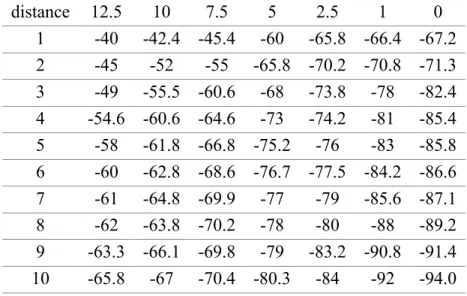
A.2 Measurements Results ... 116
Appendix B NS-3 Simulation configuration 118 B.1 Install TDMA module ... 118
B.2 Configure TDMA Module ... 119
B.3 Modify The TDMA Module ... 120
x
List of Figures
1.1 Road stud . . . . . . 3
1.2 Road stud deployed on ground level . . . . . . 4
2.1 Classification of metrics used in energy efficiency for wireless networks. . . 14
2.2 Cross-layer structure [1] ... 16
2.3 Circuit energy and transmit energy trade-off for overall energy efficiency [2] 18 2.4 S-MAC operation... 20
2.5 the mechanism of T-MAC ... 21
2.6 WiseMAC operation ... 22
2.7 LEACH protocol ... 25
2.8 Inconsistency issue in TRAMA protocol ... 26
2.9 DiS-MAC topology and operation ... 31
2.10 Bidirectional staggered transmission ... 32
3.1 Path Loss ... 37
3.2 Fresnel Zone ... 39
3.3 Scattering ... 39
3.4 XBee Module S2... 43
3.5 Arduino microcontroller ... 44
3.6 Directional Antenna Yagi ... 45
3.7 Ground level communication... 46
3.8 Near Ground level communication ... 47
3.9 Measurement Location in the Tennis court at Wheatley campus ... 47
3.10 Measurement Results for Different Heights ... 51
3.11 Results of the Proposed Model ... 51
3.12 The Effect of Antenna Height ... 52
3.13 The n Values for Different Heights ... 53
xi
3.15 Comparison of the measured and modelled results in this work with the
values predicted by the EPM model in [5] at a height of 7.5 cm ... 55
3.16 Comparison of the measured and modelled results in this chapter with the values predicted by the FOM model in [6] at a height of 12.5 cm ... 56
4.1 The (b.m)/s/Hz/W green efficiency as a function of the transmission distance [3] . . . . . . 65
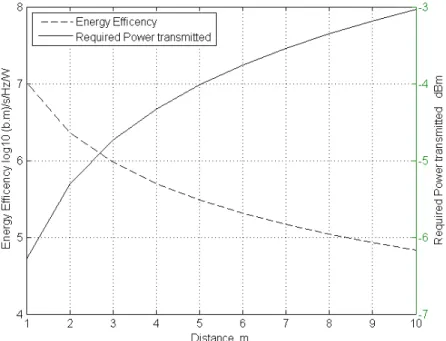
4.2 The ((b.m)/S/Hz/W) green efficiency as a function of the transmission distance 68 4.3 The (b.m)/s/Hz/W green efficiency as a function of the transmission power . 69 4.4 Minimum transmitting power as function of transmission distance ... 70
4.5 Road-based wireless sensor network deployment scenario ... 71
4.6 The relationship between the node spacing, transmitting power and the chain length ... 72
4.7 The relationship between energy efficiency and transmitting power as a function of node spacing ... 73
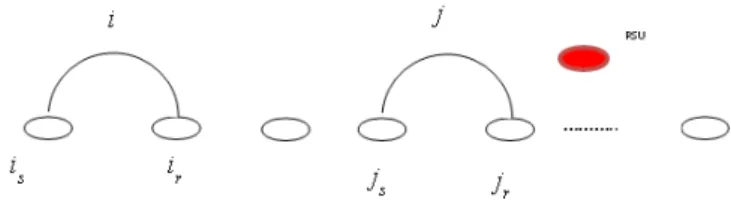
5.1 Link Assignment for the simultaneous transmission ... 83
5.2 Time slot allocation scheme ... 87
5.3 Protocol component ... 89
5.4 Simulation-scenario ... 91
5.5 Compared Delay of Classic TDMA and Proposed Spatial TDMA in the chain topology ... 93
5.6 Compared allocated slots of Classic TDMA and Proposed Spatial TDMA in the chain topology ... 94
5.7 Compared Packet Received Ratio of Classic TDMA and Proposed Spatial TDMA in the chain topology ... 95
5.8 A comparison of throughput in classic-TDMA and Proposed Spatial-reuse TDMA ... 96
5.9 End-to-end delay of a different TDMA approach implemented in the chain topology ... 97
A.1 Connected module to the laptop in the field ... 114
A.2 X-CTU Command to configure the XBee module for range test ... 115
A.3 Range test Interface of X-CTU software ... 117
B.1 Time slot allocation algorithm ... 122
xi
List of Tables
2.1 A Comparison of Contention-Based Protocols ... 23
2.2 A Comparison of Schedule-Based Protocols ... 29
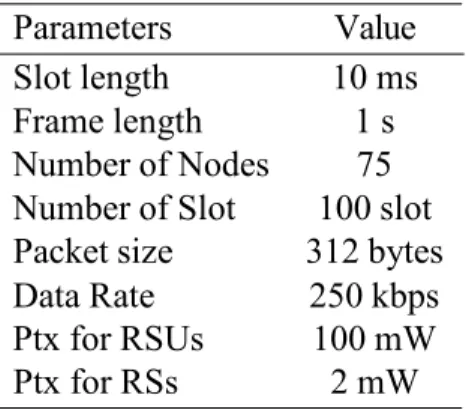
4.1 Current Projects related to Energy Efficiency Wireless Communications [4] 59 5.1 Simulation variable values ... 92
A.1 Measured Antenna Heights ... 116
A.2 Considered Parameters ... 116
xiii
List of Abbreviation
Roman Symbols2G Second-generation of Cellular systems
ACM Adaptive Coding and Modulation
AEA Adaptive Election Algorithm
ARQ Automatic Repeat Request
BEB Binary Exponential Back-off
C++ C Plus Plus is middle-level programming language
C2CCC Car2Car Communication Consortium
CM Control Message
CR Communication Request
CS Carrier Sensing process
CSMA Carrier sense multiple access
CTS Clear To Send
CW Contention Window
DCE Data centre efficiency
DiS-MAC Directional Scheduled MAC protocol
DM Data Message
xiv
ECR-VL Energy Consumption Rating-Variable Load
EEM Energy Efficiency Metric
EIRP Equivalent Isotropically Radiated Power
EMACS The EYES MAC protocol
ETSI European Telecommunications Standards Institute
FOM Free Space Outdoor Model
FS Free Space
FSPL Free Space Path Loss
GLPM Ground Level radio Propagation Level
GR Ground Reflection
GSM Global System for Mobile Communications
ITS Intelligent Transportation Systems
LEACH Low Energy Adaptive Clustering Hierarchy
LED Light-emitting Diode
LMAC Lightweight Medium Access Control
LOS Line of Sight propagation
LPLM Long-distance Path Loss Model
MAC Media Access Control
MACAW Multiple Access with Collision Avoidance for Wireless
MIMO Multiple-Input and Multiple-Output
NLOS Non-line-of-sight propagation
NoW Network on Wheels project
NP Neighbour Protocol
xv
NS-3 Discrete-event network simulator
OFDM Orthogonal Frequency-Division Multiplexing
PE Plane-Earth propagation
PRR Packet Received Ratio
PUE Power usage efficiency
QoS Quality of Services
R-T-I-T-R-I receive-transmit-idle-transmit-receive-idle
RCS Radar Cross-Section model
RF Radio frequency
RS Road Stud
RSS Received Signal Strength
RSSI Received Signal Strength Indicator
RSU Road Side Unite
RTS Request To Send
S-MAC Sensor-MAC protocol
SEP Schedule Exchange Protocol
SIFT Contention-Based MAC protocol
SINR Signal-to-Interference-plus-Noise-Ratio
SIR Signal Interference Ratio
SNR Signal Noise Ratio
STDMA Spatial Time Division Multiple Access
SYNC Synchronisation process
T-MAC Timeout-MAC protocol
xv
TC Traffic Control
TCC Traffic Control Center
TCCs Traffic Control Centres
TDMA Time Division Multiple Access
TEEER Telecommunications Equipment Energy Efficiency Rating
TEER Telecommunications Energy Efficiency Ratio
TENU Thermal noise Energy Unit
TGG The Green Grid
TRAMA Traffic-Adaptive Medium Access
V2I Vehicle To Infrastructure
V2V Vehicle TO Vehicle
VANET Vehicular Ad hoc Networks systems
VII Vehicle Infrastructure Integration
WAVE Wireless Access for Vehicular Environment standard
WiseMAC Wireless Sensor MAC protocol
WiWi Wireless Wire
WSNs Wireless Sensor Networks
xvii
List of Publications
• J. Alshudukhi, S. Ou, and P. Ball, “A ground level radio propagation model for
road-based wireless sensor networks,” in Communication Systems, Networks & Digital
Signal Processing (CSNDSP), 2014 9th International Symposium on. IEEE, Conference Proceedings, pp. 146–151
• J. Alshudukhi, S. Ou, P. Ball, L. Zhao, and G. Zhao, “Energy efficiency metrics for
low-power near ground level wireless sensors,” in Wireless and Mobile Computing,
Networking and Communications (WiMob), 2015 IEEE 11th International Conference
on. IEEE, Conference Proceedings, pp. 329–335
• J. Alshudukhi, S. Ou, and P. Ball, “A mac protocol for wireless sensors in a fixed
chain topology,” in Multimedia and Broadcasting (APMediaCast), 2016 Asia Pacific
1
Chapter 1
Introduction
1.1
Overview
Wireless Sensor Network (WSN) is a group of low-power wireless devices which communicate with each other through radio communication facilities [5]. These devices are restricted in terms of resources such as processing speed, communication bandwidth, storage capacity and battery life [5]. Recently, WSNs have been widely used in a number of different applications for a various tasks such as to sensing area, gathering data, surveillance, monitoring conditions or other objects. Thus, WSNs can potentially be used in various systems such as utilities, automation, hospital/patient management systems and transportation such as to build Intelligent Transportation System [6, 7]. The design considerations for WSNs include location, topology, and propagation, scheduling, routeing and power consumption. These requirements should be taken into account in order to assist these sensors to transmit and exchange data effectively [8].
Intelligent Traffic/Transport Systems and Services is the integration of information and communications technology with transport infrastructure, vehicles, and users [7]. This integration aims to improve safety and provide useful information for transportation users. WSN-based technologies have been integrated with transport infrastructure and vehicles in order to build effective ITS systems. Thus, ITS systems have attracted the attention of governments and research centres to focus on developing and funding ITS projects [9], for example the InternetITS Consortium has been introduced in Japan, the Vehicle Infrastructure Integration (VII) in the USA [10], the Car2Car Communication Consortium (C2CCC) in Europe [11] and the Network on Wheels project (NoW) in Germany [12]. As a result, two common approaches have been used to design ITS systems: Vehicle to Vehicle (V2V) and Vehicle to Infrastructure (V2I). Both approaches aim to increase road traffic safety by, for example wrong way warnings, red light violations, intersection collision warnings and
2
emergency brake warnings. Despite recent advances in technology and the proposed and implemented ITS, there are still some inadequacies and issues related to WSNs technology which is used in ITS systems. These inadequacies are related to physical layers such as propagation model and the appropriate topology, and the MAC layer such as the scheduling and power consumption.
Several proposed ITS systems have been built based on either Vehicle to Vehicle or Vehicle to Infrastructure. The first approach is V2V which relies mainly on exchange traffic information between vehicles. Several proposed systems have been built on this approach and have exploited the concept of multi hops communication, to produce and deliver significant data about the road to the driver. The second approach is V2I ITS systems which employ the existing transportation infrastructure to monitor and collect information about the state of the road and then sends it to vehicle drivers. Some proposed approaches have tried to combine the two approaches V2V and V2I in order to reduce the cost and increase the reliability. As In [13] the author proposes a combination of V2V and V2I communication in (VANETs) Vehicular Ad hoc Networks systems. In order to reduce the total cost of access point installation, the IEEE 802.11p/WAVE Wireless Access for Vehicular Environment standard has been improved to support multi hops communication.
Despite these considerations WSNs seem to be the preferred technology since these have many advantages over the traditional technologies, including flexibility in deployment, scalability and convenient maintenance [14]. A networked wireless sensor system may be even more powerful since it can be used to collect and process real-time information in a distributed and coordinated fashion.
1.2
Motivation
Despite recent advances in the field of developing WSNs, some gaps remain. These gaps are related to the usability in some types of environments such as motorway which use road studs placed on the ground. Thus WSNs is not implementable to perform its functions and achieve the target of the ITS systems. Thus, the communication aspects need more investigation and in depth studies to solve the problem and then introduce practical solutions that suit these unique environments. The communication aspects are represented in Radio Propagation on the Ground level where the transmitter and receiver are on the same level of height. This area has not yet been investigated, thus there is no specific radio propagation model designed to
3
suit this case. Also at MAC layer , it is important to design an appropriate MAC Protocol where the topology and the technical capabilities are considered.
The motivation in ITS is that there is an opportunity to use WSNs technology in ITS systems and take advantage of it in order to overcome the existing challenges in current ITS systems. Several systems proposed to use road studs that are deployed on the road surface, to monitor traffic as shown in Figure 1.1. These works were mainly focused on the road stud design as in [15], or improving the detection systems as proposed in [16, 17]. At the same time, previous systems using the existing radio propagation model such as the free space propagation model and MAC protocols were not particularly designed for ground level communication and they do not consider the topology and the technical capabilities of road studs. Therefore, this work was motivated by designing technical solutions that consider the road bed environment, the road stud capability, the topology and the required protocol and then introduce it as a solution to the road studs used in ITS systems.
Figure. 1.1 Road stud
1.3
Aim and Objectives
The main aim of this project is to design a wireless sensor network where the sensors are embedded in solar powered road studs. The sensors can monitor road conditions and traffic passing over the sensors and can be used to provide traffic and safety information to both drivers and traffic management systems. Data from the sensors can be relayed to neighbouring road studs and to roadside units (RSUs). Data from the RSUs will be backhauled to a Traffic Control Centres (TCCs) where the data will be analysed. Traffic control signals can also be sent from TCCs to road studs through the RSUs in order to control the traffics.
4
The key challenges for this system are: I) managing the transmission at ground level where the road surface interrupts the radio path as shown in Figure 1.2; II) minimising the power consumption as the road studs are solar powered which limits the energy available; III) minimising the amount of infrastructure needed to support the data collection and distribution; IV) effectively and efficiently transmitting information bi-directionally.
Figure. 1.2 Road stud deployed on ground level
1.4
Contributions
1.4.1
Ground-Level Radio Propagation model
A novel ground level radio propagation model has been developed that considers the effect of antenna height on the transmission distance. The reverse engineering method has been used to design this model. Thus, real measurements conducted to measure the transmission range between two nodes located at ground level and measure the effect of antenna height on the signal attenuation were used. As a result, the new equation proposed is capable of calculating the signal attenuation and predicting the path loss for different antenna heights.
5
1.4.2
Energy Efficiency Metric
A new energy efficiency metric has been introduced that is built based on physical layer properties. The proposed energy efficiency metric measures the amount of transmitted information (data bits) successfully within the available resource constraints over a certain distance to the receiver. This metric is designed specifically for wireless sensors located near ground level, and a numerical analysis has been used to validate the proposed metric. The contribution of new energy efficiency metric provides a useful tool that allows optimisation of antenna height and energy efficiency levels within available resources for the near ground wireless sensor networks.
1.4.3
MAC protocol for Wireless Sensors in Chain Topology
A new time division multiple access MAC protocol is presented that is specifically designed for applications requiring periodic sensing of the sensor field. Numerical analysis has been conducted to investigate the optimum transmission scheduling based on the signal to interference- noise-ratio (SINR) for a wireless chain topology. The optimised transmission schedule considers the SINR value to enable simultaneous transmission from multiple nodes. The most significant advantages of this approach are reduced delay and increased throughput. Simulation has been performed to evaluate the proposed protocol for intelligent transport system applications. The simulation results validate the MAC protocol for a fixed chain topology.
1.5 Thesis Structure
Chapter One
In the first chapter, an overview of ITS is introduced and the research context is described. Firstly, we meant to start with overview of ITS systems to describe the research context and present the field of this investigation. The motivations driving this research are outlined in the second section. In the third section, the aims and objectives of this research are discussed, these objectives and aims reflect the research direction. Lastly, the contributions made by this research have been listed, including contributions at the physical layer and at the MAC layer.
Chapter Two
This chapter contains three subsections; the propagation models, energy efficiency metrics and WSNs MAC protocols. The related work of radio propagation models have been
6
reviewed in the first subsection, especially near-ground radio propagation models. Then, the relevant energy efficiency metrics are studied in the second subsection, particularly those have been proposed for wireless sensor networks. The third subsection investigates the most recent MAC protocols proposed for wireless sensor networks. These protocols have been classified as contention-based, schedule-based or schedule-based for chain topology, and then a comparison has been performed to review the advantages and disadvantages for each type.
Chapter Three
In chapter three, signal behaviour and propagation phenomena are discussed, and then the proposed radio propagation model is introduced. As a preface to studying ground level propagation, it is important to review the propagation phenomenon and study how signals act in different environments and different scenarios. Thus, the three main phenomena of propagation are reviewed here: these are reflection, diffraction and scattering. Then, the ground level radio propagation model is introduced, which includes the signal behaviour, the measurement plan, the measurement challenges and the proposed radio propagation model. Lastly, a mathematical model is used to prove the results of the conducted measurements, and this model is then validated and compared with other radio propagation models.
Chapter Four
In this chapter, new energy efficiency metrics for low-powered ground level wireless sensors has been introduced. This chapter defines the main concept of energy efficiency metrics and how these metrics are applied in the existing systems. After this, the main concept and the purpose of the proposed metrics are described. More technical details about the proposed energy efficiency metrics are given in this chapter covering the components and the effective factors. To reach a deep level of understanding of the proposed metrics, a mathematical model is explained and is then followed by some numerical results. At the end of this chapter, one of the applications of the proposed energy efficiency metrics is given to show that these metrics provide accurate guidance for wireless sensor deployment and achieve energy efficiency within available resources.
Chapter Five
The main focus of chapter five is the proposed spatial TDMA MAC protocol for Fixed-chain WSNs. The first section of this chapter briefly highlights the two main categories of the schedule-based protocol: the TDMA and STDMA. Then the existing challenges to the design
7
of the spatial TDMA MAC protocol is discussed which include the topology, the interference, the delay and the throughput. After this, the main part of this chapter “the system model of the proposed MAC” is presented in detail to include the physical layer properties, the interference model, the spatial reuse technique, the time slot allocation scheme, the protocol specification and algorithm and the MAC protocol design. The main section is followed by the simulation section that describes the simulator used, the requirement, the scenarios, the parameters used and the results. To evaluate the proposed protocol, the final section of this chapter shows the results of the proposed protocol compared with other similar protocols.
Chapter Six
Chapter six is the conclusion that summarises the entire research. It starts by identifying the research context and the key issues for this research, and then the main contributions of this research are presented. For each chapter, the results and findings are reviewed and their originality discussed. Then the significance of these results is deeply deliberated to identify how they can be implemented in reality. This chapter finalised by future work section which describe the expected future works.
8
Chapter 2
Related Works
In recent developments in modern cities, ITS solutions have become essential in many urban areas, especially when this coincides with the rapid rise in the number of vehicles. ITS solutions consist of various elements, such as monitoring traffic, highway management, information on traffic conditions, detecting areas of congestion and so on. These elements are based on the road conditions which are represented mainly by traffic volume, velocity and lane occupancy[14]. There are several traditional traffic monitoring systems which have been introduced recently; these systems rely on different technologies such as camera detection and inductive loop. However, these systems can not meet the requirements of convenient deployment, detection accuracy and overall cost. Furthermore, current traffic monitoring systems are usually wired which increases the cost of the implementation and the maintenance of the system. Thus, to reduce the implementation cost, several systems have been proposed using the existing infrastructure on the road such as road studs that is integrated with wireless technology to introduce new ITS systems for monitoring and traffic control. However, the proposed technical solution for a road stud-based ITS system comes with some technical issues. These issues related to the communication aspects (particularly communication between the road studs) and the power constraints and these issues need to be solved to redesign a new road stud-based ITS system effectively.
Traffic sensing and monitoring plays an important role in ITSs. Utilizing road studs(RS) and RSUs for wireless sensing and traffic monitoring has become a hot research topic [5]. Since the road studs are installed on the ground and they are normally battery powered (for example by integrated solar batteries), providing reliable wireless communication between studs and between the studs and the RSU is very challenging. Signal propagation for the sensors on the ground will experience more reflection and interference, due to the rough surface , blocked propagation path, and passing vehicles [18]. As a result, the road stud sensors should be more carefully designed to cope with the tough operating environments.
9
In terms of the localization, road stud sensors are fixed on the road. This presents a unique fixed chain-based networking topology. In addition to the physical layer radio propagation, the MAC layer is equally challenging. Because of, a few MAC protocol have been designed for linear wireless sensor network application [19], so effective and efficient MAC layer mechanisms and scheduling algorithms for chain topology are needed for bi-directional communications between the road studs sensors and RSUs [20]. The wireless communication includes uploading the sense data and also transmitting control information down to the road studs (for example, to change the colour or flashing pattern of the studs).
To solve the current technical issues, whether in road stud-based systems, physical layer issues (ground propagation and energy efficiency) or MAC layer protocol, these issues should be deeply investigated. The next three subsections review the recent propagation models that have been designed for near ground communication, to assess whether they are implementable using road stud or not. In addition, on the level of the physical layer, we have illustrated the most recent energy efficiency metrics that have been proposed for wireless communication. Most of the current energy efficiency metrics have been designed for cellular systems and a few for WSNs. However, we have tried to study the energy efficiency metrics designed for WSNs. Finally, the third subsection reviews the related WSN MAC protocols that were previously proposed for WSNs. This investigation aims to find out the strengths and weak points of these protocols. This investigation could result in good understanding and efficient knowledge by which to design an algorithm which suit road studs deployed as a chain topology.
2.1
Literature Review of Radio Propagation Models
In the communication field, several experiments have been performed to study propagation characteristics to understand signal behaviour. These proposed propagations aim to find an empirical model which can be used to calculate the path loss and signal attenuation in different environments with different scenarios. However, since these previous studies considered the free space environment, a few considered antenna height to be an important factor. As a result, the importance of antenna height increases when the propagation is located near or at ground level. The effects of antenna height on path loss propagation near to the ground have been investigated in [21–26].
In[25], Stoyanova et al carried out some measurements in an outdoor environment with sensors deployed at heights of 12 cm, 70 cm, 150 cm and 197 cm for both the transmitter and the receiver. The sensors used were Tmote Sky sensor nodes, which have 2.4GHz CC2420
10
(K1 + K2 Γ + 2K2Γcos(
λ ∆L)) (2.1)
radio modules with internal omnidirectional antennas. The results of this study show that when the antenna height decreases, the path loss increases. The paper proposes a propagation model based on combining the free-space path loss and the plane earth propagation models and including factors to account for ground reflection and antenna pattern irregularity:
λ 2 2 2 2 2π
where PR is the received power, PT is the transmission power, d is distance between the
transmitter and receiver,λ is the wavelength, L includes transmission lines and antenna losses,
∆L is the path difference between the direct and the reflected rays, K1 and K2 represent the
antenna gain and Γ is the ground reflection coefficient.
PR(d) = PR(d) + Xσ (PR) (2.2)
Equation 2.2 shows the Received Signal Strength (RSS) distribution as a Gaussian random
variable X with standard deviation σ .
Equation 2.1 is a combination of the Free Space (FS) and Ground Reflection (GR) models. The results are compared with the Free Space Outdoor Model (FOM) and the Long-distance Path Loss Model (LPLM). They found that FOM is capable of predicting the received signal strength (RSS) as a function of distance with greater accuracy than LPLM [25]. The results showed that the maximum range for FOM and LPLM for antenna heights of 0.12 m, 0.70 m and 1.50 m are 30 m, 65 m and 70 m respectively [25].
A comprehensive study is shown here tried to include all technical, physical factors that affect the Path Loss as a function of antenna height. The proposed propagation model combined with a free space model and applied on a reasonable antenna height near ground level that
was located between 197 ∼ 12 cm. However, this study did not consider the communication
at ground level where the antenna height ≈ 0 cm. In this scenario the propagation become
unable to predict an accurate estimation of Path loss, especially when the antenna pattern was significantly affected by the ground.
Janek et al [26] investigated the RF propagation for a WSN designed to operate in agricultural crop fields to collect aggregate data composed of subsurface soil moisture and soil temperature. This study shows that the effect of antenna placement close to the ground (within 10 cm) significantly changes the omnidirectional transmission pattern. A propagation model is proposed that includes an environmental propagation factor, the value of which is obtained by measurements in different environments, to test the reflection and absorption with
4πd
4πd PR(d) = PT
11
and without obstacles. The proposed method takes into account environmental properties for the RF communication range based on the height of nodes and gateways. To study the separation space between transmitter and receiver, it concentrates on the Fresnel zone effect for sensors located close to ground level. As the sensor gets closer to the ground, the propagated wave is affected by ground obstacles which lead to reflection and diffraction. These effects have been studied and analysed to produce a model that is able to predict the loss close to the ground surface.
This model considers a factor for each environment to be calculated with a modified Friis equation which considers antenna height by using Golio and Goldsmith analytical treatments [26].
The researchers performed field measurements at a university agricultural research facility. Three different test fields were studied: bare soil (not planted or tilled), soybeans, and corn.
The tests were conducted where the transmitter antenna height ht was located at 82.5 cm, 66
cm, 50 cm, 33 cm, 16 cm and 8 cm above the ground, at a frequency of 900MHz. In terms of the receiver antenna, the antenna height was at few centimetres at all crop environments, and then the receiver antenna had to be raised. Each transmitter height was tested to find the minimum receiver height to reach maximum range on different field. For example the
maximum range for a transmitter height ht and receiver height hr of 8 cm is 6 m, and this
range increases to 30 m when hr and ht are 1.2m. For ht = 88.2cm and 66 cm, the required
receiver height to reach 30 m are hr = 18 and 20 cm, respectively.
These measurements are consistent with the hypothesis that say that antenna height can significantly affect on the RF range. Furthermore, the simulation results, the anechoic chamber and the results of the field measurements reflect the fact that the antenna radiation pattern will significantly be changed as the antenna height moves closer to the ground plane. The proposed model considers the environmental factors and then uses these together with the free space model. However, the introduced model is only implementable as long as there is free space between the transmitter and receiver, whereas the focus was to consider the nearby environmental factors that can impact the received signal. Besides the environmental factors, antenna height has also been considered in order to predict the signal attenuation. Despite the new features introduced by the proposed model such as considering antenna height, it is not implementable at ground level where the distance between the transmitter and receiver is not free space.
A statistical model is proposed by Wang et al [21] for near-ground channels based on extensive measurements. One-slope and Two-slope models have been used to verify the
12
measured results and have been compared with the generic model.
The measurements were conducted on three outdoor environments comprising a large plaza, a straight side walk, and open grassland. At each of these three sites, the same methodology was applied at the same frequency 2.4 GHz. The transmitter position was fixed with antenna heights of 3 cm and 1m, and receiver antenna heights of 1 and 2m were used. Along the straight line which was followed by the receiver, samples were collected at one-meter intervals up to a ten-meter distance from the transmitter; then, this process was repeated but at two-meter intervals until the end. The results show that the predicted values and the measured values match.
In [21], the maximum range and minimum antenna height achieved is 351m when the transmitter height is 3cm and the receiver height is 1m in the Plaza environment. The measurements confirmed that for a line-of-sight (LOS) condition and radio wave propagates near to ground level, a plane-earth (PE) model is the most accurate model to describe the path loss rather than a free space model. The plane-earth path loss model includes antenna heights and the effect of ground reflection [27]. It produces the closest results to the measured results, but it is still unable to predict the path loss accurately, especially when the antenna is at ground level. This refereed to that the conducted measurement were considering transmitter
near ground level ≃3 cm and receiver on 1 m height, this scenario does not reflect a ground
level communication where the transmitter and receiver on the same height. However, this study can be useful to estimate the path loss between the road studs and the base station, where the antenna of the base station is much higher than the road stud antenna.
In the work reported above, the minimum height of the antenna was 12cm for the measurements at 2.4 GHz and 8cm for the measurements at 900 MHz. For the road-based node network proposed in this research, antenna heights closer to the ground are needed. Therefore, a new measurement should be conducted to measure the signal attenuation for ground level communication.
2.2
Related Works in Energy Efficiency Metrics
Since the global environmental problem related to increasing energy consumption, concerns about energy efficiency in wireless communications have also been growing rapidly. To introduce energy efficiency solutions that lead to green wireless communications, numerous pieces of research and investments have been channelled into the wireless industry [28].
13
Several energy efficiency metrics have been introduced as solutions to improve the energy efficiency of cellular networks. These solutions have been designed on different levels such as the facility-level, equipment-level, network-level and access node level as shown in Figure 2.1 [29, 30]. The community has proposed some energy efficiency metrics [4, 31, 3, 32], which focus mainly on mobile and cellular communication systems. The objectives are mainly related to eco-sustainability, economic and also technical aspects.
Energy efficiency is one of the primary concerns in wireless ad hoc networks, since nodes in such a network normally use batteries. The energy consumption problem is more critical in wireless sensor networks as the battery of a sensor may not be charged or replaced [28]. For wireless sensor networks, the energy efficiency topic has been studied on several levels. At the access node level, green communications has received much attention from government, academia, and industry [4]. The main aim of green communications is to investigate and create innovative methods for the reduction of the total energy needed to operate wireless communication systems and to identify appropriate network architectures and radio technologies which facilitate the required power reduction [31]. While targeting generic wireless communication systems, mainly cellular systems, some work has been reported on the metrics used to determine energy efficiency and the techniques used to optimise modulation schemes [3].
14
Figure. 2.1 Classification of metrics used in energy efficiency for wireless networks. Existing research on energy efficiency for wireless sensor networks has focused on the design of energy efficient MAC protocols [33, 34], or routing protocols [35]. A few energy efficiency metrics proposed for wireless sensor networks consider physical layer properties, but with inadequacies since these are built at the component level. However, energy efficiency at the physical layer is more important for wireless sensor networks. In this section, we investigate the existing green radio energy efficiency metrics proposed generally for wireless systems, which highlight the proposed metrics for wireless sensor networks.
Several energy efficiency metrics have been used in wireless systems [4]. For example, the energy consumption rating (ECR) which quantifies the energy used to transmit a piece of information (Joules/bit), such as the ratio of the energy consumption to the effective system capacity [30]. Other metrics quantify the utility of various resources, such as the spectral efficiency (b/s/Hz) and the power efficiency (b/s/Hz/W) [32].
In [3], the access node level provides the basis for designing comprehensive energy efficiency metrics. The proposed metrics take into account the major factors that impact energy efficiency, such as the transmission distance and transmission power. The following efficiency aspects are considered in the proposed metrics in Eq 2.7, which include the
B
1 +
bandwidth efficiency (b/S/Hz), the (b/TENU) power efficiency and the efficiency that relates
to the spectral (b/s/Hz/m2). These considered efficiency aspects were used to produce
comprehensive metrics called green energy efficiency metrics ((b·m)/S/Hz/W). Since these metrics include the bandwidth, Shannon-Hartley theorems are used to describe the Gaussian channel capacity as in Eq.(2.3).
C = B log2(1 + γs) (b/s) (2.3)
Subsequently, the b/s/Hz bandwidth efficiency of a communication system is defined as
ηb = C = log2(1 + γs) (b/s/Hz) (2.4)
In addition to bandwidth efficiency, the power efficiency has been considered in this metric as well, which is represented by b/TENU power efficiency as (2.5).
ηTENU = ηb = log2(1 + γs) (b/TENU ) (2.5)
γs γs
The TNEU measures the value of the signal energy identical to the samples of AWGN which are recorded at the receiver. As a result, the (b/s/Hz/W) power efficiency is defined as in Eq (2.6)
ηw = ηb = log2(1 + γs) (b/s/Hz/W ) (2.6)
Pt Pt
Here, the propagation model is needed to find out the data transmission rate and the transmission distance that is attainable for a given bandwidth and level of power supplied as in Eq (2.7) [3].
ηm =
d. log2 (4Pπt )G2t NG0drλ 2L 2
Pt ((b.m)/s/Hz/W ) (2.7)
The combination of these factors is referred to as radio efficiency ((b.m)/s/Hz/W), which is intended to cover more aspects in a more general way. The advantage of this metric is that it takes account of the relationship between the bandwidth efficiency and the spectral efficiency by treating power as a category of resources. In order to improve these efficiencies, the author has proposed (AMC) as a solution. This solution shows any improvements in the efficiencies with increased transmission distance. However, for wireless networks where the nodes are stationary, this does not seem to be an effective solution. In addition, the above-mentioned
15
16
energy efficiency metric is based on the Free Space Path Loss (FSPL) radio propagation model. In some practical scenarios such as propagation at ground level or low-power wireless sensors, the energy efficiency metric needs to be redefined. Otherwise, this metric will not be implementable, since some effective factors have not been condensed.
To introduce new energy efficiency for wireless sensor networks, there are also some energy efficiency optimization metrics. These have been built based on modulation schemes, to improve the efficiency per transmitted bit for wireless sensor networks, such as [1]. The authors of [1] proposed a cross-layer design which combines (AMC) and automatic repeat request (ARQ) in order to minimize the bit energy consumption under particular constraints, such as packet loss rate and retransmission delays as shown in Figure 2.2. The main aim of this combination is to achieve a considerable gain in spectral efficiency or reduce the packet loss rate. Originally, this energy efficiency metric was introduced by [36], and the contribution here is a new combination (ARQ and AMC) which tries to improve the energy efficiency by optimizing the cross layer and the consumed joule per transmitted bit.
Figure. 2.2 Cross-layer structure [1]
A cross-layer communication model proposed here between two wireless nodes, as shown in Figure 2.2. A packets of data bits come from higher layers and then it will be stored in a buffer at the transmitter. After modulation, data bits in the packets are mapped into constellation symbols and transmitted from the transmitter to the receiver. At data link layer, ARQ protocol is employed. When an error occurs in a packet, the ARQ generator at the receiver sends a retransmission request to the ARQ controller via a feedback channel. The packet stored in the buffer will be retransmitted. At physical layer, M-ary square quadrature
17
amplitude modulation (MQAM) are supported. The modulation mode is chosen by the receiver based on the channel state information (CSI), which is sent back to the transmitter via a feedback channel. Here the energy consumption model has been used . Since there are no complicated blocks such as iterative decoding in the single antenna system, the power consumed in baseband circuit is much smaller than that in RF circuits, and for simplifying the model it can be neglected [1].
The proposed metric in [1] has been specifically designed for wireless sensor networks and the metrics have been designed at access node level. The relationship between the energy consumption and the node spacing was explored under some constraints such as delays and retransmission. However, the important aspects of the efficiency were not considered such as the spectral, power and bandwidth, where this aspect reflects the channel capability. Although the technique used was not solidly cop with the main aspect of energy efficiency at access node level, this design is still acceptable and implementable to achieve best results in the presence of node mobility.
The role of power levels in wired and wireless devices are examined in [37] as a means of minimizing the overall energy consumption per unit of data that is effectively transmitted, in the presence of noise and interference. In order to reduce the transmission errors which are caused by the reduced transmission power, the author proposes an appropriate way to select the transmission power which should be used to transmit data over a common channel. Thus, the process energy cost and the energy consumed by retransmissions are considered. However, the proposed metric is specifically designed to measure efficiency at the component level only. At network level, a new metric has been introduced in [38]. This metric relates to the network capacity referred to as ‘bits-per-joule’, which is defined as the maximum total number of deliverable bits over the networks per joule of energy deployed into the network. In a network, increases in the number of nodes lead to increases in the capacity of the bits-per-joule. This means large-scale wireless sensor networks with limited energy may only be suitable for data applications that apply delay-tolerant techniques. Thus, for energy saving in wireless networks, the bits-per-joule metric has been widely used as the utility function in game-theoretic approaches [39, 40].
.
In the aforementioned research, only the transmission power can impact the rate of transmitted data, and this is the only factor which can affect the energy efficiency models at least on access node level. However, transmission power does not reflect the overall energy efficiency on other level such as network or equipment level. Therefore, there are several factors affecting the energy efficiency such as (e.g. circuit power consumption of the
18
transceiver) have been considered in other energy efficiency models [41, 42], these factors might not be appropriate to be used on access node level.
Figure. 2.3 Circuit energy and transmit energy trade-off for overall energy efficiency [2] For example, the mathematical analysis in [2] shows that energy-efficient transmission by transmitting with the longest duration, is no longer the optimal approach. As an illustration, Figure.2.3 from [2] shows the trade-off between circuit energy and transmit energy for the overall energy efficient.
Although [37, 43] consider transmission power to measure the energy efficiency and appropriate methods to improve the efficiency, this is from an equipment-level perspective, whereas our work concentrates on the energy efficiency from an access-node perspective. Research has been carried out into different ways of improving the energy efficiency of wireless sensor networks through routing strategies [35, 44, 45], MAC layer protocols [33, 34, 46] and physical layer design [31, 3, 32, 30, 1]. However, to the author’s best knowledge, there is no energy efficiency analysis work based on near ground level radio propagation which can be found in the literature.
19
2.3
Literature Review of MAC Protocols for WSNs
Numerous MAC protocols have been proposed to manage the access and share the medium for WSNs. The MAC protocol mechanism is defined as part of the data link layer, where it plays an important role in describing the packet flow to the shared medium. This mechanism guarantees that the channel can be shared with no or low probability of collision. WSN MAC protocols are mainly classified into two types which are: contention-based which assigns a duty cycle for the transmitter when the medium is available, and schedule-based that determines a time slot for the sensor who intends to transmit and receive [47]. On the other hand, there are some examples of WSN protocols that build on the schedule-based concept such as TRAMA [48], [49], EMACS [50] and LMAC [51]. Basically, these protocols have been introduced to be implementable on WSNs. However, this research mainly investigates the schedule-based MAC protocols that have been particularly designed for a chain topology and to support multi-hop communication. Thus, this literature will focus on this type of protocol instead of the common basic WSN protocols.
2.3.1
Contention-Based
S-MACS-MAC or Sensor-MAC is a contention-based protocol which relies on CSMA or ALOHA. It does not require synchronisation or full knowledge of the topology because nodes in this protocol race equally to access the channel and there is only one winner who will access it for a certain time. It aims to increase life time and reduce energy consumption. The basic concept of S-MAC relates to periodic sleep-listen schedules which are handled locally by the sensor network. Any two nodes from different clusters and close enough, they will share a common schedule. So they will be wake up at listen schedule for thier schedule [52].In addition, this results in the nodes waking up twice for different schedules and that leads to greater power consumption. The SYNC packet will be used to communicate the schedules of different nodes in the cluster, and this process is called the synchronization period. CS helps in collision avoidance. CS stands for the carrier sensing process, which is a technique used in this protocol as a collision avoidance method. In addition to this, Request To Send (RTS) and/or Clear To Send (CTS) procedures are used to send unicast data packets as in Figure 2.4.
The advantages of using this type of protocol are that it works well on a large scale and it is scalable. On the other hand, it has disadvantages such as the fact that the performance
will drop in high load traffic, the size of the data packet is usually very small and the RTS and CTS procedures are more energy consuming. These RTS and CTS procedures are only useful for unicast communication. One of S-MAC’s disadvantages is that it is designed for a peer-to-peer topology, where the coordination process is not required to be performed by cluster heads [53].
A new feature of S-MAC has been introduced, which is called message passing, where long messages are divided into small messages and then sent in bursts. This feature helps energy saving by using a common overhead. However, this concept may lead to high delays, known as ‘latency’. The delay might be significant in the case of multi-hop routing algorithms, where every node between the sender and receiver will have their own sleep schedules. This phenomenon is known as "sleep delay". As a result, it is not suitable to be implemented in a chain topology due to there being a high possibility of collision in multi-hop topology.
Figure. 2.4 S-MAC operation
T-MAC
This protocol’s name is derived from Timeout-MAC, and it aims to minimize the energy consumption of variable traffic. The assumed topology for this protocol is peer to peer [54]. The proposed mechanism of this protocol aims to solve the static sleep–listen periods of the S-MAC which results in high latency and lower throughput, as indicated above. Timeout-MAC (T-MAC) [55] proposes to improve the performance of the S-MAC protocol under variable traffic loads. The ‘listen’ period in the T-MAC protocol ends when no activities
have been detected for a certain time period called the time threshold TA. Generally, the main
purpose of using TA is to provide a solutions for the early sleep problem.
Since the traffic load in wireless sensor networks is variable, so this result in the closest node to the sink forwards more traffic than other nodes. This traffic may change over the time shown in Figure 2.5. Despite the fact that T-MAC gives better results than S-MAC under
unexpected traffic loads, the synchronization of the listen periods within the virtual clusters is broken. This is the main source for the early sleep problem [55].
As a result, this protocol is not suitable for the chain topology, since it has weaknesses related to the early sleep problem. In addition, the nearest node to the sink will lose the connection [54].
Figure. 2.5 the mechanism of T-MAC
WiseMAC
This is also known as Wireless Sensor MAC. It is specifically designed to treat the problems which result from idle listening periods, so it mainly aims to decrease idle listening periods. The WiseMAC protocol uses non persistent CSMA (np-CSMA) with preamble sampling to decrease idle listening [52].
In the WiseMAC protocol, the preamble sampling technique is used. The main concept of this technique is the preamble arrives before each data packet informs the receiving node that there is a data packet arriving. The medium is sampled by all nodes in the network with a common period, but the nodes schedule offsets are still independent. For example, if the node wakes up and samples the it found the medium busy, it will continuously listen to the medium until it receives a data packet or until the medium becomes idle again. Initially, the size of the preamble corresponds to the sampling period. The size of the preamble is initially set to be equal to the sampling period. However, sometimes, by the end of the preamble, the receiver is still not ready to receive the data packet because of some interference which leads to over-emitting and wasted energy. In addition, increasing the length of the preamble and the data packet will proportionally increase the over-emitting, due to that handshake not applied with the targeted receiver. Thus, the WiseMAC protocol provides a solution to identify the preamble length dynamically. This solution is offered to reduce the power consumption caused by the fixed-length preamble. The method applied in this solution relies on knowing the sleep schedules of the sender node’s neighbours. The information on the sleep schedule of the sender node’s neighbours can be learned and updated through every data exchange as part of the acknowledgement message. In this way, every node is able to collect and own information about the sleep schedules of its neighbours. As a result, WiseMAC is able to schedule transmissions based on the tables of the sleeping schedules of the neighbour’s nodes
and then the destination node’s sampling time will correspond to the middle of the sender’s preamble. A random wake-up preamble is the technique advised to reduce the chance of collisions caused by sharing the start time of a wake-up preamble. Figure 2.6 below presents the operational concept of the WiseMAC protocol [56].
Figure. 2.6 WiseMAC operation
The main reasons why WiseMAC is not a suitable protocol to be implemented for a chain topology are: the decentralization of the scheduling and the non-persistent ’CSMA can cause collisions and hidden terminals.
SIFT
Sift is a contention-based MAC protocol which has been proposed for event-driven sensor networks. The main objective of the Sift design is to minimise energy consumption by reducing the latency which is caused by redundancy. The motivation behind Sift is that when an event is sensed, the first sent message R of N potential reports are the most crucial part of messaging and have to be relayed with low latency.
The non-uniform probability distribution function is used in SIFT to select a certain slot from the slotted contention window. If the node does not need to send its packet in the first slot of the window, then the transmission probability will be increased for each node to be prepared for the next slot as it assumes that the number of competing nodes is very small. According to [57], the latency in SIFT can be decreased considerably when there are many reports to be sent by nodes. As the SIFT protocol is a contention-based protocol which relies on an algorithm for slot assignment, it has been designed to coexist with other MAC protocols such as S-MAC. Based on the same idea, CSMA/p* [57] is proposed where p* is a nonuniform probability distribution that optimally minimizes latency. However, Tay et al [58], claim that SIFT uses the probability distribution function to pick a slot which is convergent to CSMA/p*. From a technical aspect, Sift is a non-persistent CSMA wireless
23
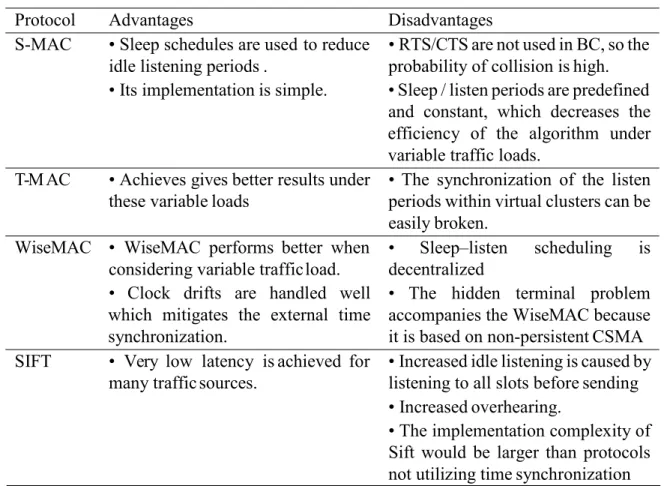
Table 2.1 A Comparison of Contention-Based Protocols
Protocol Advantages Disadvantages
S-MAC • Sleep schedules are used to reduce
idle listening periods . •probability of collision is high. RTS/CTS are not used in BC, so the
•Its implementation is simple. • Sleep / listen periods are predefined
and constant, which decreases the efficiency of the algorithm under variable traffic loads.
T-MAC • Achieves gives better results under
these variable loads
WiseMAC • WiseMAC performs better when considering variable traffic load.
• Clock drifts are handled well
which mitigates the external time synchronization.
SIFT • Very low latency is achieved for
many traffic sources.
• The synchronization of the listen
periods within virtual clusters can be easily broken.
• Sleep–listen scheduling is
decentralized
• The hidden terminal problem
accompanies the WiseMAC because it is based on non-persistent CSMA
•Increased idle listening is caused by
listening to all slots before sending
•Increased overhearing.
•The implementation complexity of
Sift would be larger than protocols not utilizing time synchronization MAC protocol. In some protocols, after any transmission the time is immediately divided into CW slots, but the time used to send data packet is much longer than these divided
CW slots called r ∈ [1, CW]. This procedure will be performed by the base station after
any transmission, or collision process. Each station carrier will need to sense the medium,
particularly during the contention slots preceding r. Once another transmission heard on
the medium, the station carrier is required to stop or delay its pending transmission. This collision resulted from the absence or lack of a link level acknowledgement. If a collision is detected, most contention-based protocols duplicate the value of CW for the colliding nodes. This process is called binary exponential back-off (BEB). (BEB) has been applied in several protocols such as MACAW, 802.11, S-MAC and B-MAC [57]. Table 2.1 shows a comparison of contention-based protocols.
Analysis
The most common contention- based WSN protocols were reviewed in the previous section. The operation mechanisms and the features of each protocol demonstrated that each protocol has some inadequacies when implemented on a chain topology. These inadequacies exist
24
mainly in the operation mechanism of these protocols, because they do not meet the application requirements where the nodes are required to sense periodically and sleep if there are no data to be gathered. Moreover, the presented "contention- based" protocols rely on random access to the channel. This method of sharing the medium is not suitable for applications which contain hundreds of nodes and the probability of collisions occurring is very high.
Due to the high probability of collisions occurring for the crowded networks, this type of protocol is not sufficiently reliable for organising channel access or to use to send sensitive sensed data. On the other hand, contention-based protocols use idle listening as a method to avoid collisions. However, the main source of wasted power is idle listening, so these protocols then become non-implementable for applications which involve power constraints.
2.3.2
Schedule-Based
This is the second type of WSN MAC protocols which are built based on a schedule-based technique. Here, several MAC protocols have been reviewed such as LEACH, OP-LEACH, TRAMA, LMAC, EMACS [59]. Schedule-based protocols rely on assigning a certain time for each node to use its duty to deliver its data [52, 59, 60]. The advantages of using this technique are no collisions, predictable delays, an increase in the overall throughput and fairness. However, these schedule-based protocols have some weaknesses that will be discussed in detail in the analysis section for this protocol type.
OP-LEACH
OP-LEACH or Optimised LEACH protocol [60] is a new version of LEACH protocol which aims to reduce energy consumption within the wireless sensor network. Where LEACH
[52]is clustering based protocol that utilizes randomized rotation of local cluster-heads to
evenly distribute the energy load among the sensors in the network. LEACH uses localized coordination to enable scalability and robustness for dynamic networks, and incorporates data fusion into the routing protocol to reduce the amount of information that must be transferred to the base station as shown in Figure 2.7. But LEACH is based on the assumption that each sensor nodes contain equal amount of energy which is not valid in real scenarios. LEACH uses a TDMA based MAC protocol, in order to maintain balanced energy consumption. A number of these TDMA slots are wasted when the nodes have random data distribution. Hence, OP-LEACH protocol has been introduced to be more realistic and overcome these weakness in LEACH protocol.
![Figure 3.16 compares the received power predicted by the Free-Space Outdoor Model (FOM) presented in [25] with the measured results and the model proposed in this chapter for an antenna height of 12.5 cms](https://thumb-us.123doks.com/thumbv2/123dok_us/1773369.2752338/71.893.127.738.171.671/figure-compares-received-predicted-outdoor-presented-measured-proposed.webp)