University of South Carolina
Scholar Commons
Theses and Dissertations
2013
A Prospective Study of Differential Sources of
School-Related Social Support and Adolescents'
Global Life Satisfaction
James D. Siddall
University of South Carolina - Columbia
Follow this and additional works at:https://scholarcommons.sc.edu/etd
Part of theSchool Psychology Commons
This Open Access Thesis is brought to you by Scholar Commons. It has been accepted for inclusion in Theses and Dissertations by an authorized administrator of Scholar Commons. For more information, please [email protected].
Recommended Citation
Siddall, J. D.(2013).A Prospective Study of Differential Sources of School-Related Social Support and Adolescents' Global Life Satisfaction.
A Prospective Study of Differential Sources of School-Related Social
Support and Adolescents’ Global Life Satisfaction
by
James Siddall
Bachelor of Arts
Washington University in St. Louis, 2011
Submitted in Partial Fulfillment of the Requirements
For the Degree of Master of Arts in
School Psychology
College of Arts and Sciences
University of South Carolina
2013
Accepted by:
E.Scott Huebner, Director of Thesis
Kimberly H. Hills, Reader
D
EDICATIONI would like to dedicate this to all my family and friends without whom I would
not be where I am today. I would especially like to thank my mom for always believing
in me, no matter what path I have taken and my dad for always pushing me to excel at
A
CKNOWLEDGEMENTSI would like to specially acknowledge E. Scott Huebner and Xu “Lilya” Jiang
who helped me to complete this project. I would also like to acknowledge Kimberly H.
A
BSTRACTThis study examined the cross-sectional and prospective relationships between
three sources of school-related social support (parent involvement, peer support for
learning, and teacher-student relationships) and early adolescents’ global life satisfaction.
The participants were 597 middle school students from one large school in the
Southeastern United States who completed measures of school social climate and life
satisfaction on two occasions, five months apart. The results revealed that school-related
experiences in terms of social support for learning contributed substantial amounts of
variance to individual differences in adolescents’ satisfaction with their lives as a whole.
Cross-sectional multiple regression analyses of the differential contributions of the
sources of support demonstrated that family and peer support for learning contributed
statistically significant, unique variance to global life satisfaction reports. Prospective
multiple regression analyses demonstrated that only family support for learning continued
to contribute statistically significant, unique variance to the global life satisfaction reports
at Time 2. The results suggest that school-related experiences, especially family-school
interactions spill over into adolescents’ overall evaluations of their lives at a time when
direct parental involvement in schooling and adolescents’ global life satisfaction is
generally declining. Recommendations for future research and educational policies and
T
ABLE OFC
ONTENTSDEDICATION ... iii
ACKNOWLEDGEMENTS ... iv
ABSTRACT ... v
LIST OF TABLES ... vii
CHAPTER 1:PREFACE ... 1
CHAPTER 2:APROSPECTIVE STUDY OF DIFFERENTIAL SOURCES OF SCHOOL-RELATED SOCIAL SUPPORT AND ADOLESCENTS’GLOBAL LIFE SATISFACTION ... 3
INTRODUCTION ... 3
METHOD ... 13
2.1 PARTICIPANTS ... 13
2.2 MEASURES ... 15
RESULTS ... 18
CHAPTER 3:DISCUSSION ... 25
REFERENCES ... 33
L
IST OFT
ABLESTable 2.1 Demographic Statistics ... 10
Table 2.2 Descriptive Statistics ... 15
Table 2.3 Intercorrelations among Predictor and Criterion Variables ... 17
Table 2.4 Regression Analyses Predicting Time 1 Life Satisfaction from Time 1 Social Support ... 19
C
HAPTER1
The current study investigates the impact of school-related social support on
students’ global life satisfaction. In a shift away from previous approaches to student
mental health, the present study takes a positive psychological approach to student
well-being. The introduction examines the current state of the research on students’ life
satisfaction, including significant correlates, antecedents, and impacts on student
functioning. It will conclude with relevant research that will explain how the current
study adds to this growing body of knowledge. The methods section will provide a
detailed description of the students surveyed and the measures used. The results section
will detail what the analyses revealed. Finally the discussion will summarize the findings
from the current study, place its findings within the current literature, and suggest future
C
HAPTER2
A Prospective Study of Differential Sources of School-Related Social
Support and Adolescents’ Global Life Satisfaction
1
1Siddall, J., Huebner, E. S., & Jiang, X. (2013). A Prospective Study of Differential Sources of
I
NTRODUCTIONThe study of positive psychological development is a relatively new area of
inquiry in the psychological and educational literatures. Although a large body of
research has focused on the impact of negative factors such as psychopathology, poor
school achievement, risk behaviors, and unsafe school environments on a host of
academic and psychological outcomes, these approaches are limited in their ability to
understand optimal human development. In recognition of this problem, a growing body
of literature has begun to focus on positive aspects of psychological functioning such as
life satisfaction, positive character traits, and positive institutions (Seligman &
Csikszentmihalyi, 2000). This approach attempts to provide a more comprehensive view
of adult and youth functioning by differentiating the presence of more optimal levels of
functioning. For example, measuring subjective well-being (e.g., life satisfaction) in
addition to psychological distress has been shown to provide a more comprehensive and
meaningful picture of an individual’s overall level of functioning (Antaramian, Huebner,
Hills, & Valois, 2010; Suldo & Schaffer, 2008). Therefore, in order to provide a more
balanced understanding of human development, positive psychological research attempts
to empirically derive the antecedents, determinants, and consequences of positive
well-being.
Although definitions of positive well-being have been controversial, life
satisfaction is widely agreed upon as one major component (Diener, 1984, 2000). Life
One commonly used definition of global life satisfaction in the literature, provided by
Andrews and Withey (1976), is “a global assessment of a person’s quality of life
according to his own chosen criteria” (p. 478). Life satisfaction is considered the
cognitive component of subjective well-being, with the other two components being
positive and negative affect (Pavot & Diener, 1993). Research on global life satisfaction
(and positive affect) with adults has shown that it predicts a wide range of positive
outcomes in adulthood, such as comfortable incomes, high quality interpersonal
relationships, superior mental health, and a longer life (Lyubomirsky, King, & Diener,
2005). Such findings indicate that life satisfaction is an extremely important aspect of
overall adaptation.
In addition to findings that high levels of global life satisfaction can predict
positive life outcomes, research has also shown that low levels of global life satisfaction
are also associated with negative life outcomes. Lower levels of global life satisfaction
have been linked with several negative intrapersonal and interpersonal outcomes. For
instance, Frisch, Cornell, Villanueva, and Retzlaff (1992) found significant negative
correlations between global life satisfaction reports and measures of general
psychopathology, anxiety, and depression in a non-clinical sample of adults. Low levels
of life satisfaction have also identified college students at risk for interpersonal rejection
(Furr & Funder, 1998), and school dropout (Frisch et al. 2005).
Recent research has found that not only is global life satisfaction an important
predictor of life outcomes in adults, but it is also important in predicting the life outcomes
and overall functioning of adolescents. For instance, Suldo and Huebner (2006) found
numerous scales of adaptive psychosocial functioning and had lower levels of emotional
and behavioral issues when compared to peers with average and very low levels of life
satisfaction. In addition, Suldo and Huebner (2004a) found that after adolescents
experienced significant life stressors, those with high global life satisfaction were
significantly less likely to exhibit future externalizing behaviors. In longitudinal analyses,
global life satisfaction reports have been found to be significant predictors of future
internalizing and externalizing behaviors (Haranin, Huebner, & Suldo, 2007), peer
relational victimization (Martin, Huebner, & Valois, 2008), and disengagement from
schooling (Lewis, Huebner, Malone, & Valois, 2011). A comprehensive review of the
literature by Proctor, Linley, and Maltby (2009) demonstrated that adolescents with
higher levels of life satisfaction display higher levels of self-esteem, peer relations, social
acceptance, academic achievement, and academic aspirations than peers with lower levels
of life satisfaction. Much more research needs to be conducted, but the evidence to date
suggests that global life satisfaction is crucial in the adaptation of children as well as
adults.
Although more research is needed on the consequences of individual differences
in adolescents’ global life satisfaction, researchers have begun to investigate its
antecedents and correlates. Similar to the early work done with adults, research with
adolescents reveals that, contrary to expectations, associations between global life
satisfaction reports and demographic variables (e.g., gender, socioeconomic status (SES),
parental marital status) have been modest (Gilman & Huebner, 2003; Proctor, Linley &
Maltby, 2009). Alternatively, personality and cognitive characteristics more strongly
correlates among adolescents is global self-esteem, with correlations ranging from
.40-.60 in US samples (Huebner, 1991; Dew & Huebner, 1994; Gilman, Huebner, &
Laughlin, 2000). Several studies have also found self-efficacy to be a robust correlate of
life satisfaction (Suldo & Shaffer, 2007; Leung, McBride-Chang, and Lai, 2004; Natvig,
Albrektsen, & Qvarnstrøm, 2003). For another example, the personality characteristic of
neuroticism moderately relates to adolescents’ global life satisfaction reports as well
(Fogle, Huebner, & Laughlin, 2002). Furthermore, in addition to personality and
cognitive characteristics, the quality of children’s environmental conditions and
experiences relates moderately to adolescents’ life satisfaction. A growing body of
research has shown that situational factors such as neighborhood, major life events, and
family experiences are all important contributors to adolescents’ life satisfaction
(Huebner, et al. 2004). For example, Ash and Huebner (2001) observed that adolescents’
life satisfaction levels significantly related to both daily, chronic stressors (e.g.,
neighborhood experiences) and how frequently adolescents experience positive and/or
negative major, acute life events (e.g., the death of a loved one or winning an award).
Research has also demonstrated that students who bully/ are bullied show lower levels of
life satisfaction compared with their peers who are not involved in bullying (Flaspohler et
al., 2009). Although early research supports the importance of various environmental
factors, little is known about specific features of adolescents’ environments that
contribute to their overall life satisfaction.
Of most importance to this study, research on the environmental correlates of
youth’s global life satisfaction indicates that high quality social relationships are the
positive parent-child relationships are more strongly associated with adolescents’ global
life satisfaction than peer relationships, although the latter are also significantly related to
life satisfaction (Huebner, 1991; Man, 1991). Furthermore, research by Dew and Huebner
(1994) indicated that parent-child relationships were a stronger predictor of global life
satisfaction than adolescents’ perceptions of their physical appearance and academic
self-concept. The importance of parent-child relationships on adolescents’ global life
satisfaction has also been found in cross-cultural studies with French, Chinese, and
Australian samples (Leung & Leung, 1992; Petito & Cummins, 2000; Sastre & Ferriere,
2000; Shek, 1997).
To date, the majority of life satisfaction studies involving adolescent students has
focused on identifying non-school environmental factors (e.g., family, peer, and
self-related) associated with positive levels of global life satisfaction (Huebner, Suldo, &
Gilman, 2006). For instance, Stewart and Suldo (2011) investigated several sources of
social support, including general parental support and support from teachers, classmates,
close friends, and school. They found that general parental support and support from
classmates were both unique predictors of middle school students’ life satisfaction, with
parental support being the most significant predictor.
While some research has been done on the relationship between general social
support and life satisfaction in adolescents, scant attention has been paid to the role of
school-related social support and global life satisfaction. However, a number of studies
have investigated school and general social support and adolescents’ school satisfaction.
School satisfaction has been defined as students’ satisfaction with their overall school
it has been found that school satisfaction is closely related to students’ overall life
satisfaction (Huebner et al., 1998; Zullig, Huebner, and Patton, 2011). In examining the
relationship between social support and school satisfaction, DeSantis King, Huebner,
Suldo, and Valois (2006) found that support from teachers, parents, and peers all
contributed unique variance to the prediction of adolescents’ school satisfaction.
However, teacher support contributed the most unique variance. A number of studies
have replicated the finding of the central importance of teacher support to adolescents’
school satisfaction (e.g., Casas, Baltatescu, Bertran, Gonzales, & Hatos, in press; Kim &
Kim, in press; Ito & Smith, 2006). Although school satisfaction is significantly related to
adolescents’ life satisfaction, there is a clear distinction between school and global life
satisfaction. Reports of satisfaction with school experiences represent a more
circumscribed evaluation of well-being compared to global life satisfaction reports,
which reflect a more pervasive evaluation of well-being. This has been demonstrated in
cross-cultural research conducted by Park and Huebner (2005), which revealed that the
magnitude of the relationships between school and global life satisfaction differed
substantially between US and Korean students, with a much weaker association observed
among the US students. Such a finding suggests that the contribution of school
satisfaction to global life satisfaction may be much greater for some students than others.
A handful of subsequent studies have explored the relationships between
school-related social support and adolescents’ global life satisfaction judgments. Suldo, Shaffer,
and Riley (2008) administered surveys to 321 US high school students, including
measures of school climate (which included school-related social support) and global life
discipline, student interpersonal relations, student-teacher relations, parental involvement,
sharing of resources, and building appearance and upkeep. Suldo et al. (2008) found that
of the school climate dimensions, only the school-related social support variables of
teacher-student relations and parental involvement were unique predictors of students’
global life satisfaction. In a subsequent study, Suldo, Thalji-Raitano, Hasemeyer, Gelley,
and Hoy (2012) found that, among middle school students, four different dimensions of
school social climate (student interpersonal relations, student-teacher relations, order and
discipline, and parent involvement in schooling) were all unique predictors of life
satisfaction. A similar study conducted among high school students by Suldo, McMahan,
Chappel, and Loker (2012) also found peer interpersonal relations and parent
involvement to be unique predictors of students’ global life satisfaction. Danielson,
Samdal, Hetland, and Wold (2009) also conducted a study where they administered
surveys, including measures of school social support and global life satisfaction, to 1,736
13-year-old and 1,622 15-year-old Norwegian students. Of the school-related social
support variables, only parental support and peer support showed significant direct effects
on students’ global life satisfaction. Danielson et al. (2009) postulated that one possible
reason for the effects of both parental and peer support, but not teacher support on
adolescents’ overall life satisfaction was that support provided by parents and peers likely
extends beyond the school day and into home and leisure activities as well, exerting a
more pervasive influence on global life satisfaction.
Although these previous studies provide sound preliminary evidence for a robust
relationship between school-related parental social support and students’ global life
peer support for learning. The differences could reflect methodological limitations (e.g.,
use of different measures of school-related social support) or the differences could reflect
age/grade and/or cultural differences between the older adolescent US sample versus the
younger Norwegian sample. Further research is needed to investigate these differences.
For example, age grade/differences in levels of global life satisfaction have been shown
in favor of high (vs. middle) school students (Goldbeck et al. 2007; Suldo & Huebner,
2004b), perhaps reflecting the well-documented academic and psychosocial challenges of
adolescents’ transition to middle school (Eccles et al. 1993).
One major limitation of all studies investigating the relationship between
school-related social support and adolescents’ global life satisfaction is that, to date, they have
all been cross-sectional in nature. Therefore, the ability to derive causal inferences is
limited. The current study addressed this gap by providing cross-sectional and
prospective analyses of the relationships between school-related social support at Time 1
and students’ global life satisfaction during this significant transition time (i.e., middle
school) for students. Based on previous findings by Suldo, Shaffer, and Riley (2008),
Suldo, Thalji-Raitano, Hasemeyer, Gelley, and Hoy (2012), and Danielson et al. (2009),
we hypothesized that school-related social support would be significantly related to early
adolescents’ global life satisfaction at both Time 1 and Time 2. More specifically, based
on the Danielson et al. (2009) study, we also predicted that family and peer support for
learning at Time 1 would significantly predict students’ global life satisfaction at Time 1.
Furthermore, based on the extensive literature regarding the link between parental social
support and global life satisfaction (Danielson et al., 2009; Dew & Huebner, 1994; Man,
family support for learning would continue to significantly predict adolescents’ global
M
ETHODParticipants
A survey investigating students‘school social climate, student engagement, and
global life satisfaction was administered by school officials to students at a large middle
school in the Southeastern United States in both Fall 2008, and five months later in
Spring 2009. These archival data were subsequently made available for analyses for the
current research. This data set has also been used in previous research (e.g., Lewis,
Huebner, Malone, & Valois, 2010), but these analyses are new.
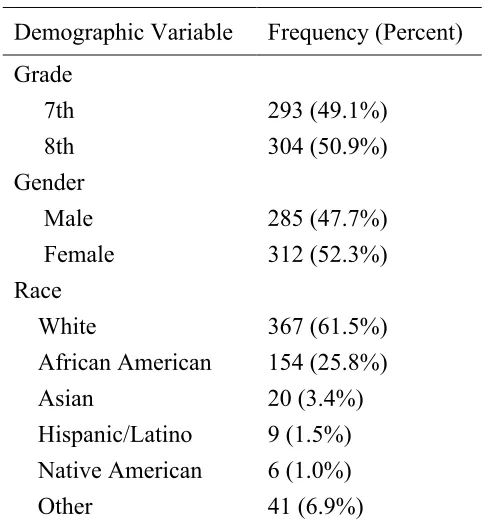
A total of 864 7th (50.7%) and 8th (49.3%) grade students completed the survey in
the fall of 2008 of which 779 (90.2% of the original sample) subsequently completed
surveys in the spring of 2009. Of the 779 students who completed surveys at Time 2, 597
students had complete data for all of the variables examined and were subsequently
analyzed in the current study. The mean age of the sample was 12.69 (SD = .67) at Time
1 and 13.08 (SD = .77) at Time 2. Based on the Time 1 data, the ethnic/racial
composition of the sample was 61.5% Caucasian, 25.8% African American, 3.4% Asian
American or Pacific Islander, 1.5% Hispanic or Latino, 1% Native American, and 6.9%
identified as “other”. Free and reduced lunch was used as a measure of socioeconomic
status. 19.9% of students were receiving free and reduced lunch at Time 1 while 17.9%
were receiving free and reduced lunch at Time 2. Demographic data are presented in
Table 2.1 Demographic Statistics.
Demographic Variable Frequency (Percent) Grade
7th 293 (49.1%)
8th 304 (50.9%)
Gender
Male 285 (47.7%)
Female 312 (52.3%)
Race
White 367 (61.5%)
African American 154 (25.8%)
Asian 20 (3.4%)
Hispanic/Latino 9 (1.5%)
Native American 6 (1.0%)
Measures
Students’ Life Satisfaction Scale (SLSS; Huebner, 1991). The SLSS is a 7-item
self-report measure of students’ global life satisfaction, or their evaluation of their lives
as a whole, over and above that of specific domains (e.g., family, school, peers). Students
responded on a six- point Likert scale ranging from 1= Strongly Disagree to 6= Strongly
Agree. Higher scores on the scale thus represented higher levels of life satisfaction. The
SLSS has been used successfully with children between the ages of 8-18 (see Huebner &
Hills, in press, for a review). The SLSS demonstrates a unidimensional factor structure
and adequate 2-week test-retest reliability (r = .74) and internal consistency (α = .82).
Student Engagement Inventory (SEI; Appleton, Christenson, Kim, & Reschly,
2006). The SEI is designed to assess facilitators (e.g., school-related social support) and
indicators of student engagement. The SEI is a self-report instrument that contains 33
items. Students respond to all items on a four- point Likert scale ranging from 1=
Strongly Disagree to 4=Strongly Agree. Accordingly, higher scores indicate higher levels
of social support and engagement at school. The SEI demonstrates acceptable
psychometric properties, including factorial invariance across adolescence (Betts,
Appleton, Reschly, Christenson, & Huebner, 2010).
For the purpose of this study, we used the following three subscales assessing
social facilitators of student engagement, that is, school-related sources of social support.
To measure teacher-student relationships, we used the Teacher-Student Relationships
subscale of the SEI, which consists of nine items designed to measure students’
judgments about the nature of student-teacher relationships at their school (e.g., “At my
Peer support for learning was assessed using the Peer Support for Learning
subscale of the SEI. This subscale consists of six questions designed to measure the
extent to which each student perceives their learning is supported by their peers (e.g.,
“Other students at school care about me”). Appleton et al. (2006) found adequate internal
consistency (α = .82) for the Peer Support for Learning subscale.
Family support for learning was assessed using the Family Support for Learning
subscale of the SEI. This subscale consists of four items measuring the level of family
support, specifically in the school context (i.e. “When I have problems at school my
family/guardian(s) are willing to help me”). Appleton et al. (2006) found adequate
internal consistency (α = .76) for the Family Support for Learning subscale.
Procedures
In the fall (Time 1), passive consent forms were made available by the school to
all parents asking permission for their child to participate in two waves of data collection
(N = 1,044). From the first wave of data, 12 parents denied consent, one teacher failed to
participate (N = 25), and 79 students were absent on the day the survey was administered;
therefore, these students were not included in the participant pool. Special education
students were also not included in the data collection (N = 39). Furthermore, four
students were removed from the Time 1 sample because they did not have enough
identifying information to track them at Time 2. After eliminating all of the students
missing Time 1 or Time 2 data, the final sample included 597 students, or 57% of the
total school population.
At both Time 1 and Time 2, teachers administered surveys during their homeroom
to complete the entire survey packet, informing them of their right to withdraw at any
time, and informing them that their responses would be kept confidential. Students began
by completing a brief series of demographic questions (e.g., age). Data on race, gender,
SES (measured using free or reduced lunch rate), and special education status were
derived from school records. The youth completed the measure of global life satisfaction
first with the other measures being presented in a counterbalanced order. This specific
order was used because previous research has found that presenting domain-specific
questions (e.g., school experiences) first may influence how a person subsequently rates
R
ESULTSDescriptive Statistics
Prior to conducting regression analyses, histograms were plotted to test the
normality of each criterion variable. All variables were within acceptable limits of
normality.
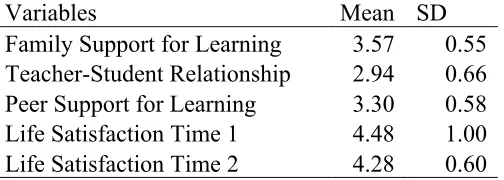
Table 2.2 presents the means (M) and standard deviations (SD) for all variables
assessed at Time 1 and Time 2. The mean for global life satisfaction was 4.50 (SD =
1.00) at Time 1 and 4.28 (SD = 0.60) at Time 2. The Time 1 and Time 2 responses are
consistent with a “Mildly Agree” response to positive life satisfaction. These results are
comparable to mean ratings of life satisfaction that have been reported in previous studies
with different adolescent samples (Huebner, 1991; McCullough, Huebner, & Laughlin,
2000; Suldo & Huebner, 2006).
The effects of demographics (sex, race, grade, and SES) on school-related social
support variables at Time 1 and global life satisfaction at Time 1 and Time 2 were
assessed by comparing scale means using F tests in order to determine which
demographic variables to include in the full regression model.
With respect to adolescents’ global life satisfaction reports, a significant
difference between races was observed at Time 1, F(5, 591) = 4.18. Follow-up analyses
using Tukey’s HSD revealed no significant differences in Time 1 global life satisfaction
scores among race groups, with the exception being a significant difference between the
Table 2.2 Descriptive Statistics.
Variables Mean SD
Family Support for Learning 3.57 0.55
Teacher-Student Relationship 2.94 0.66
Peer Support for Learning 3.30 0.58
Life Satisfaction Time 1 4.48 1.00
0.99). A significant difference was also found between the two SES groups (F(1,595) =
19.37), with the high SES group having higher mean life satisfaction (M = 4.56, SD =
0.96) than the low SES group (M = 4.12, SD = 1.05). No demographic variables showed
significant differences at Time 2.
Social Support Variables
In the Family Support for Learning subscale, the difference between 7th and 8th
grade students was significant (F(1,595) = 8.01), with Grade 7 scores (M = 3.64, SD =
0.47) significantly higher than Grade 8 scores (M = 3.51, SD = 0.62). There was also a
significant difference in Family Social Support scores between the two SES groups
(F(1,595) = 9.60) with the high SES group on average scoring higher (M = 3.61, SD =
0.52) than the low SES group (M = 3.43, SD = 0.65).
Significant differences in Peer Support for Learning were observed for gender
(F(1,595) = 16.72), with female students reporting significantly higher scores (M = 3.38,
SD = 0.50) than male students (M = 3.19, SD = 0.65). The demographic variables showed
no significant differences on the Teacher-student relationship subscale.
Zero-Order Correlations
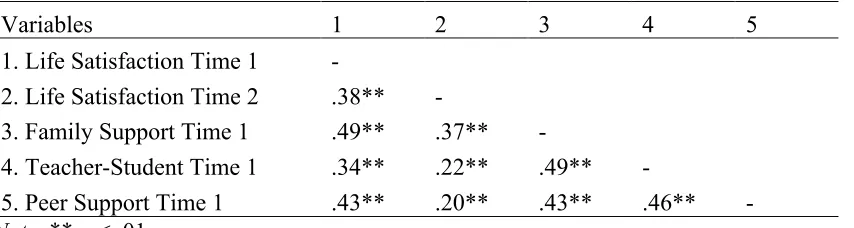
Table 2.3 presents the intercorrelations between the predictor and criterion
variables. All of the variables were found to have significant positive correlations (p
<.01). All of the school-related social support variables at Time 1 were significantly
correlated with global life satisfaction at Time 1 and Time 2.
Multiple Regression Analyses
Two sets of hierarchical regression models were tested to examine the
Table 2.3 Intercorrelations among Predictor and Criterion Variables.
Variables 1 2 3 4 5
1. Life Satisfaction Time 1 -
2. Life Satisfaction Time 2 .38** -
3. Family Support Time 1 .49** .37** -
4. Teacher-Student Time 1 .34** .22** .49** -
5. Peer Support Time 1 .43** .20** .43** .46** -
satisfaction at two different points in time. The first hierarchical regression model
analyzed the data only at Time 1. The model contained two steps in order to determine
whether the Family Support for Learning, Peer Support for Learning, and
Teacher-Student Relationships subscales at Time 1 were able to predict Time 1 global life
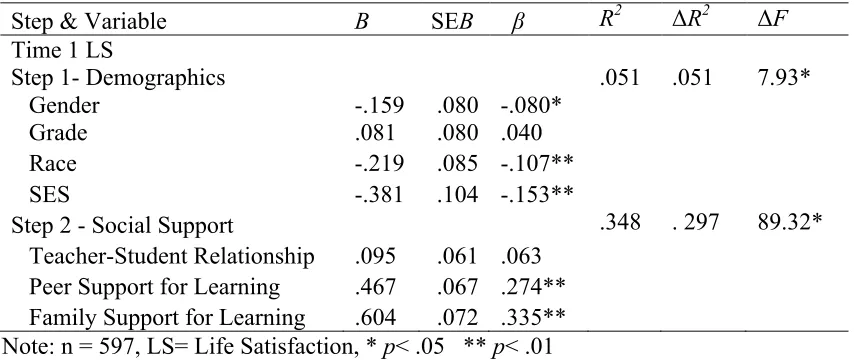
satisfaction, controlling for demographic variables. This regression model is presented in
Table 2.4. Results revealed that the addition of the social support variables added
significant predictive power over and above that predicted by the demographic variables
(ΔF(7, 589)= 89.32, ΔR-square= 0.30, p< .01). Moreover, the Peer Support for Learning
(β = .274, p< .01) and Family Support for Learning subscales (β = .335, p< .01) were
both found to significantly predict global life satisfaction at Time 1, but not
Teacher-Student Relationships (β = .063).
To assess whether Family Support for Learning, Peer Support for Learning, and
Teacher-Student Relationships at Time 1 significantly predicted life satisfaction at Time
2, a separate hierarchical regression analysis was conducted (see Table 2.5). Results show
that after controlling for relevant demographic variables and life satisfaction at Time 1,
the addition of the social support variables added significant predictive power to the
model (ΔF(8, 588)=12.45, ΔR-square=0.05, p< .01). Results also revealed that Family
Support for Learning was the only significant predictor of Time 2 life satisfaction scores
Table 2.4 Regression Analyses Predicting Time 1 Life Satisfaction from Time 1 Social Support.
Step & Variable B SEB β R2 ΔR2 ΔF
Time 1 LS
Step 1- Demographics
Gender -.159 .080 -.080*
.051 .051 7.93*
Grade .081 .080 .040
Race -.219 .085 -.107**
SES -.381 .104 -.153**
Step 2 - Social Support .348 . 297 89.32*
Teacher-Student Relationship .095 .061 .063
Peer Support for Learning .467 .067 .274**
Family Support for Learning .604 .072 .335**
Table 2.5 Regression Analyses Predicting Time 2 Life Satisfaction from Time 1 Social Support.
Step & Variable B SEB β R2 ΔR2 ΔF
Step 1 .005 .005 .718
Gender -.045 .050 -.037
Grade .040 .049 .034
Race .042 .053 .034
SES -.071 .064 -.047
Step 2 .151 .146 101.87**
Life Satisfaction Time 1 .237 .023 .393**
Step 3 .202 .051 12.45**
Teacher-Student Relationship .022 .041 .024
Peer Support for Learning -.030 .047 -.030
Family Support for Learning .281 .051 .258**
C
HAPTER3
Global life satisfaction is a key indicator and determinant of positive youth
development in a variety of contexts, including school performance and behavior.
Nevertheless, global life satisfaction decreases during adolescence (Goldbeck et al. 2007;
Suldo & Huebner, 2004b). The reason for this decline is unclear. Although a variety of
determinants of individual differences in adolescents’ global life satisfaction judgments
have been proposed, studies of school-related determinants have been sparse, especially
experimental or longitudinal studies (Huebner & Gilman, 2003; Proctor, Linley, &
Maltby, 2009). The primary purpose of this study was thus to conduct cross-sectional and
prospective analyses of the relationship between school-related social support variables
and global life satisfaction in adolescents.
Cross-sectional analyses revealed that school social support variables, as a group,
were significant contributors to students’ global life satisfaction at Time 1, accounting for
30% of the total variance. More specifically, the analyses revealed that at Time 1, both
family support for learning and peer support for learning were statistically significant
contributors to adolescents’ overall life satisfaction. Thus, the findings suggest that the
more supported that students feel with respect to their schooling, the higher their levels of
life satisfaction as a whole, not just their satisfaction within their schooling. As noted
previously, this distinction is important because adolescents’ global satisfaction reports
represent a different, more pervasive evaluation of the quality of one’s life compared to
school satisfaction report.
These findings are consistent with the previous cross-sectional research conducted
by Danielson et al. (2009), which found peer and parent support to be much more highly
also support cross-sectional results obtained by Suldo, Shaffer, and Riley (2008) in which
family support served as a major contributor to adolescents’ global life satisfaction, but
differed in that the current analyses showed peer support to be more important than
teacher support to students’ life satisfaction.
Prospective analyses revealed that school-related social climate also significantly
predicted adolescents’ global life satisfaction at Time 2, even when controlling for life
satisfaction at Time 1. In total, the school-related social support variables accounted for
significant (i.e., 5%) variance in the life satisfaction scores at Time 2, controlling for
Time 1 life satisfaction scores. Moreover, the prospective analyses examining the
differential importance of the various social support variables to life satisfaction further
revealed that the effect was mainly driven by family support for learning. This finding
indicates that parental involvement in the adolescents’ school experiences is not only a
correlate of adolescents’ global life satisfaction, but is also a key school-related
determinant of their life satisfaction. Apparently, the importance of family support for
learning is salient even for students during early adolescence, when they are beginning to
strive for increasing autonomy from their parents (Steinberg, 1990).
The findings of this study are significant when taking an ecological, systems
approach to development, such as that proposed by Bronfenbrenner (1979). The findings
were consistent with such multisystemic models in that multiple proximal (e.g., peers)
correlates of adolescents’ global life satisfaction were identified. Previous studies have
examined the relationship between the general quality of family relationships and
but this study is among the first to address the differential importance of family, peer, and
teacher support, specifically within the context of schooling.
The transition to middle school has long been recognized as a particularly
challenging time, which may be due to a poor fit between the developmental needs of
young adolescents and the nature of the school environment (Eccles et al., 1993).
According to Bronfenbrenner’s (1979) theory, the proximal factors within the immediate
environment of the school (child characteristics, teacher-student relationships, and peer
interactions) are more influential determinants of student outcomes than the more distal
factors (e.g., family-school interactions). Furthermore, some school professionals may
assume that students’ experiences in the school context do not generalize to their lives
more pervasively - that what happens at school stays at school. The current research
challenges this notion by providing evidence that school-based social support has a
substantial impact on students’ lives, that is, on their satisfaction with life as a whole.
Thus, school improvement efforts cannot stop at the school door, focusing only on
what happens within the classroom and school. Phillips (1993) summarized nearly two
decades ago, “The convergence of the interests and synergistic actions of multiple
constituencies and systems is an implicit principle of all successful school intervention
programs” (p. 217). The findings of this study provide a strong demonstration that
school-related social factors, especially family support for learning, matter to
adolescents’ overall life satisfaction. As suggested by Danielson et al. (2009), perhaps the
strong role of families is due to their ability to exert influence across home, school, and
neighborhood activities. It is interesting that middle school students’ perceived parental
parents become less directly involved in their students’ school experiences (Chavkin &
Williams, 1988; Dornbusch & Glasgow, 1996; Epstein, 1986).
This study had a number of important limitations. One major limitation was that
the sample was composed of mainly Caucasian students from a single school in a
Southern state. Additional research needs to be conducted with a variety of populations
and in different parts of the country and other nations in order to evaluate the
generalizability of the results. Second, although this study was able to measure student
perceptions of school climate and well-being, it was not able to link the study variables to
particular parenting behaviors at the secondary school level (e.g., monitoring homework
completion, attendance at school events) that may mediate the relationship between
school-related social support and global life satisfaction. Further research should
delineate the specific psychosocial mechanisms which account for the linkages between
school-related social support and adolescents’ global life satisfaction. Third, the analyses
were conducted solely with self-report measures, introducing method variance. Future
research would benefit from multi-method assessments of the relevant variables.
Although this study had limitations, it extended beyond previous studies in this
area by addressing the relationship between school-related social support and global life
satisfaction from a two-wave prospective perspective. To date, studies of associations
between adolescents’ school social experiences and global life satisfaction have been
limited to cross-sectional analyses (e.g., Danielson et al.; 2009; Suldo, Schaffer, & Riley,
2008), which do not shed light on the directionality of effects. This study thus makes an
important contribution to the literature by bolstering the inference that school social
life satisfaction across time, specifically during the same school year. Nevertheless, the
derivation of causal inferences from this study should be done cautiously. Although a
two-wave study establishes temporal precedence, it is also possible that a third variable
accounts for any observed relationships between school-related social support and
adolescents’ life satisfaction.
The use of a relatively short time interval was also a strength relative to some
longer-term longitudinal studies. Compared to more trait-like variables (e.g., personality
traits), global life satisfaction represents a variable that may show fluctuations across
shorter periods of time. For example, the 5-month stability coefficient in this study was
.38, suggesting that adolescents’ judgments of their life satisfaction can differ from
semester to semester during a school year. Given individuals’ tendencies to adapt (i.e.,
return to baseline levels of life satisfaction) to many life experiences (Diener, Lucas, &
Scollon, 2006), the use of a five- month time frame likely provides a more optimal
interval for examining causal processes than a longer-term interval (Cohen, Cohen, West,
& Aiken, 2003).
This research has implications for both researchers and school professionals.
Given the recent calls for a science and practice of positive psychology in schools and
other institutions relevant to children (e.g., Seligman & Csikszentmihalyi, 2000), this
research suggests that there are benefits to using measures of social climate as well as life
satisfaction in comprehensive assessments of students’ school experiences to monitor and
support positive student well-being on an individual, group, or school-wide level.
Including measures of school social support and life satisfaction may not constitute a
2009), but they may help lay the foundation for monitoring systems that track social
assets and risk factors and other key variables related to youth well-being.
School-related social support is a potentially alterable variable, which could thus
serve as a central component of school programs and policies designed to maintain
positive student well-being, including global life satisfaction. Recommended practices
for promoting greater parent and family involvement in schooling can be found in Esler,
Godber, and Christenson (2008). Broad school-wide recommendations include (1)
advertising school-family partnerships as a priority in the school and (2) educating school
personnel and families concerning the processes of developing positive school-family
partnerships. Recommendations at the individual level include (1) working with school
personnel so that the target child is well known by at least one staff member, (2) working
with families and targeted school personnel to ensure consistent two-way
communication, (3) facilitating trust between families and school personnel through
creating ongoing interactions, and (4) for children with special needs, emphasizing that
the development, implementation, and monitoring of individualized educational
programs is an ongoing group process, including school personnel and the family in
decision making.
Finally, the findings of this study yield social and educational policy implications.
The findings identify important variables that help shape adolescents’ sense of overall life
satisfaction and thus should provide direction to state and national policy makers who
would seek to make students’ global psychological well-being a priority in schools. For
example, policy makers can support policies at the micro-, macro, and mesosystemic
schooling. Specific recommendations for national policies for families based on
well-being research can be found in Layard (2005). To summarize, promoting high levels of
parent involvement in their adolescents’ schooling appears uniquely important for
facilitating optimal levels of adolescents’ overall life satisfaction, which in turn facilitates
R
EFERENCESAndrews, F. M., & Withey, S. B. (1974). Developing measures of perceived life quality:
Results from several national surveys. Social Indicators Research, 1, 1-26.
Antaramian, S. P., Scott Huebner, E., Hills, K. J., & Valois, R. F. (2010). A dual-factor
model of mental health: Toward a more comprehensive understanding of youth
functioning. American Journal of Orthopsychiatry, 80, 462–472.
Appleton, J. J., Christenson, S. L., Kim, D., & Reschly, A. L. (2006). Measuring
cognitive and psychological engagement: Validation of the Student Engagement
Instrument. Journal of School Psychology, 44(5), 427–445.
Ash, C., & Huebner, E. S. (2001). Environmental events and life satisfaction reports of
adolescents: A test of cognitive mediation. School Psychology International, 22,
320–336.
Bronfenbrenner, U. (1979). The ecology of human development. Cambridge, MA:
Harvard University Press.
Casas, F., Baltatescu, S., Bertran, I., Gonazales, M., & Hatos, A. (in press). School
satisfaction among adolescents: Testing different indicators for its measurement
and its relationship with overall life satisfaction and subjective well-being in
Romania and Spain. Social Indicators Research.
Chavkin, N.F., & Williams, D.L. (1988). Critical issues in teacher training for parental
Cohen, J., Cohen, P., West, S.G., & Aiken, L.S. (2003). Applied multiple
regression/correlation analysis for the behavioral sciences (3rd ed.). Mahwah, NJ:
Erlbaum.
Danielsen, A. G., Samdal, O., Hetland, J., & Wold, B. (2009). School-related social
support and students’ perceived life satisfaction. Journal of Educational
Research, 102, 303–320.
Dew, T., & Huebner, E.S. (1994). Adolescents’ perceived quality of life: An exploratory
investigation. Journal of School Psychology, 33, 185–199.
DeSantis King, A. L., Huebner, S., Suldo, S. M., & Valois, R. F. (2007). An ecological
view of school satisfaction in adolescence: Linkages between social support and
behavior problems. Applied Research in Quality of Life, 1, 279–295.
Diener, E. (1984). Subjective well-being. Psychological Bulletin, 95, 542-575.
Diener, E. (2000). Subjective well-being: The science of happiness and a proposal for a
national index. American Psychologist, 55, 34-43.
Diener, E., & Fujita, F. (1995). Resources, personal strivings, and subjective well-being:
A nomothetic and idiographic approach. Journal of Personality and Social
Psychology, 68, 926-935.
Diener, E., Lucas, R., & Scollon, C. (2006). Beyond the hedonic treadmill: Revising the
adaptation theory of well-being. American Psychologist, 61, 305-314.
Dornbusch, S.M., & Glasgow, K.L. (1996). In A. Booth & J.F. Dunn (Eds.),
Family-school links: How do they affect educational outcomes? (pp. 35-44). Hillsdale,
Eccles, J.S., Midgley, C.M., Wigfield, A., Buchanan, C.M., Reuman, D., Flanagan, C., &
MacIver, D. (1993). Development during adolescence: The impact of
stage-environment fit in young adolescents’ experiences in schools and in families.
American Psychologist, 48, 90-101.
Epstein, J.L. (1986). Parents’ reactions to teacher practices of parent involvement. The
Elementary School Journal, 86, 277-294.
Esler, A.N., Godber, Y., & Christenson, S.L. (2008). Best practices in supporting
school-family partnerships. In A. Thomas & J. Grimes (Eds.), Best practices in school
psychology V (Vol. 3: pp. 917-952). Bethesda, MD: National Association of
School Psychologists.
Flaspohler, P. D., Elfstrom, J. L., Vanderzee, K. L., Sink, H. E., & Birchmeier, Z. (2009).
Stand by me: The effects of peer and teacher support in mitigating the impact of
bullying on quality of life. Psychology in the Schools, 46(7), 636–649.
Fogle, L. M., Huebner, E.S., & Laughlin, J. E. (2002). The relationship between
temperament and life satisfaction in early adolescence: Cognitive and behavioral
mediation models. Journal of Happiness Studies, 3, 373–392.
Frisch, M.B., Clark,, M.P., Rouse, S.V., Rudd, M.D., Paweleck, J.L.,Greenston, A., &
Kopplin, D.A. (2005). Predictive and treatment validity of life satisfaction and the
Quality of Life Inventory. Assessment, 12, 66-78.
Frisch, M.B, Cornell, J., Villanueva, M., and Retzlaff, P.J. (1992). Clinical validation of
the Quality of Life Inventory: A measure of life satisfaction for use in treatment
Furr, R. M., & Funder, D. (1998). A multimodal analysis of personal negativity. Journal
of Personality and Social Psychology, 74, 1580-1591.
Gilman, R., & Huebner, E. S. (1997). Children’s reports of their life satisfaction:
Convergence across raters, time and response rormats. School Psychology
International, 18, 229–243.
Gilman, R., Huebner, E. S., & Laughlin, J. E. (2000). A first study of the
Multidimensional Students’ Life Satisfaction Scale with adolescents. Social
Indicators Research, 52, 135–160.
Gilman, R., & Huebner, S. (2003). A review of life satisfaction research with children
and adolescents. School Psychology Quarterly, 18, 192-205.
Goldbeck, L. Schmitz, T. G., Besier, T.G., Herschback, P., & Henrich, G. (2007). Life
satisfaction decreases during adolescence. Quality of Life Research, 16, 969-979.
Haranin, E. C., Huebner, E. S., & Suldo, S. M. (2007). Predictive and incremental
validity of global and domain-based adolescent life satisfaction reports. Journal of
Psychoeducational Assessment, 25, 127–138.
Heaven, P. (1989). Extraversion, neuroticism, and satisfaction with life among
adolescents. Personality and Individual Differences, 10, 489–492.
Huebner, E. S. (1991). Correlates of life satisfaction in children. School Psychology
Quarterly, 6, 103-111.
Huebner, E.S., Gilman, R., Reschly, A., & Hall, R. (2009). Positive schools. In S.J.
Lopez & C.R. Snyder (Eds.), Oxford handbook of positive psychology (2nd ed.,
Huebner, E.S., & Hills, K.J. (in press). Assessment of life satisfaction in children and
youth. IN D. Saklofske, V. Schwean, & C.R. Reynolds (Eds.), Oxford handbook
of psychological assessment of children and adolescents. New York: Oxford
University Press.
Huebner, E. S., Laughlin, J. E., Ash, C., & Gilman, R. (1998). Further validation of the
multidimensional students’ life satisfaction scale. Journal of Psychoeducational
Assessment, 16, 118–134.
Huebner, E. S., Suldo, S. M., & Gilman, R. (2006). Life satisfaction. In G. G. Bear & K.
M. Minke (Eds.), Children’s needs: Part III. Development, prevention, and
intervention (pp. 357–368). Bethesda, MD: National Association of School
Psychologists.
Huebner, E. S., Suldo, S. M., Smith, L. C., & McKnight, C. G. (2004). Life satisfaction in
children and youth: Empirical foundations and implications for school
psychologists. Psychology in the Schools, 41, 81–93.
Ito, A., & Smith, D.C. (2006). Predictors of school satisfaction among Japanese and US
youth. The Community Psychologist, 38(4), 19-21.
Kim, D.H., & Kim, J.H. (in press). Social relations and school life satisfaction in South
Korea. Social Indicators Research.
Layard, R. (2005). Happiness: Lessons of a new science. New York: Penguin Books.
Leung, J. and Leung, K. (1992). Life satisfaction, self-concept, and relationship with
Leung, C. Y. W., McBride-Chang, C., & Lai, B. P. Y. (2004). Relations among maternal
parenting style, academic competence, and life satisfaction in Chinese early
adolescents. The Journal of Early Adolescence, 24(2), 113-143.
Lewis, A. D., Huebner, E. S., Malone, P. S., & Valois, R. F. (2010). Life satisfaction and
student engagement in adolescents. Journal of Youth and Adolescence, 40, 249–
262.
Lewis, A.D., Huebner, E.S., Reschly, A., & Valois, R.F. (2009). Incremental validity of
positive emotions in predicting school satisfaction, engagement, and academic
success. Journal of Psychoeducational Assessment, 27, 397-‐408.
Lyubomirsky, S., King, L. and Diener, E. (2005). The benefits of frequent positive affect:
Does happiness lead to success? Psychological Bulletin, 131, 803-855.
Man, P. (1991). The influence of peers and parents on youth life satisfaction in Hong
Kong. Social Indicators Research, 24, 347–365.
Martin, K., Huebner, E. S., & Valois, R. F. (2008). Does life satisfaction predict
victimization experiences in adolescence? Psychology in the Schools, 45, 705–
714.
McCullough, G., Huebner, E.S., and Laughlin, J.E. (2000). Life events, self- concept, and
adolescents’ positive subjective well-being. Psychology in the Schools, 37, 281–
290.
Natvig, G. K., Albrektsen, G., & Qvarnstrøm, U. (2003). Associations between
psychosocial factors and happiness among school adolescents. International
Park, N., & Huebner, E. S. (2005). A cross-cultural study of the levels and correlates of
life satisfaction among adolescents. Journal of Cross- Cultural Psychology, 36,
444–456.
Pavot, W. & Diener, E. (1993). Review of the satisfaction with life scale. Psychological
Assessment, 5 (2), 164-172.
Petito, F., & Cummins, R. (2000). Quality of life in adolescents: The role of perceived
control, parenting style, and social support. Behaviour Change, 17, 196–207.
Phillips, B.N. (1993). Educational and psychological perspectives on stress in students,
teachers, and parents. Brandon, VT: Clinical Psychology Publishing Company.
Proctor, C., Linley, P. A., & Maltby, J. (2009). Very happy youths: Benefits of very high
life satisfaction among adolescents. Social Indicators Research, 98, 519–532.
Sastre, M.T.M., & Ferriere, G. (2000). Family “decline” and the subjective well-being of
adolescents. Social Indicators Research, 49, 69–82.
Seligman, M. E. P., & Csikszentmihalyi, M. (2000). Positive psychology: An
introduction. American Psychologist, 55, 5–14.
Shek, D.T.L. (1997). The relation of family functioning to adolescent psychological
well-being, school adjustment, and problem behavior. The Journal of Genetic
Psychology, 158, 467–479.
Steinberg, L. (1990). Autonomy, conflict, and harmony in the family relationship. In S.S.
Feldman & G.R. Elliott (Eds.), At the threshold: The developing adolescent (pp.
Stewart, T., & Suldo, S. (2011). Relationships between social support sources and early
adolescents’ mental health: The moderating effect of student achievement level.
Psychology in the Schools, 48(10), 1016–1033.
Suldo, S.M., & Huebner, E.S. (2004a). Does life satisfaction moderate the effects of
stressful life events on psychopathological behavior during adolescence? School
Psychology Quarterly, 19, 93-105.
Suldo, S. M., & Huebner, E. S. (2004b). The role of life satisfaction in the relationship
between authoritative parenting dimensions and adolescent problem behavior.
Social Indicators Research, 66, 165–195.
Suldo, S. M., & Huebner, E. S. (2006). Is extremely high life satisfaction during
adolescence advantageous? Social Indicators Research, 78, 179–203.
Suldo, S. M., McMahan, M. M., Chappel, A. M., & Loker, T. (2012). Relationships
Between Perceived School Climate and Adolescent Mental Health Across
Genders. School Mental Health, 4(2), 69–80.
Suldo, S. M., & Shaffer, E. J. (2007). Evaluation of the Self-Efficacy Questionnaire for
Children in Two Samples of American Adolescents. Journal of
Psychoeducational Assessment, 25(4), 341–355.
Suldo, S. M., & Shaffer, E. J. (2008). Looking beyond psychopathology: The dual-factor
model of mental health in youth. School Psychology Review, 37(1), 52.
Suldo, S. M., Shaffer, E. J., & Riley, K. N. (2008). A social-cognitive-behavioral model
of academic predictors of adolescents’ life satisfaction. School Psychology
Suldo, S. M., Thalji-Raitano, A., Hasemeyer, M., Gelley, C. D., & Hoy, B. (2012).
Understanding Middle School Students Life Satisfaction: Does School Climate
Matter? Applied Research in Quality of Life.
Zullig, K. J., Huebner, E. S., & Patton, J. M. (2011). Relationships among school climate