ABSTRACT
PASALAR, CELEN. The Effects of Spatial Layouts on Students’ Interactions in Middle Schools: Multiple Case Analysis. (Under the direction of Prof. Henry Sanoff.)
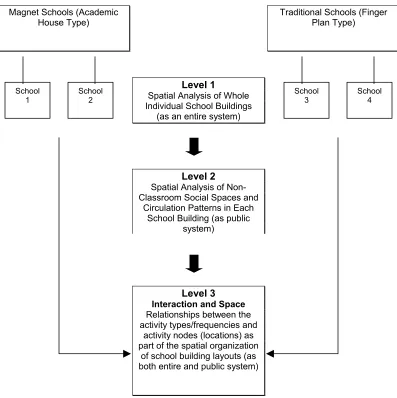
This research aims to indicate how small school environments are spatially organized and how spatial relationships influence students’ behavior and interactions. Four school buildings with differing spatial layouts were selected. Selected cases were representative of both “academic house” and “finger plan” type school buildings.
This study analyzes schools as a spatial organization; as a social organization; and as a set of interactive interfaces for social and educational activities. The “space syntax” technique was used to develop the spatial data, which provided information on the spatial layout attributes. The integrated and segregated areas of each school building were characterized by the syntactic variables. Behavioral mapping technique was used to identify students’ activity and movement patterns with respect to the syntactic attributes of spatial layouts. Both findings from the analysis of students’ behavior and the spatial layouts were related to students’ perceptions about the social organization of their school communities and the role of the spatial characteristics.
Overall analysis provides evidence suggesting that spatial layout and distribution of educational facilities in school buildings modulate patterns of use, movement, and the potentials for interactions. School building layouts, with higher accessibility, shorter and direct walking distances, and highly visible public spaces, generated higher rates of incidental interactions among students. The space occupancy rate in highly accessible areas was also correlated with students’ movement and interaction rates.
higher in finger plan type schools, which offered better visual and physical access among the public areas. Overall findings indicated that single-story school buildings were the more advantageous for fostering social interactions among students.
THE EFFECTS OF SPATIAL LAYOUTS ON STUDENTS’ INTERACTIONS IN
MIDDLE SCHOOLS: MULTIPLE CASE ANALYSIS
by
CELEN PASALAR
A dissertation submitted to the Graduate Faculty of
North Carolina State University
in partial fulfillment of the
requirements for the Degree of
Doctor of Philosophy
DESIGN
Raleigh
2003
APPROVED BY:
Prof. Frank J. Smith
Assistant Prof. Candy M. Beal
Biography
Acknowledgements
This dissertation contains an account of four years research developed in order to fulfill the requirements of a Ph.D. degree. The process has been very challenging and it changed my way of looking at my profession and research in design. It developed in me an awareness of what research in design field covers and how much can be learned from it. I learned that PhD is not the final stage, not the end but just a beginning for a tremendous journey in my career.
This difficult process has not been possible without the help and support of many people. I would like to thank to my committee members Prof. Robin Moore, Prof. Frank J. Smith, and Assoc. Prof. Candy Beal for their continuous support and encouragement during the entire process. I would like to thank especially my advisor Prof. Henry Sanoff. His passion for research and his involvement with my work offered an invaluable support and source. He motivated me throughout the entire process and his approaches in the Design field have enlightened my ideas. I also would like to thank Prof. Achva Stein, who always volunteered to support and make suggestions throughout the entire process.
My thanks also go out to all the schools, teachers, architects, and students who volunteered to participate in the study. This research would not exist without them. I would like to thank also Joshua Peery, who has always been willing to support and encourage me to pass the emotional challenges I went through along the entire process. Without his support my stay in Raleigh would not have been bearable.
I would like to thank to my friends (Acalya Kiyak, Michael Layne, Kristin Thorleifsdottir, Ebru Cubukcu, Mert Cubukcu, Hu Jianxin, Pam Christie, Peral Arslan, Oyku Renklidag, Burcak Karaguzel, and Derem Karamanli), who have always been there for me. I also would like to thank my uncle Sabahattin Haloglu, Aksu family, and all Peery family members, who have always supported me emotionally.
Table of Contents
Page
List of Tables ... viii
List of Figures ... xi
1. Introduction ... 1
1.1 New Approach Toward School Design ... 6
1.1.1 Spatial Layout of School Buildings as Interfaces ... 6
1.1.2 Schools as Social Settings: Social Interaction and Spatial Structure ... 8
1.1.3 Size Matters ... 10
1.1.4 Schools as a Design Pattern: Educational Activity Systems ... 11
1.2 School Design and Research ... 14
2. Literature Review ... 17
2.1 Historical Evolution of School Buildings and Schooling Ideology in US ... 17
2.2 Social Implications of School Environments on Students’ Socializing and Interactions ... 23
2.2.1 Social Interaction and Adolescent Development ... 24
2.2.2 Social Structure in Middle School Settings ... 30
2.2.3 Social Interaction and Research ... 31
2.2.4 Education and “Social Life in Schools” ... 33
2.2.5 Small Schools and Social Interaction ... 35
2.3 Introduction: Spatial Structure and Its Implications on social Life ... 37
2.3.1 Spatial Structure and Social Interaction ... 37
2.3.2 Assessment and School Design ... 45
2.3.3 Spatial Implications of School Environments on Social Interaction ... 46
2.3.4 Spatial Diversity in Middle School Environments ... 51
2.3.5 Spatial Layouts, Activity Systems and the Use of Space in School Environments ... 55
3. Research Methodology ... 58
3.1 Purpose of the Study and Problem ... 58
3.2 Research Questions and Hypotheses ... 62
3.3 Research Design ... 63
3.4 Significance of Research ... 64
4. Research Settings ... 66
4.1 Introduction: Scope of Research ... 66
4.2 Case Study Approach and Cross-Case Analysis ... 67
4.3 Process of Selecting Research Settings ... 69
4.4 Case 1: Moore Square Museum s Magnet Middle School ... 71
4.4.1 Social Structure and Educational Philosophy ... 71
4.4.2 Spatial Structure and Activity System ... 72
4.5 Case 2: Centennial Campus Middle School ... 74
4.5.1 Social Structure and Educational Philosophy ... 74
4.5.2 Spatial Structure and Activity Systems ... 75
4.6 Case 3: Clayton Middle School ... 77
4.6.1 Social Structure and Educational Philosophy ... 77
4.6.2 Spatial Structure and Activity System ... 78
4.7 Case 4: Riverwood Middle School ... 80
4.7.2 Spatial Structure and Activity System ... 81
5. Research Design and Methodology ... 83
5.1 Introduction: Data Design and Research Instruments ... 83
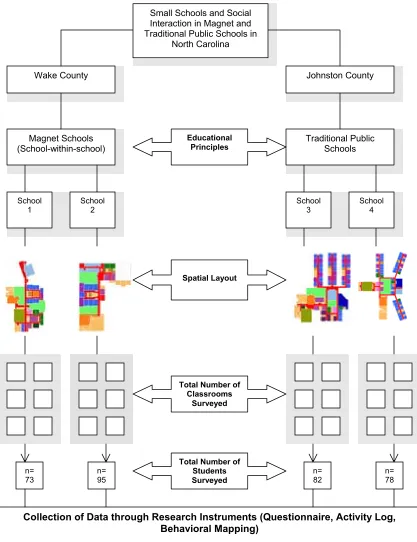
5.2 Sample Selection and Data Collection Process ... 83
5.3 Social Data Design and Questionnaire ... 85
5.4 Behavioral Analysis and Instrument Design: Activity Log and Behavioral Mapping ... 86
5.4.1 Observation and Activity Log ... 87
5.4.2 Behavioral Mapping ... 88
5.5 Spatial Analysis ... 88
5.5.1 Spatial Analysis and Space Syntax ... 90
5.5.2 Definitions of Spatial Variables ... 93
5.5.3 The Development of Axial Maps and Spatial Data ... 95
6. Spatial Analysis ... 97
6.1 Spatial Analysis of Centennial Campus Magnet Middle School ... 101
6.1.1 Axial map Analysis of the Individual Floors as Separate Spatial System ... 101
6.1.2 Analysis of the Centennial Middle School as a Total System ... 108
6.1.3 Summary and Discussion of Spatial Analysis results for Centennial Middle School ... 111
6.2 Spatial Analysis of Moore Square Middle School ... 114
6.2.1 Analysis of Individual Floors as Separate Spatial System ... 114
6.2.2 Analysis of the Moore Square Middle School as a Total System ... 123
6.2.3 Analysis of the Spatial Relations within the Entire Building ... 133
6.2.4 Summary and Discussion of Spatial Analysis results for Moore Square Middle School ... 136
6.3 Spatial Analysis of Clayton Middle School ... 140
6.3.1 Analysis of the Clayton Middle School as a Total System ... 141
6.3.2 Summary and Discussion of Spatial Analysis results for Clayton Middle School ... 146
6.4 Spatial Analysis of Riverwood Middle School ... 147
6.4.1 Analysis of the Riverwood Middle School as a Total System ... 147
6.4.2 Summary and Discussion of Spatial Analysis results for Riverwood Middle School ... 152
6.5 Summary and Discussion of the Spatial Analysis Results for All School Buildings ... 153
7. Behavioral Analysis in Relation to Spatial Layout ... 159
7.1 Constructs and Definitions of Terms Referring to the Analysis of Activity and Movement Patterns with respect to Their Distribution in the Spatial Layout ... 160
7.1.1 Case Study 1: Centennial Middle School ... 162
7.1.2 Summary: Layout Classification of the Activity and Movement Patterns with Respect to the Integrated and Segregated Areas in the Layout ... 170
7.2 Case Study 2: Moore Square Middle School ... 172
7.2.1 Summary: Layout Classification of the Activity and Movement Patterns with Respect to the Integrated and Segregated Areas in the Layout ... 180
7.3 Case Study 3: Clayton Middle School ... 181
7.4 Case Study 4: Riverwood Middle School ... 190
7.4.1 Summary: Layout Classification of the Activity and Movement Patterns with Respect to the Integrated and Segregated Areas in the Layout ... 196
8. Social Analysis 198 8.1 Frequency Distribution of Social Variables ... 199
8.1.1 Friendship ... 199
8.1.2 Knowing/Being Aware of the Others ... 208
8.1.3 Cooperation ... 217
8.1.4 Sharing ... 224
8.1.5 Frequency of Seeing Others ... 230
8.1.6 Assessment of School Buildings: Spatial Structure ... 238
8.2 Mutlivariate Analysis of School Building Type Versus Social Organization in School Communities ... 245
8.3 Multivariate Analysis of Social Organization Attributes versus Characteristics of Spatial Structure in Academic House School Models ... 246
8.4 Multivariate Analysis of Social Organization Attributes versus Characteristics of Spatial Structure in Finger Plan Type Schools ... 250
9. Discussion, Implications for School Design, and Future Research ... 256
9.1 Summary of Findings ... 257
9.2 Overall Remarks for School Building Design and Future Implications ... 261
9.3 Concluding Remarks ... 263
10. List of References ... 264
11. Appendix ... 276
List of Tables
Page
Table 2.1 Stages of the Adolescent Development ... 24
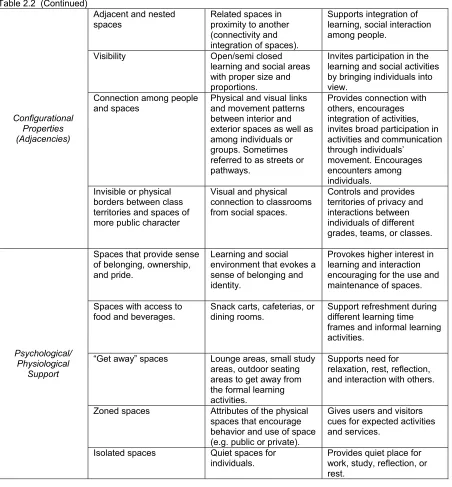
Table 2.2 Spatial Features and Supporting Rationale of the Educational Settings ... 54
Table 4.1 Plan 2004 – Fact Sheet ... 70
Table 4.2 Case Study Sites ... 71
Table 5.1 Percent Distribution of the Student Participation ... 85
Table 6.1 Comparison of the Spatial Variables per individual floor level and the overall spatial systems in Centennial Middle School ... 112
Table 6.2 Comparison of the Intelligibility per individual floor level and the overall spatial systems in Centennial Middle School ... 113
Table 6.3 Comparison of the Spatial Variables per individual floor level and the overall spatial systems in Moore Square Middle School ... 137
Table 6.4 Comparison of the Intelligibility per individual floor level and the overall spatial systems in Moore Square Middle School ... 139
Table 6.5 Comparison of the Spatial Variables per individual floor level and the overall spatial systems in Clayton Middle School ... 146
Table 6.6 Comparison of the Intelligibility per individual floor level and the overall spatial systems in Clayton Middle School ... 147
Table 6.7 Comparison of the Spatial Variables per individual floor level and the overall spatial systems in Riverwood Middle School ... 152
Table 6.8 Comparison of the Intelligibility per individual floor level and the overall spatial systems in Riverwood Middle School ... 153
Table 6.9 T-tests analysis results comparing the spatial variables (Global Integration, Local Connectivity, Local Integration) of “All” areas in all four school buildings ... 155
Table 6.10 T-tests analysis results comparing the spatial variables (Global Integration, Local Connectivity, Local Integration) of “public” areas in all four school buildings ... 155
Table 7.1 The frequency of activity types and areas ... 166
Table 7.2 The degree of space occupancy observed throughout a typical school day ... 167
Table 7.3 The frequency of activity types and areas ... 176
Table 7.4 The degree of space occupancy observed throughout a typical school day ... 177
Table 7.5 Overall frequency distribution of activities observed in the varying areas of Clayton Middle School ... 185
Table 7.6 The degree of space occupancy observed throughout a typical school day ... 186
Table 7.7 Overall frequency distribution of activities observed in the varying areas of Riverwood Middle School ... 193
Table 7.8 The degree of space occupancy observed throughout a typical school day ... 194
Table 8.1 The number of the participants and its distribution among each school ... 198
Table 8.2 Distribution of responses to Spending Time with Friends among four schools ... 200
Table 8.3 Distribution of responses referring to Having the Best Friend from the Classroom ... 201
Table 8.4 Distribution of responses referring to Having Most Friends from Students’ Regular Classroom Groups ... 202
Table 8.5 Distribution of responses referring to students Having The Best Friend from Other Classrooms ... 203
Table 8.6 Distribution of responses referring to Having Friends from the Sixth Grade ... 204
from the Eighth Grade ... 205 Table 8.9 T-tests results for the measures of Friendship attribute among
each school pair ... 207 Table 8.10 Distribution of responses referring to Knowing Everybody
in the Classroom by the First Name in Each School Community ... 209 Table 8.11 Distribution of responses for Knowing Most of the Students in
the Same Grade by the First Name ... 210 Table 8.12 Distribution of responses referring to Recognizing Everybody
in the Same Grade ... 211 Table 8.13 Distribution of responses for The Number of the Students in the
Same Grade that Each Student Would Know by the First Name ... 212 Table 8.14 Distribution of responses referring to Knowing Most of the
Students from Other Grades ... 213 Table 8.15 Distribution of responses referring to the Number of Students
from Other Grades that Each Student Would Know by the First Name ... 214 Table 8.16 T-tests results for the measures of Knowing/Being Aware of the
Others attribute among each school pair ... 215 Table 8.17 Distribution of Responses Referring to Spending Time with
Friends After School ... 219 Table 8.18 Distribution of Responses Referring to Doing Everything in
Groups in the Class ... 220 Table 8.19 Distribution of Responses Referring to Doing Everything in
Groups Outside the Classrooms ... 221 Table 8.20 T-tests results for the measures of Cooperation Attribute
among school pairs ... 221 Table 8.21 Distribution of Responses Referring to Studying Alone ... 224 Table 8.22 Distribution of Responses Referring to Talking with
Teacher about Class Work or Projects ... 226 Table 8.23 Distribution of Responses Referring to Helping Each
Other with Homework ... 227 Table 8.24 Distribution of responses referring to Having Common Class
Activities with Other Classrooms ... 228 Table 8.25 T-tests Results for the Measures of Sharing Attribute Among
Each School ... 228 Table 8.26 Distribution of responses referring to Meeting with
Friends Outside Classrooms During Break Times ... 231 Table 8.27 Distribution of responses referring to seeing students from
other classrooms, while moving around in the building ... 231 Table 8.28 Distribution of responses referring to seeing students from
other classrooms during lunchtime ... 233 Table 8.29 Distribution of responses referring to the frequency of seeing
other students from the same grade during break times ... 234 Table 8.30 Distribution of responses referring to the frequency of
seeing other students from different grades in after school activities ... 235 Table 8.31 T-tests Results for the Measures of Frequency of Seeing
and Encountering Others ... 235 Table 8.32 Distribution of responses referring to the number of common
areas in school buildings ... 239 Table 8.33 Distribution of responses referring to the connection of the
common areas to the rest of the building ... 240 Table 8.34 Distribution of responses referring to the accessibility of the
common areas in the building ... 241 Table 8.35 Distribution of responses referring to the easy circulation
Table 8.36 Distribution of the responses referring to being able to see everything happening in the building from where the
classrooms are located ... 243 Table 8.37 T-tests results for the measures referring to students’
assessments of their school buildings ... 243
List of Figures
Introduction Page
1. Examples from Perkins’ categorization of the school building layouts . . . 6
2. Examples from Brubaker’s categorization of the learning spaces (Brubaker, 1998) . . . 7
3. Image of the permeability (visibility among spaces(Brubaker, 1998) . . . 14
Literature Review 1. One-room schools (Grave, 1993) . . . 18
2. Finger plan type school building(Brubaker, 1998) . . . 21
3. Open plan schools (Brubaker, 1998) . . . 22
Research Settings 1. Database design . . . 68
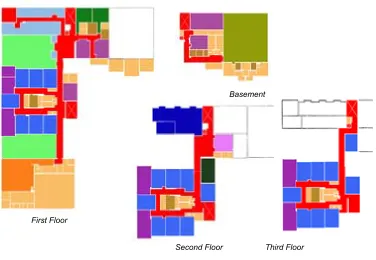
2. Moore Square Middle School . . . 73
3. Activity zones . . . 74
4. Activity zones . . . 76
5. Centennial Campus Middle School . . . 77
6. Activity zones . . . 79
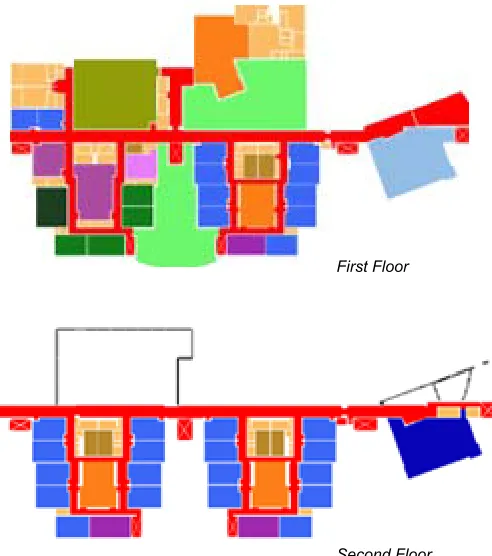
7. Clayton Middle School . . . 80
8. Activity zones . . . 81
9. Riverwood Middle School . . . 82
Research Design and Methodology 1. Data design . . . 83
2. Spatial analysis process . . . 90
Spatial Analysis 1. Local and Global intelligibility (all) . . . 102
2. Global Integration (all) axial map analysis; Centennial Campus Middle School 1st floor . . . 103
3. Local Integration (all) axial map analysis; Centennial Campus Middle School 1st floor . . . 103
4. Local and Global intelligibility (public) . . . 105
5. Local and Global intelligibility (all) . . . 106
6. Global Integration (all) axial map analysis; Centennial Campus Middle School 2nd floor . . . 106
7. Local Integration (all) axial map analysis; Centennial Campus Middle School 2nd floor . . . 107
8. Local and Global intelligibility (public) . . . 107
9. Local and Global intelligibility (all) . . . 109
10. Global Integration (all) axial map analysis entire spatial system Centennial Middle School . . . 110
11. Local Integration (all) axial map analysis entire spatial system Centennial Middle School . . . 110
12. Local and Global intelligibility (public) . . . 111
13. Local and Global intelligibility (all) . . . 115
Middle School, Basement level . . . 115
15. Local and Global intelligibility (all) . . . 116
16. Global and Local Integration (all) axial map analysis; Moore Square Middle School, 1st floor . . . 117
17. Local and Global intelligibility (public) . . . 118
18. Local and Global intelligibility (all) . . . 119
19. Global and Local Integration (all) axial map analysis; Moore Square Middle School, 2nd floor . . . 119
20. Local and Global intelligibility (public) . . . 120
21. Local and Global intelligibility (all) . . . 121
22. Global and Local Integration (all) axial map analysis; Moore Square Middle School, 3rd floor . . . 121
23. Local and Global intelligibility (public) . . . 122
24. Local and Global intelligibility (all) . . . 124
25. Global and Local Integration (all) axial map analysis; Moore Square Middle School, Basement level . . . 125
26. Local and Global intelligibility (public) . . . 126
27. Local and Global intelligibility (all) . . . 128
28. Global and Local Integration (all) axial map analysis; Moore Square Middle School, 1st floor and 2nd floor . . . 128
29. Local and Global intelligibility (public) . . . 129
30. Local and Global intelligibility (all) . . . 131
31. Global and Local Integration (all) axial map analysis; Moore Square Middle School, 2nd floor and 3rd floor . . . 132
32. Local and Global intelligibility (public) . . . 133
33. Local and Global intelligibility (all) . . . 134
34. Local and Global intelligibility (public) . . . 136
35. Local and Global intelligibility (all) . . . 143
36. Global Integration (all) axial map analysis; Clayton Middle School . . . 143
37. Local Integration (all) axial map analysis; Clayton Middle School . . . 144
38. Local and Global intelligibility (public) . . . 145
39. Local and Global intelligibility (all) . . . 149
40. Global Integration (all) axial map analysis; Riverwood Middle School . . . 150
41. Locall Integration (all) axial map analysis; Riverwood Middle School . . . 150
42. Local and Global intelligibility (public) . . . 152
43. Variance of “Global Intelligibility” of each school in terms of R-Square values . . . 158
44. Variance of “Locall Intelligibility” of each school in terms of R-Square values . . . 158
Behavioral Analysis in Relation to Spatial Layout 1. Example of movement and activity patterns suggesting spread tyoe activity patterns, forming lesser degree groupings (General activity layout) . . . 161
2. Activity type distribution in Centennial Campus Middle School . . . 162
3. Activity type distribution in the most integrated areas . . . 163
4. Activity type distribution in the most segregated areas . . . 164
5. Activity distribution and the overall pattern:Centennial Campus Middle School 1st floor . . . 165
6. Activity distribution and the overall pattern:Centennial Campus Middle School 2nd floor . . . 165
8. Students’ observed movement pattern on the 1st floor through
a typical day . . . 169
9. Students’ observed movement pattern on the 2nd floor through a typical day . . . 170
10. Activity type distribution in Moore Square Middle School . . . 172
11. Activity type distribution in the most integrated areas . . . 173
12. Activity type distribution in the most segregated areas . . . 174
13. Activity distribution and the overall pattern: Moore Square Middle School, all floors . . . 175
14. Correlation between the degree of occupancy rate of the activity areas vs. students’ observed interactions and movement . . . 178
15. Movement pattern on each floor; Moore Square Middle School . . . 179
16. Activity type distribution in Clayton Middle School . . . 182
17. Activity type distribution in the most integrated areas . . . 183
18. Activity type distribution in the most segregated areas . . . 183
19. Activity distribution and the overall pattern: Clayton Middle School . . . 184
20. Correlation between the degree of occupancy rate of the activity areas vs. students’ observed interactions and movement . . . 187
21. Students’ observed movement pattern through a typical day . . . 188
22. Activity type distribution in Riverwood Middle School . . . 190
23. Activity type distribution in the most integrated areas . . . 191
24. Activity type distribution in the most segregated areas . . . 191
25. Activities located on the floor plan of Riverwood Middle School (all time periods collapsed together) . . . 192
26. Correlation between the degree of occupancy rate of the activity areas vs. students’ observed interactions and movement . . . 195
Chapter I 1. Introduction
Evolving education and improving educational facilities have always been a major issue in every society. Increasing student enrollments in schools across US urged the need for more school construction as well as renovating the existing ones. Over two hundred billion has recently been approved for school construction where fifty three percent will be spent for new school building constructions (Agron, 2001).
Today’s schools in US are facing new challenges as a result of the rapidly changing social and cultural values. In particular, social interaction and learning process among students with such a diverse cultural and sociodemographic backgrounds and habits have become a crucial issue to tackle in educational practices (Leistyna, 2002). At the same time there has been an increasing interest in communities to reconsider educational practices and the benefits of the small schools as well as related educational facilities (Duke and Trautvetter, 2001). There have been new attempts and continuing research efforts to encourage the development of small schools where more personalized and intimate learning environments are offered for students (Genevro, 1990). In that respect, a variety of new learning environments such as focus schools, charter schools, schools-within-schools, and so forth, have emerged across the country sharing common features – smaller, safer, cohesive, intimate, and more responsive environments. Creating smaller schools is assumed to reduce the isolation that often causes the alienation and violence among students, but in reverse, to increase social interaction among students and teachers (Wasley et. al., 2000).
Mostly curricular and administrative aspects have been the focus for creating small learning environments. Downsizing grade groups into separate subunits were also considered in terms of spatial arrangement, where core subject classrooms generally would cluster opening to a common atrium or hallway. However, there is not sufficient evidence to address further how small school environments are spatially organized and how spatial relationships support students’ behavior, activities, and interactions. More school buildings are yet to be built without understanding the behavioral consequences. Therefore, this study provides the argument that educational facilities and their spatial organization in school buildings have a detrimental effect on the education and students’ social behavior.
non-classroom environments. Therefore, both the quality of student socializing and the quality of education given in schools need to be paid more attention, while designing today’s innovative school environments (Gump, 1987).
Developmental psychologists have shown that most children have their value systems firmly developed through their interaction with parents, teachers, friends, which also shape their personality and social behavior in their later life (Turner and Myerson, 1998). In this respect David and Weinstein, (1987) argue that the school environments with their spatial layouts and other physical attributes provide opportunities that support adolescents’ and other age groups’ developmental process by: fostering personal identity and sense of community through encouraging both social interaction and privacy, promoting the development of students’ competence with social and physical environments, providing opportunities for growth and experiential learning, and promoting a sense of security and trust. Therefore, schools have social roles where students of all ages and backgrounds learn how to interact with both social and physical environments outside their homes and neighborhoods.
In the mean time, the design of school buildings have been influenced by the tensions and challenges observed in school settings. Increasing student numbers in classrooms, misbehavior in and outside of classrooms, decreasing opportunities for healthy interactions, and increasing control and monitoring needs on students’ activities combined with the variations in learning and teaching styles provide an evidence for the need to evaluate, alter, and present new approaches to school building design (Sanoff, 1994). School buildings contribute to both students’ and teachers’ activities by providing them with the best, intelligible (where the spatial layout is easy to understand providing direct visual and physical access to different activity areas), and responsive learning environments, which foster students’ development of competence for the new tasks and challenges.
Therefore, students’ behavior and movement patterns in schools and their interactions in relation to spatial layout of school buildings are among the important issues of architectural programming and the performance of educational settings. The need to enhance social interaction has been frequently mentioned as a basic human drive, while the need to limit social interaction in different settings has also been recognized (Lang, 1987). Hence, the school environment can, in general, increase or decrease the socialization among students and can have a major impact on how well the school facilities function through its spatial layout. Research has shown that spatial layouts can be designed to facilitate social contacts when desired, while preserving the possibility of privacy as well (Lang, 1987; Archea, 1999).
(easy to understand) to the individuals. Spatial cues, such as boundaries and enclosures between spaces, make it possible for goal-directed or informal activities and encounters to happen (Goldbeck, 1985). Cues, such as shape, openings providing the visual and physical linkages between spaces, or other arrangements, all convey messages from which people read, make judgments, and act accordingly (Sanoff, 1994; Archea, 1999). Previous research about early childhood centers revealed that well-defined areas within the classrooms, support a high level of task engagement as well as exploratory and interactive behavior among children (Moore, 1987). The scale of a room or an entire building, together with its spatial layout makes it easier for children to understand and recognize the community they are in and activities that happen around them (Bettelheim, 1974). In the same respect, it is important to understand how school building layouts, particularly in non-classroom areas, provide the optimum spatial cues for interactions and activities to occur.
Although the distinction between sociopetal space - encouraging contact and encounters (Hall, 1982) - and sociofugal space - inhibiting contact and encounters (Hall, 1982) - is well known, the design features characterizing each type of space and their relation to the whole spatial system are not clearly identified. This is not a question of décor and facilities, but it is about the relationship between the social organization and the spatial structure of the environment. Educational spaces, in that sense, have been considered as passive settings with standardized groups of classrooms located along a linear corridor rather than as active settings, which are embedded within a larger context of social and physical systems. Schools are rarely considered as dynamic settings where contacts, encounters, interactions, and learning among students continuously occur outside their classrooms as well (Weinstein and David, 1987; Lackney, 1994; Taylor, 2000). Assessment of school environments implied that many school buildings in US are observed to be unintelligible (where the whole spatial layout provides poor visual and physical access for students to follow what is happening in the school community), uninviting, and irresponsive to students’ and teachers’ sequential activities and interactions (Sanoff, 1994; Wolfe and Rivlin, 1987).
From the rural one-room schoolhouse to today’s specialized facilities, a school program is shaped according to political, economical, and practiced pedagogic parameters that characterize a social formation. Educational space is mainly a result of the combination of two historic elements that merged – the evolution of curricular, social, and educational activities based on the needs of the society and the traditions; and practices coming from the architecture: new spatial configurations, new shapes, new forms, and new technologies.
school design most of the schools are based on the geometrical grouping of different areas. For example, egg-crate school design of the 1950s, the pod and the open-plan classroom arrangements of 1960s-70s, all relied on grouping rectangular classrooms in a linear or cluster arrangement. However, just as every other building type, it is a challenge to think how to assemble many similar instructional spaces such as classrooms together with other diverse set of spaces such as halls, corridors, larger common areas etc. into a coherent whole in order to support regularly occurring sequential activities (Hanson, working notes on the schools, 2001). The school is always thought of as a classic set of relations between teachers and students, where their interactions occur mostly within classrooms. Central to the original thinking of the early educators, John Dewey (1967) and Vygotsky (1978), the notion of learning and the community in school environments suggests that students learn as much from each other and from their environment outside the classrooms as they do in their classes (Dudek, 2000). Thus, schools can be considered as settings where students socialize and learn from each other both inside and outside of their classrooms.
Schools can also be considered as a set of interfaces in terms of spatial system accommodating both students and teachers, who are continuously interacting and conducting educational activities. The way that spaces in a school are arranged provides a milieu for the sociometric values of the school community that supports the multidimensional nature of the interactive activities of different groups in school settings. Therefore, it is necessary to understand the characteristics of spatial layout in school buildings and its impact on the students’ use of spaces in respect to their activities.
From the social point of view a school is the first small community for students outside of home. Schools have generally been thought of as communities based solely on curricular organization. However, besides curricular organization schools accommodate a self-contained society of different groups, which is organized (brought together or isolated) physically according to the crosscutting relations and roles of its individuals. Student groups in schools are generally age related. It is the aim that these different age groups will, to a degree, interact with each other, while at the same time they will be kept in separate grade units. Each grade unit aims to provide integration among students within the same age group. Schools aim to provide diverse types of social spaces with different activity settings in relation to classrooms where privacy as well as continuous communication and interaction among students can be achieved within and outside classrooms.
students to work with teachers, interact with their peers with a heightened sense of belonging, and participate in more collaborative and extracurricular activities. Small schools are observed to be more flexible and responsive environments where people are known to each other (Barker and Gump, 1964; Wasley et al. 2000; Cotton, 2001; Bingler et al., 2002). However, there is insufficient empirical evidence that demonstrates how small school environments spatially contribute to students’ activities, their healthy interaction, which may also reinforce a sense of community and belongingness towards the whole school community.
One of the major expectations is that young adolescents will develop social relations and communication skills with their peers and teachers. It is not only the teaching spaces that serve to deliver the curriculum and social skills, but those places where students can spend free time and interact each other as well. Middle school children develop a series of transactions with the sociophysical environment. A child is not a passive organism. He is an agent in his or her own development who explores, discovers, communicates, interacts, and actively gets involved in activities by benefiting from the opportunities provided with the physical environment. Physical environment is an important medium for these dynamic transactions (Moore, 1987). Therefore, it is essential to observe and understand students’ social activities in relation to the spatial layouts of school environments.
1.1 New Approach Toward School Design
1.1.1 Spatial Layout of School Buildings as Interfaces
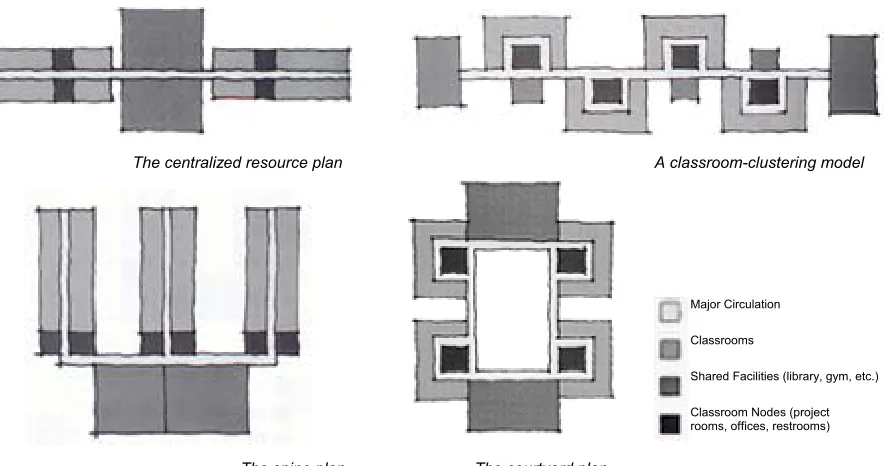
There is a limitless number of school building layouts (configurations) indicating only the design characteristics of the school environments without considering the social phenomena i.e. students’ and teachers’ activities and their organization in school environments. Based on spatial zoning or classifications provided by Brubaker (1998) and Perkins (2001), it is possible to categorize school building layouts in relation to different educational philosophies developed through time. A majority of the school building layouts is based on the way that classrooms are grouped in linear or cluster arrangements. Perkins’ categorization of school building layouts (Figure 1) demonstrates basic zones required for main facilities in school environments, such as circulation, shared facilities, and classrooms. His classifications rely on the general location or orientation of zones to each other. The list is comprised of major models, which are based on the centralization of the shared facilities or classroom areas; courtyards surrounded by other functions; spine (main street model) where shared resources or classrooms are located alongside of it; and campus model where separate buildings are provided for different groups of facilities and linked through outdoor circulation areas. However, Perkins’ classification of these models does not reflect what type of visual and physical connections (enclosures) are provided between individual spaces and, as a result, what type of activity and movement patterns can be generated.
Figure 1: Examples from Perkins’ categorization of the school building layouts (Perkins, 2001)
Major Circulation Classrooms
Shared Facilities (library, gym, etc.) Classroom Nodes (project rooms, offices, restrooms) The centralized resource plan A classroom-clustering model
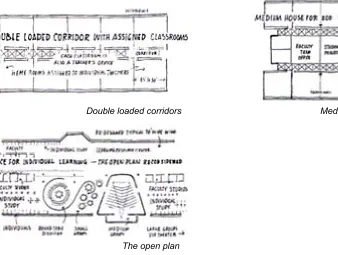
Brubaker (1998) focuses on the different models of the configuration of learning spaces, such as, individual classroom clusters varying from compact, gridiron plan to a more organic type plan (Figure 2). His classification of classroom units are based on the location of the shared activity settings, circulation areas, individual teaching areas, group project/work areas, and storage/resource areas. His classification provides information about the organizational needs of the individual grade units. They provide implications about the degree of spatial openness, enclosures and hence spatial connections through different spaces available in the grade units. However, his classifications do not provide information about how these sets of spatial units integrate, and hence, form a global, coherent spatial system within the entire building. In the mean time it does not provide any implications how students’ activities and interactions can be organized within school environments in reference to spatial layouts.
Figure 2: Examples from Brubaker’s categorization of the learning spaces (Brubaker, 1998)
Moore (1994), on the other hand, conceptualizes school building design in categories that include principles of building organization, the character of individual spaces, and technical details. Under the category of “building organization” he proposes principles, such as dividing the building into smaller units that would have a home like atmosphere; providing areas for shared activities in a central nucleus; providing convertible (multi-purpose) open spaces; and grouping units for basic educational facilities with variety of social areas and recognizable paths. However, he does not provide any
Double loaded corridors Medium size houses
empirical evidence that represents how these spatial principles function in relation to the socio-cultural qualities of educational spaces, thus, students’ regular activity and movement patterns.
Schools are designed according to the needs of student groups with differing ages and activities, allowing for typical social and cultural values to generate (Armstrong, 1999). In general schools provide students and teachers with differing spaces or facilities needed for their educational and social activities and interactions. Different levels of interaction among students and teachers lead to the diversity in the design of the educational spaces, such as classrooms, immediate surroundings (local), as well as the entire building (global). In general the educational and social spaces needed for each age group in school settings is different from one another. Middle schools especially, introduce a different set of spatial variety and features from instructional to common areas with an obvious organic solidarity. The middle school environment reflects the solidarity with functionally diversified teaching and social spaces, such as science labs and classrooms. In general, hallways provide the access to the areas and the transition from one activity to another. They also possess the symbolic features of display areas where students’ work is exhibited. At the same time, other social areas such as dining hall, courtyards, various sizes of gathering areas or activity nodes along the hallways, attempt to bring the students together to enhance their socialization.
During the typical school day, middle school students are quite mobile. The school provides opportunities for interaction, navigation in and outside of the building with opportunities for encounters and social experiences. On regular basis students move to the various classrooms according to pre-arranged class schedules. Therefore, the movement of the individual or groups of students from one place to another within a limited time carries an important role in promoting interactions among students (e.g. encountering, talking) outside their classrooms.
Thus, the spatial organization of instruction areas provided with the required visual and physical connections and access to surrounding social gathering areas in the building is believed to influence the degree that students can socialize and have a sense of the entire school community. Spatial enclosures between pathways and other major instructional or social areas in school buildings support the effort for forming continuous interaction through students’ movements and activities. Therefore, it is essential to define, analyze, and understand the dynamics between social and physical relations (boundaries and enclosures) among students and teachers in school environments.
1.1.2Schools As Social Settings: Social Interaction and Spatial Structure
settings that provide opportunities for different types of interpersonal interactions associated with wider society. Its settings contain recurring patterns of roles and rules, which give order and predictability to social relations and patterns of behavior involved in the process of achieving educational goals (Moleski and Lang, 1986). Every school develops a culture that provides a sense of common meaning and purpose to its members. Through members’ activities, interactions, and tasks, a school’s culture is reinforced and becomes the means by which it communicates its essential nature to both outsiders and insiders. The culture creates the identity by institutionalizing the appropriate patterns of behavior and establishing a belief system that forms the sense of community among its individuals (Moleski and Lang, 1986).
As a key social institution, the school is a source of what Semmens (1990) calls “redemptive pathways” to adulthood. They are society’s mechanism for socialization, whether they are viewed from the perspective of the society, the community, the parents, or the child (Greenbaum, 1974; Lipsitz, 1980). The most basic reason to emphasize the social development of the students, especially adolescents, is related to the belief that interactions are necessary for sustaining the human relationships that are the bases for meeting human needs for affiliation and belonging. Another assumption is that these activities – interacting with others promote individual growth because they suggest new possibilities for behavior – they serve a socializing purpose (Lang, 1987). Schools provide the settings where young people can widen the network of social ties with others, so as to interact with those of their own age, those who are older and adults so that they can become connected to and identified within the society. From a social identity theory perspective, the establishment of ties between students in an organized group fosters the development of a group consciousness, which strengthens into membership loyalties so that the individual becomes “bonded into” the organization (Kohlberg, 1971; Cotterell, 1996). In other words, Kohlberg believed that students’ identity and their insights about the community develop through social interaction.
School environments comprise a variety of social niches or interfaces, which differ in the extent to which they match with individual students to provide the fit releasing satisfaction and emotional growth. These niches are important and developmentally supportive for the major needs of young generations especially adolescents (Cotterell, 1996) whose major needs can be identified as: to have companionship, affection, and security, to be somebody, to have significance, to feel sense of belonging to a community, and to participate and learn through adventure and new experiences (Button, 1974; James, 1974; Cotterell, 1996).
classroom tasks. Possible interactions with others are also observed to occur during the electives or exploratory classes (arts, music, PE etc.), during lunch breaks or before or after classes in the halls or corridors (Lipsitz, 1983; Blatchford, 1998).
1.1.3 Size Matters
Research findings from education and environmental psychology provided implications that the physical school environment is an important component of schooling, which provides opportunities for students to be able to pursue their social and task related activities both inside and outside of classrooms (Earthman, 1998; Maxwell, 2000). School size has also been shown as an important factor to provide students with friendly and socially intimate environments (Barker and Gump, 1964; Fowler, 1992; Moore and Lackney, 1993). Creating smaller schools has become an important strategy for fostering such supportive intimate relationships and interactions among teachers and students (Jackson and Davis, 2000). However, none of the studies done in the fields of education and environmental psychology provided empirical findings demonstrating how the size of the school together with the spatial properties of the built form interact and have impacts on the students’ activities.
Today’s educational practices show that the rearrangements with determining the ideal size of schools brought the requirement for redefining the educational spaces and their spatial characters as well. This led the educators and designers toward the idea of creating varying “activity nodes” different in sizes that will promote social and interactive activities among students and groups (Moore and Lackney, 1994). Although there is no empirical study to support the idea, it is believed that the creation of smaller activity nodes with strong visible and physical access from the other areas in the building promotes the diversity and richness in activities creating more opportunities for student interactions to occur (Crumpacker, 1992).
The size of a group and a school setting are important determinants of quality in education and children’s interaction process. Previous studies show that clustering large organizations, such as offices, houses, and schools, simply into smaller units foster the social relationships among individuals (Moore, 1987; Lee et. al., 1993). Barker’s and Gump’s study “Big School, Small School” (1964) has been a major source to show that when the size of the school grows larger, students’ participation in activities deteriorates. Observations done in smaller school settings demonstrated that more interaction, more reflective and task-involved behavior occurs among students compared to the ones in larger school settings. Wasley et. al. (2000) show that students are well known in smaller and intimate learning communities, which help to reduce the isolation that often cause alienation and violence among students. Cotton (1996) notes that students are in general more positive toward their school community in smaller school environments. They have more of a sense of responsibility, and perform better academically (Barker and Gump, 1964; Fowler, 1992). Overall research findings (Barker and Hall, 1964; Garbarino, 1980; Cotton, 1996; Jackson and Davis, 2000; Wasley et. al., 2000; Duke and Trautvetter, 2001) suggest that providing the optimal conditions for organizations or institutions generates opportunities for different types of activities and behavior, while it increases the level of individual performance and competence with the social environment. However, most of these studies only focused on the small school concept from social point of view without considering how schools spatially are contributing to it. Spatial relationships between behavior settings and functions, in general, have to be considered besides social aspects of the size. In other words, it is important to understand the physical capacity of a building in terms of its spatial organization in addition to its size and social structure. In that respect there is still confusion about what the optimal size of a school is and how the spatial organization compensates with the size of the organization to enhance the positive interaction between individuals. How can the idea of “small environment” be translated into the design? How does the spatial pattern relate to the size of the organization to maintain and enhance the social structure? How does it help to enhance students’ sense of belonging to both school and outside community? These questions still need to be answered.
1.1.4 Schools as a Design Pattern: Educational Activity Systems
Generally the school administrations determine how the social environment will shape like in schools by controlling the activities taking place within the spatial boundaries. They distribute activities spatially and designate the regions in which and when the activities are to take place. Each of these processes constructs the activity system of the school both temporally and spatially (Moleski and Lang, 1986).
It is essential that the spatial layout support the organizational system as well as the patterned behavior of its members. As Moleski and Lang (1986) state, the physical setting ideally functions in three ways to support behavior. First, it provides the physical elements required to sustain the physical attributes necessary for individual’s satisfaction of his needs such as light, smell, and heat. Second, the physical environment provides the physical facilities and spatial layouts/arrangements that help to sustain specific activity patterns and hinder the others. In other words, it helps to facilitate the formation of social groupings, to ease the communication and movement, and to provide the desired level of privacy. The variables of this function include dimensional and geometrical properties of a setting and the spatial relationships between and within spaces. Finally, the built environment generates and maintains the mental and emotional states necessary for satisfaction by fulfilling symbolic, aesthetic, and ambient functions such as the expressive qualities that projects an emotional feeling.
At the same time there is a dynamic relationship between physical setting and social behavior, which is also modified by three elements: the goal and structure of the institution, the values and tasks of the individuals involved in the institution, and the demands of the future requiring flexibility for change. Schools are concerned with the achievement of the educational principles and practices through students’ and teachers’ formal/informal intergroup processes including academic activities, communication, and movement patterns occurring within and through spaces.
and curricular schemes. However, there are still activities, which incidentally occur and develop outside classrooms. Therefore, it is necessary to understand:
• how students enter school each day
• where and how often they go and gather (socialize)
• how they use different areas
• how they navigate within the building
• the amount of time assigned between class periods
At the same time it is essential to understand how the physical environment supports students’ experiences in the building, such as how far the distances between spaces are and the efficiency of allocated spaces provided in terms of the number, type, and configurations of the activity settings (Perkins, 2001).
In terms of spatial organization, each grade is generally located in separate wings or houses. They provide a system of spaces or activity nodes for diverse sets of educational and social activities to
take place. Each wing/house has its own particular spatial and organizational requirements and
include individual classrooms, which provide space for core curricular activities to occur. Most of the time activities in classrooms include reading, writing, discussing, conducting group projects, and listening to lecture given by the teacher. Corridors, on the other hand, provide the connections between classrooms and other social spaces in the building and, thus, form the efficiency for moving from one place to another. The length of corridors and the connections provided from main corridors to activity areas controls the distribution of students’ movement, as well as, their activities in the building. Corridors are where most of the nonfunctional transition time (breaks) is spent throughout a typical school day. Other social spaces such as commons, cafeteria, courtyards, and entry halls provide students with areas where they can gather at free times and socialize with their friends.
well known what type of social structure is presented through the spatial structure and relationships created by the boundaries between spaces. Answers are needed for questions, such as: what are the potentials for interactions provided through the visual and physical connections among different sets of educational activity settings? How much is known about the spatial relationships in school buildings that is influential on students’ and teachers’ social behavior?
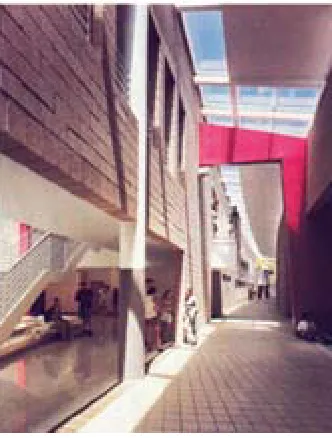
Figure 3: Image of the permeability (visibility) among spaces (Brubaker, 1998)
1.2 School Design and Research
After the 1960s, architecture benefited from the scientific approaches suggesting a significant change in the direction of architectural research and practice (Lang, 1987). With the analytic approach brought to architecture in identifying the nature of activity systems and the nature of how the physical environment affects these activity systems, the elements of space and their interrelations were considered together with the critical-ideological design approaches of the designers. Architecture borrows concepts, tools, and methods from other fields to change the traditional manner of design in favor of the quality of the space. This new approach brought the effort to satisfy the user’s needs and objectives in a given socio-cultural framework.
characteristics, condition of the built environment, behavior, and educational outcomes (Colven, 1990; Earthman et. al., 1995; Hines, 1996). Mostly research has given attention to specific spatial variables such as school size (Barker and Gump, 1964; Garbarino, 1980), classroom size (Fowler, 1992), arrangement of furniture (King and Marans, 1979), spatial density (King and Marans, 1979), privacy (Ahrentzen and Evans, 1984), noise and acoustics (Weinstein, 1979), and open/closed classrooms (King and Marans, 1979). Another line of research focused on the overall school environment functioning as “behavioral setting” on the level of its use and its contribution to the individuals’ socialization (Barker, 1968; Barker, 1978; Silbereisen et. al., 1985). There are other studies that limited themselves on classroom settings focusing on student and teacher interactions and performances in relation to spatial characteristics, such as furniture arrangement, classroom shape, etc. (Horne, 1999). At the same time, theoretical examination of the relations that exists between the stages of cognitive development of the child and the forms of built-environment associated with matters of organization and operation of the school buildings have been addressed.
Lackney’s (1994) review of research findings about the school environments found differences in approaches across disciplines - educational psychology, environmental psychology, environmental design. Educational psychologists have been primarily interested in how the organization of school environments affects student academic achievement and performance. Environmental psychologists have been more concerned with the interaction between students and teachers within the context of the physical environment, especially in classrooms. Students and teachers’ activities as well as their interactions have been primarily studied in relation to the physical aspects of classrooms. Environmental design researchers, on the other hand, were concerned with issues related to the interaction between the physical and the organizational dimensions, which impact the setting (Lackney, 1994). Educational psychologists provide a focus more on the child behavior, while environmental design research is more concerned with physical issues than the child behavior aspects. However, common consensus is that understanding of the relationships among physical, social, and organizational dimensions is essential in order to provide a coherent educational environment (Lackney, 1994). Therefore, the configuration of the spatial environment in relation to the organizational goals, personal and social dimensions is important aspect of school environments, which accommodates and generates a general behavior patterns.
Chapter II
2. Literature Review
This chapter reviews theoretical and empirical studies that provide background information about the study of spatial and social organization of school environments. The review emphasizes the spatial structure and the space-use pattern in relation to the social interaction pattern existing within school settings. The first half of the chapter starts with documenting the historical evolution of schooling ideology and school buildings. It, later, continues to discuss studies related to theory of child development, social relations and cultural pattern existing in school settings that helps to understand the educational activities and space use pattern. The second half of the chapter looks at studies that explored influences of spatial attributes of school buildings on students’ social interactions, and thus, their perception of their school community. This review will also consider other related studies, from where general implications and methodological approaches are used to develop tools for measuring to what extent students’ interactions are by-products of schools’ spatial layouts.
2.1 Historical Evolution of School Buildings and Schooling Ideology in US
The physical environment is one of the important components of an institutional system, such as schools (Wolfe and Rivlin, 1987). The typological and physical changes in school architecture have always been influenced by the continuous changes occurred in socio-political, economical, and educational ideologies of the societies. These changes shaped conceptions of children’s development, the attitudes toward the educational practices, and the types of educational facilities together with their physical and social forms, which were developed as agents of socialization. In order to understand the goals and structures of the contemporary school environments, their roles as agents of socialization, the history of the school environments should be examined by considering their physical and social developments through values, attitudes, and physical forms inherited.
There have been major turning points in public educational system of the United States starting from 1880s with the Common School Reforms, continuing with the Progressive education movement in the late nineteenth century and the first half of the twentieth century, later focusing on the open education and compensatory education. More recently the idea of smaller schools with more specialized curriculum and educational activities, such as magnet or academic house schools, have started to be widespread within the country.
as the raw material to be turned into the product, which was to meet the specifications of the needs of the 20th century.
Due to the large family size of the families, particularly immigrants, most parents wanted to send children into the work force instead of school. These families wanted to benefit from the income they would receive, if more of the family worked. However, after the Revolutionary War, the education became compulsory where all children were required to be in school receiving an education and not working in industry (Wolfe and Rivlin, 1987). Education was usually left for the elite, which was accomplished through tutoring, and small one-room schools. These one-room schools usually housed 30 to 40 students of all ages and levels with one teacher (Figure 1). In large one-room schools, the teacher would teach to the higher level and older students, and in turn they would teach to the younger and lower level students.
Figure 1: One-room schools (Graves, 1993)
As more and more children were attending school, the one-room school models could no longer handle the needs of the increasing student populations with different levels and ages. Therefore, larger and new school buildings were built for the first time with many different classrooms, lunchrooms and gymnasiums. Children were also split up with respect to their age and needs. Initially, many of the small schools grouped them together with several ages in one room. Grades 1,2, and 3 would be together, while grades 4, 5, 6, 7, and 8 were in another area. If the students moved on past this level, they would usually attend colleges or universities.
had four classrooms opening to a common corridor. Each classroom housed 55 students. The top floor was used as a large assembly hall. An administrative office was also located on the first floor.
School buildings became more complex, accommodating different types of spaces. In terms of the evolution of the building configuration, the unified classroom was subdivided into more spaces and transformed into two main types of school buildings based on the spatial organization: the corridor type and the central type of school buildings. In the former case, the classrooms are developed along a corridor, while in the latter, classrooms are organized around a central place. The corridor scheme acts as a circulation space, where it distributes students and teachers to the various classrooms. On the other hand, the central place configuration offers a common area, which not only provides access to classrooms, but also offers a social space where student gatherings promote social relations and contacts.
In addition to these improvements, school buildings became more sensitive to health, lighting, heating, eating, and safety factors. Although the image of the early school buildings have changed throughout time, the idea of the one-room school still exists. It can be seen in a structure with two or three stories to which gymnasium and auditorium have been added together with other specialized places such as library, office, and cafeteria. It was a big concern for the communities and educators that early buildings, with their monumental and impressive entries, actually had very depressing rooms and unintelligible spatial layout (Wolfe and Rivlin, 1987). Therefore, there has been a search for better space planning that would respect to students’ socializing and learning process. As a result just before World War II schools architecturally started to change (Wolfe and Rivlin, 1987).
With the addition of grades to the education system, high schools became an extension to the elementary school in 1870s (Alexander and George, 1981; Graves, 1993). Early in 1900s and later elementary schools involved grades from 1 to 6 and high schools had grades between 7 to 12. Between 1850 and 1860, most of the US cities were introduced to the idea of the secondary schools. In early 1910s, the education programs in the secondary schools, in terms of number and type of courses offered, were not satisfying adolescents’ needs and development (Alexander and George, 1981). Most of the time teachers continued to use elementary teaching methods and failed to provide a transition to high school. At the same time, the concept of education was strictly shaped according to the course content and the formal lecture techniques frequently used by teachers. The educational activities were highly teacher centered and failed to address the needs of early adolescents. A high student drop rate was the result.
integral part of the life process: Students would learn by doing and interact with each other. Class sizes became smaller, shrinking from 40 to 30 children. New classes, such as science and geography, were added to the curriculum. However, although classes included more group activities, it was still teacher dominated.
As one of the major efforts in the early 1910s, many educators believed that programs needed to fit the child, but not that the child to fit the program. According to newly developed approaches in the field of education, it is suggested that the educational process should be child-centered, seeing teachers’ interventions as that of facilitators in the educational process. Working in teams, as well as, the acquisition of knowledge on the basis of the child’s interaction and active participation in class tasks and discussions became essential components in the practice of the active school system. Thus, the school environment attributed to the new views in educational process concerning the organization of the flexible classroom spaces and the number of the laboratories or project rooms supporting students’ practices. In general, the school environment aimed to offer more stimuli to the students who operate in a framework of freedom in a more balanced network of social relations. The goal was integrating youth into various social roles, allowing equal opportunity for each child, and promoting their psychological, social, and moral development and hence, their personal fulfillment.
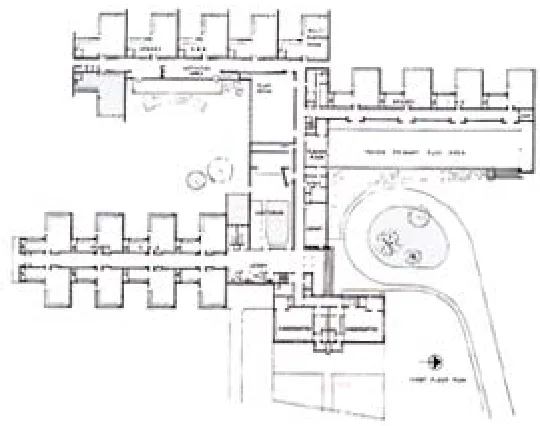
Figure 2: Finger plan type school building (Brubaker, 1998)
Throughout the industrialized era (1945-1960), in combination with the idea of mass production, prototype school buildings were created conveying a minimalist approach toward educational space - strict standards, institutional and economic restrictions. The education system and the architectural trend, in general, involved the "factory" approach based on the construction of fast and economical school buildings without questioning its uniqueness and fit to the educational process (Taylor and Vlastos, 1975). Cultural, geographic, social, and ideological aspects were not a priority compared to the interests of a universality that promotes more democratic and universal values in the school architecture. Due to economical constraints in budgets available for school constructions, the attention and interests focused on the infrastructure of the school with less interest in pedagogy, social organization, spatial layout, and other physical features. During the same period the trend shifted toward creating more scaled, flexible and convertible spaces that can adopt continuously changing and developing pedagogy.
the physical features of school environments directly influence students. According to Trump, space within the building would be planned for what would be taught as well as how it should be taught. Spatial flexibility was one of the variables to be considered. The Trump plan suggested that large rooms would be flexible enough to be divided into smaller, seminar rooms for small group discussions. Overall Trump plan influenced the development of many schools during that period.
The 1960s and 1970s brought new developments in the education system and a thorough analysis of the children’s developmental needs. The idea of “open design” (Figure 3) was introduced offering changes in the organization and the structure of the classrooms and overall school building (Barth, 1972; Silberman, 1973). The “baby boom” in 1960s along with the suburban expansion and the development of new areas led to an increase in the construction of school buildings. The schools constructed had architectural and programmatic variety. Open space school and informal education were part of that experimentation.
Figure 3: Open plan schools (Brubaker, 1998)
However, the idea of open-design school was not accompanied by informal or open teaching. There were even attempts to implement informal or open education in schools where school buildings were traditionally designed (Wolfe and Rivlin, 1987). Therefore, the idea later failed due to the disorder caused by the incompatible teaching activities and school buildings. Problems, such as visual distraction and noise as well as territorial need for different activity settings, experienced as well (Taylor and Vlastos, 1975; Gump, 1987; Sanoff, 2002). Many of those schools implementing the “open design” idea have undergone changes returning to traditional way of divided classroom arrangements (Sanoff, 2002).
In 1989 a report by Carnegie Corporation’s Council on Adolescent Development revealed that adolescents had been experiencing massive, impersonal schools with unconnected curricula and high student population. The idea of creating smaller learning environments was introduced and implemented by educational planners. Smaller learning environments were generated through the creation of “academic houses” (or classroom clusters forming a separate unit) where 200 to 300 students were accommodated. In each academic unit, students and teachers are organized into teams where there are interactive educational and social activities.
Unfortunately, funding for new educational facilities has been experiencing budget cuts. There has been a strong move back to the basics in spatial needs and a move toward reducing costs by eliminating all but essential spaces. Therefore, it is still possible to see traditional approaches physically and pedagogically leading most of today’s schools.
2.2 Social Implications of School Environments on Students’ Socializing and Interactions
Socializing means immediate experiences of interacting with others forming relations (Itoh, 2001). It is a process of learning social norms, developing identity, and acquiring certain patterns of perceiving and behaving over time. Children of all ages spend most of their day together at their school in a social setting with characteristic physical and social structures. Peer interaction is an important aspect of their development and also their school life. Generally studies related to social interaction as part of the children’s developmental needs have focused on variables such as dyadic relations with peers and adults (e.g. friendships) embedded in related family, school, and community structures (Garbarino, 1980). Socializing and interactions have also been studied in terms of cooperative learning facilities concentrated mainly in classrooms (Klabbers, 2000).