University of South Carolina
Scholar Commons
Theses and Dissertations
2015
Iridium – Bismuth Carbonyl Cluster Complexes:
New Directions for Chemistry and Selective
Oxidation Catalysis
Gaya R. ElpitiyaUniversity of South Carolina
Follow this and additional works at:https://scholarcommons.sc.edu/etd
Part of theChemistry Commons
This Open Access Dissertation is brought to you by Scholar Commons. It has been accepted for inclusion in Theses and Dissertations by an authorized administrator of Scholar Commons. For more information, please [email protected].
Recommended Citation
IRIDIUM – BISMUTH CARBONYL CLUSTER COMPLEXES: NEW DIRECTIONS FOR CHEMISTRY AND SELECTIVE OXIDATION CATALYSIS
by
Gaya R Elpitiya
Bachelor of Science University of Colombo, 2009
Submitted in Partial Fulfillment of the Requirements
For the Degree of Doctor of Philosophy in
Chemistry
College of Arts and Sciences
University of South Carolina
2015
Accepted by:
Richard D. Adams, Major Professor
Daniel L. Reger, Committee Member
Sheryl L. Wiskur, Committee Member
Oleg Alexeev, Committee Member
ACKNOWLEDGEMENTS
A PhD is a struggle, a challenge and a bright light at the end of the tunnel. The
past five years had lots of ups and downs which I didn't take an elevator to climb up
where I am now. I had to take stairs and each time I fell, I got back on my feet with even
more strength thanks to so many nice and kind people around me. So this is the moment
to be grateful to all the awesome people around me because I wouldn't have
accomplished any of these without any of you.
First and foremost I would like to thank Professor Richard D Adams, my advisor
for being such a wonderful mentor. Your enormous passion and knowledge about
chemistry together with tremendous mentoring skills helped me grow into an
Inorganic-Organometallic synthetic and a structural chemist after five challenging years. I didn't
just learn chemistry from you, I learned about career and about life which helped me to
shape up my life and grow up as to what I am now. I’m more than glad that I had you as
my PhD mentor and would like to make this an opportunity to express my heartfelt
thanks to you for being such a great advisor, and an extremely supportive figure who
always pushed me towards success.
My heartfelt gratitude goes to the members of my research committee; Professors
Daniel Reger, Sheryl Wiskur and Oleg Alexeev. Your suggestions and comments always
helped me to succeed in my research. Thank you very much for spending your valuable
thank Dr. Perry Pellechia, Dr. William Cotham and Dr. Mike Walla for assisting me with
NMR and MS measurements. Thank you very much Dr. Mark Smith for helping me with
difficult to solve crystal structures and always filling me with your enormous knowledge
on crystallography. I would like to thank Dr. Robert Raja and Dr.Mathew Potter from
University of Southampton, UK for being great collaborators helping me with the catalyst
testings. Without your support, I wouldn't have completed any of my catalysis work
which formed much of my second chapter.
I would like to take a moment to thank my past lab members, Dr. Qiang Zhang,
Dr. Yuwei Kan, Dr. Mingwei Chen, Dr. Onn Wong, and also to my current lab members
Joseph Kiprotich, Jonathan Tedder, Zhongwen Luo, Poonam Dhull and Morteza Maleki.
Joseph, Jonathan, Zhongwen, Poonam and Morteza thanks a lot for all the good time we
spent together and good luck with your PhD. Special thanks goes to Dr. Qiang Zhang and
Dr.Yuwei Kan for being great friends and always supportive in every possible way. Dr.
Qiang Zhang, I would like to call you a second mentor in my career because I learned so
much from you. Thank you so much for the delicious Chinese food you both cooked for
me and my husband and for being good friends. Dr. Yuwei Kan, thank you so much for
your priceless friendship, for all the motivation you keep giving me even you are not here
in Columbia right now.
My deepest appreciation goes to my beloved parents for your unconditional love
and support. I can’t thank you enough for the blessings, motivation and courage you have
given me throughout the years and continuously giving me. I don’t think I have enough
words to express what I feel about all you have done for me, my dear mother and father.
person valuable to the society and I think I made your dream come true. PhD was OUR
dream , and I reached it because of you mother and father, and I love both of you
endlessly for making me into a strong person with lots of skills. I owe you both forever
for holding up this ladder so securely helping me climb up and up, till I touch the sky.
Last, but not least, I need to express my greatest thanks to my ever loving
husband Prasanna Malinda Witharana who gave up a successful career in Sri Lanka and
accompanied me to US to make my dream come true and also to my adorable little
daughter Aurora Ariana Witharana for making me a mom. Every moment I have spent
with both of you have being awesome and I wouldn’t have accomplished any of these
without both of you. Prasanna, you are a great husband and a great father and you played
the role of a mother as well taking care of our little Aurora helping me focus on my
research. You have done so many things for me which I could write an entire book about
you. With limited space here I would like to say Thank you very much my dear husband,
for being my shadow, for holding my hands throughout this difficult journey and for not
letting me down. You are the best and I love you till I die. I love you my dear daughter
for making our lives complete and happy. You bring priceless joy to my life each day and
you are the most precious gift I have ever got in my life. You may not know right now,
but this is for you to know one day when you grow up and read your mother's thesis, that
you played a huge role unknowingly to make me into a strong and a motivated person.
ABSTRACT
CHAPTER 2
The reaction of Ir3(CO)9(μ3-Bi), 2.1, with BiPh3 has yielded a iridium−bismuth
cluster complex Ir5(CO)10(μ3-Bi)2(μ4-Bi), 2.2. The first examples of bimetallic
iridium−bismuth nanoparticles have been subsequently synthesized from 2.1 and 2.2, and
these have been securely anchored onto the inner walls of mesoporous silica. These
isolated, bimetallic iridium−bismuth nanoparticles display a superior catalytic
performance, when compared to their analogous monometallic counterparts and
equivalent physical mixtures, in the C−H activation of 3-picoline to yield niacin.
CHAPTER 3
The reaction of Ir3(CO)9(μ3-Bi) with Ph3GeH yielded the compound
Ir3(CO)6(GePh3)3(μ3-Bi)(μ-H)3 3.1 When 3.1 was heated to reflux in hexane, it was
transformed into the compound Ir3(CO)6(μ-GePh2)3(μ3-Bi) 3.2, which contains three
bridging GePh2 ligands by loss of 3 equiv of benzene. The reaction of Ir3(CO)9(μ3-Bi)
with Ph3SnH yielded the compounds Ir3(CO)6(SnPh3)3(μ3-Bi)(μ-H)3 3.3 and Ir3(CO)6
-(μ-SnPh2)3(μ3-Bi) 3.4, respectively. Compounds 3.1−3.4 were characterized
crystallographically. Compounds 3.1 and 3.3 each have three terminally coordinated
atoms. In solution compounds 3.1 and 3.3 exist as two isomers. The major isomer has the
structure found in the solid state. The two isomers interconvert rapidly on the NMR time
scale by tripodal, trigonal-twist rearrangement mechanisms: for 3.1, ΔH⧧ = 66.6 kJ/mol
and ΔS⧧ = 1.58 J/(K mol), and for 3.3, ΔH⧧ = 65.6 kJ/mol and ΔS⧧ = −1.4 J/(K mol).
The molecular orbitals and UV−vis spectra of 3.2 were calculated and analyzed by ADF
DFT computational treatments. The visible spectrum is dominated by transitions from the
Ir−Bi bonding orbitals HOMO-3 and HOMO-4 to an Ir−Ir antibonding orbital, the
LUMO, in the Ir3 core of the complex.
CHAPTER 4
Ir3(CO)9(µ3-Bi) was found to react with PhAu(NHC) by losing one CO ligand
and then oxidatively adding the Au – C bond to the phenyl ligand of the PhAu(NHC) to
one of the iridium atoms to yield the compound 4.2 that contains a σ-phenyl coordinated
ligand and an Au(NHC) group bridging one of the Ir – Bi bonds of the cluster. Based on
the structural analysis and the MO and QTAIM calculations, the Au – Bi interaction is
substantial and is comparable in character to the Ir – Bi and Ir – Ir bonds in this cluster.
We have shown previously that Ir3(CO)9(µ3-Bi) reacts with HSnPh3 by adding three
equivalents of HSnPh3 to yield the compound Ir3(CO)6(SnPh3)3(µ3-Bi)(µ-H)3, (Figure
4.2).5 Compound 4.2 will add only two equivalents of HSnPh3 to yield 4.3. It is possible
that the bridging Au(NHC) group with the bulky NHC ligand inhibits a third addition of
HSnPh3 by producing a blocking effect proximate to the third Ir atom. Finally, we
observed that water can facilitate the cleavage of phenyl groups from the SnPh3 ligands in
grouping bridging the two tin atoms to yield the compound 4.4. The O-bridged linking of
tin and germanium ligands could lead to design and synthesis of interesting new chelating
ligands in polynuclear metal complexes in the future.
CHAPTER 5
Compound 5.1 readily loses CO upon heating and condenses to form the
hexairidium product 5.2. Years ago, Adams et al. showed that bridging sulfido ligands
could facilitate condensation and self-condensation reactions of osmium and ruthenium
carbonyl cluster complexes to produce higher nuclearity complexes 16 – 19. The lone pair
of electrons on the sulfido ligands clearly played a key role in the formation of new bonds
between the condensing species 17-19. The bridging bismuth ligand in 5.1 formally
contains a lone pair of electrons and these electrons may also serve to facilitate the
self-condensation of 5.1 to form the hexairidium complex 5.2 even though no intermediates
were isolated that would confirm that such interactions did in fact occur in the course of
the formation of 5.2. Because of its facile elimination of CO, it was easy to prepare the
PPh3 derivatives 5.3 - 5.5 of 5.1 by reactions between 5.1 and PPh3. Compound 5.3
eliminated CO and PPh3 to yield 5.6 , the PPh3 derivative of 5.2 by a condensation
reaction, but 5.6 could be obtained in an even better yield by treatment of 5.2 with PPh3.
Pyrolysis of 5.3 also yielded a pentairidum complex 5.8 having a square pyramidal
cluster of metal atoms in a very low yield by a combination of cluster and ligand
degradation and reassembly. Compound 5.8 has an interesting structure and ligands.
Unfortunately, we have not yet been able to synthesize compound 5.8 in a systematic
the complex 5.7, an o-metallated PPh3 derivative of 5.4 in a high yield. Complex 5.7 was
also obtained in a low yield from the pyrolysis of 5.3. The condensation of 5.1 with
Ru3(CO)10(NCMe)2 yielded compounds 5.9 and 5.10, ( Scheme 5.2) , the first examples
of iridium-ruthenium carbonyl complexes containing bismuth ligands. We have not been
able to establish the mechanisms of the formation of 5.9 and 5.10 in this work, but we
suspect that the Bi ligand in 5.1 probably played a role in the condensation processes
leading to these products.
CHAPTER 6
The synthesis and chemistry of heavy atom metallaheterocycles remained largely
unexplored until Adams et al1,2,3. and Leong et al.4,5 started synthesizing unusual new
metallaheterocycles by linking heavy transition metal groupings with heavy atom
bridging ligands, such as diphenylbismuth and diphenylantimony. A novel Iridium -
Bismuth metallaheterocycle, 6.1 has been synthesized by the reaction of [HIr4(CO)11]
-and Ph2BiCl in methylene chloride solvent at 0ºC for 10 mintues. The compound, 6.1 is
formed by a simple salt elimination and a self dimerzation process while eliminating CO
from the electron rich monomeric Ir4(CO)11(µ-BiPh2)(µ-H) (62 valence electrons) to form
TABLE OF CONTENTS
ACKNOWLEDGEMENTS ... ii
ABSTRACT ...v
LIST OF TABLES ...x
LIST OF FIGURES ... xii
LIST OF SCHEMES ... xvi
CHAPTER 1: INTRODUCTION ...1
CHAPTER 2: IRIDIUM - BISMUTH CLUSTER COMPLEXES YIELD BIMETALLIC, NANO CATALYSTS FOR THE DIRECT OXIDATION OF 3-PICOLINE TO NIACIN ...22
CHAPTER 3: SYNTHESIS AND CHARACTERIZATIONS OF BISMUTH BRIDGED TRIIRIDIUM , CARBONYL COMPLEXES CONTAINING GERMYL/GERMYLENE AND STANYL /, STANNYLENE LIGANDS ...57
CHAPTER 4: THE ADDITION OF GOLD AND TIN TO BISMUTH -TRIIRIDIUM CARBONYL COMPLEXES ...98
CHAPTER 5: IRIDIUM-BISMUTH CARBONYL CLUSTER COMPLEXES ...132
CHAPTER 6: SYNTHESIS AND CHARACTERIZATION OF AN IRIDIUM-BISMUTH METALLAHETEROCYCLE ...179
LIST OF TABLES
Table 2.1 Crystallographic data for compound 2.2...49
Table 2.2 Seven TEM EDS Composition Analyses of the Ir3Bi catalyst on MCM-41 support; before use ...50
Table 2.3 Seven TEM EDS Composition Analyses of the Ir3Bi catalyst on MCM-41 support; after use ...51
Table 2.4 Four EDS Composition Analyses of Ir5Bi3 catalyst after use on MCM-41support ...52
Table 2.5 Selected intermolecular angles and bond distances for 2.2 ...53
Table 3.1 Crystallographic Data for Compounds 3.2 and 3.3 ...88
Table 3.2 Crystallographic Data for Compounds 3.4 and 3.5 ...89
Table 3.3 Selected intermolecular angles and bond distances for 3.2 ...90
Table 3.4 Selected intermolecular angles and bond distances for 3.3 ...91
Table 3.5 Selected intermolecular angles and bond distances for 3.4 ...92
Table 3.6 Selected intermolecular angles and bond distances for 3.5 ...93
Table 4.1 Crystallographic data for compounds 4.2-4.4 ...119
Table 4.2 Geometry Optimized-DFT calculated bond distances (Å) with corresponding QTAIM electron densities (e-/Bohr3) at the bond critical points for compound 4.2 ...121
Table 4.3 Selected intermolecular angles and bond distances for 4.2 ...122
Table 4.4 Selected intermolecular angles and bond distances for 4.3 ...123
Table 4.5 Selected intermolecular angles and bond distances for 4.4 ...124
Table 5.1 Crystallographic Data for Compounds 5.2 - 5.4 ...162
Table 5.2 Crystallographic Data for Compounds 5.5 - 5.7 ...164
Table 5.3 Crystallographic Data for Compounds 5.8 - 5.10 ...166
Table 5.4 Selected intermolecular angles and bond distances for compound 5.2 ...168
Table 5.5 Selected intermolecular angles and bond distances for compound 5.3 ...169
Table 5.6 Selected intermolecular angles and bond distances for compound 5.4 ...170
Table 5.7 Selected intermolecular angles and bond distances for compound 5.5 ...171
Table 5.8 Selected intermolecular angles and bond distances for compound 5.6 ...172
Table 5.9 Selected intermolecular angles and bond distances for compound 5.7 ...173
Table 5.10 Selected intermolecular angles and bond distances for compound 5.8 ...174
Table 5.11 Selected intermolecular angles and bond distances for compound 5.9 ...175
Table 5.12 Selected intermolecular angles and bond distances for compound 5.10 ...176
Table 6.1 Crystallographic data for 6.1 ...190
LIST OF FIGURES
Figure 2.1 Oxidation of 3-picoline to niacin ...38
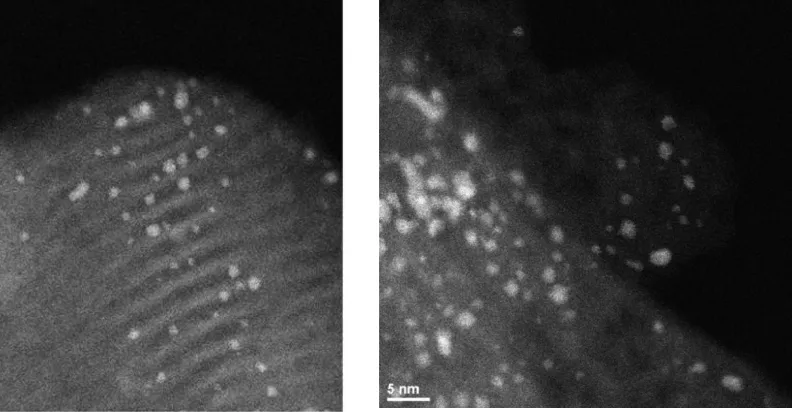
Figure 2.2 HAADF-HRTEM image of Ir3Bi nano particles
on MCM-41 before catalysis (on left, pretreated at 200 ºC to remove the ligands) and after use in catalysis (on right,
pretreated at 300 ºC) to remove the ligands ...39
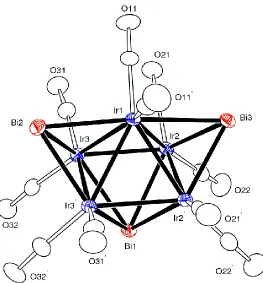
Figure 2.3 An ORTEP diagram of the molecular structure of
Ir5(CO)10(μ3-Bi)2(μ4-Bi), 2.2, showing 30% thermal probability ...40
Figure 2.4 HAADF-HRTEM image of Ir3Bi (on left) and Ir5Bi3
(on right ) nano particles on MCM-41 after use in catalysis at 65 ºC . The catalysts were preconditioned/activated at 300 ºC
for 2h before use ...41
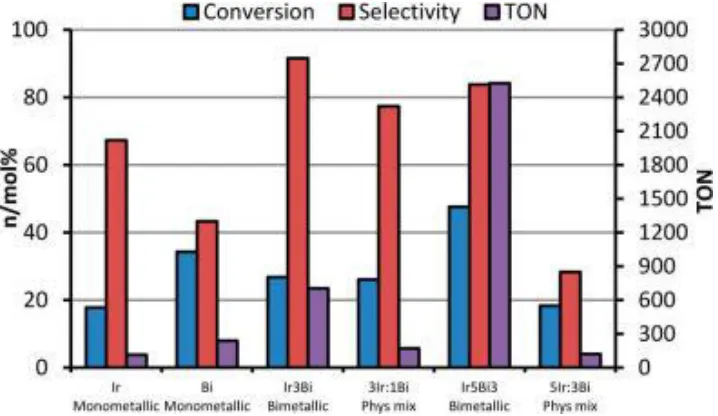
Figure 2.5 Comparisons of catalytic behavior of the
monometallic and bimetallic Ir and Bi catalysts on MCM-41 ...42
Figure 2.6 Schematic representation of the contrasting catalytic
behaviors afforded by the Ir/Bi containing catalysts ...43
Figure 2.7 The effect of support in the oxidation of 3-picoline with Ir3Bi ...44
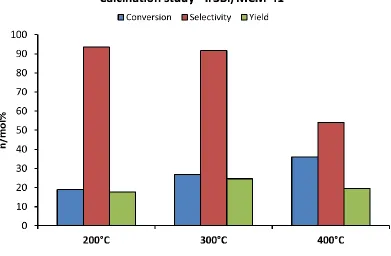
Figure 2.8 The effect of different calcination temperatures on
the activity and selectivity of the Ir3Bi/MCM-41 catalyst ...45
Figure 2.9 Catalyst recycle studies emphasizing the heterogeneous nature and ... recyclability of the anchored Ir5Bi3 catalyst ...46
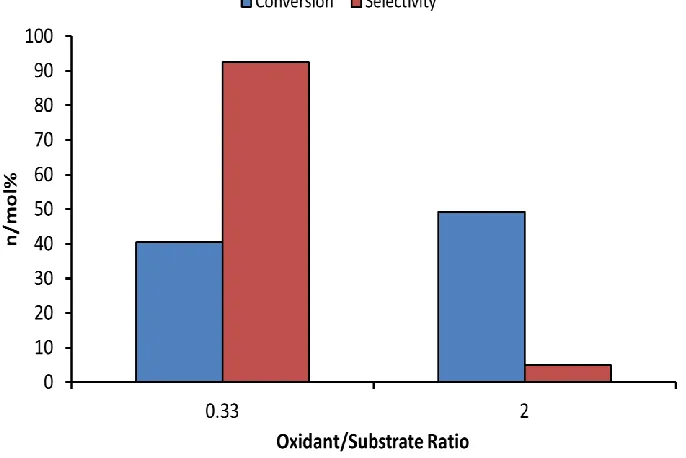
Figure 2.10 The effect of substrate:oxidant mole ratio on the activity and selectivity of the Ir5Bi3 catalyst for the
oxidation of 3-picoline ...47
Figure 3.1 Bridging modes of germylyne/stannylyne ligands
in polynuclear metal carbonyl complexes ...70
Figure 3.2 Bridging germylene/stannylene ligands in Ruthenium
Figure 3.3 Bridging germylyne/stannylyne ligands in Rhenium
carbonyl complexes ...72
Figure 3.4 Phenyl cleavage and benzene elimination from
germylyne/stannylyne ligands in polynuclear metal carbonyl
complexes giving rise to bridging germylene/stannylene ligands ...73
Figure 3.5 α- cleavage of three phenyls eliminating three
benzenes and giving rise to bridging germylene/stannylene
ligands in Ruthenium carbonyl complexes ...74
Figure 3.6 Phenyl cleavage occuring at a single Ir atom ...75
Figure 3.7 Ir3(CO)9(µ3-Bi) , 3.1 the only previously known
bismuth containing iridium carbonyl cluster ...76
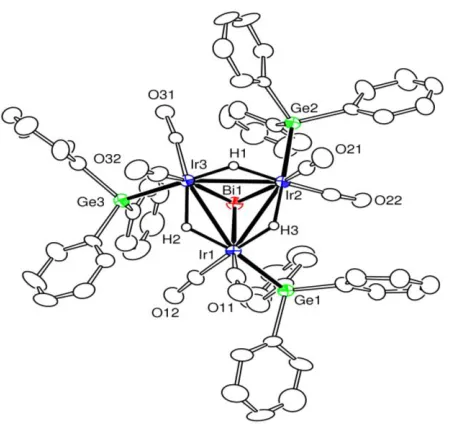
Figure 3.8 An ORTEP diagram of the molecular structure of
Ir3(CO)6(GePh3)3(µ3-Bi)(µ-H)3, 3.2 showing 30% thermal
ellipsoid probability ...77
Figure 3.9 The structure proposed for isomer B of
Ir3(CO)6(GePh3)3(µ3-Bi)(µ-H)3, 3.2 ...78
Figure 3.10 A stacked plot of 1H NMR spectra for compound 3.2
at various temperatures in a CDCl3 solution ...79
Figure 3.11 An ORTEP diagram of the molecular structure of Ir3(CO)6(µ-GePh2)3(µ3-Bi), 3.3 showing 30% thermal
ellipsoid probability ...80
Figure 3.12 An ORTEP diagram of the molecular structure of
Ir3(CO)6(SnPh3)3(µ-H)3(µ3-Bi), 3.4 showing 30% thermal
ellipsoid probability ...81
Figure 3.13 An ORTEP diagram of the molecular structure of Ir3(CO)6(µ-SnPh2)3(µ3-Bi), 3.5 showing 30% thermal
ellipsoid probability ...82
Figure 3.14 The UV–vis absorption spectrum of 3.3 in a methylene
chloride solution...83
Figure 3.15 Selected molecular orbitals for compound 3.3 ...84
Figure 3.16 The TD-PBEsol calculated UV–vis spectrum of compound 3.3 ...85
by using acetylperoxyborate as the oxidant ...109
Figure 4.2 Terminal EPh3 ligands and bridging EPh2 ligands on Ir3(CO)9(µ3-Bi) cluster ...110
Figure 4.3 Addition of PhAu(PPh3) to substitutionally active metal carbonyl cluster complexes ...111
Figure 4.4 An ORTEP diagram of the molecular structure of Ir3(CO)8(Ph)(µ3-Bi)[µ-Au(NHC)], 4.2 showing 20% thermal ellipsoid probability ...112
Figure 4.5 Selected GO DFT molecular orbitals for compound 4.2 with corresponding energies in electron volts (eV) and a view showing the orientation of the applied coordinate system...113
Figure 4.6 A plot of the geometry - optimized DFT structure of 4.2 showing the locations of selected bond critical points in red ...114
Figure 4.7 An ORTEP diagram of the molecular structure of Ir3(CO)7(SnPh3)2(µ3-Bi)[µ-Au(NHC)](µ-H), 4.3 showing 20% thermal ellipsoid probability ...115
Figure 4.8 An ORTEP diagram of the molecular structure of Ir3(CO)7(µ3-Bi)[µ-Ph2Sn(OH)SnPh2][µ-Au(NHC)], 4.4 showing 20% thermal ellipsoid probability ...117
Figure 5.1 ammoxidation of 3-picoline to nicotinonitrile using ReBi catalysts ...147
Figure 5.2 Coversion of compound 5.1 to Ir5(CO)10(µ3-Bi)2(µ3-Bi) ...148
Figure 5.3 Coversion of 3-picoline to niacin using IrBi nano particles ...149
Figure 5.4 Iridium-bismuth complexes containing germanium and tin ligands ...150
Figure 5.5 An ORTEP diagram of the molecular structure of Ir6(CO)13(µ3-Bi)(µ4-Bi), 5.2 showing 30% thermal ellipsoid probability ...151
Figure 5.6 An ORTEP diagram of the molecular structure of Ir3(CO)8(PPh3)(µ3-Bi), 5.3 showing 30% thermal ellipsoid probability ...152
Figure 5.7 An ORTEP diagram of the molecular structure of
probability ...153
Figure 5.8 An ORTEP diagram of the molecular structure of Ir3(CO)6(PPh3)3(µ3-Bi), 5.5 showing 30% thermal
ellipsoid probability ...154
Figure 5.9 An ORTEP diagram of the molecular structure of
Ir6(CO)12(PPh3)(µ3-Bi)(µ4-Bi), 5.6 showing 30% thermal
ellipsoid probability ...155
Figure 5.10 An ORTEP diagram of the molecular structure of
Ir3(CO)6(PPh3)(µ2-C6H4PPh2)(µ-H)(µ3-Bi), 5.7 showing 20%
thermal ellipsoid probability ...156
Figure 5.11 An ORTEP diagram of the molecular structure
of Ir5(CO)9(µ-PPh2)2(µ4-C6H4)(µ4-Bi), 5.8 showing 15%
thermal ellipsoid probability ...157
Figure 5.12 An ORTEP diagram of the molecular structure of Ir3Ru4(CO)18(µ3-Bi), 5.9 showing 40% thermal
ellipsoid probability ...158
Figure 5.13 An ORTEP diagram of the molecular structure of Ir3Ru3(CO)15)(µ4-Bi), 5.10 showing 30% thermal
ellipsoid probability ...159
Figure 6.1 Re3(CO)12(µ-BiPh2)3 synthesized by Adams et al. ...185
Figure 6.2 [Os3(µ-SbPh2)2(µ-H)]2 synthesized by Leong et al. ...186
Figure 6.3 An ORTEP diagram of the molecular structure of [Ir4(CO)10(µ-BiPh2)(µ-H)]2, 6.1 showing 20% thermal
LIST OF SCHEMES
Scheme 2.1 Schematic of the transformation of 2.1 to
2.2 by reactions with BiPh3 ...48
Scheme 3.1 Polytopal trigonal - twist mechanism showing
the isomerization between isomer A and B ...86
Scheme 3.2 Transformation of compound 3.2 to 3.3 through a α-phenyl cleavage of three phenyl groups eliminating
three molecules of benzene ...87
Scheme 4.1 Summary of the reactions done in this chapter ...118
Scheme 5.1 Summary of the reactions showing the synthesis of
Compounds 5.2-5.8 from 5.1 ...160
Scheme 5.2 Summary of the reactions showing the synthesis of
compound 5.9-5.10 from 5.1...161
Scheme 6.1 Reversible Conversion of Re2(CO)8(µ-SbPh2)(µ-H)
into Re2Pt[P-(t-Bu3)] (CO)8(µ-SbPh2)2(µ-H) ...188
CHAPTER 1
INTRODUCTION
Catalysis is a science and technology of influencing rates and thus selectivity of
chemical reactions. It is the molecular process by which reactants are transformed into
products under mild conditions without the catalyst itself being expended.1,2 Use of
catalysts in chemical reactions has been practiced for centuries and the use of transition
metal clusters and main group metals in this context has attracted considerable attention
among chemists for the last five decades. In this regard the synthesis and chemistry of
transition metal clusters combined with main group elements has become an area of great
interest.3 There are three major purposes for combining a main group element with a
transition metal core: (1) to polarize bonding within the cluster core, leading to different
reaction chemistry; (2) to act as centre for stabilizing the cluster core towards the varying
conditions of temperature and pressure needed in catalytic reactions; and (3) to
participate in bifunctional chemical transformations. Transition metal carbonyl cluster
chemistry which emerged about four decades ago is of enormous value in the rational
design and synthesis of bi- and multi-metallic nano catalysts, and the introduction of
certain main group metal atoms into these metal cluster complexes has been found to
enhance the catalytic properties of the metal core resulting in higher conversions and
capping CO ligands on these metal carbonyl clusters impose an added advantage of
producing well isolated, well defined and spatially uniform active sites on the catalyst
upon thermal removal of the CO ligands under vacuum, which is important in
suppressing undesired side reactions resulting in improved selectivities.
1.1 Selective Oxidation catalysis
Selective oxidations are one of the widely discussed and extensively studied
catalytic reactions in recent decades. It has not only attracted great interest in industrial
research but has also influenced many areas of basic research. Selective oxidation
provides promising pathways for the production of higher value chemicals or
oxyfunctionalized chemicals such as methanol, acetic acid, acrylic acid and phenol etc.
starting from cheaper and more abundant starting materials like light alkanes2.The global
abundance of light alkanes, especially methane being a major component of shale and
natural gas and the huge economic incentives for converting methane into expensive and
highly desirable petrochemical feedstocks, has attracted a great deal of research to find
new examples of selective oxidation catalysis.7–9 Although selective oxidation appears to
be a promising attempt and a viable approach to higher value chemicals, its applications
are limited mostly to research laboratories due to few major governing factors to this
process, which inhibits new processes from becoming commercial realities. A widely
discussed and well-known factor is reflected by the other name for alkanes known as
"paraffins" meaning not enough affinity. Alkanes are known for their relative unreactivity
inertness arises from their strong C-C and C-H bonds.10 Another problem is the over
oxidation of alkanes which give rise to undesired low value oxygenates such as carbon
monoxides and carbon dioxides during the alkane oxidation process. Therefore
addressing these two major problems, namely C-H bond activation and controlled or
selective incorporation of oxygen into these activated C-H bonds are of paramount
importance in utilizing selective oxidation as a viable alternative on the commercial
scale. Solutions to these problems have become major targets for numerous fundamental
researches these days. The work in this thesis is an attempt to address these two major
problems through the careful selection of suitable metal atoms and the design and
synthesis of a new class of compounds: Iridium-Bismuth carbonyl cluster complexes and
modifying them by incorporating other catalytically important transition metals like gold
and ruthenium and main group elements like tin and germanium which are also known to
be valuable modifiers for heterogeneous catalysts, and then transforming these new bi-
and multi-metallic cluster compounds into bi- and multi-metallic nanoparticles which
could eventually serve as new catalysts for selective oxidation reactions.
1.2 Bismuth in Selective Oxidation catalysis
Transition metal clusters with Bi as a main group metal component are of
particular interest due to the rich chemistry of bismuth in oxidation reactions, and also
due to its low cost and high abundance.11 Bismuth stands out from other heavy metal
elements such as mercury, thallium and lead due to its relatively non toxic character.12
bismuth molybdates for the large scale industrial production of acrolein and acrylonitrile
by selective oxidation and ammoxidation (eq.1,2)13–16.
(eq.1)
(eq.2)
This process was first developed by the Standard Oil of Ohio company (SOHIO)
in 1959-196216 and the selective oxidation and ammoxidation of propylene has been used
to make acrolein and acrylonitrile ever since. The selective oxidation of propane has been
widely studied in order to try to obtain acrolein from this lower cost feedstock. It has
been found that Bi plays an important role as a cocatalyst by providing site isolation and
by increasing the amounts of surface active oxygen during the catalytic cycle. It also
promotes H abstraction and the activation of oxygen17,18. Adams et al. have used Bi as an
oxophile in ReBi and FeBi bimetallic catalyst systems which were derived from ReBi
and FeBi carbonyl cluster complexes, respectively. They have shown the catalytic
properties of ReBi and FeBi nanoparticles for the selective conversion of 3-picoline to
niacin and in the ammoxidation of propane to acrylonitrile, respectively.4,19 The ability of
bismuth (an oxophile) to interact favorably with the mesoporous silica support, through
covalent - bond formation between the oxophilic metal and pendant silanol groups,
1.3 Iridium as a C-H activating agent
The use of transition metals to activate unreactive C-H bonds goes back to 1970s
when Shilov first discovered that certain platinum compounds could perform this
conversion to make alkyl halides and acetates from alkanes.21 C-H activation by iridium
attracted great interest after Crabtree reported the first examples of dehydrogenation of
cyclopentane by a soluble iridium complex in 1979.22 Use of iridium as a C-H bond
activating agent was exhibited again in 1982 by Bergman and W. A. G. Graham during a
direct photochemical reaction of an iridium metal complex with alkanes to produce
hydridoiridium alkyl complexes where an intermolecular C-H activation was observed
(eq.3).23,24
(eq.3)
Recently Bergman et al. discovered a series of higher valent methyliridium(III)
complexes that are efficient for C-H bond activation in saturated hydrocarbons (eq.4). 25
(eq.4)
There are numerous other examples of iridium exhibiting high degrees of
reactivity and selectivity toward C-H bond activations.26–28 This area of research on C-H
bond activation performed by iridium is further broadened by the new discoveries like
catalytic H/D exchange.29 Although most iridium assisted catalysts are of a homogeneous
type30,31, it has been shown that iridium carbonyl cluster complexes can be precursors for
highly active heterogeneous nanocluster catalysts for the hydrogenation of aromatics and
olefins.32,33
Intrigued by the catalytic properties of iridium and bismuth as C-H activating
agents and as oxophiles, respectively, we have created an intimate connection between
the two metals at molecular level by synthesizing iridium-bismuth carbonyl cluster
complexes to utilize their individual catalytic properties synergistically. Synthesis of
iridium and bismuth carbonyl clusters is an opening for a new area in bimetallic transition
metal - main group metal chemistry and this will open doors for the design of new bi- and
multi-metallic catalysts which could perform new selective oxidation catalysis.
1.4 Synthesis of Transition metal-Bismuth carbonyl clusters
The first known transition metal - main group element clusters were synthesized
in 1950s by Hieber and co-workers (eq.5)34.
(eq.5)
The chemistry of transition metal -main group elements grew slowly at first. In 1980s a
major growth in the chemistry of transition metal clusters with heaviest metals of the
1.41 Chromium, Cobalt and Tungsten carbonyl clusters with Bismuth
Malisch et al. and N.C. Norman made chromium, cobalt and tungsten carbonyl
clusters with bismuth and the synthetic strategies were based on simple salt elimination
by reaction of the metal carbonyl anion with bismuth halides (eq.6).35
(eq.6)
1.42 Rhenium and Manganese carbonyl clusters with Bismuth
Bismuth containing clusters of rhenium and manganese transition metals have
been reported as well. The first ReBi compound known dates back to 1960s and it was
prepared by reacting Na[Re(CO)5] and Ph2BiCl (eq.7). It wasn't well characterized at the
time, but later discoveries revealed that it has a structure analogous to the manganese
compound Mn(CO)5BiPh2 which was synthesized in 1991.36
(eq.7)
Recently, various other ReBi clusters were reported by Adams et al. by reacting
Re2(CO)8[µ-η2-C(H)=C(H)Bun](µ-H) with Ph3Bi in refluxing heptane (eq.8).37 The
products from this reaction, Re2(CO)8(µ-BiPh2)2 and Re3(CO)12(µ-BiPh2)3 were
pyrolyzed in toluene and octane respectively and have given rise to three new products
Re2(CO)8(µ-BiPh)2 (eq.9) and cis-Re4(CO)16(μ-BiPh2)2-(μ4-BiPhBiPh),
(eq.8)
(eq.9)
(eq.10)
1.43 Iron, Ruthenium and Osmium carbonyl clusters with Bismuth
Whitmire et al. began developing transition metal-bismuth chemistry by
re-examining Hieber's work and they were able to synthesize the first closo clusters of
bismuth and a first row transition metal namely, Bi2Fe3(CO)9 and H3BiFe3(CO)9. These
compounds were synthesized by the treatment of a methanolic solution of Fe(CO)5/KOH
with NaBiO338,39. When Fe(CO)5 was treated with KOH in methanol a green solution was
observed and Whitmire was able to isolate this green compound [Bi{Fe(CO)4}4]3- in 80%
yield by adding a bulky cation, [PPN]+ or [Et4N]+ into the green solution. The x-ray
structure of the green compound showed that the highly charged anion is a regular
tetrahedrally bonded Bi atom coordinated to four trigonal bipyramidal Fe(CO)4
reacting Bi2Fe3(CO)9 with [Fe(CO)4]2-. It had a square pyramidal core made with
[Bi2Fe3(CO)9]2- fragment with the Fe(CO)4 fragment attached to the lone pair of one of
the Bi atoms (eq.11).
(eq.11)
A methanol solution of the mixture of NaBiO3 and Fe(CO)5 under refluxing
conditions ( without any base being added ) gave rise to a different metal carbonyl cluster
anion, [BiFe3(CO)9(µ3-CO)]-, which has a triply bridging carbonyl group. This new
cluster anion led to a comparison of the basicities of the Bi atom and the oxygen atom of
the bridging carbonyl group. It was found that the treatment of this cluster anion with
methyl triflate resulted in alkylation of the oxygen atom of the triply bridging carbonyl
group evidencing the poor basicity of the lone pair on the Bi atom (eq.12,13).
(eq.12)
(eq.13)
One of the most interesting clusters synthesized in this family,
[Et4N]2[Bi4Fe4(CO)13] was obtained by the treatment of [BiFe3(CO)9(µ3-CO)]- with CO
in CH2Cl2. The uniqueness of this compound lies in its tetrahedral Bi4 which contains
Bi atoms. This novel cluster compound did not possess any Fe-Fe bonds and contained
only Bi-Bi bonds.
Several clusters with heavier transition metals which are isostructural to some of
the FeBi clusters have been reported, namely H3Ru3(CO)9Bi, Bi2Ru3(CO)9 and
H3Os3(CO)9Bi. All of them have been synthesized either by the treatment of the
respective anion solution or by a metal carbonyl cluster with NaBiO3 or
Bi(NO3)3.5H2O.3,40 Another very interesting structural isomerism was observed for Ru
and Os compounds of formula Bi2M4(CO)12 where M = Ru or Os. Crystal structure
analyses of both of the compounds showed octahedral clusters, but the positions of the
two Bi atoms showed some differences, in particular the bismuth atoms occupied trans
vertices in the Ru cluster and cis vertices in the Os cluster.
1.44 Cobalt carbonyl clusters with Bismuth
Carbonyl clusters of Co and Bi have been reported and the first well characterized
BiCo complex Bi[Co(CO)4]3 was synthesized by a simple metathesis reaction of BiCl3
with Na[Co(CO)4] in an aqueous solution. This compound did not show any bonding
between the cobalt atoms. When this compound was heated to reflux in hexane or
tetrahydrofuran solvents, it was converted to the closed complex, BiCo3(CO)9 by
elimination of some of the CO ligands (eq.14,15).41 Furthermore, it is found that the Bi
atom on the Bi[Co(CO)4]3 can act as a Lewis acidic site by adding yet another [Co(CO)4]
-to form the tetrahedral [Bi{Co(CO)4}4]- anion. In this compound the Bi-Co distances are
unusually long, 2.906 Å due to the spatial crowding and also due to the presence of an
(eq.14)
(eq.15)
1.45 Iridium carbonyl clusters with Bismuth
The Iridium-Bismuth carbonyl cluster chemistry remained extremely
underdeveloped since recently. This is proven by the existence of only one
Iridium-Bismuth carbonyl cluster for the past thirty years which was synthesized in 1982 by a
group of German scientists by treating a tetrahydrofuran solution of Na[Ir(CO)4] with
BiCl3 at -20 ºC to obtain the compound, Ir3(µ3-Bi)(CO)9 in 22% yield.44 Since then IrBi
cluster synthesis, chemistry and their applications remained unexplored until ideas raised
in Adams's group in 2012 to synthesize novel IrBi carbonyl cluster complexes and
explore and expand the chemistry of this new family of transition metal-main group
metal carbonyl clusters with the hope of using them as catalyst precursors for new
1.45.1 Facile cleavage of Phenyl groups from BiPh3 adds naked Bismuths on to the
Ir3Bi cluster
The cleavage of phenyl groups from triphenylbismuth, Ph3Bi in the synthesis of
OsBi and ReBi clusters was demonstrated previously37,45. It is well known that Ph3Bi is a
poor acceptor ligand compared to PPh3 and contains weak C-Bi bonds which are readily
cleaved, assisting in the addition of naked Bi atoms to the transition metal atoms. We
have utilized this synthetic strategy in our work to synthesize the higher nuclearity IrBi
clusters, Ir5(CO)10(µ3-Bi2)(µ4-Bi) starting from the previously known IrBi cluster,
Ir3(CO)9(μ3-Bi) by thermally cleaving the phenyl groups from Ph3Bi20. The parent
compound, Ir3(CO)9(μ3-Bi), is electronically saturated with 48 valence electrons with
average bond distances Ir−Ir av =2.759(2) Å, Ir−Bi av = 2.734(2) Å. The Ir5Bi3 cluster
consists of two triply bridging Bi atoms and one quadruply bridging Bi atom, in which
each one donates 3 electrons to the metal cluster core forming an electronically saturated
square pyramid cluster with 74 valence electrons. The average bond distances are similar
to the previously known IrBi cluster complex. More details can be found in chapter 2 of
this thesis.
1.45.2 Oxidative addition of Ph3SnH and Ph3GeH expands bimetallic IrBi cluster
chemistry into tri -metallic systems.
Germanium and tin are known to be valuable modifiers of heterogeneous
catalysts. FTIR studies carried out on CO adsorption/desorption of supported Rh
monometallic and RhGe bimetallic catalysts showed the enhancement of the bimetallic
germanium has a stabilizing effect on the catalyst.46 Furthermore, it was shown that the
addition of germanium to iridium catalysts lead to increased selectivity towards
aromatization reactions and hydrogenation of certain unsaturated hydrocarbons.47
Selective partial hydrogenation of cyclododecatriene (CDT) for the production of
cyclodecene (CDE) is a chemical reaction with high commercial importance. Adams et
al. have shown recently that the introduction of tin into the monometallic platinum group
metal (PGM) catalyst precursors yields bimetallic catalyst precursors for the
aforementioned reaction and greatly improves its selectivity towards catalytic
hydrogenation.4,48 Therefore in our work we have introduced tin and germanium ligands
into the IrBi bimetallic catalyst system with the hope of utilizing the merits of tin and
germanium towards heterogeneous catalysis. We have used Ph3SnH and Ph3GeH as the
sources for Sn and Ge respectively in which both of them react through an oxidative
addition with the previously known Ir3(CO)9(μ3-Bi) cluster and the new compound Ir3(µ3
-Bi)(CO)8(Ph)[µ-Au(NHC)] ,(NHC= N-heterocyclic carbene). Products of these reactions
further proceed through alpha phenyl cleavage from EPh3 (E=Sn or Ge) ligands, giving
rise to IrBi and IrBiAu adducts with bridging EPh2 or Ph2E(OH)EPh2 ligands
subsequently eliminating benzene.49 The latter phenyl cleavage is facilitated by the
presence of water to generate a bridging OH ligand between the two EPh2 ligands. It has
recently been shown by a computational analysis that the alpha cleavage of a phenyl
group from a GePh3 ligand in the transformation of the triiridium complex Ir3(CO)6
(µ-CO)(µ-GePh2)2(GePh3)3 into the complex Ir3(CO)6(η1-Ph)(µ-GePh2)3(GePh3)2 occurs at a
single iridium atom50. The IrBiSn, IrBiGe and IrBiAuSn clusters synthesized this way
precursors upon thermal removal of phenyl groups. More details of this work can be
found in chapter 3 of this thesis.
1.45.3 Oxidative addition of PhAu(NHC) on to bimetallic IrBi cluster
Various studies have demonstrated gold's ability to act as an oxidation catalyst,
specifically for the oxidation of CO and for the conversion of propylene to propylene
oxide in which TiO2 supported gold particles exhibit extraordinary catalytic performance
compared to TiO2 or Au used alone51,52,53. There have been very few reports on Iridium
and Gold carbonyl complexes54,55 until Adams et al. started exploring IrAu carbonyl
chemistry recently56. PhAuPPh3 is known to add oxidatively to substitutionally active
metal carbonyl cluster complexes under mild conditions to yield transition metal – gold
complexes containing phenyl ligands57,58. Due to the instability of Au-P bond in
PhAuPPh3, we have used PhAu(NHC), NHC = N-heterocyclic carbene ligand, in our
work to add Au atoms into the IrBi bimetallic system, with the hope of enhancing the
catalytic properties of the IrBi bimetallic system towards selective oxidation reactions
even further. This work revealed the first Au-Bi bond in a carbonyl cluster complex and
the shortest Au-Bi bond known so far. The Au – Bi interaction was determined to be
substantial and is comparable in character to the Ir – Bi and Ir – Ir bonds in this new
1.45.4 Addition of Ruthenium on to bimetallic Ir3Bi cluster and thermal
condensation of Ir3Bi clusters to produce higher nuclear IrBi clusters
Supported ruthenium and iridium catalysts are well known to produce C2
oxygenated compounds such as ethanol, acetaldehyde and acetic acids from syngas59.
Furthermore ruthenium combined with iridium is well known to catalyze oxygen
evolution reactions (OER) 60 as well. We have used the moderately stable, 48 electron
complex Ru3(CO)10(NCMe)2 in our work to introduce Ru into the previously known
Ir3(CO)9(μ3-Bi) complex. This reaction proceeds through the elimination of the labile
ligand, NCMe on the Ru cluster and the elimination of the CO ligands from the Ir3Bi
cluster and also through fragmentation and rearrangement of the metal clusters to produce
higher nuclearity IrRuBi metal cluster complexs. Thermal condensation of smaller
carbonyl clusters to produce higher nuclear clusters has been practiced for years and in
our work we have utilized this strategy to synthesize various IrBi cluster complexes with
and without phosphine ligands to create higher nuclearity IrBi clusters. The thermal
condensation of the previously known Ir3(CO)9(μ3-Bi) cluster and its mono phosphine,
PPh3-substituted derivatives both yielded dimeric forms by the loss of CO ligands. The
mono phosphine analog of Ir3(CO)9(μ3-Bi), Ir3(CO)8(PPh3)(μ3-Bi) has been further
reacted with two and three equivalents of PPh3 through CO elimination and ligand
addition to yield bis and tris substituted analogs. The bis-phosphine substituted Ir3Bi
complex exhibited a intramolecular C-H activation , by activating one of the Phenyl C-H
bonds on the PPh3 ligands, which is commonly known as " orthometallation " .
Summary
The synthesis of bi-metallic nanoparticles from carbonyl precursors came on the
scene about two decades ago when B. F. G. Johnson and coworkers synthesized the first
RuPd bimetallic nano particles from PdRu carbonyl complexes6. The process could be
monitored by using a combination of techniques such as in situ FTIR for the CO removal
and EXAFS measurements to analyze the covalent bonding between the metal
nanoparticles and the catalyst support.6 In our work, numerous IrBi carbonyl cluster
complexes were synthesized and were characterized by using IR, Mass spec and single
crystal X-ray diffraction techniques and these bimetallic cluster systems were further
extended to tri- and tetra-metallic systems by the careful selection and incorporation of
catalytically important metal atoms like Ru, Au, Sn and Ge with the hopes of combining
the individual catalytic properties of each metal atom to obtain a synergistic effect
towards selective oxidation catalysis. Furthermore, the first catalyst nanoparticles of Ir
and Bi were synthesized from their carbonyl precursors and were characterized by using
HRSTEM and EDS techniques. These catalyst nano particles were tested for a
commercially important reaction, which includes the synthesis of niacin (commonly
known as vitamin B3) from 3-picoline. Niacin is used in food stuffs and cholesterol
lowering agents as well. This conversion involves both C-H activation and selective
incorporation of oxygen into the activated C-H bond which is essentially know as
"selective oxidation ". The catalytic results of the aforementioned conversion exhibited
extraordinary efficiency in terms of both conversion and selectivity making IrBi carbonyl
REFERENCES
(1) Sun, M. Z. Chem. Rev. 2014, 114 (2), 981–1019.
(2) Schlögl, R. Angew. Chem. Int. Ed. 2015, 54 (11), 3465–3520.
(3) Hay, C. M.; Johnson, B. F. G.; Lewis, J.; Raithby, P. R.; Whitton, A. J. J. Chem.
Soc. Dalton Trans. 1988, No. 8, 2091–2097.
(4) Adams, R. D.; Blom, D. A.; Captain, B.; Raja, R.; Thomas, J. M.; Trufan, E.
Langmuir 2008, 24 (17), 9223–9226.
(5) Adams, R. D.; Boswell, E. M.; Captain, B.; Hungria, A. B.; Midgley, P. A.; Raja,
R.; Thomas, J. M. Angew. Chem. Int. Ed. 2007, 46 (43), 8182–8185.
(6) Thomas, J. M.; Adams, R. D.; Boswell, E. M.; Captain, B.; Grönbeck, H.; Raja, R.
Faraday Discuss. 2008, 138 (0), 301–315.
(7) Grasselli, R. K.; Lugmair, C. G.; Volpe, A. F.; Andersson, A.; Burrington, J. D.
Catal. Today 2010, 157 (1-4), 33–38.
(8) Lin, M. M. Appl. Catal. Gen. 2001, 207 (1-2), 1–16.
(9) Baerns, M.; Buyevskaya, O. Catal. Today 1998, 45 (1-4), 13–22.
(10) Labinger, J. A. ; Bercaw, J. E. Nature 2002, 417 (6888), 507–514.
(11) Braunschweig, H.; Cogswell, P.; Schwab, K. Coord. Chem. Rev. 2011, 255 (1–2),
101–117.
(12) Gaspard-Iloughmane, H.; Le Roux, C. Eur. J. Org. Chem. 2004, 2004 (12), 2517–
2532.
(13) Zhai, Z.; Getsoian, A. B; Bell, A. T. J. Catal. 2013, 308, 25–36.
(14) Moro-Oka, Y.; Ueda, W. In Advances in Catalysis; D.D. Eley, H. P. and W. O. H.,
(15) Carson, D.; Coudurier, G.; Forissier, M.; Vedrine, J. C.; Laarif, A.; Theobald, F. J.
Chem. Soc. Faraday Trans. 1 Phys. Chem. Condens. Phases 1983, 79 (8), 1921–
1929.
(16) Hanna, T. A. Coord. Chem. Rev. 2004, 248 (5–6), 429–440.
(17) He, Y.; Wu, Y.; Yi, X.; Weng, W.; Wan, H. J. Mol. Catal. Chem. 2010, 331 (1–2),
1–6.
(18) Grasselli, R. K. Top. Catal. 2001, 15 (2/4), 93–101.
(19) Adams, R. D.; Elpitiya, G.; Khivantsev, K.; Blom, D.; Alexeev, O. S.; Amiridis,
M. D. Appl. Catal. Gen. 2015, 501, 10–16.
(20) Adams, R. D.; Chen, M.; Elpitiya, G.; Potter, M. E.; Raja, R. Acs Catal. 2013, 3
(12), 3106–3110.
(21) Shilov, A. E. Activation of Saturated Hydrocarbons by Transition Metal
Complexes; Springer Science & Business Media, 1984.
(22) Crabtree, R. H.; Mihelcic, J. M.; Quirk, J. M. J. Am. Chem. Soc. 1979, 101 (26),
7738–7740.
(23) Bengali, A. A.; Arndtsen, B. A.; Burger, P. M.; Schultz, R. H.; Weiller, B. H.;
Kyle, K. R.; Moore, C. B.; Bergman, R. G. Pure Appl. Chem. 1995, 67 (2).
(24) Bergman, R. G. Science 1984, 223 (4639), 902–908.
(25) a) Klei, S. R.; Tan, K. L.; Golden, J. T.; Yung, C. M.; Thalji, R. K.; Ahrendt, K.
A.; Ellman, J. A.; Tilley, T. D.; Bergman, R. G. In Activation and
Functionalization of C—H Bonds; Goldberg, K. I., Goldman, A. S., Eds.;
American Chemical Society: Washington, DC, 2004; Vol. 885, pp 46–55. b)
B. A.; Bergman, R. G.; Mobley, T. A.; Peterson, T. H. Acc. Chem. Res. 1995, 28
(3), 154.
(26) Coetzee, J.; Eastham, G. R.; Slawin, A. M. Z.; Cole-Hamilton, D. J. Dalton Trans.
2015, 44 (4), 1585–1591.
(27) Wang, H.; Xie, F.; Qi, Z.; Li, X. Org. Lett. 2015, 17 (4), 920–923.
(28) Murai, M.; Takami, K.; Takeshima, H.; Takai, K. Org. Lett. 2015, 17 (7), 1798–
1801.
(29) Donnelly, K. F.; Lalrempuia, R.; Müller-Bunz, H.; Clot, E.; Albrecht, M.
Organometallics 2015, 34 (5), 858–869.
(30) McVicker, G. B.; Daage, M.; Touvelle, M. S.; Hudson, C. W.; Klein, D. P.; Baird
Jr., W. C.; Cook, B. R.; Chen, J. G.; Hantzer, S.; Vaughan, D. E. W.; Ellis, E. S.;
Feeley, O. C. J. Catal. 2002, 210 (1), 137–148.
(31) Choi, J.; MacArthur, A. H. R.; Brookhart, M.; Goldman, A. S. Chem. Rev. 2011,
111 (3), 1761–1779.
(32) Jones, J. H. Platin. Met. Rev. 2000, 44 (3), 94–105.
(33) Gates, B. C. Chem. Rev. 1995, 95 (3), 511–522.
(34) Whitmire, K. H. J. Clust. Sci. 1991, 2 (4), 231–258.
(35) Panster, P.; Malisch, W. J. Organomet. Chem. 1977, 134 (2), C32–C36.
(36) Cassidy, J. M.; Whitmire, K. H. Inorg. Chem. 1991, 30 (13), 2788–2795.
(37) Adams, R. D.; Pearl, W. C. Inorg. Chem. 2009, 48 (19), 9519–9525.
(38) Churchill, M. R.; Fettinger, J. C.; Whitmire, K. H. J. Organomet. Chem. 1985, 284
(39) Whitmire, K. H.; Lagrone, C. B.; Rheingold, A. L. Inorg. Chem. 1986, 25 (14),
2472–2474.
(40) Ang, H. G.; Hay, C. M.; Johnson, B. F. G.; Lewis, J.; Raithby, P. R.; Whitton, A. J.
J. Organomet. Chem. 1987, 330 (1–2), C5–C11.
(41) Etzrodt, G.; Und, R. B.; Schmid, G. Chem. Ber. 1979, 112 (7), 2574–2580.
(42) Martinengo, S.; Fumagalli, A.; Ciani, G.; Moret, M. J. Organomet. Chem. 1988,
347 (3), 413–422.
(43) Leigh, J. S.; Whitmire, K. H. Angew. Chem. Int. Ed. Engl. 1988, 27 (3), 396–398.
(44) Kruppa, W.; Blaser, D.; Boese, R.; Schmid, G. Z. Naturforsch. 1982, 37B ,
209-213
(45) Adams, R. D. ; K. J. Organomet. Chem. 2014, 751, 475–481.
(46) Lafaye, G.; Mihut, C.; Especel, C.; Marécot, P.; Amiridis, M. D. Langmuir 2004,
20 (24), 10612–10616.
(47) Ekou, T.; Vicente, A.; Lafaye, G.; Especel, C.; Marecot, P. Appl. Catal. Gen. 2006,
314 (1), 73–80.
(48) Adams, R. D.; Boswell, E. M.; Captain, B.; Hungria, A. B.; Midgley, P. A.; Raja,
R.; Thomas, J. M. Angew. Chem. Int. Ed. 2007, 46 (43), 8182–8185.
(49) Adams, R. D.; Chen, M.; Elpitiya, G.; Zhang, Q. Organometallics 2012, 31 (20),
7264–7271.
(50) Adams, R. D.; Fang, F.; Zhang, Q.; Hall, M. B.; Trufan, E. Organometallics 2012,
31 (7), 2621–2630.
(51) Haruta, M.; Daté, M. Appl. Catal. Gen. 2001, 222 (1–2), 427–437.
(53) Hashmi, A. S. K.; Hutchings, G. J. Angew. Chem. Int. Ed. 2006, 45 (47), 7896–
7936.
(54) Della Pergola, R.; Demartin, F.; Garlaschelli, L.; Manassero, M.; Martinengo, S.;
Masciocchi, N.; Sansoni, M. Organometallics 1991, 10 (7), 2239–2247.
(55) Ceriotti, A.; Della Pergola, R.; Garlaschelli, L.; Manassero, M.; Masciocchi, N.
Organometallics 1995, 14 (1), 186–193.
(56) Adams, R. D.; Chen, M. Organometallics 2012, 31 (17), 6457–6465.
(57) Adams, R. D.; Rassolov, V.; Zhang, Q. Organometallics 2013, 32 (21), 6368–
6378.
(58) Adams, R. D.; Rassolov, V.; Wong, Y. O. Angew. Chem. Int. Ed. 2014, 53 (41),
11006–11009.
(59) Hamada, H.; Kuwahara, Y.; Kintaichi, Y.; Ito, T.; Wakabayashi, K.; Iijima, H.;
Sano, K. Chem. Lett. 1984, 13 (9), 1611–1612.
(60) Fuentes, R. E.; Farell, J.; Weidner, J. W. Electrochem. Solid-State Lett. 2011, 14
CHAPTER 2
IRIDIUM BISMUTH CLUSTER COMPLEXES YIELD BIMETALLIC NANO CATALYSTS FOR THE DIRECT OXIDATION OF 3-PICOLINE TO NIACIN1
1
Adams, R. D.; Chen, M.; Elpitiya, G.; Potter, M. E.; Raja, R. ACS Catal.2013, 3 (12), 3106–3110.
Introduction
Probing the origins of the catalytic synergy between multimetallic active centers
in porous solids, wherein a Platinum Group Metal (PGM) such as Ru, Pt, or Rh, is
alloyed with suitable oxophiles such as Sn, Bi, or Mo facilitates the rational design of
well-isolated, single-site nanoparticle catalysts, that exhibit enhanced stability and
improved catalytic performance.1,2 Tailoring suitable oxophiles in combination with
multimetallic clusters has afforded intrinsic compositional control at the nanoscale, with
the added advantage of controlling the morphology, size, and shape of the ensuing
naked-metal nanoparticles.3−5 Such a design approach could be integrated with custom-made
support modifications (e.g., tuning the hydrophobicity) to yield both functional and
structural synergies facilitating structure−property relationships to be established.6 The
precise controlled synthesis of catalytically active metal nanoparticles has been of great
interest in recent years,7,8 with the ever-expanding target of creating discrete single-sites.
With a view to achieving this goal, a number of elegant strategies using inorganic porous
supports,9−11 polymer-stabilized matrixes,12 and framework extrusion processes13 have
been developed. Despite the intrinsic merits of these approaches,9−13 the desire to
modulate catalytic activity and selectivity at the nanoscale, through the skillful choice of
appropriate metal combinations and their concomitant oxophilic analogues, for
generating uniform, discrete, well defined, multifunctional single-sites, remains a
challenging prospect.
Bismuth on oxide supports has been shown to catalyze the oxidation of certain
hydrocarbons heterogeneously. 15 Bismuth molybdate is well-known for its ability to
rhenium−bismuth catalyst, derived from a rhenium − bismuth complex Re2(CO)8
(μ-BiPh2)2, can selectively convert 3-picoline to 3-nicotinonitrile. 2 The ability of the
oxophile (bismuth in this case) to interact favorably with the mesoporous silica support,
through the covalent-bond formation between the oxophilic metal and pendant silanol
groups, renders this nanoparticle catalyst amenable for oxidation reactions.3,5
Furthermore, the capping of the CO ligands on the nanocluster precursor improves the
degree of site-isolation, leading to the creation of the catalytically active nanoparticle
catalyst. It has been previously demonstrated1−5 that the subsequent removal of the CO
ligands, generates uniform (<5 nm), well-defined, anchored bimetallic nano-particles,
where the bismuth plays a pivotal role in securing the nanoclusters to the support and
ensuring its compositional integrity.3−5 Furthermore, it has also been demonstrated that
bismuth plays a key role in enhancing the catalytic efficiency in a range of selective
oxidation reactions.17−19 Most notable is the combination of bismuth with precious metals
to form Pd−Bi17
and Pt−Bi18 species. While the exact role of bismuth in such catalysts is
not conclusive, it has been suggested that the production of 2,5-furandicarboxylic acid
(FDCA) from hydroxymethylfurfural (HMF) was appreciably increased owing to the
favorable interaction between Bi atoms and π - electrons in the furan ring.18
There are
also other plausibilities attributing the promoter ability of Bi to its oxophilicity, 6,17 which
enhances the ability of bismuth to activate molecular oxygen thereby facilitating α -H
abstraction.19
These unique properties of the bismuth prompted us to devise other bimetallic
catalysts, and we report herein, for the first time, the design of two novel iridium −
Preliminary catalytic studies outlining the performance of these new iridium −bismuth
nanoparticle catalysts for the direct oxidation of 3-picoline to niacin (Figure 2.1) are
reported, offering a subtle contrast to the previously reported 2 ammoxidation route to
nicotinonitrile (precursor to niacin).Until recently, the only example of an
iridium−bismuth complex was the compound Ir3(CO)9(μ3-Bi),2.1, that was reported by
Schmid et al.20
Experimental Details
General Data.
Reagent grade solvents were dried by the standard procedures and were freshly
distilled under nitrogen prior to use. Infrared spectra were recorded on a Thermo Nicolet
Avatar 360 FT-IR spectrophotometer. Mass spectrometric (MS) measurements were
performed by a direct-exposure probe using electron impact ionization (EI) by using a
VG 70S instrument. BiPh3 was obtained from STREM CHEMICALS and were used
without further purification. Ir3(CO)9(µ3-Bi), 2.1 was prepared according to a published
procedure.20 Product separations were performed by TLC in air on Analtech 0.25 and 0.5
mm silica gel 60 Å F254 glass plates.
Synthesis of Ir5(CO)10(µ3-Bi2)(µ4-Bi), 2.2
3.0 mg (0.075 mmol) of Ph3Bi was added to 16.0 mg (0.015 mmol) of
Ir3(CO)9(µ3-Bi), 2.1 that was dissolved in 20 mL of hexane and was heated to reflux for
the product was then isolated by TLC eluting using a 4:1 hexane/methylene chloride
solvent mixture. This yielded 15.7 mg of dark red Ir5(CO)10(µ3-Bi2)(µ4-Bi), 2.2 (91%
yield) as the only product.
Spectral data for 2.2: IR νCO (cm-1 in CH2Cl2): 2095(w), 2032(s), 2022(m),
1990(w). Mass Spec. EI/MS for 2: m/z = 1868, M+. The isotope distribution pattern was
consistent with the presence of five iridium atoms and three bismuth atoms.
Crystallographic Analyses
Dark red single crystals of 2.2 suitable for x-ray diffraction analyses were
obtained by slow evaporation of solvent from a hexane/methylene chloride solvent
mixture at -25 °C. The data crystal was glued onto the end of a thin glass fiber. X-ray
intensity data were measured by using a Bruker SMART APEX CCD-based
diffractometer using Mo Kα radiation (λ = 0.71073 Å). The raw data frames were
integrated with the SAINT+ program by using a narrow-frame integration algorithm.21
Correction for Lorentz and polarization effects were also applied with SAINT+. An
empirical absorption correction based on the multiple measurement of equivalent
reflections was applied using the program SADABS. All structures were solved by a
combination of direct methods and difference Fourier syntheses, and refined by
full-matrix leastsquares on F2, using the SHELXTL software package.22 All atoms were
refined with anisotropic displacement parameters. Crystal data, data collection
parameters, and results of the analyses are listed in Table 2.1. Compound 2.2 crystallized
the systematic absences in the data. Pnma was selected and confirmed by the successful
solution and refinement for the structure.
Preparation of the catalysts
Three supports were tested in this study; MCM-41, Davison 923 mesopore and
silica gel (60, 0.06-0.2mm (70-230 mesh).
1) 37.49 mg of Ir3(CO)9(µ3-Bi), 2.1 was dissolved in benzene. To this solution,
918 mg of MCM41 support was added and mixture was slurried under nitrogen for 24h.
The solvent was then slowly removed under vacuum. The solid catalyst was then
preconditioned by heating under vacuum to 200 °C for a period of 2h to remove the CO
ligands to yield 0.947 g amount of supported catalyst with 3% metal loading.
2) 35.28 mg amount of 2.2 was dissolved in 30 mL of CH2Cl2. To this solution,
970 mg of MCM41 support was added and mixture was slurried under nitrogen for 24h.
The solvent was then slowly removed under vacuum. The solid catalyst was then
preconditioned by heating under vacuum to 200 °C for a period of 2h to remove the CO
ligands to yield 1.00 g of catalyst with 3% metal loading.
3) A pure bismuth catalyst with 3% metal loading was prepared similarly on
MCM41 by thermal treatment by using a commercially obtained sample of BiPh3 as the
precursor.
4) A pure iridium catalyst with 3% metal loading was prepared similarly by using
5) Bimetallic IrBi catalysts (physical mixes) in the Ir/Bi 3/1 and 5/3 ratios were
also prepared at the 3% metal loading by co-impregnation methods by slurring solutions
containing Ir4(CO)12 and BiPh3 in the appropriate ratios, evaporating to dryness and
preconditioning by heating to 200 oC in vacuo for 2h to remove the ligands.
High Resolution Transmission Electron Imaging of the Supported Catalysts
Scanning high resolution transmission electron microscopy (STEM) was
performed at the University of South Carolina Electron Microscopy Center by using a
JEOL 2100F 200kV FEG STEM/TEM equipped with a CEOS Cs corrector on the
illumination system. The geometrical aberrations were measured and controlled to
provide less than a π/4 phase shift of the incoming electron wave over the probe-defining
aperture of 17.5 mrad. High angle annular dark-field (HAADF) scanning transmission
electron microscopy (STEM) images were acquired on a Fischione Model 3000 HAADF
detector with a camera length such that the inner cut-off angle of the detector was 50
mrad. The scanning acquisition was synchronized to the 60 Hz AC electrical power to
minimize 60 Hz noise in the images and a pixel dwell time of 15.8 µs was used. HAADF
- HRTEM images of Ir3Bi nanoparticles on MCM-41 before catalysis (on left, pretreated
at 200 oC to remove the ligands) and after use in catalysis (on right, pretreated at 300 oC
to remove the ligands) are shown in Figure 2.2 .
Synthesis and analysis of APB oxidant
APB served as a solid source of oxygen, liberating peroxyacetic acid (PAA) in
Sigma) of peroxyacetic acid (23 mmol) to a glass reactor, preheated to 30 oC. 2.0 g of
ground sodium tetraborate anhydrous (10 mmol, Sigma) was slowly added, yielding a
white gel, which stirred for 16 hours. The white powder formed was dried at 50 oC for 16
hours. The PAA concentration of APB was determined through an iodometric titration. In
a standard procedure 0.1 g of APB was dissolved in 10 ml solution of 0.6 M KI. This was
then titrated against a 0.1 M solution of Na2S2O3. The PAA content was then determined
through the following equation 1:
Catalyst Evaluations
The catalysts were activated through calcination by using a mixture of 5% H2/N2
for two hours at the stated temperature, prior to the catalytic tests. The liquid-phase
oxidations were performed in a glass reactor at 66 oC by using 15 mmol of 3-picoline, 3.5
mmol of monoglyme internal standard, the appropriate quantity of acetylperoxyborate
(APB) to yield 5 mmol of PAA (3:1 substrate:oxidant ratio), 25 mL of water and 150 mg
of catalyst. The reaction mixtures were analyzed by using a Clarus 400 gas
chromatogram, employed with a FID detector, using an Elite 5 column; the peak areas
were calibrated using authenticated standards to evaluate respective response factors.
Mass-balances were determined using the internal standard calibration method and
individual response factors (RF) were calculated to establish a material balance and
account for handling losses. A typical example (Ir5Bi3/MCM-41, calcined at 300oC, 15
minute data point) is shown below. % PAA = Final tire/ml x 0.38
Mass of APB/g
Mass balance
RF for 3-Picoline (relative to Monoglyme) 2.016
RF for Niaicn (relative to Monoglyme) 1.17
Initial Monoglyme area 114612.2
Initial 3-Picoline area 1161982
Intitial Niacin area 0
Initial moles of Monoglyme (added) 0.003329
Initial moles of 3-Picoline (detected) 0.016737
Initial moles of Niacin (detected) 0
Total initial reaction mix moles (detected) 0.016737
15 minutes Monoglyme area 69917.31
15 minutes 3-Picoline area 666737.9
15 minutes Niacin area 25325.5
15 mins moles of Monoglyme (added) 0.003329
15 mins moles of 3-Picoline (detected) 0.015742
15 mins moles of Niacin (detected) 0.001031