R E S E A R C H
Open Access
Group-based single image
super-resolution with online dictionary
learning
Xuan Lu
1, Dingwen Wang
2*, Wenxuan Shi
3and Dexiang Deng
1Abstract
Recently, sparse representation has been successfully used in single image super-resolution reconstruction. Unlike the traditional single image super-resolution methods such as image interpolation, the super-resolution with sparse representation reconstructs image with one or several constant dictionaries learned from external databases. However, the contents can vary significantly across different patches in a single image, and the fixed dictionaries cannot suit for every patch. This paper presents a novel approach for single image super-resolution based on sparse representation, which uses group as the basic unit, and trains dictionary with external database and the input low-resolution image itself for each group to ensure that the dictionary is suitable for the patches in the group. Simultaneous sparse coding algorithm is used to accelerate the processing and improve the result. Extensive
experiments on natural images show that our method achieves better results than some state-of-the-art algorithms in terms of both objective and human visual evaluations.
Keywords: Super-resolution, Sparse representation, Online dictionary learning, Non-local similarity
1 Introduction
Super-resolution (SR) is the method that uses one or several low-resolution (LR) images to reconstruct a high-resolution (HR) image. Denote the HR image asX, and the LR image asY, then the degradation ofXto form an LR image can be generally formulated by
Y=SHX+ν (1)
whereHrepresents the blurring process andSrepresents the down-sampling process.νis the additive noise. Super-resolution solves the inverse problem of the degradation while it remains extremely ill-posed, which means there are generally multiple solutions that can be degenerated to the same LR image.
The SR algorithms can be broadly classified into two classes: (i)the traditional method which focuses on the reconstruction with several LR images such as a short video;(ii)the example-based method which deals with a
*Correspondence: [email protected]
2International School of Software, Wuhan University, Wuhan 430072, People’s Republic of China
Full list of author information is available at the end of the article
single input LR image, which was called image halluci-nation by some articles [1–4]. In the traditional method, each LR image imposes a set of linear constraints to sta-bilize the solution of the unknown HR image. However, because the LR images lack high-frequency part, which was more sensitive to the human eyes, the traditional method cannot achieve a relatively high magnification fac-tor [1, 5]. In example-based method, the single image super-resolution remains much ill-posed because it has only one constraint. To cope with the ill-posed nature of image super-resolution, prior knowledge of natural images is usually employed for regularizing the solution to the following minimization problem:
X=argmin X
Y−SHX22+λJ(X) (2)
where J(X) is a regularization term specifying the prior knowledge of the HR image andλ is a scalar balancing between the quadratic fidelity term and the regularization term, such as the total variation (TV) regularization [6], edge smoothness [7], and gradient profile priors [8]. How-ever, these methods cannot recover fine details and have unnatural edges.
In the past several years, sparsity has been emerg-ing as one of the most significant properties of natural images [9]. The sparsity prior suggests that image patch can be well-represented as a sparse linear combination of elements from an appropriately chosen over-complete dictionary [10]. The sparsity-based regularization has achieved great success both qualitatively and quantita-tively. However, it still has a little jaggy and ringing artifact along the edges in the reconstructed image. One of the keys to improve the result is to find a more suitable dic-tionary. Different improvements were proposed [11–14], etc., and have gotten better results.
Another significant property exhibited in natural images is nonlocal self-similarity, which is based on an obser-vation that patches in a single natural image tend to redundantly recur many times inside the image, both within the same scale, as well as across different scales [15]. In recent works, the sparsity and the self-similarity of natural images are usually combined to achieve better performance [13, 16, 17].
Traditional algorithms which are mentioned above often use patch as the basic unit of sparse representation and train redundant dictionaries with fixed sample image sets. Zhang et al. [18] and Zhang et al. [19] exploit the concept of group-based sparse representation for general image inverse problem and develop an efficient and effec-tive algorithm for image restoration and image compres-sive sensing recovery. Inspired by these works, this paper uses group as the basic unit for image super-resolution. The main contribution of our proposed method is that we divide the input image into several groups to com-bine the sparsity and the self-similarity of natural images in a unified framework and improve the performance of the dictionary for each group with the novel online dic-tionary learning method, which is more suitable than the one trained with classic algorithms. Experiments show that the proposed algorithm outperforms many current state-of-the-art schemes.
The rest of the paper is organized as follows. Section 2 introduces the related works. Section 3 presents the proposed super-resolution method and gives its imple-mentation details. Section 4 shows various compari-son experiments. Section 5 gives the conclusions and discussions.
2 Background and preliminaries
2.1 Super-resolution via sparse representation
In this section, we review the work on the single image super-resolution via sparse representation which was first introduced by Yang et al. [20]. The basic unit of sparse rep-resentation for natural image is patch. Letx∈Rndenote the HR image patches of size√n×√n, andy∈Rmdenote the features of LR image patches. UseDh ∈ Rn×K and Dl ∈Rm×Kto denote the over-complete dictionaries ofK
atoms(K > n,K > m), which are trained from HR and the feature of LR patches from training images, respec-tively. And the patchesxcan be represented as a sparse linear combination with respect to Dh. Which means x
can be expressed as
x=Dhα (3)
where α is the sparse coefficient andα0 K. The
l0-norm counts the number of nonzero coefficients in vec-torα. The sparse representationαcan be estimated from its observationyby solving the followingl0-minimization problem below:
where parameterγbalances the fidelity term and the spar-sity of the solution andFis a feature extraction operator.
The l0-minimization is an NP-hard problem. Donoho [21] shows that it can be approximated byl1-minimization when αis sufficiently sparse. It can be expressed as fol-lows:
which is known in statistical literature as the lasso. Let Rk(·) denote the operator that extracts the patch xk from the image Xat the kth position, and its
trans-pose, denoted byRTk(·), is the operator that puts back a patch into the kth position in the reconstructed image. The whole image X can be reconstructed by averaging all of the reconstructed patchesxk, which can be written
as [18]
where1nis a vector of sizenwith all its elements being 1
andNis the total amount of the patches.
The image patches can be overlapped to better suppress noise and block artifacts. Considering Eqs. (3) and (6), we define the following operator “◦” for convenience:
X=D◦Adef=
Considering Eq. (5), the super-resolution via sparse rep-resentation can be formulated as follows:
ˆ
WhileXˆ may not satisfy the reconstruction constraint (2) exactly, it should be projected onto the solution space of (1), computing
X=argmin X
SHX−Y22+λX− ˆX22 (9)
whereλbalances between the fidelity term and the regu-larization term.
2.2 Dictionary learning
The dictionary is usually learned from a set of training examplesX = {x1,x2,. . .,xt}, and it can be trained from
whereZis the set of sparse representations of the training setXand thel1-norm||Z||1is used for enforcing sparsity. Eq. (10) is not convex in bothDandZbut is convex in one of them when the other is fixed. So, it can be solved in an alternative manner overZandD.
In the previous subsection, we saw the successful image SR should guarantee the situation that each pair of HR and LR image patch has the same sparse representation with respect to the two dictionaries Dh and Dl, respectively.
Given a set of training sample pairsP = {Xh,Yl}, where
Xh = {x1,x2,. . .,xn} are the set of sampled HR image
patches andYl = {y1,y2,. . .,yn} are the corresponding
LR image patches. When the two dictionary learning pro-cesses combine and force the HR and LR representations to share the same code, they can be written as
min
where N andM are the dimensions of the HR and LR image patches in vector form. (11) can be rewritten as follows:
Thus, the strategy of single dictionary learning can be used for training the two dictionaries for SR purpose.
3 The proposed algorithm
The non-local similarity prior for natural images is based on an observation that patches in a single natural image tend to redundantly recur many times inside the image. On the other hand, natural images are believed to be
composed of simple local image structures, observed as singular primitives, such as lines and arcs [3]. These local singular primitives are invariant to scale changes. So, a patch has good matches around its original location in the lower scale image [22].
These researches show that an natural image can be divided into several groups. The patches in the same group have similar image structures and can be presented by a relatively compact dictionary, which is more suitable for the patches in the group than a redundant dictionary. We use group as the basic unit instead of patch to gain a better result at the same time.
We treat the input LR image as the image that contains some high-frequency contents but with unsatisfactory pixel resolution. So, it offers high-frequency information about the singular primitives and can be used in our group-based SR algorithm. LetXl ∈RK denote the input
LR image, whereKis the size of the whole image vector. We down-sampleXland then up-sample it using bi-cubic
interpolation by the same factor of sto obtain the low-frequency band imageYl ∈ RK. Then, we up-sampleXl
with bi-cubic interpolation by the factor ofsto obtain low-frequency bandYh ∈ Rs
2K
of the unknown HR image Xh∈Rs
2K
. Useykl,ykh,xkl, andxkhto denote the vector rep-resentations of the image patch extracted fromYl,Yh,Xl,
andXhin thekth position, respectively.
Incorporating with the nonlocal similarity prior knowl-edge, for a patchykh, we search the similar patches around the corresponding place and make a group, which is denoted byGjyh, wherejis the group order, and the total
number of the group is denoted byL. Euclidean distance is selected as the similarity criterion between different patches. The number of the patches in the group isc, that is to say we choosec−1 patches that are most like the patchykhto make a group, and then delete them from the patch list. SoL= Pc, wherePis the total number of the patches and· is the ceiling function. The correspond-ing patches ofyih ∈ Gjyh(i = 1, 2,. . .,c)in image Yl can
also make a group, which is denoted byGjyl. The groupG
j yl
and its high-frequency versionGjxl provide the
informa-tion about the lost high-frequency band to the unknown imageXh.
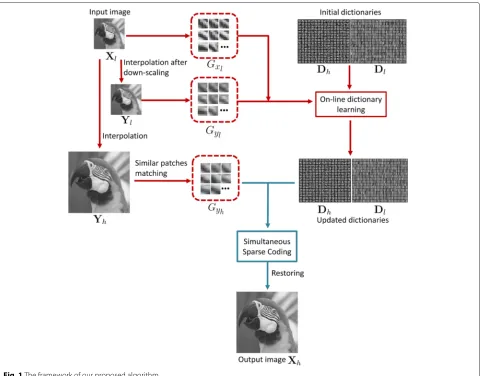
Figure 1 shows the framework of our proposed algo-rithm. We divide our strategy into two phases: the first is the online dictionary learning phase(marked as red lines) and the second is the simultaneous sparse coding phase (marked as blue lines). We show the details of the first phase in Section 3.1 and the second phase in Section 3.2.
3.1 Online dictionary learning phase
Fig. 1The framework of our proposed algorithm
potentially infinite data sets, adapt to dynamic training sets, and it is dramatically faster than traditional algo-rithms. Instead of using a fixed dictionary, we try to update dictionary during the image processing of each patch. The patches in groupGxjlcan be treated as the
cor-responding patches in groupGjylwith high frequency. And
the groupGjyl and the groupG
j
xl compose the training set.
To ensure that the HR dictionaryDhand the LR
dictio-naryDlhave the same sparse representation, we use the
method mentioned in Section 2.2 and transform the joint dictionary learning into a single one.
We subtract patches inGjyl from corresponding patches
inGjxl to obtain the high-frequency part as the HR
sam-ple group set, denoted by Gjh. We extract the feature of patches inGjyl with the feature extraction operator F in
order to boost the prediction accuracy. In [2], high-pass filter was used as F to extract the edge information as the feature. In [24], a set of Gaussian derivative filters was used to extract the contours in the LR patches. In [25], the
wavelets of LR images were used to train dictionary. And in [10], the first- and second-order derivatives were used as the features:
f1=[−1, 0, 1] , f2=f1T
f3=[ 1, 0,−2, 0, 1] , f4=f3T
(14)
where the superscript “T” means transpose. In this paper, we use Eq. (14) asFdue to its simplicity and effectiveness. Instead of applying the four filters to the patches in groupGjyl directly, we apply these filters toYl to get the
four gradient maps and extract the four feature patches from the corresponding location. Then, we concatenate the vector representations of the four patches in the same location and form the LR sample vector group setGjlfor dictionary training. Thus, we get the training group setGjc
for dictionary updating by rearranging the sample using the equation below:
Gjc=
1
√
NG j h 1
√
MG j l
where N andM are the dimensions of the HR and LR image patches in vector form.
The formulation for the updating of the dictionary is shown below:
wherexji is the sample vector with index iin the group set Gjc and D0 is an initial dictionary which is learned using an external database. Thus, we have finished learn-ing dictionary Dj for the patches in the group with the indexj.
The basic unit of dictionary learning is still patch, but each dictionary is only updated by the patches in the corresponding groups. Different from the traditional dic-tionary learning method proposed by Yang et al. [10] that uses a single dictionary for the construction of all patches, this method also contained the information of all patches in the group in dictionary learning phase, which made the dictionary more suitable for the patches in the cor-responding group. Because the patches in the group are similar, the dictionary is relatively more compact than the initial one.
We randomly extracted 80,000 patches from 200 high-quality natural images from the Berkeley Segmentation Database [26]. With the same feature extractorF men-tioned above and the method introduced in Section 2.2, we can calculateD0.
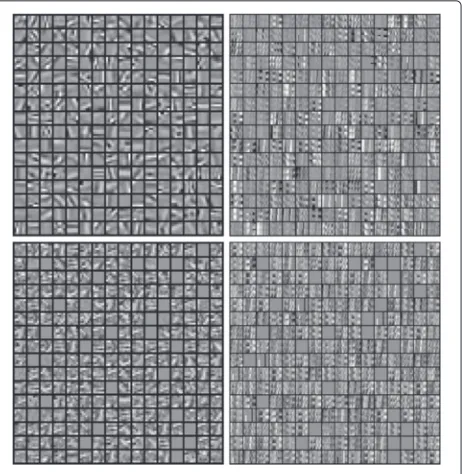
Figure 2 shows the HR dictionaryDh and the LR
dic-tionaryDllearned by our algorithm. The first row is the
primal dictionaries we used as the initial D0. The sec-ond row is the updated dictionaries during the process of the first group. It is obvious that some elements in the updated dictionaries are set to zero vectors, which reduce the size of the dictionaries. And the elements in the updated dictionaries are more specific than the initial ones.
3.2 Simultaneous sparse coding phase
The sparse coding phase attempts to magnify all of the patches in the input LR image Xl. After estimating the
low-frequency partYh of the final HR imageXh, we just
need to restore the high-frequency part and then add it toYh.
We apply simultaneous sparse coding to the sparse rep-resentation of each group. For traditional sparse coding,
Fig. 2Dictionaries used during the image process
similar patches in one group sometimes admit very dif-ferent estimates due to the potential instability of sparse decomposition, which can result in noticeable reconstruc-tion artifacts [27]. A simultaneous sparse coding algo-rithm makes approximation of several input signals at the same time using different linear combinations of the same elementary signals [28]. It solves the problem of the tra-ditional sparse coding by forcing similar patches to admit similar decomposition.
The joint sparse representationAjof the groupGjyhcan
be formulated as below:
iandαjiis the sparse representation ofyihwith dictionary
Djl; where Aj = leading to a convex norm, while the latter actually counts the number of nonzero rows.
After obtaining Aj, the super-resolved patch xih in the groupGjxhcan be written as
xih=Djhαji+yih (21)
With the extract and restore operator defined in (7), the whole imageXhcan be reconstructed by
Xh= L
j=1
Djh◦Aj+Yh (22)
Our method skips the back-project step mentioned in (9), because the sparsity prior is strong enough that we can already achieve good performance.
Algorithm 1 shows the complete process of our pro-posed method.
Algorithm 1The proposed algorithm
Input:Low-resolution imageXl, factors, initial dictionary D0, regularization parameter λ and γ, number of iterationsT.
1. Initialization:
(a) D←D0.
(b) Scale upXlwith factors using bi-cubic
interpolation to generateYh, down-sampleXl
and then interpolate it with the same factors to generateYl. Extract the feature ofYlusing (14).
(c) DivideYhintoP patches and then collect them
intoL groups according to the Euclidean distance.
2. forj=1,. . .,Ldo
(a) Collect the corresponding patches inXland
FYlof the patches in thej -th group ofYh, and
generate the training group setGjcusing (15).
(b) fori=1,. . .,cdo
Update the dictionaryDwith (17), and then get the high-resolution dictionaryDhand
low-resolution dictionaryDlusing (18). end for
(c) Compute sparse representationAjof patches in thej -th group ofYhin (19) withDlusing
S-OMP algorithm.
(d) Reconstruct the patches in thej -th group ofXh
withAjandDhusing (21).
end for
3. Put the patches in all groups back together to generate the output imageXh.
Output:High-resolution imageXh.
4 Experimental results
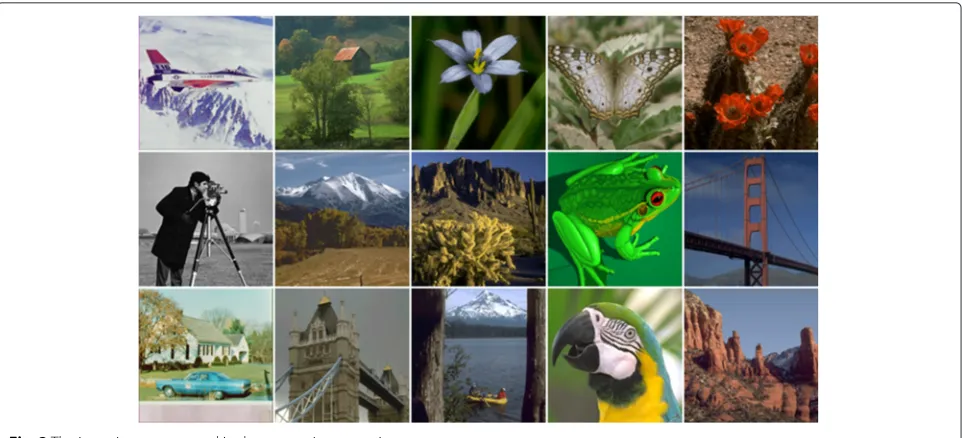
Figure 3 shows the 15 images that are used for compari-son. In our experiment, all the test images are applied a 7×7 Gaussian kernel of zero mean and standard devia-tion 1.0 and then down-sampled by a decimadevia-tion factor of 2 to produce the corresponding LR images.
We compare the proposed method with other four algo-rithms to illustrate the efficiency of our proposed method. The competed algorithms are bi-cubic interpolation [13, 15, 20]. Specifically, for methods based on fixed exter-nal dictionaries, we choose the work of Yang et al. [20] for comparison; for methods based on non-local similarity, we choose the work of Glasner et al. [15] for comparison; for methods that combine sparse representation and non-local similarity, we choose the representative work ASDS method [13] for comparison.
A frequently used criterion, peak signal-to-noise ratio (PSNR), is used for the image quality analysis. But it is sometimes not a reliable metric for evaluating the image quality. Therefore, the structural similarity (SSIM) index [29] and the feature similarity (FSIM) index [30] are also adopted for the objective evaluation. A higher PSNR value implies less distortion compared with the ground truth, and an SSIM value or an FSIM value much closer to 1 indicates the structure or the feature of the recon-structed image is more similar to the ground truth image, respectively.
For color image super-resolution, we only apply our algorithm on the illuminance component and use bi-cubic interpolation for the chromatic components, because human visual system is not sensitive to the chromatic components. In experiments, the value of PSNR, SSIM, and FSIM are all conducted on the illuminance compo-nent of the image.
4.1 Experimental configuration
We magnify the input LR image by factor of 2 and use 6×6 patches with an overlap of two pixels between adjacent patches, both for the HR imageYhandXhand LR image YlandXl; and we learned the dictionary of sizeK =128.
In the online dictionary learning phase, the sizeLof train-ing window is selected as 60, the numbercof best matched patches is 128, the sparsity regularization parameterλis 0.15, and the number T of iteration to train the dictio-nary is 32. In the simultaneous sparse coding phase, the parameterγ that balances the fidelity term and the reg-ularization term is 0.15, and the value of(p,q)is chosen as 1, 2.
Fig. 3The input images we used in the comparison experiments
The proposed algorithm is implemented by MATLAB R2011b usingSPAMS toolbox[31] for on-line dictionary learning and simultaneous sparse coding. The computer system used for simulation is Intel Core i7-4500U CPU at 1.80GHz with 8GB of RAM.
4.2 Noiseless experiment
4.2.1 Objective evaluations
For objective evaluations, Table 1 reports the results obtained by the proposed method and other super-resolution approaches. In this table, the proposed approach holds the best performance for most of the images. While for images such as cameraman or parrot, the proposed approach is not so good for the PSNR com-parisons. That is because the PSNR value just counts the error between pixel values in the two images while ignores the characteristics of human visual system. The training samples of the proposed method need to be normalized before online dictionary training according to the require-ment of the online training function. After the sparse approaching phase, the tonal range has a little bias in the histogram. This bias leads influences on the PSNR value.
The SSIM and FSIM value, which are more accurate than PSNR value to evaluate the image quality, simulate the characteristic of human visual system. The improve-ment of our results in SSIM and FSIM shows the structure and feature restoration are better than the other compet-ing methods.
4.2.2 Visual quality evaluations
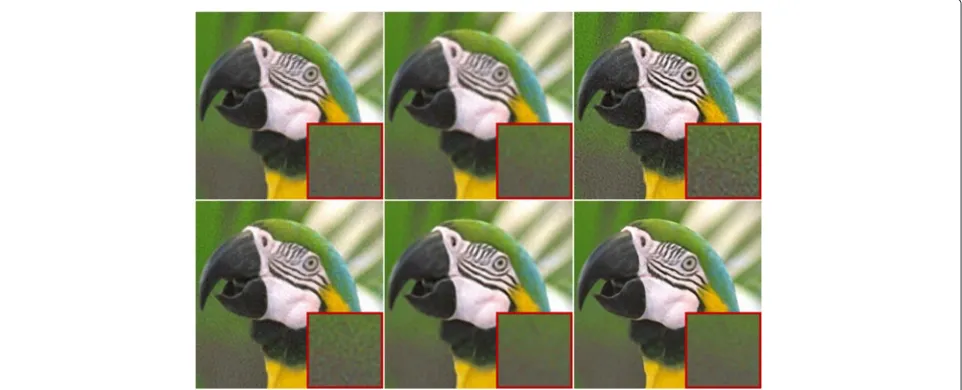
For visual quality evaluations, Figs. 4, 5, 6, and 7 show the visual comparison of different approaches. In the figures, the results of bi-cubic interpolation are very blurry and
have staircase artifacts on the ramp. The results of Yang et al. [20] restore lots of details and sharp edges, while introducing noise and ringing artifacts. This method uses a fixed dictionary pair to try to restore the image but it cannot be suitable for different kind of structures. The results of Glasner et al. [15] seem too smooth to retain enough details. This method uses non-local similarity prior and extracts information only from the input image itself. It makes full use of the input image, but the high-frequency information in the input image is limited. The results of ASDS [13] are better than bi-cubic for less staircase artifacts and less blurry edges. The ASDS [13] algorithm uses several sub-dictionaries to match different kinds of micro-structures, but the sub-dictionaries cannot guarantee the coverage of all the micro-structures.
Our algorithm uses the dictionary trained from exter-nal databases to offer the missing high frequency and the input image itself to offer the ground truth information. The online learning updates the dictionary for each patch to combine the information of external databases and the ground truth. The updated dictionary is more suitable for the patch and avoids adding some artifacts to the restored image.
Table 1Comparisons of peak signal-to-noise ratio(PSNR) values, structural similarity (SSIM) values, and feature similarity (FSIM) values for 15 test images with different super-resolution approaches
Image Bi-cubic Yang et al. [20] Glasner et al. [15] ASDS [13] Proposed
Avion PSNR 27.01 29.13 28.48 31.62 30.92
SSIM 0.875 0.905 0.918 0.934 0.936
FSIM 0.863 0.902 0.907 0.930 0.936
Barnfall PSNR 29.16 30.14 29.88 30.76 30.51
SSIM 0.716 0.780 0.763 0.783 0.788
FSIM 0.825 0.895 0.862 0.893 0.899
Blueeye PSNR 33.39 34.00 35.28 36.37 36.75
SSIM 0.923 0.923 0.939 0.939 0.944
FSIM 0.946 0.957 0.960 0.962 0.968
Butterfly PSNR 28.51 30.13 29.85 32.22 31.51
SSIM 0.855 0.894 0.902 0.921 0.926
FSIM 0.909 0.930 0.935 0.947 0.950
Cactusflower PSNR 25.48 26.67 26.34 27.47 26.95
SSIM 0.658 0.763 0.728 0.749 0.764
FSIM 0.793 0.877 0.844 0.863 0.885
Cameraman PSNR 25.55 26.83 26.68 28.68 27.94
SSIM 0.827 0.862 0.869 0.892 0.899
FSIM 0.821 0.883 0.864 0.908 0.901
Colomtn PSNR 27.44 28.33 27.93 28.80 28.67
SSIM 0.685 0.747 0.729 0.749 0.757
FSIM 0.807 0.877 0.841 0.876 0.886
Desert PSNR 24.10 24.86 24.89 25.59 25.41
SSIM 0.677 0.757 0.737 0.780 0.786
FSIM 0.812 0.879 0.852 0.890 0.896
Frog PSNR 31.42 32.74 32.78 34.45 34.27
SSIM 0.895 0.920 0.927 0.937 0.944
FSIM 0.894 0.931 0.924 0.945 0.953
Goldgate PSNR 33.05 34.46 34.05 35.48 35.10
SSIM 0.873 0.899 0.907 0.908 0.912
FSIM 0.877 0.919 0.909 0.922 0.925
House PSNR 26.53 28.40 28.14 30.33 29.61
SSIM 0.817 0.863 0.865 0.892 0.894
FSIM 0.835 0.886 0.888 0.913 0.919
London PSNR 29.27 31.32 30.34 33.28 33.13
SSIM 0.850 0.894 0.894 0.915 0.919
FSIM 0.837 0.903 0.877 0.919 0.918
Lostlake PSNR 27.60 28.81 28.37 29.71 29.30
SSIM 0.749 0.806 0.795 0.819 0.824
FSIM 0.839 0.896 0.877 0.903 0.907
Parrot PSNR 28.93 31.21 30.19 34.05 32.92
SSIM 0.911 0.926 0.939 0.945 0.949
FSIM 0.917 0.948 0.938 0.959 0.957
Redrock PSNR 27.33 28.51 28.12 29.35 29.11
SSIM 0.773 0.834 0.820 0.847 0.851
FSIM 0.820 0.889 0.858 0.894 0.893
Fig. 4Comparison of SR results of blueeye image with magnification factor 2.Top row: bi-cubic, the method in [20], and the method in [15].
Bottom row: the method in [13], the proposed method, and the ground truth image
With the fixed size of the search window, many patches that are not so similar are also added into the training sam-ple set. This may mislead the dictionary updating, thus leads to a result that is not so fine. In addition, when the low-frequency part of the input image is too blurry, it also misleads the dictionary updating and produces blurry details.
In Fig. 4, the edges and the streaks of the petal of our method are clearer than that of Glasner et al. [15] and ASDS [13], while there is no additional noise and ringing artifact as which in the result of Yang et al. [20]. In Fig. 5, the fine lines in the wings of the butterfly are restored very well, and the round dot is not distorted when compared
with the first three methods. Because the textures in the butterfly wings are repeated, which is convenient for us to collect much useful ground truth information about these details. The same reason is for the restoration of Fig. 6. The short stripes on the parrot’s face are separated in the results of bi-cubic, Yang et al. [20], ASDS [13], and our method, while the edges of other stripes in our result are sharper than that of bi-cubic and ASDS [13] and are more delicate than that of Yang et al. [20]. In Fig. 7, the details of the camera is restored better than the others, espe-cially the white fine line in the left bottom corner of the camera. Besides, it is obvious that the edges of the cam-eraman’s coat are sharper than others. These indicate that
Fig. 5Comparison of SR results of butterfly image with magnification factor 2.Top row: bi-cubic, the method in [20], and the method in [15].
Fig. 6Comparison of SR results of parrot image with magnification factor 2.Top row: bi-cubic, the method in [20], and the method in [15].
Bottom row: the method in [13], the proposed method, and the ground truth image
our algorithm can recover fine details and sharp edges at the same time.
4.3 Noisy experiment
In this subsection, we added Gaussian white noise with zero mean and standard deviation of 1, 3, and 5 to the LR image parrot and then compare the result of the five meth-ods. The objective evaluation is reported in Table 2 and the results of the LR image with noise levelσν = 5 with different approaches are shown in Fig. 8.
From the table and the figure, we can see that the results of Yang et al. [20] and Glasner et al. [15] enhanced the noise. The result of ASDS [13] performs the best on noise
suppressing, but this noise suppression also affects the image reconstruction and makes the result image more blurry than its result of noiseless image. The proposed method achieves a good result both on noise suppress-ing and image reconstruction. The proposed method is better than the other because the group-based dictionary learning phase gets a relatively compact and suitable dic-tionary for the patches in the group to be reconstructed. The sparse coding in each iteration in the online dic-tionary learning method helps suppress the noise in the training patches. Thus, the elements in the dictionary and the structures of the group have a correlation between them, while the elements are independent with the noise.
Fig. 7Comparison of SR results of cameraman image with magnification factor 2.Top row: bi-cubic, the method in [20], and the method in [15].
Table 2Comparisons of peak signal-to-noise ratio(PSNR) values, structural similarity (SSIM) values, and feature similarity (FSIM) values for image with different noise level with different super-resolution approaches
Noise level Bi-cubic Yang et al. [20] Glasner et al. [15] ASDS [13] Proposed
σν=0 PSNR 28.93 31.21 30.19 34.05 32.92
SSIM 0.911 0.926 0.939 0.945 0.949
FSIM 0.917 0.948 0.938 0.959 0.957
σν=1 PSNR 28.92 31.13 30.17 31.34 32.92
SSIM 0.910 0.918 0.935 0.908 0.947
FSIM 0.917 0.945 0.937 0.934 0.956
σν=3 PSNR 28.83 30.49 29.94 31.24 32.67
SSIM 0.897 0.863 0.908 0.907 0.934
FSIM 0.913 0.918 0.925 0.936 0.952
σν=5 PSNR 28.66 29.41 29.46 30.96 32.18
SSIM 0.875 0.779 0.860 0.896 0.911
FSIM 0.904 0.872 0.901 0.934 0.941
The data in italics indicates the best PSNR/SSIM/FSIM result
Combined with the simultaneous sparse coding phase, the noise is suppressed and the structure and the details are retained.
4.4 Time comparisons
In this subsection, we compare the running time of the four methods. We have ignored the time of training dic-tionaries for Yang et al. [20] and ASDS [13] and the time of training initial dictionaries for the proposed method.
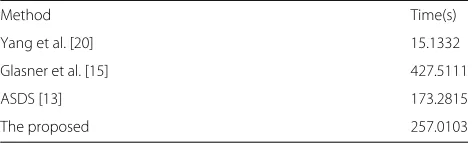
We count the mean times for all configuration of the 15 images experiments, and Table 3 shows the running time of the compared methods. From the table, we can see that the shortest running time is that of Yang et al. [20]. The running time of Glasner et al. [15], ASDS [13], and the proposed method is comparable. Although we use
online dictionary learning algorithm during the process-ing which costs a large amount of time, we use group as the basic unit to reduce the dictionary learning times, and the simultaneous sparse coding algorithm also accelerates the processing.
5 Conclusions
This paper describes a novel method of group-based single image super-resolution. With the property of non-local self-similarity, we divide the input image into several groups. Combining with the information from external databases, we train suitable dictionaries for each group using online dictionary learning method. Simultaneous sparse coding algorithm is used to accelerate the pro-cessing and improve the result. Experiments show that
Table 3Time comparisons of different approaches
Method Time(s)
Yang et al. [20] 15.1332
Glasner et al. [15] 427.5111
ASDS [13] 173.2815
The proposed 257.0103
the proposed method can restore sharp edges and fine details and achieve good result on noise suppressing. The running time is comparable with other state-of-the-art algorithms.
In this paper, we just use the traditional Euclidean dis-tance for the searching of the similar patches to make a group. For further research, we will focus on developing a evaluation that directly measure the probability between two patches that belong to the same group to improve the performance of the proposed method.
Acknowledgements
This work was supported by National Natural Science Foundation of China (Grant No. 61501334).
Availability of data and materials
The images supporting the conclusions of this article are available in the “Test Images of Computer Vision Group”, All of the images are Copyright free. http://decsai.ugr.es/cvg/index2.php.
Authors’ contributions
XL and DW designed and carried out the experiments. XL and DD analyzed the experimental results. XL wrote the manuscript. WS and DD gave the critical revision and final approval. All authors read and approved the final manuscript.
Competing interests
The authors declare that they have no competing interests.
Author details
1School of Electronics and Information, Wuhan University, Wuhan 430072,
People’s Republic of China.2International School of Software, Wuhan University, Wuhan 430072, People’s Republic of China.3School of Remote Sensing and Information Engineering, Wuhan University, Wuhan 430072, People’s Republic of China.
Received: 20 February 2016 Accepted: 14 July 2016
References
1. B Simon, K Takeo, Limits on super-resolution and how to break them. IEEE Trans. Pattern Anal. Mach. Intell.24(9), 1167–1183 (2002)
2. TF Willian, CP Egon, Learning low-level vision. Int. J. Comput. Vis.40(1), 25–47 (2000)
3. TF Willian, RJ Thouis, CP Egon, Example-based super-resolution. IEEE Comput. Graph. Appl.22(2), 56–65 (2002)
4. S Jian, Z Jieie, FT Marshall, inIEEE Conference on Computer Vision and Pattern Recognition. Context-constrained hallucination for image super-resolution (IEEE, San Francisco, CA, USA, 2010), pp. 231–238 5. L Zhouchen, S Heung-Yeung, Fundamental limits of reconstruction-base
superresolution algorithms under local translation. IEEE Trans. Pattern Anal. Mach. Intell.26(1), 83–97 (2004)
6. M Antonio, JO Stanley, Image super-resolution by tv-regularization and Bregman iteration. J. Sci. Comput.37(3), 367–382 (2008)
7. D Shengyang, H Mei, X Wei, W Ying, G Yihong, KK Aggelos, Softcuts: a soft edge smoothness prior for color image super-resolution. IEEE Trans. Image Process.18(5), 969–981 (2009)
8. S Jian, S Jian, X Zongben, S Heung-Yeung, inIEEE Conference on Computer Vision and Pattern Recognition. Image super-resolution using gradient profile prior (IEEE, Anchorage, Alaska, USA, 2008), pp. 24–26 9. MB Alfred, LD David, E Michael, From sparse solutions of systems of
equations to sparse modeling of signals and images. Siam Rev.51(1), 34–81 (2009)
10. Y Jianchao, W John, H Thomas, M Yi, Image super-resolution via sparse representation. IEEE Trans. Image Process.19(11), 2861–2873 (2010) 11. Y Jianchao, W Zhaowen, L Zhe, C Scott, H Thomas, Coupled dictionary
training for image super-resolution. IEEE Trans. Image Process.21(8), 3467–3478 (2012)
12. Z Jian, Z Chen, X Ruiqin, M Siwei, Z Debin, inIEEE International Symposium on Circuits and Systems. Image super-resolution via dual-dictionary learning and sparse representation (IEEE, COEX, Seoul, Korea, 2012), pp. 1688–1691
13. D Weisheng, Z Lei, S Guangming, W Xiaolin, Image deblurring and super-resolution by adaptive sparse domain selection and adaptive regularization. IEEE Trans. Image Process.20(7), 1838–1857 (2011) 14. G Xinbo, Z Kaibing, T Dacheng, L Xuelong, Joint learning for single-image
super-resolution via a coupled constraint. IEEE Trans. Image Process.
21(2), 469–480 (2012)
15. G Daniel, B Shai, I Michal, inProceedings of the 12th International Conference on Computer Vision: 29 September-2 October 2009. Super-resolution from a single image (IEEE, Kyoto, 2009), pp. 349–356 16. GN Aneesh, SN Madhu, R Jeny, Single image super resolution from
compressive samples using two level sparsity based reconstruction. Procedia Comput. Sci.46, 1643–1652 (2015)
17. D Weisheng, S Guangming, Z Lei, W Xiaolin, Super-resolution with nonlocal regularized sparse representation. Proc. SPIE Visual Commun. Image Process.7744, 77440–17744010 (2010)
18. Z Jian, Z Debin, G Wen, Group-based sparse representation for image restoration. IEEE Trans. Image Process.23(8), 3336–3351 (2014) 19. Z Jian, Z Debin, J Feng, G Wen, inData Compression Conference (DCC),
2013. Structural group sparse representation for image compressive sensing recovery (IEEE, Snowbird, UT, 2013), pp. 331–340
20. Y Jianchao, W John, H Thomas, M Yi, inIEEE Conference on Computer Vision and Pattern Recognition. Image super-resolution as sparse representation of raw image patches (IEEE, Anchorage, AK, USA, 2008), pp. 1–8 21. LD David, For most large underdetermined systems of equations, the
minimal l1-norm near-solution approximates the sparsest near-solution. Commun. Pure Appl. Math.59(7), 907–934 (2006)
22. Y Jianchao, L Zhe, C Scott, inIEEE Conference on Computer Vision and Pattern Recognition. Fast image super-resolution based on in-place example regression (IEEE, Portland, OR, USA, 2013), pp. 1059–1066 23. M Julien, B Francis, P Jean, S Guillermo, Online learning for matrix
factorization and sparse coding. J. Mach. Learn. Res.11, 19–60 (2010) 24. S Jian, Z Nan-Ning, T Hai, S Heung-Yeung, inIEEE Conference on Computer
Vision and Pattern Recognition. Image hallucination with primal sketch priors, (Madison, Wisconsin, USA, 2003), pp. 729–736
25. A Na, P Jinye, Z Xuan, F Xiaoyi, Sisr via trained double sparsity dictionaries. Multimedia Tools Appl.74(6), 1997–2007 (2013)
26. The Berkeley Segmentation Dataset and Benchmark. http://www.eecs. berkeley.edu/Research/Projects/CS/vision/grouping/segbench. Accessed June 2007
27. M Julien, B Francis, P Jean, S Guillermo, Z Andrew, inIEEE International Conference on Computer Vision. Non-local sparse models for image restoration (IEEE, Kyoto, Japan, 2009), pp. 2272–2279
28. AT Joel, CG Anna, JS Martin, Algorithms for simultaneous sparse approximation. part i: Greedy pursuit. Signal Process.86(3), 572–588 (2006)
29. W Zhou, CB Alan, RS Hamid, PS Eero, Image quality assessment: from error visibility to structural similarity. IEEE Trans. Image Process.13(4), 600–612 (2004)
30. Z Lin, Z Lei, M Xuanqin, Fsim: a feature similarity index for image quality assessment. IEEE Trans. Image Process.20(8), 2378–2386 (2011) 31. SPArse Modeling Software. http://spams-devel.gforge.inria.fr/downloads.

![Fig. 4 Comparison of SR results of blueeye image with magnification factor 2. Top row: bi-cubic, the method in [20], and the method in [15].Bottom row: the method in [13], the proposed method, and the ground truth image](https://thumb-us.123doks.com/thumbv2/123dok_us/885271.1106387/9.595.58.541.509.703/comparison-results-blueeye-magnification-factor-method-proposed-ground.webp)
![Fig. 6 Comparison of SR results of parrot image with magnification factor 2. Top row: bi-cubic, the method in [20], and the method in [15].Bottom row: the method in [13], the proposed method, and the ground truth image](https://thumb-us.123doks.com/thumbv2/123dok_us/885271.1106387/10.595.58.540.508.703/comparison-results-parrot-magnification-factor-method-proposed-ground.webp)