Design and Development of Games and Interactive
Installations for Environmental Awareness
Anna Gardeli
1, Spyros Vosinakis
1, Konstantinos Englezos
1, Dimitra Mavroudi
1, Manolis Stratis
1,
Modestos Stavrakis
1,*1 University of the Aegean, Department of Product & Systems Design Engineering, Ermoupoli, Syros, 84100, Greece
Abstract
Digital games and playful interactive installations are considered a promising means to raising awareness about the environment and persuading people to adopt an environmental friendly behavior. However, the selection and use of appropriate methods and paradigms for designing and evaluating such systems and successfully blending the ‘fun’ element with the messages to be communicated is still an active research issue. The aim of this paper is to investigate the benefits and drawbacks of using games and playful interactive technologies for changing people’s attitude towards the environment through a series of projects developed and publicly presented during a campaign for reducing the use of plastic bags. The development included the identification of the projects’ goals, an analysis of people, activities, target behavior and context of use, and finally the design and prototyping of the interactive installations. In total, eight projects have been developed, six interactive installations and two digital games that have been publicly presented, used and evaluated during the campaign. An additional user evaluation of the two games has been performed in the laboratory, to gain more insight on their usability and impact. The paper presents an overview of the design process and methodology, the main design elements of each project, and a number of observations and preliminary evaluation results.
Keywords: persuasive technologies, games, user motivation, user engagement, environmental sustainability, pro-environmental behavior.
Received on 12 October 2017, accepted on 25 November 2017, published on 8 December 2017
Copyright © 2017Anna Gardeli et al., licensed to EAI. This is an open access article distributed under the terms of the Creative Commons Attribution licence (http://creativecommons.org/licenses/by/3.0/), which permits unlimited use, distribution and reproduction in any medium so long as the original work is properly cited.
doi: 10.4108/eai.8-12-2017.153402
*
1. Introduction
Playful interactive systems, gamification and digital or hybrid games are emerging approaches that have been used to inform, educate and change people's behavior about environmental problems related to ecological sustainability [1,2]. Persuasive technologies and ecologically-focused gamification approaches enrich game and interaction design techniques through involving and motivating users to act while at the same time disseminate critical information about the effects of human intervention to nature. Numerous recent scientific studies have resulted in strong indications about the value and effectiveness of interactive technologies and games in
education and sensitization about environmental issues [3,4].
An important aspect of this research area is the incorporation of appropriate motivational and playful elements in the design of interactive systems to attract and retain users’ interest, whilst achieving their educational or persuasive goals. Despite the recent emergence of generic methodologies and guidelines for designing persuasive systems [5,6], the successful selection and combination of design elements and technologies that lead to the expected awareness or behavior change effects is still an open issue. There is a growing need for further paradigms and use cases in a variety of areas that will eventually provide rich feedback on various design choices with respect to the target group and the desired outcomes.
2 Our research is along this line. In this work we have focused on design approaches for pre-environmental behavior through physical play and motivation within a social context and by using interactive technologies and computer games. We present the development and initial evaluation of a set of games and interactive installations that have been publicly displayed in an information and awareness campaign for the reduction of plastic bags in the marine environment (LIFE DEBAG, LIFE14 GIE/GR/001127). Selected student groups from two courses in collaboration with the tutors developed and tested eight different projects; two digital games and six playful interactive installations. The projects aimed to promote the campaign's goals in informing and educating people about the environmental problem through play and interaction. To achieve these primary goals, the games and interactive installations focused to attract people's attention, instill interest, engage them in understanding the problem caused to the environment through the use of plastic bags, and finally motivate them to participate in activities that promote ecological sustainability. In addition, some of the interactive installations involved the actual recycling of plastics through play. The paper presents the design approach and methodologies used for the development of the projects, the key design elements and technology of each solution, and some preliminary results regarding their usability, motivation and impact, based on their public presentation and use, as well as a follow-up laboratory evaluation of the two digital games.
2. Related work
Persuasion (psychology), motivation, user engagement and playfulness have been recognized to be important factors that amplify user experience when interacting with technologies. Many research works suggest that incorporating these elements into the design of interactive technologies could confront user boredom and disengagement, which in turn are proved to be adaptive responses of the user to poorly designed systems [7,8]. Functionality is always considered as the most important requirement for pleasurable experience when interacting, but non-functional elements such as playfulness, affective experience and fun are also important [3, 9, 10].
Numerous studies and projects have applied persuasive technologies, motivational elements and playfulness in a wide variety of domains such as health and fitness, safety, environmental sustainability and more [11]. As being described by Fogg [12], persuasion is “an attempt to shape, reinforce, or change behaviors, feelings, or thoughts about an issue, object, or action”. Persuasive technologies and gamification are motivational systems that rely on the assumption that technology can influence human behavior and habits. Designing for persuasion – or change - must be on purpose of “guiding the user towards an attitude or behavior change” [13] while at the same time keeps him/her motivated and engaged with the task/activity at hand.
Digital or hybrid games have grown to be a strong educational and persuasive tool, given their entertaining and motivating nature. Games intended for social and behavioral change are called games for change, and they mainly aim “to promote reflection and positive behavior changes in players in the physical world, through characteristics that persuade players to consider the social or political issue presented in the game” [14]. Instead of words, images or moving picture, games use their rule-based approach and interactions to persuade players.
Antle et al. have identified three models of persuasion that can be found in the design of games for change [15]. The first is called information deficit model and is based on directly delivering important information to the user that may change his/her attitude. Typically, these games have little gameplay and are mostly based on fact presentation and question answering (e.g. through quizzes). The second is the procedural rhetoric model which is based on the abstraction of physical world systems in the game and it is directly linked to the game elements, mechanics and gameplay. Using simulations or micro simulations, for instance, users can be persuaded by immediately witnessing the effect of their actions. This way, the link between the cause and effect is becoming obvious and it is possible to be directly connected to a real-world situation [6]. Finally, in the emergent dialogue model, the key idea is that multiple participants bring their own ideas and values and are engaged in an iterative dialogue in order to co-create their own version of the future. Therefore, this model is less about influencing people towards a ‘correct’ behavior; it is more about letting participants generate their own understanding on how their values and behavior may influence the future.
Numerous studies (e.g. [16, 17]) also suggest that interactive installations combining a digital interface with physical activity present strong indicators of producing positive behavior change results, especially when combined with entertaining elements. A typical example is the “playful toothbrush” system [18], an interactive game with motivational and educational purposes. With a vision-based motion tracker the system makes a game out of the activity of brushing one's teeth, where the user brushes the teeth of a ‘virtual self’ through physical interaction. Another example which focuses on pro-environmental behavior is “Gaia”, a multiplayer mobile augmented reality game combined with a public installation that helps users learn about waste management and recycling in a fun way. Users walk in the city to collect virtual objects through their mobile interface and bring them to the recycle bins, whilst learning facts and tips about recycling.
Some approaches additionally provide a form of feedback to users concerning the effects of their actions to help them reflect and improve their future behavior. For example, UBIGreen investigates a mobile tool for tracking and supporting green transportation habits [19]. A mobile phone-based application provides personal awareness about green transportation behaviors through iconic feedback. Small graphical rewards are earned by
EAI Endorsed Transactions on
selecting pro-environmental means of transportation, and the user performance is also reflected in the phone’s wallpaper. Another example is BinCam [17], a smart recycle bin that informs the users’ social network about her recycling behavior by posting images of thrown-away items whenever the lid opens and closes. As such, it helps users reflect on their own and other people’s waste-related habits.
Finally, several influential projects and approaches in developing interactive installations and games also emerged from ‘The Fun Theory’ campaign, an initiative
that aimed in exploring people’s environmental behavior and persuade them to change by allowing them to experience the fun side of acting responsibly [15]. It focused in exploring three aspects of human behavior: environmental psychology, fun theory, operant conditioning. Among others, projects included a piano staircase for motivating people exercising by using traditional stairs instead of escalator, ‘The World’s Deepest Bin’ for motivating the collection of garbage and placement in an interactive bin, and the ‘Bottle Bank Arcade Machine’ about recycling glass bottles and cans.
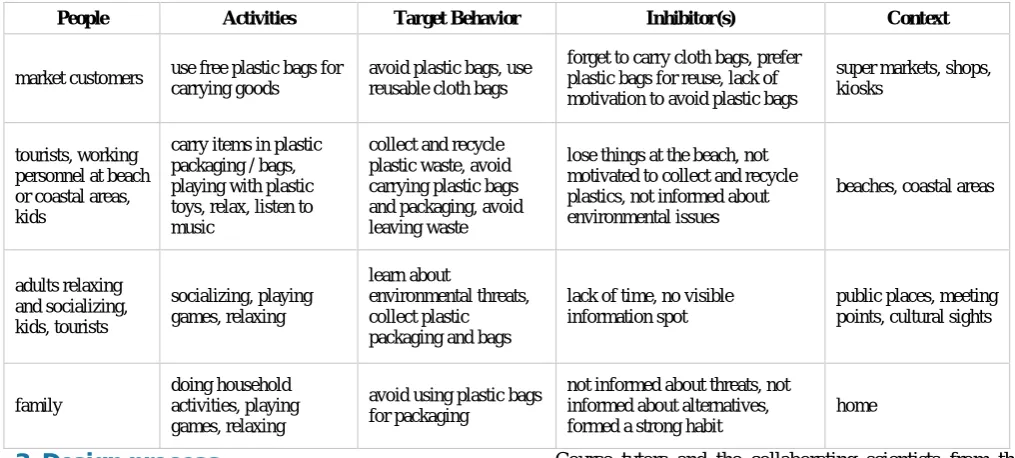
Table 1. People, activities, target behavior and inhibitors in four different contexts.
People Activities Target Behavior Inhibitor(s) Context
market customers use free plastic bags for carrying goods
avoid plastic bags, use reusable cloth bags
forget to carry cloth bags, prefer plastic bags for reuse, lack of motivation to avoid plastic bags
super markets, shops, kiosks
tourists, working personnel at beach or coastal areas, kids
carry items in plastic packaging / bags, playing with plastic toys, relax, listen to music
collect and recycle plastic waste, avoid carrying plastic bags and packaging, avoid leaving waste
lose things at the beach, not motivated to collect and recycle plastics, not informed about environmental issues
beaches, coastal areas
adults relaxing and socializing, kids, tourists
socializing, playing games, relaxing
learn about
environmental threats, collect plastic packaging and bags
lack of time, no visible information spot
public places, meeting points, cultural sights
family
doing household activities, playing games, relaxing
avoid using plastic bags for packaging
not informed about threats, not informed about alternatives, formed a strong habit
home
3. Design process
‘Week without plastic bags’ was a campaign organized in the island of Syros as part of the LIFE DEBAG project, which included many different actions with informative and educative purposes, such as training seminar for primary and secondary education teachers, beach litter cleanup actions, etc. Its main objective was to inform about environmental issues related to the use of plastic bags and to persuade consumers to replace them with more environmental friendly solutions. The Department of Product & Systems Design Engineering of the University of the Aegean supported the project by implementing interactive technologies and games that promoted the campaign’s messages as co-ordinated student projects in two different courses: Computer Games / Edutainment and Interaction Design. The methodological framework used for developing the projects was based on the following phases: 1) preliminaries and introduction, 2) briefing, 3) research, 4) design, and 5) evaluation.
The first phase was initiated by a presentation and analysis of the main goals of the LIFE DEBAG project.
Course tutors and the collaborating scientists from the LIFE DEBAG project explained the main objectives and provided guidelines regarding the methods and techniques that should be used in the following phases. Preliminary activities also included project planning which involved team assembly, role assignments (coding, physical computing, visual & industrial design, interaction design, communication design and research) and the documentation of a project plan.
Following educational material that has already been taught during the lectures and tutorials of the two courses, students formed groups (3-4 students) and started briefing (phase 2) by defining goals, constraints and future design directions of the project. The main methodological tools that assisted in this phase was the eight-step design process for creating persuasive technologies [5] and the P.A.C.T. scoping technique [21] followed by a preliminary use of exploratory scenarios and early design sketches for ideation [22,23].
4 design goals focusing in dealing with product’s behavior, visual and physical form, interaction, playability and the organization of the digital interactive content. The research, design and evaluation processes that the students followed involved a multilayered set of techniques for a) conducting research, b) collecting data and c) modeling raw information, d) defining requirements, e) laying out a basic design framework, f) defining interactive content and mechanics (especially in the case of digital games), g) designing prototypes (low & high fidelity) and f) testing and evaluation.
The research perspective in this work was human-centered and followed a user-driven design research. The methodological tool for conducting research was based on the scoping technique of P.A.C.T. [21] and the first four steps from Fogg’s design process [5], which provided the grounds for analyzing: People (receptive audience), Activities in terms of Actual and Target Behavior, and Inhibitors of Target Behavior, Context and the Technologies involved.
Students conducted interviews with stakeholders and other close collaborators from the LIFE DEBAG project campaign. They mainly focused in analyzing users, their behavior and everyday activities. Understanding pro-environmental behavior of people and their engagement with the ecological problem of plastic bags led to the analysis of the actual contexts where people mainly come in close contact with getting, using or disposing a plastic bag (e.g supermarkets, shops, beaches or other coastal environments and household). Moreover, contexts where people gather, have time to spend in learning and getting informed about environmental issues have also been identified. Analysis of the potential technologies and experimentation on physical computing and games design techniques were the final stages of the research agenda. The main outcomes of the research are summarized in Table 1.
Analyzing and modeling raw data using personas was the core of developing models that explained what was observed. The last step in modeling information and towards the definition of requirements was done using scenarios or stories about personas interacting with an anticipatory version of the future product.
The next phase involved the definition of the design framework where students focused on interaction and games design, physical computing, and visual and industrial design for the interactive installations. In the case of digital games, the students further focused on selecting and applying appropriate game world aesthetics, story and mechanics that balance well with the intended purpose and the messages to be communicated, using the popular Mechanics-Dynamics-Aesthetics (MDA) approach [25].
Finally, the design process concluded by designing low fidelity prototypes followed by more detailed designs of highly interactive games and installations. A series of (play) testing and refinement led to the final prototypes, which were publicly presented and tested during the LIFE DEBAG campaign.
4. Project Descriptions
In total, eight projects have been implemented, six interactive installations and two platform computer games.
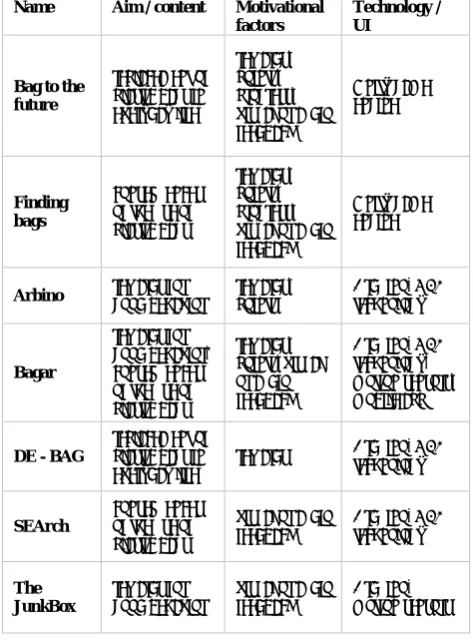
Five projects focused on informing and educating about collecting and recycling plastic waste of the coastal and marine environment, while also incentivized actual recycling through play. Two projects focused on the replacement of plastic bags by cloth bags principally in urban environments. One project focused on informing and providing awareness about the consequences of plastic bag use. Concerning the interaction techniques, the two computer games are presented through a visual/graphical interface, one of the installations uses a hybrid GUI and physical interaction, while the rest use physical and tangible interaction alone. Table 2 presents a summarized description of the projects.
Table 2. The eight implemented projects with their aims and content, motivational factors and
technology – user interface employed.
Name Aim / content Motivational factors
Technology / UI
Bag to the future
replacement of plastic bags in everyday life
rewards, points, progress, visual or audio feedback
Unity game engine
Finding bags
consequences of the use of plastic bags
rewards, points, progress, visual or audio feedback
Unity game engine
Arbino rewards for good behavior rewards, points Arduino, NFC technology
Bagar
rewards for good behavior, consequences of the use of plastic bags
rewards, points, visual or audio feedback
Arduino, NFC technology, motion sensors, mobile app
DE - BAG
replacement of plastic bags in
everyday life rewards
Arduino, NFC technology
SEArch
consequences of the use of plastic bags
visual or audio feedback
Arduino, NFC technology
The JunkBox
rewards for
good behavior visual or audio feedback Arduino, motion sensors
The two platform games have been developed on the Unity game development platform and both provided a
EAI Endorsed Transactions on
desktop and a tablet version. The interactive installations have been developed using physical computing platforms and microcontrollers such as Arduino, sensors and actuators, NFC/RFID technology, electro-mechanical devices such as motors and servos, lighting and other hardware.
Bag to the future (digital game). The first digital game was built on the following objectives: a) to motivate users towards the replacement of plastic bags in their everyday life and b) to provide awareness of the negative impact of plastic bags on the physical environment.
The storyline and game plot are based on two basic facts about the causes of the environmental problem. The first is about the hidden and unpredictable long-term threats of plastic bags on the environment while the second is about the importance of the development of household/local pro-environmental behavior at an early stage in human life. Therefore, the negative effects that plastic bags have on the environment is not always directly visible, but our current actions have consequences in a more distant future. Based on that fact, the game starts with a short narrative, in which the imaginary future-self of the young character appears to inform him about the situation in the future, were the problem is most visible and unavoidable.
Second, the first “target” is the character’s house, aiming to create a mental connection with the place where human behavior and habits are born and formed, at the domestic environment. For the next levels, the player moves to his neighborhood and town, local stores, local school etc.
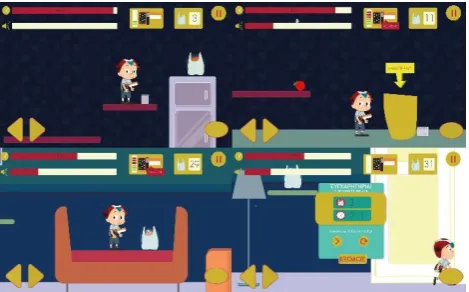
Figure 1. Screenshots of “Bag to the future” game.
His/her purpose is to change the future by altering the behavior and habits of the grown-ups, who use plastic bags recklessly every day. As a mission, the character must collect as many plastic bags as possible, with a futuristic device called “bag-exterminator”, and replace them with fabric bags, baskets or different temporary storage means, friendlier to the environment. Throughout the game, alternative storage means are being proposed to the player depending on the context of use. The gameplay
focuses on the story and the main act of replacing plastic bags, using simple mechanics of a 2D platform, side scrolling game. His/her mission is secret, so the user is playing against time and noise. The purpose is to collect as many plastic bags as possible in the minimum time, without making too much noise; by jumping of great high or dropping objects on the floor. Figure 1 presents four screenshots of the game.
Finding bags (digital game). The second game informs about the factors that contribute to the destruction of the underwater environment and the dangers that marine fauna is facing; it can either be trapped by a plastic bag or consume it. The game shares the same main character with the first game and its scenario is focused on a current situation where the environmental problem of plastic bags is out of control.
Figure 2. Screenshots of the game “Finding bags”.
The main goal of the game is to clean the ocean by collecting plastic bags in an underwater environment and transfer them with safety to the vessel, where they will be recycled. A secondary goal is to save trapped fish and turtles. There is not a winning situation; players can collect as many bags and save as many fishes and turtles as they can. The game uses microsimulations to show the level of pollution, as glimpses of the future. The game counts score (number of collected bags per time units) and it ends either when time is up, or when the pollution level reaches a very high level. The game mechanics are quite simple and aim at representing the important effect of the act of collecting plastic bags in a real-life marine environment. Figure 2 shows screenshots of the game.
6 environment at the right placeholder of the bin as fast as possible and by following the systems indicators. The second part involves the users to a knowledge collection informational quiz with questions related to the campaign’s aims.
Figure 3. Bagar: Prototype, Cloth Bag, Mobile
Application
The role of the mobile application is threefold: first is to provide users with an interface for the extra functionality needed for the completion of various tasks including: user profiling, score, ranking, dissemination of results and communication. Secondly, to connect the interactive installation to a web server and a database for storing and exchanging data and thirdly to provide the means for evaluating user knowledge about the environmental problem through the use of a questionnaire.
In addition, the system itself adapts the game to the users’ profiles by using a simple difficulty balancing algorithm. Therefore, based on users’ performance the algorithm analyzes user’s weaknesses and strengths that appear during gameplay. At the end of each game session it provides a profiling mechanism and balances game difficulty for the subsequent uses. However, the user/operator still has the ability to manually control the difficulty of the game through an input device that is attached to the installation.
Technologies used include the Arduino ATMega328 microcontroller, motion sensors, NFC reader, a speaker, a 4x4 keypad, an ethernet shield a small screen and LED indicators.
SEArch (interactive installation and game). SEArch is an interactive, physical game, based on a combination of a treasure hunt and Q&A type of games, with an informative purpose. Through questions and puzzles, that include information about the targeted environmental problem, the users get informed about the effects of plastic waste on the environment and learn ways to participate in the campaign’s goals. Therefore, aim of the game/interactive installation is twofold: to inform users and to potentially promote pro-environmental behaviour change.
Figure 4. SEArch: Prototype Box, treasure map,
NFC tagged objects, Board
The gaming process includes the use of a ‘treasure map’ to locate three hidden objects which represent plastic waste and are placed in specific areas around the installation. The location of the objects is equivalent to the visual indications that appear on the system’s main board. The game informs the users about the effect of plastic waste at sea and then prompts them to answer a number of questions in order to win the game.
The interactive installation consists of a physical box that houses the electronic parts and affords interaction, a map that the users should use to locate objects in physical space and a physical board that presents the story and information (Figure 4). The interaction takes place by the use of NFC tags (attached to hidden objects) and a reader. Other technologies used include the Arduino Uno microcontroller, motion sensors, a speaker, and LED indicators.
Arbino (interactive installation and game). Arbinois an interactive game/installation that aims to entertain and educate users by involving them in a playful waste collection activity. Based on the game genres of treasure hunting and item collecting, the main goal of this project is to motivate users to collect and place plastic bags in an interactive bin. The system identifies the number of the collected bags using proximity and presence sensors and stores the actual score in a local database. Users, who collect a large number of plastic bags, get rewarded by the system with a LIFE DEBAG cloth bag which is automatically delivered to the user by the corresponding system’s tray.
EAI Endorsed Transactions on
Figure 5. Arbino Prototype
The technologies used to build the interactive system were based on the physical computing prototyping platform Arduino and incorporated a number of sensors (proximity, presence) and an NFC reader for user profiling. Figure 5 shows photos from the Arbino prototype and promotional poster.
JunkBox (interactive installation). "JunkBox" is an interactive music & bucket recycling system that aims to motivate users towards the recycling of plastic waste, through rewarding techniques that amplify entertainment and playful interaction. It can be used in beaches and other coastal environments where users (swimmers, beach visitors, tourists, kids etc.) have time to relax and entertain while can collectively participate in recycling. Users are prompted to collect plastic waste and place it in the interactive installation. In turn, the system identifies by its sensors the number of items collected, sums and stores the actual score for each user and as a reward provides users with the ability to select and play songs from a database in a similar way that a traditional jukebox functions.
The interactive installation is based on Arduino Uno and includes: a set of infrared motion sensors in order to identify when a garbage has settled to its bin, four push-buttons as an input interface for doing basic input operations (navigate, select, cancel, turn on & off), an LCD screen for visual feedback, a set of speakers and a combo microSD card reader for storing music tracks and an Arduino mp3 shield for playback (Figure 6).
Figure 6. Junkbox Prototype
Throw and Grow (interactive installation). Throw & Grow is an emotional experiment for engaging and motivating users towards environmentally sustainable behaviour change. In its physical form is an installation for watering plants and a recycle bin.
The idea is based on volunteer action for preserving the environment and is related to direct reciprocation to nature. Through a good practice such as collecting and depositing plastic waste in a particular bin / system, users can double the benefits for the environment since the installation as a return will supply water to a plant in need. By engaging the users in such a personalised process where users can adopt and take care of "their own plant", we experiment on the outcomes of motivating them for an even purpose. The experimentation tries to relate personal emotional satisfaction through caring for the environment and attempts to identify patterns for developing pro-environmental behaviour through simple everyday routine activities.
Figure 7. Throw and Grow concept and prototype.
The process involves users recycling plastic litter in specific bins that will be located in different areas of a city. By using infrared sensors, the installation/bin identifies the number of the collected objects and prepares the plant watering process to a flowerpot which is located next to each installation. The technologies used include an Arduino Uno, a set of infrared sensors, a peristaltic valve and a small dimension water pump. Figure 7 shows the concept and prototype of Throw & Grow.
DE–BAG (interactive product). DE - BAG is an interactive installation and product designed to prevent consumers from purchasing plastic bags at sale points in supermarkets and shops. Its focus is to motivate users to carry with them and use re-usable grocery and shopping cloth bags.
8 earn points and discounts and 3) reusable bags usually sold in stores are of low quality and aesthetics.
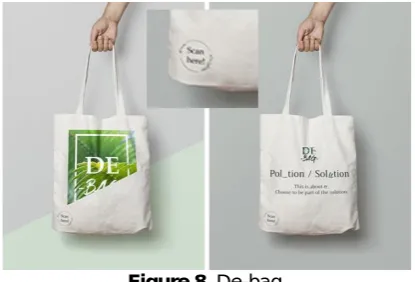
Figure 8. De-bag
The idea of the project is that fabric bags can support NFC technology for affording intact transactions: collect or redeem rewards or collected points, gamify point collection among users/customers at the cashier’s desk. Moreover, with special attention on the design, cloth bags can become aesthetically pleasing objects as well as functional products that can be reused and retain their value without polluting the environment.
The technologies used include an Arduino Uno, an NFC reader that can be placed on the cashier’s desk, stitched NFC tags on cloth bags (Figure 8).
5. Preliminary Evaluation
We conducted a preliminary evaluation on our high-fidelity prototypes to assess: design decisions, usability, user engagement, motivation and informative value. For these purposes, two distinct study sessions were performed. The first session was a public presentation while the second was a lab evaluation. Even though all our projects were part of the public presentation, only the digital computer games were tested during the second phase in the lab. This was possible primarily because those projects were easily detachable from the actual environment/context.
5.1 Public presentation evaluation
During the LIFE DEBAG campaign ‘Week without plastic bags’, visitors had the chance to interact with the interactive installations and games that have been implemented by our student groups, which were presented in public exterior and interior spaces (Figure 9). We used a combination of in situ observation, video recording and interviews in order to evaluate usability, user enjoyment and motivation and gain an initial understanding about possible benefits and pitfalls of our design choices.
Figure 9. Visitors interacting with the projects at the central square of Hermoupolis, Syros
5.1.1 Subjects
The participants of the actual study were five children (N=5) (2 girls and 3 boys) aged between 7 to 12 years old, who were randomly selected. Users usually formed in groups, accompanied either by their parents or teachers. A number of university students and other adult passersby (tourists, town residents) also participated as users, but were not considered for the evaluation study.
All participants had previously received information about the campaign’s goals through traditional means. The total number of the sample was limited by the duration required to do a within-subjects study for each project.
5.1.2 Procedure
We initialized the evaluation process with a demographic questionnaire and a set of questions (pre-test) to record previous experiences with the subject. In the beginning of the experiment, all participants were introduced to the games/installations by the operators (researcher/university student). In some cases, participants performed in collaboration, but answered the questions of the post-tests questionnaires individually. All tests were captured in video for offline debriefing and usability evaluation.
To evaluate usability, we followed Nielsen's 10 general principles for interaction design and selectively measured user performance and satisfaction on the different projects by using the following factors: error rate
(critical/non-critical), system understanding (hints), match between system and the real world, consistency and standards, aesthetic and minimalist design, flexibility and efficiency of use.
Regarding user enjoyment and motivation, we performed post-tests that compared users’ emotions based to their non-interactive and interactive experience (how they felt before and after the interaction with the games/installations). These included a simple set of Likert questionnaire based on the following semantically differential emotions: liked-hated, interested-bored,
EAI Endorsed Transactions on
satisfied-unsatisfied, and motivated-unmotivated, informed-uninformed.
5.2. Lab evaluation
During the second session of the evaluation we conducted a set of further lab tests for the digital computer games. This aimed to examine the usability, engagement factor and informative power of the games. Gathered information allowed us to ascertain the functionality limits and helped us plan future refinements and enhancements.
The user tests were conducted with eight (N=8) voluntary participants, aged 19-21. Five participants were male and three females. The process took place in our laboratory at the University of the Aegean, by two authors of this paper, who played the roles of facilitator and observer. Prior to the tests the prototypes of the games were installed on two tablets.
To have qualitative feedback, the data collection methods used during the user tests were, the think aloud protocol, in situ observation, questionnaires and open discussion. In addition, we measured some quantitative data, such as time and score to support our observations.
At the beginning and end of each test session, users were prompted to participate in a questionnaire. The first part included demographic data (age, gender etc.), as well as questions related to their familiarity with digital computer games. During this session we also gathered information about users’ attitude and behavior towards the environmental problem at hand and their everyday habits, concerning the use of plastic bags. The second part requested the users to evaluate the level of entertainment and usability of the games, focusing on user experience issues, general feedback about the interactivity and use, users’ engagement and emotional involvement, and suggestions and comments.
5.3. Results
5.3.1 Interactive installations
The results of the usability evaluation are summarized in Table 3.
Table 3. Subjective measurements
Error Rate(critical / noncritical) M=0.28 / M=1.42
SD=0.48 / SD= 0.97 System Understanding (Hints) M=1 SD=0.81 Match between system and
the real world (1-5) M=3.85 SD=0.89 Consistency and standards
(1-5) M=4.57 SD=0.53 Aesthetic and minimalist
design (1-5) M=4.14 SD=0.69
Flexibility and efficiency of use
(1-5) M=3.85 SD=0.89
In terms of physical interaction with the tangible objects, the users felt confident primarily because of the directness of the interaction/manipulation techniques. We identified a number of issues related to users with no previous experience with interactive systems: Two of them made critical mistakes since they didn’t understand how to use NFC tags, 3 users could not locate push buttons that were not directly visible to the interfaces (play/next track on Junkbox).
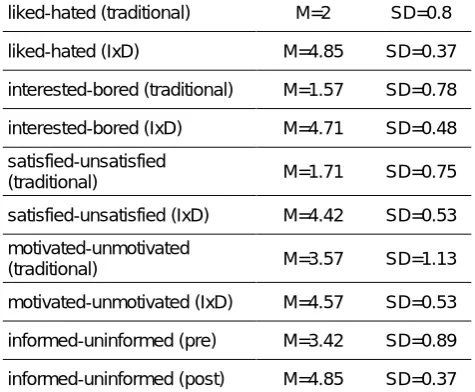
Regarding user enjoyment and motivation, we compared the traditional means of information to the use of interactive installations. In Table 4 we present an overview of the results.
Table 4. User enjoyment and motivation based on semantically differential emotions (values:1-5)
liked-hated (traditional) M=2 SD=0.8 liked-hated (IxD) M=4.85 SD=0.37 interested-bored (traditional) M=1.57 SD=0.78 interested-bored (IxD) M=4.71 SD=0.48 satisfied-unsatisfied
(traditional) M=1.71 SD=0.75 satisfied-unsatisfied (IxD) M=4.42 SD=0.53 motivated-unmotivated
(traditional) M=3.57 SD=1.13 motivated-unmotivated (IxD) M=4.57 SD=0.53 informed-uninformed (pre) M=3.42 SD=0.89 informed-uninformed (post) M=4.85 SD=0.37
The results indicate that users preferred the interactive installations compared to traditional means for getting informed. They were mainly satisfied from their experience (M=4.42 compared to M1.71) and presented a higher degree of engagement, interest and motivation to participate to similar projects, especially if they are to be developed with interactive systems/techniques in mind. Finally, most users demonstrated a higher degree of understanding of the campaign’s goals when we compared pre-tests to post-tests (M=3.42/SD=0.89 compared to M=4.85/SD=0.37).
5.3.2 Digital games
10 especially users who are regular gamers. All users found very entertaining and informative the narrative part in the introduction of the “bag to the future” game, which indicates that storytelling has a positive effect on engagement. Commenting on that, one user said, “I wanted more details in the story, throughout the game”.
Concerning usability issues, the users found both games easy to use and understand. There were some indications and UI elements (two in each game) that created confusion to the most users at first. Though, they quickly realized their misinterpretation. Only one user met difficulty to understand the interaction in the “finding bags” game, concerning the movement of the character. Self-explaining his difficulty, he said “I’m not a regular tablet user”.
The most important aspect of the games, though the most difficult to measure, is the informative power. Through the outcomes of user tests, we can argue that both “finding bags” and “bag to the future” games have some positive indications on that aspect. Users found more appealing the method of microsimulations in “finding bags”, where the results of the problem are visible, than the approach of the other game that address the solution of the problem, through the replacement of plastic bags in everyday life. Nevertheless, in the question about alternative temporary storage means (included in both questionnaires, before and after test), six of eight users added, after the test, means that were presented in the game. That outcome indicates that “bag to the future” game gave the users new ideas of means that can replace plastic bags in everyday life. One negative remark that we received through open discussion was that, though users thought that the games were fun to interact with in short term, they did not finding challenging enough to keep you playing in long term. However, our games are in an early development stage, which means that increasing difficulty and more challenges can be added to overcome this issue.
In conclusion, the digital games appear to have some power to engage and inform users, through the fun gameplay, the simple and natural interactions and the methods of storytelling and microsimulations. On the other hand, there is work to be done in order to resolve any usability issue and keep the users engaged in long term, through increasing difficulty and advancing the challenges of both games.
6. Discussion
Through the public evaluation, we reached some findings, regarding user experience, implying that users were attracted, engaged and motivated. Initially, the presentation (physical and interactive elements) of the projects managed to draw the attention of multiple users. Most of them (mainly children) returned to play/interact multiple times with the prototypes, in the same or different days, which is a strong indicator of engagement.
As expected, we noticed that gamification and playfulness had an important role in users’ enjoyment and
motivation. Installations and games that strongly incorporated these aspects had a higher return rate compared to static installations that just communicated a message. Gamification mechanisms, such as providing instant feedback on performance to create competition and giving rewards, played a major role in keeping the users engaged and motivated. In addition, we observed that this repeated use of the persuasive systems was of high importance in developing targeted user behavior in the long run. In short term, it allowed monitoring user performance over time and observing their progress. We further noticed that the social aspect in the public installations was strong. Users exhibited social behavior and intentionally collaborated with each other.
In some cases, users learnt how to play/interact by watching others. Children had a tension to collaborate with each other, although our games/systems have been designed to be single-user. There were groups of two or more people in front of the screen or installation, discussing and helping each other to fulfil the purpose of each game/task. After their interaction, a lot of users communicated their knowledge and experience to other passersby, motivating them to participate as well. Users exhibited online social behavior by disseminating their score and achievements on social networks even on the games/installations that did not support the features (they used manual methods). This way, the message, and some knowledge, were disseminated to more individuals. Based on these findings, we suggest that persuasive systems, especially public ones, should incorporate social and collaborative features in their design.
In most cases, users needed different levels of support depending on interaction complexity, and gameplay. Younger users needed more assistance with complex tasks, and a few of them failed to complete more than one task. Furthermore, a limited number of users diverged from the actual scenarios and tried to explore different features of the systems. In addition, most users preferred the tablet device to the laptop for the two digital games, even though laptops also had touch screens.
We also made several observations regarding technical issues. Given the ambient noise of the environment, especially during the outdoor presentations, the sound in most projects was low; alternative techniques (visual or haptic) should be used as feedback. Environmental lighting conditions affected the calibration of the sensors and thus auto-calibration mechanisms needed to be implemented. Finally, physical prototypes were prone to failure when users acted beyond the specified limits of the experiments.
7. Conclusions and future work
This paper outlined the methodological steps and design decisions towards the development of a set of prototypes that aimed at informing and educating users in a playful and engaging way about the problem of plastic bags and its consequences for the environment. Eight projects have
EAI Endorsed Transactions on
been developed in total, consisting of two games and six playful interactive systems. The projects have been presented in public during a campaign for the reduction of plastic bags, and the two games have been further tested at a controlled laboratory study to gain more insight about their usability and impact.
The findings of our preliminary evaluations concerning user interaction indicate generally positive results. However, interactive installations that where detached from their actual context of use (e.g. DE-BAG, JunkBox) have been found to have lower impact and should be possibly evaluated again in a more appropriate context. Our observations suggest that interactive technologies and computer games can improve the dissemination of information about environmental problems and contribute towards the advance of awareness and user engagement.
After a week in participating the campaign, users, passersby and audience exhibited a significantly higher degree of awareness for the project’s goals. Stakeholders of the environmental problem that participate to the gathering and workshops identified interest towards the development and extension of the work in different areas/disciplines.
References
[1] GARDNER, G.T. and STERN, P.C. (2002) Environmental problems and human behavior, 2nd ed. MA: Allyn & Bacon
[2] VLEK C. and STEG, L. (2007) Human Behavior and Environmental Sustainability: Problems, Driving Forces, and Research Topics. J. Soc. Issues: 63(1), 1–19.
[3] FROEHLICH, J. (2015) Gamifying green: gamification and environmental sustainability. The gameful world: Approaches, issues, applications: 563–596.
[4] REIDSMA, D., HARUHIRO, K. and NIJHOLT, A. (2013) Advances in Computer Entertainment: 10th International Conference, ACE 2013, Boekelo, The Netherlands, November 12-15, 2013. Proceedings (Vol. 8253). Springer.
[5] FOGG, B.J. (2009) Creating persuasive technologies: an eight-step design process. In Proceedings of the 4th international conference on persuasive technology, p. 44. [6] OINAS-KUKKONEN, H. and HARJUMAA, M. (2009)
Persuasive systems design: Key issues, process model, and system features. Communications of the Association for Information Systems: 24(1), 28.
[7] SZALMA, J. L. (2014) On the Application of Motivation Theory to Human Factors/Ergonomics: Motivational Design Principles for Human–Technology Interaction,
Hum. Factors, vol. 56, no. 8, pp. 1453–1471.
[8] JORDAN, P. W. (1998) Human factors for pleasure in product use, Appl. Ergon., vol. 29, no. 1, pp. 25–33. [9] NIJHOLT, A., Ed. (2014) Playful user interfaces:
interfaces that invite social and physical interaction. Singapore: Springer.
[10] BOGOST, I. (2007) Persuasive games: The expressive power of videogames. MIT Press.
[11] DE VRIES, P.W., OINAS-KUKKONE, H., SIEMONS, L., BEERLAGE-DE JONG, N. and VAN GEMERT-PIJNEN, L. (2017) Persuasive technology: development
and implementation of personalized technologies to change attitudes and behaviors. Heidelberg: Springer. [12] FOGG, B.J. (2002) Persuasive Technology: Using
Computers to Change What We Think and Do. Morgan Kaufmann
[13] HAMARI, J., KOIVISTO, J., SARSA, H. (2014) Does Gamification Work? – A Literature Review of Empirical Studies on Gamification. In Proceedings of 47th Hawaii International Conference on System Sciences, pp. 3025– 3034
[14] HOSSE, I.R. and ZUANON, R. (2015) Games for Change: The Strategic Design of Interactive Persuasive Systems. In Proceedings of Universal Access in Human-Computer Interaction. Access to Learning, Health and Well-Being, pp. 442–453
[15] ANTLE, A. N., TANENBAUM, J., MACARANAS, A., and ROBINSON, J. (2014). Games for change: Looking at models of persuasion through the lens of design. In Proceedings of Playful User Interfaces, Springer Singapore, pp. 163-184
[16] CHIU, M. C., CHANG, S. P., CHANG, Y. C., CHU, H. H., CHEN, C. C. H., HSIAO, F. H., and KO, J. C. (2009) Playful bottle: a mobile social persuasion system to motivate healthy water intake. In Proceedings of the 11th international conference on Ubiquitous computing, ACM, pp. 185-194.
[17] THIEME, A., COMBER, R., MIEBACH, J., WEEDEN, J., KRAEMER, N., LAWSON, S., & OLIVIER, P. (2012). We've bin watching you: designing for reflection and social persuasion to promote sustainable lifestyles. In Proceedings of the SIGCHI Conference on Human Factors in Computing Systems, ACM, pp. 2337-2346. [18] CHANG, Y. C., LO, J. L., HUANG, C. J., HSU, N. Y.,
CHU, H. H., WANG, H. Y. and HSIEH, Y. L. (2008) Playful toothbrush: ubicomp technology for teaching tooth brushing to kindergarten children. In Proceedings of the SIGCHI conference on human factors in computing systems, ACM, pp. 363-372.
[19] FROEHLICH, J., DILLAHUNT, T., KLASNJA, P., MANKOFF, J., CONSOLVO, S., HARRISON, B., & LANDAY, J. A. (2009). UbiGreen: investigating a mobile tool for tracking and supporting green transportation habits. In Proceedings of the SIGCHI Conference on Human Factors in Computing Systems, ACM, pp. 1043-1052.
[20] The Fun Theory, 2009. [Online]. Available: http://www.thefuntheory.com/. [Accessed: 28-Jul-2017]. [21] BENYON, D. (2010) Designing Interactive Systems: A
Comprehensive Guide to HCI and Interaction Design. England: Harlow
[22] CARROLL, J.M. (2000) Making use: scenario-based design of human-computer interactions. Cambridge, Mass: MIT Press
[23] PREECE, J., SHARP, H., ROGERS, Y. (2015) Interaction Design: Beyond Human-Computer Interaction, 4th edition. Wiley
[24] GOODWIN, K. (2009) Designing for the Digital Age: How to Create Human-centered Products and Services. John. Wiley & Sons